

I. Introduction
Big data, like surveillance, is often portrayed as a Big Brother tool of power and a threat to privacy, civil liberties, and individual freedoms (Craig and Ludloff Reference Craig and Ludloff2011; Boyd and Crawford Reference Boyd and Crawford2012; Dijck 2014; Joh Reference Joh2014; van Dijck Reference Van2014). But the spread of technology such as ubiquitous cell phone cameras means that the traditional strategies of the surveillors can be appropriated to check government power rather than to expand it. Surveillance is no longer the top-down concept implied by the preposition sur. Steve Mann coined the term “sousveillance” to describe bottom-up resistance through acts such as citizens recording the police (Mann Reference Mann2013). I proposed the term “toutveillance” to capture the multidirectional pervasiveness of recording, generating more audiovisual ways for groups from diverse positions to contest or control the narrative (Fan Reference Fan2017).
Audiovisual big data also have a malleable power with the potential to be appropriated to police the police. The search for better information and a check on police power prompted calls for police-worn body cameras after protests and pain over shootings by the police (Sanburn Reference Sanburn2014). Even major organizations usually opposed to surveillance such as the ACLU and NAACP joined to urge departments to deploy police-worn body cameras (Lawyers’ Comm. for Civil Rights under Law et al. 2014). Responding to the crisis in trust, police departments across the United States have announced body camera plans and deployments (Gomez Reference Gomez2014). A massive amount of audiovisual big data is already accumulating, even in these early days (Sanburn Reference Sanburn2015).
For example, one of the biggest players in the cloud storage market for police body camera videos, Taser's evidence.com, already has more than a petabyte (one million gigabytes) of body camera data, with a video uploaded every 2.9 seconds (Mearian Reference Mearian2015). To understand how huge a petabyte of data is, consider that it is the storage capacity for five-hundred billion pages of printed text, or the DNA of the entire US population, cloned twice, or so many songs that it would take over two thousand years to play them, or so many smartphone photos that they would wrap around the equator nearly twice if printed on 8.5-inch paper (McKenna Reference McKenna2013). To take another example, in just a month, the Oakland Police Department's six-hundred body cameras generated seven terabytes of data—the equivalent of fifteen-hundred feature-length films (Van Sack Reference VanSack2015).
This article is about the potential and perils of using accumulated body camera data to improve police regulation—and the current policy obstacles to mining these data for such purposes. There is much consternation about the downsides of rapidly accumulating body camera data, such as storage costs, potential privacy harms, data security, targeting officers for minor issues, and potential mining by law enforcement engaging in a roving search for criminality (Sanburn Reference Sanburn2015; Stanley Reference Stanley2015; Brennan Center for Justice 2016). While the concerns are important, policies that address them must also consider the countervailing important interest in the use of body camera big data to improve accountability and to prevent harm. After all, these were the aims that garnered a diverse coalition to support the deployment of body cameras in the first place.
The article reports findings regarding two policy obstacles to developing the potential of body camera big data for unearthing problematic patterns and practices. The results are part of a study that collected and coded body camera policies from fifty-nine police departments among those serving the hundred largest cities in the United States that had deployed body cameras and from which we were able to obtain body camera policies. Specifically, this article focuses on policy provisions regarding body camera data deletion and policy limits on use for officer monitoring and evaluation. The results show that while policies tend to be strong on preserving evidence for criminal prosecution, there are gaps regarding preserving evidence for potential civil cases against the department or officers. Moreover, recordings deemed non-evidentiary are stored for a much shorter time before deletion. Many policies also contain prohibitions and limitations on the use of recordings for officer evaluation and discipline. The article concludes with commentary about seeing beyond transactional myopia—focusing just on evidentiary value in a particular case—to develop the capacity to use body camera and other forms of big data to reveal systemic information.
Section II of this article discusses how police body cameras are a fresh approach to the long-burning controversies over the opacity of police power and discretionary decisions. This section argues that the innovation of body cameras goes beyond merely recording a particular incident or case to include information that can be revealed in the aggregate. Section III presents findings on body camera policies regarding data retention and limitations on use for officer evaluation and monitoring. Section IV argues for seeing beyond the individual case or officer level to the aggregate value of body camera data for policing regulation and harm prevention.
II. New Avenues for Addressing Long-Burning Controversies
The national turmoil over the shooting of Michael Brown by a Ferguson, Missouri police officer is termed a “watershed moment in policing” by the executive director of the national organization representing rank-and-file officers (Somashekhar et al. Reference Somashekhar, Lowery, Alexander, Kindy and Tate2015). Amid fierce factual disputes and no recording of what led up to the shooting, Brown's grieving mother urged police to wear body cameras (Aton Reference Aton2016). Ferguson was indeed a watershed moment in terms of sparking a national movement toward police departments adopting body cameras (Sanburn Reference Sanburn2014), but in terms of pain and protests over the shooting of a black man by a police officer and factual disputes over use of force, Ferguson was just another fire in a conflagration that has long burned in the United States.
Scholars, reformers, and activists have long wrestled with one of the most challenging and painful questions in America—the heightened risk of death that minority community members face in police encounters (Jacobs and Britt Reference Jacobs and Britt1979; Fyfe Reference Fyfe1988, Reference Fyfe2002; Chamlin Reference Chamlin1989; Sorensen, Marquart, and Brock Reference Sorensen, Marquart and Brock1993; Jacobs and O'Brien Reference Jacobs and O'Brien1998; Holmes Reference Holmes2000; Parker et al. Reference Parker, MacDonald, Jennings and Alpert2005; Holmes and Smith Reference Holmes and Smith2008; Smith and Holmes Reference Smith and Holmes2014; Fan Reference Fan2015). “Minority threat” theorists have illuminated how the use of force is more severe in communities with sharp racial and economic stratification and higher concentrations of minorities (Jacobs and Britt Reference Jacobs and Britt1979; Chambliss and Seidman Reference Chambliss and Seidman1982; Liska and Yu Reference Liska, Yu and Liska1992; Jacobs and O'Brien Reference Jacobs and O'Brien1998; Holmes Reference Holmes2000; Holmes and Smith Reference Holmes and Smith2008). Implicit bias research has shown how people unconsciously use race as a proxy for dangerousness and the greater risk of deadly force and mistakes that result (Correll et al. Reference Correll, Park, Judd and Wittenbrink2002, Reference Correll, Park, Judd, Wittenbrink, Sadler and Keesee2007; Greenwald, Oakes, and Hoffman Reference Greenwald, Oakes and Hoffman2003; Plant and Peruche Reference Plant and Peruche2005; Correll, Urland, and Ito Reference Correll, Urland and Ito2006; Payne Reference Payne2006; Richardson Reference Richardson2015).
Compounding the controversy are longstanding concerns over police opacity and discretion, about which there is a vast and venerable literature (LaFave Reference LaFave1965; Davis Reference Davis1969, Reference Davis1977; Weitzer and Tuch Reference Weitzer and Tuch2006; Sklansky Reference Sklansky2007; Friedman Reference Friedman2017). Intertwined with these major issues are the challenges of police oversight and the difficulties that police oversight institutions face in piercing opacity and sorting between fiercely competing claims. As discussed below, courts and police departments play crucial and challenging roles in framing and enforcing the rules regulating the police. Audiovisual big data on policing has the potential to impact both judicial review and departmental disciplinary processes.
A. The Challenges of Distance, Intimacy, and Police Oversight
One of the challenges of police oversight is that that the key regulators are either far from or close to the events and lives at stake. On the distant end, the primary law governing police power is crafted by courts interpreting constitutional law case by case, sitting far removed from the experiences of the police and the policed (LaFave Reference LaFave1974; Saltzburg Reference Saltzburg1980; Seidman Reference Seidman1980; Kahan and Meares Reference Kahan and Meares1998; Klarman Reference Klarman2000). The complex body of case law regulating police investigation derives from the fifty-four words of the Fourth Amendment to the US Constitution, which prohibits unreasonable searches and seizures (US Constitution, Amendment IV). Removed in time, place, and, often, class from the facts frequently presented in criminal procedure cases, judges must do their best to piece together what happened and the propriety of police conduct.
To deal with the onslaught of cases and frequently competing accounts, constitutional criminal procedure has evolved rules of deference to police discretion (LaFave Reference LaFave1974; Luna Reference Luna2008−2009; Fan Reference Fan2011). Constitutional criminal procedure doctrine and courts tend to avoid disturbing the judgment calls of officers (Ginsburg Reference Ginsburg2007). The Court also has repeatedly shut down attempts to inquire into subjective law enforcement intent (see, e.g., Whren v. United States, 517 U.S. 806, 813–14 (1996); New York v. Quarles, 467 U.S. 649, 656 (1984); Brendlin v. California, 551 U.S. 249, 260 (2007)). For example, courts do not inquire why, on streets full of people driving too fast, too slow, failing to signal before turning, or sliding through stop signs, officers followed these particular defendants until they became nervous and executed an abrupt U-turn without signaling (Whren 1996, 813). Or, to take another example, courts do not inquire why someone was arrested for a minor offense of failure to wear a seatbelt—though state law only authorizes officers to give citations, not arrest someone for the offense—so long as on the facts of the case, there is a reasonable basis to believe the offense of failure to wear a seatbelt occurred (Atwater v. City of Lago Vista, 532 U.S. 318, 347 (2001)). Long-burning questions in criminal justice such as racial profiling and patterns of use of force thus continually flare on the ground, even as courts and constitutional criminal procedure do not delve into the big issues in particular cases.
The focus on individual cases rather than systemic challenges leads to what Andrew Crespo (Reference Crespo2016) has termed “transactional myopia.” “Myopia” refers to the near-sighted nature of judicial adjudication, focusing just on the case presented rather than seeing the landscape of criminal justice issues—seeing a tree but missing the forest, to draw on the old adage. “Transactional” refers to the focus on the facts of the contested transaction. In contrast, systemic facts can reveal recurring challenges and patterns across cases. The current predominant approach is a form of transactional myopia that focuses just on the facts contested in a case or complaint rather than the larger pattern of data and the context in which cases and complaints occur.
While lawyers tend to focus on the judicial role in police regulation, for officers on the ground, the key source of daily guidance and incentives for compliance are departmental disciplinary rules, often resulting from collective bargaining with police unions (Rushin Reference Rushin2017).Footnote 1 The departmental policies and procedures are also shaped by state statutory laws, such as law enforcement officer bills of rights or civil service laws governing police rights in disciplinary matters (Harmon Reference Harmon2012; Huq and McAdams Reference Huq and McAdams2016; Levine Reference Levine2016). In-house departmental police oversight has both the major benefits and drawbacks of proximity to the events in the field. Among the benefits is a better understanding of the challenges that officers and communities face. Among the drawbacks is the difficulty of judging one's own, particularly in police-said, suspect-said credibility contests, without other compelling evidence to tip the balance.
Various strategies have evolved to deal with the challenges of depending on the police to self-police, such as civilian oversight boards and early warning systems (Walker, Alpert, and Kenney Reference Walker, Alpert and Kenney2000; Bayley Reference Bayley2008; Ferdik, Roject, and Alpert Reference Ferdik, Roject and Alpert2013). Data-driven early warning systems harness database systems to identify and intervene with problematic individuals (Alpert and Walker Reference Alpert and Walker2000). Criteria include factors such as high complaint rates, use-of-force reports, high-speed pursuit reports, and involvement in civil litigation. Such systems are an example of how technology can be harnessed to advance harm prevention beyond the reactive, case-bound posture of courts or the complaint- and incident-driven nature of internal investigations.
B. Growing Big Data on Police Practices
Audiovisual data from body cameras offer another potential avenue of technology-enhanced police oversight valuable for courts, civilian boards, and police departments. Body cameras offer a dramatically wider window into what is actually happening in everyday encounters that may never make it into court, a citizen complaint, or a formal report (Fan Reference Fan2017). Most body camera policies require activation during a broad array of law enforcement activities, such as stop and frisks, searches, and responses to calls for service (Fan Reference Fan2017).
Recordings can shed light on formerly opaque practices. Consider, for example, Terry stop and frisks. These brief temporary detentions on the street for questioning and pat-downs are a prime example of a police power that sparks mistrust and anger, particularly among the primarily young male targets (Terry v. Ohio, 392 U.S. 1, 14–15 (1968)) (Tyler, Fagan, and Geller Reference Tyler, Fagan and Geller2014; Huq Reference Huq2017). Data from New York, one of the jurisdictions that collected stop and frisk data because of a court order, indicated that blacks and Hispanics are more likely to be stopped and frisked than whites, after controlling for precinct and rates of crime commission (Gelman, Fagan, and Kiss Reference Gelman, Fagan and Kiss2007; Goel et al. Reference Goel, Perelman, Shroff and Sklansky2017). These stops and searches are less likely to lead to a finding of contraband or arrest, indicating poorer accuracy (lower hit rates) when young minority men are targeted (Gelman, Fagan, and Kiss Reference Gelman, Fagan and Kiss2007; Goel et al. Reference Goel, Perelman, Shroff and Sklansky2017). Absent the compulsion of a court order or consent decree, data on the deployment of the stop and frisk power is unavailable in many jurisdictions despite longstanding controversy.
Putting body cameras on officers potentially transforms the ability to monitor these street-level encounters formerly outside of view. The cameras follow officers into the field of everyday encounters where defense attorneys and courts lack sufficient data. The oft-expressed hope for body cameras is that people on all sides of a police encounter will behave better when they know they are being recorded (Police Complaints Bd. 2014; Police Exec. Research Forum 2014). The strategy is one of panopticism for police (and the people they encounter)—a mobile technology-assisted update on Jeremy Bentham's concept of the use of a watchtower to elicit good behavior (Bentham [1785] Reference Bentham and Božovič2011; Fan Reference Fan2012). Some data are emerging to support the hypothesis (Katz et al. Reference Katz, David, Justin and Lidia2014; White Reference White2014; Ariel, Farrar, and Sutherland Reference Ariel, Farrar and Sutherland2015). But this is just one of the possible benefits of body cameras that might justify the growing costs of data storage, discussed in Section III.B, and the privacy costs that communities pay by embracing pervasive recording by patrol officers wearing cameras.
Another potential benefit is the power to analyze images collected over time and in numerous encounters to reveal patterns and practices that warrant redress. Technology is in development that will permit searches based on voice tone, choice of language, facial scanning, and other search criteria (Doane Interview 2016). Developers are using machine learning to address the challenges of automated analyses of video in motion (Punyamurthula Interview 2016). The advance of technology will permit forensic searches with geospatial and temporal localization and the development of early warning systems for problems such as premature use of force that are more reliable than self-report or citizen reporting (Corso et al. Reference Corso, Alahi, Grauman, Hager, Morency, Sawhney and Sheikh2015).
Such data can enhance current early warning systems in police departments. They can also inform the work of civilian oversight boards in detecting potential patterns and practices. Rather than passively relying on the filing of complaints and reports to spot red flags, automated analyses of body camera data can detect potential problems even if community members are too cowed or mistrustful to report concerns. Programs can detect issues such as officers quick to escalate through words associated with rude treatment. Interventions such as counseling, education, and warnings can prevent greater harm before it occurs, which is protective for the community as well as the officer's career. The data-driven approach to intervention also ameliorates some of the problems of proximity and intimacy when it comes to in-house oversight and discipline. As discussed in Section III.C, one of the concerns of line-level officers and their unions is harassment and targeting by supervisors of an officer. Data-driven automated methods offer a more objective basis for selection for intervention. Audiovisual evidence also offers a basis for adjudicating complaints that would otherwise be credibility contests.
The information also may be valuable for courts to enable seeing beyond transactional myopia to framing rules and adjudicating cases in light of systemic facts. Of course, judges are not sociologists or psychologists, and nor are they very fond of statistics, particularly those marshalling racial disparity data to challenge a discretionary decision (see, e.g., McCleskey v. Kemp, 481 U.S. 279 (1987); United States v. Armstrong, 517 U.S. 456 (1996); United States v. Olvis, 97 F.3d 739, 746 (4th Cir. 1996)). But even the Supreme Court is influenced by information on whether a contested police practice is widespread or an isolated incident (Atwater v. City of Lago Vista 2001, 347). Justice Anthony Kennedy, often the crucial swing voter on the Supreme Court, has left open the possibility of revisiting and revising rules and remedies if data on a recurring problem in need of redress arise (Hudson v. Michigan, 547 U.S. 586, 604 (2006) (Kennedy, J., concurring)).
The challenge is that even if a problem is widespread, it is hard to obtain the data to prove it. The burden of obtaining such information falls on defense attorneys, who lack insider information regarding law enforcement practices. Yet the Supreme Court has construed the defense's inability to produce other similar cases of power abuses as indication of a “dearth of horribles demanding redress” (Atwater 2001, 353). In Atwater v. City of Lago Vista, the Supreme Court considered the case of a mother arrested in front of her crying children (who the officer also threatened to take into custody) for the citation-only offense of not wearing seatbelts. The Court concluded that the arrest was “merely gratuitous humiliations imposed by a police officer who was (at best) exercising ‘extremely poor judgment’” (Atwater 2001, 346–47). Yet the Court refused to limit the power to arrest for such minor offenses, noting that, at oral argument, Atwater's counsel cited only one example of another such indignity. Concerns about the danger for harassment were merely “speculative” the Court wrote, “absent evidence of widespread abuse” (Atwater 2001, 353 n25).
Public defenders, who take the bulk of criminal cases, are so resource constrained that some organizations have declared themselves structurally ineffective—incapable of rendering effective assistance of counsel because of massive caseloads (Primus Reference Primus2007). The reality is that in most cases, defense attorneys do not have the resources to play the role of researcher or investigative journalist going into the field to interview and collect evidence of other cases. Sometimes, courts may be in a better position to discern patterns and practices by analyzing across electronically stored court filings (Crespo Reference Crespo2016). A prime example of this underutilized capacity of courts is detection of boilerplate affidavits claiming to have probable cause (Crespo Reference Crespo2016, 2072–75). These “systemic facts” about the context from whence recurrent issues and contested cases arise can better inform judicial decision making about criminal procedure (Crespo Reference Crespo2016, 2065–96).
But court records are not enough to give a fuller picture of how police power is experienced on the ground. Consider the issue of knock-and-announce violations—when police break down doors and enter homes to execute warrants without first announcing they are officers. Recognizing the dangers of unannounced entries into homes, the Court unanimously held that officers should first knock and announce unless there is a reasonable basis to believe it would be futile or risk danger or destruction of evidence (Wilson v. Arkansas, 514 U.S. 927, 936 (1995)). When it came to remedies for a violation, however, the Court declined to exclude evidence obtained in violation of the knock-and-announce requirement (Hudson v. Michigan 2006, 604). Justice Kennedy held open the possibility, however, of revisiting the decision:
If a widespread pattern of violations were shown, and particularly if those violations were committed against persons who lacked the means or voice to mount an effective protest, there would be reason for grave concern. Even then, however, the Court would have to acknowledge that extending the remedy of exclusion to all the evidence seized following a knock-and-announce violation would mean revising the requirement of causation that limits our discretion in applying the exclusionary rule. (Hudson v. Michigan 2006, 604 (Kennedy, J., concurring))
Yet how will courts know if there is such a pattern or practice of violations? Because there is effectively no remedy, the cases are unlikely to make it into courts. As a formal legal matter, people who experience knock-and-announce violations could sue the police. But the small damages amounts make it hard to find a plaintiff's lawyer willing to take the case, as the lawyer for Hudson argued before the Supreme Court (Hudson v. Michigan 2006, 598). Because the cases are unlikely to make it into court, examining court files is not enough—courts and defense attorneys need a better window into what is occurring.
The possibilities of advances in harm prevention to enhance early warning systems, the work of civilian oversight boards, and the work of courts are tantalizing. However, policy pathways need to be open to this potential. The next section discusses findings on policy obstacles to harnessing the potential of body camera big data for police accountability.
III. Emerging Potential Policy Roadblocks
Body camera big data have powerful potential—if you can obtain them and you are allowed to use them. Because legislatures and courts tend to trail behind technological developments in policing, many of the detailed policies governing body camera deployments are being written by police departments in the first instance. Departments may seek public comment through town halls, online surveys, and other fora. The policies may be crafted in consultation with city attorneys and the mayor's office, to be consistent with collective bargaining agreements and any existing consent decrees and court orders (Carpenter Reference Carpenter2000; Orrick Reference Orrick2017).
Departmental body-worn camera policies tend to be new additions separate from older policies governing physical evidence or even dash camera videos. This is because audiovisual data are different in type and storage parameters than physical evidence. Moreover, body cameras yield exponentially more data and go to many more private places than dash cameras (Fan Reference Fan2017).
Analyses of body camera policies collected from police departments across the nation reveal significant policy hurdles. This article focuses on two such hurdles: (1) data retention and deletion provisions; and (2) limitations on the use of body cameras for officer training and evaluation. The third challenge of balancing public disclosure laws and exemptions with privacy protection is separately addressed elsewhere.
A. Methods
In December 2015, a team reviewed the body camera adoption status of the police departments serving the hundred largest cities in the United States and endeavored to obtain body camera policies from the departments in those jurisdictions. This collection effort was updated again in December 2016. The criterion of being one of the hundred most populous cities kept the focus on policies that will affect the most people while still yielding diversity in terms of region and city size.
The team conducted online searches on police departmental websites, the Westlaw news database, and the policy databases of the Leadership Conference, the Reporter's Committee for Freedom of the Press, and the Brennan Center to evaluate the body camera adoption status and to obtain policies. These online searches were supplemented by telephone inquiries when information was not available online. These inquiries and research found that eighty-eight of the major-city municipal police departments had piloted or deployed body cameras or had plans to do so. For these eighty-eight departments, the team endeavored to obtain the department's body camera policy through searches of online materials supplemented by calls to the department. In all, we collected and coded fifty-nine finalized or most recently available draft policies as of December 2016. Of the policies, fifty-one were finalized to govern deployments in the field. Seven were draft policies. One had governed a first-phase test deployment.
The cities represented in the sample of body camera policies collected had considerable diversity in terms of city size and region. Appendix 1 lists the cities served by the police departments for which we collected polices. City sizes and regions ranged from more than 8.4 million people in New York City to less than two-hundred-fifty thousand people in cities such as Fremont, California; Gilbert, Arizona; Chesapeake, Virginia; and Madison, Wisconsin (City Mayors Foundation 2016). More than one law enforcement agency may serve a metropolitan area. For example, specialized agencies such as the highway patrol may also operate, or a sheriff's department may serve certain regions. This study focused on the primary law enforcement provider because its portfolio of activities and city coverage is broadest.
Because of the abstraction and complexity of laws and policies, an iterative process is the recommended approach for constructing variables that capture the range and nuance of policy positions (Tremper, Thomas, and Wagenaar Reference Tremper, Thomas and Wagenaar2010). The team generated a policy codebook through an iterative process based on cataloguing recurring provisions and main approaches in the policies collected. The first resulting codebook had fifty-one variable categories covering key issues such as the level of discretion regarding what to record; mandates on what types of encounters must be recorded; privacy protections; officer access to recordings; data storage, redaction, and retention; and limitations on use of the video. For the purposes of this study, we added eight more variables to code, bringing the codebook to a total of fifty-nine variable categories.
A team of two coded each policy. We evaluated inter-rater reliability by computing Cohen's kappa using Stata 14 SE statistical software (StataCorp. 2015). The evaluation found substantial agreement between the initial coding. We identified and examined coding conflicts in a third review to resolve conflicts by consensus.
B. Data Retention Provisions
Data must exist undeleted to be analyzed. The proposition may seem trivial, but it cuts to two of the major issues with police body cameras. Deletion is a strategy to reassure privacy advocates that data will not be mined in search of violations (Stanley Reference Stanley2015). Deletion is also a major way to reduce the costs of adopting body cameras. One of the greatest expenses of putting body cameras on police—far exceeding the costs of the cameras themselves—is storing the vast volumes of data that result (Mearian Reference Mearian2015; Sanburn Reference Sanburn2015). As data multiply from dash cameras and police body cameras, the traditional method of storage using on-site servers or CDs in an evidence room is becoming infeasible for many departments (Mearian Reference Mearian2015). Storage is particularly challenging for mid-size departments of fifty to 250 officers with mid-size budgets and infrastructure (Callahan Reference Callahan2016). Many departments are turning to cloud data storage under contracts negotiated with private companies. Although costs are likely to decrease in the future as more competitors enter the lucrative data storage market, for now the costs are daunting for departments (Callahan Reference Callahan2016).
It costs one department approximately $111,000 to store video from fifty cameras on the cloud for two years (Police Exec. Research Forum 2014). Now consider an agency with nine-hundred officers. A county sheriff overseeing an office that size cited “deal-breaker” costs of $1 million a year in startup costs and storing the video for just thirty days (Callahan Reference Callahan2016). Another department of that size reported costs of $2 million a year, mostly for data storage, to put cameras on its nine-hundred officers (Police Exec. Research Forum 2014). Increasing the retention period to 190 days from thirty days would multiply storage costs five- to tenfold according to the experience of the Clarksville, Indiana police department (Callahan Reference Callahan2016). Departments have halted body camera plans out of concern that it would be too costly to store video for the periods designated under state standards (Callahan Reference Callahan2016). Other departments, such as the Birmingham Police Department, are working with their legal departments on retention periods consistent with state laws, which were often written long before body cameras, and that leave ambiguities for departments to navigate (Mearian Reference Mearian2015).
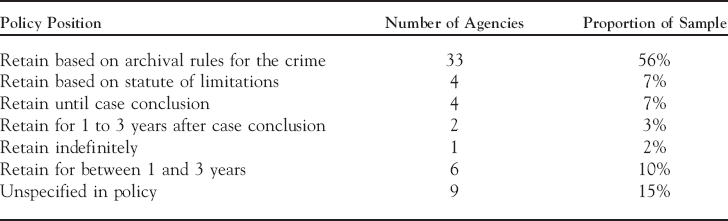
This study found that most departmental policies take the cautious course when it comes to recordings that capture information useful to a criminal prosecution. But there are more omissions and doubt when it comes to recordings that may be relevant in a civil suit against the police rather than a criminal case pursued by officers. The retention of recordings deemed non-evidentiary is much shorter. Tables 1–3, summarize the distribution of policy approaches in the sample.
Evidentiary Data Retention, Fifty-Nine Major-City Police Department Policies
| Policy Position | Number of Agencies | Proportion of Sample |
|---|---|---|
| Retain based on archival rules for the crime | 33 | 56% |
| Retain based on statute of limitations | 4 | 7% |
| Retain until case conclusion | 4 | 7% |
| Retain for 1 to 3 years after case conclusion | 2 | 3% |
| Retain indefinitely | 1 | 2% |
| Retain for between 1 and 3 years | 6 | 10% |
| Unspecified in policy | 9 | 15% |
Non-Evidentiary Data Retention, Fifty-Nine Major-City Police Department Policies

| Policy Position | Number of Agencies | Proportion of Sample |
|---|---|---|
| Automatically delete or “delete frequently” | 1 | 2% |
| 13 days | 1 | 2% |
| 30 to 45 days | 7 | 12% |
| 2 to 3 months or 60 to 90 days | 15 | 25% |
| 4 to 6 months or 120 to 180 days | 10 | 17% |
| 1 to 2 years | 9 | 15% |
| 3 years | 1 | 2% |
| Not specified | 15 | 25% |
Retention of Data for Civil Suit or Complaint, Fifty-Nine Major-City Police Department Policies
| Policy Position | Number of Agencies | Proportion of Sample |
|---|---|---|
| Until statute of limitations for filing suit | 2 | 3% |
| Until dispute is resolved, “further notice,” “indefinite” | 10 | 17% |
| Permanently | 1 | 2% |
| Case disposition+1 to 3 years | 3 | 5% |
| 5 to 10 years | 4 | 7% |
| 2 to 4 years | 4 | 7% |
| 1 year or less | 2 | 3% |
| Based on guidelines for type of complaint | 3 | 5% |
| Not specified | 30 | 51% |
As Table 1 shows, the majority of departments in the sample (70 percent) incorporate and follow state archival rules for the type of crime or the statute of limitations for the crime type, or mandate retention until case conclusion and even beyond. Although the provisions vary, the archival retention time specified in the policies tends to be between three and twenty years for evidence in felony prosecutions and up to permanent storage for homicides. For misdemeanors, the archival storage time specified in the policies generally runs between one and three years.
In contrast, for non-evidentiary data retention, the storage time is much shorter, with the majority of agencies (58 percent) retaining the data for six months or less (see Table 2). As for what is non-evidentiary, defining a negative is always a challenge, and often goes undefined, or is defined with another negative—footage not flagged by officers as having evidentiary value. Miami-Dade offers a rare definition: “Footage that does not necessarily have value to aid in an investigation or prosecution, such as footage of an incident or encounter that does not lead to an arrest or citation or footage of general activities that an officer might perform while on duty (e.g., assisting a motorist or clearing a roadway)” (Miami-Dade Police Dep't. 2016). What is striking about the definition is how it makes explicit the implicit notion that evidentiary value means evidence in an investigation or prosecution leading to an arrest or citation.
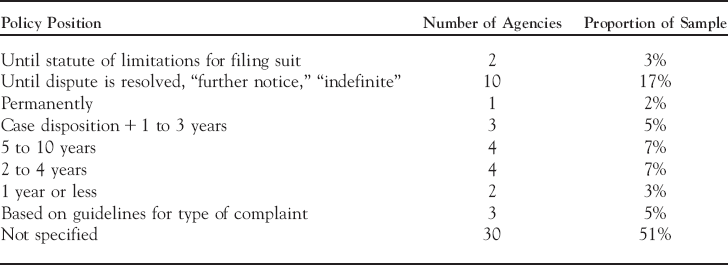
Because so few policies had references to retention of recordings relevant to a potential civil suit against the police, we expanded the category to include retention of data depicting uses of force, which are the most frequent bases for a civil suit. Even expanding the definition of the variable, about half the agencies in the sample had no provision on how long recordings relevant to civil suits should be retained.
Where departments did have provisions on such recordings—most frequently provisions on recordings of uses of force—they tended to recognize the seriousness of the need to preserve the recordings. The majority provided for retention of such recordings at least until the disposition of the case, if not longer (see Table 3). This suggests the challenge is not one of undervaluing the import of preserving video for accountability purposes, but of thinking of recordings as evidence in such cases in addition to traditional prosecutions.
Police department policies can hardly be faulted for focusing on their primary role of gathering evidence for law enforcement purposes. Rather, as Barry Friedman (Reference Friedman2017) has recently written, democratic polities should not abdicate their role of framing policing laws and policies through inaction or delegating the duty. It is Police Department Manual Writing 101 to consult with and comply with legal requirements (Orrick Reference Orrick2017). Where legislatures have made provision for the retention of evidence for civil suits or preservation of evidence, departmental policies honor that democratic determination. Indeed, as Table 1 shows, police policies often import or summarize the schedules for evidentiary retention set by law, if there are such, or, even more simply, use legal yardsticks such as the statute of limitations to determine their retention schedules. The approach of incorporating legislatively set schedules is much more prevalent for data deemed evidentiary because legislatures are more likely to have spoken on the issue. The blind spots regarding retention of evidence for civil suits or aggregated data analyses is ultimately a blind spot of the democratic polity in weighing the costs and benefits of retention for such purposes and enacting laws that reflect the balances struck. As awareness grows about the value of audiovisual big data for police accountability, it is up to legislatures to balance the costs and benefits of preservation and to provide guidance for departments.
C. Limits on Use for Officer Monitoring and Evaluation
Police department policies are split over the use of body camera recordings for officer monitoring and evaluation. As Table 4 shows, the policies range widely in approach from mandating supervisor review of videos for evaluation and regular audits to prohibiting supervisor review of videos for evaluation absent an adverse event trigger such as the use of force or complaint (see Table 4). Among the departments that mandate audits and regular supervisor review, the predominant use of this strategy is to ensure compliance with the rules governing body camera usage rather than to detect wrongdoing. The policies that deploy body camera videos to oversee the police thus typically use the strategy with the more circumscribed aim of ensuring that officers do not subvert their self-surveillance.
Use of Recordings for Officer Evaluation, Fifty-Nine Major-City Police Department Policies *

| Policy Position | Number of Agencies | Proportion of Sample |
|---|---|---|
| Supervisor required to view sample of recordings regularly | 22 | 37% |
| Audits of recordings authorized | 20 | 34% |
| Supervisor may view recordings generally | 6 | 10% |
| Supervisors may not use recordings for evaluation unless there is an adverse event trigger (e.g., use of force, “good cause”) | 4 | 7% |
| Supervisors may not use recordings for evaluation unless there is an adverse event trigger and higher authorization | 5 | 8% |
| Not specified | 6 | 10% |
* Because these policies are not mutually exclusive, and some agencies are represented in more than one category, the numbers do not sum to fifty-nine/100 percent.
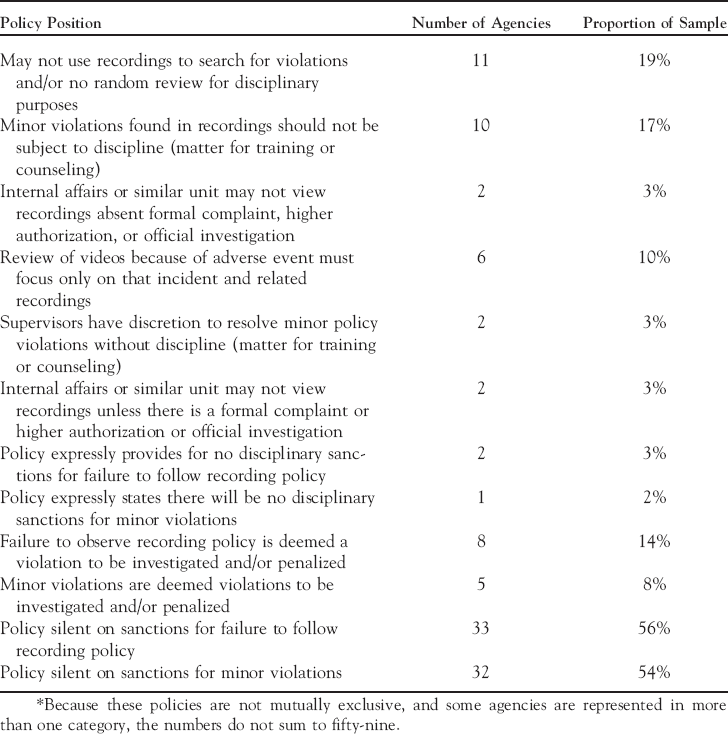
A prevalent approach, even among departments that use supervisor review and audits to check on compliance with body camera recording mandates, is to specify protections against the use of the videos for disciplinary purposes. As Table 5 summarizes, eleven departments in the sample had provisions barring the use of recordings to search for violations. Ten more stated that minor violations discovered during viewing the recordings should not be the basis for formal discipline. Two more departments took a softer approach, expressly indicating to supervisors that they have discretion to resolve minor policy violations caught on camera through training or counseling rather than formal discipline. Two more agencies limited the ability of internal affairs or similar internal investigations units from having access to recordings absent a formal complaint or similar trigger.
Special Protections Regarding Disciplinary Use of Recordings, Fifty-Nine Major-City Police Department Policies *
| Policy Position | Number of Agencies | Proportion of Sample |
|---|---|---|
| May not use recordings to search for violations and/or no random review for disciplinary purposes | 11 | 19% |
| Minor violations found in recordings should not be subject to discipline (matter for training or counseling) | 10 | 17% |
| Internal affairs or similar unit may not view recordings absent formal complaint, higher authorization, or official investigation | 2 | 3% |
| Review of videos because of adverse event must focus only on that incident and related recordings | 6 | 10% |
| Supervisors have discretion to resolve minor policy violations without discipline (matter for training or counseling) | 2 | 3% |
| Internal affairs or similar unit may not view recordings unless there is a formal complaint or higher authorization or official investigation | 2 | 3% |
| Policy expressly provides for no disciplinary sanctions for failure to follow recording policy | 2 | 3% |
| Policy expressly states there will be no disciplinary sanctions for minor violations | 1 | 2% |
| Failure to observe recording policy is deemed a violation to be investigated and/or penalized | 8 | 14% |
| Minor violations are deemed violations to be investigated and/or penalized | 5 | 8% |
| Policy silent on sanctions for failure to follow recording policy | 33 | 56% |
| Policy silent on sanctions for minor violations | 32 | 54% |
* Because these policies are not mutually exclusive, and some agencies are represented in more than one category, the numbers do not sum to fifty-nine.
Police labor unions play an important role in negotiating limits on the use of recordings for officer monitoring, evaluation, and discipline. For example, the influence of negotiations with police unions is transparent on the face of the Seattle Police Department policy:
The Memorandum of Agreement between the City of Seattle and the Seattle Police Officers’ Guild outlines the scope of the program. Pursuant to that agreement, there will be no discipline that follows from not recording a particular incident with BWV. (Seattle Police Dep't 2016)
When department management unrolls a body camera program and policy without union negotiations, the plans can derail. For example, in Oklahoma City, the police union compelled a redo of the body camera policy after an arbitrator sided with the union's grievance that the policy was not negotiated with the union (Brigham Reference Brigham2016). One of the main concerns raised by the union was the ability of supervisors to view recordings at any time (Brigham Reference Brigham2016; Oklahoma City Police Dep't 2016). The union wanted a limit to prevent supervisors from going on “a fishing expedition” (Brigham Reference Brigham2016).
The protections reflect the concerns of line-level officers over surveillance and potential harassment by their superiors for what officers perceive as minor violations. For example, St. Paul's policy captures the surveillance concerns of officers explicitly, providing: “Supervisors may not access or review BWC Data for the purpose of surveillance of any employee” (St. Paul Police Dep't 2016). The protections are used to achieve officer buy-in and to address morale concerns. For example, Philadelphia's policy provides:
To effectively perform their duties, Officers must have a level of comfort in which minor disciplinary offenses recorded while performing their duties that would not otherwise become known but for wearing a Body-Worn Camera, will not adversely affect an officer's career. Thus, the secondary purpose of this directive is to provide officers with the knowledge that “minor disciplinary code violations” that are captured on any Body Worn Camera will not result in an official Internal Affairs investigation or 75-18s based solely upon their minor infraction. (Phila. Police Dep't 2016)
The proposed draft New York body camera policy captures the concern of officers over the risk of “nickel-and-diming” harassment enabled by body camera surveillance of officers: “The purpose of this provision is to ensure officers aren't punished when supervisors see minor violations of the patrol guide, such as chewing gum or taking off a hat that the supervisor wouldn't have otherwise seen” (N.Y. Police Dep't 2016).
IV. Conclusion: Accountability Capacity-Building
Currently, the predominant framework for policies on the use of body camera data is at the individual case and officer level—Do the data present relevant evidence in this case? Will they be used by supervisors to harass the officer in the video for minor issues, a recurring concern among officers and labor unions? The approach understandably reflects the transactional myopia that predominates in criminal procedure, which proceeds through case-by-case investigation and adjudication. However, there is an important distinction between the import of data at the individual-case or officer level and what may be revealed at the aggregate level.
Data may not present evidence for prosecution in a specific case, or may simply show a minor transgression, such as chewing gum or taking off a cap, that should not warrant nickel-and-diming officers at a specific incident level. At the aggregate level, over time and many cases and incidents, however, body camera big data may reveal potentially important patterns and practices. Moreover, what constitutes a minor policy violation can be very much in the eye of the beholder. For example, being quick to resort to rude treatment, cussing at community members, and otherwise escalating rather than de-escalating encounters to raise the risk of use of force can be a serious problem from a harm prevention perspective, even if it is perceived as a minor transgression by the officer in a specific incident, viewed in isolation.
Data that may seem of minor evidentiary value in an individual case may be powerful when aggregated, revealing issues such as concentrating revenue-generating stop and fines on minorities, escalating encounters through rude and aggressive behavior, or differences in the use of physical or verbal forcefulness by race of the community member encountered (see Section II). The utility of body camera data analytics is exemplified by a recent study using computational linguistic techniques on 183 hours of Oakland police body camera videos and finding strong evidence that officers were less respectful to black persons stopped, after adjusting for potential confounders such as infraction severity and location (Voigt et al. Reference Voigt, Nicholas, Vinodkumar, William, Rebecca, Camilla, David, Dan and Jennifer2017). Big data require an aggregate, not just an individual, lens to appreciate and develop their full potential to be harnessed to improve the public good.
Some departments are starting to pave the policy pathways for realizing this potential. About half the departments in the sample authorized supervisors to review recordings generally, required regular supervisor review of a sample of recordings, and/or authorized audits of recordings for compliance purposes. These provisions embrace the power of body camera data for improving accountability and detecting potential issues before they result in harm. The need to protect officers from “nickel-and-diming harassment” and to obtain buy-in is also important. This can be served by provisions protecting officers from discipline for minor violations, while still allowing regular review of aggregated data or a sample of data. Indeed, several of the departments that permit or even require supervisor review of recordings also contain protections against discipline for minor violations.
A few departments are also building the human resources capacity and procedures to realize the full potential of body camera data. For example, Atlanta's department has a compliance administrator “responsible for conducting audits of BWC footage, [who shall] generate a report documenting the findings, and shall ensure accountability and compliance in accordance with the guidelines and procedures in this directive” (Atlanta Police Dep't 2016). The Lexington Police Department has created a protocol for harnessing the power of body cameras for early detection and harm prevention:
When an IAPro/Personnel Early Warning System alert has been received or there is an allegation (internally or externally) of a pattern of abuse or misconduct, supervisors shall randomly audit at least one BWC video of the alerted officer, per week, for at least two months to evaluate performance and conduct. The review of BWC video should also include recordings that were made prior to the alert or allegation. The random audit shall be documented on a memorandum which shall be forwarded through the chain of command to the Public Integrity Unit upon completion. (Lexington Police Dep't 2016)
It is important to distinguish body camera data mining and analytics for police accountability purposes from the type of data mining that rouses concerns about impinging on citizen privacy. Even the paradigmatic privacy watchdog, the ACLU, recognizes the important distinction between surveillance and tracking of the public and internal and external investigations of police misconduct:
The ACLU supports the use of cop cams for the purpose of police accountability and oversight. It's vital that this technology not become a backdoor for any kind of systematic surveillance or tracking of the public. Since the records will be made, police departments need to be subject to strong rules around how they are used. The use of recordings should be allowed only in internal and external investigations of misconduct, and where the police have reasonable suspicion that a recording contains evidence of a crime. (Stanley Reference Stanley2015)
Body camera data analytics can be used to reveal potentially problematic police practices and to avert resulting harm without sacrificing safeguards for the privacy of the public. Strong rules demarcating permissible and impermissible data analytics can be encoded in technology that limits access and maintains audit trails.
The accumulation of body camera big data is happening now, even in the early days of the body camera revolution. Departmental policies regarding the use of body cameras have an important role in determining whether body cameras will simply be another way to generate more leads and evidence for prosecution by exponentially expanding the number of surveillance cameras on the streets or also to open fresh avenues for addressing long-burning challenges. Time, technology, and competition among storage providers are likely to take care of the cost concerns that create pressure to delete videos. Major technology companies are entering the field with products and new technologies to offer greater security at reduced data storage expense (Van Sack Reference VanSack2015). To realize the full potential of body cameras, policies must consider more than evidentiary value in a prosecution, and they must harness the power of aggregated data to detect and prevent problematic practices and to improve harm prevention.
Appendix This study collected and coded the available body camera policies from the following jurisdictions among America's one-hundred largest municipalities.
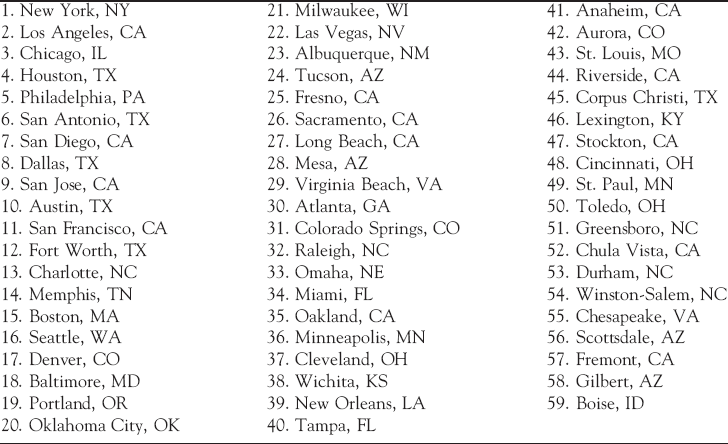
| 1. New York, NY | 21. Milwaukee, WI | 41. Anaheim, CA |
| 2. Los Angeles, CA | 22. Las Vegas, NV | 42. Aurora, CO |
| 3. Chicago, IL | 23. Albuquerque, NM | 43. St. Louis, MO |
| 4. Houston, TX | 24. Tucson, AZ | 44. Riverside, CA |
| 5. Philadelphia, PA | 25. Fresno, CA | 45. Corpus Christi, TX |
| 6. San Antonio, TX | 26. Sacramento, CA | 46. Lexington, KY |
| 7. San Diego, CA | 27. Long Beach, CA | 47. Stockton, CA |
| 8. Dallas, TX | 28. Mesa, AZ | 48. Cincinnati, OH |
| 9. San Jose, CA | 29. Virginia Beach, VA | 49. St. Paul, MN |
| 10. Austin, TX | 30. Atlanta, GA | 50. Toledo, OH |
| 11. San Francisco, CA | 31. Colorado Springs, CO | 51. Greensboro, NC |
| 12. Fort Worth, TX | 32. Raleigh, NC | 52. Chula Vista, CA |
| 13. Charlotte, NC | 33. Omaha, NE | 53. Durham, NC |
| 14. Memphis, TN | 34. Miami, FL | 54. Winston-Salem, NC |
| 15. Boston, MA | 35. Oakland, CA | 55. Chesapeake, VA |
| 16. Seattle, WA | 36. Minneapolis, MN | 56. Scottsdale, AZ |
| 17. Denver, CO | 37. Cleveland, OH | 57. Fremont, CA |
| 18. Baltimore, MD | 38. Wichita, KS | 58. Gilbert, AZ |
| 19. Portland, OR | 39. New Orleans, LA | 59. Boise, ID |
| 20. Oklahoma City, OK | 40. Tampa, FL |



