





Twin studies allow the study of the genetic and environmental influences on human complex traits and diseases. Researchers can gain insights into the relative contributions of genetics and environment by comparing the similarities and differences in specific traits between monozygotic (MZ) twins (who are ∼100% similar in their genomes) and dizygotic (DZ) twins (who are similar in around 50% on their genomes), with both sharing environmental factors, particularly during childhood (Hur & Craig, Reference Hur and Craig2013). By comparing similarities and differences between these twin types, researchers can unravel the interplay between genetic and environmental factors in determining specific traits and diseases (Polderman et al., Reference Polderman, Benyamin, De Leeuw, Sullivan, Van Bochoven, Visscher and Posthuma2015).
Over the years, twin studies have helped to elucidate the underlying causes of many phenotypes and diseases, and have provided valuable insights for the development of new therapies and treatments (Hagenbeek et al., Reference Hagenbeek, Hirzinger, Breunig, Bruins, Kuznetsov, Schut, Odintsova and Boomsma2023). Moreover, they have played a pivotal role in shaping prevention strategies, which have the potential to enhance public health practice benefiting the Mexican population (Moreno-Estrada et al., Reference Moreno-Estrada, Gignoux, Fernández-López, Zakharia, Sikora, Contreras and Bustamante2014).
Numerous nations, mostly in Europe, North America and Asia, have established twin registries (Hur et al., Reference Hur, Bogl, Ordoñana, Taylor, Hart, Tuvblad, Ystrom, Dalgård, Skytthe and Willemsen2019). Yet, relatively few genetic studies have been conducted in admixed populations such as Mexicans. This is a significant gap in our knowledge because these communities possess a unique genetic architecture due to their socio-demographic history (Moreno-Estrada et al., Reference Moreno-Estrada, Gignoux, Fernández-López, Zakharia, Sikora, Contreras and Bustamante2014). Without comprehensive data from these populations, we are potentially overlooking unique genetic contributions to health and disease, and this may limit the precision of medical interventions based on genetics. Therefore, by studying these populations, we might uncover new genetic variations that influence how individuals respond to illnesses and medications (Kurones & Goldberg, Reference Korunes and Goldberg2021). Moreover, including underrepresented populations in genetic studies can foster social justice and equity in access to precision medicine, as these communities have often been excluded from genetic research, potentially limiting their ability to benefit from advancements in medical science and clinical applications (A. R. Martin et al., Reference Martin, Kanai, Kamatani, Okada, Neale and Daly2019; Peterson et al., Reference Peterson, Kuchenbaecker, Walters, Chen, Popejoy, Periyasamy, Lam, Iyegbe, Strawbridge, Brick, Carey, Martin, Meyers, Su, Chen, Edwards, Kalungi, Koen, Majara and Duncan2019; Wojcik et al., Reference Wojcik, Graff, Nishimura, Tao, Haessler, Gignoux, Highland, Patel, Sorokin, Avery, Belbin, Bien, Cheng, Cullina, Hodonsky, Hu, Huckins, Jeff, Justice and Carlson2019). The Mexican population, a product of genetic admixture, displays varying degrees of genetic ancestry composition depending on the region. Generally, it is estimated to range from 56% to 90% for indigenous ancestry, from 10% to 38% for European ancestry, and around 5% and 2% for African and Asian ancestry respectively (Bodner et al., Reference Bodner, Perego, Gomez, Cerda-Flores, Rambaldi Migliore, Woodward, Parson and Achilli2021; De Oliveira et al., Reference De Oliveira, Secolin and Lopes-Cendes2023; Juárez-Cedillo et al., Reference Juárez-Cedillo, Zuñiga, Acuña-Alonzo, Pérez-Hernández, Rodríguez-Pérez, Barquera, Gallardo, Sánchez-Arenas, García-Peña Mdel, Granados and Vargas-Alarcón2008; Martinez-Fierro et al., Reference Martinez-Fierro, Beuten, Leach, Parra, Cruz-Lopez, Rangel-Villalobos, Riego-Ruiz, Ortiz-Lopez, Martinez-Rodriguez and Rojas-Martinez2009; Ruiz-Linares et al., Reference Ruiz-Linares, Adhikari, Acuña-Alonzo, Quinto-Sanchez, Jaramillo, Arias, Fuentes, Pizarro, Everardo, de Avila, Gómez-Valdés, León-Mimila, Hunemeier, Ramallo, Silva de Cerqueira, Burley, Konca, de Oliveira, Veronez and Gonzalez-José2014).
In addition to genetic variation between populations, Mexico has a higher prevalence of particular diseases. For instance, metabolic-related disorders, such as obesity, diabetes and hypertension, are more common when compared to populations with European ancestry. In Mexico, 15.2% of adults suffer from diabetes, compared to 10.5% in Spain, 8.3% in Italy, and 5.6% in the United Kingdom (International Diabetes Federation, 2019). On the other hand, considering mental health in Mexico, the prevalence of depression is 18.3% and anxiety is 14.3% in adults (Agudelo-Botero et al., Reference Agudelo-Botero, Giraldo-Rodríguez, Rojas-Russell, González-Robledo, Balderas-Miranda, Castillo-Rangel and Dávila-Cervantes2021; Medina-Mora et al., Reference Medina-Mora, Borges, Benjet, Lara and Berglund2007), whereas it is 3.3% and 4.3% respectively in Europe (Santomauro et al., Reference Santomauro, Mantilla Herrera, Shadid, Zheng, Ashbaugh, Pigott, Abbafati, Adolph, Amlag, Aravkin, Bang-Jensen, Bertolacci, Bloom, Castellano, Castro, Chakrabarti, Chattopadhyay, Cogen, Collins and Ferrari2021). Additionally, demographic trends in Mexico show a unique profile in terms of reproductive health. Notably, the country witnessed a 1.72% rate of multiple births in 2022 (Instituto Nacional de Estadística y Geografía [INEGI], 2023c), reflecting the prevalence of twins and other multiple births within the population. These data highlight that studies developed in populations with European or Asian ancestries do not necessarily fit public health issues in the Mexican population.
The aims of this article are, first, presenting an update on the TwinsMX registry, which was established in 2018 (Leon-Apodaca et al., Reference Leon-Apodaca, Chiu-Han, Ortega-Mora, Román-López, Caballero-Sánchez, Aldana-Assad, Campos, Cuellar-Partida, Ruiz-Contreras, Alcauter, Rentería and Medina-Rivera2019). This update details the prevalence of various complex traits observed in MZ and DZ twins. Second, to inform about recent developments such as the inclusion of brain magnetic resonance imaging (MRI) scans for twins. Third, shedding light on the challenges and limitations encountered in the TwinsMX registry and to describe strategies for future growth. Finally, the article aims to stimulate a deep understanding on the complexities involved in the study of genetic traits in the Mexican population.
Materials and Methods
Experimental Design and Progress to Date
Participants
Mexican twins, triplets and other multiple-birth participants have been recruited by means of demographic campaigns launched across the country. Twins of different ages were contacted by means of social media (Facebook, Twitter and Instagram) and newspapers, as well as nursing homes, large hospitals and educational institutions. Adult twins over 18 years old and underaged children, with the assistance and authorization of their primary caregiver, completed an online survey at www.twinsmxofficial.unam.mx. Subjects provided their written consent to participate in the registry. The procedures executed in TwinsMX have been revised and approved by the Research Ethics Committee of the Institute of Neurobiology at Universidad Nacional Autónoma de México (UNAM; translated as National Autonomous University of Mexico).
Data collection
Several measures are being collected, such as anthropometric (i.e., height and weight) and epidemiological information (i.e., medical history, lifestyle, quality of life, mood, cognitive function and nutritional status). Some of these surveys were previously carried out on the Mexican population and currently serve as controls and updates for the project (Alcauter et al., Reference Alcauter, García-Mondragón, Gracia-Tabuenca, Moreno, Ortiz and Barrios2017; Gracia-Tabuenca et al., Reference Gracia-Tabuenca, Moreno, Barrios and Alcauter2018; Ruiz-Contreras et al., Reference Ruiz-Contreras, Soria-Rodríguez, Almeida-Rosas, García-Vaca, Delgado-Herrera, Méndez-Díaz and Prospéro-García2012). Participants are currently being asked to consent to future contact, to participate in later stages of the study, and to express their willingness to donate a DNA sample for genotyping. Twins are actively being invited to participate in a magnetic resonance imaging (MRI) session that includes a cognitive evaluation (e.g., working memory, planning, and deductive reasoning) with the Creyos platform (https://creyos.com/; Torralva et al., Reference Torralva, Gleichgerrcht, Torres Ardila, Roca and Manes2015), and the acquisition of anatomical and functional magnetic resonance imaging (fMRI), and magnetic resonance spectroscopy of the medial frontal and parietal lobes to estimate the concentration of metabolites, including gamma aminobutyric acid (GABA), glutathione (GSH), glutamate/glutamine (Glx), N-acetylaspartate (NAA), total Creatine (tCr), Choline (Cho) and myo-Inositol (mI). Finally, diffusion weighted imaging is also collected to estimate the white matter integrity and the modeling of the main white matter tracts considering crossing fibers (Grier et al., Reference Grier, Zimmermann and Heilbronner2020), using constrained spherical deconvolution or other multifiber methods. This information is securely stored and anonymized in a database on the TwinsMX platform.
The development and maintenance of TwinsMX as Mexico’s National Twin Registry are fully supported by the infrastructure and institutional framework of UNAM. The Institute of Neurobiology and the International Laboratory for Human Genome Research, both in the city of Querétaro, and the School of Psychology in Mexico City are where the main research team is headquartered. Similar resources at UNAM, such as the National Laboratory of Magnetic Resonance Imaging and the National Laboratory of Advanced Scientific Visualization, also offer TwinsMX infrastructure and assistance.
Data collection platform
Participants answer a series of online surveys and self-applied psychological inventories using the Research Electronic Data Capture (REDCap) platform. REDCap facilitates the integration of surveys and document collections in research projects while streamlining data administration for statistical analysis (Harvey, Reference Harvey2018; Wright, Reference Wright2016). The Unique Population Registry Code (or CURP, using its initials in Spanish), a valid Mexican identity number, must be entered by each TwinsMX participant. This ID is used as their identification number to enter the platform, and due to its composition, includes information on the birth date and place of birth that can be used to match each twin to their siblings.
Zygosity assessment
In the TwinsMX registry, twin zygosity has been determined by twins’ self-report. When the two twins disagreed, gave contradictory answers, or neither twin provided a response, zygosity was labeled as unknown (UZ). If only one twin responded, only this answer was used to determine the zygosity. This approach is adopted to pragmatically utilize the available data within the current scope of the study. Previous studies have shown a high level of consistency in twin self-reports regarding zygosity, supporting the reliability of self-reported data in twin studies (Sánchez-Romera, Reference Sánchez-Romera2013). Thus, zygosity was classified as monozygotic males (MZM), monozygotic females (MZF), dizygotic males (DZM), dizygotic females (DZF), dizygotic opposite sex (DZO) and unknown zygosity (UZ). This method ensures the efficient utilization of available data while maintaining the integrity of zygosity classification within the registry.
Results
Recruitment to Date
Currently, the TwinsMX registry includes data on over 2826 individual twins from all states of the country, which equates to a total of 450 complete twin pairs. Among these pairs, 280 are MZ (identical) and 170 are DZ (fraternal), providing a diverse and comprehensive sample for our analyses. The geographic distribution of these individual registrations is illustrated in Figure 1, with Mexico City and the State of Mexico, the most populous states, contributing the highest number of individual twin registrations.
The geographic distribution of the registered twins. (A) The map shows the progress of registrations in each state of the Mexican Republic, the number of registrations is coded with a color scale shown in the central bar. Because of the imbalance in the twins’ participation in geographical terms, the color scale is on a logarithmic scale. (B) The graph represents the record advance in terms of the area of each rectangle, and the color code is maintained. For reference, the codes shown in the figure are: AG: Aguascalientes, BC: Baja California, BS: Baja California Sur, CM: Campeche, CS: Chiapas, CH: Chihuahua, CO: Coahuila, CL: Colima, DG: Durango, GR: Guerrero, HG: Hidalgo, MI: Michoacán, MO: Morelos, NA: Nayarit, NL: Nuevo León, OA: Oaxaca, QR: Quintana Roo, SL: San Luis Potosí, SI: Sinaloa, SO: Sonora, TB: Tabasco, TM: Tamaulipas, TL: Tlaxcala, YU: Yucatán, ZA: Zacatecas (International Organization for Standardization, 2020).

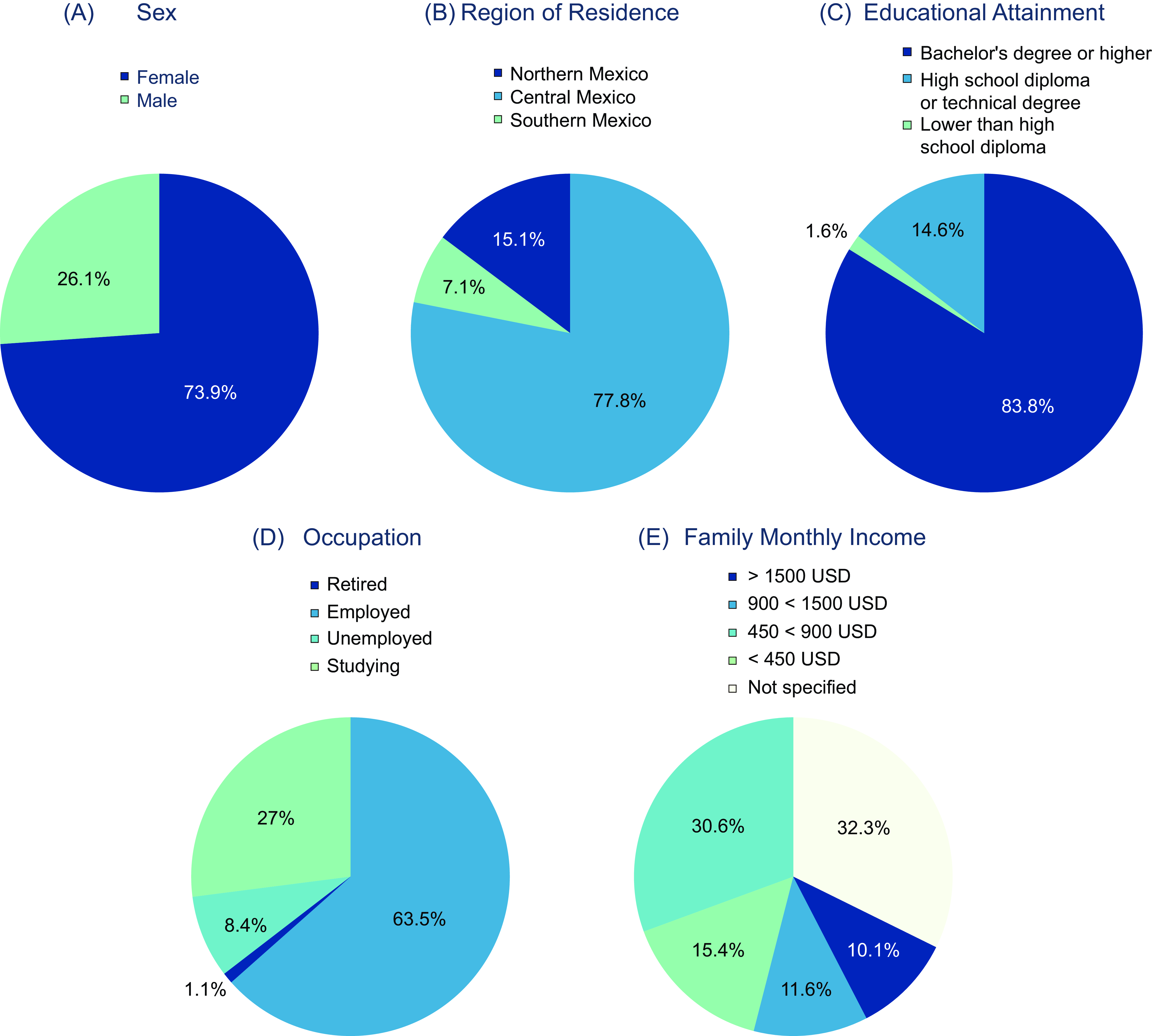
Figure 2 presents a demographic snapshot of adult participants in the TwinsMX registry, showcasing variables that outline the composition of this specific age group. The figure illustrates the distribution of adult participants by sex, region of residence, educational attainment, occupation and family monthly income. In contrast, Table 1 provides a comparative breakdown of these demographics between individuals younger than 18 years and those 18 years and older, offering a complete view of the registry’s demographic makeup across all age groups.
Pie charts illustrating the key demographics of adult twins (aged 18+) in TwinsMX. (A) Divided by gender. (B) Percentage of records by geographic region. (C) Proportion of the educational level of the participants. (D) Employment status. (E) Family monthly income. A more detailed version of the data can be found in Table 1.
Demographic characteristics of registered twins in TwinsMX

Note: n, number of individual twins; SD, standard deviation; USD, U.S. Dollars.
The study underscores that a substantial 73.9% of the records are from women, aligning with research suggesting women are more likely to engage in e-health behaviors than men (Escoffery et al., Reference Escoffery2018). Additionally, 77.8% of participants come from the nation’s central region, a predominantly urban area, potentially influencing participant profiles due to greater accessibility and familiarity with digital technologies (Paccoud et al., Reference Paccoud, Baumann, Le Bihan, Pétré, Breinbauer, Böhme, Chauvel and Leist2021). A notable 83.8% have a bachelor’s degree or higher, significantly higher than the national average of 21% for adults aged 24−65 (Organisation for Economic Co-operation and Development [OECD], 2023). Furthermore, 63.5% of registered adults are employed, aligning with the national employment rate of 58.5% (INEGI, 2023b). The study reveals that only 15.4% of the respondents earn less than 450 USD per month, aligning with the lower income class in Mexico. This percentage is markedly lower than Mexico’s national rate of 56.6% in this income category (INEGI, 2013), indicating that the survey’s respondents are not predominantly from the lower income class. Conversely, with the national average monthly income at approximately 320 USD (INEGI, 2023a), it appears that the survey participants are more representative of Mexico’s middle to upper-middle socio-economic strata.
Figure 3 displays the number of records as a function of age at enrollment, as well as the percentage of records by the zygosity self-report. Table 2 specifies the number and percentage of twins depending on the type of zygosity, as a function of age.
Age and zygosity distribution among the participants. (A) depicts the age distribution at enrollment, highlighting that adults between the ages of 20 and 40 constitute most of the registry. (B) shows the zygosity breakdown of the records: MZM, monozygotic male twins; MZF, monozygotic female twins; DZM, dizygotic male twins; DZF, dizygotic female twins; DZO, dizygotic opposite-sex twins. The data indicate a higher prevalence of monozygotic twins and a greater number of female participants within the registry.

Zygosity distribution by age group among registered twins in TwinsMX

Note: n, number of individual twins within each zygosity category; col, column; MZM, monozygotic male twins; MZF, monozygotic female twins; DZM, dizygotic male twins; DZF, dizygotic female twins; DZO, dizygotic opposite-sex twins; ‘Unknown zygosity’ refers to twins whose zygosity has not been determined.
Given that there are around 9% of records whose zygosity is awaiting validation, Table 2 shows that MZ twins (n = 1443 individuals) exceed DZ twins (n = 1137 individuals). The age range with the greatest number of records is 20−29 years (42.1%), followed by the 30−39 age range (30.2%), for each zygosity group. This age pattern is repeated in all zygosity categories.
According to the data shown in Figure 4, the number of registries has been rising over time. Parents of twins are actively encouraged to register their children and participants to update their information, facilitating follow-up research and enabling future longitudinal studies.
Number of registered participants per quarter. Campaigns have been carried out in the main states of the country to recruit twins. Visits to national television networks usually provide a large number of records in the following weeks.

Preliminary Survey Results
The 10 physical and mental conditions most frequently reported by adult twins participating in the study are detailed in Tables 3 and 4. These tables are organized by zygosity group and gender, providing the number (n) and percentage (%) of participants reporting each condition within their respective zygosity category: MZM, MZF, DZM, DZF, DZO, and unknown zygosity. The percentages are calculated based on the total number of individuals within each zygosity group, offering insights into the prevalence of these conditions relative to the genetic similarity of the twin pairs. This approach allows for a nuanced examination of potential genetic influences on the observed health outcomes. Table 3 focuses on physical health conditions, while Table 4 provides information on mental health conditions, in line with our comprehensive twin health research.
Most common physical conditions among adult twins (aged 18+) in TwinsMX

Note: n, number of individual twins within each zygosity category; MZM, monozygotic male twins; MZF, monozygotic female twins; DZM, dizygotic male twins; DZF, dizygotic female twins; DZO, dizygotic opposite-sex twins; ‘Unknown zygosity’ refers to twins whose zygosity has not been determined. The criterion for categorizing overweight and obesity in this study is based on Body Mass Index (BMI). Individuals with a BMI between 20 and 24.9 are classified as overweight, and those with a BMI of 30 or higher are classified as obese.
Most common mental health conditions among adult twins (aged 18+) in TwinsMX

Note: OCD, obsessive-compulsive disorder; ADHD, attention-deficit/hyperactivity disorder; n, number of individual twins within each zygosity category; MZM, monozygotic male twins; MZF, monozygotic female twins; DZM, dizygotic male twins; DZF, dizygotic female twins; DZO, dizygotic opposite-sex twins; ‘Unknown zygosity’ refers to twins whose zygosity has not been determined.
In complement to Tables 3 and 4, which delineate the frequencies of physical and mental conditions among adult twins by zygosity and gender, a visual summary is provided. The visual data depicted in Figure 5, derived from self-reported information, offers a gender-based comparative analysis of the most reported physical and mental conditions within the twin study. Prevalence rates underscore patterns that warrant further investigation, such as the notably higher incidence of myopia and colitis in females and the greater prevalence of anxiety and depression in comparison to their male counterparts. This visual aid complements the detailed numerical data provided in Tables 3 and 4, enhancing the reader’s ability to quickly discern patterns and prevalence rates among the surveyed population. This gender-based prevalence data serves as a key component of our comprehensive analysis of health trends within the twin population.
Prevalence of diseases by gender in a twin population. Panel A depicts the prevalence of selected physical diseases, and Panel B shows the prevalence of mental diseases, each stratified by gender. Blue bars represent male and green bars represent female participants. Notable conditions such as myopia, colitis, anxiety, and depression are displayed, highlighting differences in disease occurrence between genders within the studied twin cohort.
Note: OCD, obsessive-compulsive disorder; ADHD, attention-deficit/hyperactivity disorder.

Advances in the Magnetic Resonance Imaging Study
To date, we have collected magnetic resonance data from more than 270 twins, mainly from the metropolitan areas of Queretaro and Mexico City. For the purpose of this study, the zygosity classification has been determined from the twins’ questionnaire responses, as noted in the Methods section. In Figure 6, representative images of the high-resolution and high-contrast anatomical images are shown. Functional MRI includes a resting-state acquisition (10 minutes long) and the execution of a visuospatial working memory task, previously designed by our group to assess individual differences in performance as a function of diversity and frequency of leisure activities in Mexican young adults (Ruiz-Contreras et al., Reference Ruiz-Contreras, Soria-Rodríguez, Almeida-Rosas, García-Vaca, Delgado-Herrera, Méndez-Díaz and Prospéro-García2012). A representative image of the functional activation maps of the working memory task can be seen in the Figure 7; active regions include the typical pattern identified in previous work, including the central executive network (i.e., lateral frontal, parietal cortex and occipital regions). Finally, a representative analysis of a magnetic resonance spectroscopy of the medial parietal cortex is shown in Figure 8. We can see the main peaks associated with NAA; tCr, Cho, Glx and mI are spectra obtained by a Point RESolved Spectroscopy (PRESS) sequence. GABA and GSH estimation is performed using the Hadamard Encoding and Reconstruction of MEGA-Edited Spectroscopy sequence (HERMES; Saleh et al., Reference Saleh, Oeltzschner, Chan, Puts, Mikkelsen, Schär, Harris and Edden2016).
Example high-resolution and high-contrast T1w images. The slices are from sets of monozygotic (MZ) and dizygotic (DZ) twins. Ventricle shape and volume seem to be more similar between identical twins than fraternal twins.

Working memory network. Contrast between 2-back and 0-back tasks. Representative figure (n = 28) of the working memory which includes: the precuneus (PCu), the paracingulate gyri (PCG), cerebellum, bilateral medial frontal gyri (FMG), bilateral caudate nuclei (CN), bilateral occipital cortex (OC), dorsolateral prefrontal cortex (DLPFC), and operculum. Image thresholded z statistics. z > 3.1, cluster-corrected p < .05.

Magnetic resonance spectroscopy data from the medial parietal cortex. In gray the individual spectra of each participant, and in red the average spectrum of the sample. The main peaks of NAA, Glx, tCr, Cho, and mI are labeled. The overlap of subjects’ voxel placements is shown on the right side, where brighter colors represent a higher overlap.

Discussion
Twin studies have been instrumental in uncovering the underlying causes of a wide range of complex traits and diseases. The insights gained through these studies have also been invaluable in the development of new therapies and treatments. The creation of a twin registry in Mexico, TwinsMX, is particularly important given the unique genetic makeup of the Mexican population, which is a mixture of various ethnic groups. The geographic origin of the registered twins on the TwinsMX platform reflects regional differences in population density. In general, the number of records is in line with the population of each state; however, there are notable exceptions, such as the state of Querétaro. This state is not one of the most heavily populated, yet it has a high number of records. This may be because many campaigns are carried out there, where MRI studies are also performed. This highlights the need to strengthen the dissemination of information in other states’ media.
Another issue that is worth mentioning is that there are more female participants in the project than male participants. The greater female participation in the TwinsMX study can be attributed to multiple factors. Women’s higher propensity for online survey participation is wellndocumented (Escoffery, Reference Escoffery2018; Smith, Reference Smith2008), likely influenced by gender-specific attitudes towards e-health behaviors. Furthermore, it is important to consider the specific recruitment dynamics in twin studies. Research has shown that in such studies, female participants are more likely to volunteer (Lykken et al., Reference Lykken, McGue and Tellegen1987; N. G. Martin & Wilson, Reference Martin and Wilson1982). These factors combined contribute to the gender disparity observed in the study. Additionally, the majority of participants have a bachelor’s degree or higher education. This population group may have greater ease of access to equipment and time to complete questionnaires. As such, a recruitment campaign targeting educational groups with fewer records may be necessary to facilitate access to the platform. Currently, a notable number of minors (under 18 years old) are registered on the TwinsMX platform, reflecting the willingness of their parents to engage with the project. This growing database of younger participants will be instrumental in future studies, particularly as we plan to expand our research to include follow-up visits and more comprehensive analyses involving these younger age groups.
The TwinsMX registry contributes to a growing understanding of the prevalent physical and mental conditions within the twin population in Mexico, providing new insights into the health dynamics of the nation. Our internet-based survey methodology primarily attracts respondents from urban areas with higher educational backgrounds. This demographic skew is likely to influence the prevalence rates reported and is visually represented in Figure 5. This figure illustrates the prevalence of specific conditions by gender among the surveyed twins, offering a visual summary that suggests the potential impact of urban health dynamics, including dietary and stress-related factors. Notably, the prevalence rates of colitis in our twin study are 32.1% for women and 14.3% for men. This contrasts with the rates of 27.7% for women and 26.9% for men reported in a hospital-based Mexican sample (Yamamoto-Furusho et al., Reference Yamamoto-Furusho, Bosques-Padilla, Charúa-Guindic, Cortés-Espinosa, Miranda-Cordero, Saez and Ledesma-Osorio2019), highlighting a notable difference. It is important to mention that nationwide data on colitis prevalence in Mexico are not readily available, making these findings particularly significant. Similarly, the rates of overweight in our twin cohort are 24.5% for women and 21% for men, compared to the national figures of 36.6% for women and 42.5% for men (INEGI, 2018). These observations might indicate unique health patterns within the twin population or reflect the specific characteristics of our urban and educated sample. While our findings provide a preliminary snapshot, they open avenues for further research into the health issues affecting the twin population in Mexico, particularly in comparison to singletons and twin populations in other countries. Such comparative analyses could yield valuable insights into the genetics of complex traits and diseases. Furthermore, the registry’s exploration of genetic variances related to disease response and drug efficacy holds the potential to guide the development of personalized therapies suited to individual genetic profiles.
TwinsMX is anticipated to significantly advance the field of epidemiological genetics in Mexico and raise our knowledge of the genetic and environmental mechanisms underlying ethnic variation in complex traits and diseases, such as behavioral, psychometric and anthropometric traits, as well as metabolic, cardiovascular and mental diseases. An additional objective of TwinsMX is the public outreach of the benefits of twin studies, and to disseminate the scientific findings among participants and the general public. For instance, current TwinsMX results for eye health have shown that astigmatism and myopia in Mexican population has an heritability higher than 60% (Román-López et al., Reference Román-López, García-Vilchis, Murillo-Lechuga, Chiu-Han, López-Camaño, Aldana-Assad, Diaz-Torres, Caballero-Sánchez, Ortega-Mora, Ramírez-González, Zenteno, Espinosa-Valdés, Tapia-Atilano, Pradel-Jiménez, Rentería, Medina-Rivera, Ruiz-Contreras and Alcauter2023), which shows that genetic factors are contributing more for these traits.
The TwinsMX project has made considerable progress, yet several challenges remain to be addressed for it to achieve its full potential. Ongoing efforts are focused on securing long-term support to continue the recruitment and data collection essential for establishing a comprehensive twin registry. A current limitation is that some twins do not complete all the questionnaires, potentially restricting the quantity of data acquired. This underscores the need for sustained initiatives to engage twins, emphasizing the study’s significance and the benefits of participation. Presently, TwinsMX operates with a single branch work team located in the interior of the country. This geographical limitation poses challenges in reaching twins in more rural areas, potentially affecting the diversity of the twin population in the registry. To mitigate this, plans are in place to expand by creating additional branches in various regions of Mexico. This expansion is expected to enhance access to twins in remote areas, thereby increasing the registry’s representativeness. Furthermore, addressing the logistic complexities involved in transporting and storing biological samples is crucial. Overcoming these logistic hurdles will make the registry more effective in capturing a broader spectrum of the Mexican population.
Future Perspectives
TwinsMX is expanding its scope to reach more people through promotion on social networks and collaborations with community organizations. The project is actively engaging a wider population of twins of different ages by collaborating with schools of various educational levels. These collaborations facilitate the process of sending detailed project explanations to twin students, inviting them to participate, and subsequently conducting telephone interviews. The ongoing advertising campaign encourages active sharing of digital information. TwinsMX is already participating in radio and TV interviews to publicize study results, with plans to increase the frequency and reach of these appearances. Nationwide twin events are planned in the coming years to build a robust network with twins across the country. While the project currently focuses on physical and mental health, there is an intention to broaden its scope to include aspects related to financial health and general quality of life. Future phases may integrate health monitoring applications and physical activity monitoring devices, offering a more comprehensive and personalized view of each participant’s health. The data collected will be instrumental in informing public policy and aiding individuals and communities in making informed health and wellbeing decisions.
The TwinsMX registry is anticipated to be a valuable resource for research into complicated diseases and areas of healthy aging in the Mexican community. The resource will be enhanced through increased data collection, database management, biological sample storage and statistical quality control. TwinsMX’s founding operations are still supported by a grant from the National Council of Humanities, Science and Technology (CONAHCYT, using its initials in Spanish). In the coming years, TwinsMX is poised to further expand its data collection efforts from twins, employing established methods while also embracing new communication technologies and content promotion strategies. Additionally, there is a plan to actively explore and establish collaborations with researchers from other countries. This will enable the comparison of findings from Mexican twins with those of other populations, providing a more comprehensive and global perspective on the genetics of complex traits and diseases.
TwinsMX is actively gathering data from a diverse group of volunteer twins, covering a wide range of ages from infancy to adulthood. Currently, the project’s analysis is focused on adult participants, but there are plans to broaden this scope in the future to include younger age groups. This expansion is crucial for a more comprehensive understanding of the genetic and environmental influences that affect complex traits and disorders across different stages of life. As the twin registry continues to grow through enhanced recruitment efforts, it will provide researchers with an invaluable repository of information. This will significantly contribute to the investigation of genetic and environmental factors impacting complex traits and disorders within the Mexican community. The TwinsMX project envisions a future where insights gained from this extensive and varied data will not only enrich the current understanding but also open new avenues for research in genetic epidemiology.
Acknowledgments
First, we are extremely grateful to the twins and their families for their active and interested involvement with the project. We acknowledge the support and resources from the Universidad Nacional Autónoma de México (National Autonomous University of Mexico), in particular to the Laboratorio Nacional de Imagenología por Resonancia Magnética (LANIREM, translated as the National Laboratory for Magnetic Resonance Imaging), the Laboratorio Avanzado de Visualización Científica (LAVIS, Advanced Laboratory for Scientific Visualization), and the Laboratorio de Neurogenómica Cognitiva. We also thank Erick H. Pasaye Alcaraz, Leopoldo González Santos, Luis Alberto Aguilar Bautista, Jair García Sotelo for their support.
Financial support
TwinsMX is supported by funding from the National Council for Humanities, Science and Technology of Mexico (CONAHCYT, Grant no. 6390). A.M.-R.’s laboratory is supported by funding from the Support Program for Research and Technological Innovation Projects of the National Autonomous University of Mexico (PAPIIT-UNAM; Grant no. IA206517-IA201119, IA203021, IN218023) and CONAHCYT 11311; A.E.R.C.’s laboratory is supported by PAPIIT-UNAM (Grant no. IN217221 and IN221724). S.A. is supported by PAPIIT-UNAM (Grant no. IN208622 and IN212624). M.E.R. thanks the support of the Rebecca L. Cooper Medical Research Foundation through an Al & Val Rosenstrauss Fellowship (F20231230).


 Open access

