


Introduction
Evidence suggests that approximately 5–10% of fathers experience depression in the postnatal period (Paulson & Bazemore, Reference Paulson and Bazemore2010). The disorder is associated with both parenting difficulties (Wilson & Durbin, Reference Wilson and Durbin2010; Davis et al. Reference Davis, Davis, Freed and Clark2011) and an increased risk of behavioural disturbance and impaired cognitive development in the offspring (Ramchandani et al. Reference Ramchandani, Stein, O'Connor, Heron, Murray and Evans2008; Paulson et al. Reference Paulson, Keefe and Leiferman2009). A range of potential mechanisms that may mediate the association between the occurrence of depression in fathers and adverse infant outcomes have been suggested (Ramchandani & Psychogiou, Reference Ramchandani and Psychogiou2009); however, empirical evidence is relatively lacking (Low & Stocker, Reference Low and Stocker2005; Kane & Garber, Reference Kane and Garber2009).
Depressive symptoms have a marked influence on social relationships, and this extends to the relationship that the parent establishes with their infant. One key pathway by which paternal depression may lead to adverse child outcome is through its effect on father–infant interactions. This is likely to include parental speech, which directly taps into a potential pathway involving negative cognitions and affect between a depressed parent and child. Parental speech contributes to the child's language acquisition, attributional style and emotional and cognitive development (Abkarian et al. Reference Abkarian, Dworkin and Abkarian2003; Pancsofar & Vernon-Feagans, Reference Pancsofar and Vernon-Feagans2006). Analysis of parental speech to the infant during face-to-face interactions in the early postnatal months may be particularly relevant to identifying aspects of interactive behaviour influenced by depression.
Two key features of early father–infant interactions are, first, cognitive biases (Beck, Reference Beck1976), comprising the attentional focus and affect of the father's speech, and second, parental mentalization, the process of treating the child as a psychological agent, described variously in the constructs of attribution of agency (Murray et al. Reference Murray, Kempton, Woolgar and Hooper1993), reflective function (RF; Fonagy & Target, Reference Fonagy and Target2005) and maternal mind-mindedness (MMM; Meins et al. Reference Meins, Fernyhough, Fradley and Tuckey2001). These three constructs share the core component of recognizing and interpreting mental processes, reflected in ‘a meeting of minds’ between parent and child (for a review, see Sharp & Fonagy, Reference Sharp and Fonagy2008, p. 748). In the interest of conciseness, in this paper we use the term mentalizing to describe this attribution of mental states to the infant by the father.
To date, no published evidence exists on the impact of depression on cognitive biases and mentalization in the speech patterns of fathers. The few previous studies on paternal speech have largely examined syntactic and lexical features in parental speech registers to pre-verbal infants (Papousek et al. Reference Papousek, Papousek and Haekel1987; Fernald et al. Reference Fernald, Taeschner, Dunn, Papousek, De Boysson-Bardies and Fukui1989; Kaplan et al. Reference Kaplan, Sliter and Burgess2007). Given the paucity of research concerning speech in fathers of depressed infants, we have drawn substantially on previous work with mothers. This includes the adaptation and use of scales previously used with mothers of infants, and the findings from maternal studies considered in the paragraphs that follow. It is important to note, however, that critical differences may exist between the speech used by mothers and fathers. In work on the wider aspects of parent–infant interactions, some differences are apparent. For example, father–infant interactions are often described as more physically stimulating and arousing, in comparison with more smoothly adapted episodes of reciprocity of gaze, vocalizations and positive affect during maternal interactions (Yogman, Reference Yogman1977; Belsky, Reference Belsky1979; Power, Reference Power1985). Despite these differences, some similarities in the effects of depression are seen. Depressed fathers, like depressed mothers, tend to be withdrawn and demonstrate negative affect in their behavioural interaction with their infants (Zaslow et al. Reference Zaslow, Pedersen, Cain, Suwalsky and Kramer1985; Edhborg et al. Reference Edhborg, Matthiesen, Lundh and Widstrom2005; Davis et al. Reference Davis, Davis, Freed and Clark2011). It is as yet unknown whether any such similarities (or differences) map onto parents' verbal interactions with their infants.
The first key aspect of parental speech, cognitive bias, has two components, the attentional focus of a parent's speech register, and the affective quality (the positive or negative affect of the speech). General evidence suggests that depressed adults tend to demonstrate negatively biased self-perceptions, and increased attentiveness to and recall of negative stimuli (for a review of this literature, see Mathews & Macleod, Reference Mathews and Macleod2005). In depressed parents, these negative automatic thoughts extend beyond a biased judgement of the self, to manifest in both behavioural (Alloy et al. Reference Alloy, Abramson, Tashman, Berrebbi, Hogan, Whitehouse and Al2001) and verbal features of parenting (Kaminer et al. Reference Kaminer, Beebe, Jaffe, Kelly and Marquette2007). Negative automatic thoughts are evidenced by high levels of criticism, rejection and control (Alloy et al. Reference Alloy, Abramson, Tashman, Berrebbi, Hogan, Whitehouse and Al2001). Furthermore, depressed parents tend to express increased anger and decreased positive affect, empathic responses and praise during play with their child (Cohn & Tronick, Reference Cohn and Tronick1989; Cohn et al. Reference Cohn, Campbell, Matias and Hopkins1990; Murray et al. Reference Murray, Kempton, Woolgar and Hooper1993; Field, Reference Field and Borstein1995). Depressed individuals also have an increased tendency to focus on the self rather than on the external environment (Mor & Winquist, Reference Mor and Winquist2002).
Three studies from the maternal literature (Murray et al. Reference Murray, Kempton, Woolgar and Hooper1993, Reference Murray, Hipwell, Hooper, Stein and Cooper1996b ; Herrera et al. Reference Herrera, Reissland and Shepherd2004; Kaminer et al. Reference Kaminer, Beebe, Jaffe, Kelly and Marquette2007) have examined cognitive biases in the context of maternal psychopathology. Murray et al. (Reference Murray, Kempton, Woolgar and Hooper1993) compared the speech of depressed and well mothers with their 2-month-old infants and found that depressed mothers expressed more negativity compared with controls or with mothers experiencing a depressive episode only prior to delivery. Furthermore, in reporting the development of depressive cognitions in 5-year-olds, Murray et al. (Reference Murray, Woolgar, Cooper and Hipwell2001) have also shown negativity in maternal speech to partially mediate the association with maternal depression. Kaminer et al. (Reference Kaminer, Beebe, Jaffe, Kelly and Marquette2007), in contrast, did not find a direct effect of maternal depression on speech, but did find that increased maternal self-criticism was associated with an increased focus on maternal experience and less on infant experience. Herrera et al. (Reference Herrera, Reissland and Shepherd2004) analysed maternal speech at 6 and 10 months postpartum. At 6 months, depressed mothers focused less on affective (i.e. internal states and feelings) and informative (i.e. activity and external environment) features in their speech than non-depressed mothers, and at 10 months depressed mothers were more negative with their infants. To our knowledge the impact of depression on cognitive biases in the speech patterns of fathers has not been examined previously. Findings from a study analysing paternal speech in the context of paternal depression indicates that decreased vocal pitch in the speech of depressed fathers is less effective in promoting voice–face recognition in their infants (Kaplan et al. Reference Kaplan, Sliter and Burgess2007).
The second key aspect of parental speech examined in this study is mentalization. Like attribution of agency (Murray et al. Reference Murray, Kempton, Woolgar and Hooper1993), both RF and MMM consider ‘the capacity to ascribe thoughts, feelings, ideas, and intentions to ourselves as well as to others, and to employ this capacity in order to anticipate and influence our own and other's behaviour’ (Sharp & Fonagy, Reference Sharp and Fonagy2008, p. 738). However, the measures used to index mentalization may vary. Whilst MMM is observed in the context of real parent–child interactions, RF is measured through the parents' representations of their attachment relationships, in the context of a clinical interview. Most of the existing evidence on MMM (among low-risk community samples) exists in the context of mother–child interactions, indicating that caregiver mentalization in the first year of life predicts infant–caregiver attachment security (Arnott & Meins, Reference Arnott and Meins2007), and children's theory of mind abilities at the age of 4 years (Meins et al. Reference Meins, Fernyhough, Wainwright, Clark-Carter, Das Gupta, Fradley and Tuckey2002). Moreover, problems in parental mentalization have been linked to adverse child outcomes (Sharp & Fonagy, Reference Sharp and Fonagy2008).
Limited research on mentalizing capacity in paternal speech has been examined in relation to infant attachment (Lundy, Reference Lundy2003; Arnott & Meins, Reference Arnott and Meins2007), children's social and cognitive development (LaBounty et al. Reference LaBounty, Wellman, Olson, Lagattuta, Liu and Liu2008) and in understanding mental states about fathering during pregnancy (Lis et al. Reference Lis, Zennaro, Mazzeschi and Pinto2004), but never in relation to paternal depression. There are limited studies of mentalizing in mothers. Murray et al. (Reference Murray, Kempton, Woolgar and Hooper1993) have reported that depressed mothers are less likely to acknowledge infant intentions and agency, compared with non-depressed mothers. Similarly, Herrera et al. (Reference Herrera, Reissland and Shepherd2004) found that mothers with depression made fewer references to their infants' emotional and cognitive experience in their speech and a recent study of in-patients found that depressed mothers, compared with healthy controls, were marginally less likely to comment on their infants' mental state (Pawlby et al. Reference Pawlby, Fernyhough, Meins, Pariante, Seneviratne and Bentall2010).
Our objective in the present study was to examine the speech of depressed and non-depressed fathers during father–infant interactions at 3 months. We examined the impact of fathers' depression on the attentional focus and affective quality of their speech, and in their use of mentalizing comments. We hypothesized that, compared with non-depressed fathers, fathers with depression would demonstrate: (i) more speech focused on paternal experience (father-focused) and less on the infant's experience (infant-focused); (ii) increased negativity, in terms of more negative and critical comments about the infant (infant-focused negativity) and about the self (father-focused negativity); and (iii) fewer comments relating to the infant's mental state, i.e. feelings, beliefs, intentions and desires (mentalizing comments).
Method
Study design
This study utilized an individually matched design. A sample of 38 fathers (19 with current major depressive disorder and 19 without depression) were matched on age and education. Samples were matched and constructed using the nearest available matching method (Rosenbaum & Rubin, Reference Rosenbaum and Rubin1985). Controls were selected from a larger sample of fathers, and individually matched to the closest year for age and by educational grouping depending on the highest level of qualification [General Certificate of General Education (GCSE)/A level/degree/postgraduate].
Participants
Participants were recruited from postnatal wards in Oxfordshire and Buckinghamshire, UK, as part of a longitudinal study. Details of the recruitment to the wider study are available elsewhere (Edmondson et al. Reference Edmondson, Psychogiou, Vlachos, Netsi and Ramchandani2010; Ramchandani et al. Reference Ramchandani, Psychogiou, Vlachos, Iles, Sethna, Netsi and Lodder2011). All fathers recruited into the study were aged 18 years or older, spoke English, were married or in a stable relationship and were residing with their infant. Infants were of gestational age >36 weeks, birth weight ⩾2 kg and had no major congenital anomalies.
Using the ‘matched pair method’ the two study groups were selected, comprising fathers diagnosed as experiencing a current episode of major depression (n=19) when their child was aged 3 months, and a group of non-depressed fathers, with no current or past diagnosis of depression or elevated symptoms on a screening questionnaire, the Edinburgh Postnatal Depression Scale (Cox et al. Reference Cox, Holden and Sagovsky1987). These 38 fathers had a mean age of 35.89 (s.d.=5.42) years, were 94.7% white and all were married or cohabiting. In terms of highest level of educational attainment, 10.5% had GCSEs, and 21.1% had post-graduate qualifications; 92.1% of the fathers were in full-time employment. For all but two fathers, English was their first language. Of the infants, 18 (47.4%) were first born and 14 (36.8%) second born. There were no differences between the diagnostic groups on infant (gender and birth order) and paternal demographic characteristics (marital status, ethnicity and employment status) (Table 1).
Comparison of paternal and infant demographic characteristics by paternal diagnostic status
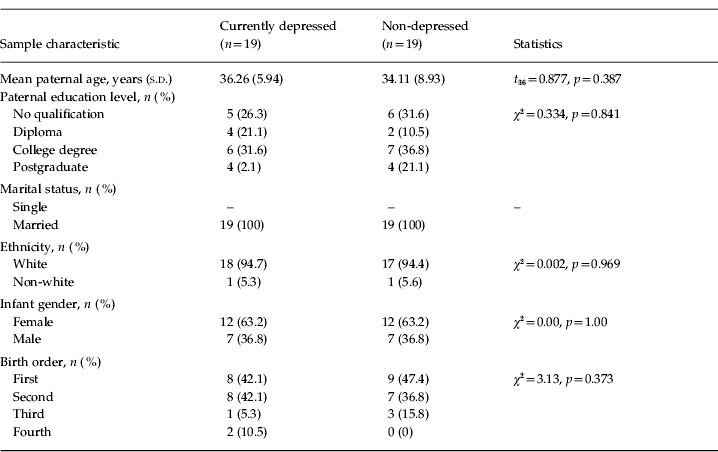
s.d., Standard deviation.
Procedure
Data for this study were collected 3 months post-birth. All assessments were conducted in the families' homes. The assessment of father–infant interactions used a standard assessment protocol (Murray et al. Reference Murray, Fiori-Cowley, Hooper and Cooper1996a ). Fathers were seated opposite their infant, who was placed in an infant seat, allowing face-to-face engagement at eye level. The infant seat was placed alongside a front-surfaced mirror on a table and a video camera was positioned in such a way so as to capture a front view of the infant's face and torso, and a reflection of the father's face and upper torso. Fathers were instructed to play with and talk to their infants as they would normally do without the use of any toys for 3 min. Following the observational assessment, all fathers were interviewed using a structured psychiatric interview.
Paternal speech was transcribed verbatim from videotapes of the interaction. An utterance was defined as a group of words bounded by silence, a short pause or intonation to signal a question mark or period at the end of the sentence or thought. Single words, sentence fragments, non-verbal sounds and songs were each counted as an utterance. In addition to transcribing paternal utterances, the context in which they were made was also indicated on the script. Where sound was not clear (n=3), reliability was established by asking a different member of the research team to independently transcribe the section. Reference to video-clips was made in order to clarify affective tone, infant behaviour/response, and ambiguity in context of utterances concerning infant attention and gaze.
Measures
Structured psychiatric interview
The Structured Clinical Interview for DSM-IV Axis I Disorders (SCID; First et al. Reference First, Gibbon, Spitzer and Williams2002) was used for diagnosing major depressive disorder. The SCID has been found to have high reliability (Zanarini et al. Reference Zanarini, Skodol, Bender, Dolan, Sanislow, Schaefer, Morey, Grilo, Shea, Mcglashan and Gunderson2000) and validity (Basco et al. Reference Basco, Bostic, Davies, Rush, Witte, Hendrickse and Barnett2000). All interviews were conducted by trained graduate psychologists or psychiatrists.
Paternal speech
Paternal speech was examined using The Paternal-Cognitive Attributions and Mentalizing Scale (manual available from the authors upon request). This scale was adapted and developed from two related systems previously developed for examining maternal speech during mother–infant interactions. The primary source was the previous work of Murray and colleagues (Murray & Trevarthen, Reference Murray and Trevarthen1986; Murray et al. Reference Murray, Kempton, Woolgar and Hooper1993), but we also incorporated specific mentalization categories from the construct of ‘mind-mindedness’ (Meins et al. Reference Meins, Fernyhough, Fradley and Tuckey2001). The scales consisted of three main groups of variables of interest: (I) the overall attentional focus of speech; (II) the negative or positive focus of speech; and (III) mentalizing comments in speech.
Overall attentional focus of speech
The overall attentional focus of speech comprised four dimensions: (1) infant-focused speech; (2) father-focused speech; (3) experiential-focused speech; and (4) other-focused speech.
Infant-focused speech included comments directed to, or about, the infant. This dimension reflected the father's overall ability to understand and interpret his infant's mental state (e.g. ‘you like this seat’), focus of attention (e.g. ‘are you looking at the lights?’) and motor movements (e.g. ‘are you trying to touch Daddy?’). Also included were comments on the infant's physical attributes, or general description (e.g. ‘beautiful eyes you have’, ‘you have pink socks’) and attention orienting and maintaining speech (e.g. the use of greetings and songs).
Father-focused speech predominantly captured comments made by the father about himself reflecting an explicit focus on his own thoughts, feelings and experiences (e.g. ‘I'm not able to make you smile’, ‘Daddy's not as good as Mummy’). Also included were comments about the infant reflecting an implicit focus on the father's desire for control, in the form of strong commands and instructions directed towards correcting infant behaviour. Comments such as ‘don't frown at me, smile like you smile at Mummy’, suggest the infant perform in a way consistent with his/her father's request. This perspective was taken from the previous work conducted by Murray and colleagues with mothers' speech (Murray et al. Reference Murray, Kempton, Woolgar and Hooper1993; p. 1087).
Experiential-focused speech captured comments on the context of interaction (e.g. ‘this car seat is like yours’) and those indicating implicit signs of discomfort/situation consciousness (e.g. ‘it's difficult without toys’). Also coded were comments specific to the set-up of the interaction (e.g. presence of the camera or the infant seat).
Other-focused speech included comments that were not directly related to the current play context and removed in time and place (e.g. ‘I wonder what Mummy is doing’, ‘you had a long sleep’).
Negative versus positive focus of speech
Each utterance was coded for the degree to which statements were negative, positive or neutral in order to establish overall affective focus across the 3-min speech sample. Additionally, the negative levels of father-focused and infant-focused speech were also examined. The two ratings are independent.
Mentalizing comments in speech
Mentalizing comments included internal and external state comments. Internal state comments included: sensitivity to mental states, i.e. cognitive state comments (e.g. ‘you like this seat’); feeling states, i.e. emotional state comments (e.g. ‘happy baby’); and somatic functioning, i.e. physiological state comments (e.g. ‘are you tired?’). External state comments reflected the father's capacity to identify the infant's attention and its focus (e.g. ‘are you looking at the lights?’); motor movements (e.g. ‘are you trying to touch Daddy?’); and vocal expressions (e.g. response to vocalizations and mouthings: ‘you're trying to talk to me; do you want to tell me something?’). Paternal response to the infant's emotions, behaviour and vocalization were coded to represent the father's acknowledgement and interpretation of infant intensions. This is in line with prior research on MMM (Meins & Fernyhough, Reference Meins and Fernyhough1999). For example, in the process of interpreting infant vocalizations, the father recognizes that the infant is actually intending to convey some message.
Coding the paternal speech
Videotapes were coded by two researchers blind to paternal depression status. Individual variable scores were calculated by summing total number of utterances. Analyses were conducted using proportions of the total number of utterances.
Inter-rater reliability was examined using the intra-class correlation coefficient (ICC) on a randomly selected 25% of the speech samples. ICC is an appropriate statistical method for studying agreement between sets of continuous data in small samples (n<15). ICC coefficients >0.75 are usually accepted as evidence of good agreement (Maynard et al. Reference Maynard, Bakheit, Oldham and Freeman2003). Inter-rater reliability on the four dimensions of the overall focus of speech was as follows: infant-focused speech [ICC=0.98, 95% confidence interval (CI) 0.95–0.99, p<0.001]; father-focused speech (ICC=0.94, 95% CI 0.78–0.98, p<0.001); experiential-focused speech (ICC=0.60, 95% CI 0.59–0.90, p=0.091); and other-focused speech (ICC=0.89, 95% CI 0.63–0.97, p<0.001). Reliability on the affective focus of speech was: positive comments (ICC=0.83, 95% CI 0.78–0.89); negative comments (ICC=0.89, 95% CI 0.75–0.95); and neutral comments (ICC=0.84, 95% CI 0.71–0.92).
Infant behaviours
Observational measures of infant behaviour were coded using The Global Rating Scales for Mother–Infant Interaction (GRS; Murray et al. Reference Murray, Fiori-Cowley, Hooper and Cooper1996a ). The GRS comprise individual infant behaviours rated on five-point scales ranging from 1 (e.g. distressed) to 5 (e.g. happy). The scales were subsequently clustered into the following dimensions as per standard use in previous research with a possible range from 1 to 5. ‘Infant fretfulness’ during mother–infant interactions comprised two infant behaviour scales from the GRS: (i) happy–distressed and (ii) non-fretful–fretful.
We also coded for the following infant dimensions from father–infant interactions: (A) ‘infant fretfulness’; (B) ‘infant attentiveness and communication’; and (C) ‘infant liveliness’, using the same GRS as for mother–infant interaction.
The inter-rater reliability was calculated as ICCs for each scale. For scales from mother–infant interactions, happy–distressed ICC was 0.72, and for non-fretful–fretful ICC was 0.82. For scales from father–infant interactions, ICCs were: happy–distressed, 0.79; non-fretful–fretful, 0.84; attentive–avoidant, 0.85; active communication–no active communication, 0.86; positive vocalizations–no positive vocalizations, 0.80; lively–inert, 0.79; engaged–self-absorbed, 0.81.
Analytic strategy
First, infant (gender and birth order) and paternal (age, marital status, educational attainment and ethnicity) characteristics were examined in relation to paternal depressive status and paternal speech. Second, we examined how infant fretfulness related to the main independent and dependent study variables. Non-parametric statistics were used for the above analyses, i.e. the Mann–Whitney test and Spearman correlation. Third, the main comparisons of depressed and non-depressed fathers' speech were undertaken, comparing: (a) the overall focus of paternal speech; (b) negative versus positive comments; and (c) mentalizing comments. Non-parametric Wilcoxon signed ranks tests for matched data were used. Non-parametric statistics were used as the sample was small, and there were several non-normal distributions. Finally, group differences were re-examined, controlling for any effect of infant fretfulness, using multiple linear regression analysis. Fretfulness was included a priori, as it has been considered as an important covariate in previous studies, and may have an impact particularly on the way in which a father views and talks about his infant.
Results
Infant and paternal demographic characteristics examined in relation to paternal depression and speech
Infant and paternal demographic variables did not differ by paternal diagnostic status (see Table 1).
Infant gender was not associated with any of the paternal speech variables. There was some evidence that infant birth order was associated with paternal use of mentalizing comments (Z=−1.71, p=0.086); fathers of first-born infants used more mentalizing comments than fathers with other children.
Paternal age was associated with the proportion of mentalizing comments (ρ=−0.35, p=0.030) and with infant-focused comments (ρ=−0.32, p=0.054), suggesting that older fathers used fewer mentalizing and infant-focused comments. Paternal education was marginally related to the proportion of infant-focused negative comments (χ2=7.01, p=0.072); fathers with no qualifications used a greater proportion of infant-focused negative comments (mean=0.214) compared with those who had degree-level qualifications (mean=0.061). Paternal speech characteristics were not associated with paternal ethnicity or with marital status.
Infant behaviours studied in relation to paternal depressive status and speech
Infant fretfulness was not associated with paternal depressive status or with the main speech variables. Similarly, paternal depression was not associated with any of the infant behaviours from father–infant interactions.
Differences in the speech of depressed and non-depressed fathers
Preliminary analysis suggested that the mean number of utterances over the 3-min interaction was less for depressed fathers (mean=53.42, s.d.=16.05) compared with non-depressed fathers (mean=61.53, s.d.=15.83) (Z=−1.65, p=0.098). In order to control for any possible effects of depression on overall amount of speech, scores for each category were calculated as a proportion of the total number of utterances.
The focus of fathers' speech
The speech of depressed fathers compared with non-depressed fathers was more focused on their own experience (Z=−2.1, p=0.014) and less on their infants' experience (Z=−2.37, p=0.008). There were no group differences on experiential-focused and other-focused speech scales (see Table 2).
Proportion of comments on the overall focus of speech by paternal diagnostic groupFootnote a
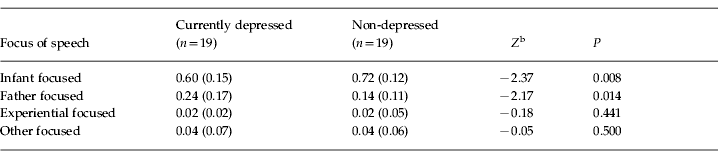
Data are given as mean (standard deviation).
a To facilitate interpretation of the tabulated results on group differences we report means and standard deviations rather than medians and an interquartile range. Utterances denoting questions and statements that could not be coded under the above four dimensions were excluded from the analysis and hence the mean proportions do not sum up to 1.
b Wilcoxon signed ranks.
Negativity in paternal speech
As shown in Table 3, paternal depression was associated with an increased proportion of overall negative comments (Z=−2.09, p=0.018), including both infant-focused negativity (Z=−2.01, p=0.002) and father-focused negativity (Z=−1.08, p=0.032). In keeping with this, depressed fathers also made more critical comments about their infants (Z=−1.99, p=0.031).
Affective focus in the speech of depressed and non-depressed fathers
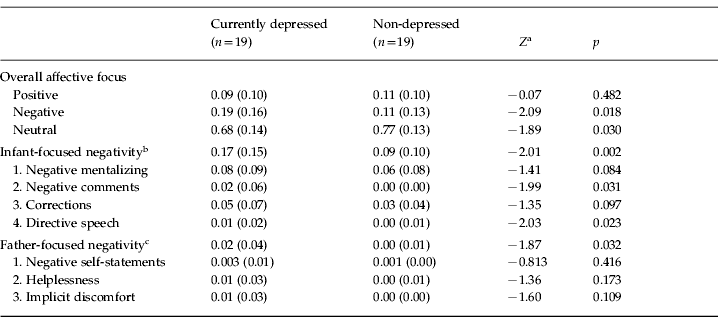
Data are given as mean (standard deviation).
a Wilcoxon signed ranks.
b Overall total for the negative level of infant-focused comments.
c Overall total for the negative level of father-focused comments.
Mentalizing comments
There were no differences between depressed and non-depressed fathers in the overall mean proportion of mentalizing comments made (see Table 4). However, depressed fathers made fewer mentalizing comments in relation to the infants' physiological state compared with non-depressed fathers (Z=−2.13, p=0.016). There were no differences in the mean proportion of external state comments between the study groups.
Proportion of mentalizing statements, by paternal diagnostic group
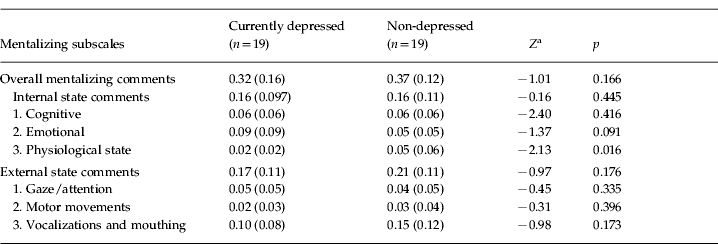
Data are given as mean (standard deviation).
a Wilcoxon signed ranks.
Controlling for infant fretfulness
In order to account for the potential for more fretful infants to elicit more negative speech in fathers, we then controlled for the effects of infant fretfulness. Paternal depression continued to predict infant-directed negativity, albeit more weakly, even when controlling for infant fretfulness (β=−0.29, p=0.064; compared with β=−0.33, p=0.046 prior to controlling for fretfulness). The overall model was significant (F 2,35=4.59, p<0.05) and explained 18.6% of the variance in infant-directed negativity.
Discussion
This investigation examined cognitive biases (the attentional focus and affective quality) and the degree of mentalizing in the speech of depressed and non-depressed fathers. Depression in fathers was associated with more speech focused on the paternal experience and less on the infants' experience. Depressed fathers were also more negative about themselves and their infants compared with non-depressed fathers. There were no reported differences in the use of overall mentalizing comments in the two groups.
Before considering these findings in more detail, a number of strengths and limitations of the study should be noted. First, this is the first study to examine the impact of depression on cognitive biases and mentalizing in paternal speech with young infants. Analysing speech as early as 3 months is important, as this is a critical phase of child development, where the infant may be particularly susceptible to environmental influences such as parenting. Second, clinical interviews were used to diagnose depressive disorder, yielding a group with clinically significant depression. Third, paternal speech was rated by coders who were blind to paternal case status, and adequate reliability on the scales was achieved. Finally, an independent, observational rating of infant temperament was used to control for the effects of the infant's contribution to the interaction.
This study also has some limitations. First, the modest sample size warrants caution. A relatively large number of tests were conducted in this exploratory study, and so there is a possible risk of type I errors. However, differences in scores between the two groups were consistently in the expected direction. In addition, participants were mainly Caucasian, middle-class, slightly older fathers, and so the findings should be generalized beyond this demographic cautiously. Third, further validation of the speech scales on a new sample is required, and, until then, these findings should be considered preliminary.
The focus of speech
Previous studies have shown that depressed people typically engage in higher levels of self-focus than do non-depressed people (Smith & Greenberg, Reference Smith and Greenberg1981; Ingram, Reference Ingram1984; Pyszczynski et al. Reference Pyszczynski, Hamilton, Herring and Greenberg1989). Our results reflect these findings and are consistent with findings from studies of parents of older children, characterizing depressed parents as ‘self-absorbed, ruminative and preoccupied’ (Gelfand & Teti, Reference Gelfand and Teti1990). Research with mothers also reports that mothers who experienced depression were more likely to focus on the self and less on the infants' experience (Murray et al. Reference Murray, Kempton, Woolgar and Hooper1993).
Depressed individuals also experience judgemental biases in the form of attending selectively to negative information and recalling less positive and more negative events (Mor & Winquist, Reference Mor and Winquist2002). Depressed fathers' speech in this study included self-focused negativity (‘oh, oh Daddy hasn't lasted very long has he?’) and helpless comments (‘can't think of anything to do all of a sudden’). This finding is consistent with previous work that suggests that depressed individuals process and recall information negatively when it is relevant to them (Ingram, Reference Ingram1984). The negativity directed towards the self may be explained in part by the attributional model of Abramson et al. (Reference Abramson, Seligman and Teasdale1978). In the event of infant fretfulness and failure to promote positive emotionality in interactions, depressed fathers are likely to attribute their failure to ‘internal, stable and global causes’. The 3-min interaction in which we examine speech is likely to generate some stress for the father, generating feelings of incompetence and negativity towards the self.
The results of this study, suggesting that depressed fathers' attributions about their infants are more negative, correspond to the speech patterns seen in depressed mothers (Murray et al. Reference Murray, Kempton, Woolgar and Hooper1993; Zlochower & Cohn, Reference Zlochower and Cohn1996), and general parenting in the context of depression. Although there is no previous work on these negative communications in depressed fathers with their infants, Jacob & Johnson (Reference Jacob and Johnson2001) have found parallel findings in a study on marital communication. Here, sequential analyses of paternal remarks indicated that depressed men showed less positivity following positive remarks made by a partner. This pattern of ‘positivity suppression’ increased with depression severity.
Mentalizing comments in speech
The hypothesis that depressed fathers would communicate fewer mentalizing comments in their speech was not confirmed. It is possible that the infants' limited capacity for social-cognitive communication at 3 months may explain why overall differences in mentalizing comments were not found, and it is possible that the context of the assessment may have been influential; mental state talk is more likely during some type of activities and not others. As fathers tend to engage in more physical and arousing play, the face-to face car seat context may not facilitate this type of communication. It is of note that our findings on mentalization contrast with studies of depressed mothers and their infants (Murray et al. Reference Murray, Kempton, Woolgar and Hooper1993), and it is possible that fathers may not be as familiar with their infants as mothers at this young age, and so are less able to reflect on their infants' mental state, or they may do so in an idiosyncratic way.
Conclusions
This exploratory study is the first to report on cognitive biases and mentalizing in the speech of depressed and non-depressed fathers. Our data allude to a possible pathway between paternal psychopathology and the development of cognitive vulnerability for offspring depression. Infants of depressed fathers exposed to a negative cognitive style of communication early in life may be adversely affected and these patterns of communication may remain part of the child's environment throughout development. Identifying the origins of cognitive vulnerability is a promising line of inquiry that could inform possibilities for preventive intervention.
Acknowledgements
The Oxford Fathers Project was supported by a Wellcome Trust clinical research fellowship to P.G.R. (no. 078434). The work of V.S. was funded by a Medical Research Council studentship. We gratefully acknowledge the contributions of Olivia Edmondson, Jane Iles, Lamprini Psychogiou, Haido Vlachos, Elena Netsi, Annemarie Lodder and fathers and their families for their participation.
Declaration of Interest
None.



