

And so, like a wild bull, he lords it over the young men.
The Epic of Gilgamesh (Tablet 1, line 212, after Foster Reference Foster2001, 9)
Introduction
In the archaeology of Eurasia, the Bronze Age has long been regarded as a threshold in the rise of inequality, synonymous with the emergence of male elites, organized into chiefdoms or royal dynasties. Kristiansen and Larsson's (Reference Kristiansen and Larsson2005) The Rise of the Bronze Age, for instance, portrays the origins of kingship in ancient Mesopotamia as part of a general trend towards state formation, which included the growth of cities, stimulating the emergence of warrior aristocracies in neighbouring Europe and Central Asia. This is a familiar reconstruction, but in the last few decades, archaeological fieldwork on the upper reaches of the Tigris and Euphrates has produced results that complicate it in various ways.
For instance, archaeologists have long maintained that the earliest buildings clearly identifiable as palaces appear only half a millennium or more after the rise of cities, in the Early Bronze II and III periods, within urban contexts such as Tell al-Uhaymir (ancient Kish), on the alluvial lowlands of southern Iraq (e.g. Moorey Reference Moorey1964). A major revelation of new fieldwork is the precocious appearance of palatial structures at a significantly earlier date, at sites no larger than a few hectares in size. Notably, at Arslantepe on the Malatya Plain of eastern Türkiye, a palace complex dating to around 3300 bc is documented from a non-urban setting (Frangipane Reference Frangipane and Wicke2019), located far from the nearest centres of urban growth in lowland Mesopotamia, where evidence for secular rulership is either negligible or ambiguous at that time (McMahon Reference McMahon2020, 308–15; Steinkeller Reference Steinkeller2017, 28–30).
In a later context, dating to around 3000 bc, a burial identified as the earliest known ‘royal tomb’ has also been identified at Arslantepe (Frangipane et al. Reference Frangipane, Di Nocera and Hauptmann2001; Palumbi Reference Palumbi, Giemsch and Hansen2021). The excavators’ designation of this tomb as ‘royal’ is based on its spectacular contents—which include large quantities of metal weaponry and ornamentation—and the presence of subsidiary burials, interpreted as victims of ritual killing, placed on and around the main tomb-chamber. Such findings would suggest a small-scale origin for kingship and warrior aristocracies, at the demographic margins of Mesopotamia, rather than within its urban heartlands (see also Frangipane Reference Frangipane2001; Reference Frangipane2017a).
Considering evidence of this kind, we would argue that it is no longer possible to characterize early state formation in this region as a unified package of institutional traits comprising cities, bureaucracy and dynastic elites (and cf. Graeber & Wengrow Reference Graeber and Wengrow2021, 304–13). The new picture is decidedly more complex and suggests that a linear trajectory from ‘small-scale egalitarian’ to ‘large-scale stratified’ societies may simply not exist there. Instead, the most radical and enduring forms of inequality—including charismatic forms of kingship—may have emerged first on a small scale, only later coming to occupy the civic domain. In rethinking this process, we suggest, it will also be necessary to reconsider the relationship between changes attested in the ritual and political spheres.
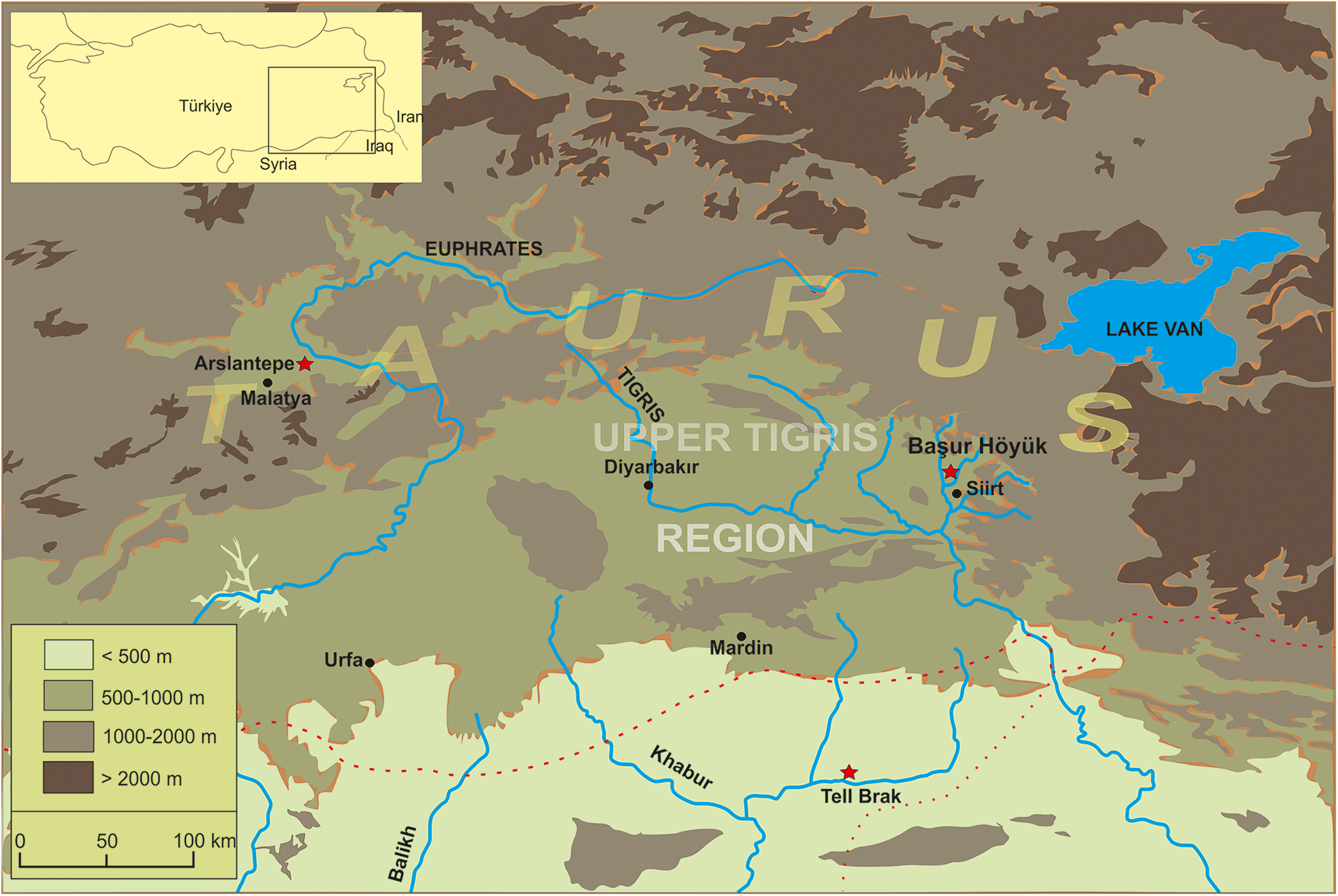
Earlier studies have argued that expressions of violence and inequality in funerary rituals, including human sacrifice, were an ideological reflex of political arrangements, serving to support processes of social stratification, either by mystification or replication (see below; and for a review of recent approaches in archaeology, see Schwartz Reference Schwartz2017). In what follows, we present evidence from the Early Bronze Age cemetery of Başur Höyük in the province of Siirt, southeastern Türkiye (Fig. 1), which appears to contradict such ideas. This new evidence suggests a disjuncture between real-world politics and spectacular expressions of social ranking in the ritual sphere. More particularly, we will argue that relations of radical inequality are evident in ceremonial practices associated with a particular sub-set of the population (i.e. adolescents), long before they came to structure political relations more widely in Mesopotamia.
The location of Başur Höyük on the Upper Tigris.
We note a resonance here with recent discussions of the origins of kingship in the anthropological literature, notably an essay by Marshall Sahlins called ‘The original political society’ (Reference Sahlins2017). Its title is a play on ‘The original affluent society’, in which Sahlins (Reference Sahlins, Lee and DeVore1968) famously inverted conventional understandings of ‘Stone Age economics’. Based on a survey of ethnographic material available at the time, Sahlins argued that rather than living lives of poverty and bare subsistence, human populations before the invention of agriculture enjoyed a certain kind of abundance, based on the ease with which they satisfied their material needs, and their resulting capacity for leisure and freedom of movement. ‘The original political society’ applies a similar method to the political domain, building on the work of Arthur Hocart in the early twentieth century. Rather than being devoid of institutional power, Sahlins argues, human societies ‘before the State’ were suffused with figures such as kings, overlords and legislators. Such persons, however, were ‘locked up’ in the realm of the supernatural. Cosmic polities preceded earthly ones. Moreover, they prefigure the specific types of hierarchy that only later become characteristic of human government:
Even the so-called ‘egalitarian’ or ‘acephalous’ societies, including hunters such as the Inuit or Australian Aboriginals, are in structure and practice cosmic polities, ordered and governed by divinities, the dead, species-masters, and other such metapersons endowed with life-and-death powers over the human population. (Sahlins Reference Sahlins2017, 24)
The basic premise of Sahlins’ approach will be familiar to scholars of the ancient world. Unlike most modern theories of early state formation, the concept of an ‘original political society’ resonates with political narratives devised by the ancient actors themselves, to describe the origins of their dominant institutions. The Mesopotamian literary composition known as the Sumerian King List, for example, opens with an account of how kingship descended from heaven, where it already existed, into a sequence of earthly cities (Michalowski Reference Michalowski and Bagnall2012). Egyptian king-lists similarly trace a supernatural origin for monarchy, from living kings back through a series of divine rulers, whose reigns are numbered in lengths that vastly exceed the human lifespan (Wengrow Reference Wengrow2006, 133–4). For archaeologists, we suggest, Sahlins's theory offers a fertile point of entry to ritual expressions of ranking and authority, which take on extraordinary dimensions, long before such principles become the basis for structures of governance in everyday political affairs.
An early and striking example of this pattern is provided by the so-called ‘princely’ burials of Ice Age Europe, which date back to the Upper Palaeolithic period. At locations such as Sunghir in northern Russia, Dolní Věstonice in the Moravian basin, and the Ligurian coast, isolated burials of individuals and small groups have been found with bodies placed in theatrical postures and festooned with grave goods. The latter include sumptuous costumes comprising masses of beadwork, elaborate weaponry and symbolic display items often likened to regalia (Graeber & Wengrow Reference Graeber and Wengrow2021, ch. 3; Wengrow & Graeber Reference Wengrow and Graeber2015; with further references, and analysis). Such cases suggest there may be merit in adapting and extending Sahlins's approach to the interpretation of the archaeological record.
In what follows, we consider a further example, from the Early Bronze Age of the Anatolian highlands. The material in question derives almost entirely from funerary contexts, and has been compared with royal burials elsewhere, based on its spectacular contents. However, all of this evidence pre-dates—and arguably prefigures—the political changes associated with early state formation in this wider region, by centuries. Given the established place of Mesopotamia in theories of early state formation, the case of Başur Höyük may be of more than local interest in exploring the utility of Sahlins's model, and contributing to debates on the nature of human political evolution.
The Early Bronze Age cemetery of Başur Höyük in its archaeological and environmental context
Başur Höyük can be considered a ‘gateway’ settlement of the late fourth and early third millennia bc, sitting astride a north–south pass through the surrounding highlands, and linking the obsidian-rich Van region of eastern Türkiye to the plains of northern Mesopotamia. The site itself lies within an alluvial basin where three tributaries of the Tigris—the Batman, Garzan and Botan rivers—converge, providing arable land and pasture in the adjacent uplands, as well as access to locally occurring sources of copper.
By the late fourth millennium, Başur Höyük was already marked out from neighbouring settlements on the Upper Tigris by its fortification wall and the establishment of an Uruk colony or outpost, including public buildings, administrative seals, bevelled-rim bowls and standard commodity vessels (Aydoğan et al. Reference Aydoğan, Batıhan, Sağlamtimur, Baldi, Iamoni, Peyronel and Sconzo2022). A study of metallurgical traditions in the wider region (Massimino Reference Massimino2019) suggests a key role for Başur Höyük as a transit point for the supply of copper and other highland resources, flowing south towards urban centres of consumption in the Mesopotamian lowlands.
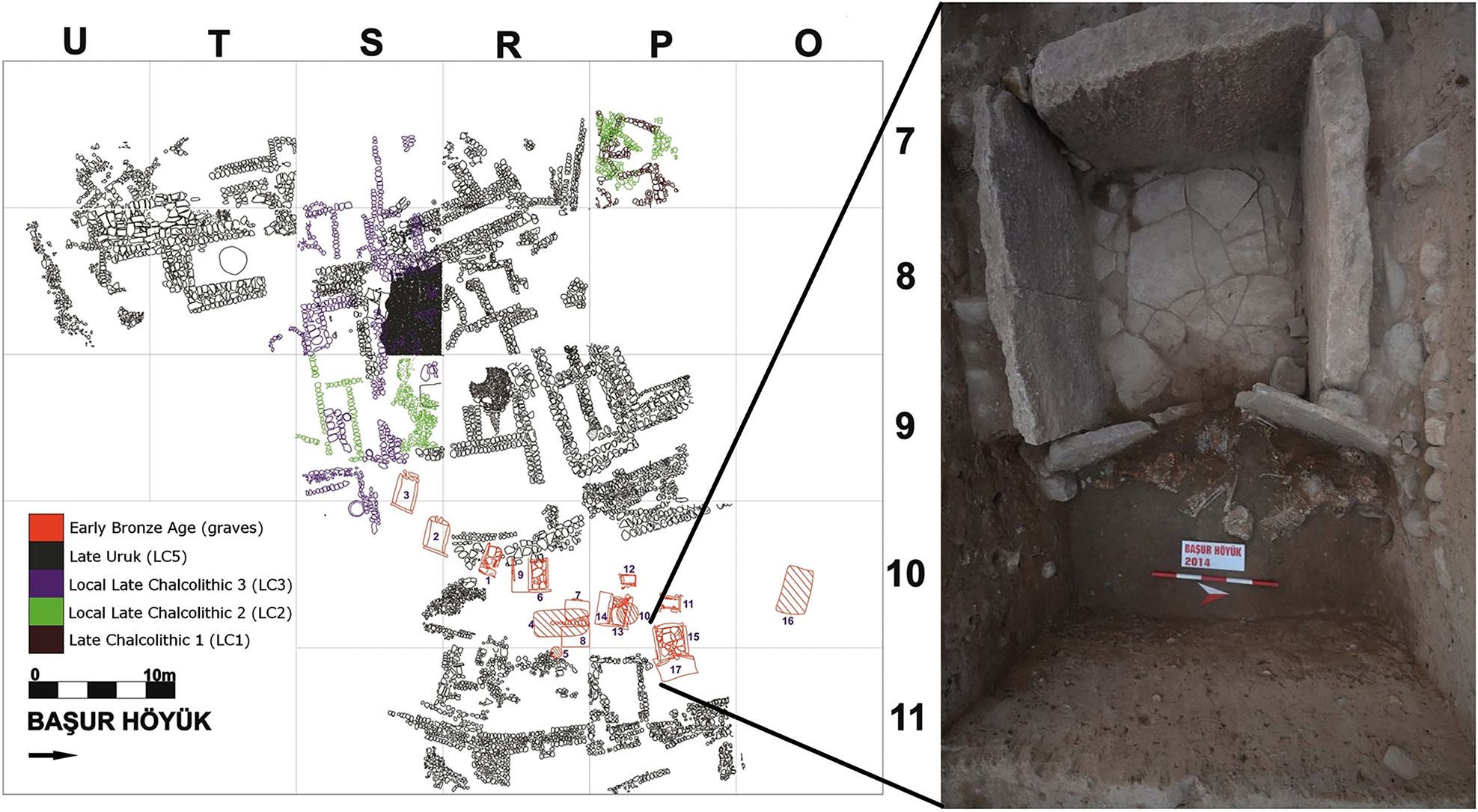
After the collapse of the Uruk interregional system, between 3100 and 2800 cal. bc, Başur Höyük became a focus for the performance of conspicuous and sometimes violent funerary rites. A total of 18 graves, consisting of stone-built cists, simple pits and pit-graves with stone caps, were found in the southeastern area of the site, dug into the architecture of the Late Chalcolithic period (Fig. 2). In previous publications, the identification of social ranking within the Early Bronze I cemetery focused on a group of well-provisioned funerary deposits, placed within large stone-built cists. These are thought to be among the earliest tombs established at the site. Of these, three stone tombs stand alone (Graves 1, 2, 3), and a further three were paired with subsidiary burials (6/9, 13/14, 15/17; for a more detailed overview of spatial arrangements within the cemetery, and its contents, see Hassett & Sağlamtimur Reference Hassett and Sağlamtimur2018; Sağlamtimur Reference Sağlamtimur2017). It is these impressive burials that form the focus of the present study.
Plan of Başur Höyük excavations with Early Bronze Age cemetery contexts numbered, and detail of graves 15 and 17 (respectively within and outside a cist tomb).
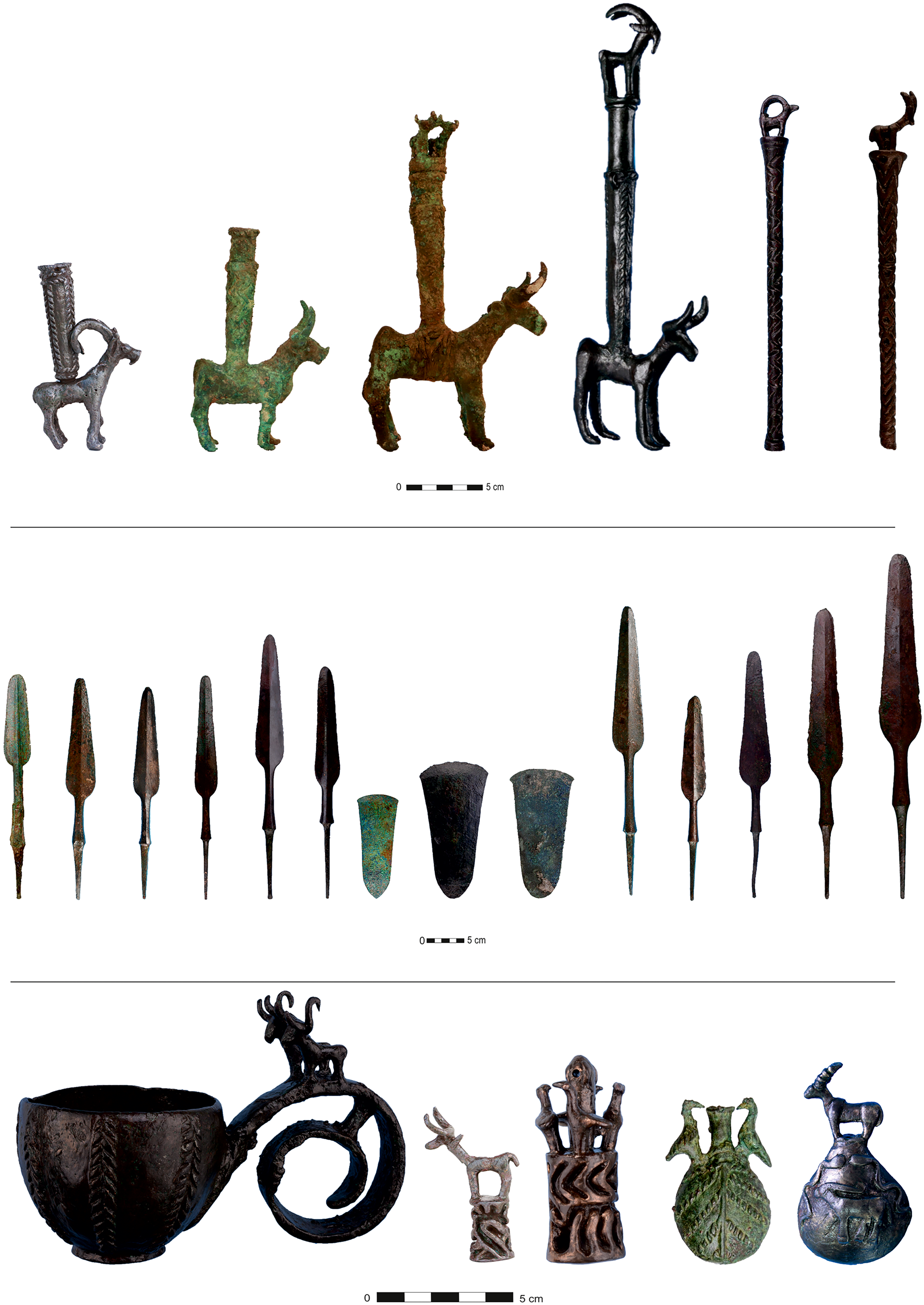
Stone-built tombs at Başur Höyük are distinguished by high concentrations of metal artefacts, including weapons (spearheads and axes), and by the contemporaneous burial of multiple individuals in ranked arrangements (Baysal & Sağlamtimur Reference Baysal and Sağlamtimur2021). Among the latter, evidence was found for the deliberate and violent killing of select individuals, who were placed in subsidiary burials adjacent to the main tomb. Such evidence includes clear traces of death by penetrating, sharp force trauma to the skull, and a similar wound to a hip socket, detected in individuals from Grave 17 (for further detail, see Hassett & Sağlamtimur Reference Hassett and Sağlamtimur2018; Hassett et al. Reference Hassett, Sağlamtimur, Batıhan, Laneri, Valentini, Guarducci, Palumbi and Muller2019). Bodies placed within the stone tombs are accompanied by an abundance of grave goods, carefully assembled, and often wrapped in textiles. Among the more startling items were some hundreds of elaborate, copper-base objects cast in the lost-wax technique, such as animal-topped amulets mimicking the form of cylinder seals, standards and sceptres, goblets, and medallions with attached figures of wild bulls, goats and birds (Fig. 3). In one case, four individuals were placed adjacent to the wall of the cist, accompanied by a set of 40 stone playing pieces in the shape of animals, pyramids, spheres and pellets (Sağlamtimur Reference Sağlamtimur2017, fig. 16).
A selection of metallic, copper-base grave goods from Başur Höyük.
Previous efforts to place Başur Höyük in a broader context (e.g. Hassett & Sağlamtimur Reference Hassett and Sağlamtimur2018; Hassett et al. Reference Hassett, Sağlamtimur, Batıhan, Laneri, Valentini, Guarducci, Palumbi and Muller2019) have focused on its role in the emergence of social stratification, at the start of the Bronze Age. Comparisons have been drawn with the contemporaneous ‘royal tomb’ found at Arslantepe, which lies roughly 400 km to the west, as well as with kurgan burial mounds in the southern Caucasus, over 1000 km to the north (over steep mountains or across the Black Sea), and also with the chronologically much later Royal Tombs of Ur, 800 km to the south, at Tell el-Muqayyar (see also Palumbi Reference Palumbi2008; Reference Palumbi, Borgna and Celka2012). Başur Höyük’s findings may also be situated within a long-standing debate concerning the relationship between ‘retainer burial’, accompanied by the ritual killing of human victims, and the process of state formation.
One recent study (Watts et al. Reference Watts, Sheehan, Atkinson, Bulbulia and Gray2016) concludes that human sacrifice played ‘a powerful role in the construction and maintenance of stratified societies’ and that this constitutes a ‘general feature of human social evolution’. Watts et al. employ a computational, phylogenetic analysis of cultural traits from 93 Austronesian language groups, ranked on a scale of political integration from ‘egalitarian’ to ‘stratified’, to test a hypothesis that lethal ritual violence supported the growth of political hierarchy in island Oceania, leading them to posit a causal relation. ‘Unpalatable as it might be’, they conclude, ‘our results suggest that ritual killing helped humans transition from the small egalitarian groups of our ancestors, to the large stratified societies we live in today.’
This calls to mind Alain Testart's (Reference Testart2004a, Reference Testartb) more wide-ranging treatment of the topic, which explores the relationship between ritual killing of subordinates in funerary rites and the crystallization of dynastic authority in ancient Egypt, Sudan, China, Mesoamerica and elsewhere. Testart saw these violent but carefully staged deaths, sometimes involving hundreds of victims, as manifesting bonds of absolute dependence between political subjects and their masters. Importantly, however, he also noted that servile relationships of a similar kind and intensity can be widely documented in small-scale, decentralized societies, especially in association with household slavery.
Watts et al.'s broader conclusion rests on the assumption that Austronesian cultures serve as a ‘natural laboratory for cross-cultural research’. This characterization of the history of Oceania and Island Southeast Asia has been subject to forceful critique (e.g. Terrell et al. Reference Terrell, Hunt and Gosden1997), and despite their assurances that the ethnographic sources used in their study portray ‘traditional’ social conditions, all date squarely within the period of European missionization and colonization, in which these regions were incorporated into the world economy. These can hardly be considered marginal factors in accounting for changing patterns of ritual practice and their relationship to local forms of political integration.
Such problems underscore the difficulty of positing any universal theory about the political effects of ‘retainer sacrifice’ without first considering questions of historical context. To date, the most cogent parallels for the findings at Başur Höyük derive from contemporaneous levels at Arslantepe (e.g. Sağlamtimur et al. Reference Sağlamtimur, Batıhan, Aydoğan, Durak and Frangipane2019). Albeit in different ways, developments at both locations were closely related to the expansion of Mesopotamian commercial and cultural influence in the late fourth millennium bc (the Uruk Expansion), with its epicentre in the first urban societies of the Tigris–Euphrates floodplain, to the south. Both sites present evidence of highly conspicuous funerary practices, involving the construction of stone-built cist tombs of a type that subsequently became widespread in the Upper Tigris and Euphrates regions (Helwig Reference Helwig, Pfälzner, Niehr, Pernicka and Wissing2012).
In both cases, moreover, there is evidence for the deliberate killing of human victims as part of burial rites, which also involved the sacrifice of enormous quantities of metallic wealth, beadwork, textiles, food and drink. To give a sense of the quantities involved: nearly 1000 metal objects were found in the Başur Höyük cemetery, including regalia and weapons carefully wrapped in textiles, and around 100,000 stone beads made of limestone, agate, amethyst, rock crystal (quartz), steatite, azurite, faience, and others of marine shell (Baysal & Sağlamtimur Reference Baysal and Sağlamtimur2021). Together with a similarly eclectic ceramic assemblage (Batıhan & Aydoğan Reference Batıhan and Aydoğan2019), these finds demonstrate ongoing access to trade networks in the aftermath of the Uruk expansion, drawing in materials and influences from the Caucasus, Iran and the Mesopotamian lowlands (Sağlamtimur et al. Reference Sağlamtimur, Dardeniz and Baysal2023).
Başur Höyük and Arslantepe are small tell formations, extending over no more than a few hectares. Both lie along the southern margins of a topographically varied zone extending from the valleys of the Kura and Araxes rivers—in Georgia, Armenia and Azerbaijan—to the headwaters of the Tigris and Euphrates: areas rich in sources of metals and minerals including gold, silver, copper, obsidian and high-quality timber. While small in scale, both sites were clearly regional centres or nodes of some longevity, sitting astride natural transit points between resource-rich highlands to the north and the urbanized lowlands to the south, where such resources were in high demand.
At considerable elevations—Arslantepe is 1000 m and Başur Höyük 540 m above sea-level—both are likely to have experienced pronounced seasonal variations in human presence and use. This will have included periods when otherwise dispersed and mobile groups converged upon them from the surrounding valleys and plains, a pattern suggested by related faunal assemblages (Frangipane Reference Frangipane2014; Porter Reference Porter2012a). These findings are consistent with stable isotope analysis, recently conducted on human remains from the Başur Höyük cemetery. Strontium and lead isotope ratios, derived from the teeth and bones of individuals associated with the stone-built cist tombs, are clearly distinct from those of the surrounding geology. The implication is that these people spent much of their lives elsewhere, beyond the vicinity of their eventual resting place (Pilaar Birch et al. Reference Pilaar Birch, Moss, Sağlamtimur, Wengrow and Hassettforthcoming).
‘Royal burials’ out of place? A comparison of Arslantepe and Başur Höyük
By virtue of its long sequence, Arslantepe offers a unique diachronic perspective on transformations taking place in eastern Anatolia between the late fourth and early third millennia bc. Of particular importance is the previously mentioned discovery of a palace complex dating to the later part of the fourth millennium. The building in question covers an area of 4000 square metres with an audience hall and rooms for storage, food preparation, and administration. It also produced an assemblage of finely crafted swords and spearheads. The expansion of the palace between 3300 and 3100 bc saw a reduction in the overall population of Arslantepe, as people dispersed outward—away from the new institution—onto the surrounding plain. Its end appears to have been sudden and violent.
Intriguingly, the appearance around a century later of the ‘royal tomb’ at Arslantepe coincides with a period when most traces of mud-brick architecture had disappeared, along with evidence for wheel-made pottery and administration, giving way to a more ephemeral building tradition using wood, wattle and daub (Frangipane Reference Frangipane2014; Reference Frangipane and Wicke2019; Frangipane & Erdal Reference Frangipane, Erdal, Meller, Risch, Alt, Bertemes and Micó2020). Based on the appearance of new forms of material culture, archaeological overviews of this ‘post-palatial’ period describe the absorption of Arslantepe and the eastern Anatolian highlands into a much broader Kura-Araxes zone of influence, with its centre of gravity to the northeast, between the Black and Caspian Seas (Wilkinson Reference Wilkinson2014).
With the decline of regional centres, seasonal mobility—arising from a mixed agro-pastoral economy—is generally thought to have become a more prominent feature of human activity across the wider region, including a significant component of transhumance based on the herding of sheep and goat (Iacumin et al. Reference Iacumin, Restelli, Macrì and Di Matteo2021; cf. Renette Reference Renette2018). Maurer (Reference Maurer2024) offers evidence from stable isotope studies to substantiate this reconstruction (cf. Batiuk et al. Reference Batiuk, Rothman, Samei and Hovsepyan2022), while noting considerable variation in patterns of mobility, which reflect the different affordances of local habitats within the broader Kura-Araxes cultural sphere. Rather than ‘pastoral nomadism’, she suggests a balance of herding with sedentary life based on arable farming, including seasonal movements from a stable village base.
Paradoxically, then, it is not to the period of the palace, but to this later, more modest and transient phase of Arslantepe's occupation, that the ‘royal tomb’ belongs. With its rich suite of offerings adorning the body of an adult male aged 30–40 years—and those of four adolescents aged between 12 and 16, laid out over the tomb—the ‘royal tomb’ therefore sits uncomfortably within its wider archaeological context. Although comparisons have sometimes been drawn with kurgan burial traditions, in the northern Caucasus, these lie far away, and in the area between them—defined by the drainages of the Kura and Araxes rivers—funerary practices are consistently interpreted as expressing collective and egalitarian values, rather than individual rank or status (e.g. Palumbi Reference Palumbi2008). In fact, the Kura-Araxes (or Early Transcaucasian) cultural tradition is more generally seen by archaeologists as expressing a flat social structure, variously described as egalitarian, collectivist, or kin-oriented, with a corresponding lack of evidence for fortified settlements, warfare, or stratification (e.g. Wilkinson Reference Wilkinson2014).
So, what is going on? How exactly does the royal tomb fit into this wider milieu, and how does this effect our perception of it as ‘royal’? One possibility is that we are dealing here with dual social structures, of a kind defined long ago by Marcel Mauss and Henri Beuchat in a study of the Inuit, and more recently discussed by Wengrow and Graeber (Reference Wengrow and Graeber2015) in relation to archaeological examples, including the ‘princely’ burials of Ice Age Europe (also Graeber & Wengrow Reference Graeber and Wengrow2021, 106–11). In such cases, the same society may switch routinely between egalitarian and hierarchical arrangements, often on a seasonal basis, in synchrony with oscillations in the size and density of human groups. Seasonal variations of differing scope and tempo may result from a broad variety of ecological pursuits, ranging from big game hunting to anadromous fish runs, or indeed transhumant pastoralism of a kind most likely practised by the inhabitants of Kura-Araxes sites (cf. Jones Reference Jones2005).
This may help to explain certain puzzling features of Arslantepe's development, from the late fourth into the early third millennium bc. Once dismantled, it seems, the palatial infrastructure of Level VIA did not simply disappear. Instead, certain aspects of its internal structure and material culture were retained as a focus of episodic rituals, including funerary displays associated with the ‘royal tomb’ of Level VIB. The visibility of metallic wealth in the ‘royal tomb’ might then be more plausibly interpreted, not as indicating an overall increase in levels of inequality, but rather a social practice of ‘caging’ or closing off wealth—including large assemblages of lethal weapons, wrapped in fabrics—within ritual contexts, where it could no longer be mobilized as a source of power among the living.
In a series of studies, Anne Porter (Reference Porter2012a, Reference Porter, Porter and Schwartzb) has questioned the identification of the Arslantepe VIB tomb as a royal burial. She notes how the subsidiary burials of adolescents, found lying on the roof of the stone tomb, form two opposed pairings or ‘twins’, mirroring one another along axes of variation that relate to age (two individuals aged between 12 and 14 versus two aged between 16 and 18), life histories (two with evidence of recurring childhood illness and injuries to the head and limbs versus two without), and dramatic alterations to the corpse (two are complete and two show only half the skeleton present from the waist up). Porter suggests the construction of a carefully choreographed funerary tableau, in which the deceased took on roles consistent with a stock inventory of otherworldly or mythical beings: ‘metapersons’, in the terms of Sahlins's ‘original political society’.
Here we might consider the place of youthful potency, twins, and twinning as key themes in later Mesopotamian narrative (notably the Gilgamesh epic), as well as intergenerational conflict between youths and elders (e.g. in Enuma Elish) and the genesis of kingship in an uprising of the young against the old (for which, see Harris Reference Harris2000, 39, 74). Barbara Helwig (Reference Helwig, Pfälzner, Niehr, Pernicka and Wissing2012) raises the intriguing possibility that similar tropes may be enacted in Early Bronze Age I–II funerary practices on the Upper and Middle Euphrates, long before they found their way into cuneiform literature. Helwig sees the richest of these tombs—which share certain formal features with those of Başur Höyük—as ritual commemorations of ancestral beings associated with the founding of dynastic lineages, preceding and prefiguring the ‘age of heroes’ recounted in later stories.
The possibility of ‘storied’ deposition in the context of elaborate funerary rituals is consistent with a slightly later burial group (Grave 10) at Başur Höyük, comprising an inhumation of six adult individuals laid out in a symmetrical ‘daisy-chain’ formation, and with the placing of a distal ulna from a golden eagle's wing within a small cist-tomb (Grave 11: Hassett et al. Reference Hassett, Sağlamtimur, Batıhan, Laneri, Valentini, Guarducci, Palumbi and Muller2019, 70; and cf. the legend of Etana). What might this imply for our broader understanding of the cemetery at Başur Höyük? To address this question, we expanded our analysis to include ancient DNA and forensic examination of human remains, alongside the interpretation of material culture from the stone cist tombs.
Evidence of ‘age sets’ in the archaeological record?
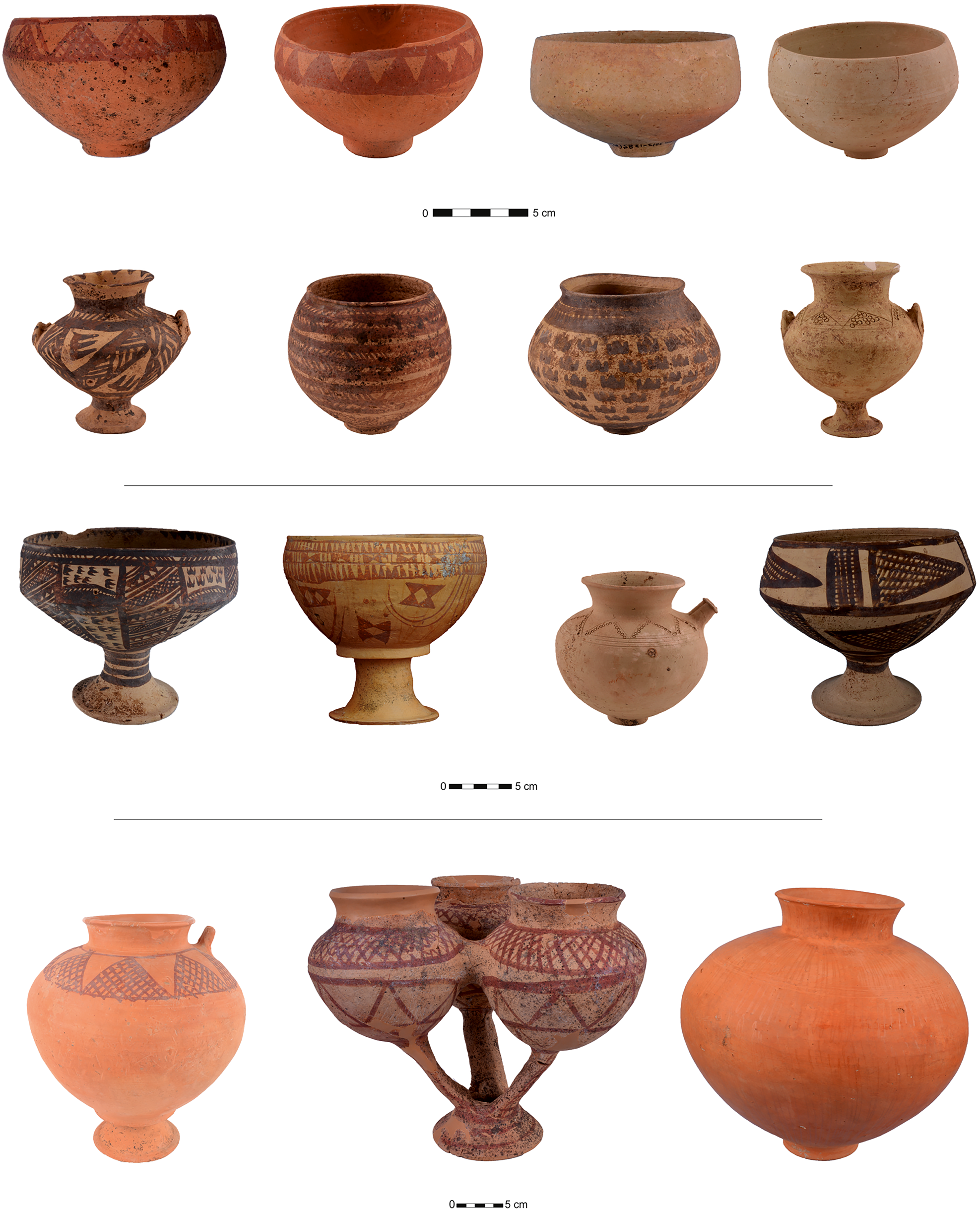
Like the ‘royal tomb’ of Arslantepe, the richly adorned tombs of Başur Höyük sit awkwardly within their wider social milieu (cf. Frangipane Reference Frangipane, Stockhammer and Maran2017b, 181). Based on associated material culture, especially pottery (Fig. 4), that milieu seems closest to the Ninevite 5 interaction sphere, reaching from the Khabur drainage in the west to the hilly flanks of the Zagros in the east. Like the Kura-Araxes pattern to its north, Ninevite 5 is usually characterized as a phase of political decentralization and reduced social complexity in northern Mesopotamia. Settlement patterns comprise dispersed villages or small towns, combined with seasonal transhumance, in which a component of the local population moved regularly with their herds between steppe, foothill and floodplain environments (e.g. Akkermans & Schwartz Reference Akkermans and Schwartz2003, 211–32; Rova & Weiss Reference Rova and Weiss2003; Ur Reference Ur2010; Wilkinson et al. Reference Wilkinson, Philip and Bradbury2014, 80).
Ninevite 5 pottery from burial assemblages at Başur Höyük.
This brings us to perhaps the most intriguing aspect of the stone tombs at Başur Höyük: the age-profile of the individuals buried within them or bunched alongside their entrances. Based on skeletal fusion and dentition, they are identified mainly as adolescents aged between 12 and 16 years. For instance, two individuals buried in a richly endowed stone tomb (Grave 15: Fig. 2, right) are estimated to have been 12 years old (+/–9 months) at time of death, while the eight subsidiary burials crammed against its entrance in Grave 17 ranged from 12 to 18 years (Hassett & Sağlamtimur Reference Hassett and Sağlamtimur2018, 645, table 1). One, as noted, presents evidence of a penetrating blow to the head as cause of death (Hassett & Sağlamtimur Reference Hassett and Sağlamtimur2018, 646–7, fig.5). Grave 15 contained staggering quantities of metalwork, including elements common to the Arslantepe ‘royal tomb’, such as textile pins and over 100 spearheads.
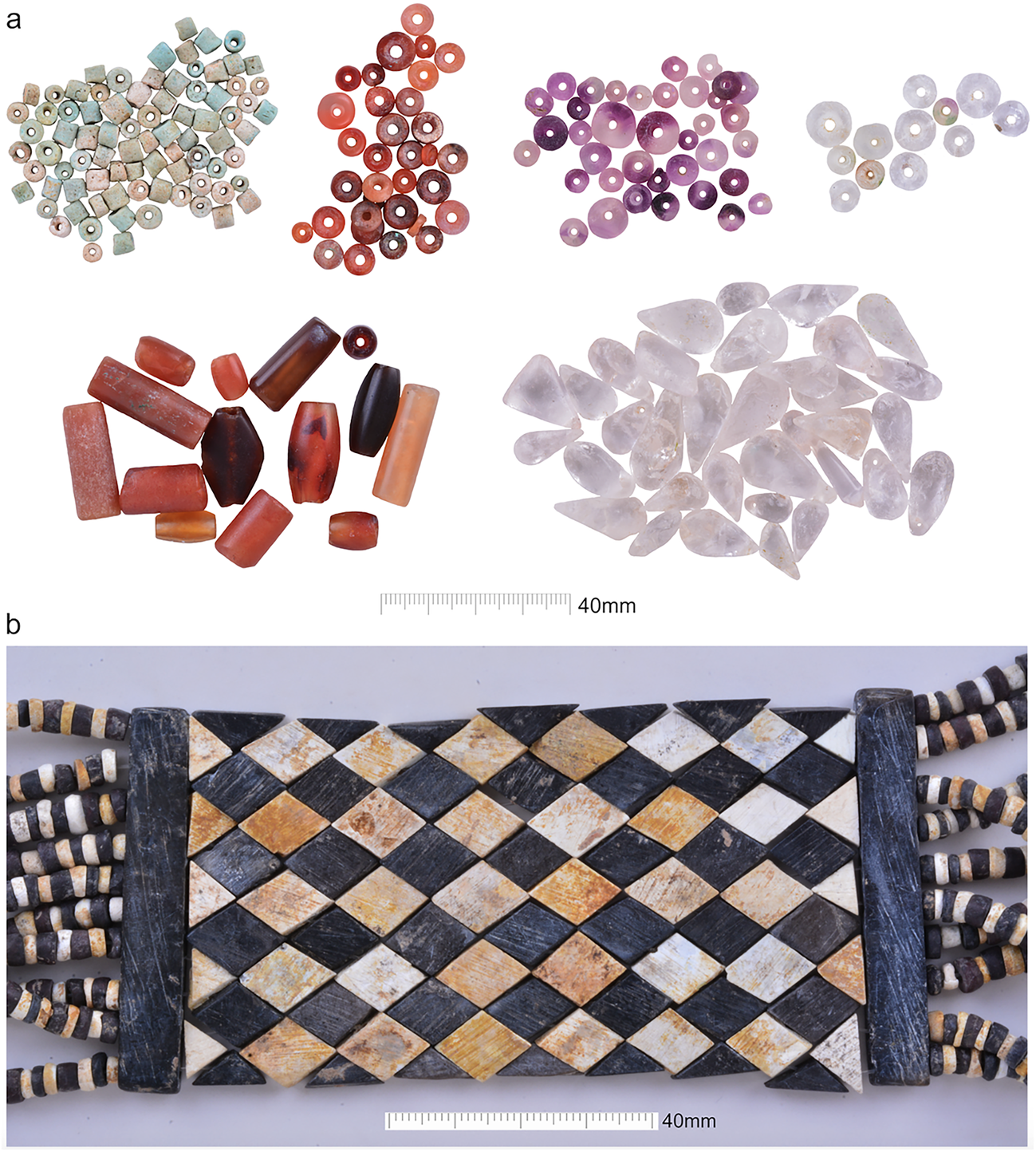
All the bodies associated with this grand burial rite were clothed in elaborate costumes, decorated with non-local materials, of which only the associated beadwork and fragments of textile survive, along with metal fastening pins, some of which reached outsized proportions for a human wearer (again, perhaps, pointing to some more-than-human role or status; cf. de Polignac Reference de Polignac1995, 15, on scale transitions from usable objects to ‘votives’ intended for superhuman actors). A study of the beads reveals clear differences in the treatment of individuals within and outside the stone tomb. The former wore individual ornaments made on a wide range of coloured materials, while the latter appear to have worn standard uniforms with decorated panels, composed of black and white lozenges, stitched to a belt or mantle (Fig. 5; and see Baysal & Sağlamtimur Reference Baysal and Sağlamtimur2021).
Contrasting assemblages of beadwork associated with burials inside (grave 15) and outside (grave 17) a cist tomb.
Much remains unclear about the nature of these deposits, and the rituals that gave rise to them, but one thing we may already conclude is that the identification of Başur Höyük as the site of a ‘royal’ or ‘elite’ cemetery is premature. It also seems quite improbable, given the wider archaeological setting of the cemetery, and what can be deduced about its social context. If anything, this suggests a profound disjuncture between the extreme stratification of social units attested in the ritual sphere—especially funerary rites, but perhaps also in other systems of ranking associated with the activities of youth groups—and the more egalitarian character of everyday social relations, as attested by contemporaneous remains of habitation sites belonging to the same population.
To shed light on this problem, we sought to discover more about biological relationships among the individuals buried in the stone tombs. Given their distinctive age profiles, it seems possible that this group was united by something other than close kinship—for example, by forming ranked ‘age sets’ (also variously termed ‘age grades’, ‘age societies’, ‘age classes’, or ‘age groups’) of the kind that once fascinated social anthropologists (e.g. Kertzer Reference Kertzer1978). This suggestion finds tentative support in the results of ancient DNA analysis, which are presented here for the first time (see supplementary Appendix 1, Table 2). Overall, the preservation of DNA from early phases of the cemetery was too poor for ADMIXTURE modelling.Footnote 1 However, testing for biological relatedness among six of the better samples (using READ and KIN) showed strikingly negative results, with no connection within two or even three degrees among paired samples.
It is tempting, on this basis, to begin speculating about the existence of male warrior cults or initiation groups (Männerbünde: Völger & Welck Reference Völger and Welck1990) at the dawn of the Bronze Age. However, it is important to note that determinations of sex—now revised by chromosome analysis, also presented—show a mixture of males and females, and perhaps even a preponderance of females in the early phases of the cemetery at Başur Höyük, with no clear correlation between biological sex and positioning within the funerary ensemble (supplementary Appendix 1, Table 1). With these caveats in mind, and in drawing this study to a conclusion, a number of more general points can be made.
Firstly, we would note that adolescence is a neglected topic in archaeological studies. Rare exceptions include recent work by Jennifer French and April Nowell (Reference French and Nowell2022; Nowell & French Reference Nowell and French2020), who observe that adolescence is a stage of development unique to the human life course, and often forms a crucial arena for social experimentation, including the spread of new technologies and institutions. These may include forms of inter-group competition, violence and sacrifice. Might we then consider if novel political arrangements—prefiguring the internal dynamics of later dynasties, ruled by charismatic kings—had their genesis in ritual associations of youths or ranked age sets, among otherwise unranked or only loosely ranked societies, long before such arrangements ‘broke out’ into the wider arena of human political affairs?
For now, this must remain a tentative hypothesis. At the least, however, evidence from Başur Höyük suggests we should incorporate such questions into our interpretation of social and political developments at the onset of the Bronze Age, alongside the more familiar archaeological themes of bureaucracy, urbanization and state formation.
Conclusions, and new questions about inequality
If our greater objective is to understand the rise of powerful dynastic polities in the wider Mesopotamian region over the course of the Early Bronze Age, then perhaps we have arrived—via Başur Höyük and Arslantepe—at a new point of departure. Rather than attempting to force our evidence into a hypothetical sequence of human social evolution, from small-scale egalitarian to large-scale stratified forms, could we instead begin to frame new questions about inequality that are more closely aligned with the chronological and spatial patterning of the archaeological record?
As we noted at the start of this paper, one such question—first posed by Arthur Hocart (Reference Hocart1927), and revived by Marshall Sahlins (Reference Sahlins2017; also Graeber & Wengrow Reference Graeber and Wengrow2021)—might be expressed as follows: if relations of radical inequality began in the domain of otherworldly beings, ritual metapersons, and grand ceremonies for the dead, how did such relations break free of their institutional cages, and come to structure everyday political affairs among the living? Or, to put things in the terms of the Sumerian King List, how and why did kingship ‘come down from heaven’ in the first place? A century after Hocart, we can now begin to explore that question using archaeological evidence. Just as importantly, we can see that it is the right sort of question to be asking.
Embracing a new paradigm is exciting, but also challenging. In future, it seems, archaeologists seeking to investigate the roots of early state formation will need to study evolving connections between ritual, politics and scales of human interaction, without assuming we already understand the shape of the puzzle we are trying to solve.
Supplementary material
For supplementary Appendix and Tables, please visit https://doi.org/10.1017/S0959774324000398
Acknowledgements
Research presented in this article was funded by an AHRC Research Grant (AH/R00353X/1), ‘Radical Death and Early State Formation in the Ancient Near East.’ The authors gratefully acknowledge the support of the AHRC and UKRI, and for their advice and input, the members of our project's advisory board: Roger Matthews (Reading University), Susan Pollock (Free University, Berlin), Mike Parker-Pearson (UCL), and Danielle Antoine (British Museum). We also wish to thank the Research/Scientific Computing teams at The James Hutton Institute and NIAB for providing computational resources and technical support for the ‘UK's Crop Diversity Bioinformatics HPC’ (BBSRC grant BB/S019669/1), use of which has contributed to the results reported within this manuscript.


 Open access

