


“Any effort to understand India’s economic organization must start with the fact that India’s industrialists are usually members of old trading families, which still dominate the business activity of the country.”Footnote 1
“While internal cooperation allows castes to support the economic activity of their members when market institutions are missing or function imperfectly, the disregard (and even active hostility) towards outsiders creates new distortions in the economy.”Footnote 2
Introduction
Any prospective entrepreneur must answer two fundamental questions: Should I engage in entrepreneurial activity? If so, what kind of entrepreneurial activity should I pursue? A vast literature on entrepreneurship has explored how entrepreneurial decision-making is shaped by both individual agency and structural factors, including formal institutions like government policies and informal institutions such as social norms and community identity.Footnote 3 In India, caste plays a central role in socioeconomic life,Footnote 4 influencing educational attainment,Footnote 5 occupational choices,Footnote 6 and access to credit.Footnote 7 This raises a crucial question: How do caste norms influence entrepreneurial decisions in India?
The hierarchical caste system historically divided Hindus into four varnas—Brahmins (priests, teachers, administrators), Kshatriyas (warriors), Vaishyas (traders), and Shudras (laborers, peasants, and artisans)—and an additional outcaste group, earlier referred to as the untouchables and today known as the Dalits. Alongside the varnas, India has thousands of jatis or subcastes, which are endogamous groups with distinct traditional occupations and social rank in the society. Each jati usually has a hereditary traditional occupation which is common knowledge in the region.Footnote 8 Examples include Dhobis (washermen) and Lohars (blacksmith), to name just two. While detailed jati-level data was collected by the colonial Censuses of India between the late 19th century and the Census of 1931, they were not collected thereafter. Instead, independent India adopted a new four-fold classification system for official purposes in order to enforce affirmative action programs: The General Category, which comprises of people belonging to upper ranking castes among Hindus and people belonging to other religions (Muslims, Christians, Jains, Parsis, etc.); the Other Backward Classes (OBC) mainly comprising a large number of lower-ranking castes; Scheduled Castes (SC) or the Dalits; Scheduled Tribes (ST) referring to the indigenous tribes of India. As a result, thousands of jatis are collapsed into these four categories for official purposes in contemporary India.
Much of the historiography on Indian business has focused on the dominance of Vaishya trading communities, emphasizing their role in commerce, finance, and industry.Footnote 9 While this scholarship has provided valuable insights into the economic strategies of trading castes, it has often placed less emphasis on the contributions of non-Vaishya groups. Furthermore, previous studies have largely focused on prominent business hubs such as Bombay and Calcutta, as well as large-scale enterprises, leading to a more limited understanding of the broader landscape of Indian entrepreneurship.Footnote 10 “Community” has been more attractive than “caste” as an operational category for researchers, as it could encompass non-Hindu religions as well, three of which appeared to be significant in Indian business—Muslims, Jains, and Parsis.
This paper re-examines the historiographical focus on trading castes by analyzing caste-based firm ownership patterns in early 20th-century India. Our motivation to do so stems from the fact that while empirical work on caste and entrepreneurship in contemporary India has taken place, their linkages in Indian business history have been confined mostly to case studies and anecdotes. The main contribution of this paper therefore is to use a hitherto unused database—the Industrial Census of India in 1911—which provides ownership details of over 6200 firms/factories, to present the first pan-Indian study of the social composition of Indian firms at the beginning of the 20th century. The data lies scattered across numerous provincial reports of the Census of 1911 as Table XV-E and was digitized and analyzed for the purpose of this paper. The analysis overturns many key tenets of Indian business history by showing the significance of non-vaishya castes in private firm ownership even in the early 20th century. In particular, the significance of Brahmins and several agrarian castes in Indian business as early as 1911 is revealed. Further, we also study sectoral choices of entrepreneurs and show how “ritual purity” norms and traditional occupation of the caste system may matter in entrepreneurial decisions.
By juxtaposing the 1911 Census with contemporary research on Indian entrepreneurship, we find that Brahmin dominance in business is not a recent phenomenon; they held a strong foothold even a century ago, particularly in eastern and southern India. We then go further and compare the database on caste-firm ownership in 1911 with that of the latest Economic Census of India in 2013–2014 to show steady but slow expansion of ownership across social groups that highlights both the enduring influence of caste in entrepreneurship and the gradual transformation of economic opportunities. Further, we also study sectoral choices of entrepreneurs and show how “ritual purity” norms and traditional occupation of the caste system may matter in entrepreneurial decisions. Finally, based on the data observed over a century, the final section presents a conceptual framework of “caste embeddedness” and a typology of businesses in India linked with entrepreneurial identity and societal and customer expectations.
The Caste System and Entrepreneurship in India
The caste system in India is a long-standing hierarchical structure that continues to shape socioeconomic and political outcomes. It significantly influences socioeconomic income distribution, educational attainment,Footnote 11 occupational choices,Footnote 12 migration patterns,Footnote 13 and business opportunities.Footnote 14 Traditionally, the system is structured around four primary Varnas—Brahmins (priests), Kshatriyas (warriors), Vaishyas (traders), and Shudras (laborers, peasants, and artisans)—and an additional outcaste group, earlier referred to as the untouchables and today known as the Dalits. This nonclassified (avarna) group performed tasks considered impure, such as cremation, handling dead bodies, skinning animals, and manual scavenging.Footnote 15 Each Varna comprises multiple subcastes called jatis, which are endogamous communities historically associated with specific occupations, such as Kumhars (potters) and Dhobis (washermen).Footnote 16
Historically, the caste system, through jati-based societal segmentation, institutionalized the division of labor and shaped perceptions of competence.Footnote 17 While caste groups operated similarly to guilds, they differed in that jati membership was determined by birth rather than choice. These jati-based guilds sought to maintain monopolies over their traditional occupations through various socioeconomic practices, such as restricting access to education. They also supported their members by providing privileged information, extending credit,Footnote 18 and assisting in contract enforcement.Footnote 19 However, alongside fostering competitive advantages, the caste system institutionalized the unequal distribution of wealth within the social hierarchy and reinforced discrimination based on ritual purity.
The caste system also shapes entrepreneurship by affecting access to capital, networks, and industries, reinforcing historical inequalities. Within industries, multiple jatis from similar caste backgrounds often took on distinct roles, creating monopolies over specific functions while collectively controlling entire trades.Footnote 20 While these caste-based relationships among different castes are functional, they are often not equitable and result in unequal and exploitative socioeconomic outcomes. For instance, the Jajmani system divided village society into landowning groups (Jajmans) and service-providing lower-caste groups (Kameens), with the latter operating under conditions that were frequently exploitative.Footnote 21
However, caste composition is not homogeneous in India.Footnote 22 Dominance and caste fractionalization of caste groups shape socioeconomic and political outcomes.Footnote 23 A caste can be classified as dominant if it fulfils several criteria, such as possessing a substantial population share, considerable socioeconomic and political influence, proficiency in western education, and a relatively higher position in the caste hierarchy.Footnote 24 Dominant castes generally outperform other castes due to entrenched power.Footnote 25 However, not all regions have a dominant caste. Some, like West BengalFootnote 26 and Bihar,Footnote 27 lack clear dominance. In such cases, multiple larger castes compete for influence.Footnote 28 In contrast, western Uttar Pradesh is dominated by castes such as the Jats, who control resources and local affairs through labor hiring, wage systems, informal credit, and panchayats.Footnote 29 Similarly, castes like the Reddy and Lingayats hold sociopolitical power in parts of South India, often translating into economic advantages. In Maharashtra, the Marathas control the sugar cooperatives and secure their interests through strong political influence, maintaining a presence across all major political parties.
Furthermore, it is important to note that unlike the class systems, where financial success enables mobility, caste assigns a fixed status, limiting socioeconomic opportunities. While lower-income entrepreneurs face funding challenges, market-driven opportunities such as access to higher education and skill training can enhance mobility over time. However, caste networks and caste-based institution such as discrimination based on ritual purity often restrict such opportunities. These caste based entry barriers can affect both lower and upper castes. For example, in 1911, Brahmins thrived in Bombay’s publishing industry but had little presence in textiles dominated by trading communities. Further, caste dominance can also create opportunities, as seen with Jats in North India and Lingayats in Karnataka and Maharashtra, who leverage political ties for economic gains. Outside India, MaghribiFootnote 30 and Jewish trading networks similarly relied on kinship and religion to establish trust in business. However, unlike caste, they did not rigidly assign occupations by birth, nor did ritual purity limit economic mobility.
The social, political, and economic disparities created by the caste system are reflected in business and corporate leadership even today. A 2013 study,Footnote 31 Caste and Entrepreneurship in India, analyzed enterprise ownership using data from the 1990, 1998, and 2005 Economic Censuses. The 2005 census, covering over 42 million enterprises, showed that while General, OBC, SC, and ST groups made up 33 percent, 43 percent, 16 percent, and 8 percent of the population, their shares in enterprise ownership were 43 percent, 43 percent, 10 percent, and 4 percent, respectively. SCs and STs were significantly under-represented, with little improvement over time. The study also found that these disparities could not be explained solely by differences in access to capital.
This concentration of economic power is even more evident in the corporate sector. A 2010 study of 9000 board members from India’s 1000 largest companies found that 45 percent were Brahmins and 46 percent Vaishyas, despite these groups comprising less than 10 percent of the population. OBCs and SC/STs accounted for only 8 percent of board positions.Footnote 32 A follow-up study with expanded data confirmed these findings and revealed strong caste-based board interlocks.Footnote 33 Combined with Economic Census data, this underscores the continued under-representation of SCs and STs in entrepreneurship and the dominance of Brahmins and Vaishyas in corporate leadership.
In this paper, we build on these findings to develop a historical perspective on caste and entrepreneurship in India, examining the continuities and disparities in firm ownership over the past century.
Entrepreneurship: The Industrial Census of 1911
As per the Census of India 1911, the population of the Indian subcontinent was over 300 million people and encompassed modern-day India, Pakistan, and Bangladesh. While British Indian colonial rule extended to Burma (now Myanmar) until the 1930s, we exclude that region for the purpose of this study. Roughly 60 percent of the area and 80 percent of the population of the Indian subcontinent were directly ruled by the British. The provinces were Bengal, Bihar, Orissa, and Assam in the east; Bombay in the west; Madras in the south; Central Provinces and Berar in the middle; and United Provinces and Punjab in the north. The remaining parts were ruled by the Indian princely states, significant among them were Hyderabad, Mysore, and Travancore in the south; Rajputana and Kashmir in the north; the Central India Agency in the middle; and Baroda in the west. Small tracts were also ruled by the Portuguese and French along the coasts, excluded from this study.
The religious breakup of the population in 1911 was as follows: Hindus (69 percent), dominant in all regions except Kashmir, Punjab, and Bengal; Muslims (21 percent), dominant in Kashmir, Punjab, and Bengal; Christians (1 percent), with higher representation in the southern regions of Madras and Travancore. Parsis and Jains were small communities and comprised around 1–2 percent of the population in western India. In terms of the structure of the economy and workforce, agriculture comprised 57 percent of the Gross Domestic Product (GDP) and 75 percent of the workforce, industry comprised 12 percent and 10 percent, respectively, and services comprised 31 percent and 15 percent, respectively.Footnote 34 India was essentially an agrarian economy with an urbanization rate of only 10 percent but also unique among the colonized world for having developed a sophisticated class of indigenous industrial entrepreneurs since the middle of the 19th century.Footnote 35
The data pertaining to the Industrial Census of 1911 cover over 6200 factories, mines, and plantations in the 15 administrative units mentioned above, which in turn covers well over 90 percent of the subcontinent’s population. It consists of Government-owned factories which include British-owned factories and a few factories owned by the royal families of the princely states, joint-stock companies owned by Europeans and Indians, and privately owned factories by Indians and foreigners. It covers large factories that have at least 20 workers. Over 60 percent of the factories used mechanical power, usually steam power, but also internal combustion engines and electricity. Factories that employed mechanical power employed around 400 employees on average, while those without mechanical power employed only around 120. In agriculture, the census’s scope was restricted to cash crops such as tea, coffee, and indigo plantations, henceforth referred to as “factories” for easier description. The factories collectively employed close to two million people, of which a quarter worked in the textile industry and a third worked on the tea plantations. This database vastly exceeds that of the listing of 2200 odd joint stock companies in 1911, because many of the large factories were privately owned outside the corporate sector. In the 1911 Industrial Census, data on religion and jati were recorded exclusively for the owners of private factories. These private factories accounted for 57 percent of all large factories in India, and about 79 percent of large privately owned factories were owned by Indians.
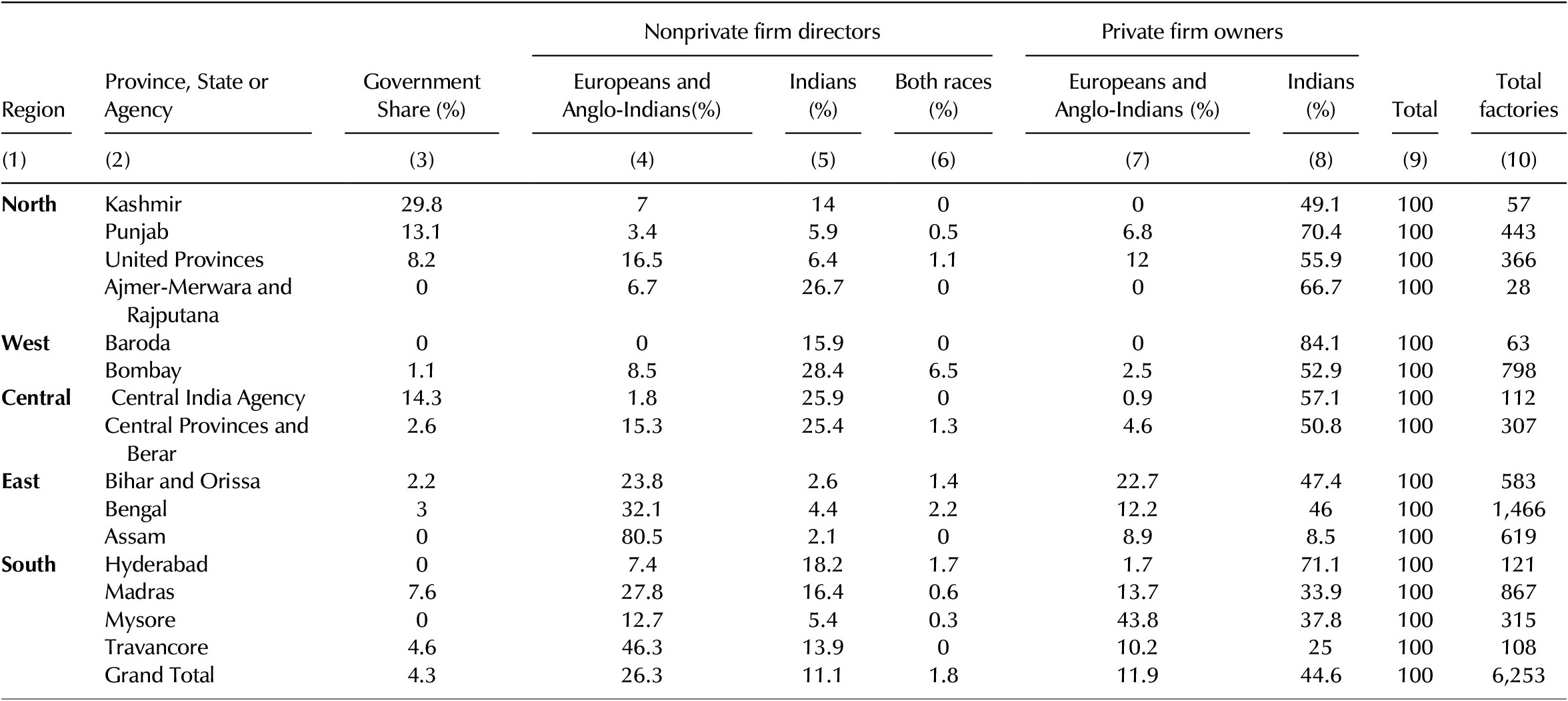
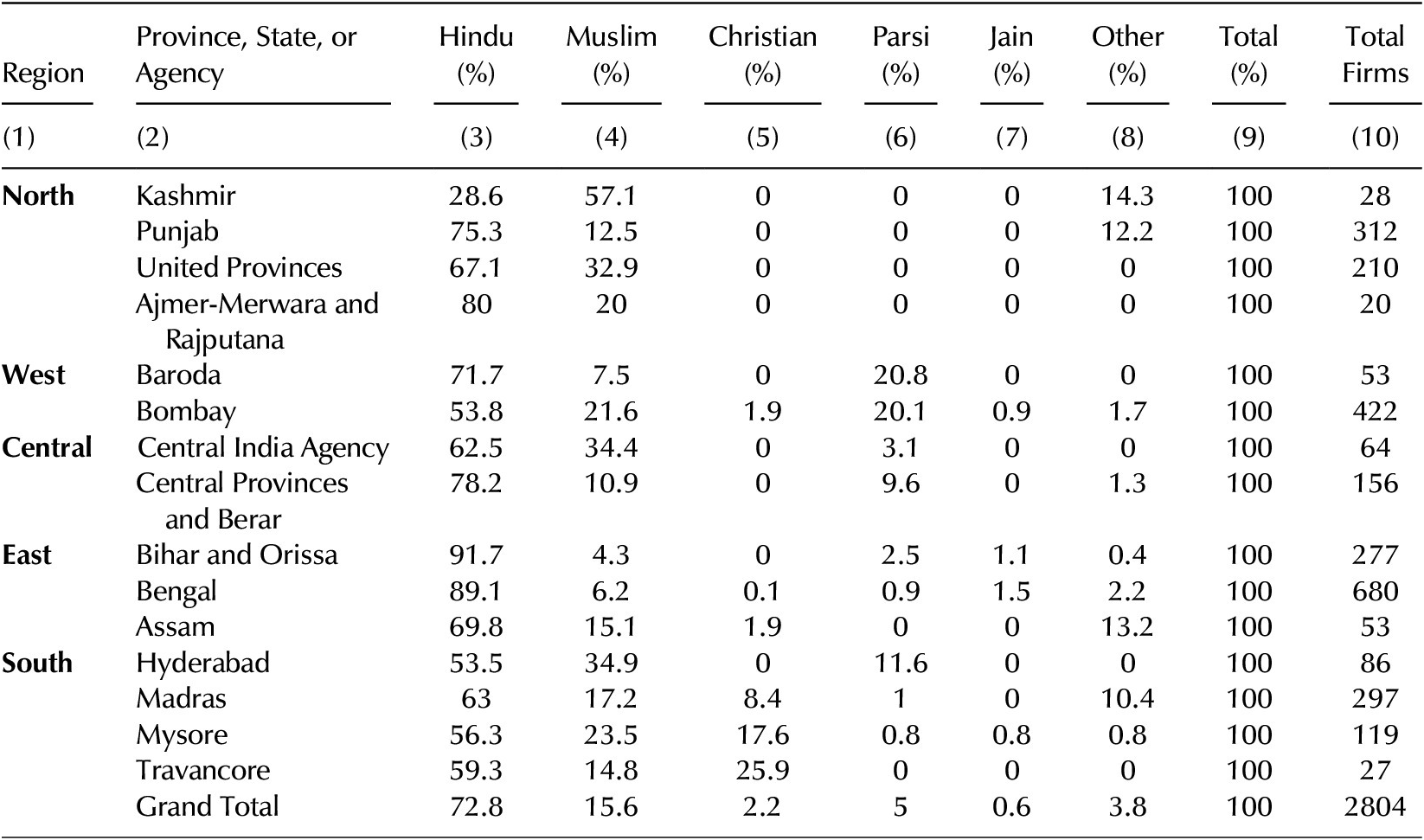
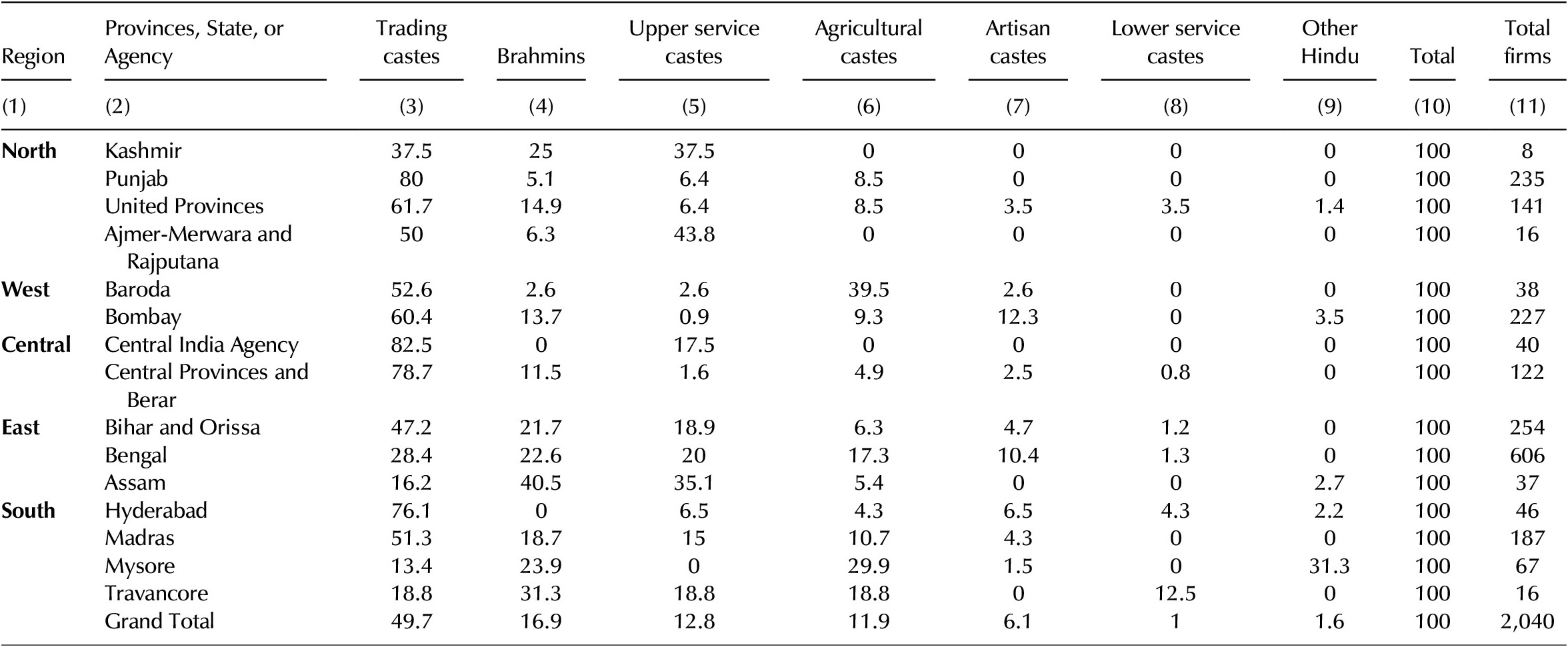
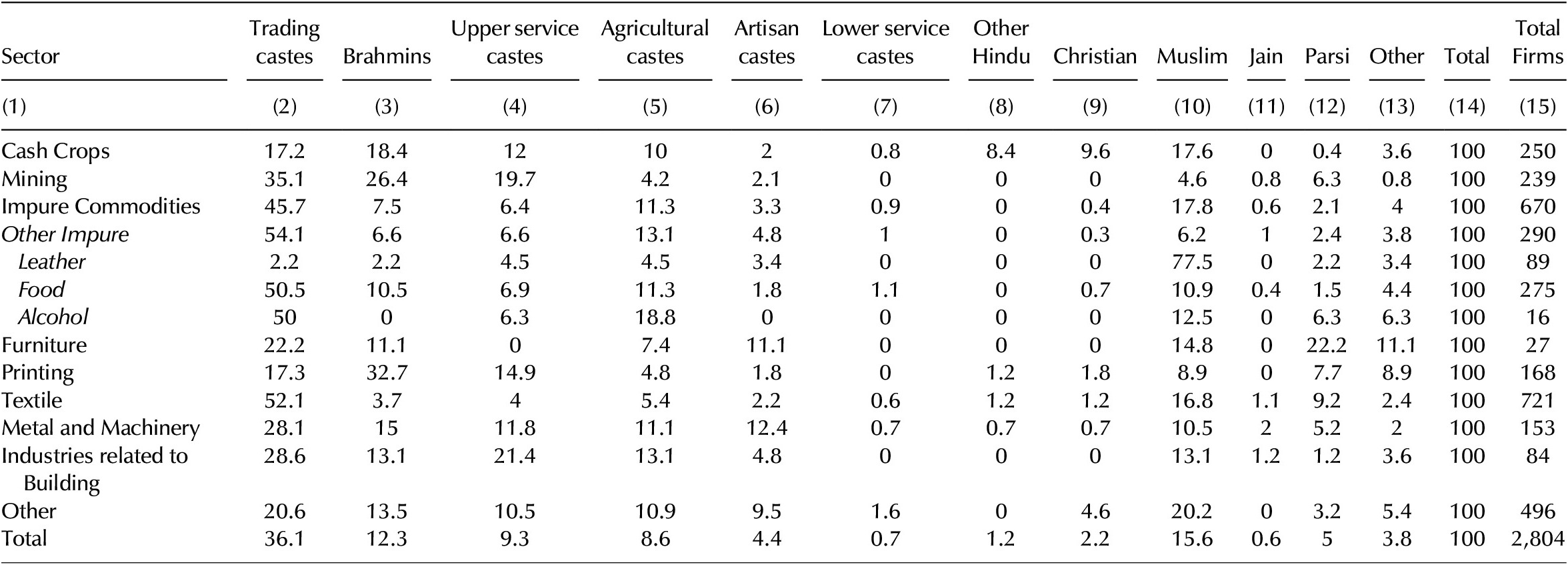
Based on a comprehensive compilation of provincial census reports, we provide an overview of Indian entrepreneurship in the 20th century. Tables 1 and 2 outline the structure and distribution of all factories, including government, joint-stock, and private enterprises, across Indian provinces. Tables 3–6 examine the influence of religion and caste on private factory ownership in 1911, while Table 7 presents a comparative analysis of private firm ownership between 1911 and 2013–2014.
Factory Distribution and Ownership across Indian Provinces
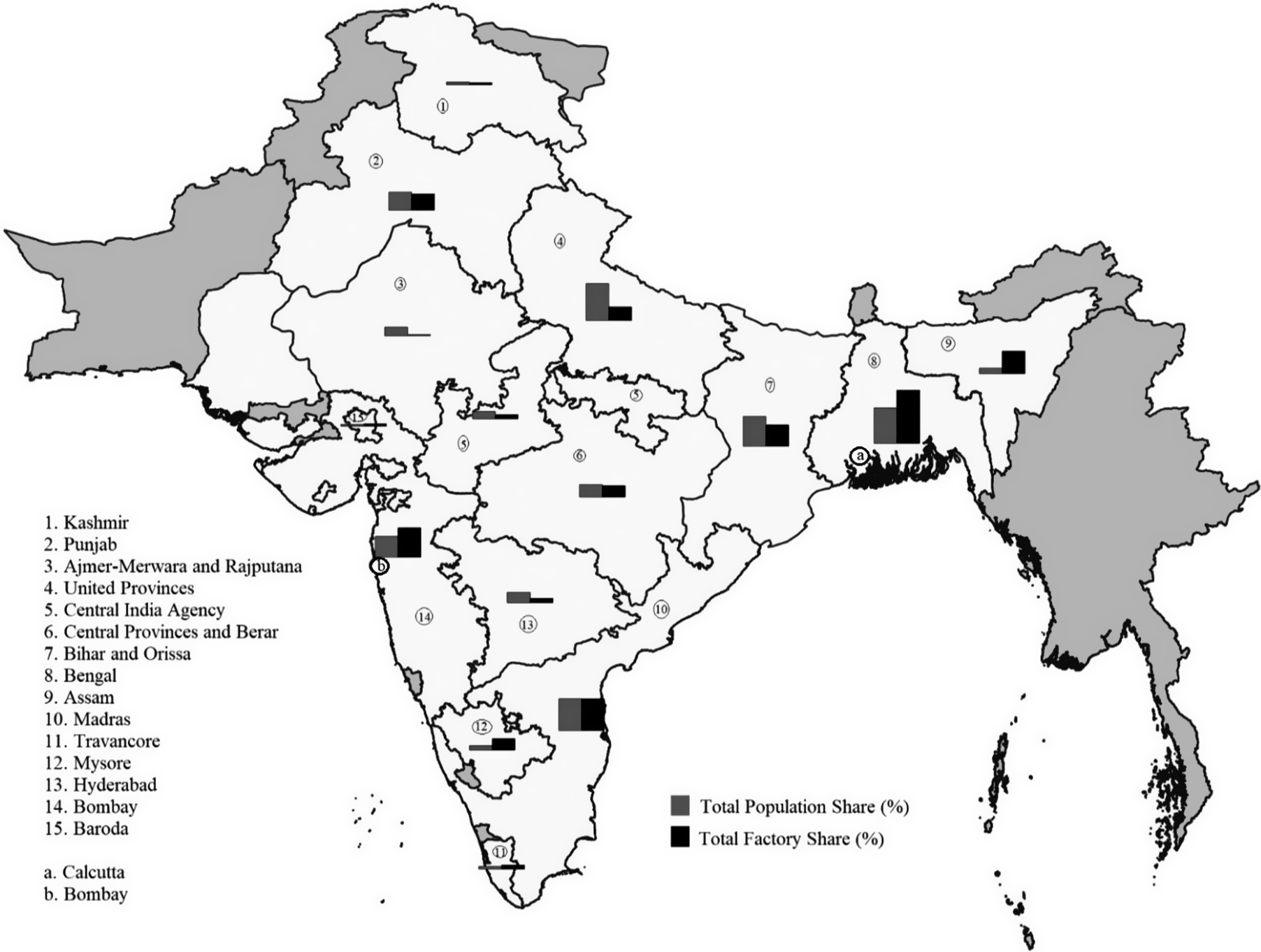
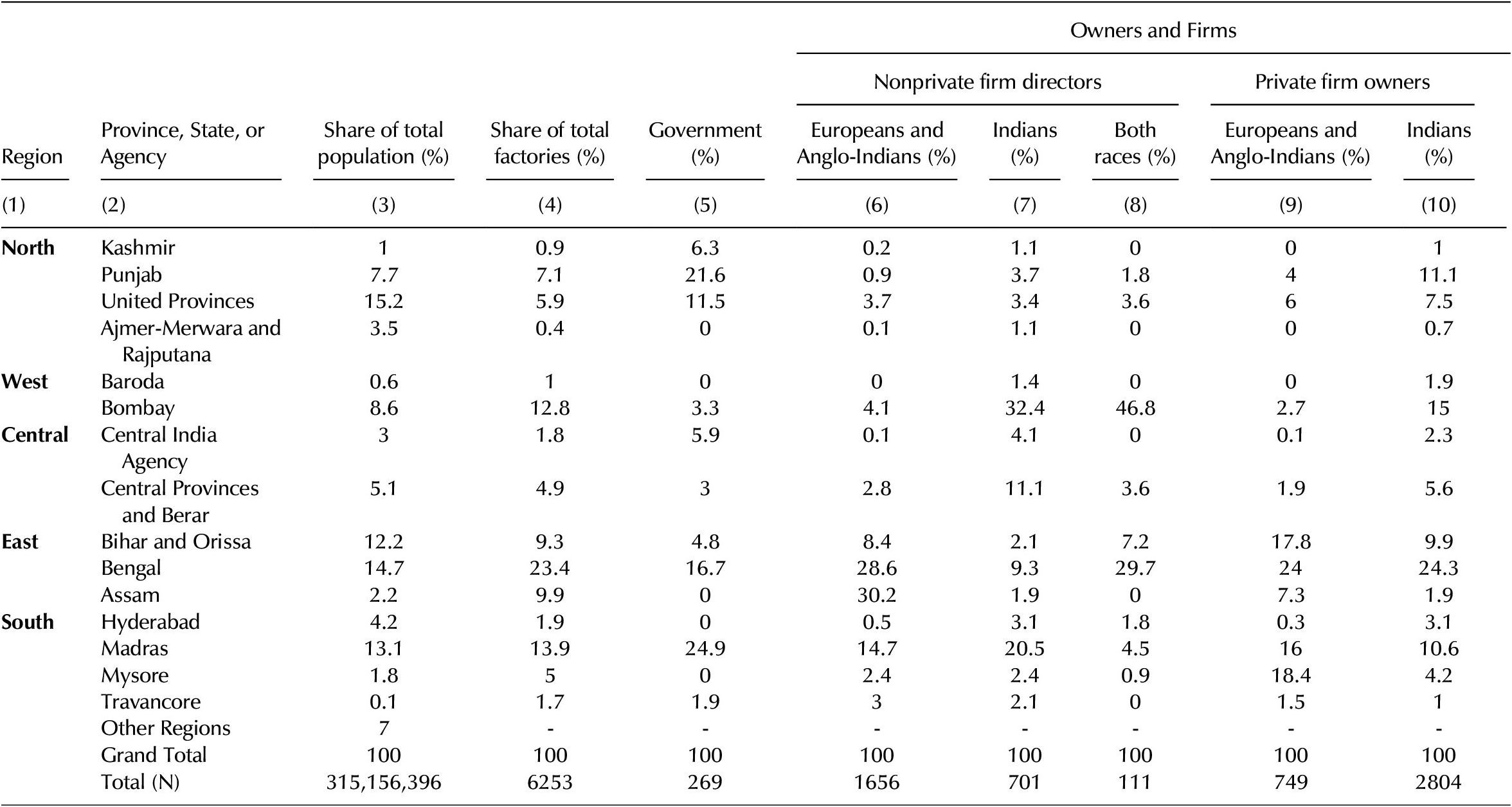
The factory ownership across British India in 1911 reveals significant regional differences in industrial development. Table 1 shows that out of the 6253 factories employing at least 20 workers, 4.3 percent were government owned, 39.2 percent belonged to joint-stock companies, and the rest were privately owned. Europeans controlled 11.9 percent, while Indians owned 44.6 percent. Industrialization was concentrated in Bombay and Bengal, though Bengal, Bombay, Mysore, Travancore, and Assam had a higher factory share relative to their population (Figure 1). In contrast, United Provinces, Bihar and Orissa, Rajputana, and Hyderabad lagged behind, reflecting an uneven industrial landscape.
Northern Region: The northern region, including Punjab, United Provinces, Rajputana, and Kashmir, was under-industrialized relative to its population. Table 1 highlights that Punjab accounted for 7.1 percent of factories, with strong Indian private ownership (11.1 percent). A significant portion of government-owned factories (21.6 percent) were located here, particularly those involved in railway and arms production. Further, despite making up 15.2 percent of India’s population, the United Provinces had only 5.9 percent of factories. Rajputana and Kashmir had minimal industrialization and little European investment.
Western Region: The western region, particularly Bombay and Baroda, was a major industrial hub. Bombay accounted for 12.8 percent of all factories, exceeding its population share (Table 1). Table 2 highlights that of all the factories in Bombay, 43.4 percent of factories were joint-stock companies. Indian private entrepreneurs owned 52.9 percent of total factories, mainly in textiles, while European-owned private factories made up only 2.5 percent, focusing on printing, machinery, and engineering. Baroda had a smaller but largely Indian-led industrial sector.
Central Region: The central region, comprising the Central Provinces and Berar and the Central India Agency, accounted for 4.9 percent and 1.8 percent of India’s factories, respectively (Table 1), primarily in the textile and mining industries. Joint-stock companies were involved in resource extraction industries, but overall industrial development remained slower than in Bengal or Bombay.
Eastern Region: The eastern region, including Bengal, Bihar and Orissa, and Assam, was home to 42.6 percent of the country’s large factories, driving industrial growth closely linked to colonial export industries. Bengal accounted for 23.4 percent of factories (Table 1) across various sectors, including tea, brick and tile, collieries, oil mills, jute, and printing. European-controlled joint-stock companies accounted for 32.1 percent of all firms across various sectors (Table 2), particularly in tea, jute, and coal mining, with Calcutta serving as their commercial hub. Assam had a high presence of European and Anglo-Indian joint stock companies (30.2 percent) (Table 1), primarily in tea. Bihar and Orissa had fewer factories than Bengal; however, housed 17.8 percent of all private factories owned by Europeans and Anglo-Indians.
Southern Region: The southern region, comprising Madras, Mysore, Hyderabad, and Travancore, had a diverse industrial landscape. Madras was a major hub, housing 13.9 percent of factories and the highest share of government-owned enterprises (24.9 percent) (Table 1), spanning industries from fish curing and cash crop plantations to machinery and engineering. The two princely states of Mysore and Travancore had stronger industrial activity compared to other princely states, with Mysore hosting a strong European and Anglo-Indian presence, particularly in coffee and cardamom plantations. In contrast, Hyderabad lagged behind, with fewer factories relative to its population.
Overall Europeans had a stronghold in the east, particularly in Bengal and Assam, where industries were export driven. Of the 2400 European-owned factories, 750 were privately owned, while 1600 were managed by joint-stock companies. These enterprises thrived in global trade, benefiting from colonial policies that favored European business interests.
Indian-owned factories were more prominent in the west and south, with Bombay, Punjab, Hyderabad, and Baroda having the highest share of Indian ownership. Indian entrepreneurs controlled nearly 2800 factories (about 60 percent of total factories), but they faced significant challenges in provinces dominated by European businesses, such as Assam and Bengal.
A notable feature of industrial ownership was the lack of collaboration between Europeans and Indians. Only 111 factories were reported as jointly owned by both groups, suggesting that European and Indian businesses operated in separate economic spheres. Bombay was the only province where such partnerships were more common. Unlike the east, where European factories dominated export industries, Bombay’s industrialization was more diverse, with a mix of Indian and European ownership.
Religion and Factory Ownership
Table 3 highlights how different religious communities shaped private business ownership in early 20th-century India. Hindus owned 72.8 percent of private factories, slightly above their 69 percent population share, while Muslims, at 15.6 percent, were under-represented compared to their 21 percent population share. Jains, despite their historical business reputation, had little presence in the 1911 census data. On the other hand, the less-documented Indian Christians show a considerable presence, significantly above their demographic shares.
North India: In North India, industrial ownership was largely dominated by Hindus, with Muslim participation varying by region. In Punjab, Hindus owned 75.3 percent of firms, while Muslims held only 12.5 percent, indicating limited Muslim engagement in factory industries. The United Provinces had a higher Muslim share (32.9 percent) of firm ownership, likely due to Mughal-era commercial legacies.
Western India: In western India, Hindus remained the majority business owners (71.7 percent in Baroda, 53.8 percent in Bombay), while Muslims had a moderate presence (21.6 percent in Bombay), particularly in the textile industry. Western India stood out for its Parsi entrepreneurial spirit. Though a small community, they owned 20.1 percent of factories in Bombay and 20.8 percent in Baroda, solidifying their legacy as industrial pioneers. The first cotton mill in Bombay was founded by a Parsi in 1854, marking the city’s entry into industrialization.
Central Region: In Central India, Hindu ownership remained dominant but with notable Muslim and Parsi participation. In the Central India Agency, Hindus controlled 62.5 percent of firms, while Muslims held a significant 34.4 percent, suggesting active Muslim entrepreneurship. In the Central Provinces and Berar, Hindu ownership was even higher at 78.2 percent, with Muslims at 10.9 percent. Parsis, accounting for 9.6 percent of firms, were particularly engaged in the cotton trade and textile industries.
Eastern India: In Eastern India, Hindus constituted the majority of private firm owners, with 91.7 percent in Bihar and Orissa and 89.1 percent in Bengal. Assam exhibited more religious diversity, with Hindus at 69.8 percent, Muslims at 15.1 percent, and Christians at 1.9 percent firm ownership.
Southern India: South India presents an intriguing contrast. Indian Christians had significant business presence, with 8.4 percent of factories in Madras, 17.6 percent in Mysore, and 25.9 percent in Travancore—far beyond their demographic share. Meanwhile, Muslims held 34.9 percent of factories in Hyderabad but had a smaller presence in Madras (17.2 percent) and Mysore (23.5 percent).
Caste and Factory Ownership
The dominance of trading communities such as Marwaris, Chettiars, and Aroras is well-documented in Indian business history. However, Table 4, which provides the first nationwide caste-based breakdown of colonial factory ownership, presents a more nuanced picture. While trading communities held a prominent position, other social groups played a far more significant role in industrial ownership than is often recognized.
The industrial census tables mention over 120 jatis as owners of factories, which we categorized into seven types, corresponding to their traditional occupations.Footnote 36 Many jatis correspond easily to the varna categories of “Brahmins” and “Vaishyas,” the latter referred to here as trading castes. The category called “upper service castes,” includes castes such as the Kshatriyas (warriors) and Kayastha (scribes) who were historically considered economically better off and were reserved a relatively high position in the caste hierarchy. The artisan castes consist of castes such as Lohar (blacksmiths) and Julaha (weavers). The agricultural castes were associated with agriculture for their traditional occupation, such as Chasa and Kunbis. The “lower service castes” consist of communities associated with labor work, accorded lower ranks in the caste hierarchy. In the given data, a few castes or religious sects do not uniquely identify with a particular occupation or their traditional occupation is unclear. These observations have been categorized under “Other Hindus.”
Based on our classification, Tables 4–6 provide detailed insights into factory ownership in 1911 using a seven-fold caste categorization. Trading castes, such as Agarwals, have the highest factory-to-population ratio, followed by Kayasthas and Brahmins. Other castes with notable factory ownership include Telis & Tillis, Vakkaligas, Balijas, Kaibartas, Kumhars, Lingayats, Vellalas, Kunbis, Kammas, and Rajputs. Footnote 37
The correlation between the total population of a jati and the number of factories owned by them is broadly positive, especially if trading castes are excluded. Among the 56 demographically significant jatis listed in the 1911 Census, which collectively comprised 70 percent of the Hindu population, 34 had some factory ownership. This suggests a far wider social base of industrial entrepreneurship than previously posited in the literature. However, it is also significant that members of twenty-two demographically significant jatis did not own a single factory. Notably, no factory was attributed to the Mahars (Dalits of Western India), who numbered over three million people, or to any indigenous tribe of India.
Table 4 underscores that the chances of entering industrial entrepreneurship rose with caste rank among Hindus. Brahmins and Vaishyas (trading castes) together owned two-thirds of all Hindu-owned factories, emphasizing their dominant role in industrial ownership across India.
Northern India: In Northern India, trading castes firmly controlled industrial entrepreneurship, shaping the region’s economic landscape. Large-scale factories were primarily clustered in two key regions—Punjab, with 235 factories, and the United Provinces, with 141. Trading communities like the Aroras and Aggarwals dominated.
Western India: Western India’s industrial landscape was largely shaped by trading castes, but other groups also played a significant role. Table 4 provides new insights, showing that by 1911, nontrading castes owned 39.6 percent of Indian Hindu-run factories in Bombay. Brahmins were the second-largest participants, particularly in printing with 12 units. Artisan castes accounted for 12.3 percent of Hindu-owned factories in Bombay, with Kumbhars (potters) leading at 14 factories. The Lowa Kunbis, an agricultural caste from Baroda, also had a notable industrial presence, owning 11 factories.
Central India: In Central India, trading castes dominated industrial ownership, controlling 82.5 percent of firms in the Central India Agency and 78.7 percent in the Central Provinces and Berar. Brahmins and other nontrading castes had minimal industrial presence in this region.
Eastern India: Eastern India had more diverse industrial ownership than Northern and Western India, where trading castes dominated. In 1911, Bengal had 606 Hindu-owned private factories. Trading castes held 28.4 percent, while Brahmins (22.6 percent) and Kayasthas (20 percent) together controlled nearly 40 percent, surpassing trading castes’ share. In Bihar and Orissa, the factory ownership structure showed a notable presence of Brahmins (21.7 percent) and Upper Service castes (18.9 percent), but trading castes dominated, accounting for 47.2 percent of factory ownership in the region. In Assam, Brahmins (40.5 percent) and upper service castes (35.1 percent) dominated, while trading castes had just 16.2 percent of private factory ownership. Agricultural castes also held a strong presence, especially in Bengal. The Sadgops owned 57 factories—the highest among agricultural entrepreneurs. The Mahisyas, another cultivator caste, owned 27 factories.
South India: In South India, industrial ownership was more evenly distributed across caste groups. While trading castes dominated Hyderabad with 76.1 percent, their influence was much weaker elsewhere. In Mysore, agricultural castes owned 29.9 percent of private factories. The weaker presence of trading castes in these regions was likely due to the strong agrarian economy and the influence of nontrading elites in administration and industry. In Madras, Brahmins owned 18.7 percent of factories, and upper service castes 15 percent; however, it was dominated by the trading communities who owned 51.3 percent of the factories.
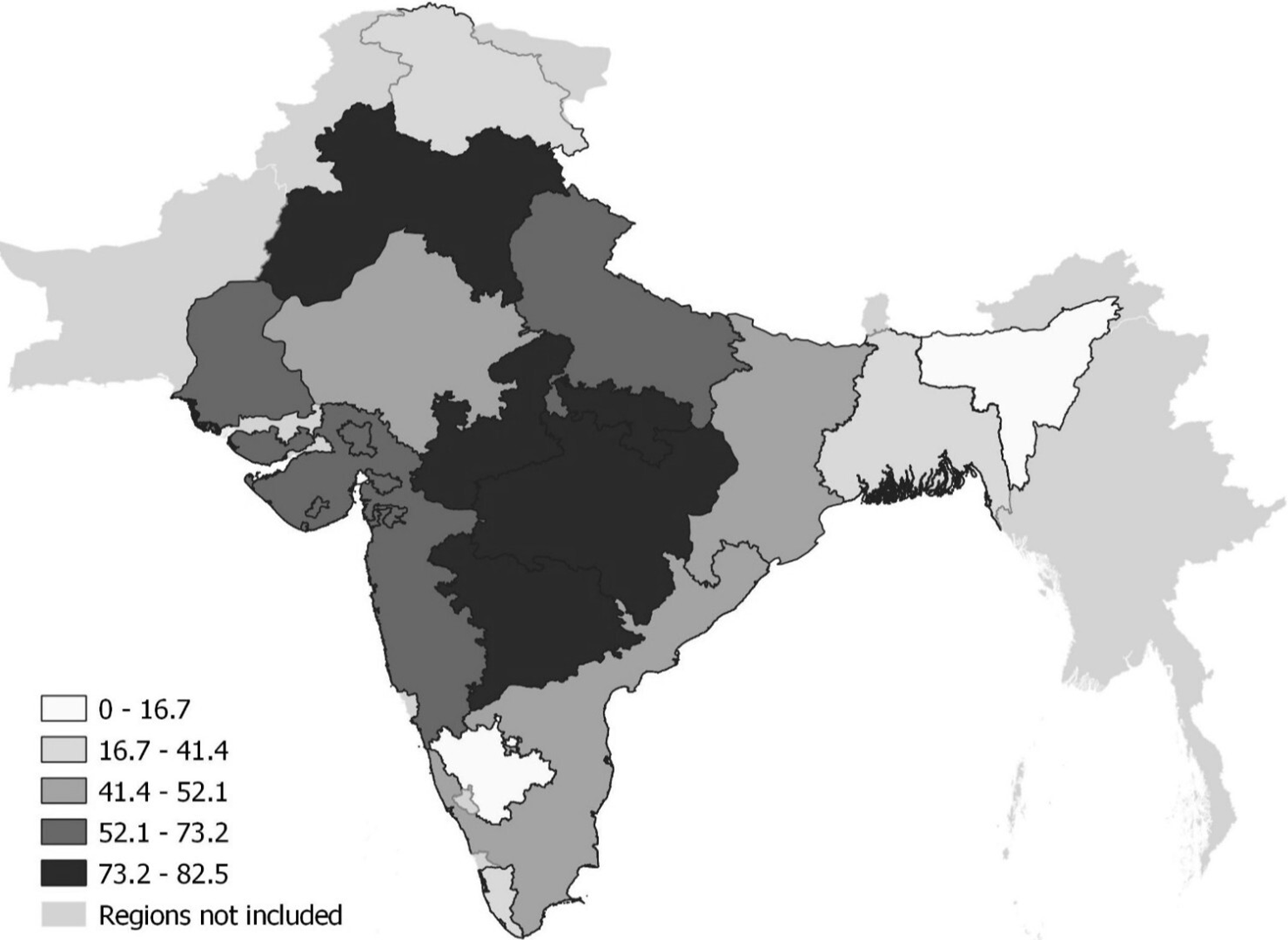
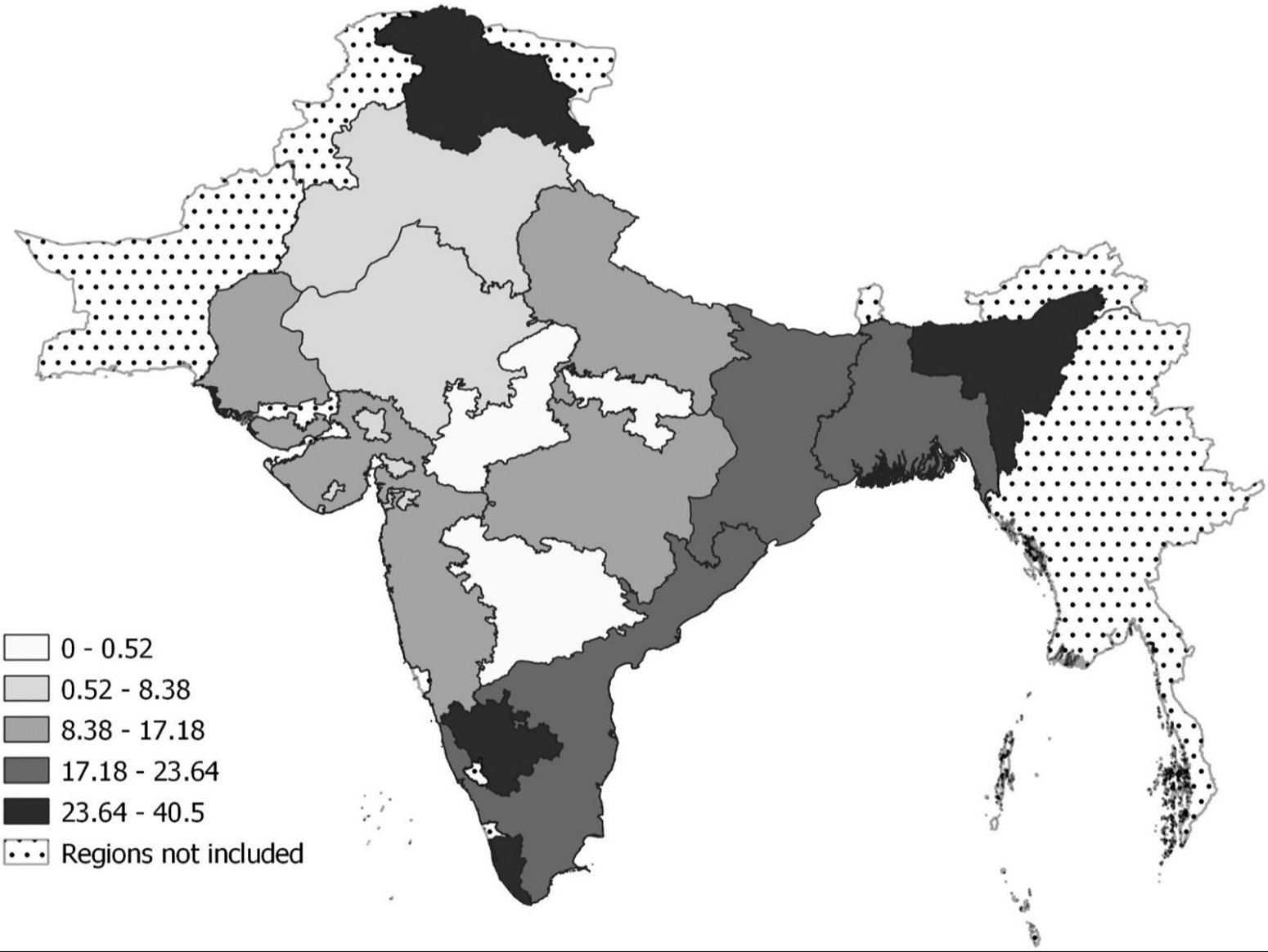
Thus, we see substantial variation in factory ownership across India. Figure 2 illustrates that the dominance of trading castes was prominent in central and northern India but comparatively weaker in the eastern and southern regions, accounting for less than a 20 percent share in Assam, Mysore, and Travancore. This suggests that in Eastern and Southern India, the caste system had less of a direct hold on entrepreneurship, with trading activities no longer being the exclusive domain of traditional trading castes but Brahmins playing a significant role (Figure 3). However, lower service castes and tribal communities were largely absent from industrial entrepreneurship across regions. The only lower service caste with notable factory ownership was the Sunris (alcohol sellers), who owned five factories in Bengal. Even more strikingly, no tribal community from the Scheduled Tribe list owned large factories in 1911.
Caste, Religion, and Sectoral Distribution
Several factors influence an entrepreneur’s decision on what to produce. While economic incentives play a role, caste norms significantly shape entry into certain industries, particularly those associated with ritual purity and impurity. Table 5 provides a sectoral breakdown of Indian private factory ownership in 1911, highlighting how caste and religious identities influenced industrial participation.
We code sectors based on whether they belonged to “impure commodities,” derived from the Manusmriti, an ancient treatise that prescribed norms on how castes could engage with different goods. The directive to avoid impure commodities was primarily meant for Brahmins and Kshatriyas to follow when they shifted to trading occupations in times of adversity. The idea of an impure commodity has been described as anything that involves harming the land, such as tilling, all animal-sourced products such as meat, milk, and others, and objects coming from the dead.Footnote 38 However, it is essential to note two things. The first is that very little differentiation is made between manufacturing and trading a product. Usually, trading means the collective act of manufacturing and selling a product. The second is that owning and using “impure” commodities is acceptable. For example, owning and using animal-sourced goods such as leather, wool, and others is acceptable, but “trading” in them is not. However, there is also a list of impure goods which Brahmins and Kshatriyas must avoid trading in. These include goods such as cooked food, stones, salt, animals, seasonings, dyes, hemp, flax, poison, perfumes, fruits, roots, medicine, milk, honey, curd, ghee, oil, bees-wax, molasses, kusa grass, wild animals, fanged animals, birds, one hoofed animal, indigo, water, tender grain stalks, winemaking ingredients, grain, meat, weapons, and perfume. As per the scripture, if these directives were avoided, Brahmins and Kshatriyas would lose their status and become a Shudra in three days, and he and his ancestors will face punishments in their next lives.Footnote 39
In 1911, the leather industry was a stark example of caste-based segregation, with Muslims owning 77.5 percent of firms in this ritually impure sector. Similarly, industries dealing with “impure commodities,” comprising nearly a quarter of private factories, saw little participation from Brahmins and upper service castes, who avoided trades associated with pollution. In contrast, agricultural and trading castes, unbound by such restrictions, were significantly overrepresented. In contrast, industries perceived as neutral or prestigious followed distinct ownership patterns. Brahmins dominated printing, owning 32.7 percent of firms, reinforcing their historical association with knowledge-based professions. Trading castes maintained a stronghold in textiles, controlling 52.1 percent of firms. Other groups concentrated in industries aligned with their traditional skills. Artisan castes had a strong presence in furniture (11.1 percent) and metals and machinery (12.4 percent). Agricultural castes played a key role in alcohol production, owning 18.8 percent of breweries, a sector with fewer caste restrictions. Parsis were influential in furniture and textiles, holding 22.2 percent and 9.2 percent of firms, respectively. Indian Christians, though fewer in number, were primarily involved in plantations.
Today, caste-based discrimination linked to ritual purity persists but is mostly limited to local markets. Even with sufficient capital, Dalit entrepreneurs face systemic barriers that discourage business ventures. They often sell products at lower pricesFootnote 40 or set up shops in lower-caste-dominated areas.Footnote 41 However, these restrictions diminish at larger scales. As shown in Table A4, even in the leather industry—a sector considered ritually impure—General castes hold a substantial 45 percent share.
Traditional Occupations in Business
Caste has historically dictated occupational roles, influencing business participation across communities. To trace the link between caste and factory ownership, we identified each jati’s traditional occupation using ethnographic surveys, primarily the Castes and Tribes series published by the British between 1890 and 1910 for each province. If the names of the castes are missing from these sources, we used the “People of India” series published between 1992 and 2008, which provides details on communities at the state level based on the People of India Project (1985–1992), the largest ethnographic survey postindependence by the Anthropological Survey of India.
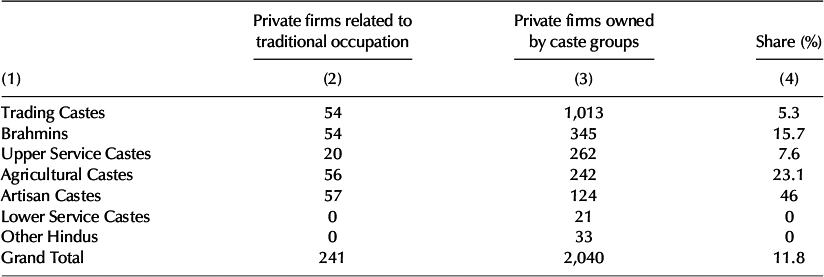
Table 6 illustrates the correlation between factory ownership and the traditional occupations of various castes, highlighting the intertwined nature of entrepreneurial decision-making and caste-based expertise. For instance, if an oil pressing caste group started oil mills, it is considered as being closely linked with its traditional occupation. This connection to caste-based traditional occupations confers a unique advantage on certain groups, granting them substantial monopoly power in their respective domains and facilitating their foray into entrepreneurship. Artisan castes, in particular, present a compelling case. Despite limited access to capital, they maintain significant monopoly power through expertise passed down for generations. Castes such as the Julaha (weavers), Chamar (leatherworkers), Kumbhar (potters), and Chhipa (block printers) have long sustained their crafts, ensuring continuity in their trades. These castes also preserve exclusive production techniques, such as the Vishwakarma community’s secret method of crafting Aranmula Kannadi (a front-reflecting metal mirror) and specialized weaving techniques like Tanchoi silk and Dhakai, restricted to specific castes across India. These techniques bestow a distinctive monopoly power that is not easily transferred to those outside the caste, often serving as a leverage point for entering business, even if they lack multiple other resources. Therefore, it is not surprising that nearly half of artisan-owned factories remained connected to their traditional occupations in 1911 (Table 6).
Agricultural castes, while lacking monopoly power over production techniques, were able to leverage their access to raw materials to enter entrepreneurial ventures. Data from the 1911 Industrial Census shows that 23.1 percent of factories owned by agricultural castes were linked to the agricultural sector. This pattern contrasts with upper-ranking castes, who benefited from greater access to resources, and trading castes, who had the lowest share of agricultural-sector factory ownership at just 5.3 percent.
Since independence, caste-based industrial data has been limited. However, the demand for traditional products offers opportunities, particularly for agricultural and artisan castes, with growth in sectors like handicrafts and food products like millets. Though, limitations in capital, design innovation, and logistics continue to hinder scalability. Programs such as Amazon Karigar, Flipkart Samarth, and the Open Network for Digital Commerce (ONDC) aim to improve market access for artisans, while government initiatives like One District One Product (ODOP) offer financial assistance, skill development, and market support. As these initiatives are relatively recent, their long-term effectiveness in fostering sustained and inclusive entrepreneurial growth remains to be seen.
Caste and Entrepreneurship: The Economic Census of 2013–2014
The 2013–2014 Economic Census covered 58 million establishments, of which 40 percent were in urban areas, making it the largest enterprise-level database ever constructed in India. The data consists of information on ownership by castes across sectors based on the National Industrial Classification (NIC) three-digit industrial code of all establishments in the country. Since the objective is to study caste dominance and entrepreneurship, we only consider privately owned enterprises and drop firms collectively owned by cooperatives, NGOs, and other such entities, reducing the overall dataset to around 49 million establishments. To maintain comparability with the 1911 industrial census, we further select only firms employing more than 20 workers, reducing the database to around 122,000 firms.
While the data on religion of the owner is available, the data on caste is released only at an aggregate level in the four-fold classification system: General, OBC, SC, and ST. We cannot therefore observe traditional occupation at the jati level, nor can we observe Brahmins and trading castes separately in this dataset but they form an important component of the General category. The data includes the religion of each owner, but individuals can also be classified as General, OBC, SC, or ST since many who converted from Hinduism retained their jati identity. For example, a Muslim Chamar could be considered Muslim-SC. However, the 1911 Industrial Census does not provide detailed jati information for non-Hindus. To maintain consistency between 1911 and 2013–2014, we classify non-Hindus solely by religion. As a result, categories like Muslim-SC or Muslim-OBC do not appear in our data; all non-Hindus are classified only by their religion. Further, while the Partition of India in 1947 led to substantial outflows of Muslims to newly created West and East Pakistan, it also led to an inflow of Hindus such that the Hindus of the Indian subcontinent in 1911 (which included the regions of present-day Pakistan and Bangladesh) are broadly comparable to the Hindus of India today.
We categorize the industries into five sectors: agriculture, mining, manufacturing, construction, and trade and services sector. Three sectors, namely agriculture, manufacturing, and trade and services, are further divided into a ritually impure category, caste-tribe-based category and caste-neutral (others) category based on the list of commodities that are considered ritually impure in the Manusmriti. The other caste-tribe-based categories include some of the sectors which have a historical association with certain caste groups. For example, education is historically associated with the Brahmins. These are essentially “non-impure” commodities and services.
Between 1911 and 2013–2014, the most significant change in the geographical distribution of firms with more than 20 workers was the rise of south India and the relative decline of eastern India. While in 1911, the share of south India in population and enterprises was roughly the same (Table 1), in 2013–2014, the region comprised 21 percent of the population but 40 percent of the enterprises with more than 20 workers. And while in 1911, eastern India had a far larger share of enterprises than population, in 2013–2014, it had 28 percent of the Indian population but only 14 percent of the enterprises with more than 20 workers. In 2013–2014, the share of western and northern India in population and enterprises was roughly the same.
Table A.3 and A.4 Footnote 42 show the enterprise ownership by social groups in 2013–2014, by region and sectors respectively. At an aggregate level, the share of enterprise ownership (with more than 20 workers) among Muslims (8 percent), Scheduled Castes Hindu (5 percent) and Scheduled Tribes Hindu (2 percent) are considerably lower than share in population (roughly 14 percent, 15 percent, and 6 percent respectively). OBC Hindus (24 percent) are well-represented and General Category Hindus (42 percent) (the relatively upper-ranking castes) are over-represented as compared to their shares in population. Around 3 percent and 16 percent of enterprises were owned by Christians and the “Others” category (Jains, Parsis, etc.) respectively, higher than their share in population.
Table A.3 also shows the regional variations across India. SC or Dalit concentration was the highest in West Bengal (13 percent), while there was substantial concentration of OBC ownership in southern India, especially in Tamil Nadu.Footnote 43 Table A.4 does not show any clear bias towards sectors for any particular group, especially in the ritually impure categories. The General category has very little presence in the agriculture sector in proportional terms. However, the General category does dominate the printing and publishing sectors and Muslims are over-represented in the leather sector, as seen in the early 20th century as well.
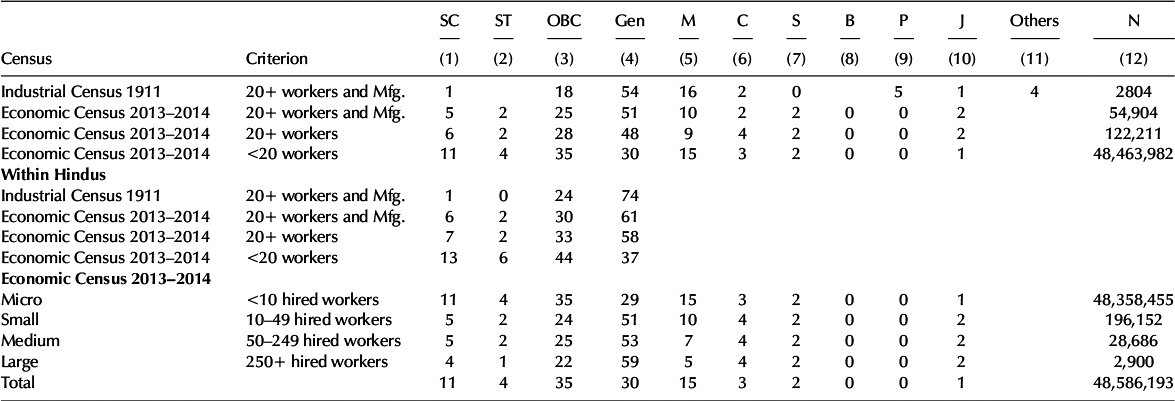
Table 7 shows the overall change in ownership distribution from 1911 to 2013–2014. For comparable Hindu-owned firms, the share of Scheduled Castes has risen from 1 percent to 6 percent, the share of Scheduled Tribes has risen from zero to 2 percent, OBC from 24 percent to 30 percent and the share of General category reduced from 74 percent to 61 percent. Thus, over a century, there has been a widening of the social base of ownership of firms but arguably, at a slow pace. Table 7 also clearly shows that larger the firms, the higher the concentration of General category, rising from 29 percent among micro firms hiring less than ten workers to 59 percent among large firms having more than 250 employees. Thus, while the social base has widened, it continues to favor the upper-ranking castes as firm size increases.
Caste and Entrepreneurship: A Conceptual Framework
According to one influential line of research in economic sociology, entrepreneurial activities are not carried out by isolated actors but by individuals “embedded in concrete, ongoing systems of social relations.”Footnote 44 These social relationships in which economic actions are conditioned consist of norms, customs, and traditions that are slow to change.Footnote 45 They manifest through multiple channels, such as kinship networks,Footnote 46 spatial routes,Footnote 47 social, institutional, and other channels.Footnote 48
The centrality of caste in India’s economic lifeFootnote 49 underscores its “embeddedness” in entrepreneurial choices, even if its influence has somewhat diminished over the past century (Table 7). Most firms are micro firms that usually cater to the local market,Footnote 50 making spatial embeddedness an essential element of business strategy. Moreover, it is to be noted that in India, caste-based relationships are not exclusive to Hindus as other communities such as the Parsis and Christians through embedding, have known to become part of the local caste environment,Footnote 51 and their decisions can become conditioned on caste norms.
Through embedding, entrepreneurs become subjected to both opportunities and restrictions.Footnote 52 However, it may not result in the most efficient business processes.Footnote 53 For instance, the emergence of the agrarian Gounder caste in dominating the Tirupur textile hub in South India did not lead to the most efficient allocation of capital in the region by some benchmarks.Footnote 54 Another recent study documents that shared caste identities of two firm directors increase the likelihood of mergers and acquisitions though such deals often create less value.Footnote 55
This embeddedness, we argue, occurs because of the nature of wealth distribution, social capital, and ritual purity associated with the caste system, which then in turn conditions the nature of interactions between buyers and sellers.
Wealth Distribution
Land ownership in rural India has historically been unequal with the outcastes usually having no land or at the margins of the villages, as empirically documented in hundreds of detailed village-level monographs published by the Census of India in the 1960s. Based on some interpretations, the Brahmins, Kshatriyas, and Vaishyas were allowed to own property, though a Shudra could not. If he or she owned any property, the “master” had the right to confiscate it.Footnote 56 Since land ownership is a major source of wealth in an agrarian economy, it follows that the wealth distribution was deeply unequal across castes in the early 20th century and despite some redistributive measures that varied in intensity by region, it continues to be fairly unequal.Footnote 57 In South India, arguably where land redistribution and other redistributive programs were in greater force, it forced a greater churn, reflected in the tables presented in this paper where the OBC share in firm ownership has changed substantially and also in studies documenting a wide distribution of castes in industrial entrepreneurship.Footnote 58
Inequality in land ownership ensured that a factor of production, namely land required for small and early entrepreneurial ventures, was restricted to the upper castes. This inequality also extends to access to finance as studies suggest that despite multiple government policies, the lower-ranking castes and tribes still face discrimination while availing of loans.Footnote 59
Social Capital
Caste is one of the most important factors determining social connections or networks in India.Footnote 60 Caste networks thrived in a high-risk environment with weak formal institutions.Footnote 61 These caste-based networks play a crucial role in risk pooling and investmentsFootnote 62 and also influence the supply of labor to cities by controlling migration channels.Footnote 63 The upper-ranking castes were the first to permanently migrate to cities relative to others from villages and as a result which their urbanization rates now far exceed that of the lower-ranking castes and tribes.Footnote 64 Within the upper-ranking castes, the migration of the trading castes for business and that of the Brahmins for education and priestly service stand out from a historical perspective,Footnote 65 and thus it is possible that their spatial networks are much wider than most other castes. This gives an advantage in sensing new business opportunities as information and credit percolates quickly through the caste network. Migration itself yields social capital and this has been documented as an important conduit for the rise of successful Dalit enterprises in India in recent years.Footnote 66
However, the social capital is not only built through better networking within the group but also establishing important networks outside the group, which can be leveraged to benefit the entire community in the future. Historically, certain caste groups, such as trading communities,Footnote 67 leveraged their close financial ties with the British to maintain economic dominance. These networks functioned as vital conduits of trust, credit, and opportunity, ensuring continued access to trade and finance. The “useful friendships”Footnote 68 forged in mutual benefit between influential families in Eastern India may have facilitated Brahmin-Kayastha cohort in Eastern India dominated administrative roles, with many also holding stakes in industries such as coal and railways—sectors that required extensive permits and often favored British firms.
Post independence, political policies inadvertently strengthened caste-based economic structures, including business. Vote bank politics enabled dominant castes to align with major political parties, securing favorable treatment for their communities. Thus, rather than dismantling caste barriers, state interventions often reinforced them, as dominant groups leveraged their political bargaining power.Footnote 69 For instance, a recent article in the Deccan Herald (2023) highlighted the reservation demands put forth by the Marathas in Maharashtra, while The Times of India (2023) shed light on the issue of enhanced representation for Lingayats in key government positions. This also extends to business favors as we observe the dominance of Marathas in sugar co-operative in Maharashtra,Footnote 70 Lingayats in educational institutions in Karnataka and many other castes such as the Jats in the North, Reddy, Kamma, and other communities in the south, who often belong to the landed agricultural caste groups.
The License Raj, established under the 1951 Industries Act, imposed strict regulations on private enterprise, creating significant barriers to entry. Under this system, obtaining an industrial license was mandatory to set up a new factory, expand a factory’s capacity, run an unlicensed factory, launch a new product line, or relocate a factory. These stringent controls disproportionately benefited established caste groups that were either economically well-off or politically powerful, allowing them to maneuver through the system and further entrench their position in the Indian business landscape. When economic liberalization began in the 1990s, it largely benefited the educated elite who had already moved away from government jobs.Footnote 71 Tamil Brahmins, with strong educational backgrounds in engineering, science, and commerce, secured high-paying jobs in IT, finance, and multinational firms, further strengthening their presence in India’s service export economy. Today, caste networks remain entrenched in corporate leadership, with 93 percent of board members belonging to forward castesFootnote 72 and over 40 percent being Brahmins.Footnote 73
Ritual Purity
Ritual purity is ingrained in the caste system conditioning the intermingling across castes.Footnote 74 This inherent trait of the caste system may influence entrepreneurial ventures either through the entrepreneur’s caste identity or the ritual purity of the commodity being traded. This characteristic influences upper and lower-ranking castes differently. For instance, Brahmins and Kshatriyas were not supposed to trade in ritually impure commodities such as leather or alcohol. Thus, we observe substantial under-representation of Brahmins in impure commodities in 1911 (Table 5). On the other hand, the lower-ranking castes, whose ritual purity is conditioned on the degree of “impurity” of their traditional occupation, cannot freely trade in goods of symbolic value, such as milk and ghee. In some areas, it is still observed that the upper castes do not buy cloth handled by Dalits.Footnote 75 This act of discrimination shrinks a Dalit entrepreneur’s affluent customer base and ensures that the rich customer base is maintained for the upper-ranking castes in the cloth business even if both the sellers are selling identical cloth. Discrimination arising from ritual purity itself acts as a strong barrier to entry for Dalit entrepreneurs.Footnote 76 Even today, Dalit businesspersons often need to sell their products at a lower costFootnote 77 or set up their shop in a region of the village or town primarily dominated by lower castes.Footnote 78 The sanitation sector is a classic case where cleaning jobs were reserved for the outcastes and where discrimination continues to be rife.Footnote 79 Caste-based discriminatory hiring norms can apply to both the employer and the employee. This is best seen in the food sectorFootnote 80 where, for example, if a Brahmin hires an outcaste cook, he or she could become an outcaste among fellow Brahmins, and the cook would have difficulty getting a subsequent job.Footnote 81
However, ritual purity is much more nuanced than shunned communities or commodities when considered in terms of entrepreneurial activities. The Manusmriti lists commodities that would result in a Brahmin losing his caste and becoming Shudra if he traded in them. Thus, a Brahmin or Kshatriya could not transact in forbidden commodities, but no such norms existed for trading communities. Ritual purity was also observed more in production processes than trading. As such, the manufacturing sector was arguably less amenable for a range of castes to enter than the services sector. These observations tie in with the data observed for 1911, but less so in 2013–2014, suggesting that aspects of ritual purity may have weakened in determining entrepreneurial choices over the past century.
Collectively, the nature of wealth distribution, social capital, and ritual purity influences the expectations of buyers when they buy goods and services. As has been noted, embeddedness makes expectations predictable and reduces monitoring costs making them a significant part of business strategy.Footnote 82 In the Indian context, four types of entrepreneurial choices can be identified, as shown in the schematic below.

In the first case, the business is run entirely on caste lines where the entrepreneur enters an acceptable sector based on caste and is perceived as such by the society or customers. Examples include Brahmins providing educational services or Dalits providing sanitation services. In this case, the entrepreneur may face less pushback from society for not violating caste norms when they are engaging in entrepreneurial activities. For example, as seen in Agra where Chamar artisan selling leather products, or upper castes selling food products.
In the second “caste-advantage” business, the entrepreneur sticks to the traditional occupation linked with his or caste but due to comparative advantage rather than a caste-based expectation of the consumer base. For example, the society or customer base may move to a point where anybody can provide tailoring services and yet members of the Darji (tailor) caste choose to engage in tailoring services because of profit expectation and a legacy of skills in this sector. Similarly, a Kumbhar (potter) entrepreneur, unencumbered by capital or social constraints, might establish a large pottery factory, as was seen in Bombay in 1911.
Another business opportunity is for the entrepreneur to significantly depart from traditional sectors linked with one’s caste, but this may not work if the society or customers do not expect this to occur and actively switch, refrain, or discriminate. This is a “caste-restricted business” and arguably, a major hindrance for the historically disadvantaged castes in India to enter new lines of business. For example, in one setting, it was observed that when lower-ranking castes sold milk in the local market, it was not only shunned by upper castes, but their own caste people lacked trust.Footnote 83 Dalits have been the most affected by this discriminatory system. Beyond lacking social networks, their historical exclusion from property ownership limits access to collateral for loans.Footnote 84 Even when they secure funding, their businesses are often labelled by caste, and many people deliberately avoid Dalit-owned shops.Footnote 85
Finally, there is the purely market-driven “non-caste” embedded business where anybody can enter any line of business and is not judged by customers adversely based on their caste. While India is moving to this quadrant of business with the widening of the social base of entrepreneurshipFootnote 86; however, the shift, as seen in the comparative picture between 1911 and 2013–2014, is very slow. While discrimination may be declining and opportunities in the Indian business space are expanding, significant barriers remain to making entrepreneurship more inclusive. Some prominent castes, due to inherent advantages such as strong social networks, better access to funding, and an established foothold, continue to strengthen their position in the business landscape.
Conclusion
In this paper, we have for the first time presented a pan-India picture of caste and entrepreneurship in colonial India using the Industrial Census of 1911 and compared it to the data observed in the Economic Census of 2013–2014. We observe the dominance of trading castes but also the participation of several other castes that have been hitherto not emphasized in the Indian business history literature. Over a century, that dominance has shrunk to some extent in the overall distribution of firms but as firm size increases, a greater propensity of ownership is linked with the upper-ranking castes. The representation of Scheduled Castes and Scheduled Tribes in entrepreneurship has improved marginally but large gains were observed for the OBC’s especially in South India.
The paper takes these observations to posit a conceptual framework of “caste embeddedness” linked with wealth distribution, social capital, and ritual purity. This may explain why some castes have had far more entrepreneurial opportunities and also the specific sectors of entry that were open and closed to them. A typology of four businesses—“Caste,” “Caste-advantage,” “Caste-restricted,” “Non-caste”—is also presented to reflect this embeddedness that affects entrepreneurial choices. India’s journey to a market-mediated “non-caste” embedded entrepreneurship appears to be slow and further work can quantify elements of this transformation and identify specific areas where the transformation is occurring faster than others.
Supplementary material
To view supplementary material for this article, please visit http://doi.org/10.1017/eso.2025.10097.
Acknowledgments
I am deeply thankful to Professor Chinmay Tumbe (Indian Institute of Management Ahmedabad) for his detailed input on the paper. I would also like to thank Professor Vegard Iversen (University of Greenwich), Professor Tirthankar Roy (London School of Economics), and Professor Ankur Sarin (IIMA) for their guidance and constructive feedback. I also wish to thank the participants and organizers of the Indian Business and Economic History meetings in 2021 and 2023, whose feedback helped shape this paper. I am especially grateful to the anonymous reviewers and the journal editor, Dr. Andrew Popp, for their valuable comments and suggestions, which have greatly enhanced the quality of this paper.
Figures and Tables
Share of total population and total factories by Indian provinces and states in 1911.
Source: Industrial Census Tables, Provincial Census of India 1911 reports. Shaded regions not included in the study.

Trading castes ownership in Hindu-owned private factories of India, %, 1911.
Source: Industrial Census Tables, Provincial Census of India 1911 reports.

Brahmin ownership in Hindu-owned private factories of India, %, 1911.
Source: Industrial Census Tables, Provincial Census of India 1911 reports.

Factories across provinces of India by type of ownership, 1911

Source: Industrial Census Tables, Provincial Census of India 1911 reports.
Factory ownership patterns by provinces of India, 1911

Source: Industrial Census Tables, Provincial Census of India 1911 reports.
Ownership distribution of Private Indian Firms by religion and regions, 1911

Source: Industrial Census Tables, Provincial Census of India 1911 reports.
Share of caste groups in Hindu-owned private Indian firms by region, %, 1911

Source: Industrial Census Tables, Provincial Census of India 1911 reports.
Social group’s share of private Indian firm ownership by sector, %, 1911

Source: Industrial Census Tables, Provincial Census of India 1911 reports.
Traditional occupation and industrial entrepreneurship linkages, 1911

Source: Industrial Census Tables, Provincial Census of India 1911 reports. Traditional occupation coded by author.
Enterprise ownership by social group, %, 1911 and 2013–2014

Source: Analysis of Industrial Census, 1911, and Economic Census, 2013–2014. Mfg-Manufacturing, SC-Scheduled Caste, ST-Scheduled Tribe, OBC-Other Backward Class, Gen-General, M-Muslim, C-Christian, N-Number of enterprises. SC, ST, OBC, and General categories are only for Hindu religion in this table. Figures rounded to nearest integer.


 Open access

