Introduction
Primary healthcare (PHC) is a fundamental component of the Canadian healthcare system (Health Canada, 2004; Health Council of Canada, 2005). Many new organizational strategies have been implemented within the PHC system to improve health outcomes, increase accessibility and increase cost-efficiency (Aggarwal and Hutchison, Reference Aggarwal and Hutchison2012; Strumpf et al., Reference Strumpf, Levesque, Coyle, Hutchison, Barnes and Wedel2012). Given the increasing prevalence and costs associated with chronic diseases in Canada (Broemeling et al., Reference Broemeling, Watson and Prebtani2008), a particular emphasis has been placed on increasing the quality of PHC services delivered to patients with chronic conditions. Within Ontario, organizational strategies include new physician payment models, electronic medical records, after-hours care, and inclusion of non-physician health providers, such as nurse practitioners and registered nurses, to form team-based practice models. Many of these organizational strategies have purportedly increased access to healthcare services, enhanced efficiency of resource utilization, and improved chronic disease management (Hogg et al., Reference Hogg, Dahrouge, Russell, Tuna, Geneau, Muldoon, Kristjansson and Johnston2009; Russell et al., Reference Russell, Dahrouge, Hogg, Geneau, Muldoon and Tuna2009; Reference Russell, Dahrouge, Tuna, Hogg, Geneau and Gebremichael2010; Liddy et al., Reference Liddy, Singh, Hogg, Dahrouge and Taljaard2011; Dahrouge et al., Reference Dahrouge, Hogg, Russell, Tuna, Geneau, Muldoon, Kristjansson and Fletcher2012; Health Canada, 2012). However, Canada’s PHC system still ranks lower than many other high-income countries on measures such as timely access to care, patient engagement and interprofessional teamwork, suggesting a need to better understand which organizational strategies support or hinder the delivery of high-quality PHC, especially for patients with chronic conditions (Aggarwal and Hutchison, Reference Aggarwal and Hutchison2012).
Accordingly, comprehensive monitoring and evaluation of evolving components of the PHC system is a priority of many stakeholders involved in PHC system reform (Aggarwal and Hutchison, Reference Aggarwal and Hutchison2012; Canadian Institute for Health Information, 2014; Canadian Foundation for Healthcare Improvement, 2015). Although several data collection tools exist for use within PHC, many focus on patient and physician perspectives of and/or experiences with PHC. In 2013, the Canadian Institute for Health Information (CIHI) released a set of practice-based surveys to aid in acquiring high-quality data for PHC performance measurement and evaluation (CIHI, 2013). This suite of novel tools has the potential to collect important information about a wide range of PHC characteristics, including organizational attributes across practice settings in Canada. Importantly, the ‘Measuring Organizational Attributes of Primary Health Care Survey’ has items that capture data about non-physician providers, such as nurses who form the core of interdisciplinary PHC teams (CIHI, 2013; Canadian Nurses Association, 2014; Ministry of Health and Long-Term Care, 2014). Given the current shift toward interdisciplinary team structures within primary healthcare, it is imperative that nurses demonstrate their unique contributions to patient care within this setting (Canadian Nurses Association, 2014; Kennedy, Reference Kennedy2014) to inform how to best optimize their roles in the delivery of chronic disease management services to the Canadian population.
The overall aim of this study was to better understand the organizational attributes of PHC teams in eastern Ontario. The objectives of this study were (1) to determine team composition within team-based PHC practices in eastern Ontario (2) to describe nursing roles within PHC teams and (3) to determine the range of chronic disease management services available within practices. In addition, this study examined the feasibility of using the ‘Measuring Organizational Attributes of Primary Health Care Survey’ to gather organizational-level data.
Methods
Study aim and design
A cross-sectional survey was conducted to describe the distribution and nature of organizational attributes across PHC practices within eastern Ontario, including the distribution of healthcare providers within practices, the roles of nurses in each regulatory designation, the availability of various services, and the availability of systematic patient management for various chronic conditions. This study was reviewed for ethical compliance by the Queen’s University Health Sciences Research Ethics Board.
Setting and participants
All practice locations affiliated with PHC sites that participate in the Eastern Ontario Network of the Canadian Primary Care Sentinel Surveillance Network (CPCSSN) were invited to participate in the study (n=34) (CPCSSN, 2013). For the purposes of this study, ‘practice locations’ were defined as locations in which providers deliver health services to individuals, and ‘sites’ were defined as PHC organizations containing ⩾1 practice location. At study completion, 13 sites were affiliated with the Eastern Ontario Network of the CPCSSN, namely nine family health teams (FHTs), three community health centers (CHCs), one nurse practitioner-led clinic (NPLC), representing a total of 34 practice locations. FHTs and CHCs both deliver PHC using an interdisciplinary team structure. CHCs specifically serve vulnerable individuals within a community who have challenges accessing healthcare services, and focus on broader social determinants of health (Health Force Ontario, 2010; Nurse Practitioner Association of Ontario, 2011; Association of Ontario Health Centres, 2014; Ministry of Health and Long-Term Care, 2014).
Data collection tool
Organizational attributes were captured using a modified version of the ‘Measuring Organizational Attributes of Primary Health Care Survey’ developed by CIHI (2013). The decision to use this tool was informed by a systematic search and review conducted by the study authors (Lukewich et al., Reference Lukewich, Corbin, VanDenKerkhof, Edge, Williamson and Tranmer2014). The selected questionnaire was designed to describe the composition of the PHC team, healthcare services offered within the practice and the organization of healthcare services.
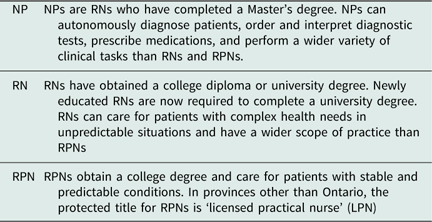
With permission from the questionnaire developers, minor modifications were made to better align the questionnaire with chronic conditions addressed by the CPCSSN and to add clarity to questions regarding nurses and their roles within the practice. For example, in a question about systematic patient management and follow-up services for patients with various chronic diseases, we added the following conditions: hypertension, depression, Parkinson’s disease, epilepsy, Alzheimer’s disease and chronic pain. With respect to questions regarding nurses, the position of ‘registered/licensed practical nurse’ (RPN) was added to the list of professions. Furthermore, the question ‘What are the roles and functions of nurses in your medical team?’ was re-organized to distinguish between each regulatory designation of nurses, including nurse practitioners (NPs), registered nurses (RNs) and RPNs. A description of each designation is located in Table 1. Lastly, a response option of ‘Unsure/Don’t know’ and/or ‘Not Applicable’ was added to each question. The updated questionnaire was reviewed for content and clarity and approved by all members of the study team and an administrative lead from one of the PHC sites.
Data collection
Data collection occurred between June and November 2014. Before questionnaire distribution, a lead (eg, Administrative Lead, Executive Director) at each site was invited to participate in the questionnaire. For sites that agreed to participate, contact information for each affiliated practice location was obtained from existing records at the Eastern Ontario Network of CPCSSN or from the site lead. Initial invitation to complete the questionnaire was sent by email through FluidSurveysTM. To encourage completion, participants were sent three email reminders at two-week intervals, followed by phone call reminders at one to two-week intervals. During phone call reminders, the study coordinator explored the individual’s interest in completing the questionnaire and confirmed that the email address details were accurate.
Statistical analyses
Data are presented at the practice location-level, organized by model of care (ie, FHT, CHC). Data were analyzed using descriptive statistics. Categorical data are presented as frequencies and percentages. Continuous data are presented as means and standard deviations (SDs). Data were analyzed using SPSS Version 22 (Armonk, NY: IBM Corp).
Results
Description of practices
The response rate was 76% (n=26) at the practice location-level. Eight FHTs (21 different practice locations), three CHCs (four different practice locations), and one NPLC completed the questionnaire. As there was only one NPLC, this data was excluded from results to maintain anonymity and allow for meaningful comparisons across settings.
The number of practice locations affiliated with a single site ranged from 1 to 5. The respondent was most commonly a manager or administrative lead (n=15; 60%). Other respondents included physicians (n=5; 20%), administrative personnel or assistants (n=4; 16%), or NP (n=1; 4%). It took participants a mean±SD of 52±29 min to complete the questionnaire (range 24–119 min).
All CHC locations and 80.9% (n=17) of FHTs were located in a city or small town, with 19.1% (n=4) practices located in a rural setting. All CHC locations and 66.7% (n=14) FHT locations were in operation >10 years. Furthermore, all practice locations had 5.08±3.35 (range 1–13) administrative support personnel including managerial, clerical and reception staff.
Healthcare providers
All FHT locations had at least two physicians averaging 5.2±4.0 physicians per practice location (range 2–18). Similarly, CHCs had 5.0±1.4 physicians per practice location (range 4–7). All CHC locations and most FHT locations had at least one NP and at least one RN, the two most common non-physician providers across all settings. In contrast, only 50.0% of CHC and 42.9% of FHT locations had ⩾1 RPN (Table 2). In addition, there were a total of three practice locations that exclusively had RNs as nursing providers, and a total of three practice locations that only had RPNs and diabetes nurse educators as nursing providers, each of which was affiliated with the FHT model of care (data not shown in table). Furthermore, a higher proportion of CHC locations had ⩾1 non-physician providers, including nurse practitioners, social workers, dietitians and diabetes nurse educators, compared with FHT practice locations. Some FHT locations had ⩾1 psychologist, physiotherapist or occupational therapist, whereas these providers were not present within CHCs (Table 2). No locations had an optometrist, audiologist, speech language pathologist or chiropractor.
Presence of healthcare providers within practices
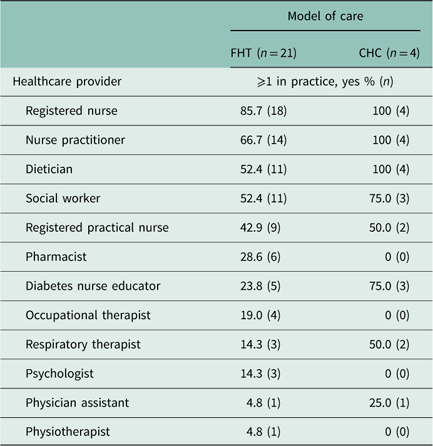
FHT=family health team; CHC=community health center.
Nursing roles
NPs reportedly engaged in most roles listed in Table 3. There was a higher proportion of NPs within FHT locations who engaged in support for medical activities compared with CHCs. In fact, no NPs within CHC locations performed these activities (92.9% versus 0%). In general, the percentage of practices utilizing RNs for a particular role was comparable with the percentage of practices utilizing NPs for many of the same roles. RPNs engaged in the least number of roles compared with NPs and RNs. FHT locations were the only setting where RNs reportedly prescribe medications and order diagnostic tests (Table 3).
Roles of nursing within family health teams (FHTs) and community health centers (CHCs) as reported by site lead (eg, manager, administrative lead)
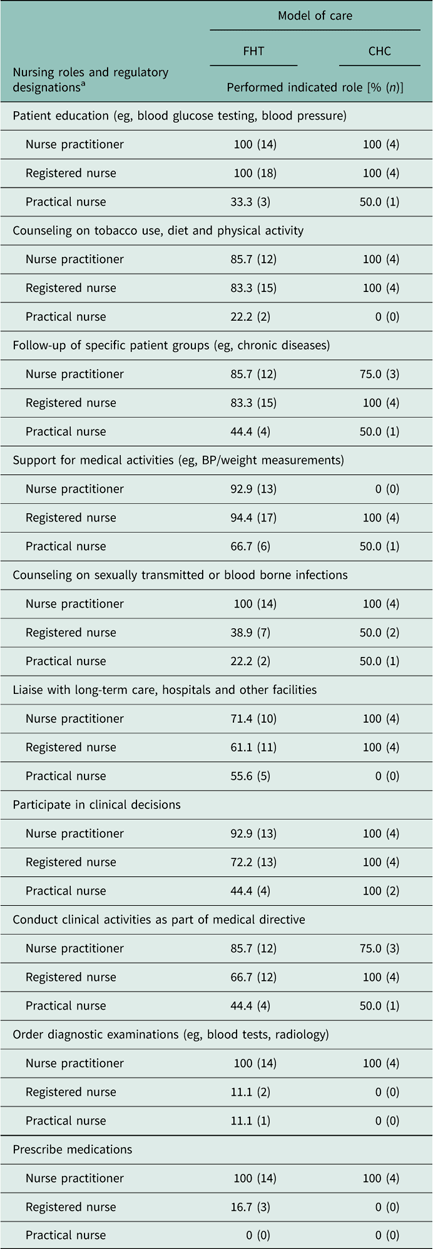
a Percentages based on number of practices locations that reported to have ⩾1 nurse within the specified nursing regulatory designation.
FHT=family health team; CHC=community health center; BP=blood pressure.
Availability of primary healthcare services
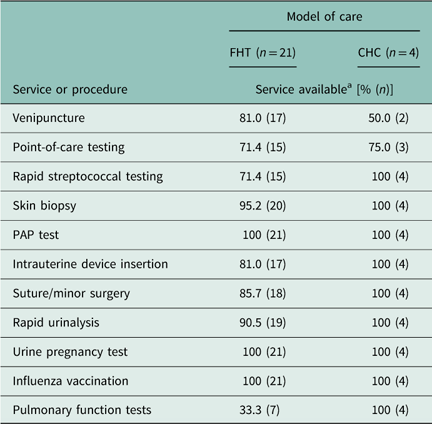
The frequency and percent of FHT and CHC locations providing specific PHC services are outlined in Table 4. Less FHT locations reported performing various services, including point-of-care testing, rapid streptococcal testing and pulmonary function tests in comparison with CHCs (Table 4).
Availability of different primary care services and procedures
a Other response options not shown in table were ‘No/Unsure.’
FHT=family health team; CHC=community health center; PAP=papanicolaou.
Chronic diseases management attributes
Most practices reported to have a process for systematic management and follow-up for the chronic conditions listed in Table 5. A greater proportion of FHT practices reported to have systematic management and follow-up for patients with hypertension (100% versus 75%), depression (100% versus 75%), heart failure (90.5% versus 75%), chronic pain (90.5% versus 75%), Alzheimer’s disease and related dementias (85.7% versus 50%), osteoarthritis (76.2% versus 75%), Parkinson’s disease (71.4% versus 50%), and epilepsy (61.9% versus 50%) compared with CHC practices.
Systematic patient management and follow-up

a Other response options not shown in table were ‘No/Unsure.’
FHT=family health team; CHC=community health center; COPD=chronic obstructive pulmonary disease.
Respondents from all settings reported to either always (25.0%, n=5) or often (75.0%, n=20) assist patients in setting and attaining self-management goals, and most either always (40.0%, n=10) or often (52.0%, n=13) delivered care in accordance with clinical practice guidelines. In all, 96% (n=24) of practice locations reported having tools to assist with lifestyle counseling and health education or to help modify behaviors. Similarly, 34.6% and 46.2% of locations reported to either always or often utilize flow sheets to track critical elements of care, respectively.
Interpretation
This study implemented CIHI’s recently developed ‘Measuring Organizational Attributes of Primary Health Care Survey’ (CIHI, 2013) and presents information about the organization of PHC practices in eastern Ontario, focusing specifically on team composition, nursing roles, and general strategies that support chronic disease management. Our finding that FHT practices tend to be more rurally located than CHC practices aligns with a report published by the Institute for Clinical Evaluative Sciences (Glazier et al., Reference Glazier, Zagorski and Rayner2012). There were differences in the proportions of healthcare providers present in FHT and CHC practices. In general, CHC practices had a greater proportion of non-physician providers in comparison with FHT practices. As well, NPs and RNs were the most common non-physician healthcare providers. Furthermore, although nearly all practices engaged in important chronic disease management activities, certain activities associated with improved health outcomes were not being performed by all practices, such as goal-setting and utilizing a flow sheet or system to track critical elements of care (Bodenheimer et al., Reference Bodenheimer, Lorig, Holman and Grumbach2002; Bodenheimer, Reference Bodenheimer2003; Jaakkimainen et al., Reference Jaakkimainen, Shah and Kopp2003; Lin et al., Reference Lin, Hale and Kirby2007; Nutting et al., Reference Nutting, Dickinson, Dickinson, Nelson, King, Crabtree and Glasgow2007; Haas et al., Reference Haas, Maryniuk, Beck, Cox, Duker, Edwards and … Force2013; Stellefson et al., Reference Stellefson, Dipnarine and Stopka2013). The extent to which chronic disease management activities were utilized was not captured in this study (ie, what and when goal-setting and flow sheets are being utilized).
There are few studies that specifically describe nursing roles or provide information on nurse staffing and workforce trends within the PHC setting (Hogg et al., Reference Hogg, Dahrouge, Russell, Tuna, Geneau, Muldoon, Kristjansson and Johnston2009; Keleher et al., Reference Keleher, Parker, Abdulwadud and Francis2009; Russell et al., Reference Russell, Dahrouge, Hogg, Geneau, Muldoon and Tuna2009; Griffiths et al., Reference Griffiths, Murrells, Maben, Jones and Ashworth2010; Russell et al., Reference Russell, Dahrouge, Tuna, Hogg, Geneau and Gebremichael2010; Dahrouge et al., Reference Dahrouge, Hogg, Russell, Tuna, Geneau, Muldoon, Kristjansson and Fletcher2012). The finding that NPs and RNs were the most common providers, after physicians, is consistent with other literature that has explored staffing patterns of healthcare providers in PHC (CIHI, 2014a; 2014b; Peikes et al., Reference Peikes, Reid, Day, Cornwell, Dale, Baron, Brown and Shapiro2014) and with Ontario reports on nursing (College of Nurses of Ontario, 2015). In 2014, the College of Nurses of Ontario reported that there were 2462 RNs working in FHTs, CHCs or NPLCs, in comparison with 995 NPs and 1196 RPNs, making RNs the highest employed nursing provider within these settings. Although it is well-documented that nurses within all regulatory designations play a key role in health promotion, disease prevention and chronic disease management (Holcomb, Reference Holcomb2000; Hooke et al., Reference Hooke, Bennett, Dwyer, van Beek and Martin2001; Renders et al., Reference Renders, Valk, Griffin, Wagner, Eijk Van and Assendelft2001; Way et al., Reference Way, Jones, Baskerville and Busing2001; Loveman et al., Reference Loveman, Royle and Waugh2003; Kenealy et al., Reference Kenealy, Arroll, Kenealy, Docherty, Scott, Scragg and Simmons2004; Reeve et al., Reference Reeve, Byrd and Quill2004; Pascoe et al., Reference Pascoe, Foley, Hutchinson, Watts, Whitecross and Snowdon2005; Todd et al., Reference Todd, Howlett, MacKay and Lawson2007; Allen et al., Reference Allen, Fennie and Jalkut2008; Halcomb et al., Reference Halcomb, Davidson, Salamonson, Ollerton and Griffiths2008; Joyce and Piterman, Reference Joyce and Piterman2011; Canadian Nurses Association, 2015), their distinct educational preparations and scopes of practice should influence their participation in various roles. In this study, RNs and NPs, and to a lesser extent RPNs participated in similar patient assessment and management activities, such as counseling, teaching and assistance with clinical decisions. Our findings, and findings from other studies indicate there is substantial overlap between the roles of nurses across regulatory designations, which may result in role confusion (Allard et al., Reference Allard, Frego, Katz and Halas2010; Fortin et al., Reference Fortin, Hudon, Gallagher, Ntetu, Maltais and Soubhi2010; Besner et al., Reference Besner, Drummond, Mckim, Carter, Clelland and Fung2011; Canadian Nurses Association, 2014; Lukewich et al., Reference Lukewich, Edge, VanDenKerkhof and Tranmer2014; Oelke et al., Reference Oelke, Besner and Carter2014). It is imperative that nurses within each regulatory designation optimize their roles to support high-quality care for patients within the PHC setting. To facilitate this, a better understanding between the contributions of nurses from each regulatory designation to quality and cost of care is required.
FHTs, CHCs and NPLCs all deliver care using interdisciplinary team structures that are determined by the health needs of their surrounding communities (Health Force Ontario, 2010; Nurse Practitioner Association of Ontario, 2011; Association of Ontario Health Centres, 2014; Ministry of Health and Long-Term Care, 2014). Interestingly, despite the growing need to better manage patients with diabetes within PHC, many practices in this study did not commonly have providers, such as pharmacists, dieticians, psychologists and physiotherapists, who are often integral in providing comprehensive team-based PHC to patients with diabetes, and are associated with improved diabetes outcomes (Clement et al., Reference Clement, Harvey, Rabi, Roscoe and Sherifali2013). Several studies, including two meta-analyses, have identified that practices that deliver collaborative care with a pharmacist are associated with significant decreases in hemoglobin A1c, low-density lipoprotein cholesterol, and blood pressure, and improved adherence and quality of life among patients (Chisholm-Burns et al., Reference Chisholm-Burns, Kim Lee, Spivey, Slack, Herrier, Hall-Lipsy, Graff Zivin, Abraham, Palmer, Martin, Kramer and Wunz2010; Collins et al., Reference Collins, Limone, Scholle and Coleman2011; Simpson et al., Reference Simpson, Majumdar, Tsuyuki, Lewanczuk, Spooner and Johnson2011). It would seem that without the support of these allied healthcare providers within practices, nurses are likely absorbing the specialized care most commonly delivered by these providers (eg, medication reconciliation, psychosocial support). Despite this extension of practice, nurses are evidently able to optimally provide these services to patients with similar results, as the presence of at least 1 RN in a PHC practice also resulted in on-target hemoglobin A1c, fasting plasma glucose, blood pressure and low-density lipoprotein cholesterol in patients with diabetes (Lukewich et al., Reference Lukewich, Edge, VanDenKerkhof, Williamson and Tranmer2016). Therefore, it is not clear what the composition of the overall healthcare team should be to most effectively support chronic disease management. However, the identified variability across practices provides an opportunity to explore different team compositions and their effects on patient health outcomes.
Limitations
Although characteristics and structures that are intrinsic to the organization and delivery of care at a practice-level were accurately captured from administrative leads or managers (Lukewich et al., Reference Lukewich, Corbin, VanDenKerkhof, Edge, Williamson and Tranmer2014), specific roles that nurses undertook within the practices may not be as accurate had this information been collected directly from nurses themselves. Similarly, as reported by an employed individual within the practice, there is a possible inclination to provide more positive responses (ie, social desirability bias) (Kaissi and Parchman, Reference Kaissi and Parchman2006). In addition, only one NPLC was captured which prevented inclusion of this data in comparison and interpretation. Inclusion of NPLCs in future studies would provide valuable information about the roles performed by nurses and other healthcare providers in practices without consistent physician presence, an environment which could foster role optimization. Also, only practices affiliated with the Eastern Ontario Network of CPCSSN were included in this study. Although, the patient populations of practices who participate in CPCSSN are representative of patient populations in PHC settings (Queenan et al., Reference Queenan, Williamson, Khan, Drummond, Garies, Morkem and Birtwhistle2016), the findings regarding organizational attributes of PHC practices are limited in generalizability to practices in other jurisdictions.
Conclusion and future directions
PHC practices across eastern Ontario have implemented many organizational strategies to support chronic disease management. In particular, it is evident that NPs and RNs play a major role in delivering PHC services, especially with respect to chronic disease management. With the evolving PHC system, it is essential that nurses within each regulatory designation identify their unique contributions within PHC. Future research should focus on examining relationships between team composition, chronic disease management services and nursing roles on health outcomes in patients within this setting. Understanding the influence of specific organizational attributes in supporting the delivery of high-quality PHC will further support the establishment of high functioning healthcare teams.
Acknowledgments
The authors would like to thank the contributions of Rachael Morkem, Research Associate, from the Eastern Ontario Network of the CPCSSN for her assistance with data collection, and Megan Kirkland, MSc Medicine (Clinical Epidemiology) Candidate, for her assistance preparing and formatting the manuscript for publication.
Financial Support
Dr Julia Lukewich received financial support as a doctoral student from the Nursing Health Services Research Unit (NHSRU), University of Toronto (Toronto, Ontario), the Centre for Health Services Policy Research (CHSPR), Queen’s University, the Queen’s University Graduate Award (Kingston, Ontario) and the Ontario Graduate Scholarship (Government of Ontario).
Conflicts of Interest
The authors have no competing interest to disclose.
Ethical Standards
The authors assert that all procedures contributing to this work comply with the ethical standards of the relevant national and institutional guidelines on human experimentation (Queen’s University Research Ethics Board) and with the Helsinki Declaration of 1975, as revised in 2008.