


INTRODUCTION
Te reo Māori (the Māori language) is one of the official languages of New Zealand and its only indigenous language. Our main aim in this paper is to provide a snapshot of the current state of te reo Māori acquisition among a broadly representative cohort of New Zealand toddlers. It is necessary for us to consider te reo Māori acquisition in the context of the acquisition of New Zealand English, which is the dominant language in New Zealand.
A brief history of te reo Māori
In the early 1800s, when Europeans first began to settle in New Zealand, te reo Māori was a thriving and evolving language. Although a single common language existed throughout both the North and South Islands of New Zealand, at least six dialectal differences amongst iwi (tribes) had also developed as a result of geographical isolation (Harlow, Reference Harlow2007). In 1840, Māori and the British Crown signed the Treaty of Waitangi, which provided the basis for British colonization and the foundations of the new nation. The complexities of the Treaty and translational inaccuracies between the Māori and English versions have subsequently caused numerous challenges (Durie, Reference Durie1998). For Māori, based on the Māori version of the document, the expectation was that their culture and language would be maintained. The English version was less clear, however, and was interpreted in ways that gave no particular regard to Māori culture and language.
In 1867, the government decreed that only English would be used in the ‘Native’ schools. Despite these barriers, te reo Māori continued to thrive in Māori homes and in local communities up until the Second World War (see Chrisp, Reference Chrisp2005, for a review). Through the late 1880s, new communicable diseases significantly decreased the size of the Māori population, which occurred alongside rapid growth of the non-Māori population. Although it was estimated in 1913 that 90% of Māori children were native speakers of te reo Māori, this was not to last. With the dominance of the non-Māori population came the dominance of the English language, and te reo Māori became more confined to communities that lived in greater isolation. In the 1950s/1960s, however, many Māori migrated from their rural homelands to cities for employment. Government policies to promote integration, such as ‘pepper-potting’ – dispersing Māori families amongst European neighbourhoods – served to dilute the Māori community, and with it, te reo Māori. The language was soon in dire straits. In a survey conducted in the 1970s, Benton (Reference Benton1991) noted that in only 4·2% of 4090 Māori households was the youngest child fluent in te reo Māori.
A Māori language revival commenced in response to the decline of the language. Māori immersion ‘language nests’ began in 1982 for preschoolers (te kohanga reo) and in 1985 for school children (kura kaupapa Māori; Tangaere & McNaughton, Reference Tangaere and McNaughton2003). In 1987, the Māori Language Act held that the government had an obligation to protect and promote te reo Māori, and established the Māori Language Commission (see Ratima & May, Reference Ratima and May2011, for a review). These valiant efforts continue, but the language remains at risk, with only 21% of Māori adults now able to hold a conversation about everyday things in Māori, and only 14% of children aged under four considered Māori speakers (Statistics New Zealand, 2014). Of additional concern is the likelihood that these figures themselves are inaccurate, due to being based on global self-report judgements, as opposed to a more objective test or measure. The primary aim of this paper is to assess the state of Māori language acquisition in the new generation of New Zealanders. Our two overarching questions were: (1) Is Māori language regeneration occurring? and (2) If yes, is this regeneration occurring in the context of English language learning?
Indigenous language acquisition: theories and methods
Preservation of indigenous languages is vital for the sustenance of indigenous cultures. As McCarty (Reference McCarty2003, p. 148) claimed, “When even one language falls silent, the world loses an irredeemable repository of human knowledge”. Some theorists compare protection of indigenous languages to protection of rare flora and fauna (Kelly, Kidd & Wigglesworth, Reference Kelly, Kidd and Wigglesworth2015). Yet most of the focus of language acquisition research is on seventy to eighty languages comprising only 1% of the world's languages (Lieven & Stoll, Reference Lieven, Stoll and Bornstein2010). Te reo Māori is the southernmost of the Pacific languages (Harlow, Keegan, King, Maclagan & Watson, Reference Harlow, Keegan, King, Maclagan, Watson, Stanford and Preston2009), which make up 18·5% of the world's languages, yet we know little about Pacific language acquisition (Kelly, Kidd & Wigglesworth, Reference Kelly, Kidd and Wigglesworth2015; but see Reese et al., Reference Reese, Ballard, Taumoepeau, Taumoefolau, Morton, Grant and Perese2015).
As is typical of most indigenous languages around the world, te reo Māori is being acquired in the context of a dominant language – New Zealand English. In such situations, the indigenous language is lost rapidly if it is not spoken in homes, schools, and communities (McCarty, Reference McCarty2003; Pearson, Reference Pearson2008). Although te reo Māori is an official language of New Zealand, efforts to teach it as part of the national curriculum in English-medium schools are still limited (Ministry of Education, 2013). Moreover, few families use te reo Māori as their primary language in the home (Statistics New Zealand, 2014). Te reo Māori is thus unlike other Pacific languages in New Zealand (e.g. Samoan and Tongan), which are used as the primary language in the homes of many families with young children. For instance, Reese et al. (Reference Reese, Ballard, Taumoepeau, Taumoefolau, Morton, Grant and Perese2015) noted that over 80% of Samoan- and Tongan-speaking two-year-olds in New Zealand were monolingual speakers of the Pacific language.
Instead, te reo Māori is spoken primarily in language immersion schools for children of all ages and adult learners, and in ceremonial contexts such as on the marae (Māori meeting house complex). At the same time, however, many Māori words have become part of the New Zealand vernacular: whānau for family group and extended family; kia ora for greetings and thanks; kai for food; hangi for a feast; hui for a meeting; kōrero for talking or discussing, to name a few. New Zealand English speakers use these words frequently – untranslated – in print and in conversation (Davies & Maclagan, Reference Davies and Maclagan2006). This incorporation of Māori into New Zealand English prompted us to consider the acquisition of the two languages together, using parallel versions of the same instrument: the MacArthur-Bates Communicative Development Inventory (CDI): Short form (Fenson, Pethick, Renda, Cox, Dale & Reznick, Reference Fenson, Pethick, Renda, Cox, Dale and Reznick2000), adapted for te reo Māori and New Zealand English.
Assessing language acquisition in very young children is notoriously difficult, and assessing indigenous language acquisition is even more challenging (see Kelly, Forshaw et al., Reference Kelly, Forshaw, Nordlinger and Wigglesworth2015). Kelly et al., advocated that it is important to be pragmatic and to choose the best available method at the time for measuring an indigenous language. Fortunately, parents are able to provide reliable and valid reports of their children's vocabulary acquisition in a wide range of languages (see the MacArthur-Bates CDI website at < http://mb-cdi.stanford.edu>). The MacArthur-Bates Communicative Development inventories are the most widely used of the parent report inventories. With permission from the MacArthur-Bates advisory board, we created new versions of the inventory to measure te reo Māori and New Zealand English.
Bilingual development
It is now well established that children exposed to two or more languages take longer to acquire each language than do monolingual speakers (Hoff, Core, Place, Rumiche, Señor & Parra, Reference Hoff, Core, Place, Rumiche, Señor and Parra2012; Pearson, Reference Pearson2008). Thus, when evaluating bilingual children's language development, it is critical to consider their accomplishments across both languages (e.g. Pearson, Fernandez & Oller, Reference Pearson, Fernandez and Oller1993). These assessments reveal that, across both languages, bilingual children's total lexicon is similar to monolingual children's lexicon in their single language (e.g. Hoff et al., Reference Hoff, Core, Place, Rumiche, Señor and Parra2012). Grammatically, when children's word combinations in any language are included, monolingual and bilingual children do not differ (Hoff et al., Reference Hoff, Core, Place, Rumiche, Señor and Parra2012). Yet nearly all of the extant research on bilingual development is based on non-endangered languages, such as Spanish and English, in homes where there are fluent speakers. In the context of a community of dominant English speakers, the acquisition of an endangered indigenous language, such as te reo Māori, could present a different picture of bilingual development. Thus, a primary goal of this paper is to assess bilingual children's development in te reo Māori and New Zealand English.
Demographic factors
When evaluating the current state of te reo Māori in the context of English language development, it is also necessary to establish the current state of New Zealand English with reference to other English dialects. New Zealand English is a distinct dialect from Australian, British, and American English (Hay, Maclagan & Gordon, Reference Hay, Maclagan and Gordon2008). In New Zealand, there is a narrower gap between rich and poor compared to the UK and the US, although that gap is widening (OECD, 2014b). In the UK and the US, demographic factors are strong predictors of children's English language acquisition. The strongest of these predictors are socioeconomic class and parents’ education levels: children from low-income families and those with lower education levels acquire English at a slower rate than do children from middle-income families and those with higher education levels (Farkas & Beron, Reference Farkas and Beron2004; Fernald, Marchman & Weisleder, Reference Fernald, Marchman and Weisleder2013; Harris, Law & Roy, Reference Harris, Law and Roy2005). These differences in language development are likely due to the ‘word gap’ by which children in more affluent households hear an estimated 30 million more words on average in the first three years of life compared to children in less affluent households (Hart & Risley, Reference Hart and Risley1995). A less robust language gap is also apparent between girls and boys in many studies of early language acquisition (e.g. Farkas & Beron, Reference Farkas and Beron2004; Fenson et al., Reference Fenson, Pethick, Renda, Cox, Dale and Reznick2000; Harris et al., Reference Harris, Law and Roy2005; see Reese & Read, Reference Reese and Read2000, for New Zealand English). In the studies that report gender differences, girls are more advanced than boys in their early vocabulary and grammatical development. We wished to know whether a similar language gap was apparent for children acquiring New Zealand English in families that varied in socioeconomic status and parental education level, and as a function of child gender and other child factors, such as birth order.
The present study
The MacArthur-Bates Communicative Development Inventories (hereafter called the CDI) were developed originally for American English (Fenson et al., Reference Fenson, Pethick, Renda, Cox, Dale and Reznick2000), and this is still one of the few languages in which norming studies have been conducted (see Jackson-Maldonado, Thal, Fenson, Marchman, Newton & Conboy, Reference Jackson-Maldonado, Thal, Fenson, Marchman, Newton and Conboy2003, for a Spanish version). Reese and Read (Reference Reese and Read2000) developed a reliable and valid version of the CDI long form for New Zealand English (the NZ CDI), which is currently being normed (see < kidswords.org>). In the present study, we drew from that version to create a short form version for New Zealand English, which the second author then translated into te reo Māori. We call these new versions the NZE CDI:sf and the NZM CDI:sf.
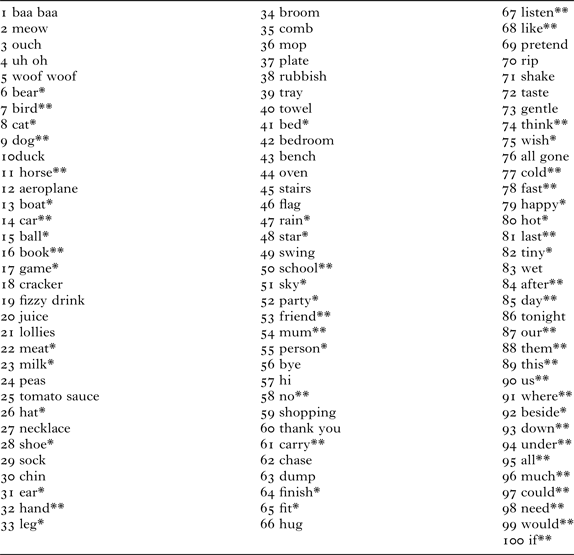
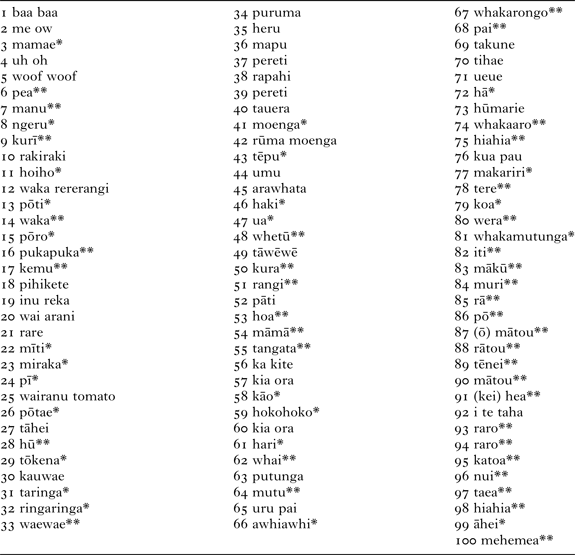
Ideally, we would have created an adapted version of the CDI for te reo Māori, drawing upon naturalistic language samples of adults’ and children's conversation to inform selection of words for the inventory, instead of a direct translation (see Peña, Reference Peña2007). We used this two-phase process to create New Zealand Samoan and Tongan versions of the inventory (Reese et al., Reference Reese, Ballard, Taumoepeau, Taumoefolau, Morton, Grant and Perese2015), which Kelly, Forshaw et al. (Reference Kelly, Forshaw, Nordlinger and Wigglesworth2015) cited as a ‘best practice’ example of creating tools for measuring indigenous language acquisition. However, we were unable to collect the naturally occurring language samples of te reo Māori necessary for an adaptation, because so few families use it as the dominant language in the home, with wide natural variations in language use and conventions. Thus, in the spirit of pragmatism (Kelly, Forshaw et al., Reference Kelly, Forshaw, Nordlinger and Wigglesworth2015), we decided to use a translated version. One advantage of the translation method is that it allows us to directly compare the English and Māori versions of the same inventory, and to assess the bilingual children's total concepts across the two languages, which is not possible with adapted versions. A disadvantage of the translation method is that the resulting inventories are of different levels of difficulty. For instance, the English inventory contains only two words that are more than two syllables, whereas the translated Māori inventory contains forty-five words that are three syllables or more. However, the inventories were fairly well matched in terms of input frequency, with 56% of the English inventory and 64% of the Māori inventory drawn from the 1000 most frequent words in the respective language (see Appendices A and B).
We then administered the new inventories to a sample of over 6300 mothers enrolled in the Growing Up in New Zealand study, a longitudinal birth cohort study with a sample that is broadly representative of the New Zealand population. Before the Growing Up cohort children were born, 5% of their mothers described an ability to hold a conversation in te reo Māori (Growing Up in New Zealand, 2015). At the same antenatal time-point, there were 20% or fewer of Māori parents of the Growing Up children who described themselves as speaking or understanding spoken te reo Māori well or very well.
At the face-to-face data collection wave conducted when the children were aged two years, a total of 6090/6327 (96%) mothers in the cohort reported that their children understood English, and a total of 763/6327 (12%) mothers reported that their children understood Māori. The inventories were then administered to all mothers who reported that their children understood the relevant language.
Our three main objectives in this analysis were: (1) to assess the current state of te reo Māori language acquisition in the new generation of New Zealanders; (2) in the process, to evaluate the first measure of te reo Māori language development for very young children: the NZM CDI: II short form; and (3) to test the utility of a new NZ English CDI:II short form with a large and diverse sample. Our two main hypotheses were: (1) that Māori language acquisition would be occurring primarily in a bilingual environment, in the context of New Zealand English language acquisition; and (2) that children's scores on the NZM CDI:sf and NZE CDI:sf would vary as a function of demographic factors such as socioeconomic status and parental education as well as children's gender, birth order, and bilingualism. Finally, we also assessed parental concern about children's speech or hearing, which is a powerful indicator of language delay alongside clinical assessments (Klee, Pearce & Carson, Reference Klee, Pearce and Carson2000). In line with prior research in New Zealand and elsewhere (e.g. Bleses et al., Reference Bleses, Vach, Slott, Wehberg, Thomsen, Madsen and Basbøll2008; Feldman et al., Reference Feldman, Dale, Campbell, Colborn, Kurs-Lasky, Rockette and Paradise2005; Harris et al., Reference Harris, Law and Roy2005; Horwitz, Irwin, Briggs-Gowan, Heenan, Mendoza & Carter, Reference Horwitz, Irwin, Briggs-Gowan, Heenan, Mendoza and Carter2003; Jackson-Maldonado, Thal, Fenson, Marchman, Newton & Conboy, 2013; Reese et al., Reference Reese, Ballard, Taumoepeau, Taumoefolau, Morton, Grant and Perese2015; Reese & Read, Reference Reese and Read2000; Reilly et al., Reference Reilly, Bavin, Bretherton, Conway, Eadie, Cini and Wake2009), we predicted that children of parents with higher socioeconomic and educational levels, girls, first-borns, monolinguals, and children for whom parents did not express concern about their child's speech or hearing would have more advanced NZ Māori and/or English language acquisition. We also predicted that children of mothers born in New Zealand would have higher levels of both te reo Māori and English, given their mothers’ exposure to both languages. Thus, our focus is primarily on the bilingual sample of children speaking both te reo Māori and English, with reference to the larger cohort of children learning New Zealand English.
METHOD
Participants
Growing Up in New Zealand is a comprehensive longitudinal study of 6853 children comprising an ethnically and socioeconomically diverse sample (Morton et al., Reference Morton, Grant, Carr, Robinson, Kinloch, Fleming and Liang2012), with mothers and their partners recruited before the children were born in 2009 and 2010 (see Morton et al., Reference Morton, Carr, Grant, Robinson, Bandara, Bird and Perese2013, for the cohort profile). At the data collection point completed when the children were approximately 24 months old, complete data were available for 6327 children, for whom 6090 (96%) mothers said their child could understand English, and 763 (12%) mothers said their child could understand Māori. Of the 6090 mothers who said their child could understand English, 6025 (99%) mothers were able to complete the checklist for their children in English, without interpreter or interviewer assistance. Of the 763 mothers who said their child could understand Māori, 584 (77%) mothers were able to complete the checklist for their children in Māori, without interpreter or interviewer assistance. All further analyses focus on the 6025 children whose mothers were able to complete the checklist in English and the 584 children whose mothers were able to complete the checklist in Māori. For 581 of the Māori-speaking children, mothers also completed the checklist in English, so this subsample comprised the focus of our bilingual analyses. As part of the broader Growing Up in New Zealand study, additional information relevant to language development is available. This information includes child gender, birth order, ethnicity, maternal education and birthplace, and family socioeconomic status. Mothers reported on child ethnicity using a total response method (Statistics New Zealand, 2005), in which they nominated all ethnicities for the child. Thus, these responses could add up to over 100%. Maternal education was coded into five subcategories of the highest level of education completed: intermediate; high school; trade certificate/diploma; bachelor's degree; postgraduate degree. Socioeconomic status was coded into three levels according to the 2006 New Zealand Index of Deprivation, a well-validated area-level measure of socioeconomic deprivation derived from 2006 census data on eight socioeconomic dimensions (Salmond, Crampton & Atkinson, Reference Salmond, Crampton and Atkinson2007). Maternal birthplace is of interest because mothers born in New Zealand would have grown up with at least some exposure to both te reo Māori and New Zealand English. Table 1 shows the demographics of the final sample for each inventory.
Demographics of families responding to the New Zealand English and Māori CDI:II short forms

Procedure
The assessment was conducted as part of the Growing Up in New Zealand 90-minute face-to-face computer-assisted interview with participating mothers. Mothers first indicated all of the languages their child could understand. For each of these languages, in keeping with the computer-assisted procedure, interviewers provided a showcard to participants with the numbered list of words for that language (see Appendices A and B for the lists in English and Māori). As with all CDI:II versions for children of this age, we assessed only their expressive vocabulary, not their receptive vocabulary. We adapted the standard CDI:II short form instructions (Fenson et al., Reference Fenson, Pethick, Renda, Cox, Dale and Reznick2000) slightly for the computer-assisted procedure: Children understand many more words than they say. With this question, we are particularly interested in the words your child SAYS. Please look at this list and tell me the numbers for the words you have heard [Child's name] use. If [Child's name] uses a different pronunciation of a word (e.g. “sketti” instead of “spaghetti”, still tell me the number for that word. Remember that this is a list of all the words that are used by many different children – don't worry if your child only uses a few of these words. The interviewer then entered the participant's response for each numbered word on each showcard. After completing the checklist in all languages the mother indicated that her child understood, the interviewer asked the word combination question in English (Has your child begun to combine words yet, such as ’nother cookie’ or ‘doggie bite’?; Fenson et al., Reference Fenson, Pethick, Renda, Cox, Dale and Reznick2000), with options of ‘not yet’, ‘sometimes’, and ‘often’. Interviewers instructed mothers to respond based on all languages the child spoke, including non-English languages. Immediately after completing the word combination question, mothers answered a question about whether or not they had any concerns about their child's speech or hearing. If they expressed a concern, they were asked to classify the type of concern (see Appendix C) and to classify how concerned they were, from not concerned at all to very concerned. They were also asked if they had sought any professional advice or treatment regarding their child's speech and/or understanding.
RESULTS
Because our focus is primarily on the new te reo Māori inventory, we report analyses first for te reo Māori and second for New Zealand English. For New Zealand English, we report analyses first for the bilingual Māori–English sample (N = 581) and second for the full cohort (N = 6025). Analyses were conducted using SPSS Statistics version 22.
Psychometric properties
The reliability of each inventory was assessed using Cronbach's alpha, which estimates the inter-item correlations for each scale. The Cronbach's alphas were excellent at 0·96 for the Māori scale, 0·98 for the English scale with the bilingual subsample, and 0·98 for the English scale with the full cohort. Corrected item-total correlations for the Māori scale were all above 0·20 except for me ow ‘meow’ (0·09), kia ora ‘thank you’ (0·19), takune ‘pretend’ (0·17), and ueue ‘shake’ (0·16). Corrected item-total correlations for the English scale with the bilingual sample were all above 0·20 except for hi (0·17), and with the full cohort were all above 0·30. There were only three monolingual Māori speakers in the sample (once children whose mothers required interpreter or interviewer assistance were excluded), so reliability was not conducted separately for the Māori scale as a function of bilingualism. On the English scale for the full cohort, Cronbach's alphas were 0·98 for both monolinguals and bilinguals. These high reliabilities are all in line with those for the English CDI:II short forms (Fenson et al., Reference Fenson, Pethick, Renda, Cox, Dale and Reznick2000). Thus, the two inventories both exhibited high levels of internal reliability.
Vocabulary
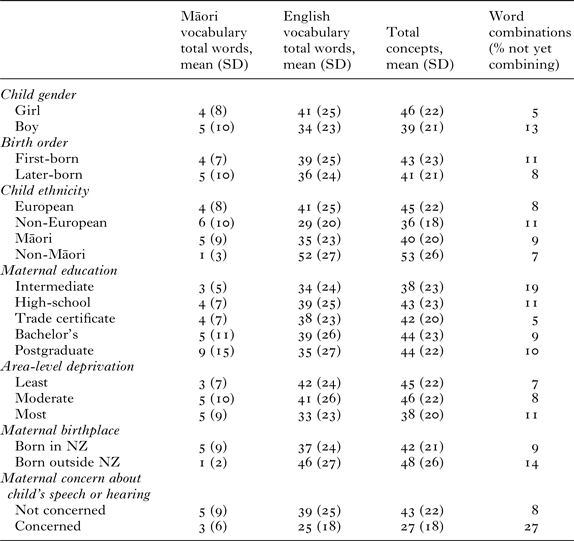
Table 2 contains the mean vocabulary scores for the full samples (monolinguals plus bilinguals) for the NZM CDI:IIsf and NZE CDI:IIsf inventories as a function of child gender, birth order, ethnicity, bilingual status, maternal education, area-level deprivation, maternal birthplace, and maternal concerns about the child's speech or hearing. Table 3 contains the mean vocabulary scores for both inventories for the Māori–English bilingual subsample. Table 4 contains the percentile rankings for 24-month-old girls and boys for both inventories, and for monolingual and bilingual English speakers. These tables show the raw score values for every 10th percentile level from the 10th to the 90th percentile. For instance, a raw score of 48 on the English inventory for a 24-month-old bilingual girl would place her at the 60th percentile. In the following analyses, first on the Māori–English bilingual sample and next on the full cohort, we conducted one-way ANOVAs on each demographic factor followed up by Bonferroni or Tamhane's post-hoc tests as appropriate.
Mean vocabulary (and SD) and word combination scores on the NZ English (N = 6025) and NZ Māori (N = 584) CDI Short Forms as a function of demographics
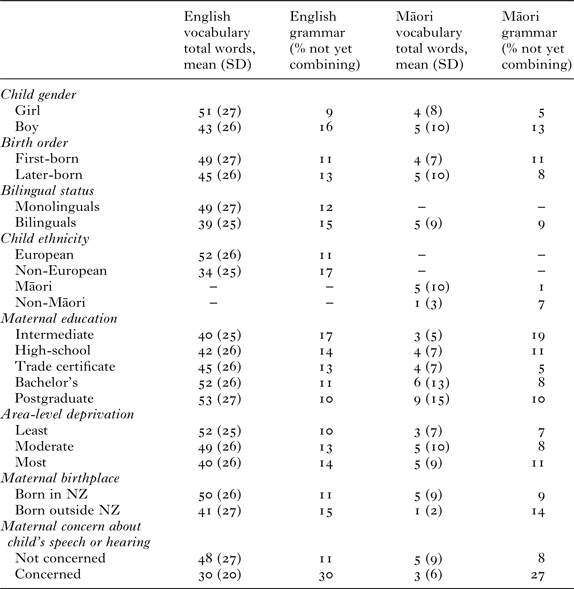
note: Means are not presented for monolingual Māori speakers because of low cell sizes (< 5).
Māori–English bilingual sample (N = 581): mean vocabulary (and SD) and word combination scores on the NZ Māori and NZ English CDI Short Forms as a function of demographics
Percentile rankings for vocabulary scores on the NZ English and Māori CDI:II Short Forms
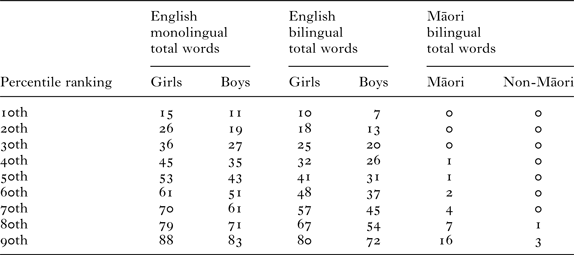
note: The rankings for English bilingual speakers are based on all bilingual speakers in the full cohort (n = 1145).
Māori bilingual speakers
For Māori bilingual speakers, the average total Māori vocabulary was 4 words (median = 1), with a range from 0 to 78 words. The most common words were: tepu (‘bench’, 17%), inu reka (‘fizzy drink’, 14%), pai (‘like’ or ‘good’, 13%), waewae (‘leg’, 13%), nui (‘much’ or ‘big’, 11%), manu (‘bird’, 11%), (see Appendix B). Māori vocabulary did not vary significantly on most demographic dimensions (see Table 3). However, Māori vocabulary differed by child ethnicity (F(1,556) = 16·68, p < ·001, η p 2 = 0·03), with Māori children having higher Māori vocabulary scores than non-Māori children. Māori vocabulary also varied as a function of maternal education (F(4,571) = 3·84, p = ·004, η p 2 = 0·03), although Tamhane's tests did not reveal significant pairwise differences among the children of mothers with different educational qualifications. Finally, there was a difference as a function of mothers’ birthplace (F(1,578) = 5·63, p < ·02, η p 2 = 0·01), with children of mothers born in NZ having higher Māori vocabulary than children of mothers born outside NZ. Note, however, the small number of mothers born outside NZ (see Table 1).Footnote 1
When all of the significant variables were entered simultaneously in a regression analysis, the model accounted for 6% of the variance in Māori vocabulary (F(3,550) = 12·29, p < ·001). All three factors remained unique predictors of Māori vocabulary (βs ranged from –0·10 to 0·18, all ps < ·001). Māori children, children of mothers with higher levels of education, and children whose mothers were born in New Zealand had higher Māori vocabularies.
English speakers: bilingual subsample
For Māori–English bilingual speakers, the average total English vocabulary was 38 (median = 33), with a range from 0 to 100 words. The most common words were: mum (93%), bye (90%), no (89%), shoe (88%), ball (87%), car (86%), hi (86%), thank you (81%), and hot (80%) (see Appendix A). English vocabulary differed significantly as a function of child gender (F(1,579) = 12·79, p < ·001, η p 2 = 0·02), with girls having higher vocabulary scores than boys (see Table 3). English vocabulary also differed as a function of child ethnicity, with European children having higher English vocabularies than non-European children (including Māori, Pacific, Asian, and other non-European) (F(1,556) = 32·69, p < ·001, η p 2 = 0·06). English vocabulary also differed as a function of deprivation index (F(2,562) = 8·64, p < ·001, η p 2 = 0·03). Children living in the most deprived areas (NZ Deprivation deciles 8–10) had lower vocabulary scores than children in either moderately deprived (deciles 4–6) or least deprived areas (deciles 1–3), who did not differ from each other. English vocabulary also differed as a function of mothers’ birthplace (F(1,578) = 5·78, p < ·05, η p 2 = 0·01), with children of mothers born in NZ having higher English vocabulary scores than children of mothers born outside NZ. Finally, English vocabulary varied as a function of maternal concern (F(1,575) = 14·31, p < ·001, η p 2 = 0·02). Children whose mothers expressed concern had lower vocabulary scores than children whose mothers expressed no concern about speech or hearing.
When all of these significant factors were entered simultaneously in a regression analysis, the model accounted for 11% of the variance in English vocabulary (F(5,540) = 12·92, p < ·001). All factors remained significant (βs ranged from –0·12 to 0·20, all ps < ·01), except for mothers’ birthplace, which became marginally significant (β = 0·08, p = ·06), suggesting that each factor contributes uniquely to children's English vocabulary. Girls, European children, children whose families live in less deprived areas, and whose mothers did not have concerns about their child's speech or hearing all had higher English vocabulary scores.
English speakers: Full cohort
The same pattern of significant findings for English vocabulary was evident in the full cohort, with additional significant findings for birth order (F(1,6012) = 28·32, p < ·001, η p 2 = 0·005), bilingualism (F(1,6019) = 137·42, p < ·001, η p 2 = 0·02), and maternal education (F(4,5998) = 48·15, p < ·001, η p 2 = 0·03). First-borns, monolinguals, and children of mothers with a tertiary degree also had higher English vocabulary scores than later-borns, bilinguals, and children of mothers without a tertiary degree (see Table 2). The final regression model accounted for 14% of the variance in English vocabulary (F(8,5792) = 114·51, p < ·001), and all seven factors remained significant predictors (βs ranged from –0·16 to 0·13, all ps < ·001).
Summary of vocabulary findings
Thus, there were some similar patterns for vocabulary knowledge across the two languages in the bilingual sample as a function of demographics, with parallel differences across the two languages as a function of children's ethnicity: Māori children had higher Māori vocabularies than non-Māori children, and European children had higher English vocabularies than non-European children. The Māori–English bilingual speakers’ English vocabulary also differed as expected as a function of child gender, deprivation status, mothers’ birthplace, and mothers’ speech/language concerns. In the full cohort, all demographic factors significantly predicted children's English vocabulary, with the strongest effects for ethnicity (η p 2 = 0·09) and deprivation status (η p 2 = 0·04). Yet there were some different patterns between the two languages in the bilingual sample, with maternal education significantly predicting children's Māori vocabulary but not their English vocabulary. Note, however, that maternal education was a significant predictor of children's English vocabulary in the full cohort.
Bilingual children's total concepts
Because vocabulary estimates in only one language underestimate bilingual children's language development (e.g. Marchman, Martínez-Sussman & Dale, Reference Marchman, Martínez-Sussmann and Dale2004; Pearson et al., Reference Pearson, Fernandez and Oller1993), we next conducted an analysis of the Māori–English bilingual children's total concepts across the two languages. For this analysis, children were credited as possessing the concept if they produced the word for that concept in either language. These analyses were conducted only on data from the Māori–English bilingual children (N = 581; see Table 3).
Bilingual girls had more total concepts across the two languages than bilingual boys (F(1,578) = 15·64, p < ·001, η p 2 = 0·03). Total concepts also differed as a function of child ethnicity (F(1,556) = 27·44, p < ·001, η p 2 = 0·05). Bilingual non-Māori children had more total concepts than bilingual Māori children. Moreover, bilingual children's total concepts differed as a function of deprivation status (F(2,562) = 8·49, p = ·001, η p 2 = 0·03), with children in the most deprived areas having fewer concepts than children in moderately or less deprived areas. Bilingual children's total concepts also differed by maternal concern for speech or hearing (F(1,578) = 22·33, p < ·001, η p 2 = 0·04). Bilingual children whose mothers had concerns about their speech or hearing had fewer total concepts than bilingual children whose parents had no concerns.
When all of these significant variables were entered into a regression, the model accounted for 11% of the variance in bilingual children's total concepts (F(4,544) = 17·18, p < ·001). All of the variables remained unique predictors of children's total concepts (βs ranged from –0·20 to 0·12, all ps < ·01). Girls, non-Māori children, children in moderately or less deprived areas, and those whose mothers did not have speech/hearing concerns had more total concepts across the two languages.
Word combinations
Mothers’ responses to the word combination question were retained as ‘not yet’, ‘sometimes’, and ‘often’ for analyses. The same set of univariate ANOVAs was conducted on the word combination question, separately for Māori and English speakers (first for the bilingual sample and then for the full cohort), as a function of child gender, birth order, bilingual status, child ethnicity, maternal education, area-level deprivation, maternal birthplace, and maternal concern for their children's speech or language (see Tables 2 and 3).
Māori–English speakers
Note that the word combination question did not specify in which language children were combining words, so mothers’ answers could have been with respect to any language. Word combinations for Māori–English bilingual speakers varied as a function of child gender (F(1,579) = 25·15, p < ·001, η p 2 = 0·04) and maternal speech/hearing concerns (F(1,574) = 32·59, p < ·001, η p 2 = 0·05).
When these two significant variables were entered together in a regression analysis, the model accounted for 9% of the variance in Māori–English speakers’ word combinations (F(2,573) = 28·32, p < ·001). Both variables remained significant in the multivariable model (βs were 0·19 for gender and –0·22 for maternal concerns, ps < ·001). Thus, Māori–English bilingual speakers were more likely to combine words when they were girls, or children of mothers who did not express concerns about their speech and hearing.
Full cohort
For the full cohort of English speakers, word combinations also varied as a function of child gender (F(1,6007) = 118·45, p < ·001, η p 2 = 0·02), with girls more likely to be combining words than boys. There were also differences by child birth order (F(1,5999) = 15·90, p < ·001, η p 2 = 0·003), bilingual status (F(1,6006) = 46·31, p < ·001, η p 2 = 0·01), child ethnicity (European vs. non-European) (F(1,5862) = 34·23, p = ·00, η p 2 = 0·01), maternal education (F(4,5985) = 16·98, p = ·00, η p 2 = 0·01), household deprivation index (F(2,5865) = 28·61, p < ·001, η p 2 = 0·01), maternal birthplace (F(1,6006) = 23·66, p < ·001, η p 2 = 0·004), and maternal concern (F(1,5952) = 216·62, p < ·001, η p 2 = 0·04). First-borns, monolingual children, European children, children of mothers with higher levels of education, children living in households in less deprived areas, and children of mothers born in New Zealand were more likely to be combining words. Mothers who expressed speech or hearing concerns had children who were less likely to combine words.
When all of these significant variables were entered together in a regression analysis, the model accounted for 7% of the variance in English speakers’ word combinations (F(8,5749) = 46·70, p < ·001). All variables remained significant in the multivariable model (βs ranged from –0·10 to 0·18, all ps < ·001), except for child ethnicity (p = ·07) and bilingual status (p = ·06). English speakers were more likely to combine words when they were girls, first-borns, children of mothers with higher levels of education, children in households in less deprived areas, children whose mothers were born in New Zealand, and children whose mothers did not express concerns about their speech and hearing.
Bilingual children's vocabulary and grammar development
Our final analysis assessed links within and across Māori and English between children's vocabulary and grammar development (see Hoff et al., Reference Hoff, Core, Place, Rumiche, Señor and Parra2012). The correlation between Māori and English vocabulary for bilingual children was r = –0·49, p < ·001. Bilingual children who knew more English words knew fewer Māori words. Whereas there was a significant positive correlation between their English vocabulary and word combinations (r = 0·43, p < ·001), and between their total concepts in both languages and word combinations (r = 0·49, p < ·001), there was no correlation between their Māori vocabulary and word combinations (r = 0·01, n.s.). Thus, vocabulary and grammar for the bilingual children were only related within their English language scores, and not within te reo Māori. This pattern could be because of the low overall rate of Māori vocabulary, or because the word combination question – with its English examples – may have prompted mothers to respond with respect to their children's grammatical development in English.
DISCUSSION
Our first question was whether Māori language regeneration is occurring in the new generation of New Zealanders. Based on our findings, we believe the answer is a qualified ‘yes’. This study found that the mothers of 12% of a cohort of two-year-olds described that their children understood Māori. There were 9% of this cohort whose mothers reported that their child was speaking te reo Māori at age two years and who could provide a vocabulary score. We note that the average Māori vocabulary score for these speakers is low, and that nearly half (49%) of the Māori-speaking children are growing up in the most deprived neighbourhoods in New Zealand. It is encouraging, however, that Māori and non-Māori children alike are learning te reo Māori. In fact, when mothers were allowed to nominate more than one ethnicity for their children, 81% of the Māori speakers were of Māori ethnicity, and 64% of the Māori speakers were of European ethnicity. Using this same method, 23% of the Māori speakers were of Pacific ethnicity, and 5% of Asian ethnicity. Māori-speaking children of Māori ethnicity were stronger speakers of the language than non-Māori children. Most likely this effect is due to greater te reo Māori input in Māori homes. We are continuing to assess the home language environment and children's te reo Māori knowledge at later ages in the Growing Up in New Zealand study, so we will be able to explore whether these trends continue or increase as children grow older.
Our next question was whether regeneration is occurring in the context of English language learning. With 99·3% of Māori speakers being bilingual, and 99·5% of those children being English–Māori bilinguals, it is clear that Māori language acquisition is occurring primarily in the context of English language acquisition. Moreover, for the bilingual children, English may already be dominating their Māori language acquisition, as noted by the children's relatively greater proficiency in English than in Māori, and the negative correlation between their English and Māori vocabulary. In future data collection points in the study, we will be able to get a better sense of the bilingual children's relative use and fluency of each language as a function of their home and school environments. The influence of English on the Māori language is strong, but the Māori language is also influencing NZ English. A growing number of Māori words are part of the New Zealand English dialect (see Davies & Maclagan, Reference Davies and Maclagan2006). This trend should ultimately strengthen the Māori language revival, as long as the growth continues and is not restricted to a limited number of words and phrases.
A primary objective of this study was to evaluate a new measure of Māori language development for young children: the NZM CDI: II short form, developed for Growing Up in New Zealand. The initial results are encouraging. Reliability for the Māori inventory is high and, in line with our second hypothesis, some of the expected demographic indicators held (maternal education and ethnicity) but not others (child gender, birth order, deprivation). Although children of mothers with higher levels of education are more likely to know Māori words, which could suggest it is an elite phenomenon, the finding that 85% of Māori speakers are living in moderately to highly deprived areas does not fit with this interpretation.
The analysis of the total concepts of bilingual speakers across Māori and English was more informative than the analysis of their total vocabulary in Māori. For instance, when analyzing their total concepts, the expected differences by gender, deprivation status, and maternal concern emerged. These findings are consistent with demographic trends for English and other languages (e.g. Farkas & Beron, Reference Farkas and Beron2004; Jackson-Maldonado et al., Reference Jackson-Maldonado, Marchman and Fernald2013; Klee et al., Reference Klee, Pearce and Carson2000). Thus, we recommend that the Māori tool is always used in the context of the English tool for Māori–English bilingual speakers, and that total concepts across the two languages are calculated in addition to total vocabulary in each language (Hoff et al., Reference Hoff, Core, Place, Rumiche, Señor and Parra2012; Marchman et al., Reference Marchman, Martínez-Sussmann and Dale2004; Pearson et al., Reference Pearson, Fernandez and Oller1993).
Finally, nearly a quarter (23%) of mothers who said their children understood Māori were not able to complete the inventory without interpreter or interviewer assistance. There are a number of possible reasons for the high rate of non-completion of the Māori inventory. We speculate that a key reason is that because te reo Māori is an official language of New Zealand, some children are likely to be learning te reo Māori in early childhood education settings rather than in the home setting. We also know that one quarter of all children in the Growing Up in New Zealand study are living with extended families (over one third of Māori children; Morton et al., Reference Morton, Atatoa Carr, Bandara, Grant, Ivory, Kingi and Waldie2010), and therefore their te reo Māori knowledge may come from a grandparent. In these cases, the parent knows that the child speaks some Māori words but does not know the extent of their child's te reo Māori knowledge, or does not know enough Māori themselves to complete the inventory without assistance. We recommend that multiple informants (parents as well as teachers and grandparents) complete the inventories for Māori speakers whenever possible. We will also be able to determine te reo Māori fluency directly from the Growing Up in New Zealand children themselves at later data collection waves.
Our second objective was to test the utility of a new NZ English CDI:II short form with a large and ethnically diverse sample. The findings here are clear that the NZE CDI:IIsf should be a useful alternative to the NZE CDI:II long form (Klee, Stokes, Reese, Jørgensen & Bleses, Reference Klee, Stokes, Reese, Jørgensen and Bleses2012–2013; Reese & Read, Reference Reese and Read2000). We obtained similar patterns on the vocabulary portion of the inventory to prior research in English and other languages demonstrating advantages for girls (Bleses et al., Reference Bleses, Vach, Slott, Wehberg, Thomsen, Madsen and Basbøll2008; Feldman et al., Reference Feldman, Dale, Campbell, Colborn, Kurs-Lasky, Rockette and Paradise2005; Harris et al., Reference Harris, Law and Roy2005; Jackson-Maldonado et al., Reference Jackson-Maldonado, Marchman and Fernald2013; Reese & Read, Reference Reese and Read2000; Reilly et al., Reference Reilly, Bavin, Bretherton, Conway, Eadie, Cini and Wake2009), first-borns (Reilly et al., Reference Reilly, Bavin, Bretherton, Conway, Eadie, Cini and Wake2009), monolinguals (Reese et al., Reference Reese, Ballard, Taumoepeau, Taumoefolau, Morton, Grant and Perese2015; Reilly et al., Reference Reilly, Bavin, Bretherton, Conway, Eadie, Cini and Wake2009), children of more educated parents (Feldman et al., Reference Feldman, Dale, Campbell, Colborn, Kurs-Lasky, Rockette and Paradise2005; Harris et al., Reference Harris, Law and Roy2005; Horwitz et al., Reference Horwitz, Irwin, Briggs-Gowan, Heenan, Mendoza and Carter2003; Reilly et al., Reference Reilly, Bavin, Bretherton, Conway, Eadie, Cini and Wake2009), children in less deprived households (Horwitz et al., Reference Horwitz, Irwin, Briggs-Gowan, Heenan, Mendoza and Carter2003; Jackson-Maldonado et al., Reference Jackson-Maldonado, Marchman and Fernald2013; Reese et al., Reference Reese, Ballard, Taumoepeau, Taumoefolau, Morton, Grant and Perese2015), and children whose parents did not express concerns about their speech or hearing (Harris et al., Reference Harris, Law and Roy2005; Horwitz et al., Reference Horwitz, Irwin, Briggs-Gowan, Heenan, Mendoza and Carter2003; Klee et al., Reference Klee, Pearce and Carson2000). The average vocabulary and word combination scores for our English speakers are somewhat lower than comparable average scores for 24-month-olds in the original American norming sample (see Fenson et al., Reference Fenson, Pethick, Renda, Cox, Dale and Reznick2000), but that sample was not as diverse – ethnically or in terms of maternal education levels – as the Growing Up in New Zealand sample. Overall, the effect sizes for the demographic factors we obtained with the full cohort ranged from small to medium, with the strongest factors being ethnicity and socioeconomic status. These effects are similar in type to those obtained with other samples (Hart & Risley, Reference Hart and Risley1995; Hindman, Wasik & Snell, Reference Hindman, Wasik and Snell2016; Hirsh-Pasek et al., Reference Hirsh-Pasek, Adamson, Bakeman, Owen, Golinkoff, Pace and Suma2015), although they are not as large as those obtained in some English- and non-English-speaking samples (e.g. Farkas & Beron, Reference Farkas and Beron2004; Schady et al., Reference Schady, Behrman, Araujo, Azuero, Bernal, Bravo and Vakis2015). Although the gap between rich and poor is widening in New Zealand, socioeconomic disparities are not yet as great as in some other countries (OECD, 2014a, 2014b).
Future analyses with this sample will address the predictive validity of the short form for children's complex language and literacy development, and as a function of antenatal and infant factors on the larger study. It will be particularly important to address the vocabulary gaps in New Zealand English and in Māori as a function of socioeconomic status and parental education. At age two years, children growing up in less deprived areas knew on average 12% more English words than children in the most deprived areas, and children of mothers with a bachelor's degree knew 10% more English words than children of mothers with a high school diploma. Moreover, there was a sizeable gender gap, with girls knowing on average 8% more English words than boys. Although these gaps sound small, they portend critical differences in children's complex language and reading skills later in life (Hindman et al., Reference Hindman, Wasik and Snell2016). For instance, there is a gender gap in New Zealand children's reading achievement in primary school that mirrors these early language differences, with 83% of girls and 74% of boys achieving at or above the expected levels in reading (New Zealand Ministry of Education, 2014). In future analyses, we will also be able to address whether these vocabulary gaps narrow or widen with age. Finally, we will be able to trace the origins of these gaps in terms of parent–child interactions and childcare experiences in the first two years of life, alongside biological contributors.
The results for the word combination question, whether for English or Māori speakers, were also in line with prior research on syntactic development (see Harris et al., Reference Harris, Law and Roy2005; Reilly et al., Reference Reilly, Bavin, Bretherton, Conway, Eadie, Cini and Wake2009), but overall were weaker than the findings for vocabulary. Regardless of which language children spoke, mothers reported that most of their two-year-old children were combining words (87% of English speakers and 91% of Māori speakers). English and Māori speakers were more likely to combine words when they were girls, children of mothers with higher educational qualifications, and children of mothers who did not express concerns about their speech and hearing. English speakers were also more likely to combine words if they were first-borns, if they were growing up in households in less deprived areas, and if they had mothers who were born in New Zealand. The word combination question is important for language-delay screening purposes (Klee et al., Reference Klee, Pearce and Carson2000), but may be more useful for revealing individual differences with children younger than 24 months.
Strengths, limitations, and future directions
The direct translation of the Māori inventory from English conferred the benefit of being able to compare directly across the two inventories, and to create a measure of children's total concepts across the two languages for these words. However, direct translations also have inherent limitations (see Peña, Reference Peña2007). To start with, some concepts do not translate directly between the two languages. For instance, whereas in English there are separate words for the concepts ‘hello’ and ‘thank you’, in Māori these two concepts share the same word (kia ora). Thus we had to list the same Māori word twice in four instances (kia ora for ‘hi / thank you’; pereti for ‘plate/tray’; mātou for ‘our/us’; raro for ‘down/under’). Because children who knew these words got credited twice, this practice could have slightly inflated the children's vocabularies in Māori. For other English words on the inventory, the Māori version is the same as the English (me ow/meow). This practice again could have inflated the children's vocabularies in Māori, such that if they knew the English word, they would also get credit for that same word in Māori. Finally, a word in Māori may be more difficult for children phonologically than the English equivalent, or less frequent in the input, rendering it a more conservative measure of their vocabulary in that language. For instance, nearly all the words on the English inventory are one or two syllables, with the only exceptions being aeroplane and tomato sauce. (Of course, airplane would also be counted as correct for aeroplane, and sauce was counted as correct for tomato sauce.) In contrast, the Māori inventory contained forty-five words that were three syllables or more. Although the inventories were well matched in terms of input frequency (see Appendices A and B), we would argue that, overall, the Māori inventory was more difficult than the NZ English inventory.
For other language inventories in the Growing Up study, we have instead created adaptations that take item difficulty and input frequency into account (see Reese et al., Reference Reese, Ballard, Taumoepeau, Taumoefolau, Morton, Grant and Perese2015). We hope that an adapted version of the Māori inventory can eventually be developed, based on naturally occurring speech and experimental probes, both in the home and in Māori-immersion classrooms (see Kelly, Forshaw et al., Reference Kelly, Forshaw, Nordlinger and Wigglesworth2015).
At present, however, it is rare for New Zealand parents to be fluent speakers of te reo Māori, and even rarer for parents to speak to their children solely or primarily in te reo Māori in the home (Growing Up in New Zealand, 2015). Chrisp (Reference Chrisp2005) noted that, in 2001, only 27% of Māori children were being raised by adults fluent in te reo Māori. Only three children in this analysis could be considered monolingual speakers of Māori at age two years. The future of te reo Māori depends upon this generation of New Zealand children and their parents, grandparents, and teachers acquiring and using Māori in everyday speech, at home, and in educational settings (Bishop, Reference Bishop2003; Durie, Reference Durie1998; May, Reference May and May1999; Rau, Reference Rau2005; Timitimu, Ormsby-Teki & Ellis, Reference Timutimu, Ormsby-Teki, Ellis, Reyhner and Lockard2009). It is encouraging that 46% of Māori families with children in the household use at least some te reo Māori at home (Statistics New Zealand, 2014). Within the Growing Up cohort, 40% of those children identified as Māori were also described as being able to understand te reo Māori at age two years (Growing Up in New Zealand, 2015). On another positive note, the fact that Māori and non-Māori children are acquiring te reo Māori offers some optimism that the language will survive as a taonga (‘treasure’) for all New Zealanders, not solely as a language for Māori (see McCarty, Reference McCarty2003, for the status of Native American languages).
On a practical note, we encourage practitioners in New Zealand to assess both languages for bilingual children, and to rely on the percentile scores for bilingual rather than monolingual children when interpreting their results (see Table 4). We also highlight that maternal concern for children's speech or hearing emerged as a powerful indicator of English speakers’ total vocabulary and their word combinations, and for Māori speakers’ word combinations and total concepts across the two languages (cf. Harris et al., Reference Harris, Law and Roy2005; Klee et al., Reference Klee, Pearce and Carson2000). Asking parents to offer a simple “yes” or “no” as to whether they have concerns about their children's speech or hearing should serve as an easy-to-administer indicator in the GP's office, perhaps accompanied by the word combination question. In future, however, we recommend that the word combination question is asked separately for each language the child speaks.
CONCLUSIONS
What is the current state of Māori language acquisition in the new generation of New Zealanders? Although we cannot pronounce the language to be in the peak of health, we are encouraged to find that Māori and European children alike are learning both languages, thus upholding the bicultural principle on which New Zealand is founded. Much work needs to be done, however, to ensure the survival of te reo Māori in future generations. Considering ways to promote the language are beyond the scope of this paper, but we hope that the tool we have developed to measure young children's Māori language competence will be useful for speech–language professionals, and will further encourage New Zealand parents and early childhood teachers to enhance their own use of te reo Māori.
APPENDIX A
Short Form of the NZ English CDI: II (NZE CDI:sf)
APPENDIX B
Short Form of the NZ Māori CDI: II (NZM CDI:sf)
APPENDIX C
Parental Concern Question
Parents may have a range of concerns about their children's speech or hearing, such as those listed on this showcard. Do you feel that [child's name] has any of these issues?
-
1. no concerns
-
2. reluctant to speak
-
3. speech not clear to family
-
4. speech not clear to others
-
5. difficulty finding words
-
6. difficulty putting words together
-
7. doesn't understand you when you speak
-
8. doesn't understand others when they speak
-
9. voice sounds unusual
-
10. stutters, stammers, or lisps
-
11. other



