

Each year, tobacco use causes over 6 million deaths and is responsible for hundreds of billions of dollars in health care and economic costs in the world (WHO, 2011). If current trends continue, tobacco is expected to kill over 1 billion people in the 21st century, making it one of the single greatest causes of preventable death and disease in history (WHO, 2011). Long-term abstinence from tobacco use dramatically improves individuals’ health, reduces the incidence of tobacco-related disease, and is clearly responsible for saving lives (Anthonisen et al., Reference Anthonisen, Skeans, Wise, Manfreda, Kanner and Connett2005). Most tobacco users express a desire to achieve long-term abstinence from tobacco use and make numerous unsuccessful quit attempts over the course of many years (Borland, Partos, Yong, Cummings, & Hyland, Reference Borland, Partos, Yong, Cummings and Hyland2012; CDC, 2011). Evidence-based treatments for tobacco use and dependence greatly improve the chances that quit attempts result in long-term abstinence (Chambless & Hollon, Reference Chambless and Hollon1998; Chambless et al., Reference Chambless, Baker, Baucom, Beutler, Calhoun and Crits-Christoph1998; Compas, Haaga, Keefe, Leitenberg, & Williams, Reference Compas, Haaga, Keefe, Leitenberg and Williams1998; Fiore et al., Reference Fiore, Jaén, Baker, Bailey, Benowitz and Curry2008; Zwar et al., Reference Zwar, Richmond, Borland, Stillman, Cunningham and Litt2004). Increasing the availability of high-quality evidence-based treatment for tobacco use and dependence will make it more likely that tobacco users use evidence-based treatments and that quit attempts translate into long-term abstinence. The professionalisation of treatment for tobacco dependence by the development of a rigorous, unified Tobacco Treatment Specialist (TTS) certification process will increase the availability of high-quality evidence-based treatment for tobacco use and dependence for all tobacco users.
Most tobacco users express a desire to achieve long-term abstinence from tobacco; over 90% of smokers make regular, albeit unsuccessful, quit attempts over the course of many years of smoking (Borland et al., Reference Borland, Partos, Yong, Cummings and Hyland2012; CDC, 2011), but overall only about 4.3% of smokers are able to maintain abstinence 6–12 months after an unassisted quit attempt (Hughes et al., Reference Hughes, Gulliver, Fenwick, Valliere, Cruser and Pepper1992; Levy, Graham, Mabry, Abrams, & Orleans, Reference Levy, Graham, Mabry, Abrams and Orleans2010). Smokers who use evidence-based behavioural counselling and/or medications are over three times more likely to achieve long-term abstinence than those who do not (Anthonisen et al., Reference Anthonisen, Skeans, Wise, Manfreda, Kanner and Connett2005; Fiore et al., Reference Fiore, Jaén, Baker, Bailey, Benowitz and Curry2008; Kasza et al., Reference Kasza, Hyland, Borland, McNeill, Bansal-Travers and Fix2013). Nonetheless, in the United States and elsewhere, few tobacco users use evidence-based treatments when they attempt to quit (CDC, 2011). In the United States for example, less than one third of smokers use any form of evidence-based treatment and less than 5% use the most effective treatment, evidence-based medication and counselling (CDC, 2011). Given the opportunities provided by a significant reach into the smoking population, the clinical practice guidelines in many countries strongly recommend that health care practitioners briefly discuss evidence-based treatment options with all tobacco users at every visit (CAN-ADAPTT, 2011; Fiore et al., Reference Fiore, Jaén, Baker, Bailey, Benowitz and Curry2008; Health, 2007; NICE, 2013;). Practitioners, however, are generally unprepared to effectively discuss treatment options and are unfamiliar with the high intensity of treatment provided by TTSs (Applegate, Sheffer, Crews, Payne, & Smith, Reference Applegate, Sheffer, Crews, Payne and Smith2008; Payne et al., Reference Payne, Gaughf, Sutton, Sheffer, Elci and Cropsey2014; Sheffer, Anders, Brackman, Steinberg, & Barone, Reference Sheffer, Anders, Brackman, Steinberg and Barone2012; Steinberg, Alvarez, Delnevo, Kaufman, & Cantor, Reference Steinberg, Alvarez, Delnevo, Kaufman and Cantor2006).
The Association for the Treatment of Tobacco Use and Dependence (ATTUD), policymakers, practitioners, researchers, and other key professional organisations have long advocated for increasing the availability and ensuring the quality of evidence-based treatments for tobacco dependence provided to tobacco users within the health care system (Fiore et al., Reference Fiore, Jaén, Baker, Bailey, Benowitz and Curry2008). Consistent with the push–pull capacity dissemination model (Orleans, Reference Orleans2007), we recognise that there are multiple pathways to achieving this goal and we contend that unified certification of TTSs is central to this achievement. Unified TTS certification, developed from rigorous tobacco dependence training program accreditation and independent individual certification process will: (1) recognise and further develop a work force with the appropriate level of expertise to train health care providers in low-intensity tobacco dependence treatment; (2) support health care teams in the systematic delivery of evidence-based treatment; (3) ensure that all tobacco users are provided with a comprehensive, evidence-based treatment for tobacco dependence of the appropriate intensity; (4) support greater integration of evidence-based treatment for tobacco use and dependence into health care; and (5) enhance public education resources about the availability, efficacy, and safety of evidence-based treatments for tobacco use and dependence. In turn, these components will ensure that quit attempts are more likely to result in long-term abstinence.
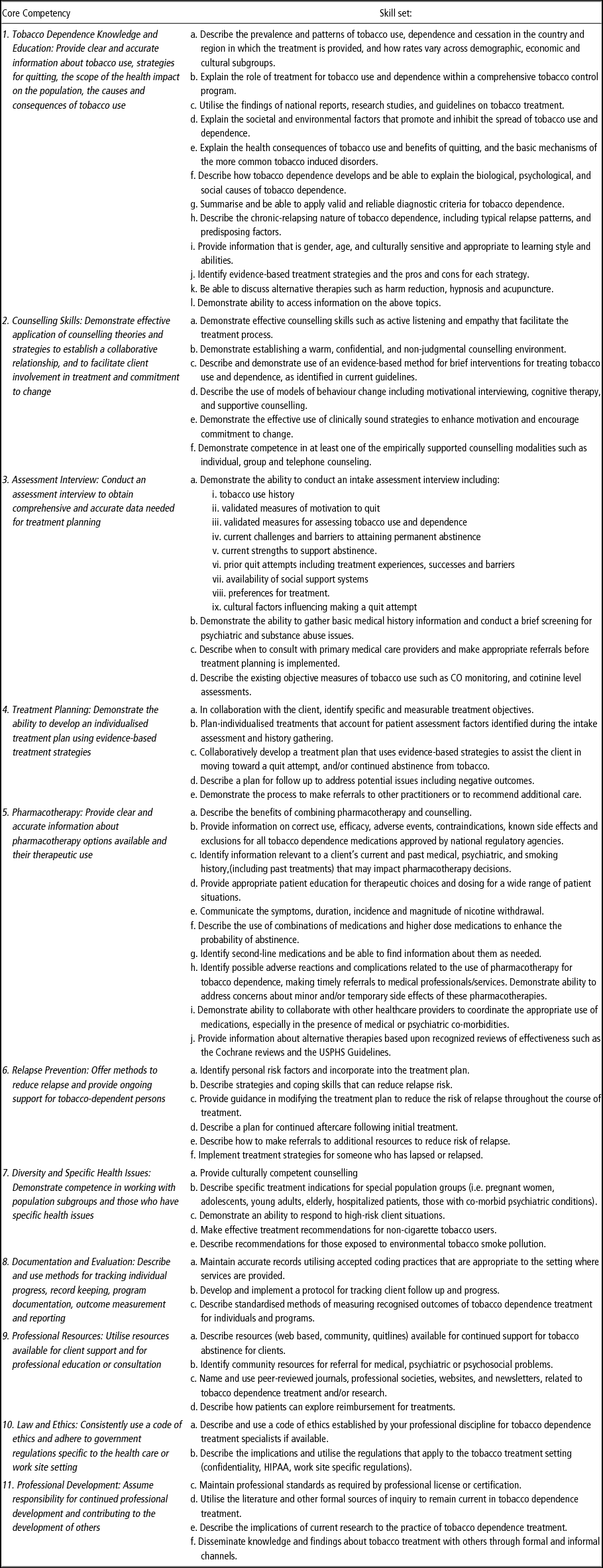
Delivering an effective treatment for tobacco dependence requires the development of specialised knowledge, skills, and competencies commensurate with the level of intensity of the treatment to be provided. In 2005, in a multidisciplinary effort, ATTUD established a comprehensive set of Core Competencies needed by all practitioners, regardless of background, to deliver evidence-based treatment of tobacco dependence at varying levels of intensity. Knowledge and skill is needed to deliver a minimal, low-intensity treatment, but competencies or abilities that extend beyond skill development are required to deliver a higher intensity treatment. See Table 1. For example, a practitioner needs specific knowledge and skills to provide a low intensity treatment such as recommending a particular medication or providing a quitting ‘tip.’ Many tobacco users can be effectively treated with a lower intensity treatment, but many tobacco users need a more comprehensive, higher intensity treatment to achieve long-term abstinence. To effectively provide a high intensity, comprehensive treatment, however, a practitioner requires the appropriate analytical and interpretive abilities to understand the biopsychosocial factors affecting treatment outcomes (e.g., motivation, self-efficacy, behavioral capacity, stress and coping resources, social support, environmental influences, nicotine withdrawal, mood management, etc.); solicit and cultivate the involvement and motivation of tobacco users; and apply an appropriate multifaceted intervention. Smokers treated by practitioners with more extensive training are more likely to achieve long-term abstinence among smokers treated by practitioners without training (McDermott, Beard, Brose, West, & McEwen, Reference McDermott, Beard, Brose, West and McEwen2013). These competencies are becoming increasingly important as the demographics and clinical characteristics of tobacco using population shifts and tobacco users more frequently present with comorbid medical and psychiatric conditions and use an ever evolving variety of new, untested tobacco products, and nicotine delivery devices.
The ATTUD Core Competencies for the treatment of tobacco dependence provide a foundation for the development of a rigorous TTS credential. These Core Competencies were constructed in terms of the proficiency recommended to perform varying levels of treatment intensity and thus reflect three levels of competence in terms of the following: Awareness reflects a basic level of mastery demonstrated when practitioners are able to identify the concept or skill, but have limited ability to perform the skill. Knowledge reflects an intermediate level of mastery demonstrated when practitioners are able to apply and describe the skill. Proficiency reflects an advanced level of mastery demonstrated when practitioners are able to synthesise, critique, and teach the skill. ATTUD endorses the development of a rigorous, unified process for credentialing TTSs who are trained at the proficiency level. We envision the unified TTS credential to function similarly to the credentialing developed for other specialties such as certified diabetes educator, certified asthma educator, and certified health education specialist.
The TTS credential will indicate expert-level knowledge and skills in the evidence-based treatment of tobacco dependence and how to effectively treat a diverse population of tobacco users in multiple modalities (e.g., individual, group, telephone, internet, etc.). TTSs understand the importance and the role of brief, lower intensity evidence-based treatment and are professionally prepared to provide an appropriate level of training to a variety of health care providers to enable them to deliver an effective brief, lower intensity treatment. TTSs are also skilled in the integration of evidence-based treatments for tobacco dependence into health care systems and chronic care service models. We foresee an increased need for TTS certification in the United States, Canada, Australia, and many other areas of the world in the near future given the demonstrated need. In the United States alone, several provisions in the Affordable Care Act that support preventative interventions will result in a significant increase in the need for specialists who work with health care teams to effectively provide intensive, evidence-based treatment of tobacco dependence (DHHS, 2014). The unified TTS credential will denote that an individual is effectively prepared to provide and support treatment for tobacco dependence.
Training Health Care Providers to Provide Brief Treatment for Tobacco Dependence
Clinical practice guidelines recommend that all tobacco users be identified, assessed, and offered an appropriate level of care at every visit including a brief motivational intervention, a brief treatment, and/or a referral to a more intensive treatment users (CAN-ADAPTT, 2011; Fiore et al., Reference Fiore, Jaén, Baker, Bailey, Benowitz and Curry2008; Health, 2007; NICE, 2013). Incorporation of evidence-based treatment of tobacco dependence of varying intensities in all appropriate settings would improve the likelihood that tobacco users are offered, educated about, and use an evidence-based treatment consistent with their needs during multiple quit attempts as well as ensure that practitioners’ and tobacco users’ efforts have maximal impact (Fiore et al., Reference Fiore, Jaén, Baker, Bailey, Benowitz and Curry2008). Evidence indicates that this can be achieved through training, treatment policies, and systems’ supports (Fiore et al., Reference Fiore, Jaén, Baker, Bailey, Benowitz and Curry2008; Levy et al., Reference Levy, Graham, Mabry, Abrams and Orleans2010). The unified TTS certification will prepare TTSs to provide training and support for health care teams and contribute to clinic and system supports for the delivery of treatment. Sufficient availability of highly proficient practitioners is necessary to train practitioners who deliver brief, low-intensity interventions. At present, the vast majority of health care practitioners have not received even the minimal training needed to effectively deliver a brief, low-intensity evidence-based treatment (Applegate et al., Reference Applegate, Sheffer, Crews, Payne and Smith2008; Sheffer et al., Reference Sheffer, Anders, Brackman, Steinberg and Barone2012; Steinberg et al., Reference Steinberg, Alvarez, Delnevo, Kaufman and Cantor2006). Sufficient availability of highly proficient TTSs is also necessary to support the efforts of health care providers who identify tobacco users in need of higher intensity treatment, to support innovative chronic care models such as the Ask-Advise-Connect (Vidrine et al., 2013), and to treat tobacco users with complex presentations who do not respond to lower intensity treatment. The availability of unified TTS certification will promote an increase in the demand for specialised tobacco dependence treatment training and the demand for specialised tobacco dependence treatment services and further develop a health care workforce capable of providing effective treatment for tobacco dependence at appropriately effective levels of intensity to meet the needs of an increasingly complex population of tobacco users.
Public Resource
Certified TTSs, proficient in the Core Competencies also have the capacity to serve as a resource for the public. Increasing the public's awareness and understanding of evidence-based treatment for tobacco dependence is likely to increase the degree to which tobacco users inquire about, expect to use, and purchase evidence-based medications and counselling (Orleans, Reference Orleans2007). This is especially important among groups who more frequently harbour misconceptions about these treatments and are less frequently offered these treatments by practitioners (Bansal, Cummings, Hyland, & Giovino, Reference Bansal, Cummings, Hyland and Giovino2004; Houston, Scarinci, Person, & Greene, Reference Houston, Scarinci, Person and Greene2005; McMenamin, Halpin, & Bellows, Reference McMenamin, Halpin and Bellows2006). A number of creative educational and promotional strategies have been proposed the National Tobacco Cessation Collaborative Consumer Demand Roundtable (Backinger et al., Reference Backinger, Thornton-Bullock, Miner, Orleans, Siener and DiClemente2010). These promotional strategies compare evidence-based treatments with non-evidence-based treatments, address tobacco users’ misconceptions and concerns about evidence-based treatments, provide clear and appropriate expectations regarding the role of medications and behavioural counselling, and provide individuals with the tools for how to investigate whether or not a treatment is evidence-based (Backinger et al., Reference Backinger, Thornton-Bullock, Miner, Orleans, Siener and DiClemente2010; Orleans, Reference Orleans2007; Orleans, Mabry, & Abrams, Reference Orleans, Mabry and Abrams2010). These strategies are likely to create a more educated consumer base, increase involvement of practitioners in tobacco users’ quit attempts, and increase the demand for comprehensive evidence-based treatment provided by a certified TTS (Backinger et al., Reference Backinger, Thornton-Bullock, Miner, Orleans, Siener and DiClemente2010; Orleans et al., Reference Orleans, Mabry and Abrams2010), but this demand must be met with an adequately trained health care workforce with the appropriate resources to provide treatment of the appropriate intensity. The unified TTS credential will help achieve these objectives.
Accreditation of TTS Training Programs
In order to develop the capacity to provide the appropriate level of training for practitioners seeking a TTS credential, in 2009 ATTUD established the Council for Tobacco Treatment Training Programs (CTTTP) (www.attudaccred.org), a voluntary, multi-disciplinary entity whose goals include promoting excellence in the professional preparation of TTSs through the accreditation of TTS training programs. The CTTTP developed and now maintains a TTS training accreditation program. TTS training programs accredited by the CTTTP prepare TTSs to proficiently deliver high intensity, comprehensive, multicomponent, evidence-based treatments for tobacco dependence in a variety of contexts, and address the needs of tobacco users with complex presentations. The CTTTP is guided by a multidisciplinary panel of experts who review new applications and annually review all CTTTP-accredited programs. The application and review process includes demonstrating how the training experience supports the development of the Core Competencies. There are currently 12-accredited TTS training programs in North America and several in the process of becoming accredited.
The proposed unified TTS credential is, at present, timely. TTSs are quickly becoming an established specialty (Wolff, Hughes, & Woods, Reference Wolff, Hughes and Woods2013); however, the processes and opportunities for individual TTS credentialing vary significantly by location. Several CTTTP-accredited training programs have sought to fill the certification void by providing a ‘certificate’ and/or an evaluation for trainees; however, these options do not offer the objectivity and rigour provided by an independent credentialing process and there is an inherent conflict of interest when training programs also offer credentialing. Moreover, at present, no TTS certification programs meet the criteria set forth by the National Commission for Certifying Agencies. Although two states in the United States offer TTS certification independent of a training program, the criteria for certification varies considerably and the certification is likely to lack meaning in other states. The directors of all the CTTTP-accredited training programs are uniquely aware of these issues and unanimously support the development of a unified TTS credential.
As a professional organisation whose mission is to promote increased access to evidence-based tobacco treatment of tobacco use and dependence, it should be noted that we are not suggesting that health care providers who do not have a TTS certification should be discouraged from providing evidence-based treatment. ATTUD supports unified TTS certification because it will advance and support the dissemination of evidence-based treatment for tobacco dependence beyond that provided by certified TTSs. Certification supports an overall higher quality standard of care, ensures that the public receives high-quality treatment, and assist the public and health care organisations in identifying professionals who are competent to deliver intensive evidence-based treatment. Unified certification of TTSs will significantly impact the quality and availability of evidence-based treatments for tobacco dependence. Increasing the quality and availability of evidence-based treatments for tobacco dependence requires a workforce of practitioners with specialist-level proficiency and expertise to provide comprehensive treatment; to provide widespread minimal training of health care practitioners; to guide the integration of tobacco treatment services within dynamic, complex health care systems; and to serve as expert resources for the public. Unified certification of TTSs recognises the competencies required to effectively achieve these components and ensures that ongoing training responds appropriately to changes and needs in the field through iterative review of the competencies and continuing education requirements. The long-term effects of unified certification of TTSs is likely to impact the current tobacco dependence delivery system and the currently accepted standard of care, yielding improvements in accessibility, the quality of treatment, and the success with which smokers achieve long-term abstinence, all of which will result in improvements in public health and well-being.
Core Competencies for evidence-based treatment of tobacco use and dependence as recommended by the Association for the Treatment of Tobacco Use and Dependence. Level of proficiency required for Brief treatment: awareness-knowledge; Intensive treatment: knowledge-proficiency
Financial Support
None.
Conflict of Interest
None.
Ethical Standards
The authors assert that all procedures contributing to this work comply with the ethical standards of the relevant national and institutional committees on human experimentation and with the Helsinki Declaration of 1975, as revised in 2008.



