


Introduction
Almost half of all wild bird species are persecuted for use in commercial trade (Butchart Reference Butchart2008; Donald et al. Reference Donald, Fernando, Brown, Busana, Butchart and Chng2024), which is driving declines in the conservation status of at least 200 globally threatened bird species (Challender et al. Reference Challender, Hinsley and Milner-Gulland2019). In Asia, many bird species are in high demand for the caged bird industry and Buddhist rituals including releasing captive birds for spiritual merit (Su et al. Reference Su, Gu, Lai, Arcilla and Su2025), threatening some species in the region with extinction (Donald et al. Reference Donald, Fernando, Brown, Busana, Butchart and Chng2024). In Africa, more than 354 bird species are persecuted for belief-based use, the largest number of avian species hunted for such purposes on any continent (Williams et al. Reference Williams, Cunningham, Kemp and Bruyns2014). Such belief-based use is related to traditional African religious practices involving animal sacrifice. Animal sacrifice has been practised in many regions of the world for much of human history, including in ancient Greek, Roman, and Jewish religious practices, but began to decline in the fourth and fifth centuries with the rise of Christianity (Carrasco Reference Carrasco, Jerryson, Juergensmeyer and Kitts2013; Naiden Reference Naiden, Eidinow and Kindt2016; Ullucci Reference Ullucci2011). In West Africa, both animal and human sacrifice were important traditional practices prior to European colonisation (Law Reference Law1985). For example, a recent analysis of the palace of a nineteenth-century king in Abomey, capital of Dahomey (now Benin), provides forensic evidence of both human and animal sacrifice (Charlier et al. Reference Charlier, Bourdin, N’Dah, Kielbasa, Pible and Armengaud2024). The frequency of African ritual sacrifice apparently increased following European contact as regional elites’ wealth and power increased during the period of the Atlantic slave trade (Parker Reference Parker2021). Both human and animal sacrifice persist in many African countries, despite being illegal, due to poor regulation, weak law enforcement, as well as social and economic pressures (Bukuluki Reference Bukuluki2014; Bukuluki and Mpyangu Reference Bukuluki and Mpyangu2014; Mensah Reference Mensah, Aderibigbe and Medine2015; Williams et al. Reference Williams, Ottosson, Tende and Deikumah2021).
Persecution for belief-based use and trade is among the main threats driving on-going declines of African vultures (CITES 2019; Daboné et al. Reference Daboné, Ouéda, Thompson, Adjakpa and Weesie2023b; Di Vittorio et al. Reference Di Vittorio, Hema, Dendi, Akani, Cortone and Lopez-Lopez2018; Goded et al. Reference Goded, Annorbah, Boissier, Rosamond, Boakye Yiadom and Mahama2023; Muhammad and Mustapha Reference Muhammad and Mustapha2020; Nikolaus Reference Nikolaus and Schuchmann2011; Williams et al. Reference Williams, Ottosson, Tende and Deikumah2021). Tracking data on vultures and other large terrestrial birds have revealed that the ratio between human-caused and natural mortality is 2.4 times higher in Africa than in Asia or Europe (Serratosa et al. Reference Serratosa, Oppel, Rotics, Santangeli, Butchart and Cano-Alonso2024). Due to their precipitous global declines in recent decades, many African vulture species have been designated as Critically Endangered and Endangered by the International Union for the Conservation of Nature (IUCN) (CITES 2019; McClure et al. Reference McClure, Westrip, Johnson, Schulwitz, Virani and Davies2018; Ogada et al. Reference Ogada, Virani, Marc, Kendall, Thomsett and Odino2022; Shaw et al. Reference Shaw, Ogada, Dunn, Buij, Amar and Garbett2024). In addition to intentional persecution, anthropogenic factors driving vulture declines include accidental poisoning, declines in food availability, and habitat degradation including the destruction of nest trees (Buechley and Şekercioğlu Reference Buechley and Şekercioğlu2016; Goded et al. Reference Goded, Annorbah, Boissier, Rosamond, Boakye Yiadom and Mahama2023; Ogada and Buij Reference Ogada and Buij2011; Ogada et al. Reference Ogada, Keesing and Virani2012; Safford et al. Reference Safford, Andevski, Botha, Bowden, Crockford and Garbett2019). In Asia, vulture declines have been linked to unintentional poisoning by the veterinary drug diclofenac, which is highly toxic to vultures feeding on carcasses of treated livestock (Green et al. Reference Green, Newton, Shultz, Cunningham, Gilbert and Pain2004). In Africa, where poisoning related to pastoralism has been likewise identified as a major driver of vulture declines (Ogada et al. Reference Ogada, Keesing and Virani2012), many vulture mortality events occur when poisoned carcasses illegally left by livestock herders to target carnivores have been consumed by vultures (Craig et al. Reference Craig, Thomson and Santangeli2018, Safford et al. Reference Safford, Andevski, Botha, Bowden, Crockford and Garbett2019). Regulating diclofenac use has mitigated the declines of some Asian vulture species (Prakash et al. Reference Prakash, Bishwakarma, Chaudhary, Cuthbert, Dave and Kulkarni2012), but human-caused bird mortality in the African–Eurasian flyway does not appear to have declined over the last 15 years, despite conservation efforts (Serratosa et al. Reference Serratosa, Oppel, Rotics, Santangeli, Butchart and Cano-Alonso2024).
Now among the most threatened birds in the world, West African vulture species including the Hooded Vulture Necrosyrtes monachus, White-headed Vulture Trigonoceps occipitalis, White-backed Vulture Gyps africanus, Rüppell’s Griffon Vulture Gyps rueppelli, and Lappet-faced Vulture Torgos tracheliotos, have exhibited population declines of 50–96% (CITES 2019; Ogada et al. Reference Ogada, Shaw, Beyers, Buij, Murn and Thiollay2016; Thiollay Reference Thiollay2006). Poachers actively target vultures, both to prevent them from drawing attention to their activities and to exploit them for illegal trade (Botha et al. Reference Botha, Andevski, Bowden, Gudka, Safford and Tavares2017; Margalida et al. Reference Margalida, Ogada and Botha2019; Safford et al. Reference Safford, Andevski, Botha, Bowden, Crockford and Garbett2019). Commercial demand for vultures in markets that supply animals, animal parts, and other products for rituals, also known as fetish markets, threatens remaining vulture populations in West Africa (Nikolaus Reference Nikolaus and Schuchmann2011). In some regions in Nigeria, for example, a majority of residents report engaging in fetish practices (Atuo et al. Reference Atuo, Abanyam and O’Connell2015), and in some areas these practices are growing (Byansi et al. Reference Byansi, Kafuko, Wandega and Bukuluki2014; Muhammad and Mustapha Reference Muhammad and Mustapha2020; Nxumalo et al. Reference Nxumalo, Alaba, Harris, Chersich and Goudge2011; Williams et al. Reference Williams, Ottosson, Tende and Deikumah2021). In Ghana, Hooded Vultures are persecuted, trapped, and killed at landfills and outdoor slaughterhouses for illegal trade to meet demand in Nigeria (Gbogbo et al. Reference Gbogbo, Roberts and Awotwe-Pratt2016). Vulture poisoning events in countries including Guinea-Bissau and Burkina Faso may also have been motivated by cross-border trade (Daboné et al. Reference Daboné, Ouéda, Thompson, Adjakpa and Weesie2023b; Henriques et al. Reference Henriques, Buij, Monteiro, Sá, Wambar and Tavares2020).
Critically Endangered Hooded Vultures are the most commercially exploited vulture species in West Africa (Daboné et al. Reference Daboné, Ouéda, Thompson, Adjakpa and Weesie2023b; Saidu and Buij Reference Saidu and Buij2013; Williams et al. Reference Williams, Ottosson, Tende and Deikumah2021). Heads of vultures and other raptors are among the most traded and valuable products sold in fetish markets (Atuo et al. Reference Atuo, Abanyam and O’Connell2015; Nikolaus Reference Nikolaus and Schuchmann2011). The sacrifice of vultures and use of their parts is purported to protect against witches and witchcraft, increase intelligence, bring good luck, and help users win the lottery and succeed in business (Deikumah Reference Deikumah2020; Saidu and Buij Reference Saidu and Buij2013). Living vultures are sacrificed to appease traditional gods, revoke evil curses, and treat incurable ailments; vulture heads are burnt and ground into powder as part of treatments to increase power and prolong human life (Akeredolu et al. Reference Akeredolu, Routh and Louca2018). Vultures and their body parts are also prescribed in belief-based treatments for epilepsy, mental illness, stroke, infertility, childbirth, and to stimulate walking in infants (Deikumah Reference Deikumah2020; Saidu and Buij Reference Saidu and Buij2013).
Although ~50% of Benin’s population today identifies as Christian (CIA 2024), Benin’s government supports traditional religious practices as part of the country’s cultural heritage (UNEP-WCMC 2021), and vodun (commonly known as voodoo) has been recognised as a national religion of Benin since 1996 (Janssen Reference Janssen2010). Vodun practices include ritual sacrifice (Forte Reference Forte2010), including both the sacrifice of live animals in rituals as well as the ritual use of carcasses and body parts. There is thus a thriving trade to supply demand for wildlife in ritual animal sacrifice and belief-based use at fetish markets in Benin. This trade includes at least 268 bird species, 96 mammal species, and 59 species of reptiles (Zanvo et al. Reference Zanvo, Dognimon, Djagoun, Akpatchémè, Azihou and Djossa2024), and vultures feature prominently (Buij et al. Reference Buij, Nikolaus, Whytock, Ingram and Ogada2016).
Hooded Vultures survive in Benin’s central and northern regions (Dowsett-Lemaire and Dowsett Reference Dowsett-Lemaire and Dowsett2019), but are absent from the southern parts of the country, such that vultures traded in southern Benin must be brought in from other areas. Live captive birds, dried carcasses, and vulture heads are displayed openly at fetish markets, raising the question of their origins. Here, we evaluated the conservation implications of the illegal trade in Hooded Vultures in Benin, with attention to the following information: (1) how many vendors are involved in the vulture trade and what are their attributes, including their awareness levels of legislation protecting vultures?; (2) how many vultures are sold in a given period, and where did these birds originate?; and (3) which vulture products are most in demand, what are their selling prices, and what are their belief-based uses? Our overarching goal was to answer these questions to provide a basis for the development of effective local conservation and educational strategies to prevent the extinction of this and other Critically Endangered species.
Methods
Study area
Benin is a highly biodiverse country in West Africa with habitats including wetlands, marshes, tropical forests, and woodland–savannas (Figure 1). Pendjari and W National Parks, located in the northern part of the country, have regional protection as part of the W–Arly–Pendjari complex, which is home to multiple vulture species (Dowsett-Lemaire and Dowsett Reference Dowsett-Lemaire and Dowsett2019), but the management of these parks is currently complicated by regional terrorist threats and political instability. Our research was carried out in the fetish markets of southern Benin (Figure 1), where vultures no longer exist in the wild but both captive, live birds and vulture carcasses and parts are sold for use in vodun rituals. According to Djagoun et al. (Reference Djagoun, Akpona, Mensah, Nuttman, Sinsin, Alves and Rosa2013), 40 of Benin’s 77 towns have at least one fetish market where wild plants and animals are sold. Markets were identified using the snowball method (Johnson Reference Johnson2014). We started with the Avogbana fetish market in the town of Bohicon, which ASC has known since childhood, where the president of the vendors’ committee informed us of other fetish markets in towns further south.
Study area in the Republic of Benin in West Africa indicating known fetish (vodun) markets surveyed in southern Benin. (Map source: National Géographic Institut Bénin: https://ign.bj/lign/)
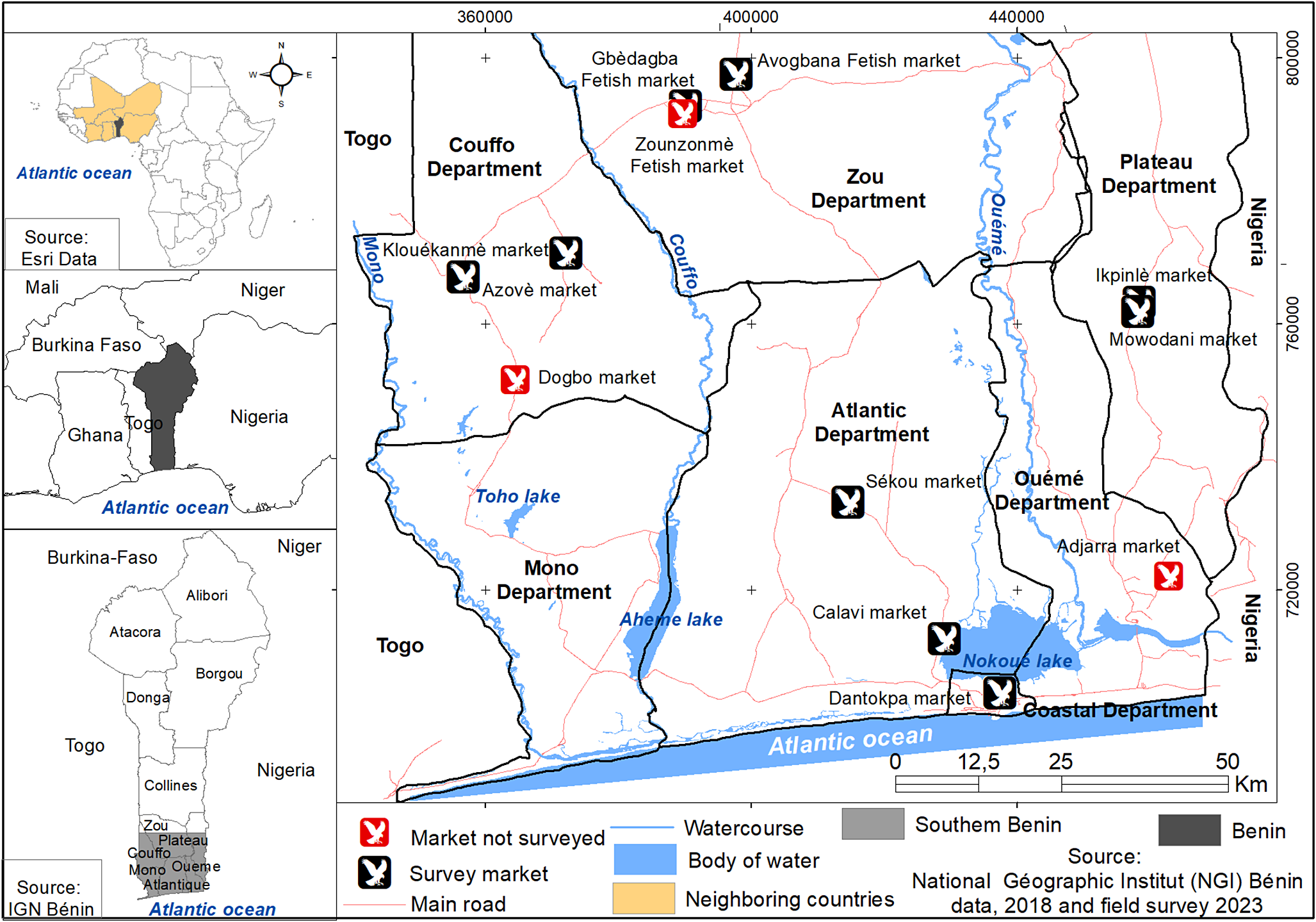
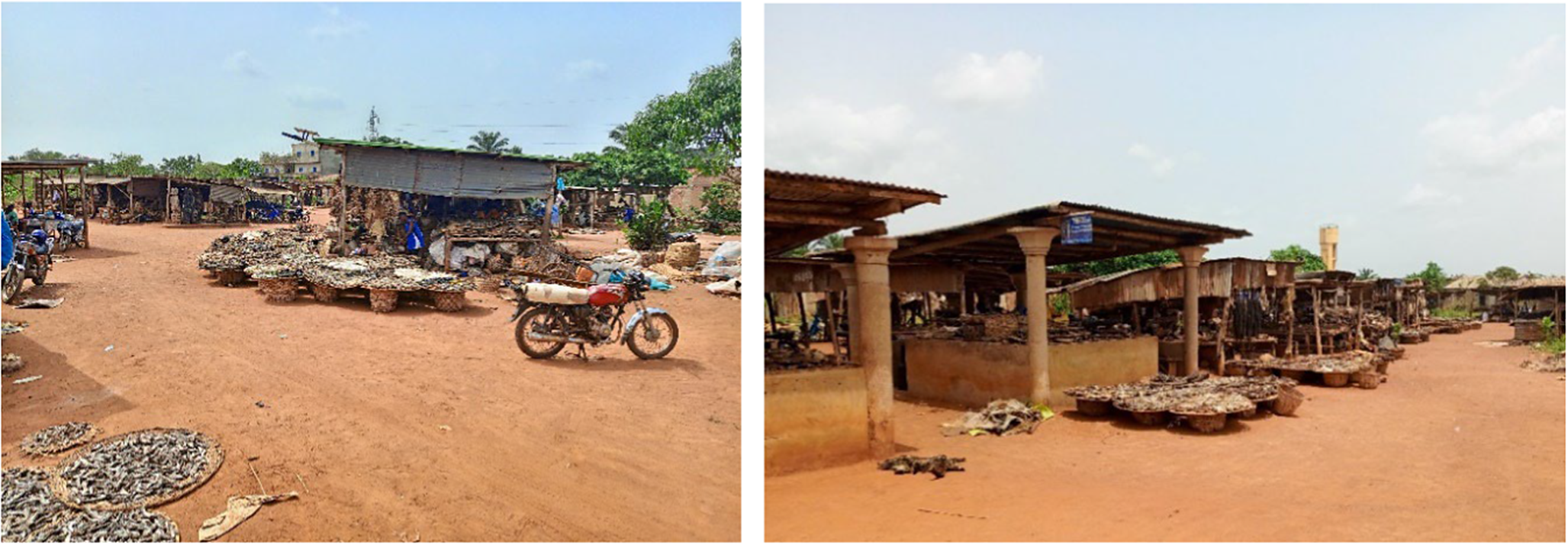
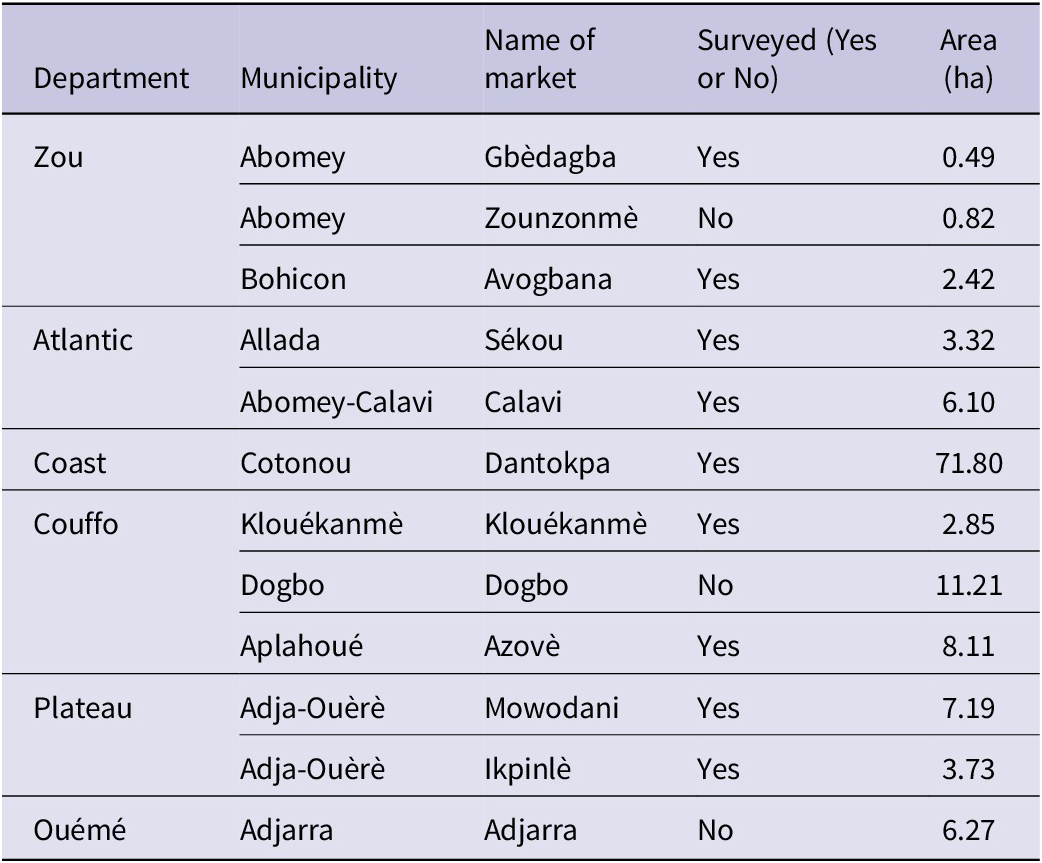
In total, we identified 12 fetish markets and conducted surveys at nine of them (Table 1 and Figure 1). Some of these markets have been identified in previous research (Adjakpa et al. Reference Adjakpa, Tchabi and Ogouvidé2002; Koutchoro et al. Reference Koutchoro, Amahowé, Houéssou and Lougbegnon2024), while others, including Mowodani, Ikpinlè, Zounzonmè, Sékou, and Calavi, do not appear to have been the subjects of previous studies. Three markets were not included in our surveys; the Dogbo and Adjarra markets had no vultures for sale at the time of our study, due to vendors’ difficulties in procuring them during this time, although they had sold them in the past, and the Zounzonmè market was not discovered until after field data collection was completed. Some vendors operate stalls at several markets simultaneously, including at the Mowodani, Ikpinlè, Azovè, Klouékanmè, Sékou, and Calavi markets; while vendors may move between different markets on market days, stalls and merchandise remain fixed in the markets. Gbèdagba and Avogbana are exclusively fetish markets (Figure 2), focused only on selling animals and animal products, and are open every day. The other seven markets included in our surveys are mixed markets where fetish vendors also sell other products and are open on different days of the week, so that the same vendors may attend different mixed markets on different days of the week. Animals are openly displayed for sale in all these markets.
Partial views of two fetish markets in southern Benin, 2023. From left to right: Gbèdagba fetish market in Abomey and Avogbana fetish market in Bohicon.
The locations of the 12 main fetish markets in southern Benin, 2023
Surveys
We requested and obtained authorisation from the management committees of each market prior to carrying out surveys. Surveys were conducted in accordance with local legislation and requirements, and all participants provided their informed consent to participate in this study. Between 25 March and 2 April 2023, we met with the sales committee representatives of each market to explain the objectives of this study. We then carried out surveys from 10 April to 8 August 2023, with all data collection supervised by ASC. To obtain permission to conduct market surveys, ASC first identified specific markets and then sought out the relevant market associate authorities to explain the scope of these surveys. After identifying the president of the relevant market association, ASC explained the purpose of the surveys and the president in turn provided ASC with the conditions for the surveys: i.e. that certain payments would be expected by participating vendors, and the names of participating vendors should be withheld by default, unless participants wished to be identified. This process of asking permission and being granted conditional permission was followed in all markets, beginning with the presidents of market associations and then by asking permission from each vendor for an interview. As most vendors were not literate, this process of seeking and obtaining permission took place verbally, rather than in writing.
We counted all Hooded Vultures, including live birds, carcasses, and heads, present in the stalls of consenting vendors during the course of our interviews. Surveys were repeated at each market twice a month, when we counted any new stock to avoid double counting vultures counted previously. We documented the following information: (1) the number of Hooded Vultures on display and their body parts; (2) the origin of the vultures obtained for sale, according to vendors; (3) information on the demographics of the vendor; (4) information on the uses of vultures; (5) how much vendors paid for vultures (i.e. purchase price); (6) sale price for vultures asked by vendors; (7) how prices varied with seasonal changes in species availability; (8) vendors’ awareness of vulture conservation legislation in Benin and vulture conservation status internationally. Interviews were conducted in French and Fon (the native language of the vendors) by four people (ASC, BFY, HML, and EEH) working in pairs; responses were recorded in French.
Results
Numbers and characteristics of vendors involved in the vulture trade
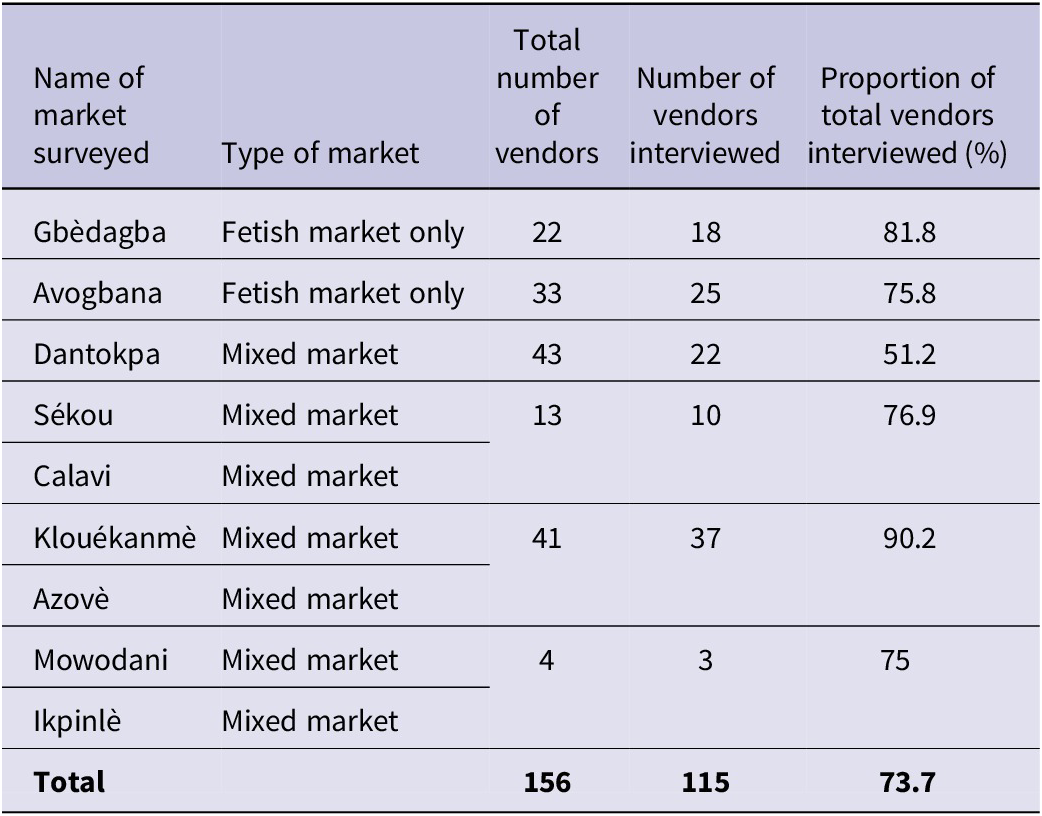
In total, we counted 185 vendors selling vultures and vulture parts in all markets, including 29 people under the age of 18 years who were not included in requests for interviews. We requested interviews with all 156 adult vendors using a brief survey form (see Supplementary material Tables S1 and S2). Of these, we interviewed 115 people, representing ~74% of vendors, without including identifying information on their responses to maintain confidentiality (Table 2). Despite measures taken to guarantee the anonymity of vendors, 41 (26%) vendors declined to be interviewed, expressing that they were afraid to be arrested or fined, given that our research focus on a species protected by national and international laws and regulations. As vultures at nearly a quarter of the stalls therefore could not be counted, our count data underestimate the actual number of vultures for sale.
Number of adult vendors (>18 years of age) surveyed per market in southern Benin, 2023
To better understand the attributes of vendors in fetish markets in southern Benin, we recorded information on their age group, religion, language, gender, and other social and cultural variables (Table 3 and Tables S1 and S2). All vendors belonged the Fon ethnic group and the vast majority (95%) reported practising vodun. Nearly all vendors were male (99%) and most were aged 18–30 years old (85%). Most vendors had no formal education (58%) and most identified themselves as witch doctors or fetish priests (59%); the remainder identified themselves simply as merchants. To understand if vendors understood that trade of vultures was illegal, we asked if they were aware of legislation in place to protect vultures. The vast majority (92%) of vendors reported that they were aware of legislation protecting vultures; the remaining 8% stated they were not aware of such legislation.

Numbers and origins of vultures and vulture parts sold in markets
Between 10 April and 8 August 2023, we counted live birds, carcasses, and heads representing a total of 522 Hooded Vultures on display in markets. Of these, 49 (9.4%) were alive and being fed, of which 32 ( 65.3%) were observed in the Avogbana and Abomey-Calavi markets (Figure 3). The majority of vulture products (73.4%) were whole carcasses, while 90 (17.2%) were heads. The carcasses are preserved by emptying the intestines and drying the body, which enables the vendors to keep the dead birds on the shelves for longer without decomposition. Numbers varied between markets, with the highest numbers of vultures found in the Avogbana and Klouékanmè markets (Table 4). Although vulture heads appeared less prevalent in markets than dried carcasses, vulture heads were reportedly sold more often than whole carcasses because they are easier to conceal and transport.
Examples of parts, carcasses, and whole vultures for sale at fetish markets in southern Benin, 2023. Top panel: whole carcasses and some heads of Hooded Vultures and White-backed Vultures in the fetish markets of Gbèdagba, Klouékanmè, and Avogbana. Bottom panel: Live Hooded Vultures found in the Avogbana and Abomey-Calavi markets.

Number of Hooded Vultures recorded from fetish markets (from a total number of 522 over four months) in southern Benin, 2023

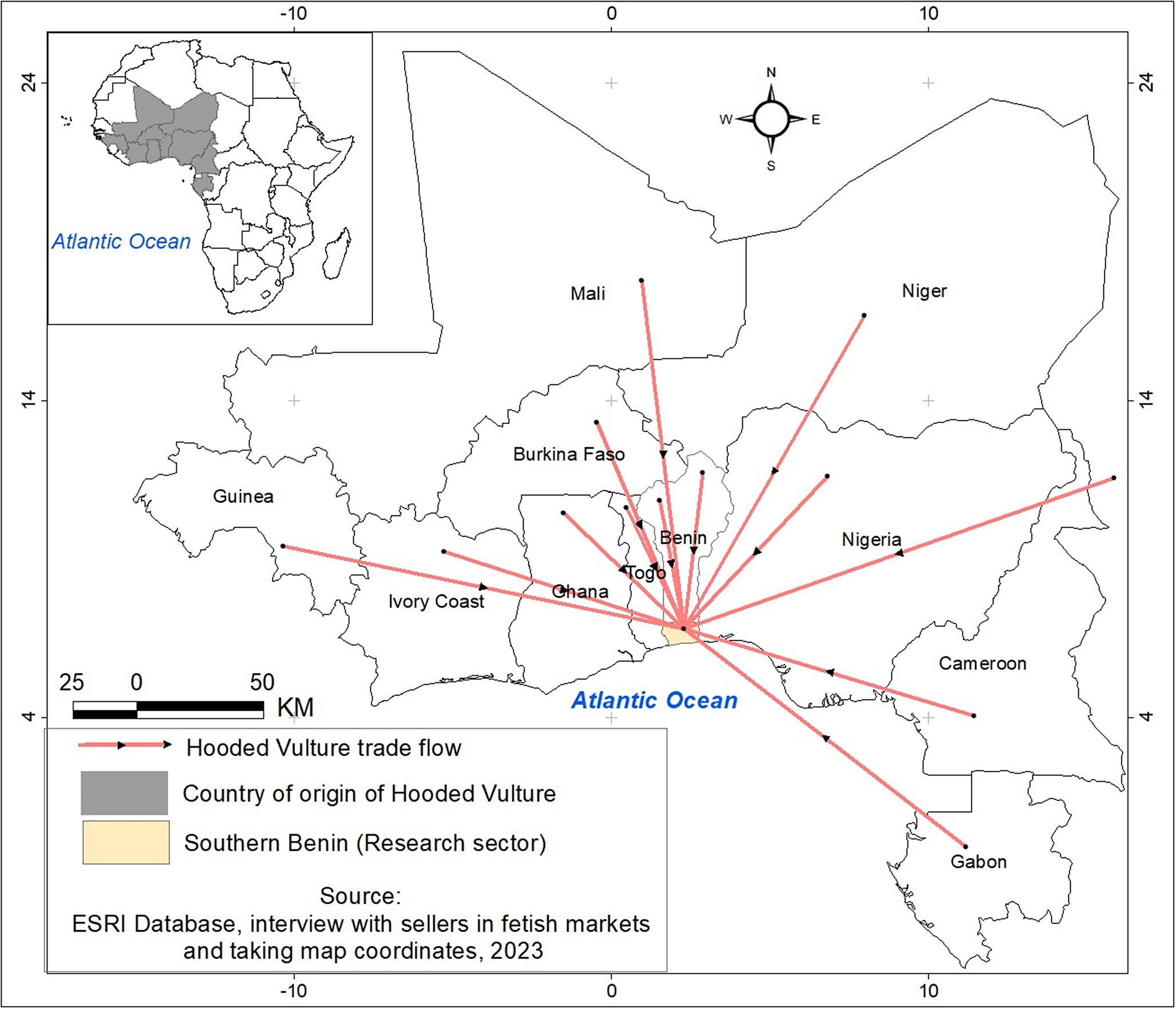
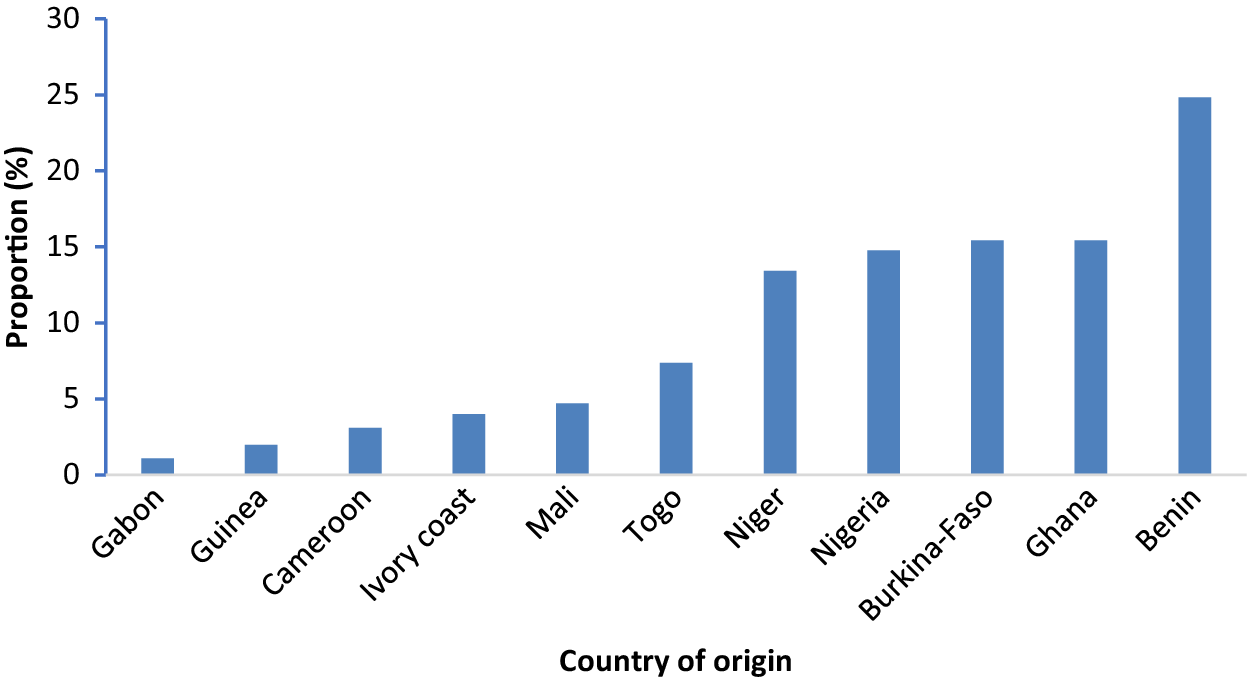
Hooded Vultures for sale in Benin came from at least 10 countries in addition to Benin (Figure 4), indicating the widespread conservation implications trade has on Hooded Vultures in West Africa. According to vendors, a quarter of Hooded Vultures for sale in fetish markets in southern Benin originated in central and northern Benin, while almost 60% of the vultures originated from Ghana, Burkina Faso, Nigeria, and Niger. Smaller numbers of vultures for sale were also reportedly obtained from Cameroon, Côte d’Ivoire (Ivory Coast), Gabon, Guinea, Mali, and Togo (Figure 5).
Countries of origin of Hooded Vultures sold in fetish markets of southern Benin, 2023. In total, 522 individual Hooded Vultures were counted for sale across 156 interviews with vendors (selling whole carcasses, live vultures, or their heads). (Map source: Esri: https://www.esri.com/en-us/home)
Origins of 522 Hooded Vultures for sale by 156 vendors in fetish markets of southern Benin, 2023. Vultures included whole carcasses, live birds or heads.
Vulture products sought, selling prices, and belief-based uses
To understand the demand for Hooded Vulture products, we asked the 115 fetish vendors what people sought to buy. All said the primary demand of buyers is for whole vulture carcasses, while 64% also identified demand for vulture heads. Vendors also reported that live vultures were sold to buyers interested in consuming vultures’ liver (19%), heart (17%), feathers (14%), and feet (6%). To understand the economic value of the trade in Hooded Vultures we asked vendors for information on the purchase and sale price of vultures (Table 5). While 40% (46/115) of vendors chose not to give information on the economic value of vultures, 69 vendors provided information on vulture sales. Both the purchase and sale prices of vultures varied seasonally, with prices generally being higher in the wet season compared with the dry season (Table 5).
Seasonal variation in prices for carcasses, heads, and live Hooded Vultures in fetish markets in southern Benin, 2023. All prices are given in West African CFA francs and US dollars (16 March 2024; CFA 605 = US$ 1). The purchase price is the price paid by market vendors, and the sale price is the amount they are sold for in the markets. The wet season is from April to mid-July and mid-September to October. The dry season is from November to March and mid-July to mid-September (https://climateknowledgeportal.worldbank.org/country/benin/climate-data-historical)

Prices of vultures and vulture parts varied widely, from CFA 15,000 (US$ 25) to as much as CFA 500,000 (US$ 833) with an average of CFA 76,800 (US$ 128) (16 March 2024, US$1 = 600 CFA). Profits (i.e. the difference between the purchase and sale price) made by vendors also varied widely; in the wet season, vendors can make as little as CFA 3,000 (US$ 5) for a vulture head and as much as CFA 400,000 (US$ 667) for a live vulture. The majority (~59%) of vendors also identified as witch doctors or fetish priests; these individuals also provided information on belief-based uses of vultures, including washing with soaps made with powdered vulture to elicit good fortune, as well as treatments that promised to increase users’ wealth, work, and protection against witchcraft. Vodun treatments described also included displaying vulture parts in the house to repel evil spirits and the regular consumption of vulture meat to make one invulnerable to witchcraft.
Discussion
Despite legislation protecting Hooded Vultures in Benin, and the fact that most vendors are aware of such legislation, we found that Hooded Vultures are commonly traded illegally in the fetish markets of southern Benin. Vultures sold in Benin are sourced from a wide geographical range including at least 10 foreign countries, and it is likely that this trade is causing population-level impacts over a significant area of the species’ distribution. We recorded live birds, carcasses, and heads representing at least 522 individual vultures for sale in markets in southern Benin, all of which originated outside our study area (where no vultures are present in the wild), and most of which originated from across the region, including Ghana, Burkina Faso, Nigeria, and Niger. These results provide support for the hypothesis of Daboné et al. (Reference Daboné, Ouéda, Thompson, Adjakpa and Weesie2023b) that large number of vultures killed intentionally in Burkina Faso could be intended to meet international demand throughout the region.
Numbers and characteristics of vendors involved in the vulture trade
All 115 vulture vendors we interviewed belonged to the Fon ethnic group, which is the largest of Benin’s approximately 42 ethnic groups, comprising approximately 38% of Benin’s population (CIA 2024). Members of the Fon ethnic group also comprise all the vendors in the main fetish market in the capital of neighbouring Togo (N’kere Reference N’kere2016). Research in other West African countries, such as Nigeria and Senegal, have also found that the wildlife trade disproportionately involves members of particular ethnic groups, including Hausa, Yoruba, and Fulani people, who have communities and trade networks throughout West Africa (Copsey et al. Reference Copsey, Botha, Chandra, Deikumah, Henriques and Safford2022; Nikolaus Reference Nikolaus and Schuchmann2011; Saidu and Buij Reference Saidu and Buij2013). For example, fetish markets in Nigeria appear to be run mainly by women from the Yoruba ethnic group (Nikolaus Reference Nikolaus2001).
Almost two-thirds of Benin’s population is under the age of 25 (CIA 2024), which is representative of vulture vendors, most of whom were young men in their 20s. However, the fact that the vast majority (95%) of vulture vendors practise vodun places them in a distinct minority, as <12% of Benin’s population practises vodun (CIA 2024). Most vulture vendors we interviewed had no formal education, in contrast to the average adult male in Benin who has received 12 years of formal education (CIA 2024); country-wide statistics indicate that 40% of the general population has not attended school (Institut National de la Statistique et de l’Analyse Economique 2017). This low education rate complicates the communication of conservation legislation and reduces the availability of alternative employment opportunities. However, the fact that the illegal vulture trade is undertaken almost entirely by males practising vodun reveals a sector of society where education efforts can be focused. Such efforts might highlight the negative and unsustainable implications of vulture trade and emphasizing alternatives, such as belief-based practices that have positive associations with nature conservation, including the protection of sacred sites by the Fon in Benin (Janssen Reference Janssen2010).
Numbers and origins of vultures and vulture parts sold in markets
Previous research published nearly 10 years ago estimated an annual take of 975–1,462 Hooded Vultures across West Africa (Buij et al. Reference Buij, Nikolaus, Whytock, Ingram and Ogada2016). Our counts of vultures for sale in Benin alone suggests that if the previous estimates are correct, the trade in vultures has grown significantly since then. Furthermore, because 26% of the vendors declined to be interviewed for this research, the numbers we have presented for our study underestimate the numbers of vultures and vulture products for sale present in the markets, and the actual numbers of vultures traded in these markets could be considerably higher. In addition to Hooded Vultures, we observed four other vulture species and 12 other raptor species offered in markets surveyed in this study, including the following: the Critically Endangered White-headed Vulture, White-backed Vulture, and Rüppell’s Griffon Vulture the Endangered Lappet-faced Vulture, the Palm-nut Vulture Gypohierax angolensis, the Black Kite Milvus migrans, Black-shouldered Kite Elanus axillaris, African Goshawk Aerospiza tachiro, Shikra Tachyspiza badius, Lizard Buzzard Kaupifalco monogrammicus, African Harrier-Hawk Polyboroides typus, Gabar Goshawk Micronisus gabar, Barn Owl Tyto alba, African Wood-Owl Strix woodfordii, Vermiculated Fishing-Owl Scotopelia bouvieri, and Pearl-spotted Owlet Glaucidium perlatum. The prevalence of multiple endangered, rare, and vulnerable raptor species that are protected by law but nevertheless offered for sale in markets in Benin demonstrates the extensive nature of this trade and its impacts on threatened wildlife (Buij et al. Reference Buij, Nikolaus, Whytock, Ingram and Ogada2016).
Vendors indicated that vulture prices are influenced by at least four factors: (1) vultures’ origin in the wild (or distance from market); (2) the experience of the vendor or buyer (new or experienced); (3) the season (wet or dry); (4) the form of vulture being sold (alive, whole carcass, head only, and other parts). Although we only attempted to quantify the latter two factors, we understand that vultures coming from longer distances cost more. For example, vultures originating from Ghana, Côte d’Ivoire, and Mali are more expensive because of the increased risk that suppliers’ take (e.g. risk of being arrested and/or fined by the police or foresters). The purchase and sale price of the species also varies depending on the experience of both the buyer and vendor. If the vendor is new or only sells occasionally, the sale price may be very low. However, if a vendor notices that a buyer is not a regular or former customer, or is a foreigner, the price could become very high. Vulture prices were higher during the rainy season, when vultures are reportedly harder to procure compared with the dry season. The dry season (approximately October through March) in West Africa coincides with the breeding season for Hooded Vultures, when their congregation at nesting sites makes their locations more predictable and thus presumably more vulnerable to poachers.
Vulture products sought and selling prices, and belief-based uses
The overall average sale price of a live Hooded Vulture, whole carcass, or vulture head exceeds the average monthly income in Benin, the sale of live vultures can fetch up to seven times as much as the average monthly income. The sale price of vulture carcasses in Benin is comparable to prices reported in Ghana, where carcasses in the northern city of Tamale were reportedly sold for US$ 140, while the sale price of vulture heads (US$ 12–33) was less than those reported in Ghana (US$ 60) (Gbogbo et al. Reference Gbogbo, Roberts and Awotwe-Pratt2016). Between 2001 and 2021 in Nigeria the price for a whole vulture reportedly increased 100 times (UNEP-WCMC 2021), and prices paid in Ghana (Deikumah Reference Deikumah2020) and Benin may be even higher, as our findings show. Whole vultures, particularly live vultures, commanded the highest prices. Captive vultures are usually fed beef, costing about CFA 1,000 (US$ 1.67) for the meat for one vulture per day. However, a vendor can gain more from the sale of a living vulture compared with its carcass, as live vultures may be used in ritual sacrifices considered more powerful than ritual consumption of vulture parts. The sale prices of the heads, carcasses, and live vultures vary considerably with supply, demand, and sellers’ assessments of how much a buyer might pay.
Most vultures were sold as whole carcasses (73.4%), while 17.2% were sold as heads; he latter value is slightly higher than that recorded by Saïdu and Buij (2013) in northern Nigeria (11%). Some preference for trade in vulture heads appears to be related to the desire to avoid detection by law enforcement authorities (Henriques et al. Reference Henriques, Buij, Monteiro, Sá, Wambar and Tavares2020). Daboné et al. (Reference Daboné, Ouéda, Thompson, Adjakpa and Weesie2023b) also found evidence of significant trade in vulture heads; out of 879 vultures found dead in poisoning events, 317 (36%) were decapitated, apparently due to the harvest of their heads for trade. Our findings are consistent with prior research that emphasised that vulture trade is motivated by belief-based use (Gbogbo et al. Reference Gbogbo, Roberts and Awotwe-Pratt2016; Ogada and Buij Reference Ogada and Buij2011; Petrozzi Reference Petrozzi2018; Saïdu and Buij 2013); in previous research on 7,819 vulture killings recorded in 26 countries, only 1% were killed for food (Ogada et al. Reference Ogada, Shaw, Beyers, Buij, Murn and Thiollay2016).
Belief-based uses in the context of tradition, religion, and conservation
Our findings provide clear evidence of the negative impacts of belief-based practices on Critically Endangered wildlife, with implications stretching across West Africa and into Central Africa. In Benin, as well as in neighbouring countries such as Burkina Faso and Nigeria, fetish practices appear to be accepted or even promoted by national governments, whereas in countries, such as Guinea and Ghana, they have been discouraged by government policies but persist nevertheless (Nikolaus Reference Nikolaus and Schuchmann2011). The expansion and increases in such practices mean that the fetish trade now represents a significant threat to avian biodiversity (Adeola Reference Adeola1992; Buij et al. Reference Buij, Nikolaus, Whytock, Ingram and Ogada2016; Nikolaus Reference Nikolaus and Schuchmann2011). While many belief-based uses may have roots in some African traditions (Nikolaus Reference Nikolaus and Schuchmann2011), these have been transformed due to globalisation in ways that have allowed wildlife persecution and trade to rapidly increase and expand in ways that are now far from traditional. New technologies have enabled novel hunting and trapping methods, and access to modern communications and markets has enabled a massive international trade that bears no resemblance to historical traditions and results in extirpations and extinctions of wildlife integral to African cultural and natural heritage. Moreover, increasing trade has accompanied new applications of fetish practices, such as to win the lottery or succeed in business or politics (Boakye et al. Reference Boakye, Wiafe and Ziekah2019). Accordingly, nearly half of buyers in the main fetish market in Togo, which is run by Fon traders from Benin, are businessmen and politicians seeking to increase their success and power (N’kere Reference N’kere2016).
The ritual consumption and sacrifice of vultures is promoted in vodun practices as providing protection against witchcraft, although these practices themselves are considered to a form of witchcraft. Previous research in Africa has found that people relying on belief-based approaches to their problems tended to be poor, unemployed, and have low health status, and that payments associated with visiting fetish priests tended to total >10% of their household budgets, a level of expense labeled “catastrophic” and considered to drive on-going poverty (Nxumalo et al. Reference Nxumalo, Alaba, Harris, Chersich and Goudge2011). Consistent with this research, over a third of buyers in Togo’s main fetish market comprised unmarried and unemployed people seeking successful marriage matches, employment or wealth (N’kere Reference N’kere2016). Paying the prices for vultures at fetish markets can have severe financial implications for vulnerable households, perpetuating a cycle of poverty among users, and policymakers should give attention to protecting residents from such crippling expenses (Nxumalo et al. Reference Nxumalo, Alaba, Harris, Chersich and Goudge2011).
Study limitations and future directions
Human perspectives are limited by definition and studies such as ours, which focus on interviews can represent a first step to evaluate the connections between human perspectives, behaviours, and real-world consequences (Agyare et al. Reference Agyare, Holbech and Arcilla2024). In addition to its reliance on questionnaire data, our study was limited by our undercounting vultures due to the lack of participation of all vendors as well as to mortality, confiscation, and other attrition of vultures on the long journeys from source to market. Illegal phenomena are difficult to study by nature as they can be dangerous and many participants may refuse to provide information, such as as 26% of the vendors in our study. On the other hand, the effects of uncontrolled and illegal activities have powerful negative impacts, not only on nature and wildlife (Arcilla et al. Reference Arcilla, Holbech and O’Donnell2015; Holbech et al. Reference Holbech, Annorbah, Phalan and Arcilla2018), but also on human societies. As such practices involve organised crime and mafia-style politics, they are generally anti-social and anti-democratic, enabling the elite capture of public resources for the benefit of a few (Jusrut Reference Jusrut2021), which in this case includes traders and middlemen. Previous studies have demonstrated the existence of major market hubs in West Africa for international commerce (Atuo et al. Reference Atuo, Abanyam and O’Connell2015; Boakye et al. Reference Boakye, Wiafe and Ziekah2019; Williams et al. Reference Williams, Cunningham, Kemp and Bruyns2014). Despite the significant threat to biodiversity, there appear to be relatively few scientific studies of the relationship between such trade in birds and the conservation status of species concerned (Buij et al. Reference Buij, Nikolaus, Whytock, Ingram and Ogada2016; Petrozzi Reference Petrozzi2018).
Addressing conservation problems stemming from belief-based uses requires addressing core values in religion and culture. While evangelical religions such as Christianity have sometimes been blamed for the demise of traditional cultures, many of the world’s languages that previously existed only in oral form have been written down, preserved, and promoted largely or solely through the efforts of Christian missionaries (e.g. Arcilla et al. Reference Arcilla, Salazar Samecash, Tsamajain Shiwig, Su and Cooper2025; Larson Reference Larson1966; Skrefsrud Reference Skrefsrud1873). Moreover, the assumption that every aspect of traditional cultures must be protected becomes problematic when we consider that both human and animal sacrifice played important roles in West African traditions until recently, but are prohibited or restricted in most societies today. Previous research in Ghana has also found that Christians consistently assign greater importance to conservation outcomes than do those who identify with traditional African religious practices (Murray and Agyare Reference Murray and Agyare2018). On the other hand, sacred forests protected as a part of African religious practices can also protect ecosystems and benefit local communities (Sullivan et al. Reference Sullivan, Browne, Penagos Zuluaga, Liu, Surendra and Estrada-Villegas2024; Franta et al. Reference Franta, Kourdjouak, Kaboumba and Arcilla2025). We suggest that future research further investigate the role of religious faith, practices, and values in wildlife conservation and their impacts, both positive and negative, on wildlife and nature protection strategies.
Conservation implications
Republic of Benin laws (Decree No 2002-16, 18 October 2004; Decree No. 2011-394, 28 May 2011) establish terms of conservation and sustainable management of wildlife and wildlife habitat. Hunting, capture, possession, and trade of vultures are banned and any person infringing this provision is liable to jail sentences ranging from three months to three years and/or to a fine of CFA 100,000–500,000 (~US$ 160–830) (Daboné et al. Reference Daboné, Adjakpa, Dansi, Thompson, Dissou and Weesie2023a). However, this legal and regulatory system is poorly understood and mostly ignored by hunters in Benin (Chaffra Reference Chaffra2022). Over half the population of Benin is illiterate (CIA 2024), and Benin’s vulture vendors appear to have a higher-than-average rate of illiteracy due to their lack of formal education. In conversations with the vendors, we found that many vendors understood legislation pertaining to those who hunted or trapped vultures, rather than themselves (as vendors), particularly as many of the vultures are trapped and killed in other countries.
Better education, awareness, and law enforcement are required to halt the illegal trade in vultures in West Africa. The current lack of effectiveness of legislation in Benin is concerning but consistent with other research in West Africa. Although most vendors we interviewed in markets in southern Benin were aware of laws prohibiting vulture sales, this knowledge did not prevent their involvement in the vulture trade. Likewise, research in Ghana found residents prone to ignoring rules when doing so facilitated the achievement of their goals (Bonsu and Zwick Reference Bonsu and Zwick2007). Moreover, a study in Nigeria revealed a high prevalence of illegal behaviours in communities surrounding protected lands, and that community members’ behaviour was more influenced by respondents’ perceptions of acceptable behaviour within their social groups than concerns about wildlife regulations, such that perceived likelihood of community-level sanctions played a more salient role than the fear of arrest by government authorities (Atuo et al. Reference Atuo, Fu, O’Connell, Agida and Agaldo2020). Between September and November 2023, vendors of all ages were involved in a community outreach programme to raise awareness of the issues facing vultures as well as the laws and penalties for the capture and killing of Hooded Vultures.
Conclusions
Our findings highlight the importance of cultural and religious practices in wildlife conservation (Maheshwari et al. Reference Maheshwari, Bhagwat, Hoang and Karpate2024), which in the context of vodun rituals and sacrifices unfortunately drive a substantial and lucrative illegal wildlife trade associated with vulture declines (Nikolaus Reference Nikolaus and Schuchmann2011). Despite laws protecting vultures from being captured, killed, or traded, we found evidence of 522 vultures sourced from at least 10 foreign countries across West and Central Africa offered for sale in fetish markets of southern Benin over a period of four months. Despite serious legal, conservation, and animal welfare concerns, wildlife trade for belief-based use is thriving and growing in West Africa (D’Cruze et al. Reference D’Cruze, Assou, Coulthard, Norrey, Megson and Macdonald2020; Gbogbo et al. Reference Gbogbo, Roberts and Awotwe-Pratt2016; Muhammad and Mustapha Reference Muhammad and Mustapha2020; Williams et al. Reference Williams, Cunningham, Kemp and Bruyns2014, Reference Williams, Ottosson, Tende and Deikumah2021). The increase in belief-based use markets is partly attributed to globalization, novel hunting and communications technologies, and increased regional wealth enabling politicians and businessmen who look to fetish practices for success. In some regions, a majority of the population may have some involvement in the fetish trade (Atuo et al. Reference Atuo, Abanyam and O’Connell2015), while in others, trade may be driven by ethnic or religious minorities, such as the vodun practitioners in the current study. Targeted community outreach and education programs are urgently needed as part of a strategy to mitigate illegal wildlife trade that will otherwise drive declines and extirpations of Hooded Vultures from increasing areas of their native range. We also recommend further studies identify end users of vultures, educate them on wildlife laws and legal penalties, and build conservation capacity and awareness of current practices that threaten to diminish and destroy Benin’s unique and impressive natural and cultural heritage.
Our findings also reveal that legislation aimed at protecting vultures in Benin currently appears to be ineffective. The establishment of laws and regulations protecting wildlife is a first step in addressing illegal wildlife trade, but additional actions are required to achieve conservation success (Challender et al. Reference Challender, Hinsley and Milner-Gulland2019; Kaboumba et al. Reference Kaboumba, Di Lecce, Afiademanyo, Kourdjouak and Arcilla2025). To our knowledge there has never been a prosecution for illegal trade in vultures in Benin. However, elsewhere in West Africa, in Guinea-Bissau, a 2020 case in which >2,000 Hooded Vultures were intentionally poisoned (Henriques et al. Reference Henriques, Buij, Monteiro, Sá, Wambar and Tavares2020) resulted in a perpetrator’s sentencing to more than four years in prison and a fine of CFA 900,000 (~US$ 1,500) (Henriques, unpublished data). However, such prosecutions remain rare as financial stakes in illegal wildlife trade continue to grow. Moreover, profits made in vulture trade can easily exceed the costs imposed by any fines imposed, as the average sale price in Benin of 2,000 vulture carcasses would exceed a quarter million US dollars. Existing international agreements such as the Memorandum of Understanding on the Conservation of Migratory Birds of Prey in Africa and Eurasia (CMS Raptors 2022) can be leveraged to bolster guidance and support to address the formidable, on-going conservation threats to Critically Endangered species posed by illegal but increasing international wildlife trade (Donald et al. Reference Donald, Fernando, Brown, Busana, Butchart and Chng2024). We also emphasise the urgent need to monitor and address unsustainable and illegal trade through law enforcement, education, and cultural engagement.
Acknowledgements
We thank the Benin Market Association and all participating traders for allowing this work to take place. This study was funded in part by a Global Raptor Research and Conservation Grant from HawkWatch International to ASC. Olivier Boissier assisted ASC in preparing the 2022 grant proposal submitted to HawkWatch International. ASC and NA thank donors to the International Bird Conservation Partnership for additional financial support, and NA thanks Ola Svensson for support throughout this study. We thank Ruthe J. Smith for editing and proofreading the text and Irene Di Lecce for assisting with the translation of portions of the text originally written in French. All maps and photos in this manuscript were produced by ASC. We are very grateful to the anonymous reviewers and editor for constructive comments that allowed us to improve earlier drafts of this manuscript. We dedicate this paper to all those working to end animal sacrifice and protect Africa’s natural and cultural heritage, past, present, and future.
Supplementary material
The supplementary material for this article can be found at http://doi.org/10.1017/S0959270925000073.


 Open access

