


In recent years, due to imbalanced regional economic development and financial innovation, Chinese society is undergoing dramatic social changes, characterised by sharp contrasts between how different groups’ interests are served. In these circumstances, collective action has become a serious issue that is having a profound impact on Chinese society. Many social psychologists have recently uncovered the mechanisms underlying collective action in the West, finding that group-based anger, group identity, and group efficacy are key influencers of peoples’ collective action (e.g., van Zomeren, Reference van Zomeren2013; van Zomeren, Postmes, & Spears, Reference van Zomeren, Postmes and Spears2008; van Zomeren, Leach, & Spears, Reference van Zomeren, Leach and Spears2012). In China, a primary cause of many collective actions is the gap between the rich and the poor, and previous research has also found that social class may influence collective action (e.g., Brandt, Reference Brandt2013; Fritsche et al., Reference Fritsche, Moya, Bukowski, Jugert, Lemus, Decker and Navarro-Carrillo2017). However, the relationship between social class and collective action needs further study.
According to relative deprivation theory (RDT; see Crosby, Reference Crosby1976; Folger, Reference Folger, Masters and Smith1987; Runciman, Reference Runciman1966), group-based anger has a significant predictive effect on collective action (Christensen, Rothgerber, Wood, & Matz, Reference Christensen, Rothgerber, Wood and Matz2004; van Zomeren et al., Reference van Zomeren, Postmes and Spears2008). Previous research has also suggested that when people feel angry at perceived unfair treatment, they may engage in collective behaviours to improve their group situation (Fritsche et al., Reference Fritsche, Moya, Bukowski, Jugert, Lemus, Decker and Navarro-Carrillo2017; Leach, Iyer, & Pedersen, Reference Leach, Iyer and Pedersen2006; Petersen, Reference Petersen2002; Smith & Huo, Reference Smith and Huo2014). For example, Zhang and Yang (Reference Zhang and Yang2015) observed that collective action often happens in regions that are lagging economically, while Li, Tang, and Qin (Reference Li, Tang and Qin2012) found that the sense of conflict is stronger among the lower than the upper social class. It is widely known, however, that many people who perceive they are being treated unfairly nonetheless shun collective action, especially in the culture of peace and harmony promoted in China. The relationship between group-based anger and collective action in China needs more empirical data. Aiming to fill this gap in the literature, we propose and test the hypothesis that group-based anger is positively correlated with the collective action in China (Hypothesis 1).
The positive relationship between group-based anger and collective action may not always hold, since different groups may interact with the world in different ways. For example, social class, or socioeconomic status (SES), is an important variable to consider. Social class describes an individual's relative position based on his or her access to material and social resources (Kraus, Piff, Mendoza-Denton, Rheinschmidt, & Keltner, Reference Kraus, Piff, Mendoza-Denton, Rheinschmidt and Keltner2012). It can be indexed by objective markers, such as income, educational attainment, and occupation prestige (Lareau & Conley, Reference Lareau and Conley2008; Oakes & Rossi, Reference Oakes and Rossi2003). Alternatively, it can be framed subjectively; for example, social status may be depicted as a ladder with 10 rungs, where the top rung represents the highest income, maximum education, and the most respected job (Adler, Epel, Castellazzo, & Ickovics, Reference Adler, Epel, Castellazzo and Ickovics2000).
Since members of different social classes have different material conditions and available resources, the way they think about and interact with the world also differs (Manstead, Reference Manstead2018). According to social cognition theory, individuals of the lower social class cannot do as they want due to constraints and limited resources; consequently, they adopt ‘contextualist’ social cognitive tendencies. By contrast, members of the upper social class can usually act as they wish and have a high belief that what they do will succeed, leading them to adopt ‘solipsistic’ social cognitive tendencies (Kraus et al., Reference Kraus, Piff, Mendoza-Denton, Rheinschmidt and Keltner2012). The upper social class has sufficient resources and a high sense of control and thus has stronger beliefs about what they can do to achieve their desires. Conversely, the lower social class lives in an environment lacking resources and has fewer opportunities to control and influence things happening around them; thus, the people from this class have weaker beliefs about their ability to realise their goals (Kraus, Piff, & Keltner, Reference Kraus, Piff and Keltner2009). On these bases, even among people angered by perceived unfair treatment, only the upper social class will engage in collective action, as its members have enough resources during their formative years and develop solipsistic social cognitive tendencies. Since members of the upper social class always believe they can achieve their goal by taking action (Kraus et al., Reference Kraus, Piff, Mendoza-Denton, Rheinschmidt and Keltner2012), they will engage in collective behaviours to improve their group situation when angered by perceived unfair treatment. By contrast, despite more frequently perceiving unfair or unjust treatment (Simandan, Reference Simandan2018), members of the lower social class will not take collective action (Becker, Kraus, & Rheinschmidt-Same, Reference Becker, Kraus and Rheinschmidt-Same2017; Paulsen, Reference Paulsen1991).
Thus, based on the discussed theories and empirical evidence, we hypothesise that the relationship between group-based anger and collective action intentions is moderated by social class (Hypothesis 2). Specifically, we predict that lower social class members tend not to participate in collective action even when angered by perceived unfair treatment (Hypothesis 2a). In contrast, upper social class members similarly angered do tend to participate in collective action (Hypothesis 2b).
The Present Research
Aiming to test our hypotheses, two studies were conducted: one in a real-world social context (Study 1) and the other in an artificial context (Study 2). These two studies tested the same hypotheses using two different research methods, so as to test whether our conclusions are reliable and repeatable. The present research expands on previous studies in three important ways. First, we consider how social class influences the social psychology of collective action, since the gap between the rich and the poor is a primary cause of collective action. Second, it broadens the scope of collective action research beyond Western, educated, industrialised, rich, and democratic (WEIRD) samples (Henrich, Heine, & Norenzayan, Reference Henrich, Heine and Norenzayan2010). Third, we adapt simultaneously correlational and experimental methods to investigate the relationship between social class and collective action intentions, which is an important methodological contribution to this topic.
Study 1
The aim of Study 1 was to examine whether the relationship between collective action intentions and group-based anger differs in different social classes. The context for this investigation was controversy over the site selection for a garbage station, causing the residents of communities near the proposed site to contemplate taking collective action against the garbage station's construction. In China, the siting of garbage stations is a key trigger of collective action in cities. We considered this an ideal real-world social context to test our hypothesis with potentially high external validity.
Method
Participants
To obtain a medium power test (effect size F 2 = .15 in a linear multiple regression analysis), a G*power analysis suggested a total sample size of 89 participants would be needed to obtain a power of .95 (Faul, Erdfelder, Buchner, & Lang, Reference Faul, Erdfelder, Buchner and Lang2009). Therefore, 113 residents of a community near a proposed garbage station in Hubei Province were invited to complete our questionnaire survey. After excluding the data of 13 participants who did not complete the questionnaire, the final sample comprised 100 participants. Four did not complete primary school, 11 were middle school graduates, 26 were high school graduates, 26 held associate degrees, 27 held bachelor's degrees, and 6 held postgraduate degrees. There were 47 men and 53 women, with a mean age of 28.43 years (SD = 6.05).
Procedure and materials
We asked participants to complete a battery of items related to their social class, group-based anger, and intentions to collectively protest the construction of the garbage station after they learned the site had been selected. All questionnaire items were paper-based, and completing the questionnaire took about 10 minutes. All participants were informed that their survey data would remain anonymous and be analysed holistically. After completing the questionnaire, they were compensated with USD 0.79 or a small gift of equivalent value.
Measures
Social class
Following previous research (e.g., Snibbe & Markus, Reference Snibbe and Markus2005, see also Kraus, Côté, & Keltner, Reference Kraus, Côté and Keltner2010), we selected educational attainment as an effective indicator of social class (Grossmann & Varnum, Reference Grossmann and Varnum2011). Using a 6-point Likert scale (1 = did not complete primary school, 2 = middle school graduate, 3 = high school graduate, 4 = associate degree, 5 = college graduate, 6 = postgraduate degree), we asked every participant to report the highest level they had attained. In our subsequent analysis, higher scores were taken to indicate higher social class.
Group-based anger
Three items (α = .91) were adapted from Alberici and Milesi (Reference Alberici and Milesi2016), reworked for the current context to the following: ‘I get angry when I think about the fact there will be a garbage station near our community’; ‘I feel angry about the building of the garbage station’; ‘I feel angry when I think about environment of the residential area we will face.’ Participants were asked to evaluate what degree to which each item described their feelings (1 = not at all; 7 = extremely well).
Collective action
Three items were used to assess collective action intentions (van Zomeren, Spears, Fischer, & Leach, Reference van Zomeren, Spears, Fischer and Leach2004) and formed a reliable scale (α = .87). These items were: ‘Would you like to sign a petition to protest against the construction of the garbage station?’; ‘Would you like to leave comments under the official micro-blog of our government?’; and ‘Would you like to share news about protesting the construction of the garbage station?’ (7 point scale: 1 = not at all; 7 = absolutely).
After completing the scales, participants were required to record their gender and age, since both have been identified in previous research as potential predictors of collective action intentions (e.g., van Zomeren et al., Reference van Zomeren, Spears, Fischer and Leach2004). Finally, we informed the participants of the true aims of our study.
Results and Discussion
Preliminary Analyses
To examine the potential influences of gender and age on the measured variable, we first conducted several preliminary analyses. Descriptive statistics for all the variables are presented in Table 1. The results revealed significant correlations between gender and group-based anger (r = −.27, p = .006) and collective action intentions (r = .22, p = .026); the correlation between age and social class is also significant (r = −.23, p = .020). Based on these results, we included gender and age as control variables in all the following analyses.
Descriptive Statistics and Intercorrelations Between Variables (n = 100)

Note: For gender, 0 = male, 1 = female. * p < .05, **p < .01, ***p < .001.
As shown in Table 1, there was a significant positive correlation between group-based anger and collective action intentions (r = .46, p < .001), but neither the correlation between social class and group-based anger (r = −.14, p = .168) nor that between social class and collective action intentions (r = −.12, p = .238) is significant.
Multiple Regression Analyses and Moderating Analyses
To examine the interactive effects of group-based anger and social class on collective action intentions, we mean-centred the group-based anger and social class and conducted a hierarchical regression analysis. In the first step, gender and age (as control variables) were entered into the regression equation to control for their influences on collective action intentions (the dependent variable). In the second step, group-based anger and social class (as independent variables) were entered into the regression equation to predict collective action intentions. In the third step, the interaction term (group-based anger × social class, using their mean-centred values) was introduced. Thus, we found that group-based anger had a significant effect on collective action intentions (β = .46, p < .001), which is consistent with Hypothesis 1, but the effect of social class on collective action intentions was not significant (β = −.02, p = .83). Consistent with Hypothesis 2, social class did moderate the relationship between group-based anger and collective action intentions (β = .20, p = .033): the interaction term explained 3.6% of the variance in this intentions. The final model accounted for 27.0% of the total variance in collective action intentions (see Table 2).
Hierarchical Multiple Regression on Collective Action Intentions

Note: For gender, 0 = male, 1 = female. *p < .05, **p < .01, ***p < .001.
To explain this moderated relationship in more detail, a simple slope test for the association between group-based anger and collective action intentions was conducted for low (-1 SD) and high (+1 SD) social class. The results revealed a significant positive relationship between group-based anger and collective action intentions for the upper social class (β = .68, p < .001), which is consistent with Hypothesis 2b, whereas this relationship was not significant for the lower social class (β = .24, p = .21), which supports Hypothesis 2a.
Discussion
First, based on correlational research in a real-world social context in China, Study 1 demonstrated that social class moderates the relationship between group-based anger and collective action intentions, so that anger is associated with higher intentions for the upper social class, but not the lower social class. This was consistent with Hypotheses 2a and 2b. The results of Study 1 were similar to that of previous studies about social class. For example, some studies found that members of the lower social class, relative to those of the upper social class, tend to remain politically inactive when faced with an ingroup-related social disadvantage (e.g., Becker et al., Reference Becker, Kraus and Rheinschmidt-Same2017; Paulsen, Reference Paulsen1991). This is an interesting issue, because some studies suggest that the lower social class is more likely involved in class conflict and expresses more state and behavioural hostility toward the other classes (e.g., Greitemeyer & Sagioglou, Reference Greitemeyer and Sagioglou2016; Kraus, Horberg, Goetz, & Keltner, Reference Kraus, Horberg, Goetz and Keltner2011). Therefore, it is necessary to provide further evidence to test the relationships of social class, group-based anger, and collective action intentions under more strictly controlled conditions. At the same time, while the real-world social context of Study 1 guaranteed high ecological validity, its methodology has limitations. Thus, we cannot discern causal relationships because the independent variables were not manipulated in Study 1.
Study 2
To further examine whether social class moderates the relationship between group-based anger and collective action intentions and whether this moderating effect arises from relative social class rank, and to replicate the general pattern of results found in Study 1, we conducted an experimental investigation in Study 2. Specifically, we sought to examine the interaction effects of group-based anger and social class on collective action intentions by manipulating both the group-based anger and the relative social class of all participants.
Method
Participants
A power analysis suggested that to obtain a medium power test (effect size F 2 = .25 in an analysis of variance [ANOVA]), 128 participants were needed. Therefore, we recruited 130 students (who had never participated in similar experiments) from a university in Hunan Province, China, to whom we offered to compensate with USD1.50 or a small gift of equivalent value if they fully completed our survey. Twelve participants did not fully complete the survey, so their data were excluded. Thus, the final sample comprised 118 participants (64 males, 54 females), whose mean age was 18.72 years (SD = 0.75).
Design and Procedure
We employed a 2 × 2 between-subjects factorial design in which participants were given texts to read and then required to answer questions on paper relating to the described scenario. All participants were asked to read the texts and answer the questions carefully. In our experiment, group-based anger (the angered group and the control group) and social class (high and low) are between-subjects independent variables, and collective action intentions is the dependent variable. Participants were randomly assigned to one of the four conditions (angered group × lower social class, angered group × upper social class, control group × lower social class, control group × upper social class).
Manipulation of group-based anger
Participants read a fictional account of a survey of sanitary conditions in the campus dining hall in the past few days (adapted from Shi, Hao, Saeri, & Cui, Reference Shi, Hao, Saeri and Cui2014). The angered group read that our survey found food was being cooked in unsanitary conditions, including staff smoking while cooking, unclean pans, and many cockroaches in the kitchen, but no remedial steps were being taken. By contrast, the control group read that our survey found satisfactory cleanliness, with good sanitary conditions for cooking food, all staff wearing a uniform, very clean pans, and no insects in the kitchen. After reading this material, all participants completed the questionnaire of group-based anger (Shi et al., Reference Shi, Hao, Saeri and Cui2014), which comprised three items (α = 0.92): ‘I feel angry about the sanitary conditions of our campus dining hall’; ‘I feel angry about the school's quality control of the sanitary conditions of our campus dining hall’; ‘I feel angry about the attention the school paid to the sanitary conditions of our campus dining hall.’ Participants rated the level of their agreement with each item on a 7-point scale (1 = strongly disagree; 7 = strongly agree).
Manipulation of social class
We used a 10-rung ladder from the MacArthur Scale of Subjective Socioeconomic Status (Adler et al., Reference Adler, Epel, Castellazzo and Ickovics2000) as the tool for manipulating social class (adapted from Piff, Kraus, Côté, Cheng, & Keltner, Reference Piff, Kraus, Côté, Cheng and Keltner2010). This manipulation tool has been widely used in social class psychology (e.g., Anderson, Kraus, Galinsky, & Keltner, Reference Anderson, Kraus, Galinsky and Keltner2012; Dubois, Rucker, & Galinsky, Reference Dubois, Rucker and Galinsky2015; Kraus et al., Reference Kraus, Horberg, Goetz and Keltner2011). It allowed us to temporarily change the experience of social class through comparison with others, which could bring about the same effect as real social class (Kraus et al., 2013). We informed all participants that the ladder represents social class, with those in higher positions having more money, higher educational attainment, and higher occupation status. The subsequent instructions differed for the participants assigned to each social class. Specifically, participants assigned to the upper social class read the following: ‘As you know, the people at the bottom of the ladder are worst off: they have almost no money, the least education, and the least-respected jobs.’ Conversely, participants assigned to the lower social class read the following: ‘As you know, the people at the top of the ladder are the best off: they have a lot of money, the most education, and the most-respected jobs.’ Next, we asked participants to think about their life and that of people at the top of the ladder (participants assigned to the lower social class) or at the bottom of the ladder (participants assigned to the higher social class), and then write five sentences on the differences between the two. Finally, we asked participants to report where would they place themselves on this ladder by marking a large X on the applicable rung (10 = top rung; 1 = bottom rung). Previous studies have suggested this is an effective tool to manipulate social class (Kraus et al., Reference Kraus, Piff and Keltner2009).
Measures
The collective action intentions scale comprised four items (α = 0.81): ‘I will support an appeal to the university demanding better checks on sanitary conditions in the dining hall’; ‘I will vote via the SinaFootnote 1micro blog to ask the superintendent of the campus dining hall to urgently upgrade disinfection facilities’; ‘I will vote via the Sina micro blog to ask university leaders to strictly supervise food safety in our campus dining hall’; ‘I will vote on the Sina micro blog to support punishing those who do not conform to sanitary standards.’ Participants were asked to rate their intentions to perform each action on a 7-point scale (1 = strongly unwilling; 7 = strongly willing).
Finally, all participants reported their age and gender, before being informed that our survey had been fictional and there were no problems with the safety of food served in their campus dining hall.
Results
Manipulation Checks
To check the effect of our manipulations of group-based anger and social class, we conducted two between-subjects ANOVAs. The results indicate that there was a significant effect of manipulated group-based anger (F (1, 114) = 4.58, p = .035, η2 = .039) on overall group-based anger, but neither the manipulated social class (F (1, 114) = 1.81, p = .181, η2 = .016) nor the interaction term (group-based anger × social class, F (1, 114) = 2.49, p = .117, η2 = .021) had significant effects. Similarly, there was a significant effect of manipulated social class (F (1, 114) = 5.35, p = .023, η2 = .045) on participants’ reported social class, but the effects of manipulated group-based anger (F (1, 114) = 2.99, p = .086, η2 = .026) and the interaction term (F (1, 114) = .42, p = .838, η2 = .000) were not significant. These results suggest that the manipulations of group-based anger and social class were successful.
Hypotheses Testing
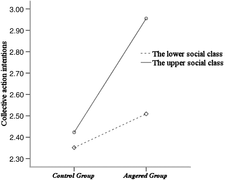
We conducted an ANOVA to examine the interaction effects of group-based anger and social class on collective action intentions. The results suggest there was a significant group-based anger × social class interaction (F (1, 114) = 5.35, p = .022, partial η2 = .045). The effects of group-based anger (F (1, 114) = 18.19, p < .001, partial η2 = .138) and social class (F (1, 114) = 10.24, p = .002, partial η2 = .082) were also significant. Means (and standard deviations) of perceived anger, social class, and collective action intentions are presented in Table 3. The results of simple effects analysis yielded further interesting findings. For the lower social class, there was no significant difference in collective action intentions when they were angry and not angry (F (1, 114) = 2.06, p = .154, partial η2 = .02), and it was low in both cases. On the contrary, for the upper social class, the collective action intentions of different social classes differed significantly (F (1, 114) = 20.16, p < .001, partial η2 = .15). Specifically, participation intentions were higher for the upper than for the lower social class (see Figure 1), which was consistent with Study 1.
Means (and Standard Deviations) of All Variables

Interaction effects on collective action intentions.

General Discussion and Conclusion
Based on the social cognition theory with respect to social class, which suggests there are great differences in terms of thoughts, feelings, and behaviour between the upper social class and the lower social class (Manstead, Reference Manstead2018), we examined the relationship between social class and collective action intentions in China. We found that lower social class members tend not to participate in collective action even when angered by perceived unfair treatment. By contrast, upper social class members who are similarly angered do tend to participate in collective action. These results were consistent with our hypotheses, demonstrating that the relationship between group-based anger and collective action is moderated by social class.
Since most collective action in China is perceived to be caused by inequality, we explored the role of social class in collective action. In Study 1, we used a real-world scenario of opposition to the siting of a garbage station to investigate residents’ intentions to participate in collective action. Collecting data on their social class and their degree of anger at the garbage station's impending construction, we observed that group-based anger was positively correlated with collective action intentions, consistent with abundant prior studies of collective action (e.g., van Zomeren et al., Reference van Zomeren, Postmes and Spears2008). Moreover, social class was found to moderate the relationship between group-based anger and collective action intentions: upper social class members were inclined to take collective action, whereas members of the lower social class were not inclined to do so. Consistent with the social cognition theory, the results of Study 1 suggest that social class is an important variable when we consider the relationship between anger and collective action. When people feel angry at perceived unfair treatment, they may want to take collective action to protest; those who believe they can make a difference will likely take action, as demonstrated by the Study 1 findings for the upper social class; conversely, those who believe their resources are insufficient to make any difference are unlikely to pursue this course of action.
This is also similar to the dual pathway model of van Zomeren et al. (Reference van Zomeren, Leach and Spears2012), which suggests that group-based anger and group efficacy can coexist as two pathways potentially mobilising individuals to take collective action. To some extent, our study goes beyond the dual pathway model. According to our study's results, social class moderates the relationship between group-based anger and collective action intentions, which suggests a potential cumulative effect between the emotion pathway and the cognition pathway. This moderating effect may be explained by the social cognition theory with respect to social class. In our interpretation, the reason that lower class people are less motivated by their anger to form intentions to act collectively is because they perceive lower efficacy for it and are less empowered to act; it must, however, be acknowledged that this interpretation has not been tested in our present study. Whatever the mechanism, finding that the effect of emotion may be aggravated by social class is a potentially important contribution to the theory of collective action and may inspire future research.
Study 2 then examined the relationship between social class and collective action intentions through experimental research. Its results also suggested that the relationship between group-based anger and collective action intentions is moderated by social class. Specifically, participation intentions were higher for the upper than for the lower social class, which was consistent with Study 1. Thus, Study 2 not only compensates for Study 1’s limitations but also provides further evidence for the relationship between social class and collective action. Regardless of the characteristic traits of one's class, experiencing even a momentary increase or decrease in relative social class will influence an individual's collective action intentions. Of course, one limitation of Study 2 is that there may be confounders in the class manipulation other than social-class-based social cognition differences. For instance, the ‘low’ class condition might simply be an additional, unrelated distraction or grievance that reduces the extent of participants’ intentions to act on anger about the facilities: In effect, it gives them something else to be concerned about. This may be an interesting question for future research to explore.
The results for both studies suggest that lower social class members are unlikely to take action to protect their interests. Thus, a key contribution of our research is the finding that social class influences collective action intentions. Compared with the upper social class, the lower social class experience a greater sense of relative deprivation and have less resources to mobilise (Greitemeyer & Sagioglou, Reference Greitemeyer and Sagioglou2016); so, even when angered by perceived unfairness, they are unlikely to take collective action.
Taken together, the present study has expanded understanding of social class and collective action, finding that individuals’ social class influences their collective action intentions. Compared with the lower social class, upper social class members are more inclined to participate in collective action to safeguard their rights and interests. This is consistent with previous research on collective action (e.g., Tausch et al., Reference Tausch, Becker, Spears, Christ, Saab, Singh and Siddiqui2011), which has suggested a positive relationship between group efficacy and collective action. In sum, this research identified a difference in behavioural tendency between different social classes, thereby elucidating the relationship between social class and collective action in the unique political and cultural context of China. Such work could enhance understanding of collective action in China, which would be very useful for social management and policy making.
Despite these contributions, our two studies have some limitations. First, we measured collective action intention as a proxy for collective action participation, which is not ideal, though it is has been found useful and effective in prior studies (de Weerd & Klandermans, Reference de Weerd and Klandermans1999). Future studies should explore implicit or direct measurement of collective action. Second, regarding collective action intentions, our measure only concerned normative collective action, namely that which conforms to social norms of acceptable behaviour. Some prior studies have demonstrated that lower social class members prefer to take non-normative collective action. For example, its members are more likely to participate in destructive competition and even in protest actions, such as organising a petition, marching, or going on strike (Halevy, Chou, Cohen, & Bornstein, Reference Halevy, Chou, Cohen and Bornstein2010; Schmitt, Maes, & Widaman, Reference Schmitt, Maes and Widaman2010). Future studies could investigate the role of collective action type, aiming to provide further evidence about the relationship between social class and collective action. Third, we did not examine the roles of group-based efficacy, frustration, or other emotions, which may be important factors in explaining the moderating role of social class. Future studies could examine whether (and how) group efficacy mediates the relationship between social class and collective action, and what roles are played by frustration or other emotions.



 Open access

