


Introduction
People who perceive inpatient mental health care negatively are more likely to require a further admission under a legal sanction (Csipke et al. Reference Csipke, Flach, Mccrone, Rose, Tilley, Wykes and Craig2014; van der Post et al. Reference Van Der Post, Peen and Dekker2014) such as the English Mental Health Act (MHA). Those subsequently readmitted also have poorer therapeutic relationships and service engagement and their admissions tend to be longer by about 70 days and are therefore more costly (Williams et al. Reference Williams, Csipke, Rose, Koeser, Mccrone, Tulloch, Salaminios, Wykes and Craig2014). Given that engagement and therapeutic relationships are important for all patient outcomes, improving the experience of inpatient care is a key target for all, but particularly for those who do not accept inpatient services and are admitted involuntarily under an MHA legal sanction. Long before the Francis Report (Francis, Reference Francis2013) highlighted grave shortcomings in inpatient care, concerns had been raised about the poor quality of services in mental health. The most recent report by the UK Care Quality Commission (2015) painted a bleak picture of mental health inpatient care, particularly the increasing numbers of people detained and compulsorily treated. This cycle of poor perceptions of inpatient care and increasing numbers of people compulsorily treated might be broken if we can find cost-effective ways to improve the inpatient therapeutic environment, which then has an effect on patient perceptions.
Many patients and frontline staff themselves complain about the quality of psychiatric inpatient care, often citing the concern that there is very little to do which results in intense boredom (Mind, 2017, Ward Watch: Mind's campaign to improve hospital conditions for mental health patients, Star Wards, 2014). This is not a purely UK phenomenon as professional organisations and patient advocacy groups internationally (e.g. Mental Health Council of Australia, US National Alliance on Mental Illness) recommend that patients should have access to 4 h/week of therapeutic activities in inpatient settings in addition to one-to-one staff contact (Cresswell et al. Reference Cresswell, Beavon and Robinson2014). Our earlier cross-sectional study (Csipke et al. Reference Csipke, Flach, Mccrone, Rose, Tilley, Wykes and Craig2014) of patient perceptions of ward care found that activity and one-to-one sessions with staff were associated with better perceptions of care. Like others we also found, unsurprisingly, that satisfaction with care was poorer in those who were compelled legally to accept inpatient care (Katsakou et al. Reference Katsakou, Bowers, Amos, Morriss, Rose, Wykes and Priebe2010; Smith et al. Reference Smith, Roche, O'loughlin, Brennan, Madigan, Lyne, Feeney and O'donoghue2014; van der Post et al. Reference Van Der Post, Peen and Dekker2014). Although there have been some successful attempts at introducing activities (Hansen & Slevin, Reference Hansen and Slevin1996; Dodds & Bowles, Reference Dodds and Bowles2001), nurses still report the primary reason for not spending time on therapeutic activities or direct patient contact is the need to resolve crises, increasing administration and their perception of a lack of skills necessary to implement evidence-based activities (Ward & Cowman, Reference Ward and Cowman2007; Seed et al. Reference Seed, Torkelson and Alnatour2010).
Our intervention consists of providing a supported staff training programme for evidence-based therapeutic activities. We thought that this may redress the skill shortage, build self-confidence in staff and encourage more staff contacts and activities. We hypothesised that all these effects should benefit patients’ perceptions of the therapeutic environment and that was also the view of our service user collaborators. The pathway from intervention to impact is complex by including improvements in staff morale, changes in activities, provision of opportunities for patients to attend as well as effects on patients themselves. None of these effects are mutually exclusive. We therefore tested the simple effect of whether staff training changes patient perceptions of the therapeutic environment. Because patients who had been admitted under a legal section have much poorer perceptions of care and poorer outcomes, we specifically hypothesised that the staff-training intervention would have effects on the perceptions of this group.
The study aims were:
-
• To investigate patient perceptions of ward care following staff training and support for ward-based therapeutic activity and specifically investigate the effects on involuntarily admitted patients.
-
• To examine the impact of the programme on patients’ perceptions of the amount of care received, particularly those admitted involuntarily.
-
• To examine the costs of this care.
Methods
Study design and participants
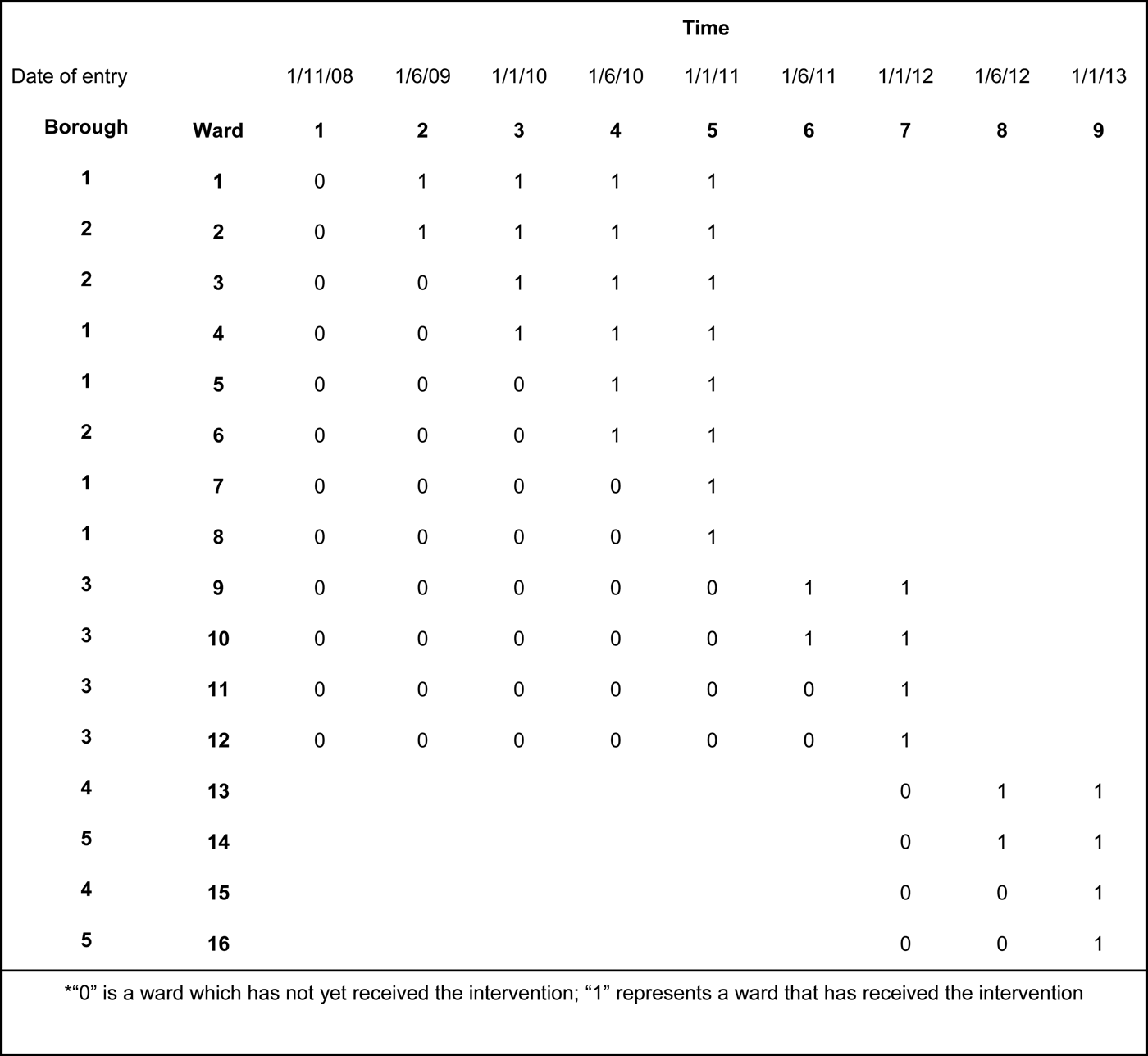
The study was a stepped wedge design (Hayes & Moulton, Reference Hayes and Moulton2009), which is a type of cluster randomised trial where the timing of the intervention is randomised so wards randomised to receive staff training remained in the intervention arm subsequently. All participants entered the dataset once only even if they were readmitted during the study and so provided only one set of data in either the pre- or post-intervention period. They were unaware of the condition to which they were allocated, so all main outcomes were blind rated. Wards were sampled 3, 5 or 7 times (see Fig. 1). Patients were eligible if they could communicate in English, had been on the ward for a minimum of 7 days and could provide informed consent. The only exclusion criterion was previous participation in the trial. We endeavoured to recruit 50% of all eligible patients at the time of data collection. This study was carried out in distinct geographic areas (‘Boroughs’) and details are given in panel 1. Ethical approval was granted by Bexley and Greenwich Research Ethics Committee (Ref: 07/H0809/49).
Intervention schedule*
The setting

Randomisation and masking
Wards were randomised two at a time to the intervention, which for pragmatic reasons was performed in three waves (eight wards in first wave, four in the second and four in the final wave). Randomisation was carried out separately within boroughs by an independent statistician using the ralloc procedure in Stata. After baseline, the first two randomised to intervention wards received staff training, with a further two wards randomised every 6 months until all wards had received the training (see Fig. 1).
Outcomes
Participant level data
Main outcome
Views on inpatient care (VOICE; Evans et al. Reference Evans, Rose, Flach, Csipke, Glossop, Mccrone, Craig and Wykes2012) is a 19-item multi-faceted self-report measure developed with service user involvement via participatory methods with good reliability and validity. VOICE measures trust and respect received from ward staff as well as therapeutic contact and care. The main outcome is the total score (range 19–114) where higher is a worse perception of care.
Secondary outcome
Service satisfaction scale: residential services evaluation (SSS-Res; Greenfield & Attkisson, Reference Greenfield and Attkisson1989, Reference Greenfield, Attkisson and Maruish2004). SSS-Res is a 33-item measure that concentrates more on the physical environment than VOICE and has been used in other studies of inpatient care (e.g. Osborn et al. Reference Osborn, Lloyd-Evans, Johnson, Gilburt, Byford, Leese and Slade2010). The key outcome was the total score (range 33–165) and again a high score is a worse perception.
Other clinical measures
-
(i) Positive and negative syndrome scale (PANSS; Kay et al. Reference Kay, Fiszbein and Opler1987): All trained raters achieved parity with the key expert rater on a ‘gold standard’ video (item scores within 2 points on 80% of the items). The key outcome was the total score (range 30–180).
-
(ii) Nurses Observational Scale for Inpatient Evaluation (NOSIE; Honigfel et al. Reference Honigfel, Gillis and Klett1966) is a 12-item nurse rated scale focusing mainly on socially unacceptable behaviour in an individual patient over the past week. The key outcome was the total score (range 0–44) and a higher score is worse behaviour.
Resource measures
Client services receipt inventory-inpatient (CITRINE; Sabes-Figuera et al. Reference Sabes-Figuera, Mccrone, Sharac, Csipke, Craig, Rose, Pearman and Wykes2012) assesses, by patient report, how much meaningful contact was made with ward staff and their engagement in activities over the past week, which enables the calculation of the cost of such engagement using unit cost data (Curtis, Reference Curtis2012).
Descriptive data
Participant's background information included age, gender, ethnicity, primary diagnosis, first language, length of stay (up to entry into the study) and whether they were detained under a legal sanction. Ward level data: In addition to the average acute psychiatric problems experienced by patients in a ward (indexed by the average NOSIE and PANSS scores), we also captured the number of ward activities and how many individuals attended these from evidence logged by the ward and compared average frequencies before and after the intervention.
Staff-training intervention
Following consideration of NICE guidelines and with a consultation team consisting of trust clinical leads, ward managers and nursing staff directly involved with each ward, eight activities were chosen, based on evidence of feasibility and acceptability to ward staff, and where training input was relatively modest and usually available in the NHS. Not all interventions could be provided on a single ward at the same time, so four were chosen by the consultation team to be core training. The staff training sessions involve different health care professionals and were provided when those staff were available. Training offered to all wards: (i) Social Cognition and Interaction Training (Penn et al. Reference Penn, Roberts, Combs and Sterne2007), (ii) CBT-based communications training for nurses (co-facilitated by a service user educator) and (iii) computerised Cognitive Remediation Therapy (to involve Occupational Therapists) (Reeder et al. Reference Reeder, Pile, Crawford, Cella, Rose, Wykes, Watson, Huddy and Callard2016), (iv) Pharmacists were recruited to run medication education groups (Kavanagh et al. Reference Kavanagh, Duncan-Mcconnell, Greenwood, Trivedi and Wykes2003). Ward staff could choose more sessions according to individual ward needs from: Hearing Voices Group (Ruddle et al. Reference Ruddle, Mason and Wykes2011), Emotional Coping Skills Group (Linehan, Reference Linehan1997), Problem Solving Skills (Grey, Reference Grey, Radcliff, Carson, Hajek and Manor2015), Relaxation/Sleep Hygiene and Coping with Stigma Group (Knight et al. Reference Knight, Wykes and Hayward2006). The staff training intervention was provided after randomisation and was both off site and in vivo. Following the training workshops the trainer, a clinical psychologist, provided supervision during the intervention period, which consisted of weekly visits initially but then reduced and depended on the activity and the staff skills. Most supervision had been completed 6 months after the initial training workshop. Details of the staff training can be found in online web Table 1 and training materials can be found on the study website (http://www.perceive.iop.kcl.ac.uk/).
Procedures
Researchers approached all eligible patients and participants gave written informed consent. Recruitment lasted for a period of 4 weeks at each assessment point.
Statistical power and analysis
The assumed total number of measurements was 16 wards with 15 patients per ward sampled over three time points as a minimum after baseline, i.e. a total of 720. As an approximation, we treated the design as a standard cluster randomised trial with clusters of size 30 (two wards of size 15 were randomised in pairs) with an estimated intraclass correlation of 0.05 following a conservative approach using data from Adams et al. (Reference Adams, Gulliford, Ukoumunne, Eldridge, Chinn and Campbell2004).This sample size in a standard cluster randomised design would have given approximately 90% power to detect a standardised effect size of 0.5 (moderate), using double-sided significance tests with α = 0.05. (There was no additional clustering at the patient level as the sample differed at each time point). Because of the stepped wedge design, the actual number of wards and participants in the intervention and control groups varied according to time point, so the above calculations are approximate, but were designed to be conservative.
Effects directly on patients
For all measures obtained by self-report it was a requirement that at least 80% of the questions were completed to be included.
(i) Individual patient participants: We ran two analyses for all primary and secondary outcomes using linear regression adjusting for time and ward as fixed effects and then we additionally adjusted for any identified confounders (defined as a variable associated with both treatment and the outcome with a p value < 0.1. Potential confounders considered were gender, age, ethnicity, diagnosis, number of previous admissions, inpatient days on current admission and involuntary admission).
(ii) Potential moderators of outcome: We investigated interaction effects on the intervention outcome for voluntary patients and involuntarily admitted patients and two other variables identified a priori to be associated with VOICE (Wing & Brown, Reference Wing and Brown1970; Evans et al. Reference Evans, Rose, Flach, Csipke, Glossop, Mccrone, Craig and Wykes2012; Csipke et al. Reference Csipke, Williams, Rose, Koeser, Mccrone, Wykes and Craig2016) (gender, ethnicity).
(iii) Activities and perceived contacts: We first compared the average numbers of activities and numbers of participants before and after the intervention and accounted for ward effects using a fixed effects framework. Then, to corroborate the staff data, we analysed activities data collected in CITRINE using similar analyses. The fixed effects model was used to take account of ward effects. Standard errors were generated using bootstrapping with replacement due to the non-normal data distribution and we tested for the effects of potential moderators, e.g. PANSS scores.
Intervention costs and changes in resource allocation costs
The training costs associated were estimated as the cost of employing a clinical psychologist to lead the training and the opportunity cost of nurses and occupational therapists attending training. In order to calculate cost per patient week, we assumed that the longevity of the treatment was equal to the average follow-up time in the trial. While the intervention did not alter the resources allocated to the wards, we investigated how the composition and frequency of perceived staff contacts changed by multiplying the service use information collected using CITRINE by the respective salaries and used the total cost as a summary measure. Our regression analysis followed the same format as the analysis of patient data, but to allow for skewness and kurtosis we calculated bootstrapped standard errors.
All analyses were carried out using Stata versions 11 and 12.
Patient involvement
The study was designed with the help of service users who were also involved in the study design, implementation, analysis and dissemination of the results, e.g. in the design of the primary outcome (Evans et al. Reference Evans, Rose, Flach, Csipke, Glossop, Mccrone, Craig and Wykes2012).
Results
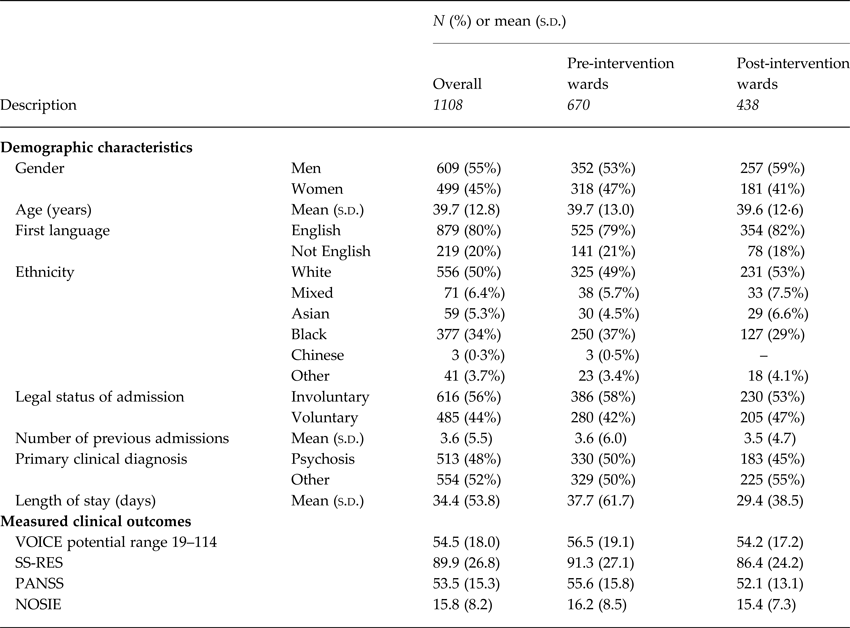
Data were available from 1108 participants who took part either before or after the intervention and were 70% of the population eligible to participate at the time of the assessments (see CONSORT diagram in Table 1). A total of 1058 (95.5%) individuals provided enough data for the analysis of the primary outcome. The characteristics of the patients in the wards were not different in the pre- and post- intervention samples (see Table 2 and online Web Table 2 for each of the 16 wards). The intervention consisted of 826 staff attending training sessions with a mean per ward of 51.6 staff attending (s.d. 19.4). The number of sessions varied depending on staff available on the ward (range 24–81 sessions).
Study population and recruitment (CONSORT)

Demographic and clinical characteristics of participants
Primary outcome – Did patients’ perceptions of care improve following the staff training intervention?
A total of 644 service users provided data pre-intervention and 414 post-intervention. A regression model adjusting only for ward and time estimated the standardised intervention benefit as 0.19 (mean VOICE score pre-intervention = 56.5, s.d. = 19.1, n = 644; mean post-intervention = 54.2, s.d. = 17.2, n = 414). The only confounder identified was legal status (an a prior moderator) and the adjusted model provides weak evidence for benefit (standardised effect −0.18, 95% CI 0.38 improvement to 0.01 deterioration, p = 0.062). We found two other effects (independent of treatment or ward); a deterioration in VOICE score over time by 0.06 s.d. per month (95% CI 0.01–0.12; p = 0.021) and, over the whole trial, voluntary patients were more positive about the ward environment than involuntary patients by 0.27 s.d. (95% CI −0.40 to −0.15, p < 0.0001).
Effect of coercion admission status (voluntary v. involuntary) and other potential moderators
There was a significant interaction only with legal status (p = 0.006), with good evidence that the intervention improves VOICE scores of people admitted involuntarily [standardised improvement of −0.35 (95% CI −0.12 to −0.57, p = 0.002)]. Among people in hospital voluntarily we found no evidence of an intervention effect (standardised effect = −0.01, 95% CI −0.23 to 0.22, p = 0.955).
Secondary outcome: satisfaction (SSS-RES)
A total of 1032 patients completed the measure [625 on pre-intervention wards (mean 91.3, s.d. = 27.1) and 407 on post-intervention wards (mean 86.4, s.d. = 24.2)]. A linear regression model suggested an intervention benefit of 4.15 points (95% CI −9.22 to 0.92; p = 0.109). As with the VOICE measure, there is good evidence (p = 0.005) for an interaction effect with legal status. For those who are compelled to accept treatment, the intervention benefit was estimated as −8.44 (95% CI −14.36 to −2.52; p = 0.005) but no evidence of a treatment effect in voluntary patients (0.61; 95% CI −5.39 to 6.60; p = 0.842).
Changes in resources
Ward activities
Using ward records, the mean number of activities increased post-intervention by 1.5 (95% CI −0.4 to 3.4, p = 0.121) from 6.3 to 7.8 and the average number of people attending increased by 6.3 (95% CI −4.1 to 16.6, p = 0.226) from 29.7. Of those patients who consented to be in our study there were increases in the average number of different activities attended following the staff training (from 2.14 activities by 0.59, 95% CI 0.02–1.22, p = 0.059) and in the number of sessions attended (from 4.14 session by 0.68, 95% CI −0.67 to 2.13, p = 0.320). There was no effect of any potential moderators including patient symptoms.
Costs
Intervention costs
The total training cost was approximately £ 1 56 000, amounting to £10 per patient per week given an average number of 18 patients per ward and an average post-intervention follow-up of 55 weeks (online web Table 2). Eighty per cent of this cost was due to the opportunity cost of nurses attending the training sessions.
Changes in resource allocation
The intervention resulted in increases in the cost summary for patient viewed meaningful contacts amounting to £12 per patient (95% CI −£76 to £98, p value: 0.774). There were no significant interactions of the intervention with potential moderators (PANSS scores, no of previous admissions, legal status and ethnicity).
Secondary effects on symptoms and behaviour
The means for both patient informed symptom ratings (PANSS) and Nurse rated behaviour (NOSIE) suggest improvements over time (see Table 2, online web Table 1), but neither was significant even after adjusting for potential confounders.
Discussion
We endeavoured to achieve improved perceptions of inpatient care in a sustainable way using a simple staff training programme for various evidence-based therapeutic activities. We believe that this training could have a number of beneficial effects on staff morale and confidence in their therapeutic skills that could well go beyond the delivery of any particular activity. Although there was only tentative evidence of an overall effect, we discovered a significant benefit for an important target group – those admitted under legal sanction. The wards we studied were representative of many serving urban and inner city areas with varied background socioeconomic factors but similar patient diagnostic characteristics and chronicity to those found in most mental health wards. We therefore have no reason to assume that the effects of staff training would be much different in other areas.
Our results were further validated by the significant positive effect on satisfaction, again for those patients who were legally detained. We achieved these effects despite staff training having only a modest impact on the day to day life of the wards. The extra costs of implementing the intervention were modest, amounting to £10 per patient per week. Although other costs were not increased at the ward level, there was a realignment following the intervention with patients receiving care that cost £12/week more. Whether these extra costs are justified or not depends on the value placed on improving patient perceptions among those legally detained.
The impact on wards is not unexpected since the association between social interaction, taking part in therapeutic activities and their impact on patient behaviour mirrors the effects of changes to mental health institutions in the 1960s (Wing & Brown, Reference Wing and Brown1970). Activities break up the monotony on wards (Walsh & Boyle, Reference Walsh and Boyle2009) and provide a forum for patient interaction (Csipke et al. Reference Csipke, Williams, Rose, Koeser, Mccrone, Wykes and Craig2016). Crucially they also distinguish a therapeutic environment from one that is purely about incarceration. All our wards already had a weekly activity schedule largely comprising activities such as cookery or bingo, that, while valued (Star Wards, 2014), were not evidence based therapeutic interventions advocated as best practice (e.g. Sainsbury Centre for Mental Health, 2004; Walsh & Boyle, Reference Walsh and Boyle2009; NICE, 2010) or likely to be perceived as such by patients. Our nurses were trained to deliver a number of evidence-based activities, but we had no control over the number of sessions that were run. Patient reported activities did increase with some groups replacing existing non-evidence-based ones and the number of valued contacts and activities did increase at little cost. In light of that, increasing the mean number of activities from 6 to 8 may be considered a success.
The most important impact is on patients themselves. Previous studies demonstrated deterioration in inpatient care as viewed by patients (Wing & Brown, Reference Wing and Brown1970) and this was noticeable in this study. It is unclear why this has been the case, but there are links to shorter hospital stays, compulsory admissions and increased disturbance (Laker et al. Reference Laker, Rose, Flach, Csipke, Mccrone, Craig, Kelland and Wykes2012; Csipke et al. Reference Csipke, Flach, Mccrone, Rose, Tilley, Wykes and Craig2014; Williams et al. Reference Williams, Csipke, Rose, Koeser, Mccrone, Tulloch, Salaminios, Wykes and Craig2014). It is therefore gratifying that there was a measurable, albeit subjective, benefit for those patients who were legally detained thus bucking the general trend. Patients who agree to accept inpatient treatment already consider the ward to be of therapeutic value so they are unlikely to view the modest impact on the wards as a large improvement. Those who are legally detained are more critical of inpatient services. Changing their views is very important as it may affect future interactions with mental health services and perhaps even the potential to avert a future compulsory admission (Laker et al. Reference Laker, Rose, Flach, Csipke, Mccrone, Craig, Kelland and Wykes2012; Theodoridou et al. Reference Theodoridou, Schlatter, Ajdacic, Rossler and Jager2012; Care Quality Commission, 2014, 2015; van der Post et al. Reference Van Der Post, Peen and Dekker2014). Viewing the ward as more therapeutic may also affect recovery, but this study was not designed to test this possibility.
An often repeated justification by ward staff for not running activities is that people are too ill to take part. Symptom severity did not influence increased group attendance suggesting that patients can benefit from the provision of increased activities even if they have higher symptoms.
Ward staff were given choices about what they provided so that the intervention training fitted their patient mix, their current activities and their skills set. Both these factors ensured that the interventions were more valued, clinically useful and feasible for long-term use.
Strengths and limitations
We tested the impact of training in highly charged mental health services in two NHS trusts situated in both poor and more affluent areas. The strengths of the study included measuring the intervention effects through large-scale patient evaluation and involved more than 70% of the eligible population. In addition, participant characteristics were tested as potential individual patient confounders and controlled in the analyses. Finally, the training provided was available in the NHS. However, we do not know if every patient would benefit from the intervention as not everyone on the ward who was exposed to the intervention consented or was eligible to take part. We do know that the benefits were not affected by the severity of symptoms. So we do not know what proportion of patients on those wards will benefit or the way to increase the likelihood of those benefits.
A further strength was to examine the longer term impact of these interventions when implementation was under staff control as suggested in the MRC process evaluation model for complex interventions (Theodoridou et al. Reference Theodoridou, Schlatter, Ajdacic, Rossler and Jager2012). A limitation is that we analysed only the intention-to-treat effects of providing an intervention (training staff) on the outcome (change in patient perceptions of the ward). But there are likely to be more routes to improved patient perceptions, including the effect of the activities themselves on a patient's sense of wellbeing. We did not assess any single intervention, so we do not know if some were more effective than others and we did not test the effects of individual exposure. Rather we measured the effects of a simple package of training which provided activity opportunities, but patients were not obliged to attend.
One of the most common complaints about inpatient services is the extreme boredom and lack of therapeutic activities occurring on the wards (e.g. Wing & Brown, Reference Wing and Brown1970; Walsh & Boyle, Reference Walsh and Boyle2009; Theodoridou et al. Reference Theodoridou, Schlatter, Ajdacic, Rossler and Jager2012; Care Quality Commission, 2014, 2015; Csipke et al. Reference Csipke, Williams, Rose, Koeser, Mccrone, Wykes and Craig2016). Participation in activities was related to more positive perceptions of the wards demonstrating that they can be a much valued component of inpatient services regardless of illness severity. This belies the belief that acutely ill people cannot take part in meaningful activities and supports the view that more therapeutic activities could be of value and are appreciated.
In conclusion, we discovered that with only a relatively small amount of investment in training for inpatient staff it was possible to measure improvements in the views of those who were coerced into receiving inpatient care through involuntary admissions even some considerable time after the intervention had been introduced. The effect of improved quality of care has now been linked to patient views for the first time. There is no evidence as yet that we had an effect on those voluntarily admitted, but it is possible that there are other mediators or moderators of the relationship between the intervention and the outcome that might explain this current lack of direct effects. The improvement for those involuntarily admitted was produced with little effect on the costs of care. We speculate that other potential gains following the improved patient perceptions may be better engagement with mental health services in the involuntarily admitted group. Using data gathered in an earlier study, if the better engagement results in only seven patients (95% CI 6–8, <1% of the current sample) agreeing to a voluntary rather than an involuntary admission then the cost of the training programme would be covered (Moore et al. Reference Moore, Audrey, Barker, Bond, Bonell, Hardeman, Moore, O'cathain, Tinati, Wight and Baird2015) by the savings from shorter admissions. This will be investigated in future analyses. This is the first reported significant method for improving the inpatient experience since the UK Francis Report (Francis, Reference Francis2013) and shows that with some investment it is possible to improve mental health patients’ views of their care – particularly those who clearly have not had a rosy view and therefore were coerced into receiving that care through legal detention in hospital.
Supplementary material
The supplementary material for this article can be found at https://doi.org/10.1017/S003329171700188X.
Acknowledgements
Professors Diana Rose, Tom Craig & Til Wykes also acknowledge the financial support of the NIHR Biomedical Research Centre for Mental Health, South London and Maudsley NHS Foundation Trust/Institute of Psychiatry, Psychology and Neuroscience (King's College London). In addition, Professor Wykes acknowledges her NIHR Senior Investigator Award. This article presents independent research funded by the National Institute for Health Research (NIHR) under its Programme Grants for Applied Research scheme (RP-PG-0606-1050). The views expressed in this publication are those of the authors and not necessarily those of the NHS, the NIHR or the Department of Health. Funded by NIHR Applied programme grant PGfAR RP-PG-0606-1050.
Contributors
All authors contributed to drafts of this report and had full access to all data. TW, the principal investigator, conceived the study, prepared the protocol, contributed to the training and supervision of the researchers, and took the lead on writing this report. She is the guarantor for the study. EC was the trial manager. She supervised and coordinated recruitment, had overall responsibility for the day to day running of the study, contributed to training of research staff, and was responsible for staff management and overall coordination of the study. TC and DR helped conceive and design the study. DR took the lead on the development of the main outcome measure. PW and SN were the trial statisticians. They advised on randomisation and all statistical aspects of the trial, developed the analysis plan, and performed the statistical analyses. PC and LK were the trial health economists. Trial Registration: ISRCTN 06545047. Study website: http://www.perceive.iop.kcl.ac.uk/


 Open access

