Introduction
Recent health reforms in the United Kingdom have focused on a shift in the provision of services from secondary to primary care and this has had a direct effect on the professionals working in this setting. Practice nurses are one group that has adapted their role to accommodate new policy (Rashid, Reference Robson2010). In the United Kingdom, doctors working in general practice usually employ practice nurses directly, in contrast with other parts of the health system where doctors and nurses are usually employed by the National Health Service (NHS) organisation in which they work. This means that general practitioners (GPs) directly influence the work undertaken by practice nurses in order to achieve the best health outcomes for their registered patient population and to ensure the success of their business. This research study explored the particular effects that this arrangement had on the definition and development of the nurse’s role in an area of nursing that has developed somewhat separately from more mainstream nursing specialties. The last two decades have seen a dramatic increase in the number of nurses working in general practice and the scope of their role has also broadened (Burns, Reference Burns2009; Lovett-Clements, Reference McCarthy, Cornally, Moran and Courtney2010). NHS policy has resulted in an increase in the services offered in a primary care setting particularly for long-term conditions (Aldridge, Reference Aldridge2004). Much of this work has been undertaken by nurses, adding to a general increased delegation to nurses of work previously undertaken by GPs (Williams and Sibbald, Reference Williams and Sibbald1999; Schum et al., Reference Sheikh, Khan-Wasti, Price, Smeeth, Fletcher and Walker2000; Griffiths et al., Reference Griffiths, Foster, Barnes, Eldidge and Tate2004). There are wide variations in roles, employment conditions and qualifications among this group of nurses (Atkin and Lunt, Reference Atkin and Lunt1993; Poulton, Reference Poulton1997; Longbottom et al., Reference Lovett-Clements2006) and as they all work for different employers, there is no collective mechanism for monitoring the possible effects of this. There is no regulation about the level of educational preparation required for the role, which may have implications in terms of competency to practise (NMC, 2011) and this has been noted as a risk both in the United Kingdom and other countries (Ross, Reference Schein1999). Current recruitment challenges in general practice and an ageing GP workforce heighten the need for skilled practice nurses to support primary care (Health Education England, 2014).
The literature confirms widespread agreement about the need for effective professional development support as a way of maintaining competence in role evolution and therefore ensuring the highest standards of care (Happell, Reference Happell2004; Hyde et al., Reference Jones, Jimmieson and Griffiths2006; DH, 2007; Sheikh et al., Reference Sherlock2007). This is the professional responsibility of all registered nurses (NMC, 2008); however, there is international evidence of poor access amongst general practice nurses to the support required to maintain professional development and barriers such as financial and organisational issues have been identified (Sherlock, Reference Spreitzer2003; Happell, Reference Happell2004; Longbottom et al., Reference Lovett-Clements2006; Hoare et al., Reference Hsieh and Shannon2012; McCarthy, 2014). The underlying reasons for these barriers warrant investigation, as there may be implications for the quality of patient care. The literature suggests reluctance amongst practice nurses to access development opportunities, particularly if they perceive a risk to maintaining the status quo with their GP employers (Thompson, Reference Williams and Sibbald1999; Paniagua, Reference Patterson2003; Crossman, Reference Crossman2006). A national UK survey conducted in 2006 (Crossman, Reference Crossman2008) and more recent research in Australia and Ireland (Halcomb et al., Reference Halcomb, Salamonson, Davidson, Kaur and Young2014; McCarthy et al., Reference McCarthy, Cornally, Moran and Courtney2012) highlighted apparently persistent and unresolved problems for practice nurses around control over shaping their own role, achieving a shared view between nurses and GPs about the current and future role development, related clinical competence supported by continuing professional development and access to the resources required to achieve this. A survey of Australian practice nurses in 2000 found that their role was constrained by GP authority to delegate, isolation from the wider nursing profession, access to professional development and noted the practice nurses passive acceptance of these conditions (Patterson, Reference Poulton2000). Halcomb et al. (Reference Halcomb, Patterson and Davidson2006) described the ‘small business’ structure of Australian general practice, similar to the primary care model in the United Kingdom, as the main constraint determining practice nurses’ ability to develop their role, owing to the degree of influence exerted by the GPs. Further, Hoare et al. (Reference Hsieh and Shannon2012) argue that the growth of practice nursing as a career choice has been limited by the lack of a career pathway in New Zealand and Australia and the absence of a national quality framework for general practice in both countries. It appears that there are common features internationally for nurses employed in general practice, particularly those where the primary care model is similar to that in the United Kingdom. There is a shared view that these constraints should be more fully investigated and addressed to optimise the effectiveness of the primary care workforce (Halcomb et al., Reference Halcomb, Salamonson, Davidson, Kaur and Young2014).
The aim of this research study was to discover what practice-level factors might influence practice nurses to use opportunities, to develop their professional role, to explore perceived barriers and seek explanations about them. Two research questions were posed:
∙ What factors affect practice nurse role development?
∙ How do these factors affect practice nurse role development?
Method
A case study design was used to investigate the factors perceived by practice nurses, GPs and practice managers as influencing practice nurse access to professional development opportunities.
Yin defines case study research as:
‘An empirical inquiry that investigates a contemporary phenomenon within its real life context, especially when the boundaries between the phenomenon and context are not clearly evident, but are highly pertinent’.
(Yin, Reference Yin2008: p. 13)
Case study was considered the most appropriate method because the research was exploratory in nature and the subject under investigation involved complex inter-relationships between a range of factors, which could not be quantified or manipulated. A case study can be characterised as being of single design (providing data about only one case), or multiple design, providing some variation in contextual conditions between cases and therefore strengthening the transferability of findings (Gerring, Reference Gerring2007; Yin, Reference Yin2008). The design for this research was a multiple holistic case study, as it explored cases in several different contexts and included all relevant environmental factors.
The sampling strategy for the data collection was non-probability purposive sampling in order to collect the greatest possible amount of information, including the specific context because the purpose was to explore in detail the inter-relationships between factors. The case selection for this study followed the approach termed by Gerring (Reference Gerring2007) as a ‘diverse’ case, whereby cases display the full range of variation on the variables of interest. Selecting cases where these variables are present or absent allows for possible inference about their effect, by comparing data obtained in each context. The unit or case was the practice in which each nurse was employed and the cases were selected purposively to provide varied characteristics. Based on previous research (Crossman, Reference Crossman2008), which identified that the size of a practice and the role and length of experience of the practice nurse might affect their opportunities for role development, these variable combinations are illustrated in Table 1.
Case variables
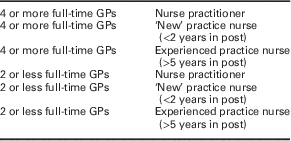
Six practices were selected to produce the full range of variables and the participants for data collection within each case were a practice nurse, a GP and a manager, who were able to provide highly pertinent contextual information to each case. Each nurse was from a different employing practice and in order to be included in the case study they had to:
∙ be a registered general nurse employed by a general practice in the county;
∙ volunteer to participate; and
∙ demonstrate agreement with their practice manager and a GP to also participate.
Once the six cases were selected, each case had a profile of further characteristics compiled, which included:
∙ the combined Quality Outcomes Framework practice score, to explore whether there might be a link between practice nurse role development and practice performance; and
∙ whether or not the practice trained GPs, to explore whether a willingness to train GPs influences the level of practice nurse professional development support opportunities.
These characteristics provided a fuller profile of each case for comparison purposes. The potential participants were approached initially by letter, enclosing an information pack including a Participant Information Sheet sent out by the Primary Care Trust (PCT) to protect the confidentiality of their personal details. They were invited to indicate their interest in participating by completing and returning a reply slip signed by the three potential participants in their practice. The first reply that met the criteria for a case was selected, until six cases fulfilling the range of required characteristics were identified. The researcher contacted each case by telephone, confirming that they had been selected and arranging a date for the interviews. Beyond the six practices, three key commentators were interviewed to provide a broader perspective. These included a PCT practice nurse lead, a nurse educationalist from the relevant higher education provider and a professor of primary care, who was also a Local Medical Committee practice nurse advisor and therefore well informed about national professional and political considerations that influence the subject under investigation.
Case studies benefit from a variety of different data sources and collection methods. Typically, they might include audio-recorded interviews, either structured or semi-structured, observations and secondary sources such as archive documents or previous research (Yin, Reference Yin2008) depending on an assessment of the best form of information to address the questions being posed. In this study, observations were not considered an appropriate method as the data required were not about what the nurses did per se; it was about how their work was defined, developed and supported. Interviews were chosen as the source of data collection, using a semi-structured schedule to ensure that all topics of interest identified from the literature were covered and an open questioning style was used to allow the participants to raise relevant additional topics, thereby providing a large volume of data and minimising problems of data omission bias owing to limited structured questions (Robson, Reference Ross2011). Audio-recorded interviews lasting ~1 h were conducted and each participant was interviewed once by the researcher in a location of their choice.
All interview transcripts were sent to participants after the interview, for them to check the accuracy and make any amendments. This participant corroboration is one method of enhancing the trustworthiness and accuracy of data (Lincoln and Guba, Reference Longbottom, Chambers, Rebora and Brown1985; Yin, Reference Yin2008). The National Research and Ethics Committee approval process was followed. The case study protocol was submitted to the local Research Ethics Committee and approval was granted on 29 January 2010. Participants were given information about the study including the scope and potential consequences of their involvement before being asked to sign a consent form.
The proposed six cases were successfully recruited to the study and the profile of the cases selected met the inclusion and sampling criteria fully. There was a mix of experienced and new practice nurses and nurse practitioners, the practices were of varying sizes and rurality, and half were GP training practices (see Table 2).
Practice profiles
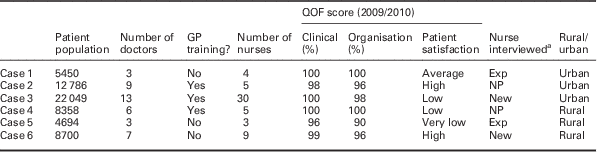
QOF=Quality Outcomes Framework.
a Exp=>5 years experience, new=<2 years experience, NP=nurse practitioner.
A total of 21 face-to-face interviews were conducted between April 2010 and March 2011. All interviews were transcribed verbatim and imported into the ‘NVivo’ (QSR International, 2008) software program. The analysis strategy for text data used throughout the research was qualitative content analysis, an approach used to interpret meaning from the content of text data using a systematic classification process of coding and identifying themes or patterns (Hseih and Shannon, Reference Hsieh and Shannon2005). Study data were first classified by a group of words or statements that related to the same central meaning and were assigned a code that described them. Once all the transcripts were coded, the resultant text excerpts in each code were examined to ensure that there was consistency between them in interpretation and that they all fitted the code. The codes were then grouped into nine higher themes to allow for interrogation of the data in a manageable form. This process was scrutinised by two research colleagues. The nine themes drawn from the data encompassed a range of factors affecting practice nurse role evolution, with varying emphasis on these between participants and cases. The themed data were analysed and compared to explore similarities and differences within each professional group, across professional groups, within each case and across all cases. Through this process a methodical and thorough investigation of the data was achieved, including an intensive qualitative exploration of each participant. In addition, three types of practice culture, all resonating with Handy’s (Reference Handy1993) leadership and management ‘styles’, were identified in the cases:
∙ Autocratic – a top-down dominant use of power.
∙ Bureaucratic – a hierarchy of delegated power.
∙ Democratic – shared power and decision making.
Results
The nine themes drawn from the data encompassed a range of factors affecting practice nurse role development, with varying emphasis on these between participants and cases.
Professional issues
The data in this theme covered a range of issues that could broadly be described as relating to the professional code of conduct to which all registered nurses must adhere (NMC, 2011). Participants described the variable nature of the practice nursing role and lack of clearly defined limits to it as creating dilemmas and tensions for nurses because it caused uncertainty about their clinical responsibilities. Examples of this were nurses undertaking tasks that they were not wholly competent to perform, which resulted in a breach of their code and potential harm to patients. A lot of emphasis was put on the unpredictable nature of practice nursing work by all professional groups and the difficulties in preparing adequately for this.
‘If you’ve got a doctor saying well I taught you how to do that and that should be enough and actually you’re feeling no it doesn’t feel safe …’
(PCT Nurse)
Roles
There were some concerns expressed about the lack of clarity associated with role distinction, with a blurring of roles between different professionals and the confusion that can cause for patients.
‘It is leading to a general kind of pushing of traditional nurse duties to non-nursing staff. I think that’s a really dangerous precedent if that’s the case. I’m not sure the public are completely aware of the level of training sometimes behind some of the staff’.
(PM1)
Nurse education
The view was expressed by most participants that practice nurse education was patchy and uncoordinated.
‘I don’t think they [universities] even know the need is there – I don’t think they think that it is … in their remit and there’s no one else who really feels it’s in their remit either’.
(PN1)
The lack of a mandatory set of standards around the training and employment of practice nurses was emphasised across all groups. Words such as ‘indefensible’, ‘should be enforced’ and ‘compulsory’ were used and most participants were puzzled by the fact that this situation was not regulated in some way.
‘I would put it in CQC in the future that’s where I would be … I would want to say it’s a minimum standard and you are performance managed against it’.
(PM6)
Several participants recommended that practices should be assessed against a set of good practice criteria to include training and employment conditions, suggesting that the Care Quality Commission accreditation would be an ideal tool to motivate and incentivise GPs.
Relationships
The topic of relationships was a key theme in terms of emphasis, with participants stressing the importance of strong relationships in general practice and giving examples of the consequences when this was absent. Feeling dominated by a GP had a very negative effect on nurses’ views about their sphere of influence, which produced apathy towards interacting with the GPs generally.
‘I know all three of us really do struggle with approaching the GPs’.
(PN6)
Empathy between GPs and staff varied across the patch. Where this was high, there was evidence of a unified team spirit with the nurse, GP and practice manager, all demonstrating high levels of commitment to the practice and support for each other. This tended to be a feature in practices that were more democratic in culture, where the nurses had a high degree of influence. There were some features mentioned as essential for good relationships including respect, communication and trust. In practices with very good communication and strong relationships the nurses perceived that they had support for role development and they felt able to request it.
‘You start to trust each other and are able to have a dialogue about what you are happy to do and what you’re not happy to do and often they are the best places to work really’.
(PN2)
Nurse characteristics
Discussion around the degree that an individual nurse’s attitude or personal characteristics might influence the way their role evolves generated a lot of data, which were unavoidably subjective but, nevertheless, provided insight into different participants’ perspectives. Many references were made to nurses’ personality traits and how these affected the way they engaged with their work. Positive characteristics described were high levels of motivation, aspiration, confidence and assertiveness, and actively using opportunities to develop skills with an interest in how this contributed to the changing demands on the practice.
‘She’s not domineering in any way but she knows her mind … and has confidence in herself … and pulls everything together’.
(GP2)
The expressed evidence of these characteristics included a willingness to take on new tasks, and ‘going the extra mile’ for the practice by working late to see patients rather than ‘clocking-off’. It also included nurses recognising and using opportunities to expand the scope of their work. Practical illustrations of this included seeking training opportunities and negotiating permission to attend; observing the way care was delivered and suggesting improvements; supporting other team members and working to enhance practice performance.
Organisational culture
Practice culture was mentioned by many participants as influencing the way that the nurse’s role developed and was supported. Some of this was to do with openness and approachability, with staff being confident they knew ‘how things worked’ and what level of support to expect. This was particularly positive where there was a ‘no-blame’ culture, where mistakes were used as a learning opportunity and peer support was strong. The degree of control exerted or freedom given to practice nurses was quite variable.
‘… they need to be told what to do and when to ask’.
(GP1)
‘… yes they have got a huge amount of freedom actually, huge. And quite a lot of power as well … we have a balance that shifted towards more power in our nursing team than perhaps it might be elsewhere’.
(GP4)
Management and planning
This theme concerned specific organisational systems and administrative processes that were in place to run the practice such as finance, team structure and communication methods, appraisal and study leave. There was wide variation between practices as to how formal these systems were, with some seeming to operate very hierarchical bureaucratic systems and others being quite unstructured. The relevance of practice size to procedural systems was a subjective issue, with those from large practices extolling the virtues of a big practice and those from a small one describing the benefits of those. Financial support for courses was variable across cases and was not the only factor in nurses feeling ‘supported’. One nurse had been sent on many courses and felt the practice had been very generous, yet she felt unsupported because there was no team spirit and inadequate communication and mentorship. Most GPs and practice managers commented on the need to prioritise funding for training in relation to financial pressures and the needs of the service. Most participants described identifying training needs through an appraisal process, although that did not always translate into actual provision of appropriate education. Several participants expressed concern about how to attract new nurses with a high proportion of current practice nurses reaching retirement age, no framework in place to educate nurses that may come from secondary care and no central process for coordination of recruitment.
‘Despite initiatives we seem to be in the same situation fifteen years on – how can we better prepare the next generation?’
(HE1)
Opportunities for innovation
Comments grouped into this theme encompassed descriptions of two types; situations that restricted development and therefore offered the potential for change and also positive opportunities as yet unrealised. Some of the obstacles to development that were identified provided insight into areas that practice nurses saw as limiting their opportunities. Referring to obstacles to change, many cited the independent contractor status of GPs as producing an individuality that characterises general practice.
‘You will get a different view from every different practice you talk to’.
(GP6)
Many different comments categorised as ‘drivers for change’ provided suggestions about innovative ways to influence and improve the development opportunities for practice nurses. These included:
∙ working with the Care Quality Commission on setting minimum standards for employment that are linked to practice accreditation;
∙ retaining freedom from NHS trust employment and aligning with medical deaneries for education along the lines of the GP registrar training scheme;
∙ financial incentives or contractual obligations for GPs linked to practice nurse professional development support;
∙ a nurse lead at the Department of Health representing non-NHS nurses; and
∙ establishing Clinical Commissioning Group (CCG) ‘schools of general practice nursing’ where the responsibility for funding and ensuring a local viable workforce is shared.
Perceived inequalities
The essence of the contributions grouped in this theme was perceived differences between practice nurses and other professionals, placing them at a disadvantage. This concerned aspects of employment conditions, the low professional influence of practice nurses, their lack of a collective voice and therefore ability to address inequalities such as not being entitled to ‘Agenda for Change’ terms. The comments were made predominantly, but not exclusively, by nurses and the context was the independent contractor status of general practice causing a lack of consistent structures and systems in place that could provide collective responsibility and uniform standards of employment such as holiday entitlement and paid study leave.
‘The fact there isn’t a formal set practice nurse job description and career pathway … it’s difficult for some nurses to get their heads round’.
(PN4)
Although this was the least often mentioned theme, it held some important clues as to the mindset of those practice nurses that felt less well supported, and therefore provided some insight into the challenges in providing education and professional development support for this group.
The analysis process across and within cases and professional groups revealed that the greatest similarities were to be found between participants in the same case and there appeared to be some commonality between some cases as opposed to others.
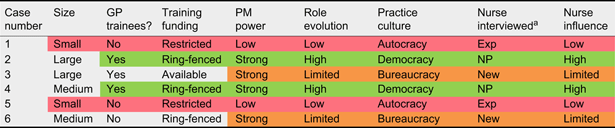
It became apparent that a pattern was present and there were associations between certain cases. A summary of the comparison of these characteristics across each case is presented in Table 3.
Cross-case comparison of key characteristics

The colours denoted the similarities between the cases, there was a pattern of three ‘pairs’ which emerged, illustrating the key characteristics that they had in common.PM=practice manager.
a Exp=>5 years experience, new=<2 years experience, NP=nurse practitioner.
This demonstrated an apparent link between small, non-GP training practices that had restricted training funds available with a top-down autocratic style culture dominated by GPs rather practice managers. Both the small practices shared these characteristics and in both cases the opportunities for practice nurse role evolution were low. In addition, the influence and power exerted in these two practices by practice managers and nurses was low.
By contrast, the practices that were involved in GP training, had a protected ‘ring-fenced’ training budget and a culture of power sharing, had high practice nurse role evolution and high influence exerted by the nurses and managers. Ring-fencing of the training budget had a positive association with role evolution, as did being a GP training practice. However, neither of these factors was independently linked to practice nurse professional role development, as demonstrated in the one practice with a ring-fenced budget and limited role evolution and the one that was a training practice, but also had limited role evolution. Being a medium or large practice did not seem as relevant as other factors.
The two cases that featured a strong practice management model and a bureaucratic type of practice culture exhibited limited role evolution and limited nurse power. This was irrespective of the practice size, GP training involvement and ring-fencing of budget. The professional experience of the nurse interviewed was also linked to the findings on role evolution and nurse influence, with the nurse practitioners having an association with the most favourable conditions.
Discussion
The findings highlighted concerns around role definition and education to prepare nurses for work in general practice. This resonates with previous research in the United Kingdom and also a New Zealand study, which found that rural practice nurses were performing varied advanced roles with ad hoc educational preparation, which led to concerns about consistent competency (Ross, Reference Schein1999). A more recent Australian practice nurse workforce survey (Halcomb et al., Reference Halcomb, Salamonson, Davidson, Kaur and Young2014) identified that access to further education would augment practice nurses’ clinical confidence and participants also perceived lack of space, job descriptions, confidence to negotiate with general practitioners and personal desire to enhance their role as barriers to development.
Similar factors affecting nurses’ ability to influence their role was reflected in this case study, which provides evidence that a democratic practice culture with shared decision making is associated with the evolution of the practice nursing role. The most striking features about the practices that were most conducive to role development related to a group of factors that created high levels of empowerment. Empowerment is defined as a positive concept concerning power, associated with growth and development requiring critical introspection and changing patterns of activity as a consequence (Kuokkanen and Leino-Kilpi, Reference Lincoln and Guba2000). Two forms of empowerment include ‘structural’ (Kanter, Reference Kanter1977), relating to favourable environment conditions and ‘psychological’ (Spreitzer, Reference Thompson1996), relating to individual internal traits and both elements have been found to be inter-related (Knol and Van Linge, Reference Kuokkanen and Leino-Kilpi2009). It is well documented that organisational culture has a significant effect on staff willingness to take on new challenges (Schein, Reference Schein1990; Jones et al., Reference Kanter2005) and this was illustrated in the case study.
Although empowerment produced the conditions favourable to practice nurse role evolution in the six cases, this was not a ‘single’ factor; it represented the combined effects of practice culture (structural empowerment) (Kanter, Reference Kanter1977) and practice nurse personal characteristics (psychological empowerment) (Spretizer, Reference Spreitzer1996). When both of these elements were combined, they appeared to reinforce and enhance the benefits, giving practice nurses the best opportunity to shape their own and others’ roles. Practice nurses who demonstrate a commitment to the work of the practice as a whole, who link their individual actions to patient and practice outcomes and have an approach that is flexible, supportive and collaborative are likely to receive the best support from GPs and practice managers to develop their role. These findings are supported by a study conducted in Australia, which found that collaborative working led to improved practice and was facilitated by democratic team culture, adequate resources, self-efficacy and strong clinical leadership (Newton et al., 2007).
Summary
In conclusion, there are two major factors that appear to have a positive effect on practice nurse role evolution:
1. A practice culture that promotes empowerment, communication and teamwork.
2. A practice nurse with a collaborative and proactive attitude.
These were captured in a framework and given the title ‘empowering employment principles’ (Table 4), which could be used to help nurses and their employers create the environment most likely to result in role development, thereby supporting nurses to maintain competence and provide safe high quality care.
The ‘empowering employment principles’
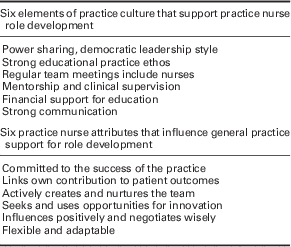
It appeared from the results that both the structural (general practice employment) elements and the psychological (nurse attributes) elements had a synergistic effect and that one could generate and influence the other. This creates a virtual cycle, where the application of the principles by either party may have a positive impact on practice nurse role development. This proposition should be tested in a larger group of practices to confirm whether this is the case.
Conclusion
This study highlighted the fact that there are some barriers to ensuring that practice nurses achieve the competencies they need to practise and these issues need to be addressed in the interests of patient safety. Currently, there is no regulatory mechanism to ensure this happens and it remains to be seen how groups of GPs might tackle the issue and commission appropriate education, development and mentorship. The emerging strategy in the United Kingdom relating to primary care contracting creates both opportunities and risks with new clinical and organisational models evolving reflecting the respective responsibilities of NHS England, CCGs and federated general practices. Never has there been a more opportune time for practice nurses to flourish and they should be empowered to do so in order to achieve and maintain high quality care for all. The ‘empowering employment principles’ provide an evidence-based tool to facilitate this.