


INTRODUCTION
Primary amoebic meningoencephalitis (PAM) is a rare but nearly always fatal disease caused by infection with Naegleria fowleri, a thermophilic, free-living amoeba found in freshwater environments [Reference Visvesvara, Moura and Schuster1, Reference Marciano-Cabral and Cabral2]. PAM occurs in otherwise healthy individuals with exposure to warm, untreated or poorly disinfected water. Infection results from water containing N. fowleri entering the nose, followed by migration of the amoebae through the cribriform plate to the brain via the olfactory nerve. The incubation period may vary from 2 to 15 days. Signs and symptoms of infection are similar to those of bacterial or viral meningitis and include headache, fever, stiff neck, anorexia, vomiting, altered mental status, seizures, and coma. Death typically occurs 3–7 days after onset of symptoms. Autopsy findings show acute haemorrhagic necrosis of the olfactory bulbs and cerebral cortex [Reference Barnett3].
While there are more than 40 species of Naegleria [Reference De Jonckheere4], only one species, N. fowleri, causes PAM. N. fowleri can tolerate temperatures of up to 45°C and proliferate in natural bodies of water (e.g. lakes and rivers) during warmer months of the year when the ambient temperature increases. N. fowleri is typically free-living and feeds on bacteria in the water; PAM occurs when there is accidental introduction of the amoeba into the human nose. N. fowleri has been detected in water sampling from freshwater lakes, ponds, and rivers [Reference Wellings5–Reference Ettinger7], thermally polluted water [Reference De Jonckheere, Van Dijck and Van de Voorde8–Reference Tyndall10], geothermally heated water such as hot springs [Reference Sheehan11], warm groundwater [Reference Blair12], and soil [Reference Maclean13].
No reliable estimates exist on the occurrence of PAM worldwide. Since being first described in 1965 [Reference Fowler and Carter14], N. fowleri has been identified as the cause of PAM in >16 countries [Reference Visvesvara and Stehr-Green15]. However, relatively few persons are diagnosed with PAM despite the millions of persons who have contact with warm freshwater annually. The common finding of antibodies to the amoeba in humans [Reference Marciano-Cabral, Cline and Bradley16, Reference Cursons17] and the frequent finding of N. fowleri in these waters [Reference Wellings5–Reference Blair12] suggests that exposure to the amoeba is much more common than the incidence of PAM suggests.
Previous reports have linked N. fowleri infections in the USA to water exposure in warm-weather states, particularly among young males [Reference Visvesvara and Stehr-Green15]. Water-related activities previously identified as risk factors include swimming [Reference DeNapoli18, Reference McCool19], diving [20], use of watercraft [Reference Gyori21], exposure to hot springs [Reference Seidel22], and submersion in untreated drinking water [Reference Okuda23]. Because of the low number of reported case reports, it is difficult to quantify the risk of these or other water-related activities.
While N. fowleri infections are rare, they are nearly always fatal, prompt diagnosis is difficult, and communicating risk reduction messages to the public is challenging. In order to effectively address these concerns, medical professionals and public health practitioners need science-based and consistent approaches to N. fowleri diagnosis and treatment, case reporting, environmental sampling, and risk-reduction messages. It is also critical to understand whether the number and geographic distribution of case-patients is changing over time and whether there is potential for global climate change to play a role in increasing the risk of future N. fowleri infections.
METHODS
While N. fowleri is not a notifiable disease in the USA, CDC has maintained a free-living amoeba laboratory and registry since 1978 with a decided focus on identifying cases occurring in the USA. This registry and other data sources were used to identify and describe all PAM case-patients prospectively diagnosed and reported in the USA. The additional data sources utilized for this review included: (1) the Waterborne Disease and Outbreak Surveillance System, which has tracked PAM case reports since 1989; (2) the compressed mortality file of the National Vital Statistics System, searching on International Classification of Diseases, Ninth Revision (ICD-9) code 136.2 (specific infections by free-living amoebae) and ICD-10 code B60.2 (naegleriasis) for the period 1979–2008; (3) medical literature review of reported PAM case-patients; (4) searches of media reports since 1990; and (5) CDC laboratory test requests and results. Case-patients identified from these sources were verified with public health officials from the state of diagnosis, and methods of diagnoses were reviewed by the CDC parasitic disease laboratory.
Case reports were included if laboratory-confirmed detection of N. fowleri organisms or nucleic acid was reported in CSF, biopsy, or tissue specimens. Case-patients were classified on the basis of their state of exposure instead of their state of diagnosis or residence. The method of identifying, verifying, and classifying case-patients and the amount of information included differs from an earlier N. fowleri review [Reference Visvesvara and Stehr-Green15] and a brief summary of N. fowleri cases [24], producing slightly different results. An additional 11 case-patients died after N. fowleri infection during 1937–1961 [Reference Visvesvara and Stehr-Green15, Reference Dos Santos25, Reference Callicott26]. These case reports met CDC's laboratory confirmation criteria and were state-verified but are not included in this analysis because they were retrospectively diagnosed from preserved autopsy specimens from a single state. Since this type of retrospective diagnosis was not conducted in other states, the inclusion of those case-patients was felt to create a state-specific bias in the interpretation of these results.
RESULTS
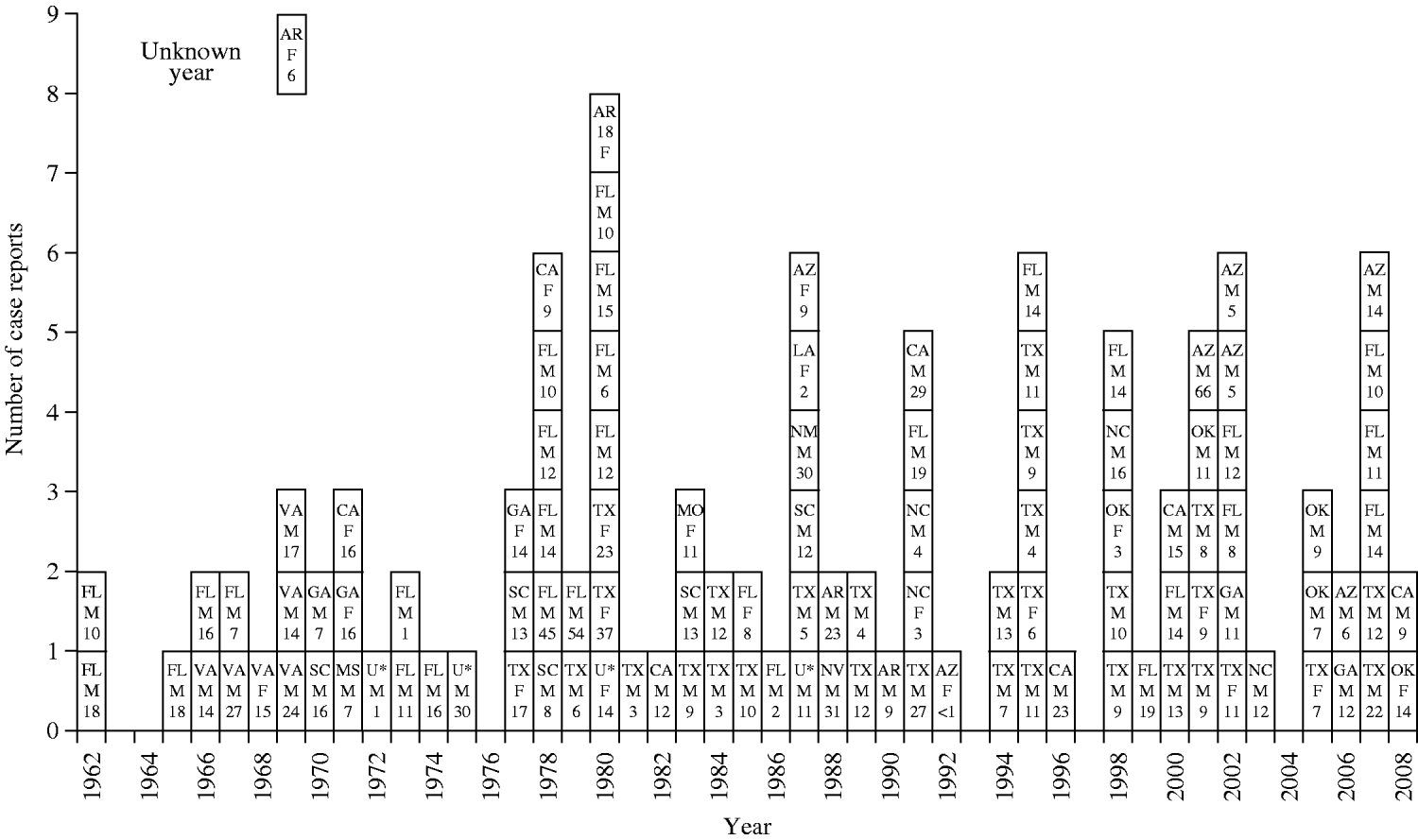
During 1962–2008, 111 case reports of PAM (range 0–8 cases per year) occurred in the USA (Fig. 1). The annual number of reported case reports probably increased in 1978 due to the establishment of the free-living amoeba registry at CDC. The six highest annual totals of case reports were 1980 (eight case reports), 1978, 1987, 1995, 2002, and 2007 (six case reports each). During 1962–2008, the median age of case-patients was 12 years (range 8 months to 66 years) with 62·2% (n=69) being children (aged ⩽13 years) (Fig. 2). Of the 111 case-patients, males accounted for 88 (79·3%) of the cases-patients (Fig. 2). Where race and/or ethnicity was recorded, race was documented as White for 28 case-patients and Black for three case-patients. Seven case-patients defined their ethnicity as Hispanic, and three were identified as Non-Hispanic. The issue of race and ethnicity could be important, but due to lack of reporting, it makes it difficult to identify any patterns of race or ethnicity based on the provided information.
Number of case reports of primary amoebic meningoencephalitis caused by Naegleria fowleri (n=111), by year, USA, 1962–2008. U*, Unknown state of exposure. Each cell represents a case report and includes from top to bottom (1) state of exposure (see Fig. 3 for abbreviations and geographic location), (2) sex (F, female; M, male) and, (3) age of the case-patient in years. Case-patient details may differ from Visvesvara & Stehr-Green [Reference Visvesvara and Stehr-Green15] due to method of identification, classification, and verification.
Number of case reports of primary amoebic meningoencephalitis caused by Naegleria fowleri (n=111) by age group and gender, USA, 1962–2008. □, Male; ▪, female.

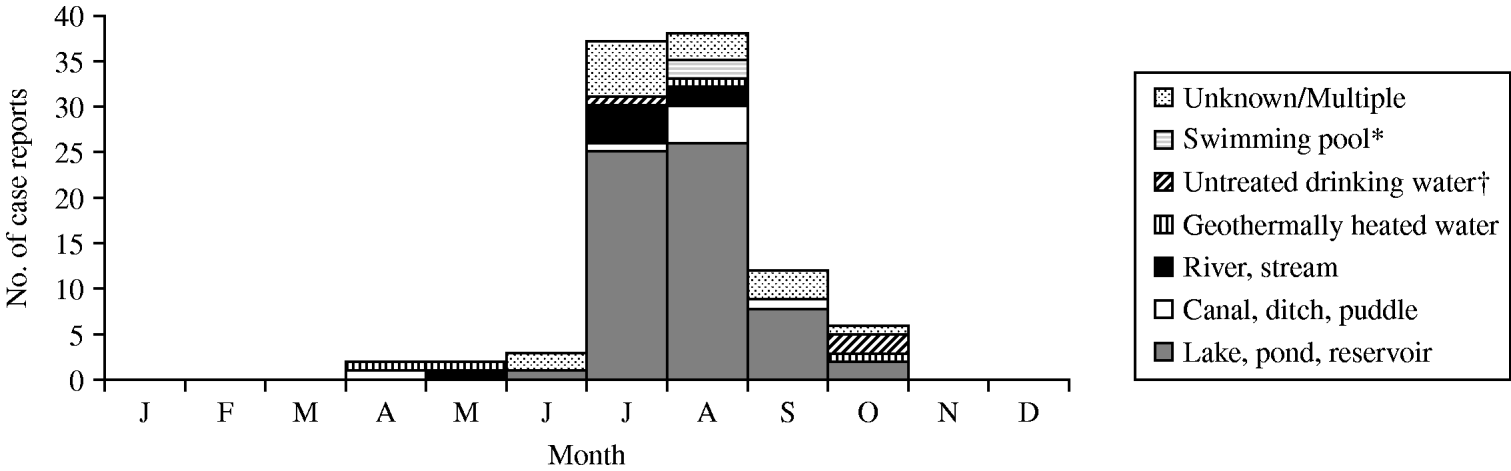
Where documented, exposure occurred in 15 southern-tier states (Arizona, Arkansas, California, Florida, Georgia, Louisiana, Mississippi, Missouri, Nevada, New Mexico, North Carolina, Oklahoma, South Carolina, Texas, Virginia) with over half (53·2%) of the infections occurring in just two states, Texas (n=30) and Florida (n=29) (Fig. 3). Water sources associated with exposure included lakes, ponds and reservoirs (67/91, 73·6%), canals, ditches and puddles (7/91, 7·7%), rivers and streams (7/91, 7·7%), geothermally heated water (5/91, 5·5%), untreated drinking water used for recreational purposes (3/91, 3·3%), and swimming pools (2/91, 2·2%) (Fig. 4). The source of exposure was unknown or included multiple exposures for 20 case-patients. Of the 100 case-patients for which the month of exposure was known, 87 (87%) occurred during July–September (Fig. 4).
Number of case reports of primary amoebic meningoencephalitis caused by Naegleria fowleri (n=107) by state of exposure, USA, 1962–2008 (state of exposure unknown for four cases).

Number of case reports of primary amoebic meningoencephalitis caused by Naegleria fowleri (n=100), by month of illness onset and probable water exposure, USA, 1962–2008. (month of illness onset unknown for 11 cases). Of those case reports missing the month of exposure, probable water exposures included lake, pond, reservoir (n=5), unknown/multiple (n=5), and geothermal water (n=1). * No information is available on the design, maintenance, or operation of these pools. † Water was forced up the nose during use.
Recreational water activities reported among case-patients (n=74) included swimming (n=61), diving (n=10), jumping (n=3), splashing (n=2), use of personal watercraft (n=3), tubing (n=2), waterskiing and wakeboarding (n=10), facial contact with mud puddles (n=2), extensive diving to bottom/underwater play (n=7), and total immersion by baptism (n=1). Twenty-one of the case-patients documented participation in two or more of the activities listed above. Due to the lack of complete documentation of case-patient participation in any given water-related activity, the level of risk for any these activities can not be approximated.
The average length of time from exposure, when known, to onset of symptoms was 5 days (range 1–7 days, n=29), the average length of time from onset of symptoms until death was 5·3 days (range 1–12 days, n=72), the average hospital stay was 3·2 days (range 0–11 days, n=59), and the average length of time from exposure to death was 9·9 days (range 6–17 days, n=28). Of the 111 case-patients included in this review, only one (0·9%) survived [Reference Seidel22, Reference Seidel27]. In two instances, two infections were geographically and temporally associated indicating a common exposure. One cluster (Arizona, 2002; [Reference Marciano-Cabral28]) was associated with drinking water and the other cluster (Oklahoma, 2005; [Reference Yoder29]) appeared to be recreational water related, although the type of recreational water (e.g. treated or untreated was not definitively determined).
DISCUSSION
This epidemiological review of PAM case reports occurring in the USA from 1962 to 2008 indicates that reported N. fowleri infections are rare and primarily affect younger people who are exposed to warm recreational freshwater in southern-tier states during summer months. It is not known how sensitive reporting is for N. fowleri infections and why several southern-tier states do not report infections. States differ in their capacity to recognize, investigate or report cases so it is possible that cases have occurred in some of these states and have not been reported. However, the severity and young age of people infected with the amoeba suggest that it would be detected more readily than syndromes with milder symptoms and outcomes. Environmental or other conditions that have led to >50% of all infections occurring in just two states, Florida or Texas, are unknown. It may reflect that these states are two of the most populous states in the USA but also warrants more extensive collection of environmental data in the future to determine how the environment affects N. fowleri populations and the risk of human exposure. These infections disproportionally occur among males and children. The patterns of age and sex distribution, geographical distribution, types of water exposure, and seasonality among PAM case reports should be distributed widely to help promote timely detection and potential treatment and also have significance for planning further research related to this organism. N. fowleri infections also present challenges to local public health officials in communicating sensitive and accurate information to the public that allows them to better understand and assess their risk of N. fowleri infection in comparison to other activities or risks (e.g. driving to the lake, drowning) so they can adopt reasonable approaches to reducing that risk.
Numbers of PAM case reports varied by year but the frequency of occurrence does not appear to be increasing or decreasing over time. The geographic region of exposure remained consistent with previous observations that N. fowleri infections are associated with water exposure in warm weather locations. These surveillance data should be interpreted with caution because surveillance capacity varies by locality and time. The increase in case reports in 1978 was probably due to establishment of a surveillance system and not because of changes in the actual infection rates. There is concern that extreme temperature events related to global climate change might increase ambient water temperatures and, therefore, the number and range of N. fowleri infections [Reference Cogo30]. Although the number of case reports annually from 1978 to 2008 does not appear to have increased in relation to average temperature increases occurring during the same time period, further research is needed to understand the potential role of climate change and extreme temperature events on the rate of proliferation and geographic range of this thermophilic organism.
N. fowleri infection occurred primarily in young males. The reasons for this sex and age distribution pattern are unclear but have remained consistent throughout this surveillance period. Whether case-patients had structural anatomical differences in the nasal passage or along the olfactory nerve, unrecognized medical conditions or recent facial trauma, or differences in immune response [Reference Marciano-Cabral and Cabral2] that led to increased risk is unknown. Increased numbers of infections in young males might also be associated with differences in water-related activities. Young males might more frequently dive or jump into the water, submerge their heads under water, or engage in water sports where they increase the risk of water moving forcefully up the nose. These activities were documented among some case-patients; however, these activities cannot provide a complete explanation for increased risk of infection since millions of other persons probably engage in identical water-related activities in the same water environments without developing PAM.
The locations of probable water exposure for PAM case-patients were untreated or poorly treated bodies of water susceptible to changes in ambient temperature. Nearly all case-patients had water exposure during the summer and most of that seasonal exposure occurred at lakes or ponds (Fig. 4). These water bodies are often filled by nutrient-laden run-off and might support bacterial growth as a food source for amoebae, providing an ideal ecological niche for N. fowleri [Reference Wellings5–Reference Ettinger7]. Additionally, lakes and ponds might be more sensitive to temperature variations, allowing N. fowleri to proliferate at times of increased temperature [Reference Wellings5, Reference Tyndall10]. Rivers and streams were less frequently mentioned as locations of exposure. These water bodies might not be as important for transmitting infections because they are not as sensitive to temperature variations and the flow of water might limit the amoebic concentration. In one case-patient with river exposure, the water level and flow rate were extremely low and the temperature of the river was 33°C [20]. In an additional river-associated case report, the implicated river was heavily contaminated with faecal waste which may increase available food sources for N. fowleri [Reference DeNapoli18]. While N. fowleri has been frequently detected in hot-spring water samples [Reference Sheehan11] and three case reports have been associated with the same hot spring [Reference Seidel27], hot springs were not frequently implicated as exposure sources. The risk of exposure to N. fowleri in hot springs might be reduced due to the different type of activities generally associated with use of these water bodies. They are more often used for soaking rather than bathing activities which would probably reduce the frequency of head immersion and N. fowleri exposure. While a swimming pool was mentioned as the probable exposure for two case-patients, the lack of an environmental investigation limits the interpretation of that association. Any transmission of N. fowleri at a swimming pool would be due to poor pool maintenance as documented in a series of infections occurring in a poorly maintained pool in the former Czechoslovakia in the 1960s [Reference Cerva, Novák and Culbertson31] because N. fowleri should not survive in a well-maintained, chemically disinfected pool. Although three case-patients had drinking water as the attributable exposure, only two of these case reports included an environmental assessment of the implicated water. For those two cases-reports, the source of water was untreated, warm groundwater which was introduced into the nose [Reference Blair12, Reference Marciano-Cabral28]. Similar infections were seen in Australia in the 1970s when people were exposed to warm surface water being transported through overland pipes resulting in low disinfection residuals in the final drinking water delivered to the community [Reference Cooter32, Reference Dorsch, Cameron and Robinson33]. Geothermal waters are used widely in some areas of the USA and N. fowleri contamination has been documented [Reference Blair12]. As a result, those regions of the USA having geothermal drinking-water supplies, should consider disinfection of water supplies.
Because PAM is a rare disease it does not generate a high index of suspicion among health-care providers. Signs and symptoms of N. fowleri infection are clinically similar to those for bacterial or viral meningitis, further lowering the index of suspicion for PAM and initiation of appropriate diagnostic testing [Reference Visvesvara, Moura and Schuster1–Reference Barnett3]. In addition, the rapid progression of infection presents challenges to identifying N. fowleri and initiating anti-amoeba therapy prior to onset of severe symptoms and death. Increasing physician awareness of PAM might improve case detection through increased awareness, reporting, and information about case-patients. It is unclear whether more timely recognition of N. fowleri infection and more rapid initiation of anti-amoeba therapy [Reference Seidel22] would result in better clinical outcomes. Most case-patients were seen at a hospital within 2 days of illness onset. Because only one well-documented PAM case-patient survived [Reference Seidel22], it is difficult to assess clinical differences between that one successful treatment and infections that resulted in patients' death. Whether these treatment failures have been due to low in vivo efficacy or because therapy was administered too late in the progression of the disease, is unknown. Early suspicion of PAM based on clinical symptoms and relevant environmental exposures might enable earlier detection of infections, provide insight into the human or environmental determinants of infection, and allow improved assessment of treatment effectiveness.
Due to the rarity of N. fowleri infections, it is difficult to use epidemiological data to develop science-based prevention messages. It is unknown why certain persons become infected while millions of others exposed to the same warm recreational freshwaters do not. In the USA, N. fowleri is commonly detected in warm freshwater environments in warm-weather states [Reference Wellings5–Reference Ettinger7]. Antibody measurements suggest that exposure to the amoeba may also be relatively common compared to the occurrence of disease, although titres are relatively low [Reference Marciano-Cabral, Cline and Bradley16, Reference Cursons17]. Because it is free-living and ubiquitous in the environment, elimination from natural waters is impractical. Some researchers have attempted to correlate the number of amoebae in a water sample with the risk of infection [Reference Cabanes34]. However, infections are extremely rare compared to potential exposures and, in freshwater environments, the location and number of amoebae in the water can vary by location and over time. As a result, routine water testing, including in areas used by recent case-patients, is likely to have limited value in preventing future infections. In addition, these sampling and testing limitations make the posting of warning signs an unlikely method for effectively communicating the risk of water exposure; warning signs posted on selected lakes might create a misconception that those bodies of water (or areas of the same water body) not posted with warnings are free from N. fowleri. Recreational water users should always assume a low level of risk is associated with entering all warm freshwaters in southern-tier states.
Because a low level of risk from PAM probably exists for all users of warm freshwaters in southern-tier states during summer to early autumn, public health agencies in these localities should broadly disseminate evidence-based information on PAM in their recommendations for healthy swimming. The only certain way to prevent N. fowleri infection is to refrain from water-related activities in warm, untreated or poorly treated water. However, although supporting data are absent, risk for infection might be reduced by measures that minimize opportunities for water to enter the nose when using warm freshwater lakes or rivers which include: (1) avoiding water-related activities in bodies of warm freshwater, hot springs, and thermally polluted water such as water around power plants; (2) avoiding water-related activities in warm freshwater during periods of high water temperature and low water volume; (3) holding the nose shut or using nose clips when taking part in water-related activities in bodies of warm freshwater such as lakes, rivers, or hot springs; and (4) avoiding digging in or stirring up the sediment while taking part in water-related activities in shallow, warm freshwater areas. To advance the understanding of this severe and tragic disease, standardized case investigationsFootnote † should be routinely conducted. Investigations should include detailed information on (1) demographics, (2) clinical and treatment information, (3) water-related exposure and activities, (4) use of potential preventive measures (e.g. nose plugs), (5) environmental conditions and location of exposure (e.g. air and water temperature, water depth), and (6) healthy persons that were exposed at the same time and place as case-patients. This information could potentially yield needed information to evaluate treatment practice and develop science-based risk reduction messages and strategies.
ACKNOWLEDGEMENTS
We thank the state public health departments who provided PAM case reports and verified case reports received from other sources, the members of the CDC/Council of State and Territorial Epidemiologists Naegleria Workgroup for reviewing case reports and developing recommendations and the numerous students who assisted in data collection and abstraction.
DECLARATION OF INTEREST
None.



