

Introduction
The prolonged conflict in the Middle East has necessitated taking multiple mitigation and preparedness measures in the Israeli health system and hospitals to enable providing care to the war casualties, while ensuring continuity of routine care for the population. These measures include reducing hospital occupancy by discharging patients who can be treated at home, mobilization of patients to secure areas within the wards, and constructing hospitalization spaces in protected areas, mostly in underground parking lots. Although most medical centers in Israel took such preparatory actions, providing partial protection, the main effort was in hospitals adjacent to Israel’s borders, in range of the short and medium range rockets and missiles launched from adjacent regions.Reference Bar-El, Michaelson and Hyames1, Reference Haverkort, de Jong and Foco2
During the recent conflict, a new, unfamiliar situation posed unprecedented threats.Reference Nitzan, Mendlovic and Ash3 Hundreds of long-range ballistic missiles and unmanned aerial vehicles with sophisticated guidance systems were launched, targeting military, strategic, and civilian facilities including hospitals. Their warheads contained 500-1,000 kg of explosives, and several of them penetrated the aerial defense system, causing massive destruction, including in Soroka Medical Center—the main hospital serving the South of Israel.
Faced with this new situation, innovative thinking was required to find solutions to expand capabilities, provide protective environments for patients and staff, building on existing infrastructures and organizational protocols, and producing new ones, with the goals being: (1) Expanding surge capacity to treat mass casualties; and (2) Ensuring continuity of routine care for the population. All this had to be done in real time under fire.
This review describes the actions taken in Sheba Medical Center (SMC) to achieve these goals. These included pre-emptive actions in the preparation and mitigation stages and expansion of capacities and capabilities with the outbreak of hostilities, utilizing innovative logistic and organizational solutions to face this complex challenge.
Actions Taken
Preparatory Stage—During Routine Times Prior to the Event
-
1. Pre-preparation of underground areas
The underground hospitalization system in SMC was instated over two decades ago, beginning with preparing two parking lots for receiving patients. This included installation of electric outlets, communication wiring, and medical gas outlets. At the onset of the current war, 870 beds out of the total 1,945 full capacity at SMC were in environments classified as protected in accordance with Israel Home Front Command regulations, with 600 being in pre-prepared underground areas.
-
2. SOPs were formulated for logistic and operational activation of the pre-prepared underground areas.
-
3. Annual practice drills were conducted for finalizing the preparation and activating these parking lots, rapidly bringing them to an operational status.
Transition Stage—On Alert for Activation or at the Onset of Hostilities
Transitioning from routine to emergency is a critical stage, taking several hours to several days, and includes:
-
1. Preparing the underground parking lots for receiving patients:
Removing all vehicles from the carpark, activating communication lines, telephone exchange, electricity, and medicinal needs, and organizing the department equipment to be transferred, all within 72 hours. While the logistics teams do this, the medical teams discharge patients able to go home, while arranging transport of the remaining patients to the underground facilities. This creates a huge wave of activity, with hundreds of patients on the move, demanding a fully supervised and secured sequence of movement and clear-sighted management. This is done in the presence of medical personnel, managed and overseen by logistic personnel, and controlled by the SMC Care Command Center (CCC).
-
2. Planning evacuation to protected areas during alerts:
Most SMC infrastructure is based on older construction standards, with limited protected zones with stairwells and central building areas designated as the safest options. In other areas, a few secure rooms (SRs) exist within the wards. To address these circumstances, an emergency protocol was introduced to guide staff and patients where to evacuate during an alert. This includes maps marking red (unsafe), yellow (less safe), and green (safe) zones, displayed prominently in every department and refreshed during each shift change. During this conflict, due to the explosive power of the launched missiles, it became evident that the current “safest zones” are insufficient to provide the required protection. To mitigate this, the hospital management created a new protocol. Patients were classified based on their mobility level: Group A—patients hospitalized in adequately protected areas, while in the unprotected wards patients were classified as either Group B—mobile patients able to evacuate to a safe zone, or Group C—immobile patients. Group B patients in unprotected wards are instructed to evacuate to fully protected ground-level shelters. For Group C, specific measures were adopted: they were positioned inside SRs or near these secure spaces, supported by logistics teams ready to assist in transferring them into protected areas during the critical moments. This protocol enabled patients in upper-level wards to remain in more comfortable conditions, avoiding overcrowded shelters while conserving accessible resources and infrastructure. This approach safeguarded both patients and staff by ensuring timely evacuation procedures based on individual mobility and protection needs. However, it still left a certain number of patients (Group C) for whom a safe environment could not be ensured. This prompted a continuous search for solutions to enlarge the safe areas, thus reducing the number of Group C patients.
Operational Stage
-
1. Increasing home hospitalizations:
Mitigation of inpatient burden was leveraged by increasing Hospital at Home (H@H) capabilities by Sheba BEYOND—SMC’s comprehensive virtual hospital platform. Prior to the conflict, H@H programs encompassed psychiatric care, internal medicine, and high-risk obstetrics. In response to the emergent situation, H@H capacity doubled and expanded into additional domains, including general surgery, oncology, dermatology, otolaryngology, neurology, and pediatrics. Additional medical and logistic equipment was procured, protocols were adapted, and specialized shortened training was provided to nurses and physicians to address the unique clinical and safety requirements of the home care setting. Furthermore, admission of patients whose homes had easily accessible safe rooms was prioritized. This operational pivot underscores the versatility of H@H models in crisis settings.
-
2. Maintaining ambulatory services in wartime:
The SMC ambulatory service has over 6,000 daily outpatient visits across more than 150 medical specialties. During the COVID-19 pandemic, telemedicine was rapidly implemented in SMC outpatient clinics, allowing telephone or video visits through a dedicated platform (Datos©), and the proportion of telemedicine visits increased to approximately 12%. SMC strategy emphasizes maintaining ambulatory services during times of crisis in a safe environment, enabling continuity of care. During the current conflict, routine outpatient services were maintained at approximately 75% of the average daily activity. This continuity was achieved through several key measures. Sheltered areas were designated near the outpatient clinics, and rapid transfer of visitors was simulated and debriefed. Volunteers, soldiers, or clinic staff were assigned to facilitate the movement toward these areas, prioritizing patients with mobility or cognitive impairments. Services involving immobilized patients or procedures under sedation were relocated to protected spaces. This ensured the uninterrupted flow of patients while maintaining safety measures to protect the patients, family members, and medical staff during alarms. A “telehealth-first” approach was implemented. Facilitated by continuous evaluations by physicians and administrators, identifying services suitable for telehealth, every eligible patient was offered the option of a remote consultation. Over the 12 days of the conflict, the number of daily remote encounters increased by 138% from an average of 481 to 1,145—34% of outpatient encounters. Finally, continuous and proactive communication with patients played a crucial role. Administrative staff contacted the patients one day prior to their appointments to assess attendance, and open slots were filled. Those unable or unwilling to attend in person were offered telehealth as an alternative.
-
3. Increasing hospitalization capacity in underground protected areas:
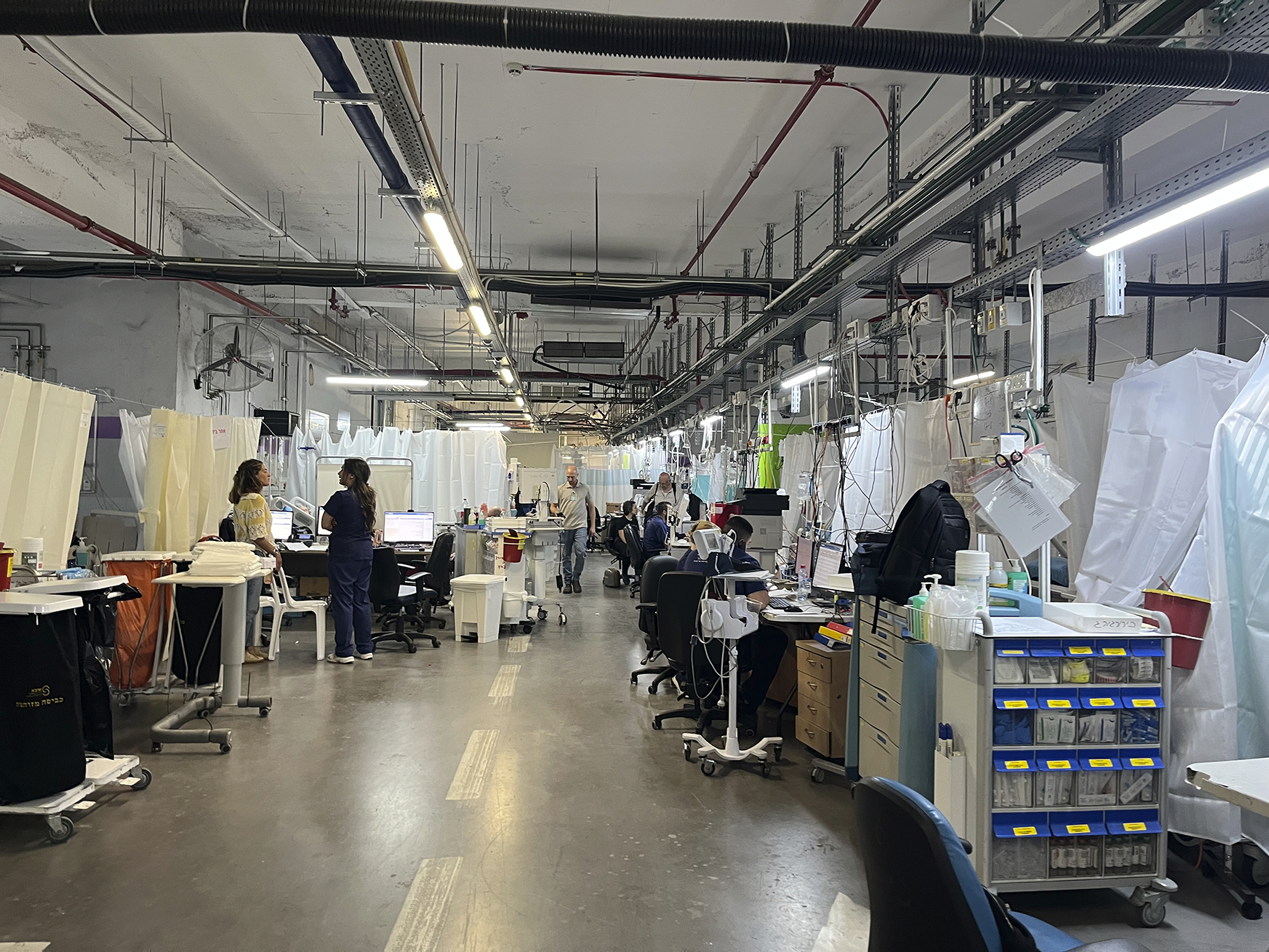
Before the war, SMC’s underground facilities had a total capacity of 615 beds. The largest one had 400 beds, including essential services such as trauma, general surgery, orthopedics, otolaryngology, ophthalmology, urology, pediatric intensive care, neonatal, and pediatric cardiac critical care (Figure 1). With the onset of hostilities, SMC’s logistic division undertook a concentrated effort to rapidly increase underground hospitalization capacity with an emphasis on essential services, including emergency medicine, surgery, obstetrics, and dialysis, adding 230 underground beds. The transfer of the obstetric department posed a unique complexity. Labor and delivery is not a “stand alone” facility. An adjacent operating theatre (OT), nursery, and neonatal intensive care unit (NICU) are mandatory; thus, the planning of evacuation and the transfer of the labor and delivery suites must be coordinated between anesthesiologists and neonatologists.
Figure 1.Underground hospitalization in open space area.

Warfare poses a unique threat to pregnant women and their unborn children. Pregnancy is a vulnerable time for women, their spouses, and their families, as the challenges associated with wartime may exacerbate the stress and the difficulties associated with the pregnant state. Thus, obstetrical preparation for wartime must take into account the personal, emotional, and affective state of pregnant women and their spouses, besides the logistic considerations. Within 48 hours, 10 delivery rooms (DR), 2 (OT), and 3 neonatal resuscitation positions were constructed from drywall in an underground environment adjacent to the nursery and NICU. This facility enabled the continuity of care without affecting the standard of care for both mothers and neonates.
Another patient group posing specific challenges is the intensive care patients. Maintaining the continuity of intensive care services is a critical aspect of emergency preparedness and response to any crisis. The fragile and severely ill population treated in these units and the operational complexity require careful consideration and a tailored response. Therefore, a rapid transformation of the various SMC intensive care units to protected areas was key in the operation. Prior to the attack the ICU capacity at SMC included 168 beds in 11 units. Only the 18 beds of the general adult ICU were located in protected areas. Therefore, an emergent effort was immediately undertaken to transfer the different ICUs to underground and protected locations. The highest priority was given to the two pediatric ICUs and the neonatal ICU, which were united and transferred within less than 8 hours. All other ICUs were transferred to protected locations within 36 hours. The infrastructure required for the relocation of ICUs into underground locations is more complex than for regular wards. This includes a vast supply of medical gases and electrical power, appropriate monitoring systems, and significant physical space, all of which were planned and prepared in advance. A point-of-care laboratory and portable imaging were available at all ICU locations. To improve efficiency and provide all these services several hubs of united ICUs were located in proximity to one another. Teams’ awareness was increased to issues such as patient privacy, risk of acquired infections, falls, and other safety and quality aspects that were affected by the relatively harsh conditions of underground ICUs. Designated transport teams were established, enabling an efficient transfer of patients from the underground ICUs to the ORs and other facilities in the campus. The transfer of unstable surgical patients from the recovery units and post-anesthesia care units (PACU) to the ICUs was delayed, thus decreasing the need for emergent transfer to the OR. These strategies enabled maintaining capacity and continuity of critical care services throughout the period.
A centralized command-and-control structure was established for each compound to ensure unified oversight, rapid decision-making, dynamic task prioritization, and strict adherence to safety and clinical quality standards across all departments. This structure included clinical leadership, senior nursing management, an operations coordinator, an infectious diseases advisor, and a patient experience representative, ensuring both operational and patient-centered considerations were addressed. Maintaining operational and clinical resilience under extreme structural and logistical constraints relied heavily on effective, bidirectional communication channels. Structured bottom-up reporting allowed frontline teams to convey real-time needs, resource gaps, and emerging risks, while clear top-down dissemination of updated protocols, operational plans, and clinical directives ensured coordinated action across multidisciplinary teams. A key success factor was the extraordinary adaptability, resilience, and commitment demonstrated by the medical, nursing, and operational teams. Staff rapidly reorganized workflows, crossed traditional departmental boundaries, and maintained high-quality care despite the unprecedented challenges. This experience underscores essential lessons for healthcare management in emergencies: Centralized leadership, flexible organizational models, adaptable human resources, and robust communication systems are vital for sustaining healthcare delivery during mass casualty events and security crises.
-
4. Deploying a field hospital in an unprepared protected underground location:
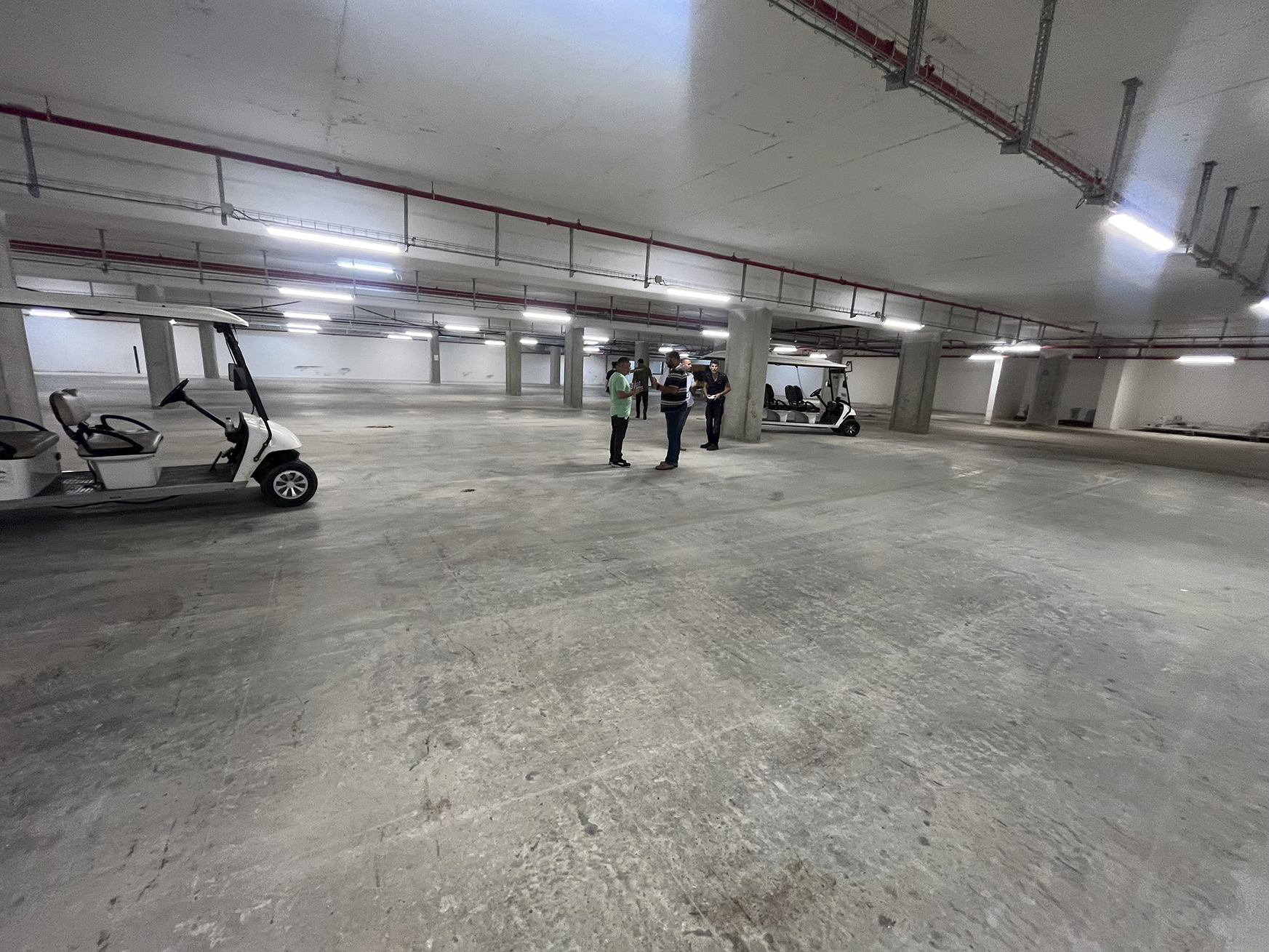
The SMC Humanitarian and Disaster Response Center (HDRC) has the capability to deploy a fully self-sufficient field hospital (FH) equivalent to a World Health Organization (WHO) type 2-3 Emergency Medical Team (EMT).4, Reference Bar-On, Peleg and Kreiss5 It can house up to 100 inpatients and is fully equipped with an OT, DR, ICU, auxiliary departments (imaging, laboratory, pharmacy), and logistic support systems including power and water, sanitation, and hygiene (WASH). The FH is housed in inflatable tents and can be transported by air or ship worldwide and deployed in locations lacking any available infrastructure. It was deployed in Ukraine for 6 weeks in 2022 at the outbreak of the war and treated over 6,000 patients.Reference Bar-On, Vivante and Dagan6 In the current event, after utilizing the full capacity of pre-prepared protected locations, a decision was made to utilize the FH to increase surge capacity by building it in an unprepared protected area devoid of the infrastructure required to support a medical facility, taking advantage of the FH’s self-sufficiency capabilities. A building site was located, which was under construction, having a two-story underground parking lot. For increased protection, the lower level was selected. This is a 3,000 m2 space with a bare concrete floor and a ceiling height of 330 cm (Figure 2). Infrastructure included an electric supply adequate for lighting and available drainage to sewage tanks, but without water supply. Once the decision was made to construct the FH in this location, the operation was initiated in several parallel channels:
-
1. Planning the facility layout and internal arrangement of tents.
-
2. Preparation of infrastructure, including increasing power capabilities by a transportable generator, installation of information cables, installing a water supply, restrooms, showers, and sump pumps for sewage disposal.
-
3. Transporting FH equipment from the warehouse and collecting disposables from SMC’s supply chain including oxygen cannisters.
-
4. Erecting the facility, filling the tents with equipment.
-
5. Admission of patients.
Figure 2.Empty underground parking area.
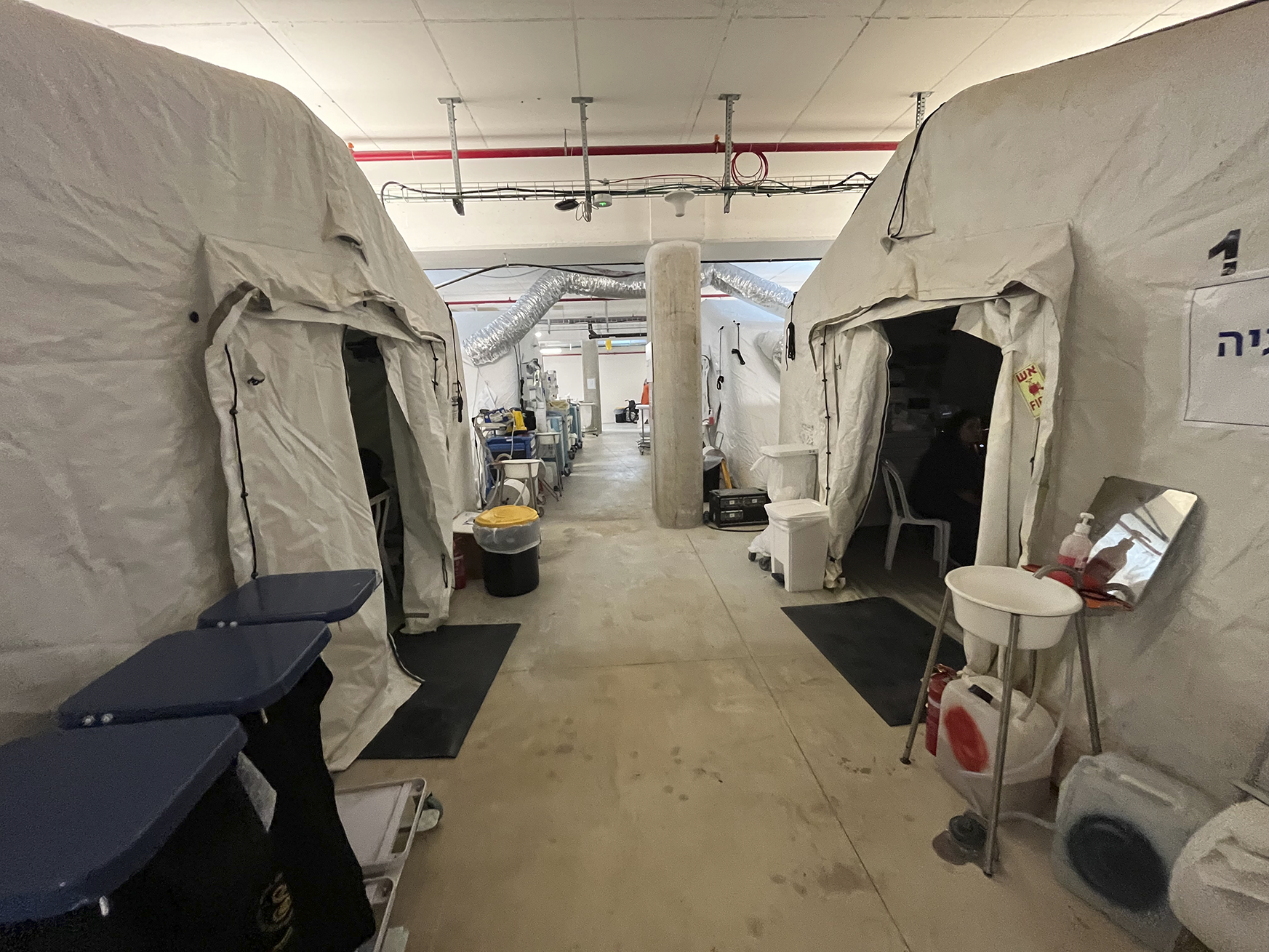
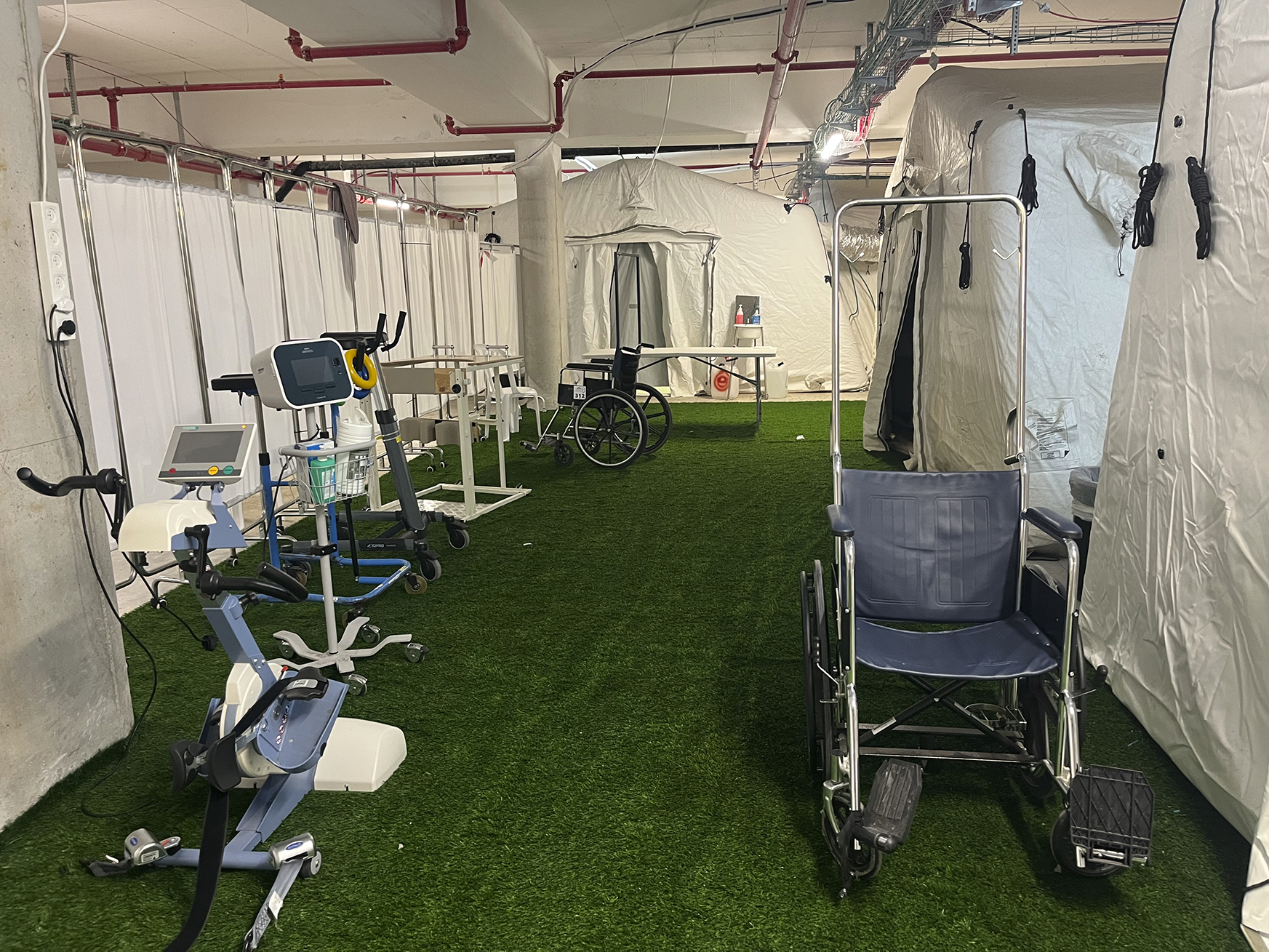
The parallel execution of the operation enabled a rapid timeline. This was facilitated by the combination of the FH tents with supporting logistic equipment, which was ready for rapid transport and deployment, complemented by beds and medical devices such as monitors and syringe pumps from the original wards, and collecting disposables from SMC stores. The setup was carried out by the core staff of the HDRC in collaboration with the SMC logistic and operational division and the ward staffs. Construction of the site was completed within 48 hours, and patients were admitted within 72 hours from initiation (Figure 3). Several options for utilization of the facility were considered, including an Emergency Room (ER) in preparation for a mass casualty incident (MCI), a full obstetric department including delivery rooms and OT for cesarian sections, and housing of various wards. The final decision, based on planning of the overall availability of protected spaces in SMC, was to house the Neuroscience division, which included three wards: Neurology, Stroke, and Neurosurgery. Transfer from the wards to the facility was staged between the three departments. During the process, which took 3-4 hours for each department, care was delivered both in the original and the underground wards, but once this was completed, all the ward activities were transferred to the underground facility. Each department was allotted its own tents and was manned by its organic staff. There was a common ICU with four beds and auxiliary services including pharmacy, radiography, a basic laboratory, and physiotherapy service (Figure 4). However, the agility provided by the FH enabled changing its designation within hours should the medical needs change. During its operation, the facility housed up to 75 patients. The setup enabled providing full continuity of care for the neurologic patients, including performance of electro-encephalograph examinations, lumbar punctures, simple and advanced imaging, and pre and post-operative care of neurosurgical patients. The underground FH was operational for five days and was dismantled following the termination of the fighting.
Figure 3.Field hospital tents in underground parking area.
Figure 4.Physiotherapy facility in underground field hospital.
The innovative mode of deployment of the FH, originally designed for outdoor deployment in disaster zones, in an unfinished underground parking lot proved highly successful with several advantages:
-
1. The self-sufficiency of the FH enabled utilization of an unprepared space, necessitating minimal logistic adaptations, thus decreasing both activation timeframe and operational cost.
-
2. The FH can be rapidly adapted for different purposes depending on the medical needs.
-
3. The distribution of the patients and departments in tents rather than in open space provided a more pleasant environment with increased privacy for the patients and a better working milieu for the staff, retaining departmental autonomy and space, more similar to their home milieu.
-
4. Increased efficiency of space utilization: While the open space hospitalization required 15 m2 per patient, only 11 m2 were required in the tented facility.
-


Summary of Protective Status
At the outbreak of hostilities, the SMC hospitalization capacity was 1,945 beds, of which 943 were in protected areas: 343 in the wards and 600 in underground pre-prepared facilities. During the war, our underground capacity increased to 1,303 protected beds. At the outbreak of hostilities, 586 patients were discharged and continued H@H care by our Beyond team and/or the community medical system, and 546 patients were transferred to the various underground protected spaces. As a result, on June 24, 2025—the last day of the hostilities, there were a total of 1,345 patients hospitalized in SMC (69% of its full capacity). Of these, 546 (41%) were type A, 742 (55%) were type B, and only 57 patients (4%) were type C. Although the total number of hospitalized patients was reduced from our routine full capacity, this was due mainly to the increase in home hospitalizations and not to a reduction of activity or a compromise in the level of care.
Discussion
Provision of safe medical care during a crisis or a disaster poses multiple challenges. These include a possible rise in morbidity directly or indirectly related to the event, as well as the continued delivery of routine medical needs, necessitating both ambulatory care as well as in-house medical and surgical treatment. Capabilities may be decreased due to structural damage, and the available workforce may be reduced due to direct injury of staff members or their pre-occupation with tending to their families or inability to access SMC. In the current scenario of a missile attack with a potential for a direct hit resulting in all the above, the main challenge was the partial availability of adequate spaces which can withstand a missile explosion, in which hospital activities can continue safely. This was brought forward following the missile attack targeting Soroka Medical Center in Beer Sheva on June 18, 2025.
Therefore, the game plan for mitigating the potential damage included increasing available safe spaces, optimizing utilization of available ones, and transferring activity to safe environments both within and out of the medical center. This proved to be a complex operation requiring thinking out of the box and mobilizing all the resources of the different sections in SMC, including medical management, clinical caregivers, logistics, and human resources (HR), all working simultaneously to shorten the timeline of the operation. This was coordinated by SMC’s chief of medical operations and controlled by the SMC CCC, with an assessment and briefing session held daily by the hospital’s supreme management with all relevant departmental heads.
Departmental Standard Operating Procedures (SOP) regarding actions taken within the wards in case of activation of alerts or sirens were re-drilled and activated immediately with the outbreak of hostilities and the first missile attacks. At the same time, transfer of several wards to pre-prepared underground facilities was initiated, prioritizing the wards by the availability of safe areas in their original space as well as the percentage of patients who cannot be transferred independently.
To analyze the gaps in the protection status, a novel method was devised to classify patients according to their vulnerability and the capability to place them in a protected zone, rather than according to their department, pathology, or severity, classifying them as Type A, B, or C as described above. This necessitated a mindset change, both by the treating staff and the hospital leadership, but once adopted, the classification system enabled prioritizing and planning of protected spaces and placement of patients in the least vulnerable locations.
The logistic teams worked relentlessly around the clock to prepare additional spaces in SMC’s underground lots to be fit for medical usage. However, while the logistic preparation of spaces continued, an innovative way was found to expand underground capacity by using the FH.
Realizing that the transfer from a regular ward milieu to an unfamiliar underground open space or tented environment can be very stressful for patients, family, and staff, a large amount of energy was invested in alleviating these concerns—led by SMC’s “Human Experience” department. This included the construction of pleasant rest spaces for families and staff, and allocating designated non-medical personnel to accompany patients and families. The regular team members of the HDRC who are experienced in operation in austere conditions accompanied the staff of the wards, which moved into the tented facility, assisting them and alleviating their concerns. All this, together with the sense of security in a safe zone, contributed to a high satisfaction rate in surveys carried out among patients, families, and staff.
The unique operational circumstances posed several ethical dilemmas which can be grouped into three main domains: (1) Healthcare facility, (2) patient flow, and (3) staff-patient relationship. The hospital leadership had to make rapid ethical decisions: Which departments and patients should be relocated to safer underground facilities, how to weigh the risk of infection or deterioration for vulnerable patients like those with neutropenia, and whether life-saving procedures like catheterizations or cesarean sections should proceed in unprotected or temporary settings. Non-ambulatory patients in unprotected areas were prioritized for transfer, many procedures were postponed or shifted to telemedicine, and early discharges were expedited, even for newborns. These adaptations had to balance medical risk with patient safety in a warzone. Communication and trust between patients and providers were sometimes strained, particularly when patients resisted moving or were informed of the risks involved in continuing or forgoing procedures under unsafe conditions. For optimal guidance to the hospital’s medical teams, a rapid ethical review board was established, and clear ethical guidelines for these situations were determined and distributed to the entire campus. Ultimately, the SMC response reflected an ongoing negotiation between clinical priorities, human vulnerability, and the ethical duty to protect life under extreme duress. While all measures taken in analyzing, planning, and executing patient placement decreased the risk to patients and the ethical dilemmas facing the staff, there will always be a number of patients who will pose heavy ethical dilemmas regarding the safety of patients and staff, weighing the risks of continued treatment in an unprotected environment vs postponing or interrupting the treatment during an actual missile attack.
Conclusions and Recommendations
-
1. Hospital leaders have the responsibility to ensure continuity of care in emergency scenarios.
-
2. During a physical wartime threat, providing secure environments is a prerequisite for continuity of care and should be given the highest priority.
-
3. Compatibility of operational procedures during routine times with anticipated conditions during an emergency will enable a smooth transition to emergency mode of operation.
-
4. Unforeseen circumstances will always arise, necessitating innovative thinking, agility, and flexibility to execute real-time expansion of capabilities.
-
5. Effective command and control are essential to coordinate medical, organizational, and logistic operations.
Limitations
Application of the processes initiated at SMC to other countries and settings facing potential ballistic missile attack has limitations. Since the health care delivery system varies from country to country, hospitals range from for-profit, not-for-profit, or private, state-run or public, or through affiliations with religious orders. Funding, regulatory, and other barriers may limit adaptation of the many solutions presented.
Author contribution
Elhanan Bar-On—Activities, planning, and writing; Shachar Shapira—Activities, planning, and writing; Galia Barkai—Activities, planning, and writing; Naama Halpern—Activities, planning, and writing; Shali Mazaki-Tovi—Activities, planning, and writing; Yoel Har-Even—Activities, planning, and writing; Asaf Vivante—Activities, planning, and writing; Amir Grinberg—Activities, planning, and writing; Yael Frenkel Nir—Activities, planning, and writing; Rotem Semo-Oz—Activities and planning; Assaf Luttinger—Activities and planning; Roni Loebenstein—Activities and planning; Uri Manor—Activities and planning; Ohad Bitan—Activities and planning; Yitshak Kreiss—Activities, planning, and writing; Itai Pessach—Activities, planning, and writing.
Competing interests
None.

 Open access

