Introduction
People with serious mental illness (SMI; schizophrenia/schizoaffective disorder, bipolar disorder or severe major depressive disorder), die earlier than individuals in the general population, losing between 9 and 32 years of life (Dembling et al., Reference Dembling, Chen and Vachon1999; Miller et al., Reference Miller, Paschall and Svendsen2006; Chang et al., Reference Chang, Hayes, Perera, Broadbent, Fernandez, Lee, Hotopf and Stewart2011; Lawrence et al., Reference Lawrence, Hancock and Kisely2013). Among those with SMI, metabolic disturbances, such as diabetes (DM) are common and are amplified by unhealthy behaviors such as smoking, reduced physical activity, poor diet, and substance use as well as by medications used to treat SMI (Carney et al., Reference Carney, Jones and Woolson2006; Barnett et al., Reference Barnett, Mackin, Chaudhry, Farooqi, Gadsby, Heald, Hill, Millar, Peveler, Rees, Singh, Taylor, Vora and Jones2007; Jackson et al., Reference Jackson, Covell, Drake and Essock2007; van Winkel et al., Reference van Winkel, De Hert, Van Eyck, Hanssens, Wampers, Scheen and Peuskens2008).
The primary care setting provides an opportunity to work with patients with DM and mental disorders who may not be willing to seek specialized mental health care or see a psychiatrist. This group of investigators (Blixen et al., Reference Blixen, Perzynski, Sajatovic and Dawson2011; Sajatovic et al., Reference Sajatovic, Dawson, Perzynski, Blixen, Bialko, McKibbin, Bauer, Seeholzer, Kaiser and Fuentes-Casiano2011) has developed a 12-week psychosocial intervention, Targeted Training in Illness Management (TTIM), for patients with both SMI and DM that is adapted to the primary care setting. As in the chronic disease/long-term condition paradigm of disease management, TTIM stresses the self-management approach to SMI and DM. Psycho-education, problem identification/goal-setting, behavioral modeling, and care linkages all emphasize the patient’s central role in managing their chronic medical and chronic mental illnesses (Lorig et al., Reference Lorig, Sobel, Ritter, Laurent and Hobbs2001; Wagner et al., Reference Wagner, Austin, Davis, Hindmarsh, Schaefer and Bonomi2001; Meuser et al., Reference Meuser, Corrigan, Hilton, Tanzman, Schaub, Gingerich, Essock, Tarrier, Morey, Vogel-Scibilia and Herz2002).
A key feature of the TTIM intervention is the use of peer educators (PEs) with both SMI and DM, to teach and model self-management. Peer interaction is an important route to empowerment that can improve health in people with mental disorders and can disseminate self-care innovations to those with costly chronic diseases (Schon, Reference Schon2010; Repper and Carter, Reference Repper and Carter2011). Peers with chronic health conditions have access to lay expertise that is typically inaccessible to health care providers and can have success in promoting health in populations characterized by health disparities (Keyserling et al., Reference Keyserling, Samuel-Hodge, Ammerman, Ainsworth, Henriques-Roldan, Elasy, Skelly, Johnston and Bandiwala2002; Chin et al., Reference Chin, Walters, Cook and Huang2007).
Individuals with SMI can provide peer support and are effective in engaging people into care, reducing the use of emergency rooms and hospitals, and reducing substance use (Davidson et al., Reference Davidson, Bellamy, Guy and Miller2012). Peers can be effective in empowering and motivating people with SMI, and as someone who ‘has been there’ (Dennis, Reference Dennis2003), and are able to normalize the illness experience, promote hope and belief in the possibility of recovery, and increase feelings of empowerment and self-esteem (Schon, Reference Schon2010; Repper and Carter, Reference Repper and Carter2011). There are no studies, however, that have focused on the training of peers with both SMI and DM, or that have reported on the lived experience of becoming PEs.
The aim of this study is to describe the training and participant experience of PEs with both SMI and DM who are taking part in a five-year randomized-controlled trial (RCT) of the TTIM intervention [Improving Outcomes for Individuals with Serious Mental Illness and Diabetes (R01 MH085665)], conducted in a primary care setting. The TTIM intervention consists of 12 weekly in-person group sessions and nine months of telephone follow-up. Our qualitative findings are intended to support endeavors to mobilize peers to help other patients with SMI and other complex comorbidities. Building upon our findings we offer recommendations for administrators and clinicians considering the use of SMI patient peers in primary care.
Methods
Recruitment and selection of SMI-DM PEs
The study was approved by the Institutional Review Board of the participating institution. Potential PEs with SMI and DM were recruited from both primary and specialty care community mental health (CMHC) settings via clinician referrals, informal contact with primary care and CMHC staff, and via word of mouth referrals from individuals with SMI-DM who were involved in previous research studies for SMI treatment. The study psychiatrist Principal Investigator (PI) (M.S.) interviewed prospective PEs to determine whether involvement in the study would be appropriate, including assessment of past history of interacting with others, and symptom/functional stability. Prospective PEs were required to allow contact with their mental health clinician in order to confirm that there were no contraindications for PE involvement. Eight potential PEs were approached and provided written informed consent, with no individuals being excluded after psychiatric assessment. For qualitative research, this sample size is within the recommended number of 5–25 individuals who have all experienced the same phenomena (Moustakis, Reference Moustakas1994). All PEs participated in the TTIM training program and in the RCT TTIM intervention sessions.
The PEs ranged in age from 45 to 64 (median 56) and consisted of five females and three males. Two participants in the training program were white, non-Hispanic, four were black, non-Hispanic, and two were Hispanic, white. In addition to having DM, five individuals had depression, two had schizophrenia and one had bipolar disorder. All PEs were compensated $40 (~25£ or 30€) for group session attendance and the same amount for follow-up phone calls to patients in their TTIM groups (approximately four to six calls). They were compensated $25 (~16£ or 19€) for participating in the qualitative interview for this analysis. These monies were allocated to our PE trainees from our National Institutes of Health study [Improving Outcomes for Individuals with Serious Mental Illness and Diabetes (R01 MH085665)].
Description of the Peer Educator Training Program for SMI/DM
Initial intensive training sessions
Initial training consisted of two days of intensive group training that included sequential components designed to lead to PE comfort with their role. During these intensive group training sessions the PEs participated in an orientation/introduction session to identify themselves and get a chance to know each other a little better. This was followed by an overview of the study and detailed coverage of the TTIM intervention manual and content. The conceptual model of TTIM is based on Bandura’s Social Cognitive Theory (Bandura, Reference Bandura1986), which posits that individuals learn by observing others and behave in specific ways to reach goals. This theory also posits that knowledge, self-efficacy, and outcome expectancy are important precursors to behavioral change and effective modeling can teach coping strategies for a variety of situations (Bandura, Reference Bandura1988).
The role of the PE in TTIM is to reinforce content of the TTIM manual as a complement to nurse educator information and education. PEs were not envisioned as ‘experts’ or the perfect example of how to manage SMI and DM. Instead it was stressed that we learn as much through mistakes as successes, and PEs were used as experiential experts on what worked/did not work for them so that the group could learn together and in acknowledging that learning is a continuous process. For example, this could include reporting on difficulties they have had or continue to have in adhering to healthy behaviors such as remembering to take medications (use a pill box, store medications in a place where you will see them daily) or in reducing/stopping smoking. Interaction between patient group and PE members was confined largely to group sessions and to scheduled brief (10 min) phone calls post-group that used a semi-structured script.
The 12 TTIM educational sessions for the patients in the RCT also served as the foundation for the training of the PEs, and included topics such as DM complications, the challenge of having both SMI and DM, medications, illness management as a lifestyle, nutrition, and the effects of exercise on physical and emotional health (Table 1). Each PE received a written and illustrated manual that included all the educational TTIM materials to keep and review.
Topics and health behaviors covered in the Peer Educator Training Program and in the 12-week TTIM intervention sessions with patients

TTIM=Targeted Training in Illness Management; SMI=severe mental illness; DM=diabetes.
The group training also included communication skills, group leading/co-leading, assistance with help-seeking pathways, and crisis management. This involved role-play and repetition as needed, depending on the materials and PE comfort/knowledge. Issues of illness self-management and appropriate backup and mental health support were also discussed with the PEs. They were strongly encouraged to contact the study investigators should there be any emergent concerns regarding relapse of their own illness. The nurse educators (D.K., M.L.) took an active part in the training to facilitate PE comfort and to allow for better coordination of the intervention delivery.
At the end of these intensive sessions, PEs were told that the intensives were just the beginning of their training/support and that eventual mastery and comfort with TTIM would take time and experience. The PEs were provided with contact information for the investigators, nurse educators, and other study team members.
Ongoing support and training sessions
Following completion of intensive training, PEs began attending the TTIM nurse led patient intervention sessions in the RCT, first as facilitators, then as co-leaders. To further enhance comfort with the TTIM process, the PEs, nurse educators, psychiatrist PI, research coordinators, and research support staff met together as a group for follow-up training approximately every month for the first six months and approximately every two months thereafter. These sessions provided an opportunity to de-brief and update the entire PE team on group sessions and overall study progress, re-review TTIM content, address any questions or concerns that may have come up since the last meeting, practice skills needed in managing questions and follow-up telephone calls to provide ongoing support and encouragement to the patients in the intervention. A meeting agenda was provided by study staff. In addition to the regularly scheduled follow-up meetings, PEs were encouraged to call the study PI, or other staff, if they had any questions or concerns that they felt were too urgent or important to wait until the next scheduled training follow-up session.
Qualitative assessment
A phenomenological approach (Creswell, Reference Creswell2007) was used to develop a deeper understanding of the lived experience of being a participant in a Peer Educator Training Program and the TTIM intervention team for the RCT. We explored not only the challenges of learning to become a PE, but explored the processes and dynamics that took place during the training sessions and the RCT.
Data collection in phenomenological studies consists of in-depth interviews with participants (Creswell, Reference Creswell2007). In in-depth interviews, the goal is to explore a topic more openly and to allow interviewees to express their opinions and ideas in their own words. Therefore, participants were given as much latitude as possible to describe their lived experience of becoming a PE. In-depth interviews are an appropriate strategy for learning the vocabulary and discovering the thinking pattern of the target audience as well as for discovering unanticipated findings and explore hidden meanings. Data from these interviews can inform and enrich our understanding of the processes that impact the outcomes of this RCT (Esterberg, Reference Esterberg2002).
Interviews were conducted eight months after beginning the RCT, when all participants had finished their intensive training, were taking part in ongoing training sessions, and had participated in at least one TTIM group session with patients. Two investigators (C.B., A.P.) conducted the qualitative interviews, which took ~30–45 min, in the clinical research unit of the hospital. The use of two interviewers gave the investigators an opportunity to meet and compare notes, thus giving more scope for interpretation and minimizing problems with transcription.
The PE participants were asked two broad, general questions as recommended for phenomenological studies (Moustakis, Reference Moustakas1994):
What were your experiences during the PE training and participation in the TTIM intervention?
What situations influenced or affected your experiences during the PE training and participation in the TTIM intervention?
Additionally, a written guide of bulleted, open-ended question topics provided an internal reference for the two interviewers and assured a standardized approach to topics of interest. The guide also provided example probes such as ‘would you explain further’, ‘please describe what you mean’, and ‘would you give me an example’. All open-ended questions and follow-up probes focused attention on gathering data that led to a textural description (what participants experienced) and a structural description (how they experienced it in terms of conditions, situations or context (Moustakas, Reference Moustakas1994; Creswell, Reference Creswell2007).
Qualitative analysis
In qualitative research data collection, coding and analysis occur simultaneously rather than sequentially. Emerging insights can be incorporated into later stages of data generation, enhancing the comprehensiveness of the results (Ezzy, Reference Ezzy2003). Goulding (Reference Goulding2005), in her comparison of phenomenology, ethnography, and grounded theory has made it clear that researchers blend techniques in order to serve the purposes of a specific study. Phenomenology has been described both as a methodology and a philosophy. In the case of our study of PEs, we felt that what was needed was to develop a framework for understanding the shared experience of PEs, rooted in the descriptions provided by the PEs themselves. Therefore, after interview audiotapes were transcribed verbatim, the data was analyzed using the classic method of content analysis (Strauss, Reference Strauss1988) as a means for making inferences about what was said by the PEs.
Dominant themes were identified by a descriptive label, which helped to organize the text within and between transcripts for comparison (Marshall and Rossman, Reference Marshall and Rossman2003). A coding manual to list codes and their definitions was modified iteratively as necessary. After descriptive coding, all transcripts were reviewed using the final coding manual to ensure that all possible codes had been applied. Three coders (C.B., A.P., S.K.) separately coded all eight transcripts to ensure coding consistency and transparency. Discrepancies were resolved by discussion. Data trustworthiness was achieved by presenting results to the PEs as a member check, and PEs were invited to criticize and comment on the findings (Yanow and Schwartz-Shea, Reference Yanow and Schwartz-Shea2006).
Results
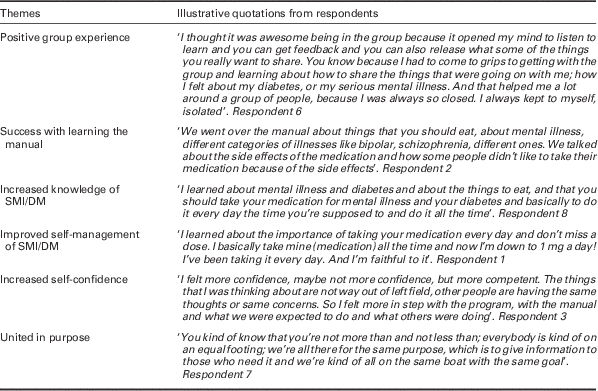
Table 2 presents the six descriptive themes that emerged from the data: positive group experience, success with learning the manual, increased knowledge of SMI/DM, increased self-confidence, and united in purpose.
Results of focused peer educator interviews at eight months

SMI=severe mental illness; DM=diabetes.
Initially some PEs were apprehensive about the training, but sharing their own stories and experiences about living with SMI and DM, and feedback from others in the group, led to a positive group experience, increased their confidence, and led to a sense of comfort and cohesiveness among group members.
‘Well at first, I was just wondering, “Should I be at these sessions?” Though I have depression, these other people have other issues that are worse than mine and I was wondering if this was the place that I should be. But then after we all got together and we all started talking about our own issues, it was really quite open and I felt really comfortable and confident’.
Respondent 1
The training manual provided reinforcement of the self-management skills they discussed in class, and along with feedback from other group members, improved PE knowledge of SMI and DM as well as their own self-management of these illnesses.
All PEs gave high marks to the training program experience,
‘It was a wonderful experience for me. I enjoyed working with the other PEs and hearing their side and identifying my side with their side. You know with some of the things that they talk about that I had to learn about myself and to get with myself with that way of life when I found out about my diabetes and my serious mental illness. It was a wonderful experience and I enjoyed it and I would do it again’.
Respondent 6
and some PEs found the training to be a life transforming event:
‘And my thing is that I know for a living fact that it’s like I’ve been born again, because I was in really bad shape and when I heard about the program, I was like wow, I want to get into something like this where I can learn as much as I can, then I can share, pass it on to somebody else. I’m glad for the program and hope that TTIM grows because I want to be a part in continuing with this research. I’m willing and able to help others’.
Respondent 2.
By month eight of the RCT, they had become a confident cohesive group that was united in purpose to help others self-manage their SMI and DM.
Discussion
Our findings suggest that the PE training program increased participants’ knowledge of SMI and DM and improved their own self-management of these two chronic diseases. PE training provided a positive group experience, led to increased self-confidence, and united them in purpose to help others with SMI and DM in primary health care settings. Using PEs to help deliver care for SMI and medical comorbidity could be an efficient and effective way to extend health team services and truly incorporate a patient viewpoint and perspective in management of chronic conditions.
Primary care systems serve large proportions of individuals with SMI, with 26–70% of patients seeing providers having a coexisting mental health or substance abuse diagnosis (Olfson et al., Reference Olfson, Shea, Feder, Fuentes, Nomura, Gameroff and Weissman2000; Mauksch et al., Reference Mauksch, Tucker, Katon, Russo, Cameron, Walker and Spitzer2001; Cameron and Mauksch, Reference Cameron and Mauksch2002). These individuals tend to do poorly and use resources such as emergency rooms and hospitals to deal with the complications of poorly managed SMI-DM. The TTIM intervention is focused on patient self-management and uses PEs with SMI and DM to model behavior and engage people with SMI and DM in their own care. However, embedding SMI PEs into existing staff may depend on the culture and environment of the specific primary care site. The patient centered medical home model (Bodenheimer and Pham, Reference Bodenheimer and Pham2010) provides one model of care that might be an appropriate model amenable to use of PEs. This approach to primary care seeks to facilitate partnerships among the patient, his or her primary care clinician, and other members of the health care team. While some PEs may volunteer to work in primary care clinics to help other patients, including trained PEs as appropriately compensated members of the health care team should be strongly considered by health care systems as they may improve self-management skills among patients with SMI/DM and prove to be cost-effective in the end.
There were challenges that occurred in the enrollment and training of the peers. Because our study was supported by a research grant we were required to enroll PEs over two to three months. In real-world primary care settings this is less likely to be an issue because we observed a snowball effect that is likely to help future enrollment efforts. Individuals with SMI-DM who participate in our groups and program frequently request to be considered as a future PE. They value and aspire to not only being able to solidify their own personal gains, but also wish to take part in the positive experience of being seen as someone who is committed to helping others and be part of a useful initiative.
With respect to training challenges, the main issue centered on logistics and scheduling. The initial training occurred over a two-day period with frequent follow-up sessions every one to three months. Keeping a consistent time and day of the week as well as location with a pre-set and standardized agenda was extremely helpful in focusing group efforts. All training sessions were moderated and lead by the psychiatrist study PI. As a testament to the success of the training we have had 100% PE retention. In real-world settings retention may be more of an issue, and it is likely that rolling recruitment and ideally enrolling individuals who have previously participated in the program, may be a good method to address and compensate for any PE turn-over.
Limitations
While study limitations such as a single geographic location and the use of one primary care setting impact transferability of our qualitative findings, these limitations are offset by the diverse PE sample and by use of rigorous qualitative research methods (Strauss, Reference Strauss1988; Marshall and Rossman, Reference Marshall and Rossman2003). Although other methods of data collection such as focus groups, mixed methods (interviews and questionnaires) were considered for use in our study, we chose in-depth interviews as recommended for exploring the lived experience of persons who have all experienced the same phenomenon (Moustakis, Reference Moustakas1994). This self-report method is strong with respect to its directness and versatility. If we want to know what people think, feel, believe, and experience, the most direct means of gathering information is to ask them. This method of collecting data yielded information that would be difficult, if not impossible, to gather by other means. We acknowledge that asking respondents at a set time point about their confidence level at the beginning of the training as well as at eight months into the RCT may not give a fully accurate and comprehensive inference into general attitude and experience. However, the fact that retention in the program was so good argues that the positive reports are truly genuine and clearly affect PE behavior.
In our sample no PEs were excluded from participation after their initial assessment by the study psychiatrist. However, in some circumstance there could be situations in which PEs may want to participate but have psychiatric symptoms that are so severe that it would make it difficult for them to do so. Future research needs to address the ethical and pragmatic implications of situations where there is a mismatch between a PEs willingness to participate versus their capacity to do so. Additionally, more research is needed to explore optimal approaches for training and supporting SMI PEs with chronic medical comorbidities other than DM.
Despite these limitations, our approach to the training PEs with DM and SMI could inform approaches to help patients with SMI and other chronic illnesses in primary health care. PEs can offer empathy, reassurance, and affirmation of the shared human struggle with illness, and provide motivation to persist in healthy behaviors (Dennis, Reference Dennis2003).
Recommendations
Based on our findings and our approach to training PEs, we offer recommendations to support further endeavors to mobilize peers with SMI and DM, help other patients with these chronic conditions better self-manage their own health. Our recommendations are based upon what the PEs identified as being important as per our data analysis, and what was observed to be facilitators or barriers to PE training during our implementation of the trial. The PE quotes are intended to illustrate the recommendation points, which are the synthesis of qualitative data analysis and experience in project implementation.
Build a group culture that facilitates easy sharing, disclosure, and which minimizes stigma and non-acceptance
Setting the stage
Group training is an important first step in establishing group cohesiveness. This means striking a balance between having enough people to add to the discussion and not having so many that some feel left out (Carron and Spink, Reference Carron and Spink1995). We chose eight participants to maximize interaction, discussion, and cohesiveness. Participants sat around a table facing each other and had good eye contact. Snacks appropriate for people with DM created a welcoming atmosphere and re-informed dietary recommendations. As noted by one PE:
‘I loved the snacks. …they give us things that are wholesome and nutritious, and we learned that there are things that you can eat that are good for you. I liked the fact that it makes you feel like this is not just a technical training thing that you go through’.
Respondent 3
Set ground rules that will allay fears about unwelcome disclosure or betrayal of boundaries
Ground rules for the PE training sessions mirrored those in the TTIM patient sessions. Training session leaders reinforced the need to be positive and constructive as well as non-judgmental and encouraging. An additional critical requirement was to respect the confidentiality of the group process and not share any personal information about group members.
Setting rules for group behavior
People with SMI often encounter stigma and discrimination in daily life. Courtesy, respect, and accepting differences were vital rules for establishing trust among the PE group members:
‘Because everybody treated me with courtesy and respect and I showed them the same. And when everybody talked, everybody didn’t talk at once; they talked one on one and when there was something that they could relate to they spoke on it. They didn’t hold back the way they felt and we all saw that we had trust in the group’.
Respondent 6
Building group cohesiveness
A group attains cohesion with bonds linking them to one another and to the group as a whole (Forsyth, Reference Forsyth2010). PEs had similar comorbidity and functional stability. Another important aspect of building group cohesiveness was having a group leader (M.S.) experienced in SMI and in facilitating discussion between people with psychiatric problems.
Over time the group became increasingly more cohesive and members regarded each other ‘almost like family’.
‘Yeah, we got along just like we’ve been knowing each other for years, almost like family. It was awesome! I can’t have the words to say to explain it but it was a really good group. I feel real good about these people and I can’t wait to get here!’
Respondent 7.
Continue ongoing training
Throughout the training, we reinforced the idea that the PEs were an integral part of the TTIM intervention team and gave positive feedback and encouragement.
‘Nurse Educator X in the TTIM group I was co-leading was fabulous in teaching and then after class we may have a couple words and she always encouraged me, always complimented me whenever she thought I deserved a compliment. She always built me up to help me understand that I was doing a good job. I think if you‘re doing a good job, you want to continue to do a good job and you want to do a better job, if you’ve got better in you, you want that better to come out, And so, I’m working on being the best’.
Respondent 4
Use manualized content
Training included review of all sections of the manual, including time for questions, and facilitated discussion of the contents. Emphasis was placed on being knowledgeable about the content not only for their own disease self-management, but for those patients that they would be interacting with in the TTIM intervention.
‘We went through the manual, almost line by line, the entire thing, different sessions; you know and we would cover so many parts and sections at a time. But it was very thorough, and if we had questions about it we were encouraged to ask those questions, and also keep in mind that we were going to be answering those questions for someone else (patients in the TTIM sessions)’.
Respondent 3
Promote PE innovation
‘…on some occasions when I’d think it was appropriate, I’d bring in something from the outside to the TTIM class. On mental illness, I brought in a list of people, famous people, who had mental illnesses and the nurse educator passed those out to the patients in the intervention session at the very end and that was good. People talked about that for a couple of sessions after. I remember the manual said when you’re hungry, have a healthy snack, don’t go to Burger King. So I printed out some of the nutrition labels from Burger King products and passed those out during class’.
Respondent 1
Reinforce PE role and role limits
In TTIM, PEs primarily adhere to content presented in the group sessions and reinforcement of the content in their interactions with other SMI patients. But given the nature of SMI, PEs were given advice on how to handle specific situations when interacting with patients and the role they were expected to play.
‘There were specific examples of responses we should give when we’re asked certain questions by the patients in the TTIM group. Yes, one was if the person was thinking about harming themselves, there was an automatic response we’re supposed to give like call “your doctor” and we were also to report this to Dr. S. and the Nurse Educator. Dr. S. also mentioned that at no point are we ever to give advice, especially medical advice; it’s either see your doctor, or see your nutritionist’.
Respondent 3
‘We’re not supposed to act like we’re the authority or give advice. We don’t give advice about what you should or not do about such and such. We can talk about what we went through and that it’s possible to do things better and different. We have a disease and we get it treated!’
Respondent 4
Minimize logistic/scheduling obstacles
Training sessions were held at a consistent day/time and lasted no more than 1 h. Barriers to attendance were minimized with free car parking passes or bus vouchers for those who took public transportation.
‘Bus pass was beautiful. …I leave home by an hour and a half early and I get here about an hour early. I made all of them. Every one of them, yeah, I made all of them, I never missed one’.
Respondent 8
Re-enforce the notion that participants are ‘United in Purpose’.
Aristotle used the word telos (Broadie and Rowe, Reference Broadie and Rowe2002) to describe his claim that all persons have a purpose. Our findings suggest that cultivating the telos of a group is fundamentally important to success in training PEs to deliver self-management interventions. We close this discussion with one PEs description of the group telos:
‘Yeah we know our purpose. We know exactly what it is we’re trying to do. Basically, it’s to encourage everybody to feel confident in themselves, that they can control their diabetes and mental illness. Some of them is maintained by the medication that we take, some of us, like me (chuckle), don’t think that we need to take the medication. But the program is geared to bringing us back into reality, to realize that you probably need to take your medication. We’re not trying to make anybody perfect, we’re not trying to make anybody feel bad because they are not perfect. We just want them to feel comfortable and feel encouraged, and empowered. We’re trying to empower everybody. Just to be the best that you can be and just deal with what you have to do. Your mental illness and the diabetes, it can be controlled and it can be better. And that’s what we are challenged to do’.
Respondent 4.
In conclusion, structured training for PEs with SMI and DM may be a way to leverage the strengths and talents of SMI patients to self-manage complex comorbidity. Use of trained PEs in primary care might be a way to change the otherwise poor health prognoses for persons with SMI and DM.
Acknowledgment
We acknowledge the research assistance provided by Melanie Athey, and Edna Fuentes-Casiano, members of the project staff.
Financial Support
This work was supported by the National Institute of Mental Health of the National Institutes of Health (USA) under Award Number R01MH085665. The content is solely the responsibility of the authors and does not necessarily represent the official views of the National Institutes of Health. This work was also supported by Grant Number UL1,RR024989 from the National Center for Research Resources (NCRR), a component of the National Institutes of Health (NIH) and its contents are solely the responsibility of the authors and do not necessarily represent the official view of NCRR or NIH.
Conflicts of Interest
None.
Ethical Standards
The authors assert that all procedures contributing to this work comply with the ethical standards of the National Institutes of Health (NIH), USA, and the Institutional Review Board (IRB) of MetroHealth Medical Center, Cleveland, OH, USA.
Confidentiality: I confirm all patient/personal identifiers have been removed or disguised so that patients/persons described are not identifiable and cannot be identified through the details of the story.
Prior Presentations: This research was presented as a poster presentation entitled, United in Purpose: The Experience of Becoming a Peer Educator for Patients with Serious Mental Illness (SMI) and Diabetes (DM) at the 11th All-OHIO Institute on Community Psychiatry, March 1–2, 2013, Hilton Cleveland East, Beachwood, OH, USA and The Third International Congress on Neurobiology, Psychopharmacology, and Treatment Guidance, June 1–3, 2013, Thesalonika, Greece.