

Introduction
On 12 May 2008, an earthquake with a Richter-scale magnitude of 8.0 struck the area around Wenchuan county, in the northwestern part of Sichuan province, China. It left 69 227 people dead, 374 643 injured and 17 923 missing. The earthquake was one of China's most devastating natural disasters ever (Guo et al., Reference Guo, He, Qu, Wang and Liu2017). Natural disasters negatively impact the mental health of adolescents, who may manifest psychological distress reactions such as fear, anxiety, depression and posttraumatic stress disorder (PTSD) symptoms in the aftermath. In general, these symptoms improve over time (Wang et al., Reference Wang, Chan and Ho2013); however, severely traumatised adolescents may experience long-term psychological distress (Agustini et al., Reference Agustini, Asniar and Matsuo2011; Jia et al., Reference Jia, Shi, Duan, Liu, Pan, Chen and Tian2013; Tanaka et al., Reference Tanaka, Tsutsumi, Kawakami, Kameoka, Kato and You2016). Such psychological distress could be manifested as physical symptoms, such as somatisation (Tanaka et al., Reference Tanaka, Tsutsumi, Kawakami, Kameoka, Kato and You2016), insomnia (Geng et al., Reference Geng, Fan, Mo, Simandl and Liu2013) and even psychotic experiences (Ayub et al., Reference Ayub, Saeed, Kingdon and Naeem2014; Keraite et al., Reference Keraite, Sumathipala, Siriwardhana, Morgan and Reininghaus2016).
Social support has been associated with better post-disaster mental health condition in the long run (Pfefferbaum et al., Reference Pfefferbaum, Jacobs, Houston and Griffin2015; Liang et al., Reference Liang, Cheng, Ruzek and Liu2019; Thoresen et al., Reference Thoresen, Birkeland, Arnberg, Wentzel-Larsen and Blix2019), and may enhance individual feeling of safety and promote social sharing of emotions and cognitions related to traumatic events, which helps survivors relieve post-disaster psychopathologies (Zhen et al., Reference Zhen, Quan and Zhou2018). By talking to lay supporters, such as family members, friends and teachers, survivors may clarify their psychological states and come to terms with traumatic events, helping them reappraise the meaning of the disaster (Pennebaker et al., Reference Pennebaker, Zech, Rimé, Stroebe, Stroebe, Hansson and Schut2001), and reducing negative psychological consequences (Greenberg and Stone, Reference Greenberg and Stone1992).
There are several disaster-related interventions of different scope or intensity for children and adolescents, such as psychological first aid and cognitive behaviour therapy (Brymer et al., Reference Brymer, Jacob, Layne, Pynoos, Ruzek, Steinberg, Vernberg and Watson2006; Gillies et al., Reference Gillies, Taylor, Gray, O'Brien and D'Abrew2013; Lopes et al., Reference Lopes, Macedo, Coutinho, Figueira and Ventura2014). Previous studies have found that school-based, teacher-mediated programmes reduced disaster-related distress and traumatic reactions in children (Wolmer et al., Reference Wolmer, Laor, Dedeoglu, Siev and Yazgan2005; Berger and Gelkopf, Reference Berger and Gelkopf2009). These programmes provided eight to 12 90–120 min classroom sessions, which included psycho-educational presentations, practical coping skills training and so on. Previous studies on trauma-specific individual psychotherapies for children exposed to terrorism, hurricane, conflict and tsunami have used ‘trauma narratives’, which children were guided to create from their trauma experience (CATS Consortium, 2010; Jaycox et al., Reference Jaycox, Cohen, Mannarino, Walker, Langley, Gegenheimer, Scott and Schonlau2010). The National Institute of Mental Health (2015) has also reported that allowing adolescents to talk/write/draw about their feelings and traumatic experiences helps them cope with disasters.
This study asked three questions: (1) What disaster-related storytelling variables (storytelling to health professionals, lay supporters, writing/drawing or none) were associated with long-term mental health among adolescent survivors? (2) Was their participation in mental health education or disaster education after the earthquake associated with their long-term mental health? and (3) Was participation in mental health education or disaster education associated with the promotion of disaster-related storytelling to lay supporters?
Methods
Study design and participants
This study conducted a secondary analysis of empirical data from the ‘Project for Capacity Development on Mental Health Services for Reconstruction Support of Sichuan Earthquake’. Following two field visits and interviews with stakeholders in the affected areas around Wenchuan in November 2008 and February 2009, the project was implemented by the Japan International Cooperation Agency and the All-China Women's Federation from June 2009 to May 2014. This mental health and psychosocial support project was multicomponent and interdisciplinary in nature. It encompassed three main activities: disaster mental health training of trainer (TOT) for local professionals, counselling services in communities and a public awareness-raising campaign. The project invited local professionals such as teachers, medical doctors, psychologists and community workers to teach the TOT course, which covered disaster mental health interventions such as stress management, psychological first aid and cognitive behaviour therapy; mental health education (MHE) and disaster education (DE) were highlighted as key-related activities for education professionals. Local educational professionals learned how to conduct MHE and DE sessions in the TOT course, and held them at their own schools as well as providing training to teachers who had not attended the TOT course. The details of this project are described elsewhere (Tanaka, Reference Tanaka2015; Tanaka et al., Reference Tanaka, Tsutsumi, Kawakami, Kameoka, Kato and You2016).
The cross-sectional survey was conducted in April 2014, 6 years after the earthquake, at seven secondary schools: four in severely affected areas, including Anxian and Mianzhu counties, and three in mildly affected or unaffected areas, including Chengdu city and Anyue county. We selected these seven schools to include affected and non-affected, urban and rural, and junior high and high schools. Of the seven schools, two were located in the priority area for our project, where local professionals had a right of precedence to participate in the TOT course. Thus, teachers at those two schools participated in our MHE and DE TOT (project-related schools). However, this did not necessarily limit participation from the other five schools (project-not-related schools). With assistance from teachers, we recruited 4067 students, among whom 2939 students agreed to complete a self-administered paper-and-pencil questionnaire survey (response rate = 72.3%). The analysis included 1028 participants who had had a traumatic experience during the earthquake, such as injury, being bereaved of close persons (parents, grandparents, friends or teachers), witnessing injury or death, or home destruction.
School-based interventions
The objectives of the MHE sessions were to help students understand psychological stress and trauma, practice coping skills and express their earthquake experiences. The typical mental health lesson took 60–90 min. A teacher gave a brief lecture on psychological stress and trauma, and the students checked their current mental state by a simple self-administered questionnaire and discussed in a group how to overcome the stress. After the teacher demonstrated relaxation techniques, such as progressive muscle relaxation, breathing exercises and Japanese psychological rehabilitation methods (Kim and Kumar, Reference Kim and Kumar2004), the students practiced these skills in the classroom. When they became confident they could cope with their stress reactions, the teacher introduced a personal story about PTSD recovery following a natural disaster. Afterward, students were encouraged to express their earthquake experiences in various ways: discussing, writing, drawing, singing, etc. In the end, the students checked their mental state again and, if necessary, did relaxation exercises.
DE was another key activity, aimed at building the capacity of students to protect themselves when disaster happens, promoting their sense of safety. The typical DE lesson was a single complete disaster drill at school. A teacher gave a brief lecture on natural disasters such as earthquake, flood and landslide. The students discussed in groups potential hazards due to the disaster and how to evacuate safely when disaster happens, then engaged in evacuation exercises and reviewed the outcomes together.
Ethical considerations
The study objective was explained to all participants, and written informed consent was obtained. The secondary data analysis study was approved by the Ethics Review Committee of Hyogo Institute for Traumatic Stress, and permission for secondary use of the data was granted by the Japan International Cooperation Agency.
Measures
Participants' current mental health was assessed with three instruments: the Symptom Checklist-90 (SCL-90), the Athens Insomnia Scale (AIS) and the Psychotic-like Experiences (PLEs) scale. The SCL-90 is a 90-item self-report symptom inventory that covers nine dimensions of psychological distress: somatisation, obsessive–compulsive, depression, anxiety, phobic anxiety, interpersonal sensitivity, hostility, paranoid ideation and psychoticism. Each item is rated on a Likert scale from 0 (not at all) to 4 (severe) based on the participant's psychological distress in the last week. Each dimensional score is an average of related items, ranging from 0 to 4. The Chinese version of the SCL-90 has high reliability and validity (Chen and Li, Reference Chen and Li2003; Liu and Zhang, Reference Liu and Zhang2004). Although no clinical cut-off points have been established for the Chinese population, a subscale score >2 might indicate psychological problems (Wei et al., Reference Wei, Li, Wang, Zhang and Sun2018). In this study, we only used the five dimensions of the scale most often reported by affected people: somatisation, obsessive–compulsive, depression, anxiety and phobia (North, Reference North, Ursano, Fullerton, Weisaeth and Raphael2007).
The AIS is an eight-item self-report questionnaire that assesses the severity of insomnia over the previous month based on the ICD-10 diagnostic criteria: difficulty with sleep induction, awakening during the night, early morning awakening, total sleep time, overall quality of sleep, sense of well-being, overall functioning and sleepiness during the day. Item scores range from 0 (no problem at all) to 3 (very serious problem), for a total from 0 to 24; a total score of 6 or more indicates insomnia. The Chinese version of the AIS has high reliability and validity (Chung et al., Reference Chung, Kan and Yeung2011).
PLEs were assessed using four items adopted from the schizophrenia section of the Diagnostic Interview Schedule for Children and used in previous epidemiological studies (Poulton et al., Reference Poulton, Caspi, Moffitt, Cannon, Murray and Harrington2000; Nishida et al., Reference Nishida, Sasaki, Nishimura, Tanii, Hara, Inoue, Yamada, Takami, Shimodera, Itokawa, Asukai and Okazaki2010; Colins et al., Reference Colins, Vermeiren, Noom and Broekaert2013). The items were as follows: I. ‘Some people believe that their thoughts can be read; have other people ever read your thoughts?’ II. ‘Have you ever had messages sent especially to you through the television or radio?’ III. ‘Have you ever thought that people are following you or spying on you?’ IV. ‘Have you ever heard voices that other people cannot hear?’ The response choices were: 0 (no), 1 (yes, likely) and 2 (yes, definitely); therefore, total PLEs scores ranged from 0 to 8, with a score of one classified as a weak symptom group and a score of two or more classified as a strong symptom group (Poulton et al., Reference Poulton, Caspi, Moffitt, Cannon, Murray and Harrington2000). No clinical cut-off point has been established for the Chinese population. The Cronbach's α for this sample was 0.684.
Exposure variables included MHE and DE, assessed by the following items: ‘In the last five years, have you taken a mental health educational course?’ and ‘In the last five years, have you taken an educational course on disasters?’ Since our project started in June 2009, we only asked about MHE and DE in the last 5 years. The response choices for both items were dichotomous (yes/no). Earthquake storytelling experiences were assessed by the following item: ‘To date, have you ever expressed your distressing memories and feelings regarding the earthquake?’ Multiple responses were allowed; they included (1) never expressed; (2) expressed by writing or drawing by oneself; (3) talked with family members, friends or teachers; and (4) talked with one or more health professionals (medical doctors and psychologists). We then re-categorised this item into four groups based on priority, because we believed this order reflected the intensity of their storytelling: (4) consulted health professionals, (3) talked to lay supporters, (2) writing/drawing and (1) never expressed. For example, if ‘4’ was ‘yes’, it was categorised as the consulted-health-professionals group, regardless of any other choices. Separate from the four storytelling groups described above, we also created independent dichotomous variables: Writing/Drawing (d-W/D), Talked to Lay Supporters (d-TLS) and Consulted Health Professionals (d-CHP).
Demographic variables included age, sex, ethnicity, grade, having a sibling, history of parents' divorce, current life stress, number of lay supporters and socioeconomic status (SES) as measured by the Family Affluence Scale (FAS). The FAS was used to examine socioeconomic inequalities in the Health Behavior in School-aged Children study (Currie et al., Reference Currie, Molcho, Boyce, Holstein, Torsheim and Richter2008), and has reliability and validity as an SES measure for adolescents in China (Liu et al., Reference Liu, Wang, Villberg, Torsheim, Tynjälä and Lv2012). The scale comprises four items, respectively, assessing having a car, one's own room, a computer at home and family travel. A composite FAS score was calculated by summing the responses of these four items, resulting in family affluence ranges: low (0–3), medium (4–5) and high (6–7). Earthquake-related traumatic experiences were assessed with the following dichotomous (yes/no) items: (1) injury; loss of (2) father and/or mother, (3) grandfather and/or grandmother, (4) friends and (5) teachers; (6) witnessed someone's injury and/or death; and (7) home was destroyed or severely damaged. The number of earthquake-related traumatic experiences was the sum of the yes responses and ranged from 1 to 7. Other traumatic experiences in the participant's lifetime were assessed by the following dichotomous (yes/no) items: natural disaster apart from the Wenchuan earthquake, fire/explosion, motor vehicle accident, other serious accident, physical assault, sexual assault, other unwanted sexual experience and childhood physical abuse. The number of other traumatic experiences was the sum of the yes responses and ranged from 0 to 8.
Statistical analyses
T-tests were used to compare the SCL-90, AIS and PLEs scores of the study population with those of others without earthquake-related traumatic experiences.
Missing values for the outcome variables (SCL-90, AIS and PLEs) ranged from 0.6 to 6.9%. Missing values for the exposure variables (MHE, DE and earthquake storytelling experiences) and some covariates ranged from 0.2 to 11%. To minimise potential bias resulting from missing values, we used multiple imputations by chained equations (Royston, Reference Royston2004). All outcome variables, exposure variables and covariates with missing values (ethnicity, having a sibling, history of parents' divorce, current life stress, number of lay supporters, FAS and number of other traumatic experiences) were included in the imputation model. Twenty datasets were developed, following the requirement that the number of imputations should at least equal the highest percentage of missing values across all variables (White et al., Reference White, Royston and Wood2011).
After multiple imputations, analysis of covariance (ANCOVA) was used to compare somatisation, obsessive–compulsive, depression, anxiety, phobic anxiety, AIS and PLEs across the four storytelling groups, while adjusting for grade, sex, ethnicity, having a sibling, parents' divorce, current life stress, FAS, number of lay supporters, number of earthquake-related traumatic experiences and number of other traumatic experiences.
Linear regression analysis was used to examine the independent associations of d-W/D, d-TLS and d-CHP with mental health conditions, adjusting for sex, grade, ethnicity, having a sibling, parents' divorce, current life stress, FAS, number of lay supporters, number of earthquake-related traumatic experiences and number of other traumatic experiences.
Linear regression analysis was also used to examine associations between the exposure variables, MHE and DE, and current mental health as measured by the SCL-90, AIS and PLEs. Demographic variables (grade, sex, ethnicity, having a sibling, parents' divorce, current life stress, FAS, number of lay supporters, number of earthquake-related traumatic experiences and number of other traumatic experiences) were included as covariates. Beta (β) coefficients measured the average change in mean SCL-90, AIS and PLEs scores for each change from no to yes for MHE and DE. In addition, an interaction term (project-related schools by MHE/DE) was introduced into the linear regression models described above to check whether there were significant group differences in the MHE/DE effect on students' mental health between project-related and project-not-related schools.
Additionally, associations between MHE and DE and earthquake storytelling experiences, specifically d-TLS, were explored using χ 2 tests. Two-sided p-values <0.05 were regarded as statistically significant. All computations were performed using STATA version 15 (Stata Corp, Union Station, Texas, USA).
Results
Participant characteristics are presented in Table 1. Participants' age ranged from 12 to 19 years. Compared to those who did not experience earthquake-related trauma (participants in the original study, excluded from the following analysis), participants in this study showed worse mental health as measured by the SCL-90, AIS and PLEs (Table 2).
Participants' characteristics (N = 1028)

a Standard deviation.
Analysis of covariance examining associations of mental health conditions and storytelling about earthquake experiences

N/A, not applicable; CI, confidence interval.
a ‘Never expressed’ served as the reference category.
b Adjusted for sex, grade, ethnicity, having a sibling, parents' divorce, current life stress, family affluence scale, number of lay supporters, number of traumatic experiences due to the earthquake and number of other traumatic experiences.
Storytelling about the earthquake and mental health
In the ANCOVA model (Table 3), students who talked to lay supporters showed better mental health on the SCL-90 (p ⩽ 0.001), AIS (p < 0.001) and PLEs (p = 0.004) than the never-expressed group. Students who consulted health professionals showed worse mental health on three dimensions of the SCL-90 – depression (p = 0.05), anxiety (p = 0.02) and phobic anxiety (p = 0.04) – and on the PLEs (p = 0.02), compared to the never-expressed group. There were no significant differences in mental health between the writing/drawing group and the never-expressed group.
Multiple linear regression model examining associations of education for mental health or disasters with mental health conditions

Multiple linear regression model adjusted for sex, grade, ethnicity, having a sibling, parents' divorce, current life stress, family affluence scale, number of lay supporters, number of traumatic experiences due to the earthquake and number of other traumatic experiences.
In the multiple linear regression model (Table 4), talking to lay supporters was associated with better mental health as measured by the SCL-90 (p ⩽ 0.001), AIS (p = 0.001) and PLEs (p = 0.0029), compared to not talking with lay supporters. Consulting with health professionals was associated with worse mental health on the SCL-90 (p ⩽ 0.002, except obsessive–compulsive), AIS (p = 0.029) and PLEs (p = 0.002), compared to not consulting with health professionals. These results were consistent with those under the ANCOVA model.
Associations of education for mental health and/or disaster with experiences of storytelling to lay supporters
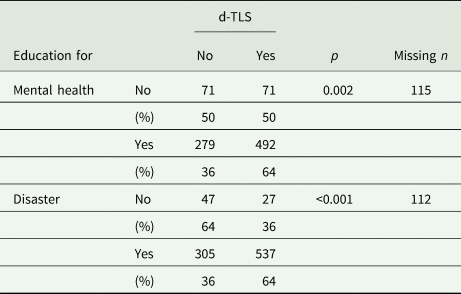
d-TLS, dichotomous variable of ‘talked to lay supporters’.
Education and mental health
In the multiple linear regression model (Table 5), MHE and DE were significantly, inversely associated with SCL-90, AIS and PLEs scores after adjusting for covariates: grade, sex, ethnicity, having a sibling, parents' divorce, current psychological stress, FAS, number of lay supporters, number of earthquake-related traumatic experiences and number of other traumatic experiences. Additional interaction analyses showed that there were no significant group differences in terms of the effects of MHE on mental health conditions (p's of interaction terms: somatisation 0.60, obsessive–compulsive 0.47, depression 0.65, anxiety 0.68, phobic anxiety 0.88, AIS 0.99, PLEs 0.38) and DE on mental health conditions (p's of interaction terms: somatisation 0.32, obsessive–compulsive 0.98, depression 0.72, anxiety 0.75, phobic anxiety 0.91, AIS 0.29, PLEs 0.40).
Comparison of mental health conditions between the study population and the population excluded from the study

a Study population: students with traumatic experiences due to the earthquake.
b Population excluded from the study: students without traumatic experiences due to the earthquake.
c Differences: population excluded from the study – study population.
*Standard deviation
More participants who received MHE or DE talked with lay supporters about their disaster experiences compared to those who did not receive MHE or DE (Table 6).
Multiple linear regression model examining independent associations of writing/drawing, talking to lay supporters and consulting health professionals with mental health conditions

d-W/L, dichotomous variable of writing/drawing; d-TLS, dichotomous variable of talked to lay supporters; d-CHP, dichotomous variable of consulted health professionals.
Multiple linear regression model adjusted for sex, grade, ethnicity, having a sibling, parents' divorce, current life stress, family affluence scale, number of lay supporters, number of traumatic experiences due to the earthquake, number of other traumatic experiences, d-W/L, d-TLS and d-CHP.
Discussion
To our knowledge, this is the first study to investigate MHE and DE and to investigate disaster storytelling experiences as possible factors promoting adolescents' long-term psychological recovery after a large-scale natural disaster. The symptom scores for somatisation, obsessive–compulsive, depression, anxiety, phobic anxiety, AIS and PLEs were lower among participants who talked with friends or family members about their disaster experiences; conversely, depression, anxiety, phobic anxiety and PLEs scores were higher among participants who talked with health professionals compared to participants who did not talk with anyone about their experiences. Participants who received MHE or DE at school after the earthquake showed better mental health on psychological symptom measures than those who did not.
Storytelling about the earthquake and mental health
Our finding that disaster storytelling to lay supporters was associated with better mental health is supported by previous empirical studies. Chin et al. (Reference Chin, Chan, Lam, Lam and Wan2015) found that Chinese people preferred to seek help from friends and family over health professionals when they were depressed. Similarly, encouraging adolescent survivors to talk about their experiences enhanced their psychological recovery (CATS Consortium, 2010; Jaycox et al., Reference Jaycox, Cohen, Mannarino, Walker, Langley, Gegenheimer, Scott and Schonlau2010; Ruf et al., Reference Ruf, Schauer, Neuner, Catani, Schauer and Elbert2010). One possible explanation for the protective mechanism of communicating earthquake stories to lay supporters is that it allows participants to reappraise their earthquake-related distressful cognitions through the supporter interaction. Garcia et al. (Reference Garcia, Cova, Rincon, Vazquez and Paez2016) reported that social sharing of earthquake-related emotions was similarly associated with re-evaluating the earthquake experiences and with positive psychological changes after disasters. Although we found that communicating earthquake stories to health professional was associated with poorer mental health, we suspect that this is a result of retro-causality, e.g. that those participants who had experienced more severe psychological distress sought professional help.
We should also consider another possibility, however, that health professionals might not offer proper mental health care to survivors seeking their help. Most local mental health professionals have not had specific training or experience qualifying them to work in post-disaster situations, such as the aftermath of an earthquake (Ng et al., Reference Ng, Ma, Raphael, Yu, Fraser and Tang2009). Inappropriate and unsustainable interventions like psychological debriefing (van Emmerik et al., Reference van Emmerik, Kamphuis, Hulsbosch and Emmelkamp2002; Agorastos et al., Reference Agorastos, Marmar and Otte2011) might be conducted by both local and international volunteer agencies, potentially resulting in further traumatisation and causing survivors to become disappointed in health professionals' approach to mental health care (Huashangchenbao, 2010).
Education and mental health
The association of MHE with better mental health is supported by two empirical school-based interventions to support adolescent mental health following natural disasters, because both included psycho-education in the intervention module (Wolmer et al., Reference Wolmer, Laor, Dedeoglu, Siev and Yazgan2005; Berger and Gelkopf, Reference Berger and Gelkopf2009). Although we did not examine the content of MHE given to participants, it usually entails providing information about stress reactions and adaptive coping, such as relaxation skills. The association of DE with better mental health is a unique finding of this study. DE usually encompasses disaster drills, which can improve confidence in coping with disasters (Brooks et al., Reference Brooks, Dunn, Amlot, Greenberg and Rubin2018). Thus, DE might promote participants' mental health by enhancing their confidence in disaster response. A previous study reported that disaster drills might prevent disaster-related mental illness (Gargano et al., Reference Gargano, Hosakote, Zhi, Qureshi and Gershon2017). In addition, more participants who received MHE or DE at school talked about their disaster experiences to lay supporters compared to those without such education. MHE and DE might have offered our participants an opportunity to share their feelings and thoughts about the earthquake, since the MHE programme content in our project was meant to encourage students to express their earthquake experiences.
Limitations
First, given the cross-sectional nature of the study, causality cannot be inferred. In fact, participants who had been mentally unwell after the earthquake might lose opportunities to engage in MHE or DE due to their sickness. Second, participants were not randomly sampled. In particular, the proportions of 9th and 12th-grade students were small because they were busy preparing for high school or university entrance examinations. Third, the questionnaire items for the exposure variables were original and not validated, because no standardised questionnaire for these measures was available. Participants may have misunderstood the content of the MHE and DE and/or been misclassified. For sensitivity analysis, we divided participants into two groups: two project-related schools and five project-not-related schools; we believe participants from the project-related schools received the education content we intended. The interaction analyses in the multiple linear regression models showed no significant group differences in the effects of MHE and DE on students' mental health. Thus, we believe our MHE and DE exposure variables to be internally consistent. In addition, the proportion of DE experiences in this study (90%) was fairly similar to that in a previous study in China (78%) (Tan et al., Reference Tan, Liao, Su, Li, Xiang and Dong2017). For earthquake experience storytelling, the group who talked to lay supporters had more support persons (average 3.9 persons) than did the no-expression group (average 2.5 persons); therefore, we believe our items were appropriate for this analysis. Fourth, we only used subjective self-administered measurements. The lack of objective measurements and diagnostic interviews may have reduced assessment quality. In particular, 6 years may be too long for children and adolescents to remember their experiences of disaster storytelling and psychoeducation at school, contributing to recall bias. Moreover, a causal direction between psychoeducation and disaster storytelling cannot be inferred due to the retrospective assessment approach and long reference period. Fifth, the number of participants who consulted health professionals was smaller than that of other groups. This may have lowered the study's statistical power to detect differences in mental health conditions between those who consulted health professionals and those who never expressed earthquake experiences (Table 3). However, additional linear regression models could minimise this limitation (Table 4). In addition, there was no concrete information gathered on content and quality of health professional consultation, which leaves us unable to discern why the consulted-health-professional group had worse mental health. Finally, we did not ask our participants about the loss of their siblings during the earthquake, which may have led us to undercount the number of traumatic experiences by excluding students who lost siblings from the traumatic experiences group.
Conclusion
The present study revealed some associations between disaster-related psychoeducation and long-term better mental health among adolescents' survivors along with the potential mediating effects of storytelling to lay supporters; however, these findings have to be confirmed in further, appropriately designed, studies.
Data
The dataset analysed for the current study is available from the corresponding author upon request.
Acknowledgements
We would like to thank all the participants who kindly gave their time to join in this survey, and the educational personnel for help with recruitment. We also would like to thank Editage (www.editage.jp) for English language editing.
Financial support
This survey was funded by the Japan International Cooperation Agency.
Conflict of interest
None.
Ethical standards
The authors assert that all procedures contributing to this work comply with the ethical standards of the relevant national and institutional committees on human experimentation and with the Helsinki Declaration of 1975, as revised in 2008.


 Open access

