


Introduction
Annually, an estimated four billion migratory birds (Newton Reference Newton2007), the majority of which are passerines or songbirds, migrate from temperate Eurasia to lower latitudes in Africa and Asia during the boreal winter, with some 2.1 billion bound for Africa alone (Hahn et al. Reference Hahn, Bauer and Liechti2009). Traditionally, the African-European, and Nearctic-Neotropical migratory systems as well as the ecology of its constituent species have been relatively well studied given the long history of ornithology in Europe, Russia and North America, and have been the focus of multiple reviews (see Moreau Reference Moreau1972, Dolnik Reference Dolnik1987, Rappole et al. Reference Rappole, Morton, Lovejoy and Ruos1983, Bolshakov Reference Bolshakov, Kurochkin and Rakhimov2001). Although detailed life history studies of some species in their breeding ranges in East Asia exist (e.g. Wang et al. Reference Wang, Zhang and Zheng2006a, Imanishi et al. Reference Imanishi, Obata, Murata, Edagawa, Iwasaki and Ohmura2009, Gluschenko et al. Reference Gluschenko, Korobov and Kalnitskaya2011), the migration connectivity, strategies, wintering distributions and ecology of many long-distance passerine migrants in the East Asian migration system remain poorly understood (Greenberg and Marra Reference Greenberg and Marra2005, Nam et al. Reference Nam, Choi, Park, Hong, Won, Kim, Bing and Chae2011, Moores Reference Moores2012). This is despite their ecological significance in both temperate and tropical biomes, given their abundance and roles in trophic (e.g. herbivory, predation) and transport processes (e.g. nutrient, parasites) (Bauer and Hoye Reference Bauer and Hoye2014). Much of what is known about songbird migration ecology come from birdwatcher observations (e.g. Anon Reference Anon2007, Round Reference Round2010, Emmanuel and Yordan Reference Emmanuel and Yordan2013, Li et al. Reference Li, Liang, Gong, Liu and Liang2013), large-scale but localised bird banding studies (Komeda and Ueki Reference Komeda and Ueki2002, Du et al. Reference Du, Yu, Wang, Lin, Wu and Wang2006, Kwon et al. Reference Kwon, Kim, Lee, Kwon, Paek and Yoo2007, Round et al. Reference Round, Hansson, Pearson, Kennerley and Bensch2007, Gluschenko et al. Reference Gluschenko, Nechaev and Gluschenko2010, Pronkevich Reference Pronkevich2011, Heim et al. Reference Heim, Smirenski, Siegmund and Eidam2012) and incidental observations on ships (Abe and Kurosawa Reference Abe and Kurosawa1982, Ellis et al. Reference Ellis, Kepler and Kepler1990, Choi Reference Choi2004, Mizuta et al. Reference Mizuta, Utsunomiya, Torikai and Abe2009). Furthermore, the publication of much ornithological research in East Asia in vernacular languages (e.g. Russian, Chinese, Korean and Japanese), and in local journals has rendered much material inaccessible to western researchers.
From 1963 to 1973, the Migratory Animal Pathological Survey (MAPS) added considerable knowledge on the migration routes and survival of many species through its extensive ringing operations which banded over 1.2 million wild birds across India, East and South-East Asia (McClure Reference McClure1974). However the project was conceived primarily to understand pathogenic transmission by migratory wild birds (McClure and Ratanawarabhan Reference McClure and Ratanaworabhan1973, McClure Reference McClure1974), and was later discontinued. Similarly, many later studies of migratory birds, particularly waterbirds were driven by interest in avian influenza surveillance (e.g. Valchuk and Huettmann Reference Valchuk and Huettmann2006, Liu et al. Reference Liu, Keller and Heckel2011, Sivay et al. Reference Sivay, Sayfutdinova, Sharshov, Alekseev, Yurlov, Runstadler and Shestopalov2012). Subsequently, a combination of factors including technological and logistical limitations, charisma value and rapid wetland conversion across East Asia meant that much migratory bird research in the countries within the East Asian-Australasian Flyway is skewed towards large-bodied waterbirds, ducks, waders, cranes (e.g. Higuchi Reference Higuchi2012) and more recently, birds of prey. Conservation initiatives and collaborations in the region (e.g. Partnership for the East Asian-Australasian Flyway) are also designated primarily to conserve migratory waterbirds like Black-faced Spoonbill Platalea minor (EAAFP 2012, Yu et al. Reference Yu, Chan, Fong and Tse2013). By contrast, there is limited research on the migration patterns, connectivity and strategies of many songbirds, or their status in the wintering ranges (e.g. Black-throated Blue Robin Luscinia obscura as highlighted in Song et al. Reference Song, Alström, Zhang, Gao, Gong, Holt, Quan, Yin and Lei2013). For instance, Wang et al. (Reference Wang, Chang, Moore, Su, Cui and Yang2006b) noted only 10 publications on songbird migration in China between 1924 and 1989, and none on stop-over ecology of songbird migrants. Moreover, the fact that many songbirds are too small for conventional tracking devices, mostly migrate nocturnally and often across open stretches of sea (Berthold Reference Berthold1993, Newton Reference Newton2007, McKinnon et al. Reference McKinnon, Fraser and Stutchbury2013) makes this even more challenging to study.
In recent years, the technology to study songbird migration has rapidly advanced and is now available as lightweight, light-level geo-locators, complemented by molecular techniques and stable isotope analysis, all which are increasingly being used in North America and Europe (e.g. Chabot et al. Reference Chabot, Hobson, van Wilgenburg, McQuat and Lougheed2012, McKinnon et al. Reference McKinnon, Fraser and Stutchbury2013), However, there are hitherto no published studies of passerine migrants in East Asia using these methods. Existing field-based studies of summer-breeding passerine migrants, at least in Japan (e.g. Yamamoto and Seto Reference Yamamoto and Seto1997, Higuchi and Morishita 1998, Kurosawa and Askins Reference Kurosawa and Askins2003, Namba et al. 2010) and Fennoscandia (Dale and Hansen Reference Dale and Hansen2013) underscored a lack of knowledge on how habitat loss and hunting in southern China and South-East Asia may have impacted wintering songbirds, many which are also affected by habitat loss and degradation in their breeding ranges (Kurosawa and Askins Reference Kurosawa and Askins2003). Others like Amano and Yamaura (Reference Amano and Yamaura2007) and Yamaura et al. (Reference Yamaura, Amano, Koizumi, Mitsuda, Taki and Okabe2009) have identified long-distance migration to the tropics as an ecological attribute linked to declining songbird species, at least in Japan. Some declines have also been identified for summer-breeding passerine migrants in Finland, especially species that winter in south China (e.g. Rustic Bunting Emberiza rustica) (Dale and Hansen Reference Dale and Hansen2013, Laaksonen and Lehikoinen Reference Laaksonen and Lehikoinen2013).
In general, the paucity of long-term data collected over large spatial scales (see Moores Reference Moores2012), particularly in South-East Asia, has prevented population trends and rates of decline of songbird migrants in the East Asian migratory system from being easily identified, as has been done in Europe (Sanderson et al. Reference Sanderson, Donald, Pain, Burfield and van Bommel2006, Vickery et al. Reference Vickery, Ewing, Smith, Pain, Bairlein, Skorpilova and Gregory2014). However, increasing evidence of climate change impacts on African-European migrants (e.g. European Pied Flycatcher Ficedula hypoleuca) (Both et al. Reference Both, Bouwhuis, Lessells and Visser2006), migration timing perturbations in some East Asian migrants (Harris et al. Reference Harris, Yong, Sodhi, Subaraj, Fordham and Brook2013), a continued loss and degradation of temperate (Kurosawa and Askins Reference Kurosawa and Askins2003) and taiga forests, especially in the Russian Far East (Kondrashov Reference Kondrashov2004) and north-east China (Chen et al. Reference Chen, Li and Lin2003), and rapid deforestation in tropical, non-breeding areas (Wang et al. Reference Wang, Chang, Moore, Su, Cui and Yang2006b, Sodhi et al. Reference Sodhi, Posa, Lee, Bickford, Koh and Brook2010), indicates that it is timely to re-evaluate the conservation status of migratory songbirds in the East Asian migration system.
Since the importance of the East Asian-Australasian Flyway for waterbirds and its associated conservation issues are well addressed in the existing literature (e.g. Higuchi et al. Reference Higuchi, Shiu, Nakamura, Uematsu, Kuno, Saeki, Hotta, Tokita, Moriya, Morishita and Tamura2005, Crosby and Chan 2006, Cao et al. Reference Cao, Barter and Lewthwaite2008a, Higuchi Reference Higuchi2013), we aimed to summarise recent knowledge on migratory songbirds in this flyway, and highlight conservation issues for songbirds in this migratory system. First, we review the literature on published studies describing migratory songbirds, particularly that in local journals published in South Korea, Japan, China and the Russian Far East. Second, we describe avian diversity, distribution, wintering ecology and the conservation status of migratory songbirds that use the East Asian-Australasian Flyway, and compare this with the better known Western Palearctic-African (African-European) migration system which mirrors East Asia in many bird families and genera. Third, we identify and discuss key threats faced by migratory songbirds in the Flyway, particularly species wintering in tropical south China and South-East Asia. We conclude by highlighting research and conservation directions that can improve the conservation of songbird migrants in the East Asian migratory system.
Methods
Definition of geographical scope
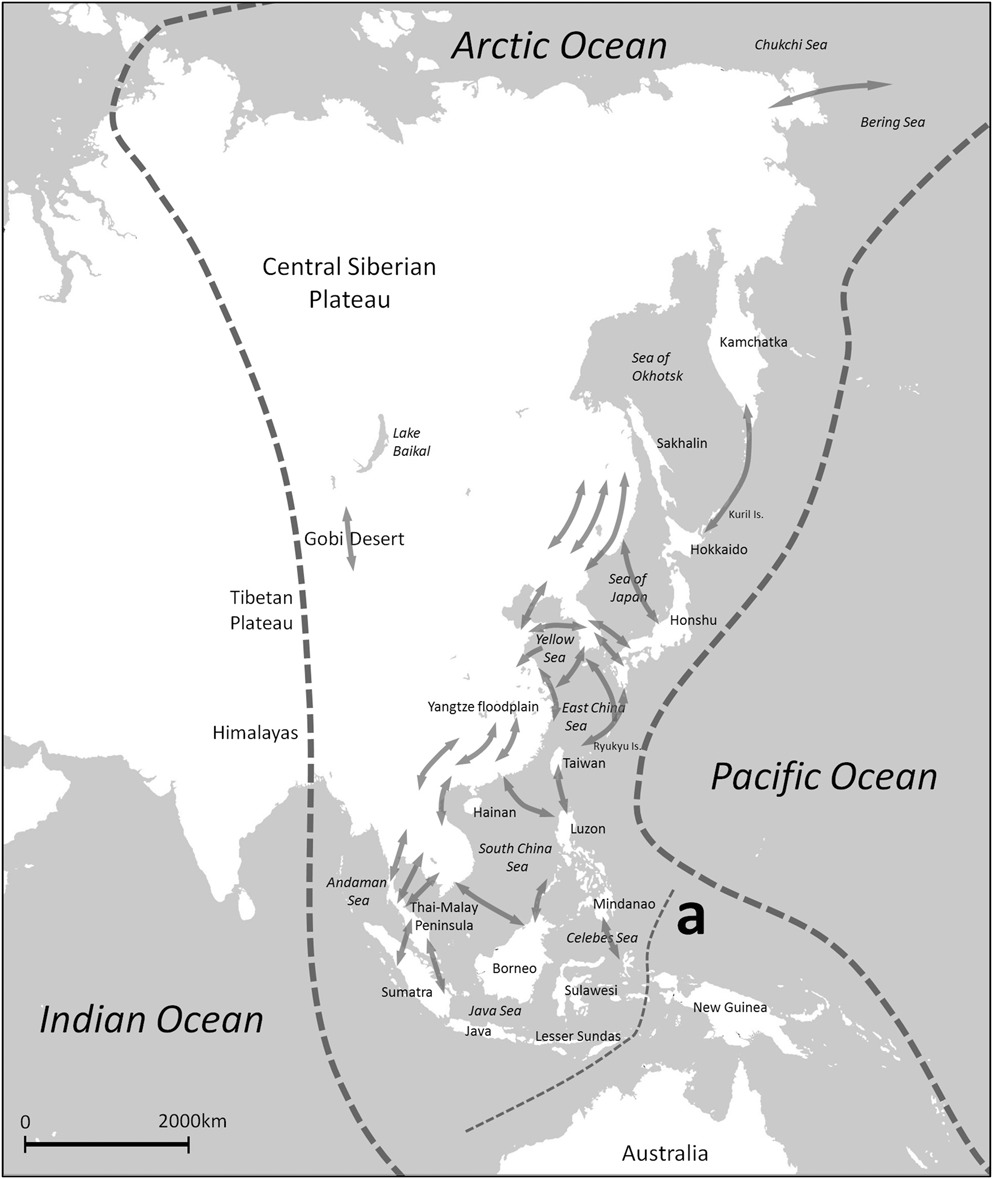
Asia is the largest and most important continent for migratory birds globally in terms of total abundance and diversity. Much of the continent overlaps with the Palearctic, the world’s largest biogeographic region, which is often subdivided into multiple subregions depending on the biota and geographical contexts used. Our review focuses on the East Asian-Australasian Flyway (Figure 1), which overlaps with all of East and South-East Asia, north-eastern India (Arunachal Pradesh) and Bangladesh. In our review, we defined ‘East Asia’ as the Asian continent east of Transbaikalia in Russia (c.105°E), south to the eastern margin of the Qinghai-Tibetan Plateau and eastern Himalaya, which encompasses Brazil’s (Reference Brazil2009) definition of ‘East Asia’. The tropical regions of eastern Asia which are sometimes collectively defined as ‘tropical East Asia’ (Corlett Reference Corlett2009) extend from much of China south of the Yangtze River (c.30°N) to all of political South-East Asia west of New Guinea. While we did not consider north-eastern India and Bangladesh in this review, we acknowledged that many wintering songbirds there are shared with South-East Asia. In classifying bird species as long or short distance migrants, and identifying their wintering grounds, we used the distribution maps and descriptions provided in Brazil (Reference Brazil2009) for eastern Russia, Japan, Korea and China; Coates and Bishop (Reference Coates and Bishop1997) for Sulawesi, the Moluccas and Lesser Sundas; Coates and Peckover (Reference Coates and Peckover2001) for New Guinea; Kennedy et al. (Reference Kennedy, Gonzales, Dickinson, Miranda and Fisher2000) for the Philippine Archipelago; Knystaustas (Reference Knystautas1993) for Russia; MacKinnon and Phillipps (Reference MacKinnon and Phillipps1993) for Borneo, Sumatra and Java; MacKinnon and Phillipps (Reference MacKinnon and Phillipps2000) for east-central China; Wells (Reference Wells2006) for the Thai-Malay Peninsula and Robson (Reference Robson2000) for mainland South-East Asia, corroborated by range information available on BirdLife International’s online ‘datazone’ (BirdLife International 2013), the Xeno-canto bird sound database (www.xeno-canto.org) and data reviewed in Irwin and Irwin (Reference Irwin, Irwin, Greenberg and Marra2005). We rechecked the distribution of all songbird species in our review based on our data as we have field experience with nearly all migratory songbird species in the flyway.
Map of the East Asian-Australasian Flyway showing approximate migration fronts for songbirds based on sites where large-scale migration movements have been observed. Dotted line ‘a’ denotes the south-eastern limit of the wintering ranges of most migratory songbirds (>95%).
Compilation of dataset
We divided tropical East Asia, an important region for wintering songbirds, into six subregions of broadly similar climate and vegetation cover, namely: South China (south of the Yangtze River), mainland South-East Asia, Thai-Malay Peninsula, Greater Sundas, Philippines, and Wallacea. Mainland South-East Asia largely follows that as defined in Robson (Reference Robson2000) which includes collectively the territories of Myanmar, Thailand, Lao PDR, Cambodia and Vietnam, but excludes the Thai-Malay Peninsula which is biogeographically Sundaic. Wallacea follows the definition by Coates and Bishop (Reference Coates and Bishop1997) and includes Sulawesi, the Lesser Sundas and the Moluccas. We omitted Australia, New Guinea and other Melanesian islands because most migratory songbirds there are either stragglers or vagrants (see Coates and Peckover Reference Coates and Peckover2001, Dingle Reference Dingle2004). Bird species are classified as regular migrants if there is published evidence to show that they occur seasonally in one region as breeders, and regularly (autumn-winter) in a region of lower latitude as non-breeders. For instance, Siberian Blue Robin Luscinia cyane is considered a regular wintering migrant in the Thai-Malay Peninsula and the Greater Sunda islands based on the literature (Wells Reference Wells2006, Jeyarajasingham and Pearson Reference Jeyarajasingham and Pearson2012), range descriptions in available databases and our field experience, while the paucity of records of Yellow-breasted Bunting Emberiza aureola from the same region indicates that it is not a regular winter migrant. The species-level taxonomy and nomenclature used in our review is based on that in the BirdLife checklist v. 6.1 (http://www.birdlife.org/datazone /info/taxonomy), from which we also compiled information on species’ breeding range size (in km2), overall population trends (stable, decreasing or increasing) and the presence of at least one migratory population in the review region. For family-level taxonomy, we chose to adopt that of the International Ornithologists’ Union (Gill and Donsker Reference Gill and Donsker2013) to be in line with recent advances in avian phylogeny, but not expected to have significant influence on the conservation status of individual species. Given incomplete knowledge of the breeding ranges of many species in East Asia and errors in range estimates for some species (e.g. Arctic Warbler Phylloscopus borealis), we classified the breeding range data into size categories from ‘tiny’ to ‘continental’ to minimise the influence of these errors.
Since not all species of songbirds in the region are long-distance migrants, we only considered a songbird species a long-distance migrant if 1) at least one, some or all populations are known to migrate to lower latitudes in temperate East Asia (e.g. Lapland Longspur Calcarius lapponicus), tropical South-East Asia (e.g. Common Stonechat Saxicola torquata) or a combination of both (e.g. White Wagtail Motacilla alba), and if 2) the species have at least one, some or all known populations breeding in Arctic East Asia (e.g. Asian Rosy-finch Leucosticte arctoa), temperate East Asia (Mugimaki Flycatcher Ficedula mugimaki) or mainland South-East Asia (Blue-winged Pitta Pitta moluccensis) (Tables S1, S2 in the online Supplementary Material). Therefore, long-distance migrants in our review also include species termed as ‘boreal’ and ‘intra-tropical’ migrants in Kirby (Reference Kirby2010). Species that are recognised as stragglers into our region of review but with significant, if not entire breeding populations outside (e.g. Large-billed Reed-warbler Acrocephalus orinus) are excluded, as are species with breeding populations that overwinter outside the region (e.g. Northern Wheatear Oenanthe oenanthe).
Importance of East Asian-Australasian Flyway to migratory birds
Boere and Stroud (Reference Boere, Stroud, Boere, Galbraith and Stroud2006) defined a ‘flyway’ as the entire geographical range of a species, or aggregations of related species within which populations migrate from breeding to non-breeding areas. Although the flyway approach provides a useful generalisation for most (but not necessarily all) species that migrate within it, Kirby (Reference Kirby2010) acknowledged the usefulness of the ‘flyway’ concept in organising conservation actions between multiple countries. Using flyway definitions commonly used for waterbirds (Boere and Stroud Reference Boere, Stroud, Boere, Galbraith and Stroud2006, Kirby Reference Kirby2010), up to five flyways overlap with Asia. The East Asian-Australasian Flyway (Figure 1) encompasses all of East Asia, South-East Asia, north-east India, Australia, the west Pacific islands and parts of Alaska (see Alerstam et al. Reference Alerstam, Backman, Strandberg, Gudmundur, Gudmundsson, Henningsson, Karlsson and Rosen2008) and overlaps with the territories of 22 countries (EAFFP 2012). This migration system is recognised as the most species-rich flyway globally, hosting approximately 477 species of landbirds and a further 201 waterbirds (Kirby et al. Reference Kirby, Stattersfield, Butchart, Evans, Grimmett, Jones, O’Sullivan, Tucker and Newton2008), with increasing diversity and proportion of migrating species as latitude increases from its equatorial regions to northern Siberia (Kuo et al. Reference Kuo, Lin, Chuang, Lee and Ding2013). The East Asian-Australasian Flyway is especially important for waterbirds, of which more species, and species of conservation concern occur here than any other migration system (Crosby and Chan Reference Crosby, Chan, Boere, Galbraith and Stroud2006). Not surprisingly, much of the research (e.g. Cao et al. Reference Cao, Barter and Lei2008b, Amano et al. Reference Amano, Szekely, Koyama, Amano and Sutherland2010) and many conservation directions for the East Asian-Australasian Flyway to date (EAAFP 2012) have focused on shorebirds, cranes (e.g. Shiu et al. Reference Shiu, Tokita, Morishita, Hiraoka, Wu, Nakamura and Higuchi2006), birds of prey (e.g. Germi et al. Reference Germi, Young, Salim, Pangimangen and Schellekens2009, Higuchi Reference Higuchi2013) and waterfowl, partly also due to interest in migratory bird transmission of avian influenza (e.g. Zhao Reference Zhao2006, Cheng et al. Reference Cheng, Lee, Ho, Chyi and Wang2010, Sivay et al. Reference Sivay, Sayfutdinova, Sharshov, Alekseev, Yurlov, Runstadler and Shestopalov2012). Despite this, it is still widely recognised as one of the world’s most poorly understood flyways (Newton Reference Newton2007).
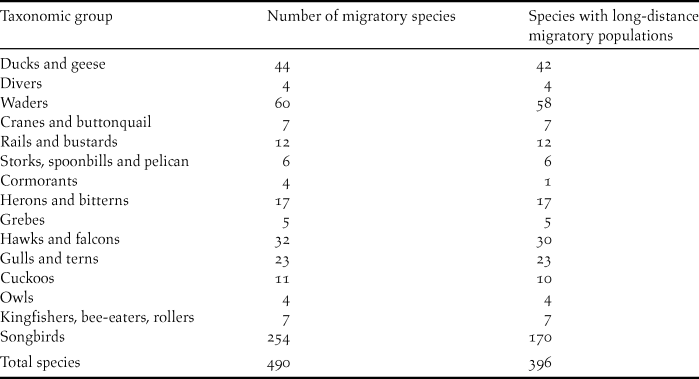
Our review identified at least 254 species of songbirds that undertake latitudinal migration in the East Asian-Australasian Flyway (Table S1). The majority (170 species, 67%) are long-distance migrants of which about 155 species have breeding populations in temperate/Arctic East Asia. At least 83 additional species are short-distance migrants, many also altitudinal migrants that descend from the Tibetan Plateau, eastern Himalaya and the region’s uplands to nearby lowlands of central, east and south China, north-east India and mainland South-East Asia during winter. Given ongoing taxonomic revisions based on modern phylogenetic tools, it is certain that the total diversity of migratory songbirds recognised for this Flyway will increase, with some taxa having smaller distributions than before, when consensus on certain species complexes (e.g. Alström et al. Reference Alström, Saitoh, Williams, Nishiumi, Shigeta, Ueda, Irestedt, Björklund and Olsson2011, Lobkov Reference Lobkov2011, Leader and Carey Reference Leader and Carey2012) is achieved.
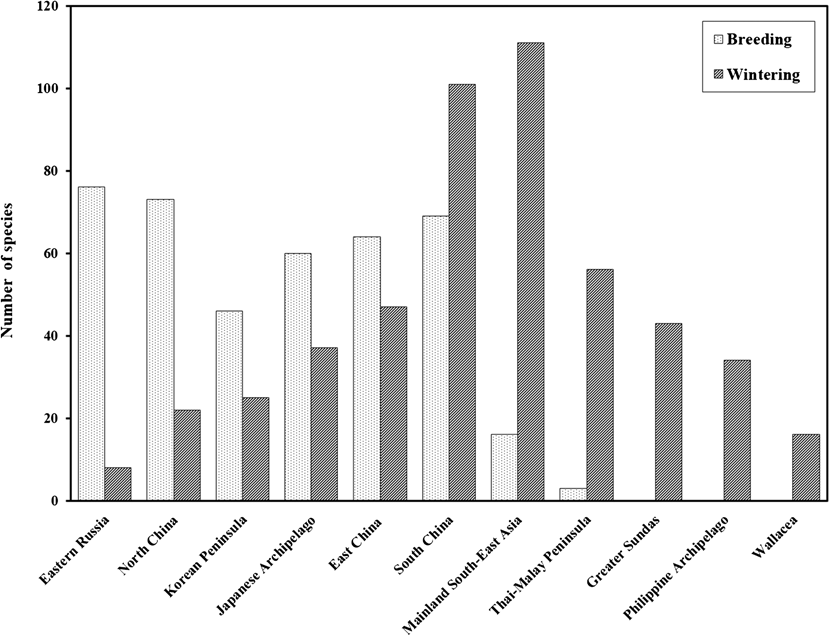
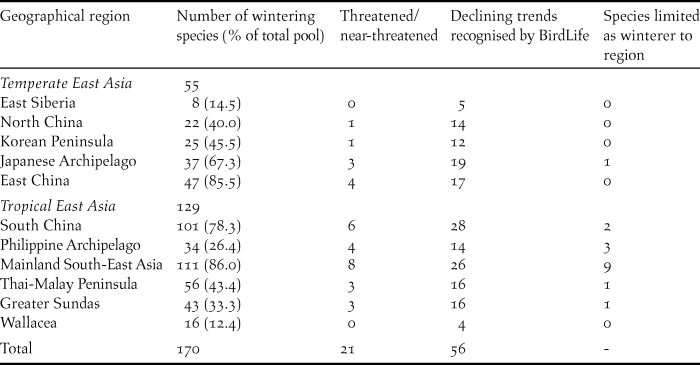
The 170 species of long-distance songbird migrants identified include: 1) species that breed in Arctic Russia and western Alaska and overwinter in temperate East Asia; 2) species that breed in temperate East Asia and subarctic Russia that winter in the Asian tropics and/or the lower latitudes of East Asia; or, 3) species that are ‘intra-tropical migrants’ that breed within the subtropics and winter at equatorial latitudes. Temperate East Asia, which includes eastern Russia from Transbaikalia to Yakutia, Chukotka and the Russian Far East, eastern Mongolia, northern China, the Korean Peninsula and the Japanese archipelago, supports about 55 wintering species, and is especially important for granivorous migrants such as buntings and finches. In the East Asian tropics, diversity of wintering songbirds is highest in southern China and mainland South-East Asia (Table 2, Figure 2), and decreases eastwards to the Philippine Archipelago and Wallacea. Collectively, Sulawesi, the Moluccas and Lesser Sundas support only 16 regular songbird migrants and no species reach continental Australia as regular winterers (Dingle Reference Dingle2004). New Guinea supports only about five wintering Palearctic songbirds. Similarly, few other non-passerine landbird migrants (i.e. cuckoos) reach New Guinea or Australia as regular wintering species (Dingle Reference Dingle2004). Consequently, the East Asian-Australasian Flyway is probably more appropriately termed as the ‘East Asian’ flyway, at least in the context of songbirds.
Bar chart showing distribution of breeding and wintering songbird species richness across temperate East Asia and tropical East Asia (South-East Asia and South China), classified by geographic region as per our definitions.
Taxonomic diversity of songbirds in the East-Asian Flyway
Most landbird migrants in the East Asian migration system are songbirds, with at least 254 species from 32 families (Table 1; Table S1), of which at least one population undertakes seasonal latitudinal migration. Of 170 long-distance migrants, 129 species have populations that overwinter in the tropics, with the greatest diversity of wintering songbirds in mainland South-East Asia (111 species) and southern China (101 species) (Table 2, Figure 2). This is a much higher total than West and East Africa (see Morel and Morel Reference Morel and Morel1992, Pearson and Lack Reference Pearson and Lack1992), which when collectively considered, only support 83 species from 14 families in a larger area.
Major taxonomic groups with migratory representatives within the East Asian-Australasian Flyway (migratory stragglers and vagrants are excluded).
Breakdown of long-distance migratory songbirds by wintering geographical regions across temperate and tropical East Asia (South-East Asia and South China).
The two East Asian families with the greatest diversity of migrants are the insectivorous Muscicapidae (flycatchers and chats) and Phylloscopidae (leaf warblers), of which the majority of constituent species are long-distance, tropical migrants. Both families are also well represented in tropical Africa as migrants (Figure S1), which supports at least 23 Muscicapidae species although only four species of leaf-warblers winter there. Additionally, Emberizidae (buntings) and Fringillidae (finches) are well-represented in the East Asian Flyway but the majority of species winter in temperate East Asia. For example, 14 of 22 buntings overwinter in temperate Asia while no species winter in the Thai-Malay Peninsula or the Greater Sundas. Similarly, finches are well-represented in temperate East Asia with at least 16 wintering species. These geographical patterns of winter distribution across migratory songbirds of different dietary guilds are likely to be tied to spatio-temporal variation of food resources in winter. In particular, distributions of ectothermic arthropods are strongly influenced by temperature and these are thus more abundant in warmer areas (Shiu and Lee Reference Shiu and Lee2003) at lower elevations and latitudes. Insectivores like leaf-warblers migrate further south into the tropical belt where insect abundances are higher (Newton Reference Newton2007), while granivores such as buntings and finches can still forage for seeds in coniferous forests and woodland in temperate Asia during winter.
Songbird migration across the East Asian Flyway
Long-distance migrants which form the majority of migratory songbirds include species with at least one population (incomplete migrant), or all populations (complete migrant) that travel from temperate breeding grounds to tropical wintering grounds, or within temperate areas but at lower latitudes prior to the boreal winter. Populations of a few species of long-distance migrants (e.g. Lapland Longspur, Asian Rosy-finch) fly from breeding grounds above the Arctic Circle to overwinter in relatively warmer, temperate areas in East Asia (e.g. eastern China, Japan) (see Brazil Reference Brazil2009). Furthermore, some species with distributions that straddle temperate and tropical regions may have non-migratory and migratory populations (e.g. Asian Paradise-flycatcher Terpsiphone paradisi), resulting in leapfrog migration patterns.
A minority of the migratory songbirds in the Eastern Palearctic are recognised as short-distance migrants, especially species occurring at subtropical latitudes, high elevations and some granivorous temperate species (e.g. finches). Many species that breed in the high-elevation forests of the eastern Himalaya, Qinghai-Tibetan Plateau, central China or northern South-East Asia are short-distance and/or altitudinal migrants that descend to overwinter in the lowlands and riverine plains of South-East Asia, especially along the upper Ayeyarwaddy (see Tordoff et al. Reference Tordoff, Appleton, Eames, Eberhardt, Hla, Thwin, Zaw, Moses and Aung2007) and north-east India, the Himalayan foothills and other habitats at lower elevations in mainland South-East Asia and south China (Luo et al. Reference Luo, Wu, Chang, Liu, Yang, Zhang and Zou2014). These short-distance migrants include many chats, finches, thrushes and flycatchers.
In general, the migration paths taken by these songbirds are diverse, but are undertaken during both day and night and on broad fronts (Bruderer Reference Bruderer1997, Chernetsov Reference Chernetsov2012, Moores Reference Moores2012), sometimes involving large water crossings, especially for species breeding in the Alaskan Taiga, Sakhalin Island, Japan, Taiwan and islands in the Yellow Sea (e.g. Mizuta et al. Reference Mizuta, Utsunomiya, Torikai and Abe2009), species wintering in the islands of South-East Asia (e.g. Gibson-Hill Reference Gibson-Hill1950, Simpson Reference Simpson1983a, Ellis et al. Reference Ellis, Kepler and Kepler1990), or flight across mountainous regions (e.g. Du et al. Reference Du, Yu, Wang, Lin, Wu and Wang2006, Han et al. Reference Han, Huang, Yuan and Qiu2007). Moreover, migratory landbirds may be concentrated in bottlenecks of land and islands if sea crossings are involved. This is corroborated by observations of large concentrations of landbird migrants on particular small Yellow Sea islands like Socheong-do, Eocheong-do, Hong-do and Heuksan-do in Korea, as well as Hegurajima and the Ryukyu Islands in Japan (Kuroda Reference Kuroda1971, Kim and Yoo Reference Kim and Yoo2010, Nam et al. Reference Nam, Choi, Park, Hong, Won, Kim, Bing and Chae2011, Moores Reference Moores2012) and in South-East Asia (e.g. Chasen Reference Chasen1932, McClure Reference McClure1974). In South China in Yunnan, Jiangxi and Hunan provinces (Tang et al. Reference Tang, Deng and Wang2003, Xiao et al. Reference Xiao, Li and Jiang2005, Han et al. Reference Han, Huang, Yuan and Qiu2007), and on the Thai-Malay Peninsula (Chasen Reference Chasen1932, McClure Reference McClure1974), extensive nocturnal trapping exercises have also revealed details of the migratory dynamics of night-flying songbirds as they cross mountainous barriers, particularly the influences of weather conditions on migration (Yang et al. Reference Yang, Yang, Wang, Liu, An, Zhang, Li and Shi2009).
Breeding and wintering ranges of migratory songbirds
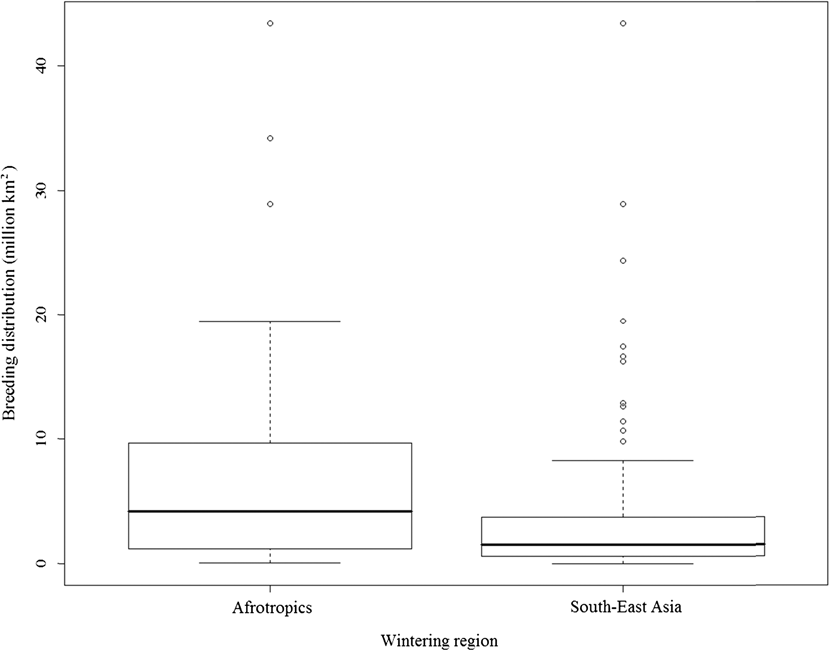
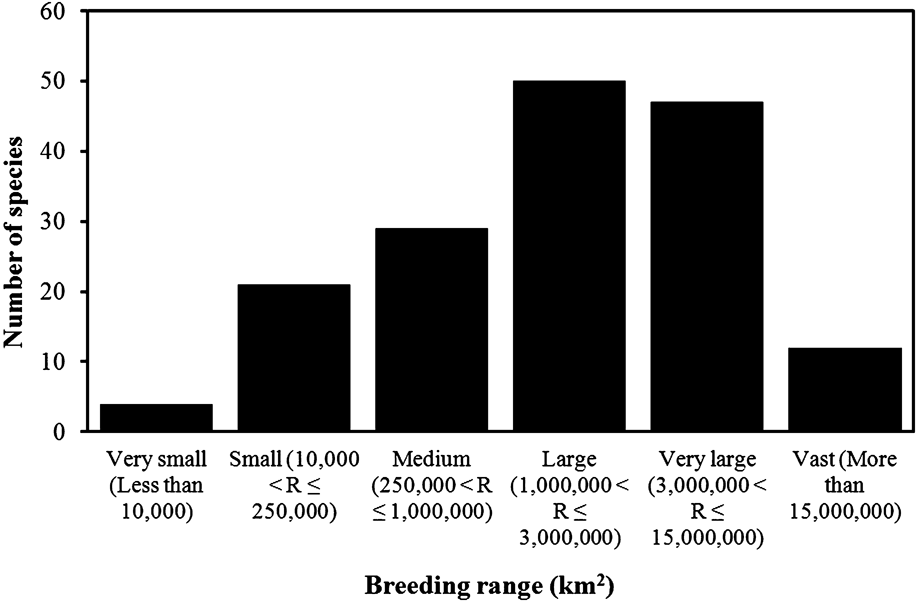
Unlike songbirds breeding in temperate Europe and North Africa, many which have relatively large ranges extending into Central Asia and the Middle East (e.g. Common Nightingale Luscinia megarhynchos), East Asian migratory songbirds have generally smaller ranges. We found that breeding range sizes of long-distance migrants wintering in South-East Asia differed significantly from European species wintering in the Afrotropics (Z = -3.9432, Mann-Whitney U = 4762.5, P < 0.001) (Figure 3). Twenty-five species of summer breeding songbirds in East Asia have small breeding ranges of less than 250,000 km2, (Figures 3 and 4) compared to only five such species wintering in the Afrotropics. The insular geography of temperate East Asia, especially Sakhalin Island, the Japanese archipelago and a number of small island groups in the Yellow, East China Seas and the Sea of Japan (also known as the East Sea) has contributed to the evolution of a number of breeding endemics with relatively small ranges (Moores Reference Moores2012), including Japanese Robin Luscinia akahige, Pleske’s Grasshopper-warbler Locustella pleskei and Sakhalin Leaf-warbler Phylloscopus borealoides. Among these, some species have entire breeding ranges confined to a few small islands, notably Izu Leaf-warbler P. ijimae (Brazil Reference Brazil2009). Their relatively small populations indicate that these narrow-ranged species are likely to be more sensitive to threats at stop-over or wintering sites.
Boxplot comparing estimated breeding range size of long-distance, migratory songbirds in the Afrotropics (n = 83) and South-East Asia (n = 129).
Bar chart showing distribution of breeding range size classes for songbird species with range size estimates provided in the BirdLife ‘Datazone’ (BirdLife International 2013).
There are few published data on the wintering distribution of many migratory songbirds in the flyway and the entire wintering range of some species was unknown until recently (e.g. Sakhalin Leaf-warbler) (Yap et al. Reference Yap, Yong, Low, Lim, Foley, Cros and Rheindt2014). However, the insular geography of much of South-East Asia implies that many species have naturally disjointed wintering populations spread across multiple landmasses, while a few have most, if not the entire wintering populations concentrated onto one island. For instance, the abundant Siberian Blue Robin is known to winter across mainland South-East Asia, the Thai-Malay Peninsula, Sumatra, Borneo (Robson Reference Robson2000, Wells Reference Wells2006), including even small islands in the Riau Archipelago off Sumatra (D. L. Yong unpubl. data). Conversely, the entire population of the Fairy Pitta Pitta nympha is thought to winter only in Borneo (BirdLife International 2013).
There are also migratory songbirds that winter exclusively along the East Asian flyway, but draw from populations widely distributed across temperate Eurasia. The best example is the widespread Arctic Warbler P. borealis, which breeds across the Russian taiga to Fennoscandia (Laaksonen and Lehikoinen Reference Laaksonen and Lehikoinen2013), and across the Bering Sea into Alaska (Alerstam et al. 2006). The global population of this species is concentrated mostly in southern China, mainland South-East Asia, the Thai-Malay Peninsula, Philippines and the Greater Sundas in winter (BirdLife International 2013), and wintering Arctic Warblers can occupy diverse habitats from urban greenery to mangroves, evergreen forests and montane elevations (Robson Reference Robson2000), and at relatively high densities (McClure Reference McClure1967, Yong et al. Reference Yong, Lim and Lee2013). While the migration routes, wintering ecology and distribution of each taxonomic unit remains poorly known, its abundance and high detectability indicates that the Arctic Warbler may be a suitable model species for studying long-distance passerine migration between temperate Eurasia and the East Asian tropics.
Migrating songbirds at stop-over sites on the East Asian Flyway
East Asia
East Asia’s habitats provides an important ‘connecting region’ in the form of staging or stop-over sites for migrating songbirds moving between the temperate breeding and tropical wintering grounds for resting and refuelling, which are critical to the life history and survival of these migrants (Bairlein Reference Bairlein1985, Ma et al. Reference Ma, Li and Chen2005). Although stop-over ecology has been less studied here than in Europe (see Chernetsov Reference Chernetsov2012), there is a growing number of studies, in addition to a relatively long history of regular bird banding exercises to document bird migration, especially in Japan (e.g. Yoshii et al. Reference Yoshii, Sato, Ozaki, Shigeta, Komeda, Yoshiyasu and Mitamura1989, Komeda and Ueki Reference Komeda and Ueki2002, Ozaki Reference Ozaki2008), South Korea (e.g. Won et al. Reference Won, Woo, Ham and Yoon1966) and China where a 30-year old national bird banding programme exists (Wang et al. Reference Wang, Chang, Moore, Su, Cui and Yang2006b). Similar bird banding programmes also exist in the Russian Far East (e.g. Valchuk et al. Reference Valchuk, Yuasa and Morosova2005, Pronkevich et al. Reference Pronkevich, Averin, Svetlakov, Mannanov, Roslakov, Tagirova and Kapitonova2007, Heim et al. Reference Heim, Smirenski, Siegmund and Eidam2012). Socheong-do, Oeyeon-do, Eocheong-do, Heuksan-do and Hong-do islands in the Yellow Sea are particularly well-studied by South Korea-based researchers and much has been learnt on diverse aspects of seasonal migratory patterns (Park et al. Reference Park, Hong and Chae2008, Kim Reference Kim2009, Won et al. Reference Won, Park, Hong, Kim, Choi, Bing, Nam and Chae2010, Moores Reference Moores2012, Choi et al. Reference Choi, Kim, Son, Kang, Hur and Han2013); stop-over mortality (Bing et al. Reference Bing, Choi, Nam, Park, Hong, Sung, Chae and Choi2012), and migration strategy (Nam et al. Reference Nam, Choi, Park, Hong, Won, Kim, Bing and Chae2011). In Japan, species-specific studies such as Nakamura and Ishizawa (Reference Nakamura and Ishizawa1965) have documented migratory timings and speed for Gray’s Grasshopper-warbler Locustella fasciolata through Honshu, as well as migration flocking behaviour. These studies also revealed that migrants suffered high mortality rates during stop-over, which arose from man-made causes including window strikes and predation by feral cats Felis catus (Bing et al. Reference Bing, Choi, Nam, Park, Hong, Sung, Chae and Choi2012), migrating raptors (Ellis et al. Reference Ellis, Kepler and Kepler1990) and other migrating songbirds (Hong et al. Reference Hong, Bing, Choi, Nam, Won, Kim, Park and Chae2010).
There are fewer stop-over ecology studies in mainland China or Taiwan, but those that exist are useful in understanding the migration ecology of some of the more abundant songbirds in the flyway. In Taiwan, Severinghaus (Reference Severinghaus1996) sampled Brown Shrikes Lanius cristatus, an abundant passage and wintering species at suburban sites, and showed that the species experienced heavy competition for hunting territories, resulting in territorial compression. According to this study, 24% of transient Brown Shrikes passed before wintering birds arrived, thus avoiding competition, while territorial behaviour was very evident between birds present. In northern China, Wang et al. (Reference Wang, Chang, Moore, Su, Cui and Yang2006b) sampled Orange-flanked Bush-robin Tarsiger cyanurus at a stop-over site in Heilongjiang and was able to document gains in mass by birds on passage, as well as evidence of differential arrival timings of males and females, a pattern that might indicate temporal partitioning to reduce competition. Age or sex-related temporal partitioning within species as shown in Wang et al. (Reference Wang, Chang, Moore, Su, Cui and Yang2006b) in China and in Nam et al. (Reference Nam, Choi, Park, Hong, Won, Kim, Bing and Chae2011) in Korea, or between ecologically similar species can minimise competition during stop-over, but may also result from differential latitudes of the breeding ranges, as suggested in Imanishi et al. (Reference Imanishi, Obata, Murata, Edagawa, Iwasaki and Ohmura2009) which studied autumn migration timings of three Phylloscopus warblers in Japan.
In the Russian Far East, the increasing numbers of surveys and bird ringing exercises are beginning to reveal the pathways, abundance, diversity and stop-over ecology of songbird migrants that pass through study sites there, especially in the Lower Amur region in Primorsky, Khabarovsk and Amur oblasts (e.g. Valchuk and Huettmann Reference Valchuk and Huettmann2006, Gluschenko et al. Reference Gluschenko, Nechaev and Gluschenko2010, Pronkevich et al. Reference Pronkevich, Averin, Svetlakov, Mannanov, Roslakov, Tagirova and Kapitonova2007, Pronkevich Reference Pronkevich2011, Heim et al. Reference Heim, Smirenski, Siegmund and Eidam2012). Bird ringing work at the well-studied Muraviovka Park, for instance, has established it as a site of importance to songbirds on migration across the Amur region in autumn. Data from bird ringing at Muraviovka Park has allowed stop-over timings for various species to be established and may be as short as one day for the Yellow-throated Bunting Emberiza elegans to more than two weeks for species like the Pallas’s Bunting E. pallasi (Heim et al. Reference Heim, Smirenski, Siegmund and Eidam2012). Other studies like Valchuk et al. (Reference Valchuk, Yuasa and Morosova2005) have established multiple migration routes of the Rustic Bunting connecting stop-over sites in the Russian Far East and parts of Japan.
South-East Asia
Migratory songbird ecology in passage or stop-over habitats (Ruth et al. Reference Ruth, Diehl and Felix2012), and South-East Asia in particular remains poorly known (e.g. Mahood et al. Reference Mahood, Delonglée, Klingel, Wicker and Robson2013b). Ever since the extensive banding studies in the 1960s (e.g. McClure Reference McClure1974) and the bird surveys in the Straits of Malacca’s islands (e.g. Gibson-Hill Reference Gibson-Hill1950), there are few recent studies examining aspects of stop-over ecology of migratory songbirds in the East Asian tropics. Anecdotal observations and studies based on birdwatching data suggest that some species exhibited differential passage peaks during migration (e.g. Round Reference Round2010), used a relatively large breadth of habitats during stop-over, including poor quality or small habitat patches on islands and in built-up areas (e.g. Anon Reference Anon2007, Yong and Liu in press) and may suffer high mortality due to predation by migrating hawks (e.g. Ellis et al. Reference Ellis, Kepler and Kepler1990). In Thailand, Round (Reference Round2010) analysed long-term birdwatching records of three migratory songbirds (Tiger Shrike Lanius tigrinus, Mugimaki Ficedula mugimaki and Yellow-rumped Flycatcher F. zanthopygia) on passage and found differential passage timing peaks for the three species, as well as differential arrival timings of males and females, suggesting protandrous migration patterns. Mahood et al. (Reference Mahood, Delonglée, Klingel, Wicker and Robson2013b) reviewed passage records of songbirds in northern Vietnam and documented many species stopping over in apparently poor-quality urban habitats, especially in Hanoi city. Yong and Liu (in press) examined temporal variation of records of Brown-chested Jungle-flycatcher Rhinomyias brunneatus at stop-over sites in Singapore in October-November and reported relatively high densities of the species across a habitat gradient from poor (secondary scrub) to good quality primary forest habitat, suggesting that stop-over habitat quality may have less impact on transient birds.
Use of wintering habitats by migratory songbirds
Overview
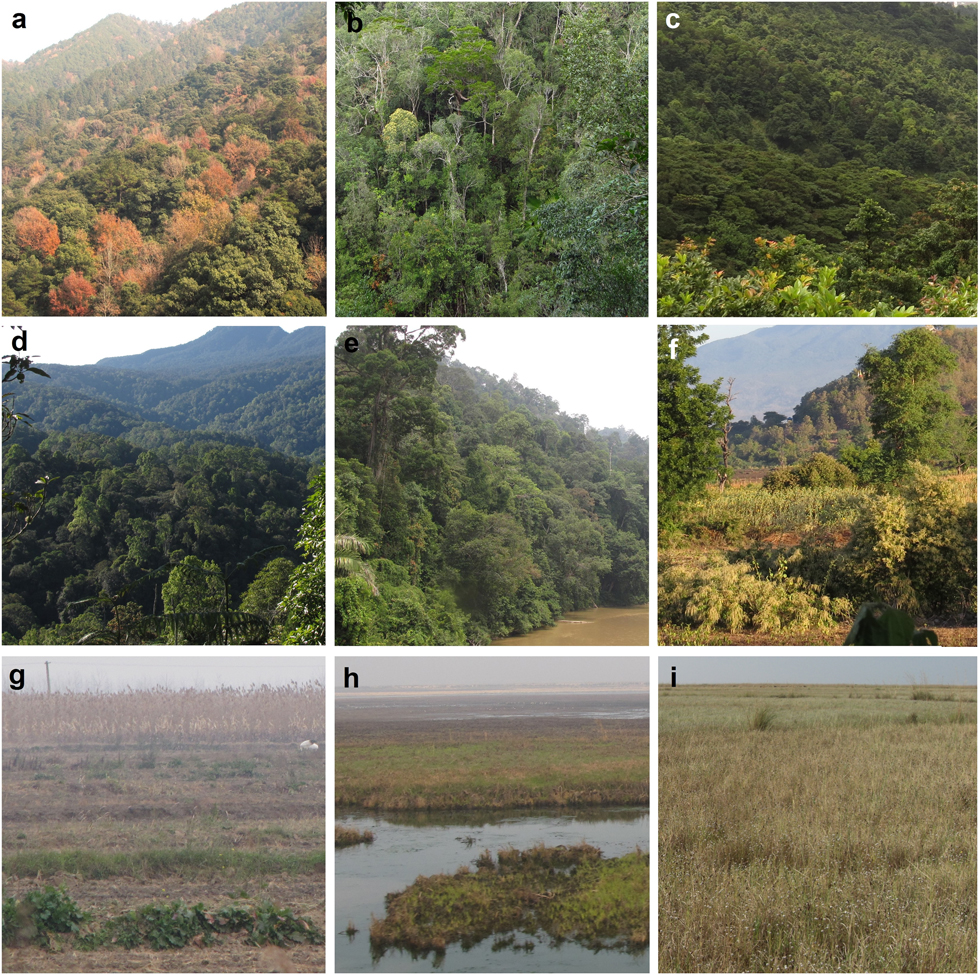
Almost all terrestrial habitats across East and South-East Asia are used by wintering songbirds to some extent (Figure 5). Habitat use varies with species, with generalists like the Arctic Warbler occurring across a gradient of habitats, while species with narrower niches (e.g. forest and wetland specialists) occur in limited habitat types (Johnson et al. Reference Johnson, Sherry, Holmes and Marra2006). Regular assemblages of migratory songbirds that form in wintering sites can attain relatively high densities and species richness (e.g. Karr Reference Karr1976), with as many as 15 species in some lowland rainforests in the Thai-Malay Peninsula. What remains unclear is how wintering songbird communities exploit or partition resources or interact with other species, as well as the demographic patterns within the wintering populations (e.g. Ornat and Greenberg Reference Ornat and Greenberg1990).
Major wintering habitats for songbird migrants across East and South-East Asia: a) Mixed deciduous forest, Jiangxi, south-east China, b) Broadleaved evergreen forest, Hainan, south China, c) Mixed woodland, Hong Kong, south China, d) Submontane rainforest, west Sumatra, Indonesia, e) Lowland rainforest, Pahang, Peninsular Malaysia, f) Agricultural areas abutting dry deciduous woodland, Bagan, Myanmar, g) Agricultural fields, Jiangsu, east China, h) Freshwater wetlands, Poyang Lake, south-east China, i) Semi-inundated grassland, Tonle Sap, Cambodia (All photos: Ding Li Yong).
Agricultural land and urban areas
Cultivated land, which currently covers 48.2% of the land area across East Asia (The World Bank database, accessible at http://data.worldbank.org) is important to many species of wintering songbirds that otherwise depend on open country or scrub habitat, particularly some Phylloscopus and Locustella warblers, buntings, redstarts, shrikes and wagtails (e.g. Moores Reference Moores2013), and may be increasingly so if other wintering habitats such as forests are cleared (Johnson et al. Reference Johnson, Sherry, Holmes and Marra2006). However, farming intensity, farming methods, season and crop types (e.g. Dänhardt et al. Reference Dänhardt, Green, Lindström, Rundlöf and Smith2010) are all likely to influence the composition of wintering songbirds therein, given species-specific habitat preferences and habitat breadths. Many shrikes, larks, wagtails, pipits and buntings have broader habitat preferences and may occur across a mosaic of agricultural landscapes while some species are dependent on finer-scale habitat features like presence of water bodies, shade or extent of shrub cover. Some Locustella warblers and buntings, for example, are associated with wetter habitats like flooded grassland and can utilise cultivated land like paddyfields (e.g. Fujioka et al. Reference Fujioka, Lee, Kurechi and Yoshida2010).
Paddyfields, which are among the most often sampled agricultural landscapes for wintering migrant birds in East Asia support six songbirds in Japan and Korea during winter, and a number of breeding migrants in summer (Fujioka et al. Reference Fujioka, Lee, Kurechi and Yoshida2010, Stafford et al. Reference Stafford, Kaminski and Reinecke2010). In subtropical Hong Kong, studies using birdwatching data and regular surveys, like Carey et al. (Reference Carey, Chalmers, Diskin, Kennerley, Leader, Leven, Lewthwaite, Melville, Turnbull and Young2001) suggested that remnant paddyfields are important for wintering buntings and Common Stonechat Saxicola torquatus. On the other hand, Azman et al. (Reference Azman, Abdul Latip, Mohd Sah, Md Akil, Shafie and Khairuddin2011) found few migratory songbirds in paddy fields in Peninsular Malaysia, including the Barn Swallow Hirundo rustica and Brown Shrike.
Oil palm plantations which increasingly cover much of Sundaic South-East Asia (Fitzherbert et al. Reference Fitzherbert, Struebig, Morel, Danielsen, Brühl, Donald and Phalan2008) support few migratory songbirds, and lack species dependent on forests like Siberian Blue Robins, as shown by Azman et al. (Reference Azman, Abdul Latip, Mohd Sah, Md Akil, Shafie and Khairuddin2011). Similarly, urban areas are also generally poor in wintering migrant bird diversity and abundance. Zhou et al. (Reference Zhou, Fung and Chu2012) sampled bird diversities in Hong Kong and found few species of wintering songbirds in urban parks, and those that occurred were at lower densities than in secondary forests. No migrant species for example were among the top 10 most abundant species in urban parks, but Lemon-rumped Warbler Phylloscopus proregulus, Inornate Warbler P. inornatus and Grey-backed Thrush T. hortulorum were among the most abundant birds in secondary forests in winter (Zhou et al. Reference Zhou, Fung and Chu2012). In urban areas in Singapore and Peninsular Malaysia, only two species regularly utilise urban parkland (Yong et al. Reference Yong, Lim and Lee2013), notably Arctic Warbler and Asian Brown Flycatcher Muscicapa dauurica.
Natural wetlands
Natural wetlands, which include riparian forests, seasonally-flooded grasslands, freshwater marshes and coastal (salt) marshes are important wintering habitats for many long-distance migrants like swallows, buntings, reed- and grasshopper-warblers, Luscinia and Saxicola chats, and Chinese Penduline-tit Remiz consobrinus (Nisbet and Medway Reference Nisbet and Medway1974, Carey et al. Reference Carey, Chalmers, Diskin, Kennerley, Leader, Leven, Lewthwaite, Melville, Turnbull and Young2001, Gan et al. Reference Gan, Choi, Wang, Ma, Chen and Li2010). Even newly formed coastal wetlands can attract wintering buntings, warblers and robins, as shown by surveys of wetland on shoals in the Yangtze estuary (Ma et al. Reference Ma, Gan, Choi, Jing, Tang, Li and Chen2007). Many species of robins, redstarts, shortwings and flycatchers that breed at high elevations in the Eastern Himalaya and mountain ranges of south-central China (e.g. Qinling and Sichuan mountains) also descend to the riparian wetlands of northern Myanmar, Thailand and north-east India in winter (see Rasmussen and Anderton Reference Rasmussen and Anderton2005, Tordoff et al. Reference Tordoff, Appleton, Eames, Eberhardt, Hla, Thwin, Zaw, Moses and Aung2007, Song et al. Reference Song, Alström, Zhang, Gao, Gong, Holt, Quan, Yin and Lei2013), including two poorly known chats (i.e. Firethroat Luscinia pectardens and Black-throated Blue Robin L. obscura).
Much knowledge on the usage and distribution of wintering songbirds in wetlands are based on birdwatching data, field surveys, past (e.g. Nisbet and Medway Reference Nisbet and Medway1974, McClure Reference McClure1974) and ongoing banding exercises (e.g. Round and Rumsey Reference Round and Rumsey2003, Round and Fisher Reference Round and Fisher2009). McClure (Reference McClure1974) for example, banded hundreds of thousands of swallows and other wintering songbirds, including many reed-warblers in reed beds fringing the Bung Boraphet Lake in central Thailand during the MAPS project. Recent surveys in riparian habitats and wetlands along the tributaries of the upper Ayeyarwaddy, northern Myanmar by Tordoff et al. (Reference Tordoff, Appleton, Eames, Eberhardt, Hla, Thwin, Zaw, Moses and Aung2007) also documented a number of migratory songbirds wintering there, including short-distance and altitudinal migrants like the Rusty-bellied Shortwing Brachypteryx hyperythra. Increasingly polluted, overfished, converted for agriculture or threatened by hydrological impacts of damming (Dudgeon Reference Dudgeon2000), some of the most important examples of large natural wetlands for wintering songbirds in the region include Chiang Saen and Bung Boraphet lakes in Thailand, wetlands fringing the Tonle Sap lake in Cambodia, riparian grassland and oxbow lakes along the upper Chindwin in Myanmar, the Dongting and Poyang lake systems of the Lower Yangtze floodplain, and coastal marshes on the Yangtze Estuary and Jiangsu-Zhejiang coast in China.
Forests
Broadleaved evergreen and mixed forests are of major importance as wintering habitats for migratory songbirds across south China and South-East Asia, and significantly more so compared to the Afrotropics (Figure 6) (e.g. Karr Reference Karr1976). Compared to tropical Asia, many authors acknowledge that wintering songbirds in Africa are less forest-dependent (e.g. Moreau Reference Moreau1972, Morel and Morel Reference Morel and Morel1992, Pearson and Lack Reference Pearson and Lack1992) despite the large extent of rainforest blocks in West, Central and East Africa (Malhi et al. Reference Malhi, Adu-Bredu, Asare, Lewis and Mayaux2013).
Bar chart showing relative proportion of forest-dependent and non-forest dependent migratory songbirds in South-East Asia and the Afrotropics (i.e. West and East Africa).
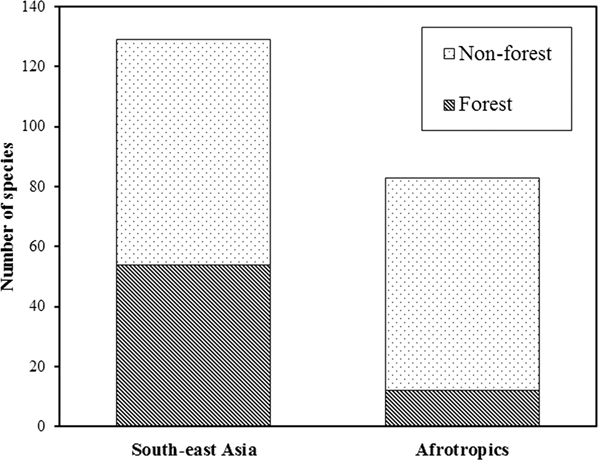
We identified over 50 migratory songbird species in South-East Asia that are dependent on broadleaved evergreen forests as wintering habitat, a proportion significantly higher than in the Afrotropics (χ2 = 14.629, df = 1, P < 0.001). Lowland rainforests in the Thai-Malay Peninsula, for example can support species-rich assemblages of as many as 27 species of wintering warblers, flycatchers and thrushes (Table 3), with migrants forming 6–15% of total bird abundance (Karr Reference Karr1976). Even higher wintering songbird diversities can be expected in Indochinese evergreen forests in the lowlands and at submontane elevations. The well-studied submontane Mo Singto plot (c.30 ha) at Khao Yai National Park, Thailand for example, supports about 29 species of wintering long-distance migrants and a smaller number of short-distance/altitudinal migrants (Round et al. Reference Round, Pierce, Sankamethawee and Gale2011). Much of this wintering songbird diversity can be attributed to wintering Phylloscopus warblers (about nine species) and which also made up as much as 14% of bird abundances (Round et al. Reference Round, Pierce, Sankamethawee and Gale2011).
Wintering habitat usage by long-distance migratory songbirds in three key habitat types in major landmasses across insular South-East Asia.
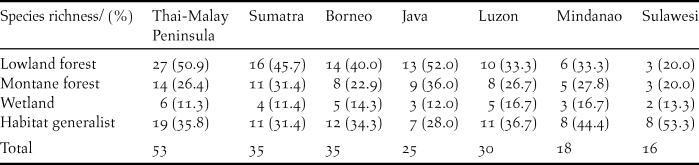
In general, the proportion of wintering songbird diversity in forests is high, with up to 52.0% and 20.0% (Table 3) of migratory songbirds across insular South-East Asia utilising lowland evergreen forests as wintering habitats. Diversity and species richness of wintering assemblages decrease with elevation (Table 3), also demonstrated by surveys of forest migrant bird assemblages across elevation gradients in Taiwan (e.g. Shiu and Lee Reference Shiu and Lee2003). Moreover, there also appears to be variation in habitat preference for some species across the wintering range. For example, the Narcissus Flycatcher Ficedula narcissina winters in hilly to mid-elevation montane forest in Borneo but the subspecies F. n. elisae which winters in the Thai-Malay Peninsula, is dependent on lowland rainforest (Wells Reference Wells2006). Besides some broad patterns highlighted here, we acknowledged that there is still a dearth of knowledge on the composition, community structure, population dynamics and turnover of wintering songbird assemblages across various forest types (e.g. coniferous, broadleaved evergreen, dry dipterocarp, mangroves) and across gradients of disturbance and degradation in the South-East Asian tropics.
Discussion
Conservation status of migratory songbirds in the East Asian Flyway
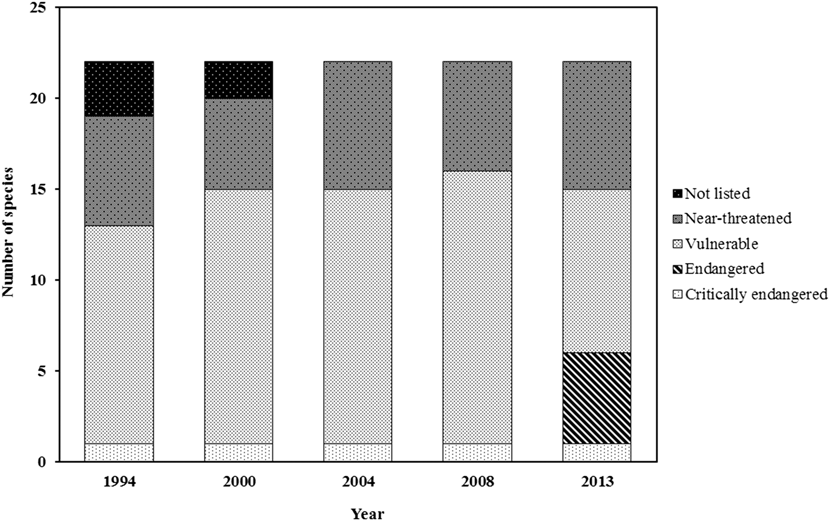
Of 254 species of migratory songbirds reviewed, 15 are presently listed by BirdLife International (2013) as threatened, the majority long-distance migrants (13 species) (Tables S2, S5) and the highest for any migration system. Seven species are ‘Near Threatened’, mostly short-distance migrants. The higher proportion of threatened long-distance migrants appears consistent with reviews of other migration systems (e.g. Vickery et al. Reference Vickery, Ewing, Smith, Pain, Bairlein, Skorpilova and Gregory2014). Additionally, 56 long-distance migratory songbirds are reported to show declining trends (Table 2; Table S3) although the actual figure may be even higher. One species, the ‘Critically Endangered’ White-eyed River-martin Eurochelidon sirintarae has not been reliably recorded for three decades and may be extinct (BirdLife International 2013). Since 1994, six threatened or Near Threatened species have been uplisted while only one was downlisted (Marsh Grassbird Locustella pryeri). A further 15 species threatened since 1994 showed no improvement in status, suggesting that conservation efforts for these species had limited effects in stemming their declines. While the number of ‘Vulnerable’ species has dropped, this has been offset by an increase in species recognised as ‘Endangered’ in the past two years (Figure 7).
Bar chart showing change in threat status of migratory songbirds in the East Asian migratory system from 1994 to 2013. Since 1994, all listed species have either showed no change in status or were uplisted to a higher threat category while only one (Marsh Grassbird Locustella pryeri) was downlisted to a lower threat category within this period.
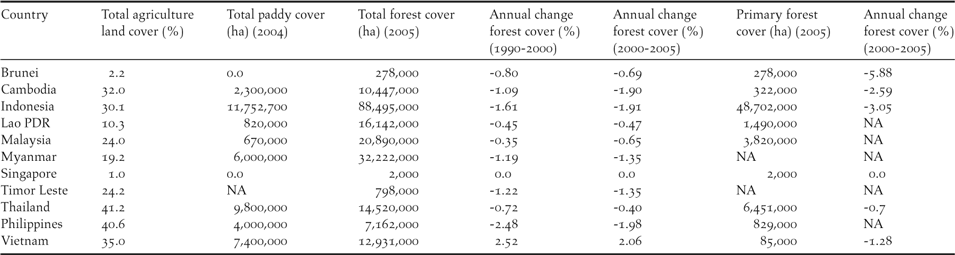
Bird families with high proportions of declining species have members that are dependent on broadleaved evergreen forests (e.g. Pittidae) or freshwater wetlands as wintering grounds (e.g. Acrocephalidae, Locustellidae) (Table S3), as well as some species of scrubby open habitats (e.g. Moores Reference Moores2013). Rapid land use change across the region suggests that a serious and very apparent threat to migratory songbirds is habitat loss, given that migratory species spend more time in the tropical wintering habitats than elsewhere (Sherry and Holmes Reference Sherry, Holmes, Martin and Finch1995). While hunting can affect songbirds at localised spots along the migration trajectory, utilisation of different habitat types across breeding, stop-over and wintering areas means migratory bird populations are susceptible, and thus limited by conditions in multiple sites along its migratory trajectory (Newton Reference Newton2004). In the context of the East Asian Flyway, changing habitat conditions at migration stop-over sites (Wang et al. Reference Wang, Finch, Moore and Kelly1998) and in the wintering grounds (Dale and Hansen Reference Dale and Hansen2013) are of particular concern given much documented habitat loss in East (e.g. Moores Reference Moores2012) or South-East Asia (Table 5).
Declining trends of East Asian migratory songbirds
The long term population trends and rates of decline (if any) of migratory songbirds in the East Asian Flyway remain very poorly known. This is unlike the African-European flyway where comprehensive and established monitoring schemes across multiple countries in Europe (e.g. Pan European Common Bird Monitoring Scheme) and the availability of large datasets (e.g. Birds in Europe database) has allowed clear trends in declines of migratory songbirds to be identified, even at the continental level (Vickery et al. Reference Vickery, Ewing, Smith, Pain, Bairlein, Skorpilova and Gregory2014). In particular, many European countries also have large-scale demographic monitoring programmes using standardised mist-netting or nest monitoring to determine survival, productivity and recruitment rates which can then be used to explain changes in bird populations. Such coordinated databases and programmes are unavailable for East or South-East Asia. However, rapid deforestation and agricultural expansion across much of South-East Asia (Sodhi et al. Reference Sodhi, Posa, Lee, Bickford, Koh and Brook2010), increasing deforestation and degradation of temperate forests in Mongolia and eastern Russia by logging, mining and fires (Kondrashov Reference Kondrashov2004, Salovarov and Kuznetsova Reference Salovarov and Kuznetsova2006, Bradshaw et al. Reference Bradshaw, Warkentin and Sodhi2009, Gombobaatar et al. Reference Gombobaatar, Brown, Sumiya, Tseveenmyadag, Boldbaatar, Baillie, Batbayar, Monks and Stubbe2011) and high levels of hunting (e.g. Alonzo-Pasicolan Reference Alonzo-Pasicolan1992, Liang et al. Reference Liang, Cai and Yang2013) logically implies that many migratory songbirds must suffer some levels of decline. Scattered studies at the local or national scale have also identified declines for some migratory songbirds.
In Japan where abundance and occurrence data of summer breeding songbirds are available, tropical (i.e. South-East Asian) wintering species like Japanese Paradise-flycatcher T. atrocaudata exhibited clear declines (Hirano Reference Hirano1996, Higuchi and Morishita Reference Higuchi and Morishita1999) or even disappeared completely from sites while non-migrants were seemingly unaffected (Yamamoto and Seto Reference Yamamoto and Seto1997). Similarly, a number of long-distance, tropical migrants like Eastern Crowned Warbler P. coronatus and Yellow-breasted Bunting have also shown some declines in South Korea (Moores Reference Moores2012, Reference Moores2013). In Mongolia, the decline of some migratory songbirds, including the Tree Pipit Anthus trivialis has prompted its red-listing in the national conservation action plan (Gombobaatar et al. Reference Gombobaatar, Brown, Sumiya, Tseveenmyadag, Boldbaatar, Baillie, Batbayar, Monks and Stubbe2011). In particular, the rapid decline of the Rustic Bunting, a species dependent on agricultural areas and woodland in winter is now corroborated by data and field surveys across its Eurasian distribution in Finland (Laaksonen and Lehikoinen Reference Laaksonen and Lehikoinen2013), Japan (Ozaki Reference Ozaki2008) and South Korea (Moores Reference Moores2012). In South-East Asia, Round (Reference Round2010) has also found possible declines in abundances of migrating Tiger Shrikes Lanius tigrinus in Thailand, relative to other songbird migrants. Not surprisingly, long-distance migration is now established as an attribute of declining songbirds (Amano and Yamaura Reference Amano and Yamaura2007, Bairlein and Schaub Reference Bairlein and Schaub2009).
Threats faced by migratory songbirds
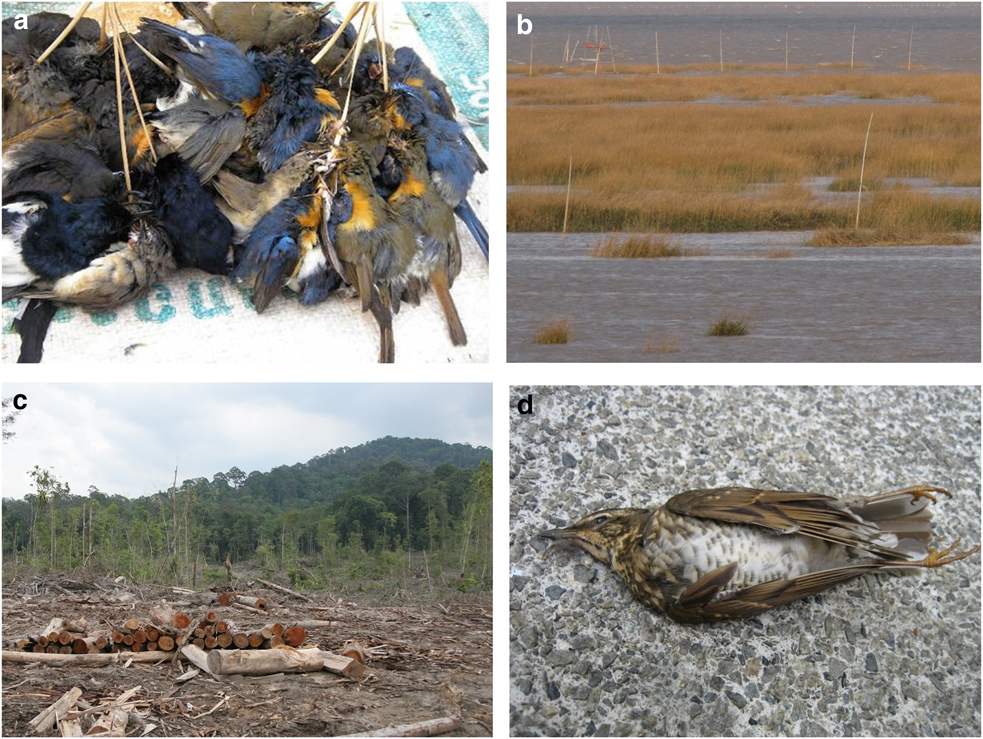
The threats faced by migratory songbirds are diverse and may interact in complex ways to drive declines across different parts of the world. For instance, Newton (Reference Newton2004) noted that the decline of Nearctic-Neotropical and African-European migrants have differing causes. While Afrotropical migrants from Europe have declined due to fluctuating climatic conditions in the Sahel where many species overwinter; habitat loss in breeding, wintering and stop-over sites (Sanderson et al. Reference Sanderson, Donald, Pain, Burfield and van Bommel2006, Vickery et al. Reference Vickery, Ewing, Smith, Pain, Bairlein, Skorpilova and Gregory2014), and hunting in the Mediterranean rim (McCulloch et al. Reference McCulloch, Tucker and Baillie1992), North American migrant declines have been largely attributed to forest loss and fragmentation in the wintering range (Sherry and Holmes Reference Sherry, Holmes, Martin and Finch1995, Askins Reference Askins2000, Rappole et al. Reference Rappole, King and Diez2003). Unlike either North America or Europe, we are unaware of published studies that have examined how different threats have affected songbird migrants along the East Asian migratory system although regional reviews do exist (e.g. Moores Reference Moores2012). Available quantitative and anecdotal evidence suggests that habitat loss and hunting are the most significant threats. Other threats like invasive species and collision with structures are recognised (Figure 8), but with less evidence of their impacts across the region.
Key threats faced by migratory songbirds in the East Asian Migratory Flyway: a) Hunting of songbirds for food: dead songbirds including some migratory species at a market in Vientiane, Lao PDR (Photo: Andrew Chow) b) Invasive species: Smooth cordgrass Spartina alternifolia on Jiangsu coast, China (Photo: Ding Li Yong), c) Habitat loss: clearance of lowland rainforests in peninsular Malaysia (Photo: Ding Li Yong), d) Collision with man-made structures: dead Siberian Thrush Zoothera sibirica in urban area in Singapore (Photo: Felix Wong).
Habitat loss and degradation
Habitat loss, particularly of broadleaved evergreen forests which are increasingly clear-cut, fragmented, or degraded by logging at large scales in South-East Asia is well known (e.g. Linkie et al. Reference Linkie, Smith and Leader-Williams2004, Miettinen et al. Reference Miettinen, Shi and Liew2010) and its impacts on biodiversity patterns, especially resident bird communities are well documented (e.g. Sodhi et al. Reference Sodhi, Posa, Lee, Bickford, Koh and Brook2010). However, the impacts of this habitat loss on migratory songbirds and their decline are not well understood. This is because there are few studies on the diversity, status or wintering ecology of flycatchers, warblers, robins and thrushes across much of the region, even though studies of resident bird communities do document some migratory songbirds (e.g. McClure Reference McClure1967) while some mist-netting studies have examined the wintering ecology of common migrants like Great Reed-warbler A. arundinaceus (e.g. Nisbet and Medway Reference Nisbet and Medway1974) and Brown Shrike (Medway Reference Medway1970). Countrywide reviews like Lim and Lim (Reference Lim and Lim2009) have also reported declining trends for some migrant songbirds in Singapore, but the limited spatial context of these findings mean that they do not necessarily reflect distribution-wide changes as decline patterns may also arise from fluctuations due to other factors (Newton Reference Newton2004). Clearly, this lack of knowledge is of concern because the loss of wintering habitat has been shown to impact population declines more than habitat loss in breeding areas (Sutherland Reference Sutherland1996).
Given that many migratory songbirds in South-East Asia and south China depend on broadleaved evergreen forests as wintering habitat (see Tables 4 and 5), the rapid clearance and degradation of lowland and submontane rainforests across Cambodia, Sumatra, Borneo and the Philippines (Table 5) indicate that wintering songbirds there have lost large proportions of intact wintering habitats. Six forest-dependent migratory songbirds are already listed as globally threatened (Table 6). Furthermore, currently ‘Least Concern’ species that winter predominantly in Sundaic forests like Narcissus Flycatcher, Siberian Blue Robin and Blue-and-white Flycatcher Cyanoptila cyanomelana may also have suffered declines as a result of widespread habitat loss across western Indonesia and Malaysia. A few species like the ‘Vulnerable’ Rufous-headed Robin Luscinia ruficeps is hypothesized to winter in South-East Asian forests but its winter range remains unknown (Mahood et al. Reference Mahood, Eaton and Leader2013a). On the contrary, the implementation of new forestry policies in China, particularly the Natural Forest Protection Plan (Li et al. Reference Li, Aide, Ma, Liu and Cao2007, IUCN-WCPA 2011) is expected increase forest cover across parts of eastern and southern China and may benefit some forest-dependent species, at least as demonstrated in Hong Kong (Kwok and Corlett Reference Kwok and Corlett2000).
Globally threatened migratory songbirds in the East Asian Flyway, their current conservation status, known threats and key wintering habitats.
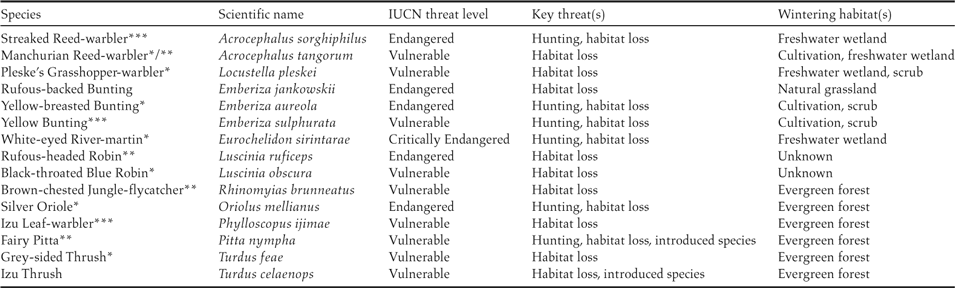
* Winter visitor to Mainland South-East Asia (Seven species)
** Winter visitor to Thai-Malay Peninsula and Greater Sundas (Three species)
*** Winter visitor to the Philippine Archipelago (Three species)
Land cover types of known importance to wintering songbirds in South-East Asia, and rates of forest cover changes based on data from the World Bank database and FAO (2005).
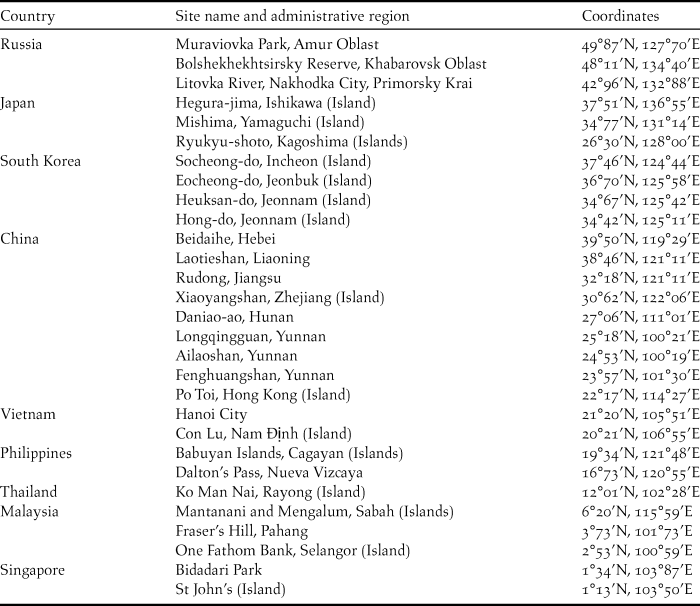
Known sites of importance to songbird migration along the East Asian Flyway where surveys and bird-banding exercises have been carried out, or suitable for future research and monitoring.
Many songbirds that breed or winter in wetland habitats will also be affected by land use change across their distributions. While some species of bush- and reed-warblers can utilise human-modified landscapes such as paddyfields (Wells Reference Wells2006), natural wetlands like freshwater and coastal marshes, and seasonally-flooded grasslands remain important as wintering habitats for most Acrocephalus and Locustella warblers, and are increasingly threatened by drainage, reclamation or conversion to agricultural land. The ‘Vulnerable’ Streaked Reed-warbler A. sorghiphilus, for example is known to winter only in the Candaba marsh in central Luzon, a site increasingly drained for agricultural expansion (BirdLife International 2013), as are similar wetlands in the Philippines. Likewise, the ‘Vulnerable’ Manchurian Reed-warbler A. tangorum winters mostly in Phragmites reedbeds of Khao Sam Roi Yot National Park in Thailand and flooded grasslands by Tonle Sap, Cambodia (Sam Reference Sam1999, Round and Rumsey Reference Round and Rumsey2003). Habitats at both sites are being encroached upon (BirdLife International 2013). Its recent discovery in northern Peninsular Malaysia (Bakewell Reference Bakewell2013) further reflects the poor state of knowledge of its winter distribution, and a similar scenario applies to Pleske’s Grasshopper-warbler Locustella pleskei.
Hunting
One major threat shared by migratory songbirds in the East Asian and the African-European migratory systems is widespread hunting, an especially visible issue around the Mediterranean rim (e.g. McCulloch et al. Reference McCulloch, Tucker and Baillie1992, Vickery et al. Reference Vickery, Ewing, Smith, Pain, Bairlein, Skorpilova and Gregory2014) although the underlying motivations are different. While quantitative data are lacking, hunting of wild birds for food in rural areas and the pet trade remains rampant across many parts of South-East Asia (e.g. Shepherd Reference Shepherd2006, Dinata et al. Reference Dinata, Nugroho, Haidir and Linkie2008), mainland China (Feng Reference Feng2012, Li Reference Li2012, Liang et al. Reference Liang, Cai and Yang2013) and until recently, Taiwan and the Ryukyus (Severinghaus Reference Severinghaus1996). These hunting pressures have been linked to the rapid decline of the Yellow-breasted Bunting, resulting in its IUCN threat status from being upgraded from ‘Least Concern’ to ‘Vulnerable’ in less than one decade (Chan Reference Chan2004, BirdLife International 2013, Li Reference Li2013). The combined impact of harvesting for various reasons increases net mortality rates and can reduce returning populations of songbirds in spring considerably (Severinghaus Reference Severinghaus1996), which has been shown in the declines detected during spring surveys in the breeding grounds of some species, e.g. Rustic Bunting (Dale and Hansen Reference Dale and Hansen2013).
In parts of Cambodia, migratory songbirds including various swallows, Black-browed A. bistrigiceps and Great Reed-warblers are trapped in the tens to hundreds of thousands for religious ‘mercy releases’ (Gilbert et al. Reference Gilbert, Sokha, Joyner, Thomson and Poole2012) with high mortalities resulting. Similar practices are reported in Thailand where thousands of Yellow-breasted Buntings were caught for release (McClure and Chaiyaphun Reference McClure and Chaiyaphun1971), as well as in Hong Kong and Taiwan (Severinghaus and Chi Reference Severinghaus and Chi1999). Difficulty in enforcement of wildlife protection laws across the region (Corlett Reference Corlett2007), especially rural areas complicates the hunting problem. In western Indonesia where bird-keeping is a popular and deep-rooted practice, some long-distance migrants such as Siberian Thrush Zoothera sibirica, Orange-headed Thrush Z. citrina, Chestnut-cheeked Starling Sturnus philippensis and Purple-backed Starling S. sturninus are trapped in large numbers for sale in bird markets (Nash Reference Nash1993, Shepherd et al. Reference Shepherd, Sukumaran and Wich2004, Shepherd Reference Shepherd2006, Wong 2014). In a survey of the bird trade across South-East Asia and Hong Kong, Nash (Reference Nash1993) reported at least 30 species which are migratory songbirds, including a number of thrushes and flycatchers, while Purple-backed Starling occurred in more than half of surveys of bird shops conducted across Indonesia. Likewise, various migratory finches, warblers and thrushes are also caught for the pet trade in China where a tradition of keeping birds exist (Townsend Reference Townsend2013).
Deliberate or opportunistic trapping of birds for food remains rampant and prevalent across South-East Asia and south China, and is fuelled largely by local (e.g. Iqbal et al. Reference Iqbal, Ajiman, Noske and Setiawan2014) or cross-border demands (e.g. Butler Reference Butler2009). The easy availability of mist-nets (e.g. Bakewell Reference Bakewell2007, Townsend Reference Townsend2012) facilitates this. The recovery of ringed Rustic Buntings from bird markets in China (Fransson et al. Reference Fransson, Kolehmainen and Staav2007) and recent documentation of mass hunting of Eyebrowed Thrush Turdus obscurus in Sumatra (Iqbal et al. Reference Iqbal, Ajiman, Noske and Setiawan2014) offers clear evidence of these hunting pressures. At the well-documented Dalton’s Pass, northern Luzon, local people continue to trap thousands of migrating birds at night for consumption, using lighted traps (Alonzo-Pasicolan Reference Alonzo-Pasicolan1992), including threatened songbirds like Streaked Reed-warbler (BirdLife International 2013). Similar hunting approaches targeting migrating songbirds have also been documented across many parts of southern China, especially in Yunnan, Hunan and Jiangxi provinces (Xiao et al. Reference Xiao, Li and Jiang2005, Yang et al. Reference Yang, Yang, Wang, Liu, An, Zhang, Li and Shi2009, Anon Reference Anon2012). Large-scale trapping of birds in general is endemic in parts of south China, particularly Hainan where many species, including migrant songbirds are hunted by local people for meat and medicine using various methods (Liang et al. Reference Liang, Cai and Yang2013). The situation may be even worse in South-East Asia, particularly in the Lao PDR where once subsistence exploitation of wildlife for food has swollen to massive scale hunting to fulfil cross-border demands of bushmeat (Butler Reference Butler2009). While the impacts of hunting on migratory songbird populations across the East Asian migratory system have not been well-studied, they have been linked to the declines of some species, especially a number of buntings (e.g. Dale and Hansen Reference Dale and Hansen2013).
Other key threats
Two other poorly documented threats to migratory songbirds in East Asia are invasive species and collisions with man-made structures in cities across the region. Collision with man-made structures is known to be responsible for high mortalities in migratory songbirds in North America and Europe (Rich and Longcore Reference Rich and Longcore2005, Hüppop et al. Reference Hüppop, Dierschke, Klaus-Michael, Fredrick and Hill2006, Anderson Reference Anderson2011). Unlike other threats, collisions with glass are known to kill migrants non-selectively, and irrespective of fitness (Kirby Reference Kirby2010), detrimentally affecting songbird populations on migration in North America (Loss et al. Reference Loss, Will, Loss and Marra2014). Moreover, songbirds migrating at night are known to be strongly attracted to sources of artificial light, resulting in collisions which can lead to injury or death (Ogden Reference Ogden1996, Round Reference Round2010). A few examples are available from the East Asian flyway. On Hong-do Island, a key stop-over site for migrating birds off the South Korean coast, collisions with windows and artificial structures were found to be the primary cause of bird mortality and especially so for migrating buntings, pipits and white-eyes (Bing et al. Reference Bing, Choi, Nam, Park, Hong, Sung, Chae and Choi2012). Window strikes as well as traffic accidents were also the most common cause of mortality of Fairy Pittas on Jeju Island in Korea (Kim et al. Reference Kim, Choi and Kang2013). In eastern Hokkaido, Japan, individuals from 63 species were reported to be killed by window collisions from 1980 to 1997, with increased mortality during the migration period (Yanagawa and Shibuya Reference Yanagawa and Shibuya1998). In South-East Asia, data collected from birdwatcher reports in Singapore revealed higher mortalities of birds due to collisions with man-made structures in built-up areas (Low et al. in prep, Yong et al. Reference Yong, Lim and Lee2013) and involves many migratory songbirds like pittas, thrushes, warblers and flycatchers (Low et al. in prep). Since the migration fronts of many songbirds traverse lighted offshore oil platforms during sea crossings (Simpson Reference Simpson1983b) and some of Asia’s largest cities which are extensively lit at night and have many high structures, especially Shanghai, Guangzhou and Hong Kong (China), Hanoi (Vietnam), Bangkok (Thailand) and Singapore, resulting mortalities may be very high. The increasing ubiquity of wind turbines, especially along the Chinese Yellow Sea coast (Chen Reference Chen2009), a region important to migrating birds, could potentially worsen the problem of collisions (e.g. Hüppop et al. Reference Hüppop, Dierschke, Klaus-Michael, Fredrick and Hill2006).
Lastly, the impact of how invasive plants and animals affect stop-over or wintering songbirds across the region has been little addressed by studies, but available evidence shows that invasive species can prey on, compete with or modify habitats of migratory songbirds. We provide two examples: invasive corvids and plants. The invasive House Crow Corvus splendens, a native of the Indian Subcontinent but established in Peninsular Malaysia and Singapore (Sodhi and Sharp Reference Sodhi and Sharp2006), is known to opportunistically prey on songbird migrants based on casual observations in Singapore (D. L. Yong unpubl.data). Along with native crows, Eurasian Magpies Pica pica that have been introduced from mainland Korea to Jeju Island are also reported as nest predators of the Fairy Pitta (Kim et al. Reference Kim, Choi and Kang2013). In coastal marshes of Shanghai municipality and Jiangsu, east China, the invasive cordgrass Spartina alterniflora is increasingly outcompeting and replacing beds of native Phragmites and reed species (Xie and Gao Reference Xie and Gao2013), potentially resulting in habitat loss for wintering songbirds. By 2002, this invasive grass already covered 112,000 ha of China’s east coast (Gan et al. Reference Gan, Choi, Wang, Ma, Chen and Li2010). At Chongming island, Shanghai, habitat dominated by Spartina was found to support lower food resources (e.g. arthropods), bird diversity and abundance of four wintering buntings known to be dependent on wetlands, including the near-threatened Ochre-rumped Bunting E. yessoensis (Gan et al. Reference Gan, Choi, Wang, Ma, Chen and Li2010). Similar trends are documented for wintering buntings in shoal-wetlands in the Yangtze delta (Ma et al. Reference Ma, Gan, Choi, Jing, Tang, Li and Chen2007).
In general, the complex interaction of diverse threats, particularly habitat loss and degradation occurring in combination across passage sites, the wintering and breeding ranges puts many migratory songbird species at risk. Given that the effects of recent climate change are likely to increasingly disrupt the breeding cycle or migratory activity of these passerines (Koike and Higuchi Reference Koike and Higuchi2002, Both et al. Reference Both, Bouwhuis, Lessells and Visser2006, Harris et al. Reference Harris, Yong, Sodhi, Subaraj, Fordham and Brook2013), it is clear that there is an urgent need for more empirical data on migratory songbirds, to inform conservation priorities and decisions. In the next section we identify key research and conservation priorities for migratory songbirds in the East Asian Flyway.
Conservation and research priorities
Research on migratory songbird ecology and survival
Populations of many migrant songbirds are limited in part by conditions in winter (Sherry and Holmes Reference Sherry and Holmes1996, Norris et al. Reference Norris, Marra, Kyser, Sherry and Ratcliffe2004), which can in turn affect breeding and reproductive output in spring (Holmes Reference Holmes2007). Effective conservation and management therefore need to take these limiting processes, patterns and dynamics into consideration (Holmes Reference Holmes2007). Since wintering distributions and density, habitat usage, demographics and survival rates of many songbirds in this region remain unclear, as are the underlying drivers of decline, a conservation priority is thus to first establish what and where these key wintering habitats are, and document the assemblages and population patterns of songbirds in them, especially across the stop-over/wintering zone in South-East Asia and southern China. Additionally, there is a need for concerted efforts to identify wintering ranges of the most poorly known songbirds in the region. Sampling the diversity, abundance and demographics of songbird migrants over the long term (Newton Reference Newton2004, Holmes Reference Holmes2007, Round Reference Round2010) will be important for detecting ecologically significant trends or fluctuations that indicate wider population patterns, which can help identify causes of decline. Carefully designed field surveys or bird banding exercises in the right places, and at appropriate time and spatial scales can obtain these data in a cost-effective way, and are already in place in few parts of South-East Asia (e.g. Ko Man Nai, Thailand) as well as China, Russia, South Korea and Japan. Many of these survey sites are likely to involve small islands or continental sites containing known concentrations of migratory songbirds (Table 6, Figure 1), which can be sampled by a combination of judicious bird banding (e.g. Ozaki Reference Ozaki2008, Nam et al. Reference Nam, Choi, Park, Hong, Won, Kim, Bing and Chae2011) and visual surveys of abundance using points or transects (e.g. Moores Reference Moores2012). Research and monitoring at stop-over or wintering sites must also be complemented by similar activities at breeding sites in East Asia (e.g. Hirano Reference Hirano1996). Adaptive monitoring programmes could enable meaningful population trends to be detected if these are carried out with a standardised methodology, while taking into consideration longer-term uncertainties in the monitoring process.
Although funding for surveys is scarce in many South-East Asian countries, a number of funding bodies and charities now provide grants to local conservationists and researchers, especially those in developing countries, and can be used to support field surveys on occurrence and abundance of migratory songbirds in poorly known areas. In fact, data on other migratory species, especially raptors and the endangered Spoon-billed Sandpiper Eurynorhynchus pygmaeus have been collected in South-East Asia (e.g. DeCandido et al. Reference DeCandido, Nualsri, Allen and Bildstein2004, Bird et al. Reference Bird, Lees, Chowdhury, Martin and Haque2010) by birdwatchers in collaboration with local conservationists through these means.
Research on migration routes and connectivity
Although standardised bird banding (e.g. McClure Reference McClure1974) and to some extent, satellite tracking (e.g. Higuchi Reference Higuchi2013) has been effectively used to gather data on aspects of stop-over ecology in East and South-East Asia, many facets of the migration routes, connectivity, and stop-over site usage of long-distance migratory songbirds across East Asia remain unknown and for some species, their entire wintering grounds remain unclear, especially the difficult to identify Phylloscopus warblers (Yap et al. Reference Yap, Yong, Low, Lim, Foley, Cros and Rheindt2014). Mass ringing can give an indication of movements and migratory connectivity for a few species that can be trapped in large numbers, but miniaturisation in tracking technologies means that it is now possible to study movement of songbirds lighter than 20-30 g using geo-locators and archival Global Positioning System (GPS) tags (e.g. McKinnon et al. Reference McKinnon, Fraser and Stutchbury2013). The drawbacks of using these units are the low recovery rates for species that do not show good site fidelity, high costs of procurement and location accuracy problems, but the technology is advancing quickly. These methods can also be used in conjunction with molecular genetic data and stable isotope ratio analysis (Marra et al. Reference Marra, Hobson and Holmes1998, Holmes Reference Holmes2007) to learn about migration routes, flight rates, wintering sites and migratory connectivity.
Finally, radar technology has been used in some stop-over ecology studies to show the relative importance of different habitats to migrant songbirds (e.g. Ruth et al. Reference Ruth, Diehl and Felix2012) and diverse aspects of bird migration movements under different weather and light conditions (e.g. Bruderer Reference Bruderer1997). While there are known limitations, radar technology can still be used to gather data on migration patterns and movements at night or during poor weather, and to complement data gathered from other means.
Legal frameworks for conserving migratory birds
Given the large geographic ranges of migratory birds spanning multiple countries, effective conservation can be challenging (Kirby Reference Kirby2010, Bauer and Hoye Reference Bauer and Hoye2014) and must protect all habitats used during the annual cycle to be successful (Norris et al. Reference Norris, Marra, Kyser, Sherry and Ratcliffe2004). At a regional to continental scale, national government-linked conservation bodies and environmental ministries need to recognise that the conservation of migratory species traverses national boundaries, and enact legislation that explicitly protects migratory species (Sands Reference Sands2003) in addition to existing wildlife protection laws for sedentary or restricted-range species. Coordination of conservation efforts and knowledge sharing between the territories in the East Asian migratory system is needed if conservation actions are to be effective, and existing initiatives like the Partnership for the East Asian-Australian Flyway (see EAAFP 2012) do facilitate these actions to some extent even though the scope of this initiative covers mainly waterbirds at present.
Unlike raptors, waders and large waterbirds such as cranes, the poor visibility of songbirds means that they can be easily overlooked not only by conservationists, but also by the very policies designed to conserve migratory species in general. The Convention on the Conservation of Migratory Species of Wild Animals (CMS) or Bonn Convention, an important global agreement under the purview of the United Nations Environment Programme (UNEP) provides a legal framework and comprehensive guidelines for conserving migratory species worldwide (CMS 2014), but targets mostly large charismatic taxa like mammals, sea- and waterbirds (Kirby Reference Kirby2010). Thus far, the only Memorandum of Understanding (MoU) concluded under the CMS for a migratory songbird is on the Aquatic Warbler Acrocephalus paludicola, an African-European migrant. Besides its limited scope and coverage, only 119 parties had ratified the CMS as of February 2014 (CMS 2014), and this total excludes the majority of states along the East Asian-Australasian Flyway. The lack of ratification by states with territories overlapping with the breeding, stop-over or wintering ranges of so many migratory species continues to pose a stumbling block for transboundary coordination of conservation activities. Furthermore, its slow growth in membership suggests that the impact of CMS on conserving migratory species is very limited. Given this, many of the species listed in CMS Appendix I remain symbolic (de Klemm 1994).
Filling in these policy gaps and discrepancies may be possible with the conclusion of new Memoranda of Understanding and other legally binding agreements targeting threatened East Asian migratory songbirds. Additionally, some of the loopholes in these existing legal frameworks can be partly addressed by bilateral agreements on migratory species. For example, China and Russia, two of the most important countries in the flyway for breeding, stop over and overwintering of many songbird migrants signed the China-Russia Migratory Bird Agreement (CRMBA) in 2012, on top of existing agreements for Japan and South Korea (Boer et al. Reference Boer, Rothwell and Ramsay1998, EAAFP 2012). Similar agreements exist between Japan and the U.S.A (U.S. Fish and Wildlife Service 2014), and between other Asian countries (see Boer et al. Reference Boer, Rothwell and Ramsay1998) although follow-up actions for conservation remain relatively limited. Furthermore, geopolitical disputes between countries in the East China Sea and Yellow Sea region (e.g. Valencia Reference Valencia2007), an important area for bird migration, may potentially complicate any transboundary arrangement to conserve migratory birds.
At the national level, better enforcement of existing wildlife protection laws will be needed to protect migratory birds and wildlife in general, although this has been plagued by limited government funding, corruption and poverty in many Asian countries (Corlett Reference Corlett2007). National and regional wildlife protection agencies will need to review and include listings of migratory songbirds in existing wildlife enactments, given that priorities in many listings have tended to focus on non-migratory, resident species (e.g. Sabah Wildlife Department 2004). These actions will be of greater importance in China, Indonesia, the Philippines, Lao PDR, Cambodia and Thailand where migratory songbirds have been heavily harvested for the pet bird trade, food or religious uses.
Conservation planning
Conservation of migratory species can be successful if adequate habitat is protected at breeding, stop-over and wintering sites. The extensive network of reserves across countries in the East Asian Flyway, particularly East Asia where protected areas cover about 16% of the region (MacKinnon et al. Reference MacKinnon, Xie, Lysenko, Chape, May and Brown2005), means that most migratory songbirds have some part of their distribution protected, but to varying extents. If sites important to stop-over or wintering songbirds are found to overlap with existing protected areas, then the priority will be to step up or maintain protection measures like enforcement of regulations to manage disturbance. If these sites are unprotected, they then should be evaluated for other biodiversity elements and identified under regional/national conservation frameworks for formal conservation actions. Inevitably, conserving songbird migrants will involve protecting patches of stop-over habitat (Sheehy et al. Reference Sheehy, Taylor and Norris2011), some of little value to other biodiversity (e.g. Yong Reference Yong2013). In particular, studies using habitat and population parameters (e.g. density dependence) of North American migratory songbirds have developed models to optimise resource investments to conserve migratory songbirds (e.g. Sheehy et al. Reference Sheehy, Taylor and Norris2011), which in turn can inform conservation strategies targeting wintering, breeding and stop-over sites. These findings can provide insights in developing transboundary conservation plans targeting songbird migrants in East and South-East Asia if critical ecological information is available, and may be useful for initiating future MoUs for threatened species. Finally, since many wintering songbirds are dependent on tropical forests that are also of conservation importance to other biodiversity, we acknowledge that effective protection of these landscapes is likely to benefit many migratory songbirds. What remains to be seen is whether resident species which are more readily surveyed can act as effective surrogates for conserving migratory songbirds.
Citizen science, education and the role of birdwatchers
The number of birdwatchers is rapidly increasing across Asia, especially in mainland China (Ma et al. Reference Ma, Cheng, Wang and Fu2013) and a number of South-East Asian countries (e.g. Thailand, Indonesia, Philippines), given a fast growing middle class. Ma et al. (Reference Ma, Cheng, Wang and Fu2013) also report that there are now 36 birdwatching clubs distributed across mainland China while the total number of birdwatchers exceeds 20,000. In Taiwan, South Korea and Japan there is already a well-established tradition of birdwatching, as well as established biodiversity or ornithological institutions: e.g. Migratory Birds Centre in Korea National Park Research Institute (South Korea), Yamashina Institute for Ornithology (Japan). In the Russian Far East, non-governmental organisations like the Amur-Ussuri Centre for Avian Biodiversity support migratory bird research in the region and carry out important ornithological surveys.
Given that many amateur birdwatchers keep lists and records of their observations, much of which are deposited online, or compiled in annual bird reports (China Ornithologists’ Society 2008), the collective output of data from birdwatchers if analysed, can reveal ecologically significant changes such as fluctuations in species populations over short time-scales, distribution contractions or expansions, and other temporal trends (Round Reference Round2010, Li et al. Reference Li, Liang, Gong, Liu and Liang2013). Data from birdwatchers have not only contributed to studies like Yamamoto and Seto (Reference Yamamoto and Seto1997) and Harris et al. (Reference Harris, Yong, Sodhi, Subaraj, Fordham and Brook2013), but have also improved knowledge of the distribution and status of threatened songbird migrants such as the Rufous-headed Robin in Cambodia (Mahood et al. Reference Mahood, Eaton and Leader2013a), Japanese Paradise-flycatcher in Java (Emmanuel and Yordan Reference Emmanuel and Yordan2013), and the Brown-chested Jungle-flycatcher in north Vietnam (Mahood et al. Reference Mahood, Delonglée, Klingel, Wicker and Robson2013b) and Singapore (Yong and Liu in press), all migrants with poorly known wintering ranges. While the problem of language barriers across various Asian countries could prove to be an impediment for information-sharing, the 'eBird system' (Wood et al. Reference Wood, Sullivan, Iliff, Fink and Kelling2011) could be a good model for transboundary data collection if birdwatchers across the region can be encouraged to participate. One likely pitfall is that distributional records will be biased to heavily visited sites and certain months of the year, while inaccessible areas may remain chronically under-surveyed, as is the case in western Indonesia (Yong and Liu in press), Wallacea or Russia’s boreal zone. Despite these shortcomings, there is much potential for collaborative research between birdwatchers and researchers in Asia, which unlike Europe or North America, is presently patchily distributed across the continent (Greenwood Reference Greenwood2007). Such collaborations would allow researchers to tap into data collected by birdwatching organisations or birdwatchers to better understand migration ecology and identify significant populations, sites and trends for targeted conservation actions.
Finally, the increasing popularity of birdwatching as a pastime across East and South-East Asia means that birdwatchers and their organisations have the knowledge and capacity to increase awareness of migratory bird conservation through their activities to over 1.8 billion people who live in the region. An example of these conservation efforts led by birdwatchers is the ‘Asian Bird Fair’, which is now held annually across a number of East and South-East Asian countries, and coordinated by respective national birdwatching clubs (e.g. Wild Bird Club of the Philippines, Chinese Wild Bird Federation) (see Birdfair Asia 2011). This is on top of national-level birdwatching activities (e.g. China Bird Festival, Thailand Bird Fair; Bird Conservation Society of Thailand 2013) held in the countries across the region. These efforts will surely complement the existing outreach, research and educational work of major conservation organisations such as BirdLife International, and many regional and local non-government conservation organisations.
Supplementary Material
The supplementary materials for this article can be found at journals.cambridge.org/bci
Acknowledgements
We wish to thank Ian Newton and Who-Seung Lee who sent us copies of their papers, Andrew Chow and Felix Wong for allowing use of their photographs, Andrew Pierce for comments on passerine migration in Thailand, Makiko Takenaka for songbird declines in Hokkaido, and Alfred Chia for providing data on bird collisions in Singapore. D. L. Yong thanks David B. Lindenmayer for support. Finally, we are grateful to Stephen Garnett and Hiroyoshi Higuchi, both whose constructive comments have helped us to improve the manuscript greatly.



