








1. Introduction
Schwarz [Reference Švarc27] introduced the notion of genus of a fibration. Given a fibration  $p:E\to B $, where $E$ and $B$ are path-connected spaces, the genus of $p$ is defined as the minimum number of open sets $\{U_1, \ldots, U_k\} $ covering $B$ such that $p$ has local continuous sections on each open set $U_i$. This number is denoted as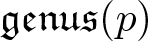 $\mathfrak{genus}(p)$. For a path connected space $X$, consider the fibration
 \begin{equation}
e_{r}: X^I\to X^r \text{defined by } e_{r}(\gamma)=\bigg(\gamma(0), \gamma(\frac{1}{r-1}),\dots,\gamma(\frac{r-2}{r-1}),\gamma(1)\bigg).
\end{equation}
\begin{equation}
e_{r}: X^I\to X^r \text{defined by } e_{r}(\gamma)=\bigg(\gamma(0), \gamma(\frac{1}{r-1}),\dots,\gamma(\frac{r-2}{r-1}),\gamma(1)\bigg).
\end{equation} The higher topological complexity [Reference Rudyak24, Definition 3.1], denoted as  $\mathrm{TC}_r(X)$, is defined to be the genus of $e_{r}$. For $r=2$, this notion was introduced by Farber in [Reference Farber11] and is known as the topological complexity of a space. The topological complexity of $X$ is denoted by $\mathrm{TC}(X)$. Farber proved that the topological complexity of a space is a homotopy invariant.
The higher topological complexity of a space  $X$ is closely related to its Lusternik–Schnirelmann category (LS-category), denoted by $\mathrm{cat}(X)$, which is the smallest integer $r$ such that $X$ can be covered by $r$ open subsets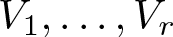 $V_1, \dots, V_r$, where the inclusion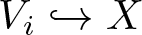 $V_i \hookrightarrow X$ is null-homotopic for each $i$. In particular, it was proved in [Reference Basabe, González, Rudyak and Tamaki1] that, $\mathrm{cat}(X^{r-1})\leq \mathrm{TC}_r(X)\leq \mathrm{cat}(X^r).$ The higher topological complexity of closed manifolds of dimension $1$ and $2$ is completely known (for reference see [Reference González, Gutiérrez, Gutiérrez and Lara16, Proposition 5.1]. On the other hand, it was shown in [Reference Gómez-Larrañaga and González-Acuña15] that the LS-category of closed $3$-manifolds depends only on the fundamental group. In this article, we explore the question of computing higher topological complexity of orientable $3$-manifolds. In particular, we consider orientable Seifert manifolds that are aspherical.
Seifert introduced the notation for Seifert fibred manifolds in [Reference Seifert and Threlfall26]. The notation  $M_O:=(O,o,g \mid e: (a_1,b_1),\dots, (a_m,b_m))$ describes an orientable Seifert manifold with an orientable orbit surface $\Sigma_g$ of genus $g$. The notation $M_N:=(O,n,g \mid e: (a_1,b_1),\dots, (a_m,b_m))$ denotes an orientable Seifert manifold with a non-orientable orbit surface $N_g$. Here $e$ is the Euler number, $m$ is the number of singular fibres and, for each $i$,
$i$, 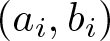 $(a_i,b_i)$ is a pair of relatively prime integers that characterize the twisting of the $i^{th}$ singular fibre.
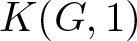
Scott in [Reference Scott25, Lemma 3.1] shows that if a compact orientable  $3$-manifold $M$ has infinite fundamental group with universal cover $S^2\times \mathbb{R}$, then $M$ is either $S^2\times S^1$ or $\mathbb{R} P^3\#\mathbb{R} P^3$. Therefore, it follows from [Reference Préaux23, Proposition 1] that any Seifert fibred manifold with infinite fundamental group is a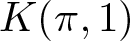 $K(\pi,1)$ space with the exception of $S^2\times S^1$ and $\mathbb{R} P^3\#\mathbb{R} P^3$. It is easy to see that $\mathrm{TC}(S^2\times S^1)=4$ and also, from [Reference Cohen and Vandembroucq4] it follows that $\mathrm{TC}(\mathbb{R} P^3\# \mathbb{R} P^3)=7$. The $\rm{mod}~p$ cohomology ring for oriented aspherical Seifert manifolds with infinite fundamental group was computed by Bryden and Zvengrowski [Reference Bryden and Zvengrowski3]. A straightforward computation gives that the LS-category of these manifolds is $4$.
$4$.
In [Reference Mescher21, Theorem 6.6], Mescher has shown that if a closed oriented  $3$-manifold $M$ that is not a rational homology $3$–sphere, and it is not dominated by any closed oriented product manifold, then $\mathrm{TC}(M)\in \{5,6,7\}$. Mescher also observed that the total space of a circle bundle over a closed oriented surface of positive genus with non-zero Euler number satisfies the conditions of this result. For this class of manifolds, Neofytidis ([Reference Neofytidis22]) has established a stronger result. In [Reference Neofytidis22, Page 16], Neofytidis has shown that the topological complexity of a total space of circle-bundle over $\Sigma_g$ with $g \gt 1$ (these are hyperbolic surfaces) is $6$.
$6$.
Oriented Seifert fibred manifolds are natural generalizations of circle bundles over surfaces (both can be orientable and non-orientable). While every circle bundle over a surface is a Seifert fibred manifold, the class of Seifert fibred manifolds is significantly broader (see Example 4.12). These manifolds allow for more intricate fibre structures, including singular fibres with non-trivial local models, making the Seifert fibred category a rich and expansive extension beyond the realm of regular circle bundles.
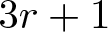
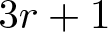
In this article, we give sharp bounds on the higher topological complexity of aspherical Seifert manifolds satisfying some minor conditions. Before the computations, we introduce the notion of higher topological complexity weights to improve Rudyak’s cohomological lower bound [Reference Rudyak24, Proposition 3.4] on the higher topological complexity by proving a general version of [Reference Farber and Grant14, Theorem 6] (see also Theorem 3.3). Using this for an orientable Seifert-fibred manifold  $M$, we prove that $\mathrm{TC}_r(M)\in \{3r-1, 3r, 3r+1\}$, and explicitly determine the subclass of Seifert-fibred manifolds for which $\mathrm{TC}_r(M)\in \{3r,3r+1\}$ (see Theorem 4.5 and Theorem 4.7). In Proposition 4.3, we show that under certain condition the topological complexity of these manifolds is bounded above by $3r$, and, we also observe that the topological complexity of a aspherical oriented Seifert $3$-manifold $M$, with $\pi_1(M)$ being Heisenberg group, is bounded by $3r$ (see Remark 4.4). Additionally, in Corollary 4.8, we show that $\mathrm{TC}_r(M_O)=3r$, when the base surface is orientable and aspherical. Finally, in Proposition 5.8 we show that the higher topological complexity of the wedge of finitely many closed, orientable, aspherical $3$-manifolds is exactly $3r+1$.
It is not straightforward to verify whether Seifert fibred manifolds are not dominated by a closed oriented product manifold, which is one of the important conditions of Mescher’s result [Reference Mescher21, Theorem 6.6]. A known nontrivial result in this direction was given by Kotschick and Neofytidis in [Reference Kotschick and Neofytidis18, Lemma 1]. They showed that, if  $N\to F$ is any oriented circle bundle with non-zero Euler number over a closed aspherical surface, then every continuous map $\Sigma_g\times S^1\to N$ has degree zero, where $g\geq 1$. In other words, the total spaces of a circle bundle over closed oriented surfaces of positive genus with nonzero Euler number are not dominated by any closed oriented product manifold. Consequently, this gives a class of examples that satisfy Mescher’s conditions and have topological complexity $\in\{5, 6 , 7\}$. We not only establish that aspherical Seifert manifolds have topological complexity $\in \{5,6,7\}$ but give sharper bounds for a large class of aspherical Seifert manifolds in Theorem 4.5, Theorem 4.7, and Corollary 4.8.
2. Background
2.1. Weights of cohomology classes
The notion of category weight of a cohomology class was introduced by Fadell and Husseini in [Reference Fadell and Husseini10] to give a lower bound on the LS-category of a space. This was generalized by Farber and Grant to the weight of a cohomology class with respect to any fibration (see [Reference Farber and Grant13, Reference Farber and Grant14]) to get a lower bound on the topological complexity of a space.
Definition 2.1. Let  $u\in H^{\ast}(B;G)$ be a cohomology class, where $G$ is an abelian group. The weight of $u$ with respect to $p:E\to B$, is defined to be the largest integer $\mathrm{wgt}_p(u)$ as
 \begin{equation*}\mathrm{wgt}_p(u)=\mathrm{max}\{k : f^{\ast}(u)=0\in H^{\ast}(Y;G) \text{for all } f:Y\to B
\text {with } \mathfrak{genus}(f^{\ast}p)\leq k\},\end{equation*}
\begin{equation*}\mathrm{wgt}_p(u)=\mathrm{max}\{k : f^{\ast}(u)=0\in H^{\ast}(Y;G) \text{for all } f:Y\to B
\text {with } \mathfrak{genus}(f^{\ast}p)\leq k\},\end{equation*}where  $f^{\ast}p$ is the pullback fibration corresponding to $f$.
$f$.
In [Reference Farber and Grant13], Farber and Grant improved Schwarz’s original cohomological lower bound (see [Reference Švarc27]) on the genus of a fibration. In particular, they proved the following result.
Proposition 2.2. ([Reference Farber and Grant13, Proposition 32, Proposition 33])
Let  $p:E\to B$ be a fibration and $u_i \in H^{d_i}(B; G_i)$ be cohomology classes, $i = 1,\dots,l$, such that their cup-product $\prod_{i=1}^l u_i\in H^d(B; \otimes_{i=1}^l G_i)$ is non-zero, where $d = \sum _{i=1}^ld_i$. Then
 \begin{equation*}\mathfrak{genus}(p) \gt \mathrm{wgt}_p(\prod_{i=1}^lu_i)\geq \sum_{i=1}^l\mathrm{wgt}_p(u_i).\end{equation*}
 Let  $X^I$ be a free path space with compact open topology. Consider the free path space fibration $e_2:X^I\to X^2$ defined by
 \begin{equation*}e_2(\gamma):=(\gamma(0),\gamma(1)).\end{equation*}
 Then  $\mathfrak{genus}(e_2)=\mathrm{TC}(X)$ (for reference see [Reference Farber11]). Let $u\in H^{\ast}(X)$ be a non-zero cohomology class and $\bar{u}=u\otimes 1-1\otimes u$ be the corresponding zero divisor, then it is known from [Reference Farber and Grant13, Proposition 30] that $\mathrm{wgt}_p(\bar{u})\geq 1$. Therefore, if we have cohomology classes $u_i\in H^{\ast}(X)$ such that $\prod_{i=1}^{l}\bar{u_i}\neq 0$ with $\mathrm{wgt}_{e_2}(\bar{u_i})\geq 2$ for some $i$’s, then Proposition 2.2 improves the well-known lower bound on $\mathrm{TC}(X)$ given by zero-divisor cup-length.
The following theorem is crucial in finding cohomology classes whose TC-weight is at least two.
Lemma 2.3. ([Reference Farber and Grant14, Lemma 4])
Let  $e_2:X^I\to X^2$ be a free path space fibration and $f = (\phi,\psi): Y \to X\times X$ be a map where $\phi,\psi$ denote the projections of $f$ onto the first and second factors of $X\times X$, respectively. Then $\mathfrak{genus}(f^{\ast}e_2) \leq k$ if and only if $Y=\cup_{i=1}^kA_i$, where $A_i$ for $i=1,\cdots k$ are open in $Y$ and $\phi|_{A_i}\simeq \psi|_{A_i}:A_i\to X$ for any $i=1,\dots ,k$.
Next, we recall the results of Farber and Grant describing zero divisors with TC-weights at least two. We begin with the definition of stable cohomology operation. Let  $R$ and $S$ be abelian groups.
Definition 2.4. A degree  $d$ stable cohomology operation $\mu:H^{\ast}(-;R)\to H^{\ast+d}(-;S)$ is a family of natural transformations $\mu:H^n(-;R)\to H^{n+d}(-;S)$, for $n\in \mathbb{Z}$ which commutes with the suspension isomorphisms.
It follows that the stable cohomology operation  $\mu$ commutes with all connecting homomorphisms in Mayer–Vietoris sequences and each homomorphism $\mu$ is a group homomorphism. The excess of a stable cohomology operation $\mu$ is the positive integer denoted as $e(\mu)$ and defined as $e(\mu):=1+\max\{k \mid \mu(u)=0\, \text{for all } u\in H^{k}(X;R)\}.$
Let  $p_i:X\times X\to X$ be the projection onto the $i^{\text{th}}$ factor of $X\times X$ for $i=1,2$. Note that $\bar{u}=p_2^{\ast}(u)-p_1^{\ast}(u)$. Let $\mu$ be any stable cohomology operation. Then, using naturality and additivity of $\mu$, we get
 \begin{equation*}\mu(\bar{u})=\mu(1\otimes u-u\otimes 1)=\mu(p_2^{\ast}(u)-p_1^{\ast}(u))=p_2^{\ast}(\mu(u))-p_1^{\ast}(\mu(u))=\overline{\mu(u)}.\end{equation*}
 The following result shows how to construct zero-divisors with TC-weights at least  $2$.
$2$.
Theorem 2.5 ([Reference Farber and Grant14, Theorem 6])
Let  $\mu: H^{\ast}(-;R)\to H^{{\ast}+i}(-;S)$ be the stable cohomology operation of degree $i$ and $e(\mu)\geq n$. Then for any $u\in H^n(X;R)$, the TC-weight $\mathrm{wgt}_{e_2}(\overline{\mu(u)})\geq 2$.
We use Theorem 2.5 to compute the lower bound on the topological complexity of oriented Seifert fibred manifolds.
2.2. Cohomology of Seifert fibred manifolds
We recall the results related to the  $\rm{mod}~ p$ cohomology ring of Seifert fibred manifolds from [Reference Bryden and Zvengrowski3]. We first set up the notation required for the same.
(1) For any prime $p$, assume without loss of generality that
$a_1,\dots, a_{n_p} \equiv 0 (\rm {mod } ~p)$ and
$a_{n_{p+1}},\dots,a_m \not\equiv 0 (\rm {mod } ~p)$. In this case there exist integers
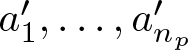
$a_1', \dots, a_{n_p}'$, such that
$a_1 = pa_1' ,\dots,a_{n_p} = pa_{n_p}'$.
$p$, assume without loss of generality that
$a_1,\dots, a_{n_p} \equiv 0 (\rm {mod } ~p)$ and
$a_{n_{p+1}},\dots,a_m \not\equiv 0 (\rm {mod } ~p)$. In this case there exist integers
$a_1', \dots, a_{n_p}'$, such that
$a_1 = pa_1' ,\dots,a_{n_p} = pa_{n_p}'$.(2) We have
$(a_i,b_i)=1$ and
$c_i, d_i\in \mathbb{Z}$ such that
$a_id_i-b_ic_i=1$ for
$1\leq i\leq m$. Then for
$1\leq i\leq n_p$,
$b_i, c_i\not\equiv 0 (\rm {mod}~ p)$.(3) When
$n_p=0$, that is
$a_i\not\equiv 0 (\rm {mod}~ p)$ for all
$1\leq i\leq m$, let
$r$ be a positive integer such that
$b_i\equiv 0 (\rm{mod}~ p)$ and
$b_{r+j}\not\equiv 0 (\rm{mod}~ p)$ for
$1\leq j\leq m-r$. For
$1\leq i\leq r$, there exist
$b_i'$ such that
$b_i=pb_i'$. Let
$A=\prod_{i=1}^{m}a_i$,
$A_i=A/a_i\in \mathbb{Z}$ and
$C=\sum_{i=1}^{m}b_iA_i$. Note that
$A\not\equiv 0(\rm{mod} ~p)$ when
$n_p=0$.














We note that without loss of generality in [Reference Bryden and Zvengrowski3], the notation  $n$ is used for $n_p$. We will use $n_p$ to clarify which $p$ we are discussing in our notation.
Proposition 2.6. ([Reference Bryden and Zvengrowski3, Theorem 1.1])
Let  $\delta_{jk}$ denote the Kronecker delta. Suppose $M_O= (O,o;g ~|~ e: (a_1,b_1),\dots,(a_m,b_m))$. If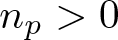 $n_p \gt 0$, then as a graded vector space,
 \begin{equation*}H^{\ast}(M_O;\mathbb{Z}_2)=\mathbb{Z}_2\{1,\alpha_i,\theta_l,\theta_l',\beta_i,\phi_l,\phi'_l,\gamma~|~2\leq i\leq n_p, ~~1\leq l\leq g\}\end{equation*}
where  $|\alpha_i|=|\theta_l|=|\theta'_l|=1$, $|\beta_i|=|\phi_l|=|\phi_l'|=2$, and $|\gamma|=3$. Let $\beta_1 = - \sum_{i=2} ^{n_p} \beta_i$. The non-trivial cup products in $H^{\ast}(M_O;\mathbb{Z}_p)$ are given by:
(1) For
$p=2$ and
$2\leq i$,
$j\leq n_2$,
$\alpha_i\cdot\alpha_j=\binom{a_1}{2}\beta_1+\delta_{ij}\binom{a_i}{2}\beta_i.$ Moreover, if
$2\leq k\leq n_2$ as well, then
\begin{equation*}\alpha_i\cdot\alpha_j\cdot\alpha_k=\binom{a_1}{2}\gamma ~~\text{if } i\neq j \text{or } j \neq k,~~ \text{and}
~~\alpha_i^3=\bigg[\binom{a_1}{2}+\binom{a_i}{2}\bigg]\gamma.\end{equation*}(2) For any prime
$p$,
$2\leq j\leq n_p$ and
$1\leq l\leq g$ we have,
$\alpha_j\cdot\beta_j=-\gamma \,\text{and}\, \theta_l\cdot\phi_l=-\gamma.$ In addition, the mod-
$p$ Bockstein on
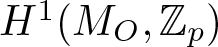
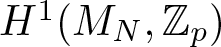
$H^1(M_O, \mathbb{Z}_p)$ is given by:
\begin{equation*}B_p(\alpha_j)=-a'_jc_j\beta_j+a'_1c_1\beta_1,~~ B_p(\theta_l)=0.\end{equation*}



Remark 2.7. For both Seifert-fibred manifolds of type  $M_O$ and $M_N$, from [Reference Bryden and Zvengrowski3, Remark 1.2 and Remark 1.5] for $p = 2$ we get, $B_2(\alpha_i)=\alpha^2_i$.
Proposition 2.8. ([Reference Bryden and Zvengrowski3, Theorem 1.4])
Suppose  $M_N=(O,n;g ~|~ e: (a_1,b_1),\dots,(a_m,b_m))$. If $n_p \gt 0$, then as a graded vector space, $H^{\ast}(M_N;\mathbb{Z}_p)=\mathbb{Z}_p\{1,\alpha_i,\theta_l,\beta_i,\phi_l,\gamma ~~: ~~2\leq i\leq n_p,~1\leq l\leq g\}.$ Let $\beta_1 = - \sum_{i=2} ^{n_p} \beta_i -2\sum_{j=1}^g\phi_j$. The non-trivial cup products in $H^{\ast}(M_N;\mathbb{Z}_p)$ are given by:
(1) For
$p=2$ and
$2\leq i$,
$j\leq n_2$,
$\alpha_i\cdot\alpha_j=\binom{a_1}{2}\beta_1+\delta_{ij}\binom{a_i}{2}\beta_i$. Moreover, if
$2\leq k\leq n_2$ as well, then
\begin{equation*}\alpha_i\cdot\alpha_j\cdot\alpha_k=\binom{a_1}{2}\gamma ~~ \text{if } i\neq j \text{or } j \neq k,~~\text{and}
~~\alpha_i^3=\bigg[\binom{a_1}{2}+\binom{a_i}{2}\bigg]\gamma.\end{equation*}(2) For any prime
$p$,
$2\leq j\leq n_p$ and
$1\leq l\leq g$ we have,
\begin{equation*}\alpha_j\cdot\beta_j=-\gamma \,\text{and}\, \theta_l\cdot\phi_l=-\gamma.\end{equation*}In addition, the mod-
$p$ Bockstein on
$H^1(M_N, \mathbb{Z}_p)$ is given by:
$B_p(\alpha_j)=-a'_jc_j\beta_j+a'_1c_1\beta_1,~~ B_p(\theta_l)=0.$



When  $n_p=0$, the cohomology ring for Seifert manifolds of type $M_O$ is computed in [Reference Bryden and Zvengrowski3], which we describe now.
Proposition 2.9. ([Reference Bryden and Zvengrowski3, Theorem 1.3])
Suppose  $M_O= (O,o;g~ |~ e: (a_1,b_1),\dots,(a_m,b_m))$ and $n_p = 0$. Define $r$ so that $b_i \equiv 0 \text{(mod p)}$ for $1\leq i\leq r$, $b_i\not\equiv 0 \text{(mod p)}$ for $r+1\leq i\leq m$. When $Ae+C \not\equiv 0 \pmod{p}$, $H^{\ast}(M_O;\mathbb{Z}_p)$ has generators $\theta_l,\theta'_l,\phi_l,\phi'_l$, $1\leq l \leq g$ (as described in Proposition 2.6). If $Ae+C \equiv 0 \text{(mod p)}$, then
 \begin{equation*}H^{\ast}(M; \mathbb{Z}_p)=\mathbb{Z}_p\{1,\alpha,\theta_l,\theta_l',\beta,\phi_l,\phi'_l,\gamma~|~1\leq l\leq g\},\end{equation*}
where  $|\alpha|=1$ and $|\beta|=2$. The non-trivial cup products are given by:
(1) For
$p=2$, if
$Ae+C \equiv 0 \text{(mod 2)}$,
$\alpha^2=\bigg[q+\frac{1}{2}(Ae+C)\bigg]\beta$, where
$q$ is defined to be number of
$b_i$,
$1\leq i\leq r$, which are congruent to
$2$ (mod
$4$).(2) If
$Ae+C\equiv 0 \text{(mod p)}$ then for
$1\leq l\leq g$,
\begin{equation*}\alpha\cdot\theta_l=\phi_l,
~~\alpha\cdot\theta'_l=\phi_l',
~~\theta_l\cdot\theta_l'=\beta,
~~\alpha\cdot\beta=-\gamma, ~~\theta_l\cdot \phi_l'=\theta_l'\cdot \phi_l=\gamma.\end{equation*}Moreover, the mod-
$p$ Bockstein on
$H^1(M_O;\mathbb{Z}_p)$ is given by:
\begin{equation*}B_p(\alpha)=-A^{-1}\bigg[\sum_{i=1}^rb'_iA_i+\frac{Ae+C}{p}\bigg]\beta\in H^2(M_O;\mathbb{Z}_p), ~~~ B_p(\theta_l)=B_p(\theta_l')=0.\end{equation*}


3. Higher cohomology weights
We begin by defining a higher analogue of the  $\mathrm{TC}$-weight. Recall the Definition 2.1 of the weight of a cohomology class with respect to the fibration.
Definition 3.1. The  $\mathrm{TC}_r$-weight of a cohomology class $u\in H^{\ast}(X^r)$ with respect to the fibration $e_r$ is defined as the $\mathrm{wgt}_{e_r}(u)$.
In this section, we show how to obtain cohomology classes in the kernel of  $d_r^{\ast}: H^{\ast}(X^r)\to H^{\ast}(X)$ whose $\mathrm{TC}_r$-weights are at least $2$. We then use this to compute the higher topological complexity of Seifert fibred manifolds.
Lemma 3.2. Let  $f: Y\to X^r$ be a continuous map with $f=(\phi_1,\dots,\phi_r)$, where $\phi_i$’s are the projection of $f$ onto the $i$th factor of $X^r$. Then $\mathfrak{genus}(f^{\ast}e_r)\leq k$ if and only if there exist an open cover $\{U_1,\dots,U_k\}$ of $Y$ such that $\phi_i|_{U_j}\simeq \phi_l|_{U_j}$ for all $1\leq i,l\leq r$ and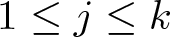 $1\leq j\leq k$.
Proof. Suppose that  $\mathfrak{genus}(f^{\ast}e_r)\leq k$. Then there exists an open cover $\{U_1,\dots,U_k\}$ of $Y$ and sections $s_j: U_j\to f^{\ast}X^{I}$ of $f^{\ast}e_r$ for $1\leq j\leq k$. Let $\tilde{f}:f^{\ast}X^I=Y\times_f X^I\to X^I$ be the projection onto the second factor. For $1\leq j\leq k$, the commutativity of a diagram in (2) shows
 $e_r\circ \tilde{f}\circ s_j=f|_{U_j}$. Therefore, for any $a\in U_j$, we have,
 \begin{equation*}\bigg(\tilde{f}\circ s_j(a)(0),\tilde{f}\circ s_j(a)(\frac{1}{r-1}),\dots, \tilde{f}\circ s_j(a)(\frac{r-2}{r-1}),\tilde{f}\circ s_j(a)(1)\bigg)=(\phi_1(a),\dots, \phi_{r}(a)).\end{equation*}
 We now define a homotopy  $F^i_j:U_j\times I\to X$ between $\phi_{i}|_{U_j}$ and $\phi_{i+1}|_{U_j}$ by
 \begin{equation*}F^i_j(a,t)=\tilde{f}\circ s_j(a)(\frac{t+i-1}{r-1}),\end{equation*}
for  $1\leq i\leq r-1$. Note that, $F^i_j(a,0)=\phi_{i}|_{U_j}$ and $F^i_j(a,1)=\phi_{i+1}|_{U_j}$ for $1\leq j\leq k$. Since being homotopic is a transitive property, it follows that $\phi_i|_{U_j}\simeq \phi_l|_{U_j}$ for any $1\leq i, l\leq r$.
Conversely, let  $f=(\phi_1,\dots,\phi_r):Y\to X^r$ be such that there is an open cover $\{U_1,\dots,U_k\}$ of $Y$ such that $\phi_i|_{U_j}\simeq \phi_l|_{U_j}$ for all $1\leq i,l\leq r$ and $1\leq j\leq k$. Let $G_i:U_j\times I\to X$ be a homotopy between $\phi_i|_{U_j}$ and $\phi_{i+1}|_{U_j}$. We define sections on $U_j$ for, $1\leq j\leq k$, via $G_i$’s.

It follows from the diagram in (3) that any section  $s_j:U_j\to f^{\ast}X^I=Y\times _f X^I$ has a form $s_j(a)=(a,g_j(a))$, where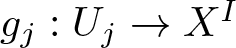 $g_j:U_j\to X^I$ for $1\leq j\leq k$. Therefore, to define sections $s_j$, it is enough to define maps $g_j$’s. We partition the interval $[0,1]$ into smaller intervals $ [\frac{n-1}{r-1},\frac{n}{r-1}]$ for $1\leq n\leq r$ and define $g_j$ as follows:
 \begin{equation} g_j(a)(t)=G_{n}(a, (r-1)t-n+1), ~~ t\in \bigg[\frac{n-1}{r-1},\frac{n}{r-1}\bigg].
\end{equation}
\begin{equation} g_j(a)(t)=G_{n}(a, (r-1)t-n+1), ~~ t\in \bigg[\frac{n-1}{r-1},\frac{n}{r-1}\bigg].
\end{equation} One can observe that  $e_r\circ g_j=f|_{U_j}$. Therefore, $s_j:U_j\to f^{\ast}X^I$ is a well-defined section of $f^{\ast}e_r$ for $1\leq j\leq k$. Thus, $\mathfrak{genus}(f^{\ast}e_r)\leq k$.
We now explain how to find cohomology classes in  $\ker( d_r^{\ast})$ with $\mathrm{TC}_r$-weights at least $2$. Let $v\in H^m(X;R)$ be a non-zero class and $p_i$ is the projection of $X^r$ onto the $i^{th}$ factor. Then we observe that $\bar{v}_{ij}=p_{j}^{\ast}(v)-p_i^{\ast}(v)\in \ker(d_r^{\ast})$. If $\mu$ is a stable cohomology operation, then
 \begin{equation*}\mu(\bar{v}_{ij})=\mu(p_{j}^{\ast}(v)-p_i^{\ast}(v))=p_{j}^{\ast}(\mu(v))-p_i^{\ast}(\mu(v))=\overline{\mu(v)_{ij}}.\end{equation*}
Theorem 3.3. Let  $\mu: H^\ast(-;R)\to H^{\ast+d}(-;S)$ be a stable cohomology operation of degree $d$ and $e(\mu)$ be of its excess such that $e(\mu)\geq m$. Then for any $v\in H^m(X;R)$,
 \begin{equation*}\mathrm{wgt}_{e_r}(\mu(\bar{v}_{ij}))\geq 2\end{equation*}
for  $1\leq i,j\leq n$.
Proof. Let  $f=(\phi_1,\dots,\phi_r):Y\to X^r$ be continuous function with $\mathfrak{genus}(f^\ast e_r)\leq 2$. Then using Lemma 3.2, we have $Y=U\cup V$ such that $\phi_i|_{U}\simeq \phi_{j}|_{U}$ and $\phi_i|_{V}\simeq \phi_{j}|_{V}$ for all $1\leq i, j\leq r$. We need to show that for any $v\in H^{m}(X;R)$, we have $f^\ast(\overline{\mu(v)_{ij}})=0$ for $1\leq i,j\leq r$. Now consider the Mayer–Vietoris sequence for $Y=U\cup V$
 \begin{equation*}\cdots\to H^{m-1}(U\cap V;R)\stackrel{\delta}{\to}H^m(Y;R)\to
H^m(U;R)\oplus H^m(V;R)\to\cdots\end{equation*}
\begin{equation*}\cdots\to H^{m-1}(U\cap V;R)\stackrel{\delta}{\to}H^m(Y;R)\to
H^m(U;R)\oplus H^m(V;R)\to\cdots\end{equation*} Observe that  $f^{\ast}(\bar{v}_{ij})=\phi_{j}^{\ast}(v)-\phi_{i}^{\ast}(v)$. Since $\phi_j|_{U}\simeq \phi_{i}|_{U}$ and $\phi_j|_{V}\simeq \phi_{i}|_{V}$ for all $1\leq i,j\leq r$, there exists $u\in H^{m-1}(U\cap V;R)$ such that $\delta(u)=f^{\ast}(\bar{v}_{ij})$. Therefore,
 \begin{equation*}f^{\ast}(\overline{\mu(v)_{ij}}) = f^{\ast}(\mu(\bar{v}_{ij}))=\mu(f^{\ast}(\bar{v}_{ij}))=\mu(\delta(u))=\delta(\mu(u))=0,\end{equation*}
since the boundary homomorphism  $\delta$ commutes with $\mu$ and $e(\mu)\geq m$. This implies $\mathrm{wgt}_{e_r}(\mu(\bar{v}_{ij}))\geq 2$ for $1\leq i,j\leq r$.
Remark 3.4. The proofs of Lemma 3.2 and Theorem 3.3 are based on the similar techniques used in [Reference Farber and Grant14, Lemma 4] and [Reference Farber and Grant14, Theorem 6].
4. Higher topological complexity of Seifert fibred manifolds
In this section, we show that in most cases the higher topological complexity  $\mathrm{TC}_r$ of aspherical Seifert fibred manifolds is $3r$ or $3r+1$. The bounds are obtained by using cohomological lower bound, and we get an exact value of higher topological complexity for these manifolds which satisfy the assumptions of Proposition 4.3. In Theorem 4.9, for another class of Seifert manifolds, their topological complexity lies between $3r-1$ and $3r+1$. Here, we need to use the cohomology classes with higher weights to compute the lower bound.
The non-higher analogue of the following lemma and its proof are essentially contained in [Reference Grant17, Corollary 3.8]. We adopt those arguments in the higher setting for the sake of completeness. Throughout this section, we denote  $G$ as a finitely generated group, $Z=Z(G)$ as its centre, and $d_r:G\to G^r$, for $r\geq 2$ as the diagonal map.
Proposition 4.1. Let  $G$ be a torsion free nilpotent group. Then the cohomological dimension of $\frac{G^r}{d_r(Z)}$ is finite.
Proof. Since  $G$ is a finitely generated torsion-free nilpotent group, there exists a central series
 \begin{equation*}
G = G_0 \geq G_1 \geq \cdots \geq G_{n-1} = Z(G) \geq G_n = \{1\},
\end{equation*}
\begin{equation*}
G = G_0 \geq G_1 \geq \cdots \geq G_{n-1} = Z(G) \geq G_n = \{1\},
\end{equation*}where each quotient  $G_i/G_{i+1}$ is free abelian, the sum of whose ranks equals the rank of $G$. Hence $\operatorname{cd}(G) = \operatorname{rk}(G)$, and therefore such groups always have finite cohomological dimension.
Suppose  $H=\frac{G^r}{d_r(Z)}$. To show that it has finite cohomological dimension, it suffices to show that it is torsion-free and nilpotent. As the class of torsion-free nilpotent groups $\mathcal{N}$ is closed under finite direct products and subgroups, both $d_r(Z)$ and $G^r$ lie in $\mathcal{N}$. Since the quotient of a nilpotent group by a nilpotent subgroup is again nilpotent, it follows that $H$ is nilpotent. Thus, it remains to show that $H$ is torsion-free.
Let  $[(g_1,\dots,g_r)] \in H$ be of finite order. Then each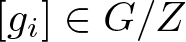 $[g_i] \in G/Z$ has finite order for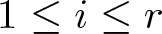 $1 \le i \le r$. Therefore, it is enough to prove that $G/Z$ is torsion-free. Fixing $1 \le i \le r$, denote $g_i$ simply by $g$.
$g$.
Suppose, for contradiction, that  $G/Z$ is not torsion-free. Then there exists $0 \neq gZ \in G/Z$ such that $g^n \in Z$ for some $n \gt 0$. Thus, for all $h \in G$ we have $g^nh = hg^n$. This implies $(hgh^{-1})^n = g^n$. By [Reference Lennox and Robinson20, page 30, 2.1.2], torsion-free nilpotent groups have the unique root property, i.e., if $x^n = y^n$, then $x = y$. Hence $hgh^{-1} = g$ for all $h \in G$, which implies $g \in Z$, contradicting the assumption that $gZ \neq Z$. Therefore, $G/Z$ is torsion-free.
Hence  $H$ is torsion-free and nilpotent, and the result follows.
In what follows we obtain an upper bound on the higher topological complexity of aspherical Seifert fibred manifolds of type  $M_O$ under certain conditions. We begin by proving a higher analogue of [Reference Grant17, Proposition 3.7], which will help us to obtain sharp upper bound on the higher topological complexity of aspherical manifolds.
Proposition 4.2. Let  $G$ be a torsion-free discrete group. Then $\mathrm{TC}_r(K(G,1))\leq \mathrm{cat}(G^r/d_r(Z))$.
Proof. The proof is a straightforward generalization of the proof of [Reference Grant17, Proposition 3.7] for the higher topological complexity using [Reference Daundkar5, Lemma 2.4] and [Reference Daundkar5, Theorem 3.1].
Proposition 4.3. Suppose  $G=\pi_1(M_O)$ with $\mathrm{cd}(G^r/d_r(Z))$ is finite. Then
 \begin{equation*}\mathrm{TC}_r(M_O)\leq 3r.\end{equation*}
Proof. It follows from [Reference Préaux23, Page 5] that  $Z$ contains the infinite cyclic group, that is, the set of integers $\mathbb{Z}$ up to the isomorphism. Then using Proposition 4.2 we get the inequality
 \begin{equation*}\mathrm{TC}_r(M_O)\leq \mathrm{cat}\left(\frac{G^r}{d_r(Z)}\right).\end{equation*}
 Suppose  $H=\frac{G^r}{d_r(Z)}$ and $1$ denotes the identity of $G$. Then, we have a short exact sequence:
 \begin{equation*}
1 \longrightarrow Z\overset{d_r|_{Z}}\longrightarrow G^r\overset{q}\longrightarrow H\longrightarrow 1.
\end{equation*}
\begin{equation*}
1 \longrightarrow Z\overset{d_r|_{Z}}\longrightarrow G^r\overset{q}\longrightarrow H\longrightarrow 1.
\end{equation*} Since  $\mathrm{cd}(H)$ is finite, from [Reference Bieri2, Theorem 5.5 (i)] we obtain the equality $\mathrm{cd}(H)= \mathrm{cd}(G^r)-\mathrm{cd}(Z)$. Moreover, $K(G^r,1)\simeq M_O^r$ as $M_O$ is $K(G,1)$ space. Thus, $\mathrm{cd}(G^r)=3r$. Moreover, note that $\mathrm{cd}(Z)\geq 1$. This gives us $\mathrm{cd}(H)\leq 3r-1$. Moreover, from [Reference Eilenberg and Ganea9], we have $\mathrm{cat}(H)=\mathrm{cd}(H)+1$, implying the inequality $\mathrm{TC}_r(M_O)\leq \mathrm{cat}(H)=\mathrm{cd}(H)+1\leq 3r$.
At this stage we note some important observations.
(1) It is known that the centre of
$\pi_1(M_N)$ is trivial (see [Reference Préaux23, Section 2.3.1]). Therefore, we cannot use Proposition 4.2 to improve the dimensional upper bound on
$\mathrm{TC}_r(M_N)$.(2) It follows from [Reference Teichner28, Theorem 2] that the fundamental group of an aspherical oriented Seifert fibred manifold is nilpotent if and only if it is a Heisenberg group (see also [Reference Lee and Raymond19, page 9]). Moreover, for a torsion free nilpotent group
$G$, the quotient group
$G^r/d_r(Z)$ has finite cohomological dimension (see Proposition 4.1). Thus, for a Seifert manifold,
$M=K(G,1)$, with
$G$ a Heisenberg group we have
$\mathrm{TC}_r(M)\leq 3r$ using Proposition 4.3.





Next, we provide our first estimation of the higher topological complexity of the aspherical Seifert fibred manifolds.
Theorem 4.5. Suppose
 \begin{align*}
&M_O = (O,o,g \mid e : (a_1,b_1),\dots,(a_m,b_m))
\quad \text{and} \\
&M_N = (O,n,g \mid e : (a_1,b_1),\dots,(a_m,b_m)),
\end{align*}
\begin{align*}
&M_O = (O,o,g \mid e : (a_1,b_1),\dots,(a_m,b_m))
\quad \text{and} \\
&M_N = (O,n,g \mid e : (a_1,b_1),\dots,(a_m,b_m)),
\end{align*}where  $g \ge 1$ and $n_2 \gt 2$. Then
 \begin{equation*}
\mathrm{TC}_r(M_O), \mathrm{TC}_r(M_N) \in \{3r,3r+1\},
\end{equation*}
\begin{equation*}
\mathrm{TC}_r(M_O), \mathrm{TC}_r(M_N) \in \{3r,3r+1\},
\end{equation*}for  $r = 2$ whenever the following conditions hold;
(1)
$a_1\equiv {2(\rm mod}~ 4)$ or(2)
$a_k\equiv {2(\rm mod}~ 4)$ and
$a_j\equiv {2(\rm mod}~ 4)$ for some
$2\leq j\neq k\leq n_2$,


and for  $r \ge 3$ whenever $a_k\equiv 2(\rm {mod}~ 4)$ and $a_j\equiv 2(\rm {mod}~ 4)$ for some $1\leq j\neq k\leq n_2$.
Proof. We establish the result for  $M_O$; similar arguments apply to $M_N$ as well. Let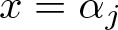 $x=\alpha_j$ and $y=\alpha_k$ be in $H^1(M;\mathbb{Z}_2)$ and $p_i:M^r\to M$ be a projection onto the $i^{\text{th}}$ factor. Consider $\bar{x}_i=p_i^{\ast}(x)-p_1^{\ast}(x)$. Then note that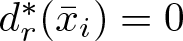 $d_r^{\ast}(\bar{x}_i)=0$, where $d_r:M\to M^r$ is the diagonal map. Observe that the product $\prod_{i=2}^r\bar{x}_i\neq 0$ since the expression contains a non-zero term $\prod_{i=2}^rp_i^{\ast}(x)=1\otimes \alpha_2\otimes \dots\otimes \alpha_2$.
Let  $\bar{y}_i=p_i^{\ast}(y)-p_1^{\ast}(y)$ and $B_2$ be the mod- $2$ Bockstein. Recall from Remark 2.7 $B_2(y)=\alpha_3^2$. Note that $B_2(\bar{y}_i)=B_2(p_i^{\ast}(y))-B_2(p_1^{\ast}(y))=p_i^{\ast}(B_2(y))-p_1^{\ast}(B_2(y))=\overline{B_2(y)}_i$ for $2\leq i\leq r$.
Now consider the product  $\prod_{i=2}^r\overline{B_2(y)}_i$. We observe that the product $\prod_{i=2}^r\overline{B_2(y)}_i$ is non-zero as it contains the term $1\otimes \alpha_3^2\otimes \dots\otimes \alpha_3^2$. Then one can show the following equality by induction.
 \begin{align*}
\overline{B_2(x)}_2\cdot \prod_{i=2}^r\bar{x}_i\cdot \prod_{i=2}^r\overline{B_2(y)}_i & =\binom{a_1}{2}^{r-1}\alpha_j^2\otimes \gamma \otimes\dots \otimes\gamma\\ &+\binom{a_1}{2}^{r-1}\gamma\otimes\alpha_j^2\otimes\gamma\otimes\dots \otimes\gamma \\ &+\binom{a_1}{2}^{r-2}\bigg[\binom{a_1}{2}
+\binom{a_2}{2}\bigg]\gamma\otimes\alpha_k^2\otimes\gamma\otimes\dots \otimes \gamma\\ &+ \binom{a_1}{2}^{r-2}\bigg[\binom{a_1}{2}+\binom{a_2}{2}\bigg]\alpha_k^2\otimes\gamma\otimes\dots \otimes \gamma.
\end{align*}
\begin{align*}
\overline{B_2(x)}_2\cdot \prod_{i=2}^r\bar{x}_i\cdot \prod_{i=2}^r\overline{B_2(y)}_i & =\binom{a_1}{2}^{r-1}\alpha_j^2\otimes \gamma \otimes\dots \otimes\gamma\\ &+\binom{a_1}{2}^{r-1}\gamma\otimes\alpha_j^2\otimes\gamma\otimes\dots \otimes\gamma \\ &+\binom{a_1}{2}^{r-2}\bigg[\binom{a_1}{2}
+\binom{a_2}{2}\bigg]\gamma\otimes\alpha_k^2\otimes\gamma\otimes\dots \otimes \gamma\\ &+ \binom{a_1}{2}^{r-2}\bigg[\binom{a_1}{2}+\binom{a_2}{2}\bigg]\alpha_k^2\otimes\gamma\otimes\dots \otimes \gamma.
\end{align*}To write the above expression in a simple form, we introduce the notations:
 \begin{equation*}A_1=\alpha_j^2\otimes \gamma \otimes\dots \otimes\gamma, \quad
A_2=\gamma\otimes\alpha_j^2\otimes\gamma\otimes\dots \otimes\gamma,
\quad A_3=\gamma\otimes\alpha_k^2\otimes\gamma\otimes\dots \otimes \gamma, \end{equation*}
\begin{equation*}A_1=\alpha_j^2\otimes \gamma \otimes\dots \otimes\gamma, \quad
A_2=\gamma\otimes\alpha_j^2\otimes\gamma\otimes\dots \otimes\gamma,
\quad A_3=\gamma\otimes\alpha_k^2\otimes\gamma\otimes\dots \otimes \gamma, \end{equation*}and  $A_4= \alpha_k^2\otimes\gamma\otimes\dots \otimes \gamma$. In these above notations, we rewrite $\overline{B_2(x)}_2 \cdot \prod_{i=2}^r \bar{x}_i \cdot \prod_{i=2}^r \overline{B_2(y)}_i$ as follows:
 \begin{align*}
\overline{B_2(x)}_2 \cdot \prod_{i=2}^r \bar{x}_i \cdot \prod_{i=2}^r \overline{B_2(y)}_i
&= \binom{a_1}{2}^{\, r-2} \left\{
\binom{a_1}{2}A_1
+ \binom{a_1}{2}A_2 \right. \\
&\quad \left.
+ \left[\binom{a_1}{2} + \binom{a_j}{2}\right]A_3
+ \left[\binom{a_1}{2} + \binom{a_j}{2}\right]A_4.
\right\}
\end{align*}
\begin{align*}
\overline{B_2(x)}_2 \cdot \prod_{i=2}^r \bar{x}_i \cdot \prod_{i=2}^r \overline{B_2(y)}_i
&= \binom{a_1}{2}^{\, r-2} \left\{
\binom{a_1}{2}A_1
+ \binom{a_1}{2}A_2 \right. \\
&\quad \left.
+ \left[\binom{a_1}{2} + \binom{a_j}{2}\right]A_3
+ \left[\binom{a_1}{2} + \binom{a_j}{2}\right]A_4.
\right\}
\end{align*} Observe that  $\overline{B_2(x)}_2 \cdot \prod_{i=2}^r \bar{x}_i \cdot \prod_{i=2}^r \overline{B_2(y)}_i \neq 0$ if and only if
 \begin{equation*}\binom{a_1}{2}^{r-2}\neq 0\, \text{and } \binom{a_1}{2}A_1+\binom{a_1}{2}A_2 + \bigg[\binom{a_1}{2}
+\binom{a_2}{2}\bigg]A_3+ \bigg[\binom{a_1}{2}
+\binom{a_2}{2}\bigg]A_4\neq 0.\end{equation*}
\begin{equation*}\binom{a_1}{2}^{r-2}\neq 0\, \text{and } \binom{a_1}{2}A_1+\binom{a_1}{2}A_2 + \bigg[\binom{a_1}{2}
+\binom{a_2}{2}\bigg]A_3+ \bigg[\binom{a_1}{2}
+\binom{a_2}{2}\bigg]A_4\neq 0.\end{equation*}Observe that from Proposition 2.6 we have the identity
 \begin{equation*}\alpha_k^2=\binom{a_1}{2}\sum_{j=2}^{n_2}\beta_j+\binom{a_k}{2}\beta_k= \binom{a_1}{2}\sum_{j=2, j\neq 3}^{n_2}\beta_j+\bigg[\binom{a_1}{2}+\binom{a_k}{2}\bigg]\beta_k.\end{equation*}
 Note that  $\alpha_k^2=0$ if and only if $\binom{a_1}{2}=0$ and $\binom{a_k}{2}=0$.
Thus, by symmetry  $\overline{B_2(x)}_2 \cdot \prod_{i=2}^r \bar{x}_i \cdot \prod_{i=2}^r \overline{B_2(y)}_i =0$ if and only if $\binom{a_1}{2}^{r-2}= 0$ or
(i)
$\alpha_k^2=0$ or
$\left[\binom{a_1}{2}+\binom{a_j}{2}\right]=0$ and(ii)
$\alpha_j^2=0$ or
$\binom{a_1}{2}=0$.


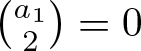
From this we conclude that, for  $r=2$, $\overline{B_2(x)}_2 \cdot \prod_{i=2}^r \bar{x}_i \cdot \prod_{i=2}^r \overline{B_2(y)}_i\neq 0$ if and only if
(1)
$a_1\equiv {2(\rm mod}~ 4)$ or(2)
$a_k\equiv {2(\rm mod}~ 4)$ and
$a_j\equiv {2(\rm mod}~ 4)$.



and for  $r\geq 3$ $\overline{B_2(x)}_2 \cdot \prod_{i=2}^r \bar{x}_i \cdot \prod_{i=2}^r \overline{B_2(y)}_i\neq 0$ if and only if $a_1\equiv {2(\rm mod}~ 4)$ and
(1)
$a_1\equiv {2(\rm mod}~ 4)$ or(2)
$a_k\equiv {2(\rm mod}~ 4)$ and
$a_j\equiv {2(\rm mod}~ 4)$.


The condition for  $r\geq 3$ is equivalent to $a_k\equiv {2(\rm mod}~ 4)$ and $a_j\equiv {2(\rm mod}~ 4)$ for some $1\leq j\neq k\leq n_2$.
Therefore, we know that  $\overline{B_2(x)}_2 \cdot \prod_{i=2}^r \bar{x}_i \cdot \prod_{i=2}^r \overline{B_2(y)}_i\neq 0$ if and only if the hypotheses of the theorem satisfies. We now use the cohomological lower bound to conclude our result. Note that Theorem 3.3 gives $\mathrm{wgt}_{e_r}(\overline{B_2(y)}_i)\geq 2$ and $\mathrm{wgt}_{e_r}(\overline{B_2(x)}_2)\geq 2$. Therefore, using [Reference Farber and Grant14, Proposition 2] we get that
 \begin{equation*}\mathrm{TC}_r(M_O) \gt \mathrm{wgt}_{e_r}\bigg(\overline{B_2(x)}_2\cdot \prod_{i=2}^r\bar{x}_i\cdot \prod_{i=2}^r\overline{B_2(y)}_i\bigg)\geq 3r-1.\end{equation*}
 By performing the similar calculations, we obtain  $\mathrm{TC}_r(M_N)\geq 3r$. The inequalities
 \begin{equation*}\mathrm{TC}_r(M_O),\mathrm{TC}_r(M_N)\leq 3r+1\end{equation*}
follows from [Reference Basabe, González, Rudyak and Tamaki1, Theorem 3.9].
Remark 4.6. Since 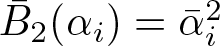 $\bar{B}_2(\alpha_i)=\bar{\alpha}_i^2$, the bound can be obtained using cohomology weights, and zero divisor cup length is the same. We use the Bockstein notation in Theorem 4.5 for comparison with the proof of the next theorem.
Theorem 4.7. Suppose  $M_O= (O,o,g \mid e: (a_1,b_1),\dots, (a_m,b_m))$ and $M_N=(O,n,g \mid e: (a_1,b_1),\dots, (a_m,b_m))$ with $g\geq 1$. If $n_2= 1 \text{or } 2$ and $n_p \gt 2$ for some odd prime $p$,
$p$,  $a_1'c_1\not\equiv 0 (\rm {mod } ~p)$ and $a_j'c_j+a_1'c_1 \not\equiv 0 (\rm {mod } ~p) $ for some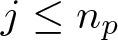 $j \leq n_p$. Then
 \begin{equation*}\mathrm{TC}_r(M_O), \mathrm{TC}_r(M_N)\in\{3r, 3r+1\}.\end{equation*}
Proof. Let  $n_2=1$ or $2$ and there exist an odd prime $p$ such that $n_p \gt 2$. Let $p$ be an odd prime. Let $k\leq n_p$ and $y_i=p_i^{\ast}(B_p(\alpha_k))$ for $1\leq i\leq r$, where $B_p$ is mod- $p$ Bockstein. Consider the higher zero divisors $\bar{y}_i=y_i-y_1$ for $2\leq i\leq r$ and their product $\prod_{i=2}^{r}\bar{y}_i$. Since $y_i$’s are of degree- $2$ cohomology classes, their squares are zero for degree reasons. Therefore, we obtain the following expression:
 \begin{equation*}\prod_{i=2}^{r}\bar{y}_i= y_2\cdots y_r- \sum_{i=2}^ry_1\cdots y_{i-1}\hat{y_i}y_{i+1}\cdots y_r,\end{equation*}
where  $\hat{y_i}$ denotes that $y_i$ is missing in the product.
Let  $j\leq n_p$ such that $j\neq k$ and $z_i=p_i^{\ast}(B_p(\alpha_j))$ for $1\leq i\leq r$. We consider another higher zero divisor $\bar{z}_2=z_2-z_1$ and its product with $\prod_{i=2}^{r}\bar{y}_i$ as follows:
 \begin{equation*}\bar{z}_2\cdot \prod_{i=2}^{r}\bar{y}_i=-y_1z_2y_3\cdots y_r -z_1y_2\cdots y_r\end{equation*}
because of the degree reasons. With same  $j$ as before, we take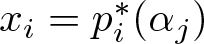 $x_i=p_i^{\ast}(\alpha_j)$ for $1\leq i\leq r$ and consider another set of higher zero divisors $\bar{x}_i=x_i-x_1$. Note that we have the generalized product rule
 \begin{equation}
(a_1\otimes \cdots \otimes a_r)\cdot (b_1\otimes \cdots \otimes b_r)=(-1)^{\sum_{j=0}^{r-2} s_{r-j}\sum_{i=1}^{r-j-1}t_i }(a_1b_1\otimes \cdots \otimes a_rb_r),
\end{equation}
\begin{equation}
(a_1\otimes \cdots \otimes a_r)\cdot (b_1\otimes \cdots \otimes b_r)=(-1)^{\sum_{j=0}^{r-2} s_{r-j}\sum_{i=1}^{r-j-1}t_i }(a_1b_1\otimes \cdots \otimes a_rb_r),
\end{equation}where  $|a_i|=s_i$ and $|b_i|=t_i$ for $1\leq i,j\leq r$. Now consider the product $\prod_{i=2}^r\bar{x}_i$. We use (5) to obtain the following
 \begin{equation*}\prod_{i=2}^r\bar{x}_i=x_2\cdots x_r+ \sum_{i=2}^r (\pm)x_{1}\cdots \hat{x}_{i}\cdots x_{r} +P,\end{equation*}
where  $P$ is the sum of products containing square terms. Note that $\prod_{i=2}^r\bar{x}_i\neq 0$ as it contains the unique non-zero term $x_2\cdots x_r$. Since we are going to multiply $\prod_{i=2}^r\bar{x}_i$ with $\bar{z}_2\cdot \prod_{i=2}^{r}\bar{y}_i$ and all $y_i$’s and $z_i$’s are of degree- $2$, the product of terms in $P$ with terms in $\bar{z}_2\cdot \prod_{i=2}^{r}\bar{y}_i$ becomes zero for degree reason. Therefore, we have the product
 \begin{equation}
\prod_{i=2}^r\bar{x}_i\cdot \bar{z}_2\cdot \prod_{i=2}^{r}\bar{y}_i= -y_1z_2x_2y_3x_3\cdots y_rx_r-z_1y_2x_2\cdots y_rx_r+ Q,
\end{equation}
\begin{equation}
\prod_{i=2}^r\bar{x}_i\cdot \bar{z}_2\cdot \prod_{i=2}^{r}\bar{y}_i= -y_1z_2x_2y_3x_3\cdots y_rx_r-z_1y_2x_2\cdots y_rx_r+ Q,
\end{equation}where  $Q=(-y_1z_2y_3\cdots y_r-z_1y_2\cdots y_r)\cdot \sum_{i=2}^r (\pm)x_{1}\cdots \hat{x}_{i}\cdots x_{r}.$ Note that $Q$ contains terms $c_1\otimes \cdots \otimes c_r$ such that $|c_1|=3$. Therefore, the terms
 \begin{equation*}R=-y_1z_2x_2y_3x_3\cdots y_rx_r-z_1y_2x_2\cdots y_rx_r\end{equation*}
in (6) cannot get cancelled by the terms in  $Q$. Now after putting the explicit values of $y_i$’s and $z_i$’s and using relations in Proposition 2.6, we get the following
 \begin{align*}R&= - \bigg[(a_j'c_j+E)E^{r-2}(-a_k'c_k\beta_k+E\beta_1)\otimes \gamma\otimes \cdots \otimes \gamma + E^{r-1}(-a_j'c_j\beta_j \\
&\quad +E\beta_1)\otimes \gamma\otimes \cdots \otimes \gamma\bigg],\end{align*}
\begin{align*}R&= - \bigg[(a_j'c_j+E)E^{r-2}(-a_k'c_k\beta_k+E\beta_1)\otimes \gamma\otimes \cdots \otimes \gamma + E^{r-1}(-a_j'c_j\beta_j \\
&\quad +E\beta_1)\otimes \gamma\otimes \cdots \otimes \gamma\bigg],\end{align*}where  $E=a_1'c_1$. One can observe that $R$ is nonzero if and only if $a_1'c_1\not\equiv 0 (\rm {mod } ~p)$ and $a_j'c_j+a_1'c_1 \not\equiv 0 (\rm {mod } ~p) $ for some $j \leq n_p$. Consequently, the product in (6) is nonzero if the hypothesis of the theorem is satisfied. Note that the $\mathrm{wgt}_{e_r}(\bar{z}_2)=\mathrm{wgt}_{e_r}(\bar{y}_i)=2$. Therefore, we get the lower bound $\mathrm{TC}_r(M_O)\geq 3r$. The similar calculations can be done to prove the inequality $\mathrm{TC}_r(M_N)\geq 3r$. The inequalities $\mathrm{TC}_r(M_O),\mathrm{TC}_r(M_N)\leq 3r+1$ follows from [Reference Basabe, González, Rudyak and Tamaki1, Theorem 3.9].
Corollary 4.8. If  $M_O$ satisfies the hypothesis of Theorem 4.5 or Theorem 4.7 and $G=\pi_1(M_O)$ with $\mathrm{cd}(G^r/d_r(Z))$ is finite, where $Z$ is the centre of $G$. Then
 \begin{equation*}\mathrm{TC}_r(M_O)=3r.\end{equation*}
Theorem 4.9. Suppose  $M_O= (O,o,g \mid e: (a_1,b_1),\dots, (a_m,b_m))$ and $M_N=(O,n,g \mid e: (a_1,b_1),\dots, (a_m,b_m))$ with $n_2=0$ and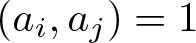 $(a_i,a_j)=1$ for all $1\leq i \lt j\leq m$ and $Ae+C\equiv 0(\rm{mod} ~ 2)$. Let $s$ be a positive integer such that $b_i\equiv 0({\rm mod}~2)$ for $1\leq i\leq s$ and $b_i\not\equiv 0({\rm mod}~2)$ for $s+1\leq i\leq m$. Suppose $\frac{1}{A}(\sum_{i=1}^{s}b_i'A_i+\frac{Ae+C}{2})$ is non-zero. Then
 \begin{equation*}3r-1\leq \mathrm{TC}_r(M_O), \mathrm{TC}_r(M_N)\leq 3r+1.\end{equation*}
Proof. We have assumed  $Ae+C\equiv 0({\rm mod}~2)$. Therefore, by Proposition 2.9, $\alpha\in H^1(M;\mathbb{Z}_2)$. Consider the higher zero divisors $\bar{x}_i=p_i^{\ast}(\alpha)-p_1^{\ast}(\alpha)$. Observe that the product $\prod_{i=2}^r\bar{x}_i\neq 0$. Let $\lambda=\frac{1}{A}(\sum_{i=1}^{s}b_i'A_i+\frac{Ae+C}{2})$. From Proposition 2.9, we have $B_2(\alpha)=\lambda\beta$. For $1\leq l\leq g$, consider $\bar{\theta}_l=p_2^{\ast}(\theta_l)=p_1^{\ast}(\theta_l)$. One can observe that the product $\prod_{i=2}^{r}\bar{x}_i\cdot \prod_{j=2}^{r}\bar{B}_2(\alpha)_j\cdot \bar{\theta}_l$ is non-zero as it contains the term $\lambda^{r-1}\theta_l\otimes\gamma\otimes\dots\otimes\gamma$ if $\lambda$ is non-zero. This gives
 \begin{equation*}\mathrm{TC}_r(M_O) \gt \mathrm{wgt}_{e_r}\bigg(\overline{B_2(x)}_2\cdot \prod_{i=2}^r\bar{x}_i\cdot \prod_{i=2}^r\overline{B_2(y)}_i\bigg)\geq 3r-2\end{equation*}
using [Reference Farber and Grant14, Proposition 2]. Similar calculations can be done to show  $\mathrm{TC}_r(M_N)\geq 3r-1$. The inequalities $\mathrm{TC}_r(M_O),\mathrm{TC}_r(M_N)\leq 3r+1$ follows from [Reference Basabe, González, Rudyak and Tamaki1, Theorem 3.9].
Corollary 4.10. If  $M_O$ satisfies the hypothesis of Theorem 4.9 and $G=\pi_1(M_O)$ with $\mathrm{cd}(G^r/d_r(Z))$ is finite, where $Z$ is the centre of $G$. Then $\mathrm{TC}_r(M_O)\in\{3r-1,3r\}$.
Remark 4.11. Observe that, in Theorem 4.9, we have used mod- $2$ cohomology ring description of $M_O$ and $M_N$ to compute the cohomological lower bound on the $\mathrm{TC}_r(M_O)$ and $\mathrm{TC}_r(M_N)$. One can check that the mod- $p$ cohomology ring description also gives the same cohomological lower bound on both $\mathrm{TC}_r(M_O)$ and $\mathrm{TC}_r(M_N)$.
Example 4.12. Consider  $S^1\to M\to \Sigma_g$ be a $S^1$-bundle over the orientable surface of genus $g \gt 0$ with $M$ orientable and $e \gt 0$ as the Euler number. It is known that $M$ is aspherical Seifert-fibred manifold of type $(O,o,g \mid e: (1,e))$. Then it follows from Theorem 4.9 that the $3r-1\leq\mathrm{TC}_r(M)\leq 3r+1$. On the other hand, if $e=0$, then $M\cong \Sigma_g\times S^1$. In this case, we have $\mathrm{TC}_r(M)=2r$ if $g=1$ and $\mathrm{TC}_r(M)=2r+2$ otherwise. We note that $e=0$ case cannot be handled using Theorem 4.9. Daundkar considered the case $g=0$ in [Reference Daundkar5, Corollary 5.8], that is $M$ is a lens space. In particular, it was shown that $\mathrm{TC}_r(M)=3r$.
5. Wedge and connected sum of some 3-manifolds and concluding remarks
In general, the problem of computing the higher topological complexity of arbitrary  $3$–manifolds remains widely open. Although a complete formula appears out of reach, it is nevertheless possible to obtain sharp bounds, and in some cases exact values, for specific classes of $3$–manifolds. In particular, since there is no known formula expressing the higher topological complexity of a connected sum in terms of that of its summands, a comprehensive classification seems unlikely at present.
In this section, we focus on certain classes of  $3$–manifolds that are not Seifert–fibred and obtain explicit computations and estimates for their higher topological complexity. These results complement the main theorems of the paper and highlight directions for further investigation.
Proposition 5.1. Let  $X=\#_{k}(S^2\times S^1)$. Then
  $
\mathrm{cat}(X)=3$.
$
\mathrm{cat}(X)=3$.
Proof. The proof follows from [Reference Dranishnikov and Sadykov7, Proposition 11] and the fact that  $\mathrm{cat}(S^2\times S^1)=3$.
Theorem 5.2. Let  $X=\#_{k}(S^1\times S^2)$. Then $\mathrm{TC}_r(X)=2r+1$.
Proof. Here we prove the theorem for  $k=2$. A similar argument works for the general case. Recall that the integral cohomology ring of $X$ is given as follows:
 \begin{equation*}H^{\ast}(X;\mathbb{Z})\cong \frac{\Lambda[x_1,x_2]\oplus\Lambda[y_1,y_2]}{\left \lt x_1x_2+x_2x_1, y_1y_2+y_2y_1, x_1x_2-y_1y_2, x_ix_j, y_jx_i, \right \gt },\end{equation*}
where  $\Lambda$ is the exterior product over integers and $|x_i|=i=|y_i|$ for $i=1,2$. Let $u=x_1$, $v=x_2$, $w=y_1$ and $z=y_2$. Let $\bar{u}_i=p_i^{\ast}(x_1)-p_1^{\ast}(x_1)$, $\bar{v}_i=p_i^{\ast}(x_2)-p_1^{\ast}(x_2)$, $\bar{w}_i=p_i^{\ast}(y_1)-p_1^{\ast}(y_1)$ and $\bar{z}_i=p_i^{\ast}(y_2)-p_1^{\ast}(y_2)$. Then $\bar{u}_i$, $\bar{v}_i$, $\bar{w}_i$ and $\bar{z}_i$ are in $\ker(d_r^{\ast})$. Note that the products $\prod_{i=2}^{r}\bar{u}_i$ is non-zero as it contain the terms $1\otimes x_1\otimes\dots\otimes x_1$. Similarly,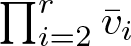 $\prod_{i=2}^{r}\bar{v}_i$ is non-zero. We now consider the product $\bar{w}_2\cdot\bar{z}_2\cdot \prod_{i=2}^{r}\bar{u}_i\cdot \prod_{i=2}^{r}\bar{v}_i$, which is non-zero as it contains the term $y_1y_2\otimes x_1x_2\otimes \dots\otimes x_1x_2$ and $x_1x_2$ generates $H^3(S^2\times S^1)$.
By [Reference Rudyak24, Proposition 3.4], we get that  $2r+1\leq\mathrm{TC}_r(X)$. We then observe that $\mathrm{TC}_r(X)\leq \mathrm{cat}(X^r)\leq 2r+1$ as $\mathrm{cat}(X)=3$. This concludes the result.
The topological complexity of wedges and connected sums of spaces has been studied by Dranishnikov in [Reference Dranishnikov6] and jointly with Sadykov in [Reference Dranishnikov and Sadykov7, Reference Dranishnikov and Sadykov8]. More recently, Neofytidis investigated this problem for aspherical manifolds. However, the relationship between  $\mathrm{TC}(M_1\# M_2)$ and $\mathrm{TC}(M_1\vee M_2)$ is not fully understood. In particular, it is natural to ask whether the inequality
 \begin{equation*}
\mathrm{TC}(M_1\# M_2)\leq \mathrm{TC}(M_1\vee M_2)
\end{equation*}
\begin{equation*}
\mathrm{TC}(M_1\# M_2)\leq \mathrm{TC}(M_1\vee M_2)
\end{equation*}holds for a given pair of manifolds. In [Reference Neofytidis22, Corollary 5.2], Neofytidis showed that the topological complexity of the connected sum of a negatively curved  $4$–manifold with nonzero second Betti number and any aspherical $4$–manifold is equal to $9$.
$9$.
In contrast, we show below that the topological complexity of the wedge of closed, orientable, aspherical  $3$–manifolds (including, for instance, the Seifert manifolds considered earlier) is equal to $7$. As a consequence, for these manifolds the inequality
 \begin{equation*}
\mathrm{TC}(M_1\# M_2)\leq \mathrm{TC}(M_1\vee M_2)
\end{equation*}
\begin{equation*}
\mathrm{TC}(M_1\# M_2)\leq \mathrm{TC}(M_1\vee M_2)
\end{equation*}does indeed hold. Our proof follows an argument similar in spirit to that of [Reference Neofytidis22, Corollary 5.2].
Proposition 5.3. Let  $M_i$ be closed, orientable, aspherical $3$–manifolds for $1 \le i \le k$. Then
 \begin{equation}
\mathrm{TC}(M_1 \vee \cdots \vee M_k) = 7.
\end{equation}
\begin{equation}
\mathrm{TC}(M_1 \vee \cdots \vee M_k) = 7.
\end{equation} Moreover, if one of the  $M_i$ is negatively curved with $H_2(M_i,\mathbb{Q})\neq 0$, then
 \begin{equation}
6\leq \mathrm{TC}(M_1\#\dots \# M_k)\leq 7.
\end{equation}
\begin{equation}
6\leq \mathrm{TC}(M_1\#\dots \# M_k)\leq 7.
\end{equation}Proof. Let  $B\pi_1(M_1 \# \cdots \# M_k)$ denote the classifying space of $\pi_1(M_1 \# \cdots \# M_k)$. Since each $M_i$ is aspherical, we have
 \begin{equation*}
\begin{aligned}
\mathrm{TC}(M_1 \vee \cdots \vee M_k)
&= \mathrm{TC}\big(B\pi_1(M_1 \# \cdots \# M_k)\big) \\
&= \mathrm{TC}\big(\pi_1(M_1) \ast \cdots \ast \pi_1(M_k)\big).
\end{aligned}
\end{equation*}
\begin{equation*}
\begin{aligned}
\mathrm{TC}(M_1 \vee \cdots \vee M_k)
&= \mathrm{TC}\big(B\pi_1(M_1 \# \cdots \# M_k)\big) \\
&= \mathrm{TC}\big(\pi_1(M_1) \ast \cdots \ast \pi_1(M_k)\big).
\end{aligned}
\end{equation*} Let  $G_i = \pi_1(M_i)$. Using [Reference Dranishnikov and Sadykov8, Theorem 2] iteratively, we obtain
 \begin{align*}
&\mathrm{TC}\big(\pi_1(M_1) \ast \cdots \ast \pi_1(M_k)\big)\\
&=
\max_{\substack{1 \le i \le k \\ 1 \le s \le k-1}}
\left\{
\mathrm{TC}(\pi_1(M_i)),\;
\mathrm{cd}\big((G_1 \ast \cdots \ast G_s)\times G_{s+1}\big) +1
\right\}.
\end{align*}
\begin{align*}
&\mathrm{TC}\big(\pi_1(M_1) \ast \cdots \ast \pi_1(M_k)\big)\\
&=
\max_{\substack{1 \le i \le k \\ 1 \le s \le k-1}}
\left\{
\mathrm{TC}(\pi_1(M_i)),\;
\mathrm{cd}\big((G_1 \ast \cdots \ast G_s)\times G_{s+1}\big) +1
\right\}.
\end{align*} Note that  $
\mathrm{cd}\big((G_1 \ast \cdots \ast G_s)\times G_{s+1}\big) = 6
\quad \text{for all } 1 \le s \le k-1,
$ since
$
\mathrm{cd}\big((G_1 \ast \cdots \ast G_s)\times G_{s+1}\big) = 6
\quad \text{for all } 1 \le s \le k-1,
$ since
 \begin{equation*}
K\big((G_1 \ast \cdots \ast G_s)\times G_{s+1},1\big)
\cong
(M_1 \# \cdots \# M_s) \times M_{s+1}
\end{equation*}
\begin{equation*}
K\big((G_1 \ast \cdots \ast G_s)\times G_{s+1},1\big)
\cong
(M_1 \# \cdots \# M_s) \times M_{s+1}
\end{equation*}is an orientable  $6$-manifold. Therefore, $\mathrm{TC}(M_1 \vee \cdots \vee M_k) = 7.$
The other inequality  $6\leq \mathrm{TC}(M_1\#\dots \# M_k)\leq 7$ follows from [Reference Neofytidis22, Corollary 1.2].
We now extend (7) to the higher setting. To this end, we first establish several auxiliary results.
Lemma 5.4. Let  $A\subseteq X$ be a retract. Then $\mathrm{TC}_r(A)\leq \mathrm{TC}_r(X)$.
The proof of the above lemma is a straightforward analogue of [Reference Farber12, Lemma 4.25] for higher TC.
Proposition 5.5. For any path connected topological spaces  $X$ and $Y$, we have
(1) if
$r$ is even,
and,
\begin{equation*}\mathrm{TC}_r(X\vee Y)\geq \mathrm{max}\{\mathrm{TC}_r(X), \mathrm{TC}_r(Y), \mathrm{cat}((X\times Y)^{\lfloor \frac{r}{2}\rfloor})\},\end{equation*}(2) if
$r$ is odd,
\begin{equation*}\mathrm{TC}_r(X\vee Y)\geq \mathrm{max}\{\mathrm{TC}_r(X), \mathrm{TC}_r(Y), \mathrm{cat}((X\times Y)^{\lfloor \frac{r}{2}\rfloor}\times X), \mathrm{cat}((X\times Y)^{\lfloor \frac{r}{2}\rfloor}\times Y)\}.\end{equation*}


 \begin{align*}
&\mathrm{TC}_r(X\vee Y)\geq \\
&\begin{cases} \mathrm{max}\{\mathrm{TC}_r(X), \mathrm{TC}_r(Y), \mathrm{cat}((X\times Y)^{\lfloor \frac{r}{2}\rfloor})\} & \text{if $r$ is even } \\
\mathrm{max}\{\mathrm{TC}_r(X), \mathrm{TC}_r(Y), \mathrm{cat}((X\times Y)^{\lfloor \frac{r}{2}\rfloor}\times X),\\ \mathrm{cat}((X\times Y)^{\lfloor \frac{r}{2}\rfloor}\times Y)\} & \text{if $r$ is odd.} \end{cases}
\end{align*}
\begin{align*}
&\mathrm{TC}_r(X\vee Y)\geq \\
&\begin{cases} \mathrm{max}\{\mathrm{TC}_r(X), \mathrm{TC}_r(Y), \mathrm{cat}((X\times Y)^{\lfloor \frac{r}{2}\rfloor})\} & \text{if $r$ is even } \\
\mathrm{max}\{\mathrm{TC}_r(X), \mathrm{TC}_r(Y), \mathrm{cat}((X\times Y)^{\lfloor \frac{r}{2}\rfloor}\times X),\\ \mathrm{cat}((X\times Y)^{\lfloor \frac{r}{2}\rfloor}\times Y)\} & \text{if $r$ is odd.} \end{cases}
\end{align*}Proof. The proof follows arguments analogous to those in [Reference Dranishnikov6, Theorem 3.6]. Since both  $X$ and $Y$ are retracts of $X\vee Y$, the inequalities $\mathrm{TC}_r(X), \mathrm{TC}_r(Y)\leq \mathrm{TC}(X\vee Y)$ follow from Lemma 5.4.
First, consider the case  $r=2k$. We need to show the inequality $\mathrm{cat}((X\times Y)^{\lfloor \frac{r}{2}\rfloor})\leq \mathrm{TC}_r(X\vee Y)$. Note that, we can identify $(X\times Y)^k$ as a subspace of $(X\vee Y)^r$ and assume that it is covered by $\mathrm{TC}_r(X\vee Y)$-many open sets $U$ such that all projections $pr_i: U\to X\vee Y$ for $1\leq i\leq r$, are homotopic to each other. Therefore, we can choose a homotopy $H_U:U\times I\to X\vee Y$ such that $H_U((x_1,y_1),\dots, (x_k,y_k),\frac{2i-2}{r-1})=x_i$ and $H_U((x_1,y_1),\dots, (x_k,y_k),\frac{2i-1}{r-1})=y_i$ for $1\leq i\leq k$. Denote $\widetilde{xy} =((x_1,y_1),\dots, (x_k,y_k))$. Suppose $r_X:X\vee Y\to X$ and $r_Y:X\vee Y\to Y$ are the retraction maps. Then define $G_U:U\times I\to (X\times Y)^k$ by
 \begin{align*}
G_U(\widetilde{xy}, t)
&:=
\left(
r_X H_U\!\left(\widetilde{xy}, \tfrac{t}{r-1}\right),
r_Y H_U\!\left(\widetilde{xy}, \tfrac{1-t}{r-1}\right),
\ldots,
r_X H_U\!\left(\widetilde{xy}, \tfrac{t+r-2}{r-1}\right), \right.\\
&\quad \left.r_Y H_U\!\left(\widetilde{xy}, \tfrac{r-1-t}{r-1}\right)\right).
\end{align*}
\begin{align*}
G_U(\widetilde{xy}, t)
&:=
\left(
r_X H_U\!\left(\widetilde{xy}, \tfrac{t}{r-1}\right),
r_Y H_U\!\left(\widetilde{xy}, \tfrac{1-t}{r-1}\right),
\ldots,
r_X H_U\!\left(\widetilde{xy}, \tfrac{t+r-2}{r-1}\right), \right.\\
&\quad \left.r_Y H_U\!\left(\widetilde{xy}, \tfrac{r-1-t}{r-1}\right)\right).
\end{align*} Observe that  $G(\widetilde{xy},0)=\widetilde{xy}$ and $G_U(\widetilde{xy},1)=(v_0,\dots, v_0)$, where $v_0$ is the wedge point. This implies $U$ is a contractible subspace of $(X\times Y)^k$.
We now consider the case  $r=2k+1$. We show the inequality $\mathrm{cat}((X\times Y)^{\lfloor \frac{r}{2}\rfloor})\times X\leq \mathrm{TC}_r(X\vee Y)$.
Similarly, as in the first case, we can consider  $(X\times Y)^k\times X\subseteq (X\vee Y)^r$ and assume that it is covered by $\mathrm{TC}_r(X\vee Y)$-many open sets $U$ such that all projections $pr_i: U\to X\vee Y$ for $1\leq i\leq r$ are homotopic to each other. We can choose a homotopy $H_U:U\times I\to X\vee Y$ such that $H_U((x_1,y_1),\dots, (x_k,y_k),\frac{2i-2}{r-1})=x_i$ for $1\leq i\leq k+1$ and $H_U((x_1,y_1),\dots, (x_k,y_k),\frac{2i-1}{r-1})=y_i$ for $1\leq i\leq k$. Denote $\widetilde{xy} =((x_1,y_1),\dots, (x_k,y_k),x_{k+1})$. Define the homotopy $G_U: U\times I\to (X\times Y)^k\times X$ by
 \begin{align*}
G_U(\widetilde{xy}, t)
&:=
\left(
r_X H_U\!\left(\widetilde{xy}, \tfrac{t}{r-1}\right),
r_Y H_U\!\left(\widetilde{xy}, \tfrac{1-t}{r-1}\right),
\ldots,
r_Y H_U\!\left(\widetilde{xy}, \tfrac{t+r-3}{r-1}\right), \right.\\
& \left.r_X H_U\!\left(\widetilde{xy}, \tfrac{r-1-t}{r-1}\right)\right).
\end{align*}
\begin{align*}
G_U(\widetilde{xy}, t)
&:=
\left(
r_X H_U\!\left(\widetilde{xy}, \tfrac{t}{r-1}\right),
r_Y H_U\!\left(\widetilde{xy}, \tfrac{1-t}{r-1}\right),
\ldots,
r_Y H_U\!\left(\widetilde{xy}, \tfrac{t+r-3}{r-1}\right), \right.\\
& \left.r_X H_U\!\left(\widetilde{xy}, \tfrac{r-1-t}{r-1}\right)\right).
\end{align*} This homotopy contracts  $U$ to a point in $(X\times Y)^k\times X$. This concludes the proof.
In general, for path-connected spaces  $X$ and $Y$, the inequality
 \begin{equation*}\mathrm{cat}(X),\mathrm{cat}(Y)\leq \mathrm{cat}(X\times Y)\end{equation*}
holds. As a consequence, we have the following corollary.
Corollary 5.6. The following inequality holds for any  $r$
$r$
 \begin{equation*}\mathrm{TC}_r(X\vee Y)\geq \mathrm{max}\{\mathrm{TC}_r(X), \mathrm{TC}_r(Y), \mathrm{cat}((X\times Y)^{\lfloor \frac{r}{2}\rfloor})\}.\end{equation*}
By iteratively applying Proposition 5.5, one obtains the following straightforward extension.
Proposition 5.7. Let  $X_i$ be path connected topological spaces for $1\leq i\leq k$ and $Z=X_1\vee\dots \vee X_k$. Then if $r$ is even, we have
 \begin{equation*}
\mathrm{TC}_r(Z)
\geq
\max_{\substack{1 \le i \le k \\ 1 \le j \le k-1}}
\left\{
\mathrm{TC}_r(X_i),\;
\mathrm{cat}\big((X_j\times \widetilde{X}_j)^{\lfloor \frac{r}{2}\rfloor}\big)
\right\},
\end{equation*}
\begin{equation*}
\mathrm{TC}_r(Z)
\geq
\max_{\substack{1 \le i \le k \\ 1 \le j \le k-1}}
\left\{
\mathrm{TC}_r(X_i),\;
\mathrm{cat}\big((X_j\times \widetilde{X}_j)^{\lfloor \frac{r}{2}\rfloor}\big)
\right\},
\end{equation*}and, if  $r$ is odd, we have
 \begin{equation*}
\mathrm{TC}_r(Z)
\geq
\max_{\substack{1 \le i \le k \\ 1 \le j \le k-1}}
\left\{
\mathrm{TC}_r(X_i),\;
\mathrm{cat}\big((X_j\times\tilde{X}_j)^{\lfloor \frac{r}{2}\rfloor} \times X_j\big), \mathrm{cat}\big((X_j\times \widetilde{X}_j)^{\lfloor \frac{r}{2}\rfloor}\times \widetilde{X}_j\big)
\right\},
\end{equation*}
\begin{equation*}
\mathrm{TC}_r(Z)
\geq
\max_{\substack{1 \le i \le k \\ 1 \le j \le k-1}}
\left\{
\mathrm{TC}_r(X_i),\;
\mathrm{cat}\big((X_j\times\tilde{X}_j)^{\lfloor \frac{r}{2}\rfloor} \times X_j\big), \mathrm{cat}\big((X_j\times \widetilde{X}_j)^{\lfloor \frac{r}{2}\rfloor}\times \widetilde{X}_j\big)
\right\},
\end{equation*}where  $\widetilde{X}_j=(X_{j+1}\vee\dots\vee X_k)$.
Proposition 5.8. Let  $M_i$ be closed, orientable, aspherical $3$–manifolds for $1 \le i \le k$. Then
 \begin{equation*}
\mathrm{TC}_r(M_1 \vee \cdots \vee M_k) = 3r+1.
\end{equation*}
\begin{equation*}
\mathrm{TC}_r(M_1 \vee \cdots \vee M_k) = 3r+1.
\end{equation*}Proof. The upper bound  $\mathrm{TC}_r(M_1 \vee \cdots \vee M_k)\leq 3r+1$ follows from the dimensional upper bound on the higher topological complexity.
Since  $M_i$’s are aspherical oriented $3$-manifolds, $(M_{k-1}\times M_k)^{\lfloor \frac{r}{2}\rfloor}$ and $(M_{k-1}\times M_k)^{\lfloor \frac{r}{2}\rfloor} \times M_{k-1}$ are also aspherical, oriented manifolds of dimension $6\lfloor \frac{r}{2}\rfloor $ and $6\lfloor \frac{r}{2}\rfloor+3$, respectively. Therefore, their cohomological dimensions are the same as their usual dimensions i.e.,
 \begin{equation*}\mathrm{cd}((M_{k-1}\times M_k)^{\lfloor \frac{r}{2}\rfloor})=6\bigg\lfloor \frac{r}{2}\bigg\rfloor\end{equation*}
and
 \begin{equation*}\mathrm{cd}((M_{k-1}\times M_k)^{\lfloor \frac{r}{2}\rfloor} \times M_{k-1})=6\bigg\lfloor \frac{r}{2}\bigg\rfloor+3.\end{equation*}
 Then, it follows from [Reference Eilenberg and Ganea9] that  $\mathrm{cat}((M_{k-1}\times M_k)^{\lfloor \frac{r}{2}\rfloor})=3r+1$ if $r$ is even and $\mathrm{cat}((M_{k-1}\times M_k)^{\lfloor \frac{r}{2}\rfloor} \times M_{k-1})=3r+1$ if $r$ is odd. Finally, the lower bound $\mathrm{TC}_r(M_1\vee\dots\vee M_k)\geq 3r+1$ follows from Proposition 5.7.
5.1 Further directions
It seems reasonable to expect that the higher analogue of the inequality (8) should be true. Pursuing this direction would likely require extending the results of Neofytidis [Reference Neofytidis22] to the higher setting, which would broaden the scope of the present work.
Another question that would be interesting to explore arises in the case of Proposition 5.5. Although our arguments do not require a sharp lower bound, it will be useful to know whether the bound is sharp in general. This would likely require techniques different from those developed by Dranishnikov [Reference Dranishnikov and Sadykov8].
Acknowledgements
We thank the anonymous referee for their valuable comments and suggestions, which have significantly improved the quality and scope of the paper. We are also grateful to Mark Grant and Christoforos Neofytidis for sharing their insights on our work.
Navnath Daundkar acknowledges the support of the Indian Institute of Technology Bombay, where a major part of this work was carried out during his postdoctoral position. He also gratefully acknowledges the support of the National Board for Higher Mathematics (NBHM) through Grant No. 0204/10/(16)/2023/R&D-II/2789 and the DST–INSPIRE Faculty Fellowship (Faculty Registration No. IFA24-MA218), Department of Science and Technology, Government of India. A substantial portion of this project, carried out by S. Thandar, was undertaken during his time at IIT Bombay, where he was supported by a Senior Research Fellowship from the University Grants Commission (UGC), India. The remaining work was completed during his tenure as a Visiting Fellow at the Tata Institute of Fundamental Research (TIFR).



