


1. BACKGROUND TO THE STUDY
It has been observed that comparative studies in corporate law are often informed by the ‘impressive’Footnote 1 underlying uniformity not only of the corporate form but also of the laws that govern it. As Armour and others observed, ‘[b]usiness corporations have a fundamentally similar set of legal characteristics – and face a fundamentally similar set of legal problems – in all jurisdictions’.Footnote 2 One of the core legal attributes identifiedFootnote 3 is delegated management under a board structure.Footnote 4 This makes the company director a ubiquitous figure in companies and corporations across jurisdictions, and the need to regulate the director’s conduct and actions a unifying concern.
In Singapore, the imposition of duties on directors involves a complex mix of statute and general law. The Companies Act (CA), which is the main piece of legislation regulating the administration of companies, contains a number of provisions that oblige the director to take a certain course of conduct in particular specified circumstances.Footnote 5 In addition, the CA contains a general statement of directors’ duties in the form of Section 157. Specifically, the provision obliges a director to act honestly at all times and to use reasonable diligence in the discharge of the duties of his office. The duties of honesty and reasonable diligence are conceptually distinct, and as Yong Pung How CJ noted in Lim Weng Kee v Public Prosecutor,Footnote 6 are ‘different aspects of a director’s bundle of duties even though they may overlap on certain facts’. Singapore courts have made clear that these duties are based, respectively, on the general law duties to act bona fide in the interests of the company,Footnote 7 and to exercise care and diligence.Footnote 8 Accordingly, the common law that explains and interprets these duties is of significance and relevance in interpreting the statutory duty.Footnote 9 In this connection, it should be pointed out that Singapore’s company law, like many Commonwealth jurisdictions, is based on English common law. As a result of this common heritage,Footnote 10 there tend to be more similarities than differences in the laws that govern directors’ duties throughout the Commonwealth. Indeed, Singapore courts frequently refer to and cite judgments from England, as well as other established common law countries including Australia and Canada.Footnote 11 Additionally, Section 157 of the CA does not purport to replace all the duties imposed at general law. The Section itself expressly providesFootnote 12 that it is ‘in addition to and not in derogation of any other written law or rule of law relating to the duty or liability of directors’. Thus, a director who escapes liability under Section 157 may nevertheless find himself in breach of his duties at general law. The consequences for a breach of the statutory duties prescribed under Section 157 are however likely to be more severe, given that criminalFootnote 13 and disqualificationFootnote 14 sanctions may be imposed on the errant director.
The law on directors’ duties, as a central pillar of corporate governance regimes, is already widely studied.Footnote 15 However, a large part of extant research on directors’ duties is focused on understanding what the law requires, and how it applies or should apply in any particular situation. Such research, whilst undoubtedly important and edifying, is nevertheless largely reactive, and often undertaken at a theoretical level. Whilst empirical studies on different aspects of directors’ duties have been undertaken in other common law jurisdictions,Footnote 16 there has been little research conducted in Singapore to assess what, if any, impact these duties have on the behaviour of directors. We aim, in this study, to contribute towards bridging that gap by looking at duties from the perspective of the directors themselves, with a view to appreciating how Singapore directors understand the law as it applies to them. There are several justifications for embarking on a study of this nature. First, the results may provide some basis on which the efficacy of the law on directors’ duties may be properly assessed, which in turn will inform decisions regarding any future law reform. The imposition of duties on directors is an attempt at moulding directorial conduct and behaviour, and to steer directors when performing their management functions in the direction deemed proper by the law. Ultimately, the aim of the regulatory regime is to improve, as well as maintain, certain standards of corporate governance. It is obvious that there will be little effect if these duties are not properly appreciated by the persons at whom they are aimed. Indeed, concerns have been expressed from time to time as to the extent to which directors understand their duties. In England, it was this concern that led to the introduction of a statutory statement of directors’ duties in the United Kingdom’s Companies Act 2006.Footnote 17
Second, we hope to ascertain if there is any divergence between the law’s conceptualization of what is in the company’s interests, and the directors’ own view as to how he or she would act in fact. Any mismatch will have implications for the boundaries of the core fiduciary duty that requires the directors to act in good faith in the interests of the company. This particular aspect of the present study is in fact prompted by the recent Singapore Court of Appeal decision in Ho Kang Peng v Scintronix Corp Ltd. Footnote 18 A director was sued by his company for being in breach of his directors’ duties in, inter alia, authorizing payments under a fictitious consultancy agreement. The director asserted that the payments (which were essentially bribes)Footnote 19 were made for the purpose of procuring business deals for the company. Accordingly, he argued that he was not in breach of his duties as he had acted in the company’s interests. The Court of Appeal agreed that the payments were made for the purposes asserted by the director.Footnote 20 Indeed, the Court noted that the payments ‘can be said to have been made in order to benefit the Company financially’.Footnote 21 Nevertheless, the Court of Appeal affirmed the High Court’s finding that there was a breach of directors’ duties. The Court held that ‘acting in the interests of the company’ did not mean profit maximization by any means. A director who caused a company to make payments which are in effect gratuities, thereby exposing the company to the risk of criminal liability, would not be acting honestly even if he claimed to be furthering the company’s financial interests in the short term.Footnote 22 The Court of Appeal made clear that, where appropriate, the court will ‘lift the cloak of corporate immunity’Footnote 23 even where the impugned director claims to be acting genuinely to promote the company’s interests.Footnote 24 In other words, business judgment is not inviolable. Further, whether the court considers it appropriate to intervene in any particular case is determined by reference to an objective yardstick.
Apart from the pronouncements with respect to the law on directors’ duties, the case is interesting for an entirely different reason. The director in question had appealed against the High Court’s finding that he had breached his fiduciary duties, but only in respect of the specific finding that he had breached his fiduciary duties by authorizing the payments.Footnote 25 The irresistible inference is that the director saw nothing disloyal about acting as he had as the payments were undeniably made with a view to benefitting the company by procuring certain business for it.Footnote 26 The very fact of the appeal thus suggests the distinct possibility of a mismatch between the expectations the law has of directors, and the perceptions of these men of commerce. In the Singapore context, this inquiry is of especial importance because of the particular manner in which directors’ duties are regulated. As noted earlier, the duty to act bona fide in the interests of the company is codified as a duty to act honestly in Section 157 of the CA, and a breach of this statutory duty results in a criminal offence. Although the progenitor of the statutory duty, namely the general law duty to act in good faith in the interests of the company, is subjectively assessed,Footnote 27 the Court of Appeal in Scintronix applied an objective yardstick to determine breach of the duty to act honestly. Directors operate in diverse environments and their individual decisions may be driven by myriad factors. Different directors may therefore arrive at different conclusions even if the good faith of the director is not in issue. Taking a purely objective view of the impugned conduct may sometimes be too harsh on the director, especially since the consequence of a finding of breach is criminal in nature. If the results indicate the existence of a gap, this might prompt us to consider how the boundaries of the duty contained in Section 157 of the CA, and correspondingly the offence, which is committed as a result of a breach thereof, ought to be drawn.
Third, and flowing from the preceding, if there are indeed specific duties or rules that may be highlighted as being less appreciated, an assessment may be taken of any need for providing or improving knowledge enhancement courses targeted specifically at company directors. An appreciation of the knowledge shortfall will be useful in crafting appropriate outreach measures. The law does not impose minimum qualification requirements for directors, but yet has minimum expectations of directors; it may well be that some degree of professionalization of directors is necessary.
II. METHOD
A. Survey
Data was gathered by means of a survey, which comprised four sections. The first section consisted of a series of statements relating to directors’ duties. The respondents were asked to indicate whether they agreed or disagreed with the statements. We included statements that relate to the duty to act bona fide in the interests of the company. Through these statements, we hoped to discern the following: (1) whether the respondents saw any particular person or class of persons as being the ultimate beneficiary of their exercise of corporate power; (2) whether the respondents equated profit-making with the interests of the company for the purposes of directors’ duties; and (3) whether the respondents were cognizant that a breach of directors’ duties is potentially a criminal offence under Singapore law.
We also included statements relating to the duty of care, skill, and diligence specifically as it applies to financial statements. This aspect of the survey was inspired by the Australian Federal Court decision in Australian Securities and Investments Commission v Healey.Footnote 28 Domini Stuart described the case as ‘widely reported as having serious implications for company directors – there was even talk of boardrooms emptying overnight’.Footnote 29 The defendant directors (comprising the chief executive officer who was also a director, and six non-executive directors) had failed to notice that AUD 1.5 billion of short-term liabilities had been erroneously classified as non-current liabilities in the company’s consolidated financial statements, and had approved the consolidated financial statements of the group. The directors’ contention, that they were entitled to rely on ‘the highly skilled composition of the Centro accounting team and the auditors (who gave all the necessary assurances and did not raise any concerns) and the scope of [the auditor’s] retainer (which extended to all areas of compliance with the accounting standards)’,Footnote 30 was rejected by the Federal Court which held that the directors had contravened the statutory duty of care and diligence.Footnote 31 Middleton J stated:Footnote 32
[T]here is a core, irreducible requirement of directors to be involved in the management of the company and to take all reasonable steps to be in a position to guide and monitor. There is a responsibility to read, understand and focus upon the contents of those reports which the law imposes a responsibility upon each director to approve or adopt… All directors must carefully read and understand financial statements before they form the opinions which are to be expressed in the declaration required by [the Corporations Act]. Such a reading and understanding would require the director to consider whether the financial statements were consistent with his or her own knowledge of the company’s financial position.
We were interested to see how the respondents would react to a similar situation as that in Healey, and also the extent to which they would rely on auditors and the management team in connection with statutorily-required financial statements. There are good reasons for this inquiry. First, the scenario is one that is not unique to Australian boardrooms. Directors on Singapore boards, like their counterparts on Australian boards, are statutorily required to form and declare an opinion, inter alia, that the financial statements fairly reflect the financial position of the company.Footnote 33 Second, the duty of reasonable diligence codified in Section 157 of the CA is derived from Section 124 of the Australian Uniform Companies Act 1961.Footnote 34 Whilst the expressed form of the duty has undergone several iterations in the Australian legislation,Footnote 35 the principles that apply to the statutory duty remain substantially the same. The common heritage that Singapore’s Section 157 of the CA shares with the present Australian statutory duty of care and diligence means that the case and the principles upon which it was decided are likely to be influential in defining the boundaries of the duty under Section 157 of the CA. Third, and affirming the preceding point, local courts have held that the standards applicable to the statutory duty of care and diligence in AustraliaFootnote 36 also represent the position in Singapore.Footnote 37 These reasons underscore the likelihood that Singapore courts will decide consistently with the Healey court. In the circumstances, appreciating how Singapore directors would react in a Healey scenario will expose any gap or mismatch in expectations between the regulation and the regulated.
The second section of the survey comprised a set of three hypothetical scenarios adapted from decided cases. Respondents were asked to respond to statements relating to those scenarios using a Likert-like scaleFootnote 38 ranging from 1 (Strongly disagree) to 5 (Strongly agree). The first scenario was adapted from Scintronix. The second scenario describes the facts of Golden Village Multiplex Pte Ltd v Phoon Chiong Kit.Footnote 39 The case concerned a nominee director who found himself caught between a rock and a hard place. The plaintiff company was a joint venture between two partners, and the director was appointed to its board as a representative of one of the partners. A dispute arose between that partner and the plaintiff company, and the director, as a director of the partner, filed affidavits on the latter’s behalf. The plaintiff company brought a claim against the director for breaching his directors’ duties to the plaintiff company. The Court found for the plaintiff company. Clearly the director was in a difficult position. At the time of his impugned act, the joint venture partners had already fallen out. In the circumstances, the interests of the plaintiff company were clearly no longer aligned with the interests of the partner. In such a scenario, it does seem somewhat unrealistic to expect the director to remain concerned with his loyalties to the plaintiff company.Footnote 40 As nominee directors are commonplace, we were keen to ascertain the respondents’ understanding of their legal obligations when placed in similar situations. The third scenario was drawn from Healey on the duty of care, skill, and diligence with respect to understanding financial statements.
The third section of the survey comprised a series of statements designed to ascertain the extent to which respondents are affected by the potential exposure to civil and criminal liability when acting as directors. In the final section of the survey, we included an assessment of the extent to which directors trust the senior management team in the company that they are board members of. We measured trust using a four-item Likert-like scale adapted from Mayer and Gavin.Footnote 41 Respondents assessed the extent to which they agreed with statements on trust in senior management. An example of the statement reads: ‘I would be willing to let the senior management team have control over decisions that are important to me.’
B. Data and Sample
Data was collected between mid-2017 to early 2018 from multiple sources, and with different methods. The survey was first released via an online portal Qualtrics using a snowballing sampling technique where our contacts introduced other contacts. This is augmented by data collection using the paper and pencil method in a series of seminars conducted in 2017 by the Singapore Institute of Directors (SID) and run by the first author of this article. In addition, we acquired a list of companies from the Singapore Accounting and Corporate Regulatory Authority (ACRA), together with their registered directors. Teams of research assistants were assigned to different localities to approach directors of the listed companies. Using different methodologies, we endeavoured to reach out to a more diverse and representative set of directors.
III. RESULTS AND ANALYSIS
In total, we received 65 completed responses: 33.8 per cent of the respondents were between the ages of 51–60 (inclusive), and 41.5 per cent of them hold a Master’s degree; 64.6 per cent of the respondents hold executive directorships, and 34.4 per cent of them sit on boards where the business is family-owned and -controlled (see Table 1 for detailed demographics of the respondents). On average, the respondents sit on 2.78 boards, with 9.22 years of executive board experience.
Demographic Background
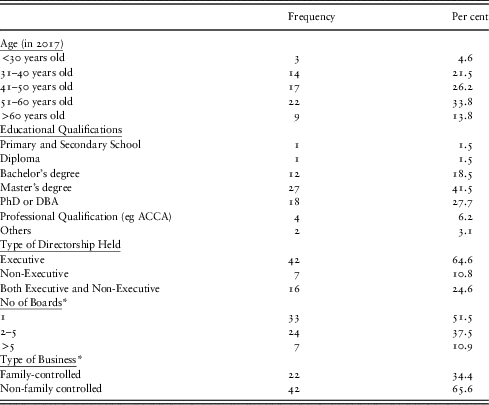
* 1 missing data point.
The findings of the survey are tabulated in Tables 2 to 7. In general, we found few differences in the responses with respect to the respondents’ demographics except for the three statements indicated in Table 2 (Statement 5 and 9) and Table 3 (Statement 5).
Duty to Act Bona Fide in the Interests of the Company (Percentages)
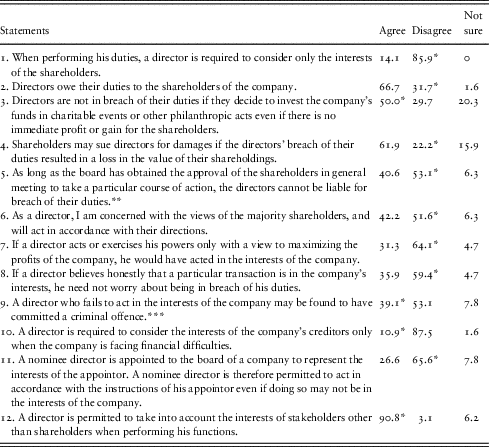
* Denotes the correct answer.
** There is a significant difference in the reported responses for family and non-family business (1.41 versus 1.79), that is, directors from non-family businesses reported the correct response significantly higher in frequency than directors from family businesses.
*** There is a significant difference in the reported responses between respondents who sit on one board and respondents who sit on more than five boards, with the latter significantly more likely to get the correct answer.
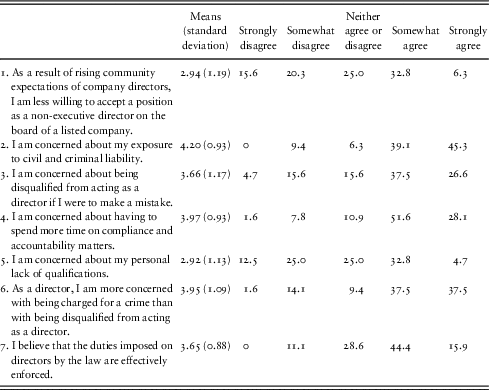
Concerns with Sitting on Boards (Percentages)
Case Study 1 (Percentages)John is recently appointed the chief executive officer (CEO) of a public-listed company which has significant business interests in China. For a number of years prior to John’s appointment, the company has been making undocumented payments to a particular Chinese intermediary under a ‘consultation’ agreement. The real purpose of these payments is to help secure certain Chinese business for the company. As the new CEO, John has authorized a number of payments in continuation of the practice.
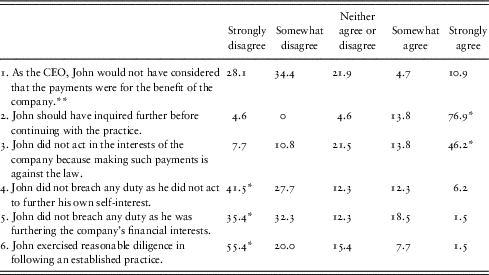
* Denotes the correct answer.
** Is an opinion statement.
Case Study 2 (Percentages)JVC Pte Ltd was established as the business vehicle to carry out a joint venture between Redco Pte Ltd and Blueco Pte Ltd. Joe is one of three directors who were appointed to the board of JVC Pte Ltd by Redco Pte Ltd. The other two directors were appointed by Blueco Pte Ltd. JVC Pte Ltd has a contract with Pinkco Pte Ltd, a company that is related to Redco Pte Ltd, and of which Joe is also director. During the course of the joint venture, Joe would, in his capacity as a director of Pinkco Pte Ltd, regularly correspond with the lawyers for JVC Pte Ltd in connection with matters arising out of the contract. No one raised any objection to this. A dispute arose between JVC Pte Ltd and Pinkco Pte Ltd relating to the performance of the contract, and the Blueco directors on JVC’s board are seeking legal advice as to the dispute. Joe, in his capacity as director of Pinkco Pte Ltd, instructed lawyers on behalf of Pinkco Pte Ltd with respect to the dispute.
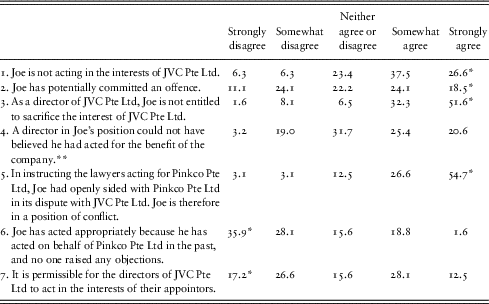
* Denotes the correct answer.
** Is an opinion statement.
Statutory Duties (Percentages)
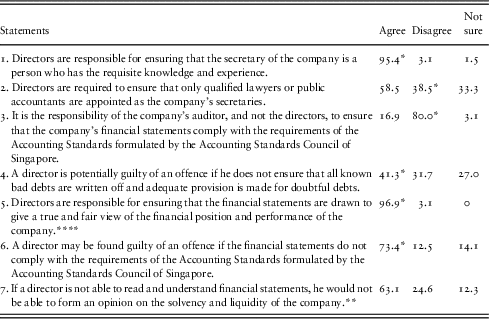
* Denotes the correct answer.
** Is an opinion statement.
**** There is a significant difference in the reported responses between respondents who sit on one board and respondents who sit on more than five boards, with the latter significantly more likely to get the correct answer.
Case Study 3 (Percentages)Jane is a non-executive director on the board of Bigco Ltd, a listed company with a number of subsidiaries. At a board meeting to approve the annual reports of Bigco and its subsidiaries, Jane voted in favour of a resolution to approve the consolidated financial statements for that financial year. The resolution was unanimously passed. The financial statements were prepared by the company’s financial management team and subject to the oversight of Bigco’s chief financial officer (CFO), and Jane had no reason to doubt either the competence or qualifications of the team or the CFO. The financial statements were however erroneous as almost SGD 50 million of short-term liabilities had been classified as non-current liabilities. The error was not picked up by the auditor who gave the statements full audit clearance. Jane, who is not a qualified accountant, did not fully review the annexures of the operational reports which were provided to her as these ran into hundreds of pages.
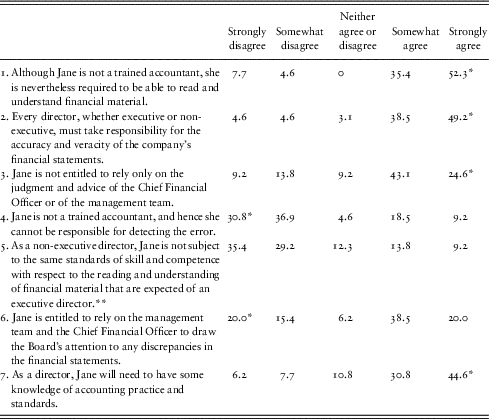
* Denotes the correct answer.
** Is an opinion statement.
In discussing our findings, we refer to both the statements in the first section of the survey and the related scenarios. While the statements assess the respondents’ understanding of the law, the scenarios relate to the application of the law, hence providing a comprehensive understanding of directors’ duties as they apply to the respondents. We present our findings in the following order: (A) Understanding stakeholders’ interests; (B) Defining ‘interests of the company’; (C) Obligations of nominee directors; (D) Duties in connection with financial statements; and (E) Corporate governance and trust.
A. Understanding stakeholders’ interests
The duty to act bona fide in the interests of the company is the fundamental obligation owed by the director to his company. As Lord Greene MR stated in Re Smith and Fawcett, Limited,Footnote 42 ‘directors must exercise their discretion bona fide in what they consider – not what a court may consider – is in the interests of the company’.
The duty obliges the director to exercise his discretion in a manner that he thinks, in his own mind, best serves or advances the company’s interests. A number of questions in the survey attempted to discern how the respondents view the company’s interests. Specifically, we sought to ascertain whether the respondents see the shareholders as being the ultimate beneficiary of their exercise of power (Table 2, Statements 1–6). Whilst the law grants the duly-incorporated company separate legal status from its incorporators, it nevertheless accords those incorporators and all who subsequently become shareholders collectively a pre-eminent position. The statutory corporate governance regime provided for under the CA is premised on a shareholder-centric viewFootnote 43 of the company. This is because shareholders, as contributors of capital, were traditionally treated as ‘owners’Footnote 44 of the company for whose ultimate benefit the company is run.Footnote 45 Consistent with this, shareholders occupy a central role in the control of corporate matters and are granted exclusive participation and intervention rights under the CA. This includes the power to alterFootnote 46 the constitution of the company, and the right to propose and pass resolutions.Footnote 47 Additionally, the power of the company to ratify the directors’ breaches of duties is usually considered to be exercisable by the shareholders.Footnote 48
Interestingly, however, the responses show that almost 86 per cent of the respondents did not think that a director is required to consider only the interests of the shareholders (Table 2, Statement 1). Consistent with this, almost 91 per cent of the respondents agree with the statement ‘[a] director is permitted to take into account the interests of stakeholders other than shareholders when performing his functions’ (Table 2, Statement 12). The respondents therefore do not equate the company’s interests solely with the interests of the shareholders.
As a general proposition, this is likely to be correct. At the same time, however, it would also not be wrong for directors to place shareholders’ interests at the apex of their concerns. What amounts to ‘the company’s interests’ is likely to vary in different contexts.Footnote 49 In many instances, this would simply refer to the interests of the company as a separate commercial entity.Footnote 50 However, it has also been recognized in many cases that as the company is an artificial entity, its interests are also very readily identified with the interests of its shareholders as a whole,Footnote 51 albeit not only a particular segment of them.Footnote 52 It can nevertheless be concluded from the survey results that the respondents believe that directors are permitted to take account of the interests of other stakeholders. This may well be consistent with how directors would, at least anecdotally, act in practice. In other words, they tend not to compartmentalize the different stakeholders in a company but will instead act on the basis of what works for the company as an entity.Footnote 53 It is of note that the results of our survey compare favourably with the findings made by Dr Shelley Marshall and Professor Ian Ramsay in a survey of company directors in Australia.Footnote 54 The objective of that study was to determine whether Australian directors adhered to a ‘shareholder primacy’ view of their responsibilities,Footnote 55 and perceived shareholders as constituting the stakeholder group to whom they owed their primary responsibility. Consistent with our study, the Australian data showed that 55 per cent of the respondents believe that acting in the best interests of the company means balancing the interests of all stakeholders including employees and creditors.Footnote 56 Perhaps, this broad consistency in responses across the two jurisdictions should not be surprising as it is likely that there are more similarities in business imperatives around the world than there are differences.
It is however not apparent whether the respondents think that the law mandates a consideration of interests other than that of shareholders. Although it is true that in most cases, shareholders’ interests should align with the company’s interests, so that there is no real need to distinguish between them, it is not uncommon for the interests of the company to diverge from that of the shareholders. Chan Seng Onn J provided the following example in Raffles Town Club Pte Ltd v Lim Eng Hock Peter:Footnote 57 ‘when a decision is made to plough profits back into the company rather than pay them out as dividends or bonuses, it reflects a decision to prefer the interests of the company as a commercial entity over the interests of the shareholders and employees as individuals.’
The survey results show that 66.7 per cent of the respondents would consider that they owe their duties as directors to the shareholders (Table 2, Statement 2), while some 61.9 per cent of the respondents believe that the shareholders may sue directors for any loss which the shareholders might have suffered as a result of the directors’ breach of duties (Table 2, Statement 4). Further, more than 40 per cent of the respondents would be concerned with the views of the majority shareholders and go so far as to act in accordance with their instructions (Table 2, Statement 6). A similar proportion (40.6 per cent) also believe that the board will be protected against prosecution for breach of duties had the shareholders approved of its acts (Table 2, Statement 5). Whilst not strictly majority, these latter figures nevertheless represent an appreciable proportion of the respondents. These results may suggest some internal inconsistency in the responses given that one should, logically, be mostly concerned with the interests of the person to whom one believes a duty is owed. Nevertheless, that inconsistency can be explained if the respondents subscribe to the view that the law mandates due consideration of stakeholder interests.
With one accepted exception, the law does not require consideration of the interests of specific stakeholders. A director who exercises his discretion to prefer the interests of the company as a separate entity over the interests of the shareholders is not likely to be considered in breach of his duty.Footnote 58 Indeed, there is English authority that the company’s separate interests ought to prevail.Footnote 59 As a general proposition, this must be right. However, adhering too rigidly to it might suggest that the director would be in breach of his duties if, conversely, he had preferred the interests of the shareholders. The true position is probably that the subjective nature of the duty behoves the director to undertake a balancing exercise, and to ultimately arrive at a considered decision on what would be in the company’s interests. Chan J recognized as much in the Raffles Town Club case when he noted that ‘the Court should not view every transaction which does not positively result in profitable returns to the company as a commercial entity with suspicion’.Footnote 60
In a similar manner, the subjective nature of the duty would mean that the director is not precluded from taking account of the interests of a wider range of ‘stakeholders’ other than shareholders, as long as they do so with the company’s interests firmly in view. That the director is entitled to take account of the interests of the company’s employees is statutorily recognized,Footnote 61 and there have been decisions condoning the consideration of the interests of the corporate group of which the company is a part.Footnote 62
As a general principle, therefore, the law does not mandate that the director must have regard to all these other potentially relevant interests. The position is facultative, and commercial decisions arrived at in good faith are not likely to be readily impugned. This is a manifestation of the so-called business judgment rule, which was expressed as follows by Tay Yong Kwang J in ECRC Land Pte Ltd (in liquidation) v Ho Wing On Christopher:Footnote 63
The court should be slow to interfere with commercial decisions taken by directors ... It should not, with the advantage of hindsight, substitute its own decisions in place of those made by directors in the honest and reasonable belief that they were for the best interests of the company, even if those decisions turned out subsequently to be money-losing ones.
In Vita Health Laboratories Pte Ltd v Pang Seng Meng,Footnote 64 VK Rajah JC (as he then was) explained the policy considerations which underpin the rule:
It is the role of the marketplace and not the function of the court to punish and censure directors who have in good faith, made incorrect commercial decisions. Directors should not be coerced into exercising defensive commercial judgment, motivated largely by anxiety over legal accountability and consequences. Bona fide entrepreneurs and honest commercial men should not fear that business failure entails legal liability. A company provides a vehicle for limited liability and facilitates the assumption and distribution of commercial risk. Undue legal interference will dampen, if not stifle, the appetite for commercial risk and entrepreneurship.
In this connection, therefore, we can probably conclude from the results of our survey that the respondents’ understanding of what the law requires of them in connection with the consideration of relevant stakeholder interests is broadly accurate.
There is however one aspect that stands out, and that is the respondents’ view of creditor interests. A significant majority of 87.5 per cent would disagree that a director is required to consider the interests of the company’s creditors only when the company is facing financial difficulties (Table 2, Statement 10). Put differently, this means that most of the respondents would take account of creditors’ interests even where the company is not in financial difficulties. This is clearly not what the law requires. Whilst creditors’ interests may be affected by corporate acts, they are usually considered ‘outsiders’ whose interests are governed contractually. The law therefore does not mandate consideration of creditors’ interests generally. The position however changes when the company is insolvent or very nearly so. Where the company is in a difficult financial situation, directors are obliged to take account of the interests of the company’s creditors. In Liquidators of Progen Engineering Pte Ltd v Progen Holdings Ltd,Footnote 65 the Court of Appeal stated as follows:Footnote 66
It is trite that directors have a duty to act in the best interest of the company as a whole. When a company is solvent, the company’s directors owe no duty to creditors. … However, it is now also settled law that when a company is insolvent, or even in a parlous financial position, directors have a fiduciary duty to take into account the interests of the company’s creditors when making decisions for the company. This fiduciary duty requires directors to ensure that the company’s assets are not dissipated or exploited for their own benefit to the prejudice of creditors’ interests.Footnote 67
The rationale for imposing this obligation on the directors is that, in a company’s insolvency, the shareholders cease, in a practical sense, to have any real interest in the company’s assets. Insolvency distribution rules require these assets to be utilized first to pay off the company’s creditors.Footnote 68 Therefore, it would be the creditors who are, in reality, primarily interested in those assets.Footnote 69 From the survey results, it would appear that the respondents would generally prefer to err on the side of caution. We are unable to tell whether such an attitude translates into less risk-taking by the directors, or whether this is indicative of a certain cultural aversion to business derring-do. The latter possibility is in part supported by the responses to the statements ‘I am concerned about my exposure to civil and criminal liability’ (mean=4.20, Table 3, Statement 2), and ‘I am concerned about my personal lack of qualifications’ (mean=2.92, Table 3, Statement 5). It appears that fewer are concerned about their lack of qualifications than their exposure to personal liability. In theory at least, if one is not concerned about qualifications, he should be similarly less concerned about personal liability. In other words, a person who has confidence in his qualifications should not be too worried, one would have thought, about falling short of his obligations. It may thus be surmised that, perhaps, some of this caution is driving the responses.
B. Defining ‘Interests of the Company’
In Scintronix, the Court of Appeal stated that ‘[t]he “interests of the company” is not just profit maximization. Neither is it profit maximization by any means’.Footnote 70 We sought to find out if this accorded with the views of the directors generally by seeking the respondents’ reactions to the statement ‘If a director acts or exercises his powers only with a view to maximizing the profits of the company, he would have acted in the interests of the company’. Somewhat surprisingly, 64.1 per cent of the respondents would disagree with the statement (Table 2, Statement 7). In other words, 64.1 per cent of the respondents would agree with the Court of Appeal.
A more nuanced picture emerges if we look at the responses to the scenario provided. The scenario is based on the factual situation that arose in Scintronix. The protagonist John is a newly-appointed chief executive officer who had continued the company’s practice of making undocumented payments to secure business for the company. 10.9 per cent of the respondents would ‘strongly agree’ with the statement that ‘[a]s the CEO, John would not have considered that the payments were for the benefit of the company’, whilst 4.7 per cent would ‘somewhat agree’, 28.1 per cent would ‘strongly disagree’, and 34.4 per cent would ‘somewhat disagree’ (Table 4, Statement 1). In relation to the statement ‘John did not act in the interests of the company because making such payments is against the law’, 46.2 per cent would ‘strongly agree’ whilst 13.8 per cent would ‘somewhat agree’ (Table 4, Statement 3). These figures suggest that the respondents appreciated the difference between commercial benefit to the company and the legal requirement of ‘interests of the company’ – the concepts are not necessarily coterminous. However, 40 per cent of the respondents were either unsure, or would ‘strongly disagree’ or ‘somewhat disagree’ that John had not acted in the interests of the company.
We also sought to ascertain how the respondents would relate these concepts of commercial benefit and ‘interests of the company’ to breach of their directors’ duties. We thus included the statement ‘[i]f a director believes honestly that a particular transaction is in the company’s interests, he need not worry about being in breach of his duties’ (Table 2, Statement 8). To this statement, 59.4 per cent of the respondents would disagree. This suggests that a good proportion of the respondents are aware that breach of their duties as directors is not tested by reference only to what they might honestly believe to be in the company’s interests. When the matter is placed within the context of the scenario with the statement ‘John did not breach any duty as he was furthering the company’s financial interests’ (Table 4, Statement 5), more respondents (more than 65 per cent) would consider John’s acts to be a breach of duty, although out of this, about half or 32.3 per cent would only somewhat disagree with the statement, suggesting some level of uncertainty. The story that emerges is that the respondents are clearly very concerned about being in breach of their duties. However, it is not possible to surmise if this translates in practice to a more cautious approach in decision-making.
C. Obligations of Nominee Directors
We sought to ascertain how respondents would view their obligations in the context of a nominee situation. A nominee director is appointed to the board of a company to represent the interests of the appointing party, who may be a shareholder (as is often the case in joint venture companies) or a creditor. Such directors are commonplace. In Dairy Containers Ltd v NZI Bank Ltd,Footnote 71 Thomas J, of the New Zealand High Court, explained the position of the nominee director as follows:
The plain fact of the matter is that employee-directors do not undertake their responsibilities to the company of which they are a director without regard to the interests of their employer. All too often the commercial reality underlying the loyalty of employee-directors to their employers is neglected or understated. Typically, they have been appointed with a clear mandate; a mandate to protect and promote their employer’s interests. They owe their engagement to their employers.
Nominee directors are largely constrained by the ‘no-conflict’ rule. The rule proscribes a director from placing himself in a position where his duty to advance the company’s interests conflicts, or may conflict, with his personal interests or some other external loyalty. As the High Court observed in Raffles Hotel Ltd v L Rayner:Footnote 72
[A] company is entitled to the undivided loyalty of its directors. A director who is a nominee of someone else should be left free to exercise his best judgment in the interests of the company he serves and not in accordance with the directions of his patron. If the company is not prepared to relax the rule then an action for an injunction would normally lie to restrain a nominee director from acting in any manner adverse to the interests of the company.
By his very appointment, therefore, the nominee director is placed in a position with the greatest potential for conflict. Nevertheless, there is often little issue in connection with the nominee director’s appointment per se, as the fact of his extraneous loyalties is likely to be well known to the company which appointed him. In many cases, the interests of the appointor are aligned with those of the company. In such cases, the nominee director is able to ‘serve two masters to the great advantage of both’.Footnote 73 The position of the nominee director will however become intractable when the interests of the company and those of his appointor diverge. As Lord Denning observed in Scottish Co-Operative Wholesale Society Ltd v Meyer:Footnote 74
So long as the interests of all concerned were in harmony, there was no difficulty. The nominee directors could do their duty by both companies without embarrassment. But, so soon as the interests of the two companies were in conflict, the nominee directors were placed in an impossible position… It is plain that, in the circumstances, these [nominee directors] could not do their duty by both companies...Footnote 75
To ascertain if the respondents are aware of the no-conflict rule, we included a statement that concerns the loyalty of a nominee director. A majority (65.6 per cent) of the respondents would disagree that a nominee directorFootnote 76 is permitted to act in accordance with the instructions of his appointor even if so doing may not be in the interests of the company (Table 2, Statement 11).
The response rate is mirrored in the context of the scenario provided (Table 5), which involved a joint venture company and directors appointed as representatives of each of the joint venture partners. This scenario is broadly based on the factual scenario of the Golden Village caseFootnote 77 with a dispute arising between the company (ie JVC Pte Ltd) and the appointing joint venture partner. The protagonist nominee director (Joe) instructed solicitors on behalf of his appointors in respect of the dispute. 64.1 per cent of the respondents would at least ‘somewhat agree’ that ‘Joe is not acting in the interests of JVC Pte Ltd’ (Table 5, Statement 1). These results suggest that the respondents are mostly aware that primacy should be accorded to the interests of the company, which is in keeping with what the law requires.
Interestingly, slightly more than 40 per cent would at least somewhat disagree with the statement that ‘It is permissible for directors of JVC Pte Ltd to act in the interests of their appointors’ (Table 5, Statement 7). In other words, these respondents would not consider it permissible to do so. Roughly the same number would however at least ‘somewhat agree’ with the statement. Additionally, whilst 46 per cent would at least ‘somewhat agree’ that ‘[a] director in Joe’s position could not have believed that he had acted for the benefit of [JVC Pte Ltd]’, 31.7 per cent (representing the plurality of respondents) would neither agree nor disagree with the statement (Table 5, Statement 4). This suggests that there might be some ambivalence about the situation. Whilst there is general appreciation of what amounts to a ‘conflict’ situation, the respondents may feel that there are situations when it should be permissible for a director to act in the interests of his appointor and are sympathetic to the plight of Joe.
D. Duties in Connection with Financial Statements
A number of statements in the survey deal with the directors’ legal responsibilities vis-à-vis financial statements. Section 201 of the CA imposes on the directors the responsibility for laying before the company, at its annual general meeting, financial statements that: (1) comply with Accounting Standards issued by the Accounting Standards Council; and (2) give a true and fair view of the financial position and performance of the company.
The financial statements must be accompanied by a directors’ statementFootnote 78 as to, inter alia, whether in the opinion of the directors the financial statements have been drawn up so as to give a true and fair view of the financial position and performance of the company. This obligation may be considered as not only one that arises statutorily, but also a responsibility to which the duty of care, skill, and diligence applies.
Directors are required to act with due care, skill, and diligence in the performance of their functions. This duty imposed low standards at common law, measured by reference to the director’s own subjective skills set (ie his state of knowledge and experience). Hence, as Romer J stated in Re City Equitable Fire Insurance Company, Limited:Footnote 79
The care that [the director] is bound to take… has been described… as ‘reasonable care’ to be measured by the care an ordinary man might be expected to take in the circumstances on his own behalf. … A director need not exhibit in the performance of his duties a greater degree of skill than may reasonably be expected from a person of his knowledge and experience.
More recent cases, however, have tended to hold directors to a more demanding objective standard. This shift in judicial expectations may be a consequence of stricter statutorily-imposed standards for directors of insolvent companies.Footnote 80 In Re D’Jan of London Ltd,Footnote 81 Hoffmann J had accepted that the duty of care owed by a director at common law is measured by reference to the conduct of:
[A] reasonably diligent person having both – (a) the general knowledge, skill and experience that may reasonably be expected of a person carrying out the same functions as are carried out by the director in relation to the company, and (b) the general knowledge, skill and experience that that director has.Footnote 82
This is the standard expected of a director under the wrongful trading provisions of the United Kingdom’s Insolvency Act 1986. This clearly objective test holds the director not only to an objective standard of diligence, but also to a ‘core irreducible’Footnote 83 standard of skillFootnote 84 that is expected of a reasonable director in his position, regardless of his personal abilities, lack thereof, or inexperience. The rationale for raising the minimum standard is the fact that the director is not an ‘ornament’ or a ‘dummy director’,Footnote 85 but rather an essential component of corporate governance. In Daniels v Anderson,Footnote 86 the Supreme Court of New South Wales explained what the modern expectations of the company director are:
A person who accepts the office of director of a particular company undertakes the responsibility of ensuring that he or she understands the nature of the duty a director is called upon to perform. That duty will vary according to the size and business of the particular company and the experience or skills that the director held himself or herself out to have in support of appointment to the office. None of this is novel. It turns upon the natural expectations and reliance placed by shareholders on the experience and skill of a particular director ... The duty includes that of acting collectively to manage the company.Footnote 87
This ‘modern approach’ was held to represent the position in Singapore.Footnote 88 These higher standards notwithstanding, the law permits directors to delegate the performance of certain tasks to subordinates or experts where appropriate and permitted by the company’s constitution. As VK Rajah JC (as he then was) noted in Vita Health Laboratories, it is impractical to expect directors to be ‘omniscient or to personally discharge all corporate powers and functions’.Footnote 89 This is especially so in companies with large and complex businesses. Delegation does not mean that the director can abdicate all responsibility for the delegated function, although the court will take a pragmatic view of the matter. Rajah JC explained the judicial approach as follows:
Legal pragmatism imbued with latitude towards business efficacy is crucial in assessing a director’s delegation of duties. Admittedly, [the director] must reasonably believe that his subordinates will competently discharge their duties in the company’s interests. Other than that it is fair to say that there is no acid test that will provide a definitive answer. It can however be safely assumed that the court will be reluctant to take to task a director who has bona fide delegated his functions and/or powers to competent subordinates.Footnote 90
There is also statutory recognition of delegation. Section 157C of the CA permits a director of a company to rely on reports and other information prepared by employees or another director, and on professional or expert advice given by a professional adviser. The director relying on such reports or advice can only escape liability if these reports turn out to be wrong if he had acted in good faith, had made proper inquiry where the need for inquiry is indicated by the circumstances, and had no knowledge that such reliance is unwarranted. In connection with the statutory financial reporting requirements, the Federal Court of Australia held in Healey Footnote 91 that directors have ‘a responsibility to read, understand and focus upon the contents of those reports which the law imposes a responsibility upon each director to approve or adopt’.Footnote 92 Directors must therefore ‘carefully read and understand financial statements before they form the opinions which are to be expressed in the declaration required’ in the Corporations Act.Footnote 93 Accordingly, the Court noted, in order to fulfil this responsibility, directors will need to have sufficient financial literacy ‘to read and understand the financial statements, including the understanding that financial statements classify assets and liabilities as current and non-current, and what those concepts mean’.Footnote 94
As to how far directors may delegate this particular function, the Court stated:Footnote 95
Directors cannot substitute reliance upon the advice of management for their own attention and examination of an important matter that falls specifically within the board’s responsibilities as with the reporting obligations. The Act places upon the board and each director the specific task of approving the financial statements. Consequently, each member of the board was charged with the responsibility of attending to and focusing on these accounts and, under these circumstances, could not delegate or ‘abdicate’ that responsibility to others.
We have already noted that the decision in Healey is likely to be of significant influence in Singapore’s judicial development of the statutory duty of care and diligence. Accordingly, we sought to ascertain the respondents’ understanding of their obligations vis-à-vis financial statements. A significant majority of the respondents are aware as to the following obligations: (1) that directors are responsible for ensuring that the financial statements are drawn to give a true and fair view of the financial position and performance of the company (96.9 per cent – Table 6, Statement 5); and (2) that directors are responsible for ensuring that the financial statement complies with the requirements of the Accounting Standards formulated by the Accounting Standards Council of Singapore (73.4 per cent – Table 6, Statement 6).
These figures suggest a high level of awareness of these particular obligations. What the respondents appear less sure of is the director’s potential exposure to criminal liability in the event of any infraction of these obligations. The two statements in the survey relevant to criminal liability in this particular context are the following:
A director is potentially guilty of an offence if he does not ensure that all known bad debts are written off and adequate provision is made for doubtful debts.
…
A director may be found guilty of an offence if the financial statements do not comply with the requirements of the Accounting Standards formulated by the Accounting Standards Council of Singapore.
Statement 4 (Table 6) received a 41.3 per cent correct score, whilst Statement 6 (Table 6) fared better with a reasonably strong 73.4 per cent. A plausible reason for the difference is that the requirement as to bad debts was only introduced into the legislation in 2014 pursuant to the Companies (Amendment) Act 2014.
We also included a scenario based on the facts of the Healey decision (Table 7). The protagonist director is a non-executive director who approved the financial statements despite there being an error in the same which had not been picked up by either the management of the company or the company’s auditor. Respondents are generally aware that the responsibility for the accuracy and veracity of the company’s financial statements lies with the directors. A strong majority (87.7 per cent – Table 7, Statement 2) would at least somewhat agree that all directors, whether executive or non-executive, will have to take responsibility for the accuracy and veracity of the financial statements. A majority of the respondents would also at least somewhat agree that, regardless of background and qualifications, the directors are required, not only to have some knowledge of accounting practice and standards, but also to be able to read and understand financial statements (Table 7, Statements 1, 5, and 7). Whilst 67.7 per cent of the respondents would at least somewhat agree that the director ‘is not entitled to rely only on the judgment and advice of the Chief Financial Officer or of the management team’ (Table 7, Statement 3), 58.5 per cent would at least somewhat agree that the director should be ‘entitled to rely on the management team and the Chief Executive Officer to draw the Board’s attention to any discrepancies in the financial statements’ (Table 7, Statement 6).
It is also interesting to see the more nuanced picture provided if we break down the responses to the Healey scenario by reference to the indicated level of agreement or disagreement to the relevant statement, as well as by reference to the specific response to a statement that is selected the most. Generally speaking, respondents who are certain as to the ‘correct’ response should, in theory, indicate either strong agreement or disagreement with any particular statement. From this, the following may be surmised. First, respondents are less certain as to the extent to which reliance on the judgment and advice of the chief financial officer and the management is permitted (Table 6, Statements 3 and 6) with more respondents indicating ‘somewhat agree’ than ‘strongly agree’. Second, respondents are less certain whether a director who is not a trained accountant should be responsible for detecting the error in the accounts (Table 6, Statement 4) with more respondents selecting ‘somewhat disagree’ than ‘strongly disagree’.
What these results might indicate is that the respondents were not entirely confident as to what the correct response should be, and would thus prefer to take a somewhat less absolute stance. Be that as it may, we would conclude from these results that the respondents are generally aware that the final responsibility vis-à-vis financial statements lies with the directors. It is interesting to see how similar these results are to those obtained in two other studies on directors’ duties, one conducted in Hong Kong,Footnote 96 and the other in Malaysia.Footnote 97 Both studies concluded that their respective target respondents were well aware of their responsibilities vis-à-vis the preparation and tabling of financial statements and reports. It should, however, be pointed out that both studies targeted directors of public listed companies. The Hong Kong study involved only managing directors, whilst the Malaysian study surveyed only non-executive directors. It may well be that these categories of directors, namely managing directors and independent directors of public listed companies, are generally expected to be more knowledgeable and aware of their obligations in any case, given the higher degree of scrutiny and regulatory oversight that listed companies are subject to.Footnote 98 In our case, the high level of awareness as to the obligations of directors in connection with financial statements may in part be due to the information and advice provided by ACRA. Indeed, ACRA has been encouraging directors to attend a training course on financial reporting run by SID by subsidizing about 50 per cent of the course fees.Footnote 99
E. Corporate Governance and Trust
In addition to understanding the roles and duties of directors, this article also seeks to explore the extent to which directors trust senior management within the company. The seminal work of Mayer, Davis and SchoormanFootnote 100 define trust as:
[T]he willingness of a party to be vulnerable to the actions of another party based on the expectation that the other will perform a particular action important to the trust irrespective of the ability to monitor or control that other party.Footnote 101
In the trust literature, for trust in senior management to occur, directors would have evaluated the trustworthiness of senior management in the areas of senior management’s ability (or general competence), benevolence (towards the directors), and integrity. Ability is defined as ‘that group of skills, competencies, and characteristics that enable a party to have some influence within some specific domain’.Footnote 102 Benevolence is defined as ‘the extent to which a trustee is believed to want to do good to the trustor, aside from an egocentric profit motive’,Footnote 103 while integrity is ‘the perception that the trustee adheres to a set of principles that the trustor finds acceptable’.Footnote 104 Extant research has found a strong correlation between the three trustworthiness factors and trust largely in the context of the supervisor-subordinate relationship.Footnote 105
The inherent feature in the relationship between boards and the CEO is that boards are supposed to be independent. It has been asserted that the more independent the board, the more effective it will be in carrying out its duties.Footnote 106 There is, however, some evidence to suggest that depending on the bargaining power of the different parties, CEOs who are successful, and hence perceived to be higher in ability, could possibly bargain for less independent boards.Footnote 107 The higher credibility of such CEOs means that board members may also be more likely to trust the CEO, and hence the senior management team. Such trust holds performance implications for the directors in terms of exercising due diligence in decision making. We therefore sought to assess the trust levels of directors towards senior management as a first step to understanding perceptions of board directors towards senior management.
We found the mean trust level to be 2.65 (standard deviation=0.87) on a 5-point scale (ranging from 1-strongly disagree to 5-strongly agree), which means directors do not trust their senior management team. We conclude that directors’ trust in their senior management team is somewhat low. While directors have to work with the senior management team in creating performance, a higher level of trust would certainly facilitate behavioural dynamics towards higher collaboration and hence performance. The next step of our work would be to assess if directors’ trust in the senior management team affects board effectiveness.
IV. CONCLUSION
As we noted at the start of this article, the regulation of companies across jurisdictions is underpinned by a high degree of commonality. For jurisdictions with a common law heritage and tradition, especially the countries of the Commonwealth, the observable legal convergence is even more acute. This background provides a compelling basis for comparing how similar regulatory regimes operate in different jurisdictions. Inquiries of this nature go beyond the literal text of the laws in question, and enhances our understanding of how these laws function within their particular social, political, and cultural context.
This article is concerned with the legal constraints that are imposed on directors, an area of corporate law that is a key pillar of the corporate governance regimes of many jurisdictions. Specifically, we explored the level of understanding of directors’ duties and responsibilities among directors. We found that a good proportion of our respondents have a fairly high level of awareness of their duties. However, while the majority of the respondents believe that their primary responsibility is to shareholders, the results point to inconsistencies that raise the question of whether our sample of directors believe that the law mandates due consideration of other stakeholder interests, an area that needs further research. In addition, in the area of nominee loyalty, we found the respondents to be generally aware that their primary consideration should be the interests of the company. On the other hand, some respondents believe that it is permissible for nominee directors of joint venture companies to act in the interests of their appointors. With respect to duties in connection with financial statements, a convincing majority of the respondents are aware of their legal obligations. However, the respondents seem less certain as to the extent to which directors are permitted to rely on the judgment and advice of the management team. Clearly, whilst it may be concluded from our study that the directors surveyed are generally cognizant of their legal duties and obligations, there remain areas where this awareness is lacking. Any outreach or director-education programmes should therefore take into account these areas.
There are however limitations to a study of this nature. Whilst we attempted to collect data from as randomized a sample as possible by accessing multiple sources and using different methods, the most complete responses came mainly from those obtained by our research assistants in face-to-face interviews. This might mean that our sample is biased as those who were willing to participate in the survey are likely to be those who are already concerned about their obligations. The respondents may therefore not be as representative of the larger population of directors as we would have preferred, raising concerns with external validity of our results. Clearly, further work can be done to better understand the extent of the gap and the nuances involved. On a more practical level, much work remains to be done in terms of informing and educating directors on their duties and responsibilities.



