Introduction
Tonsillectomy represents 20–40 per cent of the total procedures performed in ENT departments.Reference Evans, Khan, Young and Adamson 1 Indications for tonsillectomy include recurrent tonsillitis, quinsy, tonsil neoplasm and obstructive sleep apnoea.Reference Evans, Khan, Young and Adamson 1 Between 2012 and 2013, the overall rate of adenotonsillectomy in Australian public hospitals was approximately 4 per 1000. This equates to 52 297 tonsillectomies in total. 2
The safety of day-case tonsillectomy has been well documented in the literature.Reference Mills, Anderson, Barber, White, Mahadevan and Salkeld 3 – Reference Lalakea, Marquez-Biggs and Messner 5 However, there are a number of serious complications which may make an overnight stay safer, including severe post-tonsillectomy haemorrhage and airway compromise. Airway complications including desaturation and stridor have been estimated to occur in up to 11.2 per cent of cases; some of these patients may even require re-intubation. The overall rates of post-tonsillectomy haemorrhage are typically 3–5 per cent, with less than 1 per cent requiring a return to the operating theatre. 6 Most post-tonsillectomy haemorrhage occurs at days 5–7 post-tonsillectomy, when patients have already been discharged.Reference Ahsan, Rashid, Eng, Bennett and Ah-See 7 – Reference Pereira, Xará, Mendonça, Santos and Abelha 10 Identifying patients at highest risk for serious complications during the first 24 hours post-operatively would allow them to be excluded from day-case surgery.
Minor post-operative complications are estimated to occur in up to 20 per cent of cases; however, patients with these complications are considered safe for discharge, with appropriate management at home. 11 , Reference Seshamani, Vogtmann, Gatwood, Gibson and Scanlon 12 These complications include pain, nausea, vomiting and fever, which may be managed with analgesics, anti-emetics or antibiotics. 11 – Reference Dhiwakar, Clement, Supriya and McKerrow 13
Literature suggests that a number of factors increase the risk of post-operative complications requiring intervention. These include: patient factors, such as age of two years or less, and a high American Society of Anesthesia Physical Status Classification score because of major heart disease, bleeding diatheses or airway disorders; and surgeon factors, such as diathermy use during the procedure.Reference Macfarlane, Nasser, Coman, Kiss, Harris and Carney 8 – Reference Seshamani, Vogtmann, Gatwood, Gibson and Scanlon 12 , Reference Powell and Wilson 14 , Reference Söderman, Odhagen, Ericsson, Hemlin, Hultcrantz and Sunnergren 15
Multiple studies advocating day-case tonsillectomy have proposed selection criteria based on individual institutional experiences and the lack of complications occurring as a result of their selection processes. However, there are no evidence-based guidelines recommending which patients are safe for day-case tonsillectomy. 2 – 6
This study primarily aimed to determine which patients required significant intervention during the first 24 hours following tonsillectomy or adenotonsillectomy performed at a single institution over a 16-year period. The study also aimed to determine how the findings may apply to future evidence-based guidelines for safe patient selection for day-case tonsillectomy.
Materials and methods
Ethical considerations
The Barwon Health – University Hospital Geelong granted permission to access and review patient data from June 1998 to June 2014.
Participants and data sources
A long-term retrospective review was conducted of 2863 tonsillectomy and adenotonsillectomy procedures performed at the University Hospital Geelong from June 1998 to June 2014. Data were generated by reviewing electronic and hard copy patient records, including progress notes, observation charts, medication charts, operation reports and discharge forms from the patient's stay in hospital following tonsillectomy.
Inclusion criteria
Patients of all ages undergoing tonsillectomy or adenotonsillectomy were included.
Exclusion criteria
Patients undergoing adenoidectomy alone or tonsillectomy as part of a wider procedure (e.g. neck dissection) were excluded.
Study design
Data collected from the above sources included: patient characteristics, such as age and gender; admission and re-admission details, such as admission, operation and discharge dates, length of stay, post-operative presentation to emergency department, and a return to the operating theatre; operative details, such as operative indication, American Society of Anesthesia score (1–4) and operative technique; and post-operative details, such as post-operative destination, observation time, nursing interventions (oxygen saturations, supplemental oxygen, analgesic and anti-emetic agents) and medical officer intervention (for pain, nausea, bleeding, sedation, fever and airway compromise).
All patients requiring intervention of any kind during their overnight admission were classified into four groups – mandatory, desirable, convenient and trivial stays – according to the reason for intervention. Mandatory stay represented instances where an overnight observation was strongly indicated and same-day discharge would have been hazardous. This included cases of significant airway compromise or severe primary bleeds likely to require a return to the operating theatre. Desirable stay reflected instances where overnight observation was helpful, but same-day discharge was also safe. It included cases of sedation, fever, or lesser primary tonsil or adenoid bleeding managed on the ward. Convenient stay represented instances where overnight observation was not necessarily indicated but was convenient; and same-day discharge would have been safe. It included cases requiring an analgesic or anti-emetic related upgrade. Trivial stay concerned instances where a patient had miscellaneous problems, including unrelated symptoms or social issues.
This classification allows patient categorisation and observations regarding any shared characteristics of patients within the four groups, thus indicating favourable or unfavourable patient characteristics that would not be suited to day-case tonsillectomy.
Statistical analysis
EpiData software was used to collect and analyse the data. Categorical variables are presented as numbers and percentages, and continuous variables as means (ranges), unless otherwise stated. Further analysis involved chi-square testing, generating p-values, relative risk values and odds ratios.
Results
A total of 3098 cases were identified from the time period, of which 2863 cases met the inclusion criteria and comprised the study population.
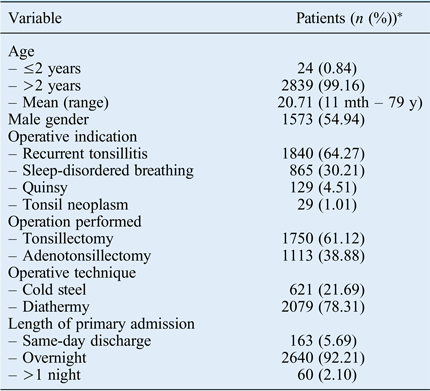
The mean age of the sample was 20.71 years (range, 11 months to 79 years). Of the sample, 54.9 per cent were male, while 45.15 were female. Twenty-four of the patients were aged two years or less at the time of their operation (0.84 per cent) (Table I).
Background characteristics
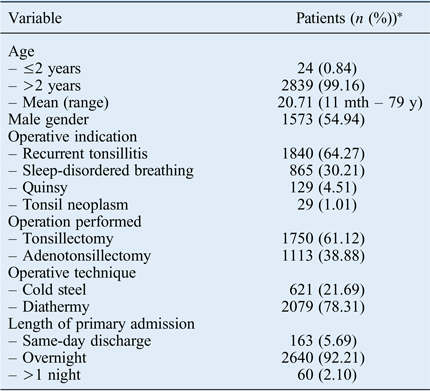
Total n = 2863. *Unless units indicated as being otherwise. Mth = months; y = years
In this study, conducted at the University Hospital Geelong, the majority of tonsillectomy procedures were indicated by recurrent tonsillitis (n = 1840, 64.27 per cent). Patients with sleep-disordered breathing represented 30.21 per cent of cases (n = 865) and those with quinsy represented 4.51 per cent (n = 129); neoplasm was the least common indication for tonsillectomy (n = 29, 1.01 per cent).
Of the cases included in this study, 1750 (61.12 per cent) were tonsillectomy and 1113 (38.88 per cent) were adenotonsillectomy. The majority of procedures (78.31 per cent) were performed using the ‘hot’ method in the form of bipolar or monopolar diathermy, against 21.69 per cent performed using the ‘cold’ steel method.
The University Hospital Geelong practice during the study period was to admit tonsillectomy patients for at least 1 night's observation. This was adhered to in 92.21 per cent of cases; however, 5.69 per cent were discharged the same day. Of the cases, 2.10 per cent were kept for a subsequent (more than 1) night. This means that a total of 2700 patients were kept for at least 1 night following their procedure and 163 were day-case admissions.
As part of their care, 96.72 per cent of patients (2769 out of 2863) were given an analgesic agent and 41.98 per cent (n = 1202) an anti-emetic post-operatively.
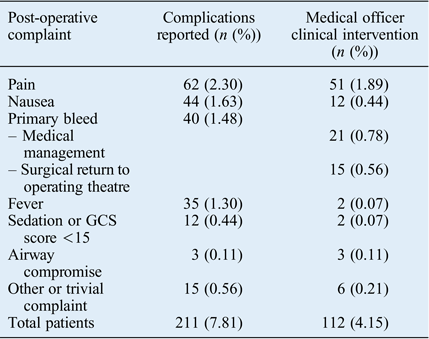
Of the 2700 patients who stayed for 1 night or more (2640 stayed 1 night and 60 stayed more than 1 night), 211 (7.81 per cent) had post-operative complications reported; 112 (4.15 per cent) required a clinical intervention for these complications from a medical officer.
The primary aim of this study was to determine what interventions were required during the in-patient admission; however, re-admission data have also been included. Thus, the rates of post-operative complications comprise those that occurred in both the primary (less than 24 hours post-operatively) and secondary (more than 24 hours post-operatively) periods.
Pain was the most common reason for intervention or review, occurring in 62 patients (2.30 per cent), of which 51 (1.89 per cent) required intervention in the form of an analgesic upgrade. Nausea occurred in 44 patients (1.63 per cent), with an intervention of anti-emetic upgrade required in 12 patients (0.44 per cent). Primary bleeds occurred in 40 patients (1.48 per cent), of which 21 (0.78 per cent) were managed medically and 15 (0.56 per cent) required a return to the operating theatre. Fever was reported in 35 patients (1.30 per cent), and 2 patients (0.07 per cent) required intervention with antibiotics. Sedation was reported in 12 patients (0.44 per cent), and 2 patients (0.07 per cent) required intervention. All three patients with airway compromise required intervention (0.11 per cent). The 15 cases (0.56 per cent) of other complications included trivial complaints and unrelated symptoms, of which 6 (0.21 per cent) required intervention.
As reported in Table II, 15 patients required a return to the operating theatre for their primary bleed and 3 had airway compromise following the procedure. Of the 15 who required a return to the operating theatre, 1 patient had Von Willebrand disease and 6 patients had an American Society of Anesthesia score of more than 2 (Table III). Three of the returns to the operating theatre were indicated for tonsillectomy because of neoplasm, three because of quinsy, two because of sleep-disordered breathing and seven because of tonsillitis. The cold-steel technique was used in 33.33 per cent of the return to the operating theatre cases (n = 6) and diathermy in 66.67 per cent (n = 9).
Post-operative complications in non-day-case patients
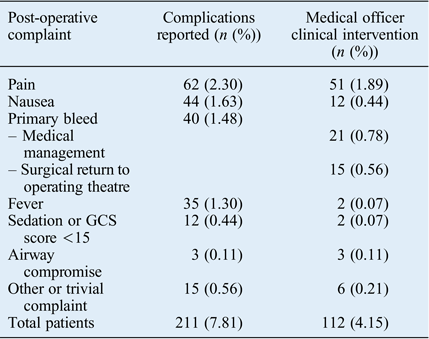
Total n = 2700. Number of patients with no complaint reported = 2489 (92.19 per cent). GCS = Glasgow Coma Scale
Characteristics of patients classified as having mandatory stay*
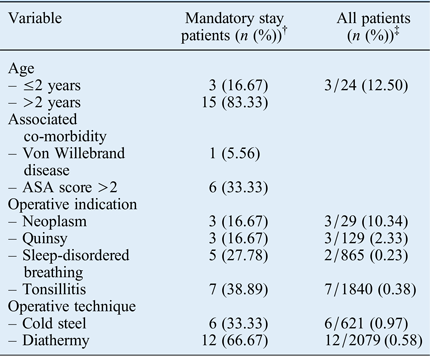
* Because of a return to the operating theatre for adenotonsillar haemorrhage or airway compromise. † n = 18; ‡ n = 2863. ASA = American Society of Anesthesia
Airway compromise post-procedure was indicated by stridor post-operatively. Of the three patients who had airway compromise, all were aged less than two years old, and two had an American Society of Anesthesia score of 2 or more because of gastric reflux. All patients were admitted to the intensive care unit, of whom one required intubation and two were further observed on the high dependency unit before discharge. The airway complications described occurred between 4 and 10 hours post-tonsillectomy, after the patients had left the recovery room and once they were on the ward. In all instances, a medical emergence team call was made. In the first case, the airway complications were due to sedation secondary to anaesthetic agents, and in the second case they were due to post-operative opiate-induced sedation. The third case of airway compromise was due to post-operative loss of positive end-expiratory pressure, desaturation and hypercapnia following the removal of large tonsils and adenoids, causing stridor and tachypnoea; this patient was re-intubated.
To put the Table III findings into context, 12.50 per cent of all patients aged two years or less required a mandatory stay because of post-operative complications. In addition, 10.34 per cent of all neoplasm cases (3 out of 29), 2.33 per cent of all quinsy cases (3 out of 129), 0.23 per cent of all sleep-disordered breathing cases (2 out of 865) and 0.38 per cent of all tonsillitis cases (7 out of 1840) required a mandatory stay.
Subsequently, statistical analysis was performed on all characteristics found to be common in those suffering mandatory complications.
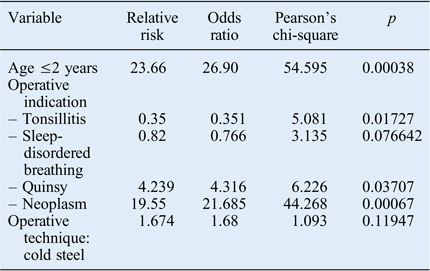
Being two years of age or less at time of surgery was significantly associated with complications that would suggest a day stay to be unsafe (mandatory stay, p = 0.0004), and resulted in a far higher risk of airway compromise or serious haemorrhage (relative risk = 23.66, odds ratio = 26.90; Table IV).
Statistical findings for patient characteristics and outcomes*
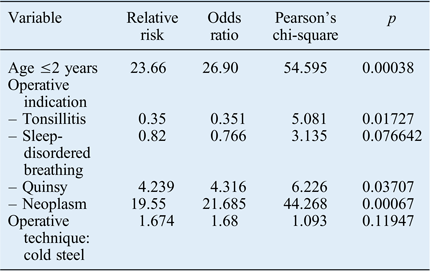
* Outcomes of airway obstruction or adenotonsillar bleed requiring a return to the operating theatre
With regard to indications for tonsillectomy, quinsy and tonsil neoplasm were both significantly associated with reaching mandatory stay criteria (p = 0.03707 and p = 0.00067 respectively; Table IV), with the former increasing the chance by 4 times (relative risk = 4.239, odds ratio = 4.316) and the latter by nearly 20 times (relative risk = 19.55, odds ratio = 21.685). Tonsillitis as an indication for tonsillectomy was significantly associated with a safe outcome (relative risk = 0.35, odds ratio = 0.351, p = 0.01727), and sleep-disordered breathing was insignificantly associated with a safer outcome (relative risk = 0.82, odds ratio = 0.766, p = 0.076642).
In contrast to evidence in the literature,Reference Söderman, Odhagen, Ericsson, Hemlin, Hultcrantz and Sunnergren 15 there were no significant findings to suggest that cold-steel dissection was superior to diathermy in this sample (relative risk = 1.674, odds ratio = 1.68, p = 0.11947).
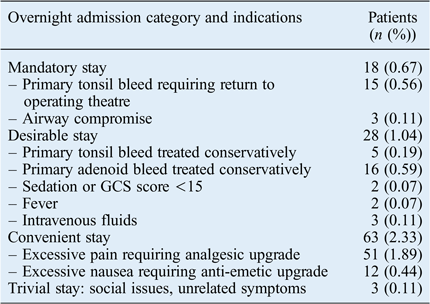
The four overnight admission categories – mandatory, desirable, convenient and trivial – were created in an attempt to explain the reason for the patient's post-operative stay, and in turn to help identify common characteristics of patients who may not be suitable for day-case tonsillectomy (Table V).
Overnight admission categories for patients who required additional intervention
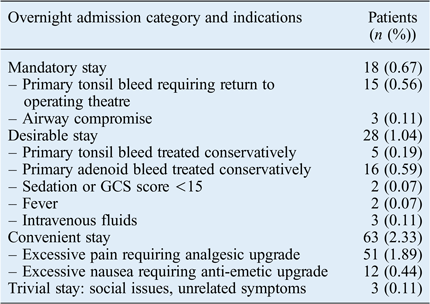
Total n = 112 (4.15 per cent). GCS = Glasgow Coma Scale
This study considered primary post-tonsillectomy haemorrhage requiring a return to the operating theatre and airway compromise as the most serious complications post-tonsillectomy. Patients at risk of these should always be indicated for a mandatory overnight stay. In this study, 18 patients (0.67 per cent) had these complications.
In 28 patients (1.04 per cent), discharge was safe; however, the extra night stay was desirable because of minor adenotonsillar bleeding, sedation or fever. In 63 cases (2.33 per cent), the stay was convenient for the patient given the need for analgesic and anti-emetic upgrade. In 3 patients (0.11 per cent), the stay was considered trivial because of social issues or unrelated symptoms.
Discussion
Synopsis of key results
The safety of day-case tonsillectomy has been well documented in the literature.Reference Mills, Anderson, Barber, White, Mahadevan and Salkeld 3 – Reference Lalakea, Marquez-Biggs and Messner 5 , Reference Pereira, Xará, Mendonça, Santos and Abelha 10 During the study period, the University Hospital Geelong's practice was to keep all tonsillectomy patients overnight to ensure potential complications were managed. Individual institutional guidelines have not been based on evidence. This study, by investigating the stays of 2863 tonsillectomy patients from June 1998 to June 2014, attempts to produce the basis for future evidence-based, patient selection criteria for day-case tonsillectomy.
The current study suggests that at least 2489 patients (86.94 per cent) did not require the overnight stay. Of the 2700 patients who were kept overnight as part of the University Hospital Geelong's practice, only 211 (7.81 per cent) had a recognised complication, of which only 112 (4.15 per cent) required an intervention. The complication rates in this study are significantly lower than the standards of complication rates set by international studies such as the UK National Prospective Tonsillectomy Audit (overall reported complication rate of 20.4 per cent). 11
The post-operative haemorrhages reported in this study included those that occurred in the primary (less than 24 hours post-operatively) and secondary (more than 24 hours post-operatively) periods. The results indicate that this hospital achieves a primary post-tonsillectomy haemorrhage rate of 1.48 per cent, with a return to the operating theatre rate of 0.56 per cent, which is also compatible with many national and international studies. 11 , Reference Söderman, Odhagen, Ericsson, Hemlin, Hultcrantz and Sunnergren 15
There was no significant difference between the use of cold-steel and diathermy techniques in terms of primary post-tonsillectomy haemorrhage patients requiring a return to the operating theatre in this sample (p = 0.11947). Cold-steel tonsillectomy had a higher risk of primary post-tonsillectomy haemorrhage requiring a return to the operating theatre when compared with hot monopolar tonsillectomy in the study (1.0 per cent of cold-steel cases needed to return to the operating theatre for bleeding vs 0.4 per cent of hot monopolar cases). However, this finding is underpowered and unreliable given the small number of surgeons currently using cold methods at the University Hospital Geelong.
A pre-operative patient questionnaire was used to establish each patient's American Society of Anesthesia score. Bleeding disorders and coagulopathies, such as Von Willebrand disease, were explicitly identified during the adult pre-operative assessment clinic on the patient questionnaire. The paediatric pre-operative questionnaire enquired about the child's co-morbidities in a free-field text box; however, it did not explicitly ask about coagulopathies such as Von Willebrand disease. This has been modified as a result of this study for future paediatric practice.
Not all children undergoing tonsillectomy for sleep-disordered breathing were assessed with sleep oximetry or polysomnography pre-operatively. The authors recognise that this demographic may be at higher risk of post-operative complications; however, sleep studies were not standard protocol at this institution over the entire 16-year time frame and thus were not performed in all paediatric patients.
The authors believe that this study provides an original way of presenting post-tonsillectomy complications and interventions. The creation of the four overnight admission categories allows observations to be made about characteristics shared by the patients in each group, thus identifying favourable and unfavourable characteristics for patients undergoing day-case tonsillectomy, which could be used to inform future practice. The four categories summarise the post-operative interventions that patients required and their subsequent stay as ‘mandatory’, ‘desirable’, ‘convenient’ or ‘trivial’.
Table V indicates that only 18 patients (0.67 per cent) developed airway compromise or primary post-tonsillectomy haemorrhage requiring a return to the operating theatre (i.e. complications necessitating a mandatory stay). The authors of this study believe that patients at risk of these complications should be recognised and considered unsuitable for day-case tonsillectomy. In this study, these patients had several overlapping characteristics.
Only 24 of the total 2863 patients (0.84 per cent) were aged 2 years or less, with the youngest being 11 months old. Of these, three had an airway complication requiring a mandatory stay, which represents 12.50 per cent in this age category. This was a statistically significant finding, and is in line with other literature suggesting that being two years of age or less is a major risk factor for post-tonsillectomy complications and should always indicate a mandatory overnight stay.Reference Pereira, Xará, Mendonça, Santos and Abelha 10 , Reference Randall and Hoffer 16 – Reference Werle, Nicklaus, Kirse and Bruegger 18
Neoplasm and quinsy were over-represented in those patients who experienced a major bleed with a return to the operating theatre, and were statistically significantly associated with haemorrhage and airway compromise. Ten per cent (3 out of 29) of all neoplasm and 2.3 per cent (3 out of 129) of quinsy cases required a mandatory stay, compared with 0.2 per cent of sleep-disordered breathing and 0.4 per cent of tonsillitis cases.
Previous literature also supports the finding that patients with an American Society of Anesthesia score of more than 2 require an overnight stay.Reference Randall and Hoffer 16 , Reference Biavati, Manning and Phillips 17
These results are largely in agreement with the UK consensus statement on tonsillectomy in children published in 2009.Reference Robb, Bew, Kubba, Murphy, Primhak and Rollin 19 Thus, the authors believe that patients undergoing tonsillectomy, who are aged two years or less, with tonsil neoplasm or quinsy as indications for tonsillectomy, or an American Society of Anesthesia score of more than 2 because of co-morbidities including Von Willebrand disease, should not be considered for day-case surgery. When these ‘high risk’ patients were excluded, the rate of complications requiring mandatory stay was 0.19 per cent (n = 5) in the current study sample. This suggests that the vast majority of patients can be safely discharged home following their procedure, with only a fraction expected to re-present in the first 24 hours with a serious complication.
A single, peri-operative intravenous dose of 10–15 mg/kg tranexamic acid may also help to reduce the incidence of post-operative haemorrhage, and enhance the implementation of safe day-case tonsillectomy.Reference Robb and Thorning 20
Study strengths and limitations
This study spans a 16-year time frame, which has allowed a high patient yield and makes this Australia's largest tonsillectomy study. The thorough investigation of interventions undertaken in the first 24 hours post-tonsillectomy produces reliable data concerning the patient characteristics most likely to require post-operative intervention and those least appropriate for day-case surgery. The study assumes that all data reported in the patient notes are accurate and complete.
The data collected are from all surgeons working in the University Hospital Geelong ENT department, including trainee surgeons; thus, the experience of surgeons included in the study is variable and this may have affected the post-operative complication rates.
The study population is heterogeneous. Results have been combined for adults and children, and for all indications and all types of tonsillectomy, including adenotonsillectomy, to gain an overall appreciation of the post-operative outcome. Results have not been analysed separately according to the use of hot or cold surgical techniques, or indications for tonsillectomy.
Not all children underwent sleep oximetry or polysomnography investigations as part of their pre-operative assessment for tonsillectomy. This is a weakness of the study; however, it reflects actual practice at the institution. The authors believe that applying the exclusion criteria in future paediatric cases will avoid the need for significant intervention for breathing complications in the post-operative period.
As this was a retrospective study, there was no standard general anaesthetic, post-operative analgesic or anti-emetic protocol over the course of the 16-year study. Future practice and prospective studies may benefit from a standardised protocol.
Previous literature has shown that bipolar diathermy is superior to monopolar diathermy with regard to thermal tissue damage and subsequent risk of post-operative bleeding.Reference Sutton, Awad, Perkins and Lobo 21 , Reference Alkatout, Schollmeyer, Nusrat, Hawaldar, Sharma and Mettler 22 However, for this study, the increased risk of post-operative morbidity has not been quantified, and analysis combines both techniques within the ‘hot tonsillectomy’ cases.
Interpretation and clinical applicability
There are several overlapping characteristics for patients who suffered post-operative airway compromise or who required a return to the operating theatre for primary post-tonsillectomy haemorrhage. On this basis, the authors recommend that all elective tonsillectomy patients are screened for their suitability for day-case surgery. We recommend the following exclusion criteria, and suggest that these necessitate overnight observation: age of two years or less; neoplasm or quinsy as the indications for tonsillectomy; an American Society of Anesthesia score of more than 2; or co-morbidities such as Von Willebrand disease (and other coagulopathies). In addition, to further reduce the likelihood of post-operative haemorrhage, each patient may be given a peri-operative dose of 10–15 mg/kg tranexamic acid intravenously. Further studies are required to assess the impact of these selection criteria on the safety of day-case tonsillectomy.
-
• A retrospective review was conducted of 2863 tonsillectomies over 16 years at a single Australian institution
-
• Primary bleeds occurred in 40 cases; 21 were managed medically and 15 required a return to theatre
-
• Quinsy or tonsil neoplasm as tonsillectomy indications had a higher post-tonsillectomy morbidity risk
-
• There was no difference in post-operative haemorrhage rates between hot and cold tonsillectomy methods (p > 0.05)
-
• Eighty-six per cent of patients did not require overnight stay following tonsillectomy
-
• The study identified characteristics of patients who should not be considered for day-case tonsillectomy
Acknowledgements
The authors would like to thank Birmingham Sands Cox Society, the ENT team at the University Hospital Geelong, and supervisors Mr Michael Borschmann and Ebrahim Hassin.