

Introduction
Sorghum, Sorghum bicolor (L.) Moench (Poaceae), is an important cereal crop in Asia, Africa, the Americas and Australia. Grain yields have been reported to be generally low (500–800 kg/ha) in farmers' fields in Asia and Africa mainly due to insect pest damage. Nearly 150 insect species have been reported as pests on sorghum (Sharma, Reference Sharma1993), of which the major pests worldwide include sorghum shoot fly Atherigona soccata (Rond.), spotted stemborer Chilo partellus (Swin.), oriental armyworm Mythimna separata (Walk.), shoot bug Peregrinus maidis (Ashmead), sugarcane aphid Melanaphis sacchari (Zehnt.), sorghum midge Stenodiplosis sorghicola (Coq.), mirid head bugs Calocoris angustatus (Leth.) and Eurystylus oldi (Pop.), and head caterpillars Helicoverpa, Eublemma, Cryptoblabes and Pyroderces. Nearly 32% of sorghum crop is lost due to insect pest damage during the rainy season (Borad and Mittal, Reference Borad, Mittal, Krishnamurthy Rao and Murthy1983) and 26% during the post-rainy season (Daware et al., Reference Daware, Bhagwat, Ambilwade and Kamble2012). Insect pests cause an estimated loss of US$ 1089 million in the semi-arid tropical regions of Asia and Africa (ICRISAT, 1992).
The sugarcane aphid M. sacchari (Zehnt.) (Hemiptera: Aphididae) is an important pest in Asia, Africa, Australia and the USA (Sharma and Nwanze, Reference Sharma, Nwanze, Sharma, Singh and Nwanze1997). It is one of the vectors of the sugarcane yellow leaf virus, which occurs in most of the sugarcane-growing countries (Smith et al., Reference Smith, Borg, Lockhart, Braithwaite and Gibbs2000). The nymphs and adults of M. sacchari suck the sap from the undersurface of the leaves, and the infested leaves dry up and turn yellow or brown. Under heavy infestation of M. sacchari, the plants may be severely stunted. The aphids secrete honeydew, which falls on the leaves and on the ground, on which sooty moulds grow. The aphids multiply by parthenogenesis, i.e. they give birth to apterous nymphs, which moult four times before they become adults. Under crowded conditions or when host plants are stressed, they produce winged forms (alates), which moult five times before they become adults (Meksongsee and Chawanapong, 1985). Each female produces 60 to 100 nymphs in 12 to 20 days. The adults live for about 10 to 16 days. Aphid infestation in sorghum is very high during the flowering and grain-filling stages (Fang, Reference Fang1990). Long dry spells result in heavy aphid damage (Raetano and Nakano, Reference Raetano and Nakano1994). In addition to leaf feeding, M. sacchari also affects grain quality in terms of diastatic power, malt loss and abrasive hardness index. This results in the poor quality of sorghum beer and milling. Reduced grain hardness may also result in increased flour losses during milling (van den Berg et al., Reference van den Berg, Pretorius and van Loggerenberg2003).
Best agronomic practices, natural enemies, host plant resistance and synthetic insecticides have been employed for controlling insect pests. Insecticides are costly and, at times, beyond the reach of resource-poor farmers in the semi-arid tropics. The application of chemical insecticides for aphid control under subsistence farming conditions may not be economically viable. Therefore, it is important to identify sorghum cultivars that are resistant or less susceptible to this pest. Extensive efforts have been made to screen sorghum germplasm for their resistance to the sorghum shoot fly, spotted stemborer, sorghum midge and head bugs (Sharma et al., Reference Sharma, Taneja, Leuschner and Nwanze1992, Reference Sharma, Taneja, Kameswara Rao and Prasada Rao2003). However, there has been little effort to identify sorghum genotypes for their resistance to the sugarcane aphid M. sacchari. Therefore, there is a need to develop techniques to screen and breed sorghum genotypes with resistance to M. sacchari.
Materials and methods
The experiments were conducted during the post-rainy season at the International Crops Research Institute for the Semi-Arid Tropics, Patancheru, Andhra Pradesh, India. A total of three techniques were used to evaluate the resistance of sorghum genotypes to M. sacchari. These involved the following steps: (1) infesting the plants with aphid-infested leaf cuttings and covering with a nylon net, (2) confining the aphids to the leaves inside a clip cage and (3) placing leaf discs in 3% solidified agar–agar medium at the one end in a 500 ml plastic jar in the laboratory.
Infesting the plants with aphid-infested leaf cuttings and covering with a nylon net in the field
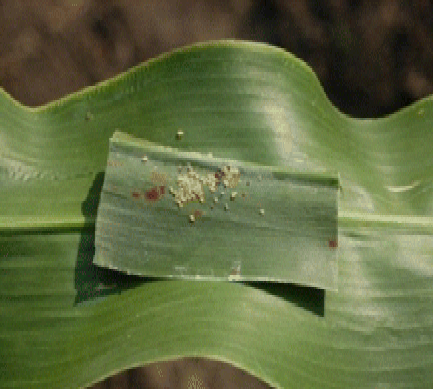
A total of 31 genotypes, including resistant (IS 40618 (TAM 428)) and susceptible (CK 60 B and Swarna) checks, were planted in three replications in the field in a randomized complete block design. Each genotype was planted in two row plots of 2 m length and the rows were 75 cm apart. The seeds were planted at a depth of 5 cm with a four-cone planter. The field was irrigated immediately after sowing. At 1 week after seedling emergence, thinning was carried out to maintain a spacing of 10 cm between the plants. A basal dose of 150 kg/ha of diammonium phosphate (DAP) was applied to the experimental plots. Inter-culture and earthing-up operations were carried out at 15 and 30 days after seedling emergence. Hand weeding was carried out as and when required. The crop was irrigated at intervals of 30 days. The test material was planted in three sets, of which one set was left uninfested under natural conditions, the second set was infested with aphids at the flag leaf stage (each plant infested with 3 × 3 cm aphid-infested leaf cuttings, stapled to the fifth leaf from the bottom; Plate 1) and the third set was infested with aphid-infested leaf cuttings at the flag leaf stage and covered with a nylon net to exclude natural enemies (Plate 2). Observations were recorded on aphid damage at physiological maturity on a 1–9 scale (Table 1). Data were also recorded on agronomic desirability at maturity on a 1–5 rating scale (1 = good and 5 = poor).
Sorghum leaf cutting with a colony of the sugarcane aphid Melanaphis sacchari used for infesting the plants grown inside the nylon net.

Nylon net technique used to screen sorghum genotypes for resistance to sugarcane aphid Melanaphis sacchari.

Visual damage rating scale to evaluate sorghum genotypes for resistance to sugarcane aphid Melanaphis sacchari

Nylon net screening technique to confirm the resistance of the genotypes selected under natural infestation in the field
Seven genotypes (ICSV 12001, ICSV 12005, IS 21807, IS 21808, IS 40615, IS 40616 and IS 40618), which exhibited moderate levels of resistance to the sugarcane aphid under field conditions, were tested for their resistance to the aphids under a nylon net in the greenhouse. ICSV 745, with moderate levels of resistance to the aphids, and CK 60 B and Swarna, with high levels of susceptibility to the aphids (Sharma and Dhillon, Reference Sharma and Dhillon2005), were included as controls. The test material was planted in plastic pots (30 cm diameter and 30 cm deep) filled with a mixture of black soil, farmyard manure and sand (3:1:1). DAP (20 g per pot) was applied as a basal fertilizer just before planting. The seeds were placed 5 cm below the soil surface and watered immediately. Five seeds were planted in each pot and three seedlings were retained in each pot at 15 days after seedling emergence. The pots were watered on alternate days. The potted plants were grown inside a nylon net cage (2.5 × 3 × 2 m). There were three replications for each genotype in a randomized complete block design. The test plants were infested with 3 × 3 cm aphid-infested leaf cuttings (stapled to the fifth leaf from the bottom) or sprinkled with aphids (filled in a 0.5 ml eppendorf tube) at the flag leaf stage. The severity of aphid damage on plants was evaluated at physiological maturity on a 1–9 scale, as described in Table 1.
Clip cage technique
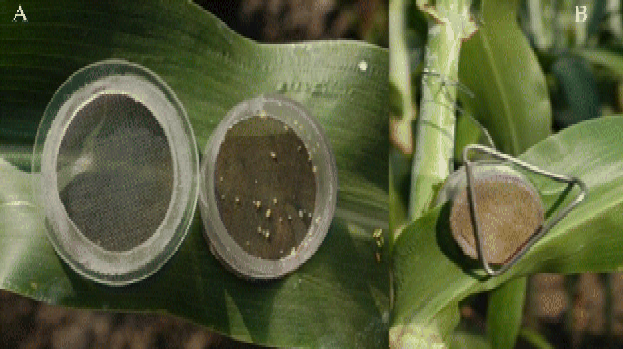
Resistance to aphid damage in terms of severity of damage could be recorded as a visual damage rating, but it is not possible to record the data on the number of aphids on whole plants under field conditions as there are too many aphids on each plant, and they are unevenly distributed all over the plant. However, it is important to record the data on the number of aphids as a measure of host suitability to the insects, which also provides information on the antibiosis component of resistance to the insects. Therefore, we designed a clip cage to confine gravid females to the leaf and record the number of progenies produced as a measure of antibiosis or host suitability/resistance to the aphids. Initially, 11 genotypes were evaluated for their resistance to the aphids using the clip cage assay. The test material was grown under field conditions as described above. There were three replications in a randomized complete block design. The clip cage consisted of two plastic rings of 3.5 cm diameter, of which one side was covered with a 60-mesh screen and the open portion had a 0.25 mm-thick layer of foam that could be held against the leaf lamina. The two rings were held together tightly with a 2.5 mm-thick galvanized triangular iron wire. The clip cage was designed such that it could be placed in the mid-portion of the leaf (fifth leaf from the bottom, which is most suitable for aphid infestation) and covered 10 square centimetres of leaf area. The clip cage was supported on the leaf by a thin wire tied around the stem (Plate 3). Ten gravid females collected from the aphid-infested plants in the field were released inside the clip cage on the mid-portion of the fifth leaf of each plant at the milk stage. The number of nymphs/adults produced by the gravid females was counted after 5 days, which provided sufficient time for the aphids to complete one generation.
Clip cage used to confine the sugarcane aphid Melanaphis sacchari to the leaves of sorghum (a = aphids released inside the clip cage and b = clip cage placed on the sorghum leaf and tied with a galvanized iron wire around the stem).
Leaf disc assay
Since the reproduction of aphids inside the clip cage under field conditions may be influenced by the environmental conditions and the leaf turgor status of the plants, we also recorded the reproduction of the aphids on the leaf discs (7 cm leaf cuttings from the mid-portion of the leaf) of different genotypes to assess the usefulness of this technique to measure the antibiosis component of resistance to M. sacchari. The experiment was repeated for three seasons. As described above, 11 genotypes were evaluated for their resistance to the aphids using the leaf disc assay. The leaf discs were taken from the mid-portion of the fifth leaf from the bottom at the flag leaf stage, and kept inside a plastic jar (10.8 cm diameter and 4 cm depth). The lower portion of the leaf cuttings was inserted in 3% agar–agar medium in a slanting manner (Plate 4). There were five replications for each genotype in a completely randomized design. Ten gravid females collected from the aphid-infested plants in the field were released on each leaf disc. The number of aphids were counted after 5 days.
Leaf disc assay used to assess the antibiosis component of resistance to the sugarcane aphid Melanaphis sacchari under laboratory conditions.

Comparison of the nylon net, clip cage and leaf disc assays to evaluate sorghum genotypes for resistance to Melanaphis sacchari
A total of 30 genotypes, including resistant (IS 40618) and susceptible (CK 60 B and Swarna) checks, were evaluated for their resistance to M. sacchari at the flag leaf stage using the nylon net, clip cage and leaf disc assays. The plants were grown under field conditions, as described above. Each genotype was planted in two rows of 2 m length. The ridges were 75 cm apart and the seedlings were spaced at 10 cm. The plants were infested with aphid-infested leaf cuttings at the flag leaf stage and immediately covered with a nylon net cage. The plants outside the nylon net were evaluated at the flag leaf stage using the clip cage and leaf disc assays. There were three replications for each genotype in a randomized complete block design. Ten gravid females were released inside each clip cage or on the leaf discs in the laboratory. The number of aphids were counted at 5 days after infestation in the clip cage assay and after 7 days after infestation in the leaf disc assays. The infested genotypes inside the nylon net were evaluated for their resistance to the aphids at physiological maturity on a 1–9 scale, as described in Table 1.
Statistical analysis
Data were subjected to the analysis of variance. Data on the number of aphids were subjected to square root transformation before the analysis of variance. Significance of differences between the genotypes was tested using the F-test, while treatment means were compared using Duncan's multiple range test at P ≤0.05.
We also prepared a biplot of the test genotypes based on aphid damage rating under artificial infestation and the increase in the number of aphids inside the clip cage under the field conditions to identify the lines with antibiosis mechanisms of resistance and/or tolerance to aphid damage. The genotypes were placed in four quadrants based on aphid damage under nylon net and increase in number of aphids in the clip cage assay. The genotypes placed in quadrant I had a lower rate of increase in the number of aphids and also suffered low aphid damage rating, i.e. exhibiting antibiosis as a component of resistance. The genotypes placed in quadrant II suffered low leaf damage despite a high increase in the number of aphids, and had tolerance to aphid damage. The genotypes placed in quadrant III showed lower rates of increase in the number of aphids (antibiosis), but exhibited susceptibility to aphid damage, while the genotypes placed in quadrant IV showed high levels of increase in the number of aphids and a high susceptibility to aphid damage, and thus were categorized as highly susceptible.
Results
Infesting the plants with aphid-infested leaf cuttings and covering with a nylon net in the field
Under the field conditions, the average aphid damage severity rating was 2.46 in plots under natural infestation, 3.44 for plants infested with leaf cuttings and 5.18 for plants infested with leaf cuttings and covered with a nylon net (Fig. 1). Covering the plants with a nylon net to exclude natural enemies was effective in building-up heavy aphid infestation on the test material. Twenty-four genotypes suffered significantly lower damage than the susceptible check, CK 60 B, under natural infestation, of which nine showed a susceptible reaction when the plants were infested with aphid-infested leaf cuttings at the flag leaf stage (Table 2). Among the genotypes that exhibited resistance to the aphids when infested with aphid-infested leaf cuttings, 10 genotypes exhibited a susceptible reaction when the plants were covered with a nylon net, indicating that infestation with aphid-infested leaf cuttings and covering the plants with a nylon net was quite effective in screening sorghum genotypes for resistance to M. sacchari. Nine genotypes (Line 61510, ICSV 12001, ICSV 12002, ICSV 12003, ICSV 12004, ICSV 12005, SLR 41, PU 10-1 and DJ 6514) showed moderate levels of resistance (DR 3.0–4.5) when infested with aphid-infested leaf cuttings and covered with a nylon net. Of these genotypes, Line 61510, ICSV 12001, ICSV 12002, ICSV 12003 and ICSV 12004 also exhibited good agronomic desirability (agronomic score 2.0–2.33).
Mean leaf damage rating of sorghum genotypes for resistance to sugarcane aphid Melanaphis sacchari under different infestation techniques in the field. Aphid damage rating: 1 = < 10% of the leaf area infested/damaged by the aphids; 9 = > 80% of the leaf area damaged by the aphids.

Evaluation of sorghum genotypes for resistance to the sugarcane aphid Melanaphis sacchari under different modes of infestation

Values followed by the different letters within a column are significantly different at P≤ 0.05.
1 Aphid damage rating (1 = < 10% of the leaf area damaged by the aphids and 9 = >80% of the leaf area damaged by the aphids).
2 Agronomic score: 1 = good and 5 = poor.
Reaction of sorghum genotypes under nylon net in the screenhouse
There were significant differences among the genotypes infested with aphid-infested leaf cuttings or sprinkled with aphids (placed in a 0.5 ml eppendorf tube) inside the nylon net in the greenhouse. The genotypes ICSV 12001 and ICSV 12005 exhibited moderate levels of resistance (DR 4.2–4.8) to M. sacchari (Fig. 2), while the genotype CK 60 B showed a susceptible reaction (DR 9.0) under both the infestation systems. The genotypes IS 21807, IS 21808, Swarna and ICSV 745 exhibited a susceptible reaction when infested with the aphid-invested leaf cuttings, but suffered complete damage when sprinkled with 0.5 ml of aphids per plant. The genotypes IS 40616 and IS 40618 exhibited moderate levels of resistance under both the infestation methods. The results suggested that leaf cuttings stapled to the fifth leaf from the bottom at the flag leaf stage inside the screenhouse could be used to confirm whether the plants/genotypes selected are resistant to aphid damage under natural infestation in the field.
Mean leaf damage rating of sorghum genotypes evaluated for resistance to the sugarcane aphid Melanaphis sacchari under screenhouse conditions by infesting the plants with aphid-infested leaf cuttings and by spreading the aphids on the plants. Aphid damage rating: 1 = < 10% of the leaf area infested/damaged by the aphids; 9 = >80% of the leaf area damaged by the aphids.
Evaluation of sorghum genotypes using the clip cage technique
To gain an understanding of the effect of resistant genotypes on the survival and development of aphids, 11 genotypes, including the resistant and susceptible checks, were tested using the clip cage technique. The rates of aphid multiplication were lower (15.0–16.0 aphids per 10 females) on the genotypes ICSV 12001, IS 40615 and IS 40616 during the 2009 post-rainy season (Table 3). However, the differences between the genotypes were not significant as the temperatures during the experimental period were very high (>40°C). During the 2010 post-rainy season, the differences between the genotypes were significant, and the number of aphids were significantly lower (27–45 aphids per 10 females) on the genotypes ICSV 12005, IS 21807, IS 40615, IS 40616 and IS 40618 when compared with the susceptible check Swarna (68 aphids per 10 females). The increase in the number of aphids on the genotypes ICSV 12001, IS 21808 and ICSV 745 was similar to that on the susceptible check, Swarna.
Evaluation of sorghum genotypes for resistance to sugarcane aphid Melanaphis sacchari using clip cage and leaf disc assays under the field and laboratory conditions, respectively

Values followed by the different letters within a column are significantly different at P≤ 0.05.
Leaf disc assay
In the leaf disc assay, low rates of aphid multiplication were recorded on the genotypes ICSV 12005, IS 40615, IS 40616 and IS 40618 when compared with that on the susceptible checks Swarna and CK 60B during the 2009 post-rainy season (Table 3). During the 2010 post-rainy season, lower rates of increase in the number of aphids (59–83 aphids per 10 females) were recorded on the genotypes ICSV 12001, ICSV 12005, IS 21807, IS 21808, IS 40615 and ICSV 745 when compared with that on the susceptible check Swarna (169 aphids per 10 females). However, relatively higher rates of aphid increase were recorded on the genotypes IS 40616 and IS 40618 during the 2010 post-rainy season than during the 2009 post-rainy season, while the reverse was true in the case of the genotypes ICSV 12001 and IS 21808. The results suggested that the leaf disc assay is not a reliable technique to measure genotypic resistance to M. sacchari, probably because of possible desiccation of the leaf discs during the hot and dry season.
Comparison of nylon net, clip cage and leaf disc assays to evaluate sorghum genotypes for their resistance to Melanaphis sacchari
To gain an understanding of the comparative usefulness of different methods, 30 genotypes were evaluated for resistance to the aphids under a nylon net in the field, and their suitability for reproduction of aphids was assessed using the clip cage and detached leaf disc assays during the 2011 post-rainy season. Nine genotypes (ICSB 215, ICSB 321, ICSB 323, ICSB 724, ICSV 12001, ICSV 12004, IS 40615, DSV 5 and IS 40618) exhibited moderate levels of resistance (DR 4.3–5.7) to M. sacchari, when infested with the aphid-infested leaf cuttings under a nylon net in the field (Table 4; Plate 5).
Evaluation of sorghum genotypes for resistance to sugarcane aphid Melanaphis sacchari using the clip cage and leaf disc assays under the field and laboratory conditions, respectively

Values followed by the different letters within a column are significantly different at P≤ 0.05.
R, resistant check; S, susceptible check.
+ Aphid damage rating: 1 = < 10% of the leaf area damaged by the aphids and 9 = >80% of the leaf area damaged by the aphids.
Reaction of sorghum genotypes against the sugarcane aphid Melanaphis sacchari inside the nylon net under field conditions (left: Swarna, susceptible reaction and right: ICSB 323, resistant reaction)

The genotypes ICSB 323, ICSB 215, ICSV 12004, ICSR 165, IS 40615, ICSV 12001, ICSB 321 and ICSB 724 placed in quadrant I suffered low aphid damage under the nylon net in the field and also exhibited a low rate of aphid increase in the clip cage assay. These genotypes exhibited antibiosis component of resistance to M. sacchari (Fig. 3). The genotype DSV 5 placed in quadrant II suffered low aphid damage, but exhibited a relatively higher rate of aphid increase in the clip cage assay, while the reverse was true in the case of the genotypes placed in quadrant III (SPS 43, ICSB 695, CK 60 B, ICSB 205, C 43, RSV 1211, M-35-1 x 9808, RS 29, IS 40617, IS 40618, EC 8-2 and Local 453). The genotypes placed in quadrant IV (ICSR 161, Swarna, M-35-1, Line 61510, RSV 1338, Hathi Kuntha, Parbhani Moti, RSV 1093 and PU 10-1) suffered severe damage in the field and also exhibited a high rate of aphid increase in the clip cage assay, and thus were highly susceptible to M. sacchari.
Relationship between the genotypic reaction against sugarcane aphid under nylon net in the field and increase in aphid numbers under the clip cage. Aphid damage rating: 1 = < 10% of the leaf area infested/damaged by the aphids; 9 = >80% of the leaf area damaged by the aphids.

Discussion
A total of 21 genotypes suffered significantly less damage than the susceptible check CK 60 B, of which 10 genotypes exhibited a susceptible reaction when infested with aphid-infested leaf cuttings and covered with a nylon net, indicating that infesting the plants with aphid-infested leaf cuttings and covering the plots with a nylon net to exclude the natural enemies is quite effective in screening and breeding genotypes for resistance to M. sacchari. The genotypes EC 434430, CSH 16 and 9728 have earlier been reported to be resistant to M. sacchari in India (Ghuguskar et al., Reference Ghuguskar, Chaudhari and Sorte1999; Sarath Babu et al., Reference Sarath Babu, Sharma, Surender, Prasada Rao, Chakravarty, Singh and Girish2000), while the genotypes PAN 8446, SNK 3939 and NS 5511 have been reported to be tolerant to aphid damage in South Africa (van den Berg, Reference van den Berg2002). The genotypes ICSV 197, ICSV 745 and ICSV 112 have been reported to show moderate levels of resistance to M. sacchari and to have low density of alates (Sharma and Dhillon, Reference Sharma and Dhillon2005). Under the nylon net in the screenhouse, the genotypes ICSV 12001 and ICSV 12005 exhibited moderate levels of resistance to M. sacchari, while CK 60 B showed a susceptible reaction. However, the genotypes IS 21807, IS 21808, Swarna and ICSV 745 showed a susceptible reaction when infested with aphid-infested leaf cuttings, but suffered complete plant damage when sprinkled with aphids inside the nylon net in the screenhouse. This method could be used to confirm whether the plants/genotypes selected are resistant to aphid damage under natural infestation in the field.
Aphid density and damage to the plants have been reported to be highly correlated (Hagio, Reference Hagio1992), although some of the genotypes that suffered high aphid damage in the present study showed lower rates of aphid increase in the clip cage and leaf disc assays. It has been reported that both winged and apterous forms exhibit a strong preference for susceptible sorghums (Kawada, Reference Kawada1995), and hence, there is a need to assess the antixenosis component of resistance to M. sacchari to identify the lines with diverse mechanisms of resistance to this pest Aphids reared on resistant sorghums have been reported to exhibit an increase in nymphal period and mortality, and a reduction in longevity and fecundity (Liu et al., Reference Liu, He, Qu and Zhang1990; Kawada, Reference Kawada1995). In the present study, the rates of aphid multiplication were lower on the genotypes IS 21807, IS 40615, IS 40616 and IS 40618 than on the susceptible check Swarna, while the rates of aphid increase on the genotypes ICSV 12001, ICSV 12005, IS 21808 and ICSV 745 were comparable to that on the susceptible check, Swarna, although these genotypes suffered lower damage than Swarna under the field conditions. This indicates that non-preference/tolerance to aphid feeding could be one of the components of resistance to aphid damage in these genotypes, suggesting that there is a need to assess non-preference for host selection and the effect of aphid-resistant genotypes on the development and biology of M. sacchari.
A lower number of aphids were recorded on the genotypes ICSV 12005, IS 40615, IS 40616 and IS 40618 when compared with that on the susceptible checks, Swarna and CK 60 B. The results suggested that the leaf disc assay might not be a reliable technique to measure genotypic resistance to M. sacchari, probably because of rapid drying of the leaf discs during the hot and dry seasons. The leaf discs of sorghum might not be able to obtain water from the agar–agar medium as is the case with the detached leaf assay with chickpea, pigeonpea and cotton (Sharma et al., Reference Sharma, Pampapathy, Dhillon and Ridsdill-Smith2005), as there is no distinct petiole which could be immersed in the agar–agar medium to avoid drying and chemical changes in the leaf.
The genotypes ICSB 323, ICSB 215, ICSV 12004, ICSR 165, IS 40615, ICSV 12001, ICSB 321 and ICSB 724, which suffered low aphid damage under the field conditions and exhibited a low rate of aphid increase in the clip cage assay, showed antibiosis as a component of resistance to M. sacchari; these genotypes will be quite useful for sorghum improvement. Some of the genotypes that exhibited a lower rate of aphid increase under the clip cage or leaf disc assay showed a susceptible reaction under field conditions and vice versa. The results suggested that infesting the plants with aphid-infested leaf cuttings and covering the plots with a nylon net is quite effective in evaluating sorghum genotypes for resistance to M. sacchari. The clip cage assay could be used to gain further understanding of the antibiosis component of resistance to M. sacchari. In addition, there is a need to assess the role of antixenosis and tolerance to aphid feeding in genotypic resistance to M. sacchari to identify the lines with different mechanisms of resistance to this pest.
Genotypes with a greater height, longer distance between the leaves, smaller leaf angle and presence of waxy bloom have been reported to be less susceptible to aphid damage. Studies have reported that the aphids multiply at a faster rate on genotypes with higher contents of nitrogen, sugar, free amino acids and total chlorophyll (Mote and Shahane, Reference Mote and Shahane1994; Tsumuki et al., Reference Tsumuki, Kanehisa and Moharramipour1995), while genotypes with high contents of phosphorus, potassium and polyphenols are less preferred by the aphids (Mote and Shahane, Reference Mote and Shahane1994). Aconitic acid has also been reported to have an antifeedant effect on aphids (Rustamani et al., Reference Rustamani, Kanehisa, Tsumuki and Shiraga1992). Aphid infestation resulted in an 18.5 to 55.8% decrease in total phenol content over the healthy leaves, suggesting the induction of stress in the infested plants. However, this is contrary to the response to insect damage in other plants, where insect damage often leads to an increase in the phenol content of the infested plants/plant parts (War et al., Reference War, Paulraj, Ignacimuthu and Sharma2012). The tannin content of grains has a relatively poor correlation with the phenol content of aphid-infested leaves when compared with healthy leaves (Sharma and Dhillon, Reference Sharma and Dhillon2005). There is a need to assess the relative contribution of various morphological and biochemical traits conferring resistance/susceptibility to M. sacchari, and use them as marker traits to screen and select the genotypes for their resistance to this pest. Cytoplasmic male sterility also influences the expression of resistance to M. sacchari (Dhillon et al., Reference Dhillon, Sharma, Pampapathy and Reddy2006), and restorer lines have a dominant effect on the expression of resistance to aphids in F1 hybrids (Sharma et al., 2004, Reference Sharma, Dhillon and Pampapathy2006). This information could be used for developing hybrid parents and varieties with resistance to aphids. The information on sources of resistance, factors associated with resistance to aphids and inheritance of resistance to M. sacchari can be used to develop resistant sorghum cultivars for deployment in regions prone to aphid outbreaks.
Acknowledgements
We thank the staff of the Entomology Unit for their support in carrying out the field trials. This work was undertaken as part of the project ‘Harnessing Opportunities for Productivity Enhancement of Sorghum and Millets in Sub-Saharan Africa and South Asia’ (HOPE) funded by the Bill and Melinda Gates Foundation.