

The carceral state is a core driver of structural racism in the United States, producing devastating impacts on health, relationships and social networks, income and wealth, and civic engagement in Black, Indigenous, Brown, and poor communities (Hernandez, Muhammad, and Ann Thompson Reference Hernandez, Muhammad and Ann Thompson2015; H. L. Walker Reference Walker2014; Weaver and Lerman Reference Weaver and Lerman2010; Wildeman Reference Wildeman2014). The destabilization of communities through imprisonment may actually lead to increases in crime, making communities less safe (Clear Reference Clear2008). Successful efforts to dismantle structural racism will plausibly require societal changes in how public policies are used to address social problems related to crime, poverty, unemployment, homelessness, mental illness, and addiction.
Recent shifts in public discourse related to the Black Lives Matter movement have led to broad recognition that changes are necessary to our current carceral institutions (Taylor Reference Taylor2016). In 2020, 69% of American adults agreed that the criminal justice system needs major changes or a complete overhaul (Long and Fingerhut Reference Long and Fingerhut2020). Anti-carceral policies—those that seek to change the government’s reliance on carceral institutions such as the police, jails, or prisons and instead build more effective resources and methods to prevent and address crime—have been seriously considered in ways that are historically unprecedented. For example, the Minneapolis City Council voted to disband its police department and Los Angeles County voters approved a policy that would divert 10% of unrestricted funds away from the Sheriff’s Department and into community programs (Cosgrove and Thekmedyian Reference Cosgrove and Thekmedyian2020; The Associated Press 2020). While there is potential for public shifts in support of anti-carceral policies, resistance is widespread—with even Democratic political figures from the Mayor of New York to the former President of the United States advocating for an expansion of law enforcement funding (Impelli Reference Impelli2022).
Strategic messaging can help to build public support for anti-carceral policies as a means to weaken structural racism. Decades of research with majority-white samples have consistently found that anti-Black racial attitudes are the strongest predictor of carceral policy opinions and that racial priming increases punitiveness (Bobo and Thompson Reference Bobo, Thompson, Markus and Moya2010; Hetey and Eberhardt Reference Hetey and Eberhardt2014; Johnston and Wozniak Reference Johnston and Wozniak2021). Yet we lack a clear understanding of what messages, if any, effectively increase support for racial equity policies broadly or anti-carceral policies specifically.
To help fill this gap, we offer an empirical test that examines the effects of linking carceral issues to race, class, race+class, or race/class narratives among a highly diverse group of randomly sampled voters in Los Angeles County. Specifically, we use a preregistered online survey experiment to test the impact of alternative messages on support for anti-carceral policy proposals.
Broadly, our results demonstrate that the most effective messages are those that discuss both race and class—with distinct outcomes on respondents’ assessments of message favorability and on their anti-carceral policy support. In addition, we find heterogeneous effects by ethnoracial identity, racial resentment, and carceral contact. The race+class message enhances anti-carceral policy support among both Latinx and Black respondents; the class-only message is effective at boosting anti-carceral support among Latinx respondents; and the race-only message increases anti-carceral support among Black respondents. None of our anti-carceral messages significantly boost support for anti-carceral policies among white or Asian respondents. We also find that respondents with low levels of racial resentment respond positively to the race+class message, while those high in racial resentment respond negatively to all four anti-carceral messages (although these backlash effects did not reach conventional levels of statistical significance). In many regards, our findings are consistent with the large number of studies showing minimal effects of racial equity arguments on Americans’ policy views. But they also confirm that longer messages that include race- and class-based equity appeals can move some respondents’ views in a pro-equity direction, even in the face of counterarguments.
Racial Frames and Policy Opinions
Given that racial attitudes clearly influence opinions toward equity policies,Footnote 1 a large body of literature in political science, communications, social psychology, and public health has tested the impact of exposure to racial primes and other racialized or nonracialized message frames. The most common form of racial framing experiment uses a brief racial cue in a picture or text to associate a policy issue with a racially specific individual or social group (Valenzuela and Reny Reference Valenzuela, Reny, James and Donald2020; Niederdeppe 2023). This sort of racial priming works to activate respondents’ existing racial beliefs and attitudes and tends to decrease support for policies perceived to benefit Black Americans (Gilens Reference Gilens1996; Jardina Reference Jardina2019; Mendelberg Reference Mendelberg2001; Tesler Reference Tesler2016).
A related body of racial framing experiments not only connect the issue at hand with a racial group or individual but also provide a racial disparity statistic or argument underlining the differential conditions facing particular ethnoracial groups in domains such as public health, criminal justice, and economic well-being (Eibach and Purdie-Vaughns Reference Eibach and Purdie-Vaughns2011; Gollust, Lantz, and Ubel Reference Gollust, Lantz and Ubel2009; Gross Reference Gross2008; Hart and Nisbet Reference Hart and Nisbet2012; Iyengar Reference Iyengar1996; A. S. Levine and Kline Reference Levine and Kline2017; Niederdeppe et al. Reference Niederdeppe, Liu, Spruill, Lewis, Moore, Fowler and Gollust2023; Peffley, Hurwitz, and Mondak Reference Peffley, Hurwitz and Mondak2017; Rigby et al. Reference Rigby, Soss, Booske, Rohan and Robert2009; Winett et al. Reference Winett, Niederdeppe, Xu, Gollust and Franklin Fowler2021). Some of these studies find no impact from their racial disparity frames (Bobo and Johnson Reference Bobo and Johnson2004; Butler et al. Reference Butler, Nyhan, Montgomery and Torres2018; Gottlieb Reference Gottlieb2017; Harell and Lieberman Reference Harell and Lieberman2021; Peffley, Hurwitz, and Mondak Reference Peffley, Hurwitz and Mondak2017; Valentino and Neuner Reference Valentino and Neuner2017), while others find that drawing attention to racial disparities actually decreases support for policies that might be expected to reduce those disparities (Niederdeppe et al. Reference Niederdeppe, Liu, Spruill, Lewis, Moore, Fowler and Gollust2023, p. 404) or increases support for policies that exacerbate such disparities (Hetey and Eberhardt Reference Hetey and Eberhardt2014; Peffley and Hurwitz Reference Peffley and Hurwitz2007).
A third kind of experimental messaging study combines a racial cue or racial justice argument with a nonracial cue or argument (English and Kalla Reference English and Kalla2021; Gollust, Lantz, and Ubel Reference Gollust, Lantz and Ubel2010; Gollust and Lynch Reference Gollust and Lynch2011; Gross and Wronski Reference Gross and Wronski2021). In these studies, the nonracial cue typically impacts policy support while the racial cue does not. For example, linking heart disease to individual behavior (e.g., smoking) decreases support for government health care, but depicting the individual as Black or white makes no difference (Gollust and Lynch Reference Gollust and Lynch2011).
One broad-ranging study of this sort included racial equity, economic class equity, and combined racial and class equity arguments (English and Kalla Reference English and Kalla2021). Examining a variety of policy domains (increasing the minimum wage, forgiving student loan debt, expanding affordable housing, the Green New Deal, Medicare for All, and decriminalizing marijuana), the study found that a class-based argument—stressing the impact of a policy on reducing economic inequality—had a positive impact on support for that policy among both white and Black respondents (with no significant impact for other ethnoracial groups). In contrast, a race-based argument—stressing the policy’s impact on improving racial equity—had a positive impact only among Black respondents, while a third set of arguments that combined race and class appeals had no significant effect on any ethnoracial group. Because the results demonstrated that race-based and race-and-class-based appeals had null effects for non-Black respondents, while class-only appeals increased support for these equity enhancing policies, the authors concluded that discussing racism is detrimental to building support for equity policies.Footnote 2
The widespread findings in these studies of predominantly or exclusively white respondents demonstrate that: 1) racial cues typically have negative effects on support for racial equity policies, and 2) racial equity arguments or statistics have negative or null effects. These consistent findings have led some to argue that efforts to advance racial equity are best pursued with race-neutral arguments (Edsall Reference Edsall2021; English and Kalla Reference English and Kalla2021; Levitz Reference Levitz2021; Maye Reference Maye2022; Saha and Shipman Reference Saha and Shipman2008; Sniderman et al. Reference Sniderman, Carmines, Layman and Carter1996; Wingfield Reference Wingfield2017). We believe this conclusion is premature.
While it is clear that simply citing racial disparities does not increase support for equity-enhancing policies, the potential impact of more engaging appeals to the injustices inherent in those disparities has rarely been examined. As the most comprehensive recent assessment of messaging studies on racial equity policies concluded, “…few studies examine the effects of richer stories [and] accounts of the ways racism is embedded in policy design and implementation.” (Niederdeppe et al. Reference Niederdeppe, Liu, Spruill, Lewis, Moore, Fowler and Gollust2023, p. 349).
The three studies we are aware of that do use longer narratives to describe how structural inequities contribute to racial inequalities both find increased support for policies that redress racial inequality. In a small study with white undergraduates, Eibach and Purdie-Vaughns (Reference Eibach and Purdie-Vaughns2011) found that framing historic examples of civil rights advances as reflecting Americans’ commitment to racial equality increased support for affirmative action. Second, in a large survey experiment with a national sample of white Americans, Christiani et al. (Reference Christiani, Kelly and Morgan2024) found that structural explanations for racial disparities in COVID-19 vaccination rates increased respondents’ support for five different racial equity policies. In this study, a random subsample was told that Black Americans were “just as willing to get the [COVID-19] vaccine as whites,” that racial differences in vaccination rates were due to Black Americans’ challenges in “getting time off work, finding transportation to distant clinic sites, and barriers to using online scheduling portals,” and that “Blacks are far less likely to have access to health care than Whites, and they tend to receive worse care and die earlier from the same diseases” (p.9). Respondents who received this information expressed greater support for policies designed to reduce racial inequalities in health care, for government efforts to guarantee vaccine access for Black people, and for tax breaks, school funding, and scholarships targeted to Black Americans. Third, in a large survey experiment with a diverse national sample, Niederdeppe et al. (Reference Niederdeppe, Porticella, Liu, Michener, Franklin Fowler, Nagler, Taylor, Barry and Lewis2025) found that messages discussing universal benefits of Child Tax Credit Expansion (CTC) with even greater benefits to Black and Hispanic children (targeted universalist message) strengthened policy support and advocacy intentions among both Black and Hispanic respondents.
In this study, we explore the ability of richer accounts of structural inequities to shift policy preferences in the domain of crime and incarceration. This is arguably a challenging task since structural explanations for crime, such as poverty and discrimination, must compete with historically powerful counter-narratives of personal responsibility, such as bad behavior, broken homes, drug use, and gang culture, especially with regard to perceptions of Black Americans (Muhammad Reference Muhammad2019; Peffley, Hurwitz, and Mondak Reference Peffley, Hurwitz and Mondak2017). As a result, boosting support for equity-enhancing policies in the realm of criminal justice may be more challenging than in health care, especially during a global pandemic where exposure was widespread and individual responsibility was not a salient explanation for infection.
In developing our accounts of how structural factors contribute to inequities in incarceration, we draw on ideas advanced by the Race-Class Narrative Project (Demos 2018b; Haney-López Reference Haney-López2019; see also Edsall Reference Edsall2021). Based on focus group and large-n survey studies, the Race-Class Narrative Project posits that progressive appeals hoping to bolster support for racial equity policies cannot simply focus on disparities, but must also clearly frame how those in power use racism to divide communities and how equity policies can lead to better outcomes for everyone.
In national surveys, the Race-Class Narrative Project has compared the favorability of alternative messages designed to promote racial equity policies (Demos 2018a). For example, in an appeal promoting increased investment in education, jobs, and healthcare, respondents rated more favorably a version calling for greater affordability for “white, Black, and brown people struggling to make ends meet” than they did to an otherwise identical appeal focused on “people struggling to make ends meet” (Demos 2018a, p. 32). More broadly, the Race-Class Narrative Project recommends messaging arguments that explicitly evoke race, call out divide-and-conquer tactics by “wealthy special interests,” and appeal to the benefits of uniting across ethnoracial and class lines (Demos 2018a, p. 12).
To date, survey results from the Race-Class Narrative Project have not been published in academic journals, and the reported findings lack tests of statistical significance and other details. Moreover, the focus of this work is on the perceived favorability of alternative messages; these surveys have not examined their messages’ impact (if any) on respondents’ support for equity-enhancing policies.
We take inspiration from the Race-Class Narrative Project and consistent with the recommendations of Niederdeppe et al. (Reference Niederdeppe, Liu, Spruill, Lewis, Moore, Fowler and Gollust2023) examine the impact of rich narratives that alternatively invoke racial and/or class considerations in promoting equity-enhancing policies related to crime and incarceration. We empirically test relatively longer messages that argue for anti-carceral approaches to addressing social problems by linking the issue to race, class, or race and class. We further compare the effects of a race/class narrative message inspired by the messaging recommendations of the Race-Class Narrative Project, and an alternative that similarly incorporates both race-based and class-based appeals, but excludes the notions that citizens must resist elites’ efforts to stoke fears and divide people from each other (see Table 2 and discussion below). Also consistent with the Race-Class Narrative Project studies, we report the results for all respondents and for the more limited set of “persuadables” (by excluding the 20 percent of respondents who express strongly pro-carceral views and the 20 percent who express strongly anti-carceral views prior to our randomized messaging treatments).
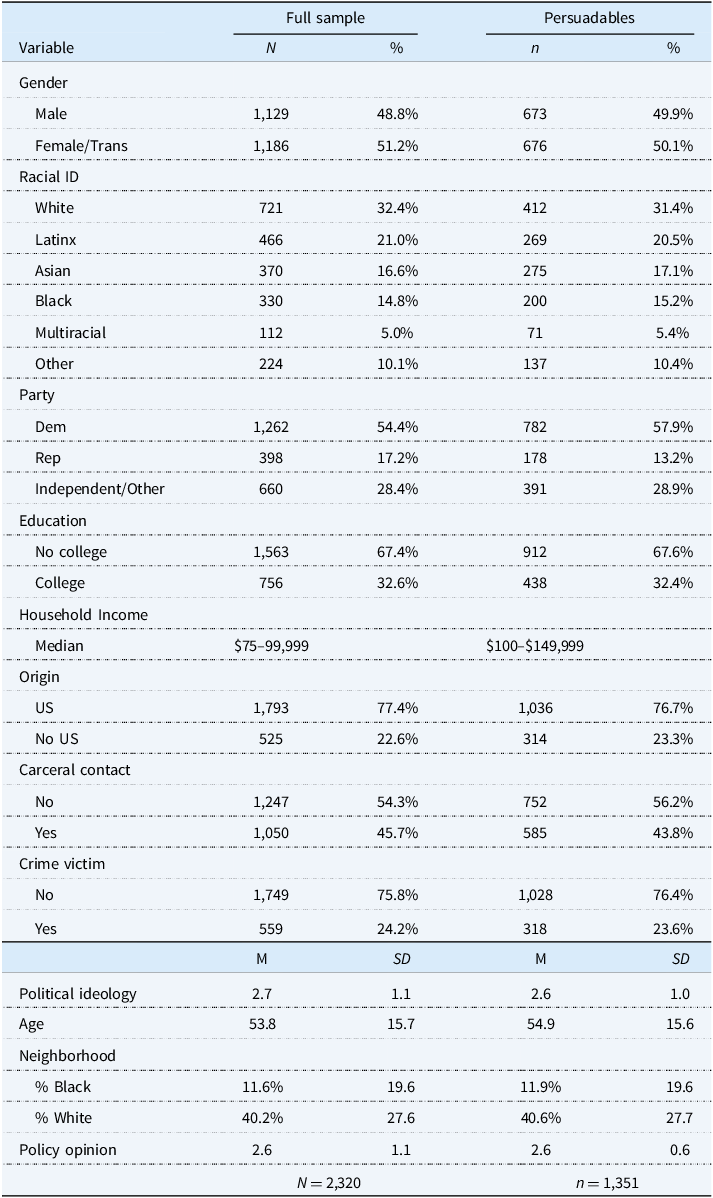
Table 1. Sample description
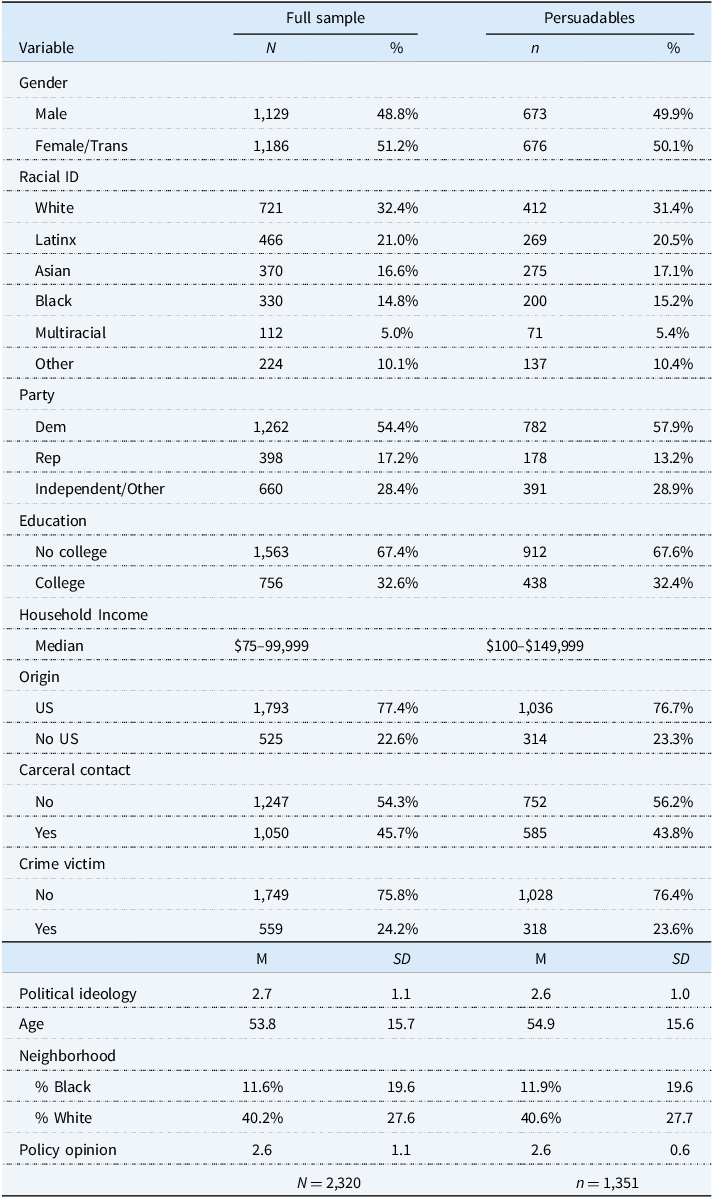
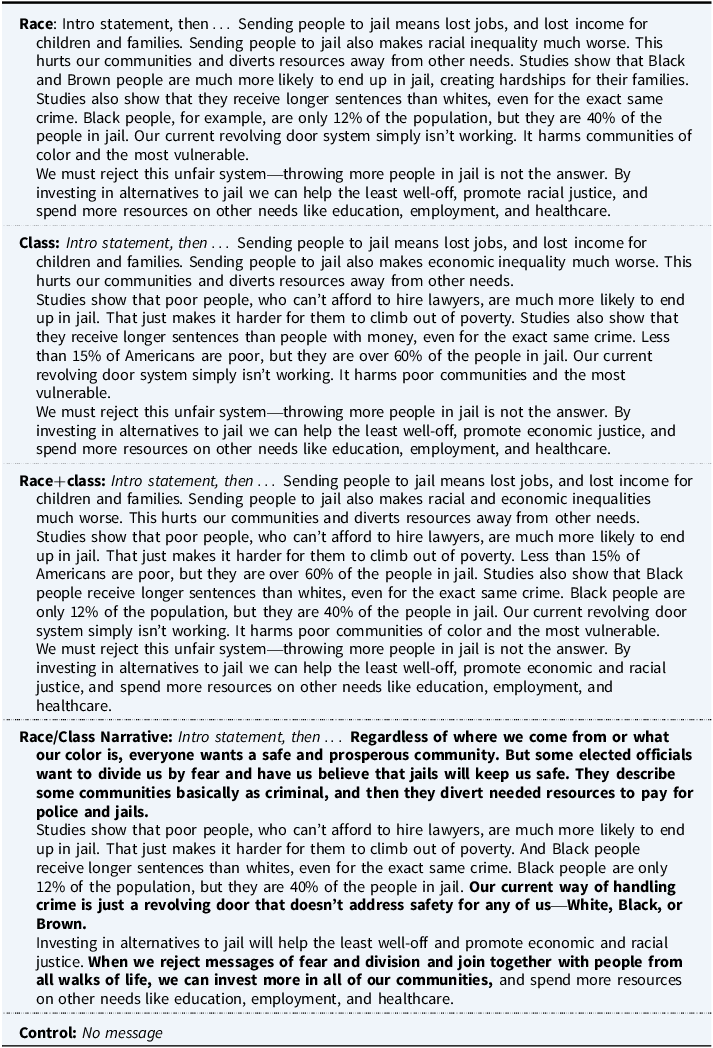
Table 2. Treatment language: anti-carceral arguments

Note: The unique aspects of the race/class narrative, as compared to the race+class message, are in bold-face text.
Importantly, we assess not only the favorability ratings of alternative messages (including both anti-carceral and pro-carceral messages), but also the impact of those messages on respondents’ support for or opposition to anti-carceral policies. Past research has shown that individuals who accept the accuracy of a persuasive message (akin to judging it favorably) frequently fail to update their related attitudes and policy preferences (Coppock et al. Reference Coppock, Gross, Porter, Thorson and Wood2023; Gilens Reference Gilens2001; Nyhan et al. Reference Nyhan, Porter, Reifler and Wood2020). One cannot assume, therefore, that expressed agreement with a persuasive message will necessarily produce a change in recipients’ policy views.
We examine the effects of these messages in a highly diverse sample of Los Angeles County voters. Unlike most previous studies of messaging on equity policies, we purposefully recruited oversamples of Black and Asian voters and had a large sample of Latinx voters, allowing us to differentiate the responses across different ethnoracial groups—an important consideration in developing real-world messaging strategies.Footnote 3
Of course, ethnoracial identification is only one characteristic that might moderate the impact of messages on support for racial equity policies. We also explore the role of racial attitudes, contact with the criminal legal system, partisan identification, beliefs about institutional racism, crime victimization, and white identity (among white voters) as potential moderators of message effects. Finally, we include in our randomized messaging treatments not only arguments intended to boost support for anti-carceral policies, but also counterarguments intended to decrease support for such policies. This approach more closely resembles how voters experience persuasive political appeals in the real world. By randomly assigning some respondents to receive both anti-carceral and pro-carceral messages, we can gauge the impact of our anti-carceral messages on their own and in competition with a counter-message.
Research Design
We estimate the effects of strategic arguments using race, class, race+class, and race/class narratives on support for anti-carceral policy proposals with a preregistered online survey experiment (https://aspredicted.org/vb6c9.pdf). This experiment was part of a randomly sampled public opinion poll using a repeated measures design for within-subject differences. The study was fielded over a three-week period in June-July 2023, yielding 2,700 registered voter subjects.
Los Angeles County was an ideal site for the exploration of strategic messages to build support for anti-carceral policies. The Los Angeles County jail system is the largest in the world and one of the most troubled (ACLU .n.d.; Sawyer and Wagner Reference Sawyer and Wagner2020). Changing this system will require significant political will among the public officials that oversee it—the Los Angeles County Board of Supervisors. Given the electoral incentives of elected officials, political will is often contingent upon voter support of policy change (Walker Reference Walker1991). Los Angeles County is also a “majority-minority” county, including an electorate of over seven million people that is 37% Latinx, 11% Asian American, and 6% Black. Understanding the effects of strategic messages on the attitudes of not only white voters, but also Latinxs, Asian Americans, and Black Americans is essential to building the type of multi-racial coalition that has been vital to Los Angeles County politics (Sonenshein Reference Sonenshein2006). This type of political context—a highly diverse electorate of a large city with carceral systems deeply troubled by structural racism—is common within the United States, meaning that examination of voter effects within this context can yield broader insights for attitude change in similar urban contexts.
The data collection was fielded by a contracted vendor, Evitarus, which used the county voter file to randomly sample LA County voters (see Appendix B for details). Consistent with our pre-analysis plan, respondents who failed an attention check item (7.6%) or who took less than one-third or greater than nine times the median time to complete the survey (6.5%) were excluded (Brock-Petroshius and Gilens Reference Brock-Petroshius and Gilens2023). This resulted in an analytic sample of 2320 respondents, as described in Table 1.
This experiment used a repeated measures design to increase precision (Clifford, Sheagley, and Piston Reference Clifford, Sheagley and Piston2021). After completing eight other survey items, subjects were asked to complete the three experimental pretreatment policy preference items. They then completed 15 additional survey items before receiving the treatments, answered one item about their level of agreement with each message (if applicable), and then responded to the same three post-treatment policy preference items.
The survey experiment used a full-factorial 5x3 design. Respondents were randomly assigned to one of five anti-carceral conditions (race, class, race+class, race/class narrative, or control). They were also randomly assigned to one of three pro-carceral conditions (racial, nonracial, or control).Footnote 4 A random half of the sample read the anti-carceral message first, and the other half read the pro-carceral counter-message first. This design thus allowed for a test of the strength of anti-carceral message effects in a context that included exposure to counter-messages, which are common in real-world political contexts.
The messages were adapted from California political and media sources where elected officials such as Sheriffs, Police Chiefs and Unions, District Attorneys, or Attorneys General were discussing crime issues. Each message began with the same introductory statement.Footnote 5 Among our anti-carceral messages, a “race” message uses language of racial inequality to discuss the impact of the issue on Black and Brown communities (Table 2). It then provides racial disparity statistics, notes that our current system is ineffective, and ends with an assertion that anti-carceral policy solutions would promote racial justice and create more effective solutions to crime. A “class” message is parallel to the race message but invokes language and statistics about economic inequality. A “race+class” message is parallel to the others but invokes language and statistics about both racial and economic inequality. A “race/class narrative” message also invokes language and statistics about racial and economic justice, but is distinct from the “race+class” message in two ways: (1) it begins with an appeal to multiracial unity and names how elites try to divide communities with fear and divert funds from community resources into carceral institutions, and (2) it ends with an argument that we need to join together across racial lines to reject messages of fear (see bold-face text Table 2). The control group was not exposed to any message.
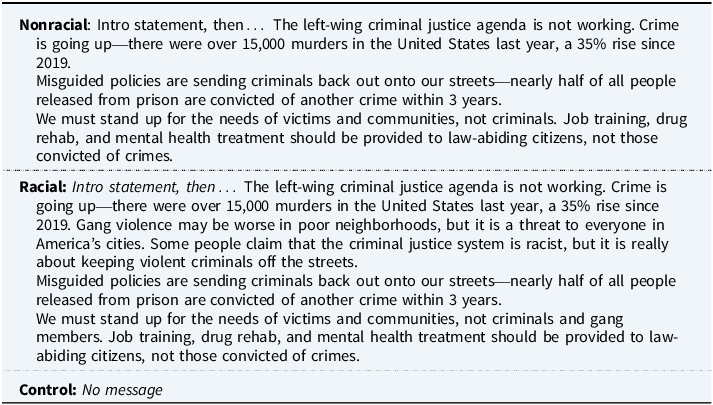
Among our pro-carceral counter-messages, a “non-racial” frame argues that anti-carceral approaches to addressing crime do not work, provides several crime statistics, and then asserts that crime responses and community resources should focus on those who follow the law, not those convicted of crimes (Table 3). The “racial” message is parallel to the nonracial message, but explicitly names gangs as a concern and asserts the importance of addressing violence to counter claims that the criminal justice system is racist. The control group was not exposed to any counter-message.
Table 3. Treatment language: pro-carceral arguments

Both our anti-carceral and pro-carceral messages contain thematic rather than episodic appeals. That is, our messages focus on the impact of current carceral policies or proposed carceral reforms on social conditions such as poverty, family life, and class and racial inequities. Previous research has shown that thematic appeals concerning the negative impact of social conditions are typically more persuasive than episodic appeals that focus on the experience of a single, sympathetically portrayed, individual (Iyengar Reference Iyengar1994, Reference Iyengar1996). However, as Gross (Reference Gross2008) shows, episodic appeals can match the impact of thematic appeals if the individual portrayal elicits sufficiently intense emotional responses from the targets of the appeal. We chose to focus on thematic appeals both because they are more typical of the mediated political messaging citizens encounter from both pro- and anti-carceral advocates, and because they are generally found to be at least as persuasive as episodic appeals when addressing social problems.
After reading an argument, respondents were first asked to what extent they agreed or disagreed with that argument (1 = Disagree strongly to 5 = Agree strongly). They were then given a second argument to read and asked to what extent they agreed or disagreed with the second argument. Subjects then completed the three post-treatment policy preference measures, followed by additional survey questions.
The policy preference items, which were identical in the pretreatment and post-treatment administrations, asked respondents to place themselves between different endpoints on a 1–5-point slider. The three items and their endpoints are as follows: (1) More money and effort should go to addressing social needs like housing, health care, and transportation vs. More money and effort should go to strengthening law enforcement, (2) We should invest in educational programs for those in jail so they are less likely to return to crime when they are released vs. Our tax dollars should be spent to help educate law-abiding citizens, not those who have been convicted of crimes, and (3) Jails are not appropriate places for people with mental health issues vs. People who commit crimes belong in jail whether they have mental health issues or not. We averaged the responses to these three items and then constructed the dependent variable as the individual-level difference between the averaged pretreatment and post-treatment outcomes.Footnote 6
We focus our analyses on the following questions. (1) Which messages are viewed most favorably by our respondents as a whole and by our “persuadable” subsample; (2) Which, if any, messages are effective in boosting anti-carceral policy support among these groups; (3) Which of our two pro-carceral messages, if either, is effective in reducing anti-carceral policy support; and (4) How does the impact of our anti-carceral messages vary by ethnoracial identity, racial resentment, white racial identity (among white voters), political party affiliation, ideology, beliefs about institutional racism, carceral contact, and crime victimization.
We did not conduct a power analysis before collecting our data, and post-hoc power analyses are problematic (Hoenig and Heisey Reference Hoenig and Heisey2001; M. Levine and Ensom Reference Levine and Ensom2001). However, we did have sufficient statistical power to identify differences across message favorability of about .16 or greater on our one-to-five point scale for our full sample, and about .20 or greater for our persuadable subsample (based on two-tailed tests at p<.05). In assessing differences in impact on carceral attitudes, the analogous figures are .11 for all respondents and .14 for the persuadables.Footnote 7 In addition, we report a number of statistically significant differences across sample subgroups by ethnoracial identification, treatment group, and respondent’s carceral contact.Footnote 8
Analysis
Following our pre-analysis plan, we first analyzed main effects with all respondents using Ordinary Least Squares regression and robust standard errors, where the dependent variable is the pre-post change in the policy preference measures averaged across the three items. Each dimension of treatment (anti-carceral arguments or pro-carceral counterarguments) was examined independently of each other, and a vector of covariates was included to improve the precision of our treatment effect estimates.Footnote 9 In addition, we examined each of the dimensions for respondents who were assigned to the control condition on the other dimension. We also report results for a subsample of “persuadables,” as prespecified—those in the middle 60% on the baseline policy opinion measure.Footnote 10 This definition of “persuadables” aligns with that provided by the developers of the race/class narrative and allows us to examine if there are stronger effects among these most likely targets of advocacy or electoral persuasion efforts, as they argue (Haney-López Reference Haney-López2019).Footnote 11
As preregistered, we report the results using survey weights with targets based on the universe of all registered Los Angeles County voters. We weighted on five variables: voter political party, gender, age, ethnoracial identity, and Board of Supervisor District. Weights were calculated using raking (Battaglia, Hoaglin, and Frankel Reference Battaglia, Hoaglin and Frankel2009). For completeness, unweighted sample average treatment effects are reported in Appendix A.
Results
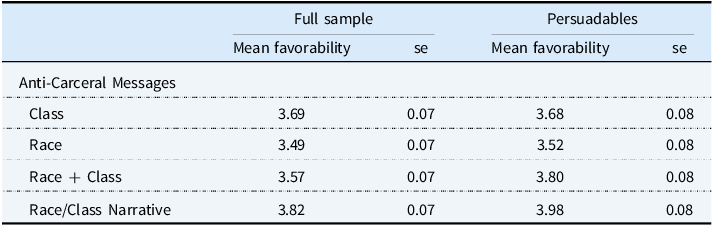
Mean favorability scores demonstrate a clear ordering of the favorability ratings for the four anti-carceral messages (Table 4). In both the full sample and among the persuadable subgroup, the race/class narrative stands out as the most favorable message. This is followed by the class and the race+class messages, although in a different order for the full and persuadable samples. In both sets of respondents, the race message is judged as the least favorable.
Table 4. Message favorability: anti-carceral arguments

Note: Means are weighted. Higher scores indicate more favorability.
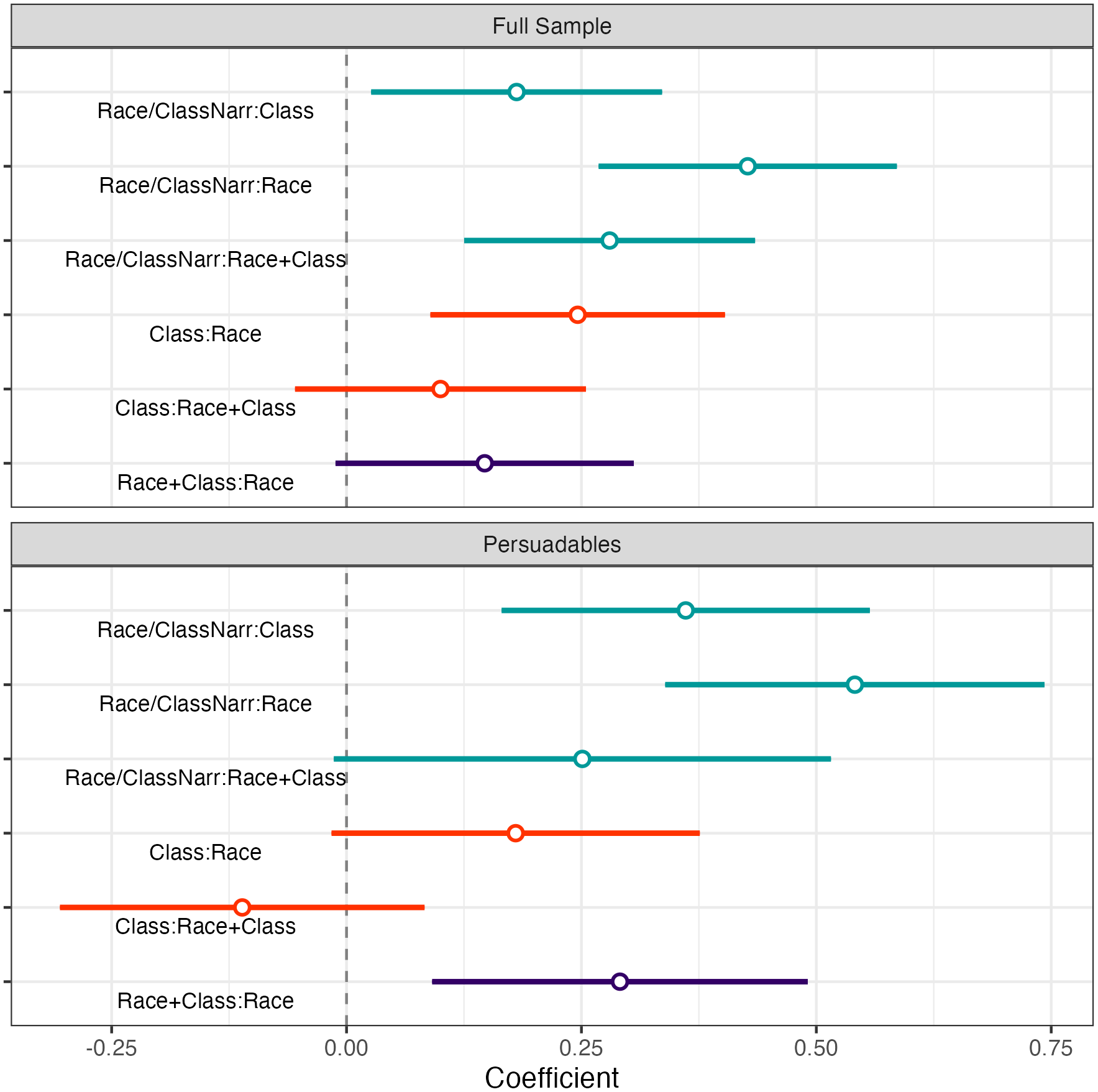
The pair-wise comparisons of message favorability based on OLS regression analyses are summarized in Figure 1 (details in Appendix Table A.1). Consistent with Table 4, we find that the race/class narrative is viewed more favorably than the race message (p < 0.001), the race+class message (p < 0.01), and the class message (p < .05). In addition, the class message is viewed more favorably than the race message (p < 0.01).
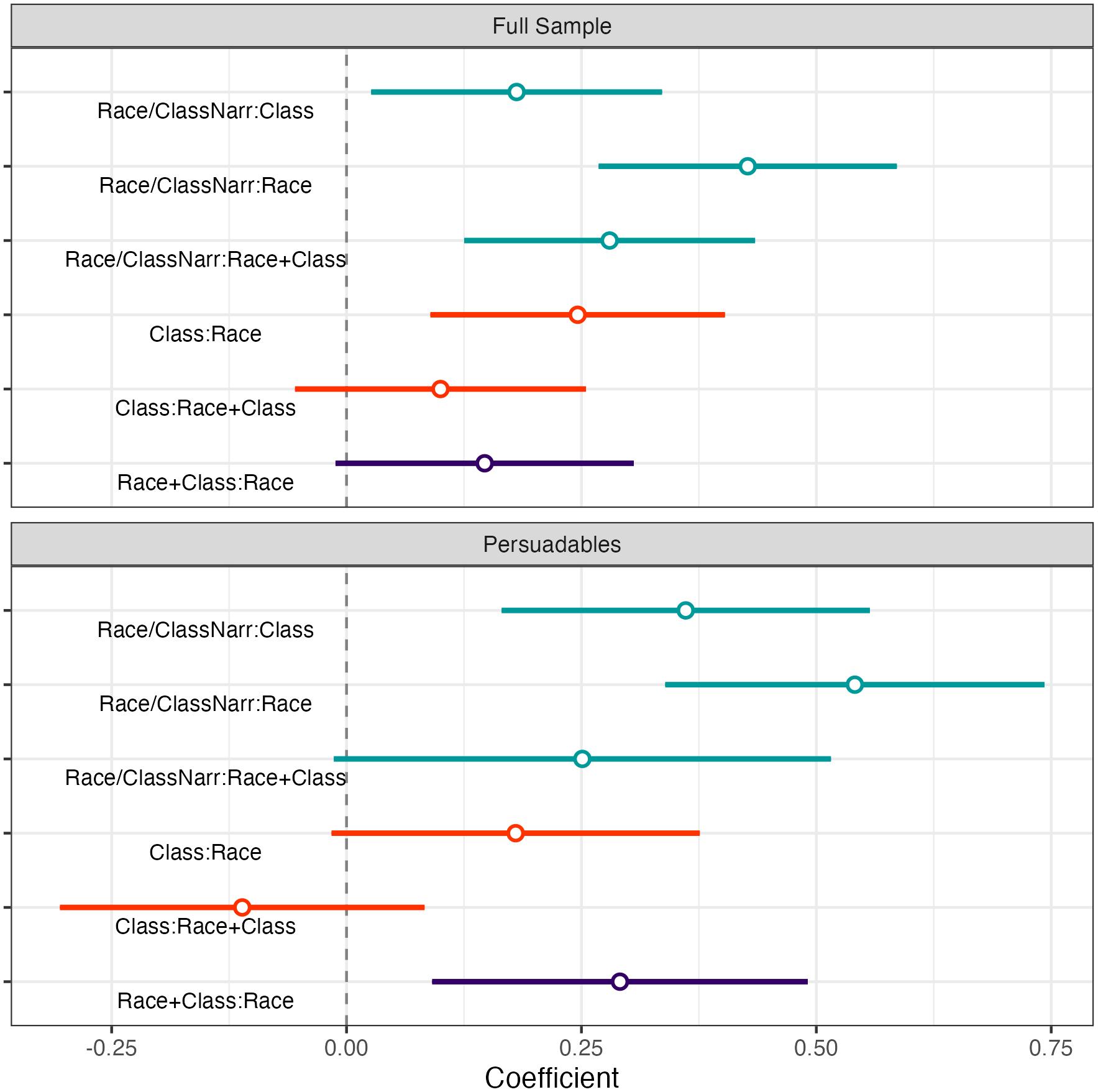
Figure 1. Treatment effect of anti-carceral message content on favorability
Note: Error bars denote 95% confidence intervals. The Tukey method is used to adjust for multiple pairwise comparisons.
The pattern of results for the sample of persuadables is similar, with the race/class narrative viewed more favorably than the race message (p < 0.001) and the class message (p < .001). In addition, the race+class message is viewed more favorably than the class message (p < 0.05).
In sum, the race/class narrative elicits higher levels of agreement than any of the other three anti-carceral arguments among the full sample and among persuadables, suggesting the power of this fuller narrative that draws strong distinctions between the interests of elites and others, and promotes the benefits of decarceration for people from “all walks of life.” We also see that the class argument is viewed more favorably than the race argument (although this difference is significant only for the full sample), and the race+class argument is viewed more favorably than the race argument (although this difference is only significant among the persuadables).
Effects on Anti-Carceral Policy Support
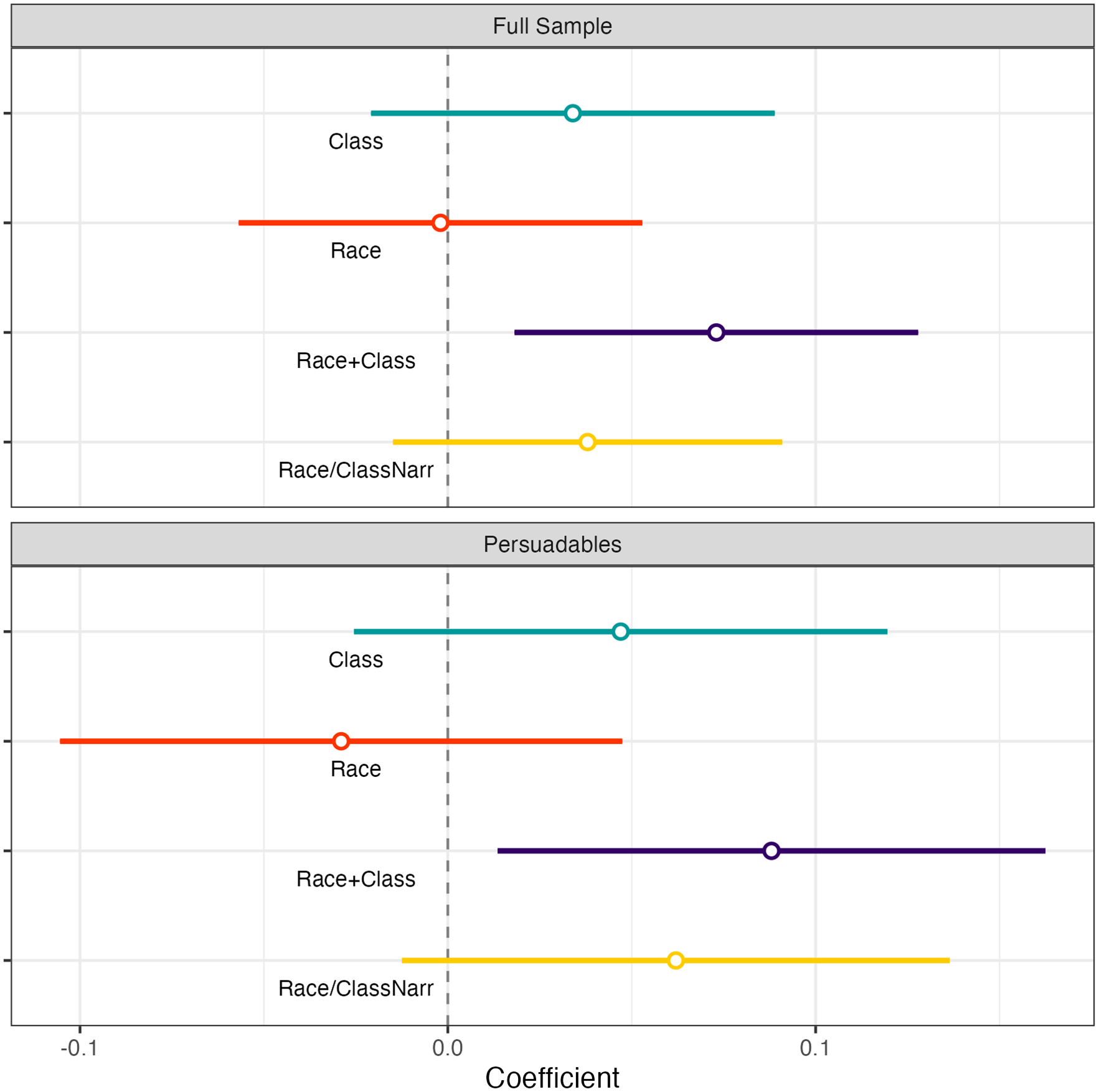
Message favorability is distinct from policy support, however. The effects on our second outcome, anti-carceral policy support, are summarized in Figure 2.Footnote 12 We find that only the race+class message increases anti-carceral policy support (0.07 scale points, p < 0.01). The effects on the persuadables sample are again similar, with only the race+class message increasing anti-carceral policy support (0.09 scale points, p < 0.05). Treatment effects on policy support among those not exposed to a pro-carceral counter-message show similar effect sizes and directions (see Appendix Table A.2).

Figure 2. Treatment effect of anti-carceral message content on policy support
Note: Error bars denote 95% confidence intervals. Effects are relative to control group.
To convey the magnitude of this effect, we first converted the four-point scale into a pair of binary measures of substantive change in policy support.Footnote 13 For the first measure, respondents who increased their support for anti-carceral policies by at least 0.2 points (about one-fifth of a standard deviation) were coded as 1, and everyone else was coded as 0. For the second measure, respondents who decreased their support for anti-carceral policies by at least 0.2 points were coded as 1, and everyone else was coded as 0. We then calculated the net difference between the share of participants who increased their support for anti-carceral policies and those who decreased their support for anti-carceral policies. For example, among respondents in the race+class treatment, about 14% shifted in a pro-carceral direction by at least 0.2 points while about 30% shifted in an anti-carceral direction, for a net shift of about 16 points.
Finally, we compared the net change in anti-carceral attitudes between each of the treatment groups with the control group (which shifted about two points in an anti-carceral direction). Consistent with the results in Figure 2 above, we find that the largest, and the only statistically significant change, was among those assigned to the race+class condition (Figure 3). Among these respondents, there was a net increase in anti-carceral policy support of 13.8 percentage points (se=5.1, p<.05), relative to the control group. There was a similar net increase in support in the race+class condition among persuadables, though this fell short of statistical significance given the smaller sample size (11.2 points, se=7.1, p<.07).Footnote 14

Figure 3. Treatment effect of anti-carceral message content on policy support (Net Proportion of Respondents that shifted at least 0.2 Points)
Note: Error bars denote 90% and 95% confidence intervals. Effects are relative to control group and reflect the difference between proportion of sample that substantively increased their anti-carceral policy support and the proportion that substantively decreased their anti-carceral policy support.
In short, the race/class narrative’s advantage in perceived favorability is not reflected in increased support for anti-carceral policies among our respondents. Policy views appear to respond more strongly to the “leaner” race+class message that includes much of the content of the race/class narrative but without the broader framing implicating elites’ efforts to divide communities along racial lines.
We also assess the effects of pro-carceral messages on favorability and policy opinion. In the full sample, the nonracial pro-carceral message is viewed more favorably than the racial pro-carceral message (0.16 scale points, p < 0.05). In the persuadable sample, the greater favorability of the nonracial pro-carceral message appears at about the same magnitude but is not statistically significant (0.14 scale points, p = 0.09) (see Appendix Table A.7). Importantly, neither pro-carceral message nor the anti-carceral message influenced policy opinion (see Appendix Table A.7). This lack of influence may reflect the pervasiveness of “tough on crime” messaging in respondents' lives which, in essence, “pretreats” all the respondents prior to their participation in the survey (Druckman and Leeper Reference Druckman and Leeper2012).
Subgroup Variation
Overall treatment effects may mask differential subgroup effects, warranting analysis of all hypothesized interactions as prespecified. In Table 5, we probe heterogeneous effects on anti-carceral policy support by respondent ethnoracial identity and present predicted effects by subgroup. The class message has no effect on voters overall (as reported above), but it does increase anti-carceral policy support among Latinx voters specifically (p < 0.01), and the difference between the effect of the class message for Latinx and white respondents is significant at p < .05 (Appendix Table A.8). Table 5 also shows that the race+class message, which boosted support for anti-carceral policies among our respondents overall, was effective only among Black and Latinx respondents, and had minimal and non-significant effects for Asians and whites. Indeed, Table 5 shows that none of the anti-carceral messages had significant effects for Asian or white respondents, with a suggestive result that the race message may have had a backlash effect among Asians, reducing support for anti-carceral policies (− 0.143 scale points, p < 0.07). In the full sample, we also examine but find no evidence of heterogeneous effects by party, ideology, racial resentment, beliefs about institutional racism, carceral contact, crime victimization, or white identity among white voters.
Table 5. Predicted effects on anti-carceral policy support by ethnoracial identity, full sample

Note: * p < 0.05; ** p < 0.01, *** p < 0.001. N = 1,613. Models are weighted and include covariates.
Table 6. Predicted effects on anti-carceral policy support by ethnoracial identity, persuadables

Note: * p < 0.05; ** p < 0.01, *** p < 0.001. N = 981. Models are weighted and include covariates.
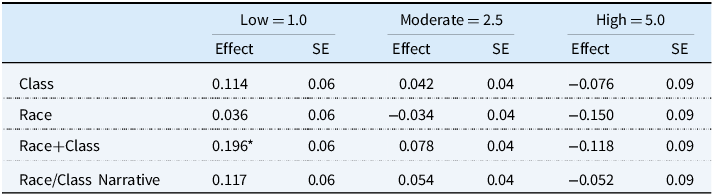
Table 7. Predicted effects on anti-carceral policy support by racial resentment, persuadables

Note: * p < 0.05; ** p < 0.01, *** p < 0.001. Models are weighted and include covariates.
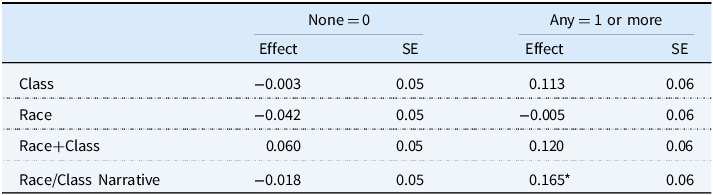
Table 8. Predicted effects on anti-carceral policy support by carceral contact, persuadables

Note: * p < 0.05; ** p < 0.01, *** p < 0.001. Models are weighted and include covariates.
Greater evidence of heterogeneous effects emerges in analyzing the sample of persuadables (Table 6). Among Black persuadable voters, the race+class and race messages strongly increase anti-carceral policy support (by 0.627 and 0.418 scale points, respectively, p<.03 and p<.01).Footnote 15 As compared to white voters, there was a significantly greater effect of the race+class and race messages among Black voters (differences = 0.576 and 0.448, p<.01 and p<.03, respectively; Appendix Table A.9). Among other ethnoracial groups, there were no significant differences in treatment effects.
We again examine treatment effect heterogeneity among persuadables by party, ideology, racial resentment, beliefs about institutional racism, carceral contact, crime victimization, and white identity among white voters. We only find significantly different effects of racial resentment and carceral contact.
In Table 7, we probe heterogeneous effects on anti-carceral policy support by racial resentment. Among respondents scoring low on racial resentment, all four treatments had positive effects (although the race treatment effect was substantively negligible, and only the race+class treatment was statistically significant). In contrast, all four treatments had negative (albeit nonsignificant) impacts on respondents scoring high in racial resentment, moving them away from anti-carceral preferences. The largest difference in effects between respondents low and high in racial resentment was found in the race+class message (difference = .315, p< .05). In a post hoc analysis, we found a similar pattern—positive effects for respondents low in racial resentment and negative effects for those high in racial resentment—when restricting our analysis to white respondents only (Appendix Table A.11).
We also found that contact with the carceral system (e.g., having been “stopped and questioned by police while in a car or on foot; arrested, booked, or charged with a crime; or spent time in jail or prison, including juvenile detention”) moderated the impact of the race/class narrative message (Table 8). Specifically, anti-carceral policy support increased among respondents who reported at least one experience with carceral contact (.165, p<.05) but had no impact on those without carceral contact (difference = 0.183, p < .05).Footnote 16
Discussion
Our results confirm that a number of findings from previous research on racial equity messaging hold within the domain of crime and incarceration. All of our equity appeals included both descriptions of existing inequalities (by race, class, or both) and claims about the unfairness of those inequalities and the harm caused by current incarceration policies. Nevertheless, most of our treatments failed to shift respondents’ policy preferences. This finding is not wholly unexpected, given the small number of previous experimental studies that have found pro-equity shifts in policy preferences in response to race-related pro-equity appeals.
Our experimental design was also conservative in a number of respects. First, we presented most respondents with counterarguments. Second, we used a repeated measures design (Clifford et al. Reference Clifford, Sheagley and Piston2021), which enhanced our precision but may have reduced effect sizes, since some respondents may have anchored their post-treatment responses to their pretreatment responses. Finally, as discussed below, we used text-based treatments and focused on a familiar and already highly racialized issue.
There were, however, exceptions to the general lack of movement in our respondents’ carceral policy views. Most importantly, our race+class treatment did shift respondents’ policy preferences in a pro-equity direction by a statistically and substantively significant amount. Among both our full sample and our subset of “persuadables,” this was the most effective of our four experimental treatments. Focusing on the separate impacts of our treatments on each of our four major ethnoracial groups offers some hints as to why the race+class treatment was most effective. Although the differences across ethnoracial groups often lack statistical significance, we found that Black respondents’ views were moved most strongly by the race and race+class arguments, while Latinx respondents were most impacted by the class and race+class treatments (whites showed little response to any of the four treatments, while Asians appeared to move in a pro-carceral direction in response to the race treatment).
It is worth noting that the race-based appeals specifically named Black people as being particularly impacted by the harms of incarceration; as such, it is unsurprising that a message clearly linking one’s own ethnoracial group to policy consequences would be especially effective among Black voters. An additional factor that may contribute to the differential responsiveness of Black and Latinx respondents to race-based vs. class-based messages is the stronger perception of linked fate among Black Americans than among Latinx Americans (Gay, Hochschild, and White Reference Gay, Hochschild and White2016; Marsh and Ramírez Reference Marsh and Ramírez2019; Pérez Reference Pérez2021). As a consequence, Black respondents may be more responsive than Latinx respondents to messages that focus on how policy impacts racial inequality. Similarly, recent research on political messaging shows that Latinx Americans are more responsive to broad economic appeals than to ethnic group-focused appeals on related issues like immigration policy (Wakefield Reference Wakefield2025).
The failure of these treatments to promote anti-carceral positions among white and Asian respondents may be unwelcome news for decarceration advocates. But we see two aspects of our results as hopeful findings in this regard. First, we found no “backlash” effects to our race+class treatment among any subset of respondents. This suggests that advocates need not shy away from arguments that forcefully link decarceration policies to economic and racial equity. Second, while our most effective treatment boosted anti-carceral views only among Latinx and Black respondents, these groups comprise a growing portion of the American population and, combined, a majority of residents in 20 of America’s largest cities (Frey Reference Frey2021).
Along similar lines, we found that adding a racial equity argument to a class-based equity argument made a negligible but positive impact among our full sample, our persuadable subsample, and among Asian, Black, and white respondents. This runs counter to the results reported in English and Kalla (Reference English and Kalla2021), which found that adding a racial appeal to a class-based appeal decreased the appeal’s persuasive impact.
One reason for our differing results may be that respondents view race-based appeals as relevant to criminal justice policies but reject those appeals with regard to the comparatively nonracialized policies examined by English and Kalla. Suggestive evidence for this explanation stems from the differing results across the six different issues that English and Kalla examined. In their study, the addition of a race-based appeal depressed support for building more affordable housing in middle- and upper-class neighborhoods and for making Medicare available to everyone, but it did not decrease support for increasing the minimum wage (support for the other three individual policy reforms they examined was not significantly related to any of the class- or race-based appeals; see their table A1). The minimum wage is arguably perceived as more strongly associated with racial inequality than the housing and Medicare policies that English and Kalla asked about. Respondents may view race-based arguments as appropriate considerations with regard to the minimum wage or decarceration, but not suitable bases for improving housing affordability or expanding Medicare availability.
Our results may also have diverged from English and Kalla’s due to our different samples (national vs. Los Angeles County), time frames (2021 vs. 2023), and question wording (they described their policies as “Democratic proposals”).Footnote 17 Future research will need to consider these factors in building a broader understanding of when and how racial appeals might enhance or undermine pro-equity messaging.
With regard to perceived message favorability—a judgment distinct from a message’s impact on anti-carceral policy preferences—our results are consistent with the Race-Class Narrative Project: messages are viewed more favorably when an equity argument references efforts by elites to divide the disadvantaged and argues that equity policies will improve conditions for everyone. But the message that was rated most favorably did not have the strongest impact on respondents’ policy views, underscoring the limitation of favorability judgments in understanding the potential impact of alternative messages on policy views.
Our findings also reinforce calls by Niederdeppe et al. (Reference Niederdeppe, Liu, Spruill, Lewis, Moore, Fowler and Gollust2023) to further experiment with ways to discuss racism. The fact that our two different messages that combine both race and class appeals showed different effects underscores the importance of moving beyond racially explicit vs. race-absent messaging. How racial appeals are framed may be as important as whether racial appeals are present in shaping the impact of a given message.
An unusual feature of our study was the use of two-sided messaging. Our aim was to present arguments on both sides that reflected the kinds of pro-carceral and anti-carceral messages our respondents might encounter in their “real life.” We found that neither the racial nor nonracial pro-carceral message affected anti-carceral policy preferences. One reason for this may be that, at least in our sample of Los Angeles County voters, prior exposure to the pro-carceral, “tough on crime,” messages we used was so widespread that most respondents were “pre-treated” (Druckman and Leeper Reference Druckman and Leeper2012), thereby reducing any impact that these messages might otherwise have had.Footnote 18 We similarly found that the impact of our anti-carceral arguments was not affected by the presence or absence of a countervailing pro-carceral argument.
Despite the lack of impact of our pro-carceral arguments either directly or as moderators of our anti-carceral arguments, we caution against overgeneralizing this result. As noted above, pro-carceral arguments may be widespread in recent years in our sample of Los Angeles voters. But research on other issue domains, or in other times and places, cannot assume that counterarguments are unimportant. To the extent that scholars and advocates want to understand the impact of messaging as it might apply to real-world conditions, exploring the role of counterarguments—as would typically be encountered by citizens exposed to political persuasion efforts—remains an important and understudied factor.
While most of our findings were similar in our full sample and in our sample of “persuadables,” we did find circumstances where messaging effects were lacking or uncertain for our sample overall, but clear within our subsample of persuadables (specifically, with regard to the moderating role of ethnoracial group identity, racial resentment, and carceral contact). Future persuasion research might also benefit by similarly focusing, at least in part, on those participants who are not already “locked into” strong positions on the relevant policy preferences or political views.
Following common practice, our survey-based study used text-based appeals in our pro- and anti-carceral messaging, which we described to respondents simply as “statements about crime in America.” Future research might consider the importance of message modality (e.g. text versus video) and message source in shaping respondents’ reactions to equity appeals (Pornpitakpan Reference Pornpitakpan2004; Worchel, Andreoli, and Eason Reference Worchel, Andreoli and Eason1975). Christiani et al. (Reference Christiani, Kelly and Morgan2024), for example, presented their appeals in the form of news articles and found that racial equity arguments were effective in shifting policy preferences (cf. Gilens Reference Gilens2001).
Finally, studies of alternative message effects can have practical implications for organizers and advocates making choices about which approaches are most strategic in their efforts to increase support for equity policies. This aspect of the policy-making process is often left out of research but is critical for the adoption and implementation of innovative public policies. Public support may be needed to move policy reforms onto the political agenda, and once policies are adopted, a lack of support can cause backlash—undermining what would have otherwise been effective policy. This study, and others like it, can thus contribute to the implementation and preservation of innovative, equitable public policy solutions over the long term.
Supplementary material
To view supplementary material for this article, please visit https://doi.org/10.1017/rep.2025.10032.
Data availability statement
Data that support the findings of this study are openly available at Research Box (#4551), a project of the Penn Wharton Credibility Lab at https://researchbox.org/4551.
Acknowledgements
The authors would like to thank the members of the UCLA Race, Ethnicity, Politics, and Society Lab and Efrén Pérez for their feedback on earlier versions of this project. We gratefully acknowledge the generous financial support provided by the John Randolph Haynes and Dora Haynes Foundation, which made this research possible.
Funding statement
This work was supported by the John Randolph Haynes and Dora Haynes Foundation.
Competing interests
The authors declare that they have no conflict of interest.
Ethics approval statement
All APA guidelines were followed regarding the ethical treatment of participants. The University of California, Los Angeles Institutional Review Boards approved this study (#21-008928).