

3.1 Introduction
The creative endeavours of fashion designers have long been celebrated by consumers, journalists and even museums. But despite the widespread recognition of fashion design’s artistry, it has always had an uncertain status within intellectual property law. However beautiful a garment may be, it is also functional. It serves to clothe the body, to keep it warm and to enable the wearer to perform particular activities while wearing it.
Copyright, trademark and design patent laws in the United States are deeply anxious about protecting functionality. They each use various doctrinal devices to block functional content, and they channel that content instead towards the utility patent regime. It should be noted that in Commonwealth common law jurisdictions, the terminology is different. ‘Design patents’, that protect ornamental designs are known as ‘registered designs’ or simply ‘designs’.Footnote 1
This chapter explains how garments function and how different intellectual property regimes should deal with that functionality. Garments are not simply functional to the extent that they serve the mechanical or technological ends of keeping people properly clothed. They are also functional to the extent that they influence the way the wearer is perceived. When aspects of a design affect the perception of the wearer, for example, by making them look taller, slimmer, broader or curvier, those aspects of the design must be treated as functional.Footnote 2
The US Supreme Court’s opinion in Star Athletica, L.L.C. v Varsity Brands, Inc.Footnote 3 on the copyrightability of cheerleading uniform designs did not recognise this important aspect of the nature of garment design. Because the Supreme Court did not accurately assess the functionality of the cheerleading uniform designs before it, the Court risks conferring a substantial competitive advantage on the designer-plaintiff, one that Congress did not intend to conferFootnote 4 and that the designer did not earn. As we explain here, the contested features of these uniform designs – stripes, chevrons, zigzags and colour-blocking – like many features of fashion design, affect the perception of the wearer by drawing attention to certain aspects of the wearer’s body over others and by making the wearer seem to be curvier and have a longer torso.
The account of fashion’s functionality that we develop here also has important implications for trademark law and design patent law. In this chapter, we explain how trademark and design patent laws can more successfully respond to attempts by claimants to protect functional aspects of garment design without satisfying utility patent law’s more strenuous demands.
Section 3.1 describes our account of fashion’s function. We explain how, in addition to technical or mechanical functions, fashion design is also functional when it incorporates features that influence the way the wearer is perceived. Section 3.2 explains how copyright law should treat the functional aspects of fashion design in light of copyright law’s functionality screening for useful articles, like garment designs, and the law’s originality and merger doctrines. In Section 3.3, we illustrate our approach with a case study of the cheerleading uniforms at issue in Star Athletica and demonstrate how the Court went wrong. Sections 3.4 and 3.5, respectively, show how our account of fashion’s function should affect trademark and design patent laws.
3.2 How Fashion Design Is Functional
Copyright, trademark and design patent laws each limit protection for functional aspects of designs. They each do so in somewhat different ways, as we address. Yet these three legal regimes are unified in limiting functional matter as a way to ensure that those design aspects are protected through utility patent law, if at all. Because of their functionality screens, copyright, trademark and design patent laws each need to identify the functional aspects of otherwise protectable designs.Footnote 5
The features of product designs fall into three mutually exclusive categories. Features can be (1) purely functional, (2) purely non-functional or (3) hybrid. Consider how these features might appear in different parts of an automobile. The car’s spark plugs are rarely seen, and their design may be motivated entirely by utilitarian concerns about size and performance. They would fall into the first category. The sculpture of a leaping jaguar that serves as the car’s hood ornament has no functional contribution to the car’s operation; it exists merely to look good. It falls into the second, purely non-functional, category. Many other aspects of the car’s design are simultaneously functional and serve some additional non-functional purpose. The shape of the car’s hood both makes it look attractive and influences its aerodynamics. The car’s wheels may be designed to look speedy, but they must also be able to support the car’s weight. These and other features of the car’s design are hybrid.
Knowing what to treat as functional for purposes of garment design requires understanding how clothing can serve utilitarian ends. In some cases this is fairly simple, while in other cases it is more complex. Decisions about the physical or technological performance of a garment should clearly be treated as functional. For example, a designer’s choices to use fabric that provides warmth even in the coldest temperature or fabric that wicks sweat away from the wearer’s body are functional.Footnote 6
On the other hand, various aspects of garment design could be purely expressive, or aesthetic. A logo for a sports team emblazoned on a t-shirt is one such example. Similarly, a paisley pattern woven into a necktie is probably a purely expressive element of the tie’s design. Two-dimensional pictorial or graphic additions to garment designs are the most plausible candidates of designs for purely expressive elements.
Many of a garment’s design features will be at least partially functional and fall into the hybrid category. For example, the incorporation and design of pockets on a pair of trousers may be particularly stylish and visually appealing, but they are also useful because the pockets give the wearer a place for his or her wallet and keys. Thus, the design of pockets and other similar features should also be treated as dual-nature components of garment design. The same might be true for the cut of sleeve that provides a certain degree of warmth, modesty or ease of movement while simultaneously being beautiful to perceive. Many of the aspects of the fit and cut of a garment fall into the hybrid category, because although they may look attractive in their own right, they also affect the garment’s technical or physical performance as a piece of apparel.
Designs can importantly also function in ways that go beyond standard mechanical or technological utility. In particular, the designs of many garments are intended to and are purchased because they make their wearers look attractive. A designer’s choices about hemline, neckline, darting and, sometimes, fabric prints influence people’s perceptions of the wearer. A shopper does not simply ask of a garment, ‘Does it look good?’ In addition, and more importantly, he or she asks, ‘Does it look good on me?’ or ‘Does it make me look good?’Footnote 7 In this way, the garment’s design is valued for what it can do when it is being used. Thus, in addition to the mechanical functions of garment designs, another intrinsic – or essential – function garment designs tend to share is that many of their design features are incorporated to affect the perception of the wearer.Footnote 8
Many features of garment design – line, shape, texture, colour and print – exploit features of human visual perception and optical illusions to influence the way in which the wearer’s body is perceived.Footnote 9 Importantly, these visual effects can be created with both three-dimensional design techniques such as garment shape and cut as well as with two-dimensional design techniques such as patterns, stripes and colour. Thus, the frequent assertion that two-dimensional fabric design is non-functionalFootnote 10 is in many cases wrong when the design affects how the wearer is perceived. Below, we illustrate a number of these techniques, ranging from camouflage to stripe placement.
As all shoppers know, a certain style or cut of a garment may look good on one person but not on another.Footnote 11 And different sorts of designs may affect how people’s bodies look. This is not accidental. Design choices create visual effects that can vary the size or shape of the wearer’s body or body parts. In this section, we illustrate a number of the most prominent design techniques. Our goal here is not to catalogue garment design techniques exhaustively but rather, by choosing common examples, to illustrate the nature of design functionality.
It is common knowledge that the placement of horizontal lines on a garment can make the wearer look shorter and broader, while vertical lines have the opposite effect of lengthening and slimming the wearer’s body.Footnote 12 Garment design can visually minimise the size of body parts judged to be too large by either appearing to subdivide those body parts or by counterbalancing them to increase the size of surrounding parts.Footnote 13 For example, a V-shaped neckline can make the neck look longer and narrower while also making shoulder width narrower.Footnote 14 A bodice can be smocked, pleated, draped or gathered at the bust to make the bust appear larger.Footnote 15 Similarly, as one design textbook indicates, ‘a line continuing around the body, diagonal stripes that are not too dominant, or a reflecting surface smoothly contouring the body call our attention to the rounded contours’.Footnote 16
Designers can also affect the perception of the shape of body parts through design choices. Importantly for our purposes, the combination of colours, shapes and lines can have enormous influence on how the wearer’s body is perceived. This is known as colour-blocking, and it was recently made famous by Stella McCartney’s line of dresses, garment designs employing a colour-blocked hourglass appearance that made wearers’ bodies look both curvier and slimmer. Two examples of these dresses, as worn by actress Kate Winslet, are shown in Figure 3.1. The black colour along the sides, which changes in width at various points, produces a particularly striking hourglass shape.Footnote 17 And, in the dress on the right, the brighter colour on the top of the dress produces a larger and more defined bust.Footnote 18
Stella McCartney colour-blocked dresses.Footnote 19


Optical illusions can also be deployed in garment design to influence perceptions of the wearer’s body.Footnote 20 Consider the Müller-Lyer illusion, as shown in Figure 3.2, which causes a line to look longer if it is bracketed on each end by arrow tails and shorter if it is bracketed on each end by arrow heads.Footnote 21 This illusion can be incorporated into garment designs to lengthen or contract the body of the wearer through placement of arrow tails or heads, respectively, as shown in Figure 3.3.Footnote 22

The Müller-Lyer illusion applied to garment design.Footnote 24

Figure 3.3 Long description
The figure on the left has a less structured bodice shape, while the figure on the right has an almost corset-like, shape around the torso. The torso on the left has an arrow with V-shaped heads, while the torso on the right has an arrow with arrowheads. Both figures have elongated arms and hands on their sides.
These design techniques are not used just because they look attractive on their own. They are used to make the wearer look more attractive. They are part of what make designs inherently work as fashion designs. By manipulating features of human vision, these design techniques alter the way we see things in the world. As two designers explain, ‘By using art components in this way, [designers] can alter the frame of reference in which we see the human form, and in so doing, [they] can create illusions or effects that would not be possible in any other way.’Footnote 25 In this sense, they are the same as camouflage or high-visibility patterns that serve a particular function. Unlike a painting or a drawing of a cartoon character, they do not exist merely to portray their own appearance or convey information.
As we argue in Section 3.3, the Copyright Act treats as functional aspects of visual design that influence the perception of another object, including the human body. Accordingly, as a matter of copyright statute and policy, the incorporation of design techniques that produce dependent value are unprotectable. Similarly, trademark and design patent laws must grapple with the issue of whether such functional aspects of fashion designs are unprotectable. We now address these laws in turn, beginning with copyright law.
3.3 Fashion’s Function in Copyright Law
Congress and the US courts have long expressed concern about the misuse of copyright law to protect functional objects from market competition.Footnote 26 The fashion industry, in particular, has proven a consistent source of consternation in this regard.Footnote 27 Over a century ago, one court explained that ‘a manufacturer of unpatented articles cannot practically monopolise their sale by copyrighting a catalogue containing illustrations of them’.Footnote 28 As the Star Athletica case decided by the US Supreme Court indicates, many in the fashion industry are still seeking haven for their designs within copyright law. In this section, we review the general structure of the copyright-patent divide in intellectual property law and the doctrinal techniques that copyright law has historically used to screen out functional content. We then set out how copyright law and policy lead to the conclusion that fashion design features that affect the perception of the wearer are not protectable.
3.3.1 The Separate Spheres of Copyright and Patent Laws
Copyright law and utility patent law address different kinds of creativity. Copyright law protects authors’ writings, while patent law protects inventors’ discoveries.Footnote 29 Put another way, copyright law is the province of expression and aesthetics, while patent law is the province of utility and functionality.Footnote 30 Both fields seek to optimise creative production within their spheres, but they both adopt different legal mechanisms to do so.
Patents can confer substantial market power on their owners, enabling them to charge higher prices for access to the protected technology than they otherwise would.Footnote 31 These higher prices and diminished market competition are deemed worthwhile, however, because they provide valuable incentives to invest in creating and disseminating new and useful technologies.Footnote 32 The world is a better place, so the story goes, when inventors are given incentives to develop and disclose their inventions, even if this comes at the cost of higher prices.Footnote 33 But not all ‘inventions’ are worth this tradeoff. Patent law establishes relatively high standards for obtaining its protection. Inventors who desire patent rights must submit to an expensive patent examination by the Patent and Trademark Office of their inventions’ utility, novelty and nonobviousness.Footnote 34 Only 75% of utility patents get granted, and the procedure typically costs US$22,000.Footnote 35 Moreover, once granted, patent protection lasts only for 20 years from the application date.Footnote 36
Contrast this situation with copyright law. Copyright lasts for much longer than does patent protection. Authors typically receive copyright protection in their works for their entire lives plus an additional 70 years post-mortem.Footnote 37 In addition, copyrights are easy to obtain. Under the 1976 Act, copyright vests without need for further action at the moment that a work is fixed in a tangible medium of expression – as soon as it is filmed, drawn or written down.Footnote 38 In contrast to the Patent and Trademark Office, the Copyright Office plays little to no role in screening out inappropriate claims to protection. Moreover, to be protectable, works do not need to be novel and nonobvious but rather only ‘original’, that is, independently created and that they exhibit a very modest creative spark.Footnote 39 This threshold is much lower than the one imposed by patent law.
In light of the differences between obtaining patents and copyrights, there is a sizeable risk that creators will attempt to use copyright law to obtain ‘backdoor patents’.Footnote 40 Although virtually all areas of copyright are at risk of improperly protecting functional content, these concerns are heightened for certain two- and three-dimensional works. Copyright law has taken a targeted approach to excluding functional aspects of these ‘pictorial, graphic, and sculptural works’,Footnote 41 which we discuss and for which we offer an analytical framework in Section 3.3.2.
3.3.2 Screening Functionality in Pictorial, Graphic and Sculptural Works
To the extent that copyright law protects the aesthetic features of the design, it risks also protecting utilitarian function, the province of patent law. Consistent with this concern, Congress established a general rule against copyright protection for so-called ‘useful article[s]’, subject to a narrow exception for expressive features of a useful article that are separable from its functional aspects.Footnote 42 Specifically, the Copyright Act provides that ‘pictorial, graphic, and sculptural works’ include ‘works of artistic craftsmanship insofar as their form but not their mechanical or utilitarian aspects are concerned’.Footnote 43 Further, the design of a work that constitutes a ‘useful article’ is protectable ‘only if, and only to the extent that, such design incorporates pictorial, graphic, or sculptural features that can be identified separately from, and are capable of existing independently of, the utilitarian aspects of the article’.Footnote 44 In short, to be protectable, a product design must exhibit expressive ‘pictorial, graphic, or sculptural features’ (we refer to these as ‘expressive’ features throughout) that are separable from its ‘utilitarian aspects’.Footnote 45 If a useful article has no expressive features or if the expressive features are inseparable from its utilitarian aspects, it should not receive copyright protection.
Congress was aware that this rule meant many useful works that are visually appealing would be unprotected by copyright, but it considered this appropriate in light of the risks to competition posed by more expansive copyright protection and the availability of design patents for industrial designs.Footnote 46 Congress concluded that leaving some works with expressive features unprotected by copyright was preferable to allowing functional objects to gain lengthy legal protection while avoiding the high inventive threshold and careful examination of the patent system.Footnote 47
When dealing with pictorial, graphic or sculptural works, copyright law distinguishes between those works that constitute ‘useful articles’ and those that do not. According to the Act, a useful article is ‘an article having an intrinsic utilitarian function that is not merely to portray the appearance of the article or to convey information’.Footnote 48 This definition is vitally important to understanding copyright law’s treatment of functionality, and it has two essential purposes. First, the definition explains that only those works that have an intrinsic utilitarian function should be treated as useful articles. ‘Intrinsic’ in this sense means inherent or essential.Footnote 49 The Act differentiates between works that essentially have at least one function and those that do not essentially have any function – that is, those that are essentially expressive.
Second, the definition clarifies how to determine whether some characteristic of a work should be treated as functional or expressive. Aspects of a work that ‘merely … portray the appearance of the article or … convey information’ are not functional aspects of the work.Footnote 50 They are, instead, expressive features. This distinction is necessary to effectuate the statutory requirement that ‘the design of a useful article, as defined in this section, shall be considered a pictorial, graphic, or sculptural work only if, and only to the extent that, such design incorporates pictorial, graphic, or sculptural features that can be identified separately from, and are capable of existing independently of, the utilitarian aspects of the article’.Footnote 51
Consider a copyright claim in an original painting. A painting is clearly a ‘pictorial, graphic, or sculptural work’, so we must then decide whether the painting is a ‘useful article’. The answer, in virtually all cases, is that it is not a useful article. Most paintings do not have an intrinsic utilitarian function. Instead, they exist to portray their own appearance. When we think about why most paintings are painted and why they are valued by consumers, we focus on their representational characteristics. Indeed, virtually all of the decisions that an artist makes about the content of a painting are concerned with representational or depictive ends. This is not to say that a painting can have no function. It may successfully cover a hole in the wall, in much the same way that a book can serve as a doorstop. Yet this sort of utilitarian function is one that is shared by all physical objects and is thus not intrinsic, or essential, to a painting or a book in any meaningful way. This sort of non-intrinsic functionality does not magically make paintings or other pictorial, graphic or sculptural works intrinsically utilitarian. Most paintings, then, are by application of the copyright statute, not useful articles.
Now consider the design of a stylish bicycle rack. Although the design may have significant aesthetic features and although it may have won awards for the quality of its design, the bicycle rack has an intrinsic utilitarian function: to hold bicycles securely. The rack was made to hold bicycles, and it is purchased by consumers who want to use it for that purpose. This use is obviously different from typical copyrightable expression, which merely portrays the appearance of an article or conveys information. Similarly, the designs of ‘pictorial, graphic, or sculptural’ objects like mannequins, floor tiles and, of course, garments, handbags and shoes, are useful articles. They each have an intrinsic function beyond ‘portray[ing] the appearance of the article or … convey[ing] information’.Footnote 52 They are, as ‘useful articles’, then subject to a rigorous separability analysis to determine whether they can support a valid copyright.
The copyright statute sets out that ‘the design of a useful article … shall be considered a pictorial, graphic, or sculptural work only if, and only to the extent that, such design incorporates pictorial, graphic, or sculptural features that can be identified separately from, and are capable of existing independently of, the utilitarian aspects of the article’.Footnote 53 This language indicates that Congress intended to extend copyright protection only to some components of a limited class of useful articles – their separable ‘pictorial, graphic, or sculptural’ (expressive) features. The first step in a separability analysis, then, must involve determining which components of a work are its expressive features and which are its utilitarian aspects. A court cannot determine whether the former are separable from the latter until it has determined which are which.Footnote 54
Prior to the Supreme Court’s Star Athletica opinion, this inquiry has been the key component to successful application of the useful articles doctrine in fashion design and elsewhere. In effect, a court is asked to parse the various features of a design and to characterise each of those features. The Copyright Act specifically contemplates that a particular design component can fall into one of the three categories like we described in Section 3.1:
1. only pictorial, graphic, or sculptural (or “expressive”);
2. only utilitarian (or functional); or
The first two categories are straightforward. They encompass design features that are either purely expressive or purely utilitarian, respectively. A cartoon character screen-printed on the front of a T-shirt is likely to be purely expressive, for example, while the shape of an internal part of an automotive engine is purely functional.
The existence and content of the third category may seem less clear, but the statute undoubtedly recognises the existence of hybrid components, and it explains how they should be treated. On its face, the Copyright Act recognises the existence of what we call dual-nature components by acknowledging that there are ‘pictorial, graphic, or sculptural features’ that cannot ‘be identified separately from’ the ‘utilitarian aspects of the article’.Footnote 55 This language indicates that a component of a design, such as the leg of a chair, may be simultaneously expressive and functional. The back of an Eames chair is both a brilliant work of visual design and a terrific example of functional ergonomic engineering.Footnote 56
Indeed, the fundamental justification for the useful articles doctrine has been to exclude from copyright protection aspects of works that exhibit both expression and function.Footnote 57 There would be little need for separability analysis if all components of a design could be designated as either expressive or functional, because copyright law could simply indicate that only the expressive features are protectable. Separability analysis exists precisely because design aspects that are expressive can – and, as discussed in Section 3.3.1, in the case of clothing often will – serve utilitarian purposes.
In sum, it is essential to the policies underlying both copyright and patent laws that copyright law distinguish expression from function in determining protectability. Congress sought to do that with the useful articles doctrine by analysing whether a useful article’s expressive features are separable from its functional aspects. We now turn to how to think about fashion designs within this context.
3.3.3 The Functionality of Garment Design Features
Copyright law’s useful articles doctrine is intended to handle cases involving works that incorporate both expression and function. Applying this doctrine to fashion designs has proven challenging to courts, as they try to sort and separate the aspects of garments that are expressive from those that are functional. In this section, we offer a robust approach to understanding the nature of fashion’s functionality. Our approach is grounded in the current copyright statute and responds to the Supreme Court’s Star Athletica decision. Correctly applied, it appropriately limits the scope of copyright protection for garment design to only those features that are purely expressive. According to our approach, components of a garment design should be treated as functional not only if they are mechanically or technologically functional but also if they are valued for their ability to influence the way that the wearer is perceived. These components are prevalent in fashion design and, even if they are also expressive, must be screened out of any copyright protection granted to an author.
It is clear that fashion designs are both ‘pictorial, graphic, [or] sculptural works’ and ‘useful articles’, so copyright law’s separability criteria apply to them.Footnote 58 As noted above, the most important step in this analysis involves the identification and categorisation of the components of a claimed design. A court must determine which components of the design are purely expressive, which are purely functional and which are hybrid – that is, that they simultaneously affect the aesthetics and the utility of the garment.
We think that the Copyright Act treats aspects of garment design that influence the perception of the wearer’s body as ‘utilitarian features’ of a useful article, although they may also be expressive ‘pictorial, graphic, or sculptural’ aspects of the article. The reason is that the copyright statute defines a useful article as one having ‘an intrinsic utilitarian function that is not merely to portray the appearance of the article or to convey information’.Footnote 59 As discussed in Section 3.3.2, the Act distinguishes between useful article features that ‘merely portray the appearance of the article or … convey information’ and useful article features that have additional utility. By this distinction, an aspect of a useful article that ‘merely … portray[s] [its] appearance … or … convey[s] information’ is not considered a utilitarian feature. It is purely an expression of authorship. By contrast, an aspect of a useful article that does not merely portray its appearance or convey information is a utilitarian feature of that article.
In the context of the useful articles doctrine, the Copyright Act establishes a distinction between aspects of designs that are valued inherently for their depictive effect and those whose value is dependent on their effect on other objects. The former it treats as expressive ‘pictorial, graphic, or sculptural features’, and the latter it treats as ‘utilitarian aspects’.Footnote 60 Inherently valuable design elements alone may be treated as purely expressive features of a work. Elements that are dependently valuable for their ability to affect the perception of another object are (at least partly) functional, because they do not exist merely to portray their own appearance or convey information. For garments, this dependent visual utility represents an additional way in which aspects of garment design can be utilitarian. In addition to the mechanical utility related to use, warmth and modesty, garments have additional utility under the copyright statute when they incorporate design features that influence the wearer’s appearance.
Consider how different sorts of visual figures might be incorporated into the design of a garment. On the one hand, a drawing of a cartoon character on a T-shirt is inherently valuable. It is produced and consumed for the representation it provides. The drawing of the character plays the same role and has the same effect whether it is on a piece of paper, a digital device screen or a garment. On the other hand are useful article designs that are primarily dependently valuable. They produce value when brought into appropriate relationships with other objects and in terms of their effects on those objects: making them look bigger, smaller, different or better. Camouflage offers an ideal example of designs at this end of the spectrum, of those having dependent value. The design of a camouflage pattern achieves its value when it is placed in an appropriate environment. When it is, the pattern works: it functions to cloak the person or object that it covers.Footnote 61 Consider, by comparison, the two camouflage patterns in Figure 3.4. The camouflage pattern on the left was worn by soldiers in the US Army deployed in Afghanistan to cloak them well against their surroundings, whereas the camouflage pattern on the right, worn by North Korean soldiers, does not cloak them, but if anything, makes them easier to see.
Effective and ineffective camouflage.Footnote 64


When a design element, like an effective camouflage pattern, alters the way another object appears, that is, when it works in relation to some other object, that design element should be treated as utilitarian as a matter of copyright law.Footnote 62 That is, the design element is ‘not merely … portray[ing] the appearance of the article or … convey[ing] information’.Footnote 63 Only if a design or an aspect of design exists merely to portray its own appearance should it be treated by copyright law as purely expressive. One such example would be an image of a character, such as Mickey Mouse, printed on a T-shirt. The character exists merely to portray its own appearance. Similarly, Pharrell Williams’ so-called ‘damoflage’ (a pixelated version of Louis Vuitton’s damier check print resembling camouflage) – shown in Figure 3.5 – does not serve to camouflage or do anything other than portray its own appearance.
Pharrell Williams wearing the ‘damoflage’ print.Footnote 65

In light of this discussion, we wish to respond to an argument that might be raised to challenge our reading of the Copyright Act: the claim by some courts and scholars that two-dimensional design features are always non-functional, which the Supreme Court recently rejected. It is important to note that expressive techniques that affect the perception of the wearer – and are thus also functional – include both three-dimensional design choices involving the shape and cut of garments as well as two-dimensional design choices involving shapes, colours and patterns. This is essential because some courts and scholars have often reflexively treated two- dimensional fabric designs as non-functional.Footnote 66 Yet both two- and three- dimensional design features will often be utilitarian in nature. As discussed above, camouflage offers an obvious example of a functional two-dimensional pattern. If the developer of a new camouflage pattern desires intellectual property protection, they must look to the patent system, as some camouflage designers (including the US military itself) have done.Footnote 67 High-visibility fabrics or patterns are also functional, even though they are two-dimensional. And the techniques discussed above in Section 3.1 use two-dimensional patterns in similar ways, by altering how the viewer sees the clothed person.Footnote 68
As the Supreme Court emphasised in Star Athletica, the Copyright Act clearly anticipates that two-dimensional designs can be functional when it refers to ‘pictorial, graphic, or sculptural features’ that are inseparable from utilitarian aspects of the design.Footnote 69 The first two objects in this list, pictorial and graphic features, are, in fact, two-dimensional design techniques. The statutory scheme thus makes clear that two-dimensional works and features, and not only three-dimensional works and features, can be utilitarian.Footnote 70 By stating that ‘pictorial, graphic, or sculptural work[s]’ can be ‘useful article[s]’, rather than limiting the statutory text to ‘sculptural works’, it is apparent that Congress recognised that both two- and three-dimensional works can be utilitarian. Similarly, by indicating that ‘pictorial, graphic, or sculptural features’ might be inseparable from ‘utilitarian aspects’ of the design, rather than just referring to ‘sculptural features’, the copyright statute signifies that both two- and three-dimensional features can be utilitarian.
3.4 The Conceptual Shortcomings of Star Athletica
The account presented in Section 3.3 best comports with the Copyright Act’s useful articles doctrine as Congress drafted it and the policy goals undergirding it. In 2017, the US Supreme Court had an opportunity to affirm these principles in Star Athletica, LLC v Varsity Brands, Inc.Footnote 71 Instead, the Court charted an entirely new path through copyright law, upsetting decades of lower court precedents and altering the nature of copyright’s functionality screening. Here we attempt to explain what the Court did and how it went so wrong. We also discuss how our account of fashion’s function should still matter for copyright validity and infringement even if its role in the useful articles doctrine is now different.
The case centres on the copyrightability of the cheerleading uniform designs shown in Figure 3.6.Footnote 72 The Supreme Court held the arrangement of stripes, chevrons, zigzags and colour-blocking in the garment designs to be separable features of useful articles and potentially copyrightable.Footnote 73 In light of our analysis above, we think the Supreme Court came to the wrong conclusion, after failing to recognise that the arrangement of stripes, chevrons, zigzags and colour-blocking in the garment designs at issue – like many components of clothing designs – has both expressive and utilitarian aspects.
Varsity’s claimed design.


Varsity submitted the above designs for registration by the Copyright Office, and Varsity sued Star Athletica for producing uniforms displaying similar designs. The district court granted the defendant’s summary judgment motion, ruling that the designs were not protectable because they served the function of identifying their wearers as cheerleaders.Footnote 74 The Sixth Circuit Court of Appeals reversed.Footnote 75 It is worth spending a moment on the Sixth Circuit’s opinion because, even though we think it reached the wrong conclusion, it did so via a logical methodology. The appellate court engaged in the correct set of steps, first determining that the uniform designs were useful articles and then identifying their expressive and functional features.Footnote 76 It was only in applying this step that we think the court erred. It concluded that the only features of the uniforms that were functional were those that contributed to their mechanical use as garments, such as enabling wearers to jump and flip or cover their bodies.Footnote 77 The Sixth Circuit determined that the stripes, chevrons and colour-blocking were purely expressive features and were separable from the rest of the uniforms.Footnote 78
The Sixth Circuit understood the basics of the useful articles doctrine and its separability analysis. Its only problem was its failure to grasp that the plaintiff’s designs are not purely expressive. Instead, the stripes, chevrons, zigzags and colour-blocking in the claimed designs serve a hybrid purpose, similar to those documented in Section 3.1. They are simultaneously both expressive and functional, serving to accentuate and elongate the cheerleader’s body and make it appear curvier in particular areas.Footnote 79 We detail some of these hybrid features in light of the discussion in Section 3.1.
In Design 078, the white patches in the colour-blocked pattern help create the visual effect of curviness by creating an hourglass shape with contrasting colours, as in Stella McCartney’s dresses.Footnote 80 The V-shaped neckline together with the inverted-V-shaped slit on the skirt elongates the body by exploiting the Müller-Lyer illusion. The V-shaped neckline also serves to point to the bust and elongate the neck. The colour-blocking, using contrasting colours, creates contrast and draws attention to the wearer’s body. The repeating stripe pattern at the neckline, bust, waist and skirt hem draws viewers’ attention from the top of the wearer’s neckline all the way to the bottom of the wearer’s skirt to see that part of the wearer’s body as unified.Footnote 81
Again, in Design 0815, Varsity employs colour-blocking; this time a darker blue colour along the side of the uniform to make the wearer look both more slender in certain places and curvier in others, just as in the Stella McCartney dresses. In addition, the V-shaped striping on the front centre of the uniform serves to further accentuate the bust. The V-shaped neckline both points to the bust and elongates the neck. Designs 299A and 299B have some of the same features associated with the previous two designs, plus there is a diagonal striping, which calls attention to the body’s rounded contours. Additionally, the chevron at the bottom of the uniform top is cut to display some of the belly and draw attention to it. Design 074 serves to accentuate the curves and elongate the body for many of the reasons discussed with regard to the previous designs. In addition, the colour-blocking serves to highlight the bust by colouring it in white in contrast to the green above it and navy blue below it.
The stripes, chevrons, zigzags and colour-blocking that form the heart of Varsity’s uniform designs do not merely portray their own appearance or convey information. They also serve the purpose of influencing the appearance of the uniform’s wearer. These features are the reason that the designs succeed as appropriate designs for garments meant to emphasise the fitness, athleticism, and attractiveness of those who don them. It is with these objectives in mind that Varsity here chose to design its uniforms in this fashion, and it is no accident that many cheerleading uniforms share similar design features.Footnote 82 Granting copyright protection to these designs would enable Varsity to monopolise functional aspects of garments without satisfying the exacting demands of patent law. Although other designers might be free to produce cheerleading uniforms incorporating features that flatten the bust, widen the waist, and shorten the legs, we suspect that they are unlikely to find a vibrant market for such products. This is not the sort of competitive advantage that copyright law is intended to foster.
Unlike the Sixth Circuit, which misinterpreted what makes a design feature utilitarian or expressive, the Supreme Court thoroughly misunderstood the statute it claimed to be interpreting. Justice Thomas’ majority opinion treats the separability criteria as both intellectually simple and doctrinally weak when they are, in fact, neither of these things. He first asks whether the decision maker can ‘spot some two- or three-dimensional element that appears to have pictorial, graphic, or sculptural qualities’.Footnote 83 He describes this requirement as ‘not onerous’,Footnote 84 as his application of the test to the uniforms proves. According to the majority, an element of a design counts as an expressive feature if it looks like something.Footnote 85 As we discuss elsewhere in a commentary on the decision, ‘considering that this is the area of copyright law that applies to pictorial, graphic, and sculptural works, it is impossible that the claimed works would not have some such features’.Footnote 86
The Supreme Court next asks whether the identified expressive feature can exist apart from the utilitarian aspects of the article.Footnote 87 The Court explains that ‘the feature must be able to exist as its own pictorial, graphic, or sculptural work … once it is imagined apart from the useful article’.Footnote 88 Finally, the Court indicates, ‘If the feature is not capable of existing as a pictorial, graphic, or sculptural work once separated from the useful article, then it was not a pictorial, graphic, or sculptural feature of that article, but rather one of its utilitarian aspects.’Footnote 89 Although we do not find these statements to be entirely clear, we think that they imply that given ‘some [expressive] qualities that were spotted in the first step, the second step of the analysis asks whether they could be fixed in some form other than the useful article itself’.Footnote 90 Or as we put it more simply elsewhere: ‘In effect, the majority’s test for separability amounts to: Could you draw it on a sheet of paper?’Footnote 91 ‘Here, because the [uniform designs] could have been, and actually were, reproduced on other (presumably non-useful) media[ – in drawings – ]they were separable.”Footnote 92
The Supreme Court utterly fails to understand the statute and its requirement that decision makers identify distinct expressive and functional features of the claimed work. In its interpretation of the ‘ordinary, contemporary, common meaning’Footnote 93 of the statute, the Court asks whether the spotted expressive features can be ‘imagined apart from the useful article’.Footnote 94 But this is not how the statute reads.Footnote 95 Instead, the statute asks whether the work’s expressive features can be separated from ‘the utilitarian aspects of the article’.Footnote 96 The difference is not trivial. The Court’s statutory misreading substantially lowered the bar for claimants: Rather than distinguishing between and separating the uniform design’s pictorial, graphic and sculptural features from its utilitarian aspects, the Court only asks whether the pictorial, graphic and sculptural features were distinct and separate from the uniform itself. Varsity could then claim the stripes, chevrons and colour-blocking because, once they were imaginatively removed from the uniform, a uniform could still exist. That is a different exercise from asking whether a design’s pictorial, graphic and sculptural features could be separated from the design’s utilitarian aspects.Footnote 97
Under the correct formulation of the test, the Court would have had to determine which components of the design it should treat as utilitarian aspects, something it never asked under the test it conceived for itself.
To make matters worse, the Court failed to appreciate how rigorously Congress intended copyright law to treat functionality. The Court seems to have rejected the notion that copyright law should only be used to protect a work’s exclusively expressive features. The majority explains that the imaginatively removed feature of the work ‘may not be a useful article’, but the majority concludes that the feature is still protectable even if ‘the imagined remainder [is not] a fully functioning useful article at all, much less an equally useful one’.Footnote 98 This reading of the Act flips the statute on its head. Instead of copyright law protecting only solely expressive features of a work and excluding completely functional and dual-nature aspects, the Court’s opinion will prevent copyright from attaching only to purely functional features of the work.
Given the Supreme Court’s statutory interpretation, it never had to think carefully about the arguments we have raised above. Because the Court lowered the bar for copyright claimants to protect functional aspects of their designs, it did not significantly interrogate whether the features of the uniform designs that influenced perceptions of wearers’ bodies were hybrid. The Court further neglected to rely on the part of the copyright statute that explains what makes a feature utilitarian and which we think requires the classification of many fashion features as utilitarian and therefore inseparable and unprotectable.
Although this is a shame, it is not a complete catastrophe. The useful articles doctrine is not the only mechanism by which copyright law polices functionality, and we are sanguine that subsequent courts will utilise these tools. For example, for the same reasons as we have articulated as to why these design features are not separable, they likely run afoul of the merger doctrine and ought to be denied protectability on that ground as well. When there are a limited number of ways to express something, the merger doctrine denies copyrightability to that expression, lest it protect the function too.Footnote 99 Given the particularities of human vision and human torsos, we suspect that there are only a limited number of ways to express the functions of accentuating the cheerleader’s curves, lengthening the cheerleader’s torso and so forth. There is thus good basis to deny copyrightability to these features for having merged function and expression.
In addition, when decision makers compare a plaintiff’s work with an allegedly infringing work, copyright law demands that they filter out from their analysis aspects of the plaintiff’s work that are functional.Footnote 100 Accordingly, when decision makers are asked to compare garments like Varsity’s to allegedly infringing copies like Star Athletica’s, they should be instructed to ignore aspects of the plaintiff’s work that contribute to its function, including dual-nature features like the ones discussed above. Doing so will help achieve Congress’ goal of limiting copyright protection to functional designs and will minimise costs to consumers and subsequent designers.
3.5 Fashion’s Function in Trademark Law
Copyright law is not the only field of intellectual property law that is concerned with screening out functional aspects of product design. Both trademark law and design patent law also cast a wary eye toward functionality.Footnote 101 Although the doctrines these regimes use to screen functionality differ from those employed by copyright law, their concerns are similar. Accordingly, we analyse how these two fields should respond to the particular issue of fashion design’s dependent functionality, considering trademark law in this section and design patent law in Section 3.6.
Unlike copyright law, trademark law is not concerned with encouraging the creation of new aesthetic works. Instead, to promote fair competition and protect consumers, trademark law guards consumers from marketplace confusion by ensuring that certain symbols accurately reflect the source of goods.Footnote 102 If a pair of shoes has the distinctive Nike swoosh on it, consumers should be able to trust that the shoes are made by Nike. Trademark law covers more than just words or images that designate source, however. It can also be used to protect features of a product’s design or packaging that identify its source.Footnote 103 This is known as trade dress.
Trademark law is similar to copyright in at least one important respect: it also needs to be concerned about functionality.Footnote 104 Just as features of a pictorial, graphic or sculptural work can have utilitarian features, so too can a product’s design or packaging. Moreover, allowing mark owners to protect the functional aspects of their designs can have anticompetitive effects as it does in copyright law.Footnote 105 Like copyrights, trademarks do not undergo the substantial ex ante evaluation that patents do to ensure that they are new and nonobvious. In many cases, allowing trademark protection for aspects of garment design that affect the perception of the wearer’s body will produce problematic anticompetitive effects.
To ensure that trademark law is not used to provide claimants with an undue competitive advantage, the law excludes functional trademarks and trade dress from protection.Footnote 106 Trademark law enables owners to take advantage of the value of their reputations for producing high-quality products, but it seeks to prevent them from using trademarks to gain advantages unrelated to their reputation.Footnote 107 This unfair advantage could result if the mark extended to cover useful product features that competitors were then prevented from producing.Footnote 108 It could also occur if the mark extended to product features that consumers desired to purchase irrespective of their source-signifying characteristics.
Features of clothing design that influence the way the wearer’s body is perceived, such that they make him or her look thinner, bigger, taller or curvier should be treated as bearing on the functionality inquiry in trade dress law. Such features should be treated as functional to the extent that they confer an unfair competitive advantage. Thus, while Burberry’s plaid is purely ornamental, a design that used stripes to make the wearer’s legs look longer or one that used a pattern to make the wearer’s feet look smaller should be treated as functional and unprotectable.
3.6 Fashion’s Function in Design Patent Law
Creators of ‘any new, original and ornamental design for an article of manufacture’ may obtain a design patent.Footnote 109 Design patents provide protection from infringement for 15 years from the date of patent grant.Footnote 110 To get a design patent, a design’s creator must apply to the Patent and Trademark Office, where the application will be examined for patentability.Footnote 111 Design patent law does not treat the ‘ornamental[ity]’ requirement as an affirmative condition that designs be aesthetically pleasing.Footnote 112 Rather, the law has long seen this threshold requirement to mean that designs simply be ‘non-functional’.Footnote 113 The courts have furthermore not understood this requirement to mean that entire designs are necessarily rendered unprotectable for functionality; after all, the ‘article[s] of manufacture’ that design patent law anticipates will be protected will typically have conventionally functional uses.Footnote 114 Instead, courts understand the ornamentality/non-functionality requirement to signify that a ‘design patent only protects the novel, ornamental features of the patented design’.Footnote 115
What ‘functional’ means in the context of design patent law seems less stringent than in copyright and trademark law. A design feature is functional, and therefore unprotectable, only if the feature is ‘“dictated by” the use or purpose of the article’.Footnote 116 By contrast, as the Federal Circuit has explained, ‘when there are several ways to achieve the function of an article of manufacture, the design of the article is more likely to serve a primarily ornamental purpose’.Footnote 117
Design patent law ought to take account of hybrid design features in fashion. That is, the law must sort out how to characterise these features: as ornamental or not ornamental. Design patent law must decide whether these features that function to change the appearance of the wearer rather than merely to look attractive in their own right are well accounted for in the calibrations of design patent law or are better addressed by utility patent law. To the extent that design patent law – or the other non-utility patent IP regimes – ignores fashion’s function, it risks imposing substantial limits on competition, stifling innovation and increasing costs to consumers.
3.7 Conclusion
The account of fashion’s function that we develop in this chapter clarifies how intellectual property law should treat fashion design. It recognises an important way in which designs are functional – when they affect how wearers’ bodies are perceived. This is not simply an issue with fashion design, however. As fashion designer and businesswoman Coco Chanel famously said, ‘Fashion is not something that exists in dresses only. Fashion is in the sky, in the street. Fashion has to do with the ideas, the way we live, what is happening.’Footnote 118 Looking beyond fashion, many visual media can affect the ways that we perceive objects. Trompe l’oeil painting and camouflage techniques have this effect. The same is true of chemical or physical processes for developing pigments, such as Vantablack, a carbon nanotube surface coating that produces the sensation of perfect blackness.Footnote 119 Attempts to gain intellectual property protection for any of these techniques, unless through the patent system, should be met with intense scepticism.
4.1 Introduction
4.1.1 The Sneaker Revolution
Evidence suggests that sneakers were developed in the mid-nineteenth century for privileged elites to play tennis or croquet on grassy British lawns.Footnote 1 Since that time, sneakers have transformed from sports equipment – to everyday shoe – to fashion object – coveted by both men and women.Footnote 2 This transformation is one of the most significant developments in recent sartorial history and, commercially, sneakers now fuel a billion-dollar industry.Footnote 3
A question that arises is why? Why have sneakers become standard footwear for casual use, common on the red carpet and even seen in office wear?Footnote 4 Why are we now more likely to talk about ‘dress sneakers’ than to discuss high heels or lace-up wingtips? The reasons for the shift in aesthetics has triggered examinations from a variety of scholars across different disciplines.Footnote 5 For example, feminist scholars have discussed the increased participation of women in the paid workforce and documented the imposition of high heels as a feminist issue.Footnote 6 Sociologists and fashion scholars have also written of men’s everyday uniform moving away from the suit (and dress shoes) towards a more casual aesthetic.Footnote 7 Many have also examined the overall casualisation of the workplace both pre- and post-pandemic.Footnote 8 Another significant phenomenon is the emergence of ‘sneakerhead culture’ – defined as the admiration, collection and trading of sneakers – whose advent is credited to the 1970s hip-hop era in the United States but has since become a world-wide phenomenon.Footnote 9 This increased demand for sneakers (both as everyday footwear and as an object of fashion) has shaken up competition in the traditional sneaker market.
4.1.2 The Major Players in the Sneaker Market
In Australia, traditional sneaker brands such as Nike and Adidas still dominate the performance and lifestyle shoe markets. However, since the sneaker revolution, sneakers are a now a regular offering from many high street and luxury brands, enlarging the lifestyle market with additional (and often more expensive) options. For example, sneakers are now a critical product line from designers such as Balenciaga, Gucci and Alexander McQueen.Footnote 10 Conversely, traditional sneaker brands have expanded into more fashion-conscious markets. For example, Nike founded NikeLabFootnote 11 to create high end and occasionally avant-garde shoes and apparel. Likewise, Adidas maintains the brand Y-3, which is a long-standing collaboration with renowned avant-garde Japanese designer Yohji Yamamoto (Figure 4.1).Footnote 12 Most of the traditional sneaker brands also create capsule collections with successful athletes, for example, Naomi Osaka with Nike.Footnote 13 However, many collaborations are now with celebrity designers such as Victoria Beckham (with Reebok),Footnote 14 and Stella McCartney (with Adidas).Footnote 15 Occasionally, these high-profile relationships experience well-publicised implosions, for example, Adidas’ partnership with rapper Ye (formerly known as Kanye West).Footnote 16
Example of cross-market entrants – Adidas’ Y-3 Fall/Winter 2022 Collection.Footnote 17

4.1.2.1 Goliath v Goliath
As fashion designers have entered the lucrative sneaker market, traditional sneaker brands have launched a myriad of lawsuits to protect the distinctive aspects of their shoes including their shape. For example, Adidas are well known for suing any designer using angled stripes on sneakers.Footnote 18 Likewise, Converse (now owned by Nike) has filed dozens of trademark suits to protect its iconic ‘Chuck Taylor’ sneaker, which have sold over a billion units since 1917.Footnote 19 In the last few years alone, sneaker infringement cases against fashion designers have become almost commonplace. Recently in 2023, Ralph Lauren was sued by NBA hall-of-famer (and Nike collaborator) George Gervin in relation to its high-top basketball sneaker named the ‘Gervin Mid’. Gervin alleged violations of his right of publicity, trademark infringement and false designation of origin.Footnote 20 The case settled.Footnote 21 Also in 2023, Nike sued and settled a trade dress infringement lawsuit against designer John Geiger alleging his GF-01 shoes infringed Nike’s Air Force 1 trade dress (see Figure 4.2).Footnote 22 In another well-publicised case in 2022, Vans successfully restrained the sale of guerrilla art studio MSCHF’s ‘Wavy Baby’ shoes (a collaboration with singer Tyga), which Vans claimed were a copy of Vans’ iconic Sk8 shoes.Footnote 23
Nike Air Force 1 trade dress vs Geiger’s alleged infringing products.Footnote 24

Figure 4.2 Long description
The table demonstrates the designs the differences in design and branding between the genuine and infringing products. Two trade dress shoes are outlined in the first column. The genuine air force 1 shoes with a swoosh Nike logo is in the second column. The infringing or Geiger products illustrates six shoes that are arranged vertically. The shoes either have lace or no lace at all.
4.1.2.2 Approaches Vary across Jurisdictions
These examples demonstrate that it has never been more important for sneaker designers to protect their distinctive trademarks or innovative designs. This competitiveness, coupled with the globalisation of brands, has heightened interest in cross-jurisdictional protection for footwear designs and revealed important differences between legal systems. Of relevance to shoes, this includes the treatment of 3D shape trademarks, the role of design laws, overlap rules and the treatment of functional signs and designs. For example, in the EU, UK, Singapore and Australia, fashion designers have access to both trademark rights and some form of registered or unregistered design rights. In contrast, shoe litigation in the United States typically proceeds as infringement of ‘trade dress’ – a trademark doctrine originally limited to packaging but that has expanded since the 1980s to ‘the shape and design of the product itself’.Footnote 25 The limits of the latter doctrine continue to lead commentators to demand some form of sui generis fashion or design right.Footnote 26
This chapter uses Australia as a case study to illustrate the empirical impact of the sneaker revolution on registered trademark and design rights. This case study also serves as a cautionary tale for those advocating sui generis design rights for fashion designers. This chapter reveals the problems with the Australian system, which implemented a registered design right (without a grace period for self-disclosure) and also allows for concurrent 3D shape trademarks (where there is no statutory bar against functional shapes). In addition to these technical lacunae, this chapter will argue that aspects of culture are relevant in designing an optimal IP framework. This chapter argues that there are unusual aspects of Australian culture as well as IP law that shepherd designers towards registering the overall appearance of a product (such as a shoe) as a 3D trademark but. not as a registered design. This is a problem because in Australia (as with many jurisdictions), a preference for trademark rights over other time-limited rights such as patents or designs can lead to perpetual trademark registrations and anti-competitive monopolies.
4.2 A Culture of ‘Casual Piracy’
In comparison to the jurisdictions discussed in this book, Australia is unusual in the sense of being a relatively wealthy countryFootnote 27 but one that has a notorious attitude of casual piracy towards designer goods.Footnote 28 By ‘casual piracy’, I am not referring to ‘frequency of downloads’, as that phrase is used in a copyright piracy context.Footnote 29 Nor am I referring to so-called ‘benign copying’ done by design-intensive countries, which begets fresh innovation (typically discussed as the piracy paradox).Footnote 30 ‘Casual piracy’ in this context refers to an observation that in Australia, buying and using copies of designer goods is not a hidden shame. Surveys have shown that from a cultural perspective, Australians are more accepting of counterfeit or replica designer products than other developed nations.Footnote 31 For example, YouTube videos can be found of Australians instructing others where to buy the best fake bags in Bali (a popular holiday destination for Australians).Footnote 32 This kind of ‘casual piracy’ is often open and frequently normalised. This casual attitude to piracy has been discussed in a copyright context,Footnote 33 but I argue that the normalisation of piracy exists in the design context as well.
In a recent IP Australia survey,Footnote 34 industry respondents reported ‘that consumers and other businesses in Australia do not sufficiently value original design or appreciate the impacts (financial and otherwise) of copying designers, particularly in fashion and furniture’.Footnote 35 In reviewing public sentiment, IP Australia found that although designers were concerned about unauthorised copying, this concern was not reflected in the broader public conversation.Footnote 36 In other words, Australians seem to have a strong appetite for replica goods particularly where the price for the original is much higher than the price for the copy.
In a classical paradigm, a designer might protect their goods from a copier by applying a trademark to the face of the article. However, under common law concepts of trademark law, the equity protected is in the trademark itself and not in the underlying product. Therefore, a counterfeiter could avoid trademark infringement by replicating the underlying article – for example, shoe, bag or dress – but omitting the trademark.Footnote 37 In Australia and elsewhere, there would arguably still be a strong demand for this unbranded replica product. This has led some fashion houses to embrace the ‘logo-fication’ of their goods. For example, some designers with strong trademarks may incorporate or weave their trademarks into the surface of the articles. For example, Burberry’s check trademark and Louis Vuitton’s monogram trademarks have been incorporated into the entire surface of clothing, handbags and shoes (Figure 4.3).Footnote 38 This is a sub-optimal choice for weaker brands and also for well-branded fashion houses who may refuse to confine their creativity to logo-fied goods.
Logo-fication of designs: (left) Burberry’s check trademark used upon a sneaker;Footnote 39 (right) Louis Vuitton quatrefoils and flowers trademarks used upon a sneaker.Footnote 40


In Australia, for those designers who cannot or will not ‘logo-fy’ their products but want to protect the overall appearance of their goods, the most attractive option is to pursue protection for the overall appearance of the underlying article, for example, to pursue shoe protection as a 3D shape or as a registered design. In other words, the legal impetus to protect fashion items as 3D IP is important in Australia due to its culture of casual piracy (which happily consumes un-branded ‘knock-offs’) and where logo-fication is an unavailable or unappealing option.
4.3 Legal Options for Fashion Designers in Australia
If a fashion designer seeks to prevent the copying of an object itself – apparel, shoes, bags, etc – there are many options available to a designer under Australian IP law. For example, a designer can access formal registered IP rights under the Designs Act 2003 (Cth), Trade Marks Act 1995 (Cth) or Patents Act 1990 (Cth) or unregistered rights under the Copyright Act 1968 (Cth). Designers may also access allied rights under statutory consumer law or the common law tort of passing off.Footnote 41 However, this chapter argues that Australian law maintains peculiar lacunae within, and between, copyright, designs and trademark law that shepherd designers towards relying upon 3D trademark rights to protect their designs rather than other types of rights. This is an outcome most jurisdictions try to avoid due to anti-competitive issues specific to trademark law. The concern is that because registered trademarks can be renewed indefinitely, a perpetual monopoly over a shape (particularly a functional shape) might be granted to a designer/trademark owner. To understand how this sub-optimal situation arose and why designers nevertheless may default to, or strategically use, shape trademarks, a brief overview of relevant aspects of Australian copyright, designs and trademark law is required.
4.3.1 Copyright and Design Overlap Laws
In Australia, as with many jurisdictions, copyright subsists automatically once a work assumes material form; registration is not required, and copyright terms are long, typically the life of the author plus 70 years after death of the author.Footnote 42 This can make copyright an attractive ‘default’ if a fashion designer has not, or cannot, obtain other forms of protection, for example, a registered design right. In line with other Commonwealth jurisdictions, the Australian Copyright Act 1968 (Cth) prescribes a closed list of categories for copyrightable works.Footnote 43 However, as with the United Kingdom, in Australia the exclusion of utilitarian works is via case lawFootnote 44 rather than expressly proscribed by statute as in the United States.Footnote 45
In contrast to the United States, Australia also maintains sui generis design laws that were originally modelled on UK legislation.Footnote 46 However, unlike the United Kingdom and many EU member states,Footnote 47 Australia pursues a strict approach to demarcation and limits the cumulation of copyrights.Footnote 48 The legislative overlap provisions are complex, but essentially designers lose copyright protection if they apply their design industrially, that is, where the design is reproduced 50 times through embodiment into a 3D product.Footnote 49 So a sketch of a shoe retains copyright as an artistic work (e.g., as a painting) if it is printed on a T-shirt (a 2D reproduction of an artistic work as surface ornamentation) but loses copyright if the reproduction is as a 3D product, for example, a shoe.Footnote 50 In effect, these provisions tacitly encourage designers to use shorter-lived registered design rights rather than rely on lengthy unregistered and unsearchable copyrights for 2D sketched designs.Footnote 51 For reasons discussed later, an increased interest in registered designs failed to materialise.
An important exception to the overlap provisions exists for products categorised as works of artistic craftsmanship (WOACs).Footnote 52 WOACs may receive copyright protection even if registered or registrable under the Designs Act 2003 (Cth).Footnote 53 There is no definition of a WOAC in the Copyright Act 1968 (Cth), but UK and Australian courts have cited as examples the works of ‘silversmiths, potters, woodworkers, hand embroiderers and many others’Footnote 54 whose works are seen as deserving of longer protection due to ‘special training, skill and knowledge’.Footnote 55 The absence of a strict definition has meant designers of more modern products, such as boat hulls,Footnote 56 corkscrewsFootnote 57 and handbagsFootnote 58 have tried to shoehorn themselves into copyright in the absence of registered design right protection.
In relation to fashion, in a 1998 case,Footnote 59 the knitwear brand Coogi successfully argued that a length of its highly textured knitted fabric (which featured three-dimensional elements) was a work of artistic craftsmanship.Footnote 60 However, it failed to make out that copyright in this WOAC had been infringed.Footnote 61 Unlike Coogi, most other fashion plaintiffs have failed in subsistence arguments, that is, that their products rose to being works of artistic craftsmanship. For example in 2003, a court held in Muscat v LeFootnote 62 that mundane black pants lacked the requisite artistry and artistic intent to be classed as a WOAC.Footnote 63 In a more recent case, the handbag designer of Escape’s popularFootnote 64 neoprene tote bag failed to convince the Federal Court of Australia that the prototype for the bag was a WOAC (Figure 4.4).Footnote 65 In that case, the court held that ‘whether the bag is a work of artistic craftsmanship turns on the extent to which the Escape Bag’s artistic expression, in its form, was unconstrained by functional considerations’.Footnote 66 The court could not equate the designer’s choices, for example, of neoprene fabric or using sailing rope for handles, to that of an ‘artist-craftsperson’;Footnote 67 instead, they were considered ‘an evolution in styling’Footnote 68 rather than an act of artistic craftsmanship.

These cases indicate that copyright protection for a 3D object is theoretically possible if the work expresses the necessary artistry and artistic intent to be considered a work of artistic craftsmanship. However, the bar for such classification is extremely high. In Coogi, there was significant evidence of artistic decision-making in Coogi’s unusual stitch structures and colours.Footnote 69 There was much evidence of conscious design choices incorporated into the 3D forms of the knitted textiles. Designers of less unusual forms will likely fail to qualify their products as WOACs and (as the legislature intended) should consider alternative rights, such as a registered design right. Unfortunately, as discussed below, Australian design law has had significant limitations.
4.3.2 Design Laws
In Australia, the Designs Act 2003 (Cth) seeks to protect the interests of designers for up to ten years.Footnote 71 The scope of the registrable interest is limited to the ‘overall appearance of the product’ where that appearance results from ‘one or more visual features’,Footnote 72 so long as it is ‘new’ and ‘distinctive’Footnote 73 when compared with the prior art base.Footnote 74 Fashion, including apparel and shoes, is theoretically well suited for registrations as designs. In addition, Australia differs from many other TRIPS members by allowing functional features to be registered as designs.Footnote 75 Liability for infringement is found if a design is ‘identical to’ or ‘substantially similar to’ the overall impression of a registered design.Footnote 76 An online application starts from A$250, with additional fees required if a designer elects to have their design examined and certified.Footnote 77
4.3.2.1 Design Registrations
Design applications are underused in Australia, particularly by Australian residents. Recent studies show that applications have stagnated and are relatively low in number (2,500–3,000 applications a year between 2001 and 2017).Footnote 78 In contrast, the number of design applications worldwide has doubled each year.Footnote 79 Indeed, non-residents constitute the majority of applicants for Australian design registrations.Footnote 80 An exception to this trend is for clothing manufacturing, where applications from Australians outnumber those from non-residents. Indeed 20% of all Australian design registrations in 2016 were for clothing manufacturing with just 4% coming from non-residents.Footnote 81 The most prolific applicant is Australian designer Zimmermann with 668 applications primarily for dress designs.Footnote 82
A question that emerges is – where are the foreign fashion designers? It seems paradoxical that foreign applicants dominate the Australian designs register except with regard to clothing manufacturing. One explanation is likely to be the historical absence of a grace period in Australia. That is, Australia (until recently) did not allow a grace period prior to the file date, meaning that if a designer staged a live fashion show or posted images onto social media, this would populate the prior art base and prevent design registrations of those exposed designs. While Australian-based designers would be aware of this trap, foreign designers may be less aware of Australian law, or they may consider Australia too small a market, or a season (and a hemisphere) outside the collections shown in Paris, Milan, London and New York to prioritise a design registration.
4.3.2.2 No Grace Period – Impact and Reforms
Different government reviews of the designs system found that Australia was one of the few industrialised countries without a ‘grace period’Footnote 83 and this was a major deterrent from using the design system.Footnote 84 For example, the Australian Council for Intellectual Property (ACIP) found that designers would ‘inadvertently or due to ignorance of the law’ publish or reveal their design and thereby ‘forfeit all possible rights in that design’ by seeding the prior art base.Footnote 85 In IP Australia’s 2020 survey, designers complained that the linear design rights system was in conflict with good design practice that ‘is iterative, with rounds of ideation and prototyping based on different inputs’.Footnote 86 Designers complained about having to register a design before disclosing it (to test market demand), and this dissatisfaction was compounded by the inability to change that design after applying to register it.Footnote 87
It is argued that for many designers with concerns about prior disclosures, registering a shape trademark for an object, such as a shoe, would be an attractive option. Trademarks are not tested for ‘newness’ against the prior art making any prior exposure of a design irrelevant. In addition, there are no cumulation bars to dual design/trademark rights (nor patent/copyright and trademark rights) in Australia.Footnote 88 Therefore, while the copyright/design overlap provisions would typically expel a fashion designer from copyright and towards designs protection, the limitations on design rights (particularly the historic lack of a grace period) might shepherd fashion designers, particularly international designers, to seek a shape mark for 3D objects.
Recent reforms to the Designs Act 2003 (Cth) in effect from September 2021 have introduced a 12-month grace period (prior to filing) and brings Australia closer to international norms.Footnote 89 This, and other changes designed to provide flexibility and simplicity, may influence the patterns of registrations from September 2021.Footnote 90 Nevertheless, the inherent benefits of securing a shape mark (discussed in Section 4.3.3) would likely still attract designers to trademarks, though the reforms might mean that more dual design and trademark rights are applied for post-reforms.
4.3.3 Trademarks
The advent of the Trade Marks Act 1995 (Cth) introduced major changes to comply with Australia’s obligations under the TRIPS Agreement.Footnote 91 The definition of a ‘sign’Footnote 92 was broadened to expressly include shapes, sounds, colours and scents.Footnote 93 The protection of 3D shapes therefore has a different foundation to US trade dress law, which was influenced by state-based unfair competition law.Footnote 94 In Australia, unlike the United States, there is no requirement to show actual use or an express intention to use at the time of application; instead marks can be subject to removal for non-use after registration.Footnote 95 Indefinite renewals are permitted (without re-examination) so long as the renewal fees are paid.Footnote 96
As with other TRIPS member countries, there were concerns that the express codificationFootnote 97 of shape trademarks could have an anti-competitive effect if mark owners were to have monopolies over functional shapes.Footnote 98 A classic example is a basic bottle shape, or in a fashion context, the shape of a basic T-shirt. Both have an opening and a shape designed to contain a substance, for example, a liquid or a human torso. These basic shapes serve a critical utilitarian function and to grant a trademark monopoly over such shapes might inhibit competition.
Most jurisdictions proscribe against registration of functional shapes though express statutory bars.Footnote 99 However, for reasons that remain ‘obscure’,Footnote 100 there are no express legislative provisions in Australia to refuse functional shapes despite inclusion of such provisions in earlier drafts of the current ActFootnote 101 and in similar Commonwealth jurisdictions.Footnote 102 Instead, functionality is dealt with as an aspect of distinctiveness at registration or when assessing an infringer’s impugned use (ie, where use of functional aspects of the mark are considered non-infringing).Footnote 103 In his comparison of different jurisdictions, Michael Handler has argued that this is a ‘suboptimal way of managing the problems raised by functional marks’.Footnote 104
The Australian Trade Marks Office (ATMO) tries to factor in functionality into the assessment of distinctiveness, that is, whether ‘other persons, trading in goods of the relevant kind and being actuated only by proper motives … will think of the sign and want to use it in connexion with similar goods’.Footnote 105 If a shape mark has ‘significant functional features there is a strong likelihood that other traders will need to use that shape for their similar goods’ in the context of fair competition.Footnote 106 However, evidence of use can be presented to show that a functional shape has become in fact distinctiveFootnote 107 or has acquired ‘distinctiveness through use’.Footnote 108 Nevertheless, it appears that using distinctiveness as a filter against functional marks is ‘imperfect’.Footnote 109 In his analysis of the Australian Register, Handler identified a ‘significant number’ of shape and colour marks that were prima facie functional. Conceding that it was impossible to know if functionality was considered by the ATMO as such records are not publicly available, Handler identified several shape marks that were rejected in other jurisdictions on functionality grounds but were accepted for registration in Australia by the ATMO.Footnote 110
4.3.3.1 Australian Shoe Shape Litigation
In Global Brand Marketing Inc v YD Pty LtdFootnote 111 (Global Brand) – the only reported shoe shape infringement case in Australia – details of the prosecution history were discussed in the judgment. In that case, Diesel S.p.A (Diesel) the licensee of Global Brand Marketing, was able to register the ‘Shape’ trademark (#986713) for the overall appearance of its popular square toed sneaker and the ‘Sole’ trademark (#986709) for the embossed under-sole of the shoe (Figure 4.5).
Registered shape marks of Diesel:Footnote 114 (left) shape mark (#986713); (right) sole mark (#986709).


The Federal Court of Australia noted that the ATMO examiner originally objected to the shape mark on the grounds that: ‘[The] trade mark consists of the shape of a shoe. The shape is an ordinary shoe shape. Other traders should be able to use an ordinary shoe shape in connection with goods or services similar to yours.’Footnote 112 In response, Diesel limited the registration with an endorsement emphasising distinctive aspects of the registration such as the ‘stylised letter D’, and the registration was accepted.Footnote 113
In evaluating the validity of the shape mark, the court reviewed the authorities and gave its support to the principle that non-functional shapes can operate as Australian trademarks. Moreover, the court in construing the infringement claim, declared that YD were also using its own shoe shape and sole as shape trademarks of YD. The court held that YD’s trademarks as used by YD were not deceptively similar to Diesel’s Shape and Sole marks and therefore not infringing. Although the plaintiffs were not successful, it was significant that Justice Sundberg found that both parties had valid trademark rights in the shape of their shoes as well as the soles of those shoes. In relation to the plaintiff’s registered marks, his Honour found that the non-functional and non-descriptive features overwhelmed the functional and common features of the marks.Footnote 115 This decision likely gave traders some confidence to apply for trademark registrations for distinctive shapes related to footwear.
Given all the factors discussed above – increased demand for sneakers, a culture of casual privacy, limitations of copyright and designs law and favourable trademark courts – it is hypothesised that shoe designers are increasingly reliant on protecting footwear by registering them as 3D shape trademarks. Although causation is not argued, it is suggested that 3D shoe registrations may be on the increase due to these various factors.
4.4 Method
To examine whether and how fashion designers have employed Australian trademark and design registrations in relation to shoes, publicly available trademark and design registration data from IP Australia was extracted. In relation to trademarks, this study uses two sources of data. First, trademark application data from IPGOD2021Footnote 116 was extracted by a research assistant for the period January 1, 1996 (commencement of the Trade Marks Act 1995 (Cth)) until December 31, 2021 (25 years).Footnote 117 This data was used to identify trends over time. Second, in order to examine specific trademark applications in detail, the author located these via the online Australian Trade Marks Register (the Register).Footnote 118 Additional data was retrieved from the online Australian Designs Register.Footnote 119 All coding was done by the author.
A key limitation of the study is that the number of applications in the dataset is small. Descriptive statistics based on a small number of applications are sensitive to change if a small number of new applications are added to the dataset. Nevertheless, the applications cover the entire population of available applications in the period of inquiry, so are in this sense representative. Still, this study does not make any predictive statements and inferences are only drawn with caution.
4.5 Results and Discussion
4.5.1 Overview of Trademark Application and Registration Data
4.5.1.1 Shape Relative to All Applications
Over the 25-year period (January 1, 1996–December 31, 2021) there were 1,486,174 trademark applications to IP Australia. Of these, only 3,631 were for shape trademarks, that is, less than 1% (on average only 0.24%). The bars of Figure 4.7 show that while there was some enthusiasm for shape mark applications in the first 10 years of the Trade Marks Act 1995 (Cth), the number of shape applications slightly declined after 2015. This decline is significant in light of the fact that trademark applications in general (ie, for non-shape marks) increased dramatically over the same period.Footnote 120 The relative proportion of shape to total marks (line) can therefore be seen to decline over time. In other words, Figure 4.6 shows that both the nominal and relative popularity of shape trademarks fell after their initial popularity. This is consistent with previous findings by Amanda Scardamaglia and Mitchell Adams.Footnote 121
Shape trademark applications (actual) and relative to annual trademark applications per year (Janaury 1, 1996–December 31, 2021).

Figure 4.6 Long description
The vertical axis on the left ranges from 0 through 250, and the axis on the right ranges from 0.00 through 0.90 percent. The horizontal axis presents a time period. The bars represents the number of applications over the years which are as follows. (1996, 200), (2005, 170), (1997, 160), (1998, 175), (1999, 160), (2003, 160), (2004, 155), (2014, 154), (2015, 150), (2008, 150), (2010, 150), (2012, 140), (2014, 140), (2021, 135), and so on. The line represents the percentage of annual applications, which originates at (1996, 0.80), drops at (2000, 0.30), fluctuates, and terminates at (2021, 0.18). The values are estimated.
Class 25 shape trademark applications (actual) and relative to annual shape trademark applications per year (January 1, 1996–December 31, 2021).

Figure 4.7 Long description
The vertical axis on the left ranges from 0 through 250, and the axis on the right ranges from 0.0 through 18.0 percent. The horizontal axis presents a time period. The bars represent the number of shape applications over the years, which are as follows: (1996, 200), (2005, 170), (1997, 160), (1998, 175), (1999, 160), (2003, 160), (2004, 155), (2014, 154), (2015, 150), (2008, 150), (2010, 150), (2012, 140), (2014, 140), (2021, 135), and so on. A dashed line representing the linear number of shape applications also originates at (1996, 160), intersects the bars and terminates at (2021, 120). A solid line representing class 25 as a percentage of annual share applications originates at (1996, 6.0), fluctuates, and terminates at (2021, 16.0). The values are estimated. Another dashed line representing the linear class 25 as a percentage of annual share applications originates at (1996, 6.0), fluctuates, and terminates at (1996, 8.0). The values are estimated.
4.5.1.2 Applications Related to Fashion
Fashion designers can apply for marks across a wide range of goods and services. For the purpose of this chapter, the focus was on shape applications under Nice Class 25 (clothing, headgear and footwear)Footnote 122 between January 1, 1996, and December 31, 2021. Fashion designers also applied for shapes under other classes but in much smaller numbers. For example, under Class 18 (bags and wallets) there were 92 shape applications, and under Class 14 (jewellery) there were 105 shape applications for the same period.
Of the 3,631 shape mark applications, 226 (6.2% or 226/3,631) were for Class 25 (clothing, headgear and footwear). Figure 4.7 plots the total number of shape applications per year (bars) and the percentage of shape applications that were in Class 25 (line). Figure 4.7 shows that while the nominal number of shape applications declined over time (descending dotted trend line), the proportion that were shape applications in fashion (Class 25) grew over time (ascending dotted trend line).
Bearing in mind the small population size of 3,631 shape mark applications with 226 in Class 25, from Figures 4.7 and 4.8 we can infer that while shape applications lost their initial popularity, the interest in shape trademarks for Class 25 (ie, the fashion industry) grew in both nominal and relative terms.
Whole shoe trademark applications and status ( , January 1, 1996– December 31, 2021).

Figure 4.8 Long description
The vertical axis represents the number of applications that range from 0 to 10. The horizontal axis represents the shoe style, including flip-flops or thongs, sneakers, sandals, Derby lace-up, Crocs, boots, and Birkenstock Sandals. The maximum and minimum number of accepted applications are for sneakers, boots, crocs and flip-flops or thongs, which are 9, 5, 3, and 1, respectively. The maximum and minimum number of pending applications are for Birkenstock Sandal and Sneaker, which are 7 and 5, respectively. The maximum and minimum number of accepted applications are for boots, sandals, sneakers, flip flop or thongs, Derby lace up and Croc, which are 7, 6, 6, 4, 1, and 1, respectively.
4.5.2 A Closer Look at Shape Marks and Class 25 – Footwear
Of the 226 shape trademark applications in Class 25, there were 117 shape mark applications specific to footwear. That is, 52% (117/226) of all shape applications in Class 25 were for shoes. Of these 117 shoe applications, 55 (47%) were for 3D representations of the whole shoe as a shape trademark; 23 (19%) for the sole, 37 (31%) for a 3D device or badge and 2 (2%) for a toe cap or filigree.
4.5.2.1 What Kinds of Whole Shoes and Success Rates?
Of these 55 whole shoe applications, Figure 4.8 shows that there were 7 categories of shoes, with sneakers being the most popular at 36% (20/55 applications) followed by boots (22% or 12/55). Birkenstock submitted 7 (13% or 7/55) applications in 2019. The outcomes of these applications were coded as ‘Accepted’,Footnote 123 ‘Pending’Footnote 124 or ‘Rejected’Footnote 125. Scardamaglia and Adams studied 975 shape mark applications over a 20-year period (January 1, 1996–December 31, 2015) and found that the registration of shape marks had a 37.3% success rate.Footnote 126 In this smaller sample of 55 whole shoe applications, excluding 12 pending applications, the success rate was 42% or (18/43 applications). The top three applicants in terms of number of filings were Birkenstock, Action Africa and Vans. The majority of all applicants were foreign companies.
The 55 whole shoe applications represented 18 different designers. There were a cluster of dominant international applicants, including Birkenstock (sandals) (13% or 7/55 applications), Vans (sneakers) (11% or 6/55 applications) and Action Africa (sandals) (11% or 6/55 applications).
4.5.2.2 Trademark and Design Rights Overlap
As discussed above, between January 1, 1996, and December 31, 2021, there were 226 shape trademark applications in Class 25 (clothing, footwear, headgear). Looking at each application, there were 117 shape mark applications specific to footwear. That is, 52% (117/226) of all shape applications in Class 25 or 3.2% (117/3631) total shape applications were for footwear. Examining IP Australia’s Designs Register94 between January 1, 2004 (the commencement of the Designs Act 2003 (Cth)) and December 31, 2021 (19 years), there were 120,355 design applications. Of these, 1.4% or 1,697 were applications relating to shoe designs in in class (02-04Z).95
Of the 18 shoe designers with trademark applications for shapes, 7 had similar or overlapping design applications for at least one of their designs. Five were international designers – Birkenstock IP GmbH, Crocs, Diesel/World Brands, Bolt Premium Workwear and Globe International. Two were Australian – RM Williams and Sole Surfer. Therefore, it cannot be said that shoe designers are totally ignoring the registered designs system; however, it is clear that a growing number are seeking out trademark protection as an adjunct to or in lieu of registered design protection.
4.6 Discussion
The empirical data reveals that while overall demand for Australian shape trademarks is low and declining, the demand for such marks for fashion goods has increased in real and relative terms. A significant portion of this demand has come from the fashion industry, particularly from shoe applicants seeking a 3D shape trademark. This would suggest that shoe designers (particularly some sneaker designers) view shape trademarks favourably. As discussed earlier, this demand could be a response to Australia’s culture of casual piracy and/or the perceived limitations of other IP rights such as design rights.
A more general explanation for the increased demand for shoe trademarks is an overall increase in the aggregate demand for shoes. In relation to Australia, the footwear market has grown significantly. For example, in 2004, the retail value of the market was US$1.3 billion.Footnote 127 By 2017, the Australian footwear market reached a value of US$3.6 billion.Footnote 128 This mirrors global trends, where shoe sales have grown exponentially, becoming a critical product category for fashion designers and sportswear brands.Footnote 129 A key driver of this growth has been sneakers. MarketLine Australia reported in 2017Footnote 130 and 2021Footnote 131 that the ‘growing popularity of sports footwear is driving growth in the market, thanks to the “athleisure” trend that has swept across the world’. Significantly in 2021 they noted, ‘The cultural shift of athletic footwear being repurposed as everyday wear has changed the dynamics of the footwear market.’Footnote 132 This is not just an Australian phenomenon. McKinsey & Company have reported that globally, fashion leaders predict that casual wear, sportswear and sneakers are the categories with the greatest growth potential.Footnote 133 This trend began before the global pandemic but no doubt accelerated during stay-at-home work mandates in Australia as well as other countries.
There are also fascinating, systematic cultural changes that are impacting the growth in demand for sneakers. In particular, the growth of ‘sneakerhead culture’ and the increased interest by men for fashion (typically expressed through an interest in sneakers). Yuniya Kawamura argues that ‘men are reclaiming adornment and fashion’, expression men had abandoned due to the adoption of the business suit as ‘uniform since the Industrial Revolution’.Footnote 134 However, ‘to avoid being “effeminate,” girls and women are shut out from the community’ leading to a male dominant sub-culture of ‘sneaker-heads’ or ‘sneaker-holics’.Footnote 135 This gendered demand is reflected in economic studies that show the footwear market is also pivoting male. For example, in Australia in 2017, the ratio of women’s to men’s footwear was 53.4% to 34% of the dollar value of the overall market.Footnote 136 In 2020, this gender gap closed with the ratio of women’s to men’s footwear becoming 42% to 41.4% of the market.Footnote 137
Admittedly, it is difficult to parse out how much of this gender swing relates to the pandemic. Australia has an uneven labour force participation between genders,Footnote 138 and the confinement of both male and female office workers may have increased demand for sneakers unevenly. Nevertheless, even pre-pandemic, the popularity and marketing of sneakers towards men was evident. Kawamura, points out that ‘boys and young men are the biggest consumers of sneakers’ and this is reflected in the supply of sneakers where ‘there are far more varieties and choices for male sneakers than female sneakers’.Footnote 139 As sneakerhead culture becomes more visible,Footnote 140 and profitable, how designers respond to the increased influence of the male customer will be fascinating.
The increase in competition in the global sneaker market shows no sign of slowing down. With that there will likely be increased demand for IP protection in all jurisdictions. This study has shown that in Australia shoe designers have sought out 3D shape trademarks as an addition to (or instead of) registered designs. Other jurisdictions are dealing with shoe designers pressing other types of rights. For example, difficulties with enforcing trade dress rights in the United States has led to interesting strategies from some designers. The brand Off-White has successfully been granted a US registration of the ironic trademark ‘FOR WALKING’, which is used on its sneakers and other shoes.Footnote 141 Nike, has amassed over 34,000 patents globallyFootnote 142 and recently sued Lululemon for infringement of textile patents used in Nike’s flyknit sneaker range.Footnote 143
Nevertheless, for many designers, it is the overall appearance of the product, that is, the shoe design, that is seen as warranting protection. The increase in shoe demand and alleged copying of designs will undoubtedly lead to further calls for the United States to adopt a form of sui generis design right for fashion. Such advocates should view Australia as a cautionary tale. This chapter has argued that the success of fashion design rights requires a holistic consideration of the culture, commerce and the matrix of related rights. A problem for jurisdictions such as Australia where the matrix allows for and tacitly encourages the registration of shoes as shape trademarks, may be the anti-competitive effects of this demand. As with other jurisdictions, trademarks in Australia can be registered indefinitely without substantive re-examination. Although the dataset in this study is fairly small, it is clear that many significant brands are using the Australian trademark system to protect the overall appearance of their goods. In Australia, the majority of footwear trademark applicants are foreign companies. Given a concern of the government is the stimulation of the domestic design industry, an increase in foreign-owned trademarks over shapes is an issue that requires particular vigilance. And it will be interesting to observe whether demand for more time limited design rights increases now that changes (including the inclusion of a grace period) have been implemented.
5.1 Introduction
In its simplest form, the fashion industry may be described as the business of making apparel. Yet most will agree that the term ‘fashion’ goes beyond mere functionality in apparel to incorporate other attributes such as identities in styles, personal tastes and cultural biases. As an industry, it spans a wide range of offerings from haute couture, luxury fashion, bridge brands and diffusion lines to high street, fast fashion and economy brands,Footnote 1 providing the market with a plethora of fashion products at varying price points and other attributes. To survive and thrive in the fashion industry, designers and artisanal craftsmen must constantly innovate and create iconic and memorable designs and fashion concepts to differentiate their products from those of others, towards the ultimate objective of establishing a loyal customer base. Originality in designs and fashion concepts is thus the lifeblood of fashion designers. The mass market covets celebrated designs, many of which have originated from talented designers in haute couture and luxury fashion as well as lesser-known freelancers, because of their aesthetic appeal and exclusivity. The prevalent use of social media has contributed significantly to the extent and speed that unique and distinctive designs are able to reach vast consumer markets. A few notable design concepts have transcended mere commercial merchandise, successfully permeating popular culture. As such, fashion designers are driven to claim ownership in their designs and design concepts with the objective of preventing others from copying and exploiting them without attribution or due compensation.
Unfortunately, such protection is not always easy to achieve. While registered design rights may provide the means to protect designs, which are novel (not common to the trade) and not functional in nature, for a limited number of years (on average between 15 and 25 years depending on the country), many designs in the fashion industry, in particular designs of apparels, shoes, bags and other fashion accessories, often fall short of the requisite standard of novelty because they are common to the trade. Yet it has been noted that certain aspects or features of these designs are able to capture consumers’ attention and create lasting impressions. Examples of such memorable designs often cited include the eye-catching red on the bottom of a Christian Louboutin heel,Footnote 2 the intrecciato weave pattern and knot adornment on a Bottega Veneta product, the specific placement of buckles and zippers on a Balenciaga handbag, the red-green-red racing stripes of Gucci, the Adidas three-stripes design and the protruding ‘pocket tab’ in the form of a folded ribbon sewn with its ends captured in the seam of a rear patch pocket on a pair of Levi’s jeans, just to mention a few. The lack of adequate legal protection of fashion designs and design concepts continues to be a major source of dissatisfaction for fashion designers and is deeply rooted in a palpable sense of inequity.
At the same time, the modern fashion industry has grown into a huge lucrative global business and is a far cry from the bespoke artisanal craft business model of centuries past. At the outset of the twenty-first century, the modus operandi of fast-fashion conglomerates is the pursuit of profitable styles that can be translated, with the help of competitive technology, into timely in-season merchandise for the global mass apparel market. Aesthetically appealing designs and original design concepts are often the targets of cheap knock-offs almost immediately after they are presented to the public at fashion shows and on the catwalks. This has further fuelled the need for fashion designers and fashion houses to find effective ways to obtain property rights in their fashion designs and concepts in a bid to stop unauthorised exploitations.
There is a discernible trend in the fashion industry to obtain property rights by filing trademark applications for iconic design features applied on products, such as single colours, monograms and patterns, commonly referred to as non-traditional trademarks (NTTMs), and by defending vigorously the validities of these registered trademarks in courts. Recent examples of fashion houses going to court to lay claims over NTTMs that they consider distinctive of their goods and services include Bottega Veneta’s intrecciato weave and knot marks, Christian Louboutin’s red sole mark, the Adidas three-stripes design and the Levi’s protruding ‘pocket tab’.
The surge in registrations of NTTMs globally is the result of several factors. Following the 1994 Agreement on Trade-Related Aspects of Intellectual Property Rights (TRIPS), the world has seen the growth of the trademark universe. The broader definition of a trademark in TRIPS and the willingness of policymakers across all continents to facilitate the registration of traditional marks and NTTMs alike have contributed to the expansionist trend observed. In particular, modern branding and marketing strategies (which have had success in educating consumers to make a connection between a specific colour, design feature or smell and a particular origin of goods and services) have convinced businesses to seek exclusive rights over NTTMs. Yet it could be said that the protection of NTTMs have not been harmonised at the multilateral level despite their widespread acceptance and use. Indeed, courts in different countries have not always been consistent with the treatments of NTTMs, often resulting in differing judgments and creating uncertainties for trademark proprietors when protecting their NTTMs.
This chapter examines the use of NTTMs in the fashion industry. In particular, the authors study the arguments for and against the protection of NTTMs with reference to selected cases in the United States and the European Union. Although some fashion designers and enterprises have celebrated victories in court, it has been widely noted that the registration and protection of these NTTMs as trademarks can be problematic and potentially detrimental to continued innovations in the fashion industry. Closely connected to the conferral of trademark rights in NTTMs is the countervailing policy to ensure market competition and public accessibility to common design features and shapes in the fashion industry. Because of this, central to the discussion of where the appropriate balance ought to be struck is the element of distinctiveness of NTTMs, that is, their ability to distinguish goods and services, and consequently whether they should be conferred trademark rights. As it is generally accepted that NTTMs are inherently devoid of distinctiveness, the criteria in the assessment of whether they have acquired distinctiveness through use (in the alternative) becomes critical for proprietors seeking trademark protection of their NTTMs. To this end, the authors critically examine the different tests of ‘association’ and ‘reliance’ as discussed in recent court decisions on acquired distinctiveness of NTTMs and conclude with a recommendation that the ‘reliance’ test is preferred and ought to be adopted.
5.2 NTTMs in the United States and the European Union
As a starting point, there is no internationally agreed-upon and accepted definition of NTTMs.
Under Article 15.1 of TRIPS, any sign, or any combination of signs, capable of distinguishing a business’s goods or services from those of others is a trademark. This definition is expansive in scope and identifies the most important and universally accepted function of a trademark, that is, its ability to distinguish and to serve as a badge of origin for goods or services. In fact, an all-encompassing reference to ‘any sign’ in the definition of a trademark without qualification in Article 15.1 paves the way for the registrability of unconventional signs, including those that are not visually perceptible. As such, any signs outside of the traditional categories of words and images may be considered NTTMs and they possibly include visually perceptible signs like single colours, shapes, video clips, holograms, gestures and position marks, as well as non-visually perceptible ones like sounds and smells.
The broad definition of a trademark provided in TRIPS has opened up a whole new universe of possible signs, that of NTTMs, which may be protected through trademark registrations. Furthermore, registrations of NTTMs received a significant booster from post-TRIPS treaties such as the Singapore Treaty on the Law of Trade Mark 2006, which has provided the international trademark community with some degree of clarity and certainty in the registration procedure for novel types of trademarks, including non-visible signs. This has in turn facilitated the increase in registrations of NTTMs globally, including by prominent fashion houses and fashion designers. Indeed, over the years, fashion house and designers have not only taken advantage of the increasingly liberal and expansive legal norms in trademark protection to secure protection for NTTMs with regard to their fashion products but have also resulted in a marked increase in litigation in the fashion industry all over the world.
5.2.1 The United States
In US law, a trademark is defined to include ‘any word, name, symbol, or device, or any combination thereof – used by a person … to identify and distinguish his or her goods … from those manufactured or sold by others and to indicate the source of the goods’.Footnote 3 The terms ‘symbol’ or ‘device’ would seem appropriate for protecting various aspects of fashion design such as the use of a distinctive colour, configurations of colour, pattern or even shape, so long as they do not fall under what is specifically listed as unregistrable under the Lanham Act.Footnote 4
The US Lanham Act does not define ‘descriptive’, but it prohibits the registration of marks that are ‘merely descriptive’ of the goods or services for which the marks are sought to be registered.Footnote 5 Registration always requires that an applicant prove the mark is distinctive.Footnote 6 The courts have interpreted this requirement to be satisfied by showing the mark (i) is either inherently distinctive, or has acquired distinctiveness through secondary meaning and (ii) is not functional.Footnote 7 The functionality doctrine in US law encompasses both utilitarian/traditional functionality and aesthetic functionality and can be a significant hurdle for fashion brands seeking to register colours and shapes; its discussion unfortunately is beyond the scope of this chapter.Footnote 8
In the context of the fashion industry, secondary meaning arises when a descriptive – or otherwise unprotectable – symbol or device has been used in such a manner, for a sufficient duration and frequency, that it becomes uniquely identified with the user and/or the user’s product.Footnote 9 Depending on a mark’s eligibility for trademark registration, an owner of a mark may seek federal protection under either the principal or supplemental register.Footnote 10 To qualify as a trademark, a NTTM has to satisfy all three requirements: (i) the mark exists in a tangible form as a symbol, device or any combination of these, and is distinctive; (ii) the particular aspect of the symbol or device (eg, colour or shape) is adopted and used as a mark by a manufacturer or seller of goods or services and (iii) it identifies and distinguishes the seller’s good or services from those made or sold by others.Footnote 11
5.2.1.1 Christian Louboutin – the Red Sole Mark
The ‘Red Sole Mark’Footnote 12 of French fashion house Christian Louboutin is a famous example of a NTTM, the validity and exclusive trademark rights of which were upheld by the US Second Circuit Court of Appeals. Over three decades ago, in 1992, French designer Christian Louboutin first made and sold women’s high heels shoes with a unique feature – the outsole of the shoe was painted with a high-gloss red lacquer, contrasting with the colour of the remainder of the shoe. Since then, Christian Louboutin has invested substantial capital in creating a global brand based on this ‘red sole’ feature of his women’s high-heeled shoes,Footnote 13 so much so that the ‘flash of a red sole’ is today ‘instantly’ recognisable, to ‘those in the know’, as Louboutin’s handiwork.Footnote 14 In 2008, Christian Louboutin obtained trademark registration of the ‘Red Sole Mark’ in the United States.
Another venerable French fashion house Yves Saint Laurent (YSL) began to market, in 2011, a line of ‘monochrome’ shoes in purple, green, yellow and red. As the YSL shoes in the monochrome style featured the same colour on the entire shoe including matching soles, the red version was therefore all red, including a red insole, heel, upper, and outsole. Christian Louboutin claimed that YSL’s red monochrome shoes infringed his ‘Red Sole Mark’ and took YSL to court after negotiations to settle the dispute between the parties failed. The US District Court for the Southern District of New York denied a preliminary injunction to restrain YSL’s alleged use of the ‘Red Sole Mark’, and Christian Louboutin appealed to the US Second Circuit Court of Appeals.
Central to the Second Circuit’s decision in Christian Louboutin S.A. v. Yves Saint Laurent Am. Holding, Inc.Footnote 15 is the question whether a single colour may serve as a legally protected trademark in the fashion industry. In the decision, US Circuit Judge Cabranes rejected the District Court’s conclusion that a single colour can never serve as a trademark in the fashion industry because single-colour marks are considered inherently functional, as this is inconsistent with the Supreme Court’s decision in Qualitex Co. v Jacobsen Products Co.Footnote 16 As such, there is no per se rule of functionality for colour marks in the fashion industry that would effectively deny trademark protection to any deployment of a single colour in an item of apparel. This ruling effectively paved the way for single colours to be registered as trademarks in the fashion industry as long as the single-colour marks are found to have acquired ‘secondary meaning’ and are not aesthetically functional. Having done so, the Second Circuit did not think it was necessary to address whether the ‘Red Sole Mark’ was indeed functional and whether YSL could avail itself of this defence. This was because the court concluded, based on the evidence adduced by Christian Louboutin, that the ‘Red Sole Mark’ had acquired a limited ‘secondary meaning’ to become a distinctive source indicator of Christian Louboutin’s footwear.Footnote 17 Therefore, Christian Louboutin’s ‘Red Sole Mark’ was ruled to be valid and enforceable.
However, the Second Circuit found that ‘secondary meaning’ of the mark held by Christian Louboutin extended only to the use of a lacquered red outsole that contrasted with the adjoining portion of the shoe. The court held that ‘it is the contrast between the sole and the upper that causes the sole to “pop,” and to distinguish its creator’.Footnote 18 Accordingly, the scope of the property rights conferred on Christian Louboutin’s ‘Red Sole Mark’ were limited to only those situations in which the red lacquered outsole contrasted in colour with the adjoining ‘upper’ of the shoe.Footnote 19 The red soles of YSL’s monochrome red shoes therefore did not constitute trademark infringement of Christian Louboutin’s ‘Red Sole Mark’ as they were used in situations where there were no contrast between the red outsoles and the remaining ‘uppers’ of the YSL shoes.
In the assessment of whether the ‘Red Sole Mark’ has acquired a ‘secondary meaning’, the Second Circuit reiterated that the relevant factors to consider included ‘(1) advertising expenditures, (2) consumer studies linking the mark to a source, (3) unsolicited media coverage of the product, (4) sales success, (5) attempts to plagiarize the mark, and, (6) length and exclusivity of the mark’s use’.Footnote 20 Christian Louboutin adduced extensive evidence in terms of advertising expenditures, media coverage and sales success before the lower court. Based on the evidence, the court approved the lower court’s finding that the ‘Red Sole Mark’ had gained secondary meaning that caused it to be ‘uniquely associated’ with the Christian Louboutin brand.
5.2.1.2 The Levi Strauss ‘Pocket Tab’ Mark
One of the most celebrated, and perhaps oldest, NTTMs in the US apparel industry is Levi Strauss & Co’s ‘pocket tab’ device,Footnote 21 ‘a folded ribbon sewn with its ends captured in the seam of a rear patch pocket’Footnote 22 on a pair of Levi’s jeans. Since 1936, Levi Strauss & Co has used its famous pocket tab device in an array of colours, the very first being red tabs bearing the company’s LEVI’S word mark in white, to distinguish its jeans by sight identification in a crowded denim market. Levi Strauss & Co has obtained US federal trademark registrations in respect of its ‘pocket tab’ device.Footnote 23 Over the years, the company has waged numerous court battles against other enterprises that have used protruding pocket tabs on jeans.
Levi Strauss & Co’s ‘pocket tab’ trademark is an example of a NTTM applied on an apparel as it is the tab’s location (attached to the seam of a rear patch pocket) and its defined shape (a folded ribbon sewn with ends captured in the seam of a rear patch pocket) in which the company Levi Strauss & Co has obtained property rights (trademark protection) and is seeking to enforce against third parties.
The likes of LEVI’S ‘pocket tab’ marks are also often referred to as ‘position trademarks’. The idea of affixing a label, visible externally, consistently upon the back pocket of a pair of jeans as a distinguishing feature was indeed a novel one when Levi Strauss & Co first conceived of it and used it as a trademark in the apparel industry in 1936. Yet the trademark registration of such a sign may still be strongly objected to on the ground that the LEVI’S ‘pocket tab’ lacked inherent distinctiveness, a fundamental requirement of trademark registration.Footnote 24 After all, LEVI’S ‘pocket tab’ is, for all intent and purposes, a simple apparel label, albeit a protruding one that has been placed in an unconventional location for apparel –at the external seam of the back pocket of a pair of jeans, as opposed to being attached to the inside seam of the apparel, where consumers usually expect labels to be affixed.Footnote 25 In other words, it may be argued that the average consumer is not accustomed to this location of garment labels as a source indicator, but instead they are likely to pay greater attention to the distinctive LEVI’S word mark on the ‘pocket tab’. This is because consumers would not appreciate the trademark significance of such a position mark, the protruding ‘pocket tab’, without first being educated that it is used by the proprietor Levi Strauss & Co for that purpose.
However, Levi Strauss & Co was successful in its trademark registrations for the ‘pocket tab’ device, as it was able to show, at the time of application, that although the ‘pocket tab’ device lacked inherent distinctiveness when it was first adopted in 1936, it had acquired distinctiveness through substantial use, a phenomenon referred to in US trademark law as the acquisition of a ‘secondary meaning’.Footnote 26 The US Court of Customs and Patent Appeals in Levi & Strauss & Co v. Blue Bell Inc. explained that the basic element of ‘secondary meaning’ in US trademark law is ‘is a mental recognition in buyers’ and potential buyers’ minds that products connected with the symbol or device emanate from or are associated with the same source’.Footnote 27 In that case, Levi Strauss & Co sued Blue Bell Inc. (the maker and seller of WRANGLER jeans) for trademark infringement of LEVI’S ‘pocket tab’ device for affixing a horizontally disposed, protruding label bearing the mark ‘HONDO’ at the top of an inset pocket for its HONDO line of jeans. The US Court of Customs and Patent Appeals ruled in favour of Levi Strauss & Co and upheld the registration of LEVI’S ‘pocket tab’ device trademark. The court recognised that Levi Strauss & Co had, through extensive use and advertising of the ‘pocket tab’ device, built the device into a mark that prospective customers associated with only one particular seller of jeans in spite of the initial lack of inherent distinctiveness. Blue Bell Inc (WRANGLER) was thus found to be liable for trademark infringement on the ground that prospective buyers upon seeing the protruding HONDO mark on the back pockets of a pair of WRANGLER jeans would conclude that these jeans originated or were in some ways connected with the proprietor of the ‘pocket tab’ device mark, that is Levi Strauss & Co. In other words, the court found that prospective buyers of jeans would be confused by the use of the protruding HONDO mark on a pair of WRANGLER jeans, especially when the assessment was based on an imperfect recollection of the competing marks by prospective buyers.
The fact that the WRANGLER jeans were clearly labelled to indicate source by another label and a paper billboard bearing the distinctive WRANGLER word mark provided no assistance to Blue Bell Inc. in avoiding a finding of confusion on the part of the prospective buyers. The US Court of Customs and Patent Appeals further rejected the argument by Blue Bell Inc that Levi Strauss & Co ‘may not use the trademark laws to obtain a perpetual monopoly on the idea of a protruding pocket label for pants, when the alleged trademark is not limited to any size, colour, or precise location of label, or to any wording on the label, simply because (Strauss) was the first to use this type of label’. It is clear that the court was of the view that the property right conferred on the LEVI’S ‘pocket tab’ trademark was not simply premised on a ‘first-to-use’ basis of a novel fashion concept. Rather, it was based on the finding by the court that the LEVI’S protruding ‘pocket tab’ mark gave the public a reliable indication of source and facilitated responsible marketplace competition.
As a result, Levi Strauss & Co was effectively conferred a property right in the use of a protruding label affixed at a particular location on garments as a distinguishing source indicator. Others are thus prohibited from using a similar label in a similar location on their apparel even if their labels bear a different, clear and distinctive word mark and the apparel is clearly labelled to indicate a different source as demonstrated in Levi & Strauss & Co v Blue Bell Inc.Footnote 28 More recently, Levi Strauss & Co, in a continuing quest to assert its property rights, had sued fashion houses Saint LaurentFootnote 29 and Kenzo,Footnote 30 respectively, for alleged trademark infringement of its signature protruding ‘pocket tab’ mark.
5.2.2 The European Union
Across the Atlantic in the European Union (EU), the European Union Trade Mark Regulation (EUTMR), together with the European Union Trade Mark Implementing Regulation (EUTMIR) and the European Union Trade Mark Delegated Regulation (EUTMDR)Footnote 31 constitute the main legislation governing trademark protection–related aspects in the European Union.Footnote 32 Broadly speaking, the EUTMDR covers procedural rules relating to opposition, revocation and invalidity actions, appeals to the Boards of Appeal, the organisation of the Boards of Appeal, notifications from the Office and communications with the Office, time limits and suspensions and certain procedures concerning international registrations. On the other hand, the EUTMIR covers matters such as the contents of EU trademark applications, representation of EU trademarks, rules on publication and registration, language and translation issues, priority and seniority, transfers and surrenders, EU collective and certification marks and certain procedures concerning international registrations.
Since 2016, new amendments to the EUTMR have been brought forth by amending Regulation (EU) No 2015/2424 of the European Parliament and the Council, which came into force on March 23, 2016 and is now codified as 2017/1001.Footnote 33 As it stands, Recital 10 of the EUTMR indicates that ‘a sign should be permitted to be represented in any appropriate form using generally available technology, and thus not necessarily by graphic means, as long as the representation is clear, precise, self-contained, easily accessible, intelligible, durable and objective’ (emphasis added). Article 4 of the EUTMR that once contained the ‘graphical representation’ requirement has since been amended to remove this requirement.Footnote 34
Art 3(1) of the EUTMIR further reflects Recital 10 and Art 4 (b) of the EUTMRFootnote 35 demonstrating flexibility about NTTMs, but with a willingness to uphold the legal certainty for the parties involved. The latter aspect is reflected by the emphasis given in Art 3(1) EUTMIR on the necessity that the representation of a trademark must conform with the seven prerequisites established in the Sieckmann judgment.Footnote 36 Art 3(3) of the EUTMIR also contains a non-exhaustive list of types of trademarks: (a) word, (b) figurative, (c) shape, (d) position, (e) pattern, (f) colour, (g) sound, (h) motion, (i) multimedia and (j) hologram marks. Amongst the absolute grounds for refusal are those mentioned in Article 7 of the EUTMR.Footnote 37
These legislative amendments in EU trademarks protection provided legal bases for fashion houses and designers to seek stronger and more extensive protection for the use of NTTMs.
5.2.2.1 Christian Louboutin – the Red Sole Mark
Unsurprisingly, in May 2013, French fashion house Christian Louboutin, armed with its victory in the US courts, initiated proceedings before the District Court in The Hague, Netherlands, against Van Haren (a shoe retailer operating numerous outlets in the Netherlands) for selling high-heeled women’s shoes with red soles and as such, alleged that Van Haren had infringed Christian Louboutin’s registered NTTM, namely the ‘Red Sole Mark’.Footnote 38 The District Court in The Hague ruled in favour of Christian Louboutin, upholding in part the claims of Christian Louboutin. Van Haren challenged the judgment of the District Court in The Hague under Article 2.1(2) of the Benelux convention,Footnote 39 claiming that the mark at issue was invalid on the basis that the mark is a two-dimensional figurative mark that consists of a red coloured surface and that the red sole gives substantial value to the shoes marketed by Christian Louboutin since that colour forms part of the appearance of those shoes and plays an important role in a consumer’s decision to purchase them. One issue of contention was whether the concept of ‘shape’, within the meaning of that provision, is limited solely to three-dimensional properties of a product, such as its contours, measurements and volume, or whether that concept also covers properties that are not three-dimensional. In this regard, as the District Court was uncertain, it therefore decided to stay the proceedings and referred the following question to the Court of Justice of the European Union (CJEU) for a preliminary ruling:
Is the notion of ‘shape’, within the meaning of Article 3(1)(e)(iii) of [Directive 2008/95], limited to the three-dimensional properties of the goods, such as their contours, measurements and volume (expressed three-dimensionally), or does it include other (non-three-dimensional) properties of the goods, such as their colour?
In Christian Louboutin and Christian Louboutin Sas v van Haren Schoenen BV,Footnote 40 the CJEU held that, because Directive 2008/95 provides no definition of the concept of ‘shape’, the meaning and scope of that concept must, as the Court consistently held, be determined by considering its usual meaning in everyday language, while also taking into account the context in which it occurs and the purposes of the rules of which it is part. In general, under EU law, the concept of ‘shape’ is usually understood as a set of lines or contours that outline the product concerned. Accordingly, it does not follow from Directive 2008/95, the case-law of the Court, or the usual meaning of that concept, that a colour per se, without an outline, may constitute a ‘shape’. Notably, the CJEU held that, although the shape of the product, or of a part of the product, plays a role in creating an outline for the colour, it cannot, however, be held that a sign consists of that shape in the case where the registration of the mark did not seek to protect that shape but sought solely to protect the application of a colour to a specific part of that product.
Christian Louboutin’s NTTM, as it was described in the trademark registration, cannot be regarded as consisting ‘exclusively’ of a shape because the main element of that sign is a specific colour designated by an internationally recognised identification code. In answering the question by the Hague’s District Court, the Court clarified that Article 3(1)(e)(iii) of Directive 2008/95 must be interpreted as meaning that a sign consisting of a colour applied to the sole of a high-heeled shoe, such as that at issue in Christian Louboutin and Christian Louboutin Sas v van Haren Schoenen BV, does not consist exclusively of a ‘shape’, within the meaning of that provision. French fashion house Christian Louboutin was victorious once again.Footnote 41
5.2.2.2 Louis Vuitton – the Checkerboard Pattern Mark
Despite these wins, other fashion houses and designers have encountered headwinds in their claims for exclusive rights in NTTMs. Louis Vuitton Malletier (LV) is one of them.Footnote 42 In August 1998, LV sought and was granted registration of the ‘checkerboard pattern’ NTTM (also called ‘chequerboard’).
The ‘checkerboard pattern’ is popularly known as the ‘Damier’ and today adorns the surface of many LV products such as bags, wallets, shoes and clothing.Footnote 43 More than a decade later in 2009, Nanu-Nana filed an application for declaration of invalidity of LV’s registered ‘checkerboard pattern’ NTTM on the grounds that it was descriptive, devoid of distinctive character, had become customary in current language/bona fide and established practices of trade, consists exclusively of shape giving substantial value to goods, contrary to public policy or moralityFootnote 44 and/or registered in bad faith.Footnote 45 The Cancellation Division in the Office of Harmonization in the Internal Market (OHIM) approved the application for declaration of invalidity on the bases of Art 7(1)(b) (‘devoid of any distinctive character’), read with Arts 52(1)(a) and 7(3) and 52(2) of the EUTMR. This decision was upheld by the First Board of Appeal of OHIM. LV’s appeal to the European Union General Court (EUGC)Footnote 46 was dismissed. The General Court upheld OHIM’s decision invalidating LV’s registered ‘checkerboard pattern’ NTTM.
Regarding the claim that LV’s NTTM lacked inherent distinctiveness, the EUGC held that the relevant public’s perception is not necessarily the same in the case of a three-dimensional mark (which also consists of the product’s appearance) as compared to a word or figurative mark, which is unrelated to the appearance of products that the mark denotes. In particular, average consumers are not in the habit of making assumptions about a good’s origins based on the shape or packaging in the absence of graphic or word elements. Therefore, it is more difficult to establish distinctiveness in such cases. The more the shape to be protected as a trademark resembles the shape most likely to be taken by the product, the more likely that the trademark is devoid of distinctive character in accordance with Art 7(1)(b) of the EUTMR. The EUGC held that to possess distinctive character, the mark must depart significantly from the norm or customs of the sector to fulfil an essential function-indicating origin. In the present case, LV’s ‘checkerboard pattern’ NTTM has no notable variations as it is the same as traditional form. The weft and warp ‘pattern within a pattern’ are also not notably varied from the conventional presentation.
As to LV’s claim that the ‘checkerboard pattern’ NTTM has acquired distinctiveness, the EUGC held that in the case of a (then) Community trademark, acquired distinctiveness of a mark must be established in all the member states of the European Union before it may be validly registered. In this case, the EUGC was of the view that LV was unable to discharge the requisite burden of proof in respect of acquired distinctiveness in its ‘checkerboard pattern’ NTTM.
5.2.2.3 Adidas – the Three-Stripe Design
Similarly, Adidas has not always been successful in securing exclusivity for its ‘three-stripe’ NTTM in the European Union.
In 2009, Belgian footwear company Shoe Branding Europe BVBA (‘Shoe Branding’) applied to register its two-stripe design as a trademark in the EU. Adidas initiated trademark opposition proceedings alleging that Shoe Branding’s two-stripe design is ‘confusingly similar’ to its well-known three-stripe trademark. Adidas had secured registration of a mark that was described to ‘consists of three parallel equidistant stripes of identical width, applied on the product in any direction’ in Class 25 for clothing, footwear, headgear.
The litigation about the three-stripe and two-stripe NTTMs took the parties all the way to the CJEUFootnote 47 in 2016 and saw the CJEU affirming the lower EUGC’s decision: ‘The difference between two and three stripes placed on a shoe [is] not sufficient to affect the similarities arising from the configuration of the signs at issue and from their position on the side of the shoe [so that] that difference [does] not influence the overall impression produced.’ As such, Adidas was successful in its opposition of Shoe Branding’s application for registration of its two-stripe NTTM.
However, it is interesting to note that sometime in 2014 and in the midst of the two-stripe/three-stripe opposition battle, Shoe Branding filed an application for declaration of invalidity of one of Adidas’ registered three-stripe NTTM.Footnote 48 The Cancellation Division of the European Union Intellectual Property Office (EUIPO)Footnote 49 granted the application for declaration of invalidity, on the ground that Adidas’ NTTM was devoid of any distinctive character, whether in terms of inherent distinctiveness or acquired distinctiveness through use. This decision was affirmed by the Second Board of Appeal of the EUIPO.Footnote 50 Adidas’ appeal to the EUGC to annul the EUIPO’s decision was dismissed.Footnote 51 An important issue before the courts was whether Adidas’ three-stripe NTTM had acquired distinctiveness through use throughout the EU. Agreeing with the EUIPO, the EUGC held that there was hardly any relevant evidenceFootnote 52 to substantiate Adidas’ claim that its three-stripe NTTM has acquired distinctiveness throughout the EU. Accordingly, Adidas’ three-stripe NTTM was also invalidated.
Clearly, there were no winners in the long legal battles between Adidas and Shoe Branding. More recently, in 2021, Adidas sued luxury designer Thom Browne in the US over the latter’s use of a four-stripe design on the ground that it was too similar to Adidas’ three-stripe design. On January 12, 2023, the eight-person jury in the US District Court for the Southern District of New York ruled in favour of Thom Browne.Footnote 53
5.3 The Protection of NTTMs – Problems and Objections
As the above cases demonstrate, the protection of NTTMs is not without difficulties. In certain jurisdictions, the range of registrable NTTMs is limited by the requirement that, in order to be protected as a mark, a sign must be ‘capable of graphic representation’ or be ‘visually perceptible’. Based on this requirement, it becomes practically impossible, or considerably more difficult, to protect non-visual signs such as smells and sounds unless they could be visually represented in some way.
Moreover, from a public policy perspective, some, including one of the authors,Footnote 54 have argued that granting registered trademark rights to NTTMs is problematic and ought to be discouraged or disallowed based on competition and freedom of expression concerns.
For one, NTTMs are signs that often consist of features in product designs such as shapes, patterns or colours that may be common or functional in nature and thus ought to remain in the public domain and be available for use by others in the course of trade. In trademark law lingo, NTTMs are either ‘devoid of distinctive character’ or descriptive of ‘the kind, quality, intended purpose … or other characteristics of good or services’ and as such it is in the public’s interest (in particular, from the perspective of fair competition) to keep them free for all to use. To use the examples referred to above, granting trademark protection to the Bottega Veneta Intrecciato pattern, LV Damier Checkerboard pattern or Louboutin red-sole shoes means that, in practice, no one can copy these designs or produce similar-looking ones. One key reason is because registered trademark protection is potentially indefinite, since marks can be renewed after a 10 year period. As a result, consumers are denied the opportunity to purchase other products with the same features (often with a much lower price tag). Some may argue that this may not be of major concern as consumers are still offered a large number of alternative choices in a market economy – several types of bags or shoes, even without these designs. Still, competitors are foreclosed from producing those product features and consumers cannot be offered less costly, or merely other, alternatives. This runs fundamentally against the principles of the trademark right, whose ultimate objective is to promote market competition, not to protect a monopoly on aesthetic and appealing features.
An additional concern is that the protection of NTTMs ultimately encourages prolonged repetitive use of iconic or popular design features of a product so as to secure and maintain trademark registrations under the concept of distinctiveness acquired through use, forgoing alternative novel and innovative design features. In particular, once a feature receives trademark protection, companies need to continue to replicate it ‘as is’, lest they lose protection because they would be using the ‘marks’ inconsistently. In turn, this may have a chilling effect on creativity and innovation of the enterprises that are proprietors of the NTTMs, with the result that society is worse off overall. For example, every pair of Louboutin shoes, be they for women or men, use the famed red soles today. Likewise, the LV Damier checkerboard pattern is omnipresent across most LV products, particularly its bags. The same applies to the intrecciato weave – albeit in different widths – at Bottega Veneta. Of course, these companies are eager to repeatedly use their marks because doing so drives more consumers to purchase their products. Yet, should companies desire to change their products, consumers would struggle to recognise them because they have become used to the same features in all products. Precisely because of this, LV’s recent attempts to innovate its products has been largely based on reproducing its signature monogram and checkerboard patterns on different materials such as transparent plastic, or as the new menswear designer Pharrell Williams had done, rendering the Damier pattern to resemble pixels and jungle camouflage. Likewise, Bottega Veneta has introduced products with the intrecciato weave in different larger sizes, but this innovation arguably does not depart significantly from the brand’s strategy of using the same iconic pattern on all its products.
In other words, granting excessive protection to NTTMs can also result in limiting investments in product innovation and quality. In particular, the possibility to continue to extract value from the same shapes, colours and patterns protected on an exclusive basis – without competitors being able to copy these features – may lead producers to avoid investing in new products as the above examples demonstrate. This is a serious concern. IP laws are supposed to promote innovation, yet NTTMs could become vehicles to promote standardisation and commercialisation of non-innovative products. This may lead to a loss of creativity, innovation and investment in product quality in the long term with negative consequences for everyone.
5.4 NTTMs and the Legal Requirement of Distinctiveness
The preceding sections discussed the approaches in the United States and European Union on assessing distinctiveness. In Singapore, the highest appellate court, the Court of Appeal, has observed that ‘the criteria for assessing distinctiveness character are the same for all categories of marks. Nevertheless, the perception of the relevant public may not always be the same for all categories of marks, and it may therefore be more difficult to establish distinctive character in relation to some categories (such as shapes, colours, personal names, advertising slogans and surface treatments) than others’.Footnote 55 Regarding colour, for instance, one has witnessed protracted litigation by Cadbury to protect the use of the colour purple for its chocolates, with courts being cautious about granting too wide a monopoly should the trademark registration be approved.Footnote 56
A mark’s inherent distinctiveness must be assessed by reference to the goods or services in respect of which registration is sought as well as the perception of relevant persons, namely the consumers of those goods or services, who is deemed to be reasonably well-informed, observant and circumspect.Footnote 57 The critical question to ask is whether the average consumer would appreciate the trademark significance of the mark in question without being educated that it is used for that purpose.
It is surmised that the most significant objection to NTTMs as registered trademarks relates to the subsistence (or absence) of the element of distinctiveness, which is the cornerstone of a trademark registration. After all, the primary function of a trademark is that of an indicator of origin and distinctiveness, that is, the attribute in a trademark to distinguish goods or services having one business source from goods or services having a different business source. Conventional signs such as words or figurative devices, in particular coined or invented words and unique, one-of-a-kind logos, are examples of trademarks that possess the innate ability to distinguish goods or services. The law refers to such trademarks as possessing inherent distinctiveness.
In contrast, except in rare circumstances, NTTMs are generally found not to be inherently capable of distinguishing the relevant goods and services because it has been widely acknowledged by the courts that the average consumer is not normally accustomed to perceive these marks, such as shapes and single colours, as badges of trade origins before the products have been sold in the marketplace for some time. In other words, the average consumer does not, by reason alone of the mark (a shape, sound or a colour), perceive the goods in question as originating from a particular trader. To qualify for trademark protection, proprietors of NTTMs should thus adduce evidence to show that these signs, though lacking in inherent distinctiveness, have nonetheless acquired distinctiveness through extensive use and substantial market investments.
Indeed, Article 15.1 of TRIPS acknowledges the important distinction between signs that are inherently capable of distinguishing the relevant goods and services and those that are not. In the case of the latter, Article 15.1 provides that member states may make registrability dependent on distinctiveness acquired through use. The concept of ‘distinctiveness acquired through use’ and the applicable test for factual distinctiveness are thus the linchpin of the registrability of NTTMs and constitutes the basis of the validity of the registrations.
Based on this, this chapter now turns to the critical question of distinctiveness of NTTMs and the exposition of the test for acquired distinctiveness by the courts in Singapore and the United Kingdom in recent NTTM decisions with particular attention to shapes.
5.4.1 NTTMs and the Test of Distinctiveness Acquired through Use – Reliance vs Association
Nestlé’s four-finger KitKat chocolate bar has been the subject of multiple legal disputes, particularly concerning its shape and attempts to register it as a trademark. Indeed, in the last decade, Nestlé has been engaged in various trademark opposition and infringement proceedings in the European Union, the United Kingdom and Singapore over its NTTM – a three-dimensional trademark in the shape of its four-finger and two-finger chocolate bar marketed under the name KIT KAT.
In all of these proceedings, Nestlé has persistently argued that its NTTM, although devoid of inherent distinctiveness, has nevertheless acquired factual distinctiveness through use. It is Nestlé’s contention that the correct approach to the assessment of acquired distinctiveness is to show ‘that a significant proportion of the relevant class of consumers perceives the goods designated exclusively by the mark in issue, as opposed to any other trademark which might also be present, as originating from the applicant. This does not require any finding that consumers have, in the past, placed any reliance upon the mark in their transactional behaviour’.Footnote 58 In other words, there is no need to show that the NTTM has played a role in the consumer’s purchasing decision or behaviour. It follows that a ‘mere association’ of the NTTM with the trademark proprietor’s goods, in the sense that if the consumer is to consider who marketed the goods bearing the NTTM, he would identify the trademark proprietor, which is sufficient for a finding by the court that the NTTM has acquired distinctiveness through use. However, Nestle has not found British courts to be receptive to this argument, which has been rejected to date.
Although US courts in cases such as Levi & Strauss & Co v. Blue Bell Inc. and Christian Louboutin S.A. v. Yves Saint Laurent Am. Holding, Inc. appear to have adopted the ‘mere association’ test in the determination of distinctiveness in NTTMs, courts in Singapore and the United Kingdom are of a different view. In particular, the Singapore Court of Appeal in Société des Produits Nestlé SA v Petra Foods Ltd (the KitKat case) has unequivocally stated that the correct test for acquired distinctiveness of a trademark in Singapore is the ‘reliance’ test and not the ‘mere association’ test. Under the ‘reliance’ test, the inquiry is whether, by reason alone of the mark, consumers perceive the goods in question as emanating from a particular trader.Footnote 59 The ‘reliance’ in this context is reliance in the specific sense that consumers perceive the mark in question as a trademark and must be contrasted with reliance in the sense that ‘consumers had in the past gone out and made purchasing decisions on that basis’.Footnote 60 The ‘reliance’ test is similarly adopted by the CJEU and the Court of Appeal in the UK.
5.4.2 The ‘Reliance’ Test as the Preferred Test to Assess the Acquired Distinctiveness of NTTMs in the Fashion Industry
The authors are of the view that, even though the KitKat case addressed only shape marks, the Singapore Court of Appeal’s judgment should be applicable to NTTMs beyond merely shapes on the issues of inherent distinctiveness and acquired distinctiveness as the threshold for trademark protection. As such, the ‘reliance’ test propounded by both the English and Singapore Courts of Appeal can, and should, be applied in the assessment of acquired distinctiveness of other NTTMs, such as design features in the form of single colours or combination of colours, monograms, patterns, forms of packaging and trade dress commonly used in the fashion industry.
This test may seem conservative, and even restrictive, to fashion houses and other trademark proprietors, yet it also represents the best compromise between granting trademark protection while still considering the impact of such protection on competition and, in general, expression. Accordingly, the authors support that, between the ‘reliance’ test and the ‘mere association’ test, the ‘reliance’ test is the preferred test to follow in assessing the acquired distinctiveness of NTTMs in the fashion industry. This test accords with both general trademark principles and trademark policy.
5.4.3 Principles
As it is well-known, but it is worth repeating, the registration of a sign or indicia as a trademark confers on the proprietor exclusive rights in perpetuity that effectively impinge other traders’ freedom to operate in the same or similar markets. For well-known signs, this impingement virtually extends to all markets. This legal monopoly is not only lengthy but also extensive and powerful. For example, in the case of an alleged infringement of identical marks on identical goods, there would be no need to show a likelihood of confusion about the origin of a defendant’s goods because, subject to certain defences, confusion is normally presumed (at least in the European Union and several other jurisdictions including the United Kingdom and Singapore) in such cases of ‘double identity’. In turn, the public interest is served if all signs seeking registration fulfil the essential function of a trademark, which is to guarantee the identity of the origin of the marked goods or services to the consumer or end user by enabling him, without the possibility of confusion, to distinguish the goods or services from others that have another origin.Footnote 61 In other words, only those signs that are either inherently distinctive or have acquired distinctiveness through use can perform this important function, that is, to permit consumers to make informed decisions between competing goods from different undertakings in the course of trade, and ought to be registered as trademarks and protected as such.
The application of the ‘reliance’ test to assess acquired distinctiveness through use ensures that the sign or indicia to be registered is worthy of protection by focusing on the need for the proprietor to prove that it has played a role in the consumer’s perception of the sign or indicia in question as a trademark. In the words of the Singapore Court of Appeal in the KitKat case, accepting evidence of ‘mere association’ as sufficient would ‘detract from and undermine the essential function of trademarks, which is to guarantee the origin of goods and services’.Footnote 62
The need to ensure that the sign or indicia seeking registration fulfils the essential function of trademarks is made that much more acute in the case of NTTMs because of a common attribute they all share despite their diverse nature.
More often than not, NTTMs are signs that have never been used as the sole means of identifying trade origin. Instead, they are always used alongside other distinctive trademarks, such as words, logos and other figurative devices. To use the Louboutin red sole as an example, the mark is used along with the word mark on the shoe and the shoe box. As such, courts have referred to these NTTMs as ‘limping’ trademarks as they rely on the presence of other, traditional trademarks, which serve as ‘crutches’.Footnote 63 In the KitKat case, this lengthy passage is worth noting:
There is no absolute rule that a mark that has only been used with other trademarks cannot also on its own distinguish the relevant goods or services … ultimately, the question is whether the mark can stand up on its own as an indicator of trade origin, and in each case, this will depend on the evidence. Nonetheless, where a mark has never been used as a sole badge of origin … this might lend weight to the inference that the trader does not depend on the mark standing alone to serve as a trademark. This is a factor that the trader would have to overcome in proving that the mark has indeed acquired distinctiveness.Footnote 64
The recognition of the ‘limping’ nature of NTTMs is significant, as it affects the evaluation of whether NTTMs, although lacking in inherent distinctiveness, have acquired distinctiveness through substantial use. The adoption and the application of the ‘reliance’ test effectively and aptly places the onus on the proprietor of NTTMs to prove that they are truly able to function as trademarks and, as such, deserving of protection. This first accords with the general principles of trademark law.
5.4.4 Policy
As mentioned, the protracted and often acrimonious legal disputes between fashion businesses, as shown in the cases above, bring to focus the tension that has been created in a particular sector like the fashion industry in which seemingly common shapes, patterns and or a combination of these indicia are conferred intellectual property rights in the form of NTTMs owned by one proprietor to the exclusion of others in the same trade. It is thus accepted that trademark law, as with all other intellectual property laws, requires a careful balancing of the interests of various stakeholders.
Long usage, and often first use, of a particular NTTM, for example, the shape of a product (Bottega Veneta’s intrecciato weave and knot bags), a colour (Christian Louboutin’s red sole shoes), a pattern (Adidas three stripes) or a trade dress (LEVI’s protruding ‘pocket tab’) might result in a substantial degree of market recognition, such that consumers are quick to call to mind or to associate that NTTMs with a particular trader because they have become familiar with that NTTM and therefore recognise it. However, it is submitted that such recognition or association on the part of the consumer does not necessarily guarantee that the consumer is actually relying on the NTTMs as a badge of origin – in other words, that the consumer treats that sign as a trademark or a badge of origin.
Instead, in the authors’ view, the ‘reliance’ test sets an appropriately high bar in the assessment of acquired distinctiveness as compared to the ‘mere association’ test. Consequently, the adoption of this test accords with policy, as it avoids striking a balance too far in favour of the private proprietary interests of trademark owners to the detriment of fair access, market competition and expressive trademark uses in general. As argued above, the problem and danger of overprotection are very real. To conclude the chapter, it is worth repeating what Jacob J (as he then was) adroitly explained in Nestlé v Unilever:
There is a bit of sleight of hand going on here and in other cases of this sort. The trick works like this. The manufacturer sells and advertises his product widely and under a well-known trademark. After some while the product appearance becomes well known. He then says the appearance alone will serve as a trademark, even though he himself never relied on the appearance alone to designate origin and would not dare to do so. He then gets registration of the shape alone. Now he is in a position to stop other parties, using their own word trademarks, from selling the product, even though no-one is deceived or misled.Footnote 65
5.5 Conclusion
Because of their nature, there are unique and serious competition-related and expression-associated problems, which may result from affording overbroad protection to NTTMs. With the various safeguards identified and mentioned, courts around the world have tried, on the one hand, to meet the needs of business for novel branding and marketing strategies in the form of NTTMs (at least in shape marks), while, on the other hand, minimising the ills that NTTMs bring about so as to strike a balance in order to ensure market competition, minimise the overlaps of IP rights and prevent abuses of the trademark system. In our view, the sensible solution adopted by the Singapore Court of Appeal with the ‘reliance’ test strikes the correct balance in protecting trademarks while also safeguarding the general trademark principles and the objectives of trademark policy.
6.1 Introduction
Fashion is not the first industry that comes to mind as depending on patent law. Other, higher-tech industries like semiconductors and pharmaceuticals occupy much more of the time of patent lawyers and judges. Yet every year, large apparel manufacturers apply for and obtain patents, and every year patent offices issue thousands of patents in ‘wearing apparel’, ‘weaving’ and other categories relevant to the fashion industry.Footnote 1 Many of these patents are directed to the sorts of fashion that seem obviously technological or routinely subjected to technological innovation, like athletic wear or watches. Others are directed towards new materials and construction techniques that can be used in a variety of garments. But still more are directed to garments that employ traditional methods of design and construction.
This chapter examines the fashion industry’s uses of utility patents. It first provides an overview of the fashion industry’s patenting activities, looking at how many patents are granted for fashion-related inventions and how large apparel companies obtain those patents (Section 6.2). It then examines companies’ use of patents, looking at how patent litigation in the fashion industry compares to other industries (Section 6.3). Finally, it turns to the uneasy tension in fashion between function and aesthetics, examining the specific technologies and inventions being claimed in fashion patents to see what can be inferred about the relationship between fashion and intellectual property (Section 6.4).
Before we dive in, a quick note on scope. This chapter focuses on utility patents, the type of patent most people think of when they think ‘patent’. Utility patents cover inventions – ‘any new and useful process, machine, manufacture, or composition of matter, or any new and useful improvement thereof’, as it is put in US law.Footnote 2 Utility patents are not, however, the only kind of patent; in addition to plant patents (which cover, well, plants), in the United States there are also design patents, which cover ‘any new, original and ornamental design for an article of manufacture’.Footnote 3 Similar rights are protected in other countries under other names, like ‘registered designs’. Whatever the name, design protections are a more conventional fit for fashion, since they can apply to purely aesthetic creations without any showing of utility. Those rights, however, are covered elsewhere in this volume; our focus here will be utility patents only.Footnote 4
6.2 Obtaining Patents: Patenting Fashion Inventions
6.2.1 Patents by Classification
Fashion may not be the most obvious industry to rely on patents, but numerous technologies are critical to the industry. Apparel itself has for centuries reflected technological change; otherwise, today clothing would be made without synthetic fibres, modern dyes or even the sewing machine. Some of these technological developments are relevant to almost every fashion house; consider new fabrics, new fabric dyes and treatments or new methods of construction. Others are specific to market segments like athletic wear or jewellery.
For an initial sense of how important patents are to fashion, we can look at how many patents are granted that appear to relate to fashion. This is not a trivial task, for a few reasons. Patents can at times be written in impenetrable language only occasionally resembling English. Even when read by a patent practitioner, though, it is not always obvious what are the different applications an invention might have. For instance, the original US patent for hook-and-loop fasteners (more commonly known as Velcro) mentioned use as ‘closing devices for clothing, blinds or the like’ but didn’t mention the countless other uses to which Velcro has been applied.Footnote 5 So it is impossible to get a definitive list of fashion-related patents.
Helpfully, the patent offices of different nations have agreed on standard classification schemes that make it possible to filter patents for those related to particular technologies. These classification schemes have numerous limitations: many of the categories are broad, the schemes have changed over the years and they rely on the patent applicant or patent examiner to identify a particular use as a possibility. Perhaps most critically, most patents fall within multiple technology classifications, and the fashion-related classifications may be minor, niche or hypothetical uses of a technology. For instance, US Patent No. 7,627,451, titled ‘movement and event systems and associated methods’, was granted to Apple Inc. in 2009. The patent explains that the invention ‘relates to sensing systems monitoring applications in sports, shipping, training, medicine, fitness, wellness and industrial production’ and includes 76 separate technology classifications, one of which – A43B3/34, for ‘footwear characterised by the shape or the use with electrical or electronic arrangements’ – relates to fashion. If Apple ever made use of the invention covered by this patent, it apparently did not do so in footwear. Yet the patent comes up in a search for patents falling within fashion-related classifications. Still, despite these limitations in using technology classifications and their potential to produce overly broad results, they can provide a helpful overview of fashion-related patenting activity.
To examine fashion-related patenting activity, the most comprehensive classification scheme – the Cooperative Patent Classification, which is maintained jointly by the US Patent and Trademark Office and the European Patent Office – was used to identify technology classifications related to fashion. The CPC contains approximately 250,000 classification entries, which are organised into nine sections (like ‘human necessities’ and ‘physics’) that are divided into classes, subclasses, groups and so forth. Ten classes were identified as being most likely to cover most fashion-related inventions:Footnote 6
A41: Wearing Apparel
A42: Headwear
A43: Footwear
A44: Haberdashery; Jewellery
A45: Hand or Travelling Articles [which includes umbrellas, purses, luggage, handbags, and walking sticks, among other things]
D01: Natural or Man-Made Threads or Fibres; Spinning
D02: Yarns; Mechanical Finishing of Yarns or Ropes; Warping or Beaming
D03: Weaving
D04: Braiding; Lace-Making; Knitting; Trimmings; Non-Woven Fabrics
D05: Sewing; Embroidering; Tufting
Each of these classes contains numerous specific classification entries. For instance, A41, the group covering ‘wearing apparel’, contains six subclasses, including ‘shirts; underwear; baby linen; handkerchiefs’; ‘corsets; brassieres’; ‘outerwear; protective garments; accessories’ and so forth. Each subclass contains dozens of specific classifications like ‘collars with supports for neckties or cravats’, ‘reversible collars’, ‘chemically stiffened collars’ and so forth.
The number of US patents granted each year containing any classification entry falling within one of these ten classes was determined from the US Patent and Trademark Office’s PatentsView database.Footnote 7 The results show a general upward trend in the number of patents granted each year, with recent years showing more than 5,000 patents a year (Figure 6.1):
Upward trend in fashion-related patents.Footnote 8
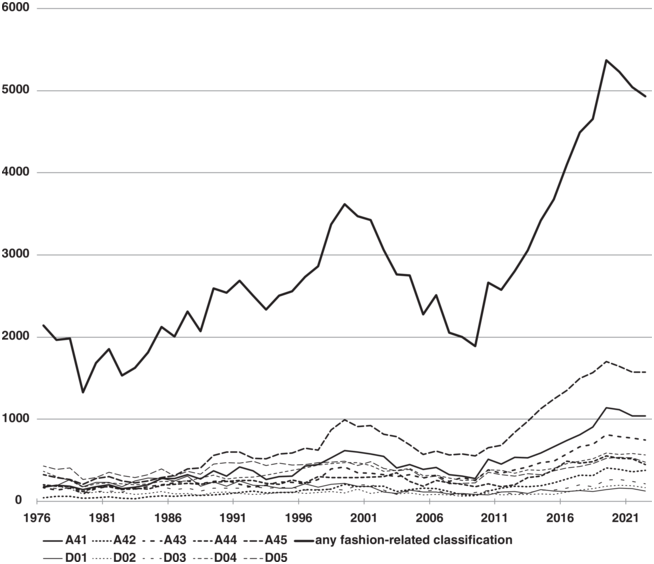
Figure 6.1 Long description
The lines represent the A 41, A 42, A 43, A 44, A 45, D 01, D 02, D 03, D 04, D 05, and any fashion-related classification. A 41 through A 45 originates at (1976, 500), (1976, 400), (1976, 300), (1976, 200), and (1976, 100), fluctuates and terminates at (1976, 1700), (1976, 1000), (1976, 800), (1976, 700), and (1976, 600). Similarly, D 01 through D 05 originates at (1976, 300), (1976, 200), (1976, 150), (1976, 100), and (1976, 50), fluctuates and terminates at (1976, 350), (1976, 300), (1976, 250), (1976, 200), and (1976, 100). Any fashion-related classification originates at (1976, 2000), fluctuates in an increasing trend, peaks at (2021, 5400) and drops at (2021, 5900). The values are estimated on the y-axis.
This trend, though, does not appear to be due to any growing importance of patents to the fashion industry. Instead, it appears to track the general growth in the number of patents issued each year, which increased from around 70,000 patent grants (in the United States) in 1976 to around 350,000 in 2020.Footnote 9 Indeed, the proportion of all patents with any classification entry from the ten fashion-related classes has fallen from just over 3% in 1976 to around 1.5% in 2020, suggesting that fashion has relied comparatively less on patents than have other industries over the last four decades.
Still, thousands of fashion-related patents a year is not a trivial number; it represents around 100 fashion-related inventions a week. It may seem like a lot for a field that isn’t especially technological. But compare it to the number of patent grants in 2022 in some other technology classes (Table 6.1).
| CPC Class | Grants |
|---|---|
| A61: Medical or Veterinary Science; Hygiene | 40,327 |
| B33: Additive Manufacturing Technology [e.g., 3D printing] | 2,658 |
| B60: Vehicles In General | 18,428 |
| C01: Inorganic Chemistry | 2,427 |
| C02: Treatment of Water, Waste Water, Sewage, or Sludge | 1,544 |
| C07: Organic Chemistry | 11,046 |
| C08: Organic Macromolecular Compounds; Their Preparation or Chemical Working-Up; Compositions Based Thereon | 6,717 |
| G06: Computing; Calculating or Counting | 83,820 |
| G11: Information Storage | 6,206 |
| G21: Nuclear Physics; Nuclear Engineering | 731 |
| H03: Electronic Circuitry | 7,122 |
| H04: Electronic Communication Technique | 69,774 |
| H10: Semiconductor Devices; Electric Solid-State Devices Not Otherwise Provided For | 9,077 |
Many of these classes cover far more patents than the fashion-related classifications. That is not surprising, since some of these classes are quite broad (A61, for instance, covers inventions as varied as surgical techniques, dental implements, veterinary tools, cardiac stents, devices to accommodate the disabled and radiation treatments, among others). But as Table 6.1 shows, even narrowly drawn classes in niche areas like wastewater treatment (C02) and nuclear physics (G21) have similar numbers of patents granted as the fashion-related classes.
Patents in the fashion-related classes are obtained by a wide array of applicants, ranging from expected firms like fashion houses and manufacturers to individual inventors and firms with no obvious link to fashion. Although patents are issued to inventors – individual humans – rather than companies, most patents are assigned to a company when issued, and that information is listed on the face of the patent. Between 2000 and 2022, 78,212 patents were issued that included one or more fashion-related classification entry, with 36 different firms accounting for 100 or more patents (Table 6.2).
| Company | Grants |
|---|---|
| Nike, Inc. | 3,273 |
| The Procter & Gamble Co. | 707 |
| L’Oreal | 684 |
| YKK Corporation | 631 |
| Kimberly-Clark Worldwide, Inc. | 575 |
| 3M Innovative Properties Co. | 509 |
| Brother Kogyo Kabushiki Kaisha | 505 |
| E. I. du Pont de Nemours and Co. | 458 |
| Apple Inc. | 331 |
| Toray Industries, Inc. | 251 |
| adidas AG | 227 |
| Under Armour, Inc. | 209 |
| Honeywell International Inc. | 196 |
| Milliken & Company | 194 |
| Groz-Beckert KG | 187 |
| Illinois Tool Works Inc. | 182 |
| Toyota Jidosha Kabushiki Kaisha | 181 |
| Maschinenfabrik Rieter AG | 181 |
| Shima Seiki Mfg., Ltd. | 177 |
| Salomon S.A.S. | 166 |
| Reebok International Limited | 146 |
| Trutzschler GmbH & Co. KG | 143 |
| Janome Sewing Machine Co., Ltd. | 134 |
| Unicharm Corporation | 134 |
| Velcro Industries B.V. | 133 |
| Samsung Electronics Co., Ltd. | 121 |
| Johns Manville | 120 |
| Sony Corporation | 120 |
| Otter Products, LLC | 112 |
| Invista North America S.a.r.l. | 109 |
| Kao Corporation | 108 |
| BASF SE | 108 |
| The Boeing Company | 104 |
| Teijin Limited | 103 |
| Braun Gmbh | 102 |
| Dow Global Technologies LLC | 101 |
In addition to apparel manufacturers, these firms include electronics makers like Apple, Samsung and Sony; consumer-goods makers like Procter & Gamble and Kimberly-Clark; materials and chemical companies like 3M, du Pont and Dow; even large industrial manufacturers like Honeywell and Boeing. Some of these non-fashion firms are patenting inventions with fashion-related applications, like inventions related to the Apple Watch, while others are patenting materials that happen to overlap in the fashion-related technology classes, like novel fabrics for aerospace purposes. Still, the firms listed in Table 6.2 accounted for less than 15% of the fashion-related patents, suggesting that the vast majority of fashion-related patents are issued to small firms, individual inventors and non-fashion firms with a small number of inventions that may peripherally touch on fashion.
Even though other technologies account for far more patents than those related to fashion, there are still thousands of fashion-related patents granted each year, and many of those patents are nevertheless granted to large fashion companies, as discussed in Section 6.2.2.
6.2.2 Large Fashion Firms
Companies in the fashion industry have a variety of approaches to utility patents. Some obtain many, while others obtain very few or none. Of those patents, some fall within the fashion-related classifications discussed in Section 6.2.1, while others relate to other aspects of their business. This diversity is seen even in the largest firms, as seen in this table of the worldwide number of patents obtained between 2000 and 2022 by apparel firms with market capitalisations of US$10 billion or more (Table 6.3).
| Company | Country | Market Cap | Grants |
|---|---|---|---|
| LVMH | France | $386 billion | 814 |
| Nike | United States | $186 billion | 5,694 |
| Hermès | France | $171 billion | 81 |
| Christian Dior | France | $138 billion | 198 |
| TJX Companies | United States | $91 billion | 0 |
| Inditex | Spain | $84 billion | 2 |
| EssilorLuxottica | France | $81 billion | 5,031 |
| Kering | France | $65 billion | 35 |
| Fast Retailing | Japan | $63 billion | 65 |
| Lululemon | Canada | $41 billion | 26 |
| Ross Stores | United States | $40 billion | 1 |
| Adidas | Germany | $26 billion | 1,772 |
| H&M | Sweden | $19 billion | 3 |
| Prada | Italy | $15 billion | 7 |
| Burlington Stores | United States | $13 billion | 0 |
| VF Corp. | United States | $11 billion | 7 |
| Zalando | Germany | $10 billion | 0 |
Several observations can be made about this data. First, there is a vast disparity in different firms’ patenting activities, which corresponds to differences in their underlying businesses. Just 4 of the 17 companies – LVMH, Nike, EssilorLuxottica and Adidas – account for almost 97% of the patent grants. What these four companies have in common is that their businesses are not limited to traditional apparel but include other categories of goods and services, both within the fashion industry (such as leather goods and jewellery) and in other markets. These non-apparel businesses account for most of their patents. Two of the companies, Nike and Adidas, are sportswear companies that make sneakers and a variety of sports equipment. EssilorLuxottica makes glasses, lenses and other optical goods. And LVMH is a conglomerate with dozens of luxury brands across numerous categories including wine and spirits (Dom Pérignon, Hennessy, Krug, Moët & Chandon, among others), watches and jewellery (Bulgari, Hublot, TAG Heuer, Tiffany & Co.), makeup and perfume (Acqua di Parma, Fenty Beauty, Sephora), even yachts and luxury trains. Moreover, the trend continues beyond the top four patent recipients: Christian Dior, the company with the fifth-most patent grants (and which has a complicated ownership structure that overlaps substantially with LVMH) sells a lot of perfume, which accounts for most of its patents.
Second, the number of patents obtained by firms is larger than the number of fashion-related patents obtained by the same firms, as discussed in Section 6.2.1.Footnote 12 This may seem obvious given the first observation, but the two points are distinct, because there may or may not be a correspondence between a firm’s patenting activity and its business activity. Indeed, firms patent many technologies that come out of research without ever intending to commercialise them.Footnote 13 Still, large fashion firms obtain many non-fashion patents in addition to patents falling within the fashion-related technology classes. Sometimes, they obtain these patents because they are also engaged in non-fashion businesses, like LVMH’s wine and spirits business. Sometimes, these patents cover underlying technologies that may be used in fashion goods without being listed within those classes. And sometimes, these patents relate to business operations or infrastructure, even if they don’t relate directly to the firm’s products. Fast Retailing, for instance, has several patents that cover retail equipment, like one on a ‘reading apparatus and commodity sales data processing apparatus’.Footnote 14 That patent’s classification entries fall within classes G06 (‘computing; calculating or counting’) and G07 (‘checking-devices’), not any of the fashion-related classes, even though the invention is closely related to the company’s operations. Similarly, Ross Stores has one patent, which describes and claims a ‘real estate management system and method’ that has nothing to do with fashion and everything to do with running a large retail chain.Footnote 15
Third, among the long tail of firms that do not have hundreds or thousands of patents, there are still differences between different types of firms. For instance, those that sell their own goods have more patents than those who are retailers principally selling third-party goods. And this is true whether or not those brand sellers manufacture their own goods in house or rely on contract manufacturers. The pure retailers on the list – TJX (TJ Maxx and Marshalls, among others), Ross Stores, Burlington Stores and Zalando (a European e-commerce firm modelled on Zappos) – have only one patent between them, and it’s the Ross Stores real-estate patent mentioned above. Compare that to Hermès, Inditex (Zara), Kering (Gucci, Saint Laurent and Balenciaga, among others), Fast Retailing (Uniqlo), Lululemon, H&M, Prada and VF Corp., which have 226 patents combined. Some of these patents claim glasses, shoes or their components, like the companies with the most patents, and some claim business processes or technologies like retail point-of-sale terminals. But others claim traditional items of sewn apparel, like the jacket sleeves with built-in ventilation flaps covered by one Lululemon patent (Figure 6.2).
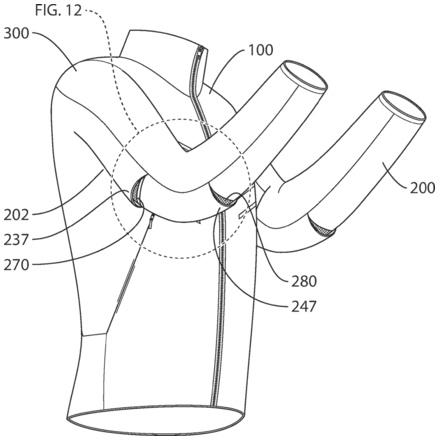
Fourth, other than being largely based in Europe and the United States, this collection of companies shows no particular correlation between geography and patent strategy. The same is true when breaking down patent grants by issuing nation or patent office. Across all the companies listed, 54% of patents were obtained from the United States; 25% were issued by the European Patent Office or one of the national patent offices in Europe; 13% were issued by China; and the rest came from Canada (3%), Japan (3%), Australia (2%) and a smattering of other nations (1% combined).
Individual companies also acted globally when obtaining patents: other than Inditex’s two Spanish patents and Ross Stores’ one US patent, every company that obtained patents obtained them from multiple nations. Hermès’ 81 patents, for instance, were obtained from China, Denmark, France, Germany, Spain, Taiwan, the United States and the European Patent Office. And though a few companies have obtained a disproportionate number of patents from their home nations, that home-nation bias was small compared to the bias in favour of large markets like the United States and China.
Finally, just as the number of fashion-related patents issued has increased over time, so has the number obtained by these large firms. Different firms, though, reflect different patterns, as seen in a graph of patents issued to the large fashion firms each year between 2000 and 2022 (Figure 6.3).
Patents issued to large fashion firms by year (2000–2022).
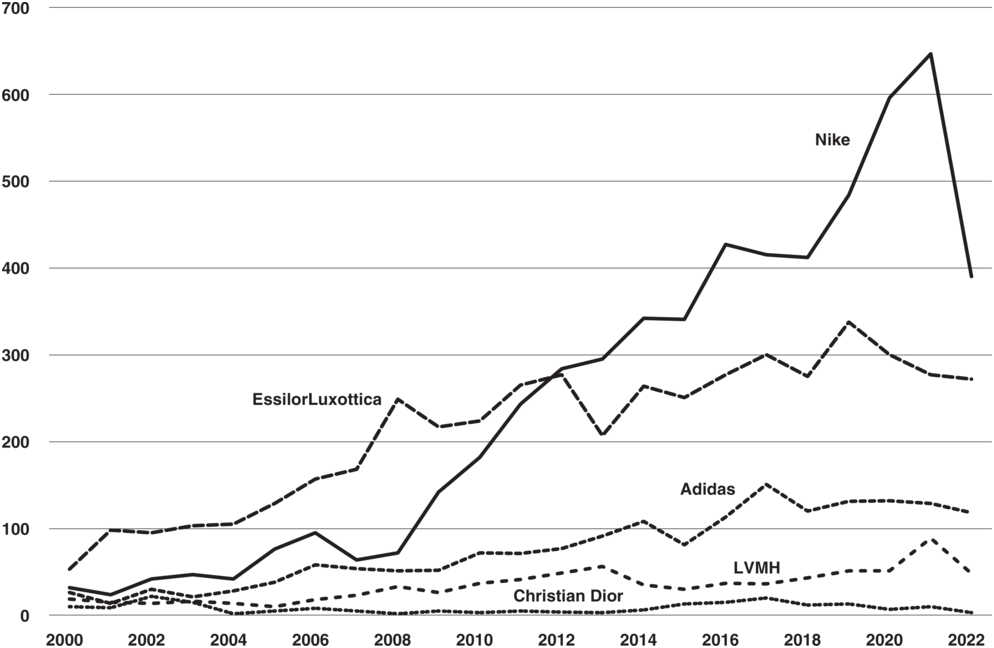
Figure 6.3 Long description
The graph plots multiple lines of which, Essilor Luxottica originates at (50, 2000), fluctuates and terminates at (2022, 380). Nike originates at (2000, 30), fluctuates, rises and terminates at (2000, 390). Addidas originates at (25, 2000), fluctuates over the horizontal axis and terminates at (2022, 120). L V M H originates at (2000, 20), fluctuates over the horizontal axis and terminates at (2022, 50). Christian Dior originates at (2000, 10), fluctuates over the horizontal axis and terminates at (2022, 0). The values are estimated on the vertical axis.
While every company except Christian Dior has increased its patenting activity over time, some have increased far more quickly than others; compare, for instance, Nike and EssilorLuxottica.Footnote 17 This suggests that patenting growth is more likely to reflect individual companies’ growth, strategies and other circumstances more than broader trends in the fashion industry.
There are limitations to how much we can infer from patenting activity, since the act of obtaining a patent doesn’t say anything about how that patent is used. But patent activity does provide tentative indications that the fashion industry does make use of patents, albeit to a lesser degree than some other fields. That use is concentrated among firms that make athletic wear, watches, eyewear and other accessories more than traditional apparel manufacturers. It is also clear that not all fashion-related patents are obtained by fashion firms; plenty of other companies obtain patents that are classified, in part, in classes that relate to fashion. Likewise, not all patents obtained by fashion companies cover fashion-related inventions; others cover the full array of things these companies do, like Ross Stores’ real-estate patent. But to move beyond these inferences, it is helpful to widen the scope beyond just the act of acquiring patent rights to the use of those patents once acquired.
6.3 Using Patents: Patent Litigation
Patent scholars generally think about three broad ways that a patent can be valuable to a company: as an asset to be monetised (whether through infringement litigation, licensing or the rents that come from a legal monopoly), as a signalling tool (whether to investors, competitors, potential clients or employees or others) or as a defensive tool (in the event that a competitor brings a patent lawsuit).Footnote 18 These different sources of value can make it difficult to understand a firm’s patent strategy, since some, like litigation, are fairly transparent, while others, like licensing, may be entirely opaque to outsiders.
Still, there are ways to obtain insights about a firm’s patent strategy from its visible patent activities. Looking at litigation is maybe the simplest, since the possibility of infringement litigation is the implicit threat even in a friendly license agreement, so that a firm with significant licensing activity will generally also have significant litigation activity.
A surface look at patent-litigation activity by the large apparel companies discussed above shows a wide array of litigation activities, with some firms frequently litigating their patents and others never doing so, as seen in Table 6.4, showing the number of patents with related litigation activity.
| Company | Patent Grants | Patents With Litigation Activity | Percentage |
|---|---|---|---|
| LVMH | 814 | 28 | 3% |
| Nike | 5,694 | 273 | 5% |
| Hermès | 81 | 0 | 0% |
| Christian Dior | 198 | 7 | 4% |
| TJX Companies | 0 | 0 | — |
| Inditex | 2 | 0 | 0% |
| EssilorLuxottica | 5,031 | 397 | 8% |
| Kering | 35 | 0 | 0% |
| Fast Retailing | 65 | 0 | 0% |
| Lululemon | 26 | 0 | 0% |
| Ross Stores | 1 | 0 | 0% |
| Adidas | 1,772 | 253 | 14% |
| H&M | 3 | 0 | 0% |
| Prada | 7 | 0 | 0% |
| Burlington Stores | 0 | 0 | — |
| VF Corp. | 7 | 0 | 0% |
| Zalando | 0 | 0 | — |
On the whole, compared to other industries traditionally seen as depending on patents, the fashion industry obtains fewer patents and is less likely to litigate the patents it does get. For instance, the three largest pharmaceutical companies – Eli Lilly, Johnson & Johnson and Novo Nordisk – have collectively obtained more than 5,000 patents that had litigation activity, amounting to 14% of their patent portfolios. Similarly, the tech companies Apple, Microsoft and Samsung have collectively obtained more than 6,500 patents that had litigation activity, making up 11% of their patent portfolios. By these standards, Adidas is the only large apparel company that compares.
Even though these statistics suggest that patent litigation is not driving fashion firms’ patenting activities, they nevertheless likely overstate the degree to which large fashion firms assert their patents in litigation, for a few reasons. For one, the related litigation activity reflected in Table 6.4 refers to any litigation over any patent in a patent’s global family, which can be scores of patents from numerous countries. At the same time, a single patent-infringement lawsuit may assert many patents, even if only one or two are core to the dispute between the parties. Consequently, a large number of patents with related litigation may reflect only a small number of live patent disputes.
To obtain a better understanding of how fashion firms use patents in litigation, the Stanford NPE Litigation DatabaseFootnote 20 and PACERFootnote 21 were used to identify US lawsuits in which these firms asserted patents. Although the count is not exhaustive due to older cases with incomplete files, remarkably, only twelve cases were identified in which these companies asserted utility patents (Table 6.5).Footnote 22
| Company | Patent Grants | US Patent Lawsuits |
|---|---|---|
| LVMH | 814 | 0 |
| Nike | 5,694 | 6 |
| Hermès | 81 | 0 |
| Christian Dior | 198 | 0 |
| TJX Companies | 0 | 0 |
| Inditex | 2 | 0 |
| EssilorLuxottica | 5,031 | 2 |
| Kering | 35 | 0 |
| Fast Retailing | 65 | 0 |
| Lululemon | 26 | 0 |
| Ross Stores | 1 | 0 |
| Adidas | 1,772 | 4 |
| H&M | 3 | 0 |
| Prada | 7 | 0 |
| Burlington Stores | 0 | 0 |
| VF Corp. | 7 | 0 |
| Zalando | 0 | 0 |
These cases fall into two broad categories. The main category is lawsuits against large competitors, in which patented technologies are the core of the dispute; Adidas, for instance, has filed patent lawsuits against competing shoemakers Asics, Nike, Skechers and Under Armour,Footnote 23 while Nike, in turn, has filed patent lawsuits against Adidas, Hummel and Puma.Footnote 24 (Indeed, a significant chunk of these cases are part of a long-running dispute between Nike and Adidas, which extended beyond federal litigation to proceedings before the Patent and Trademark Office and the International Trade Commission, before it settled in 2022.)Footnote 25 But considering the size of the fashion industry, there are not very many of these cases; they all appear to involve shoes or glasses. Beyond these cases, there are a few lawsuits against companies selling knockoffs, in which the asserted patents are sideshows to claims asserting trademarks, design patents, and other causes of action like unfair competition.Footnote 26
The small number of patent lawsuits brought by fashion companies doesn’t necessarily mean that the fashion industry is failing to get value out of its patent portfolios. Not all the industries that are traditionally seen as dependent on patents litigate large numbers of them. Semiconductor manufacturing, for instance, is an intensely competitive industry that obtains many patents and considers them strategically important yet litigates very few of them. Intel, Nvidia and TSMC, for instance, have collectively obtained 995 patents that had related litigation, accounting for just 2% of their collective portfolios. One possible explanation is that these firms are more likely to rely on licensing – especially cross-licensing agreements with competitors – because the industry is fairly concentrated and has high barriers to entry. Since there are fewer players to worry about, it is easier to focus on resolving disputes without litigation. (It helps that semiconductor manufacturing is a classic patent thicket – a field with many overlapping patents that make it almost impossible to operate without practicing some patented invention – which gives firms a strong incentive to reach cross-licensing agreements and avoid becoming defendants in litigation.)Footnote 27
The technology-centric portions of the fashion industry, like athletic wear and glasses, resemble the semiconductor-manufacturing industry in a key way: both have a small number of firms that account for most of the market share. But there are also critical differences. Fashion firms mostly sell to consumers, not businesses like semiconductor manufacturers, and they depend more on marketing and style to sell their products, compared to the continual technological innovation of semiconductor manufacturing. So, we should expect these fashion companies to rely less heavily on patents, whether through infringement litigation or cross-licensing. And that is consistent with the relatively few patent lawsuits brought by the fashion industry.
6.4 Patents and the Nature of Utility in Fashion
As discussed before, most of the patents obtained by large fashion companies don’t actually claim apparel; instead, they often claim sporting equipment or accessories or retail strategies and tools or constituent technologies for these things. But there are patents, like the Lululemon sleeve patent mentioned above (Figure 6.1), that claim traditional forms of apparel.
In addition to revealing information about the fashion industry and its strategic decision-making, these patents tell us something about the nature of utility in fashion and the relationship of fashion to different forms of intellectual-property protections. Intellectual property traditionally draws a distinction between utilitarian or functional creations – which are protected by utility patents – and creations that are creative or aesthetic or artistic rather than functional – which are protected by copyrights and design patents. Fashion, though, makes a mess of this traditional dichotomy, since even basic questions like what counts as utility versus aesthetics are debated and disputed. Fashion firms, policymakers, courts and others have responded to this uncertainty by attempting to use a wide array of protections – traditional ones like patents and copyright and more novel ones like design rights and trade dress claims within trademark law – and by using these protections in new ways, as when a designer plasters a logo all over a product to gain stronger trademark protections.
The US Supreme Court confronted these difficulties in 2017, concluding in Star Athletica, LLC v. Varsity Brands, Inc. that designs of cheerleader uniforms could be protected by copyright law notwithstanding that the uniforms were ‘useful articles’.Footnote 28 At issue was whether elements of clothing designs, such as stripes, chevrons or zigzags, were protectable as aesthetic elements of an otherwise useful article of clothing. Under US copyright law, to be protectable, the uniforms’ ‘pictorial, graphic, or sculptural features’ must be capable of being ‘identified separately from’ and ‘existing independently of the utilitarian aspects of the article’.Footnote 29 By concluding that the design of the uniforms could be copyrighted, the court necessarily concluded that the graphic features of the uniform could exist ‘independently of the utilitarian aspects’ of the uniform.
The court’s resolution of Star Athletica suggests that patent law would not cover those graphic features because they are separate and independent of the uniform’s utility. Indeed, in an important trademark case in 2001, the court adopted this reasoning, concluding that a company could not obtain trademark protections for a product feature – which, like copyright law, requires that the feature not be functional – precisely because that feature had been protected by a utility patent:
A utility patent is strong evidence that the features therein claimed are functional. If trade dress protection is sought for those features the strong evidence of functionality based on the previous patent adds great weight to the statutory presumption that features are deemed functional until proved otherwise by the party seeking trade dress protection.Footnote 30
So, if a utility patent is strong evidence of functionality, and the graphic features of a cheerleader uniform can exist separately from the utilitarian aspects of the uniform, then those features should not be patentable (assuming functionality and utility are synonyms).
Remarkably, however, a review of patents obtained by fashion companies shows that graphic features of apparel are frequently patented, precisely because of the aesthetic characteristics of those features. These patents generally claim methods of using two-dimensional clothing design to make clothing that creates a favourable three-dimensional shape or a favourable perception of a person’s body shape. For instance, one patent obtained by VF Corp., for a ‘body-enhancing garment and garment design’,Footnote 31 describes the invention like this:
Many garments are constructed with visible patterns on the fabric. These patterns typically utilize symmetrical, straight, and/or repeating details or pattern elements and have no intentional brightness gradients when the garments are laid flat. Additionally, patterns may include illusory details or lines created within the negative space between the pattern elements, and serve as an informative element of the pattern itself. These patterns become curved and shaded when worn on the body. The visual system assumes that the curvature and/or brightness gradients of those patterns is attributed entirely to the body shape (i.e., that curved lines of the pattern on the garment would be straight lines if the garment was laid flat). Thus, using the rules of perception, the visual system constructs a three-dimensional body shape based in part on the curvature, size, and shading of the pattern.
* * *
When a person wears clothing, he or she voluntarily puts patterned clothing on his or her body. The brain interprets the lines, spacing, sizing and other elements of the pattern using the rules discussed above and other rules known within the field of vision science. Current clothing designs do not take into account that the brain uses these patterns on garments to construct a 3D shape of the wearer. As such, a problem with existing garment construction or design is that it can create garments that make an individual’s form less attractive to others, a result that is typically not desired by the individual wearing the garment. While the rules of perception have been heavily studied, these rules have not been applied to clothing. Further, the rules of perception have not been utilised on a garment to change the perception of a human feature to fall within or move towards known attractive size and shape ranges and/or desired size and shape ranges when worn.
The patent goes on to describe and claim various methods for using shading, curved lines and other optical tricks on clothing to tweak how the shape of a person’s body will be perceived by others. For instance, if a garment has a pattern of dots, then the position of those dots could be shifted in a way that reflects the desired 3D body shape of the wearer. A viewer’s eye will assume that the dots reflect a fixed pattern and will see the tweaked pattern as reflecting the intended shape. The patent shows this concept in Figures 6.4 and 6.5.
Body-enhancing garment patent.Footnote 32
Shading patent for aesthetic effects via optical illusions.Footnote 33
Figure 6.5 Long description
Three broad patterned stripes of cloth are illustrated vertically. The original pattern exhibits a consistent grid-like pattern. The anatomy warping shows a distorted pattern. Anatomy Warping + Shading has a pattern which is further distorted and has shading applied. The numerical values of 802, 804, and 806 are indicated with arrows in the original pattern, Anatomy warping and Anatomy Warping + Shading, respectively.
And other patents describe and claim similar illusions. A European patent jointly obtained by VF Corp. and the University of California, for instance, describes and claims a ‘method for anatomy shading for garments’ that uses shading instead of pattern distortion to accomplish the same sort of optical tricks (Figure 6.6).
Anatomy-enhancing shading on jeans.Footnote 34
Figure 6.6 Long description
The process shows a basic silhouette of jeans labeled original jeans, followed by a plus symbol, a grayscale template with buttocks in focus, an equal symbol, the original jean silhouette with the template's shading with bare buttocks.
The use of optical tricks to affect how clothes look on a person is, of course, not a new concept in fashion; designers have been doing similar things for centuries. Indeed, the cheerleader uniforms at issue in Star Athletica have the designs they do precisely because they create certain impressions when worn by cheerleaders, as discussed elsewhere in this volume (Figure 6.7).Footnote 35
Cheerleader uniforms at issue in Star Athletica v. Varsity Brands.
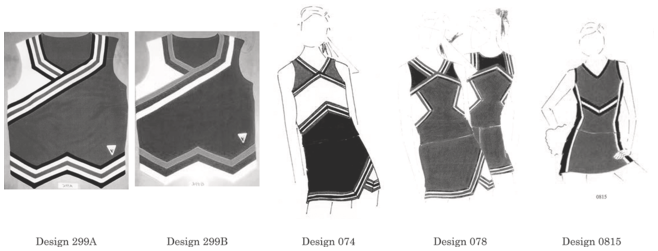
The combinations of colour blocking, chevrons, diagonal lines, inward-pointing angles and other features aren’t just artistic choices by the designer; they’re choices designed to make the wearer – a cheerleader – look better. As Christopher Buccafusco and Jeanne C Fromer have explained elsewhere, clothing is not generally designed to look good in isolation; it’s designed to look good when worn by someone.Footnote 36
The fact, then, that companies have sought, and obtained, utility-patent protection for inventions designed to change the visual perception of a person wearing a particular garment provides additional evidence, if more were needed, that the aesthetic design of fashion has functionality. And in turn it bolsters the case, contra Star Athletica, against protecting fashion designs using copyright law or novel forms of intellectual-property protections. Instead, it suggests that utility patents may be a better fit, despite the small amounts of patent litigation engaged in by fashion companies.
6.5 Conclusion
Fashion is not an obvious fit for utility patents, since the things that make a fashion firm successful are generally not the sorts of things protectable by patent law. Yet despite that poor fit, thousands of patents are granted each year for fashion-related technologies, and large fashion companies have obtained thousands of patents between them. At the same time, evidence of how the industry uses these patents is hard to come by since few are litigated and the industry lacks the sort of cross-licensing arrangements that some more patent-dependent industries use.
The kinds of inventions patented by the fashion industry range from traditional apparel to athletic wear to fashion-adjacent technologies like business methods and retail equipment. The most interesting ones, however, provide insights into a core issue in fashion law: the line between functionality and aesthetic or artistic expression. These patents claim and protect ways of tweaking the aesthetic designs of clothing to change how they look on their wearers. The availability of utility patents for these inventions suggests that aesthetic choices in fashion do serve functional purposes, and therefore that that the law should look more sceptically upon efforts to extend copyright and other non-patent protections to aesthetic choices made by fashion designers.
7.1 Introduction
This chapter asks whether the United Kingdom’s intellectual property regime is adequate to meet the needs of fashion designers. As such, it rests on two assumptions: first, that fashion designers ought to enjoy some IP protection over their creations and, second, that fashion designers benefit from having rights to enforce against third party interlopers. Neither of these assumptions is unproblematic. In relation to the first, it is notable that design protection is generally justified by reference to a standard market failure account.Footnote 1 However, if one engages with this justification seriously, one might query whether there is any meaningful danger of undersupply in the fashion industry that the law needs to guard against. This chimes with observations that fashion is characterised by a strong culture of design innovation that has not obviously been held back by widespread imitation and copying. Indeed, on at least one prominent account, the ‘low-IP equilibrium’ of the fashion industry may help spur innovation.Footnote 2 An alternative justification for IP protection might derive from appeals to distributive justice. For instance, those concerned about the under-protection of fashion often point to the position of emerging and lesser-known designers whose works are copied by larger, more powerful, industry players.Footnote 3 But this puts into focus the second assumption, in relation to enforcement: even if the content of the law was entirely fit-for-purpose, designers would gain little if they lack the resources or knowledge to seek legal redress. Indeed, attempts to strengthen rights may backfire if the practical effect of any new or ‘improved’ regime is to provide large industry players with even more capacity to pursue smaller players, while themselves continuing to copy with impunity.
If this chapter rests on questionable assumptions, why write it at all? Part of the answer is that there is an active debate about IP protection for fashion.Footnote 4 There is therefore value in doctrinal work that engages closely with the existing legal infrastructure so that we properly understand fashion’s ‘law in books’. Although some scholarship – in particular, that emanating from the United States – focuses on the lack of IP protection for fashion,Footnote 5 in the United Kingdom, there are a number of rights that are relevant to the sector. In fact, far from being an IP wasteland, the legally astute UK designer might wonder why there are so many overlapping and, by and large, cumulative regimes that might protect their creations:Footnote 6 the UK registered design system;Footnote 7 the (new, EU-derived) supplementary unregistered design right;Footnote 8 the (old, UK-created) sui generis unregistered design right;Footnote 9 copyright; and (although outside the scope of this chapter) registered trade marks and passing off. This preponderance of regimes is part of the second reason why this topic is worth exploring: that design law in the United Kingdom is in need of a wide-ranging review.Footnote 10 One way of feeding into this process is by asking how the current system might operate for one community of designers. As we note at various points, the sort of doctrinal analysis in this chapter might be helpfully supplemented by empirical work in relation to creative norms and enforcement practices in the fashion sector.
The thesis of this chapter is as follows. UK designs law is widely regarded as being highly unsatisfactory. It has been described as ‘multi-layered, complex and lacking in logic’.Footnote 11 The problems with the system have become more pronounced following the UK’s departure from the European Union. We start in Section 7.2 by summarising registered and unregistered design protection in the United Kingdom. We observe that prior to Brexit, it was often assumed that the EU’s unregistered design right offered the most appropriate form of protection for the fashion industry.Footnote 12 Protection is short, lasting a maximum of three years, but it was said that any downsides in relation to duration were of lower concern in a fast-moving sector and were offset by the benefits of avoiding the need for registration. However, there are a number of matters that may limit the relevance of the UK’s new supplementary unregistered design right (the SUD), all of which may cause designers to consider other IP options. First, a three-year term of protection may not be suitable for designs that are intended or turn out to have longer market presence. Second, infringement of the SUD requires proof of copying, in contrast with registered designs, for which liability is strict. Finally, the lack of reciprocity between the SUD and the equivalent EU regime, now known as the UEUD, means that UK designers who would previously have enjoyed unregistered design rights across the EU no longer do so, unless the rules on first disclosure are interpreted in a way that permits simultaneous publication.
There are a number of ways that the UK government could address the issues identified in relation to the SUD. However, there are political, legal and philosophical impediments to each of these options, raising the question of what UK fashion designers will do in the absence of any (meaningful) reform. One option is to pro-actively register their designs before novelty-destroying disclosures are made. However, another option – and the focus of Section 7.3 – is to rely more heavily on copyright as part of their protection strategy. The viability of this approach increased following case law from the Court of Justice of the European Union (CJEU), which suggests that the EU understanding of a ‘work’ is incredibly broad. We observe that UK judges have sought to interpret the CDPA in a way that respects this case law, while also recognising that the CJEU’s approach maps awkwardly onto (1) the closed list of subject matter in the CDPA and (2) the policy imperative, expressed in much existing UK case law, to limit the copyright protection of designs. Our concern is that if UK judges expand the ambit of an ‘original artistic work’ too far, it may not be possible to correct for the overshoot at other points in the copyright system. That is, if we agree that certain designs (especially functional ones) are not the sort of works that copyright ought to protect, the more principled and effective way to achieve that state of affairs is for such designs to be excluded by a subject matter limitation, not for courts to seek to manipulate other rules (for instance, in relation to infringement or exceptions) to bring protection within reasonable bounds.
7.2 Protected Designs in the United Kingdom
7.2.1 Overview of Legal Framework
As noted in the introduction, there are three regimes in the United Kingdom that relate specifically to designs: (1) a registered system, (2) the supplementary unregistered design right (SUD) and (3) the sui generis unregistered design right governed by the CDPA. In this sub-section, we provide a brief overview of each of these regimes.
The registered system is administered by the Designs Registry at the UK Intellectual Property Office (UKIPO).Footnote 13 The registration process is inexpensive and light-touch, in that there is no examination or opposition process but merely a review of the application. Thus, for the disgruntled competitor or designer who believes that a design ought never to have been registered,Footnote 14 the only course of action is to launch invalidity proceedings or (if they have been sued for infringement) file a counterclaim against the registered proprietor. A registered design receives an initial five-year term of protection, which can be renewed a further four times, resulting in a maximum term of 25 years.Footnote 15 During that time, the registered proprietor enjoys ‘the exclusive right to use the design and any design which does not produce on the informed user a different overall impression’.Footnote 16 This right applies not just to products mentioned in the application but to any product.Footnote 17
The authors of Intellectual Property Law suggest that ‘while registration has been popular in the electronics and furniture industries, the textile and fashion industries have tended to rely more on unregistered design right[s]’.Footnote 18 This could reflect a lack of knowledge of the existence, mechanics or benefits of the registered system or that those benefits are not perceived to outweigh the costs of applying for and maintaining registrations.Footnote 19 Importantly for this chapter, one of these benefits is that the protection conferred by a registered design is strict, in that proof of copying is not required in order to establish infringement.Footnote 20 Other commonly cited benefits to registration include the longer term of protection when compared with unregistered design rights (as noted above, up to 25 years) and the fact that registration confers priority over later designs.Footnote 21 That said, Brexit means that UK designers can no longer obtain a Registered European Union Design (REUD) that includes the United Kingdom. Designers who desire UK and Community protection must therefore register their design at both the UKIPO and the EU Intellectual Property Office (EUIPO). Such applications must be made within six months of one another to take the benefit of Paris Convention priority.Footnote 22
Second, there is the supplementary unregistered design right. The SUD was established in 2020 and is intended to ‘mirror’, in the post-Brexit landscape, what was known at the time as the unregistered Community design right (UCD).Footnote 23 To be protected, a ‘design’Footnote 24 must be ‘new’ and have ‘individual character’.Footnote 25 The SUD has a duration of three years from the date the design ‘was first made available to the public within’ the United Kingdom.Footnote 26 As will be seen, there is currently uncertainty in relation to this requirement.
The UCD – and by extension, the SUD – has been justified on the grounds that many designers will benefit more from a shorter and more limited unregistered right than a longer and fuller right that requires registration. Fashion designers have been identified as a group that will benefit in particular from an unregistered right, including because of the relatively short length of the seasonal fashion cycle and the presence of many individual designers and smaller fashion houses that lack the resources to maintain registered design portfolios.Footnote 27 However, a trade-off for those relying on the UCD (now UEUD) or SUD is that the right is qualified: to sustain an infringement action, the holder of the right must prove copying.Footnote 28 The right does not, therefore, apply to independent creation. Furthermore, in the absence of reciprocal arrangements with the EU, the SUD applies only within the United Kingdom. As mentioned in the introduction, this changes the state of play for UK designers who previously enjoyed an EU-wide unregistered right.
Finally, there is the UK’s sui generis unregistered design right. This right first appeared with the passage of the CDPA as part of efforts to provide greater intellectual coherence to the treatment of designs, such that subject matter was placed in its most appropriate IP ‘box’. The CDPA placed limits on the circumstances where a design could be protected by copyright on the basis that copyright often over-protected such subject matter.Footnote 29 It also created a new, short, unregistered right that included functional designs.Footnote 30 This sui generis right defines ‘design’ as ‘the design of … the shape or configuration … of the whole or part of an article’Footnote 31 and excludes ‘surface decoration’.Footnote 32 This limits the relevance of the sui generis right to fashion design – for instance, it will not apply to two-dimensional features such as patterns and colour combinations (these being neither shape nor configuration)Footnote 33 or ornamentation (if this is excluded as surface decoration).Footnote 34 That said, it would be an overstatement to suggest it is irrelevant to fashion.Footnote 35 Like the SUD, infringement of the sui generis right requires proof of copying.
7.2.2 Appropriateness of the UK Regime for Fashion Designers
A question for anyone considering design protection is whether to register their design, bearing in mind that registration does not preclude concurrent reliance on unregistered rights.Footnote 36 As mentioned in the introduction, prior to Brexit, it was often assumed that the EU’s unregistered design right (then known as the UCD) offered the most appropriate form of protection for the fashion industry. Protection is short, lasting a maximum of three years, but any downsides in relation to duration were thought to be of relatively little concern in a fast-moving sector and were offset by the benefits of avoiding the financial and other costs of registration.
However, it is worth pausing to reflect on the operation of the (now) UEUD and its post-Brexit ‘mirror’ right, the SUD. This analysis discusses three features that might limit the relevance of these rights to fashion designers, these being features that also differentiate the UEUD and SUD from the registered system:Footnote 37 first, their duration; second, the need to prove copying in order to establish infringement; and third, the rules for creation and the resulting post-Brexit challenges for designers who wish UK and EU protection.
Starting with duration, there is the question of whether a three-year term is too short. As mentioned above, a shorter right is said to be appropriate for fashion due to the rapid turnover of designs and collections, which suggests that consumer demand in fashion markets tends to be time-bound – bearing in mind there are exceptions, as exemplified by certain collectable luxury brand items such as the Hermès Birkin and Chanel 2.55 handbags. It is also uncontroversial that, within the fast fashion sector, there are copyists who can turn around knock-off versions within weeks of the public exposure of the original item on the fashion runways in Paris or Milan or on social media feeds. The business model of many such merchants is to satisfy the immediate public demand for a garment just like the one [X] wore or [Y] designed.Footnote 38 Thus, there is good evidence that commercial-level copying can coincide with the market for source designs and certainly occur well within the three-year term of the unregistered right.
However, when thinking about duration, the question is not just when copying occurs – after all, the fashion cycle is also characterised by the old coming back (often to the horror of those who survived acid wash jeans or ultra low-slung trousers to begin with).Footnote 39 Rather the question is the length of time for which the designer should enjoy exclusivity in their design. There are a number of matters that might inform this, including the typical commercial life of the products in question, but also the desirability of copying in order to satisfy consumer demand and support design innovation. Of course, it might be asked whether smaller and lesser-known designers – apparently key beneficiaries of an automatic right – have similar experiences to those described above. For instance, one can imagine that unlike established luxury fashion houses with celebrity designers who want to set a new trend with every runway show, emerging designers might wish to maintain consistency in their range so as to develop a clear voice or point of view as a designer. However, taken in the round, the three-year term suggests that for the UEUD and SUD, it has been decided that problematic copying – that is, that for which a legal response is appropriate – is that which occurs relatively quickly. For designers who want longer rights, there is the registered system. We can see the logic in this, although as discussed in Section 7.3, there is a fear that, on current trends, UK designers may in fact be channelled towards the turbo-charged protection offered by copyright.
Second, for both the UEUD and SUD, it is necessary to prove copying in order to establish infringement.Footnote 40 The significance of this is illustrated by Rothy’s v Giesswein Walkwaren,Footnote 41 in which the UCD claim failed because copying could not be established. In legal circles, this case has been said to illustrate not only the benefits of registrationFootnote 42 but that ‘rights holders who rely mainly on unregistered rights [should] think twice about their protection strategy’.Footnote 43
Rothy’s concerned shoe designs. The claimant was a Californian company that had registered a Community design for its ‘Pointed Loafer’ shoe. The Pointed Loafer was a ballerina shoe with a pointed toe and a protruding loafer-style tongue. Its upper components were made with a knitted yarn derived from recycled plastic. The claimant alleged that the defendant had infringed its registered Community design (RCD) and its UCD through the latter’s ‘Pointy Flat’ shoe.Footnote 44 In addition to similarities in the shapes of the shoes, the upper parts of the defendant’s shoe were made from a knitted meshwork fabric produced from recycled plastic. For images of each shoe, see Figure 7.1.
(left) The claimant’s Pointed Loafer and (right) the defendant’s Pointy Flat.
Rothy’s is important for a number of reasons. A key aspect of the claimant’s case was that the protected design included the knitted material on the upper surface of the shoe. To establish this for the RCD, it was necessary to show that the fabric was apparent in the images included in the registrationFootnote 45 (it being impermissible to look to the Pointed Loafer itself to determine what the registration means).Footnote 46 Here, HHJ Stone (sitting as a Deputy High Court Judge) was willing to zoom in on the images of the RCD in finding that the designer claimed a knitted fabric rather than a shape or textured appearance more generally.Footnote 47 Another significant aspect of the case was that HHJ Stone had little difficulty in rejecting the attack on the validity of the RCD or in finding that the RCD had been infringed. The knitted upper stood out to the ‘informed user’ (a strange individual even when judged against English law’s other fictional legal characters). It conferred both the necessary ‘individual character’ for validity and ensured that the defendant’s shoe produced the same ‘overall impression’.Footnote 48
For present purposes, however, the key thing to note is that although the registered design case succeeded, the claimant was unable to make out a case for infringement of its UCD because it could not demonstrate that the defendant had copied its Pointed Loafer. It was clear from documents disclosed by the defendant that its designers had used shoes of the claimant as inspiration for its Pointy Flat. However, amongst all those materials, there was no reference to the Pointed Loafer – and two of the designers gave evidence that they had never seen that design. The similarity in the material of the upper was explained as being the result of one of the designers viewing an article that described the claimant’s use of recycled plastic material in its shoes.
It would be going too far to claim that this case illustrates that, for the UCD (and, by implication, the UEUD and SUD), it is more difficult to prove copying or derivation than in copyright. As a general matter, the CJEU has clarified that Member States are entitled to apply national rules relating to the reversal of the burden of proof such that copying can be inferred from objective similarity alone in appropriate circumstances.Footnote 49 In essence, the defendant in Rothy’s was able to present a plausible narrative that the Pointy Flat was ‘an independent work of creation’ vis-à-vis the Pointed Loafer. The plausibility of the defendant’s account – that is, that no one had seen the Pointed Loafer – was strengthened by the fact that the Pointed Loafer was a limited-edition product that was on the claimant’s website for a short period of time.
There are, moreover, copyright cases in a similar vein. Most famously, in Mitchell v BBC,Footnote 50 the BBC was able to defend a copyright infringement action in relation to the animated characters in a children’s television programme. The claimant had pitched a show to the BBC. Subsequently, the BBC broadcast a programme featuring characters that displayed some striking similarities with the claimant’s drawings. However, the BBC prevailed as it was able to provide a convincing explanation to account for these similarities (including that characters aimed at young children tend to have certain common – and, given the idea/expression dichotomy, unprotectable – features).Footnote 51 Also important to the outcome in that case, much like in Rothy’s, was that the claimant was not able to make out a convincing case of access by the BBC animators, despite his pitch.
The point is therefore not that there is a different legal or evidential standard to be applied between copyright and designs cases but more that some combination of functional constraints, design norms and the possibility of inspiration from a common third party source in a sector where referencing and imitation are the norm mean that the requirement to prove copying acts as a much more formidable hurdle in designs law than in does in the typical copyright action.Footnote 52 As HHJ Stone observed in a designs case involving an allegation of copying of dress designs, ‘absent striking closeness between the designs in relation to features that were not well known’, a tribunal may not be willing to draw an inference of copying from other factors (such as the defendant’s ‘design process’).Footnote 53
Rothy’s therefore helps highlight the significance of the requirement for copying and raises questions about the inferences that can be drawn in the absence of unambiguous evidence of access. Lawyers responded to Rothy’s by emphasising the desirability of designers registering their designs. We might, however, ask whether the rules on infringement undermine the stated aims of the UEUD and SUD. To put it another way, if there is consensus that a short but strong unregistered design right is best for fashion designers such that we don’t want them to have to bother with registration, should the UEUD and SUD be strengthened by removing the requirement that infringement requires copying?
This would, of course, involve abandoning the view that ‘absolute’ or ‘true’ monopolies are only justified for registered forms of IP. This view is often said to rest on the proposition that liability for independent creation can be justified because the act of registration provides public notice of the existence of a right. Whether this proposition withstands close scrutiny is open to question. For instance, it ignores the fact that registered rights can often be difficult to locate, sometimes deliberately so. Moreover, it is an idea that already has no application in the trademark sphere, where liability for passing off is not conditional on proof of copying or derivation.
However, even if agreement could be reached regarding the intellectual case for removing the copying requirement in the United Kingdom, it would be necessary to contend with post-Brexit arrangements. In particular, the ability of the United Kingdom to amend the SUD is constrained by Article 247(1) of the Trade and Cooperation Agreement between the EU and UK, which provides:
Each Party shall confer on holders of an unregistered design the right to prevent the use of the unregistered design by any third party not having the holder’s consent only if the contested use results from copying the unregistered design in their respective territory.Footnote 54
Given the Brexit goal of ‘taking back control’,Footnote 55 it might have been thought that the UK government would maximise its freedom to strike out in a different direction with its domestic laws, especially vis-à-vis the EU. However, when the Trade and Cooperation Agreement (which has relatively few provisions in relation to IP) is read alongside other new trade agreements (such as the Free Trade Agreement with Ukraine),Footnote 56 we see a pattern of the United Kingdom limiting – at times significantly – its legislative freedom in the IP space. In relation to unregistered designs, while it is still open for the United Kingdom to extend the duration of the SUD,Footnote 57 changing the rules around infringement is off the table.Footnote 58
One explanation for the loss of regulatory freedom in Article 247 might have been to pave the way for reciprocal recognition of unregistered design rights. However, no such reciprocity has been established. And herein lies the issue for the UK designer who wishes to rely on unregistered rights in the UK and EU. Under Art 11(1) of the EUDR, the unregistered right comes into existence on the date the design ‘was first made available to the public within the Union’. However, the EUDR has not provided a clear resolution to the question of whether disclosures in other territories can nevertheless satisfy this requirement.Footnote 59 The position in the United Kingdom is likewise unclear: although guidance issued by the UKIPO states that a SUD ‘is established by first disclosure in the UK’,Footnote 60 the United Kingdom did not retain all the relevant provisions of the CDR on this matter.Footnote 61 Thus, it is open to question whether disclosure in the United Kingdom can establish the UEUD, and likewise whether disclosure in the EU (and indeed elsewhere) might establish the SUD.Footnote 62 Against this backdrop, well-advised parties are exploring ways to publish simultaneously in both jurisdictions. The success of such efforts is difficult to predict. Simultaneous here means truly simultaneous – there is no equivalent to the 30-day rule under the Berne Convention.Footnote 63 The obvious step of placing a design on a website accessible in both jurisdictions may not result in simultaneous publication, given the emphasis that has been placed on the need for websites to ‘target’ a jurisdiction in order for there to be a relevant connection.Footnote 64 In any event, for smaller market actors – said to be important recipients of automatic rights – it is almost inevitable that they will at times inadvertently lose their ability to access the unregistered design right system.
One practical response to all three issues is for designers to register their designs: this will give them protection for up to 25 years, means they do not have to prove copying to establish infringement and allows them to rely on the six-month priority period to register their designs in the UK and the EU. But as already mentioned, one of the main rationales for an unregistered right is that the knowledge and resources required for registration are outside the reach of large swathes of the fashion industry.
In sum, although the UK designs system is in need of reform, there are a number of matters that stand in the way of revising the SUD. In addition to the usual issues for law reform – limits in legislative bandwidth, challenges in reaching consensus amongst diverse stakeholders, etc – there is the fact that the United Kingdom is operating within a network of trade agreements in which it has agreed to certain standards for IP protections, including agreements that preserve numerous standards from EU law. For those who believe that fashion is under-protected by the SUD, one response might therefore be to bolster calls for fashion designers to rely on the registered system. However, another response might be to encourage designers to seek redress by reference to another unregistered right: copyright. We believe that this is far from obviously desirable, as reliance on copyright risks massively over-correcting for problems associated with the SUD and UEUD. We explore this in Section 7.3.
7.3 Copyright
In this section, we discuss our concerns about copyright playing a more prominent role in designs protection in the United Kingdom. We start with a brief examination of why copyright might be attractive to designers and why, in our view, copyright is an inappropriate IP ‘box’ for many designs. This includes discussion of case law from the CJEU that seems to have taken a very expansive approach to the definition of an original ‘work’ in European copyright law, such that many designs will have dual protection in copyright and designs law. We then discuss the reception of that case law in the United Kingdom and argue that UK judges should be slow to follow the approach of the CJEU, including due to the difficulties in sufficiently reining in rights, for instance, via infringement or exceptions, once subject matter has been expanded.
We start with the reasons why UK designers might be attracted to copyright, which are straightforward and can be dealt with relatively swiftly. In short, reliance on copyright not only avoids issues in relation to the SUD but also the registered design right. Copyright protection is automatic and, given the principle of national treatment that underpins the international copyright system, makes the time and place of creation (or first public exposure) less significant. To the extent that there are concerns about the short duration of the SUD, such concerns clearly do not apply to copyright, as the default rule for artistic works is that copyright subsists for the life of the author plus 70 years.Footnote 65 This is also far longer than the maximum term of the registered right. Finally, although infringement of copyright requires that the defendant copied the claimant’s work, UK judges are willing to draw inferences about this based on the level of objective similarity between and the character of the two works and the defendant’s familiarity with the claimant’s work.Footnote 66
Our concern with recourse to copyright is that copyright provides an unduly long and inappropriate form of protection over designs in a range of fields, including fashion. For avoidance of doubt, we are not saying that fashion should be excluded from copyright protection. We can imagine haute couture and avant garde creation in which the craftmanship and visual appeal are such that copyright protection is appropriate (or at least defensible). We can also imagine instances in which individual features might justifiably be protected by copyright, for instance, where the image on a T-shirt is an original drawing.Footnote 67 However, we have concerns about clothing and footwear being protected by copyright, for reasons of doctrine and policy including that (1) the creative choices in fashion design are limited by the nature of the item and the function it serves; (2) clothing and footwear are basic human needs, which only reinforces the need for restraint in the exclusive rights thrown around such creations; (3) to the extent clothing goes beyond basic needs and is a vehicle for personal expression (of the designer, wearer, or both), imitation is baked-in to an industry known for being cyclical, referential and trend-driven; and (4) the designs of younger designers may enjoy a copyright term that is 5 times as long as the maximum protection of a registered design and over 40 times as long as the unregistered design right.
Some of these concerns can be illustrated by reference to the ballerina shoe, the subject of the Rothy’s case, discussed in Section 7.2. Expert evidence was given in relation to the ‘basic anatomy’ of ballerina shoes, their design heritage, their ‘important characteristics’ (e.g., toe shape, heel height, outsole profile, vamp and trim) and the types of materials they comprise (e.g., leather, suede and canvas).Footnote 68 On the one hand, one can see the potential for creative decision-making in relation to each element. On the other hand, the product has to function as a shoe. Although the designer has choices, many relate to how the characteristics of the shoe manifest, not whether those characteristics are present to begin with. Furthermore, when thinking about each such manifestation, the designer may have to work within fairly limited parameters. For instance, the toe shape of a ballerina shoe can, according to the expert evidence in Rothy’s, be pointed, square, round or almond shaped.Footnote 69 It may be that there are infinite, minute gradations between and within these options – for instance, a pointed toe can be sharper or more rounded.Footnote 70 But ultimately, designers are using their creativity to make choices that are bounded to greater and lesser degrees by practical and technical considerations.
In Rothy’s, the elements of the claimant’s Pointed Loafer admitted by the defendant to be different from the relevant design corpus were the heel height, the material of the upper and the presence of a counterline.Footnote 71 These were held by HHJ Stone to be enough for the shoe to have a different overall impression to the informed user, meaning that the RCD (and, under the same reasoning, UCD) was valid. What might have happened if the claimant argued that the Pointed Loafer was an original work? To explore this in the European context, we consider two design-oriented judgments from the CJEU: Cofemel v G-Star RawFootnote 72 and Brompton Bicycle.Footnote 73 Those cases concerned the definition of a work under the Information Society Directive (ISD). To understand the significance of those cases, it is useful to understand the legal backdrop when they were handed down.
Prior to Cofemel, there had been a long line of CJEU case law stating that, to be protected, a work must be original in terms of being its ‘author’s own intellectual creation’.Footnote 74 In applying this standard, relevant questions included whether the author was able to make ‘free and creative choices’Footnote 75 or had, through their choices, put their ‘personal touch’ on the work.Footnote 76 In Levola Hengelo,Footnote 77 handed down ten months prior to Cofemel, it was held that ‘two cumulative conditions must be satisfied for subject matter to be classified as a “work”’:Footnote 78 first, that it passes the European originality standard and, second, that it is ‘the expression of the author’s own intellectual creation’,Footnote 79 being an expression that is ‘identifiable with sufficient precision and objectivity.’Footnote 80 Applying this test, it was held that the taste of a food product – in that case, a spreadable cheese dip – was not a work as it ‘cannot … be pinned down with precision and objectivity’.Footnote 81
Levola Hengelo generated numerous questions about the European approach to the meaning of ‘work’.Footnote 82 On the one hand, the CJEU recognised that, as a party to the WCT, the European Community must comply with Articles 1 to 21 of Berne.Footnote 83 It referred to the definition of ‘literary and artistic works’ in BerneFootnote 84 and statements in the WCT and TRIPS that copyright may be granted to expression but not to ideas.Footnote 85 However, in considering the significance of the international copyright framework, the CJEU focused on the need for the claimed expression to be objectivity identifiable, not the nature of the expression to begin with. That is, the problem with the taste of food was not that it was outside the subject matter in Article 2 but that it was not sufficiently certain: people experience taste very subjectively, and there is currently no technology by which a machine can make that assessment objectively.Footnote 86
Our concern with this approach is that, if taken seriously, it suggests the only thing standing in the way of tastes being ‘works’ is the lack of technology to objectively measure them – that there was no separate reason, coming from doctrine or policy, for them to be excluded from copyright protection. In his Opinion in Levola Hengelo, AG Wathelet discussed three additional reasons why tastes of foodstuffs are not works: (1) all the illustrative subject matter in Berne Article 2 are works that are perceived visually or aurally;Footnote 87 (2) no multilateral treaties have been made or revised to confer copyright protection on tastes (as has occurred for other contentious subject matter, such as computer programs);Footnote 88 and (3) the recipe as such of a foodstuff is not protectable, being an idea.Footnote 89 However, the Grand Chamber focused mainly on another proposition discussed by AG Wathelet: (4) that the expression needs to be sufficiently precise.Footnote 90 It also seemed to depart from AG Wathelet’s observation that originality should be considered in addition to whether the subject matter is a work, that is, that they are distinct concepts and should not be conflated.Footnote 91
This brings us to Cofemel, where the relevant legal uncertainty related to whether Member States could include additional requirements for subject matter to be a protected ‘work’ or otherwise have their own gloss on that question. G-Star had instituted proceedings in Portugal alleging that, inter alia, Cofemel had infringed its copyright in its ARC design for jeans and ROWDY design for sweatshirts and T-shirts. The Portuguese copyright statute only protected works of applied art and design ‘which constitute an artistic creation’.Footnote 92 The Supreme Court of Portugal referred to the CJEU two questions in relation to the permitted content of local subsistence rules: was it compatible with the ISD for a Member State to protect designs that ‘create their own visual and distinctive effect from an aesthetic point of view’ or to require that designs be ‘artistic creation[s]’ or ‘work[s] of art’.
The CJEU repeated the two-limb definition of work set out in Levola Hengelo.Footnote 93 In doing so, it observed that there will be no originality where ‘the realisation of a subject matter has been dictated by technical considerations, rules or other constraints, which have left no room for creative freedom’.Footnote 94 We pause here to note that if this is intended as exhaustive of the situations in which technical imperatives oust originality, and is read literally, it would seem to operate in very narrow circumstances. To return to the ballerina shoe in Rothy’s, it would be going too far to suggest that matters such as the shape of the toe or the height of the heel are dictated solely by technical considerations: there may be a range of choices that all result in functional shoes, and aesthetic matters might help mediate the choice between them. The CJEU also observed that if the two limbs in Levola Hengelo are met, the work ‘must, as such, qualify for copyright protection’.Footnote 95 This suggests that additional requirements are not permitted, for instance, that a work be an ‘artistic creation’. Finally, the case suggests that Member States should take care in adding their own gloss by rewriting or reimagining European requirements. In the latter stages of the judgment, the CJEU observed that the Berne-compatible approach in Europe was that copyright and designs give separate and cumulative protection, albeit that concurrent protection ‘can be envisaged only in certain situations’.Footnote 96 However, it said that copyright protection may not be linked to the ‘aesthetic effects’ produced by a design as (1) such effects produce intrinsically subjective internal experiences and (2) just because a design generates an aesthetic effect does not mean that it constitutes its author’s own intellectual creation.Footnote 97
Taken to its logical conclusion, the approach in Cofemel suggests that any requirement that a work be ‘artistic’ is straight-out incompatible with European copyright law, unless a convincing way can be found to distinguish artistic nature from an aesthetic effect. Furthermore, the CJEU’s two-limb approach suggests that, under European copyright law, a work is an objectively certain expression that is the result of an intellectual process in which free and creative choices are made. In such a world, it is not obvious that the design of a Pointed Loafer is outside the scope of copyright protection as being the wrong sort of expression. Furthermore, the CJEU stated that the degree of protection afforded a work ‘does not depend on the degree of creative freedom exercised by its author’ – that is, works involving fewer creative choices do not get ‘inferior’ protection.Footnote 98
As noted above, originality may provide some handbrake to the protection of functional and utilitarian items. However, this will depend on the circumstances in which courts find that technical considerations oust creative choices. This was considered by the CJEU in the Brompton Bicycle case. Brompton bicycles are marketed by an English company and contain a mechanism that allows them to exist in three different positions: folded, unfolded and on stand-by. Because of their compact size, they are attractive for those who need to take their bicycles onto England’s excellent public transport system as part of their commute. The question was whether Brompton could bring an action in copyright against a competitor who produced its own folding bike that resembled Brompton bicycles. The CJEU clarified that a work may be original despite its realisation being ‘dictated by technical considerations’, so long as these considerations have not ‘prevented the author from reflecting his personality in that subject matter, as an expression of free and creative choices’.Footnote 99 It stated that the existence of other shapes that achieve the same technical result is not decisive.Footnote 100 The CJEU left it to the national court to apply this guidance to the facts. The clear lesson is that copyright can protect functional shapes.
The approach in Cofemel and Brompton Bicycle conflicts with UK law in a number of ways. First, it sits awkwardly – although not necessarily irreconcilably – with the UK’s closed list of protected subject matter.Footnote 101 We say ‘not necessarily’ because a closed list might nevertheless permit expansive definitions that end up including all the subject matter that meets the CJEU two-limb test. However, when we look at the drafting of the UK closed list and interpretations developed by judges, we struggle to see a principled and intellectually compelling way that the UK approach can be completely aligned with that in Europe without the CDPA being amended.
In the CDPA, artistic work is defined exhaustively – it means ‘(a) a graphic work, photograph, sculpture or collage, irrespective of artistic quality, (b) a work of architecture being a building or a model for a building, or (c) a work of artistic craftsmanship’.Footnote 102 A conflict can immediately be seen between the European approach and the category works of artistic craftsmanship, unless the word ‘artistic’ – which in the UK has traditionally required some visual or aesthetic appealFootnote 103 – is interpreted to refer to the nature of the work, for instance, that the relevant expression has a visual rather than a semiotic function. A further conflict arises when one considers interpretations in the case law. As mentioned earlier, the UK struggled for many decades with the boundary between copyright and designs. One cause was case law in which plaintiffs were able to successfully claim copyright in utilitarian objects such as the moulds for the heating plates of a sandwich toaster.Footnote 104 These cases seemed to take very seriously the qualification that things like sculptures and engravings are protected ‘irrespective of artistic quality’, such that the focus was almost exclusively on the method of creation.
There was pushback against this trend, including because it was allowing the development of a definition of ‘sculpture’ that was entirely divorced from the ordinary meaning of the term and causing a significant expansion in the subject matter protected by copyright.Footnote 105 Judges therefore sought to read some limiting principles into words like ‘sculpture’, for instance, by agreeing that a sculpture is not any work made through sculpting but one that is ‘made by an artist’s hand’.Footnote 106 The meaning of sculpture was considered by the UK Supreme Court in 2011 in Lucasfilm v Ainsworth, which concerned the copyright status of Stormtrooper helmets and other artefacts made for the Star Wars movies.Footnote 107 A key principle affirmed by the Supreme Court was that while judges should not assess artistic quality (this being precluded by the text of the CDPA), it was entirely acceptable to consider artistic purpose.Footnote 108 The Supreme Court therefore endorsed the legal analysis of the trial judge, Mann J, who developed a list of factors relevant to the meaning of sculpture, the key elements of which were that (1) the ordinary usage of sculpture is relevant but not determinative, (2) artistic worth is not relevant and (3) the essence of a sculpture is that it is intended to have visual appeal (although it may also have other purposes).Footnote 109 The Supreme Court observed that this definition was supported as a matter of policy:
It is possible to recognise an emerging legislative purpose (though the process has been slow and laborious) of protecting three-dimensional objects in a graduated way …. Different periods of protection are accorded to different classes of work. Artistic works of art (sculpture and works of artistic craftsmanship) have the fullest protection …. Although the periods of protection accorded to the less privileged types have been progressively extended, copyright protection has always been much more generous. There are good policy reasons for the differences in the periods of protection, and the Court should not, in our view, encourage the boundaries of full copyright protection to creep outwards.Footnote 110
The Court stated that it would ‘not accord with the normal use of language’ to describe a helmet used in the making of a film as a ‘sculpture’ and that the Stormtrooper helmet ‘was utilitarian in the sense that it was an element in the process of production of the film’.Footnote 111 As such, the Court was not prepared to disturb the conclusions of the trial judge that the artefacts were not sculptures, as that term is used in the CDPA.Footnote 112
UK courts have now begun to explore the question of how the two-limb test in Cofemel maps onto the closed-list approach in the CDPA and the meaning of categories such as sculpture and works of artistic craftsmanship. For instance, in Response Clothing v Edinburgh Woollen Mill, which was handed down during the Brexit transition period, it was held that a wave fabric pattern constituted a work of artistic craftsmanship irrespective of whether the relevant test was the British one or the European test in Cofemel.Footnote 113 HHJ Hacon did not, therefore, need to determine what would happen if the fabric was a work under Cofemel but not a work of artistic craftsmanship as traditionally understood in the United Kingdom. That said, he expressed the view that the task of the British judge is not to determine whether the ISD has removed all gaps in protection; rather, the judge must ask whether it is possible to interpret the CDPA in conformity with the ISD. This would seem to reflect the view that there are limits to the Marleasing principle, under which national courts must seek to interpret national law in conformity with EU directives.Footnote 114 If it is simply not possible to interpret a local statute in accordance with EU law (bearing in mind the looser rules for statutory construction that govern that process), it is for the legislature to fix the situation.Footnote 115 Thinking about this in the context of copyright subsistence, it is one thing for UK judges to define the protected categories of work as broadly as possible but another for them to abandon the closed list entirely or push the boundaries of the statutory language in such a dramatic way that it amounts to much the same thing.
The position has now been further clarified by the decision in WaterRower v Liking,Footnote 116 which also considered the meaning of work of artistic craftsmanship. It was held that a series of water resistance rowing machines (an example of which appears in Figure 7.2) were not protected as original artistic works under the CDPA, meaning that the claimant’s action for copyright infringement failed. However, in the course of the reasoning, HHJ Forsyth concluded that each of the WaterRower iterations was a work under the European test.
A WaterRower machine.
This meant that unlike Response Clothing, it was necessary for HHJ Forsyth to reach a view on the potential conflict between European and UK copyright law. On the European approach – which remained relevant as cases such as Cofemel and Brompton Bicycle form part of assimilated CJEU case law – HHJ Forsyth was not prepared to find that the technical constraints inherent in the device (for instance, that it needs runners, a seat with padding, footrests, and so forth) left no room for creative freedom, applying statements from Brompton.Footnote 117 In contrast, on the UK approach, he indicated that the device failed to qualify as a work of artistic craftsmanship within the meaning of s.4(1)(c) of the CDPA. HHJ Forsyth considered indications from a number of authorities, including Hensher and Response Clothing, in reaching this conclusion. The problem for the claimant was that even though Mr Duke, the creator of the WaterRower, had constructed the prototype with the requisite craftsmanship and with care and consideration as to its appearance, it would be going too far to suggest he was ever acting an artist-craftsman. To qualify as a work of artistic craftsmanship, the work has to have an ‘an artistic justification’ and not merely a commercial rationale.Footnote 118 With the prototopye held not to be protected, the modified WaterRowers fared no better as none of the changes were driven by any artistic rationale.
At first sight, the decision in WaterRower might seem to lessen the danger of copyright coming to play a major role in protecting fashion design. It now seems clear that, despite CJEU case law to the contrary, it will still be necessary for the work to be of an artist’s hand or have some artistic quality or appeal.
On further reflection, however, the position may not be as clear cut. One question, on which we shall not dwell, is whether a higher court might take a different approach to HHJ Forsyth in how to deal with case law such as Cofemel, being one which does much more to read away the language of the CDPA’s closed list. HHJ Forsyth attempted to find a way forward that both recognised the case law from the CJEU and paid respect to the UK drafting environment. If the goal was to achieve genuine reconciliation, his solution clearly fell short. However, we see merit in his choice to respect the words of the UK statute and to present a decision-making framework that centres the EU test.
However, even if future judges are likewise disinclined to ignore the language and interpretations of the CDPA, the decisions in Response Clothing and WaterRower are consistent with other cases that have applied a relatively lax definition of works of artistic craftsmanship. For instance, in Bonz Group, Tipping J held that handmade woollen sweaters and cardigans were works of artistic craftsmanship.Footnote 119 Mrs Rodwell, the principal designer of the garments, was said to have ‘brought sufficient artistry to the task’, such that the designs have ‘more than sufficient aesthetic appeal’ and Mrs Rodwell could ‘fairly be described as an artist’.Footnote 120 In the Australian case, Coogi Australia v Hysport International,Footnote 121 it was held that brightly-coloured knitted fabric was also a work of artistic craftsmanship. The outcomes in these cases can be contrasted with that in Equisafety and Woof Wear,Footnote 122 in which it was held that high-visibility equestrian products, including a waistcoat, were not protected works of artistic craftsmanship. Focusing on the waistcoast, although the designer had choices in where to apply new elements to an existing waistcoat design, those elements did not ‘reflect the author’s personality as required [by Cofemel].’Footnote 123 This meant that the new features did not themselves comprise a work in the EU sense, and it was further held that they were not protected under the ‘older’ UK law either, as they were not the product of a craftsman.Footnote 124 Given the particular facts of this case, and the brevity of the reasoning, it would be unwise to suggest it has moved the dial on the copyright status of clothing in general.Footnote 125
The upshot of the foregoing analysis is that anyone who can demonstrate that aesthetic considerations were a significant consideration throughout the creative process will be in a relatively strong position to claim copyright in their creations. In the context of fashion, the fact that a garment has some functional elements will not preclude it being protected, although the simpler the design and/or the more it is dictated by function, the less likely this will be the outcome. In that regard, we agree with the result in Equisafety, and indeed believe that judges should take great care before concluding that everyday items of clothing are protected by copyright.
Of course, even if a designer can establish copyright subsistence, this is not the end of the matter in relation to enforcement, as the claimant still needs to establish infringement and the defendant may point to an exception. However, we have concerns about relying on infringement and exceptions to deal with the inevitable overshoots in protection that will arise from a broad, European-inspired approach. One set of concerns relate to the suitability of infringement principles for functional works. For instance, in a world of ubiquitous online availability, there may be plenty of evidence to suggest access, meaning that much will turn on similarity and substantial part. We wonder whether differences that may be highly significant as a technical matter might result in works that remain highly similar as a visual matter. Another set of concerns relate to whether the current suite of exceptions will provide adequate breathing space for design innovation. For instance, the CJEU’s approach to the quotation exception suggests that it may be inapplicable in most designs cases, as the Court has defined quotation to relate to uses to illustrate a point or enter into a dialogue with the source work.Footnote 126 This sort of intellectual engagement is likely to be lacking in most fashion design.
Finally, the more fundamental point is that if we agree that certain designs (especially functional ones) are not the sort of works that copyright ought to protect, the more principled and effective way to achieve that state of affairs is for such designs to be excluded by a subject matter limitation, not for courts to seek to manipulate other rules to bring protection within reasonable bounds. If we were to suggest any reform to the CDPA, it would be to re-instate the schema that was set up in 1988, for instance, by reviewing the decision to repeal section 52.
7.4 Conclusion
We wish to conclude our chapter with some brief remarks on post-Brexit lawmaking in the United Kingdom. The analysis presented in this chapter is far from uplifting. Designs law in the United Kingdom is in need of reform and fashion designers are one community that might benefit from a root-and-branch review of the current legislative framework (at least if one accepts the two premises set out in the introduction). However, as with much IP policymaking, we fear that positive reform is a distant prospect. The process of withdrawing from the EU saw the UK agree to limit its policy freedom, such that radical reform is no longer on the cards – but at the same time, Brexit has produced genuine friction and difficulties for creative communities. There is scope for good faith disagreement about the relative importance of policy freedom versus frictionless trade, but in the IP field at least, this trade-off has proven to be largely illusory. The terms on which the UK left the EU are such that the space for meaningful reform is limited, but the costs of the exclusion from EU-wide arrangements are real.
The irony is that in the design field, the costs of divergence are likely to provide a further reason for pushing designers towards reliance on copyright. This creates a conundrum for judges, who will have to decide whether to diverge from CJEU case law on copyright subsistence. Considered in isolation, divergence might seem an attractive option as the CJEU has taken EU copyright law in a strange and difficult to justify direction. At the same time, it is hard to imagine that a judge would not be conscious of the fact that the UK’s relationship with the EU remains far from settled and that divergence now would be undesirable as long as closer trade relations remains a real possibility.


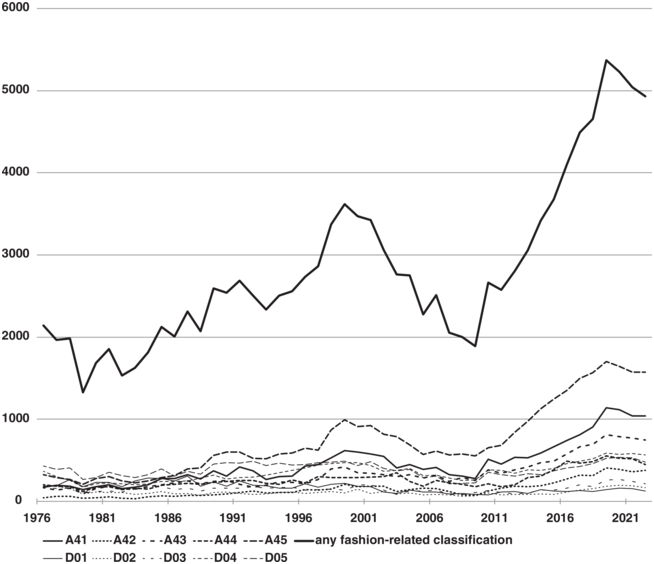
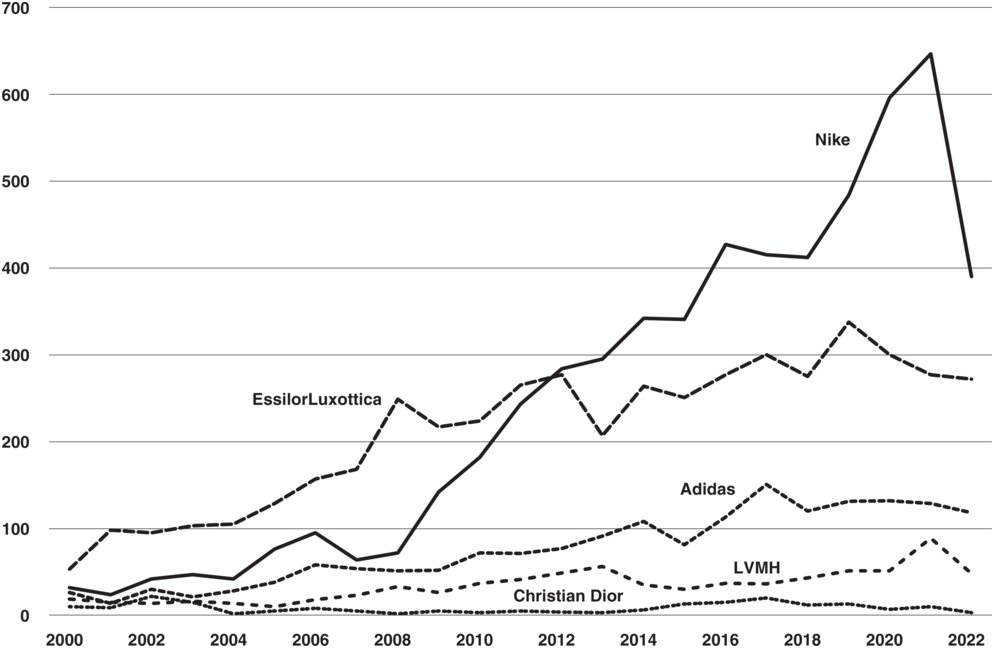
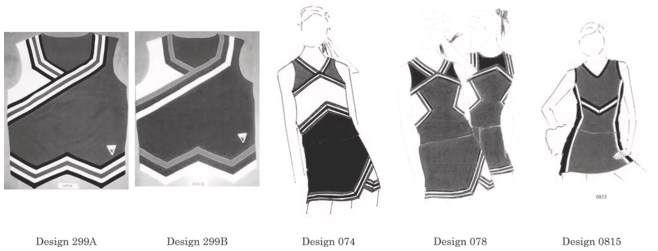

 Open access