





Introduction
Obesity management has been identified as a complex issue in primary health care (Brownell, Reference Brownell1982; Lyznicki et al., Reference Lyznicki, Young, Riggs and Davis2001). Discrepancies in the usage of health care services by individuals living with obesity have been reported in prior research (Drury and Louis, Reference Drury and Louis2002; Coughlin et al., Reference Coughlin, Uhler, Hall and Briss2004; Ferrante et al., Reference Ferrante, Chen, Crabtree and Wartenberg2007; Aldrich and Hackley, Reference Aldrich and Hackley2010). In fact, it has been shown that having obesity impedes access to health care (Drury and Louis, Reference Drury and Louis2002; Amy et al., Reference Amy, Aalborg, Lyons and Keranen2006). Studies have documented a decrease in the use of health care services associated with an increasing body mass index (BMI) (Olson et al., Reference Olson, Schumaker and Yawn1994; Fontaine et al., Reference Fontaine, Faith, Allison and Cheskin1998; Amy et al., Reference Amy, Aalborg, Lyons and Keranen2006; Aldrich and Hackley, Reference Aldrich and Hackley2010). This includes reduced rates of routine breast and gynecological cancer screening tests among individuals with obesity compared to individuals with a BMI classified as normal (Adams et al., Reference Adams, Smith, Wilbur and Grady1993; Fontaine et al., Reference Fontaine, Faith, Allison and Cheskin1998; Aldrich and Hackley, Reference Aldrich and Hackley2010). When individuals with obesity avoid or delay health care services, the development of obesity-related comorbidities may go unnoticed, progress in severity, and become more difficult to treat. In this way, the avoidance of health care services could have detrimental implications for the prevention and management of obesity, its possible comorbidities, and other diseases (Phelan et al., Reference Phelan, Burgess, Yeazel, Hellerstedt, Griffin and Van Ryn2015).
Weight bias and stigma, known as negative, prejudicial, or stereotypical beliefs and attitudes toward individuals based on their size, has been identified as a barrier to seeking health care services (Drury and Louis, Reference Drury and Louis2002; Puhl and Heuer, Reference Puhl and Heuer2009; Washington, Reference Washington2011). Weight bias was cited as the fourth most common form of discrimination among US adults (Puhl et al., Reference Puhl, Andreyeva and Brownell2008). Over the past decade, the prevalence of weight bias has increased in the United States by 66% and has been documented in employment, education, and health care settings (Andreyeva et al., Reference Andreyeva, Puhl and Brownell2008; Puhl and Heuer, Reference Puhl and Heuer2009). It has been reported that health professionals, specifically health care specialists in obesity treatment, hold strong implicit negative attitudes about individuals living with obesity (Teachman and Brownell, Reference Teachman and Brownell2001). These stigmatizing attitudes are perceived and received by individuals with obesity and may contribute to the creation of multiple barriers to health care utilization (Drury and Louis, Reference Drury and Louis2002).
Not only does weight bias pose adverse mental and physical health consequences such as exercise avoidance (Vartanian and Shaprow, Reference Vartanian and Shaprow2008), anxiety (Hilbert et al., Reference Hilbert, Braehler, Haeuser and Zenger2014), low self-esteem (Hilbert et al., Reference Hilbert, Braehler, Haeuser and Zenger2014), and depression (Hilbert et al., Reference Hilbert, Braehler, Haeuser and Zenger2014), but it also negatively impacts health care treatment outcomes (Carels et al., Reference Carels, Young, Wott, Harper, Gumble, Oehlof and Clayton2009). For example, a study compared people with severe obesity who experienced weight bias and those with severe obesity who did not experience weight bias. Those who experienced weight bias had a 1.5 kg/m2 greater BMI compared to those who did not report weight bias (Hansson and Rasmussen, Reference Hansson and Rasmussen2014). In another study, participants who associated their obesity with more negative traits (higher weight bias) were more likely to drop out of an 18-week behavioral weight loss program compared to participants who evidenced lower levels of weight bias (Carels et al., Reference Carels, Young, Wott, Harper, Gumble, Oehlof and Clayton2009). These studies suggest that the stigma experienced by individuals with obesity may impede the adoptions and maintenance of healthy behaviors.
The purpose of this scoping review was to examine how perceptions and experiences of weight bias in individuals with obesity influence engagement in primary health care. As this is an emerging area of research, we used a scoping review methodology to provide a broad overview of the state of the evidence and to determine the value of undertaking a full systematic review. Note that for the purpose of this paper, ‘engagement in primary health care’ is defined as health care utilization, willingness to participate and be involved in health care visits (i.e., screening, prevention, regular checkups). Unless otherwise specified, the term ‘health professional’ is used in this paper to refer to nurses, physicians, and other allied health professionals (i.e., dietitians, health promotion specialists) working in a primary care setting.
Methods
A scoping review of the literature was conducted using a predetermined specific research protocol based on the methodology described by Arksey and O’Malley (Reference Arksey and O’malley2005). Using this method, relevant literature is systematically identified, located, and summarized. This methodological approach is not intended to assess the quality of a study or provide quantitative synthesis of data. The purpose is to explore and chart the features of an emerging body of evidence and therefore is an effective approach to provide a broad overview of the literature and to identify research gaps. The methods we used to identify, select, and evaluate the evidence are described below. The Preferred Reporting Items for Systematic Review and Meta-Analyses extension for Scoping Reviews (PRISMA- ScR) was used to guide the reporting for this scoping review (Tricco et al., Reference Tricco, Lillie, Zarin, O’brien, Colquhoun, Levac, Moher, Peters, Horsley and Weeks2018).
Literature search
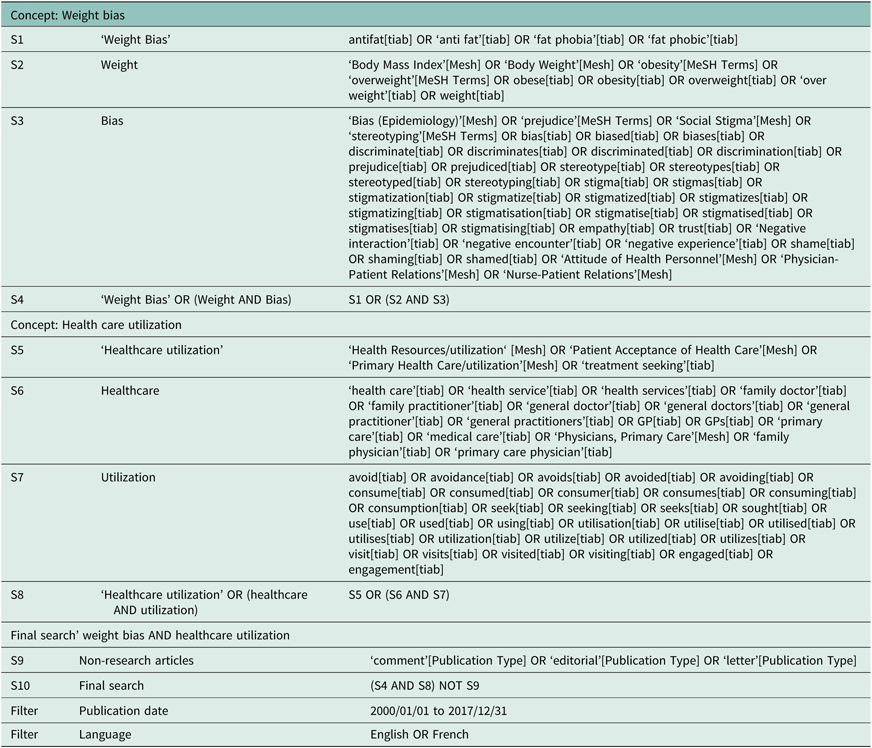
A literature search was designed and conducted in consultation with an information specialist. In July 2017, we searched PubMed with a publications date limit between January 2000 to July 2017 and limited to English and French languages. Subject headings and key words were combined for concepts: weight bias and health care utilization. The keyword search strategy for each concept is presented in the Appendix. Additional articles not identified in the online database were either found as part of the researchers’ personal library or located from the reference lists of related articles.
Study selection
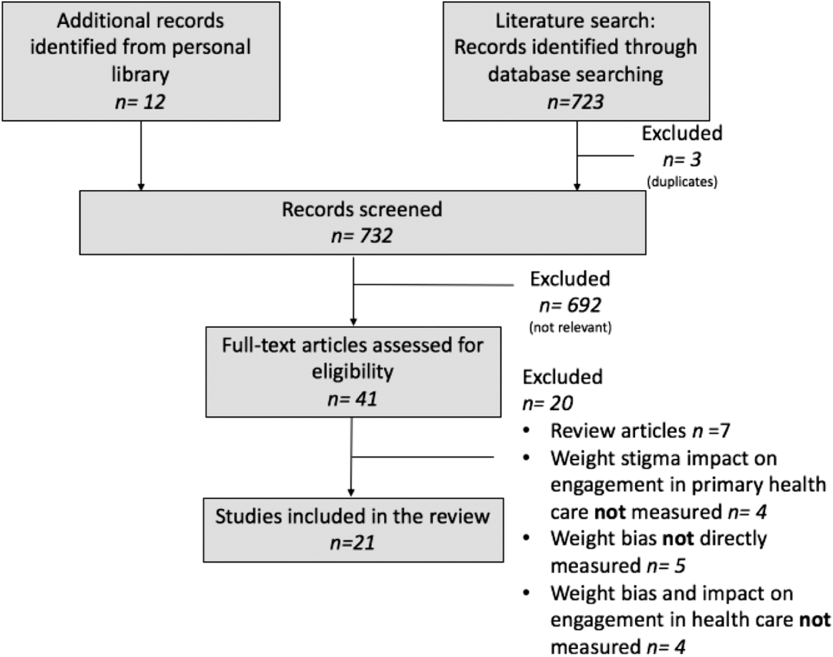
Four independent reviewers screened titles and abstracts using the following keywords and their synonyms: weight bias, primary health care, and use of health care services. After screening by title and then by abstract, we assessed the remaining articles by reading the full text. Discrepancies were resolved by consensus between reviewers. Articles were included if they were original studies that examined the influence of perceived weight bias on engagement in primary health care, and described the stigma experienced by individuals with obesity in primary healthcare. We excluded articles that did not directly measure weight bias and/or engagement in primary health care and review papers on the topic. We made sure to include all original studies cited in review papers and omitted review papers to avoid duplication. We also included a PRISMA-SCR figure to detail the process and reasons for which studies were included and excluded (refer to Figure 1.)
PRISMA-ScR flowchart illustrating the process of article selection.
Data charting
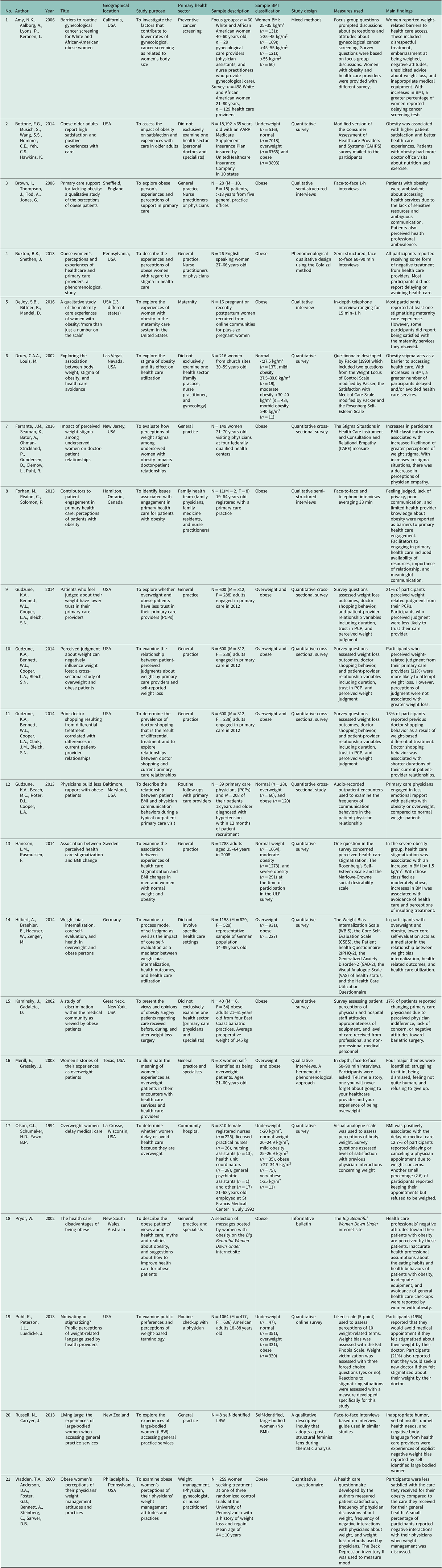
Reviewers charted data for study characteristics (country, year of publication, study design, number of participants enrolled), patient population, and outcomes measured. All reviewers verified the data for accuracy and completeness. The data are presented in Table 1.
Study characteristics
Results
The literature search resulted in 720 unique articles. An additional 12 articles were identified from other sources resulting in a total of 732 articles. The 732 articles were screened and assessed for eligibility based on inclusion criteria. Of the 732 articles that we screened as potentially relevant, 21 studies met the inclusion criteria and were included in the review (Figure 1).
Characteristics of included studies
Table 1 shows the characteristics of included studies. The majority of studies included in this review were carried out in the United States [n = 15 (71.4%)] and used quantitative methods [n = 13 (62%)]. Surveys were the most commonly used measure in quantitative studies [n = 13 (62%)]. The most commonly used qualitative method was interviews [n = 7 (33%)] including focus groups [n = 1 (4.8%)], telephone [n = 1 (4.8%)], face-to-face [n = 4 (19%)], or a combination of face-to-face and telephone [n = 1 (4.8%)].
The majority of the studies included mixed samples of both female and male participants [n = 11 (52.4%)]. The remaining 47.6% included only female participants (n = 10). Only participants with obesity were included in 38.1% (n = 8) of the studies. Other studies [n = 12 (57%)] compared different combinations of underweight, normal weight, overweight, and obese BMI classifications. One study did not measure participant BMI (4.8%).
Almost half of the studies [n = 9 (42.9%)] exclusively involved primary care physicians or nurse practitioners who work in general practice. These studies did not explicitly mention the types of primary health care services that the health professionals performed. Another 28.6% of studies did not exclusively examine one health sector (n = 6).
Themes
The following 10 themes were identified after reviewing all articles: contemptuous, patronizing, and disrespectful treatment, lack of training, ambivalence, attribution of all health issues to excess weight, assumptions about weight gain, barriers to health care utilization, expectation of differential health care treatment, low trust and poor communication, avoidance or delay of health services, and ‘doctor shopping’. While reviewing the article summaries, the researchers compared the results of each article highlighting the emerging themes from the results. Next, relevant data from each study for a specific theme were sorted and charted together. The following section utilizes the data from the included studies to describe each theme.
Contemptuous, patronizing, and disrespectful treatment
Four studies (Amy et al., Reference Amy, Aalborg, Lyons and Keranen2006; Merrill and Grassley, Reference Merrill and Grassley2008; Russell and Carryer, Reference Russell and Carryer2013; Buxton and Snethen, Reference Buxton and Snethen2013) reported that participants with overweight and obesity experienced contemptuous, patronizing, and/or disrespectful treatment from health professionals. Contemptuous and patronizing behaviors involved verbal insults and inappropriate humor (Russell and Carryer, Reference Russell and Carryer2013). Participants with overweight and obesity reported feeling that they were being treated less respectfully than individuals classified as having a normal BMI (Amy et al., Reference Amy, Aalborg, Lyons and Keranen2006). Participants perceived that weight-related advice from health professionals was delivered in a patronizing manner when health professionals insinuated that there was a simple solution to patients’ excess weight (Merrill and Grassley, Reference Merrill and Grassley2008). Describing her experience, one woman stated:
The doctor said, ‘Well, your blood pressure is high. You need to lose weight’. And I said, ‘I realize that’. He said, ‘Well, you just have to stop eating’. And I said, ‘If it would have been easy for me, I would have done it a long time ago…
(Merrill and Grassley, Reference Merrill and Grassley2008)Buxton and Snethen also reported that patients with obesity received insensitive comments about their weight from their primary care practitioners (Buxton and Snethen, Reference Buxton and Snethen2013). This was common when accessing emergency services where the patients had no established relationships with the primary care practitioner. One study that exclusively examined women with obesity reported that almost 80% of participants rarely or never had been treated disrespectfully (e.g., insulted or criticized for not trying hard enough) by their health professionals when discussing weight management (Wadden et al., Reference Wadden, Anderson, Foster, Bennett, Steinberg and Sarwer2000).
Lack of training
Participants living with overweight and obesity perceived a lack of training among health professionals (Amy et al., Reference Amy, Aalborg, Lyons and Keranen2006; Forhan et al., Reference Forhan, Risdon and Solomon2013; Russell and Carryer, Reference Russell and Carryer2013). Participants with obesity complained that health professionals involved in preventive screening and general practice did not demonstrate having knowledge about weight management and treatment services available for individuals living with obesity. Patients perceived the advice offered by their general practitioner as ineffective (Russell and Carryer, Reference Russell and Carryer2013). Amy et al. showed that over half of their sampled health professionals reported that they had no specific education on providing clinical gynecological examinations for patients with obesity (Amy et al., Reference Amy, Aalborg, Lyons and Keranen2006).
Ambivalence
Two studies (Brown et al., Reference Brown, Thompson, Tod and Jones2006; DeJoy et al., Reference Dejoy, Bittner and Mandel2016) reported on patient ambivalence concerning the use of health services. Patients also perceived health professional ambivalence during weight-related health visits (Brown et al., Reference Brown, Thompson, Tod and Jones2006). In maternity care, women with obesity reported mixed feelings about whether or not to attend their antenatal and postpartum appointments as a result of the insensitive behavior they received from both past and current health professionals (DeJoy et al., Reference Dejoy, Bittner and Mandel2016).
Attribution of all health issues to excess weight
Patients with obesity complained of health professionals’ tendencies to attribute all of their other health issues to their excess weight (Amy et al., Reference Amy, Aalborg, Lyons and Keranen2006; Brown et al., Reference Brown, Thompson, Tod and Jones2006; Merrill and Grassley, Reference Merrill and Grassley2008; Forhan et al., Reference Forhan, Risdon and Solomon2013; Russell and Carryer, Reference Russell and Carryer2013; Ferrante et al., Reference Ferrante, Seaman, Bator, Ohman-Strickland, Gundersen, Clemow and Puhl2016). Patients felt that the emphasis health professionals put on their weight distracted from other health issues and resulted in feelings of not being listened to (Brown et al., Reference Brown, Thompson, Tod and Jones2006; Russell and Carryer, Reference Russell and Carryer2013). Attribution of all health issues to excess weight affected patients’ health utilization by increasing their reluctance to disclose the events surrounding the emergence of their symptoms, to see their general practitioner, or to express concern about a health issue (Brown et al., Reference Brown, Thompson, Tod and Jones2006). Patients wanted to avoid being weighed so as to keep the focus away from their weight and on the reasons why they visited their doctor (Forhan et al., Reference Forhan, Risdon and Solomon2013). Some participants (2.6%) reported attending their scheduled appointments but refused to be weighed (Olson et al., Reference Olson, Schumaker and Yawn1994). Collectively, the results of these studies were observed in preventive screening, in primary care services, and with general practitioners.
Health professional assumptions about a patient’s weight gain
Patients indicated that health professionals often made assumptions about what it is like to live with obesity (Wadden et al., Reference Wadden, Anderson, Foster, Bennett, Steinberg and Sarwer2000; Pryor, Reference Pryor2002; Merrill and Grassley, Reference Merrill and Grassley2008; Forhan et al., Reference Forhan, Risdon and Solomon2013; DeJoy et al., Reference Dejoy, Bittner and Mandel2016; Ferrante et al., Reference Ferrante, Seaman, Bator, Ohman-Strickland, Gundersen, Clemow and Puhl2016). A participant in one study said:
I guess I wonder if they may think why I don’t make the extra effort. That might be on the back of their head but they never actually say so. But, you get good at reading people when you are obese. You see it and you kind of know what they are thinking.
(Forhan et al., Reference Forhan, Risdon and Solomon2013)These assumptions were reported in both general practice and maternity care. Assumptions were made about how women’s weight gain occurred (e.g., being the result of lack of exercise and/or eating fast food and sweets) (DeJoy et al., Reference Dejoy, Bittner and Mandel2016). One participant in this study said:
They [health professionals] made judgments about what I ate, about how much I exercised. They never asked me; they just said things like ‘Don’t drink soda,’ which I don’t, and ‘Don’t eat candy bars’, which I don’t.
(DeJoy et al., Reference Dejoy, Bittner and Mandel2016)These types of assumptions were often inaccurate, but health professionals did not listen when patients made efforts to correct them (Pryor, Reference Pryor2002; Merrill and Grassley, Reference Merrill and Grassley2008; DeJoy et al., Reference Dejoy, Bittner and Mandel2016). Wadden et al. showed that over 60% of patients complained that their physicians did not truly understand how difficult it was to be overweight (Wadden et al., Reference Wadden, Anderson, Foster, Bennett, Steinberg and Sarwer2000). In the same study, 24% of patients reported that their primary care practitioners sometimes did not believe them when they told them they do not eat that much.
Barriers to health care utilization
Seven studies (Olson et al., Reference Olson, Schumaker and Yawn1994; Drury and Louis, Reference Drury and Louis2002; Pryor, Reference Pryor2002; Amy et al., Reference Amy, Aalborg, Lyons and Keranen2006; Forhan et al., Reference Forhan, Risdon and Solomon2013; Russell and Carryer, Reference Russell and Carryer2013; Ferrante et al., Reference Ferrante, Seaman, Bator, Ohman-Strickland, Gundersen, Clemow and Puhl2016) cited reasons for avoidance, delay, or cancellation of health care services observed with individuals with overweight or obesity. Barriers to health care utilization included unsolicited lecturing about weight loss (Olson et al., Reference Olson, Schumaker and Yawn1994; Wadden et al., Reference Wadden, Anderson, Foster, Bennett, Steinberg and Sarwer2000; Drury and Louis, Reference Drury and Louis2002; Pryor, Reference Pryor2002; Amy et al., Reference Amy, Aalborg, Lyons and Keranen2006; Ferrante et al., Reference Ferrante, Seaman, Bator, Ohman-Strickland, Gundersen, Clemow and Puhl2016); not wanting to get weighed (Olson et al., Reference Olson, Schumaker and Yawn1994; Drury and Louis, Reference Drury and Louis2002); feeling embarrassed about their weight (Amy et al., Reference Amy, Aalborg, Lyons and Keranen2006; Forhan et al., Reference Forhan, Risdon and Solomon2013); a fear of exposing their bodies (Russell and Carryer, Reference Russell and Carryer2013); undressing in health professionals’ offices (Drury and Louis, Reference Drury and Louis2002); and inadequate hospital equipment such as small gowns, examination tables, chairs, and blood pressure cuffs (Pryor, Reference Pryor2002; Kaminsky and Gadaleta, Reference Kaminsky and Gadaleta2002; Amy et al., Reference Amy, Aalborg, Lyons and Keranen2006; Merrill and Grassley, Reference Merrill and Grassley2008). A female participant expressed having to wait half an hour for a nurse to find an appropriately sized blood pressure cuff (Merrill and Grassley, Reference Merrill and Grassley2008).
Expectation of differential health care
Patients with obesity expected to receive different health care treatments because of their weight (Brown et al., Reference Brown, Thompson, Tod and Jones2006; DeJoy et al., Reference Dejoy, Bittner and Mandel2016). Patient perceptions of weight bias resulted in the development of expectations of negative stereotypes in both social interactions and, to a lesser extent, health services (Brown et al., Reference Brown, Thompson, Tod and Jones2006). This was observed both during general practitioner visits and during maternity appointments. A study that exclusively involved pregnant or postpartum women with obesity reported that most participants expected differential maternity care due to their weight (DeJoy et al., Reference Dejoy, Bittner and Mandel2016). Two-thirds of the participants reported at least one negative maternity care experience with health professionals when their weight was the focus of the interaction. Participants were suspicious that the care they received was a result of their size. The participants in this study perceived an increased medicalization of their pregnancy. Contrary to these results, a qualitative study conducted with women with obesity in a general practice setting reported that many participants denied being treated differently because of their weight and did not believe that they received less care (Buxton and Snethen, Reference Buxton and Snethen2013).
Low trust and poor communication
Several studies investigated the influence of weight bias on communication and level of trust in the patient–health professional relationship (Brown et al., Reference Brown, Thompson, Tod and Jones2006; Forhan et al., Reference Forhan, Risdon and Solomon2013; Russell and Carryer, Reference Russell and Carryer2013; Gudzune et al., Reference Gudzune, Beach, Roter and Cooper2013; Reference Gudzune, Bennett, Cooper and Bleich2014a). Patients were reluctant to initiate and express concerns about their weight to their health professionals (Brown et al., Reference Brown, Thompson, Tod and Jones2006). In this same study, patients reported not getting full explanations of why their weight was being raised by the health care professional as an issue for discussion. A small percentage of participants (10.9%) reported that they usually felt that they could not speak freely with doctors about their weight (Wadden et al., Reference Wadden, Anderson, Foster, Bennett, Steinberg and Sarwer2000). Patient awareness of their general practitioner’s negative preconceived notions limited the amount of information they were willing to share (Forhan et al., Reference Forhan, Risdon and Solomon2013). Patients with overweight and obesity who felt their primary care providers judged their weight were less likely to report high trust in these primary care practitioners (Gudzune et al., Reference Gudzune, Bennett, Cooper and Bleich2014a). Patients undergoing preventive screening were also dissatisfied with the insensitive and rushed communication from health professionals (Brown et al., Reference Brown, Thompson, Tod and Jones2006). During physician visits, primary care providers demonstrated lower levels of emotional rapport with patients with obesity and overweight compared to normal weight patients (Gudzune et al., Reference Gudzune, Beach, Roter and Cooper2013). On the contrary, a study, which asked participants to rate on a scale of 0–10 their level of trust in their current primary care practitioner, indicated that 74% of patients with overweight and obesity reported a high level of trust (scores ≥ 8) in their primary care practitioner. This high level of trust occurred regardless of whether or not participants had taken part in prior ‘doctor shopping’ (Gudzune et al., Reference Gudzune, Bennett, Cooper, Clark and Bleich2014b).
‘Doctor shopping’ as a result of the differential health care treatment
Studies have introduced the notion ‘doctor shopping’ as a consequence of experiencing weight bias in health care (Kaminsky and Gadaleta, Reference Kaminsky and Gadaleta2002; Puhl et al., Reference Puhl, Peterson and Luedicke2013; Gudzune et al., Reference Gudzune, Bennett, Cooper, Clark and Bleich2014b). If general practitioners did not provide the quality of care that the patients sought, they often searched for other health professionals who were better able to work with patients with obesity. In one study, 21% of participants reported that they would look for a new doctor if they perceived stigmatization about their weight (Puhl et al., Reference Puhl, Peterson and Luedicke2013). Another study reported that 17% of participants changed primary care physicians due to physician indifference and negative attitudes toward bariatric surgery (Kaminsky and Gadaleta, Reference Kaminsky and Gadaleta2002). Gudzune et al. reported that 13% of participants with overweight and obesity had cited previous doctor shopping as a result of differential treatment (Gudzune et al., Reference Gudzune, Bennett, Cooper, Clark and Bleich2014b).
Avoidance or delay of health services
Seven studies found that weight bias among health professionals was associated with patient avoidance or delay of preventive screening, maternity, and general practitioner healthcare services (Olson et al., Reference Olson, Schumaker and Yawn1994; Drury and Louis, Reference Drury and Louis2002; Pryor, Reference Pryor2002; Amy et al., Reference Amy, Aalborg, Lyons and Keranen2006; Russell and Carryer, Reference Russell and Carryer2013; Puhl et al., Reference Puhl, Peterson and Luedicke2013; Hansson and Rasmussen, Reference Hansson and Rasmussen2014). Olson et al. reported that 32% of women with obesity and 55% of women with severe obesity reported delaying or canceling health care appointments because they knew they would have to be weighed during the appointment (Olson et al., Reference Olson, Schumaker and Yawn1994). Similarly, Russell and Carryer found that the majority of self-identified large-bodied women (BMI not reported) admitted to delaying and avoiding pelvic and breast examinations due to fears of judgment when exposing their bodies (Russell and Carryer, Reference Russell and Carryer2013). In terms of routine checkups, Puhl et al. reported that 19% of participants stated that they would avoid medical appointments if they perceived weight stigma (Puhl et al., Reference Puhl, Peterson and Luedicke2013). Although seven studies reported the association between weight bias and decreased health care utilization, four studies reported different findings (Merrill and Grassley, Reference Merrill and Grassley2008; Buxton and Snethen, Reference Buxton and Snethen2013; Hilbert et al., Reference Hilbert, Braehler, Haeuser and Zenger2014; Bottone et al., Reference Bottone, Musich, Wang, Hommer, Yeh and Hawkins2014). Buxton and Snethen reported that the majority of participants with obesity did not delay nor avoid health care (Buxton and Snethen, Reference Buxton and Snethen2013). Further, Bottone et al. reported that 29.6% of patients with obesity reported visiting with their primary care provider three or more times in the past six months compared to 23.4% of patients with normal weight (Bottone et al., Reference Bottone, Musich, Wang, Hommer, Yeh and Hawkins2014). Hilbert et al. reported that a greater BMI predicted greater weight bias internalization and greater health care utilization (Hilbert et al., Reference Hilbert, Braehler, Haeuser and Zenger2014). However, this study exclusively examined the influence of weight bias internalization on health care utilization. The theme ‘refusing to give up’ was highlighted in a study that reported on the experiences of patients classified as overweight in their encounter with health care professionals (Merrill and Grassley, Reference Merrill and Grassley2008). ‘Refusing to give up’ illustrates the persistence of individuals with obesity to continue to try to control or lose weight. A female participant expressed that she would continue to pursue help from her physician:
I was in her office a month ago and I said, ‘I want gastric bypass’. And she said, ‘Okay’. I said, ‘What?’ And she goes, ‘Okay’. I said, ‘You’re not going to argue with me about this and tell me to go eat less and exercise?’ And she said, ‘No’. And that was it.
(Merrill and Grassley, Reference Merrill and Grassley2008)Discussion
In this scoping review, we reviewed 21 published studies to examine the influence of weight bias on engagement in primary health care. We have highlighted the themes that emerged from an examination of these studies. In this section, we highlight inconsistencies, make recommendations for future research, and outline the strengths and limitations of this scoping review.
Inconsistencies
The results of this review indicate that patients with overweight and obesity delay or avoid health care services as a result of health professionals’ weight bias. Receiving unsolicited lecturing about weight loss (Olson et al., Reference Olson, Schumaker and Yawn1994; Drury and Louis, Reference Drury and Louis2002; Pryor, Reference Pryor2002; Amy et al., Reference Amy, Aalborg, Lyons and Keranen2006; Ferrante et al., Reference Ferrante, Seaman, Bator, Ohman-Strickland, Gundersen, Clemow and Puhl2016), not wanting to get weighed (Olson et al., Reference Olson, Schumaker and Yawn1994; Drury and Louis, Reference Drury and Louis2002), feeling embarrassed about their weight (Amy et al., Reference Amy, Aalborg, Lyons and Keranen2006; Forhan et al., Reference Forhan, Risdon and Solomon2013), fear of exposing their bodies (Russell and Carryer, Reference Russell and Carryer2013), and inadequate hospital equipment such as small gowns, examination tables, chairs, and blood pressure cuffs (Pryor, Reference Pryor2002; Amy et al., Reference Amy, Aalborg, Lyons and Keranen2006) were reported by participants as reasons for avoiding health care.
On the contrary, four studies in this review did not report a decreased use of health care services (Merrill and Grassley, Reference Merrill and Grassley2008; Buxton and Snethen, Reference Buxton and Snethen2013; Hilbert et al., Reference Hilbert, Braehler, Haeuser and Zenger2014; Bottone et al., Reference Bottone, Musich, Wang, Hommer, Yeh and Hawkins2014). Hilbert et al. reported that a greater BMI predicted greater weight bias internalization known as greater health care utilization (Hilbert et al., Reference Hilbert, Braehler, Haeuser and Zenger2014). However, this study exclusively examined a specific type of weight bias called weight bias internalization. Buxton and Snethen reported that the majority of participants with obesity did not delay nor avoid health care (Buxton and Snethen, Reference Buxton and Snethen2013). Bottone et al. also reported that individuals with obesity were more likely to use more health care services (have three or more visits with their personal doctor in the past 6 months) (Bottone et al., Reference Bottone, Musich, Wang, Hommer, Yeh and Hawkins2014).
We speculate that these inconsistencies can be attributed to the fact that perceptions of weight bias in primary health care could differ depending on the sample being examined. For example, females might have different perceptions of weight bias compared to their male counterparts, and this might influence their engagement in primary health care services. Such inconsistencies in research examining the relationship between weight bias and health care utilization indicates that further study is warranted. Future studies should examine how weight bias influences the number of health care visits and should compare between sexes and ages. In addition, future studies should examine exclusively the different types of weight bias (explicit, implicit, and internalized) and the impact each type may have on health care utilization.
Future research and recommendations
For improvements in patient engagement in the primary health care to occur, health professionals must first become aware of their weight bias attitudes and beliefs that could impact patient engagement in primary health care. It is only through awareness of one’s biases that conscious efforts can be made to impede their influence on behavior. Weight bias reduction interventions that promote discourse and positive interactions between patients with obesity and health professionals are recommended to improve patient and health provider communication (Alberga et al., Reference Alberga, Pickering, Alix Hayden, Ball, Edwards, Jelinski, Nutter, Oddie, Sharma and Russell-Mayhew2016b) and mitigate the issue of differential perceptions of weight bias. Future research is needed to examine the effects of robust weight bias reduction interventions among pre-service and practicing health professionals.
The provision of health care equipment that is adequate and appropriate for all body types has the potential to influence health care utilization by individuals with obesity. Participants in four studies cited inadequate or inappropriately sized equipment as a barrier to health care utilization (Pryor, Reference Pryor2002; Kaminsky and Gadaleta, Reference Kaminsky and Gadaleta2002; Amy et al., Reference Amy, Aalborg, Lyons and Keranen2006; Merrill and Grassley, Reference Merrill and Grassley2008). Addressing this barrier to health care utilization may result in patients feeling less embarrassed about attention being drawn to their body size due to inappropriate medical equipment.
There is a major gap in health professional training programs on obesity and weight bias (Amy et al., Reference Amy, Aalborg, Lyons and Keranen2006; Forhan et al., Reference Forhan, Risdon and Solomon2013; Russell and Carryer, Reference Russell and Carryer2013). The need for educational programs aimed to improve knowledge of weight management and weight bias in primary health care has been identified by patients living with obesity (Amy et al., Reference Amy, Aalborg, Lyons and Keranen2006; Forhan et al., Reference Forhan, Risdon and Solomon2013; Russell and Carryer, Reference Russell and Carryer2013). Improved training not only refers to providing educational information on the complexity of weight and the physiological aspects of obesity but also improving clinical skills to conduct sensitive and unbiased measurements of preventive screening tests or other health services. Such interventions could improve the effectiveness of treatment plans prescribed for patients with obesity and reduce ambivalence about obesity among patients and their health professionals. Avoidance or ambiguity of discussing weight is not an effective strategy to avoid weight stigmatization. Obesity Canada’s 5As of obesity management (Ask, Assess, Advise, Agree, Assist) are recommended for health practitioners usage in primary care to maintain sensitive, respectful, and non-judgmental conversations about weight management with people living with obesity (Rueda-Clausen et al., Reference Rueda-Clausen, Benterud, Bond, Olszowka, Vallis and Sharma2014).
More research is needed to fully examine the effects of weight bias in primary health care and on patient engagement in health care before a systematic review can be performed. As illustrated in this scoping review, many of the studies utilized a quantitative study design such as surveys. More qualitative research such as interviews and focus groups that examine patients’ perceptions and experiences of weight bias in primary health care are needed. Qualitative research and the lived experience of weight bias was identified as a strategic research priority among stakeholders in the field of obesity (Alberga et al., Reference Alberga, Russell-Mayhew, Von Ranson, Mclaren, Ramos-Salas and Sharma2016a). In addition, this scoping review highlighted the lack of literature that exclusively examined the effects of health professional weight bias on men’s engagement in health care. More research on sex differences in health care engagement is needed before a systematic review may be performed.
Strengths and limitations
The present study is the first, to our knowledge, that summarizes the existing literature on weight bias and patient engagement in primary health care. This scoping review provides a comprehensive summary of the results of the different studies that explored this topic. However, because our scoping review focused primarily on weight bias in primary care health professionals, conclusions drawn from this scoping review can only be made about primary care health professionals. We included three papers in this scoping review that reported three different outcomes albeit from the same sample of participants, which may be viewed as a limitation. Future research is warranted to examine the influence of weight bias on engagement in other health sectors and settings (e.g., diet and fitness industry, public health).
Conclusion
This scoping review first identified perceived weight bias in primary health care evidenced by health care providers’ contemptuous, patronizing, and disrespectful treatment, lack of training, ambivalence, attribution and assumptions about patients’ weight and health. Second, it is clear that weight bias negatively affects patients’ engagement in primary health care through their perceived barriers to health care utilization, expectations of differential health care treatment, low trust and poor communication, avoidance or delay of health services, and ‘doctor shopping’. Future research and advocacy initiatives are needed to reduce weight bias among health professionals and improve quality of care and engagement in primary health care among patients living with obesity.
Author ORCIDs
Angela S Alberga 0000-0003-3858-9482
Acknowledgments
We gratefully acknowledge K.H. for her help in solidifying the search strategy and conducting the database search.
Author’s Contribution
Alberga AS, Forhan M, and Russell-Mayhew S were involved in the conception of this scoping review. All authors screened titles, abstracts, full text articles and charted data for study characteristics. All authors verified the data for accuracy and completeness. Edache IY was responsible for conducting the thematic analysis with guidance from Alberga AS, Forhan M and Russell-Mayhew S. Alberga AS and Edache IY drafted the manuscript which was revised and edited by Forhan M, and Russell-Mayhew S. All authors approved the final version of this manuscript.
Financial support
The second author was supported by a Research Assistantship from Concordia University. The first author was previously funded by a Banting Canadian Institutes of Health Research Postdoctoral Fellowship and is currently supported by a Research Scholar Junior 1 award from les Fonds de Recherche du Québec- Santé.
Conflict of interest
None.
Search 2017


 Open access

