

Of figs and signs: rethinking subalternity in the ancient Mediterranean
What can a fig stand for? A species of tree? An agricultural practice? The pursuit of freedom? A fig may indeed stand for all these different notions at once, depending on the perspective and the interpretive elements selected by interpreters to embed that specific sign within their narrative. In this paper, we argue that figs may also, from a postcolonial perspective, signify the people unaccounted for by dominant historical narratives. Our interpretation draws from the meaning of the fig held up by a renowned public figure of Classical antiquity, Cato the Censor, as he addressed the Roman Senate in a rhetorical attempt to convince the senators that delendam esse Carthaginem — Carthage had to be destroyed.
When Cato brought a basket of Carthaginian figs to the Senate floor around 152 bce, encouraging the senators to take note of their freshness, they understood exactly what the figs stood for. Still fresh despite the long journey from North Africa, they hinted at Carthage’s proximity to Rome: a threat to Rome’s control of the Mediterranean, and to its very survival (Meijer Reference Meijer1984; Vogel-Weidemann Reference Vogel-Weidemann1989). What the senators certainly did not associate the figs with was the potential for decolonial action that they would signify two millennia later.
Speaking in the mid-second century bce, Cato stood in the long shadow of a bloody colonial history that had impacted the wider central and western Mediterranean, spanning North Africa, Sicily, the southern coasts of Spain and Sardinia. These rural territories had fallen under Carthaginian rule in the fifth century bce, and they were best known in antiquity for their extraordinary agricultural produce—the very same reason which prompted Cato to present the figs to the Senate meeting. Figs and pomegranate (not accidentally known as malum punicum, the ‘Punic apple’), were high-end commercial agricultural products at the time of Carthaginian and Roman supremacy. Grain was nevertheless no less critical to these imperial powers, as their expansion required ever-increasing supplies of cereal imports to feed their growing urban populations. Sardinia was one of the provinces that was of critical importance for the grain supply to Carthaginian cities, and subsequently to Roman cities, which earned the island the nickname of ‘the third granary of Rome’ (Cic., De imp. Cn. Pomp., 12, 33).
But what may have been lost upon the Roman senators should not be missed by a contemporary audience, to whom Cato’s rhetorical exercise with the figs (Fig. 1) acquires an altogether different significance (indeed, one differently signified!). If the act of signifying one thing through another is among the most ancient and widespread forms of human knowledge-sharing, equally fundamental is the act of consciously choosing not to—or unconsciously failing to—use the same sign to convey something different. With this paper, we seek to move beyond the prevalent understanding of Punic and Roman history, one dominated by warfare, colonial statesmen and their dynasties, such as the Barca and Scipio families. Instead, we will sketch a different picture, one both local and rural, and less extensively documented by historical sources. Sardinia in particular has been primarily pictured as dominated by wealthy foreign Punic or Roman landowners exploiting an impoverished population, without accounting for the expertise and labour involved in agricultural production. Similarly understated is the archaeological evidence for the lives, practices and social identities of these rural people. With this paper, we propose a postcolonial and decolonial interpretation of rural Sardinia by examining the material signs left by the men and women living in subaltern relationships with the history of the Mediterranean.
The photograph (above), taken in the summer of 2023 in San Vero Milis, shows a branch bearing ripe figs, a semiotic index of the season. The fresco (below), a basket of figs from the Villa of Poppaea Sabina at Oplontis, a city buried by the eruption of Vesuvius in 79 ce along with Pompeii and Herculaneum, serves as a semiotic icon of Roman wall-painting traditions. (Photograph: Peter van Dommelen.)

This paper will, first, offer a semiotic account of Antonio Gramsci’s theory of subaltern groups; second, it will compare the mainstream narratives of Punic and Roman-period Sardinia with the multiple counternarratives that emerge from an archaeological investigation of its neglected rural areas; finally, we will provide a synthesis between the semiotic theory of subaltern groups and the archaeological counternarratives proposed.
We use the term ‘subaltern’ with reference to the concept first introduced by political theorist Antonio Gramsci. In his Prison Notebook 25, On the Margin of History (The History of Subaltern Social Groups), Gramsci discusses the socially, economically and ethnically heterogeneous groups which are united by their subordinate relation with history. A pivotal work of twentieth-century philosophy, the Prison Notebooks delve into the intricacies of human nature, offering insights that stretch beyond economic disparities and that continue to serve as a potent call to action in ongoing struggles against inequality (Crehan Reference Crehan2016), urging proactive social change from the Global South to the Arab Spring (Dainotto & Jamison Reference Dainotto and Jameson2020). The concept of the subaltern has inspired the worldwide postcolonial movement led by critical thinkers such as Edward Said (1978; Reference Said1993), Homi Bhabha (Reference Bhabha1994), Gayatri Spivak (1988; [2004] Reference Spivak, Volume, Cain and Harrison2023), and collectives such as Eric Stokes and Ranajit Guha’s Subaltern Studies Group (Guha Reference Guha1982). Gramsci’s contributions are foundational. For example, some of the classic texts of postcolonialism, Edward Said’s Orientalism (Reference Said1978) and Culture and Imperialism (Reference Said1993), refer explicitly to Gramsci, by inviting political writers to provide a critical elaboration of ‘what one really is (…) as a product of the historical process to date’ (Said Reference Said1978, 25, translating Gramsci Reference Gramsci and Gerratana1975, 1374), and by reiterating the social desirability of the intellectual vocation to analyse the world beyond their category of belonging (Said Reference Said1993, 35).
Within archaeology, Gramsci’s notion of hegemony was quickly picked up (Barrett Reference Barrett1997; Laurence Reference Laurence1999; Millett Reference Millett1992; van Dommelen Reference van Dommelen1997), particularly within postcolonial theory, which has formed a solid pillar of post-processual archaeology since the 1990s (Trigger Reference Trigger1989; van Dommelen Reference van Dommelen, Tilley, Keane, Kuechler, Rowlands and Spyer2006). But until fairly recently, the discussion of subalternity had not yet pervaded archaeological discourse as much as that on hegemony (Smith Reference Smith2010; van Dommelen Reference van Dommelen, Tilley, Keane, Kuechler, Rowlands and Spyer2006). This trend has recently changed. Subalternity has become an archaeological category central to our understanding of the human past since decolonizing the study of the ancient world has reached the top of the Humanities’ agenda (Mattingly Reference Mattingly2023), specifically in relation to the Classical world (Vlassopoulos Reference Vlassopoulos2021; Zucchetti & Cimino Reference Zucchetti and Cimino2021; Zuchtriegel Reference Zuchtriegel2017); the contemporary age (González-Ruibal Reference González-Ruibal2019; Reference González-Ruibal2021); postcolonial critiques of ancient Mediterranean archaeology (van Dommelen Reference van Dommelen2019); discussions of objects and people left behind by history (Marín-Aguilera Reference Marín-Aguilera2021a; Puddu Reference Puddu2019a); enslaved people (Battle-Baptiste Reference Battle-Baptiste2011); notions of decoloniality and self-determination of indigenous communities (Marín-Aguilera Reference Marín-Aguilera2021b; Lemos Reference Lemos2022); posthumanism and new materialism (Mol Reference Mol2023). Moreover, ongoing research projects addressing structural inequality from alternative points of view, such as socio-economic failure (Van Oyen Reference Van Oyen2023) and ‘grievability’ (Eriksen & Kay Reference Eriksen and Kay2022 after Butler Reference Butler2009), have contributed to a more nuanced definition of archaeological traces of subalternity.Footnote 1 These and other scholarly works have crucially contributed to bridging archaeology’s theoretical gap around the ways in which people neglected by history—women, enslaved individuals, peasants, miners—actively contribute to shaping the world, both ancient and modern.
The current popularity of the concept of ‘subalternity’ in reconstructing the past especially through comparison with current socio-historical challenges is welcome, but it does contribute to a ‘haziness’ of definitions and case studies (after Green Reference Green2002, 2: ‘the conception of subaltern is often misunderstood and misappropriated’). We are therefore in need of a coherent theorization of the concept as an archaeological tool, one acknowledging that subalternity has evolved through time (Buttigieg & Green Reference Buttigieg and Green2021) and may encompass ‘many dimensions — “conditions” in Gramsci’s words — ranging from race and class to economic and religious aspects, that define subordinate social groups’ (van Dommelen Reference van Dommelen2019, 185). After offering a semiotic dissection of subalternity in the next section, this paper will present two case studies of subalternity from the rural districts of Sardinia: one centred on Punic-period productive activities and one focused on Roman-period funerary practices and bodies.
Subalternity and the materiality of absence: a semiotic-Gramscian account
The archaeological grounding of subalternity as both a theory and a tool should begin with the words of Gramsci himself. After a 20-year-long study of the concept (Notebooks 3, 5, 8 and Prison Letters 31.08.1931), Antonio Gramsci writes in Prison Notebook 25:
Methodological criteria. The history of subaltern social groups is necessarily fragmented and episodic. In the historical activity of these groups there is, undoubtedly, a tendency towards unification, albeit in provisional stages; but this tendency is continually interrupted by the initiative of the ruling groups and, therefore, can be demonstrated only if a historical cycle completes its course and culminates in success. Subaltern groups are always subject to the initiatives of the dominant groups, even when they rebel and rise up; only ‘permanent’ victory breaks their subordination, but not immediately. In fact, even when they seem triumphant, subaltern groups are only in an anxious defensive state (as can be demonstrated by the history of the French Revolution up to, at least, 1830). Every trace of autonomous initiative by subaltern groups, then, should be of inestimable value to the integral historian. This kind of history, therefore, must be handled in the form of monographs and for each monograph one needs to gather an immense quantity of material that is often hard to collect. [1934–35]’ (Buttigieg & Green Reference Buttigieg and Green2021, 6–7)
This text defines subalterns in relation to the cognitive category of history: a diverse group of people united by the effort to see their initiatives acknowledged, despite the fragmentation they are forced to endure from the disrupting activities of ruling groups, whose loud voices shape national histories. For Gramsci, these voices define the history of élites: ‘the history of the world is the history of its few hegemonic states; hence the history of the subaltern states is explained by the history of the hegemonic states in the first place’ (Gramsci, Notebook 15, 1759). This ideological knowledge stems from a deliberate semiotic act that selects specific material elements as symbols of a linear history while excluding evidence that reveals other, multiple, dynamic and non-linear histories. The history of the ancient Mediterranean too reminds us of a chiefly hegemonic colonial history defined by its male elites and their material culture. For example, the Punic wars and their male leaders such as Hamilcar Barca, an aristocratic warlord, and his famous son Hannibal are central to the conventional understanding of Punic history. As a direct consequence, both academics and the wider public tend to perceive the Punic world in terms of the military hostilities between Carthage and Rome. This is illustrated by the conventional top-down representation of colonial expansion, in which elite families and individuals take the lead in large-scale narratives of conquest and male prominence.
Narratives of the Roman past too have long centred on male symbols of power. A recent Tiktok trend—where women ask men how often they think about the Roman Empire—illustrates this bias, with responses ranging from ‘a few times a month’ to ‘a few times a day’, often citing conquest, warfare and technological prominence. Interviewed by The Washington Post, Hannah Cornwell confirmed that, since the nineteenth century, historians have viewed Rome through the prism of politics and warfare shaped by ‘elite, masculine sources’ (https://www.washingtonpost.com/lifestyle/2023/09/14/roman-empire-trend-men-tiktok/). This perspective traces back to nineteenth-century Prussian historian, epigraphist and politician Theodor Mommsen, main author of the Corpus Inscriptionum Latinarum (CIL) and Nobel Prize laureate for A History of Rome. By making inscriptions the interpretative foundations—indeed the symbol—of the Roman world, Mommsen reinforced an elite-centric approach. Efforts to shift focus toward Rome’s non-literate populations have since emerged, from Haverfield to Millett, acknowledged to have ‘significantly shift[ed] attention to the “native” side of the Romanization equation’ (Gardner Reference Gardner2007, 27). This elite-centred narrative is not a prerogative of the ancient Mediterranean: most traditions have focused on ‘elaborately furnished burials, high-status magnate sites and the material trappings of high society, such as weapons and jewellery’ (Raffield et al. Reference Raffield, Fredengren and Kjellström2024, 137). Qualitative progress is being achieved through postcolonial and feminist theories refocusing on ‘subjected people, their behaviour and material culture’ (Mattingly Reference Mattingly2011, 14), while problematising ‘the normative model of the adult male’ (Revell Reference Revell2010, 8). Centring subalterns’ agency is crucial for a balanced, inclusive history. But how should this be achieved? What narratives should we pursue, and what evidence should we adduce? In short, what signs did subalterns leave, and how should archaeologists interpret them?
Gramsci’s effort to focus on every trace of autonomous initiative by subaltern groups aligns with archaeology’s mission to foreground the overlooked material traces of past actions. Indeed, labelling and storing each and all material fragments collected on fieldwork—excavation, survey, analysis—is an established archaeological routine. But what happens next? Some finds make it to the next, interpretive, phase, others do not. The selection process through which only a few labelled objects—strata, burials, bones, practices—are given interpretive relevance, while others are left in the storerooms, defines each archaeological endeavour. In the Dawn of Everything, David Graeber and David Wengrow (Reference Graeber and Wengrow2021, 14, 15, 217) critique the common practice of cherry-picking case studies that conveniently align with specific—most often mainstream—research questions and agendas. They argue that this approach ultimately brings dull and repetitive narratives of the past, limiting our understanding of the diverse paths that human societies have taken regarding inequality, mutual care, and efforts to build more equitable ways of living (Graeber & Wengrow Reference Graeber and Wengrow2021, 21–4). Both what is highlighted as foundational and symbolic of specific interpretations of the past and what is, perhaps momentarily, left behind, depends on scholars’ agenda, research questions and choice of paradigm. But symbols are not a natural occurrence; selected from specific perspectives, they are conventionally accepted, and solidify over time, acquiring a natural resemblance. While the Roman world may be symbolized by the Colosseum and the wide commerce of goods, just as the contemporary West might be represented by both skyscrapers and the rise of restaurant-prepared meals consumed at home, these symbols tell only partial truths. Ancient monuments would not exist without the labour of workers and enslaved individuals—many of whom were unlikely ever to have set foot inside them, similarly to what happens in today’s emerging rich countries where migrant workers who built record-breaking landmarks that symbolise wealth are excluded from the spaces they construct. Even the modern habit of dining at home on restaurant food depends on the labour of exploited, mostly migrant, delivery workers navigating cities on bicycles (Cant Reference Cant2019; Lord et al. Reference Lord, Bates and Friday2023; Popan Reference Popan2024). To understand both past and present fully, we must recognize the ideological discourses behind symbols—hidden perspectives that reveal the complexities of human experience.
This selection process makes the study of the past profoundly semiotic, as its end game is not to collect a list of facts or things, but to understand the ways through which people have given meanings to them. Archaeologists select amongst the multitude of facts and things those that most effectively convey to the reader the ultimate meaning system of past societies (Tamm & Preucel Reference Tamm, Preucel, Pelkey, Petrill and Ricciardone2022, 49–50). What about the archaeological evidence that is labelled, stored, and does not make it to the history-building phase? It stays at our disposal until new agendas are set, more nuanced questions asked, and different paradigms are used to give them value.
Gramsci’s theory of subalterns provides a framework that allows us to (re-)introduce into history the heterogeneous material signs discarded by elite-oriented—androcentric, white, ableist, colonial—approaches: through it, the traces of initiatives undertaken by people stripped of their direct relation with history by the ruling groups are given a historical possibility. Since traces are semiotic entities, insofar as they stand for something—or someone—that is absent but left proof of their passage/action/intention, the study of the subalterns’ initiatives would enormously benefit from a semiotic methodology.
Semiotics places the sign, of which symbols are just one type, at the forefront. Defined by pragmatist philosopher Charles Sanders Peirce as ‘something that stands for something else to someone, in some respects or capacities’, signs are a dynamic and relational entity in a world where its—human and non-human—inhabitants’ main activity is interpreting, and making connections between them in progressively more nuanced ways, one of the most complex of which being creating history. Signs bridge the gap between two entities through a logical argument—interpretation—that involves at least a third entity. This gap-bridging activity creates a movement, through an interpretive chain, that Peirce (Reference Peirce, Houser and Kloesel1998, EP 312–333) named synechism—or continuity—that extends potentially ad infinitum.
Gramsci likewise theorizes the existence of a third entity, the subalterns, whose fragmented traces must be object of study by the observer, which he names the ‘integral historian’ in Notebook 25. He impresses upon them the importance of attributing ‘incalculable value’ to ‘every trace of independent initiative on the part of subaltern groups’, and to organize these remains in a monograph requiring ‘an immense quantity of materials, which is often hard to collect’. In other words, Gramsci is implying that:
-
1. the integral historian will not simply gather, but logically connect such materials with each other;
-
2. by so doing, s/he will generate an interpretive dynamism that will fill the gaps in our knowledge of the past, and return history to its multiplicity.
Gramsci theorized this interpretive mechanism to fix the main flaw he identified in the way world history was shaped: it coincides with the history of the national dominant classes (Notebook 15). It is not hazardous to state that Gramsci’s dissatisfaction with history is shared by archaeologists. For Gramsci, the crafting of such a linear history does not reflect the dynamic nature of human beings:
That ‘human nature’ is the ‘complex of social relations’ is the most satisfactory answer, because it includes the idea of becoming (man ‘becomes’, he changes continuously with the changing of social relations) and because it denies ‘man in general’. Indeed social relations are expressed by various groups of men which each presuppose the others and whose unity is dialectical, not formal. (Hoare & Nowell-Smith Reference Hoare and Nowell-Smith1971, 355)
Archaeologists are, similarly, interested in the infinite ways that humans relate to each other and to non-human agents (Gardin Reference Gardin, Sebeok and Umiker-Sebeok1988). Peirce’s semiotics, Gramsci’s history of subaltern groups and archaeologists’ interpretive mission share a common goal: achieving a more nuanced understanding of history’s multiplicity. The introduction of a third party, the subalterns, between the static equation ruling classes=history as a means to account for the mutability of human societies, is not unlike the way Peirce transcended the static and normative nature of the Saussurean signifier and signified dualisms—functional to language studies—to acknowledge ‘the non-arbitrary properties of signs in relation to their objects’ (Swenson & Cipolla Reference Swenson and Cipolla2020, 313). Structuralist and many post-structuralist approaches to archaeology, based on the arbitrariness of meaning, were heavily influenced by such linguistic models (Hodder 1982; Reference Hodder2012, 16). However, new paradigms such as decolonization, postcolonialism, feminism, gender theory, body theory and post-humanism—which deconstruct the notion of a monolithic past by enhancing multi-vocality, inclusivity, and diversity—require the support of a semiotic theory that enhances the heterogeneous nature of meaning as a result of direct lived experience (e.g. Preucel 2006; Reference Preucel2021). The representamen (sign), its object (material reality) and the interpretant (the process connecting of a sign to an object) composing Peirce’s sign provide a suitable framework for archaeology, for it accommodates the fluidity of signification beyond the arbitrariness of symbols.
For these reasons we apply Peirce’s division of signs—icon, index, and symbol—to the material remains of subaltern experiences in Punic and Roman period Sardinia. Icons refer to their objects through physical resemblance, as in paintings. Indexes signify their objects through material traces of interaction—e.g. a pawprint on a brick stands for a dog’s passage on wet clay. Symbols function through conventional agreement, as in the case of flags. But, as Preucel notes in this issue, ‘no sign is inherently an icon an index, or a symbol’: these categories depend on context, agenda, and interpretive means. The same object can be an index in one setting, and a symbol in another. An example of this shift come from one of the IDENTIS teams’ finds during a survey of a ploughed field in Gonnostramatza, west-central Sardinia: a fragment of Roman-period ceramic building-material imprinted with a pawprint (Fig. 2). The item serves as an index of a dog stepping on the fresh clay while the bricks were laid to dry in the sun, hinting at a farm where people, materials and animals coexisted. Yet, as students examined it, the imprint—due to its resemblance to all dogs’ paws—evoked memories of their own pets, transforming the object, through its iconicity, into a personal symbol. Later, the object, conventionally selected during the curatorial process, became an emblem of the exhibition Shards of the Past. This shifting significance underscores how meaning is shaped by interpretation. In the case of symbols—particularly linguistic ones theorized by Saussure [1916] (Reference Saussure1989)—arbitrariness is total: ‘there is not a relation of necessity or motivation that links a given signifier to a specific meaning’ (Sirigu Reference Sirigu2001, 181). Conversely, as the example above illustrates, Peirce’s indexes and icons retain a logically grounded connection to their referents (Sirigu Reference Sirigu2001, 182). While Peirce’s theory extends beyond this trichotomy of signs (see Preucel in this issue), this framework suffices in foregrounding the archaeological potential of Gramsci’s theory of subalterns.
Fragment of Roman-period ceramic building material bearing a dog’s pawprint, an unintentional but enduring trace of everyday life and human–animal relationships, found in Gonnostramatza, west-central Sardinia, during the IDENTIS survey. (Photograph: Mauro Puddu.)

Our method follows up on other successful users of Gramsci’s theories who have benefited from a steady semiotic involvement across social sciences, particularly within projects retrieving the histories of people relegated to oblivion (Gherlone & Restaneo Reference Gherlone and Restaneo2022). Reintroducing into history the actions/things/people passively forgotten, actively ignored, or ideologically silenced, counterbalances ‘the retrospective gaze of the historian [that] creates the illusion of a linear and causal stream of time and excludes all unpredictable and random elements from the past’ (Tamm & Preucel Reference Tamm, Preucel, Pelkey, Petrill and Ricciardone2022, 56 quoting Lotman Reference Lotman2009, 14), which archaeologists have the capacity to bring back to the fore.
Gramsci’s theory has inspired postcolonial studies because it comprises a universal invitation to scholars from any latitude and of any period to give historical dignity to human groups that were discontinued, interrupted and forgotten. Gramsci’s aim meets Boris Uspenskij’s (Reference Uspenskij and Lotman1974) mission of historical research involving ‘a certain semiotization of reality—transformation of non-sign into sign and non-history into history’. We argue that Gramsci’s call to collect every trace of subalterns’ initiatives is best understood through a semiotic lens, which allows archaeologists to interpret the fragmented materiality collected from multiple perspectives. Only then can subaltern remains be seen archaeologically as icons of subaltern efforts to unify, indexes of ruling-class interventions to disrupt those attempts and symbols of subalterns’ conscious struggle to construct history—one that is fragmented and uneven. Archaeology, with its ability to detect subtle material remains of the past, is uniquely positioned to reconstruct subaltern agency. By interpreting the signs embedded in subaltern bodies, landscapes and material culture, it not only counters the historical oblivion imposed on these groups but also restores their diverse experiences of history, offering nuanced and more just interpretations of the past. The theoretical equation between archaeological research and semiotic endeavour is, in these terms, total: the next sections will test its validity using the material analysis of ancient Sardinia as a case study.
Grand histories and cognitive gaps: reimagining Punic and Roman Sardinia
The grand historical narratives of coherent civilizations tend to be structured as elite-oriented, androcentric, white, ableist monoliths, upholding the resulting man as a neutral figure (Crellin Reference Crellin, Moen and Pedersen2025, 47). Archaeological representations of the Punic and Roman worlds are no exception to this trend. Rather the opposite: the Roman ideology of humanitas created ‘an asymmetrical hierarchy’ (Čulík-Baird & Hanses Reference Čulík-Baird and Hanses2024, 78) that granted privileges to some groups (primarily male citizens) while subordinating others—women, Afri, Hispani, enslaved individuals. Although progress has been made towards decolonization (Mattingly Reference Mattingly2023), we share Mike McCarthy’s view (Reference McCarthy2013, 9) that most publications on the Roman world still present a ‘VIP version of history’. Traditional approaches in the field have emphasized ‘élite sites and public monuments, the efficiency and order of the army and its role in protecting provincials, the high culture of empire’ (Mattingly Reference Mattingly, Tanner and Gardner2024, 289). This attitude has given rise to a ‘false western cultural intimacy we still uphold with the Roman past’ (Mol Reference Mol2023, 716) that slows down the adoption of more nuanced narratives, ‘emphasising the spectacular and visually appealing, but which tends to overlook the artisan and labouring groups’ (McCarthy Reference McCarthy2013, 9). However, recent works show that ‘this comfortable familiarity begins to break down when one starts asking questions that have no easy answers within the established story’ (Gardner Reference Gardner2007, 16). New questions, then, but also new data are needed, or rather, the data relegated to silence so far, and new choices. Let us take the example of Roman Britain: the fact that it is often presented ‘as if it were a unity, the people an undifferentiated mass and the landscape one of unvarying character’ (McCarthy Reference McCarthy2013, 9) does not simply derive from the available data, but from the repetitive choices archaeologists make amongst the vast available evidence in deference to interpretive paradigms used to interpret the world.
When our world looks at antiquity, it searches for elements that resonate with the present. Hence, ‘coins, lots of identifiable bric-a-brac, stone houses with different rooms, central heating, glazed windows and tiled roofs resonate with aspects of daily life today’ (McCarthy Reference McCarthy2013, 1): members of the public find these signs easier to relate to, as do members of local administrations deciding whether or not to fund archaeological missions. But many of those objects are related to wealth (coins), aesthetic value (tiles and plaster), comfort (central heating) that apply only to ‘the lives of élites in ancient times and therein, perhaps, lies a reason for its contemporary resonance matching the so-called “celebrity-culture” to which so many today appear to aspire’ (McCarthy Reference McCarthy2013, 1).
Sardinia is no exception to such narratives. Both before becoming a Roman province in 238 bce, and afterwards under imperial rule, the island’s local communities were habitually associated with Rome’s historical rival Carthage, which previously controlled the island (Cic., Scaur. 38). Most Latin literary sources consider the indigenous Sardinians as agents of disorder and systematically flatten requests of social recognition as unjustified acts of rebellion (Liv. 23.40), used by Rome to blame the islands’ backwardness and justify military repression (Liv. 23.41, 6). Literary sources portray Sardinia as little more than a resource supplier to both Carthage and Rome: the depiction of people dressed in rough animal skin storming the cities and fields of the island—mastrucatis latrunculis (Cic., Prov. cons. 7, 15)—was used by Rome to widen the chasm between themselves and the local communities, legitimizing its submission: the Sardinians were untrustworthy liars, and, worst of all, their national origin made them not only Africans—Afri—but neglected by the Africans themselve. Cicero himself believed the local inhabitants had been originally sent to Sardinia by Carthaginians as outcasts—amandati at repudiate coloni (Cic., Scaur. 38). Hence, whatever Triarius said in 54 bce in support of Sardinian communities during the court case against the provincial pro-praetor Marcus Aemilius Scaurus, accused of extortion, would not have been deemed credible by Roman authorities, as Cicero’s defence of the governor portraied Sardinians ‘as foreign, strange, uncivilized, defined by homogenous characteristics rather than individualized traits, conquerable, and even enslavable’ (Čulík-Baird & Hanses Reference Čulík-Baird and Hanses2024, 84). Relying on racist accounts to undermine the credibility of the colonized, while elevating their voice to objective and universal value (Kilomba Reference Kilomba2008), is still a trait of colonial enterprises.
By othering the people of Sardinia as a passive object of observation (Puddu Reference Puddu, Carneiro, Teixeira and Simões Rodrigues2023, 62–7), the colonial gaze has influenced the understanding of the island for centuries, also impacting the interpretation of archaeological evidence. Archaeologists of Sardinia have responded to this narrative in opposite ways. On one hand, ‘the specialists of the Phoenician-Punic culture and of the archaeology and history of the Roman province of Sardinia have necessarily privileged the Phoenician-Punic and the Roman perspectives, considering the Sardinian element as a closed and immutable one’ (Torelli Reference Torelli, Trudu, Paglietti and Muresu2016, 423). They present the material evidence from the local élites’ adoption of Punic and Roman cultural elements as symbols of Africanization and Romanization: imported pottery (Tronchetti Reference Tronchetti, Carboni, Corda and Giuman2021), élite architectures (Angiolillo Reference Angiolillo2021b; Ibba Reference Ibba, Carboni, Corda and Giuman2021; Salvi Reference Salvi, Angiolillo, Martorelli, Giuman, Corda and Artizzu2017), mosaics (Angiolillo Reference Angiolillo2021a), statues (Parodo Reference Parodo, Angiolillo, Martorelli, Giuman, Corda and Artizzu2017), burials (Parodo Reference Parodo2023), luxury objects (Giuman & Carboni Reference Giuman, Carboni, Angiolillo, Martorelli, Giuman, Corda and Artizzu2017), inscriptions (Mastino Reference Mastino, Angiolillo, Martorelli, Giuman, Corda and Artizzu2017; Ruggeri Reference Ruggeri, Angiolillo, Martorelli, Giuman, Corda and Artizzu2017).
Conversely, most archaeologists intending to focus on indigenous identities have abandoned altogether the idea of analysing life under colonial rule by embracing a feeling of ‘nostalgia’ for a pre-colonial ‘golden age’ and ignoring the indigenous Sardinians of later colonial periods (Puddu Reference Puddu, Sedda and Sorrentino2020a, 233–47). Drawing from the framework pioneered by Sardinian archaeologist and politician Giovanni Lilliu, accounts of historical-period Sardinia often focus on urban elites and depict the indigenous populations as passive entities dominated by colonial elites (Lilliu Reference Lilliu1967, 268–83). The Bronze Age is by contrast depicted as a period of alleged independence and moral superiority, symbolized by prehistoric monumental hilltop settlement towers (nuraghi). This is said to have come to an end when Sardinians gave up their moral stature by letting in the Punic and Roman colonizers. This essentialist vision of the island’s history has created a binary and static picture based on ‘scholarly and ideological emphasis on retreat, resistance, and isolation’ (Dyson & Rowland Reference Dyson and Rowland2008, 16) that has solidified over the decades, becoming a constant theme in Sardinia’s divisive populist politics.
We maintain that colonial accounts of Sardinia that silence or misconstrue the muted voices of local communities correspond to Gramsci’s finding that the ruling classes of hegemonic states shape the history of the world. Moreover, this rather familiar, yet static picture of Sardinia as an immutable entity that can experience change exclusively through the interference of a dynamic external entity such as Carthage or Rome—whether through military intervention, introduction of new practices, circulation of new things—clashes with Gramsci’s idea of human societies as constantly evolving along with the mutation of their social relationships (Hoare & Nowell-Smith Reference Hoare and Nowell-Smith1971, 355) discussed above. Indeed, the search for a familiar, elite-centred past comes at a cognitive cost,Footnote 2 and with a direct consequence: the emphasis on urban, colonizing centres over the marginalized rural sites and communities in Punic and Roman Sardinia inherently perpetuates layers of subalternity on these groups.
But does this imply that to appreciate change from the non-elites we need to neglect the luxurious buildings and objects, and those who benefited from them? Rather the opposite: those familiar objects are the necessary starting point of a broader critical analysis that takes us towards the unfamiliar. Where to look for the unfamiliar, then? We can be sure that the Roman world ‘was not simply a place of forts, monuments, coins, and “things”, but all of these and more were the product of great effort expended by people’ (McCarthy Reference McCarthy2013, 11): product of their work and of their bodies. Indeed, Gramsci’s theory of subalterns itself, together with all his outstanding writing production, is now being studied as possible not ‘despite but thanks to his body’ (Kroonenberg Reference Kroonenberg2023, 626): Gramsci endured a life of illness and pain, from congenital malformations caused by malnutrition and child labour to his final years, when he was imprisoned by Italy’s Fascist regime in 1926, for his political ideas. It is, then, through his bodily sufferings that he likely experienced the ‘dehumanizing and fragmenting forces emergent within the historical and political world in which he lived and against which he struggled’ (Kapferer Reference Kapferer1988, 426).
Indeed, unsilencing the rural, productive, body-specific experiences of colonial rule by the non-elite women and men is possible only if we give attention to the local people and migrants who lived and struggled in rural Sardinia during the Punic and Roman periods. Focusing on the unfamiliar rural world, embracing the idea that change may still occur even from within its diverse communities and individuals, is an essential move to decolonize antiquity. However, we agree with Rachel Crellin (Reference Crellin2020, 1) that if ‘stability is hard to explain, constant change can be hard to even contemplate’: we accept that this difficulty is even more evident in the rural world, mostly populated by overlooked workers of the land and enslaved persons without an historical voice. Even the modern rural world is described by western authorities and scholars as a natural world of things rather than people, one to exploit (De Martino Reference De Martino1949, 411–15), a matter for conquerors, commercial agents and colonial officers (Hingley Reference Hingley2013), the only ones believed to be able to introduce change in that allegedly static world.
Despite these challenges, we argue that constructing a counternarrative that centres on the lived reality of the majority is possible. Indeed, although static, the focus on elite-centred sources persists: exploited individuals made up approximately 98% of the Roman Empire’s population (Scheidel & Freisen Reference Scheidel and Friesen2009), leaving indelible marks on their bones, objects and landscapes. To reconstruct the material world shaped by non-elite labour, we must foreground these heterogeneous markers—only then will we begin to recover the experiences of enslaved individuals, bonded labourers, migrants, women, children, and people with disabilities. The heterogeneity of the sources we examine is not a limitation imposed by the usual patchiness of archaeological record, but rather a defining feature of subaltern evidence itself. This fragmentation reflects the material imprint of the social and political forces that historically fractured subaltern lives and identities, precisely as Gramsci theorized in his reflections on the discontinuous and dispersed nature of subaltern histories.
This is what we do in the next section, where we will use case studies from rural Sardinia during the Punic and Roman periods through the semiotic framework delineated above. These examples will highlight how rural communities contributed to the socio-economic landscape, providing commodities, grain and lifestyles to Carthaginian and Roman elites. This approach aims to balance the narrative, which often overlooks rural importance, favouring urban sites, and will unpick the layered dynamics of subalternity within the region.
Material traces of a Punic countryside
As perusal of scholarly journals and handbooks and a glance through popular tourist guides will abundantly confirm, Punic Sardinia has long been defined, and continues to be defined, by a handful of major settlements on the coasts of southern Sardinia. Invariably situated in spectacular locations, these sites were mostly first established in the preceding Phoenician period, the earlier centuries of the first millennium bce, and invariably continued to be occupied throughout most of the Roman period, including, in not a few instances, up to the modern day—with modern Cagliari as successor to Roman Karalis and Punic KRL’ as the preeminent case in point. Usually labelled ‘colonies’, these large and evidently urban settlements have strongly biased the representation of Punic Sardinia as a primarily urban and colonial society (Barreca Reference Barreca1986; Moscati Reference Moscati1966: Moscati et al. Reference Moscati, Bondì and Bartoloni1997; Rowland Reference Rowland2001). Indeed, one layer of subalternity in Punic Sardinia is constituted by the prominence given to urban, colonizing sites at the expense of the silenced sites and communities of the rural districts.
This representation raises the question of what to make of the interior regions beyond the shores of southern Sardinia, which are assumed to be just as much part of Punic Sardinia, even if they were not urban and not colonizing. The short answer is that these rural regions have for the most simply been ignored, as they were assumed to be overseen and ‘developed’ by the urban and coastal colonizers. The long answer comes from another recurrent assumption that claims that Punic Sardinia was also a prolific cereal producer, initially for Carthage and subsequently, after the Roman occupation of the island in 327 bce, for the city of Rome: according to the literary sources that support this view, Carthage needed grain and cash to pay the mercenary armies on which it depended to maintain its dominant role in occupied Punic territories, while Rome relied on a steady supply of grain to feed its rapidly growing metropolitan population. It may be evident that the Punic cities did not produce these cereals themselves but the question of who did has long been ignored. An initial attempt to explain this paradox was made in the 1960s by Ferruccio Barreca, who collected evidence of Punic settlement in the plains of interior Sardinia, which he interpreted as evidence of a Carthaginian territorial occupation and the colonial development of cereal agriculture to sustain the cereal supplies (Manfredi Reference Manfredi1993; van Dommelen et al. Reference van Dommelen, Gómez Bellard and Pérez Jordà2010).
Archaeological investigation of the rural districts of southern Sardinia took off in the 1990s, as systematic and intensive pedestrian surveys were first carried out. A second series of surveys started fieldwork more recently in the late 2010s. Their reports have confirmed the ‘capillary’ presence of extensive Punic rural settlement throughout inland southern Sardinia that Barreca had discovered, but qualified his findings substantially in two important aspects. The surveys first of all observed two notably different distribution patterns of rural sites: one defined by a remarkably dense clustering of small to medium-sized sites; the other was by contrast much more dispersed with both a lesser density and a larger area of dispersion. Secondly, in contrast to the sites of the first pattern, which have been interpreted as single farmsteads, and that were invariably newly established, mostly in the fourth to third centuries bce, the sites making up the second type of distributions tend to be associated with pre-existing prehistoric Nuragic sites, usually single nuraghi (monumental stone-built settlement towers). Equally distinctive is that many of the latter rural sites may have been relatively large, representing hamlets and villages rather than single farms (Botto et al. Reference Botto, Finocchi, Melis and Rendeli2003; Gosner & Nowlin Reference Gosner and Nowlin2023; Murphy et al. Reference Murphy, Leppard, Roppa, Madrigali and Esposito2019; Roppa & van Dommelen Reference Roppa and van Dommelen2012; van Dommelen & Finocchi Reference van Dommelen, Finocchi, van Dommelen and Gómez Bellard2008).
A handful—just three—of these rural sites have also been excavated, one (S’Imbalconadu) in the northeast near Olbia and two (Truncu ‘e Molas and Pauli Stincus) in the Terralba district of west central Sardinia. All three appear to conform to the same broad category of the single farmstead that made up the first distribution pattern, as they are defined by a rectangular lay-out with an outer courtyard; architecturally, they are built of mudbrick on a low stone-constructed base and covered with flat roofs of clay and wood or reeds. In terms of portable material culture, the finds assemblages are dominated by locally produced amphorae, which may make up more than 50% of all finds; these also underscore the important productive function of these sites, assuming that the amphorae were used to store and/or transport agricultural produce. Typologically, the locally produced ceramic repertoire is entirely Punic. Worth noting is the abundant presence of imported fine wares, including high-quality ones, and amphorae from overseas, which suggests that the inhabitants of these sites were reasonably well-off (Sanciu Reference Sanciu1997; Tronchetti Reference Tronchetti2024; van Dommelen & Gómez Bellard Reference van Dommelen and Gómez Bellard2014).
An important result of the Terralba excavations is the archaeological and botanical evidence for agrarian production at the two sites investigated. Of particular significance is the evidence for a specialized cash-crop-oriented production of wine in the Terralba district (Fig. 3), as this both undercuts the alleged cereal monoculture claimed by historical sources and attests to a sophisticated complex agrarian production in the countryside of Punic Sardinia.
Two grape juice collection basins from the site of Truncu ‘e Molas (Terralba, OR). (Photograph: van Dommelen et al. Reference van Dommelen, Gómez Bellard, Tronchetti and Del Vais2012.)

Brief and incomplete as it may be, this outline of rural Punic settlement is already very different from the conventional representation of Punic Sardinia, as it not only foregrounds the inhabitants of these rural districts but also underscores their diversity and sophistication. The evidence retrieved through excavation and palynological analyses indexes cash-crop oriented production that evidently belies the symbolic-ideological-suggestion of an amorphous and submissive rural population that merely produced grain for their urban masters. Instead, it confirms that the countryside was an integral part of colonial Punic Sardinia, as some communities may have been made up of immigrants from elsewhere in the Punic world, while others ostensibly maintained close ties to and memories of the pre-existing Nuragic landscape and monuments. The cultural complexity and social diversity that emerge from the archaeological record resonate with Gramsci’s insistence on culturally aware and self-conscious subaltern communities in the rural worlds of his time (van Dommelen & López-Bertran Reference van Dommelen, López-Bertran, Prag and Quinn2013; cf. van Dommelen & Gómez Bellard Reference van Dommelen and Gómez Bellard2008).
Material traces of a Roman countryside
Current narratives of Sardinia under Roman rule overlap with those of the island under Carthage: discussions on architectures and material culture from coastal urban sites—Tharros, Nora, Olbia, and Carales—shape the understanding of the region. The majority of the material culture regarded as emblematic for that period comes from graves. However, even if over a hundred Roman period funerary sites across Sardinia are known, only the more exceptional grave goods from a handful of notably richer burials are fed into the interpretive discourse. This attitude creates several layers of subalternity: (1) the focus on individual high-status burials overshadows the contextual relationships within and between graves, hindering the process of framing funerary landscapes as the product of collective practices; (2) the attention directed to exceptional graves obscures the majority of humble ones (Sirigu Reference Sirigu2004, 138–40), skewing our perception of society; (3) the spotlight on grave goods silences the only material possession that most individuals living in precarious times such as the Roman era had to express their identities: their bodies.
This section tackles this narrative imbalance, by offering a semiotic shift towards the subaltern experiences or rural Sardinia. The presence of numerous funerary sites, a minority of which has been excavated—Gesico (Tronchetti Reference Tronchetti1999), Ortacesus (Arru & Cocco Reference Arru and Cocco2009), Sanluri (Paderi Reference Paderi1982), Sardara (Arru Reference Arru2003), Masullas (Puddu Reference Puddu2019b; Reference Puddu2020b), Villamar (Pompianu 2017; Reference Pompianu2022)—attests a capillary occupation of 500 sq. km of fertile territory known as the Marmilla, ‘the real granary of Rome’ (Mastino Reference Mastino, Carboni, Corda and Giuman2021, 30). This is confirmed by the settlements recorded by extensive surveys (Grussu et al. Reference Grussu, Locci and Carta2011; Murgia & Trudu Reference Murgia and Trudu2010). This abundance of data allows us to appreciate the varied identity-scapes of the area, by connecting three types of evidence: the grave goods; the repetition/innovation of funerary practices; the archaeo-biography of the body.
The variety of grave goods attests a landscape dominated by locally crafted pottery, in stark contrast with the larger percentage of imported grave goods from both the Punic period (see above) and Roman-period urban settings such as black gloss, sigillata italica and African sigillata from Karales (La Scala di Ferro and Tuvixeddu: Locci Reference Locci2012; Salvi Reference Salvi2000) and Quartucciu (Salvi Reference Salvi2005). These ceramics show how much easier it was to access higher quality or covetable resources in urban contexts. But the communities from such rural areas nonetheless engaged with the aesthetic taste of imported goods: a large quantity of locally produced pottery is attested across all rural necropoleis. These local productions divide in two groups. The first is highly engaged in detailed imitations of imports from Italy and Africa:
second-/first-century bce black gloss pottery reinterpreted in grey fabric (Fig. 4a)—vernice nera a pasta grigia (De Luca Reference De Luca2017; De Luca & Tronchetti Reference De Luca and Tronchetti2021; Tronchetti Reference Tronchetti1996, 32–3), following the third-/second-century bce Cagliari 1, a transition-class between Punic and Roman periods (Tronchetti Reference Tronchetti2002, 276);
first-century ce sigillata Sarda cups and dishes (Fig. 4b; Tronchetti Reference Tronchetti2014), and thin-walled handled mugs (e.g. Puddu Reference Puddu2019b, table 3 no. 12);
second-/fourth-century ce African sigillata dishes (e.g. Pontis Reference Pontis, Orlando, Doria and Soro2019, 153–4, fig. 4).
Three ceramic local productions from the imperial period necropolis of Sa Mitza Salida, Masullas (OR). (a) Black gloss cup (form Morel 2278 a 1) in the local vernice nera a past grigia class, from grave 3bis; (b) sigillata sarda cup (form Conspectus 26, with elements of Conspectus 34) from grave 28; (c) coarse-ware cooking pan from grave 42. (Photographs: Mauro Puddu.)

The second group consists of locally hand-made cooking pots (Fig. 4c) that do not imitate any import style but rather seem to refer to a coarse tradition that resembles Iron Age and Bronze Age vessels (i.e. Bagella Reference Bagella, Moravetti, Alba and Foddai2014, 231; Bolzoni Reference Bolzoni2019, fig. 2), underscoring a long-standing rural practice of local ceramic production. Accepting Crossland’s invitation (in this issue) ‘to take the care, attention and time paid by past people to materials seriously as a site of enquiry’, we should focus on the precise indents, forms and red patina of the sigillata sarda replicating Italian models (Fig. 4b), the fingerprints left by the potter on the ring-foot of the black gloss cup (Fig. 4a) and the repeated thumb impression along the rims of hand-made cooking pots (Fig. 4c): while functioning as icons through which the rural communities shaped Sardinia’s materiality, this material culture is itself also an index of both the potter’s time dedicated to shaping the clay and the pots’ centrality in funerary rituals and hence in positioning rural identities. Notwithstanding the paucity of imports, broadly Mediterranean aesthetics and local ones merge in inland Sardinia via a vibrant local craft.
Like ceramic craft, the funerary ritual attested in central-west inland Sardinia appear to be strictly codified and replicated for centuries. Inhumation and cremation coexisted in the last two centuries bce; inhumations in rectangular cuts were set up in all sites, repeating the same pattern: the body was laid in supine position, the arms along the sides or folded on the chest, a bottle by the head, a coin placed on the chest, cups and dishes set around the hips and a coarse cooking pot by the feet (Fig. 5a; e.g. Arru Reference Arru2003, 51; Puddu Reference Puddu2019c, 80). This ritual, repeated across the first to fifth centuries ce, gives an impression of internal cohesion and social uniformity within and between sites. There certainly is an iconic element to it: the determination to reproduce, decade after decade, the aesthetic effect of previous graves. However, the iconic layer of significance is possibly a means towards an end: shaping ideological discourses internal to each community, aimed, for instance, at flattening social diversities (related to gender, provenance and age) but also, perhaps, at hiding potential inequalities. One could also posit that the threat by colonial strategies to control the bodies of the rural areas might have been a driver within this funerary uniformity—a group-defiance demonstrated in death. To test both symbolic hypotheses, we must shift our attention from the material culture to the bodies.
Two graves from the necropolis of Sa Mitza Salida, Masullas (OR). (a) Grave 9, third century ce; (b) grave 43b, fourth century ce. (Photograph: Michele Sannia.)

The growing evidence from Masullas (Puddu Reference Puddu2019a) and Villamar (Pompianu Reference Pompianu2017) is gradually shedding light on the role played by practices of ritualized social memory and of display of social or kinship ties in building sophisticated and dynamic identities. This is now being tested against both historical sources and aDNA analyses: new evidence on manipulated burials, such as fourth-century ce grave 43B (Fig. 5b) in Sa Mitza Salida—where three crania were placed atop the principal inhumed body (Puddu Reference Puddu2019a)—suggest that funerary commemorations could serve as powerful symbolic acts of resistance against divisions imposed by dominant power structures, in line with De Haas’s (Reference De Haas2011) and Redfern’s (Reference Redfern, Tanner and Gardner2024) interpretations concerning funerary practices of enslaved people.
Bioarchaeological studies conducted in the area on the bones of individuals buried at Masullas (first–fifth century ce) and Villamar (third century bce–first century ce) show clear signs of intense physical activities that could be related to agricultural work—periostitis, marks of strong muscular insertions on long bones—and malnutrition—enamel hypoplasia, caries, tartar (Manos & Floris Reference Manos and Floris2005, 67; Pompianu Reference Pompianu2022, 145). Ongoing studies are adding new evidence of physiological stress: abnormal deposits of mineralized plaque—an oral condition known as ‘giant calculus’ (Fig. 6b)—likely caused by either impaired masticatory functions or type 2 diabetes; several cases of porotic hyperostosis (Fig. 6a)—new bone formation in the orbits (cribria orbitalia) and the cranial vault (cribra cranii), related to a form of anaemia or vitamin D deficiency, like rickets, which likely provoked other deformities (Brickley et al. Reference Brickley, Mays and Ives2010), such as the bending of femurs (Fig. 6c).
Human remains from grave 43B, Sa Mitza Salida, Masullas (OR), showing palaeopathological marks of (a) porotic hyperostosis; (b) giant dental calculus; (c) rickets. (Photographs: Vitale Sparacello, Giorgio Lai.)

This bioarchaeological evidence is sufficient to index the impact of Rome’s strategies to secure land, resources and recruits on the bodies of the subalterns in rural Sardinia. The signs on their bones signify a life of hard labour and malnutrition. When integrated with further genetic and isotope data drawn from both published (Marcus et al. Reference Marcus, Posth and Ringbauer2020) and ongoing analyses, this wealth of data has the potential to enrich our comprehension of the diverse personal experiences within the island, both enhancing the visibility of overlooked individuals like children (Ryan et al. Reference Ryan, Reynard and Pompianu2020), and indexing encompassing aspects such as migration (Pompianu Reference Pompianu2022, 137), gender, kinship and inequality. For this integration to be effective, it is imperative that the new data be harmoniously merged with more conventional ones, within a framework where ‘no one form of data, theory or interpretation can necessarily take primacy over others’ (Crellin & Harris Reference Crellin and Harris2020, 47), to prevent the emergence of a new, exclusionary culture-historical paradigm. Conversely, we believe that an archaeological grounding of Gramsci’s theory of subalterns’ history, with its attention on the—even failed—efforts of marginalized groups to unify has the capacity to foster the inclusion and historicization of multiple, sometimes divergent, perspectives from the past.
These contextualized, body-centred studies are beginning to shed light on human groups who, despite devoted to hard work and with limited access to resources, actively sought to minimize pain and fatigue through physical effort, while also engaging in organized social efforts that expressed what mattered to them: nourishing social relationships, ritually shaping the past and expressing aesthetic choices as part of their identity-making processes.
Conclusion: Subaltern identities in Punic and Roman rural Sardinia
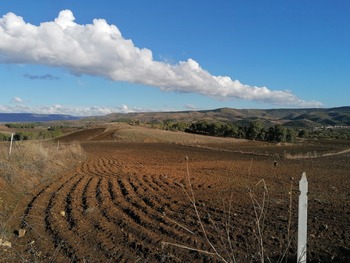
What began with a fig—once an unambiguous symbol of imperial vigilance in the hands of Roman senator Cato—returns now as a restless sign, ripe with multiple, overlapping and often contrasting meanings that history can conceal or reveal, depending on who is looking, and from where. Throughout this paper, we have argued that rural Sardinia, still heavily cultivated today (Fig. 7), offers an excellent opportunity to study the living conditions of subaltern communities. By examining subtle archaeological remains, often overlooked in historical analysis, we have identified signs of subaltern initiatives that challenge established historical narratives. The material traces of an alternative rural Sardinia sketched out in the last two sections offer concrete examples of the potential of a semiotic understanding of Gramsci’s theory of the history of subaltern groups: it allows us to enhance uniquely our knowledge of ancient identities within a broader decolonial mission.
Rural landscape around Masullas (OR), west-central Sardinia (November 2021). (Photograph: Mauro Puddu.)

Our first case study, which examined both material culture and palynological evidence, revealed that instead of a cereal monoculture imposed on submissive rural inhabitants, we find clear evidence of abundant imports and alternative productive activities, such as commercial wine production in the Terralba district. This evidence has been treated as a semiotic index of the inhabitants of Punic-period inland Sardinia leading varied and entrepreneurial lives, with some experiencing prosperity. While exploitation likely occurred, the evidence we presented allows us to consider a broader range of possibilities and differentiate between the conditions of life during the Punic and Roman periods.
Our second case study challenges the conventional portrayal of Roman-period rural Sardinia as inhabited by peasants who ‘lived an impersonal life devoid of history’ based on ‘the simplicity of their graves, modesty of their belongings’ (Mastino Reference Mastino, Carboni, Corda and Giuman2021, 32 quoting Lilliu Reference Lilliu1967). It is historically undeniable that Sardinia faced extensive exploitation under Rome, as evidenced by literary and epigraphic records detailing the enslavement of its people (Cocco Reference Cocco2016; Corda & Piras Reference Corda and Piras2009). Bioarchaeological evidence, too, now reveals signs of malnutrition and overwork on human remains, thereby indexing the experience of imperialist exploitation endured by subaltern bodies. But this is only a partial truth. Despite Rome’s attempts to exert control over their bodies, Sardinia’s rural communities actively responded to the impacts of occupation through strengthening social and familial bonds, undertaking collective initiatives and expressing distinct aesthetic preferences. These findings demonstrate that the rural populace actively engaged with their circumstances, shaping their own narratives amidst external pressures (van Dommelen Reference van Dommelen, Tilley, Keane, Kuechler, Rowlands and Spyer2006).
This process can be seen in the responses to historically recurrent colonial exploitative acts, such as that reported by the Codex Theodosianus (II.25.1), recording emperor Constantine abolishing emphyteusis in Sardinia. This was a reform meant to boost grain productivity through division of the cultivated land, originally administered in vast undifferentiated units, into smaller portions assigned to temporary administrators in exchange for a fixed annual rent. The land division resulted in the redistribution of the enslaved peasants, once working and living together, among the parcels (Sirago Reference Sirago and Atzeni1992). The discontent amongst the affected communities must have been immediate, as the emperor himself flagged up the legislation as inhuman for separating brothers from sisters, wives from husbands, sons and daughters from parents. This testimony adds to the other archaeological and literary evidence presented in this paper, emphasizing that Sardinia’s rural subaltern groups undertook numerous autonomous initiatives towards unification and solidarity. It is incumbent upon archaeologists deliberately to interpret the remnants of these initiatives in a semiotics sense, making signs out of what previously were not signs.
We argue that by grounding Gramsci’s history of subaltern groups in semiotics, as outlined in this paper, archaeology can expand its capacity to preserve and interpret the fragmented material evidence that was previously marginalized—intentionally or unintentionally—thereby making visible historical trajectories that would otherwise remain unwritten. This, in turn, will facilitate the foregrounding of the material culture of communities overlooked by colonial narratives, ultimately contributing to the development of alternative, decolonial histories of the ancient world.
Acknowledgements
We are grateful to the reviewers for their insightful suggestions, which have been instrumental in improving our paper and refining the ideas we present. We also want to take this opportunity to express our indebtedness to the contemporary inhabitants of rural Sardinia, as we have both repeatedly and extensively benefited from their warm hospitality and shared information and continue to do so. Local landowners have not only generously allowed us to survey and excavate their fields, all too often adding local produce and helpful information in the process; many have also shared their experiences, invariably providing precious insights and deepening our understanding of rural communities.



 Open access

