


Developing preventive interventions to reduce harm from violent behaviour requires information on seriousness of potential harm, identity of potential victims, and circumstances in which the violent behaviour is likely to occur. For example, persons with psychotic illness may pose greater risks to people they know than to random members of the public (Reference Binder and McNeilBinder & McNeil, 1986; Reference Straznickas, McNiel and BinderStraznickas et al, 1993; Reference Estroff, Swanson and LachicotteEstroff et al, 1998; Reference Steadman, Mulvey and MonahanSteadman et al, 1998; Reference Taylor and GunnTaylor & Gunn, 1999), suggesting that closer attention should be given to safety of family and carers. However, the public health impact of psychotic disorder on violence in the general population is relatively small compared with substance use dependence and antisocial personality disorder (Reference Stueve and LinkStueve & Link, 1997; Reference Steadman, Mulvey and MonahanSteadman et al, 1998; Wallace et al, Reference Wallace, Mullen and Burgess1998, Reference Wallace, Mullen and Burgess2004). Furthermore, the impact of these conditions ultimately depends on the base rate of violence in the general population, where being young, male, single and of low social class increases the risk of violence irrespective of psychiatric morbidity. Population base rates also influence whether ‘targeted’ or ‘population’ strategies are ultimately chosen for violence prevention (Rose, Reference Rose1985, Reference Rose1992). Government policy in England and Wales has highlighted the targeted approach in the form of detention and treatment in security of persons with severe personality disorder who are a risk to the public (Home Office & Department of Health, 1999; Criminal Justice Act 2003: ch. 44). However, there is little information in the UK on the size of the problem of violent behaviour attributable to persons with mental disorder which might help determine whether a public protection role by mental health services is appropriate. Before targeted public health programmes can be supported, additional evidence is required. First, it should be demonstrated that harm is likely to occur and, second, that the consequences of violent behaviour are of sufficient magnitude to warrant intervention.
METHOD
We examined the effects of psychiatric morbidity on severity of self-reported violent behaviour indicated by injuries sustained by victims or the respondents themselves, the versatility of respondents' violent behaviour measured by the number of different types of victim, and repetitiveness over a 5-year study period in a survey of a representative sample of adults aged 16 to 74 years in households in England, Wales and Scotland (‘Britain’), conducted in 2000. We also examined the impact of psychiatric morbidity on severe and repetitive violent behaviour using the attributable risk percentage.
Sample
People aged 16 to 74 years were sampled in the survey of Psychiatric Morbidity Among Adults Living in Private Households in England, Wales and Scotland in 2000. Details have been described previously (Reference Singleton, Bumpstead and O'BrienSingleton et al, 2001). This was a two-phase survey (Reference Shrout and NewmanShrout & Newman, 1989). Computer-assisted interviews in person were carried out by Office for National Statistics interviewers. The Small Users Postcode Address File was used as the sampling frame and the Kish grid method (Reference KishKish, 1965) was applied to systematically select one person in each household.
A total of 8886 adults completed the first-phase interview, a response rate of 69.5% and 8397 (94.5%) of these completed all sections of the questionnaire. Among non-respondents, 24% refused and 6.5% were non-contacts in the household. There was no information on psychiatric status of non-respondents on which to decide whether attrition resulted in biased estimates in prevalence of violence. However, weighting procedures that were applied throughout the analysis took into account proportions of non-respondents according to age, gender and region. This was to ensure a sample representative of the national population, compensating for sampling design and non-respondents in the standard error of the prevalence, and to control for effects of selecting one individual per household.
Measurement of psychiatric morbidity
Participants were screened and deemed positive for psychosis in the presence of any two of four criteria from the Psychosis Screening Questionnaire (PSQ; Reference Bebbington and NayaniBebbington & Nayani, 1994). The Structural Clinical Interview for DSM-IV screening questionnaire (SCID-II Screen; Reference First, Gibbon and SpitzerFirst et al, 1997) identified personality disorder. Using laptop computers, participants gave ‘yes’ or ‘no’ responses to 116 questions. Ten categories of DSM-IV Axis-II (American Psychiatric Association, 1994) disorders were created by manipulating cut-off points to increase levels of agreement, measured by the kappa coefficient, between both individual criteria and clinical diagnoses. These had been obtained using the SCID-II administered by trained interviewers in a previous survey of prisoners (Reference Singleton, Meltzer and GatwardSingleton et al, 1998). The same algorithms were used in the present survey. Ten categories of personality disorder could be derived from the screen, but were combined into a single category of ‘any’ personality disorder for this study. For some analyses, participants with antisocial personality disorder were analysed separately. (Using self-report instruments leads to inclusion of a number of false positives among those assessed as having disorders, which should be borne in mind when considering these results.)
The revised version of the Clinical Interview Schedule (CIS-R; Reference Lewis, Pelosi and ArayaLewis et al, 1992) was used to obtain the prevalence of both symptoms and diagnoses of common mental disorders, including depressive episodes, in the week preceding interview. Data were gathered on the prevalence of 14 neurotic syndromes. These were combined into a single category of ‘any’ neurotic disorder. The principal instrument to assess alcohol misuse was the Alcohol Use Disorders Identification Test (AUDIT), which defines hazardous alcohol use (a score of 8 or more) as an established pattern of drinking which brings risk of physical and psychological harm over the previous year and includes questions to measure alcohol dependence (Reference Babor, de la Fuente and SaundersBabor et al, 1992; Reference Bohn, Babor and KranzlerBohn et al, 1995). The Severity of Alcohol Dependence Questionnaire (SADQ; Reference Stockwell, Murphy and HodgsonStockwell et al, 1983) was included to measure alcohol dependence. A number of questions designed to measure drug use were included in the Phase I interviews. Positive response regarding a series of different substances to any of five questions measuring drug dependence over the previous year were combined to produce a single category of ‘any’ drug dependence (Reference Singleton, Bumpstead and O'BrienSingleton et al, 2001).
A category of ‘no psychiatric disorder’ was applied to respondents who were assessed as not having personality disorder, neurotic disorder, drug or alcohol dependence or possible psychosis.
Measurement of violent behaviour
All participants were asked questions about violent behaviour in the first phase of the study, in the context of establishing the diagnosis of antisocial personality disorder. These included questions from the conduct disorder section, including whether they had started fights and whether they had threatened or hurt anyone with a weapon before the age of 15 years. In addition, they were asked whether they had been in a fight since the age of 15 years and whether they had used a weapon in a fight. As we intended to retain the diagnostic category of antisocial personality disorder in subsequent analyses, in contrast to Swanson et al (Reference Swanson, Holzer and Ganju1990), who derived outcome variables of violence from this diagnosis, we included an additional question similar to that used in previous surveys in New York (Reference Link, Andrews and CullenLink et al, 1992) and Israel (Reference Stueve and LinkStueve & Link, 1997). Participants were asked: ‘Have you been in a physical fight, assaulted or deliberately hit anyone in the past five years?’
If people responded positively, additional questions covered the location of incidents, victims, and the outcome (see data supplement to the online version of this paper). We defined self-reported violent behaviour as severe if the victim or the respondent were injured; the violent behaviour as versatile if there were three or more different types of victim; and repetitive if the respondent had been involved in five or more violent incidents over the previous 5 years. Additional measures for the situation of violence, including location and intoxication as well as victim type, were constructed. Spouses or cohabiting partners and girlfriends or boyfriends were combined into a single category of victim in relationship, as were child and other family members. Positive acknowledgement of being injured, or seeing a general practitioner (GP), or attending hospital because of injuries were combined into a single category of victim injured in an incident in the previous 5 years.
Statistical analysis
Weighted prevalence of psychiatric diagnosis was calculated in the Statistical Package for the Social Sciences (SPSS) version 11 (for Windows) to account for the unequal selection of probabilities in the two-phase sample survey. Detailed procedures in constructing the weighting variables were given by Singleton et al (Reference Singleton, Bumpstead and O'Brien2001). The linear trend of violent incidents for each diagnosis was tested by the linear-by-linear association of the cross-tabulation procedure in the SPSS.
Two-level weighted logistic regression analysis was carried out to estimate the effects of violent behaviour and each of the psychiatric diagnoses, adjusting for age, gender, marital status, social class and possible psychiatric comorbidity. This analysis took into account the clustering effects of violent behaviour within the survey areas, using MLwiN (Reference Rasbash, Browne and GoldsteinRasbash et al, 2000).
The population attributable risk was calculated for each diagnostic category. In this calculation, as the cross-sectional method did not record an incidence of violent behaviour, relative risk was approximated by the odds ratio (Reference Kahn and SemposKahn & Sempos, 1989).
RESULTS
Violence severity, versatility and repetition
Weighted data from the 8397 respondents included 982 (12%) who affirmed violent behaviour in the previous 5 years, and 333 (4%) who reported that they had injured a victim in a violent incident, 311 (4%) that they had themselves been injured in an incident, 237 (3%) that they had been involved in five or more violent incidents, 69 (1%) that they had assaulted three or more different types of victim and 422 (5%) that they had assaulted someone or been involved in a fight when intoxicated with drugs or alcohol in the previous 5 years.
Male gender, social class III-V, younger age and single marital status were all significantly associated (P<0.001) with reporting injuries to victims, injuries to respondents, being involved in five or more violent incidents in the previous 5 years and three or more victim types.
All measures of violence severity, versatility and repetition were closely associated. Participants who reported injuring a victim in the previous 5 years were more likely to report five or more violent incidents (OR=59, 95% CI 43-82, P<0.001), three or more victim types (OR=57, 95% CI 42-76, P<,0.001) and being injured themselves (OR=43, 95% CI 32-57, P<0.001). Similarly, respondents reporting being injured themselves were more likely to report five or more violent incidents (OR=39, 95% CI 29-54, P<0.001) and three or more victim types (OR=38, 95% CI 29-51, P<0.001).
Table 1 shows the prevalence of different diagnostic categories among respondents reporting multiple violent incidents over the previous 5 years. All diagnostic categories were associated with repetition, the association increasing as the numbers of reported incidents increased. Participants with no psychiatric disorder were significantly less likely to report multiple incidents.
Prevalence of psychiatric diagnosis and percentage of self-reported violent incidents in past 5 years

| Diagnosis | Weighted N (%) | Violent incidents | χ2, d.f.=1 | P 1 | ||||||
|---|---|---|---|---|---|---|---|---|---|---|
| None % | 1 % | 2–4 % | ≥ 5 % | |||||||
| No disorder | 5112 (59) | 62.8 | 42.6 | 31.1 | 28.7 | 291.1 | < 0.001 | |||
| Any neurotic disorder | 1408 (16) | 15.4 | 22.1 | 21.3 | 31.4 | 53.7 | < 0.001 | |||
| Any personality disorder | 2472 (29) | 27.1 | 37.5 | 50.5 | 52.3 | 171.8 | < 0.001 | |||
| Psychosis screen positive | 55 (0.6) | 0.6 | 1.2 | 0.5 | 2.5 | 8.4 | 0.004 | |||
| Hazardous drinking | 2263 (27) | 22.3 | 49.0 | 62.3 | 66.2 | 587.4 | < 0.001 | |||
| (AUDIT 8 or more) | ||||||||||
| Alcohol dependence | 632 (7) | 4.8 | 18.8 | 29.4 | 35.0 | 678.1 | < 0.001 | |||
| Antisocial personality | 341 (4) | 2.4 | 10.4 | 18.4 | 23.6 | 536.8 | < 0.001 | |||
| disorder | ||||||||||
| Drug dependence | 320 (4) | 2.1 | 12.5 | 16.2 | 23.6 | 556.6 | < 0.001 | |||
AUDIT, Alcohol Use Disorders Identification Test
1. Linear-by-linear association
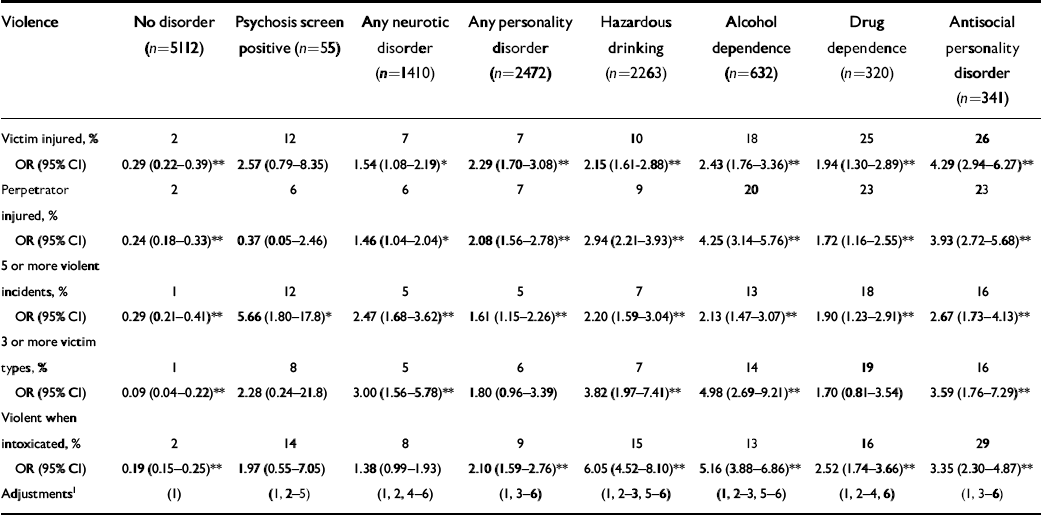
Table 2 shows the percentage of respondents reporting different categories of severe, versatile and repetitive violent behaviour among people with different psychiatric disorders. Less than 2% of respondents with no psychiatric diagnosis were violent to the extent of injuring others, receiving injuries themselves, being involved in more than 5 violent incidents or being violent towards more than one type of victim. Neurotic disorder and a diagnosis of any personality disorder both independently increased risks of victim injury and of respondents being injured themselves, reporting five or more violent incidents and being violent towards three or more victim types. However, Table 2 also demonstrates that the percentages of individuals with a neurotic disorder and any personality disorder reporting severe and repetitive violence were relatively low, both ranging from 5% to 7%. Screening positive for psychosis was independently associated with a sixfold increase in reporting five or more violent incidents. The percentage of those with putative psychosis reporting repetitive violent behaviour (12%) was higher than for neurotic and personality disorders. However, there were no independent associations between screening positive for psychosis and reporting injury to victims, the respondent being injured, or three or more victim types.
Effects of psychiatric morbidity on measures of severity, versatility and repetition of violence in past 5 years
| Violence | No disorder (n=5112) | Psychosis screen positive (n=55) | Any neurotic disorder (n=1410) | Any personality disorder (n=2472) | Hazardous drinking (n=2263) | Alcohol dependence (n=632) | Drug dependence (n=320) | Antisocial personality disorder (n=341) |
|---|---|---|---|---|---|---|---|---|
| Victim injured, % | 2 | 12 | 7 | 7 | 10 | 18 | 25 | 26 |
| OR (95% CI) | 0.29 (0.22–0.39) ** | 2.57 (0.79–8.35) | 1.54 (1.08–2.19) * | 2.29 (1.70–3.08) ** | 2.15 (1.61-2.88) ** | 2.43 (1.76–3.36) ** | 1.94 (1.30–2.89) ** | 4.29 (2.94–6.27) ** |
| Perpetrator injured, % | 2 | 6 | 6 | 7 | 9 | 20 | 23 | 23 |
| OR (95% CI) | 0.24 (0.18–0.33) ** | 0.37 (0.05–2.46) | 1.46 (1.04–2.04) * | 2.08 (1.56–2.78) ** | 2.94 (2.21–3.93) ** | 4.25 (3.14–5.76) ** | 1.72 (1.16–2.55) ** | 3.93 (2.72–5.68) ** |
| 5 or more violent incidents, % | 1 | 12 | 5 | 5 | 7 | 13 | 18 | 16 |
| OR (95% CI) | 0.29 (0.21–0.41) ** | 5.66 (1.80–17.8) * | 2.47 (1.68–3.62) ** | 1.61 (1.15–2.26) ** | 2.20 (1.59–3.04) ** | 2.13 (1.47–3.07) ** | 1.90 (1.23–2.91) ** | 2.67 (1.73–4.13) ** |
| 3 or more victim types, % | 1 | 8 | 5 | 6 | 7 | 14 | 19 | 16 |
| OR (95% CI) | 0.09 (0.04–0.22) ** | 2.28 (0.24–21.8) | 3.00 (1.56–5.78) ** | 1.80 (0.96–3.39) | 3.82 (1.97–7.41) ** | 4.98 (2.69–9.21) ** | 1.70 (0.81–3.54) | 3.59 (1.76–7.29) ** |
| Violent when intoxicated, % | 2 | 14 | 8 | 9 | 15 | 13 | 16 | 29 |
| OR (95% CI) | 0.19 (0.15–0.25) ** | 1.97 (0.55–7.05) | 1.38 (0.99–1.93) | 2.10 (1.59–2.76) ** | 6.05 (4.52–8.10) ** | 5.16 (3.88–6.86) ** | 2.52 (1.74–3.66) ** | 3.35 (2.30–4.87) ** |
| Adjustments 1 | (1) | (1, 2–5) | (1, 2, 4–6) | (1, 3–6) | (1, 2–3, 5–6) | (1, 2–3, 5–6) | (1, 2–4, 6) | (1, 3–6) |
1. Adjustments for logistic regression: 1=gender, age, social class III–V, single; 2=any personality disorder; 3=any neurotic disorder; 4=alcohol dependence; 5=drug dependence; 6=psychosis screen positive
* P < 0.05
** P < 0.01
Table 2 shows that independent risks of reporting a victim injured, being injured themselves, involvement in five or more violent incidents, and three or more victim types were increased both for respondents who reported hazardous drinking and those who were alcohol dependent. However, less than 10% of individuals with hazardous drinking reported serious or repetitive violence, in contrast to between 13% and 20% of those with alcohol dependence. There was no independent association between drug dependence and violence towards three or more victim types. However, risks of reporting a victim injured, the respondent having been injured, or five or more incidents of violence were almost doubled for drug dependence, and ranged from 18% to 25% of drug-dependent respondents.
Of all categories measured in the study, antisocial personality disorder demonstrated greatest risk (over four times greater) of reporting injury to a victim. More than a quarter reported that they had injured someone violently in the previous 5 years. Antisocial personality disorder substantially increased risks of the respondent being injured, reporting five or more violent incidents and violence towards three or more victim types.
People who reported violent behaviour when intoxicated were more likely to report injuring a victim (OR=42, 95% CI 32-56, P<0.001), being injured themselves (OR=35, 95% CI 26-46, P<0.001), three or more victim types (OR=38, 95% CI 29-50, P<0.001), and five or more violent incidents (OR=30, 95% CI 22-41, P<0.001).
Table 2 demonstrates additional associations between individual diagnostic categories and reporting violence while intoxicated with drugs or alcohol during the previous 5 years. There was no strong evidence of associations between reporting violence when intoxicated and neurotic disorder or respondents screening positive for psychosis. The diagnosis of any personality disorder more than doubled the risk of reporting violence when intoxicated, but this was in only 9% of respondents with this diagnosis. The risk of reporting violence when intoxicated was increased by hazardous drinking more than sixfold, alcohol dependence more than fivefold and drug dependence nearly threefold. However, the proportions of respondents with these diagnoses reporting violence when intoxicated were relatively low, ranging from 13% to 16%. In contrast, 29% of individuals with antisocial personality disorder reported that they had been violent when intoxicated. Antisocial personality disorder independently increased the risk more than threefold.
Location and victims of violence
Violent incidents involving either family members or people with whom the respondent had a close personal or emotional relationship were more likely to occur in the respondent's home (30%, OR=4.56, 95% CI 2.43-8.53, P<0.001; 65%, OR=43.3, 95% CI 23.2-80.8, P<0.001, respectively) or, in the case of family members, in another person's home (29%, OR=3.78, 95% CI 1.85-7.72, P<0.001). Incidents involving either other persons known to the respondent or strangers were unlikely to occur in the respondent's home (18%, OR=0.26, 95% CI 0.15-0.44, P<0.001; 24%, OR=0.52, 95% CI 0.31-0.86, P<0.05, respectively) and were more likely to occur in the street or outdoors (58%, OR=2.09, 95% CI 1.47-2.98, P<0.001; 37%, OR=1.75, 95% CI 1.22-2.50, P<0.001, respectively) or, in the case of strangers, in a bar or public house (67%, OR=2.38, 95% CI 1.65-3.44, P<0.001). Incidents in which the police became involved were more likely to occur when they had been called to another person's home (13%, OR=4.56, 95% CI 2.03-10.68, P<0.05), in the street or outdoors (8%, OR=4.00, 95% CI 1.65-9.73, P<0.05) or when they had been called to a hospital (29%, OR=23.2, 95% CI 2.34-228.9, P<0.05). The range of other relationships with victims reported by respondents included carers, other patients and hospital staff for incidents in hospitals (43%, OR=28.5, 95% CI 3.8-216.5, P<0.05), and people encountered in the context of their employment in the work-place (20%, OR=5.44, 95% CI 2.64-11.2, P<0.05).
Table 3 demonstrates independent associations between psychiatric morbidity and victim subtypes. The highest odds of association with victim type were with hazardous drinking, alcohol dependence, drug dependence and antisocial personality disorder. The latter showed the highest odds of association with each victim type, increasing the risks of reporting both that they had assaulted someone with whom they were in a relationship and that they had assaulted a family member almost fourfold, a person known to them more than twice, and a stranger almost threefold. The risks of assaulting the police were increased more than five times for antisocial personality disorder.
Effects of psychiatric morbidity on victim subtypes involved in violence in past 5 years

| Victim of violence | No disorder (n=5112) | Psychosis screen positive (n=55) | Any neurotic disorder (n=1410) | Any personality disorder (n=2472) | Hazardous drinking (n=2263) | Alcohol dependence (n=632) | Drug dependence (n=320) | Antisocial personality disorder (n=341) |
|---|---|---|---|---|---|---|---|---|
| Relationship/partner, % | 1 | 9 | 5 | 4 | 3 | 7 | 7 | 9 |
| OR (95% CI) | 0.19 (0.12–0.29) ** | 2.19 (0.65–7.35) | 3.08 (2.06–4.61) ** | 2.22 (1.48–3.34) ** | 2.31 (1.56–3.43) ** | 3.46 (2.16–5.55) ** | 1.12 (0.61–2.06) | 3.82 (2.24–6.50) ** |
| Family member, % | 1 | 6 | 2 | 2 | 2 | 3 | 3 | 5 |
| OR (95% CI) | 0.51 (0.32–0.83) ** | 3.80 (0.86–16.7) | 1.97 (1.17–3.31) * | 2.06 (1.26–3.36) ** | 1.93 (1.22–3.08) ** | 1.56 (0.84–2.88) | 0.58 (0.24–1.38) | 3.84 (2.00–7.38) ** |
| Friend, % | 1 | 6 | 3 | 4 | 5 | 9 | 16 | 7 |
| OR (95% CI) | 0.36 (0.24–0.54) ** | 3.70 (0.64–21.4) | 1.67 (1.02–2.72) * | 1.34 (0.88–2.05) | 1.64 (1.10–2.45) * | 1.78 (1.12–2.80) * | 2.97 (1.82–4.86) ** | 1.15 (0.62–2.11) |
| Person known, % | 2 | 7 | 6 | 6 | 9 | 13 | 19 | 16 |
| OR (95% CI) | 0.30 (0.22–0.40) ** | 2.11 (0.58–7.69) | 1.33 (0.92–1.91) | 1.67 (1.23–2.26) ** | 2.76 (2.05–3.73) ** | 2.03 (1.44–2.86) ** | 1.98 (1.31–2.99) ** | 2.40 (1.58–3.66) ** |
| Stranger, % | 3 | 6 | 7 | 9 | 14 | 25 | 28 | 27 |
| OR (95% CI) | 0.32 (0.26–0.41) ** | 1.47 (0.37–5.87) | 1.27 (0.93–1.74) | 1.98 (1.54–2.53) ** | 2.29 (1.81–2.90) ** | 2.64 (2.00–3.48) ** | 1.45 (1.00–2.09) * | 2.68 (1.88–3.83) ** |
| Police, % | 1 | 0 | 1 | 2 | 2 | 4 | 6 | 7 |
| OR (95% CI) | 0.26 (0.13–0.54) ** | 0.99 (0.45–2.14) | 3.07 (1.51–6.21) ** | 1.56 (0.79–3.07) | 3.04 (1.53–6.04) ** | 2.48 (1.13–5.42) * | 5.13 (2.45–10.7) ** | |
| Other, % | 1 | 0 | 1 | 1 | 2 | 2 | 3 | 4 |
| OR (95% CI) | 0.72 (0.41–1.26) | 1.25 (0.59–2.67) | 1.63 (0.88–2.97) | 1.57 (0.87–2.85) | 0.95 (0.42–2.15) | 0.91 (0.32–2.60) | 3.76 (1.75–8.06) ** | |
| Adjustments 1 | (1) | (1, 2–5) | (1, 2, 4–6) | (1, 3–6) | (1, 2–3, 5–6) | (1, 2–3, 5–6) | (1, 2–4, 6) | (1, 3–6) |
1. Adjustments for logistic regression: 1=gender, age, social class III–V, single; 2=any personality disorder; 3=any neurotic disorder; 4=alcohol dependence; 5=drug dependence; 6=psychosis screen positive
* P < 0.05
** P < 0.01
Table 3 also demonstrates that becoming involved in violent altercations with strangers was particularly associated with diagnoses of alcohol and drug dependence and antisocial personality disorder, as reported by more than a quarter of people in these categories.
Table 4 shows independent associations between psychiatric morbidity and location of violence in the previous 5 years. Screening positive for psychosis increased risks of reporting violent incidents in the street or outdoors, but was not associated with other locations. A diagnosis of neurotic disorder was associated with violence occurring in the respondent's home, another person's home or in the street or outdoors. A diagnosis of any personality disorder increased risks of violence in the respondent's home, in the street or outdoors, in a bar, the workplace and other locations.
Effects of psychiatric morbidity on reported locations of violence in past 5 years

| Location of violence | No disorder (n=5112) | Psychosis screen positive (n=55) | Any neurotic disorder (n=1410) | Any personality disorder (n=2472) | Hazardous drinking (n=2263) | Alcohol dependence (n=632) | Drug dependence (n=320) | Antisocial personality disorder (n=341) |
|---|---|---|---|---|---|---|---|---|
| Perpetrator's home, % | 1 | 11 | 6 | 4 | 4 | 7 | 8 | 8 |
| OR (95% CI) | 0.27 (0.18–0.39) ** | 2.02 (0.62–6.56) | 3.14 (2.16–4.57) ** | 1.81 (1.25–2.63) ** | 2.10 (1.45–3.03) ** | 2.44 (1.54–3.86) ** | 1.07 (0.60–1.92) | 1.95 (1.11–3.40) * |
| Other's home, % | 0 | 2 | 2 | 1 | 2 | 3 | 7 | 5 |
| OR (95% CI) | 0.34 (0.20–0.59) ** | 2.74 (0.47–16.1) | 3.13 (1.73–5.66) ** | 0.98 (0.55–1.72) | 1.00 (0.57–1.75) | 0.88 (0.43–1.80) | 3.38 (1.71–6.69) ** | 2.97 (1.47–6.01) ** |
| Street/outdoors, % | 3 | 15 | 10 | 11 | 16 | 27 | 36 | 33 |
| OR (95% CI) | 0.32 (0.25–0.40) ** | 2.86 (1.05–7.83) * | 1.68 (1.26–2.23) ** | 1.94 (1.53–2.47) ** | 2.66 (2.10–3.36) ** | 2.44 (1.85–3.20) ** | 1.99 (1.40–2.82) ** | 3.53 (2.51–4.98) ** |
| Bar, % | 2 | 6 | 6 | 8 | 12 | 24 | 24 | 25 |
| OR (95% CI) | 0.24 (0.18–0.31) ** | 1.49 (0.36–6.20) | 1.09 (0.77–1.55) | 2.14 (1.62–2.84) ** | 5.31 (3.94–7.15) ** | 4.65 (3.46–6.25) ** | 1.93 (1.30–2.87) ** | 3.28 (2.25–4.80) ** |
| Workplace, % | 1 | 2 | 1 | 2 | 1 | 2 | 4 | 6 |
| OR (95% CI) | 0.46 (0.29–0.74) ** | 2.67 (0.25–28.9) | 0.86 (0.45–1.64) | 2.17 (1.34–3.52) ** | 0.67 (0.41–1.11) | 1.03 (0.54–1.95) | 2.36 (1.15–4.82) ** | 3.99 (2.12–7.49) ** |
| Other, % | 1 | 4 | 2 | 3 | 3 | 4 | 8 | 7 |
| OR (95% CI) | 0.45 (0.29–0.70) ** | 3.05 (0.57–16.4) | 1.17 (0.66–2.05) | 2.01 (1.26–3.21) ** | 0.95 (0.60–1.50) | 0.95 (0.54–1.69) | 1.77 (0.95–3.29) | 2.13 (1.12–4.06) * |
| Adjustments 1 | (1) | (1, 2–5) | (1, 2, 4–6) | (1, 3–6) | (1, 2–3, 5–6) | (1, 2–3, 5–6) | (1, 2–4, 6) | (1, 3–6) |
1. Adjustments for logistic regression: 1=gender, age, social class III–V, single; 2=any personality disorder; 3=any neurotic disorder; 4=alcohol dependence; 5=drug dependence; 6=psychosis screen positive
* P < 0.05
** P < 0.01
Hazardous drinking and alcohol dependence both increased the risks of reporting violence in the respondent's home, the street or outdoors, and in a bar. Drug dependence increased the risk of violence in another person's home, the street or outdoors, a bar and the workplace.
Antisocial personality disorder was independently associated with violence occurring in all locations, with the risk almost doubled in the respondent's home, raised to almost threefold in another person's home, nearly fourfold in the street or outdoors, more than threefold in a bar and almost fourfold in the workplace. It was more than doubled in a range of locations referred to as ‘other’ in Table 4.
Public health impact of psychiatric morbidity on severity and repetition of violence
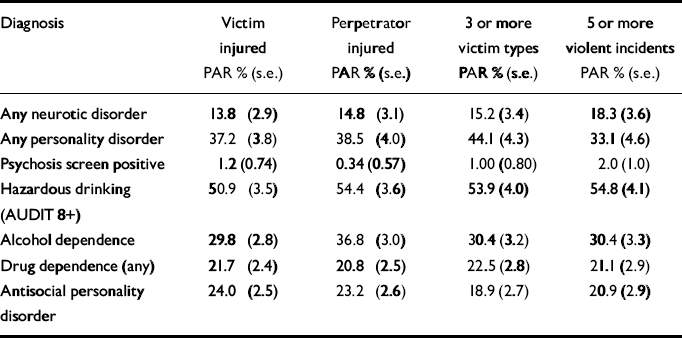
Table 5 demonstrates the public health implications of the impact of individual diagnostic categories on measures of severity and repetition of violent incidents reported over the previous 5 years using the population attributable risk percentage. Eliminating any personality disorder, which had a relatively high prevalence in the population (30%), would have had a large impact on the percentage of individuals who reported injuries both to themselves and their victims, multiple incidents and different victim types. Eliminating neurotic disorder would have had relatively less impact. However, eliminating hazardous drinking in the population would have reduced the reporting of both serious and repetitive violence by more than a half; but, when the relatively lower prevalences of alcohol dependence, drug dependence and antisocial personality disorder are considered, eliminating these conditions would each have had a significant impact on both severity and repetition of violent behaviour in this population over the previous 5 years. This was most notable for violence resulting in victim injury reported by people with antisocial personality disorder.
Population attributable risk (%) of psychiatric morbidity to severity, versatility and repetition of violence in past 5 years
| Diagnosis | Victim injured PAR % (s.e.) | Perpetrator injured PAR % (s.e.) | 3 or more victim types PAR % (s.e.) | 5 or more violent incidents PAR % (s.e.) |
|---|---|---|---|---|
| Any neurotic disorder | 13.8 (2.9) | 14.8 (3.1) | 15.2 (3.4) | 18.3 (3.6) |
| Any personality disorder | 37.2 (3.8) | 38.5 (4.0) | 44.1 (4.3) | 33.1 (4.6) |
| Psychosis screen positive | 1.2 (0.74) | 0.34 (0.57) | 1.00 (0.80) | 2.0 (1.0) |
| Hazardous drinking | 50.9 (3.5) | 54.4 (3.6) | 53.9 (4.0) | 54.8 (4.1) |
| (AUDIT 8+) | ||||
| Alcohol dependence | 29.8 (2.8) | 36.8 (3.0) | 30.4 (3.2) | 30.4 (3.3) |
| Drug dependence (any) | 21.7 (2.4) | 20.8 (2.5) | 22.5 (2.8) | 21.1 (2.9) |
| Antisocial personality disorder | 24.0 (2.5) | 23.2 (2.6) | 18.9 (2.7) | 20.9 (2.9) |
PAR, population attributable risk; AUDIT, Alcohol Use Disorders Identification Test
DISCUSSION
Violence and intoxication
We confirmed that not only are persons with antisocial personality disorder and substance dependence more likely to report involvement in violent incidents, but they are also more likely to report inflicting injuries on their victims, receiving injuries themselves and being involved in multiple incidents, thereby increasing the burden of care upon healthcare services. Antisocial personality disorder and alcohol dependence also increase the risk of multiple victim types. In contrast, the contribution to violence at the population level from persons screening positive for psychosis was very small. By far the largest public health impact on serious and repetitive violence, together with versatility of violence, was exerted by hazardous drinking. Reports of violence when intoxicated were strongly associated with these outcomes.
Estimates of the proportion of violent crimes including alcohol vary considerably, depending on type of crime and country, but an appropriate estimate is that over 50% of assailants have been drinking (Reference Murdoch, Pihl and RossMurdoch et al, 1990; Reference English, Holman and MilneEnglish et al, 1995). Research into associations emphasises multiple contributing causes and pharmacological effects of alcohol interact with drinkers' characteristics and also drinking context variables (Reference MacAndrew and EdgertonMacAndrew & Edgerton, 1969). Our study demonstrated the effects of individual differences on intoxicated violence, with personality disorder increasing an aggressive predisposition when drinking. However, it should be emphasised that the primary characteristics of violent individuals who were violent when intoxicated are the same as those of violent individuals in general - being young, single, male and of lower social class.
Graham et al (Reference Graham, Leonard and Room1998) describe preventive interventions for intoxicated aggression embedded in policies, regulations and enforcement procedures. Examples include drinking age laws, laws against public intoxication, licensing restrictions such as regulated hours of operation, prohibitions against selling alcohol to the intoxicated and laws mandating training in responsible serving of alcohol. Natural experiments such as reduction in alcohol availability in certain countries have resulted in falls in violence, although there have been few deliberate policy initiatives. Our findings confirm associations with drinking in licensed premises, and this relationship is especially important for young people and other groups who conduct a high percentage of their drinking in bars. This has been the focus of successful prevention initiatives (Reference Gliksman, Single and McKenzieGliksman et al, 1993; Reference Arnold and LaidlerArnold & Laidler, 1994; Reference Homel, Hauritz, Wortley and HomelHomel et al, 1997; Reference Hauritz, Homel and McIlwainHauritz et al, 1998). The substantial proportion of respondents reporting hazardous drinking in Britain, particularly among younger men, indicates that population approaches involving risk reduction programmes to encourage healthy drinking and control of outlets, particularly those associated with drunken disorder and many within the night-time economy, are more appropriate interventions (Reference Graham, Leonard and RoomGraham et al, 1998). Using Rose's (Reference Rose1992) model, a relatively small reduction in exposure to the risk factor of hazardous drinking at the individual level (which affects a relatively large proportion of the population) could result in a relatively large overall impact on the population's behaviour in association with drinking.
Violent victimisation
Risks of repetitive violence were increased in respondents screening positive for psychosis, but there were no specific associations with family members or individual sub-categories of victim. Arseneault et al (Reference Arseneault, Moffit and Caspi2002) found that young persons with schizophrenia-spectrum disorders showed elevated risk of violence both against people living with them and others, including acts of street violence, corresponding to greater risk of street violence in this study. In contrast, neurotic disorder was associated with violence towards family members and friends, especially persons in close emotional relationships, with increased risk of violence in the respondent's or another person's home. These findings correspond to the literature on factors associated with men who are violent to their partners, including emotional dependence, insecurity, low self-esteem, poor communication and social skills and low impulse control, with increased risks from antisocial personality disorder, narcissism, anxiety, depression and somatic complaints (Reference Kantor, Jasinski, Jasinski and WilliamsKantor & Jasinski, 1998).
Respondents with drug dependence were more likely to report violence towards friends, acquaintances and, to a lesser extent, strangers, with the violent behaviour more often occurring in other persons' homes, in the street or in bars. Arseneault et al (Reference Arseneault, Moffit and Caspi2002) argued that because of involvement in the illegal economy of drug markets, young persons dependent on drugs rely on violence to solve problematic transactions with dealers and others involved in drug-related interactions. If these individuals themselves deal in drugs, they may become involved in similar interactions with people well known to them, including their friends, as in this study. However, these possibilities require further investigation.
Methodological limitations
The community-based design, large sample size and good participation rates allowed us to examine associations between various categories of psychiatric disorder and violent behaviour without introducing selection biases associated with treated samples and non-participation. However, there are several limitations to the study. Diagnostic categories were derived from self-report instruments instead of research diagnostic instruments administered by clinically trained raters. Clinical interviews were employed in the second phase of the survey, but the sample was small and numbers were insufficient for detailed statistical analysis. An additional disadvantage of self-report instruments, several of which acted as a screen to identify people for interview in the second phase, is that they result in false positives, particularly in the case of personality disorder (Reference ZimmermanZimmerman, 1994). In addition, dating of episodes of mental disorder, in particular those screening positive for psychosis and neurotic disorder, was problematic, as the survey did not examine specifically whether violent incidents were related to time periods when symptoms were present. Furthermore, precise dating is difficult to achieve in retrospective interviews. Finally, our measures of violence did not include objective information such as arrests or convictions for violence to support self-reported data.
Antisocial personality disorder
Despite a relatively low prevalence, individuals with antisocial personality disorder made substantial contributions to self-reported violence in the household population of Britain. Eliminating the exposure of the disorder would have reduced the proportion of individuals reporting injuries to others by almost a quarter, indicating a subgroup in the population suitable for targeted (or secondary and tertiary) prevention strategies. Individuals with antisocial personality disorder demonstrated strong associations with injuring victims, and their violence was repetitive. They victimised partners and family members as well as strangers, and were most likely to be violent towards the police. They reported violence in all locations studied, and violence was more likely when intoxicated. They were also likely to receive injuries themselves, thereby adding to the burden of care on healthcare services.
These behaviours represent components of a generalised antisocial lifestyle comprising a wide range of related risk-taking behaviours, including substance misuse, reckless driving and sexual promiscuity, all of which increase a range of health risks (Reference Shepherd, Farrington and PottsShepherd et al, 2002; Reference Shepherd and FarringtonShepherd & Farrington, 2003). Epidemiological studies indicate prevalences of antisocial personality disorder between 0.6% and 3% in surveys using interviews in westernised countries. The disorder is 4 to 5 times more common in men than in women, the prevalence is raised in inner-city populations and it is highly comorbid with substance misuse (Reference RobinsRobins, 1998; Reference MoranMoran, 1999; Reference CoidCoid, 2003a ). Nevertheless, although 64-78% of male prisoners and 50% of female prisoners in England and Wales have antisocial personality disorder (Reference Singleton, Meltzer and GatwardSingleton et al, 1998), the majority of persons with active features are in the community (Reference Robins, Tipp, Przybeck, Robbins and RegierRobins et al, 1991).
Criminal careers research has consistently demonstrated that a small proportion of persons are responsible for a large proportion of crime (Reference Loeber, Farrington, Waschbusch, Loeber and FarringtonLoeber et al, 1998). This has led to consideration of public-protection policies of selectively incapacitating high-risk individuals (Reference HaapanenHaapanen, 1990), a process designed to reduce a significant amount of crime, including violence, through prolonged detention of a relatively small number of individuals. This study indicates that individuals with antisocial personality disorder meet the criteria for high-risk individuals, but does not give unqualified support for proposals by the Home Office & Department of Health (1999) for new services and legislation aimed to reduce the risk posed by people with ‘dangerous severe personality disorder’. Our findings give no indication of what these interventions should be or whether healthcare services should take the lead in these interventions. Despite a more accurate prevalence of 0.6% derived from clinical interviews in the population of Britain compared with the 4% derived from the self-report measures in this study (Reference Singleton, Bumpstead and O'BrienSingleton et al, 2001), this still represents a substantial number of individuals, far beyond the scope of both mental health and criminal justice services for targeted interventions such as selective incapacitation.
The finding that half of respondents with antisocial personality disorder and drug dependence did not report violence indicates potential limitations of overreliance on diagnostic categorisation to determine detention of individuals with antisocial personality disorder or other forms of psychiatric morbidity, aimed to prevent future violence. Buchanan & Leese (Reference Buchanan and Leese2001) have highlighted additional difficulties in accurately predicting who will act violently. These arise because of the limitations of currently available risk assessment instruments. Further research is needed to identify specific subgroups of individuals with antisocial personality disorder at highest risk of exhibiting serious violent behaviour. However, treatment interventions for the disorder in adults continue to show limited effectiveness (Reference Dolan and CoidDolan & Coid, 1993; Reference Warren, McGauley and NortonWarren et al, 2003). Early prevention strategies aimed at preventing development of an antisocial lifestyle and persistence of violence from childhood into adulthood, by intervening during childhood and adolescence, are increasingly shown to be both effective and cost-efficient (Reference Coid, Farrington and CoidCoid, 2003b ; Reference Welsh, Farrington and CoidWelsh, 2003). They are also more appropriate to the public health paradigm for reducing the risk of violence, thereby contributing to public protection.




eLetters
No eLetters have been published for this article.