





1. Introduction
Over the past few decades, the substantial release of greenhouse gas emissions in the Asia-Pacific region has come under intense worldwide attention (ESCAP, 2023). Given the critical requirement to meet the United Nations Agenda 2030 for Sustainable Development Goals (SDGs), the calls for sustainability and environmental management have climbed to the top of most businesses' agenda.
Tourism is one of the main industries showcased in the United Nations Conference on Environment and Development (UNCED) to adopt corporate sustainability principles (Budeanu, Reference Budeanu1999). As the world's largest service-based industry and its significant contributions to a nation's social and economic growth, tourism can potentially cause serious environmental destruction (Tang et al., Reference Tang, Amran and Goh2014). Moreover, unrestrained traditional tourism practices can inevitably cause threats to the earth's biodiverse ecosystems and expose the industry to undue criticism and defamation (Henderson, Reference Henderson2007). Naturally, hotels and the tourism industry work hand-in-hand; their interdependency could affect and be affected by the destruction of the environment. As the demand for natural environmental preservation intensifies, more and more hotels around the world are ramping up their sustainability practices (Banerjee, Reference Banerjee2002). The shift toward environmental management practices (EMP) not only meets the growing demand for green hotels but also offers a competitive advantage for the business (Singjai et al., Reference Singjai, Winata and Kummer2018). The widespread sustainability practices are giving rise to a ‘green wave’ across the hotel industry (Acampora et al., Reference Acampora, Lucchetti, Merli and Ali2022).
Several studies have explored EMP in the hotel sector in different times and settings (Bohdanowicz, Reference Bohdanowicz2006; Omune et al., Reference Omune, Kambona, Wadongo and Wekesa2021). However, most of these studies focused on industrialized nations, with few focusing on EMP from emerging nations. Industrialized nations display a more regulated approach to environment management initiatives, whereas emerging nations rely on the voluntary adoption of these practices to satisfy stakeholder expectations. According to Ouyang et al. (Reference Ouyang, Wei and Chi2019), within emerging markets, hotels are predominantly influenced to adopt EMP by normative institutions (industry standards and competitor practices) and cognitive factors (stakeholder expectations and demands) rather than by regulatory frameworks, given the comparatively lax nature of environmental regulations that are prevalent in emerging markets.
In the context of an emerging market, Malaysia presents a distinct setting marked by its numerous environmental concerns, including deforestation, pollution, and dwindling biodiversity (Omran & Schwarz-Herion, Reference Omran, Schwarz-Herion, Omran and Schwarz-Herion2020). Exploring the sustainable environmental management practices (SEMP) within the hotels in Malaysia helps shed light on the development of sustainable initiatives in the tourism industry.
Studies on SEMP in hotels in Malaysia explore the factors driving these practices (Aragón-Correa & Sharma, Reference Aragón-Correa and Sharma2003; Kasavan et al., Reference Kasavan, Siron, Yusoff and Fakri2022), types of environmental initiatives adopted by hotels (Ahmed et al., Reference Ahmed, Mokhtar, Lim, Hooi and Lee2021; Ahmad et al., Reference Ahmad, Abdullah, Zainol and Ramely2023), the challenges in implementing EMP (Kamalulariffin et al., Reference Kamalulariffin, Abdul Khalid and Wahid2013), the impact of stakeholders on hotel managers’ environmental awareness and attitudes (Rassiah et al., Reference Rassiah, Nasir, Khan and Munir2022), and the effects of environmental practices on hotel performance (Nisar et al., Reference Nisar, Haider, Ali, Jamshed, Ryu and Gill2021; Rehman et al., Reference Rehman, Elrehail, Alshwayat, Ibrahim and Alami2023; Tang et al., Reference Tang, Amran and Goh2014). However, the existing literature on SEMP offers limited insight into the adoption of heterogeneous sets of environmental practices in hotels. The current study aims to address this gap by examining the adaptation of SEMP based on hotels' unique categories: geographical locations and star ratings. Moreover, existing literature on sustainability practices within the hotel industry does not adequately offer a theoretical framework to explore the multifaceted dimensions of environmental practices. Resource based theory (RBV) offers a framework for understanding how hotels can leverage their unique resources and competencies to develop and implement environmental practices that not only contribute to sustainability but also enhance competitive advantage through cost centric and differentiation initiatives.
The motivations for investigating the SEMP among hotels in Malaysia are twofold. First, there is an imperative need for hotels in Malaysia to accelerate their commitment to environmental sustainability. This situation leads to critical questions on the readiness of the hotels to align with the government's goal of reaching a net-zero agenda by 2050. Second, environmental concerns pose a significant challenge in Malaysia, particularly regarding the escalating rate of waste generation surpassing that of recycling (The Star, 2022). This growing concern is exacerbated by the scarcity of green experts and resources, including manpower and eco-friendly equipment, needed to bolster the Malaysian green hotel sector (Ahmed et al., Reference Ahmed, Mokhtar, Lim, Hooi and Lee2021).
This study aims to add to the existing literature from a strategic standpoint by examining the variation in environmental practices among hotels in various geographic locations and star ratings from an emerging nation perspective. The findings also have practical implications for policymakers and other interested parties in selecting and implementing appropriate sustainable environmental initiatives that best suit different types of hotels.
1.1 Brief overview of Malaysia's tourism and sustainability
Malaysia is a prominent tourism destination in Southeast Asia, being the top choice for halal tourism and one of the top medical tourism destinations. The country is also known for its unique social structure, multiracial community, precinct environment, and tropical climate, as well as being one of the world's top ten diving destinations. Tourism has become a significant economic sector in Malaysia since its inception in the late 1960s. Its contribution to the Malaysian GDP has increased steadily over the years. In 2021 the tourism industry contributed about 12.8% of the GDP (Department of Statistics Malaysia, 2022). Table 1 shows that the industry grew by 117.87% from 2009 to 2021, rising from 2373 hotels in 2009 to 5170 in 2021. The number of hotel rooms supplied increased by 91.59% over 13 years, from 168,844 in 2009 to 323,491 in 2021.
Hotel and resorts statistics of Malaysia, 2009–2021

Source: My Tourism Data Malaysia, (2021), https://www.tourism.gov.my/statistics
While tourism can significantly benefit the national economy, it equally poses risks to environmental sustainability. To address this, the Malaysian government has adopted the ASEAN Green Hotel Standard, which aims to encourage the establishment of environmentally conscious hotels (Azuar, Reference Azuar2022). The commitment toward environmental stewardship not only positions hotels as drivers of sustainable practices but also promotes Malaysia as a destination committed to sustainable tourism. To further encourage environmental sustainability among hotels, the Malaysian government introduced the Malaysia Green Hotel Certification. Despite this effort, only a few hotels in Malaysia are certified as ‘green hotels’ from 750-rated accommodation facilities in Malaysia (Ministry of Tourism, Arts & Culture, 2024). For example, Frangipani Langkawi Resort and Spa in Langkawi, Malaysia, is a leading example of a green hotel with extensive sustainable environmental practices throughout its operations, primarily focusing on energy and water conservation, waste management, sustainable landscaping, and community engagement. Its commitment to green initiatives gained several prestigious green awards and certification, and positioned it as a global role model for sustainable tourism (Ahmed et al., Reference Ahmed, Mokhtar, Lim, Hooi and Lee2021).
While the regulatory and governance framework for sustainability within the hotel sector is expanding, the number of hotels that have achieved ‘certified green hotels’ status is still relatively low (Deraman et al., Reference Deraman, Ismail, Arifin, Izzat and Mostafa2017) thus, showcasing a gap in the widespread implementation of sustainability practices among hotels. According to the Ministry of Tourism, the lack of green hotels in Malaysia is partly due to the difficulties in motivating them to adopt international sustainability standards. Such difficulties include the lack of sufficient infrastructure, the high costs involved in the assessment process, and the low level of environmental awareness and behavior among the people (Salehudin et al., Reference Salehudin, Prasad and Osmond2013).
The paper is structured as follows. Section 2 presents the relevant literature on sustainable environment management practices in the hotel industry. Section 3 describes the research methodology underpinning this study. Section 4 presents the results, and Section 5 discusses our study's theoretical and practical implications as well as the limitations and future research ideas.
2. Theoretical background and literature review
This study integrates stakeholder theory and resource-based theory, emphasizing that a firm can sustain market competitiveness while being environmentally responsible. Achieving this balance necessitates possessing resources and capabilities that involve collaboration with various stakeholders (Al-Shammari et al., Reference Al-Shammari, Banerjee and Rasheed2022).
Stakeholder theory posits that businesses prosper by valuing all stakeholders, not just shareholders (Freeman, Reference Freeman1984). In tourism and hospitality, this theory has been utilized to identify key stakeholders within policy contexts (Beritelli & Laesser, Reference Beritelli and Laesser2011; Bornhorst et al., Reference Bornhorst, Ritchie and Sheehan2010), expanding beyond the traditional focus on shareholder wealth (Freeman et al., Reference Freeman, Wicks and Parmar2004). Freeman (Reference Freeman1984) highlighted that stakeholders play a crucial role in shaping a firm's goals and strategy, asserting that a firm cannot survive without their support. Stakeholder theory encourages firms to address the interests of a diverse array of groups, including customers, employees, suppliers, governments, and communities. This approach recognizes the inseparable economic and social impacts of business activities, which form the core of a firm's purpose. In addition to pursuing profit, businesses are expected to attend to the well-being of their stakeholders and minimize environmental harm (Donaldson & Preston, Reference Donaldson and Preston1995). By swiftly identifying stakeholders' environmental demands and incorporating those demands into business operations, a company can become more competitive and ecologically sustainable (Ahmed & Streimikiene, Reference Ahmed and Streimikiene2021).
According to resource-based theory, environmental practices can generate sustainable competitive advantages if a firm's resources and capabilities are developed in ways that are difficult to replicate or replace (Barney, Reference Barney2001). Hart (Reference Hart1995) further argues that these strategies benefit both the environment and the business, offering a competitive edge through cost savings and differentiation initiatives, such as enhancing reputation and fostering innovation. Similarly, González-Rodríguez et al. (Reference González-Rodríguez, Díaz-Fernández and Font2020) find that such practices help hotels become more environmentally friendly and competitive, achieving economic advantages by enhancing the value of intangible assets like knowledge and reputation.
Resource-based theory and stakeholder theory complement each other in creating sustainable value that extends beyond economic and competitive gains. Hotels should not only focus on generating economic and competitive value but also consider the interests and well-being of various stakeholders. This approach helps generate sustainable value (Farmaki, Reference Farmaki2019).
2.1 Sustainable environmental management practices (SEMP)
Hotels play a pivotal role in the hospitality industry but also pose environmental challenges through heavy consumption of resources and waste generation. Environmental issues have driven hotels to adopt sustainable environmental management practices (SEMP) (Ahmad et al., Reference Ahmad, Abdullah, Zainol and Ramely2023; Gonzalez-Perez et al., Reference Gonzalez-Perez, Martín Martín, Guaita Martínez and Morales Pachón2023). Such practices are commonly referred to as ‘all technical and organizational activities aimed at reducing the environmental impact caused by the company's business operations’ (Cramer, Reference Cramer1998, p.162). According to Mensah (Reference Mensah2006), such practices involve a continuous process using various environmental initiatives to reduce the lethal environmental impact. The existing body of work on SEMP in the hotel industry has extensively covered the adoption and outcomes of various environmental initiatives (e.g. Ahmad et al., Reference Ahmad, Abdullah, Zainol and Ramely2023; Gonzalez-Perez et al., Reference Gonzalez-Perez, Martín Martín, Guaita Martínez and Morales Pachón2023; Kularatne et al., Reference Kularatne, Wilson, Månsson, Hoang and Lee2019; Sakshi et al., Reference Sakshi, Shashi, Cerchione and Bansal2020).
From a stakeholder theory perspective, studies have shown that stakeholders in the hotel industry – such as regulatory authorities, customers, local communities, environmental groups, and suppliers – play crucial roles in promoting sustainability (Manaktola & Jauhari, Reference Manaktola and Jauhari2007). Bohdanowicz (Reference Bohdanowicz2005) found that customer pressure significantly motivates hotel managers in Europe to adopt environmentally friendly practices. As customer environmental awareness rises, implementing sustainable practices offers a competitive advantage, enabling green hotels to distinguish themselves from non-eco-friendly counterparts (Manaktola & Jauhari, Reference Manaktola and Jauhari2007). Additionally, studies suggest that urban populations are more environmentally aware and committed to environmental protection (Yu, Reference Yu2014). Urban hotels that understand how eco-conscious customers form their purchasing intentions and make decisions are more successful in implementing green strategies (Alamsyah et al., Reference Alamsyah, Aryanto, Utama, Marita and Othman2020). Stakeholders play a crucial role in driving significant changes in firm policies and practices, underscoring the importance of adopting sustainable environmental management practices (SEMP).
The Resource-Based (RBT) theory offers a theoretical lens through which SEMP can lead to competitive advantage. In other words, environmental management practices can generate a competitive advantage, when a firm focuses on cost-centric and/or differentiation-sustainable initiatives that capitalize on its core competencies and resources in a way that is difficult for competitors to replicate, thus ensuring long-term sustainability and profitability.
2.1.1 Cost-centric sustainable initiatives
The cost-centric perspective highlights the principle of optimal utilization of resources, which can enhance operational efficiencies and lead to cost-savings. Environmental practices like energy conservation, water management, and waste reduction are common drives of cost-saving objectives (Graci & Kuehnel, Reference Graci and Kuehnel2011; Kularatne et al., Reference Kularatne, Wilson, Månsson, Hoang and Lee2019). These practices, also called basic sustainable environmental practices (BSEMP), are commonly implemented in hotels (Graci & Kuehnel, Reference Graci and Kuehnel2011). Generally, the hotel industry is regarded as a high energy-dependent sector due to the significant electricity demands for air conditioning, ventilation, lighting, and culinary operations (Kularatne et al., Reference Kularatne, Wilson, Månsson, Hoang and Lee2019; Sakshi et al., Reference Sakshi, Shashi, Cerchione and Bansal2020). To address these issues, hotels have increasingly embraced various energy conservation practices, including key-card control systems, energy-efficient light bulbs in guest rooms, solar energy for water heating, photocell lighting in public restrooms, phosphorous cat-eye for outdoor lighting, and procurement of energy-conserving operational equipment (Kularatne et al., Reference Kularatne, Wilson, Månsson, Hoang and Lee2019). For instance, Parpairi (Reference Parpairi2017) finds that a significant amount of the energy in hotels goes to waste, pointing out that adopting some form of BSEMP could help reduce energy usage by approximately 15–20%. As such, energy saving practices help preserve the environment and improve business financial performance (Sakshi et al., Reference Sakshi, Shashi, Cerchione and Bansal2020).
In addition to implementing energy-efficient practices, many hotels also make conscious efforts to reduce water consumption and improve waste management to capture environmentally-conscious ‘green customers’, who are willing to pay a premium for sustainability efforts of hotels and drive costs low (Teng et al., Reference Teng, Horng, Hu, Chien and Shen2012). Water consumption in hotels is mainly dictated by the facilities offered and tourist seasonality, which primarily influences water-intensive facilities such as swimming pool, golf course, guest room, laundry, and kitchen (Gonzalez-Perez et al., Reference Gonzalez-Perez, Martín Martín, Guaita Martínez and Morales Pachón2023). Water-saving practices that require guest involvement include bed linen and towel reuse initiatives, low-flow faucets and showerheads, and dual-flush toilets (Han et al., Reference Han, Chua and Hyun2020). Other environmental initiatives that do not require guests' involvement include installing efficient water usage systems and promoting best water-saving practices in hotel gardens, lawns, laundries, and kitchens (Gabarda-Mallorquí et al., Reference Gabarda-Mallorquí, Garcia and Ribas2017). However, various incentives such as low capital investment, installation costs, and tax incentives have proven effective in getting hotels to adopt or engage in water-saving practices (Barberán et al., Reference Barberán, Egea, Gracia-de-Rentería and Salvador2013).
Waste management is another type of environmental practice that is crucial for the hotel sector. According to Pirani and Arafat (Reference Pirani and Arafat2014), hotel waste generation consists of hazardous and non-hazardous components. The hazardous components primarily include frying oils, paint and solvent residues, combustible materials, fertilizers, and chemicals, cleaning chemicals, batteries, fluorescent lights, and other electrical and electronic components. The non-hazardous waste includes food waste, cardboard, paper, plastics, metal, glass, textiles, wood, and other organic trash. Filimonau et al. (Reference Filimonau, Santa Rosa, Franca, Creus, Ribeiro, Molnarova and Safaei2021) reported that the estimated solid waste treatment in hotels accounts for 12–61% of life cycle carbon impacts, with consumer products only bearing 10–25%. Furthermore, Camilleri-Fenech et al. (Reference Camilleri-Fenech, Sola, Farreny and Durany2020) stated that 50.3% of waste generated in a hotel is plastic and single-use items, which is harmful to the soil and aquatic ecosystems. While single-use plastic is widespread in the hotel sector, much of this garbage can be recycled (Kasim & Scarlat, Reference Kasim and Scarlat2007). However, the lack of government support (failures in institutional initiatives) and the lack of demand in the recycling consumption market severely demotivate hotels' efforts to sort and recycle waste (Filimonau & Tochukwu, Reference Filimonau and Tochukwu2020). Consequently, sustainable waste management in hotels is still in its infancy stage compared to other environmental practices due to a lack of adequate resources (Diaz-Farina et al., Reference Diaz-Farina, Díaz-Hernández and Padrón-Fumero2023) and tends to differ across geographical locations due to uneven recycling service availability (Tansel et al., Reference Tansel, Yeshenkulova and Nurmanova2021). A contributing factor to this issue is the widespread ignorance of proper waste management methods (Mei et al., Reference Mei, Wai and Ahamad2016).
2.1.2 Differentiation-sustainable initiatives
Differentiation-sustainable environmental practices involve the development of unique environmental strategies and capabilities that set a firm apart from its competitors (Barney, Reference Barney2001). Particularly in hotels, this may include fostering green innovation, acquiring environmental certifications, and enhancing brand reputation through sustainability efforts (González-Rodríguez et al., Reference González-Rodríguez, Díaz-Fernández and Font2020). To create a sustainable competitive advantage, the RBT highlights the importance of integrating and leveraging firms’ capital, such as physical, human, organizational, and social capital, to create business value that is difficult to be imitated by competitors (Barney, Reference Barney1991, Reference Barney2001; Colbert, Reference Colbert2004).
Physical capital refers to tangible assets like property, plants, equipment, and physical assets (Haldorai et al., Reference Haldorai, Kim and Garcia2022), which may include energy-saving machinery and recycling facilities that are instrumental in reducing the environmental impact of hotel operations. According to Singh et al. (Reference Singh, Jain and Sharma2015), large enterprises have more physical resources to commit to environmental management practices than small and medium enterprises (SMEs).
Human capital, however, focuses on the significance of employees' experience, training, intelligence, competencies, and skills (Haldorai et al., Reference Haldorai, Kim and Garcia2022). These various aspects of human capital are essential to drive sustainability practices forward (El-Kassar & Singh, Reference El-Kassar and Singh2019). According to Nisar et al. (Reference Nisar, Haider, Ali, Jamshed, Ryu and Gill2021), green training and development are critical to infuse pro-environmental behaviors and increase awareness among employees in green hotels. Previous research indicates that hotel managers with higher environmental awareness are more likely to implement basic sustainable environmental management practices, while those with a stronger environmental attitude are inclined to adopt more advanced sustainable environmental management practices (Rassiah et al., Reference Rassiah, Nasir, Khan and Munir2022).
The organizational capital reflects the strengths gained from the reporting structure, operational procedures, and the effectiveness of its communication and coordination system within the business (Haldorai et al., Reference Haldorai, Kim and Garcia2022). Within this framework, the organizational culture, particularly one that prioritizes sustainability, is crucial in fostering green innovation and enhancing hotels' environmental performance (Asadi et al., Reference Asadi, Pourhashemi, Nilashi, Abdullah, Samad, Yadegaridehkordi and Razali2020). In some instances, hotels have pursued environmental certifications and engaged in sustainability reporting as strategies to differentiate themselves and enhance their reputations (González-Rodríguez et al., Reference González-Rodríguez, Díaz-Fernández and Font2020). However, sustainable environmental initiatives require large initial investments and resources to secure such certifications, which poses challenges, especially for smaller, family-owned hotels that are struggling financially. In contrast, larger hotel chains generally possess better financial capabilities to implement such initiatives readily. Sánchez-Medina et al. (Reference Sánchez-Medina, Díaz-Pichardo and Cruz-Bautista2016) observed that larger hotels in Oaxaca, Mexico, adopt EMPs more easily compared to smaller ones due to their financial capabilities. In the case of smaller hotels, they tend to adopt EMPs more slowly and with greater difficulty than larger hotels due to the financial, managerial, and organizational problems inherent in small firms (Aragón-Correa et al., Reference Aragón-Correa, Hurtado-Torres, Sharma and García-Morales2008).
Social capital refers to the ‘knowledge resources embedded within, available through, and derived from a network of relationships’ (Youndt et al., Reference Youndt, Subramaniam and Snell2004, p. 338). From the stakeholders theory perspective firms need to respond to the expectations and interests of various stakeholders, including customers, employees, suppliers, and regulatory bodies (Freeman, Reference Freeman1984; Freeman & Phillips, Reference Freeman and Phillips2002). Salient stakeholders do impact managers' awareness and attitudes in the adoption of EMP in hotels (Rassiah et al., Reference Rassiah, Nasir, Khan and Munir2022). The practices of meeting or exceeding stakeholder expectations on environmental stewardship contribute to a hotel's competitive advantage by enhancing its image and market positioning (Ratajczak & Mikołajewicz, Reference Ratajczak and Mikołajewicz2021). Corporations see the relational advantage of such relationships as a critical factor influencing environmental responsiveness because they legitimize corporate behavior through the ideas and values of the business environment (Singh et al., Reference Singh, Jain and Sharma2015). According to Marbuah et al. (Reference Marbuah, Gren and Tirkaso2021) enhanced social capital may result in fewer carbon emissions at the county level in Sweden.
It is therefore essential to recognize the interdependence and mutual reinforcement between the physical, human, organizational and social capitals. As pointed out by Haldorai et al. (Reference Haldorai, Kim and Garcia2022), firms must integrate these capitals to develop comprehensive environmental practices that offer competitive advantage. By collectively leveraging these resources, it would propel advanced sustainable management practices that could boost the hotel's competitiveness.
3. Research methodology
3.1 Data collection
The data for this study was hand-collected through a survey distributed both on-site and via postal mail. The target population of this research is hotels and resorts registered under the Tourism Malaysia Board. The list of hotels was obtained from the Tourism Malaysia-Accommodation listing (Tourism-Malaysia-Board, 2019). The population of 3, 4, and 5-star hotels listed in the Tourism Malaysia Board was 362 establishments. Six weighted criteria are used in the star system to generate ratings: employees, services, safety standards and hygiene, common areas, and bedroom needs. Three-star hotels receive 5–6 points out of a possible 10, four-star accommodations receive 7-8 points, and five-star accommodations receive 9–10 points (Khoo, Reference Khoo2019). Given the limited number of 3, 4, and 5-star hotels, the decision was made to include all the hotels instead of considering a sample. These hotels and resorts are well regarded by customers, and they demand high levels of luxury, which implies higher consumption of natural resources (Rassiah et al., Reference Rassiah, Nasir, Khan and Munir2022). A hotel is classified as urban if it is located in the Klang Valley, encompassing the districts of Klang, Petaling, Hulu Langat, and the Federal Territory of Kuala Lumpur (Mohd Shafie et al., Reference Mohd Shafie, Mahmud, Mohamad, Rameli, Abdullah and Mohamed2022). Hotels situated outside these areas are classified as rural.
The questionnaires were distributed to the hotel managers in the 362 hotels. The unit of analysis of this research is senior hotel management of 3, 4, and 5-star hotels in Malaysia. Senior managers (department managers, deputy general manager, director of the general manager's office, and general manager) of hotels were identified to answer the questionnaire. Numerous studies on environmental management focused on senior hotel managers as their respondents (Molina-Azorín et al., Reference Molina-Azorín, Tarí, Claver-Cortés and López-Gamero2009). Two sets of self-administered questionnaires were distributed to each hotel. A total of 174 hotel managers participated in the study, with a response rate of 48%. The final usable sample was 159, with a response rate of approximately 44%.
The questionnaire was constructed based on previous literature on environmental management practices (Molina-Azorín et al., Reference Molina-Azorín, Tarí, Claver-Cortés and López-Gamero2009). The survey questions were designed to capture information about the level of environmental management practices among hotels in Malaysia. The three-page questionnaire was classified into three sections. Section A was on the respondent's background information, including gender, age, and education level. Section B consists of information on the hotel facilities, including years in business, star rating, type of ownership, location of the hotels, and hotels having an environmental policy. Section C was designed to discern the hotel managers' response to the environmental management practices undertaken by their hotels.
To ensure both face and content validity, the questionnaire was reviewed by three senior academics, whose constructive feedback was incorporated into the final version. A pilot study involving five senior hotel managers was conducted to pretest and refine the questionnaire's wording, language clarity, and sequence. The responses from this pilot study were not included in the final sample. The data were analyzed using the SPSS Statistics 27 software to perform the data analysis, including descriptive statistics, independent t-test, and one-way ANOVA. The descriptive analysis was used to analyze background information of the hotel managers and their adoption of environmental practices. The independent t-test was employed to assess the level of environmental initiatives and adoption among the different locations of hotels (rural and urban). One-way ANOVA analysis was used to test if there is a significant difference in SEMP between the three types of hotel ratings. In addition, the Tukey Post hoc test was carried out to determine the extent of the variations among the hotel ratings.
3.2 Measurement of variables
A five-point Likert scale (1 = strongly disagree; 5 = strongly agree) was adopted to evaluate the various variables involved in the research. Respondents can be distinguished using this scale according to the intensity of their reactions to a specific issue (Kumar, Reference Kumar2005). The scale includes a midpoint to gauge respondents’ feelings and opinions on a particular topic. The ‘Don't know’ midway grading scheme gave the researcher and respondents more direction.
Hotel environmental management practices were evaluated using 15-item rating scales adapted from (Molina-Azorín et al., Reference Molina-Azorín, Tarí, Claver-Cortés and López-Gamero2009). Following Molina-Azorín et al. (Reference Molina-Azorín, Tarí, Claver-Cortés and López-Gamero2009), the environmental management practices were classified as advanced and basic. Cost savings and resource efficiency strategies generally drive BSEMP. In this study, BSEMP is measured by the following items: (i) the hotel facilitates customer participation in environmental protection, (ii) reduces the use of toxic and dangerous products, (iii) the hotel applies water-saving practices, (iv) the hotel applies energy saving practices, and (v) the hotel uses natural vegetation where possible (plants or natural essence).
The ASEMP relates to the fulfillment of corporate social responsibility obligations and is aligned with the social norms of sustainable practices (Marbuah et al., Reference Marbuah, Gren and Tirkaso2021; Ratajczak & Mikołajewicz, Reference Ratajczak and Mikołajewicz2021). ASEMP is measured by (i) educating guests on environmental issues, (ii) obtaining guests' opinions on environmental activities, (iii) quantifying environmental savings and costs in its budget, (iv) conducting staff training on environmental issues, (v) rewards staffs for best environmental initiatives, (vi) organize or sponsors environmental protection activities, (vii) using ecological arguments in its marketing campaigns, (viii) establishes arrangements with local partners to recycle collection of paper, oil, and glass, (ix) employing environmental protection practices and policies although they are not profitable in the short term and (x) adopts the use of eco-friendly facilities. In this study, the ASEMP were classified into four types of capital based on the resource-based theory: physical, human, social and organizational.
4. Results
4.1 Descriptive analysis
Table 2 presents the background information of 159 managers who participated in the study.
Background information of respondents (N = 159)

4.2 Findings
Figure 1 depicts the BSEMP adopted by hotels in Malaysia. The overall results indicate that hotels adopt more energy-saving compared to water-saving and waste management initiatives. The least practiced initiative is waste management.
Sustainable environmental management practices among hotels in Malaysia.
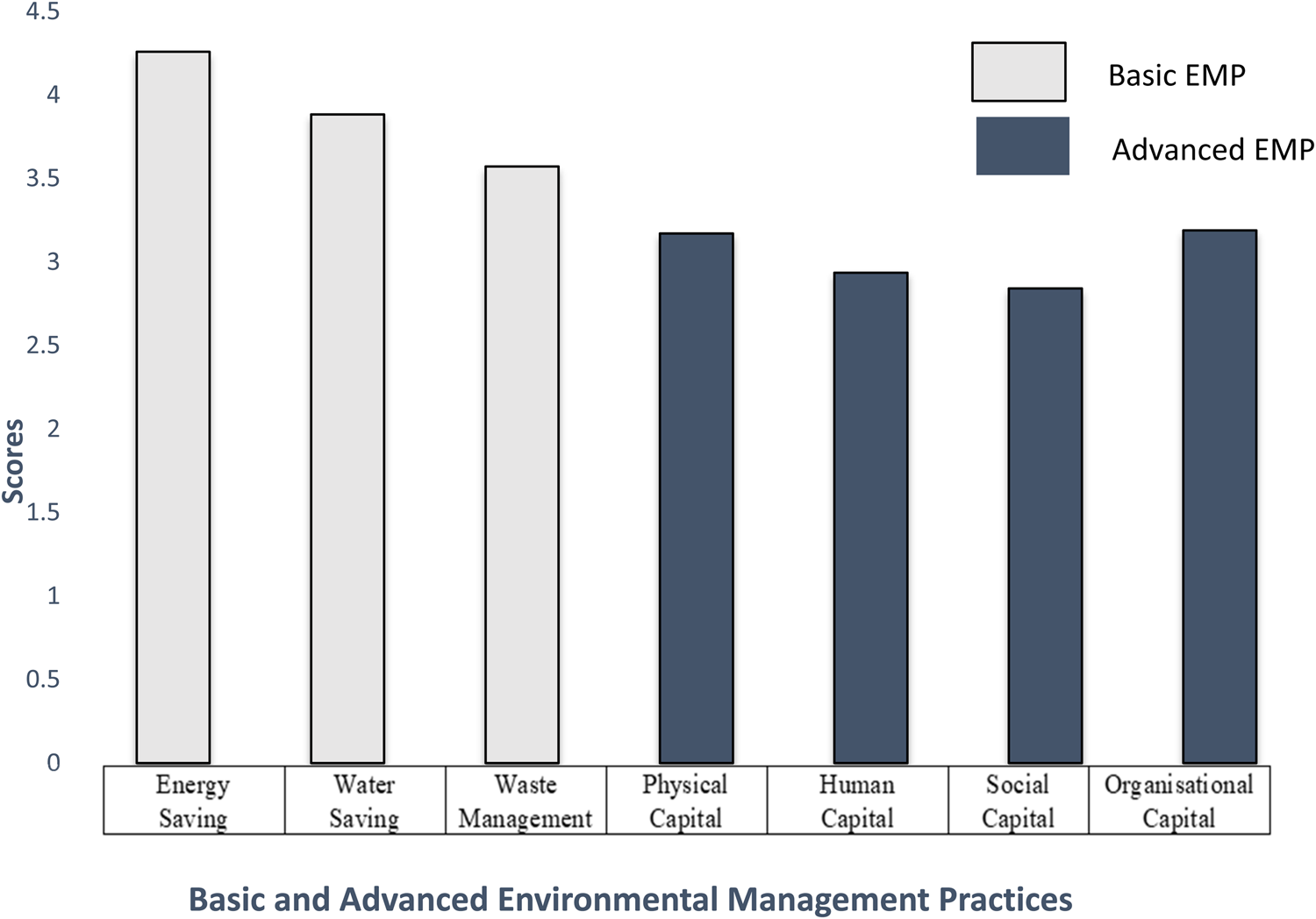
Figure 1 also depicts the ASEMP adopted by hotels in Malaysia. The overall results show that based on advanced environmental initiatives, most hotels embrace physical capital and organizational capital. The physical capital mainly includes hotels prioritizing purchasing/using ecological products (e.g. biodegradable, reusable, and recyclable) (see Table 3). The organization capital includes hotels that apply some environmental protection practices or policies, although they are not profitable in the short term. The least adapted environmental practice is social capital. This includes the hotel's use of less ecological arguments in its marketing campaigns, organizing or sponsoring environmental protection activities, getting guest opinions, and educating guests on environmental issues. However, hotel arrangements to recycle paper, oil, and glass within the social capital have the highest average score (see Table 3).
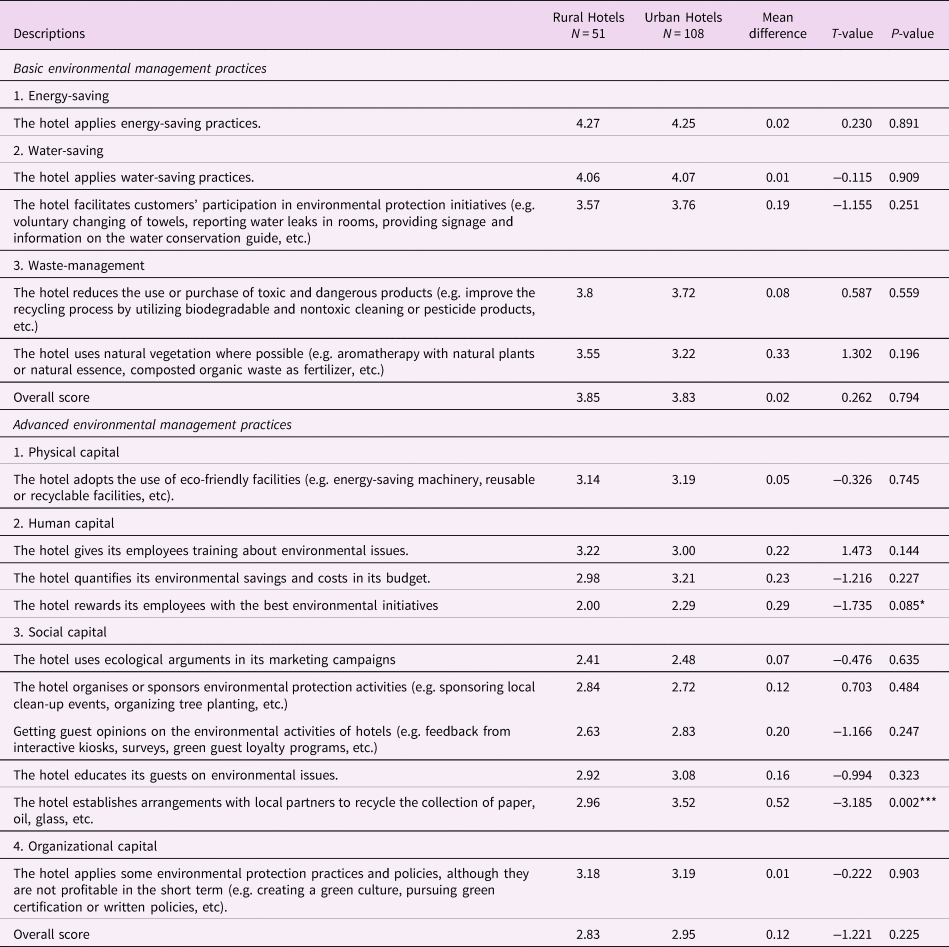
Sustainable environmental management practices based on hotel location
Note: Independent sample T-test results.
Statistical significance at 10, 5 and 1% levels are denoted as *, ** and ***, respectively.
Table 3 shows the average values of hotels' basic and advanced environmental management practices according to location. Overall, the results show that hotels in rural (mean = 3.85) and urban (mean = 3.83) adopt higher basic green practices compared to advanced environmental management practices in rural (mean = 2.83) and urban (mean = 2.95). A detailed analysis was conducted to provide insights into the differences in the individual items of the basic environmental management practices between hotels in different locations.
From the independent t-test results, there are no significant differences between individual average values of the basic environmental practices between hotels in rural and urban areas. However, for the advanced environmental management practices, the independent t-test results reveal that there are significant differences between rural and urban hotels only from the aspects of rewards for environmental incentives given to employees (t-value = −1.735, p < 0.10) and recycling initiatives (t-value = −3.185, p < 0.01). However, there are no significant differences between the rural and urban hotels on other individual items of the ASEMP.
Table 4 shows the basic and advanced sustainability management practices across different hotel ratings. Overall, the results show that hotels across the star rating adopt higher basic green practices (mean = 3.82) compared to advanced environmental management practices (mean = 2.91).
Sustainable environmental management practices based on hotel ratings

Table 5 presents the one-way ANOVA results based on hotel ratings. Based on BSEMP, there is a statistically significant difference in water-saving practices between the hotels as assessed by one-way ANOVA (F = 3.908, p < 0.05). A Tukey post hoc test (see Appendix A) shows that water-saving practices in 5-star hotels (mean = 4.19, p < 0.05) are statistically significantly higher than in 3-star hotels (mean = 3.84, p < 0.05). However, there is no statistically significant difference between 3- and 4-star hotels or between 4 and 5-star hotels on this green practice. Further on the customer collaboration in environmental preservation aspects (e.g. voluntary changing of towels, turning off lights and appliances not in use), the results show significant variations between hotels, as assessed by one-way ANOVA (F = 2.570, p < 0.10). A Tukey post hoc test found that such customer collaboration in environmental conservation in 3-star hotels (Mean = 3.82, p < 0.10) is statistically more significant than in 5-star hotels (Mean = 3.43, p < 0.10). However, there is no statistically significant difference between 3 and 4-star hotels or between 4 and 5-star hotels. Interestingly, there are no significant differences between the hotels in other aspects of basic environmental practices, namely energy saving and waste management practices.
One-way ANOVA test results based on hotel ratings

BG, Between group; WG, Within group; SS, Sum Square; MD, Mean Difference.
Note: Statistical significance at 10, 5 and 1% levels are denoted as *, ** and ***, respectively.
Based on the ASEMP, the findings show considerable differences in the mean value of human capital and social capital activities among hotels in Malaysia based on the star rating. The significant difference in the human capital between the hotel ratings was assessed by one-way ANOVA (F = 7.271, p < 0.01). The Tukey post hoc test results revealed that only employees training about environmental issues in 5-star hotels (Mean = 3.31, p < 0.01) and 4-star (Mean = 3.09, p < 0.10) are significantly higher than in 3-star hotels. However, no significant differences exist between the 4- and 5-star hotels.
On social capital items, the significant difference between the hotel ratings was assessed by one-way ANOVA for ecological argument for marketing (F = 2.555, p < 0.01) and engagement of environmental protection activities (F = 3.448, p < 0.01), respectively. The Tukey post hoc test results reveal that 3-star hotels (Mean = 2.68, p < 0.10) use higher ecological arguments in their marketing campaigns than 5-star hotels. However, there are no significant differences between other hotel ratings. In addition, the Tukey post hoc test results show that 5-star hotels (Mean = 2.95, p < 0.05) and 4-star hotels (Mean = 2.85, p < 0.10) tend to organize or sponsor environmental protection activities more than 3-star hotels. However, there is no significant difference between 4 and 5-star hotels. There are also no significant differences in the physical and organizational capital of ASEMP between the hotel star ratings. Appendix A displays the multiple comparisons based on Tukey post hoc test results.
5. Discussion, limitation, and future research
In today's fast-paced and evolving global economy, businesses must address environmental challenges to ensure survival and growth. This is especially true for the hotel industry, where adopting environmental management practices has become a necessity for cost-saving and a platform to gain a competitive advantage. This study shows the adoption of basic sustainable environmental management practices (BSEMP) and advanced sustainable environmental management practices (ASEMP) by hotels in Malaysia. These practices can lead to a superior competitive advantage when it is deeply integrated into the hotel's unique resources and capabilities, such as physical capital (energy efficient technologies), human capital (trained and environmentally-conscious staff), organizational capital (sustainable operational procedures and policies), and social capital (relationships with various stakeholders). Drawing from the resource-based theory and stakeholder theory, this study showcases the adoption of sustainable practices among hotels in an emerging nation.
The results show that the majority of hotels widely adopt cost-centric sustainable initiatives (BSEMP), with the most prevalent being energy conservation. However, variations in the adoption level of these practices among hotels were noted, with waste management initiatives receiving the least focus. Proper waste management practices, such as handling toxic products and integrating natural vegetation, often require specialized knowledge and expertise. Unfortunately, many hotels lack the necessary resources and expertise to effectively implement these practices (Diaz-Farina et al., Reference Diaz-Farina, Díaz-Hernández and Padrón-Fumero2023). Additionally, the absence of robust regulatory policies on waste management in developing countries may result in hotels feeling less compelled to adopt such practices (Kasavan et al., Reference Kasavan, Mohamed and Halim2017). Improper waste management would seriously cause degradation of soil and aquatic ecosystems (Camilleri-Fenech et al., Reference Camilleri-Fenech, Sola, Farreny and Durany2020). The results further show no significant differences in waste management practices across the hotels, regardless of their star ratings or locations. However, Tansel et al. (Reference Tansel, Yeshenkulova and Nurmanova2021) suggest that hotel waste management strategies can vary across geographical locations due to the inadequate availability of recycling services in some areas.
Based on the hotels' geographical location, the results show that hotels in rural and urban areas demonstrate higher BSEMP than ASEMP. Likewise, the results show consistent patterns across different star-rating hotels (e.g. 3-, 4- and 5-star hotels). This suggests that regardless of hotel locations or star ratings, all hotels demonstrate higher BSEMP than ASEMP, whose actions yield immediate cost-savings impact. Similar practices have been observed in hotels in other countries, where the primary goal is cost savings (Omune et al., Reference Omune, Kambona, Wadongo and Wekesa2021).
The results further show variations in the adoption of BSEMP within hotels of different star ratings, particularly between 3- and 5-star hotels. Particularly, the 5-star hotels exhibit higher water-saving practices. The inclination of 5-star hotels to adopt comprehensive environmental practices can be attributed to their superior financial capabilities (Sánchez-Medina et al., Reference Sánchez-Medina, Díaz-Pichardo and Cruz-Bautista2016). In contrast, smaller hotels often face significant hurdles in implementing EMPs due to financial, managerial, and organizational challenges (Aragón-Correa et al., Reference Aragón-Correa, Hurtado-Torres, Sharma and García-Morales2008). These issues make it more difficult for smaller hotels to keep pace with their larger counterparts in the sustainability arena.
Differentiation-sustainable initiatives encompass creating distinctive environmental practices (ASEMP) related to physical, human, organizational, and social capital that distinguish a business from its competitors. Based on ASEMP, our findings indicate that physical capital initiatives i.e. purchasing and using eco-friendly facilities like energy-saving machinery, and reusable or recyclable facilities are widely adopted. This pattern is consistent across the hotels, suggesting a uniform adoption of physical capital initiatives with no marked differences between urban and rural hotels or across hotels of different star ratings.
Human capital ranked as the second most prevalent ASEMP adopted by hotels. Our study indicates that urban hotels have higher initiatives in rewarding employees for their environmental efforts compared to rural hotels. Prior research suggests that higher levels of environmental awareness and commitment in urban areas may influence hotels in these locations (Yu, Reference Yu2014). This implies that urban hotels may recognize and reward staff's eco-friendly efforts to meet societal expectations. Our results also indicate that 4- and 5-star hotels provide more environmental training to their employees compared to 3-star hotels.
On the aspect of organizational capital, our results show that 40% of the hotels in our study have a written environmental policy. Hotels aim to enhance their competitive position and bolster their reputation by pursuing such capital through environmental certifications and sustainable reporting strategies (González-Rodríguez et al., Reference González-Rodríguez, Díaz-Fernández and Font2020). Our study also shows that there is a higher percentage of 5-star hotels having environmental policies or programs in place than 4-star and 3-star hotels. The adoption of sustainable initiatives present financial and logistical challenges for small hotels, whereas larger chains can more easily afford them (Aragón-Correa et al., Reference Aragón-Correa, Hurtado-Torres, Sharma and García-Morales2008).
Social capital is the least-ranked resource utilized among the ASEMP. Our study found no significant difference in social capital initiatives between urban and rural hotels, except in recycling efforts such as separating paper, oil, and glass collections, where urban hotels outperform their rural counterparts. Mainly, the 3-star hotels undertake less social capital than 4-star and 5-star hotels, specifically in engaging less in community-wide environmental care activities. Two main reasons explaining these findings: First, 3-star hotels are often smaller than 4-star and 5-star hotels and have little awareness of sustainable environmental preservation (Erdogan & Baris, Reference Erdogan and Baris2007). The lack of understanding may lead 3-star hotels to overlook the importance of engaging with stakeholders in environmental protection activities. Second, financial constraints also limit smaller hotels from allocating resources to embrace extensive environmental programs (King et al., Reference King, Breen and Whitelaw2014). However, from the stakeholder theory perspective, hotels that align their operations with the environmental expectations of various salient stakeholders not only improve their ecological footprint but also accentuate their competitive advantage (Ratajczak & Mikołajewicz, Reference Ratajczak and Mikołajewicz2021).
For an effective sustainable transformation, it is crucial for various stakeholders in the hotel industry – including governmental, private, and non-governmental sectors – to have a collaborative effort to unlock opportunities that promote progress toward sustainable development (Ratajczak & Mikołajewicz, Reference Ratajczak and Mikołajewicz2021). Persistent motivation, continuous training, and vigilant monitoring are also important drivers to bolster environmental sustainability commitment in hotels (Ahmad et al., Reference Ahmad, Abdullah, Zainol and Ramely2023). Most importantly, there should be commitment at the individual hotel level to establish innovative environmental initiatives to bring real sustainable change.
Integrating resource-based theory and stakeholder theory involves aligning a hotel's internal resources with the expectations and needs of key stakeholders. Resource-based theory (RBT) posits that environmental practices, when combined with a hotel's unique resources – such as physical capital -, human capital -, organizational capital – and social capital – can lead to sustainable competitive advantage. On the other hand, stakeholder theory suggests that by considering key stakeholders in resource allocation decisions, hotels can enhance their reputation, build stronger relationships with communities, and ensure the long-term viability of their environmental management practices.
The main limitation of our research is our approach to treating environmental practices as solely dependent on internal capabilities. However, external factors also play a crucial role in shaping environmental initiatives, as indicated by previous studies (Aragón-Correa & Sharma, Reference Aragón-Correa and Sharma2003). Future studies could include internal (e.g. organizational culture, management commitment, and employee training programs) and external factors (e.g. government regulations, customer expectations, and industry standards), particularly focusing on the influence of social and normative frameworks on the environmental practices of hotels.
In addition, our survey did not include open-ended questions to delve into the ‘why’ behind the response, which suggests the adoption of a qualitative research approach to obtain deeper insights. Furthermore, the four types of ASEMP capital are not mutually exclusive. Other studies may have categorized some items under different capital types.
This study provides valuable insights into ongoing environmental initiatives pursued by hotels with varying star ratings and geographical locations. These insights are relevant for practitioners and policymakers to develop appropriate policies to promote sustainable tourism. To make significant strides toward sustainability, it is essential for hotels to embrace comprehensive sustainable initiatives by capitalizing on their internal resources and actively engaging with various stakeholders (i.e. regulators, customers, suppliers etc) to enact tangible changes aimed at achieving sustainable development goals such as SDG 6 Clean water and sanitization, SDG 12 Responsible consumption and production and SDG 13 Climate action.
Appendix A: Multiple Comparison Based on Tukey HSD Post HOC Test


 Open access

