

Introduction
Archival repositories play an important part in shaping our present-day societies and our understanding of the past, though the ways in which this happens is not always apparent. The politics of knowledge production, as postulated by postmodern and decolonization scholars, has made it more urgent than ever to look again into the various facets of archives and the possible forces and practices that help contemporary scholars appreciate the circumstances under which certain documentary heritage was produced (Harris Reference Harris2002). This article focuses on the Boulton Atlanta Foundation as an entry point to the understanding and confirmation of postmodern thinking. It introduces postmodern ideas to facilitate the analysis of archivists‘ concerns on collection care, the archive as an institution, as a record and a symbol of power relations.
Kwashirai (Reference Kwashirai2013) is of the view that the only colonial environmental archives that we find today are those which assert key features of colonial capitalism and imperialism as environmental contexts and processes. This provides a critical view of the shift regarding the place of environment in the human sphere. Professional archiving in Zimbabwe started with the work of the National Historical Committee (NHC), which was formed in 1933 to spearhead the commemoration of the expeditions of the Pioneer Column. This was followed by the formation of the Rhodesia National Archives in 1935 mandated to give care for British South Africa Company (BASCo) records (1890–1923) which were of historical and administrative value (Muchefa and Chigodora Reference Muchefa and Chigodora2016). The Rhodesian National Archives Act of 1935 could not legislate for private actors. Much of public record in the archives is a reflection of the broader role of colonial encounters of early white emigrants in Africa and their implications for the environment.Footnote 2
In 1959, Rudyerd W. Boulton, a museum ornithologist from America established the Atlantica Foundation. The Foundation received its funding from the USA and became one of the earliest successful private institutions and ‘ecological research stations’ in the country. It is interesting to use the Atlantica Foundation as an entry point because it epitomizes the early professional establishment of private sanctuaries and the documentation of small creatures such as birds and butterflies. After the intensification of the Liberation War and the effects of the Unilateral Declaration of Independence from 1965, Boulton gave up on his work at the Atlantica Foundation and this marked a turning point for the administration of this iconic environmental institution. The resignation of Boulton from this epic initiative was also said to be linked to the fact that his links with the CIA had been unmasked. The research centre was strategic for many environmental training and research programmes in Zimbabwe, the Democratic Republic of Congo (DRC), Malawi, Tanzania and Mozambique (Jacobs Reference Jacobs2015). The archives belonging to these private spaces complement environmental records that were generated by the government. Archives users after 1980 found these private collections very useful because they filled gaps left by public or government repositories.Footnote 3 They shed light on African environmental landscapes as well as colonial ideologies. The placing of these environmental information resources under the purview of private players, without legal obligation to provide access to the public, has largely compromised the state of preservation and access.
Emergence of community archives as alternative voices? The conundrum of defining archives
Archives serve as legitimate sites or sources for building bridges between the past and the present; hence this article seeks to analyse connections, concerns and conversations about environmental archives. Stoler (Reference Stoler2002) argues that scholars need to start treating archival collections as subjects and not mere sources. There is so much more behind their own stories than the stories they tell.
Community archives document and communicate the history and activities of a community of people. In most cases, members of that community manage these collections. The emergence of community archives in Africa has been driven by a need for local communities to document and preserve their own histories. The push for community archives has also been linked to the broader decolonization movement, which seeks to challenge and dismantle colonial legacies in knowledge production and historical documentation. In terms of their characteristics, community archives do not only pay particular attention to a homogenous group; they also face very similar challenges. In Africa, these challenges include lack of funds, lack of purpose-built structures, shortage of preservation equipment, shortage of shelving and lack of archival sustainability policies. Lack of adequate resources may lead to deterioration of historic collections.
As observed by the International Council on Archives (ICA Report 2005), in most countries, archives buildings are often neither suitable nor adequate because they are not considered a priority in the public service. In Zimbabwe, all records centres outside Harare and Bulawayo are using unsuitable buildings for their record keeping (Bhebhe, Masuku and Ngulube Reference Bhebhe, Masuku and Ngulube2013). Teygeler (Reference Peterson and Spear2001) states that in some countries, even now, the condition of archives and library buildings is alarming. Some buildings being used as records rooms used to be prisons. A good example is the Gweru Records Centre which used to be an old prison centre, whilst the Chinhoyi Records Centre used to be a dormitory cottage for the Chinese builders who constructed the Chinhoyi Provincial Hospital. Private and community archives share these challenges with national records centres.
Whilst archives are perceived to be sites of memory, they are a product of constant negotiations between keeping and destroying records. Archivists are always confronted with lack of adequate space; hence the appraisal process becomes a political act of deciding what to preserve for future generations (Harris Reference Harris1997). This compromised ‘political approach’ to the creation and disposal of national archives has provided safe complementary space for community archives as they add a layer of new narrative to previously silenced aspects in the national archival collections.
With the vastness of the past and what needs to be remembered, it is impossible for any archival organization to have ‘total archives’. ‘Total archives’ is a concept developed in Canada that emphasizes the collection of records, both public and private, in a wide range of media (Millar Reference Millar1998; Cook Reference Cook1979). This concept gives the archivist the mandate to ensure that all sections of society are represented in a given collection. Vosloo (Reference Vosloo2005: 380) understands that the archivist is ordinarily ‘committed to the act of remembering and collecting, recalling and archiving’. The government archivist can be exonerated for presenting a collection that has gaps, but it is important that he can identify complementary collections in private hands.
Community archives have emerged as alternative voices within memory spaces. They have gained ground over the years because scholars view them as grassroots efforts by marginalized communities to document their own histories (Flyn, Stevens and Shepherd Reference Flyn, Stevens and Shepherd2009). As a methodological approach, community archives or private archives became a viable option for most researchers given that they are contextually situated, politically engaged, identity-dependent and warranted by community-based narratives (Gabiola and Caswell Reference Gabiola and Caswell2017). Zavala et al. (Reference Zavala2017: 209) describe this community involvement and participatory governance as ‘a process where we’re all at the table’. To this school of thought, private archives/community archives challenge dominant voices mostly associated with government or political elites, and for most African archives they are viewed as representing colonial legacies.
The BAF had a unique community of scientific researchers who accorded value to the collection, which was a refreshing re-mapping and regeneration of cultural, social, political and environmental history. Such research centres as BAF, botanical gardens and contemporary museums are becoming active locations for dialogues with past environmental history. They have played a critical role in reconstructing past environmental landscapes.
Environmental archives: the Boulton Atlantica Foundation
What stories should an ‘environmental archive’ tell? Answering this question might help locate the relevance of BAF in modern-day archival science as well as in historical or anthropological studies. Knowledge systems residing in archives reflect power dynamics as well as world perceptions. Carter (Reference Carter2006) provided a firm ground for most postmodernist scholars by stating that silences in the archives are, in part, the manifestation of the actions of the powerful in denying marginal access to archives. To ameliorate this, archivists and researchers must read archives ‘against the grain’ and begin to highlight these silences and give voice to the silenced. The powerful are always aligned with the state apparatus. The BAF collection has been a subject of inquiry for researchers of different professional and academic backgrounds. Boulton was a museum ornithologist who started his career in New York, Pittsburgh and Chicago. He later travelled to Africa and did much work in Angola. During the Second World War, he joined the Intelligence Service and was promoted to be head of the Secret Intelligence desk for Africa. Information about much of his career remains classified. What is available in the public domain relates to ornithological and musical work in the Democratic Republic of Congo, Angola, Mozambique, Zimbabwe and East Africa. He had a strong network of other white American immigrants in Southern Rhodesia.
In a biography written after Boulton‘s death in 1983, Melvin A. Traylor Jr. writes:
Rud‘s earlier work led him to the American Museum of Natural History in New York, the Carnegie Museum in Pittsburgh and eventually the field Museum of Natural History in Chicago where he was Assistant Curator and then Curator of Birds from 1931–1946. He left to continue his war-time government service in Washington where he stayed until his move to Southern Rhodesia in 1959. (Traylor Reference Traylor1986: 420)
Environmental archives gained traction as scholars sought answers about past issues related to colonial injustices. Natural resource extraction and cash crop production were key activities done with little concern for the local environment (Fairhead and Leach Reference Fairhead and Leach2000). The fact that ultimately, despite Boulton having been exposed and forced to abandon his work, his collection eventually found a home in the Department of Parks and Wildlife of Zimbabwe confirms its intrinsic value, evidential value and historic value. Reading one of Boulton‘s publications, The Relations of Birds and Man (Reference Boulton1926), there is very clear indication that much of his work was inspired by early ornithological work in America and the desire to educate the public on protecting the environment. In 1926, it was reported that three million ducks, of twenty species, were killed in every hunting season. Boulton noted that ‘the majority of hawks and owls annually eat millions of rodents which otherwise would destroy crops and grain to an incalculable amount’ (3). This coincides with the broader political ideology in Southern Rhodesia where the government embarked on what they termed scientific agriculture amongst Africans, which was a perpetuation of Western modes of consumption.
This has been the case with many multinational corporations in the mining, agriculture and transport sector. Derrida, however, points out that nothing is less clear today than the word ‘archive’ (Derrida Reference Derrida1995: 4). In trying to define the term archive Derrida explains how it has fluidly shifted its boundaries and meaning when used differently by archivists, librarians, museum professionals and in the digital context. It shifts from referring to a record of historical value, to the institution or repository that houses collections, to journals in the library or any document that refers to cultural objects in the museum. Derrida was one of the earliest scholars to engage with the difficulties of defining the term archive. According to Derrida the term archive is not static, it is only a notion not a concept (Derrida Reference Derrida1995).
Collection care and the fate of private archives
It is important to establish the origins of a collection and the purpose for which it was acquired. In postcolonial times, such collections have paved new ways for understanding the African past – who had access to these archives and what were the implications for the community. At BAF the remaining collections do not reflect any deliberate focus on access and preservation issues. This conspicuous absence of access models can also be equated to the absence of trained personnel charged with collection care. Such circumstances may justify the eventual negligence.
Collection care is a concept that refers to both the intellectual and physical control of records/archives. In the absence of systems and standards, collection care is difficult to uphold. Gracy (Reference Gracy1977) and Bambakidis (Reference Bambakidis1996) identify intellectual control with the following processes: selection, appraisal, processing and cataloguing of the collections. The scope of this definition has evolved over time to include the general effect of the rise of electronic records and their subsequent unique demands. Physical control is understood to refer to the repair, maintenance, restoration, and protection of archival materials as well as disposal of records. Most archival institutions and libraries have established conservation or restoration centres to cater for these activities. Most archivists require the technical services of auxiliary staff to fulfil the physical control tasks.
The aforementioned processes (intellectual and physical control) are essential and pivotal in the running of every archival institution. This study could not find any evidence of the Boulton Atlantica Foundation having responded to any of these critical needs. The net effect is that the institution has been compromised and cannot be sustainable as a proper private archive.
Wamukoya (Reference Wamukoya1995) notes that lack of awareness of records management is now widespread in many organizations, both public and private. This is shown by negligence or lack of awareness manifested through inadequate policies, standards and guidelines, as well as inefficiency and lack of management continuity. Rukanci (Reference Rukanci, Anameriç and Yalçin2016) found that private archives are generally regarded as less important because they do not belong to the public and are not accepted as legal evidence. The fact that an official authority does not supervise them makes them vulnerable to varying degrees of care and negligence. There is complete absence of international or national standards and practices.
Access issues in many African archival institutions have left many researchers wondering if proper archiving is a global practice or remains a Western ideal. Notions of museum and archives in Africa are unique and alien to Western standards. Challenges ranging from lack of purpose-built infrastructure, policy inconsistencies, outdated legislation and backlog challenges, among other issues, have rendered many collections inaccessible. Archives exist, but under access regimes that hinder easy access because of assumed political power they hold. Derrida (Reference Derrida1995: 17), as quoted by Vosloo (Reference Vosloo2005), says the technical structure of the archive determines the structure of the archivable content.
Whilst the initial records at BAF ranged from minutes, reports, field diaries and photographs, among other records classes, the current collection is limited to copies of published books, journals, maps among others, all of which are obtainable from other institutions. The rarity of the collection has vanished.
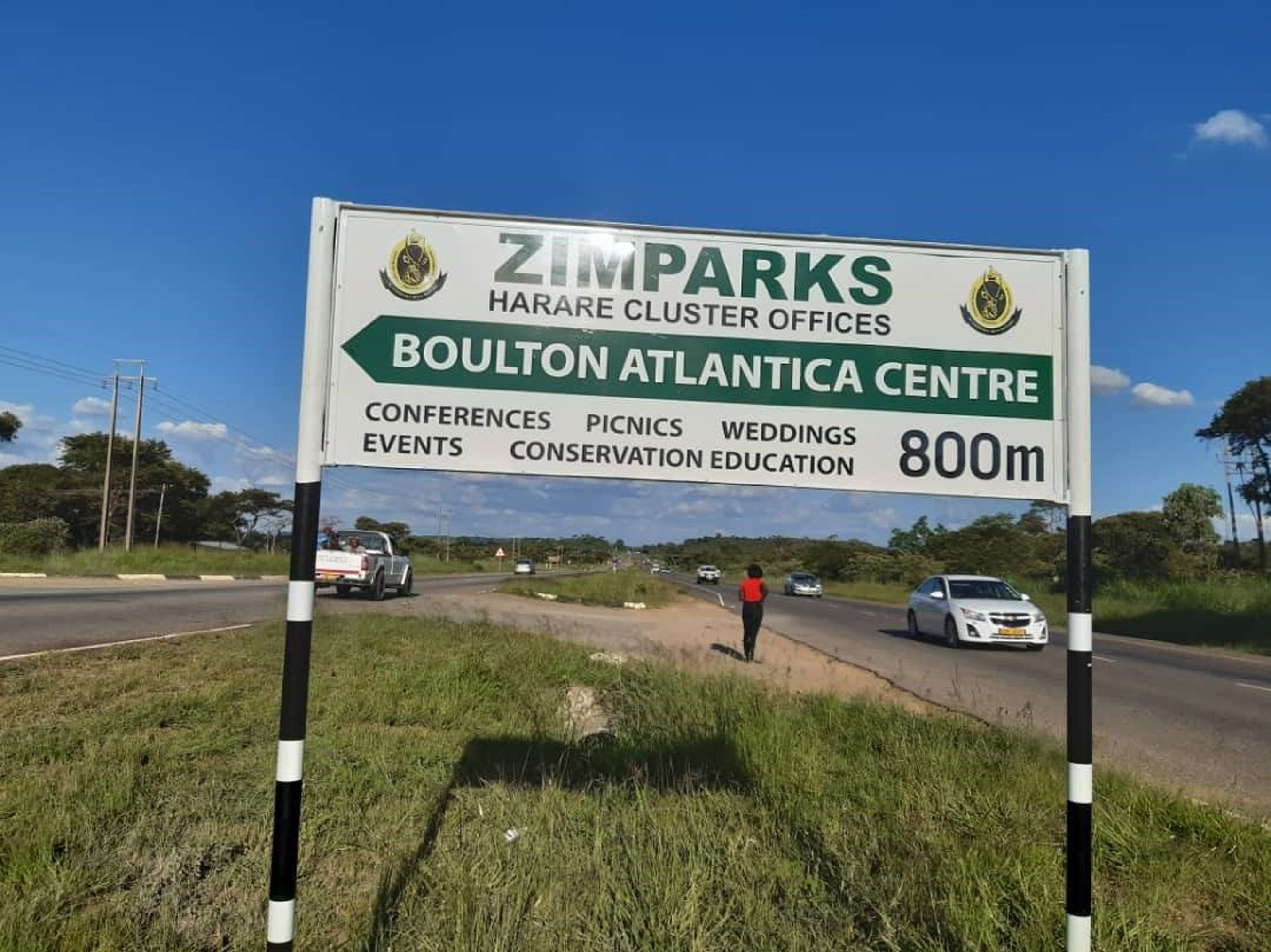
There is no correspondence detailing how the collection was transferred from BAF to the Zimbabwe Parks and Wildlife Authority (almost twenty kilometres away). No agreements or leases are in place. There is no record of how the former glorious institution has now become a picnic centre without its former collections (no trace of library material or archives) (Figure 1).
Current signage along the Harare–Bulawayo road with details of activities that now define the former glorious ecological research station. Photo by Livingstone Muchefa, 2024.

The Department of Zimbabwe Parks and Wildlife Authority has a very active Records Management Team with qualified personnel. However, it is unfortunate that the BAF collection remains peripheral to their duties
De-centring the archive and multiple narratives
New epistemologies in modern heritage historiography have emerged from the need to balance views from the global North and those of global South. Decolonization is one prominent term used in museums and archives management as an attempt to redress colonial biases. Of particular interest to this research are the terms ‘decentring the human’ and ‘decentring the West’. For more balanced nuances, this concept opens avenues for refreshed analysis of the role and function of archives in postcolonial times. The work Boulton did at BAF cannot be underestimated. Moreover, while political developments may have influenced the overall care of the collection it remains a fact that the collection was complementary and critical to the understanding of colonial Zimbabwe.
Decentring the West is a concept that requires giving attention to marginalized views or narratives. It comes from the understanding that scholarship has been dominated by Western views (Eurocentrism). It seeks to bring different voices and give an explanation as to why certain narratives have taken centre stage. The slow obliteration of records from BAF may not be coincidental given the circumstances surrounding the founder. Boulton having been unmasked as a state enemy or conspirator, records generated under his watchful eye could not be spared from a political fate. It is also saddening to note that despite a very conscious archiving fraternity both in private and public institutions, it is still possible for rich collections to disappear from public view. It should be of national concern for researchers and archival associations to ensure that both public and private collections are secure from possibilities of extinction. What strategies must be employed to salvage such collections from both the natural and ‘political’ whims of the powerful?
A theoretical and practical review
Terry Cook (Reference Cook1994) offered a fresh perspective from the old school by focusing on the particularities of emerging challenges of digital archives. Most important to this analysis was the departure from viewing archives as archives to archiving as a practice. Community archives are given some agency to respond to rampant gentrification as found in national archival institutions (Zavala et al. Reference Zavala2017). A resident of the area close to Boulton Atlantica Foundation pointed out that Boulton was really a famous white man amongst the locals, who could extensively socialise with everyone. Boulton was largely credited for examining traditional medicines and confirming to the community that indeed some herbs possessed active ingredients that would cure specific ailments.Footnote 4 There are plenty of stories about how he would go into the villages and carry out research. His character, his research and the growth of the community archive provide an interesting example of a post-custodial lens where the agency of the community influences a review of traditional archival theories.
This article was inspired by the acceptance that a number of private records and archives are in the care of very rich collections but basic standards are not met due to lack of qualified staff as well as inadequate resources for sustainable operations. Beginning in 2017, the National Archives of Zimbabwe launched a series of Community Archives every year. Arcturus Community Archives was the first, where the interest was in the convergence of mining history (gold), white commercial farming and migration history. Arcturus Gold Mine is one of the oldest gold mines, dating from around the 1850s. It later became home to migrants from Mozambique, Malawi, Tanzania, Zambia, Zimbabwe and Angola. After this debut community archive others included the Headquarters of Zion Christian Church, one of the biggest local independent churches. The idea behind this initiative was that the National Archives of Zimbabwe hoped to create grassroots archivists who would also champion their local voices. It was, and still is, imperative that more community archives whose allegiance should be to the community, not commercial entities such as multinational companies and government agencies, should emerge and fill gaps in under-documented stories.
What also remains glaring is the fact that the most popularized theories of records and archives management practices such as the records continuum concept and records life cycle model remain inadequate for addressing circumstances such as those that befell the BAF collection. They still largely focus on public archives; a more customized approach to community archives is needed, especially in Africa.
The life cycle model argues that there are clearly definable stages in record-keeping, and creates a sharp distinction between current and historical record-keeping; whilst the continuum-based approach suggests integrated time–space dimensions (Millar and Roper Reference Millar and Roper1999). The continuum principle suggests that the distinction between record and archive management does not need to be rigidly maintained (Matlala and Maphoto Reference Matlala and Maphoto2020). The concept emerged in the 1990s to complement the weaknesses of the life cycle model which could not effectively cater for the rising electronic records (Millar and Roper Reference Millar and Roper1999). The continuum concept has been credited with emphasising the seamless flow that comes with records functioning as organizational collective memory right from the time of their creation. This approach assumes that records and archives are always in the custody of trained personnel. It does not cater for eventualities such as policy changes. Whilst the archivist is deemed a political agent, the real politician can also reshape the fate of the African archives. Peterson’s (Reference Peterson and Spear2021) research, focusing on Uganda, provides the groundwork for analysing the intersection between political decisions and their effects on archives management. Research and access to these collections remain a political privilege. In some instances, politicians decide how much access should be given to researchers (Władysław Reference Władysław2014). This is the case with most records of the security authorities in repressive regimes.Footnote 5
Conclusion
The story of the BAF collection opens windows onto a more flexible approach when dealing with private collections in Africa in general and in Zimbabwe in particular. The absence of a strong regulatory arm towards the enforcement of archiving standards for both private and public entities across all public entities is a cause for concern. The National Archives of Zimbabwe are not adequately empowered for punitive monitoring of all public records and inclusive advisory services for all the private sector. Resultantly, depositing culture amongst public entities has been severely compromised and some entities also created their own (competing) archives contrary to the dictates of the National Archives of Zimbabwe Act [Chap 25: 06] of 1986. Challenges associated with the integrity and access of public archives have paved way for the realization that private archives play a critical role in modern historical and anthropological studies.
The broader environment around compatibility issues of private and public archives shows that researchers of African history in Africa require flexibility and innovations around navigating certain areas of study such as environment. These private archives are simply complementing narratives but oftentimes treated as competing narratives because they do not always conform to national or political narratives.
Livingstone Muchefa worked as an archivist at the National Archives of Zimbabwe from 2008 to 2020 before joining the National Gallery of Zimbabwe as Curator for Education and Public Programming. He is currently Operations and Administration Manager at the National Gallery of Zimbabwe. He has undertaken research in the field of archives and records management, visual arts and heritage management. He has participated in many regional and global research projects and workshops in the field of heritage management.

 Open access

