

The Value of Twin Studies
Throughout the centuries, twins have captured the attention of those around them. While the number of twins born in ancient societies may have been limited due to pregnancy and birth complications, twins were clearly noted as special. Across many different cultures, twins have played a part in mythology and religion. Think, for instance, of Romulus, who is said to have founded Rome, and his twin brother Remus, and of the Biblical story of Esau and Jacob, the twin sons of Isaac and Rachel. The occurrence of twin births in the population made scientists and physicians in ancient times, like today, want to understand the origin of twin similarities and dissimilarities, especially in those cases when the twin individuals were alike in looks. Many different opinions have emerged regarding the causes of twin differences, as is nicely illustrated in the preserved work of Cicero (106 BC–43 BC), the great Roman statesman and philosopher. Cicero notes that the famous physician Hippocrates sought the cause for differences in health between twin individuals in lifestyle differences. The scientist and philosopher Posidonius, however, argued that birth order may have resulted in differences in the constellation of the stars at their time of birth, thereby causing differences in health. It was not till the beginning of the 20th century that it became clear how twins may help us gain insight into causes of individual differences in health and behavior.
Darwin’s work on evolution in the mid-19th century and the rediscovery at the start of the 20th century of the work of Mendel, the monk who so painstakingly documented his experiments crossing pea plants, opened the way for the modern-day understanding of genetics. However, it was Sir Francis Galton (Reference Galton1875) who first introduced the concepts of the twin methodology in 1875, followed in 1888 by a paper in which he applied these concepts to anthropometric data (Galton, 1988). Although he did not understand that there was a biological difference between monozygotic (MZ) and dizygotic (DZ) twins, Galton’s work provided the impetus to today’s use of twin studies to gain insight into the heritability of traits. It took till 1925 before the difference between MZ and DZ twins was firmly established (Lauterbach, Reference Lauterbach1925), but the first true twin studies were already being conducted at that time. One of these studies estimated the heritability of intelligence by comparing the similarity in IQ for MZ and DZ twins (Merriman, Reference Merriman1925).
The first twin registry in the world, The Danish Twin Registry, was established in 1954. Others soon emerged, initially in European countries, but gradually they have spread around the world. The first registers focused on twin pairs, but many now also actively recruit additional family members. Such twin registers have thus become twin family registers, sometimes including several generations consisting of twins, their siblings, spouses, children, parents and even grandparents. The inclusion of these different types of family members does not only increase power but also allows for a test of additional hypotheses regarding cultural versus genetic transmission and assortative mating, as well as testing the generalizability of the findings in twins as compared to non-twin or singleton populations.
In addition to expanding from twins to twin families, registries have also grown in the amount of information available on individuals enrolled, especially since most registers follow their participants longitudinally. Moreover, a wide variety of instruments are used to obtain information. Participants complete surveys on a large range of traits and may undergo a wide range of tests, such as cognitive tests, MRI scans and psychophysiological and cardiovascular assessments. In addition, they provide biological samples such as tissue, hair, blood, saliva and feces, which allow for the measurement of hormones, metabolites, proteins and gut microbiome. At times, additional sources of information on twins, such as teachers or physicians, may also be approached, and information may also be added via linkage to external databases, such as national cancer registers. This has resulted in a large number of heritability studies covering almost any phenotype you can imagine, as well as significant success in genomewide association, epigenomewide association and other omics studies in recent years. For an extensive overview of heritability studies, see, for example, Polderman et al. (Reference Polderman, Benyamin, de Leeuw, Sullivan, van Bochoven, Visscher and Posthuma2015).
It has been argued that twin studies, given the current large national biobanking efforts ongoing in a number of countries, are at risk of becoming obsolete. Nothing is further from the truth! This is well illustrated in van Dongen et al’s (Reference Van Dongen, Slagboom, Draisma, Martin and Boomsma2012) article on the value of twins in the ‘omics’ era. While the focus of twin studies may have been on establishing the heritability of a wide variety of phenotypes, twin studies still offer many other unique ways to gain insight into the mechanisms that drive individual differences. This includes but is not limited to the discordant MZ design, which provides the ultimate case-control matching for genetic profile, pregnancy, age, sex and childhood environment. Not only for phenotypic information do these studies remain informative, but they may also shed light upon the effects of (epi)genetic alterations occurring right after conception or across the lifespan, such as de novo mutations, DNA methylation and RNA expression. Recent twin studies, including both MZ and DZ twins have shown that many of these genetic adaptations to environments may also be genetically driven and the extensive collection of data, both phenotypically and genetically, allows for a thorough examination of the gene–environment interplay in human development and health. Therefore, it is not surprising that the established twin registries continue to make significant contributions to our understanding of the causes of individual differences and that new twin registeries are still being created.
New Twin Family Registries
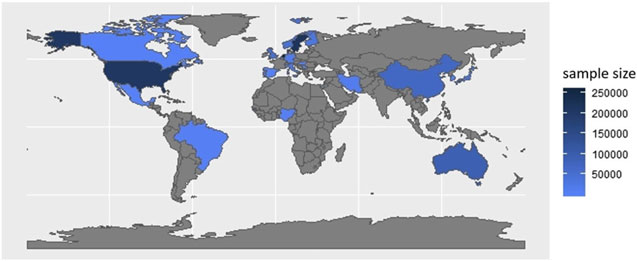
Table 1 lists new twin family registries established since our last special issue (Hur & Craig, Reference Hur and Craig2013). Note that a number of these new registries are located in South America, a continent that until recently has seen little twin research (see also Figure 1). In Brazil, the University of Sao Paulo Twin Panel (the USP Twin Panel) recruits twins from the University of São Paulo and other regions using social media campaigns and through annual festivals offering recreational and cultural activities to twins and their families. In Mexico, two twin family registries have emerged to study genetic underpinnings of health and related behaviors in the Mexican population. The first one, the Mexico Twin Registry (MexTR), attempts to identify twins from public records of all university students in the state of Jalisco in Mexico for the past 20 years by matching birth date and family name. In addition, they recruit young twins from the largest maternity hospital in the state and a multiple birth association in Mexico. The second one, the Mexican Twin Registry (TwinsMX), was established by a multidisciplinary research team at the Universidad Nacional Autónoma de México in collaboration with Australian twin researchers. They have established an electronic questionnaire portal and recruit twins and multiples of all ages living in five highly populated states in Mexico using social media, advertising and publicity campaigns.
Highlights of twin family registries established since our last special issue (Hur & Craig, Reference Hur and Craig2013)
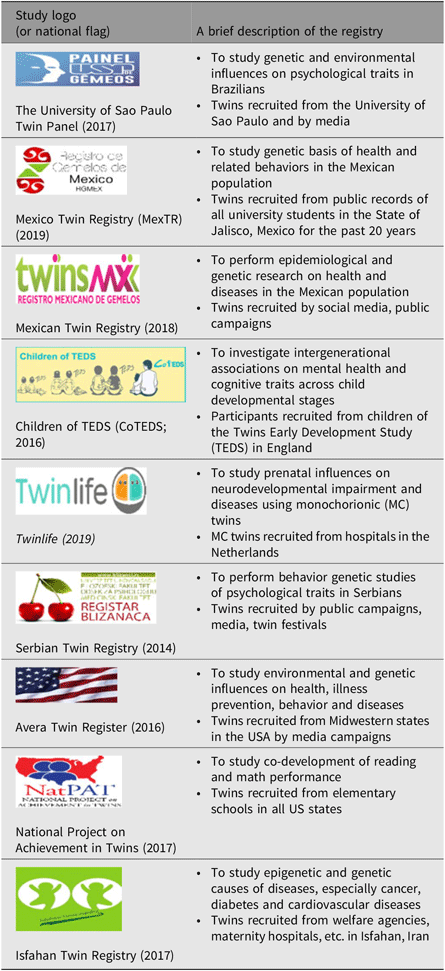
Location of twin studies featured in this issue.
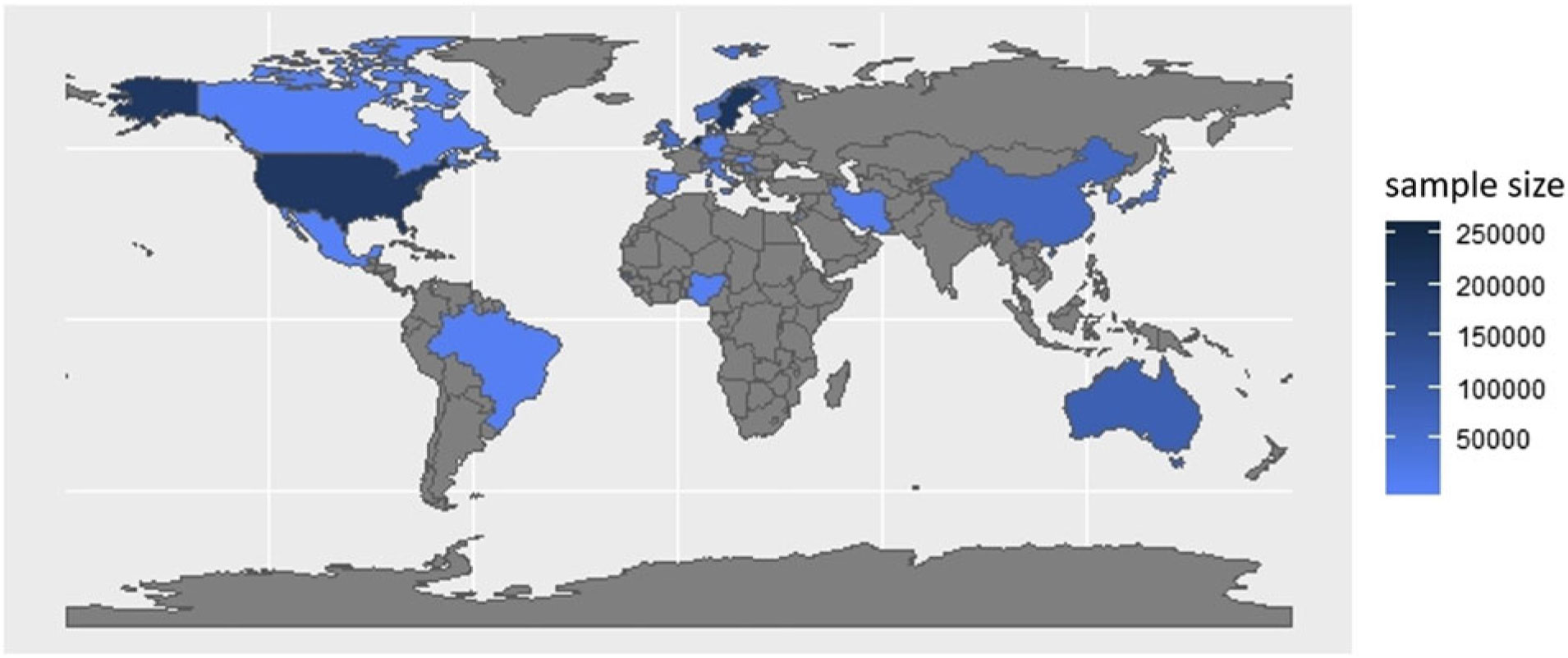
While Europe already has a large number of established twin registries, new ones still arise. Sometimes they emerge from another twin registry, like the Children of the Twins Early Development Study (CoTEDS), which constitutes the children of adult twins who have participated in the Twins Early Development Study (TEDS) since infancy. As the TEDS investigated parents of their twins as well, it is now possible for the CoTEDS to utilize three-generation pedigrees. These extensive pedigree data make it possible to disentangle passive gene–environment correlations from the associations between parental characteristics and children’s outcomes, as well as estimate the role of genetic factors in explaining intergenerational associations (McAdams et al., Reference McAdams, Hannigan, Eilertsen, Gjerde, Ystrom and Rijsdijk2018).
A unique stand-alone study in the Netherlands may help advance our understanding of the role of intrauterine environment in human development and diseases in singletons as well as in twins. The Twin Longitudinal Investigation of Fetal discordance (Twinlife) in the Netherlands is a newly developed unique resource comprised of monochorionic (MC) twins. As MZ twins, the MC twins share genetic make-up as well as many environmental factors. However, they are also frequently exposed to vastly different prenatal environments due to complications associated with sharing a single placenta. MC twins in Twinlife are assessed at 14 weeks of gestation and will be followed until they reach 8–9 years of age.
The Serbian Twin Registry (STR) is the first large-scale, national twin family registry in Serbia. They recruit twins and their family members through public campaigns, media and twin festivals. Since 2014, the investigators of the STR, comprised of a multidisciplinary team, have collected phenotypic and molecular genetic data on psychological characteristics and mental health in Serbians. Preliminary findings are described in this issue.
Two new twin registries have also emerged in the USA. The Avera Twin Register (ATR) has recruited twins of all ages in South and North Dakota, Iowa, Nebraska and Minnesota since 2016. In close partnership with the Netherlands Twin Register (NTR), the ATR aims to study environmental and genetic influences on health and diseases longitudinally with a repository of genetic materials of twins and their family members. The National Project on Achievement in Twins (NatPAT) aims to recruit approximately 3000 volunteer twin pairs attending elementary schools in all states in the USA. By linking twins in the NatPAT to the DIBELS Data System (DDS), an online repository that contains student performance on reading and math assessments for approximately 1.4 million children in the USA, the NatPAT seeks to discover salient factors that contribute to the co-development of reading and math performance during the critical developmental period of elementary school.
An Overview of Twin Family Registries in the World
In total, 61 papers from 25 countries, including three international consortia, were compiled in this issue (Figure 1, Table 2). The papers amount to approximately 1.3 million MZ, DZ twins and higher order multiples and their family members who participate in twin studies around the world, serving as a resource for thousands of scientific publications across a wide range of disciplines including psychology, education, sociology, sports science, medicine, pharmacology and epidemiology.
An overview of twin family registries worldwide
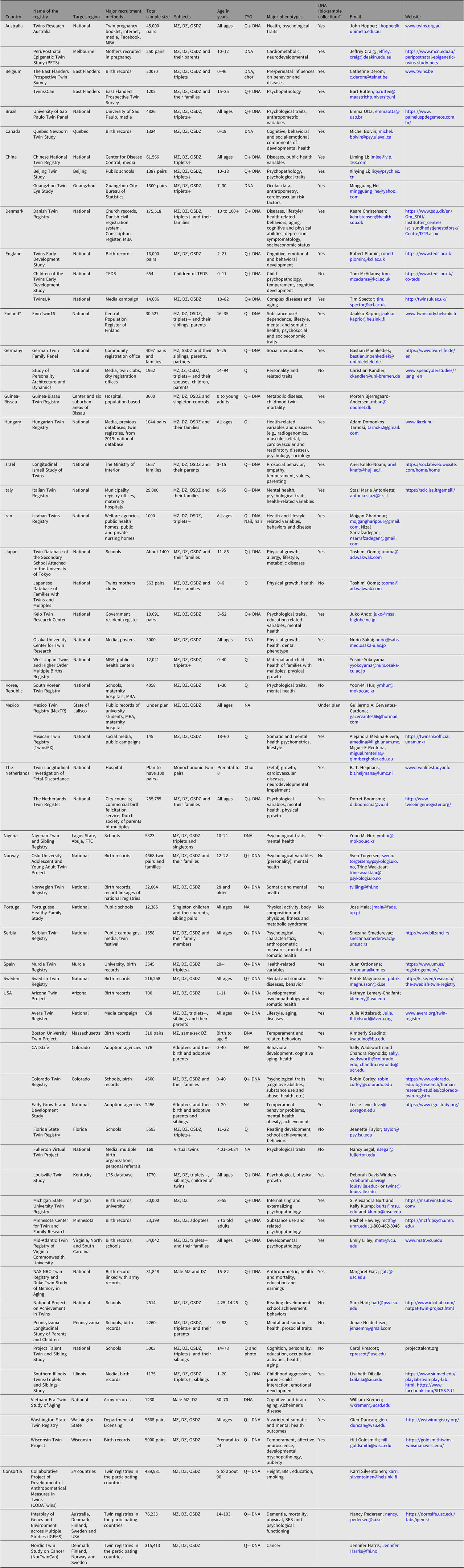
Note: Numbers in ‘Total sample size’ refer to individual twins unless ‘pairs’ are stated. ZYG = zygosity assessment methods; MZ = monozygotic twins, DZ = dizygotic twins; OSDZ = opposite-sex dizygotic twins; SSDZ = same-sex dizygotic twins; MBA = multiple birth association; Chor = chorionicity. Q = questionnaire method, NA = not applicable; Q+ DNA = questionnaire supplemented by DNA testing.
a Finland has two other twin family registries: see Rose et al. (Reference Rose, Salvatore, Aaltonen, Barr, Bogl, Byers and Kaprio2019) for the FinnTwin12 cohort and Kaprio et al. (Reference Kaprio, Bollepalli, Buchwald, Iso-Markku, Korhonen, Kovanen and Waller2019) for the Older Finnish Twin Cohort.
Statistical power calculations have shown that large sample sizes are critical to resolve sources of familial resemblance in quantitative and molecular genetic twin studies (Martin et al., Reference Martin, Eaves, Kearsey and Davies1978; Posthuma & Boomsma, Reference Posthuma and Boomsma2000; Verhulst, Reference Verhulst2017). As shown in Table 2, the sample sizes of registries across the world vary considerably from less than 200 to nearly 200,000 (The Danish Twin Registry) or over 200,000 (The NTR, The Swedish Twin Registry), with approximately 39% of the registries having more than 10,000 participants. The total number of participants differs greatly by continent. Europe has the largest number of participants (over 870,000), while Latin America has the smallest (N ≈ 5000). Although most twin family registries collect opposite-sex as well as same-sex twins, a few registries collect only same-sex twins. Data on opposite-sex twins enable us to address many research issues, including but not limited to the effects of prenatal hormone transfer and sex differences in genetic and environmental contributions to behaviors and diseases.
Many twin researchers seek to recruit twins of all ages, but others look at specific age groups. The vast majority of the twin family registries are national, encompassing 19 countries. However, twin researchers in the USA tend to develop state-specific twin family registries. Currently, there are 11 statewide twin family registries in the USA in addition to several nationwide ones. While most twin family registries were established in affluent Western nations, some registries were founded in developing countries, offering valuable opportunities to evaluate the influence of worldwide environmental variations as well as to strengthen studies of genotype–environment interaction (G × E) across the world.
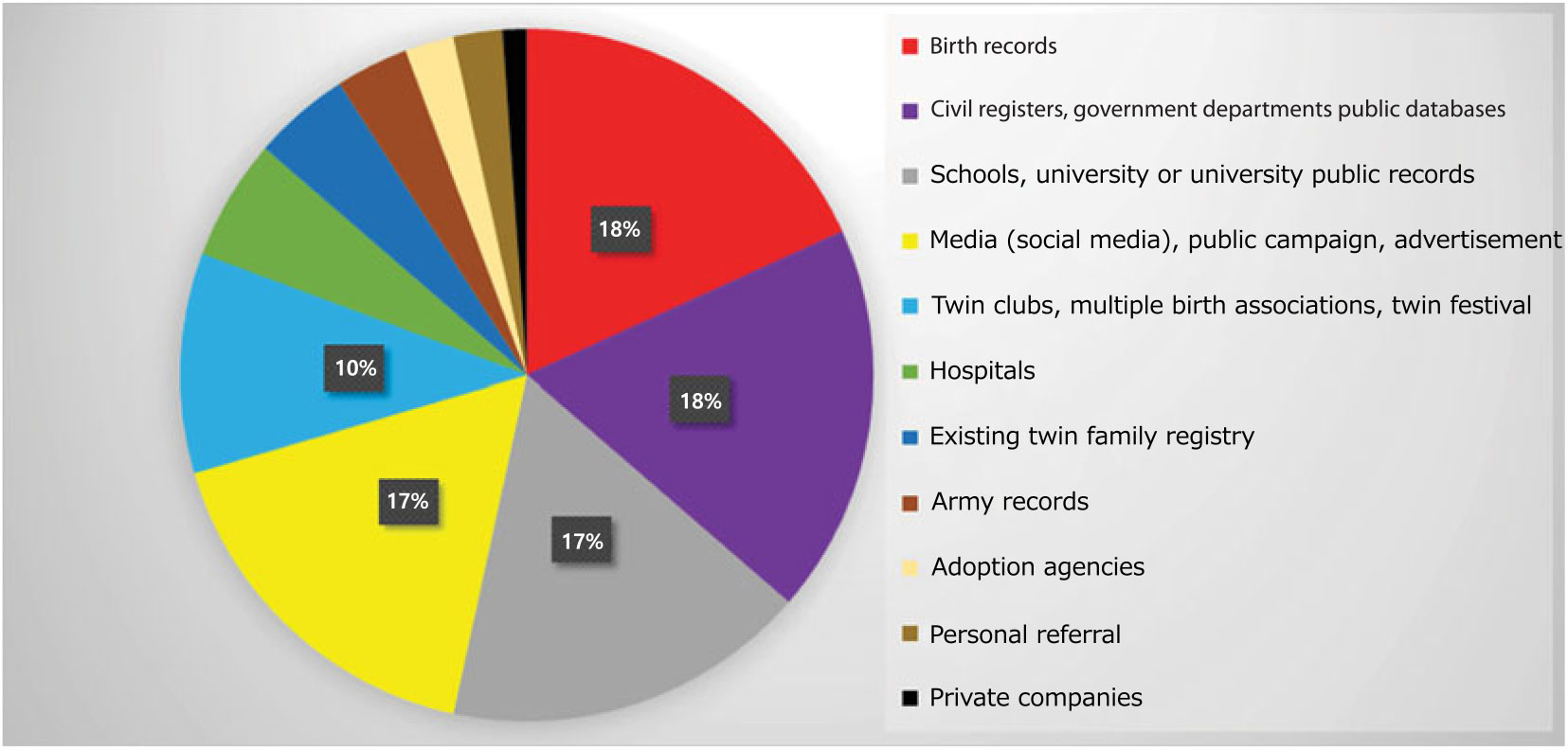
Figure 2 shows recruitment methods used by twin family registries covered in the current special issue. Most registries identify twins through birth records, government departments and various civil registers. However, schools, media advertisements, social media and public campaigns are also very frequently employed to recruit twins. Additionally, many twin registries are associated with twin clubs, multiple birth associations, maternity hospitals in the country and annual twin festivals to recruit twins. A few twin registries use existing twin registries to identify twins (e.g., TwinssCan from EFPTS, CoTEDS from TEDS, the Louisville Twin Study from the old LTS database). As each method has strengths and weaknesses, and legislation related to access to the public records differ by country, many twin registries tend to utilize several of these recruitment methods simultaneously to maximize their sample sizes and the representativeness of the sample.
Frequencies of major recruitment methods used by twin family registries included in the current special issue.
Twin family registries use a number of strategies to maintain twins’ interests in active participation in research. Such strategies include giving twins and their parents’ feedback on psychological and health assessments, gift coupons and monetary compensation. Holding annual festivals and other social events, and sending birthday cards and regular newsletters containing twin research findings to twins and their families are other frequently used strategies.
Investigators of twin family registries in this issue have collected a wide range of phenotypes and environmental data from twins and their family members. Most frequently collected phenotypes include anthropometry variables encompassing physical growth, socioeconomic traits, psychological traits including cognitive abilities and personality, home/school environment, and physical and mental health variables and related behaviors (e.g., lifestyle). However, some registries are specialized in more or less specific phenotypes such as ocular traits (The Guangzhou Twin Eye Study), dentition (The Osaka University Center for Twin Research) or the impact of fetal discordance in MC twins (the Twin Longitudinal Investigation of Fetal Discordance).
Twins’ zygosity is often incorrectly labeled by delivering physicians. However, accurate information about zygosity is important to twin researchers as well as to twins and their parents. Odintsova et al. (Reference Odintsova, Willemsen, Dolan, Hottenga, Martin, Slagboom and Boomsma2018) have shown that misclassification of zygosity of twins can lower heritability estimate up to 20% depending on the phenotype. Additionally, it has been found that knowledge of true zygosity status provides twins and their parents’ peace of mind and positive emotional responses (Cutler et al., Reference Cutler, Murphy, Hopper, Keogh, Dai and Craig2015). Although zygosity can be determined using the standard questionnaire method, DNA testing using sufficient markers is the most accurate method of zygosity assessment. Over 80% of twin registries in this issue confirmed that their zygosity assessment was done on the basis of DNA testing alone or a questionnaire method complemented by DNA testing, suggesting that overall the reliability of zygosity assessment in twin studies is quite high. With the reduction in genotyping costs and the increasing interest in genome-wide association studies among twin researchers, the DNA method of zygosity assessment will be increasingly used in the future.
Data collection methods vary greatly by phenotype, research interests and availability of funding. Mail and telephone surveys, laboratory assessments and face-to-face interviews have been used traditionally by many twin researchers in different fields. More recently, however, web- and mobile-based assessment methods are becoming increasingly popular because these methods enable the collection of large amounts of data with relatively little time and cost. Also, record linkages of twin family registers to national health, education and administrative registers are carried out widely, especially in many European countries, to create large-scale, high-quality and nationally representative datasets without selection bias.
Consortia Using Twin Family Registries
Collaborations across twin registries provide a richer database to test various hypotheses. Three articles in this issue describe international consortia based on twin family registries: Collaborative Project of Development of Anthropometrical Measures in Twins (CODATwins), the Consortium on Interplay of Genes and Environment across Multiple Studies (IGEMS) and the Nordic Twin Study on Cancer (NorTwinCan). The CODATwin consortium is based on anthropometry measures and related data collected from twin family registries in 24 countries (total N = 489,981 twins). Its main goal is to determine factors that modify genetic and environmental variations of body size measures across populations. IGEMS was established to explore the nature of gene–environment interplay in physical and psychological functioning, dementia and mortality across adulthood. It includes data from 76,233 twins coming from 18 twin family registries from 5 countries: Sweden, Denmark, Finland, the USA and Australia. NorTwinCan was constructed by linking twin family registries of Denmark, Finland, Norway and Sweden to their country-specific national cancer and cause-of-death registries (total N = 315,413 twins) to understand familial effects on cancer incidence and mortality, and cross-cancer associations. The articles in this issue provide a description of the consortia, their major findings to date, current research highlights and future research directions.
Conclusions
This special issue provides a comprehensive, but not exhaustive, overview of twin family registries around the world. The number of twin family registries will likely increase and expand with greater availability of databases covering various human populations in the future. It is now well recognized that large, population-based twin family registries worldwide have substantially improved our knowledge of important factors underlying population variabilities in common, complex traits and diseases. Overall, twins are representative of the general population. Twin research remains of value and may be used to further explore findings in the general population. Twin registries have kept pace with the technological developments and now include many different types of data applying the latest statistical techniques. As such, the contribution of twin family registries to formulating new research strategies is high and the viability of twin studies is ensured for the future. Twin births occur across all strata of the population, and due to the widespread use of artificial reproductive technologies the number of twins has increased sharply across the world. In addition, twins and their family members are often enthusiastic participants in twin study projects.
Investigators in twin family registries welcome collaborations to exchange insights, knowledge and database that will lead to benefits in science and human societies. We encourage researchers interested in collaboration and access to the data to contact the investigators of the relevant registry (see contact information in Table 2). We hope you enjoy reading about twin family registries in this special issue and we are looking forward to many new partnerships!
Acknowledgments
We are grateful to Hayoung Jeong for preparing Figure 1 and arranging twins’ photos in the cover of this special issue.



 Open access

