




1. Introduction
A milestone in the classification programme of  $\mathrm{C}^{*}$-algebras states that the class of simple separable nuclear unital and $\mathcal{Z}$-stable $\mathrm{C}^{*}$-algebras that satisfy the Universal Coefficient Theorem [Reference Rosenberg and Schochet22] (UCT) is classified by an invariant constructed with $K$-theory and tracial data [Reference Carrión, Gabe, Schafhauser, Tikuisis and White1, Reference Castillejos, Evington, Tikuisis, White and Winter3, Reference Elliott, Gong, Lin and Niu6, Reference Gong, Lin and Niu10, Reference Gong, Lin and Niu11, Reference Tikuisis, White and Winter26]. Therefore, determining when a $\mathrm{C}^{*}$-algebra satisfies these conditions is essential before one can attempt to apply the classification theorem. Many criteria exist to detect $\mathcal{Z}$-stability in various contexts, and it is also known that there are many separable simple unital and nuclear $\mathrm{C}^*$-algebras that are not $\mathcal{Z}$-stable. However, a major open problem in the field is determining if nuclear $\mathrm{C}^{*}$-algebras satisfy the UCT. We refer to [Reference Rosenberg and Schochet22, Reference Skandalis24] for a comprehensive description of the UCT.
The work of Tu shows that groupoid  $\mathrm{C}^{*}$-algebras of a-T-menable groupoids (in particular amenable ones) satisfy the UCT [Reference Jean-Louis13], and this encompasses large classes of separable nuclear $\mathrm{C}^{*}$-algebras. Nevertheless, all concrete known examples of nuclear $\mathrm{C}^{*}$-algebras are seen to satisfy the UCT and there is no apparent candidate for a counterexample (although such examples do exist outside the nuclear setting; see [Reference Skandalis24]).
In light of the difficulty of settling the UCT problem, it is natural to seek classification results where the UCT is not needed. For instance, the classification theorem of Kirchberg and Phillips [Reference Kirchberg and Phillips14–Reference Phillips16] for simple nuclear purely infinite  $\mathrm{C}^*$-algebras has as a major methodological advantage that the classification is initially obtained directly via KK-theory. The UCT only plays a role when one wants to obtain KK-equivalence from an isomorphism of ordinary K-theory. In the classification of stably finite $\mathrm{C}^*$-algebras, all the available theories utilize the UCT assumption in several substantial intermediate steps. This could be relaxed recently in a breakthrough article of Schafhauser [Reference Schafhauser23], in which an isomorphism theorem was proved for unital simple nuclear $\mathcal{Z}$-stable $\mathrm{C}^{*}$-algebras under the assumption that one starts from an embedding that induces both a KK-equivalence and an isomorphism of tracial data.
In this note, we will focus on classification results without assuming the UCT for simple and stably projectionless nuclear  $\mathrm{C}^{*}$-algebras. In this direction, an important result for this note is the classification of KK-contractible (i.e., KK-equivalent to $\{0\}$) stably projectionless simple separable and $\mathcal{Z}$-stable nuclear $\mathrm{C}^{*}$-algebras via their tracial cones and scales [Reference Elliott, Gong, Lin and Niu5, Theorem 7.5]. In particular, this applies to simple separable stably projectionless nuclear $\mathrm{C}^{*}$-algebras with traces that absorb tensorially the Razak–Jacelon algebra $\mathcal{W}$ [Reference Jacelon12, Reference Razak18]. Utilizing this result as a cornerstone, we establish a ${\mathcal{Z}_0}$-stable uniqueness theorem for $^*$-homomorphisms between simple separable nuclear $\mathrm{C}^{*}$-algebras that are trace-preservingly homotopic (see Definition 3.4 and Theorem 3.5). Here ${\mathcal{Z}_0}$ is the known stably projectionless analogue of the Jiang–Su algebra that plays an important role in the classification of a large class of stably projectionless $\mathrm{C}^{*}$-algebras [Reference Gong and Lin9]. For classifiable $\mathrm{C}^{*}$-algebras with the UCT, the assumption of ${\mathcal{Z}_0}$-stability is reflected in the Elliott invariant via the assumption that the pairing map between the traces and the $K_0$-group has to vanish.
By combining our aforementioned uniqueness theorem for maps with an Elliott intertwining argument, we obtain the following rigidity property for the class of separable, simple, nuclear, and  ${\mathcal{Z}_0}$-stable $\mathrm{C}^{*}$-algebras.
Theorem 1.1. Let  $A$ and $B$ be simple, separable, nuclear, and ${\mathcal{Z}_0}$-stable $\mathrm{C}^{*}$-algebras. If $A$ and $B$ are trace-preservingly homotopy equivalent, then $A$ is isomorphic to $B$.
$B$.
2. Preliminaries
2.1. Notation
We will denote the multiplier algebra of  $A$ by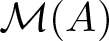 $\mathcal{M}(A)$ and its forced unitization by $A^\dagger$. If $A$ is unital, the unitary group is denoted by $\mathcal{U}(A)$. We will write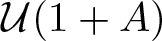 $\mathcal{U}(1+A)$ for the unitary subgroup $(1+A)\cap \mathcal{U}(A^\dagger)$. Observe that if $A$ is unital, we can canonically identify $\mathcal{U}(A)$ with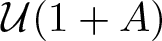 $\mathcal{U}(1+A)$.
We will denote the  $n\times n$-matrices with complex coefficients by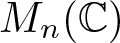 $M_n(\mathbb{C})$. We denote the standard matrix units by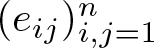 $(e_{ij})_{i,j=1}^n$. We will also freely identify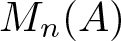 $M_n(A)$ with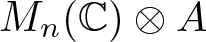 $M_n(\mathbb{C}) \otimes A$ whenever it is convenient for us. The cone of lower semicontinuous densely defined traces on $A$ is denoted by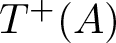 $T^+(A)$.
We will frequently write 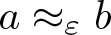 $a \approx_\varepsilon b$ as short-hand for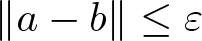 $\|a -b \| \leq \varepsilon$. For $^*$-homomorphisms $\varphi, \psi: A \to B$, we write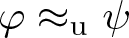 $\varphi \approx_{\mathrm{u}} \psi$ to say that they are approximately unitarily equivalent, i.e., there is a net of unitaries $(u_\lambda) \subset \mathcal{U}(1+B)$ with $\lim\limits_{\lambda \to \infty} u_\lambda \varphi (a) u_\lambda^* = \psi(a)$ for all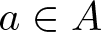 $a \in A$. If one assumes $A$ to be separable, then such nets can be replaced by sequences.
Lastly, we shall say that a separable  $\mathrm{C}^{*}$-algebra $A$ is KK-contractible if $KK(A,A)=0$.
2.2. Robert’s classification theorem
Given two positive elements  $a$ and $b$ in a $\mathrm{C}^{*}$-algebra $A$, it is said that $a$ is Cuntz-below $b$,
$b$,  $a \precsim b$, if for any $\varepsilon \gt 0$ there is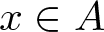 $x\in A$ such that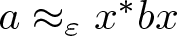 $a \approx_\varepsilon x^*bx$. It is said that $a$ is Cuntz equivalent to $b$,
$b$,  $a \sim b$, if $a \precsim b$ and $b \precsim a$. The Cuntz semigroup of $A$ is defined as $\mathrm{Cu}(A):= (A\otimes \mathbb{K})_+ /_\sim$ equipped with orthogonal addition and order given by Cuntz-subequivalence. The equivalence class of a given element $a \in (A \otimes \mathbb{K})_+$ will be denoted by $[a]$.
The augmented Cuntz semigroup of a unital  $\mathrm{C}^{*}$-algebra $A$, denoted by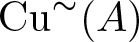 $\mathrm{Cu}^\sim (A)$, is defined as the ordered semigroup of formal differences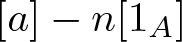 $[a] - n [1_A]$, with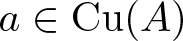 $a \in \mathrm{Cu}(A)$ and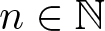 $n \in \mathbb{N}$, i.e.,
 \begin{align*}
\mathrm{Cu}^\sim(A):= \{[a] - n[1_A] \mid [a] \in \mathrm{Cu}(A),\ n \in \mathbb{N} \}.
\end{align*}
\begin{align*}
\mathrm{Cu}^\sim(A):= \{[a] - n[1_A] \mid [a] \in \mathrm{Cu}(A),\ n \in \mathbb{N} \}.
\end{align*} This set carries an order by declaring that  $[a]-n[1_A] \leq [b] - m[1_A]$ holds in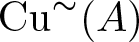 $\mathrm{Cu}^\sim(A)$ if there is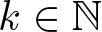 $k \in \mathbb{N}$ such that $[a]+m[1_A]+k[1_A] \leq [b] + n [1_A] + k [1_A]$ in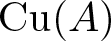 $\mathrm{Cu}(A)$.
Now assume  $A$ is non-unital and $\pi: A^\dagger \to \mathbb{C}$ is the canonical quotient map. The augmented Cuntz semigroup of $A$ is then defined as the subsemigroup of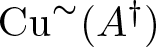 $\mathrm{Cu}^\sim(A^\dagger)$ given by
 \begin{align*}
\mathrm{Cu}^\sim (A) := \{[a] - n[1_{A^\dagger} ] \mid [a] \in \mathrm{Cu}({A^\dagger}),\ \mathrm{Cu}(\pi) ([a]) = n \}.
\end{align*}
\begin{align*}
\mathrm{Cu}^\sim (A) := \{[a] - n[1_{A^\dagger} ] \mid [a] \in \mathrm{Cu}({A^\dagger}),\ \mathrm{Cu}(\pi) ([a]) = n \}.
\end{align*} We endow 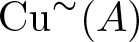 $\mathrm{Cu}^\sim(A)$ with the order coming from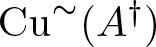 $\mathrm{Cu}^\sim (A^\dagger)$. We refer to [Reference Robert19, Reference Robert and Santiago20] for more details about this construction. As we shall see below, the augmented Cuntz semigroup is a powerful tool to classify maps between certain classes of $\mathrm{C}^{*}$-algebras.
When a  $\mathrm{C}^{*}$-algebra is simple, separable, exact, $\mathcal{Z}$-stable and admits non-trivial traces,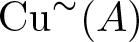 $\mathrm{Cu}^\sim(A)$ can be calculated using its K-theory and tracial data [Reference Robert and Santiago20, Theorem 6.11]. We point out that the result in [Reference Robert and Santiago20] is phrased in terms of the cone of densely finite functionals on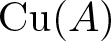 $\mathrm{Cu}(A)$. It is well known that this cone can be identified with the cone of densely finite bounded $2$-quasitraces on $A$ (see for instance [Reference Elliott, Robert and Santiago7, Section 4.1]).
Hence, if  $\overline{\mathbb{R}} := \mathbb{R} \cup \{\infty\}$ and $\mathrm{Lsc}(T^+(A), \overline{\mathbb{R}})$ denotes the lower semicontinuous functions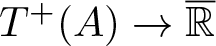 $T^+(A) \to \overline{\mathbb{R}}$ that are linear and map the zero trace to $0$, one always has a natural isomorphism
 \begin{equation}
\mathrm{Cu}^\sim (A) \cong K_0(A) \sqcup \mathrm{Lsc}(T^+(A), \overline{\mathbb{R}}).
\end{equation}
\begin{equation}
\mathrm{Cu}^\sim (A) \cong K_0(A) \sqcup \mathrm{Lsc}(T^+(A), \overline{\mathbb{R}}).
\end{equation} The ordered semigroup structure on the right-hand side is given as follows. The sets 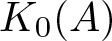 $K_0(A)$ and $\mathrm{Lsc}(T^+(A), \overline{\mathbb{R}}) $ are considered disjoint and each set is separately endowed with its natural order and addition. For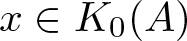 $x \in K_0(A)$, we consider the function $\hat{x}: T^+(A) \to \mathbb{R}\subset\overline{\mathbb{R}}$ given by evaluation on $x$. For any $f \in \mathrm{Lsc}(T^+(A), \overline{\mathbb{R}})$, the addition operation of mixed terms is given via $x+f:= \hat{x} + f \in \mathrm{Lsc}(T^+(A), \overline{\mathbb{R}})$. The order is defined by declaring that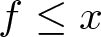 $f \leq x$ holds if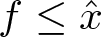 $f \leq \hat{x}$ in $\mathrm{Lsc}(T^+(A), \overline{\mathbb{R}})$, and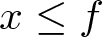 $x \leq f$ if there is a strictly positive function $h \in \mathrm{Lsc}(T^+(A), \overline{\mathbb{R}})$ such that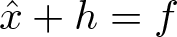 $\hat{x}+h = f$. We refer to [Reference Robert and Santiago20, Section 6.3] for more details about the above isomorphism.
A major tool for this paper is a classification result by Robert that applies to  $^*$-homomorphisms where the domain is an inductive limit of 1-dimensional noncommutative CW complexes (henceforth abbreviated as 1-NCCW complexes) with vanishing $K_1$-groups and the codomain has stable rank one (i.e., invertible elements are dense in its minimal unitization). The class of 1-NCCW complexes was introduced by Eilers–Loring–Pedersen in [Reference Eilers, Loring and Pedersen4]. These algebras are defined as pullback $\mathrm{C}^{*}$-algebras of the form $C([0,1], F) \oplus_{F\oplus F} E$ where $E$ and $F$ are finite dimensional and the pullback is taken over unital morphisms $\gamma: E \to F \oplus F$ and $\mathrm{ev}_0 \oplus \mathrm{ev}_1: C([0,1], F) \to F \oplus F$.
Theorem 2.1 ([Reference Robert19, Theorem 1.0.1])
Let  $A$ be either a $1$-NCCW complex with trivial $K_1$-group, or a sequential inductive limit of such $\mathrm{C}^{*}$-algebras, or a $\mathrm{C}^{*}$-algebra stably isomorphic to one such inductive limit. Let $B$ be a $\mathrm{C}^{*}$-algebra with stable rank one. Then for every $\mathrm{Cu}$-morphism
 \begin{equation*}
\alpha: \mathrm{Cu}^\sim(A) \to \mathrm{Cu}^\sim (B)
\end{equation*}
\begin{equation*}
\alpha: \mathrm{Cu}^\sim(A) \to \mathrm{Cu}^\sim (B)
\end{equation*}such that  $\alpha([s_A]) \leq [s_B]$, where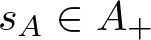 $s_A \in A_+$ and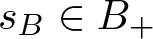 $s_B \in B_+$ are strictly positive elements, there exists a $^*$-homomorphism
 \begin{equation*}
\varphi: A \to B
\end{equation*}
\begin{equation*}
\varphi: A \to B
\end{equation*}such that  $\mathrm{Cu}^\sim (\varphi) = \alpha$. Moreover, $\varphi$ is unique up to approximate unitary equivalence.
We shall henceforth refer to the class of  $\mathrm{C}^{*}$-algebras that satisfy the assumptions of the above theorem in place of $A$ as Robert’s class. For subsequent applications of the theorem, we note that every $\mathrm{C}^{*}$-algebra belonging to Robert’s class also has stable rank one.
2.3. The Razak–Jacelon algebra  $\mathcal{W}$ and the
$\mathrm{C}^{*}$-algebra
${\mathcal{Z}_0}$
$\mathcal{W}$ and the
$\mathrm{C}^{*}$-algebra
${\mathcal{Z}_0}$


Among the class of inductive limits of 1-NCCW complexes with vanishing  $K_1$-groups, there are two important examples with remarkable properties that we discuss below.
The Razak–Jacelon algebra  $\mathcal{W}$ is the unique algebraically simple nuclear $\mathcal{Z}$-stable monotracial and KK-contractible $\mathrm{C}^{*}$-algebra up to isomorphism. These conditions additionally force $\mathcal{W}$ to be stably projectionless. The Razak–Jacelon algebra is constructed as an inductive limit of certain 1-NCCW complexes known as Razak building blocks [Reference Jacelon12, Reference Razak18]. This algebra absorbs tensorially the universal UHF algebra and hence it is also $\mathcal{Z}$-stable. Via classification results [Reference Elliott, Gong, Lin and Niu5, Corollary 6.7], it is known that it is self-absorbing, i.e., $\mathcal{W} \otimes \mathcal{W} \cong \mathcal{W}$. Furthermore, by the Kirchberg–Phillips classification theorem, one also sees that $\mathcal{W} \otimes \mathcal{O}_\infty \cong \mathcal{O}_2 \otimes \mathbb{K}$. The $\mathrm{C}^{*}$-algebra $\mathcal{W}$ can be regarded as the stably finite analogue of $\mathcal{O}_2$.
The Razak–Jacelon algebra belongs to the broader class of stably projectionless simple nuclear  $\mathcal{Z}$-stable KK-contractible $\mathrm{C}^{*}$-algebras. This class was classified by Elliott–Gong–Lin–Niu [Reference Elliott, Gong, Lin and Niu5, Theorem 7.5]. (Note that [Reference Castillejos and Evington2] guarantees that the assumption of $\mathcal{Z}$-stability agrees with the assumption of finite nuclear dimension appearing in these references.) In particular, this applies to simple stably projectionless nuclear $\mathrm{C}^{*}$-algebras that absorb tensorially the Razak–Jacelon algebra $\mathcal{W}$ [Reference Elliott, Gong, Lin and Niu5, Corollary 6.7]. An important result for this note is that $^*$-homomorphisms between KK-contractible $\mathrm{C}^{*}$-algebras are classified by their tracial behaviour.
Theorem 2.2 ([Reference Szabó25, Theorem 6.3], [Reference Elliott, Gong, Lin and Niu5])
Let  $A$ and $B$ be simple separable stably projectionless nuclear $\mathcal{Z}$-stable $\mathrm{C}^{*}$-algebras such that $KK(A,A)= KK(B,B)=0$. Let $\psi, \varphi: A \to B$ be $^*$-homomorphisms. Then $\varphi$ and $\psi$ are approximately unitarily equivalent if and only if $\tau \circ \psi = \tau \circ \varphi$ for all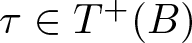 $\tau \in T^+(B)$.
On the other hand, the  $\mathrm{C}^{*}$-algebra ${\mathcal{Z}_0}$ is a stably projectionless $\mathrm{C}^{*}$-algebra that is also an inductive limit of 1-NCCW complexes with vanishing $K_1$-groups. It is the unique (up to isomorphism) algebraically simple and monotracial $\mathrm{C}^{*}$-algebra in Robert’s class with $K_0({\mathcal{Z}_0}) = \mathbb{Z}$. (As it belongs to Robert’s class, one automatically has $K_1({\mathcal{Z}_0}) = 0$.) It has interesting and useful properties like being self-absorbing and $\mathcal{Z}$-stable [Reference Gong and Lin9, Definition 8.1, Corollary 13.4] and it can also be regarded as a stably projectionless analogue of $\mathcal{Z}$. In [Reference Gong and Lin9, Theorem 15.8], it was shown that separable, simple, nuclear, and ${\mathcal{Z}_0}$-stable $\mathrm{C}^{*}$-algebras satisfying the UCT are classified by the Elliott invariant, which in this case obeys the condition that the pairing between traces and the $K_0$-group has to be trivial.
The  $\mathrm{C}^{*}$-algebras $\mathcal{W}$ and ${\mathcal{Z}_0}$ both belong to Robert’s class. As an application, one can produce a useful interplay between these algebras by constructing special $^*$-homomorphisms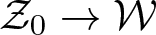 ${\mathcal{Z}_0} \to \mathcal{W}$ and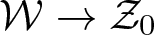 $\mathcal{W} \to {\mathcal{Z}_0}$. To be more precise, Equation (2.1) yields that
 \begin{equation}
\mathrm{Cu}^\sim({\mathcal{Z}_0}) \cong \mathbb{Z} \sqcup \overline{\mathbb{R}} \quad \text{and} \quad \mathrm{Cu}^\sim(\mathcal{W}) \cong \{0\}\sqcup\overline{\mathbb{R}}.
\end{equation}
\begin{equation}
\mathrm{Cu}^\sim({\mathcal{Z}_0}) \cong \mathbb{Z} \sqcup \overline{\mathbb{R}} \quad \text{and} \quad \mathrm{Cu}^\sim(\mathcal{W}) \cong \{0\}\sqcup\overline{\mathbb{R}}.
\end{equation} One can then define order-preserving maps between the augmented Cuntz semigroups in the following way: the map 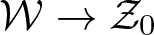 $\mathcal{W} \to {\mathcal{Z}_0}$ is induced by the natural inclusion $\mathrm{Cu}^\sim(\mathcal{W}) \hookrightarrow \mathrm{Cu}^\sim({\mathcal{Z}_0})$ and the $^*$-homomorphism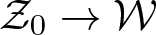 ${\mathcal{Z}_0} \to \mathcal{W}$ is induced by the map that is equal to the identity on $\overline{\mathbb{R}}$ and sends $\mathbb{Z}$ to $0$. It follows from the construction of these maps that they vanish in $K_0$ and preserve the corresponding tracial state.
Theorem 2.3 (cf. [Reference Gong and Lin9, Definition 8.12])
There exist unique trace-preserving  $^*$-homomorphisms $\varphi_{{\mathcal{Z}_0}}: \mathcal{W} \to {\mathcal{Z}_0}$ and $\varphi_{\mathcal{W}}: {\mathcal{Z}_0} \to \mathcal{W}$ (up to approximate unitary equivalence). Furthermore,
 \begin{equation*}
K_0(\varphi_{\mathcal{W}}) = 0 \qquad \text{and} \qquad K_0(\varphi_{{\mathcal{Z}_0}})=0.
\end{equation*}
\begin{equation*}
K_0(\varphi_{\mathcal{W}}) = 0 \qquad \text{and} \qquad K_0(\varphi_{{\mathcal{Z}_0}})=0.
\end{equation*} There is another useful automorphism of  ${\mathcal{Z}_0}$ that we will use in the next section. This automorphism is obtained from defining a map $\Lambda$ at the level of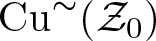 $\mathrm{Cu}^\sim({\mathcal{Z}_0})$ that sends $n$ to $-n$ on $\mathbb{Z}$ and agrees with the identity map on $\overline{\mathbb{R}}$. By Robert’s classification theorem, there exists a $^*$-endomorphism $\tilde{\sigma}: {\mathcal{Z}_0} \to {\mathcal{Z}_0}$ that induces $\Lambda$. Since by the same theorem one has that $\tilde{\sigma}^2$ is approximately inner, it follows from the Elliott intertwining argument that $\tilde{\sigma}$ is approximately unitarily equivalent to an automorphism; see [Reference Rordam21, Corollary 2.3.4].
Theorem 2.4 (cf. [Reference Gong and Lin9, Definition 8.13])
There exists a unique trace-preserving automorphism  $\sigma: {\mathcal{Z}_0} \to {\mathcal{Z}_0}$ (up to approximate unitary equivalence) such that $K_0(\sigma) = -\mathrm{id}_{K_0({\mathcal{Z}_0})}$.
We include the statement of the following lemma, proved in [Reference Gong and Lin9], which is another application of Robert’s classification theorem.
Lemma 2.5 ([Reference Gong and Lin9, Lemma 8.14])
Consider the  $^*$-homomorphisms $\Upsilon, \Omega: {\mathcal{Z}_0} \to M_2({\mathcal{Z}_0})$ given by
 \begin{equation}
\Upsilon := \mathrm{id}_{{\mathcal{Z}_0}} \oplus \sigma \qquad \text{and} \qquad \Omega := (\varphi_{{\mathcal{Z}_0}} \circ \varphi_{\mathcal{W}}) \otimes 1_{M_2}.
\end{equation}
\begin{equation}
\Upsilon := \mathrm{id}_{{\mathcal{Z}_0}} \oplus \sigma \qquad \text{and} \qquad \Omega := (\varphi_{{\mathcal{Z}_0}} \circ \varphi_{\mathcal{W}}) \otimes 1_{M_2}.
\end{equation} Then  $\Upsilon$ is approximately unitarily equivalent to $\Omega$.
3. The main result
In this section, we prove the main result of this note. We begin by introducing some notation that will be used throughout. Given a  $\mathrm{C}^{*}$-algebra $A$ and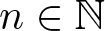 $n \in \mathbb{N}$ and $j \in \{1, 2, \ldots, 2n+1\}$, we consider the $^*$-homomorphism
 \begin{equation}
\iota_j^{A}: A \to M_{2n+1}(A) \quad \text{by} \quad \iota_j^A(a) = e_{jj}\otimes a.
\end{equation}
\begin{equation}
\iota_j^{A}: A \to M_{2n+1}(A) \quad \text{by} \quad \iota_j^A(a) = e_{jj}\otimes a.
\end{equation} For  $j \in \{1, \ldots, 2n\}$, we consider $\kappa_j^{A}: M_2(A) \to M_{2n+1} (A)$ by
 \begin{equation}
\kappa_j^{A}
\left( \left( a_{k\ell} \right)_{k,\ell=0,1} \right)
= \sum_{k,\ell=0,1} e_{j+k,j+\ell} \otimes a_{k\ell}.
\end{equation}
\begin{equation}
\kappa_j^{A}
\left( \left( a_{k\ell} \right)_{k,\ell=0,1} \right)
= \sum_{k,\ell=0,1} e_{j+k,j+\ell} \otimes a_{k\ell}.
\end{equation} We will typically omit the superscript  $A$ when it is clear from context which algebra we are referring to.
We note that by the classification theorem [Reference Gong and Lin9, Theorem 15.8], it follows that  ${\mathcal{Z}_0}$ is isomorphic to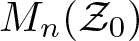 $M_n ({\mathcal{Z}_0})$ for all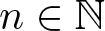 $n \in \mathbb{N}$. We say that an isomorphism $\Phi: {\mathcal{Z}_0}\to M_n({\mathcal{Z}_0})$ is $K$-positive, if $K_0(\Phi)=K_0(\iota_1)$. Note that due to the existence of the aforementioned automorphism $\sigma$ on ${\mathcal{Z}_0}$, $K$-positivity is not automatic in this context.
Lemma 3.1. Let 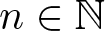 $n \in \mathbb{N}$. Consider the $^*$-homomorphism $\Gamma_n: {\mathcal{Z}_0} \to M_{2n+1}({\mathcal{Z}_0})$ given by
 \begin{align*}
\Gamma_n(a) :=
\sum\limits_{j=0}^n \iota_{2j+1}(a)+ \sum\limits_{j=1}^n \iota_{2j}(\sigma (a)).
\end{align*}
\begin{align*}
\Gamma_n(a) :=
\sum\limits_{j=0}^n \iota_{2j+1}(a)+ \sum\limits_{j=1}^n \iota_{2j}(\sigma (a)).
\end{align*} Then any  $K$-positive isomorphism ${\mathcal{Z}_0} \to M_{2n+1}({\mathcal{Z}_0})$ is approximately unitarily equivalent to $\Gamma_n$.
Proof. Notice that  $\Gamma_n(a)$ is a matrix of the form
 \begin{equation*}
\Gamma_n(a) = \begin{pmatrix}
a & & & & \\
& \sigma(a) & \\
& & a \\
& & & \sigma(a) & \\
& & & & \ddots \\
& & & & & a
\end{pmatrix}.
\end{equation*}
\begin{equation*}
\Gamma_n(a) = \begin{pmatrix}
a & & & & \\
& \sigma(a) & \\
& & a \\
& & & \sigma(a) & \\
& & & & \ddots \\
& & & & & a
\end{pmatrix}.
\end{equation*} Since  $K_0(\iota_k) = K_0(\iota_1)$ for all $k\leq 2n+1$ and $K_0(\sigma) = - \mathrm{id}_{K_0({\mathcal{Z}_0})}$, we see that
 \begin{align*}
K_0(\Gamma_n) & = K_0\left( \sum_{j=0}^n \iota_{2j+1} \circ \mathrm{id}_{{\mathcal{Z}_0}} + \sum_{j=1}^n \iota_{2j}\circ \sigma \right) \notag \\
& = \sum_{j=0}^n K_0(\iota_1) - \sum_{j=1}^n K_0(\iota_1) \notag \\
& = K_0(\iota_1).
\end{align*}
\begin{align*}
K_0(\Gamma_n) & = K_0\left( \sum_{j=0}^n \iota_{2j+1} \circ \mathrm{id}_{{\mathcal{Z}_0}} + \sum_{j=1}^n \iota_{2j}\circ \sigma \right) \notag \\
& = \sum_{j=0}^n K_0(\iota_1) - \sum_{j=1}^n K_0(\iota_1) \notag \\
& = K_0(\iota_1).
\end{align*} On the one hand, given any nondegenerate  $*$-homomorphism $\omega: {\mathcal{Z}_0}\to M_{2n+1}({\mathcal{Z}_0})$, we have $(\mathrm{tr}_{2n+1} \otimes \tau_{{\mathcal{Z}_0}})\circ\omega=\tau_{{\mathcal{Z}_0}}$ by the uniqueness of the tracial state on ${\mathcal{Z}_0}$. On the other hand, the uniqueness of the tracial states $\tau_{{\mathcal{Z}_0}}$ and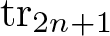 $\mathrm{tr}_{2n+1}$ on ${\mathcal{Z}_0}$ and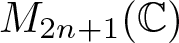 $M_{2n+1}(\mathbb{C})$, respectively, yields that $\mathrm{tr}_{2n+1} \otimes \tau_{{\mathcal{Z}_0}}$ is the unique tracial state on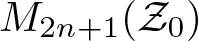 $M_{2n+1}({\mathcal{Z}_0})$. If we keep in mind the natural isomorphisms in (2.1), we see that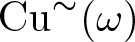 $\mathrm{Cu}^\sim(\omega)$ is hence uniquely determined by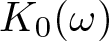 $K_0(\omega)$. If we choose any $K$-positive isomorphism $\Phi: {\mathcal{Z}_0}\to M_{2n+1}({\mathcal{Z}_0})$ and apply this fact to both $\Phi$ and $\Gamma_n$ in place of $\omega$, we can conclude $\mathrm{Cu}^\sim(\Gamma_n) = \mathrm{Cu}^\sim(\Phi)$ with the above computation. By Robert’s Theorem 2.1, $\Gamma_n$ is thus approximately unitarily equivalent to $\Phi$.
Lemma 3.2. Let  $A$ be a $\sigma$-unital $\mathrm{C}^{*}$-algebra and assume that a unitary $u \in \mathcal{U}(\mathcal{M}(A))$ is homotopic to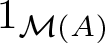 $1_{\mathcal{M}(A)}$. Then there exists a sequence $(v_n)_{n\in\mathbb{N}} \subset \mathcal{U}(1+A)$ such that $(\mathrm{Ad}(v_n))_{n\in\mathbb{N}}$ converges to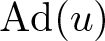 $\mathrm{Ad}(u)$ in the point-norm topology of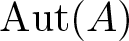 $\mathrm{Aut}(A)$.
Proof. This statement is a consequence of a special case of [Reference Gabe and Szabó8, Lemma 4.3], applied to 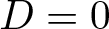 $D = 0$, the trivial action in place of $\beta$, and for the $\mathrm{C}^{*}$-algebra $A$ in place of $B$.
$B$.
We now proceed with the key technical lemma of this note, which is a non-unital and stably finite version of the reduction argument for homotopic maps in [Reference Szabó25, Lemma 5.10] (this argument originates in [Reference Phillips17]). We will use the following standard notation: given a  $^*$-homomorphism $\Phi: A \to C([0,1],B)$ and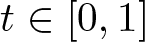 $t \in [0,1]$, we write $\Phi_t(a):= \Phi(a)(t)$.
The basic idea of the proof will be to use a handy identification of  ${\mathcal{Z}_0}$ with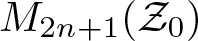 $M_{2n+1}({\mathcal{Z}_0})$ and the maps $\varphi_{\mathcal{W}}$ and $\varphi_{{\mathcal{Z}_0}}$ (see Theorem 2.3) to move a given approximate unitary equivalence of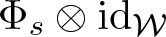 $\Phi_s \otimes \mathrm{id}_{\mathcal{W}}$ and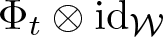 $\Phi_t \otimes \mathrm{id}_{\mathcal{W}}$ in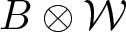 $B \otimes \mathcal{W}$ to an approximate unitary equivalence of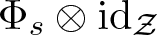 $\Phi_s \otimes \mathrm{id}_{\mathcal{Z}}$ and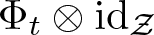 $\Phi_t \otimes \mathrm{id}_{\mathcal{Z}}$ in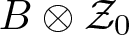 $B \otimes {\mathcal{Z}_0}$.
Lemma 3.3. Let  $A$ and $B$ be separable $\mathrm{C}^{*}$-algebras. Let $\Phi: A \to C([0,1], B)$ be a $^*$-homomorphism. Suppose that
 \begin{align*}
\Phi_s \otimes \mathrm{id}_{\mathcal{W}} \approx_{\mathrm{u}} \Phi_t \otimes \mathrm{id}_{\mathcal{W}} \quad \text{for all} \ s,t \in [0,1].
\end{align*}
\begin{align*}
\Phi_s \otimes \mathrm{id}_{\mathcal{W}} \approx_{\mathrm{u}} \Phi_t \otimes \mathrm{id}_{\mathcal{W}} \quad \text{for all} \ s,t \in [0,1].
\end{align*}Then
 \begin{equation}
\Phi_0 \otimes \mathrm{id}_{{\mathcal{Z}_0}} \approx_{\mathrm{u}} \Phi_1 \otimes \mathrm{id}_{{\mathcal{Z}_0}}.
\end{equation}
\begin{equation}
\Phi_0 \otimes \mathrm{id}_{{\mathcal{Z}_0}} \approx_{\mathrm{u}} \Phi_1 \otimes \mathrm{id}_{{\mathcal{Z}_0}}.
\end{equation}Proof. Throughout the proof, we will make use of the maps  $\varphi_{\mathcal{W}}: {\mathcal{Z}_0} \to \mathcal{W}$, $\varphi_{{\mathcal{Z}_0}}: \mathcal{W} \to {\mathcal{Z}_0}$, $\sigma: {\mathcal{Z}_0} \to {\mathcal{Z}_0}$ and $\Omega, \Upsilon: {\mathcal{Z}_0} \to M_2({\mathcal{Z}_0})$ previously introduced in Section 2.3.
Let  $\mathfrak{F} \subset A \otimes {\mathcal{Z}_0}$ be a finite set and $\varepsilon \gt 0$. We want to find a unitary in $1+B\otimes{\mathcal{Z}_0}$ that $(\mathfrak{F},\varepsilon)$-approximately conjugates the first map in (3.3) onto the second. Without loss of generality, we may assume that there exist finite sets of contractions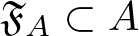 $\mathfrak{F}_A\subset A$ and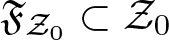 $\mathfrak{F}_{{\mathcal{Z}_0}}\subset{\mathcal{Z}_0}$ such that
 \begin{equation*}
\mathfrak{F} = \left\{a\otimes z \mid a\in\mathfrak{F}_A,\ z \in \mathfrak{F} \right\}.
\end{equation*}
\begin{equation*}
\mathfrak{F} = \left\{a\otimes z \mid a\in\mathfrak{F}_A,\ z \in \mathfrak{F} \right\}.
\end{equation*} By uniform continuity, there exists 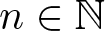 $n \in \mathbb{N}$ such that if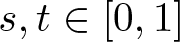 $s,t\in [0,1]$ are arbitrary parameters with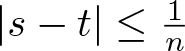 $|s-t| \leq \frac{1}{n}$ then
 \begin{equation}
\Phi_s(a) \approx_{{\varepsilon/9}} \Phi_t(a), \quad a \in \mathfrak{F}_A.
\end{equation}
\begin{equation}
\Phi_s(a) \approx_{{\varepsilon/9}} \Phi_t(a), \quad a \in \mathfrak{F}_A.
\end{equation} By assumption, one has for each  $j \in \{1, \ldots, n\}$ a unitary $v_j \in \mathcal{U}(1+B\otimes \mathcal{W})$ such that
 \begin{align*}
v_j \left(\Phi_0 (a) \otimes \varphi_\mathcal{W}(z) \right) v_j^* & \approx_{{\varepsilon/9}} \Phi_{\frac{j}{n}} (a)\otimes \varphi_\mathcal{W} (z)
\end{align*}
\begin{align*}
v_j \left(\Phi_0 (a) \otimes \varphi_\mathcal{W}(z) \right) v_j^* & \approx_{{\varepsilon/9}} \Phi_{\frac{j}{n}} (a)\otimes \varphi_\mathcal{W} (z)
\end{align*}for all 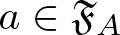 $a \in \mathfrak{F}_A$ and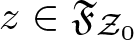 $z \in \mathfrak{F}_{{\mathcal{Z}_0}}$. Similarly, there are unitaries $u_j \in \mathcal{U}(1+B\otimes \mathcal{W})$ for $j \in \{0, 1, \ldots, n-1\}$ such that
 \begin{equation}
u_j \left(\Phi_{\frac{j}{n}}(a) \otimes \varphi_\mathcal{W}(z) \right)u_j^* \approx_{{\varepsilon/9}} \Phi_1(a) \otimes \varphi_\mathcal{W} (z),
\end{equation}
\begin{equation}
u_j \left(\Phi_{\frac{j}{n}}(a) \otimes \varphi_\mathcal{W}(z) \right)u_j^* \approx_{{\varepsilon/9}} \Phi_1(a) \otimes \varphi_\mathcal{W} (z),
\end{equation}for all 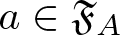 $a \in \mathfrak{F}_A$ and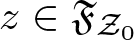 $z \in \mathfrak{F}_{{\mathcal{Z}_0}}$.
By Lemma 2.5, the maps  $\Omega$ and $\Upsilon$ are approximately unitarily equivalent. Hence, there is a unitary $\mathtt{u} \in \mathcal{U}(1+M_2({\mathcal{Z}_0}))$ such that
 \begin{equation}
\mathtt{u} \Omega(z) \mathtt{u}^* \approx_{{\varepsilon/9}} \Upsilon(z), \qquad z \in \mathfrak{F}_{{\mathcal{Z}_0}}.
\end{equation}
\begin{equation}
\mathtt{u} \Omega(z) \mathtt{u}^* \approx_{{\varepsilon/9}} \Upsilon(z), \qquad z \in \mathfrak{F}_{{\mathcal{Z}_0}}.
\end{equation}Consider the unitary
 \begin{align*}
\begin{pmatrix}
0 & 1_{\mathcal{M}({\mathcal{Z}_0})} \\
1_{\mathcal{M}({\mathcal{Z}_0})} & 0
\end{pmatrix} \in M_2(\mathcal{M}({\mathcal{Z}_0})),
\end{align*}
\begin{align*}
\begin{pmatrix}
0 & 1_{\mathcal{M}({\mathcal{Z}_0})} \\
1_{\mathcal{M}({\mathcal{Z}_0})} & 0
\end{pmatrix} \in M_2(\mathcal{M}({\mathcal{Z}_0})),
\end{align*}which is homotopic to 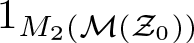 $1_{M_2(\mathcal{M}({\mathcal{Z}_0}))}$. We set $\Upsilon': {\mathcal{Z}_0} \to M_2({\mathcal{Z}_0})$ by
 \begin{equation}
\Upsilon'(z) := \mathrm{Ad}
\begin{pmatrix}
0 & 1_{\mathcal{M}({\mathcal{Z}_0})} \\
1_{\mathcal{M}({\mathcal{Z}_0})} & 0
\end{pmatrix}
\circ \Upsilon (z) = \begin{pmatrix}
\sigma(z) & 0 \\
0 & z
\end{pmatrix}.
\end{equation}
\begin{equation}
\Upsilon'(z) := \mathrm{Ad}
\begin{pmatrix}
0 & 1_{\mathcal{M}({\mathcal{Z}_0})} \\
1_{\mathcal{M}({\mathcal{Z}_0})} & 0
\end{pmatrix}
\circ \Upsilon (z) = \begin{pmatrix}
\sigma(z) & 0 \\
0 & z
\end{pmatrix}.
\end{equation} It follows from Lemma 3.2 that 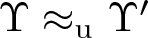 $\Upsilon \approx_{\mathrm{u}} \Upsilon'$. (The point of this step is to replace the unitary equivalence with a multiplier by an approximate unitary equivalence witnessed by elements in $\mathcal{U}(1+M_2({\mathcal{Z}_0}))$.) The approximate unitary equivalence between $\Omega$ and $\Upsilon$ entails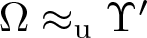 $\Omega \approx_{\mathrm{u}} \Upsilon'$. Then, there exists a unitary $\mathtt{v} \in \mathcal{U}(1 + M_2({\mathcal{Z}_0}))$ such that
 \begin{equation}\mathtt v\Omega(z)\mathtt v^\ast\approx_{\varepsilon/9}\Upsilon'(z),\qquad z\in{\mathfrak F}_{\mathcal{Z}_0}.\end{equation}
 We define  $\theta, \theta': B \otimes \mathcal{W} \to B \otimes M_2({\mathcal{Z}_0})$ by
 \begin{align*}
\theta := \mathrm{id}_B \otimes (\mathrm{Ad}(\mathtt{u})\circ (\varphi_{{\mathcal{Z}_0}} \otimes 1_{M_2}))
\end{align*}
\begin{align*}
\theta := \mathrm{id}_B \otimes (\mathrm{Ad}(\mathtt{u})\circ (\varphi_{{\mathcal{Z}_0}} \otimes 1_{M_2}))
\end{align*}and
 \begin{align*}
\theta' := \mathrm{id}_B \otimes (\mathrm{Ad}(\mathtt{v})\circ (\varphi_{{\mathcal{Z}_0}} \otimes 1_{M_2})).
\end{align*}
\begin{align*}
\theta' := \mathrm{id}_B \otimes (\mathrm{Ad}(\mathtt{v})\circ (\varphi_{{\mathcal{Z}_0}} \otimes 1_{M_2})).
\end{align*}In particular, these yield
 \begin{equation}\theta(b\otimes\varphi_{\mathcal W}(z))=b\otimes\mathtt u\Omega(z)\mathtt u^\ast{\overset{(3.6)}\approx}_{\!\!\!\!\varepsilon/9}\,b\otimes\Upsilon(z)\end{equation}
and
 \begin{equation*}\theta'(b\otimes\varphi_{\mathcal W}(z))=b\otimes\mathtt v\Omega(z)\mathtt v^\ast{\overset{(3.8)}\approx}_{\!\!\!\!\varepsilon/9}\,b\otimes\Upsilon'(z)\end{equation*}
for 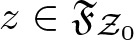 $z \in \mathfrak{F}_{{\mathcal{Z}_0}}$ and any contraction $b \in B$. Therefore
 \begin{align}
\theta(u_j) \left( \Phi_{\frac{j}{n}}(a) \otimes \Upsilon(z) \right) \theta(u_j)^*
&\overset{(3.9)}{\approx}_{\!\!\!\!\varepsilon/9}
\theta(u_j)\theta \left( \Phi_{\frac{j}{n}}(a) \otimes \varphi_{\mathcal W}(z) \right)\theta(u_j)^* \nonumber\\
&= \theta \left( u_j \bigl( \Phi_{\frac{j}{n}}(a) \otimes \varphi_{\mathcal W}(z) \bigr) u_j^* \right)\nonumber\\
&\overset{(3.5)}{\approx}_{\!\!\!\!\varepsilon/9}
\theta(\Phi_1(a) \otimes \varphi_{\mathcal W}(z))\nonumber\\
&\overset{(3.9)}{\approx}_{\!\!\!\!\varepsilon/9}
\Phi_1(a) \otimes \Upsilon(z)\end{align}
\begin{align}
\theta(u_j) \left( \Phi_{\frac{j}{n}}(a) \otimes \Upsilon(z) \right) \theta(u_j)^*
&\overset{(3.9)}{\approx}_{\!\!\!\!\varepsilon/9}
\theta(u_j)\theta \left( \Phi_{\frac{j}{n}}(a) \otimes \varphi_{\mathcal W}(z) \right)\theta(u_j)^* \nonumber\\
&= \theta \left( u_j \bigl( \Phi_{\frac{j}{n}}(a) \otimes \varphi_{\mathcal W}(z) \bigr) u_j^* \right)\nonumber\\
&\overset{(3.5)}{\approx}_{\!\!\!\!\varepsilon/9}
\theta(\Phi_1(a) \otimes \varphi_{\mathcal W}(z))\nonumber\\
&\overset{(3.9)}{\approx}_{\!\!\!\!\varepsilon/9}
\Phi_1(a) \otimes \Upsilon(z)\end{align}for  $j \in \{0, \ldots, n-1 \}$. A similar calculation shows
 \begin{equation}
\theta'(v_j) \left( \Phi_{0} (a) \otimes \Upsilon'(z) \right) \theta'(v_j)^* \approx_{{\varepsilon/3}} \Phi_{\frac{j}{n}}(a) \otimes \Upsilon'(z)
\end{equation}
\begin{equation}
\theta'(v_j) \left( \Phi_{0} (a) \otimes \Upsilon'(z) \right) \theta'(v_j)^* \approx_{{\varepsilon/3}} \Phi_{\frac{j}{n}}(a) \otimes \Upsilon'(z)
\end{equation}for  $j \in \{1, \ldots, n \}$.
With the notation introduced in (3.1) and (3.2), we define unitaries in  $M_{2n+1}(B\otimes {\mathcal{Z}_0})$ in the following way:
 \begin{align*}
V &:= e_{11}\otimes 1_{\mathcal{M}(B \otimes {\mathcal{Z}_0})} + \sum_{j=1}^n \kappa_{2j}(\theta'(v_j)), \\
U &:= \sum_{j=1}^{n} \kappa_{2j-1}(\theta(u_{j-1})) + e_{2n+1,2n+1}\otimes 1_{\mathcal{M}(B\otimes {\mathcal{Z}_0})}.
\end{align*}
\begin{align*}
V &:= e_{11}\otimes 1_{\mathcal{M}(B \otimes {\mathcal{Z}_0})} + \sum_{j=1}^n \kappa_{2j}(\theta'(v_j)), \\
U &:= \sum_{j=1}^{n} \kappa_{2j-1}(\theta(u_{j-1})) + e_{2n+1,2n+1}\otimes 1_{\mathcal{M}(B\otimes {\mathcal{Z}_0})}.
\end{align*}Schematically, these unitaries correspond to block-diagonal matrices of the form
 \begin{align*}
V = \begin{pmatrix}
1_{\mathcal{M}(B \otimes {\mathcal{Z}_0})} \\
& \theta'(v_1) \\
& & \theta'(v_2) \\
& & & \ddots \\
& & & & \theta'(v_n)
\end{pmatrix}
\end{align*}
\begin{align*}
V = \begin{pmatrix}
1_{\mathcal{M}(B \otimes {\mathcal{Z}_0})} \\
& \theta'(v_1) \\
& & \theta'(v_2) \\
& & & \ddots \\
& & & & \theta'(v_n)
\end{pmatrix}
\end{align*}and
 \begin{align*}
U = \begin{pmatrix}
\theta(u_0) \\
& \theta(u_1) \\
& & \ddots \\
& & & \theta(u_{n-1}) \\
& & & & 1_{\mathcal{M}(B \otimes {\mathcal{Z}_0})}
\end{pmatrix}.
\end{align*}
\begin{align*}
U = \begin{pmatrix}
\theta(u_0) \\
& \theta(u_1) \\
& & \ddots \\
& & & \theta(u_{n-1}) \\
& & & & 1_{\mathcal{M}(B \otimes {\mathcal{Z}_0})}
\end{pmatrix}.
\end{align*} If  $b \in B \otimes {\mathcal{Z}_0}$ and $x_0, x_1, \ldots, x_n \in M_2(B\otimes {\mathcal{Z}_0})$, then
 \begin{equation}
V\left(\iota_1(b) + \sum_{j=1}^n \kappa_{2j} (x_j)\right) V^* = \iota_1 (b) + \sum_{j=1}^n \kappa_{2j}(\theta'(v_j) x_j \theta'(v_j)^* )
\end{equation}
\begin{equation}
V\left(\iota_1(b) + \sum_{j=1}^n \kappa_{2j} (x_j)\right) V^* = \iota_1 (b) + \sum_{j=1}^n \kappa_{2j}(\theta'(v_j) x_j \theta'(v_j)^* )
\end{equation}and
 \begin{align}
& U \left( \sum_{j=1}^{n} \kappa_{2j-1}(x_{j-1}) + \iota_{2n+1}(b) \right) U^*\nonumber\\
& = \sum_{j=1}^{n} \kappa_{2j-1}(\theta(u_{j-1})x_{j-1} \theta(u_{j-1})^*) + \iota_{2n+1}(b).\end{align}
\begin{align}
& U \left( \sum_{j=1}^{n} \kappa_{2j-1}(x_{j-1}) + \iota_{2n+1}(b) \right) U^*\nonumber\\
& = \sum_{j=1}^{n} \kappa_{2j-1}(\theta(u_{j-1})x_{j-1} \theta(u_{j-1})^*) + \iota_{2n+1}(b).\end{align} We will now employ the  $^*$-homomorphism $\Gamma_n: {\mathcal{Z}_0} \to M_{2n+1}({\mathcal{Z}_0})$ given in Lemma 3.1 as
 \begin{align*}
\Gamma_n(a) :=
\sum\limits_{j=0}^n \iota_{2j+1}(a)+ \sum\limits_{j=1}^n \iota_{2j}(\sigma (a)).
\end{align*}
\begin{align*}
\Gamma_n(a) :=
\sum\limits_{j=0}^n \iota_{2j+1}(a)+ \sum\limits_{j=1}^n \iota_{2j}(\sigma (a)).
\end{align*} Observe that we can write  $\Gamma_n$ using either $\Upsilon$ or $\Upsilon'$ in the following way
 \begin{equation}
\Gamma_n(a) =
\begin{pmatrix}
\Upsilon(a) \\
& \ddots \\
& & \Upsilon(a) \\
& & & a
\end{pmatrix} =
\begin{pmatrix}
a \\
& \Upsilon'(a) \\
& & \ddots \\
& & & \Upsilon'(a)
\end{pmatrix}.
\end{equation}
\begin{equation}
\Gamma_n(a) =
\begin{pmatrix}
\Upsilon(a) \\
& \ddots \\
& & \Upsilon(a) \\
& & & a
\end{pmatrix} =
\begin{pmatrix}
a \\
& \Upsilon'(a) \\
& & \ddots \\
& & & \Upsilon'(a)
\end{pmatrix}.
\end{equation} Having this observation in mind, we then obtain for 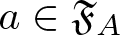 $a \in \mathfrak{F}_A$ and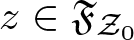 $z \in \mathfrak{F}_{{\mathcal{Z}_0}}$ that
 \begin{align}
V ( \Phi_0(a) \otimes \Gamma_n(z) )V^* & = V \left(
\iota_1(\Phi_0(a) \otimes z ) +
\sum_{j=1}^n \kappa_{2j} \left(\Phi_0(a) \otimes \Upsilon'(z) \right)
\right)V^* \nonumber\\
& \overset{(3.12)}{=}
\iota_1 (\Phi_0(a)\otimes z ) +
\sum_{j=1}^n
\kappa_{2j}\!\left(
\theta'(v_j)
\left( \Phi_0(a) \otimes \Upsilon'(z) \right)
\theta'(v_j)^*
\right) \nonumber\\
& \overset{(3.11)}{\approx}_{\!\!\!\!\!\varepsilon/3}
\iota_1 (\Phi_0(a)\otimes z) +
\sum_{j=1}^n
\kappa_{2j}\left(
\Phi_{\frac{j}{n}}(a) \otimes \Upsilon'(z)
\right) \nonumber\\
& \overset{(3.7)}{=}
\iota_1(\Phi_0(a) \otimes z)\nonumber\\
& \quad + \sum_{j=1}^{n}
\left(
\iota_{2j}\left(\Phi_{\frac{j}{n}}(a) \otimes \sigma(z)\right) +
\iota_{2j+1}\left(\Phi_{\frac{j}{n}} (a) \otimes z\right)
\right) \nonumber\\
& \overset{(3.4)}{\approx}_{\!\!\!\!\varepsilon/9}
\iota_1(\Phi_0(a) \otimes z)\nonumber\\
&\quad +\sum_{j=1}^n
\left(
\iota_{2j} \left(\Phi_{\frac{j-1}{n}}(a) \otimes \sigma(z) \right) +
\iota_{2j+1} \left(\Phi_{\frac{j}{n}} (a) \otimes z \right)
\right) \nonumber\\
& = \sum_{j=1}^n
\left(
\iota_{2j-1} \left(\Phi_{\frac{j-1}{n}}(a) \otimes z \right) +
\iota_{2j} \left(\Phi_{\frac{j-1}{n}}(a) \otimes \sigma(z) \right)
\right)\nonumber\\
& \quad + \iota_{2n+1}(\Phi_1(a) \otimes z) \nonumber\\
& \overset{(2.3)}{=}
\sum_{j=1}^{n}
\kappa_{2j-1}
\left(\Phi_{\frac{j-1}{n}} (a) \otimes \Upsilon (z) \right)
+ \iota_{2n+1} ( \Phi_1(a) \otimes z).\end{align}
\begin{align}
V ( \Phi_0(a) \otimes \Gamma_n(z) )V^* & = V \left(
\iota_1(\Phi_0(a) \otimes z ) +
\sum_{j=1}^n \kappa_{2j} \left(\Phi_0(a) \otimes \Upsilon'(z) \right)
\right)V^* \nonumber\\
& \overset{(3.12)}{=}
\iota_1 (\Phi_0(a)\otimes z ) +
\sum_{j=1}^n
\kappa_{2j}\!\left(
\theta'(v_j)
\left( \Phi_0(a) \otimes \Upsilon'(z) \right)
\theta'(v_j)^*
\right) \nonumber\\
& \overset{(3.11)}{\approx}_{\!\!\!\!\!\varepsilon/3}
\iota_1 (\Phi_0(a)\otimes z) +
\sum_{j=1}^n
\kappa_{2j}\left(
\Phi_{\frac{j}{n}}(a) \otimes \Upsilon'(z)
\right) \nonumber\\
& \overset{(3.7)}{=}
\iota_1(\Phi_0(a) \otimes z)\nonumber\\
& \quad + \sum_{j=1}^{n}
\left(
\iota_{2j}\left(\Phi_{\frac{j}{n}}(a) \otimes \sigma(z)\right) +
\iota_{2j+1}\left(\Phi_{\frac{j}{n}} (a) \otimes z\right)
\right) \nonumber\\
& \overset{(3.4)}{\approx}_{\!\!\!\!\varepsilon/9}
\iota_1(\Phi_0(a) \otimes z)\nonumber\\
&\quad +\sum_{j=1}^n
\left(
\iota_{2j} \left(\Phi_{\frac{j-1}{n}}(a) \otimes \sigma(z) \right) +
\iota_{2j+1} \left(\Phi_{\frac{j}{n}} (a) \otimes z \right)
\right) \nonumber\\
& = \sum_{j=1}^n
\left(
\iota_{2j-1} \left(\Phi_{\frac{j-1}{n}}(a) \otimes z \right) +
\iota_{2j} \left(\Phi_{\frac{j-1}{n}}(a) \otimes \sigma(z) \right)
\right)\nonumber\\
& \quad + \iota_{2n+1}(\Phi_1(a) \otimes z) \nonumber\\
& \overset{(2.3)}{=}
\sum_{j=1}^{n}
\kappa_{2j-1}
\left(\Phi_{\frac{j-1}{n}} (a) \otimes \Upsilon (z) \right)
+ \iota_{2n+1} ( \Phi_1(a) \otimes z).\end{align}Hence
 \begin{align}
& U V (\Phi_0(a) \otimes \Gamma_n(z)) V^* U^* \nonumber\\
& \overset{(3.15)}{\approx}_{\!\!\!\!\!4\varepsilon/9}
U\left(
\sum_{j=1}^{n} \kappa_{2j-1}
\left(\Phi_{\frac{j-1}{n}} (a) \otimes \Upsilon (z) \right)
+ \iota_{2n+1} ( \Phi_1(a) \otimes z)
\right)U^* \nonumber\\
& \overset{(3.13)}{=}
\sum_{j=1}^{n}
\kappa_{2j-1}\!\left(
\theta(u_{j-1})
\left(
\Phi_{\frac{j-1}{n}}(a) \otimes \varphi_{\mathcal W}(z)
\right)
\theta(u_{j-1})^*
\right)
+ \iota_{2n+1} (\Phi_1(a) \otimes z) \nonumber\\
& \overset{(3.10)}{\approx}_{\!\!\!\!\!\varepsilon/3}
\sum_{j=1}^n
\kappa_{2j-1}(\Phi_1(a) \otimes \Upsilon(z))
+ \iota_{2n+1}(\Phi_1(a) \otimes z) \nonumber\\
&\overset{(3.14)}{=}
\Phi_1(a) \otimes \Gamma_n(z).\end{align}
\begin{align}
& U V (\Phi_0(a) \otimes \Gamma_n(z)) V^* U^* \nonumber\\
& \overset{(3.15)}{\approx}_{\!\!\!\!\!4\varepsilon/9}
U\left(
\sum_{j=1}^{n} \kappa_{2j-1}
\left(\Phi_{\frac{j-1}{n}} (a) \otimes \Upsilon (z) \right)
+ \iota_{2n+1} ( \Phi_1(a) \otimes z)
\right)U^* \nonumber\\
& \overset{(3.13)}{=}
\sum_{j=1}^{n}
\kappa_{2j-1}\!\left(
\theta(u_{j-1})
\left(
\Phi_{\frac{j-1}{n}}(a) \otimes \varphi_{\mathcal W}(z)
\right)
\theta(u_{j-1})^*
\right)
+ \iota_{2n+1} (\Phi_1(a) \otimes z) \nonumber\\
& \overset{(3.10)}{\approx}_{\!\!\!\!\!\varepsilon/3}
\sum_{j=1}^n
\kappa_{2j-1}(\Phi_1(a) \otimes \Upsilon(z))
+ \iota_{2n+1}(\Phi_1(a) \otimes z) \nonumber\\
&\overset{(3.14)}{=}
\Phi_1(a) \otimes \Gamma_n(z).\end{align} Let  $\gamma: {\mathcal{Z}_0} \to M_{2n+1}({\mathcal{Z}_0})$ be any $K$-positive isomorphism. By Lemma 3.1, $\gamma$ and $\Gamma_n$ are approximately unitarily equivalent. So there is a unitary $W \in \mathcal{U}(1+M_{2n+1}({\mathcal{Z}_0}))$ such that
 \begin{equation}
W \gamma(z) W^* \approx_{{\varepsilon/9}} \Gamma_n(z), \qquad z \in \mathfrak{F}_{{\mathcal{Z}_0}}.
\end{equation}
\begin{equation}
W \gamma(z) W^* \approx_{{\varepsilon/9}} \Gamma_n(z), \qquad z \in \mathfrak{F}_{{\mathcal{Z}_0}}.
\end{equation} Let us consider the isomorphism  $\eta: B \otimes {\mathcal{Z}_0} \to B \otimes M_{2n+1}({\mathcal{Z}_0})$ given by $\eta := \mathrm{id}_B \otimes \left(\mathrm{Ad}(W) \circ \gamma \right)$, and set
 \begin{equation}
w := \eta^{-1} (UV) \in \mathcal{U}(1+B\otimes {\mathcal{Z}_0}).
\end{equation}
\begin{equation}
w := \eta^{-1} (UV) \in \mathcal{U}(1+B\otimes {\mathcal{Z}_0}).
\end{equation}Finally, we observe that
 \begin{align*}
w(\Phi_0(a) \otimes z) w^*
&\overset{(3.18)}{=}
\eta^{-1}\!\left(
UV\,\eta\left(\Phi_0(a)\otimes z\right)V^*U^*
\right) \notag \\
&=
\eta^{-1}\!\left(
UV\left(\Phi_0(a)\otimes W \gamma(z) W^*\right)V^*U^*
\right) \notag \\
&\overset{(3.17)}{\approx}_{\!\!\!\!\!\varepsilon/9}
\eta^{-1}\!\left(
UV\left(\Phi_0(a) \otimes \Gamma_n(z)\right)V^*U^*
\right) \notag \\
&\overset{(3.16)}{\approx}_{\!\!\!\!\!7\varepsilon/9}
\eta^{-1}\!\left(\Phi_1(a) \otimes \Gamma_n(z)\right) \notag \\
&\overset{(3.17)}{\approx}_{\!\!\!\!\!\varepsilon/9}
\eta^{-1}\!\left(\Phi_1(a) \otimes W \gamma(z) W^*\right) \notag \\
&=
\eta^{-1}\!\left(\eta (\Phi_1(a) \otimes z)\right) \notag \\
&=
\Phi_1(a) \otimes z .
\end{align*}
\begin{align*}
w(\Phi_0(a) \otimes z) w^*
&\overset{(3.18)}{=}
\eta^{-1}\!\left(
UV\,\eta\left(\Phi_0(a)\otimes z\right)V^*U^*
\right) \notag \\
&=
\eta^{-1}\!\left(
UV\left(\Phi_0(a)\otimes W \gamma(z) W^*\right)V^*U^*
\right) \notag \\
&\overset{(3.17)}{\approx}_{\!\!\!\!\!\varepsilon/9}
\eta^{-1}\!\left(
UV\left(\Phi_0(a) \otimes \Gamma_n(z)\right)V^*U^*
\right) \notag \\
&\overset{(3.16)}{\approx}_{\!\!\!\!\!7\varepsilon/9}
\eta^{-1}\!\left(\Phi_1(a) \otimes \Gamma_n(z)\right) \notag \\
&\overset{(3.17)}{\approx}_{\!\!\!\!\!\varepsilon/9}
\eta^{-1}\!\left(\Phi_1(a) \otimes W \gamma(z) W^*\right) \notag \\
&=
\eta^{-1}\!\left(\eta (\Phi_1(a) \otimes z)\right) \notag \\
&=
\Phi_1(a) \otimes z .
\end{align*} This shows that  $\Phi_1(a) \otimes z \approx_{{\varepsilon}} w (\Phi_0(a)\otimes z)w^*$ for all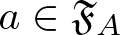 $a \in \mathfrak{F}_A$ and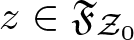 $z \in \mathfrak{F}_{{\mathcal{Z}_0}}$. This verifies $\Phi_0 \otimes \mathrm{id}_{{\mathcal{Z}_0}} \approx_{\mathrm{u}} \Phi_1 \otimes \mathrm{id}_{{\mathcal{Z}_0}}$.
We now present the notion of trace-preserving homotopy for  $^*$-homomorphisms between certain $\mathrm{C}^{*}$-algebras. It will be a key ingredient in the main result of this paper.
Definition 3.4. Let  $\varphi, \psi: A \to B$ be $^*$-homomorphisms between $\mathrm{C}^{*}$-algebras with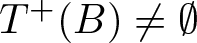 $T^+(B)\neq\emptyset$. We say that $\varphi$ and $\psi$ are trace-preservingly homotopic if there is a $^*$-homomorphism $\Phi: A \to C([0,1], B)$ with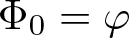 $\Phi_0 = \varphi$,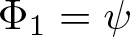 $\Phi_1 = \psi$ such that
 \begin{equation*}\tau(\Phi_t(a)) = \tau(\Phi_s(a))\end{equation*}
for all 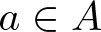 $a \in A$,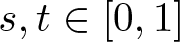 $s,t \in [0,1]$ and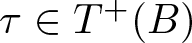 $\tau \in T^+(B)$.
We now state a homotopy rigidity result for  $^*$-homomorphisms, which can be viewed as the main result of this paper. The key feature of it, as pointed out in the introduction, is that it does not assume that any of the underlying $\mathrm{C}^{*}$-algebras has to satisfy the UCT.
Theorem 3.5. Let  $A$ and $B$ be separable, simple and nuclear $\mathrm{C}^{*}$-algebras with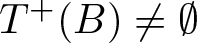 $T^+(B)\neq\emptyset$. Suppose $\varphi, \psi: A \to B$ are trace-preservingly homotopic $^*$-homomorphisms. Then
 \begin{equation*}
\varphi \otimes \mathrm{id}_{{\mathcal{Z}_0}} \approx_{\mathrm{u}} \psi \otimes \mathrm{id}_{{\mathcal{Z}_0}}.
\end{equation*}
\begin{equation*}
\varphi \otimes \mathrm{id}_{{\mathcal{Z}_0}} \approx_{\mathrm{u}} \psi \otimes \mathrm{id}_{{\mathcal{Z}_0}}.
\end{equation*}Proof. By hypothesis there exists a  $^*$-homomorphism $\Phi: A \to C([0,1], B)$ such that $\Phi_0 = \varphi, \Phi_1 = \psi$ and
 \begin{equation*}
\theta\circ\Phi_t = \theta\circ\Phi_s, \quad \theta \in T^+(B), \ s,t \in [0,1].
\end{equation*}
\begin{equation*}
\theta\circ\Phi_t = \theta\circ\Phi_s, \quad \theta \in T^+(B), \ s,t \in [0,1].
\end{equation*}This implies
 \begin{equation*}
\tau \circ (\Phi_t \otimes \mathrm{id}_{\mathcal{W}}) = \tau \circ (\Phi_s \otimes \mathrm{id}_{\mathcal{W}}), \quad \tau \in T^+(B \otimes \mathcal{W}),\ s,t \in [0,1].
\end{equation*}
\begin{equation*}
\tau \circ (\Phi_t \otimes \mathrm{id}_{\mathcal{W}}) = \tau \circ (\Phi_s \otimes \mathrm{id}_{\mathcal{W}}), \quad \tau \in T^+(B \otimes \mathcal{W}),\ s,t \in [0,1].
\end{equation*} On the other hand, as previously discussed in Section 2.3, the  $\mathrm{C}^{*}$-algebras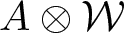 $A \otimes \mathcal{W}$ and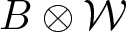 $B \otimes \mathcal{W}$ are stably projectionless, $\mathcal{Z}$-stable and KK-contractible. Theorem 2.2 covers this class and it yields the conclusion $\Phi_t \otimes \mathrm{id}_{\mathcal{W}} \approx_{\mathrm{u}} \Phi_s \otimes \mathrm{id}_{\mathcal{W}}$ for all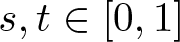 $s,t \in [0,1]$. Finally, by Lemma 3.3, the $^*$-homomorphisms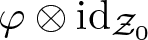 $\varphi \otimes \mathrm{id}_{{\mathcal{Z}_0}}$ and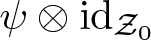 $\psi \otimes \mathrm{id}_{{\mathcal{Z}_0}}$ are approximately unitarily equivalent.
As a byproduct of Theorem 3.5, we obtain a precursor  ${\mathcal{Z}_0}$-stable classification theorem of sorts for separable, simple, nuclear $\mathrm{C}^{*}$-algebras without requiring the UCT. For this result, we will need to work with the notion of trace-preserving homotopy equivalence for $\mathrm{C}^{*}$-algebras induced from the notion above.
Definition 3.6. Let  $A$ and $B$ be $\mathrm{C}^{*}$-algebras with $T^+(A), T^+(B) \neq \emptyset$. We say that $A$ and $B$ are trace-preservingly homotopy equivalent if there exist $^*$-homomorphisms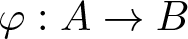 $\varphi: A \to B$ and $\psi: B \to A$ such that $\psi \circ \varphi$ and $\varphi \circ \psi$ are trace-preservingly homotopic to $\mathrm{id}_A$ and $\mathrm{id}_B$, respectively.
Theorem 3.7. Let  $A$ and $B$ be separable, simple, nuclear $\mathrm{C}^{*}$-algebras. If $A$ and $B$ are trace-preservingly homotopy equivalent, then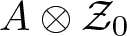 $A\otimes{\mathcal{Z}_0}$ is isomorphic to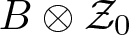 $B\otimes{\mathcal{Z}_0}$.
Proof. By assumption, there exist  $^*$-homomorphisms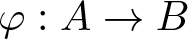 $\varphi: A \to B$ and $\psi: B \to A$ such that $\psi\circ \varphi$ and $\varphi \circ \psi$ are trace-preservingly homotopic to $\mathrm{id}_A$ and $\mathrm{id}_B$, respectively. By Theorem 3.5, it follows that
 \begin{align*}
(\psi \circ \varphi) \otimes \mathrm{id}_{{\mathcal{Z}_0}} \approx_{\mathrm{u}} \mathrm{id}_{A \otimes {\mathcal{Z}_0}} \quad \text{and} \quad (\varphi \circ \psi) \otimes \mathrm{id}_{\mathcal{Z}_0} \approx_{\mathrm{u}} \mathrm{id}_{B \otimes {\mathcal{Z}_0}}.
\end{align*}
\begin{align*}
(\psi \circ \varphi) \otimes \mathrm{id}_{{\mathcal{Z}_0}} \approx_{\mathrm{u}} \mathrm{id}_{A \otimes {\mathcal{Z}_0}} \quad \text{and} \quad (\varphi \circ \psi) \otimes \mathrm{id}_{\mathcal{Z}_0} \approx_{\mathrm{u}} \mathrm{id}_{B \otimes {\mathcal{Z}_0}}.
\end{align*} A standard application of Elliott’s intertwining argument yields that 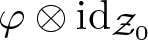 $\varphi\otimes\mathrm{id}_{\mathcal{Z}_0}$ is approximately unitarily equivalent to an isomorphism.
In particular, we obtain
$\varphi\otimes\mathrm{id}_{\mathcal{Z}_0}$ is approximately unitarily equivalent to an isomorphism.
In particular, we obtain  $A \otimes {\mathcal{Z}_0} \cong B \otimes {\mathcal{Z}_0}$.
Remark 3.8. We take a moment to compare Theorem 3.7 with the main result of [Reference Schafhauser23]. Under the assumption that one has a unital embedding 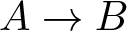 $A\to B$ between separable unital nuclear $\mathcal{Z}$-stable $\mathrm{C}^{*}$-algebras that induces both a KK-equivalence and a bijection between the tracial state spaces, it is shown there that $A$ and $B$ are isomorphic. It is not hard to see (regardless of whether $A$ and $B$ are unital or not) that any embedding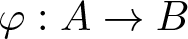 $\varphi: A\to B$ fitting into a trace-preserving homotopy equivalence must induce both a KK-equivalence and a bijection between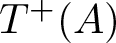 $T^+(A)$ and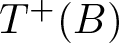 $T^+(B)$. Thus one can interpret our main result as a stably projectionless analogue of Schafhauser’s theorem, although admittedly a weaker one because the conclusion in Schafhauser’s result is reached by merely assuming the existence of a nice embedding in one direction. Upon assuming a trace-preserving homotopy equivalence, however, one immediately assumes the existence of nice embeddings in both directions, making our assumption conceptually much stronger in comparison. It is an interesting question whether Schafhauser’s theorem has a more direct analogue for non-unital $\mathrm{C}^{*}$-algebras.
Acknowledgements
JC was supported by UNAM–PAPIIT IA103124. BD was partially supported by European Research Council Consolidator Grant 614195–RIGIDITY. GS was supported by research project G085020N funded by the Research Foundation Flanders (FWO), and the European Research Council under the European Union’s Horizon Europe research and innovation programme (ERC grant AMEN–101124789). Both BD and GS were partially supported by KU Leuven internal funds projects STG/18/019 and C14/19/088. For the purpose of open access, the authors apply a CC BY public copyright license to any author accepted manuscript version arising from this work.
Funding
Funded by the European Union. Views and opinions expressed are those of the authors only and do not necessarily reflect those of the European Union or the European Research Council. Neither the EU nor the ERC can be held responsible for them.


 Open access

