





Bipolar disorder is a complex illness that usually requires a multimodal treatment approach encompassing medication (mood stabilisers, antidepressants, antipsychotics), psychotherapy, brain stimulation and lifestyle modification to achieve optimal outcomes. Reference Dean, Gliddon, Van Rheenen, Giorlando, Davidson and Kaur1 However, despite these evidenced-based treatment options, a significant proportion of individuals experience a discernible shortfall in functional recovery following a mood episode and subsequent treatment. The depressive phase of the illness is particularly challenging, because available treatments are less effective compared with management of mania. This disparity is also accentuated by the fact that people with bipolar disorder are most vulnerable to suicide when depressed. Reference Vieta, Berk, Schulze, Carvalho, Suppes and Calabrese2 Therefore, there is an urnt need to identify new treatments for bipolar depression that not only assist in symptom remission but also facilitate functional recovery.
Despite the acknowledged role of glutamate, dopamine, serotonin and noradrenaline in the biology of bipolar disorder and their role in the assumed mode of action of current agents, the lack of optimal efficacy of these said agents emphasises the fact that other processes are involved. Reference Brand, Moller and Harvey3 Indeed, agents with multimodal actions on neurotransmitter and redox inflammatory systems would seem to offer distinct benefits for the long-term treatment outcome of mood and psychotic disorders. In this regard, mitochondrial dysregulation and its bidirectional impact on inflammatory and redox pathways Reference Brand, Moller and Harvey3,Reference van Rensburg, Lindeque, Harvey and Steyn4 is of particular significance. It is not unusual that a variety of plant and herbal preparations offer multimodal actions. Reference Sarris, Marx, Ashton, Ng, Galvao-Coelho and Ayati5 The serotonergic, antioxidant, anti-inflammatory and neurogenic properties of mangosteen pericarp Reference Ashton, Dean, Walker, Bortolasci, Ng and Hopwood6 are therefore considerably relevant to the biological mechanisms underpinning bipolar depression. Mangosteen pericarp contains several bioactive constituents, including alpha-mangostin, gamma-mangostin and gartanin. Importantly, the 5-HT2A receptor-blocking actions of some constituents of mangosteen pericarp Reference Ashton, Dean, Walker, Bortolasci, Ng and Hopwood6 not only offer potential efficacy for depressed mood and negative symptom schizophrenia, e.g. clozapine, Reference Brand, Moller and Harvey3 but also selective targeting of these receptors may also produce clinically relevant antidepressant effects (e.g. mirtazapine). Reference Brand, Moller and Harvey3
The current study
The current randomised controlled trial investigates an extract of Garcinia mangostana Linn. (mangosteen) pericarp as a potential adjunctive novel therapy for the treatment of bipolar depression. Reference Ashton, Dean, Walker, Bortolasci, Ng and Hopwood6 The rationale for exploring mangosteen’s potential as a treatment for bipolar depression is supported by the current understanding of the underlying pathophysiology of the disorder, and by preclinical studies directly testing mangosteen and its bioactive compounds. Reference Ashton, Dean, Walker, Bortolasci, Ng and Hopwood6,Reference Ashton, Berk, Ng, Hopwood, Dodd and Turner7
In the mood–psychosis continuum, inflammation has emerged as a central role player in the pathophysiology of major depression, schizophrenia and bipolar disorder, with levels of pro-inflammatory cytokines increased in these conditions, as well as a decrease in anti-inflammatory cytokines, contributing to the inflammatory component of these disorders (see Brand et al for review). Reference Brand, Moller and Harvey3 Preclinical evidence suggests that chronic mangosteen pericarp (50 mg/kg/day) displays significant antidepressant and pro-cognitive effects in a genetic rodent model of depression, demonstrating parity with imipramine. Reference Oberholzer, Möller, Holland, Dean, Berk and Harvey8 In line with its monoaminergic profile, behavioural and regional brain monoamine assessments suggest a more prominent serotonergic action for mangosteen extract. Reference Oberholzer, Möller, Holland, Dean, Berk and Harvey8 That said, both depressive and psychosis-like manifestations induced in a prenatal maternal inflammation model in rats showed that depressive-like behaviour responded favourably to raw mangosteen extract (as well as to alpha-mangostin, and combinations with haloperidol), while psychosis-like manifestations did not. Reference Lotter, Möller, Dean, Berk and Harvey9 The latter findings suggest preferential antidepressant- over antipsychotic-like actions. Nevertheless, the former effects occurred simultaneously with reversal of lipid peroxidation in limbic brain regions, and a lowering of elevated plasma pro-inflammatory cytokines, Reference Oberholzer, Möller, Holland, Dean, Berk and Harvey8,Reference Lotter, Möller, Dean, Berk and Harvey9 congruent with anti-inflammatory actions. Taken together, these animal studies provide proof of concept for testing the efficacy of mangosteen extract in bipolar depression.
Primary hypothesis
That 24 weeks of adjunctive mangosteen pericarp treatment would be superior to placebo in reducing depression symptoms, between baseline and week 24, measured using the Montgomery–Asberg Depression Rating Scale (MADRS).
Secondary hypotheses
(a) That 24 weeks of adjunctive mangosteen pericarp treatment would be superior to placebo in reducing the symptom domains of bipolar illness measured, including mood symptoms, mania, clinical impressions, quality of life and general functioning.
(b) That those receiving mangosteen pericarp treatment would have better outcomes 4 weeks post-treatment discontinuation (week 28), based on change in symptom severity, quality of life and functioning scales, than those taking the placebo.
Method
A protocol for this randomised controlled trial was published Reference Ashton, Berk, Ng, Hopwood, Dodd and Turner7 and the trial was prospectively registered on the Australian and New Zealand Clinical Trials Registry (no. ACTRN12616000028404). Blood samples were collected and cognitive function was measured, although these have yet to be analysed and are not reported here. Similarly, personality traits, diet behaviours and other tertiary data were collected but are not reported here.
Investigational product
Participants took 2 × 500 mg of mangosteen pericarp extract capsules (VitalXan, Australia) once a day for 24 weeks. Placebo and mangosteen pericarp capsules were produced simultaneously by the same manufacturer according to Good Manufacturing Practice (PCI Pharma Services, Australia) and were matched in size and appearance. Bottles were dispensed every 4 weeks, and any unused medication was returned by participants.
Study design
Participants were recruited from four trial sites in Australia, located at Geelong and Melbourne (Victoria) and Brisbane (Queensland). The Geelong site recruited from the Barwon Health Mental Health and Drug and Alcohol outpatient service. The two Melbourne sites (The Melbourne Clinic and The Albert Road Clinic) and the Brisbane site (Toowong Specialist Clinic) are private clinics. All sites additionally recruited from the community and via advertising (online, radio and printed media). Each participant attended a screening interview, where written informed consent was obtained and subsequently randomised. Participants were given AU$20 travel reimbursement at each post-randomisation interview.
Recruitment was conducted between 6 June 2016 and 3 November 2020 (disrupted over the COVID-19 pandemic). Face-to-face interviews were also disrupted by the COVID-19 pandemic. Participant interviews were conducted online, and participants continued to receive trial medication and altered safety procedures.
The authors assert that all procedures contributing to this work comply with the ethical standards of the relevant national and institutional committees on human experimentation, and with the Helsinki Declaration of 1975 as revised in 2013. All procedures involving human subjects/patients were approved by the following Human Research and Ethics Committees; Barwon Health (no. 15/124), Deakin University (no. 2015/097) and The Melbourne Clinic (no. 262). The design of the study’s protocol is concordant SPIRIT. Reference Chan, Tetzlaff, Altman, Laupacis, Gøtzsche and Krleža-Jerić10
Randomisation
Allocation to mangosteen or placebo was conducted using a 1:1 permutated block-of-four randomisation. The participants, researchers and statistician were blind to group allocation. An independent researcher generated the randomisation code applied by the manufacturer to the active ingredient or placebo, prior to being received by the trial pharmacy at each site.
Inclusion
Participants were required to be aged 18 years or over, have the capacity to consent to the study and to follow the instructions and procedures, be fluent in English, have a current treating physician and fulfill the DSM-5 11 diagnosis of bipolar disorder I or II, or another specified bipolar and related disorder and current major depressive episode, with at least moderate depressive symptoms (MADRS ≥20). Participants’ pre-existing psychotropic therapy regimens were required to have been stable for 4 weeks prior to study entry. Bipolar disorder and other psychiatric comorbidities were assessed using the Structured Clinical Interview for DSM-5. 12 MADRS was readministered if there was a delay of >7 days between screening and baseline interviews, or between baseline interview and medication commencement. Potential participants with known or suspected clinically unstable systemic medical disorder; contraindications or intolerance to mangosteen pericarp, pregnant or breastfeeding; or current enrollment in another clinical trial were excluded.
Withdrawal
Participants were withdrawn from the trial if they removed consent, became pregnant, commenced new electroconvulsive therapy treatment, ceased trial medication for 7 consecutive days or reported an increase in suicidal ideation. Withdrawal due to suicidal ideation or adverse events was at the discretion of the research team or the participant, or at the request of the treating physician. Changes to existing treatment regimens were recorded.
Efficacy measures
The published protocol includes a table of the full procedures and validated rating scales administered at each trial interview. Reference Ashton, Berk, Ng, Hopwood, Dodd and Turner7
MADRS Reference Montgomery and Åsberg13 (the primary outcome measure), Bipolar Depression Rating Scale Reference Berk, Dodd, Dean, Kohlmann, Berk and Malhi14 (BDRS), Hamilton Anxiety Scale Reference Max15 (HAM-A), Young Mania Rating Scale Reference Young, Biggs, Ziegler and Meyer16 (YMRS), Clinical Global Impression Scale for Bipolar Disorder-Scale Reference Spearing, Post, Leverich, Brandt and Nolen17 (CGI-BP) and Patient Global Impression Scale Reference Viktrup, Hayes, Wang and Shen18 (PGI) were used to assess overall bipolar disorder symptoms.
Functioning and quality of life was assessed by the Social and Occupational Functioning Scale Reference Morosini, Magliano, Brambilla, Ugolini and Pioli19 (SOFAS), the Range of Impaired Functioning Tool Reference Keller20 (LIFE-RIFT) and Quality of life Enjoyment and Satisfaction Questionnaire – Short Form Reference Stevanovic21 (Q-LES-Q-SF).
At every visit, participants were asked open-ended questions about their trial experience and all adverse events were reviewed by a principal investigator. The study Data Safety Monitoring Board reviewed all adverse events. The research team followed up ongoing adverse events recorded at the final week 28 visit to determine the outcome of the event. Serious adverse events were reported according to Good Clinical Practice guidelines. The clinical trial data were collected and managed using REDCap. Reference Harris, Taylor, Thielke, Payne, Gonzalez and Conde22
Statistical analysis
We used a mixed-model, repeated-measures approach with average treatment group differences for the primary outcome measure up to week 28. Within this model the fixed variables were treatment group, site, visit and treatment-by-visit interaction. Primary efficacy was analysed using planned comparisons of between-group differences in depressive symptomatology from baseline to week 24. To determine post-discontinuation effects, the difference between weeks 24 and 28 was tested using planned comparisons. We performed a priori power calculations to determine a target sample size of 150 participants. For a two-tailed analysis with α = 0.05, Zα = 1.96 and with β = 0.2, Zβ = 0.8 and n = 120, the trial was powered at 80% to detect a true difference in MADRS scores between the mangosteen pericarp and placebo groups (assuming Cohen’s d = 0.362 or greater). This is a conservative estimate, based on the results of pilot data Reference Laupu23 and our previous trial of N-acetylcysteine specifically investigating bipolar depression, Reference Berk, Copolov, Dean, Lu, Jeavons and Schapkaitz24 in which effect sizes for depressive symptoms (BDRS, MADRS) were similar to or above the proposed trial. An attrition rate of 20% was estimated for participants with no post-baseline data, Reference Dean, Kanchanatawan, Ashton, Mohebbi, Ng and Maes25 and therefore 150 participants were required.
Results
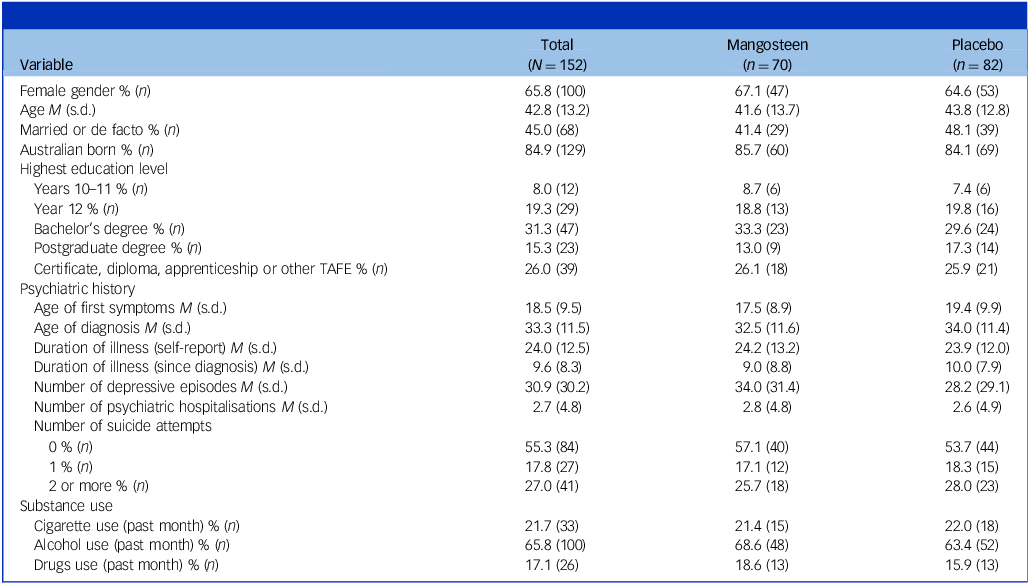
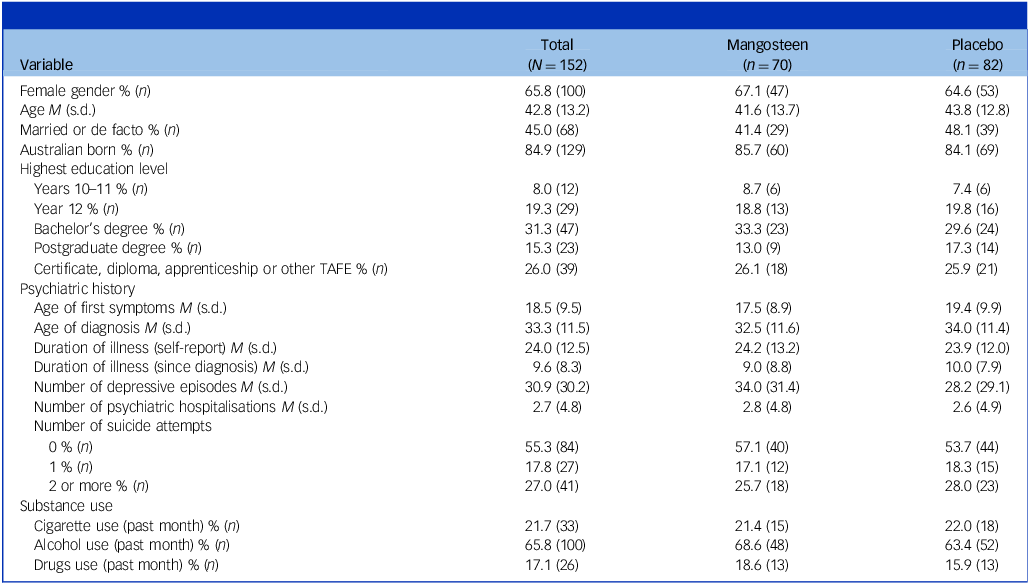
Table 1 lists the demographic and clinical characteristics of the total cohort of 152 participants (mangosteen, n = 70; placebo, n = 82) who were randomised. Most of the cohort were female (65%) and were aged between 18 and 77 years of age (M = 42.8, s.d. = 13.2). There was a delay of approximately 10 years between onset of symptoms and diagnosis. The number of past depressive episodes in the cohort ranged from 0 to 150, with an average of 30.9 (s.d. = 30.2).
Baseline demographic and clinical characteristics of the total cohort and separately for the two treatment groups
TAFE, Technical and Further Education.
Participant flow
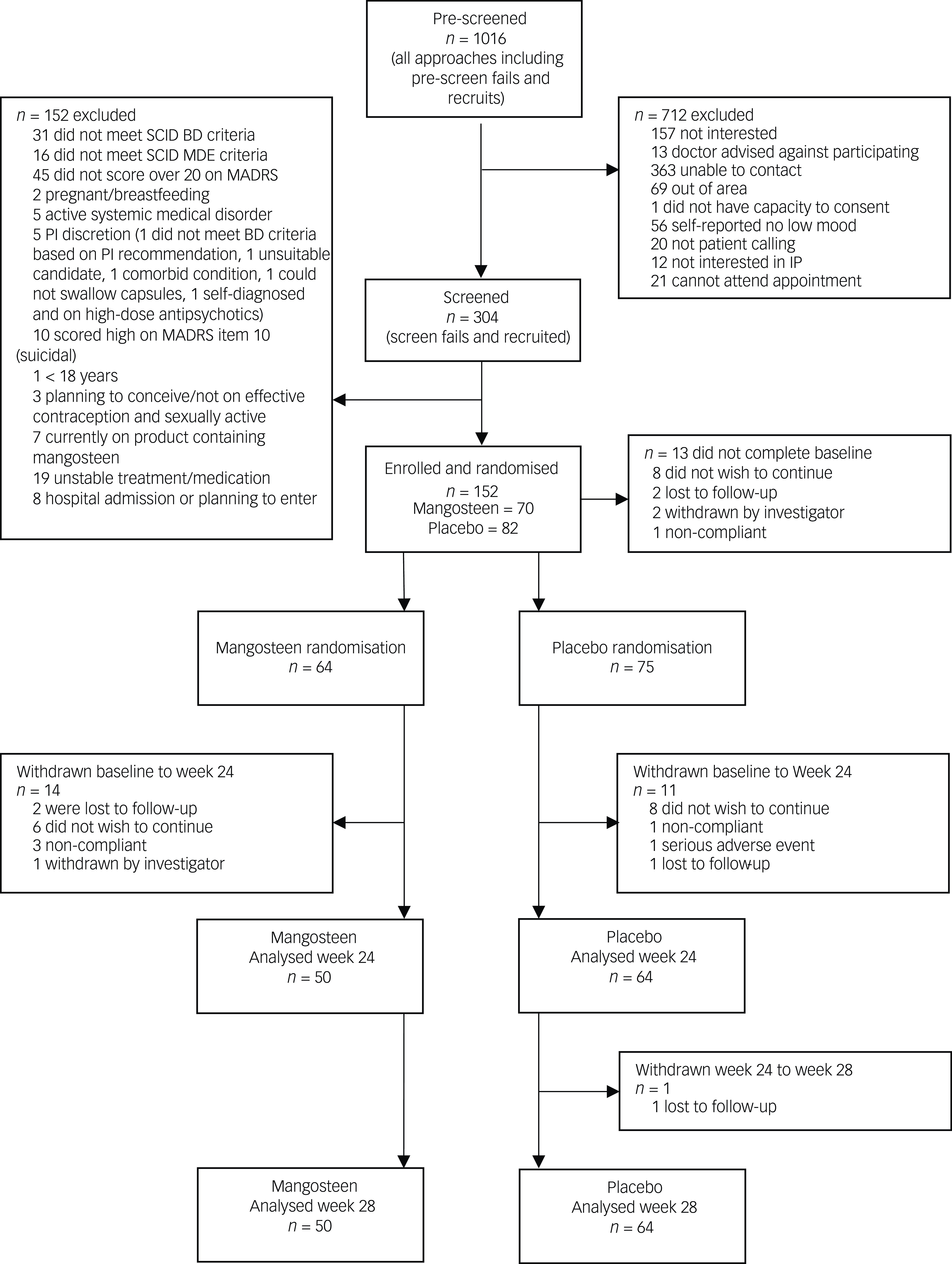
Participant flow can be found in the CONSORT Reference Moher, Hopewell, Schulz, Montori, Gøtzsche and Devereaux26 flowchart in Fig. 1. There were 14 individuals who withdrew after baseline, and 25 who had post-baseline data but did not complete the study.
CONSORT diagram outlining participant flow from identification and screening through to enrollment and withdrawals. Overall, from baseline to the end of the treatment phase (week 24, the primary endpoint), 75% of participants completed the trial. SCID, Structured Clinical Interview for DSM-IV; MADRS, Montgomery–Asberg Depression Rating Scale; BD, bipolar disorder; IP, investigational product; MDE, major depressive episode; PI, principal investigator.

Non-completers were significantly younger at onset of symptoms (M = 14.7, s.d. = 5.2) than completers (M = 19.0, s.d. = 10.0), t(69.74) = 3.05, P = 0.003. Non-completers were also significantly more likely to have used tobacco (non-completers, 36.0% [n = 9]; completers, 17.7% [n = 20], χ 2 [1] = 4.13, P = 0.042) and alcohol (non-completers, 84.0% [n = 21]; completers, 60.2% [n = 69], χ 2 [1] = 5.07, P = 0.024) in the month prior to baseline. There were no significant differences between these groups on any of the symptom measures.
Trial medication adherence
The overall adherence to trial medication was high, with a median of 80.3% (interquartile range [IQR] = 64.6–85.2%). Capsule audit revealed a median discrepancy between expected and observed returned capsules of 8 (IQR = 7–9) capsules at each visit, indicating that most participants had missed around 4 days’ worth of medication between each visit.
Inter-rater reliability
Inter-rater reliability was checked across seven independent raters for each scale. Inter-rater reliability was found to be good to excellent across each of the outcome measures: κ = 0.92, 0.9, 0.91, 0.95, 0.96 and 0.78 for MADRS, BDRS, HAM-A, YMRS, SAPAS and LIFE-RIFT, respectively.
Primary efficacy outcome – depressive symptoms
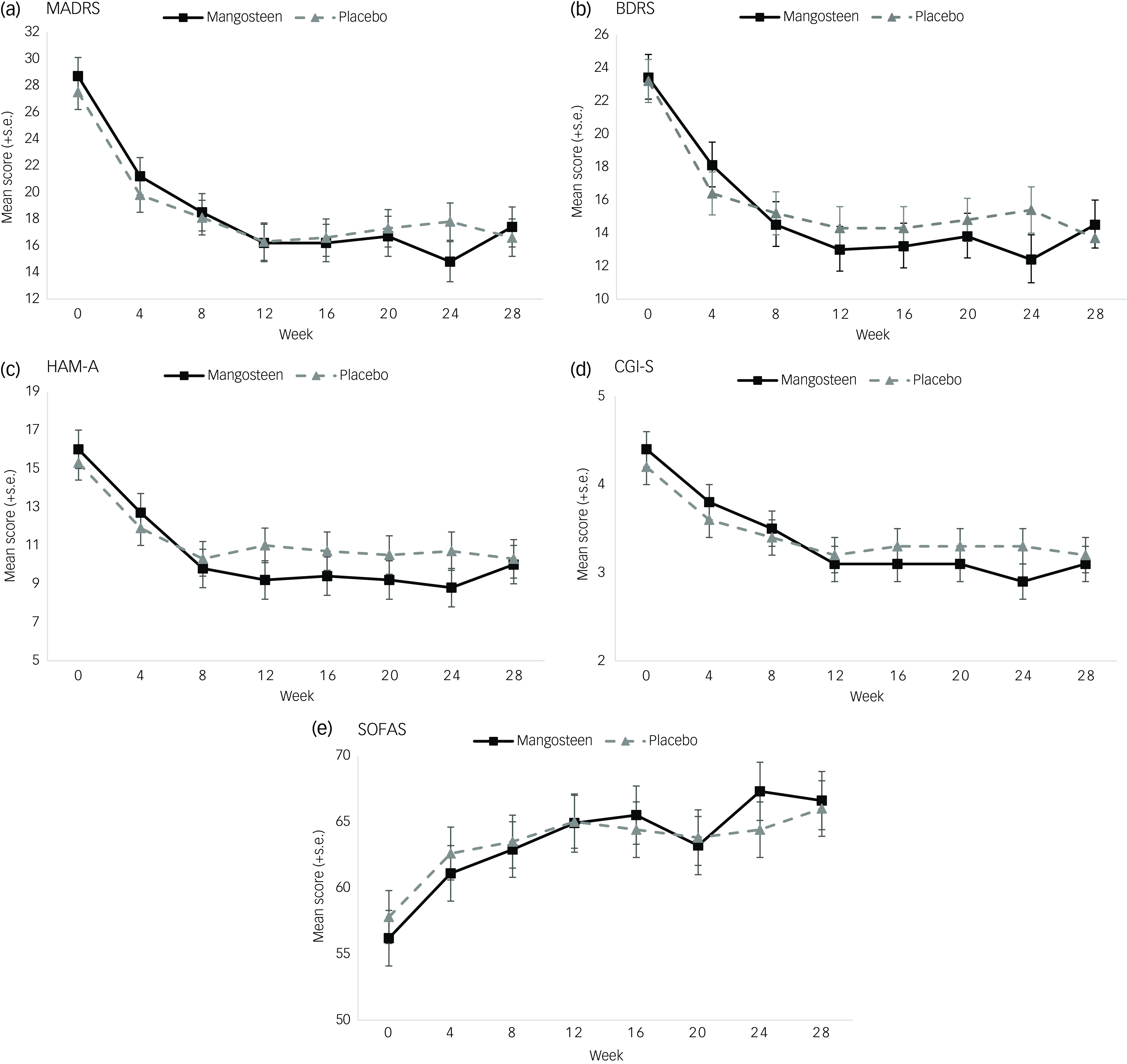
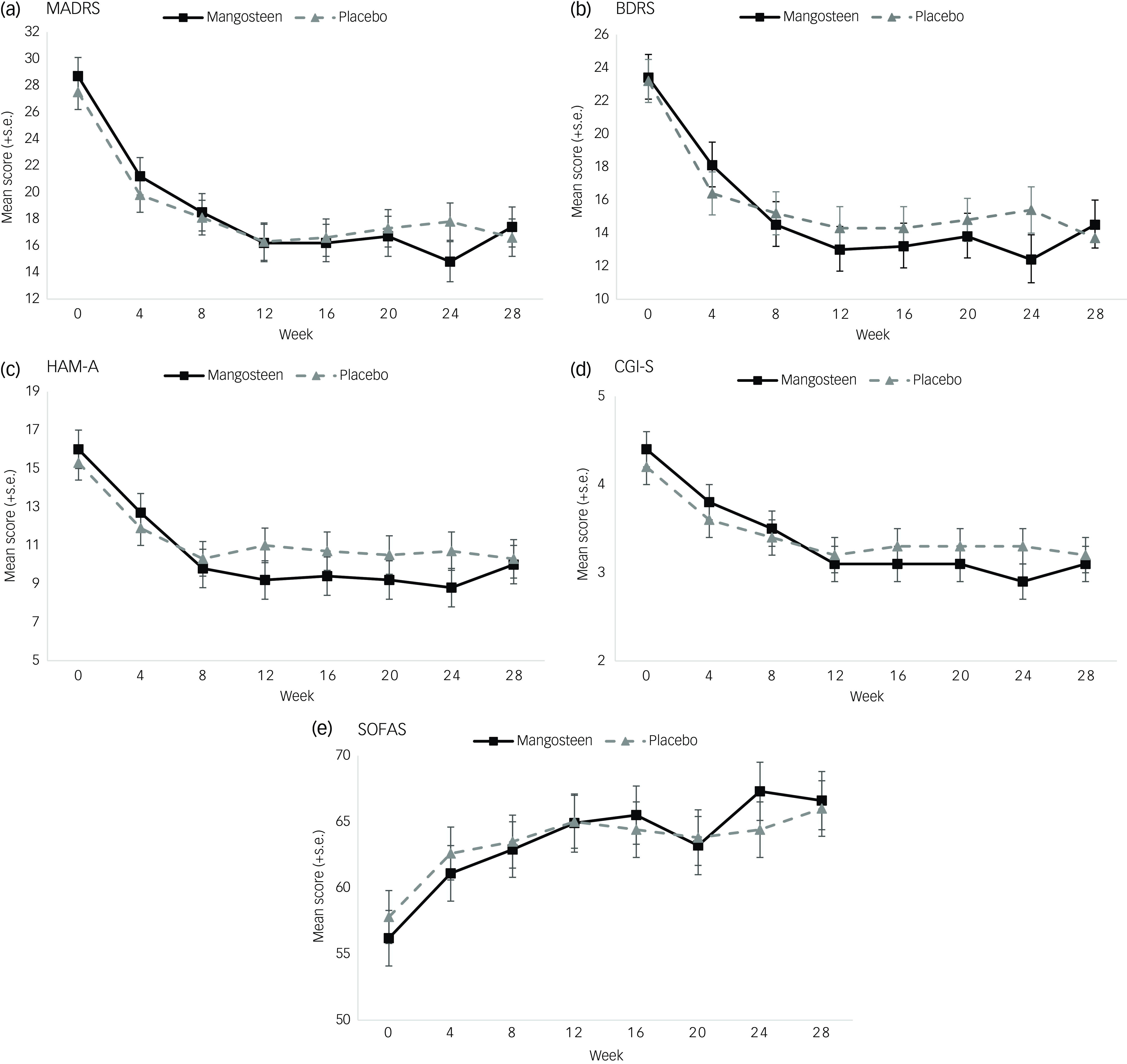
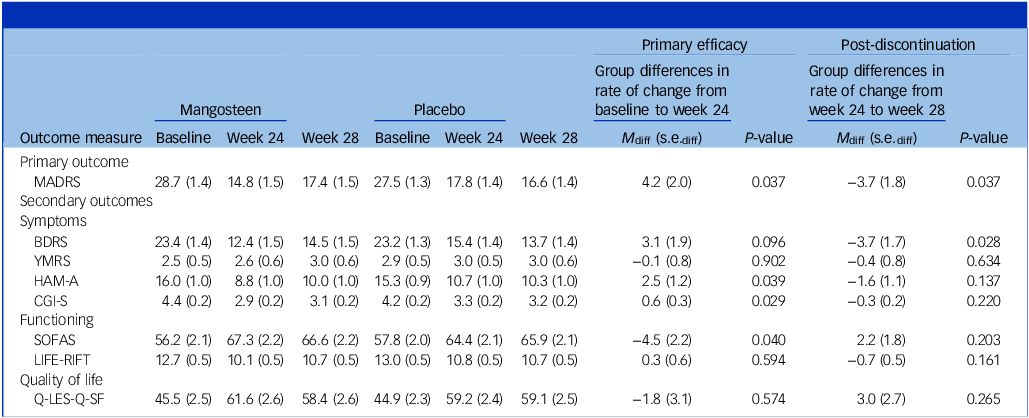
Figure 2(a) demonstrates the differences between the two groups on the MADRS scale over the 28 weeks of the study, including 24 weeks of treatment and the 4-week post-discontinuation period. The groups demonstrated similar rates of change in depressive symptoms until week 20 treatment. As such, the interaction between group and visit was not significant: F(7, 318.8) = 1.02, P = 0.414, but the visit main effect was significant: F(7, 319.0) = 34.30, P < 0.001, with symptoms declining over time. Notable in Fig. 2(a) is that the trajectory of depressive symptoms between the two groups diverged between 20 and 24 weeks. We observed that the rate of change from baseline to the primary endpoint (24 weeks) on the MADRS was significantly greater in the mangosteen (M = 13.8, s.e. = 1.5) than in the placebo group (M = 9.7, s.e. = 1.3), t(228.3) = 2.10, P = 0.037 (see Table 2).
Between-group differences (M ± s.e.) as estimated from mixed-model repeated measures on (a) Montgomery–Asberg Depression Rating Scale (MADRS); (b) Bipolar Depression Rating Scale (BDRS); (c) Hamilton Anxiety Scale (HAM-A); (d) Clinical Global Impression Scale – Severity (CGI-S); and (e) Social and Occupational Functioning Scale (SOFAS). Hospital Anxiety and Depression Scale from baseline to week 28.
Group differences on primary and secondary outcomes at baseline and at the primary endpoint (24 weeks)
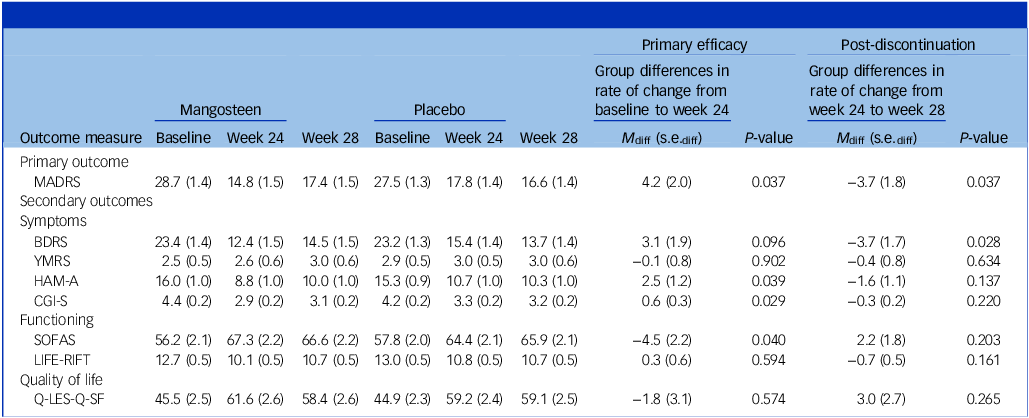
Data are means, with standard errors in parentheses. MADRS, Montgomery–Åsberg Depression Rating Scale; BDRS, Bipolar Depression Rating Scale; YMRS, Young Mania Rating Scale; HAM-A, Hamilton Anxiety Rating Scale, CGI-S, Clinical Global Impression Scale – Severity; SOFAS, Social and Occupational Functioning; LIFE-RIFT, Range of Impaired Functioning Tool; Q-LES-Q-SF, Quality of Life Employment and Satisfaction Questionnaire – Short Form.
Secondary outcomes
There were no significant group-by-visit interactions for all secondary outcome variables, with both groups generally demonstrating similar changes over time, especially up to the week 20 visit. The main effect estimates for visit were significant at P < 0.001 for all variables, apart from YMRS (P = 0.152).
Three variables were similar to MADRS regarding between-group differences in the rate of change from baseline to week 24. The mangosteen group showed a significantly greater drop in symptoms compared with the placebo group in terms of HAM-A (see Fig. 2(c); mangosteen, M = 7.2, s.e. = 0.9; placebo, M = 4.7, s.e. = 0.8; t[271.99] = 2.08, P = 0.039) and Clinical Global Impression Scale – Severity (CGI-S) (see Fig. 2(d); mangosteen, M = 1.4, s.e. = 0.2; placebo group, M = 0.8, s.e. = 0.2; t([216.0] = 2.20, P = 0.029). With regard to SOFAS, the mangosteen group (M = 11.1, s.e. = 1.6) demonstrated almost double the increase in scores as compared with the placebo group (M = 6.6, s.e. = 1.5) from baseline to week 24, with this difference being significant, t(216.5) = −2.06, P = 0.040 (see Fig. 2(e)).
At week 24, CGI-I was slightly higher in the placebo group (M = 2.8, s.e. = 0.1) than in the mangosteen group (M = 2.4, s.e. = 0.2); however, this difference was not significant, t(106) = −1.97, P = 0.051. A similar result was found for PGI-I (mangosteen, M = 2.7, s.e. = 0.2; placebo, M = 3.1, s.e. = 0.1), t(110) = −1.69, P = 0.094.
Post-discontinuation
Descriptive statistics pertaining to change from week 24 to week 28 or the post-discontinuation period can be seen in Table 2 and Fig. 2. For MADRS, the mangosteen group showed a worsening of symptoms (M = 2.6, s.e. = 1.3) whereas the placebo group saw a slight improvement (M = −1.2, s.d. = 1.2); the difference between the groups in change from week 24 to week 28 was significant, t(640.98) = −2.10, P = 0.037. Similar trends were noted for BDRS; the mangosteen group showed a worsening of symptoms (M = 2.0, s.e. = 1.2) whereas the placebo group showed improvement (M = −1.6, s.e. = 1.1), t(640.5) = −2.20, P = 0.028. No other between-group differences were observed with respect to the post-discontinuation period.
Adverse events
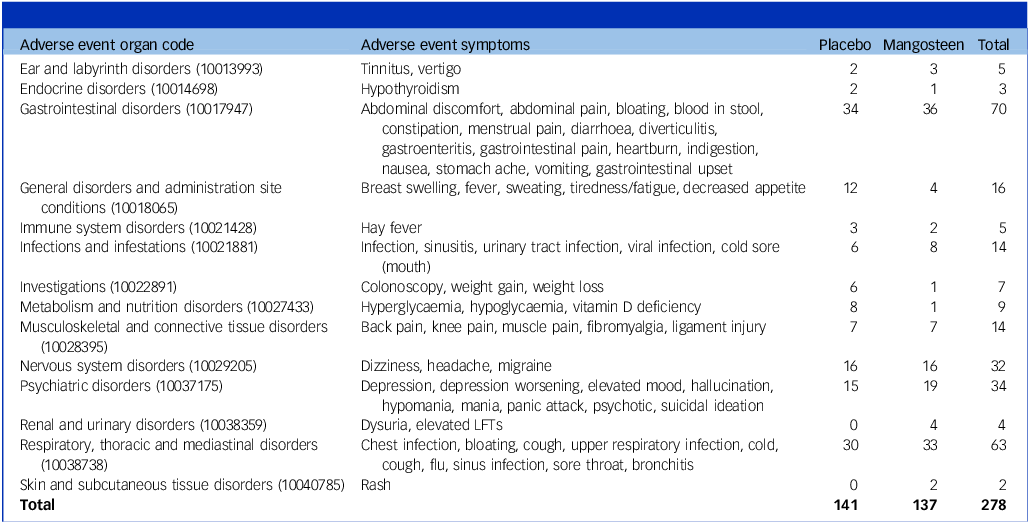
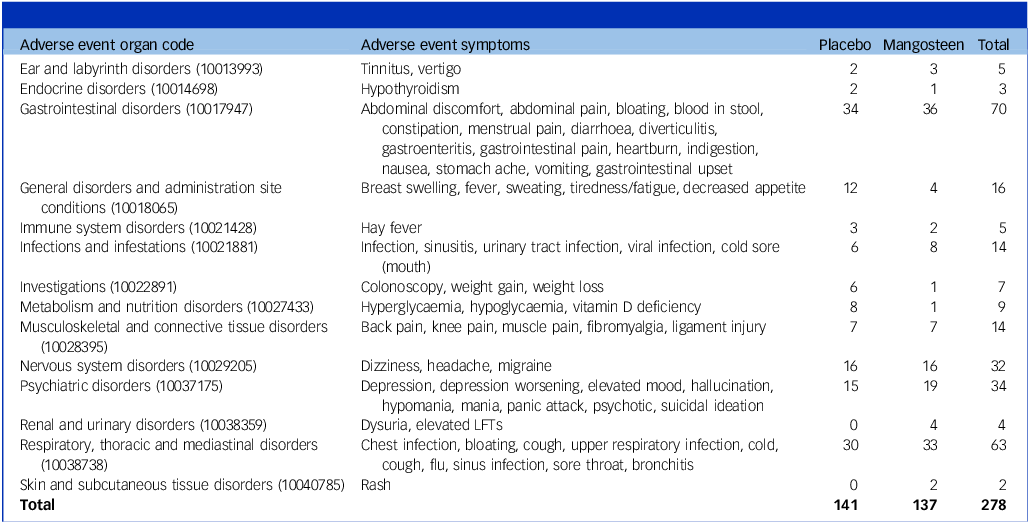
Overall, 186 individual types of adverse event were reported according to Medical Dictionary for Regulatory Activities (MedDRA) codes. A total of 187 individual adverse events were reported in the mangosteen pericarp group and 217 in the placebo group. Table 3 displays the frequency of adverse events occurring in the mangosteen and placebo groups, according to MedDRA System Organ Class (SOC). The frequency of each symptom is provided in Supplementary Table 1.
Frequency of each adverse event in the mangosteen and placebo groups
LFT, liver function test.
The most commonly reported adverse events were cold (mangosteen, n = 16; placebo, n = 14), headache (mangosteen, n = 7; placebo, n = 12), nausea (mangosteen, n = 8; placebo, n = 9) and diarrhoea (mangosteen, n = 9; placebo, n = 4). Adverse events with the greatest disparity were tiredness (mangosteen, n = 0; placebo, n = 5) and vitamin D deficiency (mangosteen, n = 5; placebo, n = 0). A total of 28 serious adverse events (SAEs) were reported (mangosteen, n = 17; placebo, n = 11), the most common being suicidal ideation (mangosteen, n = 4; placebo, n = 3). The number of participants reporting SAEs did not significantly differ between conditions (mangosteen, n = 12; placebo, n = 9; chi-square P = 0.52).
Concomitant medications
Just over half of all participants reported changes in their regular antidepressants, mood stabilisers or antipsychotics over the period of the trial (n = 72, 54.5%). Among placebo participants, n = 10/20, 15/32 and 14/20 reported reducing their daily doses of each medication type throughout the trial, compared with n = 10/18, 15/23 and 17/25 mangosteen participants (the numerator is the number of participants reporting a reduction, the denominator is the total number of participants reporting a change). There was little evidence of meaningful differences between the treatment conditions (see Supplementary Table 2).
Discussion
This large multicentre, double-blinded, randomised, placebo-controlled trial investigated the efficacy of adjunctive mangosteen pericarp extract in improving symptoms of bipolar depression. We observed limited support for the primary hypothesis, that 24 weeks of adjunctive mangosteen pericarp treatment would be superior to placebo in reducing depression symptoms, because the mangosteen condition did not significantly differ from placebo for the first 20 weeks. However, the mangosteen condition showed a superior rate of change to placebo at 24 weeks before returning to equilibrium by 28 weeks. Our examination of the secondary outcomes corroborated these findings, whereby we observed no between-condition differences on any outcome at week 28, but superior reduction for the mangosteen condition over the treatment administration period of the trial. Despite the lack of an overall condition-by-visit interaction, according to MADRS, we observed that participants receiving mangosteen pericarp extract experienced a significantly greater reduction in anxiety symptoms at week 24 compared with baseline levels. We also observed comparable effects for clinical improvement and general functioning. Our observations of participants experiencing apparent post-treatment regression of improvements suggest that continued administration of mangosteen is required if any beneficial effects are to be maintained. We also note that mangosteen did not significantly improve the rate of change for all outcomes, and that the superiority of mangosteen for depressive symptoms and psychosocial functioning was inconsistent across measures of those constructs. Notably, although manic symptoms remained consistent across the sample, due to the targeted recruitment of current depression, such symptoms were low in both groups at baseline. In aggregate, mangosteen pericarp extract may have some efficacy in reducing depressive symptoms and improving functioning and quality of life in participants experiencing bipolar depression. These clinical findings are broadly consistent with those observed in a maternal, inflammation-based, animal model of depression and psychosis after the animals received either mangosteen pericarp or alpha mangostin (see Lotter et al Reference Lotter, Möller, Dean, Berk and Harvey9 ).
Considering the multimodel serotonergic, anti-inflammatory and antioxidant actions for mangosteen pericarp described earlier, the significant improvements at week 24 demonstrated in this clinical trial suggest that mangosteen may have a role in the treatment of the depressive phase of bipolar disorder. Our findings are encouraging since, despite many decades of research in mood and psychotic disorders, and the seminal discoveries of drugs including lithium, imipramine and chlorpromazine, current treatments for these disorders remain challenging. In fact, the current availability of diverse classes of mood stabilisers, antidepressants and antipsychotics to treat these disorders is plagued by many shortcomings, including delayed onset of action, intolerable side-effects and poor compliance. Around 40% of patients fail to respond to any of the typical frontline mood stabilisers or second-generation antipsychotics. Reference Sienaert, Lambrichts, Dols and De Fruyt27,Reference Tournier, Neumann, Pambrun, Weill, Chaffiol and Alla28 Overall, the shortfalls in efficacy are attributable to the multifactorial nature of these conditions, Reference Fountoulakis, Yatham, Grunze, Vieta, Young and Blier29 and so new treatments should be similarly multimodal. Reference Paul and Potter30 Multimodal drugs, including vortioxetine Reference Mukku and Nadella31 and agomelatine, Reference McGowan, Kim, de Andres Crespo, Bisdounis, Kyle and Saunders32 continue to gain favour, and many herbal substances have demonstrated antidepressant effects in preclinical and clinical studies, often with mechanisms similar to that of standard antidepressants. Reference Fajemiroye, da Silva, de Oliveira and Costa33,Reference Kenda, Kočevar Glavač, Nagy and Sollner Dolenc34 Additionally, these preparations may exhibit multitarget mechanisms of action on many different neurobiological processes implicated in mood disorders. For example, the multimodal actions predicted to underlie rapid and improved antidepressant response of drugs lsuch as ketamine include, among others, simultaneous modulation of 5-HT neuronal activity and glutamate/γ-amino butyric acid balance, and the activation of the brain-derived neurotrophic factor–mammalian target of rapamycin pathway, Reference Li35 leading to improved neuroplasticity and cognition. These actions may have relevance for the primarily cognitive benefits of mangosteen extract observed in this study.
Elaborating on the study rationale, people experiencing depression with suicidal features show low cerebrospinal fluid (CSF) levels of the metabolite of 5-HT and increased 5-HT2A receptor binding in platelets and prefrontal cortical sites. Reference Brand, Moller and Harvey3 Similarly, post-mortem depressed bipolar disorder subjects have significantly reduced levels of 5-HIAA in frontal and parietal cortex, while depressed bipolar disorder individuals present with decreased CSF 5-HIAA levels, with manic sufferers showing elevated levels. Reference Brand, Moller and Harvey3 Post-mortem studies in people with schizophrenia, and in psychotic patients, have observed reduced frontal cortex 5-HT2A receptor density, while CSF, genetic and neuroimaging studies have demonstrated an increase in central 5-HT-ergic neurotransmission in schizophrenia. Reference Brand, Moller and Harvey3
Many constituents of mangosteen have bioactive effects that target the above dysregulated pathways in bipolar depression, particularly monoaminergic (notably serotonin), mitochondrial, immune-inflammatory and redox pathways. Reference Brand, Moller and Harvey3 Moreover, this action may augment the therapeutic response of co-administered antipsychotics. Alpha-mangostin is the most common xanthone present in mangosteen pericarp and, along with beta- and gamma-mangostin, these are purported to be selective serotonin type 2A (5-HT2A) antagonists. Reference Kalick, Khan, Maung, Baez, Atkinson and Wallace36 5-HT2A receptor antagonists are clinically effective antipsychotics, albeit as combined serotonin-dopamine antagonists such as clozapine and olanzapine. Reference Kantrowitz37 The latter are recognised for their improved efficacy in depressed mood and negative symptom schizophrenia. Reference Brand, Moller and Harvey3 Through disinhibition of serotonin release, 5-HT2A receptor antagonists are also effective antidepressants (e.g. mianserin, mirtazapine). Reference Brand, Moller and Harvey3 Animal studies have also described the serotonergic actions of mangosteen pericarp extract. Reference Oberholzer, Möller, Holland, Dean, Berk and Harvey8 Of interest here is that most of the adverse events reported in this study, while not differing from placebo, included headache, nausea, diarrhoea, suicidal ideation and migraine, which are typical side-effects experienced with the serotonin reuptake inhibitor class of antidepressants. Thus, mangosteen pericarp bolsters serotonin, be it either directly or indirectly.
Importantly, many mangosteen xanthones exhibit effective blood–brain barrier permeability. Reference Wang, Li, Jing, Alba, Yang and Sabaté38 However, unlike other xanthones, alpha-mangostin exhibits relatively poor penetration of the blood–brain barrier Reference Chen, Huang, Wang, Fu, Han and Shen39 in comparison with the much more permeable, but much less prevalent, gartanin, garcinone C and gamma-mangostin. Reference Chitchumroonchokchai, Riedl, Suksumrarn, Clinton, Kinghorn and Failla40 However, the fact that chronic mangosteen pericarp displays significant antidepressant- and pro-cognitive effects in animals attests to the neurocognitive, and hence brain-penetrant, capabilities of the extract. Reference Oberholzer, Möller, Holland, Dean, Berk and Harvey8 Given that the current clinical trial investigated the ability of mangosteen pericarp to bolster existing treatment, our recent work showing comparable antidepressant effects in a prenatal maternal inflammation model is noteworthy in that both mangosteen pericarp and alpha-mangostin significantly bolstered the antidepressant-like response to haloperidol, Reference Lotter, Möller, Dean, Berk and Harvey9 in congruence with the findings described in this trial. This is not unlike the improved overall antidepressant, pro-cognitive and antipsychotic affects achieved with atypical antipsychotics, where the potent and selective dopamine D2 receptor blockade of haloperidol combines with the antiserotonergic actions of mangosteen pericarp extract to induce a more complete therapeutic response.
Adverse effects
Adverse effects were evident in the mangosteen-treated group, amounting to 141 total adverse events compared with 137 in the placebo-treated group, with no significant differences between groups. This prevalence is not unlike that seen with other herbal preparations with a similar mechanism of action, Reference Beaubrun and Gray41 as well as versus typical serotonergic antidepressants such as selective serotonin reuptake inhibitors. Reference Edinoff, Akuly, Hanna, Ochoa, Patti and Ghaffar42,Reference Ferguson43 Of interest, among the most frequently reported adverse events were headache, nausea, diarrhoea, suicidal ideation and migraine, which are characteristic of selective serotonin reuptake inhibitors. Reference Harvey44 Indeed, effects on 5HT have been described for mangosteen in earlier animal studies. Reference Oberholzer, Möller, Holland, Dean, Berk and Harvey8
Limitations
The trial noted several limitations. Symptoms declined in both mangosteen and placebo groups early in the trial. Participants were required to have a minimum of 4 weeks of medication stability prior to commencement, and so mood improvement due to non-investigational drugs should have been relatively limited. This suggests that at least some of the improvement observed throughout the trial may be attributable to the Hawthorne effect, where participants’ knowledge of the trial contributed to general improvements. For example, participants may have been more mindful of their medication adherence or more likely to associate positive events with the trial itself, Reference Sedgwick and Greenwood45 and future research could include additional post-intervention follow-ups. A second limitation of the study is the unclear influence of unstable treatment-as-usual in both conditions and a high degree of polypharmacy. Indeed, fewer than one quarter of participants were regularly taking a single medication (split almost entirely between antidepressants and mood stabilisers) at the beginning of the trial, and a further quarter were taking four or more. Changes to medication were also not uncommon, with between 5 and 10% of the sample changing antidepressants, mood stabilisers or antipsychotics at each trial visit. Individual variation in drug metabolism should be considered, and future investigation into the psychotropic benefits of mangosteen may need to be guided by pharmacogenetic analysis.
Our findings suggest that adjunctive mangosteen pericarp extract treatment can be superior to placebo in alleviating depressive, anxious and functional symptoms associated with bipolar disorder, but not manic symptoms or quality of life. Our lack of substantial omnibus effects probably reflects additional mechanisms that are not yet fully understood, although our observations of a significant overall benefit that did not persist following treatment washout give some cause for optimism. In this instance, mangosteen pericarp extract, via its various antioxidant, anti-inflammatory and neurogenic constituents, may explain the adjunctive beneficial effects observed in this study. Research involving larger samples and longer follow-up periods is necessary to both corroborate our promising findings and extend our understanding of both the potential benefits and risks associated with mangosteen pericarp in the treatment of bipolar depression.
Supplementary material
The supplementary material is available online at https://doi.org/10.1192/bjp.2025.108
Data availability
Data will be available through the SHeBA platform at Barwon Health. Please contact the corresponding author to access data.
Acknowledgements
The authors thank participants for their contribution and their lived experience to the data collected and subsequent outcomes of the trial. The authors also thank members of the Community and Research Network (CARN) for their valuable feedback in the design of this study. We also acknowledge the assistance of the following health services: Barwon Health, The Melbourne Clinic, Albert Road Clinic and Toowong Specialist Clinic; and thank the Australasian Society for Bipolar Depressive Disorders (ASBDD), Lundbeck, Australian Rotary Health, Ian Parker Bipolar Research Fund and Deakin University for scholarship support.
Author contributions
O.M.D., M.B. and B.H.H. led the conceptualisation and design of the study. O.M.D., S.M.C., M.B. and G.S.M. were responsible for the analysis and interpretation of data and manuscript preparation. S.M.C. and A.T. secured funding and provided support in project design. M.M.A. contributed as an investigator on the grant and was involved in protocol and project set-up, participant recruitment and project management. L.S. and E.B. managed trial coordination, monitoring and data quality assurance. C.H.N., M.H., J.-P.K., N.L.D. and B.E.K. facilitated participant recruitment, screening and manuscript review. S.L.L.M., D.R.S., D.D. and M.L.C. supported data collection, validation and analysis. A.J.W. managed biological sample handling and manuscript preparation. J.S. contributed to study design and manuscript preparation. F.N.J. provided editing and funding support. S.D. provided a critical review of intellectual content and final manuscript approval, ensuring accountabilities for all aspects of the work. All authors contributed to drafting, editing and reviewing the final version of the manuscript.
Funding
The study was sponsored by Barwon Health and funded by the National Health and Medical Research Council (NHMRC, no. APP1121510), Deakin University, ASBDD)/Lundbeck and Australian Rotary Health/Ian Parker Bipolar Research Fund. The sponsors and funding bodies played no role in collection, analysis, interpretation of results or writing of the manuscript.
Declaration of interest
Deakin University holds a patent on the use of mangosteen pericarp in schizophrenia, on which M.B. is listed as a co-inventor. O.M.D. is an R.D. Wright Biomedical Research Fellow and has received grant support from the Brain and Behavior Foundation, Simons Autism Foundation, Stanley Medical Research Institute, Deakin University, Lilly, NHMRC, Medical Research Future Fund (MRFF), Stroke Foundation, Department of Defense Congressionally Directed Medical Research Programs, Marion and EH Flack Trust, Trisno Family Gift, McIntosh Family Gift, Geelong Music Community Collective and ASBDD/Servier. She has also received in-kind support from BioMedica Nutracuticals, NutritionCare and Bioceuticals. Project (no.1121510) and Fellowship (no. 1145634) funding from the NHMRC supported the current trial. S.M.C. has received grant support from NHMRC, the Stanley Medical Research Institute, BeyondBlue, Movember, The University of Melbourne, Australian Catholic University, ARHRF and Mental Illness Research Fund (Victoria Department of Human Services); she is supported by a NHMRC Senior Research Fellowship (no. APP1136344). C.H.N. had served as a consultant for Lundbeck, Grunbiotics, Servier, Janssen-Cilag and Eli Lilly, and received research grant support from Wyeth and Lundbeck and speaker honoraria from Servier, Lundbeck, Bristol-Myers Squibb, Organon, Eli Lilly, GlaxoSmithKline, Janssen-Cilag, AstraZenaca, Wyeth and Pfizer, none related to this publication. S.D. has received funding from NHMRC (nos. APP1125778, APP1121510), a Deakin IMPACT seeding grant and travel support from Deakin University. J.-P.K. has received research, travel and educational support, consultancy payments and presentation honoraria from Alkermes, AstraZeneca, Bionomics, Bristol-Myers Squibb, Eli Lilly, GlaxoSmithKline, Janssen, Lundbeck, Pfizer, Sanofi-Aventis, Servier and Wyeth. M.L.C. has received grant support from NHMRC, BeyondBlue, Deakin University, Barwon, Child, Youth & Family and Medibank Health Research Fund. G.S.M. is the RCPsych college editor and editor-in-chief of The British Journal of Psychiatry; he played no part in the review of this paper or the decision-making process. D.R.S. is supported by the NHRMC Medical Research Future Fund (nos. APP1200214, 2021609). F.N.J. has received industry support for research from Meat and Livestock Australia, Woolworths Limited, the A2 Milk Company, Be Fit Foods and Bega Cheese, and travel support and speakers honoraria from Sanofi-Synthelabo, Janssen Cilag, Servier, Pfizer, Network Nutrition, Angelini Farmaceutica, Eli Lilly, Metagenics and The Beauty Chef. She is on the Scientific Advisory Board of the Dauten Family Centre for Bipolar Treatment Innovation and Zoe Limited, and has written two books for commercial publication. J.S. is an executive director of Psychae Therapeutics and the connected not-for-profit Psyche Institute, which are both involved with psychedelics research and the development of these agents as registered medicines. He is employed and holds equity with Psychae Therapeutics and is also an advisory board representative for HedoniaUSA, which formulates and sells nutraceutical products. He also has received either presentation honoraria, travel support, clinical trial grants, book royalties or independent consultancy payments from Integria Healthcare & MediHerb, Pfizer, Scius Health, Key Pharmaceuticals, Taki Mai, Fiji Kava, Noetic Foundry, FIT-BioCeuticals, Blackmores, Soho-Flordis, Healthworld, HealthEd, HealthMasters, Kantar Consulting, Angelini Pharmaceuticals, Grunbiotics, Polistudium, Global Pharma Group, Australian Natural Therapeutics Group, Research Reviews, Elsevier, Chaminade University, International Society for Affective Disorders, Complementary Medicines Australia, SPRIM, Terry White Chemists, ANS, Society for Medicinal Plant and Natural Product Research, Sanofi-Aventis, Omega-3 Centre, the National Health and Medical Research Council, CR Roper Fellowship, Medical Research Futures Fund, CSIRO Australia, Launch Victoria, Genesis Fund and Tin Alley Ventures. M.B. has received grant support from NIH, Simons Autism Foundation, Cancer Council of Victoria, CRC for Mental Health, Stanley Medical Research Foundation, MBF, NHMRC, Beyond Blue, Geelong Medical Research Foundation, Bristol Myers Squibb, Eli Lilly, GlaxoSmithKline, Organon, Novartis, Mayne Pharma and Servier; has been a speaker for AstraZeneca, Bristol Myers Squibb, Eli Lilly, GlaxoSmithKline, Janssen Cilag, Lundbeck, Merck, Pfizer, Sanofi Synthelabo, Servier, Solvay and Wyeth; served as a consultant to AstraZeneca, Bristol Myers Squibb, Eli Lilly, GlaxoSmithKline, Janssen Cilag, Lundbeck and Servier; and is a co-inventor on two provisional patents regarding the use of NAC and related compounds for psychiatric indications, assigned to the Mental Health Research Institute. The remaining authors declare no conflicts of interest or relevant funding.
Transparency declaration
The authors affirm that the manuscript is an honest, accurate and transparent account of the study being reported; that no important aspects of the study have been omitted; and that any discrepancies from the study as planned (and, if relevant, registered) have been explained.


 Open access


eLetters
No eLetters have been published for this article.