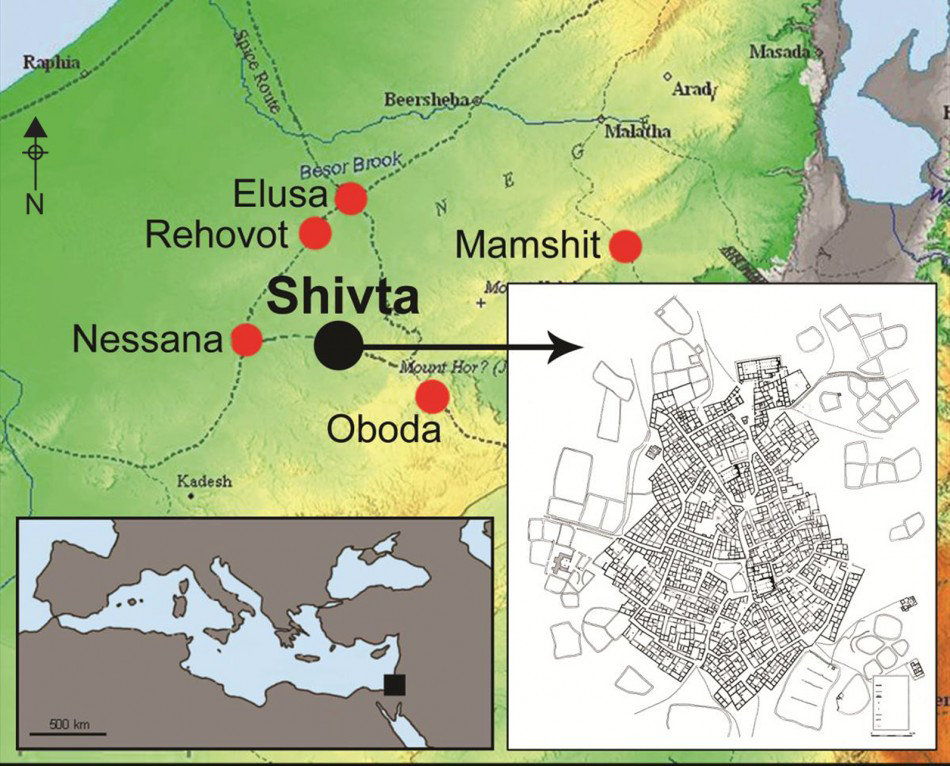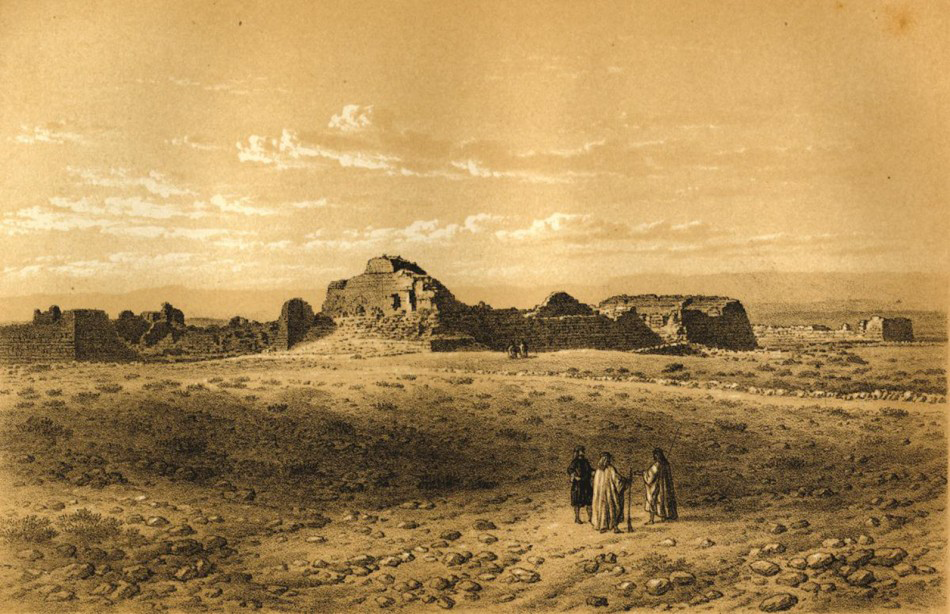


The ‘Byzantine Bio-Archaeology Research Program of the Negev’ (BYBAN), launched in 2015, aims to examine the underlying causes for the emergence, long-term persistence and ultimate collapse of Byzantine settlement in the Negev (Figure 1). In order to model potential effects of climate change, natural disaster and pivotal historical events on the dynamics of settlement development and decline at a number of Byzantine-period sites, BYBAN combines comprehensive data retrieval techniques in the investigation of relict field systems, rubbish mounds and the living floors of residential structures. The Byzantines of the fourth to seventh centuries AD populated the arid, marginal environment of the Negev (<200mm annual rainfall) by developing an urban infrastructure and a productive agricultural hinterland on a scale unmatched in the region before the latter half of the twentieth century. The florescence of the Negev desert in the Byzantine period has puzzled archaeologists, historians and geographers since the early nineteenth century (Reference PalmerPalmer 1871; Reference Woolley and LawrenceWoolley & Lawrence 1914–1915; Figure 2).
The location of Shivta and other Byzantine sites in the northern Negev; the site plan is taken from Hirschfeld (2003: fig. 3).

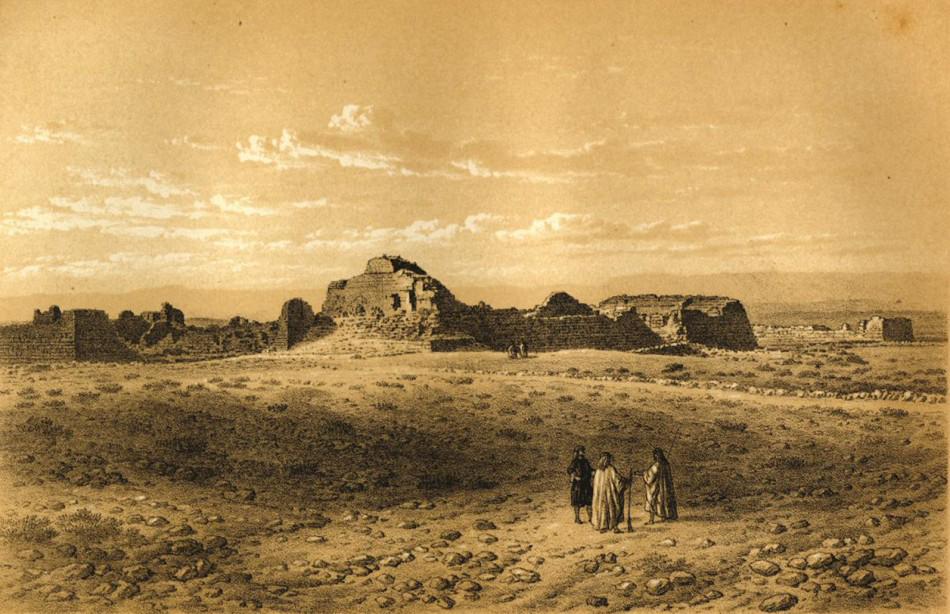
Palmer’s 1860s view of the ruined town of Shivta (pen-and-ink sketch) (taken from Reference PalmerPalmer 1871).
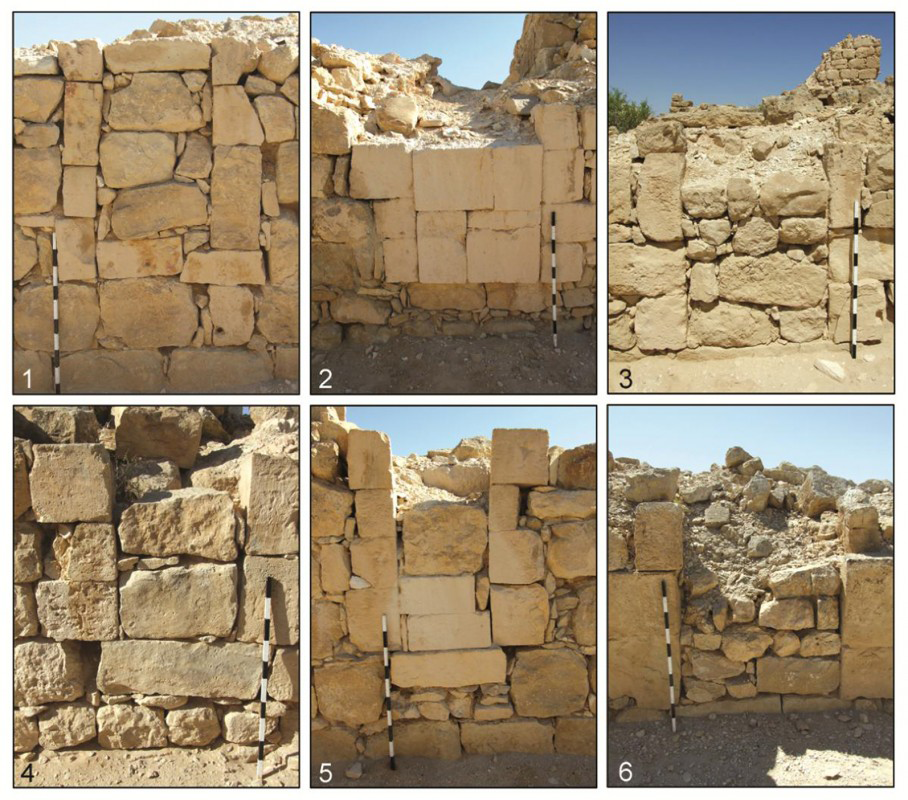
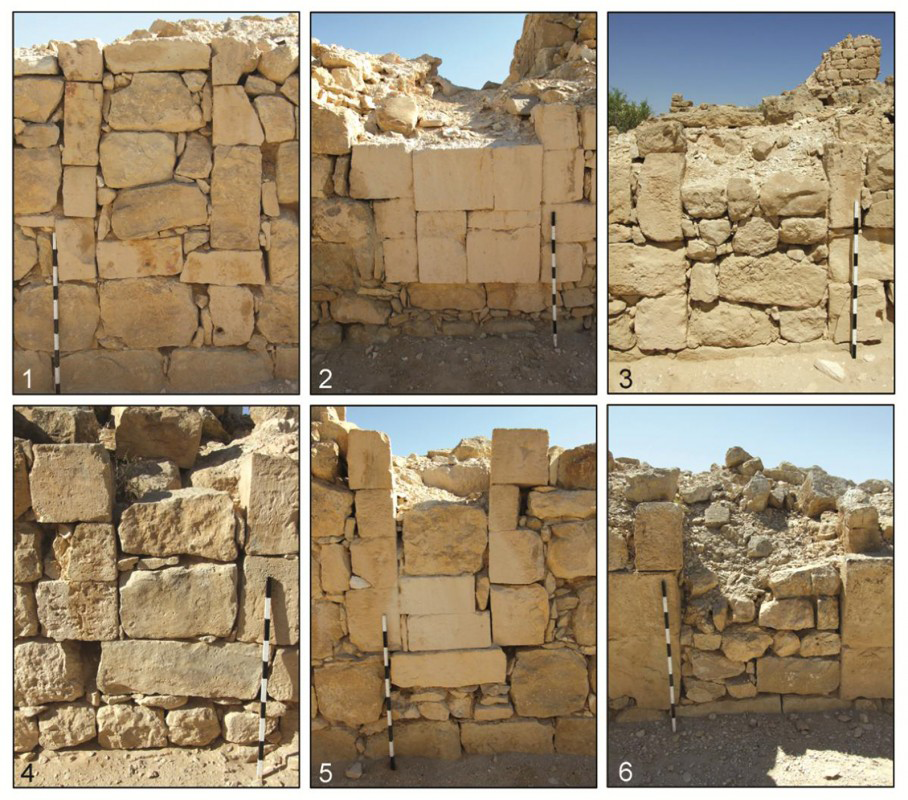
Six examples of sealed door openings at Shivta, including doors that are completely barricaded (1) and others that are sealed using finely dressed masonry (2–5) or small unmodified stones (6).
The discovery of sealed door openings in 16 residential structures at the site of Byzantine Shivta suggests that the abandonment of this settlement was gradual and organised (Reference HirschfeldHirschfeld 2003; Figure 3). High resolution reconstruction of abandonment dynamics, which in most ancient sites formed an integral component in the life-history of the settlement, provides a key to understanding the underlying causes of settlement decline, indicating disintegration of the social fabric (Reference StevensonStevenson 1982; Reference Cameron, Cameron and TomkaCameron 1993).
Shivta, a UNESCO World Heritage Site, is located in the Negev semi-desert climate zone of southern Israel. The site was excavated initially by the University of Chicago Colt expedition of the 1930s (unpublished). Shivta was founded at the beginning of the first century AD, reached its peak in the Byzantine period, and subsequently declined substantially at the end of that period and throughout the Early Islamic period (eighth to ninth centuries AD) (Reference AvniAvni 2014).
The site plan (Figure 1), based on information obtained from a number of excavations and surveys of long-exposed architectural remains (Reference HirschfeldHirschfeld 2003; Reference NegevNegev 1993; Reference BaumgartenBaumgarten 2004), suggests that Byzantine Shivta was a large (around 9ha), well-structured Christian village. A sound economic infrastructure is suggested by the presence of an extensive agricultural hinterland, strewn with relict terraces, dams and a wide range of field installations (Hirschfeld & Tepper 2006). Within the village, Hirschfeld identified 170 residential structures, most of which are between 200–600m2 and are typical Negev Byzantine ‘courtyard houses’. Evidence for the complex social fabric at Shivta is provided by a few more elaborately built structures consisting of a second storey or incorporating high stone towers. Such structures are clustered in three locations, each in association with churches, suggesting the elevated social status of their inhabitants (Reference HirschfeldHirschfeld 2003).
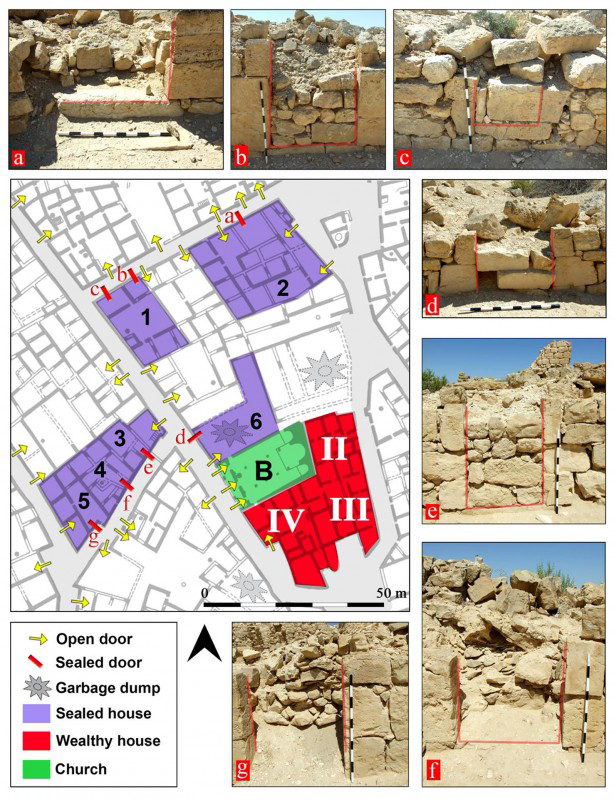
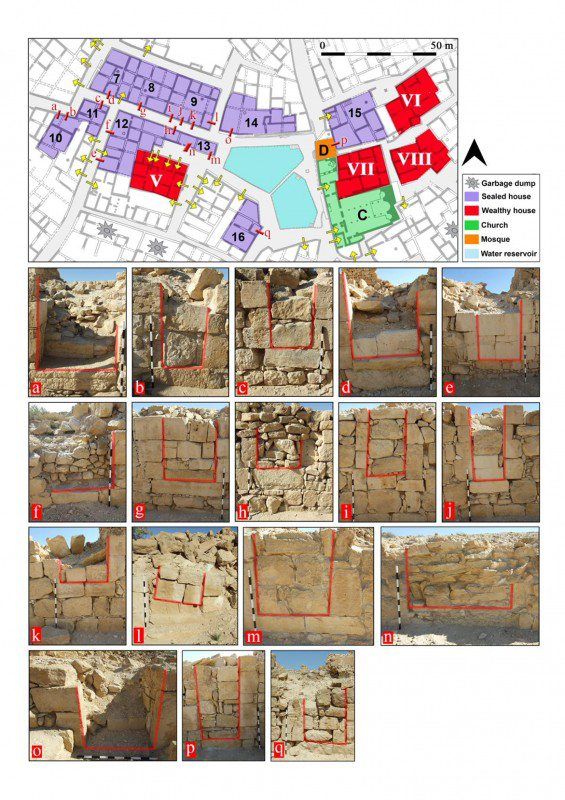
A complicated history of occupation is revealed from the presence of sealed door openings at the entrance to some domestic structures. Their method of construction and their spatial distribution in relation to public architecture (e.g. churches, water reservoir) provide important evidence for abandonment dynamics. We documented 21 sealed door openings at Shivta, which, due to their position in the street façade, probably represent the main entrances to houses. Most sealed doors are completely blocked by stones; some are sealed using finely dressed masonry or large stone plates, while others are sealed with relatively small, unmodified stones similar to those found in the construction of internal house walls. All of these modes of sealing are distinguished from methods used for sealing internal doorways within some of the residential structures. The latter involve the placement of a single large stone over the doorstep or blocking positioned over layers of rubble, and probably represent internal structural modifications undertaken during occupation.
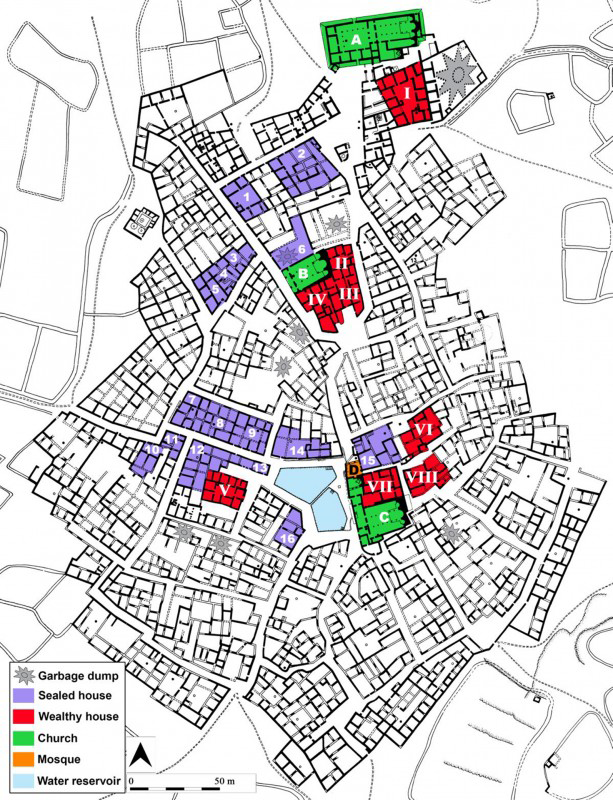
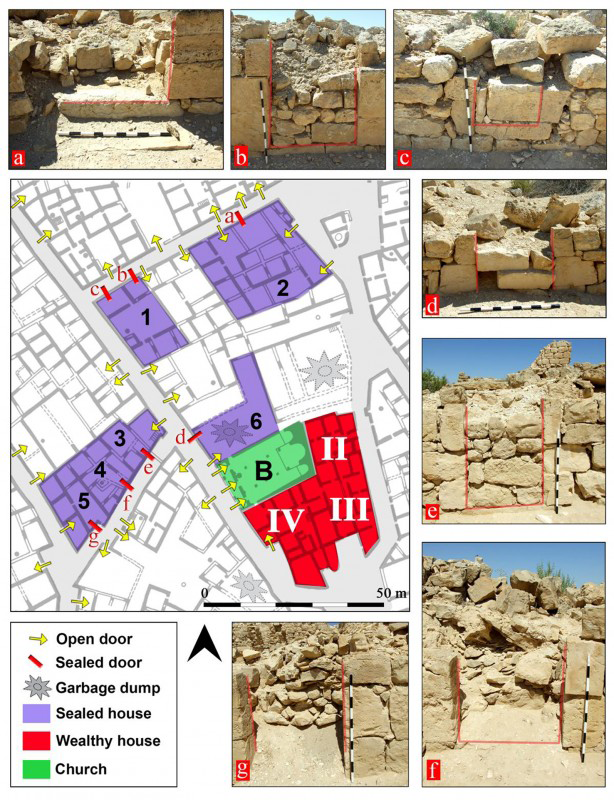
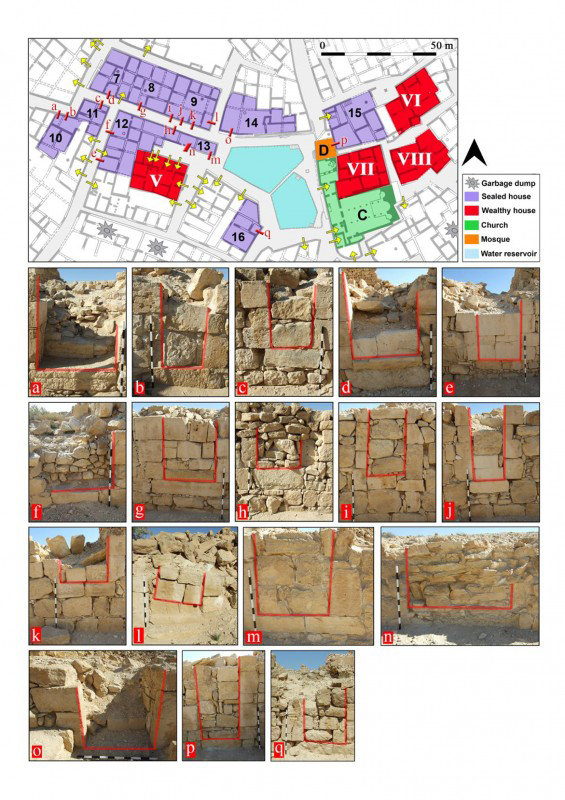
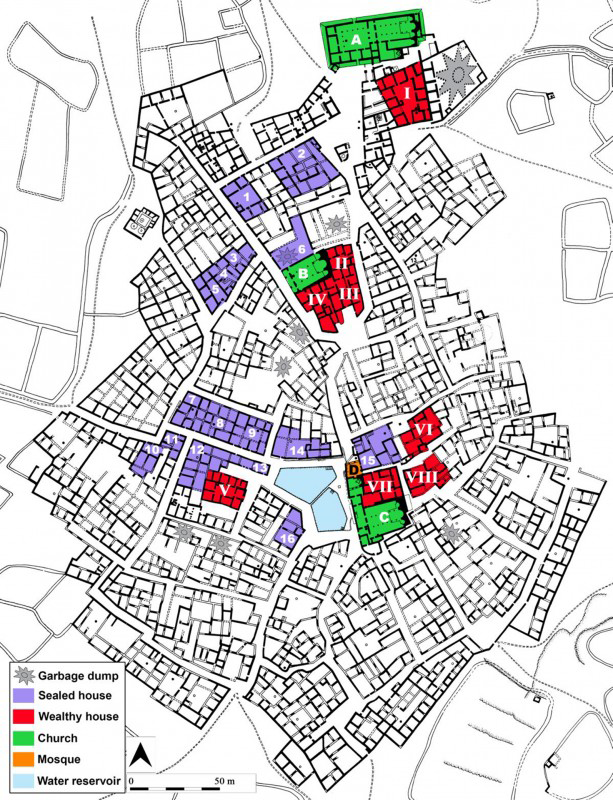
The sealed doors were identified in structures located in two distinct areas (Figure 4): along streets in the northern part of the site (Figure 5: buildings 1–6) and at the centre of the site near the water reservoir (Figure 6: buildings 7–16). These sealed doorways occur within structures often found in clusters along the same street and sharing common walls. Such extended compounds may have belonged to large family groups, suggesting the possibility of the simultaneous abandonment of discrete sections of the settlement. It is difficult to determine whether unsealed openings were ever blocked or were, in fact, blocked at some stage and later reopened.
Plan of the settlement of Shivta showing the distribution of structures with sealed doors in relation to public architecture (Byzantine churches and water reservoir and an Early Islamic mosque), elaborately built structures and garbage dumps within structures.
Magnification of the northern cluster of structures with sealed doors in the Shivta settlement plan; these structures are marked 1–6 and associated sealed doors are marked a–f; this part of the settlement contains the central church (B) and three of the elaborately built structures (II–IV).
Magnification of the southern cluster of structures with sealed doors in the Shivta settlement plan; these structures are marked 7–16 and associated sealed doors are marked a–q; this part of the settlement contains the southern church (C), three of the elaborately built structures (V–VIII) and the Early Islamic mosque (D).
The area surrounding the three main churches, where some of the more elaborate buildings have been uncovered (Figure 4), reveals that all abutting structures contain door openings that are unsealed, testifying to continued occupation. At short distances from these buildings, however, small rubbish dumps found inside a number of the more typically sized structures indicate abandonment, although the mode, rate and probable timing of these abandonment events vary considerably. The resulting complex picture represents a situation wherein occupation of parts of the settlement persisted while others were gradually abandoned. This raises questions about the reasons for abandonment; possible explanations may include factors such as social status or familial affinity.
The residential structures of Shivta that contain the sealed doors should represent well-contextualised time capsules linked to single or multiple abandonment events. Our project will involve systematic, comparative excavations of the contents of structures with sealed, partially sealed and unsealed door openings to assess the pattern and timing of abandonment. In-depth analyses of material culture will be integrated with the collection of bio-archaeological, geo-archaeological and chronometric data to unlock the secrets behind the closed doors of time.
Acknowledgements
This study was conducted under the licence of the Israel Antiquary Authority (G-87/2015). We are grateful for the assistance of Shivta National Park personnel, Ami and Dina Oach (Shivta Farm), Michael Shomroni, Avishi Blumenkrantz, Ada Caspi and Yigal Tepper (field survey) and Anat Regev-Gisis (graphic design). This project has received funding from the European Research Council under the EU’s Horizon 2020 research and innovation programme (648427), the National Geographic Society (8857–10) and the Israel Science Foundation (340–14).