


Tricyclic antidepressant (TCA) drugs are recognised to be inherently more toxic in overdose than the selective serotonin reuptake inhibitor (SSRI) class so that the risk of morbidity and mortality is significantly higher after TCA overdose than after SSRI overdose (Reference Henry, Alexander and SenerHenry et al, 1995). However, this represents only part of the picture. In order to view differences between antidepressant drugs in a wider clinically relevant context, consideration needs to be given to all methods of deliberate self-harm (DSH) which occur during treatment with these drugs, not just antidepressant overdose. Several authors have addressed this question (Reference Rouillon, Phillips and SerrurierRouillon et al, 1989; Reference Teicher, Glod and ColeTeicher et al, 1993; Reference Jick, Dean and JickJick et al, 1995) but with limited interpretative value. The present study aims to clarify the situation by comparing the risk of DSH by any method in a defined population of patients who had been prescribed different pharmacological classes of antidepressant drugs, particularly TCAs and SSRIs, prior to the DSH event.
METHOD
This was a prospective, observational, cross-sectional study of all consecutive cases of DSH, aged 17 years or over, who attended the accident and emergency (A&E) department of the Derbyshire Royal Infirmary as a consequence of any act of DSH during the 2-year period between 1 January 1995 and 31 December 1996.
Data about each case were collected from two sources. Demographic and DSH event-specific data were recorded from A&E attendance records. Data about antidepressants prescribed for depressive symptoms before the DSH event were collected from primary-care records via a postal questionnaire to the general practitioner (GP). All data were anonymised to maintain patient and GP confidentiality.
The number of prescriptions written for antidepressant drugs in the Southern Derbyshire Health Authority region (from Prescribing Analysis and Cost (PACT) data) during the time of the study was used to calculate the incidence of DSH, expressed as number of DSH cases per 10 000 prescriptions, for different antidepressant drugs. However, because not all DSH cases in this region attended the investigational site, the calculation of absolute incidences of DSH following the prescription of different antidepressants is not possible. Nevertheless, using the assumption that the available DSH case cohort is a representative sample of the whole region, the ratio of cases to prescriptions gives an incidence of DSH for different antidepressant drugs relative to one another. Incidences cited in this paper are therefore relative, not absolute.
Using the null hypothesis that there is no difference in the incidence of DSH in patients who had been prescribed different antidepressants, pairwise comparisons between the ratio of DSH events to prescriptions for each antidepressant were examined using PROC GENMOD in SAS (version 6.12 for Windows). The results are expressed as a comparison of these ratios with 95% confidence intervals and P-values.
RESULTS
Hospital-derived data
Demographics
A total of 2776 DSH cases accrued during the 24-month case-recruitment period (mean 116 cases per month; range 98-141). There were similar numbers of males (n=1387) and females (n=1389). The mean age of the male cases was 32.8 years (range 17-86) and that of the female cases was 33.0 years (range 17-96). For males, 27.2% fell into the age band 17-24 years and for females the corresponding proportion was 31.0%. Eight hundred and twenty-two DSH cases (29.6%) were repeat DSH events during the time course of the study in 388 persons. Thus, during the study period, 2776 DSH events occurred in 1954 individuals. In a further 810 cases who did not repeat an episode of DSH during the study, there was a history of DSH before the start of the study. Thus, 58.8% of the total case cohort were known ever-repeaters.
Methods of DSH
The most frequent method of DSH was overdose of a medicinal substance by any amount exceeding the maximum recommended daily dose. This occurred in 79.0% (n=1096) of males and in 86.1% (n=1196) of females. Other methods of DSH comprised hanging, strangulation, gassing, suffocation, drowning, inhalation, laceration, use of firearms, jumping (e.g. from high places), road traffic accident, burning, other self-violence (e.g. headbanging) and ingestion of non-medicines. Laceration was the most frequent non-overdose method of DSH in both males (16.4%) and females (12.6%). In a minority (3.5%) of cases, a combination of overdose and other methods of DSH was used. Overall, there were 12 fatalities in cases who reached A&E alive (eight overdoses and four other methods). Paracetamol, either alone, or in paracetamol-containing medications or in combination with any other overdose and/or method, was the single most frequent substance taken in overdose by both males and females and comprised 39.9% of all DSH cases. Other analgesics were taken by 26.7% of cases. Antidepressant overdose, either alone or in combination with any other overdose and/or method occurred in 16.5% of cases. Drugs of any other kind were taken in overdose by 39.9% of cases.
Antidepressant overdose
Of the 458 (16.5%) cases involving antidepressant overdose, 204 (44.5%) cases took one antidepressant in overdose as the sole method of DSH, 226 (49.3%) took one antidepressant in overdose in combination with any other drug and/or method and 28 (6.1%) cases took more than one antidepressant in overdose at the same time. The relative incidence of overdose with SSRIs was greater than that with TCAs (16.0 v. 11.8 cases per 10 000 prescriptions respectively). This pharmacological class finding was strongly influenced by the SSRI fluoxetine, for which the relative incidence of overdose was significantly greater than that for the TCAs amitriptyline, imipramine and dothiepin (19.4 v. 11.4 v. 9.8 v. 6.9 cases per 10 000 prescriptions respectively; P <0.001) (Table 1).
Relative risk of overdose with different antidepressants in deliberate self-harm (DSH) cases attending the accident and emergency department of Derbyshire Royal Infirmary between 1 January 1995 and 31 December 1996

| Antidepressant1 | Overdose cases2 (n) | Prescriptions3 (n) | Relative incidence (ri) of overdose4 (cases per 10 000 prescriptions) | Relative risk of overdose5 |
|---|---|---|---|---|
| TCAs | ||||
| Amitriptyline | 75 | 65 916 | 11.4 | 1.6 |
| Clomipramine | 15 | 10 911 | 13.7 | 2.0 |
| Dothiepin | 51 | 51 840 | 9.8 | 1.4 |
| Imipramine | 12 | 17 325 | 6.9 | 1.0 |
| Lofepramine | 58 | 33 453 | 17.3 | 2.5 |
| TCAs total | 211 | 179 445 | 11.8 | 1.7 |
| SSRIs | ||||
| Fluoxetine | 100 | 51 538 | 19.4 | 2.8 |
| Paroxetine | 40 | 30 479 | 13.1 | 1.9 |
| Sertraline | 13 | 13 503 | 9.6 | 1.4 |
| SSRIs total | 153 | 95 520 | 16.0 | 2.3 |
| Others | ||||
| Flupentixol | 11 | 6 019 | 18.3 | 2.6 |
| Lithium | 13 | 11 559 | 11.2 | 1.6 |
| Trazodone | 9 | 7 306 | 12.3 | 1.8 |
| Others total | 33 | 24 884 | 13.3 | 1.9 |
Hospital admissions
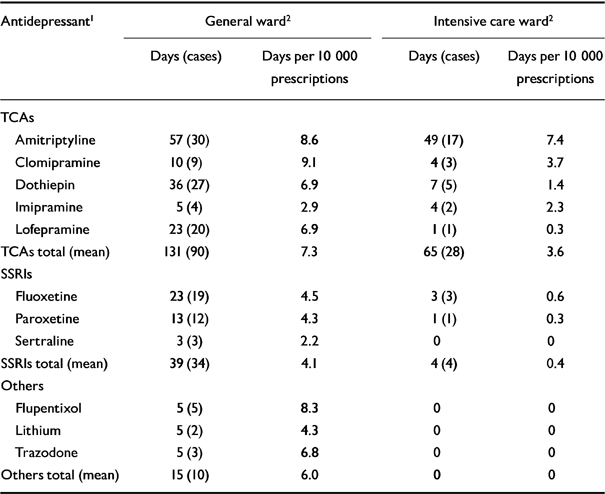
Out of the total cohort of 2776 cases, 1534 (55.3%) were admitted to hospital as a direct consequence of the DSH injury. Those patients who were not admitted were either discharged from A&E or discharged themselves against medical advice. One hundred and fifty-nine of the 204 (77.9%) cases who took one antidepressant in overdose as the sole method of DSH were admitted to hospital. The duration of stay in hospital expressed as days per 10 000 prescriptions, was greater after TCA overdose than after SSRI overdose, both for general ward admissions (7.3 v. 4.1 days per 10 000 prescriptions respectively) and for intensive care ward admissions (3.6 v. 0.4 days per 10 000 prescriptions respectively), although this difference did not reach statistical significance at these low numbers of admissions (Table 2).
Duration of stay in hospital following overdose with different antidepressants in deliberate self-harm (DSH) cases who attended the accident and emergency department of Derbyshire Royal Infirmary between 1 January 1995 and 31 December 1996
| Antidepressant1 | General ward2 | Intensive care ward2 | ||
|---|---|---|---|---|
| Days (cases) | Days per 10 000 prescriptions | Days (cases) | Days per 10 000 prescriptions | |
| TCAs | ||||
| Amitriptyline | 57 (30) | 8.6 | 49 (17) | 7.4 |
| Clomipramine | 10 (9) | 9.1 | 4 (3) | 3.7 |
| Dothiepin | 36 (27) | 6.9 | 7 (5) | 1.4 |
| Imipramine | 5 (4) | 2.9 | 4 (2) | 2.3 |
| Lofepramine | 23 (20) | 6.9 | 1 (1) | 0.3 |
| TCAs total (mean) | 131 (90) | 7.3 | 65 (28) | 3.6 |
| SSRIs | ||||
| Fluoxetine | 23 (19) | 4.5 | 3 (3) | 0.6 |
| Paroxetine | 13 (12) | 4.3 | 1 (1) | 0.3 |
| Sertraline | 3 (3) | 2.2 | 0 | 0 |
| SSRIs total (mean) | 39 (34) | 4.1 | 4 (4) | 0.4 |
| Others | ||||
| Flupentixol | 5 (5) | 8.3 | 0 | 0 |
| Lithium | 5 (2) | 4.3 | 0 | 0 |
| Trazodone | 5 (3) | 6.8 | 0 | 0 |
| Others total (mean) | 15 (10) | 6.0 | 0 | 0 |
Primary-care-derived data
Available database
A total of 2535 questionnaires were sent to GPs requesting information about the antidepressant prescription history of each DSH case prior to the DSH event. For 241 (8.7%) cases, a questionnaire was not sent either because the identity of the GP was unknown or a repeat DSH event occurred within 1 month of a previous event. There were 1688 (66.6%) replies, 1497 of which were evaluable for the purpose of this study. One hundred and ninety-one (11.3%) replies were not included in the analysis either because information from the GP about that patient was not available at the time of the request or because erroneous responses on the GP questionnaire rendered the antidepressant prescription history unevaluable. Overall, evaluable data about the antidepressant prescription history prior to the DSH event were therefore available for 53.9% of the total case cohort.
Antidepressant prescription history
Five hundred and eighty-four (39.0%) of the evaluable cases had been prescribed an antidepressant at some time during the 12 months preceding the DSH event and 186 (31.8%) of these had overdosed on their most recently prescribed antidepressant. The most recent prescription prior to the DSH event was for a TCA in 223 (38.2%) cases, for an SSRI in 312 (53.4%) cases and for any other antidepressant in 49 (8.4%) cases.
However, the time interval between the most recent antidepressant prescription and the DSH event is an important consideration because the most frequent amount of antidepressant prescribed in one GP prescription is sufficient for 1 month's treatment (Reference Donoghue and TyleeDonoghue & Tylee, 1996). At prescribed doses, therefore, the patient has theoretically run out of medication after 1 month (assuming full compliance even though it is recognised that patient compliance with antidepressant medication can be poor (Reference Maddox, Levi and ThompsonMaddox et al, 1994)). As a consequence, patients who commit an act of DSH more than 1 month after the most recent antidepressant prescription are arguably in a different DSH risk group (relapse or untreated risk). For this reason, only those cases whose most recent prescription for an antidepressant was 30 days or less before the DSH event (treatment risk group) are evaluated here. Three hundred and seven (52.3%) cases met this criterion.
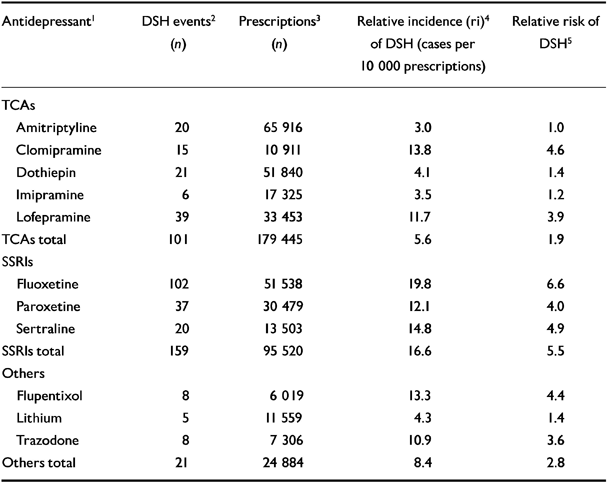
Pairwise comparisons of the relative incidence of DSH by any method following the prescription of named antidepressant drugs within 30 days prior the DSH event indicate that the relative incidence of any DSH event in patients who were prescribed the SSRIs fluoxetine, paroxetine and sertraline (19.8, 12.1 and 14.8 DSH events per 10 000 prescriptions respectively) was significantly higher than that in patients prescribed the TCAs amitriptyline, dothiepin and imipramine (3.0, 4.1 and 3.5 DSH events per 10 000 prescriptions respectively; P <0.001) (Table 3).
Relative risk of deliberate self-harm (DSH) by any method within 4 weeks of the prior prescription of different antidepressant drugs in cases who attended the accident and emergency department of the Derbyshire Royal Infirmary between 1 January 1995 and 31 December 1996
| Antidepressant1 | DSH events2 (n) | Prescriptions3 (n) | Relative incidence (ri)4 of DSH (cases per 10 000 prescriptions) | Relative risk of DSH5 |
|---|---|---|---|---|
| TCAs | ||||
| Amitriptyline | 20 | 65 916 | 3.0 | 1.0 |
| Clomipramine | 15 | 10 911 | 13.8 | 4.6 |
| Dothiepin | 21 | 51 840 | 4.1 | 1.4 |
| Imipramine | 6 | 17 325 | 3.5 | 1.2 |
| Lofepramine | 39 | 33 453 | 11.7 | 3.9 |
| TCAs total | 101 | 179 445 | 5.6 | 1.9 |
| SSRIs | ||||
| Fluoxetine | 102 | 51 538 | 19.8 | 6.6 |
| Paroxetine | 37 | 30 479 | 12.1 | 4.0 |
| Sertraline | 20 | 13 503 | 14.8 | 4.9 |
| SSRIs total | 159 | 95 520 | 16.6 | 5.5 |
| Others | ||||
| Flupentixol | 8 | 6 019 | 13.3 | 4.4 |
| Lithium | 5 | 11 559 | 4.3 | 1.4 |
| Trazodone | 8 | 7 306 | 10.9 | 3.6 |
| Others total | 21 | 24 884 | 8.4 | 2.8 |
Factors which could influence results
There are a number of factors which may have influenced the finding from this study that the relative incidence of DSH is greater following the prescription of SSRIs than after that of TCAs.
Limitations of study design
It was assumed from the start that the case cohort in this study is representative of the whole region from which the prescription data were drawn. This assumption was not tested.
In addition, because the GP reply rate to the questionnaires was less than 100% (as described previously), there is the risk of introducing further bias due to an incomplete dataset. However, this is a factor which is not unique to this study and the evaluable reply rate in this study was in the range which might reasonably be expected for prescription event monitoring studies (Reference Freemantle, Pearce and WiltonFreemantle et al, 1997).
Furthermore, that this is an observational cross-sectional study rather than a randomised controlled trial leads to the question of whether patients prescribed TCAs were similar in terms of DSH risk to those prescribed SSRIs.
Each of these limitations weakens conclusions which can be drawn from this study although some of the uncontrolled DSH risk factors can be examined to estimate the likelihood of their effect on the result, as follows.
Dosage of antidepressant prescribed
Dosing below the upper daily dose recommended for use in primary care treatment (Monthly Index of Medical Specialities) was more common for TCAs (30-75% of the upper recommended daily dose) than for SSRIs (51-125%) particularly fluoxetine (although the tablet strength of fluoxetine makes underdosing difficult). Subtherapeutic dosing, therefore, does not appear to offer an explanation for the excess of DSH events following the prescription of the SSRIs.
Duration of exposure to antidepressants
Antidepressant drugs have a latent period before their antidepressant effect becomes maximal so that patients who have been exposed to an antidepressant for a short time may be at a different DSH risk level than those exposed for a longer time. Exposure times of the DSH cases to antidepressants prior to DSH were, however, similar for TCAs (40% of cases exposed for up to 4 weeks, 16% for 4-12 weeks and 44% for >12 weeks) and SSRIs (37%, 17% and 47%, respectively). Thus, there is no evidence from this study that differences in exposure time provide an explanation for the differences in the relative incidence of DSH following prescription of TCAs or SSRIs.
Antidepressant prescription switches
The prescription of different antidepressants before the most recent antidepressant is an important consideration because possible carry-over effects from the previous antidepressant cannot be ruled out, particularly when the switch was made in close time proximity before the DSH event. In those cases who had been prescribed a different antidepressant at some time before the most recent antidepressant (n=164), a greater proportion of cases switched from TCAs to SSRIs (41 of 67 cases: 61%) than from SSRIs to TCAs (29 of 82 cases: 35%). This serves to suggest that SSRIs may have been more frequently prescribed when TCAs had, for whatever reason, ‘failed’. Hence a greater proportion of more ‘difficult to treat’ patients may have been prescribed SSRIs and this may manifest as a greater risk of DSH. The prescription of some SSRIs to a higher DSH-risk group may, therefore, offer part of the explanation of the relative incidence findings of this study.
Effect of co-prescribed medication
Polypharmacy in depressed patients is not uncommon and the potential association between the co-prescription of medication other than antidepressants and the occurrence of DSH cannot be ruled out. An evaluation of the proportion of patients who were co-prescribed other psychotropic medication with antidepressants within 1 month prior to the DSH event revealed little difference between the TCAs (72 of 102 cases: 71%) and the SSRIs (117 of 180 cases: 65%). However, differences in the nature of the psychotropic medication co-prescribed (hypnotics, anxiolytics, antipsychotics) cannot be evaluated within the confines of this study, and therefore the potential influence of this parameter on the relative incidence findings of this study remains unclear.
Influence of age
The age of those DSH cases prescribed TCAs was higher than those prescribed SSRIs (42.3 years v. 33.8 years, respectively). Further exploration of this variable reveals that SSRIs were more frequently prescribed to the 17-34-years age group than TCAs (192 of 312 cases (61.5%) v. 89 of 223 cases (40.0%), respectively). That younger age is an independent variable for the occurrence of DSH (Reference Hawton, Fagg and SimkinHawton et al, 1997) may be a contributory factor to the higher incidence of DSH seen in cases who had been prescribed SSRIs.
Prior history of DSH
An important factor in the prediction of DSH is whether it has occurred before in the same individual. In the present study, 120 of 180 cases (67%) who had been prescribed an SSRI and 55 of 102 cases (54%) prescribed a TCA had a known history of previous DSH at any time in the past. Thus, there is some indication from this study that SSRIs may have been preferentially prescribed to some patients who may have been at greater risk of DSH at the time of prescription by virtue of their DSH history. This suggestion makes empirical sense in that the prescription of less toxic-in-overdose SSRIs to higher DSH-risk patients would reduce complications in the event of subsequent antidepressant overdose. This factor may therefore have contributed to the finding of the greater relative incidence of DSH by any method following the prescription of SSRIs.
Other potential influential factors
There are a number of other possible factors which may have influenced the result but which are beyond the scope of exploration from the study database. These unaccountable factors include: the clinician's personal judgement of risk of DSH at the time of prescription regardless of previous DSH history; differences in the compliance of patients to taking TCAs or SSRIs; differences in efficacy and/or tolerability of TCAs and SSRIs in a routine primary care setting (as opposed to a clinical trial); differences in severity of depressive illness in those prescribed TCAs or SSRIs; differences in antidepressant prescription frequency for conditions other than depressive illness (e.g. chronic pain, enuresis, obsessive-compulsive disorder, weight management) which may affect the denominator (total number of prescriptions) for the relative incidence calculations to different degrees for different antidepressants; a pharmacological effect of increased suicidality in susceptible individuals.
DISCUSSION
Is the present cohort representative?
The demographic characteristics of and the DSH methods used by the present cohort are consistent with those of previously reported DSH cohorts in the UK (Reference SmithSmith, 1995; Reference Bialas, Reid and BeckBialas et al, 1996; Reference Macnamara, Riyat and QuintonMacNamara et al, 1996; Reference Thomas, Bevan and BhattacharyyaThomas et al, 1996; Reference Hawton, Fagg and SimkinHawton et al, 1997), indicating that the present cohort was likely to be a representative sample.
Antidepressant overdose v. all methods of DSH
It is important to appreciate the distinction between the risks associated with antidepressant overdose and the risk of any form of DSH during treatment with antidepressants at therapeutic doses. In the present study, less than one-third of DSH cases who had been prescribed an antidepressant overdosed on that antidepressant. The majority of DSH cases who had been prescribed an antidepressant harmed themselves by means other than antidepressant overdose. The finding in this study that the morbidity after TCA overdose, measured in terms of the duration of stay in hospital to effect recovery, is greater than that seen after overdose with SSRIs is not surprising, given the known overdose toxicities of these two classes of antidepressant (Reference Henry, Alexander and SenerHenry et al, 1995). However, this study has also indicated that the risk of DSH by any method is greater in patients who had been prescribed an SSRI than in those who had been prescribed a TCA prior to the DSH event. Although not measured in this study, this gives rise to speculation that the overall morbidity may be higher after DSH in patients who had been prescribed an SSRI.
Cause and effect
It is difficult to attribute the cause of DSH behaviour to antidepressant treatment when such behaviour can also occur spontaneously during the course of depressive illness. Establishment of cause and effect for the different apparent risks of DSH associated with different antidepressants seen in this study is therefore almost impossible.
Nevertheless, although non-fatal DSH is not a proxy for suicide because DSH is not always synonymous with failed suicide, it is a risk factor (Reference Gunnell and FrankelGunnell & Frankel, 1994). The findings of this present study are consistent with findings of previous studies which have examined the occurrence of suicide in patients who had been prescribed different antidepressants (Reference Isacsson, Holmgren and WassermanIsacsson et al, 1994; Reference Jick, Dean and JickJick et al, 1995; Reference Waern, Beskow and RunesonWaern et al, 1996; Reference Donovan, Kelleher and LambournDonovan et al, 1999). Each of these previous studies indicated that, for whatever reason, the frequency of suicide, by any method, was greater in patients who had been prescribed an SSRI than that in patients who had been prescribed a TCA.
Preferential prescription of saferin-overdose antidepressants?
Several authors have speculated on possible mechanistic factors linking suicidality and different pharmacological classes of antidepressants (Reference KravitzKravitz, 1990; Reference Mann and KapurMann & Kapur, 1991; Reference MöllerMöller, 1992; Reference Montgomery, Montgomery and GreenMontgomery et al, 1992; Reference Power and CohenPower & Cohen, 1992; Reference Teicher, Glod and ColeTeicher et al, 1993). Equally relevant, however, is the pragmatic consideration that prescribers are heeding advice to prescribe safer-in-overdose antidepressants to patients who are perceived to be at greater risk of DSH. This effectively ‘loads the dice’ against antidepressants such as the SSRIs, so that this manifests as an apparent excess of selfharm behaviour in patients who had been prescribed these antidepressants. The truth is likely to be multi-factorial and probably lies somewhere between mechanistic and pragmatic explanations.
Clinical relevance of results
Recognition of patients at risk of DSH in primary care is difficult and so the prescription of safer-in-overdose antidepressants is a laudable action to lessen complications in the event of antidepressant overdose. However, in the population described in the present study, the advantage of SSRIs over TCAs in terms of reduced overdose toxicity does not extrapolate to a reduced risk of DSH by any method. Notwithstanding the possibility that those cases who had been prescribed an SSRI in this study may be in some way at a higher risk level than those prescribed a TCA, this present snapshot of the situation does not give rise to hope that the prescription of safer-in-overdose antidepressants will lessen the overall morbidity from DSH and its burden on hospital acute services. Until the situation is further clarified by future studies, the choice of antidepressant for patients at higher risk of DSH should not be based solely on overdose toxicity. The increased risk of DSH by any method in patients prescribed SSRIs should not be underestimated.
Clinical Implications and Limitations
CLINICAL IMPLICATIONS
-
▪ About a third of deliberate self-harm (DSH) cases presenting to an accident and emergency department are likely to have been prescribed an antidepressant drug at some time before the DSH event and about a third of these involve antidepressant overdose as a method of DSH.
-
▪ The admission rate is higher and duration of stay in hospital is longer after tricyclic antidepressant (TCA) overdose than after selective serotonin reuptake inhibitor (SSRI) overdose, reflecting the relative higher morbidity associated with TCA overdose. However, the overall frequency of DSH of any kind is higher in patients who had been prescribed an SSRI before the DSH event than in those who had been prescribed a TCA.
-
▪ The preferential prescription of safer-in-overdose antidepressants to patients who may be at higher risk of DSH reduces the risk of morbidity following antidepressant overdose but this potential advantage is offset by the higher risk of DSH by other methods.
LIMITATIONS
-
▪ This was an observational study and so prospective matching of patients in terms of DSH risk was not feasible for cases who had been previously prescribed different classes of antidepressant drugs.
-
▪ The reply rate from primary care physicians about the antidepressant prescription history of the total DSH cohort was not 100%, which limits conclusions by virtue of an incomplete dataset.
-
▪ The assumption that the antidepressant prescription patterns for the whole of the Southern Derbyshire Region is representative of the geographical area of case accrual has not been tested.
ACKNOWLEDGEMENTS
We thank the Derbyshire Royal Infirmary Accident and Emergency Department for their permission to assimilate data from the DSH cases who attended during the case-recruitment phase of this study and all the general practitioners who gave freely of their time to complete and return the questionnaires. We also acknowledge, with grateful thanks, the Southern Derbyshire Health Authority and the Prescription Pricing Authority (copyright holder) for providing the antidepressant prescription data used in this study. S.D. is also appreciative of the unconditional contribution provided by Eli Lilly, Knoll and Smith Kline Beecham Pharmaceuticals to assist with the costs of postage and data analysis associated with this study.




eLetters
No eLetters have been published for this article.