





Introduction
Cardio-facial-cutaneous syndrome is a rare genetic disorder that exhibits a constellation of features, including CHDs, distinct facial dysmorphology, and dermatological abnormalities.Reference Bicknell 1 While CHDs such as ventricular septal defects, pulmonary stenosis, and hypertrophic cardiomyopathy are well described, cardiac manifestations such as mitral valve prolapse with cardio-facial-cutaneous syndrome are rarer. This rare association has been described previously in the literature.Reference Roberts 2 This patient required a mitral valve replacement due to insufficiency. This case report presents a patient with cardio-facial-cutaneous syndrome who demonstrates mitral valve prolapse, expanding the cardiovascular phenotype of cardio-facial-cutaneous syndrome and contributing to the understanding of its clinical spectrum.
Case presentation
A 7-year-old female with a clinical/genetic diagnosis of cardio-facial-cutaneous syndrome was referred to our paediatric cardiology clinic. She was noted to have mild pulmonary stenosis in the past. The patient was born at term via normal vaginal delivery without complications. She was diagnosed with cardio-facial-cutaneous syndrome at 3 years of age based on characteristic facial features, developmental delay, and CHDs, including mild pulmonary stenosis. Subsequent genetic analysis confirmed the diagnosis. Over the years, she has had regular follow-up with genetics, cardiology, and developmental specialists. Her developmental milestones were delayed, with delays in motor and speech development. She also exhibited characteristic facial features, including a broad forehead, downturned palpebral fissures, a thin upper lip, and hypertrichosis. Dermatologic findings included multiple café-au-lait spots and a few nevus-like lesions. At her most recent cardiology evaluation, the patient’s physical exam revealed a grade 2/6 systolic murmur heard best at the apex of the heart. An echocardiogram performed revealed no pulmonary stenosis, but identified the presence of myxomatous mitral valve, with mitral valve prolapse along with trace to mild mitral regurgitation, with preserved function. There were no other significant cardiovascular abnormalities noted, and the rest of her examination was notable for her characteristic cardio-facial-cutaneous syndrome features.
Family history
The patient is the first child of non-consanguineous parents. The younger sibling is healthy and without any significant medical history. There is no known family history of cardio-facial-cutaneous syndrome or mitral valve prolapse in the family. No relatives have been identified with similar features or CHDs.
Diagnostic workup
-
Physical examination: Revealed typical cardio-facial-cutaneous syndrome features (e.g., facial dysmorphism, hypertrichosis, and developmental delay).
-
Cardiac evaluation: Auscultation, benign. Electrocardiogram, normal.
Echocardiography revealed
○ Myxomatous mitral valve, with prolapse along with mild mitral regurgitation. The mitral valve prolapse was an incidental finding, as it was not initially suspected based on the patient’s clinical features. The diagnosis was confirmed through echocardiography and is considered a rare cardiovascular manifestation in cardio-facial-cutaneous syndrome.
Discussion
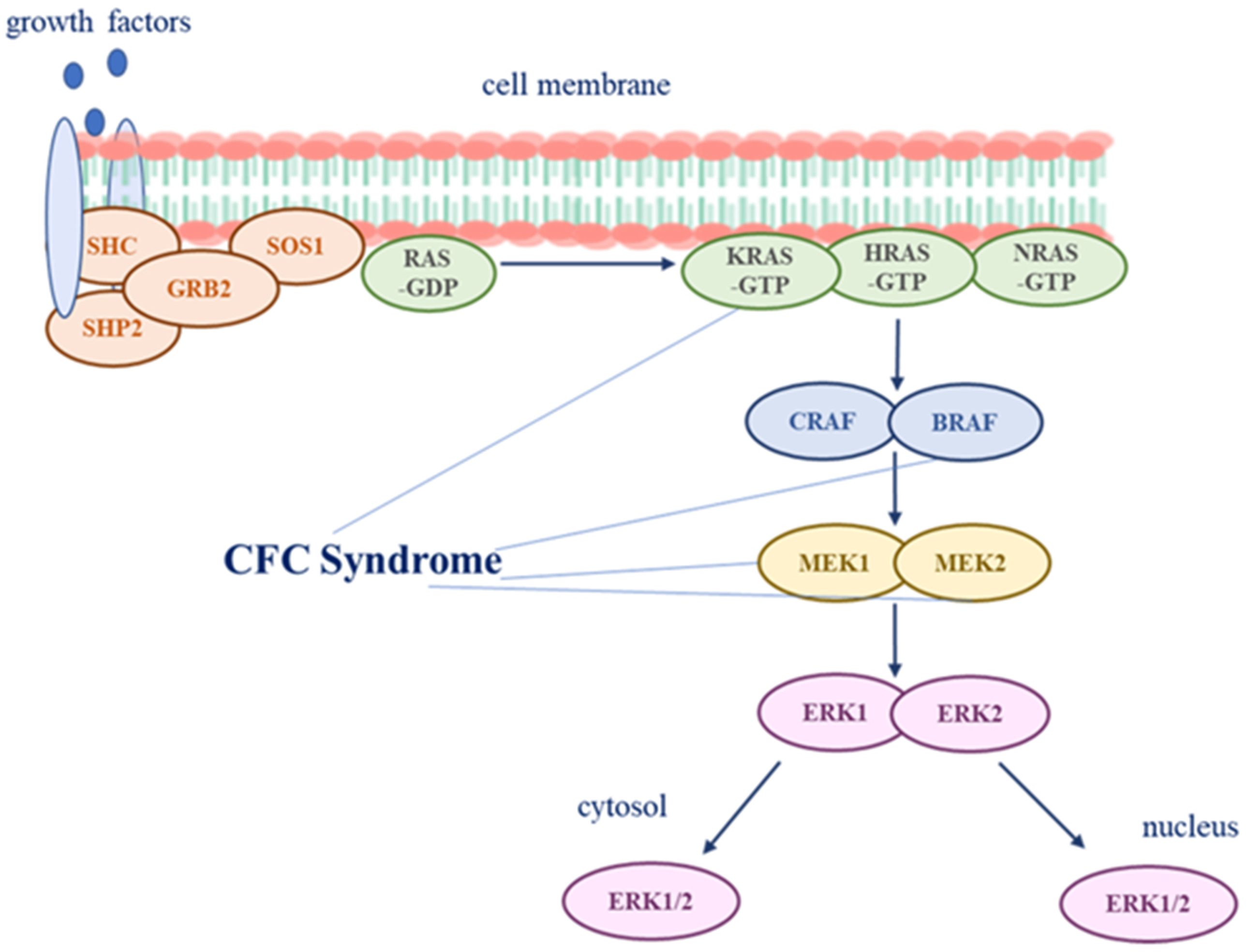
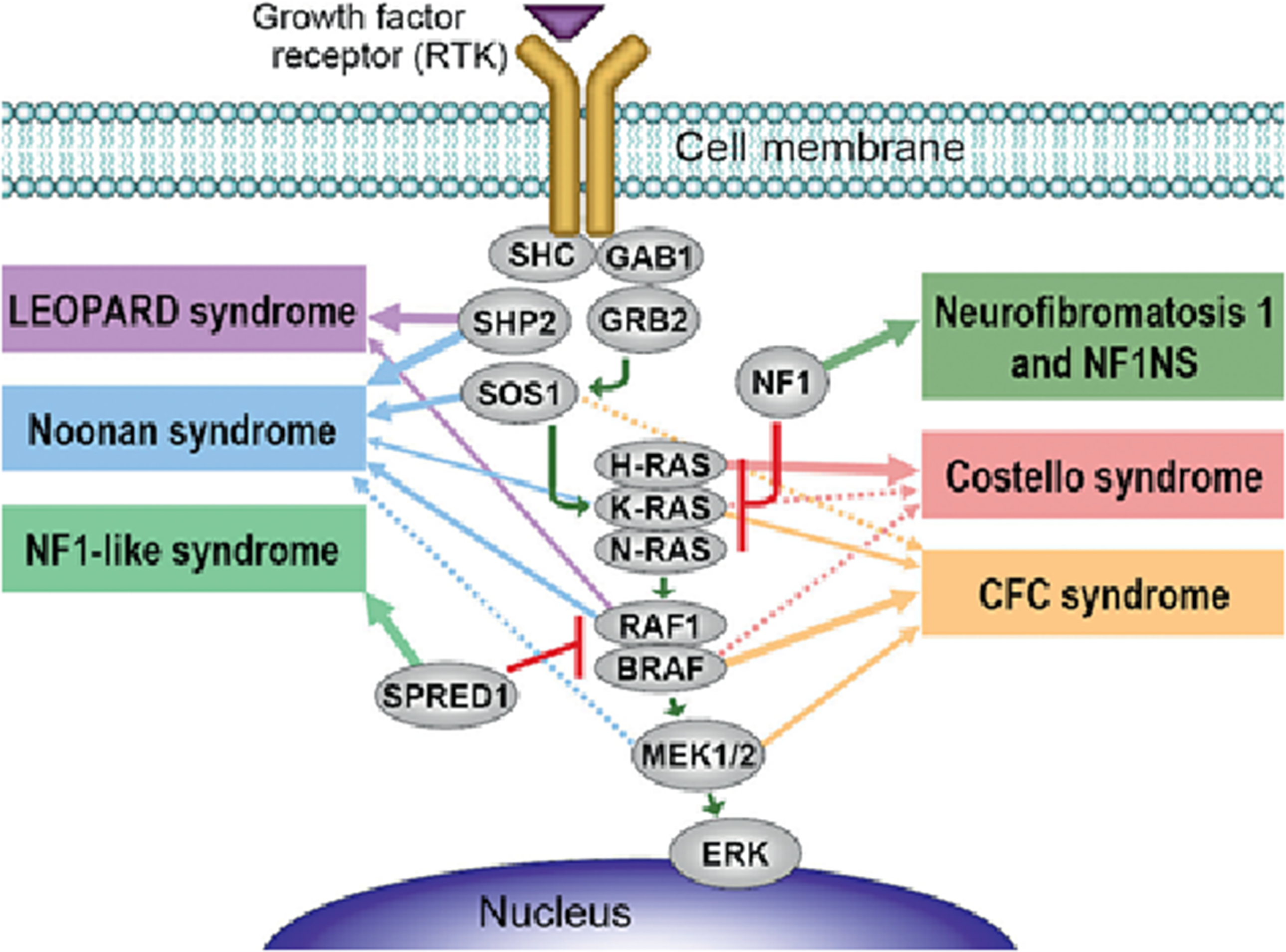
Cardio-facial-cutaneous syndrome is a rare disorder caused by mutations in the RAS/Mitogen-Activated Protein Kinase (MAPK) signalling pathway, which is crucial for cell growth and differentiation.Reference Rauen 3 The clinical presentation of cardio-facial-cutaneous syndrome commonly includes CHDs such as ventricular septal defect, pulmonary stenosis, and hypertrophic cardiomyopathy, along with characteristic facial features and dermatologic findings such as hypertrichosis and café-au-lait spots. Mitral valve prolapse is a common condition in the general population but has rarely been seen with cardio-facial-cutaneous syndrome. The finding of mitral valve prolapse in our patient suggests that cardio-facial-cutaneous syndrome may be associated with a broader spectrum of cardiovascular anomalies than previously recognised.Reference Shprintzen and Goldberg 4 Figure 1 specifically shows how cardio-facial-cutaneous syndrome affects the RAS/MAPK signalling pathway. Figure 2 shows various other disorders that are also affected by the RAS/MAPK signalling pathway, including Leopard Syndrome, Noonan Syndrome, Neurofibromatosis-1 Syndrome, and Costello Syndrome.Reference Zenker 5 While the patient’s mitral valve prolapse was mild and asymptomatic at the time of diagnosis, the potential for progression to more severe mitral regurgitation or other complications warrants ongoing cardiac monitoring. The molecular basis of cardio-facial-cutaneous syndrome, particularly the role of KRAS mutations, may be responsible for the development of mitral valve prolapse. The KRAS protein is involved in cellular signalling pathways that regulate cell growth, differentiation, and apoptosis.Reference Schubbert 6 Abnormalities in this pathway could lead to structural heart defects, as well as potentially contributing to valvular abnormalities such as mitral valve prolapse. Given the rare association between mitral valve prolapse and cardio-facial-cutaneous syndrome in this case, further studies are needed to investigate whether mitral valve prolapse is a recurrent finding in patients with cardio-facial-cutaneous syndrome and whether it has clinical implications for management.
Cardio-facial-cutaneous Syndrome specifically affecting the RAS/MAPK signaling pathway.

Various syndromes along with Cardio-facial-cutaneous Syndrome affecting the RAS/MAPK signaling pathway.

Management and follow-up
The patient’s management plan includes:
-
Cardiac follow-up: Ongoing monitoring with annual echocardiograms to monitor the progression of the mitral valve prolapse/mitral regurgitation and possible development of hypertrophic cardiomyopathy.
-
Developmental support: Continued early intervention for motor, speech, and occupational therapy to address developmental delays.
-
Genetic counselling: Family counselling to discuss recurrence risk for future pregnancies.
-
Dermatologic monitoring: Routine dermatologic evaluation to monitor for new or changing lesions, as patients with cardio-facial-cutaneous syndrome are at risk for skin abnormalities.
Conclusion
This case report highlights a rare cardiovascular finding of mitral valve prolapse in a patient with cardio-facial-cutaneous syndrome. While cardio-facial-cutaneous syndrome is known to be associated with a range of cardiac abnormalities, mitral valve prolapse is a rare association. The presence of mitral valve prolapse in this patient broadens the clinical spectrum of cardio-facial-cutaneous syndrome and emphasises the importance of thorough cardiac evaluation in these patients. Further research is needed to determine whether mitral valve prolapse is a common feature in cardio-facial-cutaneous syndrome and to understand its potential clinical significance.
Financial support
This research received no specific grant from any funding agency, commercial, or not-for-profit sectors.
Competing interests
None.

 Open access

