


Chronic widespread pain (CWP) is a prevalent musculoskeletal problem with surveys showing that up to 15% of adults report CWP at any time (Bergman et al., Reference Bergman, Herrstrom, Hogstrom, Petersson, Svensson and Jacobsson2001; Croft, Reference Croft2002; Croft et al., Reference Croft, Rigby, Boswell, Schollum and Silman1993; Macfarlane et al., Reference Macfarlane, Pye, Finn, Wu, Silman, Bartfai and Vanderschueren2009). Despite recent research efforts, the etiology underlying CWP remains largely unknown, although epidemiological studies have proposed an interplay of socio-demographic, psycho-affective, physiological, biological (e.g., inflammation, central sensitization), and genetic risk factors (Clauw & Crofford, Reference Clauw and Crofford2003; Kato et al., Reference Kato, Sullivan, Evengard and Pedersen2006a; Wade & Price, Reference Wade, Price, Gatchel and Weisberg2000; Wolfe et al., Reference Wolfe, Smythe, Yunus, Bennett, Bombardier, Goldenberg and Sheon1990).
In several pediatric studies, the importance of AS — describing the fear of anxiety sensations and their believed negative consequences — in the maintenance of chronic pain and disability has been reported (Mahrer et al., Reference Mahrer, Montaño and Gold2012; Ocanez et al., Reference Ocanez, McHugh and Otto2010). Prior studies of FM patients have further highlighted the elevated risk of psychiatric disorders, such as depression, post-traumatic stress disorder, and/or obsessive-compulsive disorder (Raphael et al., Reference Raphael, Janal, Nayak, Schwartz and Gallagher2006). Much work has also been done using a biopsychosocial approach concerning how personality traits impact an individual's reaction to and coping with CWP (for an extensive review, see Clauw & Crofford, Reference Clauw and Crofford2003). Many of the studies examining normal personality traits have focused specifically on extraversion and neuroticism (i.e., a fundamental personality trait that refers to the relatively stable tendencies to respond with negative emotions to threat, frustration, or loss), in part because neuroticism is commonly held to be a chronic condition of susceptibility to distress (Lahey, Reference Lahey2009; Ramirez et al., Reference Ramirez-Maestre, Lopez Martinez and Zarazaga2004). The prognosis for many chronic painful conditions such as CWP has also been found to be influenced by how patients cope with the condition and its consequences (Nater et al., Reference Nater, Wagner, Solomon, Jones, Unger, Papanicolaou and Reeves2006; Smith et al., Reference Smith, Strachan and Buchwald2009; Taylor et al., Reference Taylor, Kemeny, Reed, Bower and Gruenewald2000). In this context, coping refers to the emotional and behavioral response strategies to problems/stressors, such as avoidance or magnification. In another study conducted on 19,192 Swedish twins, the role of emotional instability as a premorbid predictor of CWP-related symptoms such as chronic fatigue has been investigated (Kato et al., Reference Kato, Sullivan, Evengård and Pedersen2006b). In their study, Kato and colleagues found emotional instability to be associated with chronic fatigue through genetic mechanisms contributing to both personality style and expression of the disorder. It is therefore likely that emotional regulation and its correlates (such as, for example, emotional intelligence) may be linked to CWP as well.
A growing body of evidence further indicates that interpersonal factors — that is, family and couple interaction — have an important impact on various dimensions of chronic pain, including pain characteristics, pain behavior, disability by pain, and distress by pain (Cano et al., Reference Cano, Barterian and Heller2008; Geisser et al., Reference Geisser, Cano and Leonard2005; Leonard et al., Reference Leonard, Cano and Johansen2006). The consideration of interpersonal factors seems to be especially important, as persons with chronic somatoform pain have more difficulties in their relationships than persons with chronic organic pain (Adler et al., Reference Adler, Zamboni, Hofer, Hemmeler, Hurny, Minder and Zlot1997).
However, most of the studies documenting psychosocial determinants of CWP are unable to rule out a genetic contribution, given the strong heritable nature of some of the known risk factors (e.g., depression and anxiety). Furthermore, even strong associations between a ‘predictor’ and CWP do not allow causal inference because such associations may result from confounding or even reverse causation. One approach — apart from longitudinal studies — to separate such cause and effect relationships, albeit imperfectly, as well as controlling for critical ‘third’ variables, is offered by the discordant MZ twin method (Dick et al., Reference Dick, Rose, Viken and Kaprio2000; Kaprio et al., Reference Kaprio, Buschsbaum, Gottesman, Bouchard and Propping1993). The design has proved useful in separating environmental influences upon a trait from any genetic confounders, as well as providing clues to direction of causality by overcoming some of the traditional limitations of conventional epidemiology.
Overall, predisposing psychosocial and interpersonal factors are of particular interest as they may represent premorbid risk or protective factors that relate to the development and/or maintenance of CWP. To our knowledge, however, no study of psychosocial factors in MZ twins discordant for CWP has been published. We therefore aimed to investigate whether the prevalence of CWP in discordant twin pairs is higher in MZ and DZ twins who were exposed to psychosocial and interpersonal risk factors suggested by previous research, compared to their unexposed co-twins.
Materials and Methods
Sample
Participants were a convenience sample of MZ and DZ female twins enlisted in the TwinsUK registry. The registry is a cohort of unselected volunteer Caucasian twins that started in 1993 (Spector & Williams, Reference Spector and Williams2006). Today, the database includes 11,000 twins aged 16–85 (mean age 48), with a ratio of MZ to DZ twins of approximately 50:50. The cohort consists of predominantly females (90%) and same-sex pairs, because initial research focused on diseases with higher prevalence in women than in men (e.g., osteoporosis and osteoarthritis). All volunteers in the registry were recruited through successive national media campaigns in the United Kingdom and Ireland, and from other twin registers, including the Aberdeen Twin registry and the Institute of Psychiatry Adult Registry. The representativeness and comparability of the female cohort in terms of behavior, lifestyle factors, and diseases has been demonstrated repeatedly (Andrews et al., Reference Andrews, Hart, Snieder, de Lange, Spector and MacGregor2001). Zygosity was confirmed by questionnaire (Eisen et al., Reference Eisen, Neuman, Goldberg, Rice and True1989) and genotyping (i.e., genome-wide association study; Von Wurmb-Schwark et al., Reference Von Wurmb-Schwark, Schwark, Christiansen, Lorenz and Oehmichen2004).
Due to the very small number of male twins with CWP and matching psychological phenotype data available, analyses were conducted on women only. Collection of socio-demographic, CWP and psychometric data was carried out during clinical visit or via a postal self-completion questionnaire that covered a range of topics and areas, therefore relying on convenience measures to assess the variables of interest. In the information sent together with the questionnaire, the voluntary and anonymous nature of the participation was explained. The twins were unaware of the precise research hypothesis addressed in the present study. In the end, CWP data was available on 3,266 women, comprising 753 full MZ pairs, 699 full DZ pairs, and 362 women whose co-twins did not participate (only included in the overall sample); 360 DZ and 226 MZ twins discordant for CWP could be identified and were used in the subsequent analyses.
The study was approved by the St Thomas’ Hospital research Ethics Committee and all twins provided informed consent.
Measures
Potential risk factors were selected based on previous literature and availability and included measures of demographics, coping strategies, AS, personality, emotional intelligence, relationship satisfaction, and obsessive-compulsive behavior.
Demographic Information
Socio-demographic information on all twins, including age, current marital status, and years of education were obtained — where possible — during clinical visit, or from self-reported questionnaires.
Chronic Widespread Pain
CWP was screened for using self-reported validated questions characterizing CWP. For this, the four items pertaining to the ‘pain subscale’ were drawn from the London fibromyalgia symptom screening questionnaire (White et al., Reference White, Harth, Speechley and Ostbye1999). The four items ask about pain left and right of the body and above and below the diaphragm lasting at least seven days in the previous three months. In order to classify as suffering from CWP, participants had to respond ‘yes’ to all four pain items with either a right- and left-side positive response or a both-sides positive response. The utility of this phenotype assessment is supported by the contribution these twins have made to previous studies, such as the genome-wide association meta-analysis conducted by Peters et al. (Reference Peters, Broer, Willemen, Eiriksdottir, Hocking and van Meurs2013).
Potential Psychological and Interpersonal Risk Factors
Data on anxiety were obtained from the 16-item self-report anxiety sensitivity index (ASI), designed to assess the construct of AS (Peterson & Reiss, Reference Peterson and Reiss1992). AS is defined as the fear of arousal-related sensations (e.g., fear of heart palpitations), arising from beliefs that these anxiety-related sensations have harmful consequences. Items are responded to on a 5-point Likert-type scale ranging from very little (0) to very much (4). The sum of all ASI responses yields the total ASI score. The psychometric properties and predictive validity of this widely used instrument have been well established, and a number of studies have provided replicated evidence that the ASI has adequate internal consistency (α = 0.81–0.94), a good degree of test/retest reliability (r = 0.71–0.75) and a high degree of inter-item relatedness (Peterson & Plehn, Reference Peterson, Plehn and Taylor1999). Cronbach's α in our study was 0.84.
Obsessive and compulsive behavior and related distress were assessed with the 42-item self-report obsessive-compulsive inventory (OCI; Foa et al., Reference Foa, Huppert, Kichic, Hajcak and Salkovskis2002). The questionnaire is divided into seven subscales. Response options range from never (0) to almost always (4). A total score can be calculated by adding the scores for all items. The OCI has shown excellent internal consistency (r = 0.93) and high test-retest reliability in an OCD sample (r = 0.84–0.87) and in non-patient controls (r = 0.80–0.89; Peterson & Plehn, Reference Peterson, Plehn and Taylor1999). Cronbach's α in our study was 0.82.
Information on active and avoidant coping strategies were collected using the brief version of the widely applied measure of coping styles and strategies (COPE) self-report questionnaire (Carver, Reference Carver1997). Ratings are made on a 4-point Likert-type scale, ranging from I usually don't do this at all (1) to I usually do this a lot (4). Studies exploring the psychometric properties of the questionnaire have found Cronbach's α ranging from 0.45 to 0.92, test-retest reliabilities ranging from 0.46 to 0.86 and strong evidence of discriminant and convergent validity, with constructs such as hardiness, optimism, control, and self-esteem (Muller & Spitz, Reference Muller and Spitz2003). Cronbach's α in our study was 0.76.
The 10-item personality index (TIPI) was used to gather information on the big five dimensions, including extroversion, agreeableness, conscientiousness, emotional stability, and openness to experiences (Gosling et al., Reference Gosling, Rentfrow and Swann2003). The instrument has been designed to measure very broad domains with only two items per dimension and by using items at both the positive and negative poles. Hence, the use of the TIPI is indicated mainly for situations where short measures are needed and personality is not the primary topic of interest. Response options are on a 7-point Likert scale ranging from disagree strongly (1) to agree strongly (7). Dimension scores are created by summing the two item values for the different dimensions. The instrument has shown adequate levels in terms of convergence with widely used multi-item big-five measures (e.g., BFI) in self-, observer and peer reports (mean of r = 0.77) and good test-retest reliability (r = 0.62–0.77; Hampson, Reference Hampson2005. Cronbach's α in our study was 0.61.
The trait emotional intelligence questionnaire-short form (TEIQue-SF) measures global trait emotional intelligence and is based on the long form of the TEIQue (Petrides & Furnham, Reference Petrides and Furnham2006). The 30-item questionnaire version is based on the long form of the TEIQue, which has been used in numerous studies to assess the emotion-related aspects of personality (Petrides & Furnham, Reference Petrides and Furnham2004). Factor analysis performed on the 15 subscales of the TEIQue has resulted in four interrelated factors: emotionality, self-control, sociability, and wellbeing. To ensure adequate internal consistencies and broad coverage of the sampling domain of the construct in the TEIQue-SF, two items from each of the 15 subscales of the TEIQue were selected for inclusion in the TEIQue-SF, based primarily on their correlations with the corresponding total subscale scores (Petrides & Furnham, Reference Petrides and Furnham2006). Items are responded to on a 7-point Likert scale ranging from completely disagree (1) to completely agree (7). A total emotional intelligence score can be derived by adding the point values for each item together. In a study of 167 subjects, the TEIQue-SF has been shown to have high levels of internal consistency (Cronbach's α > 0.80) and good construct validity (Petrides & Furnham, Reference Petrides and Furnham2004). Cronbach's α in our study was 0.88.
The childhood retrospective perfectionism (CHIRP) questionnaire is commonly applied to investigate premorbid traits suggestive of obsessive-compulsive personality (OCP; Southgate et al., Reference Southgate, Tchanturia, Collier and Treasure2008). The 20 questionnaire items retrospectively assess the presence of OCP-typical behaviors in childhood, including perfectionist tendencies, childhood caution, rule-bound behavior, rigidity, inflexibility, and need for order and symmetry. Questions are responded to on a yes/no dichotomous scale. The CHIRP total score can be derived by simply assigning a score of 1 to every yes response and then summing up the 20 items. The instrument has shown adequate reliability with moderate to high test-retest reliabilities ranging from 0.58 to 0.83 and good inter-rater reliability (r = 0.44–0.73; Southgate et al., Reference Southgate, Tchanturia, Collier and Treasure2008). Cronbach's α in our study was 0.79.
Relationship satisfaction was assessed with a single, study-specific question with response options ranging from very satisfied (1) to not satisfied at all (6).
Statistical Analyses
Data handling and all analyses were conducted using STATA (Version 1.01, 20010, StataCorp, College Station, TX, USA). All potential risk factors were handled as continuous variables, while CWP was a dichotomous trait. To achieve distributional normality, the CHIRP, ASI, OCI, and EI sums-cores were square-root transformed. Unpaired two-tailed t test was applied to assess mean difference in risk factors in MZ and DZ twins. Dichotomous and categorical data were expressed as percentages, and comparisons between the two zygosity groups were conducted using chi-squared test.
To maximize the control over potential confounding, three types of analyses were conducted, including: (1) individual-level associations reflecting potential confounding of exposure and outcome by additive genetic effects (A), shared environmental effects (C) and non-shared environmental effects (NSE); (2) within-pair analysis in discordant DZ twins to control for C effects and partially for the effects of A; and (3) within-pair analysis in discordant MZ twins to control for both C and A effects (Vitaro et al., Reference Vitaro, Brendgen and Arseneault2009). Simple logistic regression analyses were conducted to investigate the effects of previously reported risk factors on CWP. Significant variables were then entered into multiple logistic regression models as independent variables. A stepwise backward approach was used. This procedure was conducted for the individual-level analyses, and repeated for the two subsamples. For all analyses, a p-value less than 0.05 was considered statistically significant, unless stated otherwise. In the individual-level analyses, non-independence of twin pairs were accounted for by using the cluster function for familial relatedness, which is a form of conditional regression. Reported p-values have been corrected for multiple testing using the multproc function in STATA (i.e., Bonferroni correction).
The Discordant MZ-Twin Approach
The discordant MZ approach is a useful design to explore the environmental basis of individual differences in behavior. The design allows to test whether environmental factors (such as psychosocial factors in relation to CWP) are responsible for the presence of the condition in one twin compared to the co-twin who does not have the condition. As these factors are often assumed to be part of the ‘NSE’ component of variation often found in classical twin studies, this technique provides some indications as to which NSE factors are actually important (Dick et al., Reference Dick, Rose, Viken and Kaprio2000; Jinks & Fulker, Reference Jinks and Fulker1970; Kaprio et al., Reference Kaprio, Buschsbaum, Gottesman, Bouchard and Propping1993; Pike et al., Reference Pike, Reiss, Hetherington and Plomin1996). This approach overcomes many of the traditional limitations associated with conventional epidemiology because trait-discordant MZ twins are completely matched for genetics, age, sex, cohort effects, maternal influences, common environmental factors (those shared by siblings), and are closely matched for other environmental factors (such as early upbringing and lifestyle; (Dick et al., Reference Dick, Rose, Viken and Kaprio2000; Jinks & Fulker, Reference Jinks and Fulker1970; Kaprio et al., Reference Kaprio, Buschsbaum, Gottesman, Bouchard and Propping1993)). By controlling for genetic factors it further affords a powerful test of detecting disease-related etiological differences compared to studies of unrelated disease cases and controls with different life histories. Different strategies, albeit related analytically, exist to conduct discordant MZ-analysis. For an overview, see Asbury et al. (Reference Asbury, Dunn and Plomin2006) and Vitaro et al. (Reference Vitaro, Brendgen and Arseneault2009). In the present study, individual-level associations, as well as within-DZ and MZ pair analyses were conducted. Associations between outcome and predictor in all three cases would indicate a high probability that the proposed risk factor very likely causes CWP. Similar result patterns in both zygosities would indicate that the mechanism whereby the environmental factor affects CWP likelihood is likely due to unique environmental influences.
Results
CWP information was available on N = 3,266 women. Of these 3,266 women, 20.85% reported suffering from CWP (N = 681), with a significantly larger proportion of DZ twins reporting CWP symptoms compared to MZ twins (23.39% vs. 18.31%, χ 2 = 12.78, p < .001; Table 1). The two zygosity groups further differed significantly in age and education, with MZ twins being slightly younger and reporting more years of education (t = 4.42 and 3.45, respectively, both p < .001; Table 1). In terms of potential risk factors for CWP, significant differences between the MZ and DZ twins could be detected for the personality traits of conscientiousness and agreeableness, with MZ being more agreeable and DZ more conscientious (t = 2.63, p = .040 and t = -3.30, p = .009, respectively).
Sample Characteristics of Overall Sample and By Zygosity
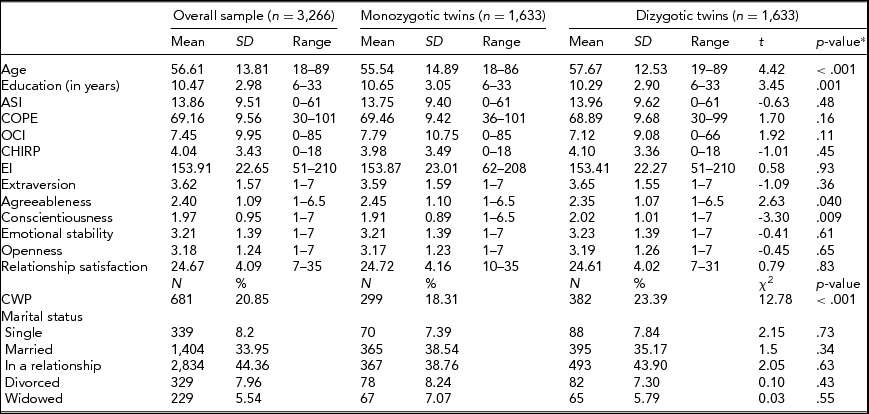
ASI = anxiety sensitivity index; COPE = measure of coping styles and strategies; OCI = obsessive-compulsive inventory; CHIRP = childhood retrospective perfectionism questionnaire; EI = emotional intelligence; CWP = chronic widespread pain. *Bonferroni corrected.
Individual-Level Analyses
Regression analyses on the full sample revealed significant associations between CWP and all psychological risk factors, except for coping style, openness to new experiences, agreeableness and relationship satisfaction (Table 2). When entering the significant variables into the multivariate model using a stepwise backward approach, only AS, emotional intelligence and age turned out to be independent predictors of CWP, with higher age, higher levels of AS, and lower emotional intelligence being significantly associated with CWP (p < .0001 for all). The influence of the other effects detected in the univariate logistic regression (education, obsessive compulsion as adult and child, extraversion, conscientiousness, and emotional stability) were accounted for inclusion of AS, emotional intelligence and age.
Individual-Level Simple and Multiple Logistic Regression Analyses (N = 3,266) of Previously Reported Risk Factors and CWP
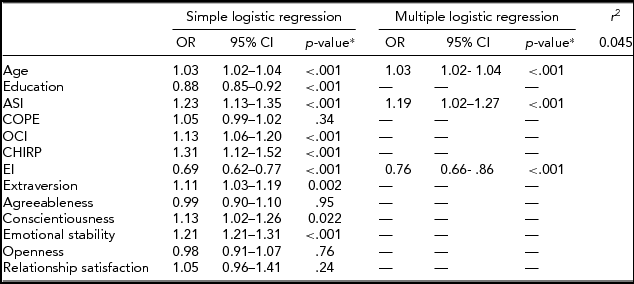
Familial relatedness was taken into account by using the cluster function, which is a type of conditional regression. ASI = anxiety sensitivity index; COPE = Measure of Coping Styles and Strategies; OCI = obsessive compulsive inventory; CHIRP = childhood retrospective perfectionism Questionnaire; EI = emotional intelligence; CWP = chronic widespread pain. *Bonferroni corrected.
CWP Discordant DZ Twins
To explore the nature of the associations between potential risk factors and CWP, analyses were extended to n = 360 CWP discordant DZ twins to account for the effects of C and partially for the effects of A (Table 3). Again, emotional intelligence turned out to be the strongest predictor, although the association did not reach statistical significance (OR = 0.77, 95% CI 0.58–1.01, p = .690) with effect size comparable to the individual-level analysis. None of the other investigated variables showed a significant link with CWP in the DZ twins.
Risk Factors for CWP in a Subsample of Discordant DZ Twins (180 Pairs): Results From Simple Logistic Regression Analysis
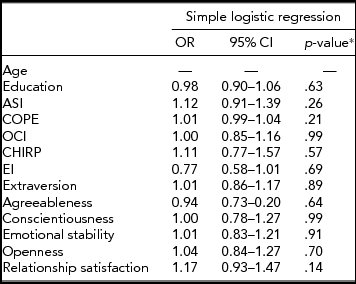
Familial relatedness was taken into account by using the cluster function, which is a type of conditional regression. ASI = anxiety sensitivity index; COPE = measure of coping styles and strategies; OCI = obsessive compulsive inventory; CHIRP = childhood retrospective perfectionism questionnaire; EI = emotional intelligence; CWP = chronic widespread pain. * Bonferroni corrected.
CWP Discordant MZ Twins
To account for possible confounding of exposure and outcome, regression analyses were extended to a subsample of n = 226 discordant MZ twins, to control for the effects of C and A. In contrast to the individual-level analyses, only one significant predictor could be detected (Table 4). Lower emotional intelligence was associated with a greater risk for reporting CWP symptoms (OR = 0.69, 95% CI 0.49–0.97, p = .031), with the effect size being slightly bigger in this subsample of women. The effect of AS detected in the individual-level analyses were not seen in the MZ discordant twin sample (OR = 1.12, 95% CI 0.91–0.1.39, p = .26).
Risk Factors in a Subsample of MZ Twins Discordant for CWP (113 pairs): Results from Simple and Multiple Logistic Regression Analyses
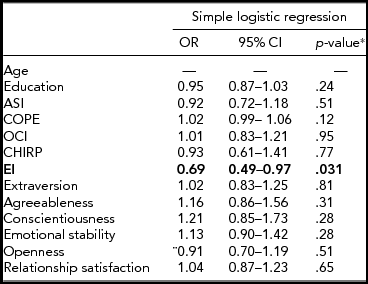
Familial relatedness was taken into account by using the cluster function, which is a type of conditional regression. ASI = anxiety sensitivity index; COPE = measure of coping styles and strategies; OCI = obsessive compulsive inventory; CHIRP = childhood retrospective perfectionism questionnaire; EI = emotional intelligence; CWP = chronic widespread pain. *Bonferroni corrected. Statistically significant risk factors are highlighted in bold.
Discussion
The aim of the present study was to investigate a set of potential psychosocial and interpersonal risk factors for CWP by using a discordant-twin design that allows to fully evaluate the genetic confounding. The results show that once genetic factors have been controlled for, emotional intelligence had the most significant effect on CWP, with significant associations not only at the individual level but also within MZ twin pairs discordant for CWP. This association turned out to be the strongest association in DZ twins as well, although it did not reach conventional statistical significance level.
Many of the previous studies investigating how emotions and emotional processing influence the experience of pain have focused on the role of negative affect and how this can lead to heightened perception of pain intensity, not only in situations of clinical pain, but also in experimentally induced pain (Bishop et al., Reference Bishop, Craggs, Horn, Robinson and George2010; International Association for the Study of Pain, 1995; Fernandez & Milburn, Reference Fernandez and Milburn1994; Melzack & Wall, Reference Melzack and Wall1965). Evidence highlighting the importance of an individual's ability to process and manage emotional states and how this affects pain perception has been offered by two recent studies, both conducted by Ruiz-Aranda and colleagues (Ruiz-Aranda et al., Reference Ruiz-Aranda, Salguero and Fernandez-Berrocal2010; Reference Ruiz-Aranda, Salguero and Fernández-Berrocal2011). They have used a cold-pressor experimental paradigm to analyze differences in pain perception as a function of emotional regulation. In a study on N = 28, the authors found that women with a high score in emotional regulation reported having experienced less sensory pain and affective pain during the immersion, as well as a more positive affective state before beginning the task (Ruiz-Aranda et al., Reference Ruiz-Aranda, Salguero and Fernandez-Berrocal2010). In another study by the same research group on N = 67 college students, higher emotional intelligence was related to less intense pain ratings (Ruiz-Aranda et al., Reference Ruiz-Aranda, Salguero and Fernández-Berrocal2011). Both studies, however, focused on the influence of emotional intelligence in the perception of acute pain and neither explored emotional intelligence as a stable trait in the development of chronic pain.
The construct of emotional intelligence was first introduced by Salovey and Mayer (Reference Salovey and Mayer1990), who derived it from the broader construct of social intelligence. In today's literature, emotional intelligence is commonly defined as ‘the ability to perceive, appraise, and express emotions accurately; the ability to access and generate feelings when they facilitate cognition; the ability to understand affect-laden information and make use of emotional knowledge; and the ability to regulate emotions to promote growth and well-being’ (Mayer et al., Reference Mayer, Roberts and Barsade2008). Research on emotional intelligence suggests that people differ in how they experience emotions, how able they are to differentiate between such emotions, and how much emotional information they can utilize and process, intrapersonally and also interpersonally (Winter & Kuiper, Reference Winter and Kuiper1997). Furthermore, it has been shown that people with higher emotional intelligence report fewer psychological problems such as stress and distress, manifest fewer physical symptoms, and report less illness (Extremera & Fernandez-Berrocal, Reference Extremera and Fernandez-Berrocal2006).
The construct of emotional intelligence becomes relevant in CWP research when considering the vast evidence highlighting the importance of emotional processing in subjective pain perception and communication (de Wied & Verbaten, Reference de Wied and Verbaten2001; Villemure et al., Reference Villemure, Slotnick and Bushnell2003). In their studies, Ruiz-Aranda and colleagues reported that high levels of emotional intelligence reduce perceived pain intensity by decreasing negative affect through the ability to process the affective information. This is in line with our findings, which link lower emotional intelligence with a higher prevalence of CWP. It seems that similar affective abilities are beneficial for efficient management, not only of acute painful stimuli, but also chronic musculoskeletal pain. Given our strong design and its maximized internal validity, our findings therefore extend previous literature by suggesting a significant link between low emotional intelligence and CWP. These findings, if replicated, suggest a way in which patients with CWP might be stratified in future clinical intervention trials.
Of the variables showing significant links with CWP in the univariate individual-level analyses, including age, education, AS, obsessive-compulsive behavior, emotional intelligence, as well as the personality domains of extraversion, conscientiousness, and emotional stability; only age, AS, and emotional intelligence turned out to be independently associated with CWP. The association with AS, however, could not be observed in CWP-discordant DZ or MZ twins. Similarly, none of the identified personality traits associated with CWP in the full sample could be replicated in the subsamples of DZ or MZ twins discordant for CWP.
The failure to observe an association within discordant MZ and DZ twin pairs might be due to low statistical power. However, it is equally possible that the observed association of psychological and personality factors with CWP is attributable to genetic or shared environmental effects rather than true causality. Thus, the results of the individual-level associations could reflect confounding by gene-environment correlation. It has been suggested that associations in singleton studies may be inflated, as they do not control for the possible effect of genes on the environmental variables (i.e., gene-environment correlations) and on the outcome variables (Plomin et al., Reference Plomin, DeFries and Loehlin1977). However, in relation to the discordant MZ approach, it should be noted that even extra-familial experiences may be, at least in part, under genetic influence and might be susceptible to the risk of genetic overmatching (Plomin et al., Reference Plomin, DeFries and Loehlin1977). Given that AS and personality show heritabilities of up to 50% (Jang et al., Reference Jang, Wesley and Vernon1996; Stein et al., Reference Stein, Jang and Livesley1999), this might explain why they were not significantly contributory to CWP in our co-twin control analyses.
Limitations
As with every research and design, there are several limitations that need to be considered. Although the discordant MZ twin design provides the basis for a more powerful test of causality in a natural observational setting compared to other epidemiologic studies, the design does not guarantee certain causal inference, nor does it rule out reverse causation. Even if it addresses issues related to confounding, it is still possible that differences in CWP lead to differences in emotional intelligence. To overcome this limitation, longitudinal designs would be needed. Moreover, measurement error might have been present. Such measurement errors could attenuate the within-pair estimates compared to the individual-level estimates, given that both DZ and MZ pairs share 50% and 100% of their genes, respectively. Such attenuation would even be greater for MZ than DZ twins, since MZ twin correlations are typically higher than DZ twin correlations — especially for variables that show a considerable genetic influence. In other words, measurement errors and covariates that have not been controlled for could artificially inflate the strength of associations in MZ compared to DZ twins. While using both members of an MZ twin pair allowed us to control for both genetic and common environmental contributions, there may be other non-measured variables that differ between two members of a MZ twin pair that act as confounders (Turkheimer & Waldron, Reference Turkheimer and Waldron2000). The regression results also need to be interpreted with caution as the individual-level analyses relied on a bigger sample compared to the discordant MZ and DZ analyses. These differences in sample size and hence statistical power might also contribute to the fact that more significant findings (although effect sizes tended to be quite small) were obtained in the entire sample. Ideally, larger MZ and DZ samples are needed to address this issue. Also, the comparability of DZ and MZ subsamples needs to be highlighted. Though for most study variables the two zygosity groups did not differ significantly, statistically significant differences could be detected for age, years of education, levels of conscientiousness and agreeableness, and CWP prevalence. In other words, comparability of the samples may be limited, which could have led to bias in the results and should be considered when interpreting the regression results. Finally, attention also needs to be brought to the quality of the CWP data. CWP was screened for by self-reported pain symptoms characterizing CWP, using the four pain items from the validated London fibromyalgia symptom screening questionnaire (White et al., Reference White, Harth, Speechley and Ostbye1999). Controls were those not fulfilling criteria for CWP, although some may have more limited chronic musculoskeletal pain or other chronic pain syndromes, which would have served to reduce the power to detect a difference between cases and controls. Although the use and accuracy of this phenotype assessment is supported by previous studies, future studies should ideally use a more extensive assessment measure. The operationalization validity of the single item assessing ‘relationship satisfaction’ might be questioned — however, previous studies have shown that this single item correlates high with the overall score of the Relationship Assessment Scale — a generic 7-item questionnaire frequently used to assess relationship satisfaction (Hendrick et al., Reference Hendrick, Dicke and Hendrick1998). Similarly, due to the unavailability of the data and because convenience measures were used, anxiety and depression, as well as medication intake and its possible effects could not be assessed and controlled for in this current study.
In conclusion, this is one of the first studies to investigate known psychological risk factors for CWP. We have found evidence for an association of emotional regulation and processing with CWP. It seems that the effects of psycho-affective risk factors such as AS and personality are mediated by other factors as a result of gene-environment correlation. Assessment of emotional competence may help to identify women at risk of developing CWP. Further research is needed to be able to understand the causal mechanisms and enhance optimal treatment options for CWP patients.
Acknowledgments
AB reports an Ambizione personal career fellowship by the Swiss National Science Foundation. FW has support from the Pain Research Foundation. TwinsUK: the study was funded by the Wellcome Trust; European Community's Seventh Framework Programme (FP7/2007–2013). The study also receives support from the National Institute for Health Research (NIHR)-funded BioResource, Clinical Research Facility and Biomedical Research Centre based at Guy's and St Thomas’ NHS Foundation Trust in partnership with King's College London.



