



INTRODUCTION
Hand, foot and mouth disease (HFMD) is a common infectious disease in children aged <5 years. The main clinical manifestations are fever, sore throat, mouth ulcers, rash or small vesicles on the hands, feet and mouth. HFMD is caused by a group of non-polio enteroviruses, particularly those belonging to the human enterovirus species A. The most common pathogens are coxsackievirus A16 (CV-A16) and enterovirus 71 (EV-A71).
Transmission of HFMD is from person to person by direct contact with respiratory droplets, faeces, blister fluid or through contact with a contaminated environment [Reference Ishimaru1–Reference Gilbert3]. Intra-home [Reference Chang4, Reference Goh5] and kindergarten [Reference Chang4, Reference Brown and O'Leary6–8] transmissions in preschool children have been well documented, leading to the policy of preschool closure and disinfection of toys, utensils and table surfaces for outbreak control [Reference Ma9–Reference Kim11]. However, around 65–80% of HFMD cases are non-preschool attendees [Reference Deng12, Reference Liu13]. Implementation of screening for fever and rash before children enter preschool grounds was launched in China during 2008–2012, yet the epidemics were still not well controlled. There is a need to study the transmission outside preschools.
Exposure to a public place [Reference Ruan14], visiting a hospital, eating out and shopping [Reference Park15] were reported risk factors for HFMD. Adult hand washing, is also associated with risk reduction of HFMD in children [Reference Ruan14, Reference Xu, Gao and Zhang16]. However, the magnitude of the contribution of adults exposed to HFMD in a community or at work who infect their children with the disease (indirect contact) is unknown. Most previous studies failed to report the attributable fraction, making it difficult to emphasize important measures for control in the population.
Guangxi is located in southern China and is one of the provinces with the largest epidemic of HFMD, having an incidence rate of 449·1/100 000 population and 117 fatalities in 2012. The epidemic season of HFMD in Guangxi is from April to July [Reference Wu, Fu and Deng17]. This study was conducted during the 2013 epidemic, with the aim of exploring the role of public playgrounds visited by children on the transmission of HFMD in addition to direct and indirect exposure to HFMD patients and personal hygiene.
METHODS
Study area
The study was conducted in Binyang County, Guangxi, which had a population of 785 977 in 2012. There are 2114 communities/natural villages in Binyang County, which include both urban areas and rural communities. From the surveillance data, the annual incidence rate of HFMD from 2008 to 2012 was 419/100 000 population. There are three county-level hospitals in Binyang, two (the People's Hospital of Binyang County and the Ninth People's Hospital of Nanning City) are designated hospitals for HFMD where all suspected cases are referred.
Study design
A matched case-control study with 1:1 ratio was chosen. Cases were identified from two designated hospitals and controls were recruited from healthy children in the same community/natural villages as the cases. Comparison of contact history and exposure to HFMD was investigated in family members, preschools and 20 nearest neighbouring houses of the cases and controls.
Case recruitment
Cases were recruited from the HFMD clinics. During the study period, two researchers waited at the clinic, where patients with HFMD diagnosed by clinicians were immediately approached for consent to join the study. Those agreeing to join were examined by the researchers for fever, rash with blisters on the palms, soles, buttocks or mouth ulcers, using a checklist. Only patients having at least two typical symptoms were included in the study. Other criteria for eligibility included: (1) being a resident of Binyang County for at least 6 months; (2) aged ⩽5 years. Those without a positive laboratory confirmation were excluded later. If there was more than one case in a household within the same outbreak, only the case first encountered in the hospital was included so that all cases in the study were relatively independent from each other.
Control selection
In order to ensure that the control came from the population at risk who did not develop the disease, the computerized database of vaccine immunization system from Binyang CDC was used. The system contains demographic information of all children. Based on the database, to ensure a balance in gender and age between cases and controls, we randomly selected a control with the same age (± 6 months) and gender, but not living in the same neighbourhood to avoid having the same exposure. After telephone explanation and appointment, exposure status of the control was assessed within 24 h after the case was recruited. Exclusion criteria for the control included: (1) having a rash on any part of the body at the time of interview; (2) prior participation in an EV-A71 vaccine clinical trial; (3) prior diagnoses of HFMD or herpangina; (4) having immunodeficiency or congenital heart disease; (5) diagnosed with measles, rubella or chickenpox at the time of interview.
Sample size
Based on the formula of sample size calculation for a matched case-control study [Reference Parker and Bregman18], and assuming that 27% of cases had contact history with a HFMD patient, in order to detect a threefold increase in the odds of the children who have a contact history with HFMD [Reference Chang4], 91 cases and 91 controls were required. Assuming that 35% of cases had exposure to public places, in order to detect a twofold increase in the odds of the children who were exposed to public places [Reference Ruan14] the sample size for both cases and controls was 117. As all clinical diagnosis cases had to be laboratory confirmed and the expected positive rate was 70%, the total sample size was increased to 334.
Operational definitions
Direct contact was defined as the study subject (case or control) having body contact (e.g. hugging or shaking hands) or close contact (sharing toys, playing in the same playground, or staying in the same room including a classroom for more than 1 h) with a preceding HFMD case. If the subject's family member/caregiver at home or at preschool ever had body contact or close contact with a preceding case, the subject would be defined as having indirect contact. Being classified as having direct and indirect contact was not mutually exclusive.
Contact period of interest (both direct and indirect) was the 2–7 days before onset of disease for cases, and 2–7 days before interview for controls.
Neighbourhood was confined to the 20 nearest neighbouring houses or a radius of 200 m from the study subject's home (if the number of neighbouring houses was <20).
Public playground was defined as a public area where parents bring their children to play, including parks, children's play areas in department stores, rural grocery stores, public squares or other meeting places.
Data collection
Recruitment of consecutive cases and controls began on 21 March until the required sample size was achieved on 10 July 2013. Data were collected by face-to-face structured interviews of the study subjects' parents/guardian, their family members, caregivers at their preschools and 20 nearest neighbouring houses. The case and control were investigated in the same fashion. Variables included demographic information, contact history, personal habits of the study subjects and detailed contact history with HFMD cases of their family members. We used three scales, i.e. ‘seldom’, ‘often’ and ‘always’ to measure personal habits, which is the classification used consistently by researchers. Within the 20 nearest neighbouring houses, we collected the number of children aged ⩽5 years and the number of children diagnosed with HFMD 2–7 days before onset/interview from each household. We also collected general information, HFMD situation and contact history of each staff member in the preschools that the subjects attended.
The questionnaires and the throat and rectal swabs of cases were collected at the HFMD clinics after informed consent was obtained. An appointment for a home visit (within 2 days) was also made at the same time. Each control was followed up 7 days after being recruited to avoid misclassification. If the control was diagnosed with HFMD during this follow-up period, both the case and control would be excluded from the analysis.
Laboratory test method
The throat and rectal swabs were tested for enteroviruses using reverse transcriptase–polymerase chain reaction (RT–PCR). The reporting of pathogen results divided enteroviruses into three groups: EV-A71, CV-A16 and others. The procedure for laboratory testing followed the recommended protocol [19].
Data analysis
Data was analysed with R v. 3.0.1 (R Foundation, Austria) using the epicalc and survey packages. For univariate analysis, conditional odds ratios (ORs) and 95% confidence intervals (CIs) were provided with P value test using McNemar's χ 2 test. Proportion trend tests were used to explore the differences in personal habits and the exposure in public playgrounds. If the status of all the study subjects' neighbouring or preschool children were simply cross-tabulated against the status of the study subjects, there would be multiple records for each subject and the level of precision for association would be over-emphasized. Using survey analysis [Reference Scott20] with identification number of the study subject being the primary unit of analysis, Rao & Scott ORs (adjusting for multiple tests on the same subject) were obtained instead of simple ORs where the neighbour's effect on clustering over the same subject would be ignored. In multivariate conditional logistic regression, which adjusts for possible confounding factors, in order to reduce the complexity of analysis the exposure status of the subject to his/her neighbour's status was dichotomized. The potential risk factors from univariate analysis with P < 0·1 were selected for inclusion in the multivariate conditional logistic regression models. The significance level for regression was set at <0·05. The ORs in the study were based on concurrent sampling process. Thus, it can be used to estimate the rate ratio.
The attributable fraction was used to measure the impact of the main exposure. Assuming HFMD is a rare disease and the controls represented the ⩽5 years old population, the formula [Reference Bruzzi21] for estimating the population attributable fraction for multiple risk factors is:
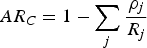 $$A{R_C} = 1 - \sum\limits_j {\displaystyle{{{\rho _j}} \over {{R_j}}}} $$
where AR C is the attributable fraction, ρ j is the proportion of all cases that are in stratum j, while R j is the adjusted OR in stratum j. The total AR T can be calculated from the formula AR T = 1 − π(1−AR J).
Ethical considerations
This study was approved by the Ethics Committee of the Faculty of Medicine, Prince of Songkla University and the Ethical Committee of Guangxi, China. Informed consent was obtained from the parents/guardians of all study subjects' and all the other study participants.
RESULTS
HFMD situation in Guangxi from 1 January to 10 July 2013
There were 93 614 HFMD cases with seven fatalities notified in Guangxi from 1 January to 10 July 2013. The incidence rate was 201·5/100 000 population. The male:female incidence ratio was 1·41:1. Over 95% of cases were aged ⩽5 years of which preschool children accounted for 17·4%. A total of 967 cases were laboratory confirmed, the pathogens were identified as CV-A16 (25·8%, 250/967), EV-A71 (13·6%, 131/967) and other enteroviruses (60·6%, 586/967).
Case-control study findings
A total of 158 cases and 158 controls were recruited from 21 March to 10 July. Because one case tested negative for enteroviruses and one control developed HFMD during follow-up, two sets of children were excluded from analysis. Thus 156 cases and 156 controls were included in the analysis.
CV-A16, EV-A71 and other enteroviruses were exclusively found in 57 (36·5%), two (1·3%) and 97 (62·2%) cases, respectively. The main manifestations were fever (123, 78·6%), rash with blisters on palms (152, 97·4%), soles (152, 97·4%), buttocks (95, 60·9%) and herpangina (135, 86·5%). Fever was more common in the other enterovirus infection compared to CV-A16 (OR 3·23, 95% CI 1·34–7·86), but there was no significant difference in other manifestations.
Of the cases, 630 family members, 3089 neighbouring houses and 175 staff from 29 preschools were investigated. The corresponding numbers for the controls were 620, 3102, 78 and 19, respectively.
Univariate analysis results
Univariate analysis results are summarized in Table 1. Compared to controls, cases were more likely to attend preschool, suck fingers and toys, less likely to wash their hands with soap, and preferred to visit public playgrounds and other places. Cases were also more likely to live with another HFMD case in the same house, share the same classroom at school, live near another HMFD case and live with a family member who had ever contacted a HFMD case within 2–7 days of onset. Of the significant risk factors, the proportion of cases exposed to public playgrounds was the highest. Around 69% of cases visited a public playground at least once a week and as many as 45% had ⩾8 visits per week. The average time spent by those who visited a public playground was 59·1 min (s.d. = 39·4) per visit. Regular hand washing with soap both before meals and after playing had a protective effect.
Univariate analysis of HFMD risk factors in Binyang County, Guangxi,China

OR, Odds ratio; CI, confidence interval; s.d., standard deviation.
* The analysis included those who attended kindergarten only.
† Proportion trend test.
‡ Other places included visited other villages, relative's house, playing in the street or market, etc.
§ Rao & Scott adjustment OR by using survey analysis, as subject either case or control acted as a cluster of member of the neighbourhood or kindergarten.
A large majority of both cases and controls had no contact history at all. We therefore performed a subset analysis on those subjects without a contact history. Minor differences in results were observed and there were no changes in statistical significance of the exposure variables.
Multivariate conditional logistic regression results
Independent variables with a P value of <0·1 from the univariate analysis and our main hypothesis variables were included in the initial multivariate conditional logistic regression model with each variable being dichotomized to initially screen for confounders. The number of subjects with indirect contact was small (n = 18) and none of the controls had only indirect contact. Therefore in multivariate analysis, both direct and indirect contact were not included in the model.
The results are summarized in Table 2. Finger sucking, hand washing before meals, exposure to public playgrounds, having HFMD in the 20 nearest neighbours and in the same class were still associated with HFMD infection after adjusting for the other factors, while preschool attendance, toy sucking and visiting other places became non-significant. To clarify that visiting playgrounds was independent from visiting other places, both variables were put into the model. There was no significant interaction between finger sucking and hand washing. Living near other HFMD cases (OR 14·19, 95% CI 3·55–56·74) and sharing the same classroom at school (OR 11·72, 95% CI 1·26–109·42) posed a higher risk of being a case compared to visiting public playgrounds (OR 6·03, 95% CI 2·84–12·8).
Multivariate conditional logistic regression for HFMD risk factors in Binyang County, Guangxi, China

OR, Odds ratio; CI, confidence interval.
* Prevented fraction.
† Attributable fraction.
‡ Excluding visiting other place.
Given that a proportion of cases exposed to playgrounds was much higher than for those living near other cases and sharing the same classroom at school, the adjusted attributable fraction of using public playgrounds turned out to be 57·2% compared to 20·9% and 6·4% in the other two strong risk factors. The adjusted attributable fraction of finger sucking was 27·5%. On the other hand, hand washing after playing was excluded from the model. Regular hand washing with soap before meals was a protective factor (OR 0·29, 95% CI 0·11–0·78) and the prevented fraction in the population was 18·7%.
We further investigated a dose–response relationship between our main variables of interest and outcome by fitting a logistic regression model with each of the variables of interest changed to the ordinal level of exposure, one at a time, while keeping other variables the same. Results are shown in Table 3. Based on the P value for linear trend, the relationship between these variables and the risk of HFMD were all significant in a dose–response fashion.
Dose–response relationship between four exposure variables related to public playgrounds and developing HFMD in Binyang County, Guangxi, China

OR, Odds ratio; CI, confidence interval.
* Adjusted for the exposure variables shown in Table 2.
DISCUSSION
As expected, having contact with a symptomatic case at home, at school and in the nearby neighbourhood were strong risk factors for HFMD. However, these exposures were not common among cases, and thus contributed relatively little to the disease epidemic. On the other hand, weaker but significant risk factors, i.e. visiting a public playground and finger sucking were very common and contributed to a high proportion of cases. Hand washing with soap before meals protected 18·7% of cases in the population.
Contact with a case was associated with increased risk of HFMD. Other studies confirm this finding, although the risk was not as high as the one found in our study [Reference Chang4, Reference Park15, Reference Guo, Zhang and Yang22]. Intra-home and neighbourhood contact was found to have a significant association with HFMD but with low attributable fraction. More than 80% of cases in our study were from non-preschool attendance children. Moreover, given that there were strict measures taken by preschools for reducing transmission, such as preschool closure, screening at the entrance gate, the transmission mainly occurred in the community rather than preschools.
The most interesting finding was that exposure to public playgrounds had the highest attributable fraction with a dose–response relationship to HFMD. Compared to preschools, which were only attended by 16% of the study subjects, public playgrounds were visited by almost half of the children in our study. The most contagious period of HFMD is the 7 days starting from just before symptom onset, but the virus can persist in throat secretions for 1–3 weeks and can be excreted in the stool for 2–3 months [23–Reference Li25]. The climate of Guangxi is warm and humid [26], conditions favourable for lengthy virus survival in the environment [Reference Onozuka and Hashizume27–Reference Bosch, Pinto, Abad and Goyal31]. Infective children who attend public playgrounds can shed the virus particles into the environment, which further infect subsequent susceptible visitors.
Our study demonstrated that regular hand washing with soap before meals was protective against HFMD, while seldom hand washing or washing without soap was not. Soap may help to remove dirt which may contain viral particles. In addition to the possible chemical effect of soap on the virus, using soap also increases the time and thoroughness of hand washing because of the extra time needed to rinse the soap off [Reference Savolainen-Kopra32, Reference Ejemot33]. Casual hand washing is not sufficient to get rid of the organism, a fact which has been observed from studies of food poisoning and diarrhoea [Reference Curtis and Cairncross34, Reference Toshima35]. One study has demonstrated that health education with emphasis on hand washing has a strong preventive effect on HFMD, with a dose–response relationship between hand washing score and risk of getting HFMD [Reference Ruan14]. Our data showed that hand washing with soap before meals by children was more effective than after playing. This may relate to the fact that children have more opportunity to put their dirty hands into mouth during meal times. The population prevented fraction of hand washing before meals was only 18·7% in this study mainly because the prevalence in both cases and controls was low. Had this habit been advocated, the number of cases could have been reduced substantially.
Finger sucking was a strong independent risk factor in our study and is supported by a previous study in Tianjin [Reference Xu, Gao and Zhang16]. The association between finger sucking and HFMD was weaker than the other risk factors but it had a relatively high attributable fraction. Finger sucking is common in younger children [Reference Farsi and Salama36] and the average age for spontaneous cessation of this behavior is 3·8 years [Reference Fukuta37]. The mean age of our study subjects was 2 years, which could explain the high attributable fraction observed in our study.
Despite careful selection of comparable controls for the cases and extensive visits and data collection from households, neighbourhoods and preschools of both cases and controls, this study is still limited by inherent information bias, especially recall bias. Moreover, most of the cases in this study had relatively mild symptoms. Generalization of the findings to more serious cases, which cause the real disease burden in the population, should be made with caution.
CONCLUSION
The repeated evidence of the protective effect of hand washing with soap and increased risk from finger sucking suggest a need to integrate specific preventive measure into national health education messages. The importance of public playgrounds in the transmission of HFMD reported in this study may need to be confirmed by further studies. However, because of the high attributable fraction of exposure to public playgrounds, health education could include topics which underline the precautions which need to be taken and the advice given regarding avoiding the use of public playgrounds during epidemic periods, especially when children have been getting sick.
ACKNOWLEDGEMENTS
Dr Alan Geater, Dr Chuleeporn Jiraphongsa, Dr Chaiyos Kunanusont and Dr Kittipong SaeJeng are acknowledged for help in the study design. We thank Dr Yu Ju for her help in conducting RT–PCR tests and Binyang CDC for help in data collection. We also thank all the village doctors that guided us in conducting the house and neighbourhood survey.
This research is a part of the first author's work to fulfil the requirement for a PhD degree of the International Programme for Graduate Study in Epidemiology at Prince of Songkla University. The Epidemiology Unit is partially supported by the National Science and Technology Development Agency of Thailand.
The study was supported by Guangxi Centre for Disease Prevention and Control.
DECLARATION OF INTEREST
None.



