





One goal of cochlear implants (CIs) is to enhance speech comprehension in preschoolers with severe-to-profound hearing loss, partially restoring hearing using electrical stimulation. While cues to duration are relatively well preserved in cases where sufficient amplification is achieved, pitch transmission is substantially degraded as the signal is reduced from approximately 20,000 functioning auditory cells to only 19–22 electrode channels in CIs (Müller et al., Reference Müller, Klünter, Fürstenberg, Walger and Lang-Roth2020; Naples & Ruckenstein, Reference Naples and Ruckenstein2020). This reduced resolution disproportionately affects the perception of the prosodic cues that are essential for identifying word boundaries. Specifically, it may hinder the disambiguation of Noun1-Noun2 (N1-N2) word units that rely on the integration of duration and pitch, such as compounds (N1+N2, e.g., jellybeans) versus lists (N1, N2, e.g., jelly, beans) (Yuen et al., Reference Yuen, Xu Rattanasone, Schmidt, Macdonald, Holt and Demuth2021). Previous studies showed that Mandarin-speaking preschoolers with CIs can produce prosodic cues to disambiguate compounds and lists, with early implanted children (before age 2) producing these cues like their typical hearing (TH) peers (Xu et al., n.d.). However, it remains unclear if these children can perceive these different boundary cues, and if early implantation improves perception, two questions addressed in this study.
Word boundaries in Mandarin are typically marked by durational and pitch cues, including preboundary lengthening (longer N1 duration in lists than in compounds), pause insertion between N1 and N2, and tonal range expansion in dynamic (rising and falling) tones in N1 (Xu et al., Reference Xu, Tang, Demuth and Xu Rattanasone2025; Zhang, Reference Zhang2012). Previous studies have elicited and analyzed productions from Mandarin-speaking 4- to 6-year-olds with CIs and found that they can produce both durational and pitch cues for boundary marking. However, their productions were not acoustically like their TH peers, with longer duration and more pauses (Xu et al., n.d.; Yu et al., Reference Yu, Liao, Wu, Li and Huang2020). This is likely attributed to the limitation of CIs, which hinders the encoding of fine-grained prosodic information. Such limitation requires children with CIs to allocate more time for processing prosodic cues and speech planning, resulting in slower speaking rates resulting in longer overall duration and more pauses (Lenden & Flipsen, Reference Lenden and Flipsen2007; O’Halpin, Reference O’Halpin2010). Despite these challenges, children who are implanted early (before age 2) can produce prosodic cues to mark word boundaries like their TH peers (Xu et al., n.d.). However, the perception of word boundary marking in Mandarin-speaking children with TH and CIs remains understudied.
Several studies have examined the perception of prosodic boundary cues in children with TH who speak non-tonal languages, showing that they can perceive and parse prosodic cues alone to distinguish between grammatical classes (e.g., noun vs. verb, The baby flies hide in the shadows vs. The baby flies his kite) or syntactic structures (e.g., transitive vs. elliptical sentences, The tiger is hitting! // The duck too! vs. The tiger // is hitting the duck too!) as early as 18 months of age (de Carvalho et al., Reference de Carvalho, He, Lidz and Christophe2019, Reference de Carvalho, Kolberg, Trueswell and Christophe2022). However, these studies focused on the role of prosody in syntactic disambiguation, where prosodic boundaries indicated a change in grammatical category or syntactic structure. It is still unclear whether children rely on prosodic cues to interpret lexical structures, determining whether the sequence forms a single word or a list of separate items. So far, only a few studies have examined the comprehension of prosodic cues for disambiguating compounds and lists. Xu Rattanasone et al. (Reference Xu Rattanasone, Yuen, Holt and Demuth2021) used eye-tracking to examine word boundary perception for the disambiguation between compounds (e.g., jellybeans) and lists (e.g., jelly, beans) in English-speaking children with TH. They found that children aged 5 to 6 can perceive prosodic cues to identify compounds, though they did not perform above chance for lists. This difficulty might stem from an incomplete acquisition of the mapping between prosodic cues and their linguistic functions. Specifically, children must learn to associate prosodic cues (e.g., stress patterns) with their relevant lexical structures (e.g., compounds & lists). Production studies also showed less accurate mapping between prosodic cues and word boundary marking, where English-speaking 5-year-olds could not consistently use pauses to mark word boundaries as adults did (Yuen et al., Reference Yuen, Xu Rattanasone, Schmidt, Macdonald, Holt and Demuth2021).
A similar challenge may arise for Mandarin-speaking children, since Mandarin is a tonal language where both pitch and duration cues are used at the lexical level. Children must disentangle pitch modulations associated with lexical tone from discourse functions. For children with TH, the mapping between pitch and discourse functions may be more easily acquired, as they have acquired lexical tones by age 3 (Tang et al., Reference Tang, Yuen, Xu Rattanasone, Gao and Demuth2019b). However, children with CIs often produced pitch with reduced pitch range for lexical tones compared to their TH peers (Tang et al., Reference Tang, Yuen, Xu Rattanasone, Gao and Demuth2019a), potentially hindering their ability to map pitch to discourse functions. To our knowledge, no studies have focused on the perception of word boundary cues by preschoolers with CIs. Some studies have examined the perception of prosodic cues (e.g., duration and pitch) for other linguistic functions, such as emotions and speakers’ attitudes, showing that they can perceive durational cues to guide their comprehension (see Gao et al., Reference Gao, Wong and Chen2021 and Karimi-Boroujeni et al., Reference Karimi-Boroujeni, Dajani and Giguère2023 for a review). CI research on Mandarin has predominantly focused on lexical tone acquisition, where Mandarin-speaking preschoolers with CIs showed difficulties in identifying lexical tone contrasts (e.g., Chen et al., Reference Chen, Wong, Chen and Xi2014; Mao & Xu, Reference Mao and Xu2016; Chen & Wong, Reference Chen and Wong2017). Together with findings showing that 4- to 6-year-olds with CIs cannot produce prosodic cues like their TH peers (Xu et al., n.d.), this suggests that the perception of prosodic cues for word boundaries might be similarly affected. However, previous studies have found that early implantation before age 2 marked a critical window for tone development, showing significant improvement in both perception and production of lexical tones compared to those implanted after age 2 (Mao & Xu, Reference Mao and Xu2016; Tan et al., Reference Tan, Dowell and Vogel2016; Tang et al., Reference Tang, Yuen, Xu Rattanasone, Gao and Demuth2019a). This suggests that the benefit of early implantation may be extended to the perception of prosodic word boundary cues.
This study aims to examine whether Mandarin-speaking preschoolers with CIs can perceive prosodic cues for word boundaries, adopting a two-alternative forced choice task. Specifically, two research questions were addressed: (a) whether Mandarin-speaking preschoolers with CIs can perceive prosodic cues to distinguish compounds and lists, and (b) if so, whether those who are early implanted (before age 2) perform like their TH peers. Based on previous findings, we hypothesized that: (H1) Mandarin-speaking preschoolers with CIs may not perceive prosodic cues to disambiguate compounds and lists as they do not produce prosodic cues like their TH peers (Xu et al., n.d.), but (H2) those implanted before age 2 may perform well as they already produce prosodic cues like their TH peers (Xu et al., n.d.). Adult performance was also included as reference comprehension data, as no known studies of Mandarin have investigated the perception of word boundary cues in adults.
Methods
Participants
Fifty-seven monolingual Mandarin-speaking preschoolers with CIs (4.07 to 6.96 years; M = 5.21, SD = 0.77) and 66 TH peers (4.04 to 6.22 years; M = 5.12, SD = 0.70) participated in the study. Preschoolers with CIs were implanted between the ages of 0.78 and 6.02 years (M = 2.83 years, SD = 1.31) with CI experience ranging from 0.50 to 4.96 years (M = 2.37 years, SD = 1.19). The CI group was heterogeneous regarding implant configurations, including 14 unilateral (CI in one ear), 21 bilateral (CIs in both ears), and 22 bimodally implanted preschoolers (CI in one ear and hearing aid in the other). Preliminary analyses revealed no significant differences in performance among these subgroups, so the implantation configurations were not further considered in the subsequent analyses.
Forty-three monolingual Mandarin-speaking adults (M = 22 years; all from universities in Beijing) were also recruited to provide adult reference data. All children were recruited from speech rehabilitation centers (the CI group) and kindergartens (the TH group) in northern China where Standard Chinese is used in daily teaching. The CI group was further divided into “Early” (before 2 years) and “Late” (after 2 years) groups, with 21 preschoolers with CIs in the Early group (M = 5.04 years, SD = 0.84) and 36 in the Late group (M = 5.30 years, SD = 0.73). No participants had other clinical diagnoses. This study was conducted following the ethics protocol approved by Macquarie University’s Human Ethics Panel with approval number (520221171441945). Consent for participation was provided by adult participants and the principal of rehabilitation centers (for the CI group) or kindergartens (for the TH group).
Stimuli
A total of 12 familiar and picturable Noun-Noun (N1-N2) items were selected as target words from the Tong Corpus (Deng & Yip, Reference Deng and Yip2018, age range: 1;7–3;4) in the CHILDES database (MacWhinney, Reference MacWhinney2000), forming compounds (N1+N2) and their corresponding list forms (N1, N2). Four additional items (two compounds and two lists) were used in practice trials (see Appendix A for the full list). All items were high-frequency words in children’s speech.
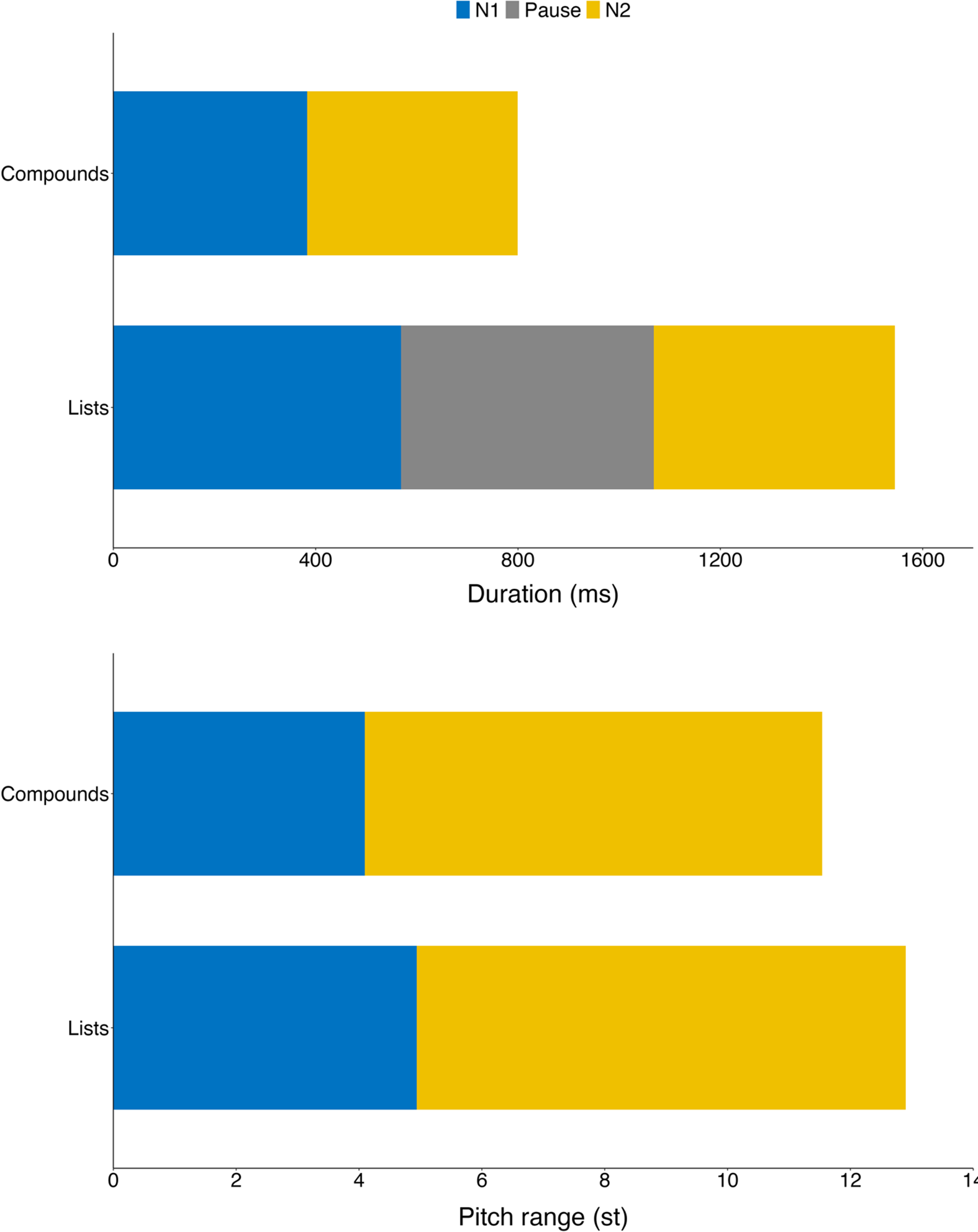
The auditory stimuli were recorded by a female native Mandarin speaker from northern China in a child-friendly register, embedded in a carrier sentence Zhaodao N1+N2 and Filler “Find N1+N2 and Filler” for compounds, and Zhaodao N1, N2, and Filler “Find N1, N2, and Filler” for lists. A total of 28 sentences were audio-recorded using a Marantz PM661 solid-state recorder and an AKG C520L head-worn microphone at a sampling rate of 44.1 kHz. The acoustic characteristics of the auditory stimuli are shown in Table 1. A series of t-tests were conducted to compare acoustic differences between compounds and lists. The stimuli realizations were consistent with acoustic patterns observed in Mandarin, with significantly longer syllable duration for N1 (t = 14.41, df = 11, p < .001, d = 4.16), longer pause between N1 and N2 (t = 22.07, df = 11, p < .001, d = 6.37), and tonal range (minimum pitch substracted from maximum pitch) expansion of dynamic tones in N1 (t = 2.44, df = 6, p = .05, d = 0.92) in lists compared to compounds (see Appendix B for the figure illustration). These findings align with established acoustic patterns for native Mandarin speakers (Xu et al., Reference Xu, Tang, Demuth and Xu Rattanasone2025).
Acoustic measures of stimuli in compounds and lists

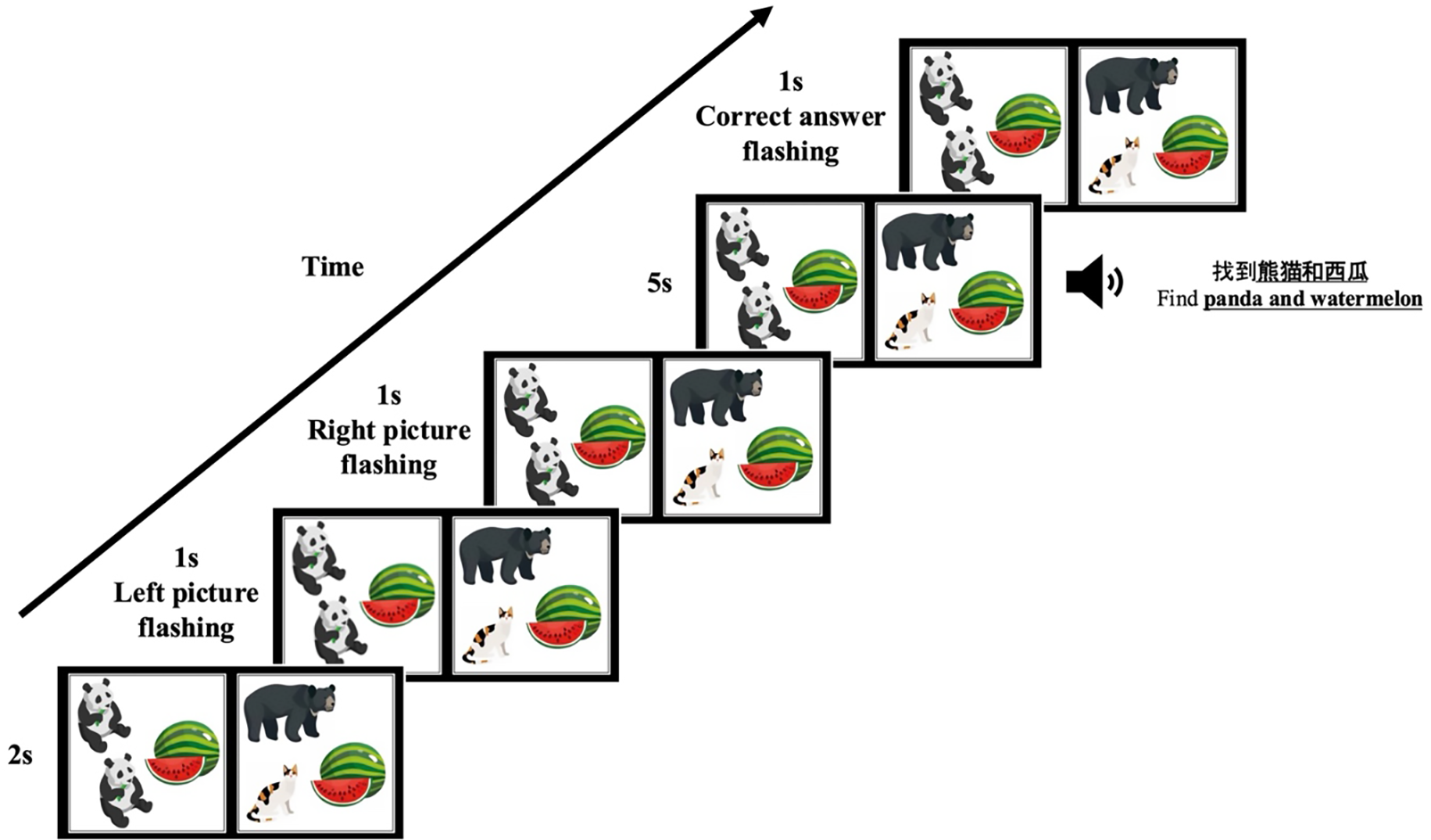
The associated visual stimuli for each sentence were designed with compound and list pairs presented side by side. For example, xiong-mao he xigua “panda and watermelon” was paired with xiong, mao, he xigua “bear, cat, and watermelon” (see Figure 1). To maintain comparable visual complexity across the stimuli and align with the design of previous studies (Xu Rattanasone et al., Reference Xu Rattanasone, Yuen, Holt and Demuth2021), each picture included three items.
An illustration of the procedure.

Procedure
All participants were tested in a quiet room, seated approximately 30 cm from an iPad. Before testing, a picture-naming task was performed to familiarize participants with target words and their associated pictures. Each participant began with an orientation trial and four practice trials to familiarize them with the task. In the orientation trial, two animal pictures were shown on the screen flashing briefly. Then the auditory stimuli, e.g., Zhao-dao Xiao-mao “Find the cat” were played, and participants were instructed to select the picture that best matched the auditory stimuli with their finger. All participants heard all target nouns used in the test sentences and correctly identified all auditory stimuli. This was followed by four practice trials, two for compounds and two for lists. Then 12 target trials were presented, each lasting approximately ten seconds (s). As illustrated in Figure 1, two pictures were presented in the middle of the screen (2s) to provide the context, with each flashing slowly (1s) to attract participants’ attention. The participants then heard the auditory stimuli with the pictures, which remained on the screen for 5 seconds, allowing them ample time to process and select an answer. After the participant had made a selection, the target (correct answer) flashed for 1 second. This feedback was included primarily to maintain engagement among preschool participants.
To minimize any carryover effects and predictability, two pseudo-randomized versions of the test were generated, where no more than two consecutive trials from the same condition (compounds or lists) were presented in succession. Within each version, target compounds and their list forms were yoked, and participants only saw one form in each version of the test but not both. For example, if the compound xiong-mao “panda” was played in Version 1 (Figure 1), then the corresponding list form xiong, mao “bear, cat” would be played in Version 2. Each version contained a balanced number of compound and list trials and was counterbalanced across participants. The experiment was conducted using the online experiment builder Gorilla (Anwyl-Irvine et al., Reference Anwyl-Irvine, Massonnié, Flitton, Kirkham and Evershed2019).
Statistical analysis
All analyses were conducted in R (R Core Team, 2024). All adults achieved ceiling performance (100% accuracy across all trials), suggesting the task accurately measured the target phenomena. All trials from preschoolers were included in the further statistical analyses, with 792 trials from the TH group (12 trials $\times$
66 preschoolers) and 684 trials from the CI group (12 trials
$\times$
66 preschoolers) and 684 trials from the CI group (12 trials $\times$
57 preschoolers). Generalized linear mixed-effect models (GLMMs) were employed to evaluate responses (correct vs. incorrect) across conditions and groups using the lme4 package (Bates et al., Reference Bates, Mächler, Bolker and Walker2015). All GLMMs were fitted with maximal random structures allowed by the data, ensuring no singularity or convergence issues before simplification. The final model was selected based on a likelihood ratio test (Barr et al., Reference Barr, Levy, Scheepers and Tily2013; Bates et al., Reference Bates, Mächler, Bolker and Walker2015). Statistical significance in all models was assessed with the ANOVA function from the car package (Fox & Weisberg, Reference Fox and Weisberg2019), using Chi-square tests to estimate p-values for omnibus main effects and interactions among factors. When a significant main effect of a multilevel factor or a significant interaction was detected, post hoc analyses were performed using the emmeans package with Tukey HSD adjustment (Lenth, Reference Lenth2023).
$\times$
57 preschoolers). Generalized linear mixed-effect models (GLMMs) were employed to evaluate responses (correct vs. incorrect) across conditions and groups using the lme4 package (Bates et al., Reference Bates, Mächler, Bolker and Walker2015). All GLMMs were fitted with maximal random structures allowed by the data, ensuring no singularity or convergence issues before simplification. The final model was selected based on a likelihood ratio test (Barr et al., Reference Barr, Levy, Scheepers and Tily2013; Bates et al., Reference Bates, Mächler, Bolker and Walker2015). Statistical significance in all models was assessed with the ANOVA function from the car package (Fox & Weisberg, Reference Fox and Weisberg2019), using Chi-square tests to estimate p-values for omnibus main effects and interactions among factors. When a significant main effect of a multilevel factor or a significant interaction was detected, post hoc analyses were performed using the emmeans package with Tukey HSD adjustment (Lenth, Reference Lenth2023).
Results
The analyses are reported in two sections, with results on the TH and CI group first, followed by results on different implantation age groups. In each section, the results of GLMMs will be presented to examine whether preschoolers with CIs can perceive prosodic cues to identify compounds and lists (H1) and whether their performance is similar to their TH peers (H2).
Differences between TH and CI groups
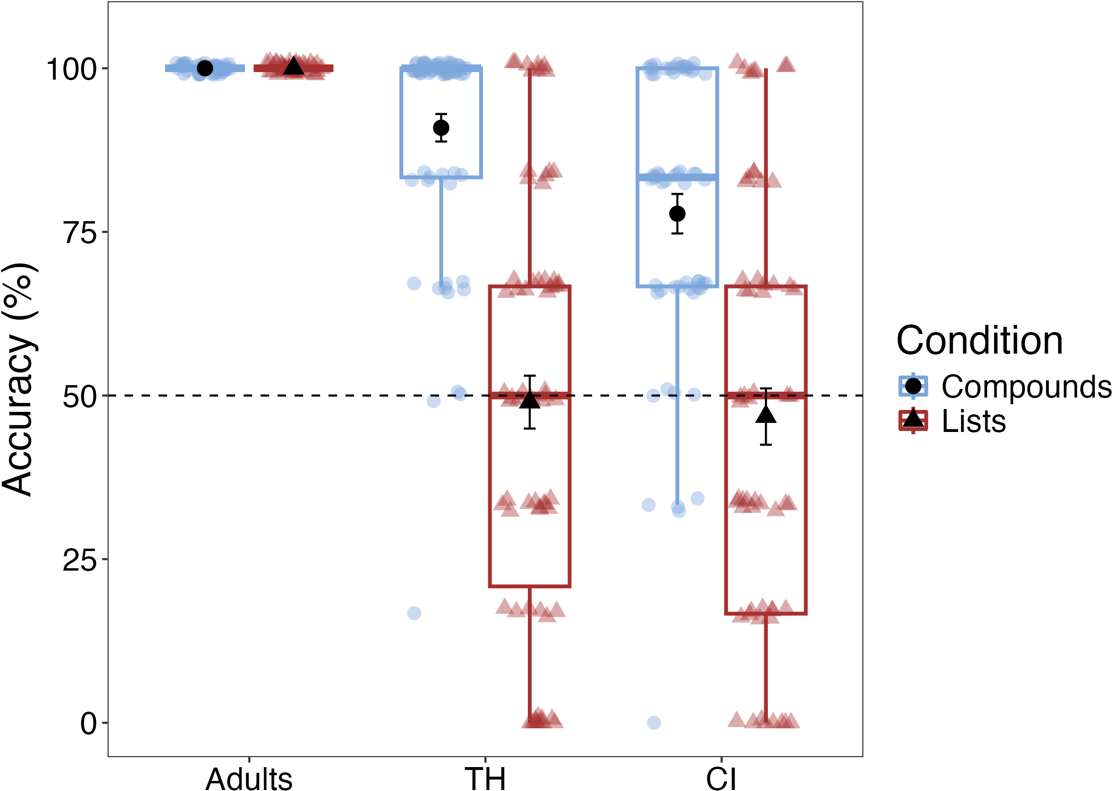
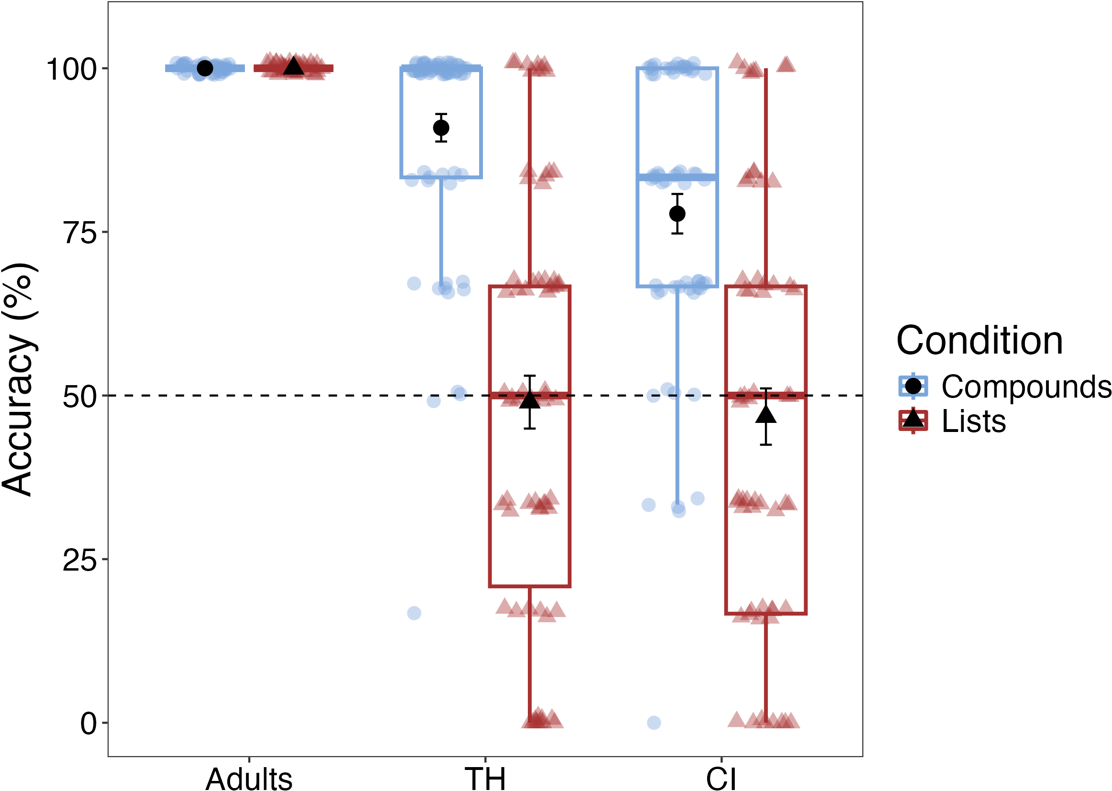
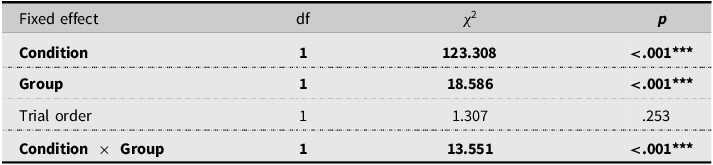
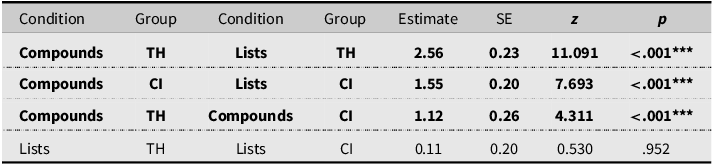
Figure 2 shows the mean accuracy in the TH and CI groups. A generalized linear mixed-effect model was fitted, with Condition (Compounds and Lists) and Group (TH and CI) as fixed effects. To eliminate any potential learning effects or changes in strategy due to the trial-by-trial correct feedback, Trial order was included as a covariate. Subject and Item were included as random intercepts. The results in Table 2 revealed significant main effects of Condition and Group, and a significant Condition $\times$
Group interaction. The post hoc analysis for the interaction is shown in Table 3. These results revealed that both groups could correctly perceive prosodic cues to identify compounds (TH: M = 90.91, SD = 17.09; CI: M = 77.78, SD = 22.79) more accurately than lists (TH: M = 48.99, SD = 32.80; CI: M = 46.78, SD = 32.49), though the CI group was significantly less accurate.
$\times$
Group interaction. The post hoc analysis for the interaction is shown in Table 3. These results revealed that both groups could correctly perceive prosodic cues to identify compounds (TH: M = 90.91, SD = 17.09; CI: M = 77.78, SD = 22.79) more accurately than lists (TH: M = 48.99, SD = 32.80; CI: M = 46.78, SD = 32.49), though the CI group was significantly less accurate.
Accuracy in compounds and lists in the TH and CI group (hereinafter, error bars indicate +/−1 standard error).
Statistical results of the generalized linear mixed-effect model for accuracy
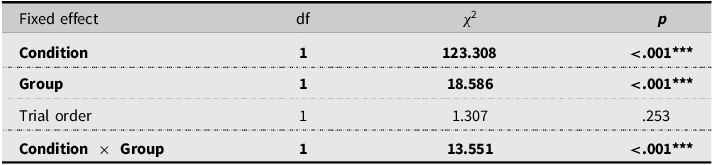
Note: Significant results are in bold. R code for the model: glmer(Response ∼ Condition × Group + Trial order + (1 | Subject) + (1 | Item). Reference level: Condition Compounds; Group TH. ***p < .001.
Results of post hoc analysis for condition and group interaction
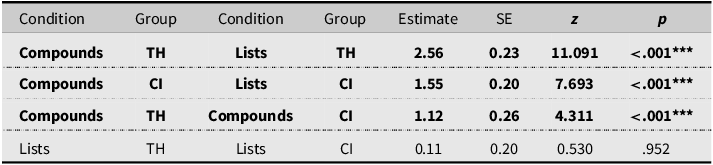
Note: Significant results are in bold. ***p < .001.
Effect of early implantation
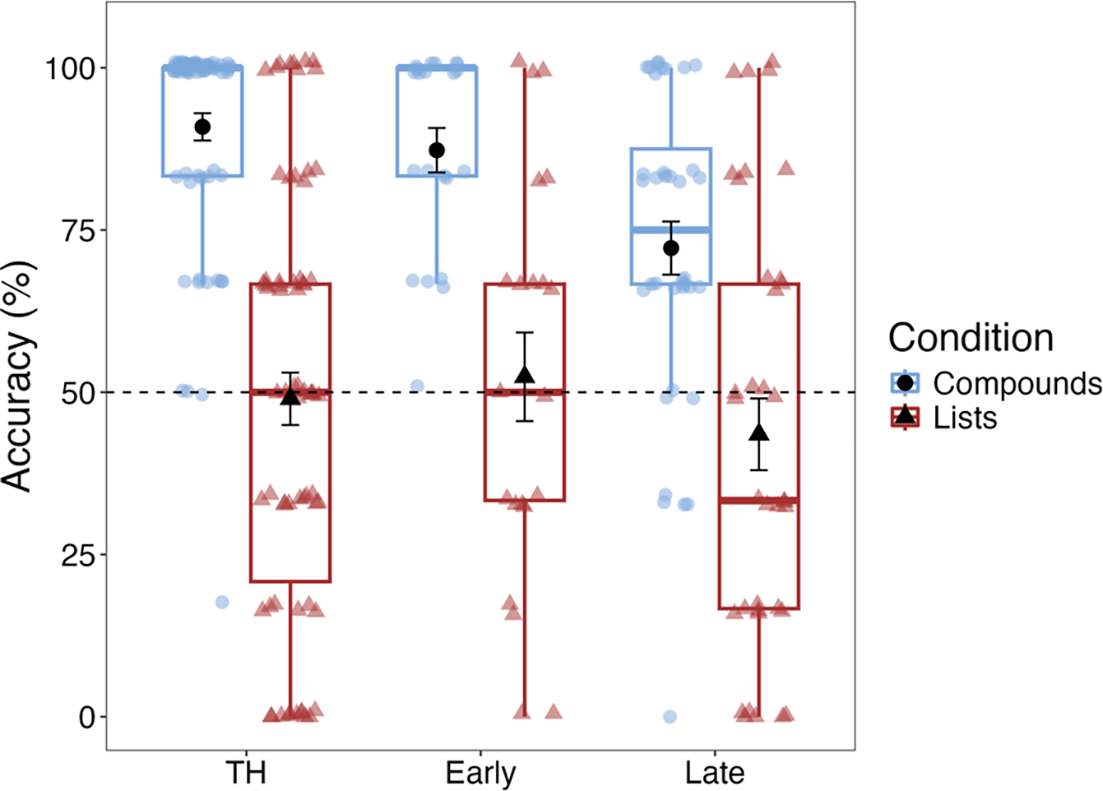
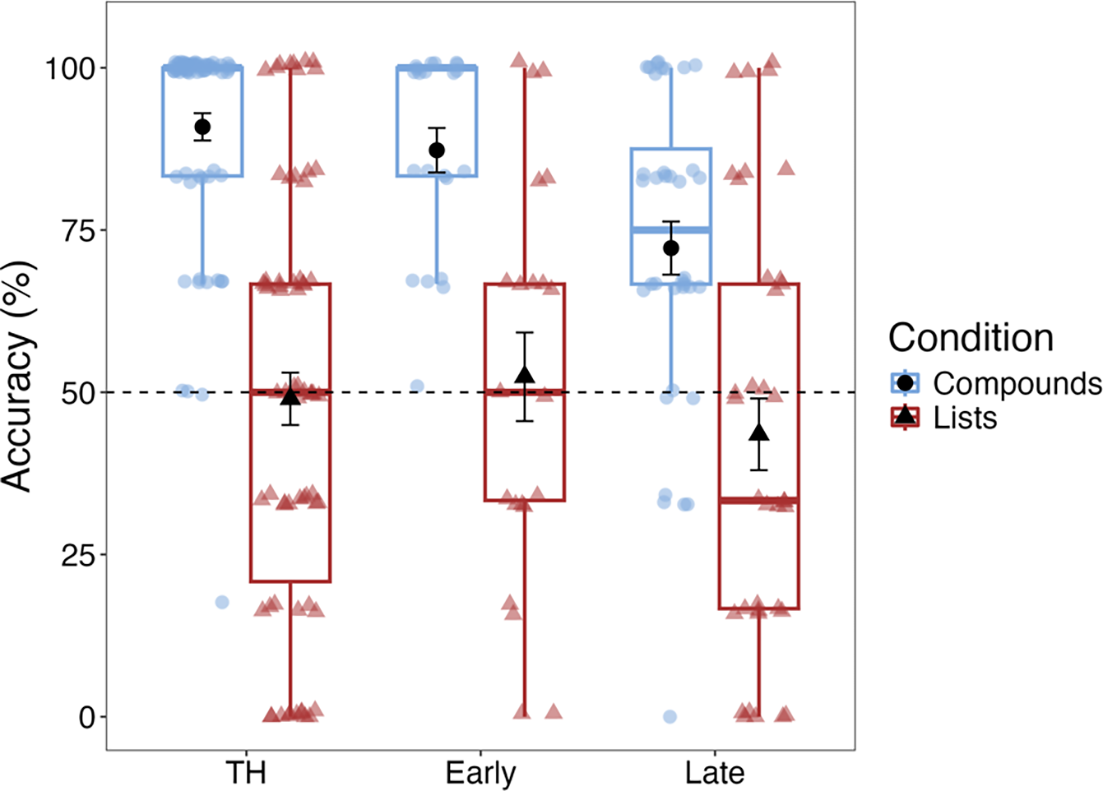
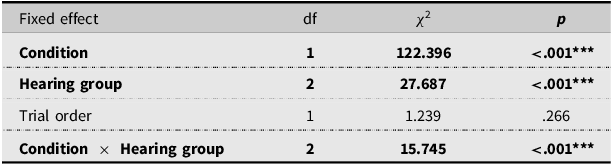
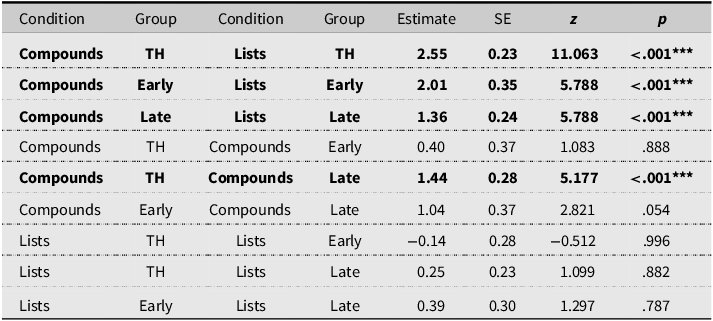
Figure 3 shows the mean accuracy across Early and Late implantation groups. A GLMM was performed, with Condition, Hearing group (TH, Early, and Late), and Trial order (covariate) as fixed effects. Subject and Item were entered into the model as random intercepts. The results (see Table 4) detected significant main effects of Condition and Hearing group, as well as a significant Condition $\times$
Hearing group interaction. The post hoc analysis for the interaction is shown in Table 5. These results suggest that in Compounds, the Early group (M = 87.30, SD = 15.73) performed like the TH group (M = 90.91, SD = 17.09), whereas the Late group (M = 72.22, SD = 24.56) was significantly less accurate.
$\times$
Hearing group interaction. The post hoc analysis for the interaction is shown in Table 5. These results suggest that in Compounds, the Early group (M = 87.30, SD = 15.73) performed like the TH group (M = 90.91, SD = 17.09), whereas the Late group (M = 72.22, SD = 24.56) was significantly less accurate.
Accuracy in compounds and lists in the TH, Early, and Late group.
Statistical results of the generalized linear mixed-effect model for accuracy
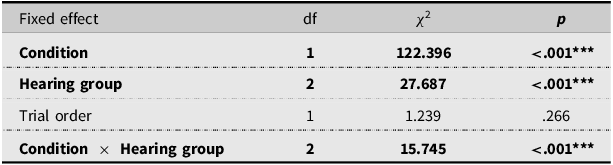
Note: Significant results are in bold. R code for the model: glmer (Response ∼ Condition *Hearing group + Trial order + (1 | Subject) + (1 | Item). Reference level: Condition Compound; Group TH. ***p < .001.
Results of post hoc analysis of Condition and Hearing group interaction

Note: Significant results are in bold. ***p < .001.
In sum, all Mandarin-speaking preschoolers with CIs can perceive prosodic cues to identify compounds more accurately than lists. This pattern is similar to their TH peers. Additionally, those implanted before age 2 can identify compounds as accurately as their TH peers, while those implanted after age 2 performed worse than both early implanted and TH peers.
Discussion
This study examined the ability of Mandarin-speaking preschoolers with CIs to perceptually identify the prosodic cues that distinguish compounds and lists, and the role of early implantation (before age 2) on performance. The results revealed that they can use prosodic cues to identify compounds, with those implanted before age 2 performing similarly to their TH peers.
These results partly support H1 that preschoolers with CIs can perceive the prosodic cues needed to identify compounds, but not lists. One possible explanation is that children are more familiar with disyllabic words, as these are predominant in Mandarin (Duanmu, Reference Duanmu2011; Han & Gu, Reference Han and Gu2023; Liu et al., Reference Liu, Liu, Wang, Liu, Kong, Zhang, Li, Yang, Han and Zhang2013; Wang et al., Reference Wang, Wu and Kirk2010). Unlike the study on English (Xu Rattanasone et al., Reference Xu Rattanasone, Yuen, Holt and Demuth2021), all target words in this study are high-frequency words for children, which could have further biased children to prefer compound forms rather than monosyllabic words in lists. In addition, list forms may not be frequent structures in the input to young children. Evidence for this comes from the fact that children tend to use syntactic information (e.g., conjunctions he “and” or hai-you “as well as”) rather than prosodic cues for producing and interpreting multiword lists of items. The cross-linguistic evidence from both Mandarin and English (e.g., Xu Rattanasone et al., Reference Xu Rattanasone, Yuen, Holt and Demuth2021) supports this possibility.
Additionally, the integration of prosodic cues and linguistic functions may not be fully developed in preschoolers (McCauley et al., Reference McCauley, Hestvik and Vogel2012; Xu Rattanasone et al., Reference Xu Rattanasone, Yuen, Holt and Demuth2021). Our results extend this observation to a tonal language, Mandarin Chinese, suggesting that acquiring prosodic cues at the lexical level may not facilitate development at the postlexical level. Instead, the mapping of prosodic cues to both lexical and postlexical levels may pose additional cognitive demands, making it difficult for young children to interpret both levels Given that pitch is critical for conveying lexical meaning in Mandarin, preschoolers may prioritize the acquisition of lexical tones before effectively using pitch modulations for boundary marking. A similar pattern was observed in English, where 5-year-olds were still learning to associate stress patterns with compounds and lists to interpret their meanings accurately (Vogel & Raimy, Reference Vogel and Raimy2002; Xu Rattanasone et al., Reference Xu Rattanasone, Yuen, Holt and Demuth2021). Therefore, the acquisition of prosodic cues for word boundary marking appears to be incomplete in preschoolers and likely continue to develop throughout the preschool years to early primary school years. In the meantime, other linguistic strategies (e.g., semantic or syntactic cues) may help guide preschoolers’ comprehension of lists.
Finally, our findings support the effect of early implantation, with those implanted early (especially before age 2) showing accuracy comparable to their TH peers, whereas those implanted after age 2 had lower accuracy in identifying compounds. This is consistent with previous research on production, where Mandarin-speaking preschoolers implanted before age 2 produced prosodic cues like their TH peers (Xu et al., n.d.). These results suggest that early implantation (before age 2) is not only important for developing lexical representations but also prosodic cues for longer communicative contexts.
Limitations and future directions
While our findings showed that preschoolers with CIs used prosodic cues to identify compounds, the current design could not identify what cues children primarily rely on. Prior studies with CI users indicated that duration and intensity play more important roles than pitch for recognizing intonation (Karimi-Boroujeni et al., Reference Karimi-Boroujeni, Dajani and Giguère2023), though this study employed child-directed speech (CDS), characterized by a slower speaking rate and longer duration than adult-directed speech (Zhang et al., Reference Zhang, Chen, Xu, Guo and Li2024). This may give preschoolers with CIs more time to perceive and process prosodic cues. However, previous studies mainly focused on the role of CDS in acquiring consonants by children with CIs (see Hahn et al., Reference Hahn, Hirschfelder, Mürbe and Männel2025 for a review). Therefore, future studies should explore how CDS affects the development of prosodic ability, especially in China and children with CIs.
Second, given that both durational and pitch cues were modulated for boundary marking, it remains unclear which cue play a more important role in perception to guide comprehension. Previous studies have found that durational cues were more robust than pitch cues (Wang et al., Reference Wang, Xu and Ding2017; Xu et al., Reference Xu, Tang, Demuth and Xu Rattanasone2025). It is likely that duration should play a more important role. Future studies should modulate duration and pitch separately to examine their contribution to the comprehension of boundary marking in children.
Third, we acknowledge a potential methodological limitation regarding the visual stimuli. To balance the complexity between conditions, the compound condition featured two identical objects, which might potentially receive a visual bias. Previous eye-tracking studies using the same paradigm in English-speaking children showed that children’s gaze in the list condition remained at chance level rather than systematically biasing toward the compound image (Xu Rattanasone et al., Reference Xu Rattanasone, Yuen, Holt and Demuth2021). However, given the different prosodic and morphological features of Mandarin, further research should employ eye-tracking to definitely disentangle the effects of visual salience and prosodic processing in children.
Additionally, while early implantation has been shown to be a critical factor influencing speech acquisition by children with CIs, other clinical factors might also play a role, such as device types, level of hearing loss, and modality (e.g., bilateral implantation where both ears receive CIs vs. bimodal implantation, where one ear receives a CI and the other a hearing aid). Examining these clinical factors in future studies could provide valuable insights into both prosodic development and intervention practices.
Finally, other non-clinical factors may affect children’s development of prosodic cues for boundary marking, which is not examined in the current study. For example, cognitive abilities would affect children’s language development (Clark, Reference Clark2004). Moreover, the proficiency of oral language skills is strongly correlated with socioeconomic status (SES). Children from higher SES backgrounds often have greater access to rich linguistic input with higher-quality education resources and more responsive caregiver interactions (e.g., Durham et al., Reference Durham, Farkas, Hammer, Tomblin and Catts2007). It is possible that children from lower SES backgrounds may experience challenges in developing such speech abilities, even implanted early. Future research should consider incorporating vocabulary size, verbal memory, and SES to better account for the variability in prosodic development among children with CIs.
Conclusion
This study examined the comprehension of prosodic cues for word boundaries in Mandarin-speaking preschoolers with CIs. The results revealed that they could use prosodic cues to identify compounds, but not lists, with those implanted before age 2 performing similarly to their TH peers. These findings, together with results from production studies (Xu et al., n.d.), suggest that production can proceed even in the absence of full perceptual/ identification abilities. Additionally, earlier acquisition of lexical tones does not appear to facilitate earlier mastery of prosodic cues for post-lexical meaning by Mandarin-speaking preschoolers. These findings also underscore the importance of prosodic cues for language comprehension, further suggesting that interventions for preschoolers with CIs could also target high-level prosody training to enhance communicative abilities in daily life, such as interactions and storytelling.
Acknowledgements
We thank the Department of Linguistics and the Macquarie University Hearing Research Centre for their support. We also thank Dr. Serje Robidoux for the statistical feedback and suggestions. We acknowledge the assistance from teachers at Xiaojudeng, Shuyun, Shenhua, Xinyikang and Jiangsu rehabilitation centre with data collection. This research was supported, in part, by a Macquarie University iMQRES scholarship to the first author, The National Social Science Fund of China (20CYY012) to the second author, and the Hearing Innovation Grant to the last two authors. The equipment was supported by the School of Foreign Studies at Nanjing University of Science and Technology.
Replication package
The data that support the findings of this study are openly available in The Open Science Framework (OSF) at https://osf.io/jfv2x/. Experimental scripts and tasks are available at https://app.gorilla.sc/openmaterials/940850.
Financial support
This study was funded by Martine Lee Hearing Innovation Grant and iMQRES scholarship.
Competing interests
The authors declare that the research was conducted in the absence of any commercial or financial relationships that could be constructed as a potential conflict of interest.
Appendix A
Target stimuli in the current study

Appendix B
Durational (top) and pitch cues (bottom) in the auditory stimuli.


 Open access

