

Introduction
We take as our starting point the uncontroversial thesis that the semantic lexicon develops in response to experiences that the child accrues while immersed in and interacting with the systems of her culture. Culture is a dynamic, synergistic set of systems that include language, artifacts, practices, beliefs, values, and ways of thinking and behaving that are held more or less in common by members of a given community (Ojalehto & Medin, Reference Ojalehto and Medin2015). Cultures can be defined at global, national, and regional levels and characterized by multiple dimensions including age, gender, religion, education, and socioeconomic status (Ojalehto & Medin, Reference Ojalehto and Medin2015). Cultural variation affects not only the number of words children learn (Hart & Risley, Reference Hart and Risley1995; Hoff, Reference Hoff2006; White, Graves, & Slater, Reference White, Graves and Slater1990), but also the specific content and structure of the developing lexicon. In this paper, we consider the former but focus on the latter.
Much that we know about cultural influences on the structure of the developing lexicon comes from application of the semantic fluency task. The participant is given a category label and is asked to name as many items as possible that fit that category within one minute. Depending on the question of interest, the label will index a taxonomic category, such as animal or clothing, or a slot–filler category such as animals at the zoo or clothing that is worn in cold weather (Nelson & Nelson, Reference Nelson and Nelson1990). The number of items named reflects, in part, the number of words known in that category (Ruff, Light, Parker, & Levin, Reference Ruff, Light, Parker and Levin1997). The first or most frequently named items reveal the exemplars that are prototypical to the category (Kail & Nippold, Reference Kail and Nippold1984). The co-occurrence, proximity, or temporal clustering of items evinces semantic neighborhood structure (Winkler-Rhoades, Medin, Waxman, Woodring, & Ross, Reference Winkler-Rhoades, Medin, Waxman, Woodring and Ross2010).
Cultural differences have been reported for number of items named (Williams, Terry, & Metzger, Reference Williams, Terry and Metzger2013), items named most frequently (Pekkala, Goral, Hyun, Obler, Erkinjuntti, & Albert, Reference Pekkala, Goral, Hyun, Obler, Erkinjuntti and Albert2009; Peña, Bedore, & Zlatic-Giunta, Reference Peña, Bedore and Zlatic-Giunta2002), and items clustered (Taverna, Waxman, Medin, Moscoloni, & Peralta, Reference Taverna, Waxman, Medin, Moscoloni and Peralta2014; Winkler-Rhoades et al., Reference Winkler-Rhoades, Medin, Waxman, Woodring and Ross2010). Winkler-Rhoades et al. (Reference Winkler-Rhoades, Medin, Waxman, Woodring and Ross2010) collected semantic fluency data from children and adults in urban, rural, and Native cultures in the US and found a similar preponderance of mammal names, and a similar clustering of animals by habitat (e.g., farm animals, household pets) in the three cultures; both tendencies were previously documented in other cultures (Crowe and Prescott, Reference Crowe and Prescott2003; Lucariello, Kyratzis, & Nelson, Reference Lucariello, Kyratzis and Nelson1992). They also found some interesting differences. Relative to the other two samples, the urban sample (and the youngest samples) included more exotic animals than native animals whereas the Native sample (and the adult samples) included more native than exotic animals. The authors attribute this to cultural and developmental differences in daily experiences. Culturally, the participants who were Native Americans had more contact with native species because hunting and fishing were common experiences for them. Developmentally, younger children had more contact with non-native species because children's books and movies, many of which feature exotic animal characters, were common experiences for them.
Taverna et al. (Reference Taverna, Waxman, Medin, Moscoloni and Peralta2014) asked Argentine children aged five to fourteen to name living things. All children named more animals than plants, and mammals were the predominant type of animal. Children from an urban community named more exotic animals; children from a rural community named more farm animals; and children from a native Amerindian community named more forest animals. These differences reflected the distinct daily experiences of the children. The children from the urban and rural communities spoke Spanish whereas the children from the Amerindian community spoke Wichí. Although the Spanish speakers tended to list human as a living thing, the Wichí speakers never did, a difference attributable to different naming patterns in the two languages. Specifically, in Wichí, humans are rarely named as a distinct category from other living things by either children or adults.
In the present study, we build on findings such as these by comparing semantic fluency responses collected from five- and seven-year-old children in Australia, Taiwan, and the US. The languages sampled were Australian English, Taiwanese Mandarin, and American English. The communities sampled were Sydney Australia, a metropolis of roughly 4 million people, Taichung City and Taipei City Taiwan, metropolitan areas of roughly 2.7 million people each, and Iowa City US, a small city of 75,000 located in a state where farms comprise over 85% of the available land. The Australian and US populations are more similar to each other in language and other aspects of culture than either of these two Western populations are to the Taiwanese population. In contrast, the particular communities we sampled in Australian and Taiwan are more similar to each other in population density than either of these are to the US community we sampled. Thus, a triangulation strategy (Ross, Medin, Coley, & Atran, Reference Ross, Medin, Coley and Atran2003; Taverna et al., Reference Taverna, Waxman, Medin, Moscoloni and Peralta2014) allowed conclusions about the relative contribution of cultural systems and daily activities to the children's semantic lexicons.
Animal names
Like Winkler-Rhoades et al. (Reference Winkler-Rhoades, Medin, Waxman, Woodring and Ross2010) we elicited semantic fluency responses to the category animal. The three communities that we sampled have some native animals in common and others that are unique. The children in the US sample, being surrounded by farmland, likely had more direct contact with animals than the children in the Australian and Taiwanese sample but children in all three communities likely had access to books and other media about animals. More than half of 1,074 English-language children's picture-books reviewed by Marriott (Reference Marriott2002) contained animals or animal habitats, and over 60 different species were represented. This phenomenon is not limited to picture-books. Freebody and Baker (Reference Freebody and Baker1985) analyzed the content of basal and supplementary reading books for first- and second-graders in Australia and found that five of the top ten most common nouns referring to animate beings were the animals cat, dog, pig, fish, and bear.
Many parents in mainstream Western cultures value children's picture-books as a way to teach preliteracy skills and stimulate enthusiasm for reading (Foy & Mann, Reference Foy and Mann2003). The same is increasingly true of practices in Eastern cultures. Taiwanese parents begin to read books to their children when they are one or two years old (Wu & Honig, Reference Wu and Honig2010). In both Taiwan and the US, parents and teachers of children in preschool and early elementary school tend to select picture- and story-books with a clear narrative line rather than informational books (Wu & Honig, Reference Wu and Honig2010). There is likely an overlap between these Western and Eastern cultures in the books themselves given that an estimated 90% of books marketed for Taiwanese children are imported, mostly from the US, Europe, and Japan (Chung, Reference Chung2011). Children's media is a rich source of indirect experiences with animals and, to the extent that children's media is universally available, cultural variations in animal knowledge will be minimal.
Food names
Unlike Winkler-Rhoades et al. (Reference Winkler-Rhoades, Medin, Waxman, Woodring and Ross2010) and Taverna et al. (Reference Taverna, Waxman, Medin, Moscoloni and Peralta2014), we also elicited semantic fluency responses to the category food. Mealtimes have been the focus of much research on event-based language learning (e.g., Beals, Reference Beals1997; Hoff & Naigles, Reference Hoff and Naigles2002; Snow & Beals, Reference Snow and Beals2006). Although it is highly likely that children learn food names from direct participation in these events, there is little documentation. We do know that children's ability to name flavors (e.g., lemon, cinnamon, coconut), an aspect of food knowledge that is necessarily learned via direct experience, increases between three and seven years (Lumeng, Zuckerman, Cardinal, & Kaciroti, Reference Lumeng, Zuckerman, Cardinal and Kaciroti2005).
Some mealtime events have particular cultural significance. In their review of the English-language literature on family routines and rituals, Fiese, Tomcho, Douglas, Josephs, Poltrock, and Baker (Reference Fiese, Tomcho, Douglas, Josephs, Poltrock and Baker2002) found the most often mentioned rituals to be birthdays, funerals, family reunions, Sunday dinner, and the holidays Christmas, Thanksgiving, Easter, and Passover. Abundant and specific types of food are central to each of these. By age three, children are aware of the events that typically include food and they have some knowledge of which foods are typically eaten together (Mura Paroche, Caton, Vereijken, Weenen, & Houston-Price, Reference Mura Paroche, Caton, Vereijken, Weenen and Houston-Price2017).
If food names are learned from direct, routinized, culturally specific experiences, we should find differences between the food naming responses of children in our three samples, particularly between children who experience Western diets and cultural rituals and those who experience Eastern diets and cultural rituals. Peña et al. (Reference Peña, Bedore and Zlatic-Giunta2002) found that Spanish–English speaking four- to seven-year-olds in the United States gave largely different lists of items in response to the food category prompt in Spanish and English. Also, typicality differences were evident in that the three most frequently named items in each language were not synonymous. The children most often listed apple, banana, and hamburger when naming foods in English, but hamburguesa ‘hamburger’, manzana ‘apple’, and sopa ‘soup’ when naming in Spanish (Pena et al., Reference Peña, Bedore and Zlatic-Giunta2002, p. 946). These differences reflect the different cultural contexts in which the children learn and use Spanish (e.g., with family) and English (e.g., at school).
How animal and food names are expressed in English and Mandarin
A comparison of English and Mandarin speakers was of particular interest because of documented variations in the development of their semantic lexicons. Lin, Schwanenflugel, and Wisenbaker (Reference Lin, Schwanenflugel and Wisenbaker1990) asked adults and children from Taiwan and the US to rate the familiarity and typicality of items from categories like birds and fruit. In both cultures, correlations between child and adult typicality ratings increased between kindergarten and sixth grade, whereas the correlation between child familiarity and typicality ratings decreased. That is, compared to adults and older children, younger children depended more heavily on their direct everyday experiences as a basis for structuring taxonomic category relations. However, Lin et al. (Reference Lin, Schwanenflugel and Wisenbaker1990) found the Taiwanese children to exhibit an earlier shift towards adult-like taxonomic category structure than the US children. As one potential explanation, they noted that Mandarin Chinese provides more information about category structure than English. Compound nouns are very frequent in Mandarin (Packard, Reference Packard2000), thus the category name (the head of the compound) is specified in the full name. This sometimes happens in English – in bluebird and sunflower, for example – but it is much rarer than in Mandarin. For instance, whereas English has bison, buffalo, cow, ox, yak, dairy cattle, bull, and calf, all of these words for bovines in Mandarin end with niu2 ‘cow’. Experience with the Mandarin language itself might hasten the maturation of lexical–semantic category structure.
Aims and predictions
Our primary aim was to determine whether and how the content and structure of the developing semantic lexicon varies between cultures. We examined how children from three communities distinguished by language (English–Mandarin), cultural beliefs and practices (West–East), and population density (Metropolitan–Urban) name animals and foods in a semantic fluency task. The task is used for two primary purposes. In neuropsychological testing, the ability to avoid repetitions and to switch from cluster to cluster is quantified as evidence of executive function (Kavé, Kigel, & Kochva, Reference Kavé, Kigel and Kochva2008; Koren, Kofman, & Berger, Reference Koren, Kofman and Berger2005; Raboutet, Sauzéon, Corsini, Rodrigues, Langevin, & N'Kaoua, Reference Raboutet, Sauzéon, Corsini, Rodrigues, Langevin and N'Kaoua2010). We, instead, used the task for a second purpose, as a window onto the semantic lexicon (Hurks, Schrans, Meijs, Wassenberg, Feron, & Jolles, Reference Hurks, Schrans, Meijs, Wassenberg, Feron and Jolles2010; Marshall, Rowley, Mason, Herman, & Morgan, Reference Marshall, Rowley, Mason, Herman and Morgan2013; Nash & Snowling, Reference Nash and Snowling2008). The predictions follow.
Because young children tend to learn about animals from media but food from direct experience, there will be more cultural overlap in animal naming than food naming. That said, our triangulation approach could reveal nuances:
• Because the children in the US sample were from a small urban area surrounded by farmland, they were likely to have more direct experience with animals than were the children in the Taiwanese and Australian samples collected in densely populated metropolitan areas. Therefore, within animal naming, we predicted variation related to population density.
• Because the children in the Taiwanese sample had Eastern diets, they were likely to have different direct experiences with food than the children in the Australian and US samples, who had Western diets. Therefore, within food naming, we predicted variation related to cultural heritage.
Because of the scaffolding of hierarchical relations provided by the structure of Mandarin, we predicted more superordinate naming and more sophisticated hierarchical structures in the responses of the Taiwanese children than in the responses of the Australian or US children. We expected this result for both the animal and food categories.
We also explored variation associated with age. It could be that cultural approaches to schooling, especially in Western vs. Eastern cultures, differ greatly and thereby yield a widening of differences in lexical–semantic content from five years to seven years of age. Alternatively, it could be that differences in lexical–semantic content narrow from five years to seven years of age as children come to know other children from various cultures who attend their school and as formal instruction introduces a broad range of leveling experiences that support word learning. Comparisons of the names listed by five-year-olds and seven-year-olds allowed a test of these alternatives.
Method
Participants
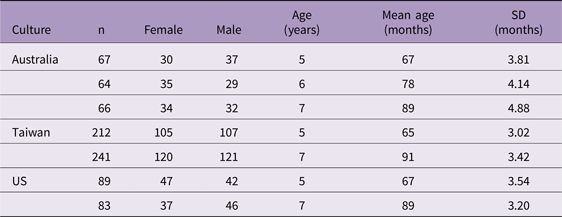
Participants were from three communities (Table 1): 197 five-, six-, and seven-year-olds were primary speakers of Australian English from Sydney Australia; 456 five- and seven-year-olds were primary speakers of Taiwanese Mandarin from Taichung City and Taipei City Taiwan; 172 five- and seven-year-olds were primary speakers of American English from Iowa City in the US. An analysis of the cluster switch behavior of the Australian participants appears in Chami et al., Reference Chami, Munro, Docking, McGregor, Arciuli, Baker and Heard2018. A comparison of the five- and seven-year-old Taiwanese participants to three-year-old Taiwanese participants appears in Chen (Reference Chen2012).
Number, Sex, and Age of Participants by Culture
Our primary goal was to compare responses from the three different cultures. A secondary goal was to determine whether similarities between cultures change over the first two years of formal schooling. Therefore, for analyses that could be conducted with smaller samples (number of correct responses, most frequent responses, and first responses) we compared cultures at age five and at age seven. We excluded the six-year-old Australians but the comparable analyses of their data appear in a supplementary appendix (available at <https://doi.org/10.1017/S0305000918000211>) for the sake of completeness. For two analyses that required larger data sets (discovery of unique responses and cluster behavior), we again compared cultures but collapsed over all ages, including the data from the six-year-olds, to maximize sample sizes.
Procedure
Each child was seen individually at a daycare, school, or community center. In a demonstration trial, the child was asked to produce as many words as possible in the category body parts in 30 seconds. If the children failed to provide any words, the experimenter prompted by pointing to a specific body part or giving examples. Afterwards, the child was asked to produce as many words as possible in two categories, animals and food, within two 1-minute intervals. Category order was counterbalanced across participants. All data collection and data management followed approved procedures for the protection of human subjects at either the University of Iowa (US and Taiwanese samples) or the University of Sydney (Australian sample).
Analysis
The examiner wrote and audio-recorded the children's responses. Afterwards, all responses were entered into a spreadsheet and then coded for order of response and errors. Errors were of two types, out-of-category responses (e.g., plant in animal or eat in food) and repetitions of a previous response. For food we operationalized out-of-category to include things that one could ingest but that are not really food (e.g., tablets, grass) and the names of meals (e.g., lunch) and restaurants (e.g., McDonalds). We accepted beverages (e.g., milk) as correct food responses. The animal out-of-category responses included cartoon or story-book animals (e.g., Sponge Bob, Big Bad Wolf); however, we did accept creatures that were mythical (e.g., unicorn) or extinct (e.g., Tyrannosaurus Rex). To avoid underestimation of repetition errors, we took singular–plural variants (e.g., grape, grapes) and synonyms (e.g., snake, serpent) to be the same word. But we were conservative as to what counted as a synonym: we never collapsed age variants (e.g., deer, fawn); gender variants (e.g., lion, lioness), or taxonomic variants (e.g., fruit, grape, green grape). To ensure that rare items were correctly classified, coders used on-line dictionaries to verify inclusion in the category under consideration.
Twenty percent of data from each age group per culture was randomly extracted and coded by a second examiner from the same cultural/language environment to determine agreement on classification of responses as correct or incorrect. In all cases, point-to-point agreement exceeded 90%.
To enable comparison between cultures, differences in language and dialect had to be resolved. The third author, a graduate student living in Iowa City who had collected the Taiwanese sample, and who is a native speaker of Taiwanese Mandarin and a fluent speaker of American English, transcribed all Mandarin responses into American English, thus enabling comparison between the Taiwanese and US samples. The first author, then a professor living in Iowa City who is a native speaker of American English and who has spent extensive time in Sydney, identified instances where American and Australian English involved different words for the same item (e.g., candy vs. lolly; pepper vs. capsicum), thus enabling comparison of the Taiwanese and US samples to the Australian sample.
Following these data-entry and coding procedures, we used Excel spreadsheet functions to determine number of correct responses, the variety of first responses, the ten most frequent responses, and the unique responses per category, age, and culture.
To ascertain the relations between items in a given category, animals or food, we used hierarchical cluster analysis via the ICLUST function (Revelle, Reference Revelle1979) in the psych library (Revelle, Reference Revelle2017) of the statistical computing language R (R Core Team, 2016). The data analyzed were all names listed by at least 20% of participants in a given culture for a given semantic category. As in a traditional factor analysis, each item loads on to, at most, a single cluster. Items that load on a given cluster are correlated, with higher correlations approaching a maximum of 1. Items that define different clusters can negatively correlate; a negative loading means that the item has a characteristic that is opposite of that cluster and is not strongly related to any of the items that formed that cluster.
The ICLUST function also identifies hierarchical relations between clusters. The algorithm combines clusters into one higher-level cluster if that combination of clusters increases the reliability (Cronbach's coefficient of alpha, α) and the size of the general factor (Revelle's beta, β). This algorithmic approach is ideal for the current dataset given that semantic categories exhibit a nested, hierarchical structure. For example, within the broad category animal, poodle is nested in dog which is nested in canine, which is nested in mammal. ICLUST allowed us to capture this hierarchical structure. The overall result of the ICLUST analysis is a description of the animal lexicon and the food lexicon that is shared among five- to seven-year-old members of the communities we sampled.
Results
Animals
A between-subjects ANOVA with number of correct animal responses as the dependent variable and culture and age as the independent variables revealed a main effect of age (F(1,749) = 207.49, p < .0001, d = 1.0), a large effect. The 367 five-year-olds who participated averaged 8.28 animal names (SD = 3.08) whereas the 388 seven-year-olds averaged 12.37 (SD = 4.04). There was neither a main effect of culture (F(2,749) = 2.53, p = .08) nor a culture × age interaction (F(2,749) = 1.23, p = .29).
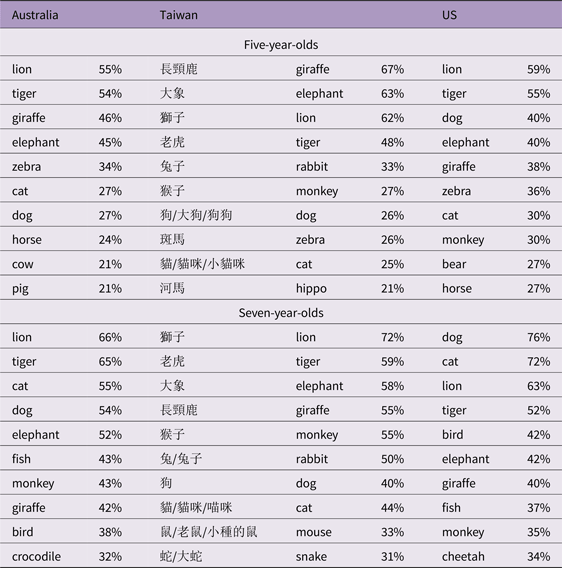
The ten most frequently named animals by culture appear in Table 2. At age five years, the top ten were exclusively mammals for all three cultures. The majority were wild mammals; however, dog and cat, which are common household pets in all three cultures, also made the list. Despite living in a heavily agricultural state, there was no evidence that the US children considered farm animals to be prototypical. One farm animal was among the top ten in the US sample, three in the Australian sample, and zero in the Taiwanese sample. At age seven years, mammals continued to predominate, but bird and fish (Australian and US samples), crocodile (Australian sample), and snake (Taiwanese sample) now made the top ten as well. There were no farm animals among the top ten in any sample at age seven. At age five years, the overlap between cultures in top ten items was 70% for Australia and Taiwan, 80% for Australia and the US, and 80% for Taiwan and the US. At age seven years, the overlap between cultures in the top ten items was 70% for Australia and Taiwan, 90% for Australia and the US, and 70% for Taiwan and the US.
Ten Most Frequent Animal Responses of Five- and Seven-year-olds by Culture and Percentage of Respondents
Tables 3 and 4 list the children's first responses by culture. Although the list is highly variable, mammals again predominated and wild mammals were particularly popular. At age five years, the percentage of children whose first responses were mammals equaled 86% for Australia, >82% for Taiwan, and 91% for the US. In all three cultures, the top three most frequent first responses were wild mammals. At age seven years, mammals continued to predominate with 88%, >81%, and 89% of children responding first with a mammal name in the Australian, Taiwanese, and US samples, respectively.
First Animal Responses of Five-year-olds by Culture and Percentage of Respondents
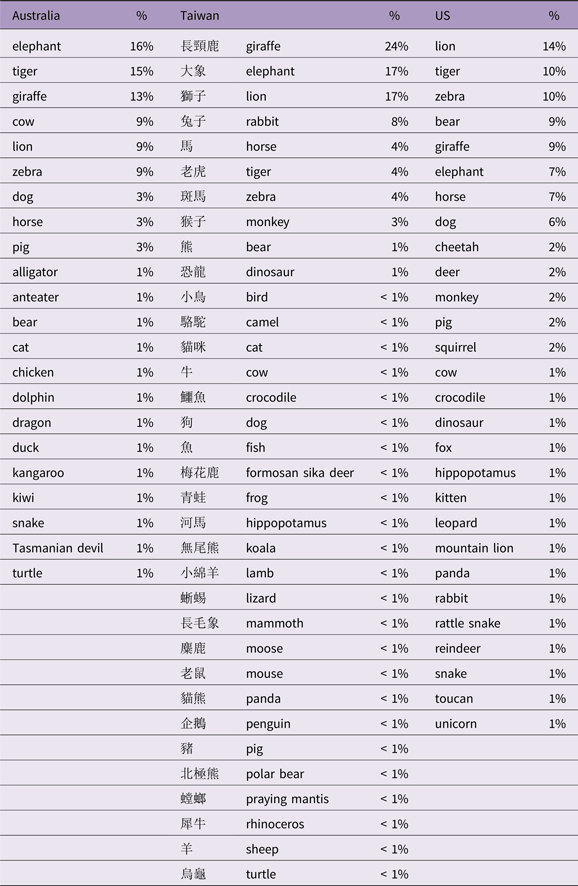
First Animal Responses of Seven-year-olds by Culture and Percentage of Respondents
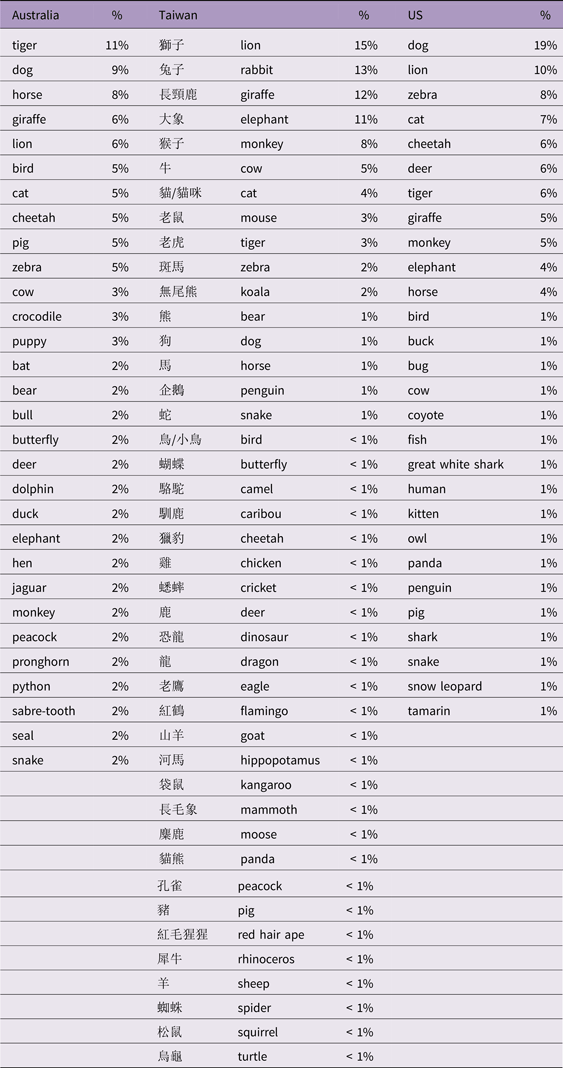
Table 5 specifies animals that were unique to a given culture. In some cases, these are native species (e.g., wombat in Australia and Formosan sika deer in Taiwan) that do not live in the other two communities. In other cases, what was unique was the precision of specification. For example, deer occurred in samples from all three cultures, but buck occurred only in the US sample. Others that follow this pattern are bug/cicada, cow/dairy cow, and fish/catfish, to name only a few.
Animals Uniquely Named by Culture and Percentage of Respondents

Note. To be counted as unique, an animal had to be named by at least 2% of respondents in a given culture and 0% in both of the other cultures.
The results of the ICLUST analysis appear in Figures 1–3. There were 17 clusters in the Australian sample, 14 in the Taiwanese sample, and 13 in the US sample. Comparison of the three figures reveals several commonalities. First, children in all three cultures represented semantic relations between animals in a hierarchical manner. For example, in the Australian sample, cluster 13 (C13) incorporated C10 and C8; in the Taiwanese sample, C8 incorporated C7 and C4; and in the US sample, C8 incorporated C2 and the single item zebra. Second, children in all three cultures organized animal neighbors by shared habitats (e.g., farm, forest, and household), as well as by taxon (e.g., the felines lion and tiger). A final commonality was that each cultural group demonstrated distinctions between items that are unrelated (i.e., negatively correlated, as depicted by the dotted lines). As a group, Australian children eschewed a relationship between rabbit and cheetah; Taiwanese children considered bird and fish to be different from giraffe and elephant; and US children considered monkey and deer to be disparate.
The structure of the Australian children's animal lexicon.

The structure of the Taiwanese children's animal lexicon.

The structure of the US children's animal lexicon.

The most complex hierarchical structure in evidence was that headed by C13 in the Taiwanese results (Figure 2). This super-cluster of nine items included eight of the 12 animals in the Chinese zodiac (dog, snake, horse, rabbit, monkey, sheep/goat, cow/oxen, and mouse/rat). This particular basis for clustering was the sole cultural difference evident in the ICLUST outcomes.
Food
A between-subjects ANOVA with number of correct food responses as the dependent variable and culture and age as the independent variables revealed a main effect of age (F(1,746) = 143.13, p < .0001, d = 0.81), a large effect. The 364 five-year-olds who participated averaged 7.7 food names (SD = 2.97), whereas the 388 seven-year-olds averaged 11.11 (SD = 4.23). There was also a main effect of culture (F(2,746) = 10.76, p = .00003). A post-hoc HSD for unequal Ns revealed that the children from the US listed more foods (M = 10.44, SD = 4.5) than the children from Taiwan (M = 9.10, SD = 3.94) (p = .04, d = 0.30), a small effect. The Australian sample (M = 9.39, SD = 3.67) differed from neither the US nor Taiwanese samples. There was no age × culture interaction (F(2,746) = 2.39, p = .09).
The 10 most frequently named foods by culture appear in Table 6. At both ages and in all three cultures, the top 10 is a diverse list that included fruits, vegetables, meat, and starches. The Taiwanese children included a number of superordinate category names (vegetable, meat, fish, and fruit) in the top 10 at five and seven years. The only other occurrence of a superordinate in the top 10 was meat in the Australian seven-year-olds’ sample. At age five years, the overlap between cultures in the top 10 items was 40% for Australia and Taiwan, 45% for Australia and the US, and 30% for Taiwan and the US. At age seven years, the overlap between cultures in the top 10 items was 30% for Australia and Taiwan, 50% for Australia and the US, and 20% for Taiwan and the US. Apple was the only item that occurred in the top 10 of all three cultural groups (and at both ages).
Ten Most Frequent Food Responses of Five- and Seven-year-olds by Culture and Percentage of Respondents

Tables 7 and 8 list the children's first responses by culture. The list is highly variable. Apple was the most frequent first response common to all three cultures but, that said, it served as the first response for only 7–11% of participants in any given sample. For Taiwanese five-year-olds, [cooked]rice and vegetable were more common first responses than apple. At age seven, chocolate was more common than apple in the Australian sample, vegetable was more common than apple in the Taiwanese sample, and pizza was more common than apple in the US sample.
First Food Responses of Five-year-olds by Culture and Percentage of Respondents
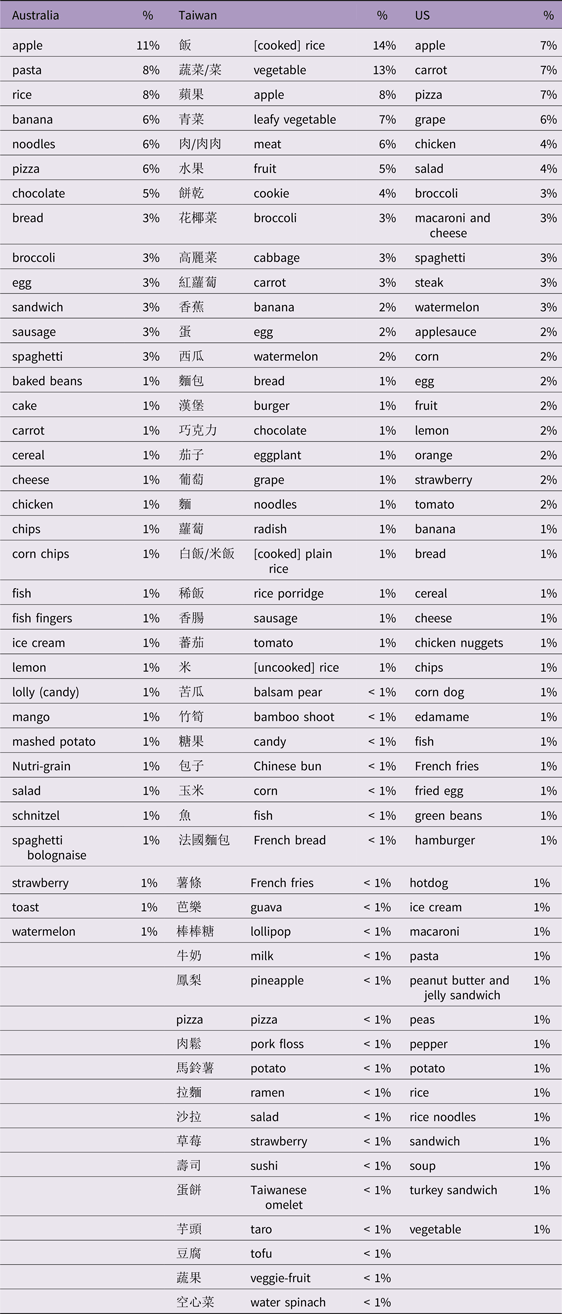
First Food Responses of Seven-year-olds by Culture and Percentage of Respondents

Table 9 specifies food items that were unique to a given culture. By comparing to Table 5, note that there were more unique foods than animals, and this was especially true in the Taiwanese sample.
Foods Uniquely Named by Culture and Percentage of Respondents
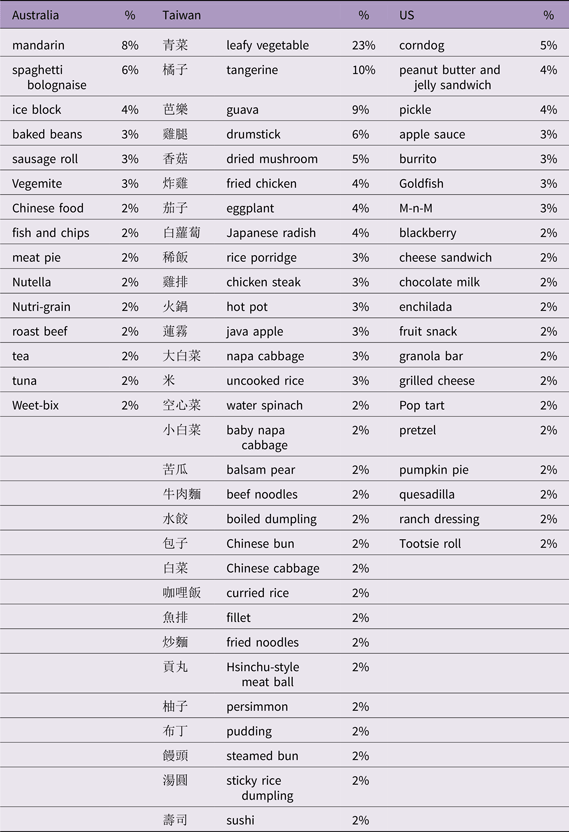
Note. To be counted as unique, a food had to be named by at least 2% of respondents in a given culture and 0% in both of the other cultures.
The ICLUST results appear in Figures 4–6. There were 18 clusters in the Australian sample, 12 in the Taiwanese sample, and 13 in the US sample. Just as for animals, comparison of the three figures reveals a hierarchical organization of the food category in all three cultures. Some clusters were organized by taxon (e.g., fruit: watermelon–strawberry–grape–banana–apple in the Taiwanese sample), whereas others were organized by their frequent co-occurrence (e.g., bread–cheese in the Australian sample). The strongest relation was banana–apple in the Taiwanese and Australian samples and orange–apple in the US sample, perhaps because they are related by taxon (fruit) and also by co-occurrence (healthy snacks). A final commonality was that each cultural group demonstrated distinctions between items that are unrelated. For example, Taiwanese children considered noodles, cooked rice, and cookie to be neighbors (note that the word we translated as ‘cookie’ can also refer to any flour-based snack), but these neighbors were unrelated to carrot and cabbage. Australian children did not relate ice cream to pasta, whereas US children did not relate ice cream to the salad–bread cluster.
The structure of the Australian children's food lexicon.

The structure of the Taiwanese children's food lexicon.

The structure of the US children's food lexicon.

Discussion
Our purpose was to determine whether and how the content and structure of the developing semantic lexicon varies with cultural context. To accomplish this, we examined the animal and food names listed during a semantic fluency task by five- and seven-year-olds from urban Australia, Taiwan, and the US.
Not surprisingly, in all three cultures, the seven-year-olds named more animals and foods than the five-year-olds. Linear increases in semantic fluency over childhood is a consistent finding across a diverse set of language communities (see John & Rajashekhar, Reference John and Rajashekhar2014, for a review). Another notable change with age was that the list of frequently named animals shifted from mammal names at age five to mammal names plus bird, fish, and reptile names at age seven. There was more overlap between the frequently named animal and food items in the Australian and US samples at age seven than five, but these were minimal changes that should be verified across a broader age-range. We will leave the question of whether cultural variations on the semantic lexicon grow or attenuate with age as an open question. Below we turn our attention to evidence of cultural influences on semantic fluency, content, and neighborhood structure in our sample as a whole.
Fluency
Differences between cultures in number of items named were minimal; the only exception being that the US children produced more food names than the Taiwanese children, a small effect. This difference could reflect a more varied diet among the US children, but that seems unlikely given that the Taiwanese children produced a longer list of culturally unique food names than the US children. Moreover, there was a non-significant trend for more animals named by the US children than the Taiwanese children, so a broader explanation may be needed. One possibility is that the US and Taiwanese children differed in executive function. Consider, for example, that when Russian and Romanian kindergarteners were asked to name animals and foods, the Russian children named fewer, a difference that the authors attribute to cultural influences on the development of executive control. Specifically, compared to Romanian teachers, Russian teachers place a higher value on emotional control, impulse control, persistence, and patience (Cheie, Veraksa, Zinchenko, Gorovaya, & Visu-Petra, Reference Cheie, Veraksa, Zinchenko, Gorovaya and Visu-Petra2015). Although greater executive control is typically associated with enhanced fluency (e.g., Kavé et al., Reference Kavé, Kigel and Kochva2008; Koren et al., Reference Koren, Kofman and Berger2005; Raboutet et al., Reference Raboutet, Sauzéon, Corsini, Rodrigues, Langevin and N'Kaoua2010), these authors hypothesize that the Russian children had learned a highly cautious style that privileged accuracy over speed, the result being fewer names generated during the minute-long interval. We used the semantic fluency task to tap the structure of the semantic lexicon, knowing full well that performance on this task also depends upon executive function. In future studies, it would be useful to administer an independent measure of executive control alongside the semantic fluency task to determine how much cultural (and age) variation is accounted for by the executive function performance.
Content
Because young children, especially those in cities, tend to learn about animals from media, but food from direct experience, we predicted more cultural similarity in animal naming than food naming. This prediction held as measured by overlap in frequent names, prototypicality, unique names, and clustering. The overlap between the ten most frequent animal names was high, ranging from 70% to 90%, depending on the ages and samples in question; whereas the overlap between the ten most frequent food names was modest, ranging from 20% to 50%. The prototypical animal was mammal. Mammals comprised over 80% of first responses in all cultures and all ages, a finding akin to that reported for three North American cultures in Winkler-Rhoades et al. (Reference Winkler-Rhoades, Medin, Waxman, Woodring and Ross2010) and three South American cultures in Taverna et al. (Reference Taverna, Waxman, Medin, Moscoloni and Peralta2014). There was no clearly prototypical food common to the three cultures. The list of unique food names was longer than the list of unique animal names, again revealing less cultural variation in knowledge of animal names. Finally, the only commonality in the food clusters was that children in all three cultures clustered apple and banana. In contrast, four animal clusters were common to the three cultures: cat–dog, horse–cow, tiger–lion, and zebra–giraffe.
With clear evidence of greater cultural variation in food naming than animal naming, we move on to explore the nuances revealed by triangulating cultural distinctions defined by heritage (East–West) and population density (metropolitan–urban). Within the food category, we predicted variation by heritage; within the animal category, we predicted variation by population density.
Food names
The predicted variation by heritage was based on the logic that the children in the Taiwanese sample would likely have Eastern diets and therefore different direct experiences with food than the children in the Australian and US samples, who would likely have Western diets. Patterns in frequent and unique names supported this prediction. The highest amount of overlap in frequent food names, 50%, occurred in the Australian and US seven-year-olds; whereas the lowest overlap, 20%, occurred in the US and Taiwanese seven-year-olds. Moreover, many of the unique foods in the Taiwanese sample were dishes traditional to the culture (e.g., hot pot, Chinese bun, sticky rice dumpling), but in contrast, the unique foods in the Australian and US samples included a number of processed foods common to Western diets (e.g., Vegemite and Weet-Bix for Australia; Pop Tarts and Tootsie Rolls for the US). These patterns underscore the importance of culturally specific, direct experiences on food name learning.
Animal names
Counter to prediction, we found no evidence that animal naming varied with population density. Although surrounded by farmland, the US children rarely named farm animals. This finding suggests that limited direct experience with animals is not exclusively characteristic of residents of metropolitan areas. The US children, like the Australian and Taiwanese children, instead named many wild animals. Like Winkler-Rhoades et al. (Reference Winkler-Rhoades, Medin, Waxman, Woodring and Ross2010), we attribute this finding to the popularity of wild animals in children's media, not only books (Freebody & Baker, Reference Freebody and Baker1985; Marriot, Reference Marriott2002) but also films. Many Disney films come to mind: Dumbo, The Jungle Book, The Lion King, and Zootopia. This explanation gains credence from Taverna et al. (Reference Taverna, Waxman, Medin, Moscoloni and Peralta2014), who found that native Amerindian children with limited exposure to media rarely listed exotic wild animals when asked to name living things.
Books and films open worlds that are unavailable to children in everyday life. As such, they are rich sources for learning words. Are there drawbacks? There is the potential for the fantasy worlds in books and films to mislead. Books for preschoolers that include life science content frequently include misconceptions and anthropomorphic portrayals of animals (Sackes, Trundle, & Flevares, Reference Sackes, Trundle and Flevares2009) and, when books and films replace genuine experiences in nature, anthropocentric thinking can result (Ross et al., Reference Ross, Medin, Coley and Atran2003). This finding holds implications for selecting, talking about, and teaching from children's media.
The most striking example of variation in animal naming had nothing to do with population density; rather, it was a reflection of Eastern cultural practices. Specifically, the children in the Taiwanese sample, and only those children, named and clustered animals according to the Chinese zodiac. Although we did not anticipate this specific outcome, it is interpretable in hindsight. In East Asian countries, birth rates (Grech, Reference Grech2015) and investments in children's educational outcomes (Tan, Wang, & Zhang, Reference Tan, Wang and Zhang2018) vary in predictable ways with the signs thought to be lucky or unlucky, suggesting that traditional beliefs about the zodiac remain highly influential there.
Neighborhood structure
Because of the scaffolding of hierarchical relations provided by the structure of Mandarin, we predicted linguistic variation in the food and animal neighborhood structures. Specifically, we predicted more superordinate naming and more sophisticated hierarchical structures in the responses of the Mandarin-speaking Taiwanese children than the English-speaking Australian or US children. We found only partial support for this prediction.
Mandarin speakers named more foods at the superordinate level than the English speakers did. In Mandarin, food names, like other names, include many compounds that share a head (e.g., ji1rou4 ‘chicken-meat’, zhu1rou4 ‘pig-meat’, niu2rou4 ‘cow-meat’). With rare exceptions (e.g., catfish, breadfruit), English words for food do not follow this pattern. It is tempting to conclude that the frequency of compounds in Mandarin scaffold the children's knowledge of superordinate names but, curiously, we did not find the same pattern in Mandarin animal naming. A useful next step would be to determine whether the frequency of compounding varies by category in Mandarin; that is, perhaps the strength of the scaffold is greater for food names than animal names in Mandarin. An alternative possibility is that, in Mandarin, compound words for foods tend to highlight a higher level in the taxonomic hierarchy than compound words for animals. Consider the example presented in the ‘Introduction’ of this paper: whereas English has bison, buffalo, cow, ox, yak, dairy cattle, bull, and calf, all of these words for bovines in Mandarin end with niu2 ‘cow’. Unlike the superordinate term meat in chicken-meat, cow is a basic-level term. Most children, and adults, tend to name at the basic level (Rosch, Mervis, Gray, Johnson, & Boyes-Braem, Reference Rosch, Mervis, Gray, Johnson and Boyes-Braem1976). Hence, structures that highlight basic-level relationships would not serve to differentiate Mandarin from English speakers.
We also predicted that the Mandarin-speaking Taiwanese children would produce more and larger clusters than the English-speaking Australian and US children. This was not the case. Although the Taiwanese children presented the largest (nine-item) cluster in the animal data, there was a similarly sized eight-item cluster in the Australian food data. Moreover, the Australian sample included the most clusters, 17 for animals and 18 for foods. In other words, we found no evidence that Mandarin compounds serve as a bootstrap that enables a more sophisticated structuring of the semantic lexicon among young Mandarin learners than among their English-speaking peers. Recall that Lin et al. (Reference Lin, Schwanenflugel and Wisenbaker1990) found that Mandarin-speaking Taiwanese children demonstrate adult-like taxonomic clusters earlier than children from the US. However, their task involved a typicality judgment, not naming, and the children they sampled ranged from five to twelve years of age, not five to seven. Therefore, we may have missed the precocious clustering thought characteristic of Mandarin-speaking children because we sampled with the wrong task or at the wrong ages.
Overall, the neighborhood structures were more notable for their similarity than their differences across languages. For both food and animals, children in all three samples exhibited hierarchically organized clusters. The clusters themselves were cross-categorized, some were organized by taxon (e.g., vegetables, felines), some by co-occurrence (e.g., snacks, pets), and others by both (e.g., meats to consume at a cookout). Four- to seven-year-olds studied by Nguyen and Murphy (Reference Nguyen and Murphy2003) also demonstrated multiple bases for categorizing, as did the five- to fourteen-year-olds in Taverna et al. (Reference Taverna, Waxman, Medin, Moscoloni and Peralta2014). Clearly, children are flexible in their appreciation of lexical–semantic relationships. Of course clustering like-kinds logically implies the separation of disparate kinds. This separate organization was also evident across cultures in the negative correlations between items such as rabbit–cheetah. Just as learning the link between a word and its referent entails pruning away links between that word and non-referents (McMurray, Horst, & Samuelson, Reference McMurray, Horst and Samuelson2012), knowledge of semantic relationships entails the awareness that some words are not related.
Conclusions
Patterns in the animal and food naming of five- to seven-year-old children from three communities distinguished by language (English–Mandarin), cultural heritage (West–East), and population density (Metropolitan–Urban) revealed similarly hierarchical, yet flexible, organization of the semantic lexicon. The content of the lexicon varied with cultural heritage, and this was particularly true of food names, where differences associated with Eastern and Western diets were apparent. In all three communities, mammals, especially wild mammals, were predominant during animal naming, a likely influence of children's media on animal name learning. The seven-year-olds, but not the five-year-olds, also frequently named birds, fish, and reptiles. The influence of the Chinese zodiac was evident in the clustering of animal names in the Taiwanese sample. There was no apparent influence of population density and little influence of language, except that the Taiwanese children more frequently named foods at the superordinate level, a possible influence of the morphological structure of Mandarin. Children learn words in response to the myriad of opportunities afforded to them by the language, artifacts, and practices of their culture as experienced first-hand or through media, and we can discern these cultural influences on the developing semantic lexicon.
Supplementary materials
For supplementary material for this paper, please visit <https://doi.org/10.1017/S0305000918000211>.
Acknowledgments
We thank Nichole Eden and Timothy Arbisi-Kelm for assistance with data collection, Helin Hernandez for assistance with figures, and the CCDLL Lab Group for input on an earlier draft.



