


1. Introduction
The climate summits under the United Nations Framework Convention on Climate Change (UNFCCC)Footnote 1 from Glasgow to Belém have highlighted the fragility of the global environmental governance system. While these Conferences of the Parties (COP) reaffirmed commitment to the 1.5 degrees Celsius (°C) warming threshold established in the Paris Agreement,Footnote 2 they made limited progress in implementing the actions necessary to achieve that goal. This shortcoming was highlighted in the United Nations Environment Programme (UNEP) Emissions Gap Report of 2023,Footnote 3 which noted:
Due to the failure to stringently reduce emissions in high-income and high-emitting countries (which bear the greatest responsibility for past emissions) and to limit emissions growth in low- and middle-income countries (which account for the majority of current emissions), unprecedented action is now needed by all countries.Footnote 4
Similar implementation gaps exist in other fields, including biodiversity, plastic pollution, and the oceans.Footnote 5
As treaty-based governance regimes struggle to implement and enforce international commitments, private transnational regulators (PTRs) have assumed a growing role in global governance, contributing to the emergence of a hybrid regulatory system.Footnote 6 We use the term ‘PTR’ to refer to institutional entities that set and enforce standards, primarily targeting companies.Footnote 7 We distinguish between private transnational standards (PTS), developed by PTRs, and the rules promulgated through international treaties and their institutional bodies. We refer to these formal legal instruments as public international law instruments (PILIs). PTRs operate across diverse domains, including product standards, environmental protection, financial reporting, and human and labour rights.Footnote 8 Within this evolving hybrid governance system, private transnational initiatives work alongside and engage closely with intergovernmental organizations (IOs), including entities such as UNEP, the secretariat of the UNFCCC, and the secretariat of the Convention on Biological Diversity (CBD).Footnote 9
The shift toward a hybridized and increasingly decentralized model of global governance introduces new theoretical and practical challenges.Footnote 10 Critics of private voluntary schemes question their capacity to serve as credible counterparts to state-backed regulation, particularly in the light of concerns about greenwashing.Footnote 11 While these concerns are valid, the prospects for revitalizing the public international legal system – especially in the aftermath of United States (US) President Trump’s re-election in 2024 – remain limited. This suggests that a deeper understanding of the structure and dynamics of the global hybrid governance system will remain a crucial priority for the foreseeable future. Our analysis focuses on the coordination challenges arising from the decentralized and highly fragmented global governance system, contrasting two opposing dynamics: conflictive and synergistic hybridization. Conflictive hybridization highlights the risks posed by a fragmented regulatory structure. Overlapping mandates and inconsistent agendas can create tensions and obstruct collaborative solutions for global dilemmas.Footnote 12 It may also trigger a race to the bottom, allowing firms to exploit regulatory arbitrage by selecting the least stringent PTS. Furthermore, inadequate coordination can blur the distinction between high- and low-quality standards, exacerbating the risk of greenwashing.Footnote 13 By contrast, the idea of synergistic hybridization highlights how hybrid governance can promote innovation, experimentation, and mutual learning by harnessing specialization, division of labour, and complementary strengths, ultimately generating synergistic benefits.Footnote 14
Significant progress has been made in the theoretical analysis of hybridization and fragmentation,Footnote 15 but there is a shortage of empirical work that can advance the understanding of these related concepts.Footnote 16 In this article, we seek to fill this gap by analyzing the interaction between IOs and PTRs in the global sustainability domain, using social network analysis (SNA). Our study complements existing research, which has tended to focus on interactions among IOs, and contributes to the emerging scholarship on public–private interactions in transnational regulatory governance.Footnote 17
Our article advances both theoretical and empirical objectives. Theoretically, we contribute to the conceptualization of the hybrid governance paradigm and highlight the potential of SNA as a tool for analyzing how this hybridity manifests in practice. We argue that the mutual dependence between PTRs and IOs is a defining feature of the global governance system, representing an emergent response to coordination challenges that holds significant synergistic potential. These interdependencies take shape through a complex network of interactions spanning multiple social layers, including citation practices and organizational affiliations. In particular, PTRs invoke the formal texts of international sustainability law (PILIs) as grounds for strengthening both their own authority and the normative force of the standards they promulgate. Within this framework, grounding is understood as a constitutive relation of dependence, through which less fundamental entities obtain or derive their status by virtue of their connection with more fundamental entities.Footnote 18 PTRs thus face two fundamental challenges: the absence of a formal legal foundation and the democratic deficit that arises from their status as private actors. Both factors can weaken their ability to influence corporate behaviour through standard-setting and enforcement mechanisms.Footnote 19 At the same time, IOs rely on PTRs as decentralized mechanisms for disseminating and operationalizing international norms into corporate governance contexts, thus compensating for their limited enforcement capabilities.Footnote 20
Empirically, our goal is more modest: we seek to demonstrate the plausibility of our theoretical framework by applying SNA to a novel dataset. Our analysis focuses on one aspect of the relations of mutual dependence between PTRs and IOs: how PTRs rely on global treaty documents as grounds. We leave the systematic study of the second prong of our framework – how IOs draw on PTRs to enhance compliance with treaty-based norms – to future research (by us or others). Here, we provide only tentative evidence of this dependency.Footnote 21
SNA is based on the idea that the structure of social ties in which actors are embedded significantly shapes the dynamics of social systems.Footnote 22 It models these dynamics by representing the social system as an abstract network of nodes and edges, capturing different types of entity and the relations between them. This relational perspective enables a systematic exploration of governance hybridity, uncovering the patterns of dependence and interconnection between PTRs and IOs.
In Section 2, we explain how our argument about the mutual dependence between PTRs and IOs fits within the literature on complexity theory and global governance. We then develop four propositions focusing on the PTR-IO grounding dependency. Next, we outline our methodology and present our findings, drawing on a comprehensive network analysis based on specially curated data, which includes 55 PTRs, 261 PILIs, and 41 IOs (Sections 3 and 4).Footnote 23 In the concluding section (5), we discuss how our analysis contributes to the debate on the nature and dynamics of hybrid global governance and we outline avenues for future research. We also examine vulnerabilities within this structure of mutual dependence, highlighting the growing fragility of the global sustainability legal system amid rising nationalist and anti-multilateralist trends.
2. Mutual Dependence Between PTRs and IOs: Leveraging Treaty Documents as Grounds
We base our argument about the synergistic relation between PTRs and IOs on the general framework of complexity theory.Footnote 24 The potential contribution of complexity science to the study of global governance has received considerable attention in the literature. Two distinct aspects of complexity are relevant in this context.Footnote 25 The first concerns the complexity of the global socio-ecological system.Footnote 26 The second, which is the focus of this article, concerns the complexity of the global governance system, which arises from the proliferation of norms, institutions, and communities operating in the field, and their multiple forms of interconnectedness.Footnote 27
Complex systems are characterized by several key features: non-linearity, self-organization, emergence, and adaptation. Non-linearity reflects the sensitivity of complex systems to initial conditions, the existence of multiple evolutionary trajectories, and susceptibility to abrupt systemic changes through tipping points.Footnote 28 Self-organization refers to the spontaneous evolution of structured order in the absence of external control.Footnote 29 Emergence refers to the arising of novel structures and properties through the interactions of multiple distributed elements that cannot be deduced solely from the properties of the interacting elements.Footnote 30 A key feature of emergent phenomena is synergy, which refers to the ‘combined, “cooperative” effects that arise from the relationships and interactions among various forces, particles, elements, parts, genomes or individuals in a given context—effects that are not otherwise attainable’.Footnote 31 The literature distinguishes between synergies of scale, which result from aggregation (for example, adding or multiplying similar elements)Footnote 32 and often exhibit threshold effects,Footnote 33 and synergies of functional complementarity, which emerge when entities with different properties interact in ways that generate novel beneficial effects.Footnote 34 Adaptation refers to the capacity of complex systems to learn from their environment and co-evolve without losing their autonomy.Footnote 35
Building on the above framework, we argue that the network relations between IOs and PTRs constitute an emergent and adaptive response to the coordination and enforcement challenges of global governance. Specifically, PTRs invoke PILIs to bolster both their authority and the normative weight of their standards, while IOs turn to PTRs to operationalize and promote compliance with treaty-based norms. By leveraging the respective strengths of IOs and PTRs, this reciprocal dynamic creates a mutually reinforcing system that harnesses functional complementarities and generates significant synergies. As we elaborate below, references to PILIs represent one dimension of a broader architecture of normative grounding. A second mechanism operates through horizontal peer recognition, reflected in reciprocal citations among private standards. Together, these vertical and horizontal grounding linkages help to constitute PTRs as autonomous sources of normative authority.Footnote 36
Our network model of the relationship between PTRs and IOs, and among PTRs themselves, challenges prevailing accounts of global governance by emphasizing that mutual dependence arises through decentralized and uncoordinated interactions rather than from hierarchically controlled processes. As an emergent network phenomenon, the interaction between PTRs and IOs in this model does not conform to frameworks of delegation or deference. It is not delegation, as neither actor formally transfers authority to the other;Footnote 37 nor is it deference, as authority is not ceded from one to the other. Instead, both actors strategically engage with one another to reinforce and extend their own authority. Likewise, the self-referential dynamic of peer recognition among PTRs resists hierarchical conceptions of authority, operating instead through horizontal processes of mutual validation.
It is useful to distinguish our theoretical framework from related literature. Firstly, while our model shares some affinities with the orchestration framework proposed by Abbott and Snidal,Footnote 38 particularly in suggesting that IOs rely on PTRs as semi-compliance agents, it carves a distinct path. Abbott and Snidal describe orchestration as an active process, in which IOs deliberately enlist intermediaries by providing material and ideational support.Footnote 39 In contrast, we argue that the mutual dependence between PTRs and IOs emerges organically from uncoordinated interactions and cannot be fully captured by orchestration alone.
Secondly, our model also differs from the theoretical framework developed by Axel Marx in a recent article.Footnote 40 Marx examines the phenomenon of mutual dependence between what he terms ‘voluntary sustainability standards’ (VSS) and public law, arguing that the distinction between public and private governance blurs when the unit of analysis shifts from the legal status of the entity producing the standard to the function it serves. From this perspective, VSS and public law – including both international treaties and national laws – become components of an integrated system of public governance. While our analysis begins with a similar empirical observation, we emphasize the network structure of these interactions and their emergent qualities, which arise despite the system’s lack of centralized coordination. Rather than a functionally integrated system, we highlight the decentralized and adaptive interdependencies between IOs and PTRs, shaped by self-organized interactions rather than deliberate policy design.
Our article addresses a significant gap in the literature by systematically analyzing the interrelations between private and public institutions in the global sustainability domain. A key limitation of existing research on global governance is its tendency to invoke complexity science in a largely metaphorical or abstract manner,Footnote 41 without applying computational methods to empirical analysis.Footnote 42 Studies that employ quantitative or network-based computational approaches remain rare.Footnote 43
It is important to recognize that empirical research on global governance presents significant challenges, particularly in disentangling multi-causal complexities, addressing the scarcity of longitudinal data, and overcoming restricted access to proprietary information. These limitations make it nearly impossible to test all aspects of our model within a single study. Accordingly, our aim is not to provide a complete and definitive validation of our model but rather to assess its plausibility and identify promising directions for future research. Furthermore, we emphasize that uncovering new phenomena – such as the interaction patterns between PTRs and IOs explored below – is essential for advancing and refining theoretical thinking in this field of study.Footnote 44
In the following section, we articulate several propositions that elaborate on the grounding relations between PTRs and IOs, and empirically evaluate them using a specially curated dataset of private transnational standards and PILIs (including treaties, declarations, and protocols). Our analysis focuses specifically on citation practices rather than other forms of interaction – such as personnel exchanges, institutional affiliations, or financial relationships – for two key reasons. Firstly, citations provide a visible and well-established mechanism for conferring authority, offering clear signals to firms seeking certification and to states considering the incorporation of PTR-based standards into their own legal systems. Secondly, citations constitute a relatively objective form of evidence, particularly when compared to data derived from interviews.
2.1. Citations as Grounding Mechanisms
We argue that the network architecture of global governance enables PTRs to establish themselves as valid sources of normative power. They do so both by linking themselves to more fundamental international entities, such as authoritative intergovernmental organizations and PILIs (the focus of this article), and by engaging in reciprocal patterns of endorsement with peer schemes. This model of network grounding challenges the traditional pyramidal conception of authority, which views formal authority as deriving solely from vertical delegation by hierarchically superior public law sources. Instead, the authority of PTRs is cyclically co-generated through a web of interrelations among PTRs, IOs/PILIs, and other PTRs. This dynamic, non-linear model conceptualizes authority and validity as products of an evolving web of constitutive dependence, in which authority is continuously constituted and reconstituted across interacting regimes. It thus contributes to a growing body of scholarship that emphasizes the relational foundations of authority in transnational regulatory regimes.Footnote 45
Groundedness is also central to the legitimacy of normative authority. Meyer and Rowan refer to this as the question of an institution’s ‘legal mandate’,Footnote 46 and Scott emphasizes this dimension in his often-quoted definition of legitimacy: ‘Legitimacy is not a commodity to be possessed or exchanged but a condition reflecting cultural alignment, normative support, or consonance with relevant rules or laws’.Footnote 47 Although normative grounding is neither the only strategy that PTRs employ to establish legitimacy, nor always a sufficient one, it remains a core mechanism through which they seek to assert normative authority, particularly in the absence of formal legal mandates. Recognizing that PTRs also draw on other legitimation strategies – including stakeholder participation, appeals to moral authority, and reliance on expert knowledge – we focus on grounding as a key dimension of their authority-building practices.Footnote 48
To examine this argument, we analyzed the citation network linking PTS and PILIs.Footnote 49 Although we do not investigate the underlying motivations driving PTR citation practices or how these references are received by external audiences – questions we leave for future research – we argue that evidence of a network-based architecture of normative grounding, if demonstrated, would support our claim that PTRs derive their authority from embeddedness in citation networks, rather than from formal delegation alone.Footnote 50
The following examples demonstrate how citation functions as a grounding mechanism. Article 6.3.10.3 of the International Organization for Standardization (ISO) 26000 Guidance on Social ResponsibilityFootnote 51 supports its prohibition of child labour (‘Organizations should not engage in or benefit from any use of child labour’) by referencing the International Labour Organization (ILO) conventions that determine the minimum age for work.Footnote 52 Similarly, Article 6.5.2.1 of the ISO 26000 Guidance, which requires organizations to respect and promote a precautionary approach, cites the 1992 Rio Declaration on Environment and DevelopmentFootnote 53 and several conventions.Footnote 54 Finally, Principle 2 of the Aquaculture Stewardship Council (ASC) Freshwater Trout Standard,Footnote 55 which addresses the conservation of habitats and biodiversity, cites the CBD,Footnote 56 which was adopted at the 1992 Earth Summit.
We argue that cross-references between PTR standards and PILIs have a cumulative and synergistic effect on the authority and legitimacy of PTRs. Accordingly, our analysis focuses on the aggregate impact of referencing multiple PILIs, rather than the effect of any single citation on the legitimacy of a particular rule.
Proposition 1: The number of citations between PTS and PILIs is significant. We measure significance both by checking the relative portion of PTS that cite PILIs and by comparing the number of citations between PTS (internal citations) and between PTS and PILIs (external citations).
For clarity, we define internal citations as references from one PTS to another within the private regulatory sphere, while external citations involve a PTS citing a PILI, thereby invoking a public legal source. Although competition between PTRs may suppress internal citation practices, our data reveals notable instances of such peer referencing.Footnote 57 These internal citations can serve as a form of self-referential grounding, through which PTRs reinforce each other’s authority in the absence of hierarchical validation.Footnote 58 Comparing internal and external citations offers a valuable lens for understanding how PTRs draw on both private and public sources to construct normative authority within a hybrid governance system.
For PTRs to ground their authority through citations, they must explicitly invoke them, linking a specific rule in a PTS to a corresponding provision in a PILI. We distinguish between two types of grounding citation: (a) references to a specific PILI norm as part of the explication of a PTS rule, and (b) citations that treat the PILI as a dictionary: an interpretative source for a term or concept within the PTS. In both cases, the content of the private norm is grounded in the text of the public norm. We contrast these cases with normatively weaker citations, such as bibliographic references that provide general, non-specific support for the standard.
Proposition 2: Citations of PILIs by PTS are used mostly in a strong normative form to explicitly ground the content of the citing standard in an authoritative PILI.
2.2. Emergence of Hubs and Authorities in the Network of PTRs and IOs
The network of private standards and PILIs exhibits scale-free properties. In random networks, the distribution of edges follows a bell-shaped curve: most nodes have approximately the same number of links, and it is extremely rare to find nodes that have significantly more or fewer links than the average.Footnote 59 Random networks, therefore, tend to be non-hierarchical. Fragmentation can be understood as a claim that the network of PTRs and IOs consists of randomly distributed nodes. By contrast, scale-free networks contain hubs, which are nodes with a very high number of links. In such networks, the distribution of edges follows a power law: most nodes have only a few links and some have a very large number of them. In a seminal article,Footnote 60 Albert-László Barabási and Reka Albert demonstrated that complex networks exhibit a propensity to conform to a power law distribution, irrespective of the nature of their constituent elements.Footnote 61
Barabási has argued that the emergence of scale-free networks with large hubs can be explained by two mechanisms: growth and preferential attachment. As new nodes appear, they tend to connect to the more connected nodes, and these popular nodes acquire more links over time than less connected ones. The ‘rich get richer’ process tends to favour the early nodes, which are more likely to become hubs.Footnote 62
We argue that the network of PTS and PILIs is characterized by a few highly connected nodes, but the mechanism that leads to the emergence of these nodes is different from the one described by Barabási and his co-authors. To understand the unique structure of the citation network, we use an algorithm developed by Jon Kleinberg.Footnote 63 Kleinberg’s algorithm distinguishes between authorities, which are nodes cited by many other nodes, and hubs, which are nodes that cite a large number of other nodes. The algorithm works recursively: a node that is a good hub cites many good authorities, and a node that is a good authority is cited by many good hubs.Footnote 64 In our case, because citations go only from PTS to PILIs, only PILIs can serve as authorities and only PTS can serve as hubs.
We argue that the PTS-PILI network is more likely to exhibit a hub-authority structure than a random one. This claim rests on two arguments. Firstly, it builds on Barabási’s general thesis on the power law structure of networks, which has been validated across numerous studies in different domains.Footnote 65 Secondly, the structure of global sustainability governance – made up of general PTS (such as the Global Reporting Initiative (GRI)Footnote 66 and ISO Standard 26000 – Social Responsibility (ISO 26000)Footnote 67) alongside sectoral ones (such as Social Accountability 8000 (SA8000),Footnote 68 Equator Principles (EP),Footnote 69 and Forest Stewardship Council (FSC)Footnote 70), as well as highly prominent PILIs such as the CBDFootnote 71 and the UNFCCC,Footnote 72 and ILO ConventionsFootnote 73 – fosters the emergence of a hub-authority configuration. This hub-authority structure is driven primarily by the system’s normative architecture, which reflects differences in prominence and generality, and is further reinforced by Barabási’s observed temporal effects.
Proposition 3: The network has a hub-authority structure, in which relatively few PTS operate as hubs, citing many PILIs, and relatively few PILIs operate as authorities, receiving citations from many PTS.
2.3. Role of IOs/PILIs in Facilitating Policy Coherence between PTRs
As noted above, a key challenge of regulatory hybridization is diminished regulatory cohesion resulting from the proliferation of public and private institutions with overlapping mandates and inconsistent agendas. This misalignment can impede collaborative solutions for global dilemmas and diminishes the overall effectiveness of governance frameworks.Footnote 74 To fulfil its purpose, the regulatory system requires mechanisms for coordination and integration. We argue that PILIs can play an important role in reducing fragmentation among PTRs and facilitating thematic coordination by indirectly linking PTRs through common citations to PILIs.
Proposition 4: PILIs contribute to the cohesiveness of the PTR system by linking distinct PTRs through common citations.
3. Methodology and Data
Our dataset included citations from 393 legal texts associated with 55 PTRs, 261 PILIs, and 41 IOs. The PTRs are related to multiple sectors – from textile and coffee to quarried substances and golf – and they provide guidance in a variety of regulatory domains, including the environment, labour, and human rights. Below, we explain how the dataset and the network were created.
3.1. Data Related to PTRs
To construct the PTR list, we followed the methodology used in our previous article on transnational networked constitutionalism.Footnote 75 Firstly, we created an initial list of candidate PTRs based on a review of the literature, and expanded the list through an internet search. For the 55 PTRs on the list,Footnote 76 we collected all associated PTS, concluding with a list of 393 documents (some PTRs have several standards associated with different products, certification types, or company types).Footnote 77 PTRs use various terms to refer to their PTS, including standards (Bonsucro),Footnote 78 principles (Women’s Empowerment Principles (WEPs)),Footnote 79 criteria (Global Sustainable Tourism Council (GSTC)),Footnote 80 codes of practice (Responsible Jewellery Council (RJC)),Footnote 81 and position statements (International Council on Mining and Metals (ICMM)).Footnote 82 We also collected ‘governance’ standards that determine the decision-making structure of the organization and the procedures for rule-making.
We collected additional data about each PTR in the sample, including foundation year, sector, regulatory focus (labour, environment or other; multiple categories enabled), dominant governing stakeholder (industry, civil society or states; multiple categories enabled), and the stringency of the compliance regime (we distinguished between ‘soft’ schemes that rely on self-verification by member firms and ‘strict’ schemes in which verification is undertaken by the PTR or a third party).Footnote 83 While some PTRs in our sample feature hybrid governance involving both state and private actors (for example, Investors in People (IIP)Footnote 84 and the UNEP Principles for Sustainable Insurance (UNEP PSI)),Footnote 85 we included them because their governance remains largely independent from the formal frameworks of either state or treaty law. This approach ensures our analysis reflects the full spectrum of private regulatory forms.Footnote 86
3.2. Data Related to PILIs
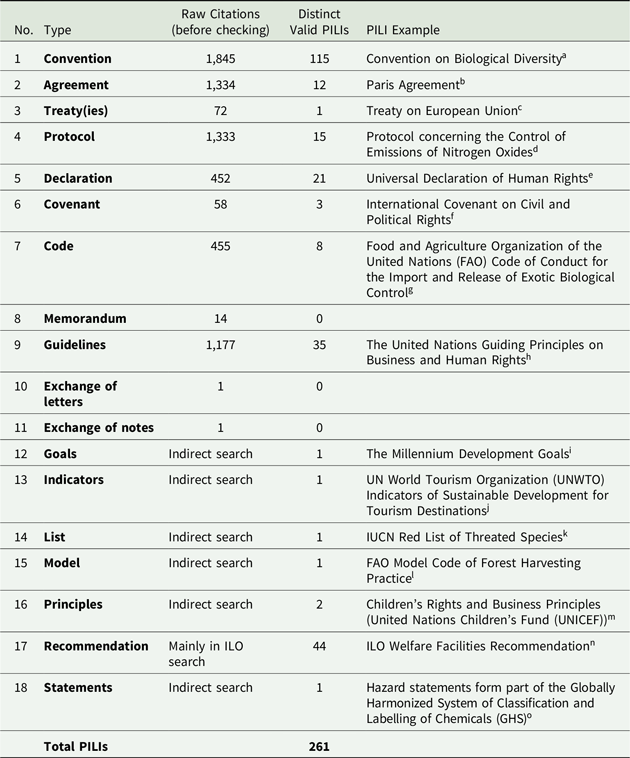
The second type of node included in the network consists of the PILIs that PTS cite. We first created a list of generic titles of international law instruments that could be cited by PTS, which included generic terms such as ‘conventions’, ‘treaties’, ‘agreements’, ‘declarations’, and ‘protocols’. We then searched for these terms in all the PTS files, using a specially developed Python programme to identify all the citations to PILIs. The program exported a file with ‘text windows’ in which the designated term appeared (lower case or upper case, with or without spaces). For example, the search for ‘convention’ generated a spreadsheet with 1,845 rows. Each row contained the sentence that included the term ‘convention’ and some sentences before and after (text window) so that the general context of the citation could be analyzed. Twelve PILI files that were not machine-readable (for example, OEKO-TEX standards)Footnote 87 were searched manually.
In the third step, we manually read the citations (text windows) and labelled the PILIs that were mentioned. As part of this close reading, we also labelled additional types of PILI that were found in the text windows close to the original search term (for example, the International Union for the Conversation of Nature (IUCN) Red List of Threatened SpeciesFootnote 88 was found while searching for ‘conventions’).Footnote 89 In some cases, the automated search did not lead to a PILI (for example, the search for ‘convention’ led to the word ‘conventional’;Footnote 90 in other cases, the word was used generically, without referencing a particular PILI).Footnote 91 Finally, we merged titles that referred to the same object (PILIs), such as ‘United Nations Framework Convention on Climate Change’Footnote 92 and ‘International Climate Change Convention’.Footnote 93 Table 1 provides summary statistics for the different PILI categories.
Summary Statistics for the Different PILI Categories

Notes
a N. 9 above.
b N. 2 above.
c Treaty on European Union (TEU), Maastricht (Netherlands), 7 Feb. 1992, in force 1 Nov. 1993, available at: https://eur-lex.europa.eu/legal-content/EN/TXT/?uri=CELEX%3A11992M%2FTXT; last amended at Lisbon (Portugal), 13 Dec. 2007, in force 1 Dec. 2009, available at: https://eur-lex.europa.eu/legal-content/en/TXT/?uri=CELEX%3A12012M%2FTXT.
d Sofia (Bulgaria), 31 Oct. 1988, in force 14 Feb. 1991, available at: https://unece.org/environment-policy/air/protocol-concerning-control-emissions-nitrogen-oxides.
e Paris (France), 10 Dec. 1948, available at: https://www.un.org/en/about-us/universal-declaration-of-human-rights.
f New York, NY (US), 16 Dec. 1966, in force 23 Mar. 1976, available at: https://www.ohchr.org/en/instruments-mechanisms/instruments/international-covenant-civil-and-political-rights.
g Rome (Italy), 31 Oct. 1995, available at: https://www.fao.org/4/x5585e/x5585e0i.htm.
h Geneva (Switzerland), 16 June 2011, available at: https://www.ohchr.org/sites/default/files/documents/publications/guidingprinciplesbusinesshr_en.pdf.
i New York, NY (US), 8 Sept. 2000, available at: https://www.un.org/millenniumgoals/bkgd.shtml.
j Madrid (Spain), 1997, available at: https://tourismgreeneconomy.weebly.com/uploads/8/1/3/1/81312260/indicators_of_sustainable_development_for_tourism_destinations_unwto.pdf.
k N. 88 above
l Rome (Italy), 1995, available at: https://www.fao.org/sustainable-forest-management/toolbox/tools/tool-detail/zh/c/217923.
m London (UK), 12 Mar. 2012, available at: https://www.unicef.org/media/96136/file/Childrens-Rights-Business-Principles-2012.pdf.
n Geneva (Switzerland), 26 June 1956, available at: https://normlex.ilo.org/dyn/nrmlx_en/f?p=NORMLEXPUB:12100:0::NO:12100:P12100_INSTRUMENT_ID:312440:NO.
o Geneva (Switzerland), 25 July 2003, available at: https://unece.org/ghs-rev9-2021.
3.3. Constructing the Edges
Our final sample included 261 PILIs.Footnote 94 We created a list of synonyms and common abbreviations for each PILI, based on typical citation formats in PTS texts and on the websites of the PILIs: for example, ‘United Nations Framework Convention on Climate Change’ and ‘UNFCCC’. We then searched again the PTS dataset for each PILI abbreviation, shorthand, and the keywords of the full treaty title. For each result we checked that it reflects a citation of a PILI. If we found a valid citation of a PILI in a PTS, we coded the citation as an edge between the PTR associated with the PTS and the cited PILI. Thus, an edge between PTR-PILI indicates the existence of at least one citation between a PTR standard and a PILI. Using this method, we built the PTR-PILI network, which consisted of 914 edges.
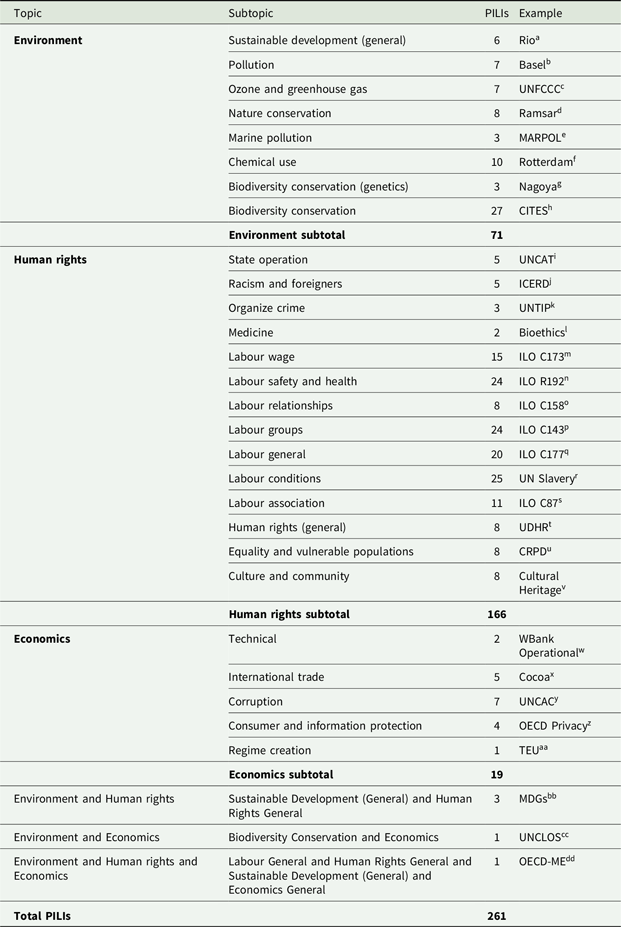
We classified PILIs into three categories: environment, human rights, and economics, with multiple categories enabled. These primary categories were further divided into subtopics, as elaborated in Table 2.
Classification of PILIs

Notes
a N. 53 above.
b Basel Convention on the Control of Transboundary Movements of Hazardous Wastes and their Disposal, Basel (Switzerland), 22 Mar. 1989, in force 5 May 1992, available at: https://www.basel.int.
c N. 1 above.
d N. 98 [above/below].
e International Convention for the Prevention of Pollution from Ships (MARPOL), London (UK), 2 Nov. 1973, in force 2 Oct. 1983, available at: https://www.imo.org/en/About/Conventions/Pages/International-Convention-for-the-Prevention-of-Pollution-from-Ships-(MARPOL).aspx.
f Rotterdam Convention on Prior Informed Consent (PIC) Procedure for Certain Hazardous Chemicals and Pesticides in International Trade, n. 140 below.
g Nagoya Protocol on Access to Genetic Resources and the Fair and Equitable Sharing of Benefits Arising from their Utilization to the Convention on Biological Diversity, Nagoya (Japan), 29 Oct. 2010, in force 12 Oct. 2014, available at: https://www.cbd.int/abs/text.
h Convention on International Trade in Endangered Species of Wild Fauna and Flora (CITES), Washington, DC (US), 3 Mar. 1973, in force 1 July 1975, available at: https://cites.org/eng/disc/text.php.
i Convention against Torture and Other Cruel, Inhuman or Degrading Treatment or Punishment, New York, NY (US), 10 Dec. 1984, in force 26 June 1987, available at: https://www.ohchr.org/en/instruments-mechanisms/instruments/convention-against-torture-and-other-cruel-inhuman-or-degrading.
j International Convention on the Elimination of All Forms of Racial Discrimination, New York, NY (US), 21 Dec. 1965, in force 4 Jan. 1969, available at: https://www.ohchr.org/en/instruments-mechanisms/instruments/international-convention-elimination-all-forms-racial.
k Protocol to Prevent, Suppress and Punish Trafficking in Persons, Especially Women and Children, supplementing the United Nations Convention against Transnational Organized Crime (Palermo Protocol), Palermo (Italy), 12–15 Dec. 2000, in force 25 Dec. 2003, available at: https://www.ohchr.org/en/instruments-mechanisms/instruments/protocol-prevent-suppress-and-punish-trafficking-persons.
l UN Educational, Scientific and Cultural Organization (UNESCO) Universal Declaration on Bioethics and Human Rights, Paris (France), 19 Oct. 2005, available at: https://unesdoc.unesco.org/ark:/48223/pf0000146180.
m ILO Protection of Workers’ Claims (Employer’s Insolvency) Convention (No. 173), Geneva (Switzerland), 23 June 1992, in force 8 June 1995, available at: https://normlex.ilo.org/dyn/nrmlx_en/f?p=NORMLEXPUB:12100:0::NO:12100:P12100_INSTRUMENT_ID:312318:NO.
n ILO Safety and Health in Agriculture Recommendation (No. 192), Geneva (Switzerland), 21 June 2001, available at: https://normlex.ilo.org/dyn/nrmlx_en/f?p=NORMLEXPUB:12100:0::NO::P12100_INSTRUMENT_ID:312530.
o ILO Termination of Employment Convention (No. 158), Geneva (Switzerland), 22 June 1982, in force 23 Nov. 1985, available at: https://normlex.ilo.org/dyn/nrmlx_en/f?p=NORMLEXPUB:12100:0::NO::P12100_ILO_CODE:C158.
p ILO Migrant Workers (Supplementary Provisions) Convention (No. 143), Geneva (Switzerland), 24 June 1975, in force 9 Dec. 1978, available at: https://normlex.ilo.org/dyn/nrmlx_en/f?p=NORMLEXPUB:12100:0::NO::P12100_ILO_CODE:C143.
q ILO Home Work Convention (No. 177), Geneva (Switzerland), 20 June 1996, in force 22 Apr. 2000, available at: https://normlex.ilo.org/dyn/nrmlx_en/f?p=NORMLEXPUB:12100:0::NO:12100:P12100_INSTRUMENT_ID:312322:NO.
r UN Supplementary Convention on the Abolition of Slavery, the Slave Trade, and Institutions and Practices Similar to Slavery, Geneva (Switzerland), 7 Sept. 1956, in force 30 Apr. 1957, available at: https://www.ohchr.org/en/instruments-mechanisms/instruments/supplementary-convention-abolition-slavery-slave-trade-and.
s ILO Freedom of Association and Protection of the Right to Organise Convention (No. 87), San Francisco, CA (US), 9 July 1948, in force 4 July 1950, available at: https://normlex.ilo.org/dyn/nrmlx_en/f?p=NORMLEXPUB:12100:0::NO::P12100_INSTRUMENT_ID:312232.
t Universal Declaration of Human Rights (UDHR), Paris (France), 10 Dec. 1948, available at: https://www.un.org/en/about-us/universal-declaration-of-human-rights.
u UN Convention on the Rights of Persons with Disabilities, New York, NY (US), 13 Dec. 2006, in force 3 May 2008, available at: https://www.un.org/development/desa/disabilities/convention-on-the-rights-of-persons-with-disabilities.html.
v UNESCO Convention for the Safeguarding of the Intangible Cultural Heritage, Paris (France), 17 Oct. 2003, in force 20 Apr. 2006, available at: https://ich.unesco.org/en/convention.
w World Bank Operational Guidelines, Washington, DC (US), 1964 (first official procurement guidelines), available at: https://policies.worldbank.org/en/policies/operational-manual.
x International Cocoa Agreement, Geneva (Switzerland), 25 June 2010, in force 1 Oct. 2012, available at: https://treaties.un.org/doc/source/signature/2010/english.pdf.
y United Nations Convention against Corruption, Mérida (Mexico), 9 Dec. 2003, in force 14 Dec. 2005, available at: https://www.unodc.org/unodc/en/corruption/uncac.html.
z Organisation for Economic Co-operation and Development (OECD) Guidelines on the Protection of Privacy and Transborder Flows of Personal Data, Paris (France), 23 Sept. 1980, available at: https://www.oecd.org/en/publications/oecd-guidelines-on-the-protection-of-privacy-and-transborder-flows-of-personal-data_9789264196391-en.html.
aa Treaty on European Union (TEU), Maastricht (Netherlands), 7 Feb. 1992, in force 1 Nov. 1993, available at: https://eur-lex.europa.eu/legal-content/EN/TXT/?uri=CELEX%3A11992M%2FTXT; last amended at Lisbon (Portugal), 13 Dec. 2007, in force 1 Dec. 2009, available at: https://eur-lex.europa.eu/legal-content/en/TXT/?uri=CELEX%3A12012M%2FTXT.
bb New York, NY (US), 8 Sept. 2000, available at: https://www.un.org/millenniumgoals/bkgd.shtml.
cc UN Convention on the Law of the Sea (UNCLOS), Montego Bay (Jamaica), 10 Dec. 1982, in force 16 Nov. 1994, available at: https://www.un.org/depts/los/convention_agreements/texts/unclos/unclos_e.pdf.
dd OECD Guidelines for Multinational Enterprises on Responsible Business Conduct, Paris (France), 21 June 1976, available at: https://www.oecd.org/content/dam/oecd/en/publications/reports/2023/06/oecd-guidelines-for-multinational-enterprises-on-responsible-business-conduct_a0b49990/81f92357-en.pdf.
3.4 Developing a Citation Taxonomy
To better understand how PTRs cite PILIs, we analyzed a sample of 100 citations to develop a taxonomy distinguishing five categories of references.
-
1. Normatively substantive references: The normative content of the PTS is based explicitly on the norms of a particular PILI in a detailed and concrete manner. Example from ASC standard: ‘Rationale – Adherence to the child labor codes and definitions included in this section indicates compliance with what the ILO and related international conventions generally recognize as the key areas for the protection of children and young workers’.Footnote 95
-
2. Definitional reference: The PTS uses the PILI as a ‘dictionary’ to define specific terms. Example from Ethical Tea Partnership (ETP) standard:Footnote 96 ‘except for light work as provided for by ILO Convention 138, Article 7’.Footnote 97
-
3. Encyclopaedic reference: The PTS cites the PILI in a general manner, which does not alter the normative content of the PTS. Example from ASC standard: ‘WWF is one of four global non-governmental organizations (NGOs) that have been associated with the Ramsar Convention[Footnote 98] since its inception as … an intergovernmental treaty that provides the framework for national action and international cooperation for the conservation and wise use of wetlands’.Footnote 99
-
4. Procedural reference: The PTS cites the PILI to establish a time frame relevant to its application. Example from Marine Stewardship Council (MSC) and ASC joint standard: ‘The timeframe adopted was originally set in the MSC program with reference to the date of adoption of the [CBD] requirements on alien species’.Footnote 100
-
5. Bibliographic reference: The PTS lists the PILI as a source in its bibliography.Footnote 101
Using the above framework, we analyzed our complete dataset of references to conventions (1,820 raw occurrences). Two research assistants (law students) read all the citations and classified them according to the above taxonomy, each working separately. The students also labelled citations that should be excluded from the sample, focusing on these paradigmatic examples:
-
1. Sentences that are not citations – for example, ‘the application of conventional pesticides’.Footnote 102
-
2. Non-specific references to a convention – for example, ‘or other sources of conventions and norms for allocating emissions’.Footnote 103
-
3. Redundant citations: when the same convention is mentioned twice in the same sentence – for example, ‘This definition is based on the International Labour Organization (ILO) Convention 154‚ Collective Bargaining Convention, 1981[Footnote 104]’.Footnote 105
We then compared the outputs of the two research assistants and, wherever they did not agree, the authors read the citation again and determined which classification suits the taxonomy. Finally, we verified a random sample of the classified citations to ensure that the classification was appropriate. The outcome of this process was a weighted edge table between PTRs (through their associated PTS) and conventions, which considered both the number of citations between PTS and conventions and the distribution of the citation types for each PTS-convention relation.
3.5 Data Related to IOs
We assembled the list of IOs by singling out those that have an institutional link with the PILIs on our list. We adopted a broad view of institutional linkage, not limited to the organ responsible for administering the convention. Based on this approach, we associated, for example, the UNFCCC with UNEP, the World Meteorological Organization (WMO) and the Intergovernmental Panel on Climate Change (IPCC). This analysis produced a list of 41 IOs.Footnote 106 In the case of umbrella organizations, such as the United Nations (UN), we refined the analysis to identify the most relevant sub-unit. For example, the UN International Convention for the Protection of All Persons from Enforced DisappearanceFootnote 107 was associated with the UN Commission on Human Rights. Using this data, we expanded the PTR-PILI network by linking each PILI in the network to its associated IO.Footnote 108 We then created a dataset that included the three types of node and all the edges between them (PTRs-PILIs-IOs). We used R to analyze the network and Gephi to produce the network visualizations.
Figure 1 provides a snapshot of the relationships anticipated by our model. It includes firms certified by PTRs to illustrate the indirect channel through which private–public influence is exercised. Through the reliance of PTRs on PILIs, private firms effectively adopt public norms and regulations shaped by IOs. In this way, the legitimacy-seeking behaviour of PTRs – reflected in their citations of PILIs – positions them as indirect regulatory agents of IOs. Figure 2 presents the full network linking PTRs, PILIs, and IOs.
Snapshot of Network Connection: Subscribing Firm-PTR-PILI-IO

Complete PTRs-PILIs-IOs Network

4. Findings: Analysis of the Complete Hybrid Network
4.1. Proposition 1
We hypothesized that the number of citations between PTRs and PILIs is substantial. To evaluate this, we (a) examined the proportion of PTRs that cite PILIs and (b) compared the number of distinct PILIs cited by a PTR with the number of distinct PTRs cited by a PTR, effectively comparing the average out-degreeFootnote 109 in the respective networks. We found significant support for this proposition. Figure 3 presents the PTRs-PILIs network, where an edge represents at least one citation of a PILI by a PTR (through its associated PTS).
The PTRs-PILIs Network
Note: ‘Node’s degree’ is the number of edges connected to a node, which is equivalent to the number of neighbours it has. In the PTRs-PILIs network, a PTR’s degree represents the number of distinct PILIs it has cited. A ‘bi-partite network’ connects two distinct types of node, with edges permitted only between nodes of different types. In the PTR-PILI network, this means that edges may link PTRs to PILIs, but not PTRs to other PTRs or PILIs to other PILIs.

We found that 72.7% of PTRs (40 out of 55) cite different types of PILI. There are 914 distinct edges between PTRs and PILIs (an edge can include more than one citation). The average degree of a PTR is 16.6, meaning that on average each PTR cites between 16 to 17 PILIs (the average degree of the 40 PTRs that cite PILIs is 22.9). The median degree is 6, which means that at least 50% of the PTRs in the network cite at least 6 PILIs. Drawing on the findings of our previous study,Footnote 110 we compared the intensity of external and internal citations. The analysis of the internal PTR citation network found that the average out-degree of each PTR was 4.2 (with a total of 233 citations). On average, each PTR cites approximately four times more PILIs than other PTRs. Therefore, PTRs tend to rely more on treaty-based norms than on private norms produced by their peer organizations.
To further demonstrate the dependence between PTRs and PILIs, we created a projected PTRs-IOs network based on their common association with PILIs (Figure 4). A PTR is linked to an IO when it cites a PILI that is associated with this IO. PTRs and IOs that have more PILIs in common are depicted as being closer to each other by the Force Atlas layout algorithm. For example, the MSC is close to the Food and Agricultural Organization of the UN (FAO), the ILO, and UNEP because it cites them the most (17 PILIs associated with the ILO, 10 with the FAO, and 9 with UNEP). The graph shows that the network is highly connected. This graph may also have practical implications for IOs, as it can help in identifying closely aligned PTRs for active orchestration.Footnote 111
Projected PTRs-IOs Network

4.2. Proposition 2
Our second proposition posited that PTRs tend to cite PILIs as grounds for the content of the norms they produce. Based on the taxonomy we developed, this tendency should result in most citations being either normative-substantive or definitional. We found that on average 70.3% of the PTR citations were either normative-substantive (31.2%) or definitional (39.1%), 19% bibliographic, 7.4% encyclopaedic, and 3.4% procedural. When calculating the percentages across the total number of citations, 66% were normatively substantive or definitional (952 out of 1,443).Footnote 112
4.3. Proposition 3
Our third proposition stated that the network has a hub-authority structure. Our findings support this proposition. The distribution of citations to PILIs has a power-law pattern, in which few PTRs (hubs) cite many PILIs, and relatively few PILIs (authorities) receive citations from many PTRs. This pattern is captured in Figure 5, which illustrates the distribution of hub and authority scores across the PTRs-PILIs populations.Footnote 113
Distribution of Hub and Authority Scores
Note: The scatterplots and histogram were plotted using Tableau Software.

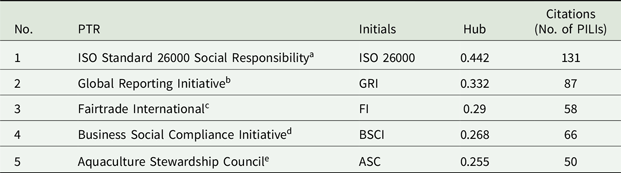
Table 3 presents the top five hubs.Footnote 114
Top Hubs

Notes
a N. 51 above.
b N. 57 above.
c N. 8 above.
d Business Social Compliance Initiative (BSCI), Brussels (Belgium), Mar. 2003, available at: https://www.amfori.org/amfori-bsci.
e N. 57 above.
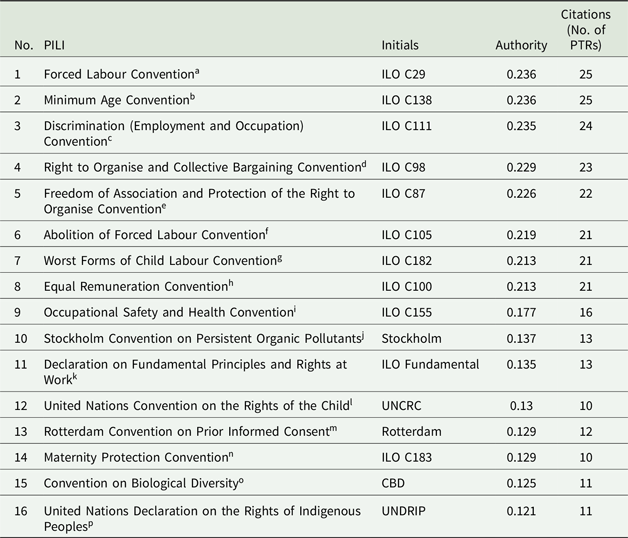
Table 4 presents the most authoritative PILIs.
Most Authoritative PILIs

Notes
a Geneva (Switzerland), 28 June 1930, in force 1 May 1932, available at: https://normlex.ilo.org/dyn/nrmlx_en/f?p=NORMLEXPUB:12100:0::NO::P12100_INSTRUMENT_ID:312174.
b N. 52 above.
c Geneva (Switzerland), 25 June 1958, in force 15 June 1960, available at: https://www.ilo.org/dyn/normlex/en/f?p=NORMLEXPUB:12100:0::NO::P12100_INSTRUMENT_ID:312256.
d Geneva (Switzerland), 1 July 1949, in force 18 July 1951, available at: https://normlex.ilo.org/dyn/nrmlx_en/f?p=NORMLEXPUB:12100:0::NO::P12100_INSTRUMENT_ID:312243.
e ILO Freedom of Association and Protection of the Right to Organise Convention (No. 87), San Francisco, CA (US), 9 July 1948, in force 4 July 1950, available at: https://normlex.ilo.org/dyn/nrmlx_en/f?p=NORMLEXPUB:12100:0::NO::P12100_INSTRUMENT_ID:312232.
f Geneva (Switzerland), 25 June 1957, in force 17 Jan. 1959, available at: https://normlex.ilo.org/dyn/nrmlx_en/f?p=NORMLEXPUB:12100:0::NO::P12100_INSTRUMENT_ID:312250.
g N. 52 above.
h Geneva (Switzerland), 29 June 1951, in force 23 May 1953, available at: https://www.ilo.org/dyn/normlex/en/f?p=NORMLEXPUB:12100:0::NO::P12100_INSTRUMENT_ID:312245.
i Geneva (Switzerland), 22 June 1981, in force 11 Aug. 1983, available at: https://normlex.ilo.org/dyn/nrmlx_en/f?p=NORMLEXPUB:12100:0::NO::P12100_INSTRUMENT_ID:312300.
j N. 139 below.
k Geneva (Switzerland), 18 June 1998, available at: https://www.ilo.org/sites/default/files/2024-04/ILO_1998_Declaration_EN.pdf.
l New York, NY (US), 20 Nov. 1989, in force 2 Sept. 1990, available at: https://www.ohchr.org/en/instruments-mechanisms/instruments/convention-rights-child.
m N. 140 below.
n Geneva (Switzerland), 15 June 2000, in force 7 Feb. 2002, available at: https://normlex.ilo.org/dyn/nrmlx_en/f?p=NORMLEXPUB:55:0:::55:P55_TYPE,P55_LANG,P55_DOCUMENT,P55_NODE:REV,en,C183,/Document.
o N. 9 above.
p New York, NY (US), 13 Sept. 2007, available at: https://www.un.org/development/desa/indigenouspeoples/declaration-on-the-rights-of-indigenous-peoples.html.
Interesting questions that lie beyond the scope of this article include which types of PTR are more likely to cite PILIs and why. In a subsequent study, we tested several hypotheses regarding patterns of PTR citation behaviour.Footnote 115 For example, we found that PTRs targeting firms in the plant, forest, and marine product sectors (primarily food-related) tend to cite more PILIs than PTRs operating in other sectors – including general-purpose PTRs designed to apply across industries.
4.4. Proposition 4
Proposition 4 posited that PILIs function as cohesive bridges between distinct PTRs through shared citations, thereby facilitating greater thematic coordination among private schemes. To test this hypothesis, we created a projected network consisting exclusively of PTRs. In this network (Figure 6), a link exists between two PTRs if they cite a common PILI. The network is weighted: edges are assigned weights that reflect the number of common PILIs between every two nodes. For example, the edge between the Forest Stewardship Council (FSC)Footnote 116 and the Programme for the Endorsement of Forest Certification (PEFC),Footnote 117 which operate in the forestry sector, has a weight of 17, reflecting the number of their common citations.Footnote 118 Another example is the (cross-sectoral) link between the Global Organic Textile Standard (GOTS)Footnote 119 (textile) and Marine Stewardship Council (MSC)Footnote 120 (sustainable fishery), which is based on 13 common citations.Footnote 121 We used the Force Atlas algorithm,Footnote 122 which pulls together PTRs connected by highly weighted edges.
Projected PTR Network

The projected PTR network includes 39 PTRs that have at least one commonly cited PILI, representing 70.9% of our PTR sample. The projected network is highly cohesive: it has a density of 0.655, which means that 65.5% of the potential connections between the nodes are realized (485 edges out of 741 potential edges between the 39 PTRs). The average weight is 7.89, which means that on average 2 random PTRs in the network cite between 7 to 8 common PILIs. A further indication of the network cohesiveness is the low average path length Footnote 123 (1.35).
To assess the extent to which the sector attribute influences the connectivity patterns within the network of PTRs, we employed the Louvain modularity clustering algorithm to partition the graph into five distinct clusters.Footnote 124 If the intrasector connections were substantially stronger than the intersector connections, we would expect the clusters to exhibit a high degree of homogeneity, in which each cluster would consist predominantly of PTRs from a single sector. For instance, all textile-related PTRs (and only those) would be grouped into one cluster. However, the resulting clusters revealed a heterogeneous composition, with a purity level of 56.4% (where a completely heterogeneous cluster is assigned with zero purity and a completely homogeneous one with a purity of 1).Footnote 125 For instance, one cluster encompassed 5 textile-related PTRs, 2 PTRs focused on plants, forestry, and marine products, 2 PTRs related to quarried substances or electronics, and 1 PTR with a general scope. This finding suggests that the network’s construction transcends sectoral boundaries, with interconnections occurring across diverse sectors.
5. Discussion
Our article makes both theoretical and empirical contributions. Theoretically, we argue that a core aspect of the shift towards hybridity in global governance is the mutual dependence between PTRs and IOs. PTRs invoke formal treaty instruments to ground their authority and secure the normative force of the standards they promulgate, while IOs rely on PTRs as channels for norm diffusion into corporate governance settings. This interdependence emerges as a functional response to the coordination challenges inherent in a non-hierarchical global governance system. This mutual dependence, we argue, is not an isolated phenomenon but part of a broader structural shift in global governance – one that we have termed ‘networked constitutionalism’ in a related work.Footnote 126 Unlike traditional, state-based constitutionalism, which operates through hierarchical authority and centralized enforcement, network-based constitutionalism is horizontal and relies on mutual monitoring and peer accountability, rather than top-down control. We argue that this networked interdependence is an emergent property of the global governance system, reflecting its adaptive capacities.
Empirically, our analysis demonstrates how PTRs strategically leverage the authoritative status of IOs to anchor their rules and reinforce their authority through a dense network of citations.Footnote 127 Using network analysis, we captured an emergent feature of this complex regulatory system: a previously undocumented private–public network linking PTRs, PILIs, and IOs. This network appears to have self-organized, without centralized control, into a large connected component characterized by dominant hubs and authorities. Through their substantial and widespread reliance on PILIs, PTRs adapt to the public international legal environment while maintaining institutional autonomy – a dynamic consistent with the notion of adaptation in complexity theory. One of the synergistic effects of this private–public network is enhanced thematic coordination among PTRs, including across sectors, facilitated by the citation of common PILIs. This coordination reduces fragmentation and decentralization within the PTR field, countering conventional assumptions about the disjointed nature of private transnational governance.
Although a comprehensive examination of the dependence of IOs on PTRs lies beyond the scope of this study, our preliminary analysis of three key IOs – the ILO, the UNFCCC, and the CBD – offers tentative support for our argument. Each has taken steps to engage more directly with private actors and appears to rely, to some extent, on private intermediaries to advance its regulatory agenda. A more systematic and in-depth analysis is needed to validate this claim and assess its broader implications. That said, even without further investigation into the deliberate strategies of IOs, our data already supports the view that IOs benefit from the incorporation of their rules into PTR texts, as such incorporation facilitates the diffusion of public norms into corporate practices – advancing IO objectives without direct regulatory control.
The ILO, in 2008, issued detailed guidelines on improving the impact of international labour standards through technical cooperation,Footnote 128 and has since expanded its collaboration with the private sector. In an overview of the ILO’s public–private partnerships (PPPs), the ILO Director-General at the time, Guy Ryder, outlined the strategy, stating that it ‘continues to promote the development of PPPs as an effective and collaborative way of leveraging its values, principles and standards in today’s rapidly changing world of work’.Footnote 129
The UNFCCC Secretariat established the Non-state Actor Zone for Climate Action platform (NAZCA), which aims to extend collaboration with the private sector. The platform now includes over 250 cooperative initiatives through which non-state and subnational actors, and in some cases national governments, collaborate across borders to advance climate goals.Footnote 130 The UNFCCC Secretariat has recently published a guiding framework on recognition and accountability for non-party stakeholder climate action, which sets the principles of engagement, governance, and data management to ensure greater accountability of voluntary initiatives that operate through NAZCA.Footnote 131 Finally, the CBD Secretariat has published a Best Policy Guidance for the integration of biodiversity and ecosystem services in standards,Footnote 132 which aims to facilitate further improvements in standards systems with regard to biodiversity and ecosystem service safeguards.Footnote 133 In addition, the CBD has established a unique Business Engagement Programme, which seeks to facilitate and encourage private sector engagement with biodiversity issues.Footnote 134
It is important to distinguish our model from the approaches advanced by Abbott and Snidal,Footnote 135 and by Marx.Footnote 136 Whereas Abbot and Snidal conceptualize orchestration as a deliberate strategy pursued by IOs to steer intermediaries, we argue that the mutual dependence we identify arises organically from uncoordinated interactions between PTRs and IOs. As such, it cannot be fully captured by the orchestration framework. Similarly, whereas Marx contends that VSS and public law evolve into an integrated system of public governance, our analysis emphasizes the networked structure and emergent character of these interactions – features that persist in the absence of centralized coordination or formal institutional integration. This distinction is reinforced by our hub-authority analysis, which reveals a dual coordination structure within the PTR-IO system: a small number of PTRs function as hubs, citing multiple PILIs (such as ISO 26000, GRI, Fairtrade InternationalFootnote 137), while a smaller subset of PILIs act as authoritative nodes, receiving citations from a broad array of PTRs (such as the ILO,Footnote 138 Stockholm,Footnote 139 and RotterdamFootnote 140 Conventions). This structure suggests a self-organizing dynamic, where key actors from both the PTR and IO domains shape governance interactions without a centralized coordinating authority. Finally, our model conceptualizes citation not as a zero-sum transfer of authority, but rather as a mutualistic relationship, in which both the citing and cited entities benefit from the exchange.
While we have emphasized the positive synergies generated by the mutual dependence between PTRs and IOs, it is equally important to recognize the vulnerabilities inherent in this networked structure. If the treaty framework anchoring PTRs continues to erode, as evidenced by actions like the US withdrawal from the Paris AgreementFootnote 141 and the World Health Organization, both the perceived authority of PTRs and the compliance pressure exerted by IOs may be significantly weakened, ultimately reducing their regulatory effectiveness. This erosion is already evident in the climate governance arena, where major corporations and financial institutions are increasingly scaling back their commitments. This trend suggests that, in the absence of robust institutional anchors, the PTR-IO dependency may generate a negative feedback loop, further undermining the resilience of the global governance system.Footnote 142
At the same time, the ongoing retreat from treaty-based governance may generate structural shifts in the global regulatory landscape that partially mitigate the decline in intergovernmental capacity. Firstly, the subset of PTRs that succeed in maintaining credibility and market relevance may gain increased influence in addressing complex transnational challenges, such as climate change. As IOs lose institutional power, they may increasingly engage with these resilient PTRs to pursue their mandates – potentially resulting in closer formal collaboration. In this evolving landscape, our projected IO–PTR network could provide a useful tool for identifying ‘like-minded’ PTRs for strategic partnerships. Secondly, PTRs may increasingly rely on peer recognition and cross-referencing within private networks as a means of normative grounding, rather than on linkages to public international legal instruments – a reversal of the pattern observed in this study. While such a shift could enhance the autonomy and adaptability of private schemes, it also raises concerns about accountability, transparency, and normative compatibility. Thirdly, states themselves may increasingly rely on private regulatory schemes to fill governance gaps, especially in areas where multilateral efforts stall. Jointly, these trends risk further entrenching private regulatory power in ways that may weaken democratic oversight. As such, they call for closer scrutiny – not only of their functional implications, but also of their broader normative and democratic repercussions.
To conclude, we would like to highlight several avenues for further research. Firstly, while we argued that IOs rely on PTRs to extend the reach of their norms, more research is needed to uncover the mechanisms through which IOs leverage the compliance capabilities of PTRs and assess the extent of this phenomenon. This includes examining how IOs select the PTRs with which to engage and how they monitor and evaluate enforcement efforts. Secondly, our study focused on one dimension of the multilayered relationship between PTRs and IOs: the citation network between private standards and public legal instruments. A deeper understanding of these interactions requires exploring additional layers, such as organizational ties, financial relationships, and personnel exchanges between PTRs and IOs. Thirdly, a crucial question is why certain PTRs and PILIs emerge as dominant hubs and authorities. Investigating the institutional, political or network attributes that shape these patterns would provide valuable insights into the structural forces driving global governance. Lastly, the evolution of PTR-IO interactions over time remains an open question. Longitudinal studies tracking citation patterns, partnerships, and policy alignments could provide valuable insights into how these relationships develop, stabilize or shift, and thereby shed light on the broader dynamics of the global governance system.
Supplementary material
To view supplementary material for this article, please visit https://doi.org/10.1017/S2047102526100260.
Acknowledgements
Author contribution – OP: Conceptualization, formal analysis, methodology, supervision, writing (original and review); OS: Conceptualization, formal analysis, methodology, data curation, software, visualization, writing (original and review).
Funding statement
Not applicable.
Competing interests
The authors declare none.





 Open access

