

Introduction
Today, vulture populations around the world are in serious danger (Safford et al. Reference Safford, Andevski, Botha, Bowden, Crockford and Garbett2019). The illegal use of poison continues to be the single most important threat to vultures throughout their ranges (Margalida Reference Margalida2012, Pantović and Andevski Reference Pantović and Andevski2018, Pauli et al. Reference Pauli, Donadio and Lambertucci2018, Alarcón and Lambertucci Reference Alarcón and Lambertucci2018), especially in Africa (Ogada et al. Reference Ogada, Shaw, Beyers, Buij, Murn, Thiollay, Beale, Holdo, Pomeroy, Baker, Krüger, Botha, Virani, Monadjem and Sinclair2016a). In Europe, this practice appears to be common in some countries, where it is mostly associated with human-wildlife conflicts involving predators (Berny Reference Berny2007, Margalida et al. Reference Margalida, Heredia, Razin and Hernández2008, Guitart et al. Reference Guitart, Sachana, Caloni, Croubels, Vandenbroucke and Berny2010, Pantović and Andevski Reference Pantović and Andevski2018). In Asia, several studies highlighted the decline of different vulture species suggesting that poisoning is the main cause (MaMing and Xu Reference MaMing and Xu2015, Kim et al. Reference Kim, Park, Kim, Shin, Ko, Kim, Kim, Kang, So and Park2016, Loveridge et al. Reference Loveridge, Ryan, Phearun, Gray-Read, Mahood, Mould, Harrison, Crouthers, Ko, Clements, Eames and Pruvot2019). In both North and South America too, vultures have been killed in various poisoning incidents (Mineau et al. Reference Mineau, Fletcher, Glaser, Thomas, Brassard, Wilson, Elliott, Lyon, Henny and Bollinger1999, Fleischli et al. Reference Fleischli, Franson, Thomas, Finley and Riley2004, Pavez and Estades Reference Pavez and Estades2016).
In Africa, over the last 30 years, populations of eight vulture species have decreased by an average of 62% (Ogada et al. Reference Ogada, Shaw, Beyers, Buij, Murn, Thiollay, Beale, Holdo, Pomeroy, Baker, Krüger, Botha, Virani, Monadjem and Sinclair2016a, Garbett et al. Reference Garbett, Herremans, Maude, Reading and Amar2018). Well-known threats to vultures in Africa include unintentional and intentional poisoning, and harvesting for belief-based use (also called traditional medicine) and consumption (Ogada et al. Reference Ogada, Shaw, Beyers, Buij, Murn, Thiollay, Beale, Holdo, Pomeroy, Baker, Krüger, Botha, Virani, Monadjem and Sinclair2016a, Botha et al. Reference Botha, Andevski, Bowden, Gudka, Safford and Tavares2017, Margalida et al. Reference Margalida, Ogada and Botha2019, Henriques et al. Reference Henriques, Buij, Monteiro, Sá, Wambar, Tavares, Botha, Citegetse, Lecoq, Catry and Ogada2020). Additional threats to vultures include habitat degradation, motor vehicle collisions, collisions with (or electrocution on) energy infrastructure, and decreasing food availability (Ogada and Buij Reference Ogada and Buij2011, Ogada et al. Reference Ogada, Keesing and Virani2012, Reference Ogada, Shaw, Beyers, Buij, Murn, Thiollay, Beale, Holdo, Pomeroy, Baker, Krüger, Botha, Virani, Monadjem and Sinclair2016a). However, exposure to poison remains the main threat for these birds in Africa because it is occurring with increasing frequency and producing high mortality rates (Ogada et al. Reference Ogada, Botha and Shaw2016b, Margalida et al. Reference Margalida, Ogada and Botha2019, Henriques et al. Reference Henriques, Buij, Monteiro, Sá, Wambar, Tavares, Botha, Citegetse, Lecoq, Catry and Ogada2020). There is a growing concern that poison and the other threats to vultures in Africa are widespread and difficult to tackle, and the scientific data needed to address these threats remain largely lacking. Also, the vulnerability of vulture populations to each threat, and the extent of the impact of these threats on vulture populations, are not clearly defined for each country (Botha et al. Reference Botha, Andevski, Bowden, Gudka, Safford and Tavares2017).
Unintentional poisoning of vultures often occurs in connection with farmers whose livestock are predated by carnivores, or whose crops are frequently raided by elephants, buffalo and other large herbivores (Ogada et al. Reference Ogada, Keesing and Virani2012). When farmers poison these animals to mitigate conflict, the poisoned carcasses are consumed by vultures, which then become unintentional victims of poisoning. Vultures are also intentionally poisoned by poachers due to the role they play as sentinels of the presence of dead animals, alerting park rangers to illegal poaching activities (Ogada et al. Reference Ogada, Shaw, Beyers, Buij, Murn, Thiollay, Beale, Holdo, Pomeroy, Baker, Krüger, Botha, Virani, Monadjem and Sinclair2016a, Margalida et al. Reference Margalida, Ogada and Botha2019). More recently, poisoned baits are being used to harvest vultures for the trade in vulture body parts for belief-based use (Buij et al. Reference Buij, Nikolaus, Whytock, Ingram and Ogada2016, Daboné et al. Reference Daboné, Buij, Oueda, Adjakpa, Guenda and Weesie2019, Henriques et al. Reference Henriques, Buij, Monteiro, Sá, Wambar, Tavares, Botha, Citegetse, Lecoq, Catry and Ogada2020). Indeed, although a variety of techniques are used to kill vultures and other raptors for these purposes (Buij and Croes Reference Buij and Croes2014), the use of poisoned baits is probably the most widespread method for acquiring vultures (Ogada et al. Reference Ogada, Botha and Shaw2016b), often killing many vultures at a single poisoning event. In a recent case, between September 2019 and March 2020, more than 2000 Hooded Vultures Necrosyrtes monachus were intentionally poisoned across eastern Guinea-Bissau for belief-based use (Henriques et al. Reference Henriques, Buij, Monteiro, Sá, Wambar, Tavares, Botha, Citegetse, Lecoq, Catry and Ogada2020).
Understanding threats to vultures is critical for developing effective conservation strategies, and there is a clear need to increase knowledge on these poisoning events in West Africa. In this paper, we aim to explore the extent to which poisoned baits are being used to acquire vultures for belief-based use, by using surveys to assess the anthropogenic causes of vulture mortality throughout Burkina Faso. Ultimately, we aim to highlight the drivers of vulture declines in Burkina Faso and elsewhere in West Africa. Given that toxic products such as pesticides are commonly used to poison vultures (Ogada Reference Ogada2014) and given their rapid effect, high efficacy (a large number of vultures may be killed in a single incident) (Richards et al. Reference Richards, Ogada, Buij and Botha2017, Margalida et al. Reference Margalida, Ogada and Botha2019, Henriques et al. Reference Henriques, Buij, Monteiro, Sá, Wambar, Tavares, Botha, Citegetse, Lecoq, Catry and Ogada2020) and their availability in this area, we expected that poisoned baits would be the method most widely used to acquire vultures for belief-based use. Vultures have become rare in Burkina Faso’s neighbouring countries, and there are high levels of demand for vulture body parts in countries such as Nigeria and Benin (Buij et al. Reference Buij, Nikolaus, Whytock, Ingram and Ogada2016). So, given that there are cross-border relationships between communities in these countries, we expected the intentional poisoning of vultures in Burkina Faso to occur more frequently in areas closer to the borders, where large densities of vultures still occur.
Methods
Study area
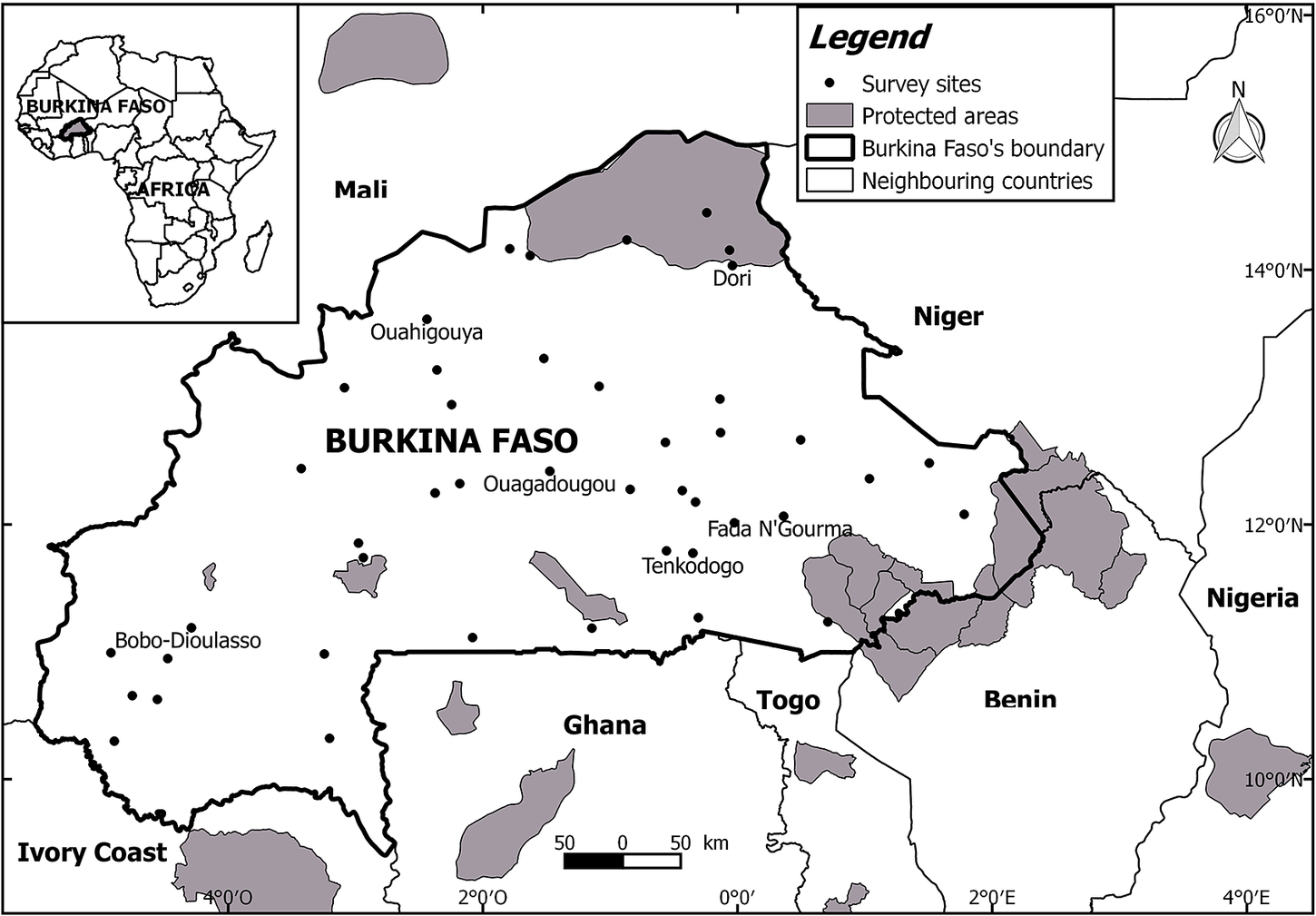
Burkina Faso is a Sahelian, land-locked country in the centre of West Africa between 9°20’ and 15°3’N, and 2°20’E and 5°3’W (Figure 1). The climate is Sudano-Sahelian in which two seasons alternate: a long dry season from November to May and a short rainy season from June to October (MECV 2007, Ibrahim et al. Reference Ibrahim, Polcher, Karambiri, Yacouba and Ribstein2014). Land use includes farmland, open savanna, urban areas, and protected and wildlife management areas in which six vulture species occur. These are the Hooded Vulture, White-backed Vulture Gyps africanus, White-headed Vulture Trigonoceps occipitalis, Rüppell’s Vulture Gyps rueppelli, Lappet-faced Vulture Torgos tracheliotos and Egyptian Vulture Neophron percnopterus (Weesie and Belemsobgo Reference Weesie and Belemsobgo1997, Borrow and Demey Reference Borrow and Demey2001, Thiollay Reference Thiollay2006a, Portier Reference Portier2007). Of these, the Hooded Vulture is the most closely associated with human habitations (Mundy et al. Reference Mundy, Butchart, Ledger and Piper1992), and it is very commensal with humans (Thiollay Reference J.-M2006b, Reference Thiollay2007b, Henriques et al. Reference Henriques, Lecoq, Monteiro, Regalla, Granadeiro and Catry2017). The other vulture species are confined to protected areas (Mundy et al. Reference Mundy, Butchart, Ledger and Piper1992, Thiollay Reference Thiollay2007a, Ogada and Buij Reference Ogada and Buij2011). We assumed that mass mortalities of vultures would be more common in areas with high vulture densities, and so we focused our survey on localities cited in the literature (Thiollay Reference Thiollay2006a, Reference Thiollay2007b), and on areas known to have high numbers of vultures, based on our own experience. We conducted our survey in 31 towns and 13 townships spread across the country (Figure 1).
The locations of our 44 survey sites, and the main protected areas. Only the names of the main towns are given here, as not all surveyed site names appear on the map.
Data collection
We used a mixture of qualitative and quantitative methods to gather and evaluate data through both structured and unstructured interviews conducted from 3 January 2016 to 30 December 2016 (Kabir Reference Kabir2016). In each locality, interviewees were chosen according to a nonprobability (purposeful) sampling method (Patton Reference Patton2002). This involved identifying and selecting individuals (or groups of individuals) who are especially knowledgeable about or experienced with a phenomenon of interest (Cresswell and Plano Clark Reference Cresswell and Plano Clark2011). In our study area, vultures (especially Hooded Vultures) were historically, and still are, very close to butchers, veterinarians, foresters, and abattoir watchmen (Mundy et al. Reference Mundy, Butchart, Ledger and Piper1992, Weesie and Belemsobgo Reference Weesie and Belemsobgo1997, Thiollay Reference J.-M2006b). Vultures are legally protected by local people because they provide an important public service (Daboné et al. Reference Daboné, Buij, Oueda, Adjakpa, Guenda and Weesie2019) in terms of consuming scraps of meat at markets and abattoirs, as well as carcasses of domestic animals and wildlife. In Burkina Faso, foresters (and to some extent veterinarians) are assigned to control and safeguard protected species including vultures. The people interviewed in this study (butchers, veterinarians, foresters, and abattoir watchmen) were those whom we considered would provide informative, high-quality responses to our survey questions. They are key players for vulture conservation in our study area and they frequently witness (or are alerted of the occurrence of) mass vulture mortalities. A typical slaughterhouse workday in Burkina Faso involves, among other activities, the slaughter of animals (ovine, caprine, bovine, porcine etc.) from 05h00 to 07h00 and veterinary control, to protect public health, from 07h00 to 11h00. More than 30 butchers and at least one veterinarian and slaughterhouse watchman remain actively present on slaughterhouse sites every day. We aimed to survey 15 butchers and at least one slaughterhouse watchman, one veterinarian, and one forester over two or three successive days in each locality. Throughout the survey, we considered parameters suggested by Spradley (Reference Spradley1979) and Bernard (Reference Bernard2002), such as availability, willingness to participate, and the ability to communicate experiences and opinions, when identifying and selecting interviewees. Informed consent was obtained from all of the interviewees involved in the study. Moreover, once in a locality, if we learned of any incidents of vulture mass mortality that had been reported to the court or to the police, then we followed up on these events and went to the relevant police station and/or the registry office of courts where the sentence was passed. In this survey, we use the terms “incidents of mass mortalities of vultures” to refer to any event in which at least five vultures were killed. All surveys were carried out by the first author.
Structured interviews
Structured interviews, consisting of closed and open-ended questions, were conducted during slaughterhouse visits and face-to-face with the interviewees, i.e. butchers, abattoir watchmen and veterinarians, between 08h00 and 11h00 (Appendix S1 in the online supplementary material). Each interview took about 10 to 15 minutes to complete. Interviews with foresters took place in the afternoon, in their offices, where we would survey one forester (the Head of Service) representing the service. Forester surveys took between 10 and 45 minutes to compete.
Unstructured interviews
Unstructured interviews were completed with the registrar of court or the police officer who investigated each incident of vulture mass mortality. Police minutes and court records were then requested for consultation and reference purpose. In accordance with legal provisions in Burkina Faso, these documents can be available for consultation if requested. The interview process was such that it assured interviewees anonymity and encouraged proactive participation. We began by assessing whether interviewees were aware of the incidents of vulture mass mortality referred to. We then asked interviewees to describe the circumstances under which those incidents occurred (that is, the method used, motivation, culprit, etc.).
Monitoring of incidents of vulture mass mortality
Vulture poisoning events were assessed and approved by foresters or veterinary staff by i) checking for the presence of dead vultures close to poisoned meat or carcasses, ii) checking for poison residues and the poison container or packaging, and iii) recording testimonies of people who witnessed the culprits of intentional poisonings of vultures. Dead vultures were identified by foresters and, if needed, birds were photographed to facilitate further species identification. Poisoned meat or carcasses were destroyed by burning them to prevent further vulture mortality and in some cases, vulture carcasses were sent to Ouagadougou (the capital of Burkina Faso) for further analyses to determine which toxic chemicals were used. Regrettably, according to foresters and veterinarians, these analyses were not followed up. We sent requests for information to the service referred to, but did not receive an answer.
Data analysis
We conducted all data analyses using the SPSS statistical package (IBM SPSS Statistics for Windows, Version 27.0). We used a bivariate analysis (Pearson correlation) to assess the correlation between the number of vultures killed at poisoned baits in each mass mortality incident and the distance to the nearest international border. We also assessed (using a Pearson correlation) the relationship between the abundance of vultures at each abattoir and the distance to the nearest international border, and showed that vultures were not any more abundant in localities in border areas than elsewhere in Burkina Faso.
Results
Demographics
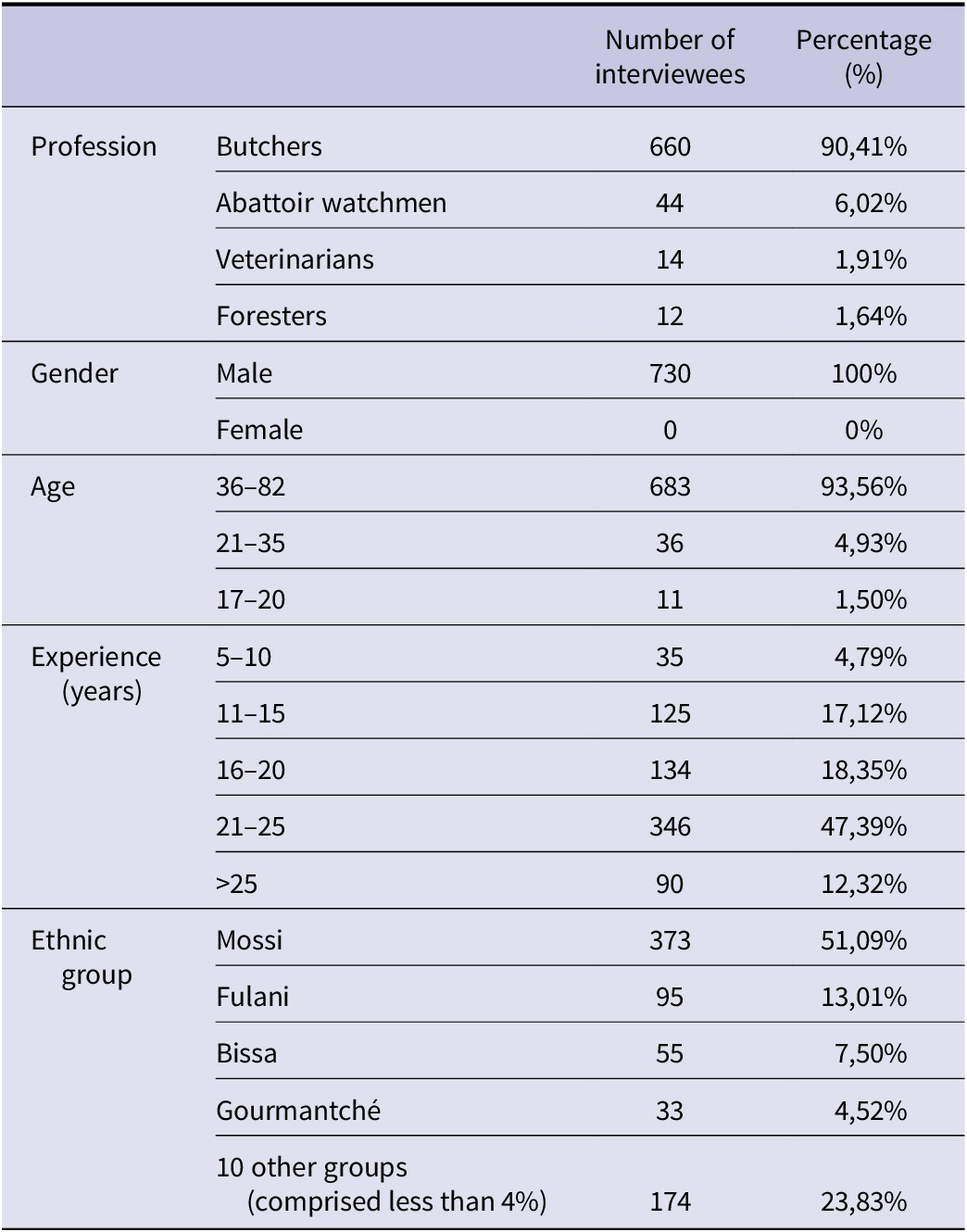
In the 44 localities surveyed, we completed a total of 730 interviews with 660 butchers, 44 abattoir watchmen, 14 veterinarians and 12 foresters. All interviewees were men, from 17 to 82 years old and most (93%) were over 35 years old (Table 1). This skew towards men may be because in an effort to select individuals or groups of individuals with extensive knowledge or experienced with the topics on which our survey questions were focused, we targeted professions (butchers, veterinarians, foresters and abattoir watchmen) in which women are currently very rarely hired in Burkina Faso. Most interviewees (88%) had 5–25 years of experience in their professions (Table 1).
Demographics of interviewees who took part in the structured interviews
Population trends of vultures
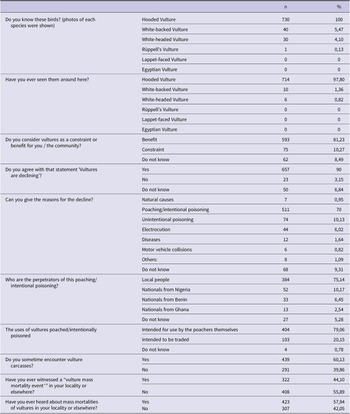
According to 98% of the interviewees, the Hooded Vulture is the vulture species most closely associated with human habitations. The other vulture species are reportedly confined to protected areas. Ninety percent of respondents noted a large decline in numbers of vultures in their localities. According to 70% of interviewees, this large decline is due to poaching for belief-based use. Most (60%) of the respondents reported that the recent increase in the occurrence of Hooded Vulture carcasses in their localities (Table 2) is the result of the use of poisoned baits to obtain vultures for belief-based use.
Responses to questions addressed to the 730 interviewees who participated in the structured interviews. (“” is the number of respondents, and “%” is the number of respondents as a percentage of the total).
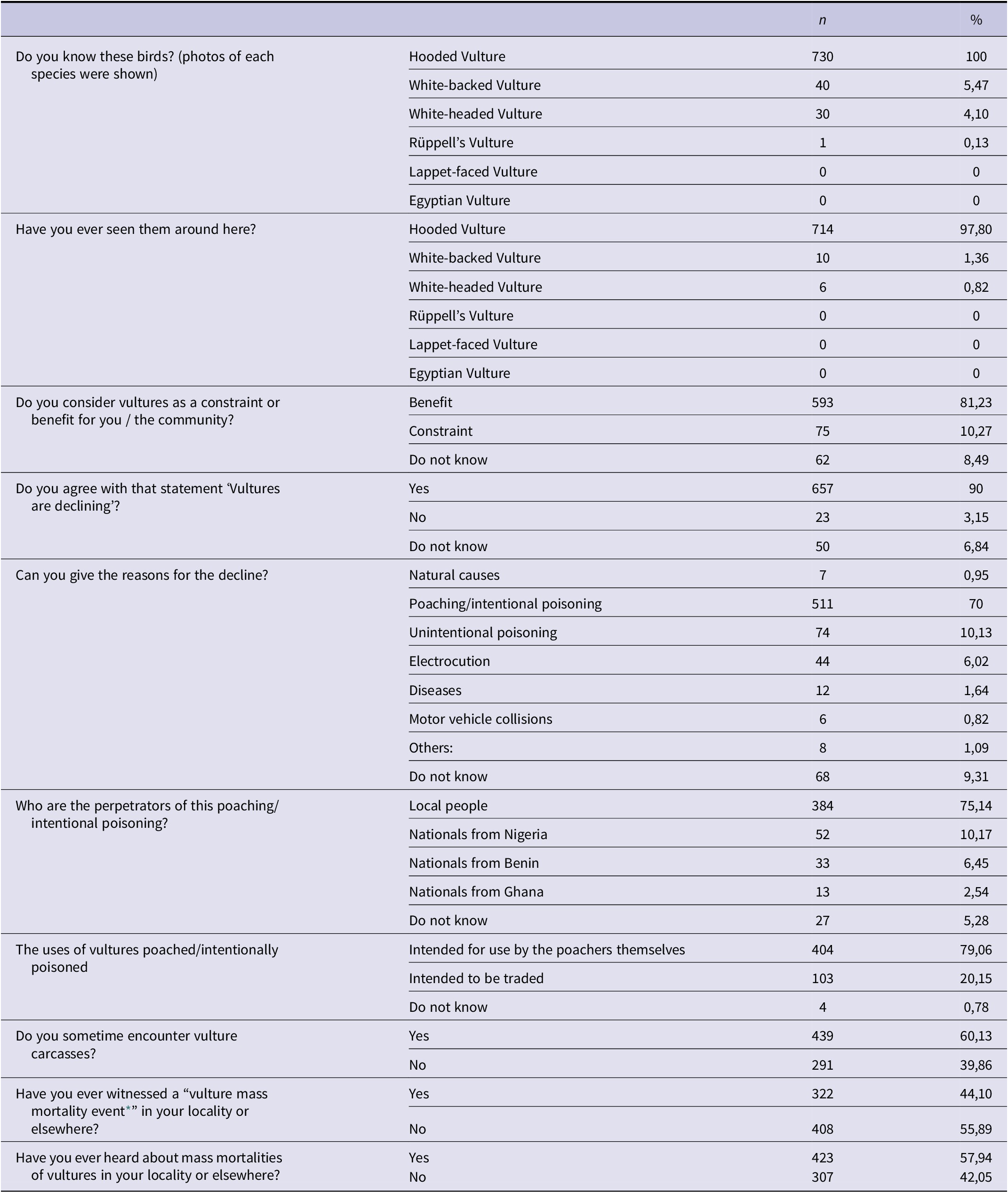
* In this survey, we use the terms “incidents of mass mortalities of vultures” to refer to any unfortunate event in which there are at least five vultures killed.
Mass mortalities of vultures
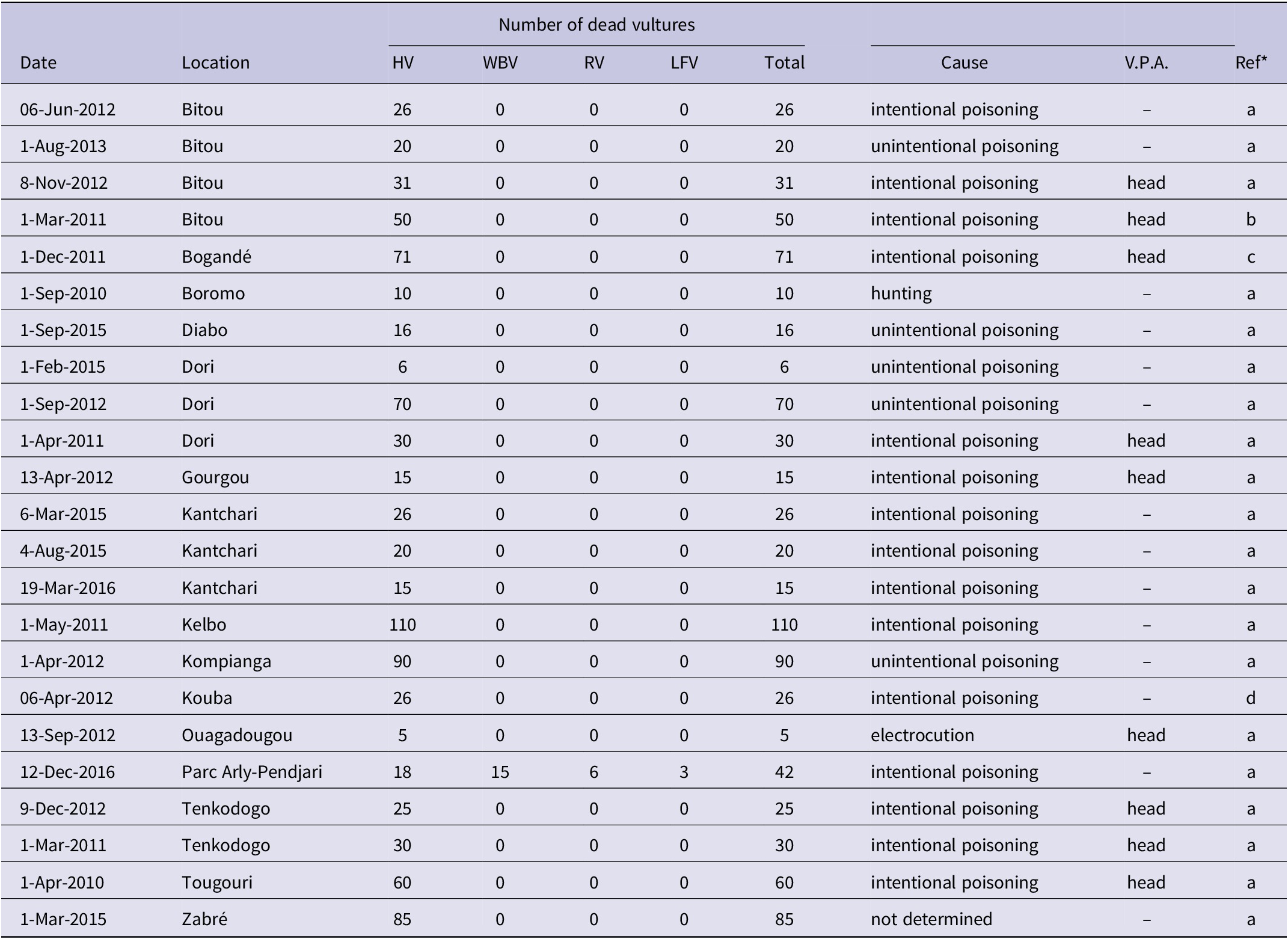
From 1 April 2010 to 12 December 2016, 23 incidents of anthropogenic mass mortalities of vultures were recorded in 15 localities in Burkina Faso, resulting in the deaths of 879 vultures, of which 317 (36%) were beheaded (Table 3). Of these 23 incidents, 22 exclusively involved Hooded Vultures, while the remaining incident resulted in the deaths of individuals from four vulture species (18 Hooded Vultures, 15 White-backed Vultures, six Rüppell’s Vultures and three Lappet-faced Vultures; Table 3). Of the 23 anthropogenic mass mortalities of vultures, 20 incidents were poisoning events. Of these 20 poisoning events, 15 were intentional, involving the use of poisoned baits (resulting in the deaths of 577 vultures, or nearly 66%), and five were unintentional (202 vultures, almost 23%). In one incident, 10 vultures (just over 1%) were killed using a slingshot, and in another incident, five vultures (less than 1%) were electrocuted on a high-voltage power line. In the remaining incident, where 85 vultures (almost 10%) were killed, the cause of mortality was not determined. Our results suggest that poisoning is the main cause (89% of vulture deaths) of anthropogenic mass mortality of vultures in Burkina Faso. So, it seems that in Burkina Faso, poisoned baits are the most widely used method of killing vultures, with the most devastating effect on vulture populations.
Mass mortalities of vultures recorded in Burkina Faso from 2010 to 2016. In circumstances where the exact day of the incidents was not available, the first day of the month was considered.
Intentional poisoning events
Most (70%) of our interviewees highlighted poisoned baits as the main cause of anthropogenic mass mortality of vultures (Table 2). In these deliberate poisoning events, poisoned baits were reportedly used by poachers to obtain vulture carcasses. Some of these vulture carcasses were found to be missing body parts (always the head; Table 3).
Culprits in intentional vulture poisonings
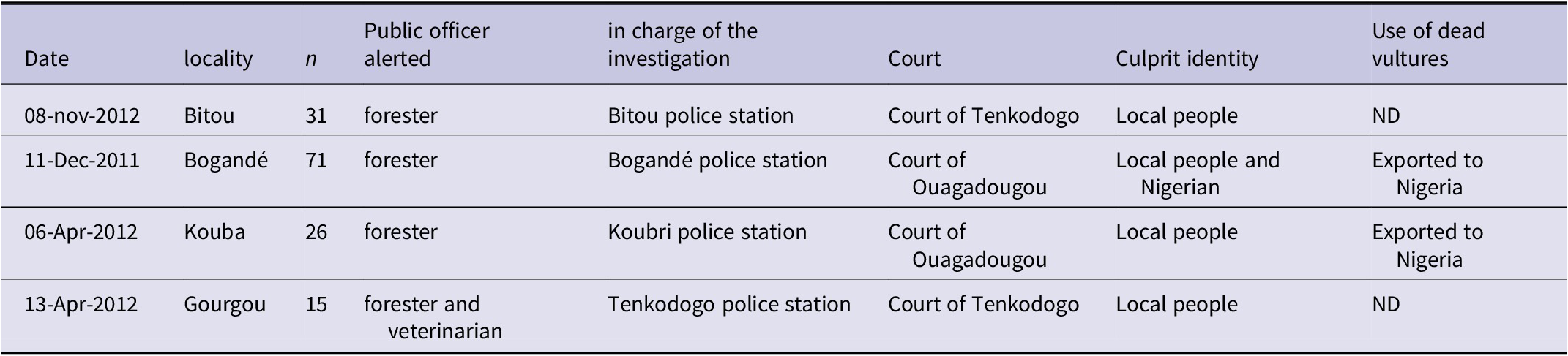
More than 75% of our survey respondents witnessed or heard about intentional poisoning perpetrated by local people. Only 19% of respondents suggested that perpetrators may be foreign nationals (Table 2). These results are corroborated by four arrests where local communities were found to be complicit in poisoning activities (Table 4). The investigations following these arrests found that the local people involved in poisoning events were incited by foreign nationals, themselves stimulated by the decreasing availability of vultures in their own countries and the increasing profitability of the regional vulture trade. For example, in November 2012, a 32-year-old local man with three Hooded Vulture carcasses was arrested near the abattoir of Bitou, a township ~39 km from Togo and ~10 km from Ghana. In 2011, 50 beheaded Hooded Vultures were found at the same abattoir (Table 3). Similarly, in December 2011, in Bogandé town in eastern Burkina Faso, ~100 km from Niger, two Burkinabe and a Nigerian woman were arrested with 71 dead Hooded Vultures intended for export to Nigeria (Table 3). This evidence emanating from arrests leads us to suspect that during the last decade, vultures were deliberately poisoned throughout Burkina Faso for export to neighbouring countries. While the number of vultures at abattoirs was not higher closer to international borders (Pearson’s correlation test: r = 0.44, P = 0.107, n = 10), the number of vultures killed by poisoned baits showed a significant linear negative correlation with distance to the nearest border (Pearson’s correlation test: r = –0.77, P = 0.003, n = 10). This suggests that the number of vultures killed by poisoned baits was higher closer to the borders than elsewhere in Burkina Faso.
Intentional poisoning events in which culprits were arrested. (“n” = number of Hooded Vulture killed, ND = not determined).
Drivers of intentional poisoning
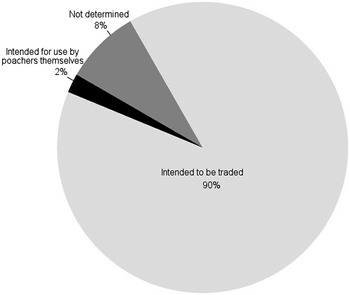
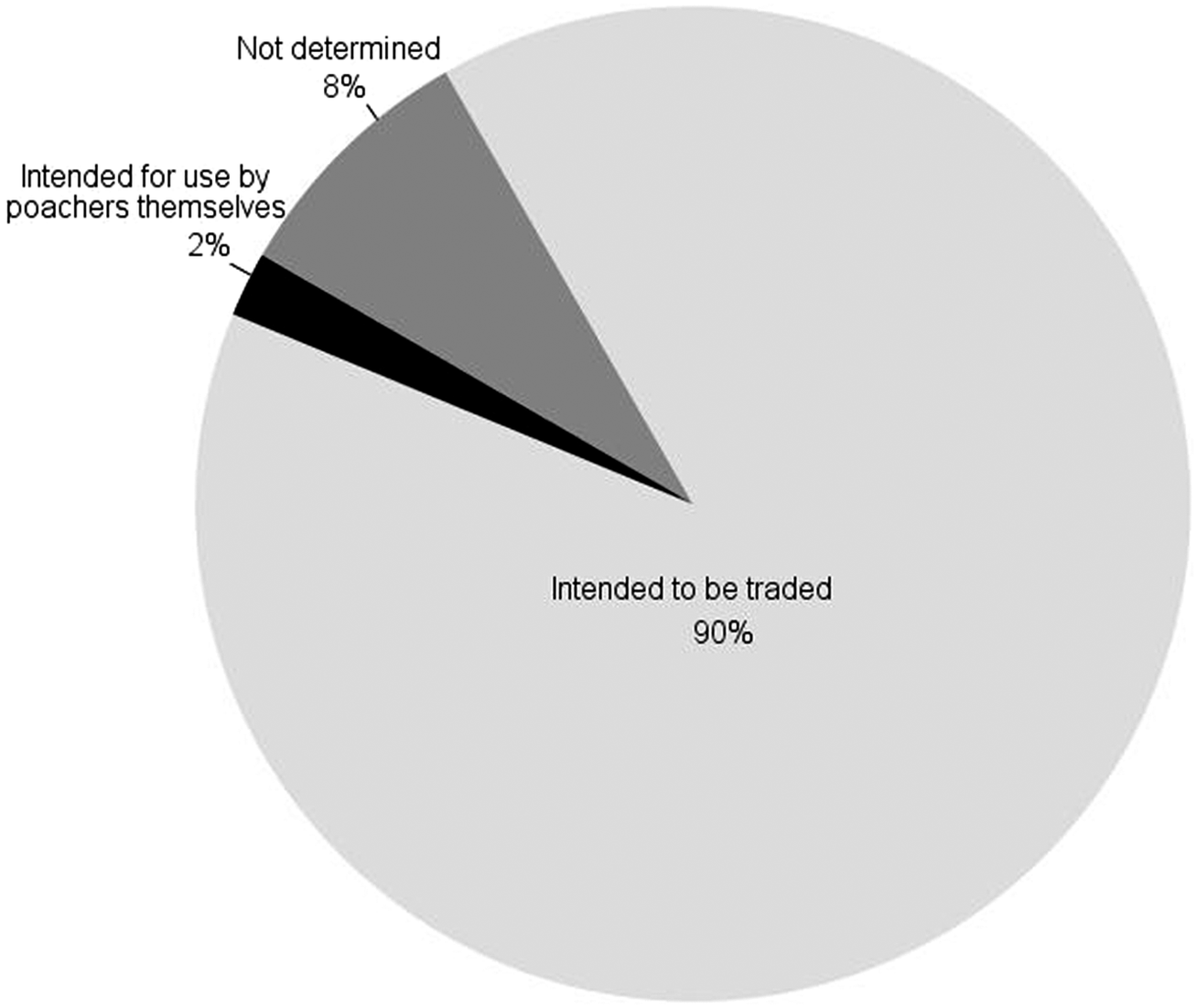
There seem to be two main drivers for poisoning by poachers and their accomplices. As a result of the experience gained in their close relationship with vultures, 79% of our survey respondents stated that poachers and their accomplices harvest vulture body parts for their own use, to treat a range of physical and mental diseases, or to bring good luck during gambling, competitions and contests. However, 20% of respondents suggested that vultures are poached to sell, due to the increasing profitability of the regional trade in vultures for belief-based use (Table 2). Investigations into the four incidents of intentional poisoning in which culprits were arrested and sentenced (Table 4) showed that 90% of the Hooded Vultures killed by poisoned baits (128 out of 143, Figure 2) were destined for trade in local markets (which includes trade to foreign nationals who come to Burkina Faso to buy vulture parts). When interrogating arrested culprits, it emerged that the unit cost of a whole vulture was about 5,000 to 7, 500 CFA francs (~ USD 10-15). That would have yielded about 540,000 CFA (~ USD 1,080) to two poachers arrested in one of the intentional poisoning events. These investigations further revealed that in some West African countries such as Nigeria, the unit cost of a whole Hooded Vulture ranged from 50,000 to 75,000 CFA (~ USD 100–150).
The intended uses of Hooded Vultures killed into four incidents of intentional poisoning in which culprits were arrested and sentenced by Burkina Faso’s police and the courts (n = 143 recorded deaths, Table 4).
Poisoned baits: Poachers’ operating method
Testimonies of people who witnessed the intentional poisoning of vultures, and the confessions of the arrested culprits stated that poachers used highly toxic pesticides (or local traditional tobacco) to poison vultures. They attracted the birds using meat which was sprinkled with poison or local traditional tobacco, and left on abattoir roofs or on the ground where vultures gather to feed. After consuming this poisoned bait, vultures are intoxicated and unable to fly. Poachers either harvest the whole bird or take only the head. This practice is reportedly done clandestinely at abattoirs, after butchers, veterinarians and abattoir watchmen have left.
Unintentional poisoning of vultures
Almost 10% of our survey respondents reported unintentional poisoning as one of the main causes of anthropogenic mass mortality of vultures (Table 2). They reported that it was very common to find the carcasses of poisoned vultures close to the carcasses of poisoned animals which were killed to ‘protect’ livestock and crops. For example, in Kompianga in April 2012, a farmer used Furadan (a very toxic unregistered carbamate pesticide) to kill 12 crop-raiding pigs, which resulted in the unintentional poisoning of 90 Hooded Vultures (Table 3) as well as four dogs, six cats, and 10 Pied Crows Corvus albus.
Other causes of mass mortality of vultures
Electrocution (6% of respondents), motor vehicle collisions (less than 1% of respondents), and disease (more than 1% of respondents) were the other causes of mass mortality of vultures reported by interviewees (Table 2). According to our survey respondents, Hooded Vultures are often electrocuted by high-voltage power lines, especially during the rainy season. In September 2013, five vultures were electrocuted close to the abattoir of Ouagadougou (Table 3). Motor vehicle collisions occur when vultures that are feeding on the carcasses of road-killed animals are hit unintentionally by vehicles.
Discussion
Intentional poisoning of vultures in Burkina Faso for belief-based use
We found that the number of vultures killed by mass-poisoning in Burkina Faso increased with proximity to the country’s borders, suggesting that the recent recurrence of intentional vulture poisoning events in Burkina Faso was intended to meet the growing demand for vulture body parts in West Africa. These poisoning events were likely driven by the decreasing availability of vultures in other West African countries (Thiollay Reference Thiollay2007b, Mullié et al. Reference Mullié, Couzi, Diop, Piot, Peters, Reynaud and Thiollay2017, Nosazeogie et al. Reference Nosazeogie, Tende and Monadjem2018) and by the lucrative regional trade in vulture body parts for belief-based use (Buij et al. Reference Buij, Nikolaus, Whytock, Ingram and Ogada2016). Thus, Burkina Faso appears to be one of the preferred areas for harvesting whole vultures for illegal trade in West Africa. The results of this study and the relatively high demand for vulture body parts in Nigeria and Benin (Nikolaus Reference Nikolaus and Schuchmann2011, Buij et al. Reference Buij, Nikolaus, Whytock, Ingram and Ogada2016), show that these two countries are important links in the trade network for vulture body parts in West Africa. Previous studies have established that vulture parts, their eggs and nest materials are sourced from an area spanning Burkina Faso to Chad to supply the demand in Nigeria and Benin (Mander et al. Reference Mander, Diederichs, Ntuli, Mavundla, Williams and McKean2007, Nikolaus Reference Nikolaus and Schuchmann2011, Buij et al. Reference Buij, Nikolaus, Whytock, Ingram and Ogada2016, Craig et al. Reference Craig, Thomson and Santangeli2018).
The economic value of the trade in vulture body parts in West Africa
Some of the vulture carcasses found at poisoning scenes in Burkina Faso were missing heads, which is the body part most used by traditional healers, and which carries a higher price per unit than any other body part (McKean et al. Reference McKean, Mander, Diederichs, Ntuli, Mavundla, Williams and Wakelin2013, Awoyemi Reference Awoyemi2014). This suggests that the trade in vulture body parts for belief-based use is driving vulture poisoning in Burkina Faso. In this study, the local value of a vulture harvested in Burkina Faso was 5,000 to 7,500 CFA francs (~ USD 10-15), but vultures could be sold for 6–10 times more than that in Nigeria. We estimate that an inculpated Nigerian woman would have earned between 3,350,000 and 5,325,000 CFA francs (~ USD 6,700–10,650) for the vultures that she harvested once in Nigeria (Nabaloum 2012a). The high profits yielded by the trade in vulture body parts might make this threat difficult to tackle given the relatively impoverished conditions of the people in this region.
The urgent need to increase enforcement of legislation in this regard
To reduce and eventually to halt the intentional poisoning of vultures for trade for belief-based use, we recommend and encourage a review of current legislation and enforcement actions that could lead to the successful prosecution of cases involving poisoned vultures. In Burkina Faso, all vulture species have been protected since 1960 by several legislative decrees of which the most recent is the N° 1996-061-PRES/PM/MEE/MATS/MEFP/MCIA/MTT of 11 March 1996 concerning the regulation of the exploitation of Burkina Faso’s wildlife (http://faolex.fao.org/docs/pdf/bkf4885.pdf; consulted on 10 November 2018). According to this decree, the hunting, capture, possession, and trade of vultures are banned and any person infringing this provision shall be liable to sentences ranging from 6 to 36 months and/or to a fine of 100,000 to 1,000,000 CFA (~ USD 200–2,000). For example, on 12 January 2012, three culprits in Ouagadougou (Burkina Faso) received sentences ranging from 3 to 18 months and a fine of 3,275,000 CFA (~ USD 6,550) (Nabaloum 2012a). As a result of recent convictions in Burkina Faso, poisoning for belief-based use has been scarcer (B. Douamba, Head of Forestry Services, pers. comm.). However, poisoning events have spread to other West African countries where large densities of vultures still occur. One example of this is the intentional poisoning of over 2,000 Hooded Vultures across eastern Guinea-Bissau, between September 2019 and March 2020, to obtain vulture heads for belief-based use (Henriques et al. Reference Henriques, Buij, Monteiro, Sá, Wambar, Tavares, Botha, Citegetse, Lecoq, Catry and Ogada2020). In certain areas of West Africa such as the western region of The Gambia, the Ziguinchor department of southwestern Senegal, and in Guinea-Bissau, Hooded Vultures still occur in high densities (Jallow et al. Reference Jallow, Barlow, Sanyang, Dibba, Kendall, Bechard and Bildstein2016, Henriques et al. Reference Henriques, Lecoq, Monteiro, Regalla, Granadeiro and Catry2017, Mullié et al. Reference Mullié, Couzi, Diop, Piot, Peters, Reynaud and Thiollay2017). This suggests that conservation actions and strategies need to be collaborative and coordinated between West African countries to reduce and eventually halt vulture poisoning and the trade in vulture parts for belief-based use in this region.
Susceptibility of Hooded Vultures to intentional poisoning
Of the 15 incidents of intentional poisoning of vultures recorded in our study, 96% of dead vultures were Hooded Vultures (n = 577). This is perhaps surprising in light of the results of McKean (Reference McKean2004), Boakye et al. (Reference Boakye, Wiafe and Ziekah2019), and Mashele et al. (Reference Mashele, Thompson and Downs2021), who suggested that poisoning of vultures for belief-based use is indiscriminate of species. However, in West Africa, the other vulture species are now confined to protected areas and the Hooded Vulture is the only vulture species that is seen close to human settlements. It is also the most common and widespread vulture throughout West Africa (Thiollay Reference Thiollay2007b). This widespread distribution and the close commensal relationship with people in West Africa may have further exposed the Hooded Vulture to the threat of poisoning for belief-based use. Corroborating this, Saidu and Buij (Reference Saidu and Buij2013) found that in West African markets, 90% of the vulture parts found were from Hooded Vultures.
Mass poisoning of African vultures and continent-wide population declines
The belief-based use of vulture body parts is very common in West Africa and has existed for many years (Buij et al. Reference Buij, Nikolaus, Whytock, Ingram and Ogada2016), but with the use of poisoned bait to harvest vultures (a method which produces the highest number of victims in a single occasion), numbers of vultures are expected to decline rapidly in this area. Indeed, according to Monadjem et al. (Reference Monadjem, Kane, Botha, Kelly and Murn2018) and Murn and Botha (Reference Murn and Botha2018), vultures are supremely adapted to scavenging and are therefore vulnerable to the threat of meat baits that are laced with poison. Furthermore, vultures generally show gregarious feeding behaviour, which increases their vulnerability to poison (Houston Reference Houston, Bird, Varland and Negro1996, Ogada et al. Reference Ogada, Keesing and Virani2012). For example, between 2012 and 2014, 11 poaching-related vulture poisoning incidents recorded in seven African countries killed 2,044 vultures (Ogada et al. Reference Ogada, Botha and Shaw2016b). More recently, 537 vultures were reported dead close to the Botswana and Zimbabwe border due to the consumption of three poached elephant carcasses laced with poison (Africa Geographic 2019). Several studies (Hille and Collar Reference Hille and Collar2011, Ogada and Buij Reference Ogada and Buij2011, Mullié et al. Reference Mullié, Couzi, Diop, Piot, Peters, Reynaud and Thiollay2017) suggest that poisoning is currently the main threat to vultures in Africa, resulting in population declines (Ogada and Keesing Reference Ogada and Keesing2010, Virani et al. Reference Virani, Kendall, Njoroge and Thomsett2011, Ogada et al. Reference Ogada, Botha and Shaw2016b, Di Vittorio et al. Reference Di Vittorio, Hema, Dendi, Akani, Cortone, López-López, Amadi, Hoinsoudé Ségniagbeto, Battisti and Luiselli2018, Garbett et al. Reference Garbett, Herremans, Maude, Reading and Amar2018). This decline assessed at about 80% or more for seven vulture species, over three generations (Ogada et al. Reference Ogada, Shaw, Beyers, Buij, Murn, Thiollay, Beale, Holdo, Pomeroy, Baker, Krüger, Botha, Virani, Monadjem and Sinclair2016a, Mullié et al. Reference Mullié, Couzi, Diop, Piot, Peters, Reynaud and Thiollay2017) could lead some species to the brink of extinction if it is not mitigated (Monadjem et al. Reference Monadjem, Kane, Botha, Kelly and Murn2018, Murn and Botha Reference Murn and Botha2018).
Cultural value of vultures and impact of trade for belief-based use
In Europe and the USA, vultures have been reported to (rarely) attack and sometimes kill livestock (if food is lacking and/or if the animals are already in a weakened state: immobile, sick, weak, or abandoned lambs at, or soon after, birth) (Avery and Cummings Reference Avery and Cummings2004, Margalida et al. Reference Margalida, Campión and Donázar2011, Reference Margalida, Campión and Donázar2014, Duriez et al. Reference Duriez, Descaves, Gallais, Neouze, Fluhr and Decante2019, Lambertucci et al. Reference Lambertucci, Margalida and Speziale2021). In South Africa too, following a recent drought and presumed food shortages in some areas, there have been reports of vultures killing livestock (L. J. Thompson pers. obs.). According to Lambertucci et al. (Reference Lambertucci, Margalida and Speziale2021), this behaviour is rare and does not imply that vultures are efficient predators or hunters which may represent a significant threat to livestock production. In West Africa, vultures are considered harmless to livestock, and people value vultures for the critical ecological services they provide (Ogada et al. Reference Ogada, Keesing and Virani2012). For these reasons, people consider vultures to be sacred and they provide protection to vultures in some areas of Burkina Faso (Daboné et al. Reference Daboné, Buij, Oueda, Adjakpa, Guenda and Weesie2019). At the same time, the widespread harvesting of vultures for belief-based use is apparently in contrast to the protection that is usually afforded to vultures in this area. Our study shows that the increasing profitability of the regional trade in vulture body parts is probably the main driver of poisoning, undermining the local cultural value of vultures. The intentional poisoning targeted at vultures for trade for belief-based use appears to be a recent practice in West Africa (Buij et al. Reference Buij, Nikolaus, Whytock, Ingram and Ogada2016, Daboné et al. Reference Daboné, Buij, Oueda, Adjakpa, Guenda and Weesie2019, Henriques et al. Reference Henriques, Buij, Monteiro, Sá, Wambar, Tavares, Botha, Citegetse, Lecoq, Catry and Ogada2020). In Burkina Faso, the first incidents of these intentional poisonings were reported in 2010, when vulture populations were already decreasing. In their West African range, from the 1970s to 2004, the number of Hooded Vultures declined from 84 to 46 individuals every 100 km, a decrease of 45% (Thiollay Reference Thiollay2006a, 2006b). The intentional poisonings that have occurred over recent decades have probably hastened the decline of vultures which was already well underway in Burkina Faso and in other West African countries.
Availability of toxic substances used for poisoning
Beyond these targeted poisonings, the unintentional poisoning of vultures has probably contributed to the large decline of vultures in West Africa. Indeed, based on the results of this survey, only five unintentional poisoning events killed at least 202 Hooded Vultures. According to the veterinarians we surveyed, the underlying factor is the indiscriminate and widespread use of pesticides, rodenticides and veterinary drugs that are cheap to buy, and easily accessed across the highly porous borders in West Africa. The veterinary drugs referred to by veterinarians in our survey were (in no way exhaustive and for reference only): Benzyl benzoate, Ivermectin, Ivomec, Limoxin-200 LA, Oxytetracycline, Peni Strepto, trypamidium, Diminazeme aceturate, Isometamidium chloride, and Veriben. Furthermore, many of pesticides commonly used in this area are not registered by the Sahelian Pesticides Committee (CSP; effective since 1994 in member-states of CILSS including Burkina Faso) (Table 5) and yet it is common to find them openly for sale in markets. According to Thiollay (Reference Thiollay2006a), this widespread use of pesticides and rodenticides in West Africa has led to vulture declines. If we are to significantly reduce unintentional (often illegal) poisoning of vultures, there is an urgent need to review, develop and significantly increase the enforcement of appropriate legislation to control, ban or restrict the sale, storage, distribution, use and disposal of toxic chemicals involved in the indiscriminate killing of wildlife.
Non-exhaustive list of pesticides which are not registered for use by the Sahelian Pesticides Committee (CSP) but which are commonly used in Burkina Faso.
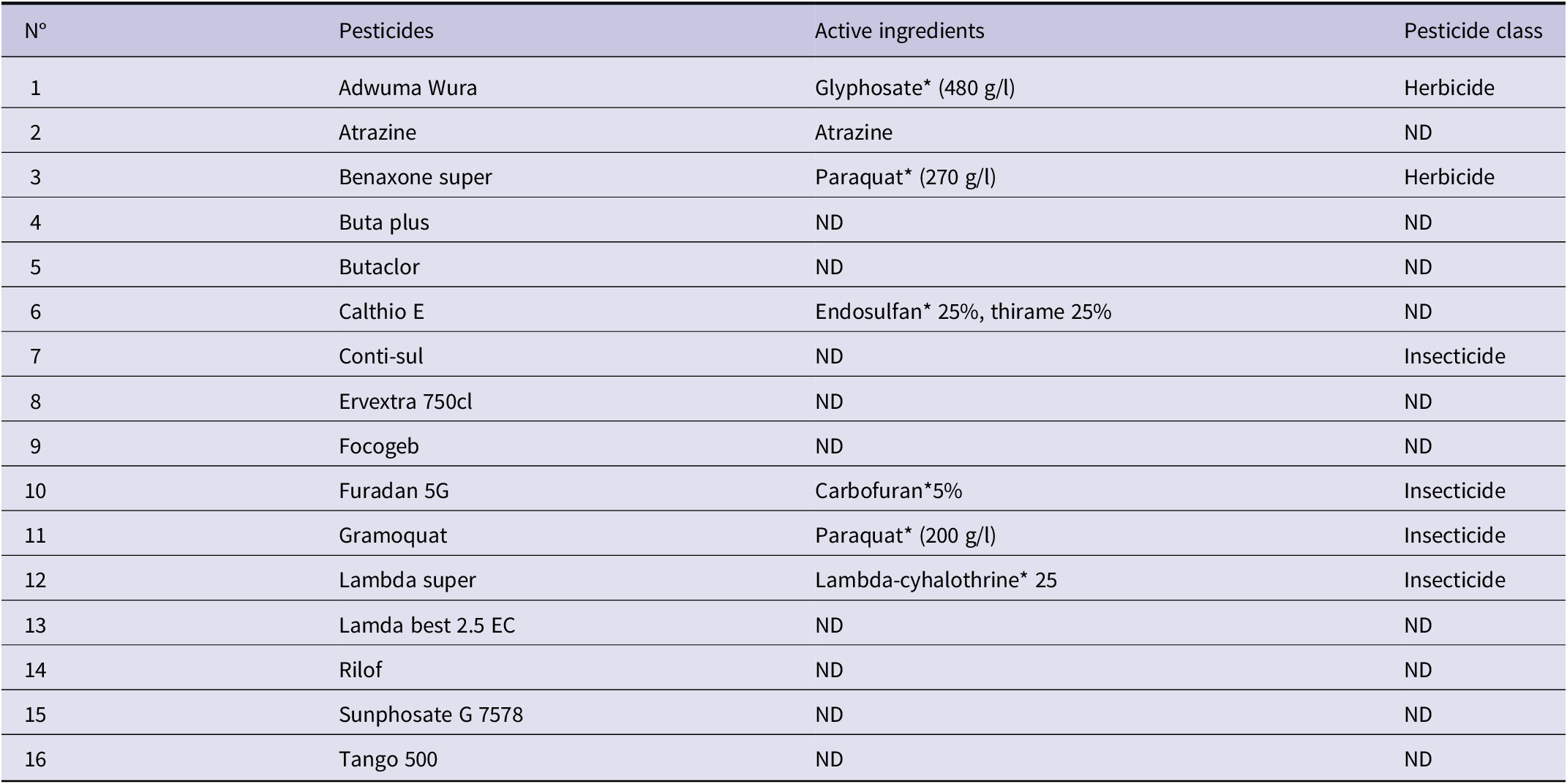
Active ingredient mentioned in the PAN (Pesticide Action Network) International List of Highly Hazardous Pesticides: PAN List of HHPs*
ND = not determined
Conclusion
West Africa is a key site for the conservation of African vultures because, despite the collapse of vulture populations highlighted in this area 30–40 years ago (Thiollay Reference J.-M2006b, Ogada et al. Reference Ogada, Shaw, Beyers, Buij, Murn, Thiollay, Beale, Holdo, Pomeroy, Baker, Krüger, Botha, Virani, Monadjem and Sinclair2016a), in some areas, vultures still occur in appreciable densities (Jallow et al. Reference Jallow, Barlow, Sanyang, Dibba, Kendall, Bechard and Bildstein2016, Henriques et al. Reference Henriques, Lecoq, Monteiro, Regalla, Granadeiro and Catry2017). However, the rapid rise in reports of vultures killed using poisoned baits is alarming and presents a serious conservation challenge for vultures in this region. Elsewhere, as in Europe, suitable conservation actions have been implemented and vultures are increasing in number and recolonising their old ranges (Safford et al. Reference Safford, Andevski, Botha, Bowden, Crockford and Garbett2019). In West Africa, although local actions are emerging, a lot more needs to be done by governments, NGOs, research institutions, and the media, to ensure sustainable vulture conservation. Priority actions include: a) restricting access to and use of hazardous toxic substances which may be used to poison wildlife including vultures; b) training of personnel (foresters and veterinarians) to detect and respond to wildlife poisoning incidents; c) conducting research on vultures to update population trends, breeding success and distribution in protected areas and adjacent communities, and d) compiling and enacting a regional action plan for sustainable vulture conservation in West Africa.
Acknowledgements
This project is a joint initiative between the University Joseph Ki-Zerbo in Burkina Faso and the University of Groningen in The Netherlands. The NATURAMA Foundation in Burkina Faso also provided support and assistance. We would also like to thank people interviewed in this study (butchers, veterinarians, foresters, abattoir watchmen, police officers and court registrars) for their participation and for allowing us to undertake this work in their locality. This work was supported by the Science and Society Group in the Faculty of Sciences and Engineering, University of Groningen, The Netherlands.
Supplementary Materials
To view supplementary material for this article, please visit http://doi.org/10.1017/S095927092100054X.