


Introduction
As indicated by the United Nations in its 2020 statistics, 280.6 million individuals, representing 3.6% of the global population, are emigrating from their countries of origin and relocating to other nations (UN-DESA 2020). In response to the demographic changes, an increasing number of countries have been extending the franchise to their overseas citizens, a group comprising approximately 200 million individuals from over 140 countries (Wellman, Allen, and Nyblade Reference Wellman, Allen and Nyblade2023, 898). In this context, a growing body of scholarly literature has addressed two types of questions: what factors have driven the recent movement toward extending voting rights beyond the national territory, and to what extent overseas citizens have exercised the amplified rights of participating in the elections of their home country.
The majority of recent research has concentrated on the initial question, namely the factors that have led to the expansion of voting rights for expatriates (Burgess Reference Burgess2020; Hartmann Reference Hartmann2015; Østergaard-Nielsen, Ciornei, and Lafleur Reference Østergaard-Nielsen, Ciornei and Lafleur2019; Umpierrez de Reguero, Yener-Roderburg, and Cartagena Reference Umpierrez de Reguero, Öykü Yener-Roderburg and Cartagena2021; Wellman Reference Wellman2021).Footnote 1 It is assumed that the high administrative and political costs associated with organizing elections outside of the national territory would deter policymakers from supporting the reform (Paarlberg Reference Paarlberg2017; Song et al. Reference Song2022). The likelihood of the reform advancing is greater when the diaspora demonstrates greater support for the incumbent (Wellman Reference Wellman2021), political parties have an incentive to mobilize expatriates (Burgess Reference Burgess2020; Hartmann Reference Hartmann2015), and the country has adopted a democratic regime (Umpierrez de Reguero, Yener-Roderburg, and Cartagena Reference Umpierrez de Reguero, Öykü Yener-Roderburg and Cartagena2021). It is crucial to note that the recently compiled datasets on external voting provide a valuable opportunity for in-depth causal analysis of the diverse reform outcomes across time and space (Leblang Reference Leblang2017; Pedroza and Palop-Garcia Reference Pedroza and Palop-García2017; Turcu and Urbatsch Reference Turcu and Urbatsch2015; Wellman, Allen, and Nyblade Reference Wellman, Allen and Nyblade2023).Footnote 2
In contrast to the existing literature on the causes of external voting, there is a paucity of research on the second question, namely how much overseas citizens have actually exploited the amplified opportunity to vote from abroad (Burgess and Tyburski Reference Burgess and Tyburski2020; Ciornei and Østergaard-Nielsen Reference Ciornei and Østergaard-Nielsen2020; Leal, Lee, and McCann Reference Leal, Byung-Jae and McCann2012; Medina Vidal, and Campos Carrasco Reference Medina Vidal and Carrasco2020; Tagina and Corrado Reference Tagina and Agustín Corrado2023). The existing literature on the causes of external voting assumes that the costs associated with voting from abroad are greater than those associated with voting within one’s own national territory (Leal, Lee, and McCann Reference Leal, Byung-Jae and McCann2012). This is due to the fact that in addition to the lack of electoral information, individuals who choose to vote from a distance may be required to complete a specialized voter registration process and utilize alternative voting modalities, such as postal or internet voting (Burgess and Tyburski Reference Burgess and Tyburski2020; Song et al. Reference Song2022; Tagina and Corado Reference Tagina and Agustín Corrado2023). In light of this assumption, numerous researchers have elucidated the factors influencing turnout in overseas voting.
In their analysis of external voting turnout in 25 countries, Ciornei and Østergaard-Nielsen (Reference Ciornei and Østergaard-Nielsen2020) conclude that migrants residing in their host countries, which are characterized by robust democratic institutions and strong links with their countries of origin, demonstrate a greater proclivity to engage in electoral processes. Similarly, the cross-national analysis conducted by Burgess and Tyburski (Reference Burgess and Tyburski2020) indicates that active campaigning by political parties in the country-of-origin results in higher voter turnout among expatriates. A study of Mexican immigrants in the United States, which employs data aggregated at the U.S. metropolitan statistical area level, has identified several factors that influence their likelihood of voting abroad.Footnote 3 These include proximity to Mexican civic associations, higher levels of income and education, consumption of Spanish-language media, and proximity to the US-Mexico border. (Leal, Lee, and McCann Reference Leal, Byung-Jae and McCann2012)
Notwithstanding their pioneering status, studies employing aggregate data are constrained in their capacity to substantiate that the advantages of voting outweigh the costs. Research using a survey conducted at the individual level is considered to be a preferable approach to address this issue. In the case of the 2018 Mexican election, Medina Vidal, and Campos Carrasco (Reference Medina Vidal and Carrasco2020) conducted an original survey targeting the Mexican diaspora in the United States (N = 526). Their findings indicated that the higher the levels of political efficacy, the evaluation of Mexican democracy, and the exposure to Mexican mass media, the more actively overseas citizens participated in the election. Another significant discovery is that a diminished perception of the ease of external voting is linked to a greater level of participation.
Although their research represents a valuable study that conducted its own survey of citizens living abroad, it is similarly limited in its ability to estimate the incentive to participate due to the lack of representativeness of the sample used for their analysis.Footnote 4 In general, constructing a representative sample for survey-based studies of immigrants is challenging for the following reasons. First, sampling frames are usually unavailable because immigrants are a hard-to-reach population that is more mobile than nonmigrants and tends to be improperly registered (Reichel and Morales Reference Reichel and Morales2017, 3). The lack of sampling frames prevents researchers from obtaining the necessary information about the target population to realize a representative probabilistic sample (Reichel and Morales Reference Reichel and Morales2017, 3–4). Thus, survey research using nonrepresentative samples may lead to biased results.
Second, the lack of representativeness becomes even more serious when we consider the presence of undocumented immigrants. While they are an integral part of the overall immigrant population, they are much less likely to be registered in official statistics than authorized immigrants and are the least likely to enroll in survey company panels for fear of having their identities compromised. In the case of the United States, the Pew Research Center estimates that the unauthorized immigrant population was 11.0 million in 2022, representing 23 percent of the estimated total immigrant population and 3.3 percent of the total U.S. population (Passel and Manuel Krogstad Reference Passel and Manuel Krogstad2024). This suggests that the results of existing work using traditional survey methods are likely biased because they tend to exclude this significant portion of the immigrant population. It has been asserted that noncitizens in the U.S., who are not equivalent to undocumented immigrants who constitute the majority of this demographic, exhibit a reduced propensity to engage in nonelectoral participation in comparison to U.S. citizens (Leal Reference Leal2002). Given the limited engagement of the undocumented population, the exclusion of this demographic from the survey may not compromise the representativeness of the sample. However, this assumption does not apply to participation in their home country’s elections. The opportunity for engagement in U.S. politics is limited for undocumented immigrants; therefore, they may actively participate in Mexican elections to articulate their concerns.
This study addresses the limitations of existing research by examining the political attitudes and participation of undocumented Mexican immigrants in the United States in the election of their home country. Our original survey, which employs respondent-driven sampling (RDS), provides a unique opportunity to gain insights into this understudied population. As discussed in greater detail below, RDS is a valuable tool for addressing such methodological challenges, enabling the creation of a representative sample of undocumented immigrants, who represent a hard-to-reach population without a sampling frame, and the generation of unbiased estimates (Khoury Reference Khoury2020; Reichel and Morales Reference Reichel and Morales2017).Footnote 5 Mexico provides an ideal case for examining the opportunities and constraints facing overseas citizens in participating in external elections for the following reasons.
First, in 2019, the United Nations Department of Economic and Social Affairs (UN-DESA) reported that Mexicans living abroad constituted the second largest diaspora in the world, with only Indians having a larger population living outside their country-of-origin (UN-DESA 2019). To be more precise, in 2021, the Mexican population residing abroad constituted 9.6 percent of the total population living in the national territory.Footnote 6 Of this figure, the Mexican population residing in the United States was approximately 11.8 million, representing 9.3 percent of the total Mexican population and 97 percent of the Mexican population living abroad. The data suggest that Mexican citizens residing abroad possess the potential to exert a considerable influence on domestic political affairs through the exercise of overseas voting rights. Second, Mexico represents a particularly hard case. As discussed below, despite significant reforms in recent decades aimed at expanding voting rights abroad, Mexico continues to impose substantial restrictions on external voting. These include the prohibition of political party campaigning outside the country and complex procedures for casting votes from abroad—factors that make participation especially challenging for undocumented immigrants. Consequently, despite notable legal reforms, actual voter turnout among Mexicans abroad remains disappointingly low. Therefore, it is expected that the correlations we identified between various factors and turnout in the Mexican case are likely to be even stronger in other national contexts where transnational voting is less restrictive. Third, a considerable proportion of the total Mexican immigrant population in the United States is undocumented. Estimates indicate that in 2022, there were 4.05 million Mexican unauthorized immigrants residing in the United States, representing 38 percent of the total Mexican immigrant population in the country.Footnote 7 Consequently, it can be posited that if nearly 40 percent of Mexican immigrants are not included in the survey sample, the results may be significantly biased. It is thus anticipated that a survey explicitly focusing on Mexican undocumented immigrants will effectively elucidate this methodological concern.
To the best of our knowledge, this is the first political science study to conduct a comprehensive survey of undocumented Mexican immigrants using RDS. It should be noted that Wong and Shklyan (Reference Wong and Shklyan2024) conducted the first systematic analysis of undocumented immigrants through a survey experiment. Specifically, they examined how collaboration between local law enforcement and U.S. Immigration and Customs Enforcement (ICE) on deportation raids discourages these immigrants from engaging with state and societal institutions, such as reporting crimes to the police (Wong and Shklyan Reference Wong and Shklyan2024). In contrast, our study focuses on the immigrants’ political engagement with their country of origin, a topic that has not yet been systematically studied.
Prior research on the political engagement of undocumented immigrants, predominantly Latino rather than specifically Mexican, within the context of US politics indicates that this group of immigrants is characterized by lower socioeconomic status (Leal Reference Leal2002), diminished contact with the government (Leal Reference Leal2002), constrained political visibility due to concerns of deportation, and the challenge of organization resulting from high mobility (Bada Reference Bada, Bada, Fox and Selee2006).Footnote 8 These findings indicate that the attitudinal and behavioral characteristics regarding political engagement in home-country elections may differ between authorized and unauthorized Mexican immigrants. To gain a comprehensive understanding of the political participation of Mexican immigrants in the United States, it would be optimal to conduct surveys of both authorized and undocumented immigrants, with the results compared. However, due to resource limitations, this was not feasible. Nevertheless, our study is the first to examine the transnational political engagement of undocumented Mexican immigrants, thereby contributing to the existing literature on this topic.
This paper is organized as follows. The second section provides a concise overview of recent reforms to external voting and low turnout in Mexico’s overseas election. In the third section, we examine the determinants of the political participation of overseas citizens in elections of their home country, particularly focusing on those residing in the host country as undocumented immigrants. The fourth section elucidates the research methodology, with a particular emphasis on the procedures of the RDS. The fifth section presents the empirical analysis, and finally, the authors conclude the paper with a future research agenda.
External Voting and Turnout in Mexico
The extension of the right to vote to Mexican citizens residing abroad has been a long-standing aspiration of the Mexican diaspora, particularly in the United States, where approximately 10 percent of the population has emigrated (Ochoa O’Leary Reference Ochoa O’Leary2014, 331). Party outreach to the diaspora was initially undertaken by the Institutional Revolutionary Party (PRI), which governed Mexico for over 70 years. However, given the diaspora’s traditionally anti-incumbent orientation, the PRI’s engagement with expatriate communities remained limited (Paarlberg Reference Paarlberg, Kernalegenn and van Haute2020). Following the end of the PRI’s prolonged dominance in 2000, the democratically elected government, which was led by the National Action Party (PAN), initiated efforts to establish more extensive institutional ties with the Mexican diaspora. During this administration, modifications were made to the electoral law, thereby enabling Mexicans living abroad to cast their votes in the presidential elections of 2006. As illustrated in Table S1 in the supplementary materials, electoral reforms aimed at expanding the right to vote from abroad in Mexico have gradually progressed over the past decades. To date, the restrictions on external voting have been gradually eased. In the most recent election in 2024, Mexican citizens residing abroad were permitted to vote via mail, the internet, or at 23 Mexican embassies or consulates in the United States, Canada, France, and Spain. In other words, the cost of voting from abroad has been consistently lowered.
Nevertheless, the reduction in the cost of voting has not resulted in a corresponding increase in the number of Mexican citizens living abroad who are able to participate in external voting, due to the technical complexities of the external voting system. In particular, the process of casting a ballot in external voting comprises three distinct stages. First, prospective voters must schedule an appointment at the nearest Mexican Consulate General in order to apply for a voter credential. Second, upon receipt of the voter credential, the individual is required to activate it and subsequently register for each election. Upon registering to vote, individuals may select one of three available voting methods: postal, internet, or in-person at the Consulate General. Subsequently, the individual proceeds to cast their ballot in accordance with the method they have selected. The completion of these procedures is a time-consuming process for Mexican citizens living abroad. Therefore, the cost associated with voting in external elections should be greater than that of voting in Mexico.
Moreover, procuring electoral information from overseas entails significant cost. In particular, the prohibition of campaigning by political parties and candidates outside of the national territory has increased the cost of obtaining information that is necessary for expatriates to be adequately informed to make a reasonable voting decision (Leal, Lee, and McCann Reference Leal, Byung-Jae and McCann2012). The National Electoral Institute (INE) and local electoral management bodies (OPLES) have initiated extensive information campaigns and training sessions to facilitate the participation of expatriates in Mexican elections (INE 2023).
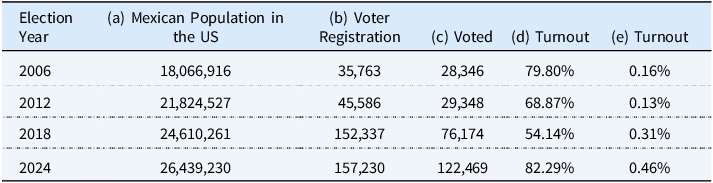
The high cost of external elections has resulted in a significant decline in voter turnout, although there has been a gradual increase from one election to the next (Table 1). To provide further detail regarding the Mexican population in the US, the number of registered voters was 35,763 in 2006, 45,586 in 2012, 152,337 in 2018, and 157,230 in 2024. The number of ballots cast was 28,346, 29,348, 76,174, and 122,469, respectively. It is technically challenging to estimate the turnout in external voting because estimating the population of overseas citizens entails complexities for the reasons previously outlined. The approximate voter turnout among those registered was 79.80% in 2006, 68.87% in 2012, 54.14% in 2018, and 82.29% in 2024. Conversely, when examining the proportion of the Mexican population in the United States who exercised their right to vote, the figures decreased to 0.16%, 0.13%, 0.31%, and 0.46% in 2006, 2012, 2018, and 2024, respectively.
Mexican Population in the US, Voter Registration, and Turnout
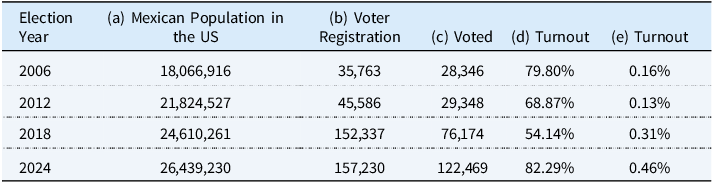
Source: IFE (2006, 2012), INE (2018, 2024).
Note: (a) Mexican population in the US (18 years or older); (b) The number of overseas citizens who registered for each election; (c) the number of overseas voters who cast a ballot; (d) The rate of voter participation calculated by dividing (c) by (b); and (e) The rate of voter participation calculated by dividing (c) by (a). (b) Voter registration includes cases of non-validation that were excluded to calculate (d) turnout. The numbers of validated registration were 35,521 in 2006, 42,614 in 2012, 140,698 in 2018, and 148,826 in 2024. The population estimates of Mexicans residing in the United States who were 18 years of age or older are derived from the American Community Survey 1-Year Estimates Selected Population Profile (S0201). However, at the time of consultation (September 26, 2024), the yearly data were available for the period between 2010 and 2023. Consequently, the population estimates of 2010 and 2024 were projected using a linear regression analysis. Figure S1 in the supplementary materials shows how they were calculated.
Political Participation and Undocumented Immigrants
In addition to examining voter turnout on Election Day, our study of political participation encompasses the three stages of engagement: applying for a voter credential, registering to vote, and casting a ballot on Election Day. In such a costly environment, it is perplexing why they would engage in transnational political activities. To address this question, our study will focus on identifying the characteristics of individuals who are more likely to participate, with a particular emphasis on undocumented Mexican immigrants residing in the US. As previously mentioned, this cohort of Mexican immigrants was underrepresented in previous surveys due to their status as a hard-to-reach population and their reluctance to enroll in survey company panels, largely attributed to concerns about the potential compromise of their identities.
A substantial body of research exists on the topic of political participation within the field of political science. As discussed in detail below, however, in studying the political participation of undocumented Mexican immigrants in the US with respect to their involvement in the country-of-origin, theoretical expectations should incorporate two additional conditions. First, in a transnational context, the physical distance from their home country may influence the effects of predictors such as socioeconomic status (SES), trust in government, and political efficacy, which are typically used in studies of political participation. Second, the undocumented status of immigrants may pose specific challenges to political engagement, particularly deriving from their lower levels of income (Borjas and Cassidy Reference Borjas and Cassidy2019) and educational attainment (Liscow and Gui Woolston, Reference Liscow and Woolston2018), limited visibility for fear of deportation and organizational capacity due to high mobility (Bada Reference Bada, Bada, Fox and Selee2006).
Information
It is a commonly held belief among scholars that being informed is a key factor in encouraging political participation (Blais et al. Reference Blais2009; Verba, Schlozman, and Brady Reference Verba, Lehman Schlozman and Brady1995). This is particularly relevant to political participation across borders. Specifically, the accessibility of electoral information for external voting may be constrained by the inability of Mexico’s electoral authorities to effectively reach expatriates who are geographically dispersed across the United States. Furthermore, as previously stated, Mexico’s Electoral Law prohibits political parties from campaigning abroad, which also constrains the dissemination of electoral information, such as political party and candidate platforms, to overseas citizens. As a result, their ability to be mobilized to vote is also limited. Alternatively, INE, OPLES, and hometown associations (HTAs) have emerged as a pivotal source of electoral information for Mexican immigrants across the United States. In particular, HTAs have become increasingly involved in political activities, including campaigning for the expansion of voting rights in Mexico and mobilizing their compatriots for elections in their home country (Bada Reference Bada2014; Martínez Saldaña Reference Martínez Saldaña2003; Rivera-Salgado Reference Rivera-Salgado, Bada, Fox and Selee2006). Furthermore, HTAs may serve as a pivotal source of information and services for undocumented immigrants, whose access to public services provided by the US government is constrained due to their unauthorized residency status. It can thus be proposed that access to information is a significant factor in engaging with the electoral process in one’s home country from a distance (information hypothesis).
SES
It is commonly assumed that voter registration and voting in external elections are costly due to the necessity of available resources, including time, money, and energy (Brady, Verba, and Schlozman Reference Brady, Verba and Lehman Schlozman1995). In light of the intricate nature of voting in overseas elections, it is plausible that individuals with higher levels of education and income may be more likely to engage actively in politics (Leal, Lee, and McCann Reference Leal, Byung-Jae and McCann2012). Education is a particularly salient factor, as a grasp of the intricate procedures involved in participating in external elections—such as the instructions for obtaining a voter ID and the registration process on the INE’s online platform—may necessitate a certain degree of computer literacy. However, these challenges may impede the capacity of undocumented immigrants to engage in political activities. The extant literature demonstrates that the undocumented status of immigrants engenders a wage penalty (Borjas and Cassidy Reference Borjas and Cassidy2019)Footnote 9 and is associated with a higher rate of school dropout (Liscow and Woolston, Reference Liscow and Woolston2018). Consequently, it is reasonable to posit that the availability of resources may serve as a determining factor in the degree of participation of undocumented immigrants in overseas elections (resource hypothesis).
Trust in Government
The conventional wisdom posits that trust in government is a fundamental determinant of citizen participation in politics and the effective functioning of democratic systems (Almond and Verba Reference Almond and Verba1963; Putnam Reference Putnam1993). A lower level of trust in the government among citizens is associated with a reduced expectation of the government’s implementation of their preferred policies and, consequently, a lower level of satisfaction with the government. This, in turn, acts as a disincentive for citizens to engage in political affairs (Almond and Verba Reference Almond and Verba1963). In particular, there is a notable prevalence of distrust in government among Mexican citizens, as evidenced by the findings of Espinoza Valle (Reference Espinoza Valle2021) particularly among the Mexican diaspora. Mexican citizens who emigrated particularly before the democratization of the Mexican political system in 2000 may manifest a higher level of distrust because the dissatisfaction with the economic and political performances of PRI may have propelled them to leave the country in search of a more favorable environment abroad (Martínez Saldaña Reference Martínez Saldaña2003). Furthermore, trust in the Mexican government may be similar between legal and undocumented immigrants. However, undocumented immigrants may have less trust in the US government due to constant fear of deportation. It is therefore anticipated that trust in the governments among the Mexican diaspora will prove to be a significant factor influencing turnout in external voting (trust hypothesis).
Political Efficacy
Political efficacy has also been demonstrated to influence political participation (Verba and Nie Reference Verba and Nie1972; Verba, Schlozman, and Brady Reference Verba, Lehman Schlozman and Brady1995). Given their distance from their home country, Mexicans living abroad may perceive that their voices are less likely to be heard and responded to by the Mexican government. Conversely, in the context of a costly electoral environment, confidence in the impact of their vote on Mexican politics should be a significant factor influencing their decision to participate in external voting, potentially outweighing the cost of the election itself (Medina Vidal, and Campos Carrasco Reference Medina Vidal and Carrasco2020). It is particularly important to note that political efficacy is expected to be a crucial determinant influencing the probability that undocumented immigrants vote in Mexican elections. This is due to the fact that they have limited opportunities to participate in U.S. politics. Consequently, it can be hypothesized that higher levels of political efficacy may encourage undocumented immigrants living in the US to engage in Mexican elections (political efficacy hypothesis).
In summary, the following hypotheses were tested using RDS to survey the undocumented Mexican immigrants, a group that has been understudied.
Hypothesis 1: Information Hypothesis: The more informed they are, the more likely Mexicans living abroad are to participate in external voting.
Hypothesis 2: Resource Hypothesis: The more resources they have, the more likely Mexicans living abroad are to participate in external voting.
Hypothesis 3: Trust Hypothesis: The more they trust the Mexican government, the more likely Mexicans living abroad are to participate in external voting.
Hypothesis 4: Political Efficacy Hypothesis: The higher the level of political efficacy, the more likely Mexicans living abroad are to participate in external voting.
Research MethodologyFootnote 10
To develop an appropriate design for RDS, formative research was conducted at two distinct stages. At the first stage, we carried out personal interviews with the leaders of Mexican immigrants residing in major cities in the United States (Chicago, Los Angeles, and New York) between 2020 and 2021. At the second stage, two focus groups were conducted in Chicago and Los Angeles in March and May of 2022, respectively. Based on the findings of the formative research, the questionnaire and design of the RDS were developed. The RDS was conducted in the urban and rural areas of Illinois between March and April 2023.
Formative ResearchFootnote 11
Formative research is widely recommended by RDS experts prior to implementation (e.g., WHO 2013), for three main reasons: (1) to confirm the presence of reciprocal social networks within the target population; (2) to assess population accessibility; and (3) to evaluate logistical feasibility. Given the time and cost demands of RDS, assessing feasibility in advance is crucial. Formative research typically involves in-depth interviews, direct observation, and focus groups.
In our study, we began by interviewing leaders of Mexican immigrant communities in major U.S. cities to understand basic characteristics of high-density Mexican immigrant areas. These leaders, who had long supported voting rights for Mexicans abroad, criticized that participation remained low due to limited electoral information, lack of political incentives in Mexico, and complex voting procedures.
To explore political attitudes and behavior more deeply, we conducted a second phase of formative research through focus group employing the semi-structured interview method: on March 30, 2022, at the National Museum of Mexican Art in Chicago (N = 26) and on May 13–15, 2022, at the Casa Jalisco in Los Angeles (N = 35).Footnote 12 Participants included HTA leaders, women, youth, and undocumented individuals. We held extensive consultations with immigrant leaders in both cities to ensure culturally appropriate framing of questions on Mexican electoral participation and broader political concerns. Drawing on the literature on political participation and consultations, we developed five thematic categories to guide discussion and generate testable hypotheses for our RDS survey: (1) political participation, (2) institutional trust, (3) community engagement, (4) public policy concerns focusing on healthcare and education, and (5) transnational ties with Mexico. The following findings were identified:
Participants showed strong interest in voting in Mexican elections, but several obstacles hinder their participation. First, time constraints make political engagement difficult, especially given the high cost and time required to apply for voter credentials at the Mexican consulate. Second, there is insufficient access to reliable electoral information. Third, a lack of trust in the government discourages participation; many want to know what happens to their votes after the election, but such information is rarely available. Participants emphasized the need for ongoing communication from electoral authorities and also expressed low political efficacy, doubting their votes would influence Mexican politics.
Respondent-Driven Sampling
DesignFootnote 13
Based on the insights from the formative research, we plan to conduct a survey using the RDS methodology, targeting the undocumented population, who are unlikely to be officially registered or have a sampling frame. The RDS method, which relies on respondents’ social networks, has been widely used in sociological and epistemological studies, and has recently gained traction in political science (Khoury Reference Khoury2020). This approach minimizes bias and helps obtain representative samples from hard-to-reach populations, such as refugees, undocumented immigrants, and individuals affected by HIV/AIDS, who are often difficult to survey using conventional methods. It is particularly effective for estimating the population of undocumented immigrants, as they are typically not formally organized but are likely connected through personal networks.
More precisely, RDS is an appropriate method for sampling hard-to-reach populations for the following reasons. As defined by Rana Khoury (Reference Khoury2020), RDS is “a chain-referral sampling method that moves through networks of individuals defined by relevant characteristics and eligibility criteria of the target population” (Khoury Reference Khoury2020, 513). In this sense, RDS is similar to snowball sampling. However, it differs from snowball sampling with regard to the representativeness of samples. Snowball sampling is criticized for the potential for the responses of the most influential recruiters to be overrepresented. In contrast, RDS allows for the generation of a more representative sample from the hard-to-reach populations by limiting the number of recruits that each recruiter invites and by weighting the size of each participant’s networks.
Another advantage of utilizing RDS in studying undocumented immigrants is the elimination of the need to collect and record identifying information, which is crucial for maintaining their confidentiality. There are multiple approaches to sample targeted populations that can be employed using RDS. In the case of recruiting peers in a field, the researcher’s role is limited to selecting the initial contacts. These individuals are referred to as “seeds.” Subsequently, each seed recruiter identifies other potential participants who meet the eligibility criteria for the target population and distributes the survey to them. In this typical setting of RDS, the researcher is aware of the seeds they have selected, but does not ascertain the identities of other peers that the seeds recruit. The researcher is only able to identify the respondents by means of a unique identification number, which is assigned to each individual. Consequently, researchers are able to safeguard their anonymity.
To ensure the accurate collection of samples and responses, it is essential to establish a trusting relationship between recruiters and recruits at each stage of the process.Footnote 14 It may be reasonably assumed that if the relationship is reciprocal, it will exert a certain degree of pressure on the new recruits, prompting them to act in an appropriate manner.
Strictly speaking, it is noted that to ensure that the sampling is representative, the following five conditions should be met (Khory Reference Khoury2020; Wejnert Reference Wejnert2009).
-
1. Ties between respondents are reciprocated; that is, individuals know their recruits, who know them in turn.
-
2. The overall network is a single component, and each respondent can be reached by any other through a series of network ties.
-
3. Sampling is with replacement.
-
4. Respondents can accurately report their personal network size or degree.
-
5. Peer referral is random from among the recruiter’s peers (Khory Reference Khoury2020, 514).
In practice, however, Khory (Reference Khoury2020) observes that it is challenging for any research to fully align with all the stipulated conditions. This study addresses the first condition of reciprocity through the use of focus group interviews, which revealed that the relationship between the undocumented individuals who will be recruited to the study may be reciprocal. The second condition was corroborated through the recruitment process. With regard to the fifth condition, the peer referral process was not entirely random, as the recruitment was conducted through peers in their workplaces or friends. As the study only partially met the conditions, the sampling was not perfectly representative. Nevertheless, it is reasonable to argue that our sampling method outperforms snowball sampling in terms of representativeness because it partially addresses the inherent limitations by avoiding overrepresentation of influential seeds.
Sampling Procedure
It should be noted that RDS should be carefully designed and implemented to protect the personal information of respondents because the disclosure of information could pose them to the risk of deportation. The survey locations were in sanctuary cities, where it was not permissible to inquire about the immigration status of the residents. To ensure the accessibility of the locations and the security of the participants, consultations were held with local community leaders. Despite the inherent risks, community leaders, who had long advocated for the rights of undocumented immigrants, confirmed the importance of surveying this demographic, which had been understudied in academic research. Consequently, we opted to conduct the survey with ethical considerations as a paramount concern. The following sampling procedures were carried out.
The initial selection of sites in Illinois for RDS included two locations: Site A, situated within an urban area, and Site B, located in a rural region of the state. The recruitment of participants was conducted with the assistance of six local assistants (three assistants in each of the survey sites), who were experienced community organizers in each of the aforementioned sites. Three waves of surveys were conducted at each site, with the first occurring on March 4, 11, and 18 in 2023 for Site A and March 18, 25, and April 1 in 2023 for Site B.Footnote 15
In the first wave of the survey, as the primary seeds, 12 individuals were selected in Site A and 10 in Site B.Footnote 16 These initial seeds were recruited by the research assistants, who possessed a high degree of familiarity with the demographic characteristics of the communities in which the survey was conducted. In order to identify undocumented individuals and construct a network of undocumented immigrants, it was essential to leverage the local knowledge and networks of the assistants. Subsequently, the participants selected for the first wave were requested to identify five additional individuals to participate in the second wave of the survey. The same recruitment process was employed for the third wave. A remuneration of $50 was offered as an incentive to participate in the initial survey,Footnote 17 with an additional $20 provided as an incentive for those who recruited participants for the subsequent survey wave. In accordance with the aforementioned procedures, it was anticipated that the three survey waves would yield a total sample size of 682, comprising 372 participants from Site A and 310 from Site B.
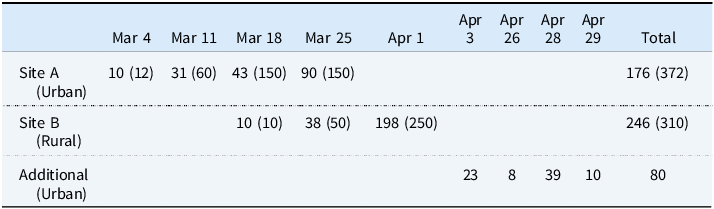
In reality, however, the sample size that could be obtained was 176 for Site A and 246 for Site B. With regard to the second and third waves of the study conducted at Site A, it was observed that some of the seeds recruited by those who participated in the previous waves did not appear on the designated date for the survey. For example, 10 out of 12 invited participants attended the first wave of the survey at Site A. Therefore, the expected number of participants for the second wave was 50 (with each of the 10 initial seeds expected to invite five additional participants). Nevertheless, only 31 individuals arrived to complete the survey for the second wave with the provided invitation card. With regard to the second wave of the study in Site B, it was anticipated that 50 new participants would be recruited; however, only 38 individuals participated. In the third wave in Site B, the number of participants reached 198, which exceeded the expected maximum of 190. This discrepancy can be attributed to the fact that the participants of the third wave were comprised of three distinct categories: those who received an invitation for the third wave, those who received an invitation for the second wave, and those who did not receive an invitation.
The final category constituted approximately half of the participants in the third wave of Site B, who had learned about the survey through word-of-mouth communication with their coworkers. Site B is a rural area in which the majority of immigrants are employed in large-scale manufacturing and construction, which facilitated the dissemination of information about the survey through communication with their coworkers. It was decided that this group of participants should be included without invitation if they demonstrated an understanding of the requirements for participation in this survey as set out in the invitation card, although they are not included in a sample for our empirical analysis. The participants were Mexican citizens aged 18 or over who were undocumented. Similarly, we were unable to inquire about their immigration status directly for the reasons previously stated. Consequently, by requesting their participation contingent upon their agreement with the aforementioned three criteria, we presumed that they satisfied the eligibility criteria for this survey. It is also assumed that, despite not having received the invitation card, they became aware of the survey through their coworkers, who constituted the network of respondents. Accordingly, we postulated that they were affiliated with the networks of the targeted population, thus constituting a defining feature of RDS, namely chain-referral sampling, rather than distinct participants situated outside of the RDS network.
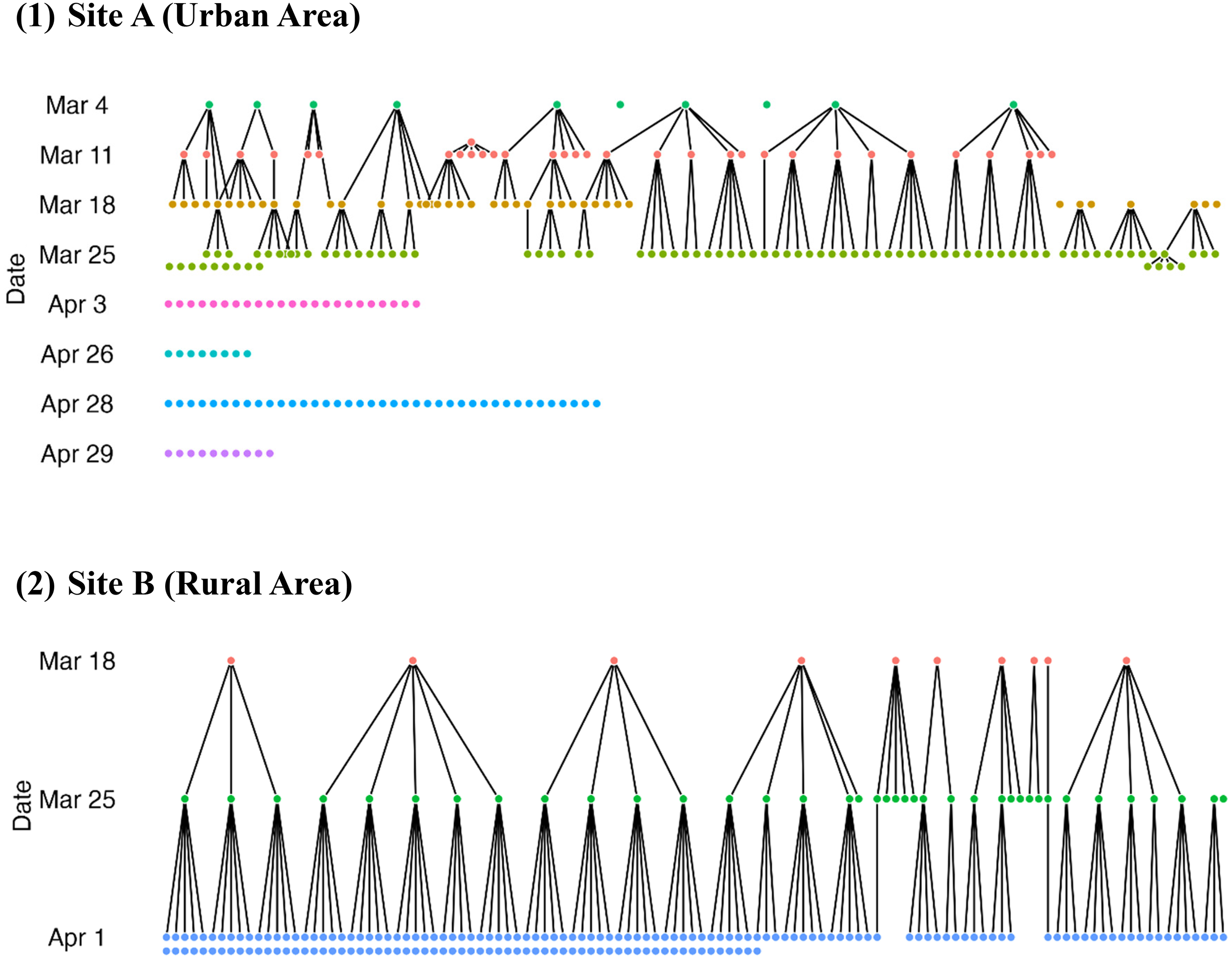
Finally, additional surveys were conducted in the urban area with the objective of recruiting the anticipated number of participants. Specifically, 23 respondents were recruited in an area in the northern part of the urban area on April 3, 8 participants on April 26, and 39 participants on April 28 in an area of the southwestern part of the urban area. In addition, 10 participants were recruited on April 29 in a different location of the urban area. All of these additional participants were recruited by the participants in the preceding waves of the survey. It can therefore be reasonably asserted that they constituted an integral part of the same RDS networks. Consequently, the total number of participants was 502 undocumented Mexican immigrants. The number of respondents in each survey wave is presented in Table 2. The RDS networks are illustrated in Figure 1. Again, note that the sample used in our analysis in the next section includes only respondents who are strictly part of chain-referral networks, although we have described the details of our survey in this section for research transparency.
The Number of Respondents Recruited (N = 502)
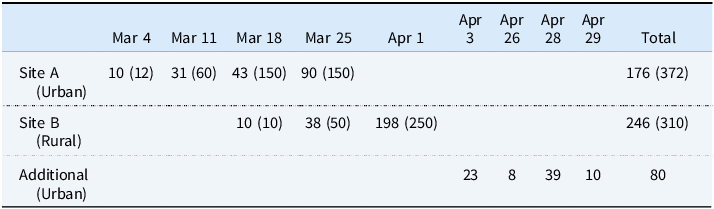
Note: The expected number of participants is indicated in parentheses.
RDS networks.
Survey
The questionnaire was structured to include the same five groups of questions as those employed in the aforementioned focus group interviews.Footnote 18 These were: political participation, institutional trust, community participation, public policy concerns (health care and education), and the ties to Mexico. To ascertain the extent of each seed’s network, respondents were asked as to the number of individuals they were acquainted with within the specified targeting group (undocumented Mexican immigrants). These data were employed to calculate the inverse-inclusion probability, which was then utilized as a weight to construct a representative sample of the undocumented Mexican immigrant population. Furthermore, we inquired about sociodemographic characteristics, including age, sex, income, and years of schooling, which are typically included in conventional surveys. The questionnaire was prepared in both Spanish and English to accommodate the participants’ preferences regarding the language in which they felt most comfortable answering the questions.Footnote 19
For the second and third waves of the survey, the day was divided into a number of time slots, with a maximum of 25 participants assigned to each. This allowed for effective management of the process and facilitated questionnaire completion. Upon arrival at the survey site, participants were asked to present their invitation cards, which included a unique identification number. This number was then used to assign the questionnaire.
To ensure the most efficient administration of the survey, we opted to administer it in a group setting rather than conducting one-on-one interviews. First, the questionnaire was distributed with an accompanying document outlining the informed consent process. Upon indicating their consent, respondents were then invited to proceed with answering the questions independently. In the event that respondents encountered difficulties in comprehending the wording or content of the questions, the three assistants were available to provide tailored assistance. Second, upon completion of the questionnaire, the assistants conducted a review to ensure that all items had been answered.Footnote 20 Third, the initial incentive was provided, along with five invitation cards bearing unique identification numbers. Participants were instructed to recruit a maximum of five individuals for the subsequent survey rounds.Footnote 21
Empirical Analysis
There are three methodological challenges with our multivariate analysis. First, a significant number of respondents refused to answer some questions or left response fields blank, resulting in missing values, because we did not overly pressure respondents to answer every question, given their vulnerable backgrounds as undocumented immigrants, many of whom were not highly educated. Second, some respondents gave multiple, sometimes ambivalent answers to single-choice questions, because in most cases, we did not force them to follow the instructions very strictly for the reasons discussed above. Finally, as explained in the previous section, our sample does not have a perfect chain-referral structure because some respondents participated in the survey without explicit invitation.
We take the most conservative approach to addressing these issues; we retain all missing values without filling them in, make all irregular responses missing values without arbitrarily correcting them, and exclude from the sample all respondents who were not explicitly invited. The resulting size of the valid sample that includes only chain-referral network respondents is 256 (103 urban respondents and 153 rural respondents), while our original dataset contains 502 respondents.
To demonstrate how the collected data can help understand the political engagement of Mexican citizens in the United States to influence the politics of their home country, we examine three outcome variables corresponding to our hypotheses, including obtaining a voter credential (coded 1 if the respondent obtained a voter credential, 0 if otherwise), registering to vote (1 if the respondent registered to vote, 0 otherwise), and voting in the 2018 Mexican presidential election (1 if the respondent voted, 0 otherwise).
Our explanatory variables consist of basic demographics (male dummy and age, education, household income, and years of living in the US), political attitudes (external efficacy, political trust), and information acquisition. Education is coded from 1 if the respondent’s highest level of education is primary school to 6 if the respondent has a college degree. Household income is coded from 1: “Less than $5,000” to 10: “Over $200,000.” External efficacy is coded 1 if the respondent agrees with the statement: “your vote makes a difference to the politics of Mexico,” and 0 if otherwise. Political trust is measured by asking how much respondents trust the Mexican government, the US government, and HTAs, respectively, and coded from 1: “Not trust” to 5: “Much trust.” Finally, information acquisition is measured by asking whether the respondents obtained information about the 2018 presidential election from any of public organizations (INE, OPLES, or Mexican consulate), family in Mexico, and any of the mass media (television, radio, and social media), respectively, and coded 1 if so, and 0 if otherwise.
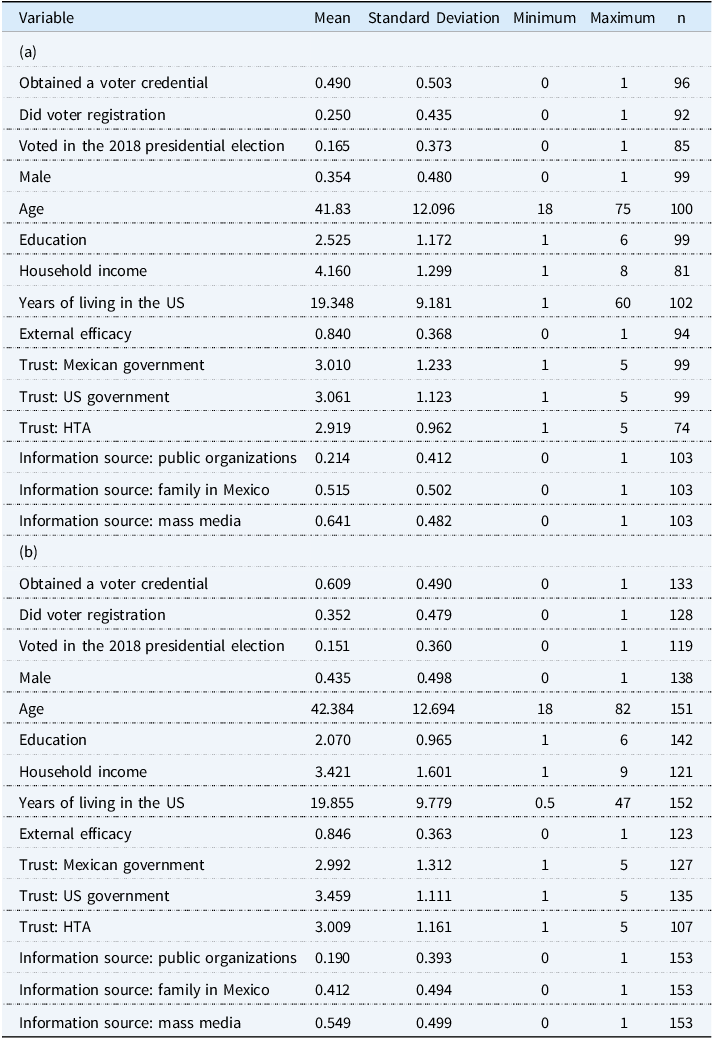
As shown in Table 3, the proportions of respondents who obtained a voter credential, registered to vote, and voted in the presidential election are generally higher for rural respondents (0.609, 0.352, and 0.151, respectively,) than for urban respondents (0.490, 0.250, and 0.165, respectively). Therefore, we control for the regional difference by using a dummy variable coded 1 if the respondent lives in an urban area and 0 if otherwise.
Descriptive statistics (a). Urban respondents in the chain-referral network (b). Rural respondents in the chain-referral network
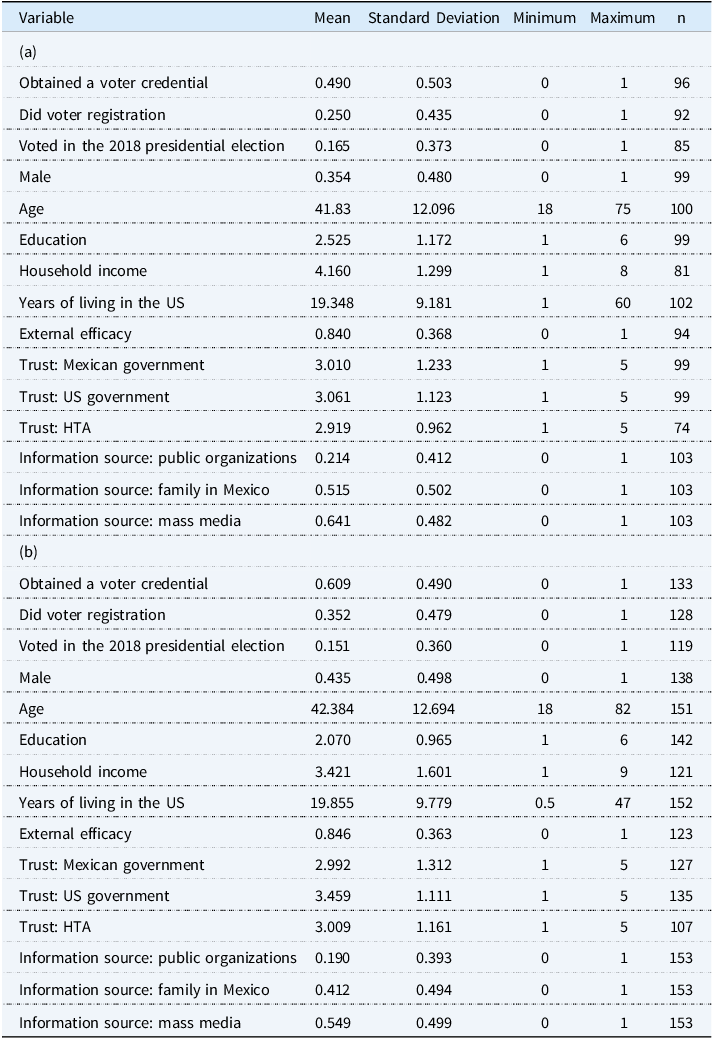
This dichotomous coding of the outcome variables requires special caution in interpreting the results because the outcomes are conditional on prior decisions, that is, only respondents who obtain a voter credential decide whether to register to vote, and only those who obtain a voter credential and register decide whether to vote. Using the whole chain-referral sample, we examine the determinants of obtaining a credential and registering to vote when our outcome variable is voter registration, and the determinants of obtaining a credential, registering to vote, and voting when it is voting, not the conditional probability of voter registration or voting. In other words, our empirical analysis aims to show what drives undocumented Mexican citizens to overcome “barriers” that increase from obtaining a voter credential to registering to vote to voting.
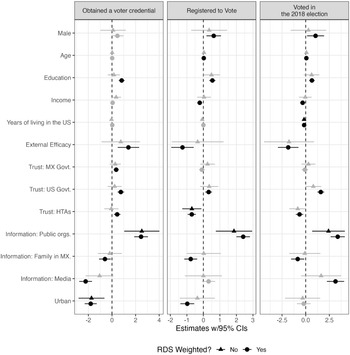
Figure 2 presents the inverse-inclusion-probability weightedFootnote 22 and unweighted logit estimates of the coefficients associated with the explanatory variables and their respective 95% confidence intervals in the logistic regressions. The full results are presented in Table S2 in the supplementary materials. The weighted and unweighted estimates and their respective 95% confidence intervals differ in that the weighted estimates tend to have larger magnitudes and smaller confidence intervals than the unweighted estimates. Since the weighted estimates are assumed to be derived from a more representative sample than the unweighted estimates, we interpret and draw implications from the latter.
Determinants of overseas voting of Mexican citizens in the US. The black dots and triangles represent statistically significant estimates.
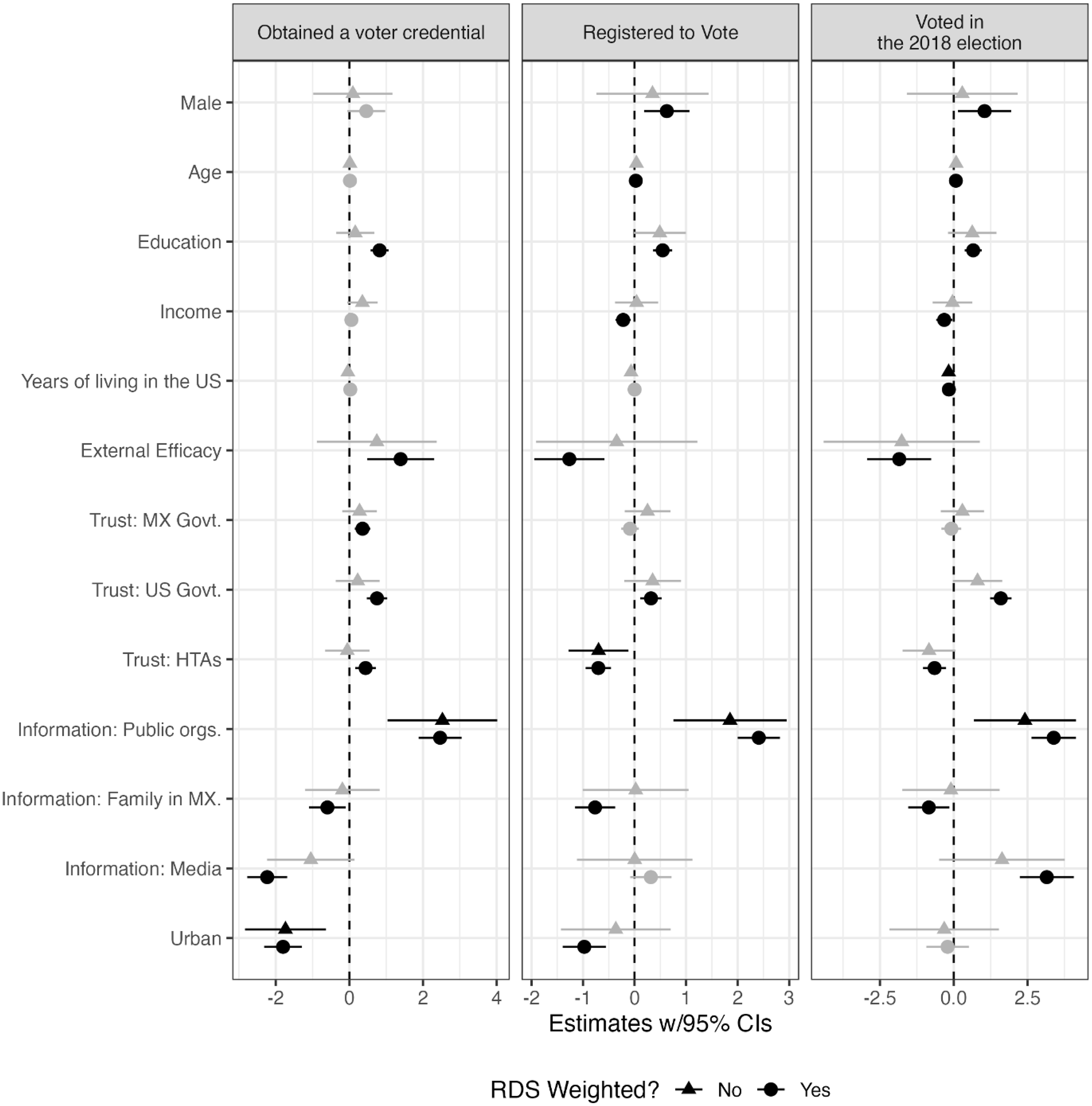
Regarding Hypothesis 1 (“Information Hypothesis”), based on the statistically significant results at the 5 percent level, respondents who obtained information about the presidential election from any of the public organizations are more likely to obtain a voter credential, register to vote, and cast a ballot, while obtaining information from their family members in Mexico discourage respondents to do so. Respondents who received the information from the mass media are less likely to obtain a voter credential, but more likely to vote.
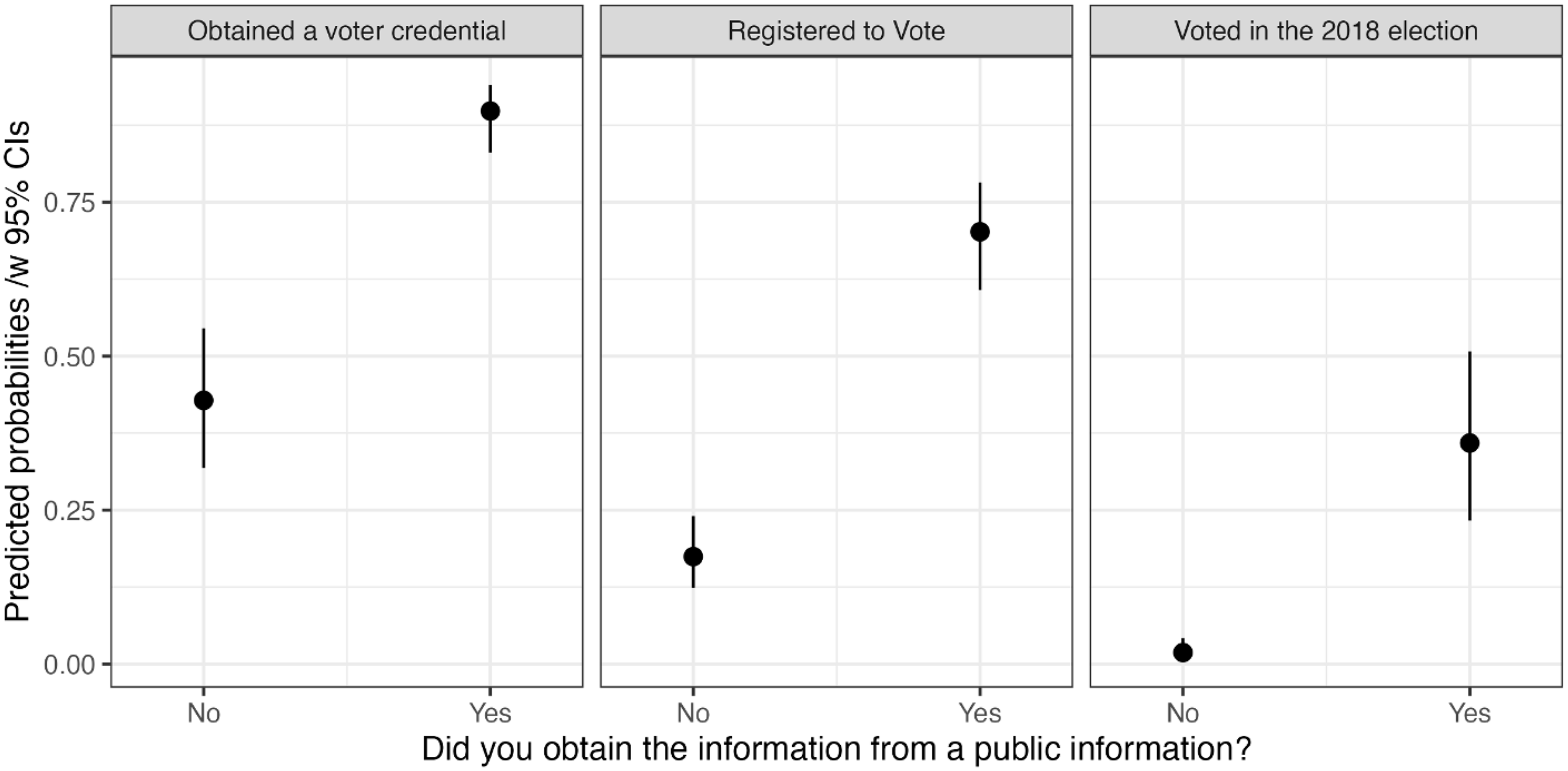
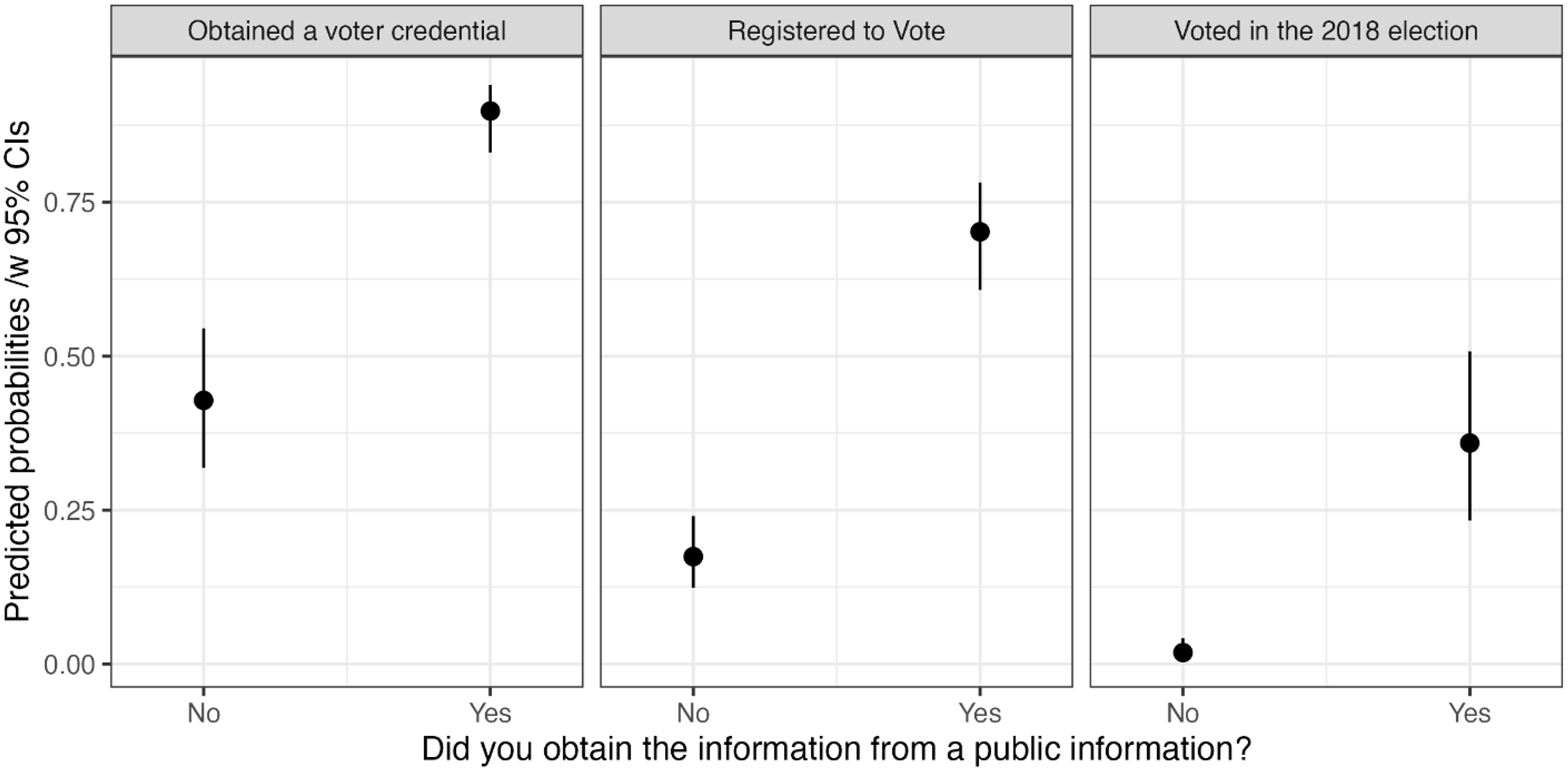
To interpret the substantive effects of receiving information from the public organizations, Figure 3 shows the predicted probabilities of engaging in these three activities related to overseas voting for the respondents with and without the information from the public organizations. As shown in the figure, the information from the public organizations makes a difference of 47.0, 52.7, and 34.0 percentage points in the probabilities of obtaining a voter credential, registering to vote, and casting a ballot in the presidential election, respectively. This suggests that the lack of information from public organizations leads to less active political engagement overseas.
Predicted probability of overseas voting of Mexican citizens in the US by information acquisition from public organizations (based on the weighted estimates).
Regarding Hypothesis 2 (“Resource Hypothesis”), respondents with higher levels of education are more likely to obtain a voter credential, register to vote, and cast a ballot, while respondents with higher levels of household income are less likely to register to vote and cast a ballot. Years living in the US (“Duration”) have a negative and significant effect on overseas voting.
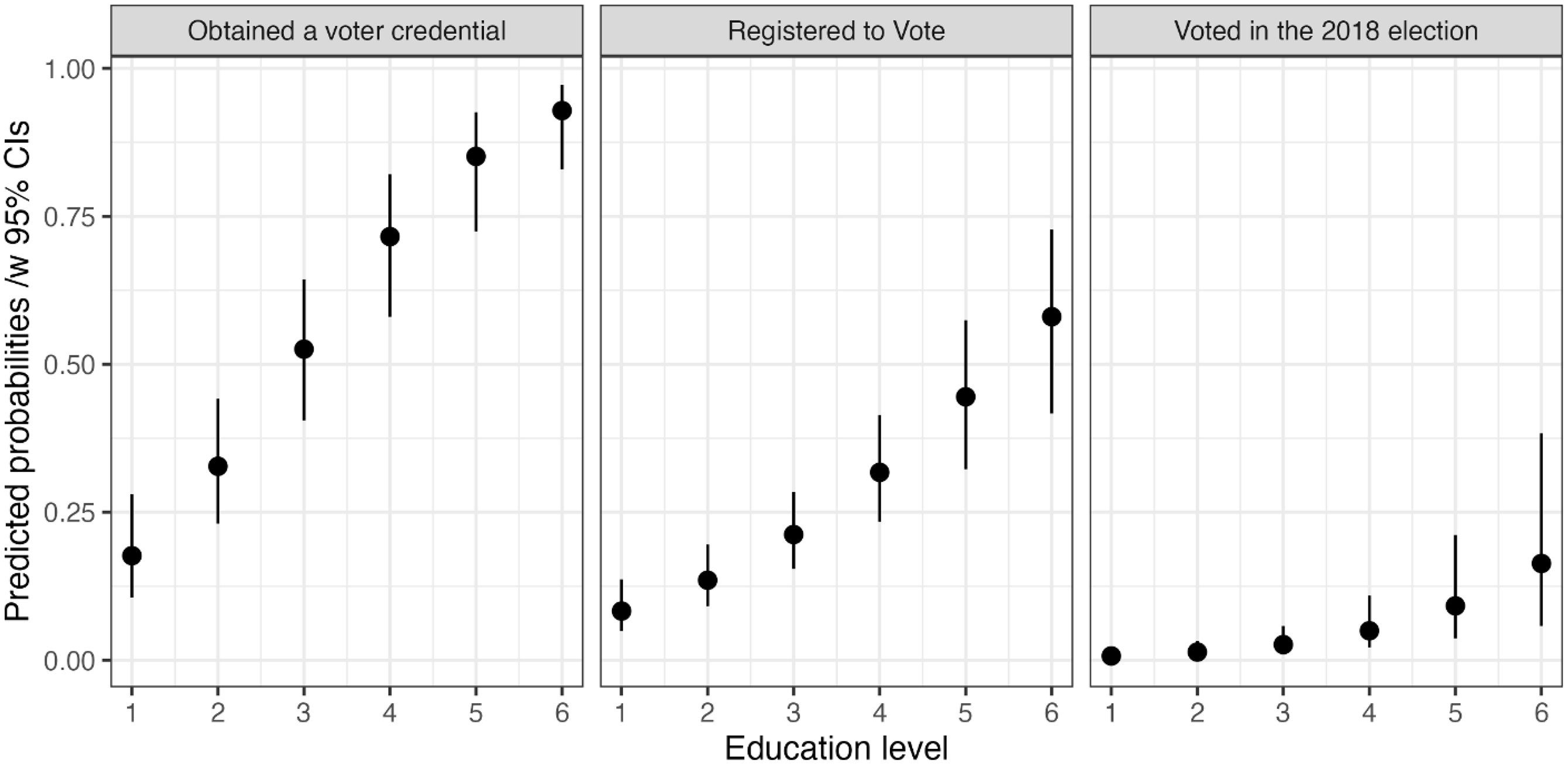
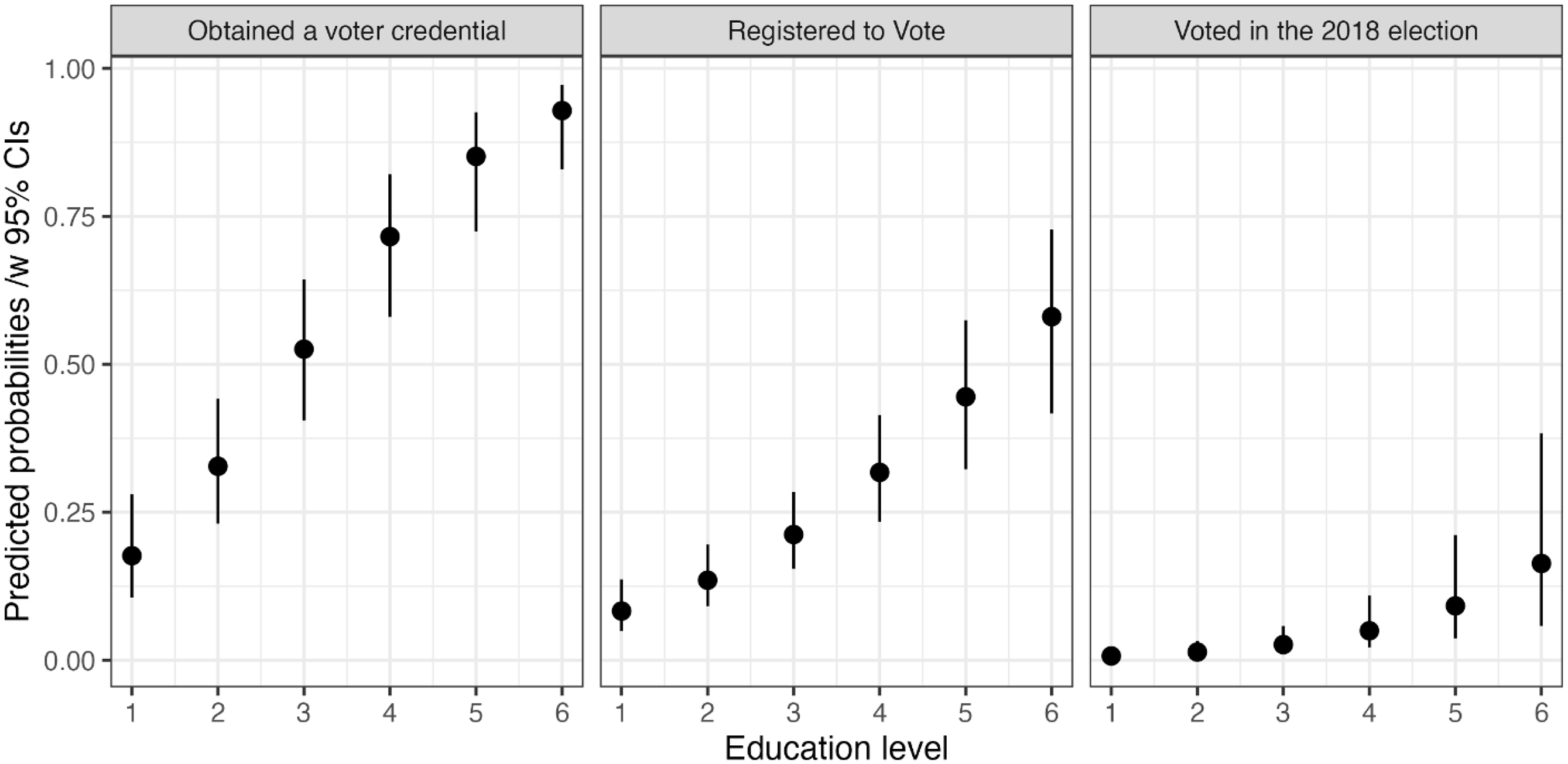
To interpret the substantive effects of educational attainment, Figure 4 shows the predicted probabilities of engaging in these three activities related to overseas voting for the respondents with different levels of educational attainment. As shown in the figure, educational attainment makes a maximum difference of 75.2 and 49.7 percentage points, respectively, from primary school (1) to college (6) in the probabilities of obtaining a voter credential and registering to vote, suggesting that the lower levels of education lead to less active political engagement overseas.
Predicted probability of overseas voting of Mexican citizens in the US by educational attainment (based on the weighted estimates).
As for Hypothesis 3 (“Distrust Hypothesis”), political trust seems to exert different influences on overseas voting, depending on the subjects. Respondents with higher levels of trust in the Mexican government are more likely to obtain a voter credential, but are not more likely to register to vote and cast a ballot. Those with higher levels of trust in the US government are more likely to obtain a voter credential, register to vote, and cast a ballot. Those with higher levels of trust in HTAs are more likely to obtain a voter credential, but less likely to register to vote and cast a ballot.
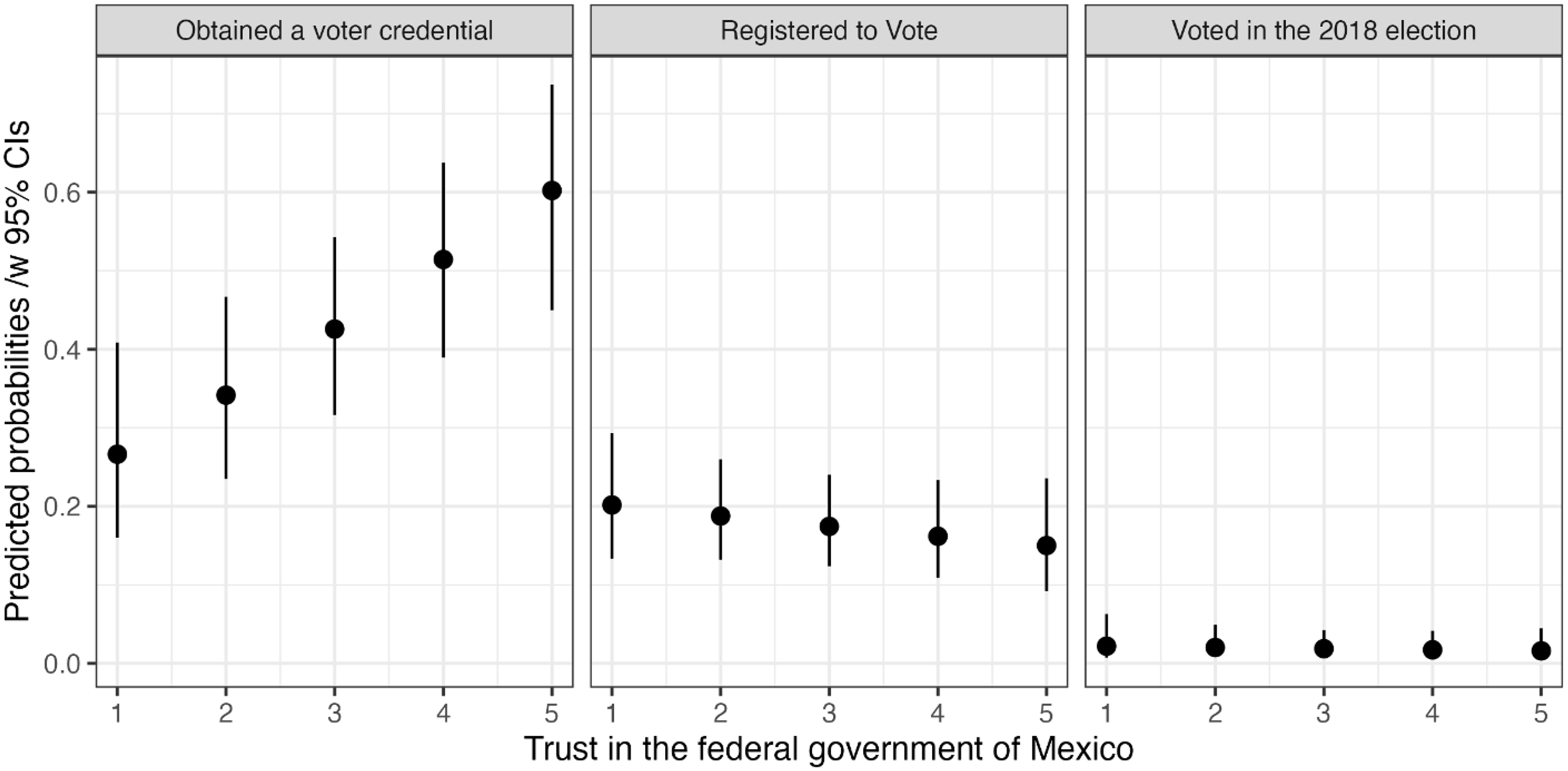
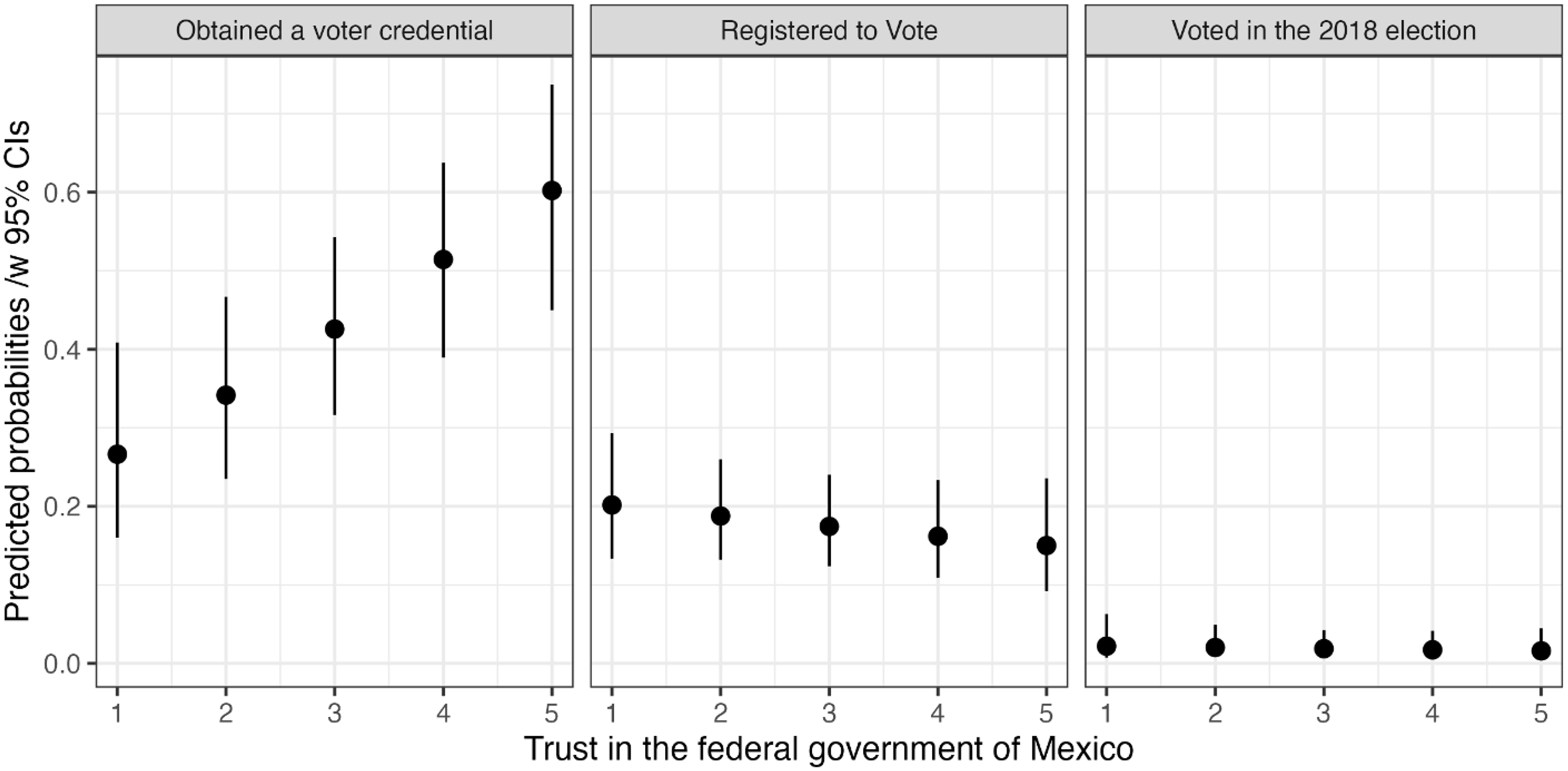
To interpret the substantive effects of trust in the Mexican government, Figure 5 shows the predicted probabilities of engaging in these three activities related to overseas voting for the respondents with different levels of trust. As shown in the figure, trust in the Mexican government makes a maximum difference of about 33.6 percentage points from 1: “Not trust” to 5: “Much trust” in the probabilities of obtaining a voter credential, suggesting that the higher levels of distrust in the Mexican government lead to less active political engagement overseas.
Predicted probability of overseas voting of Mexican citizens in the US by levels of trust in Mexican government (based on the weighted estimates).
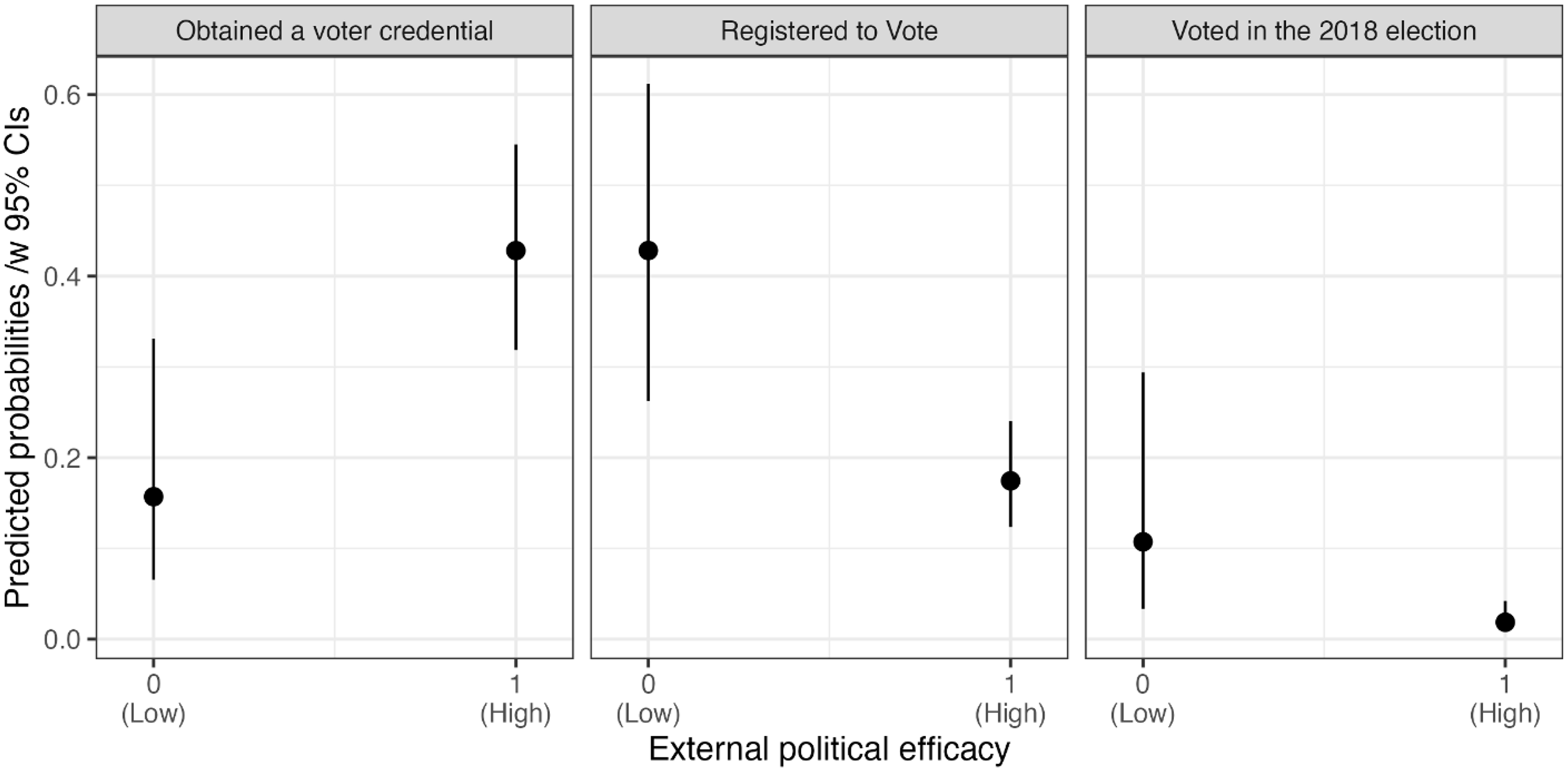
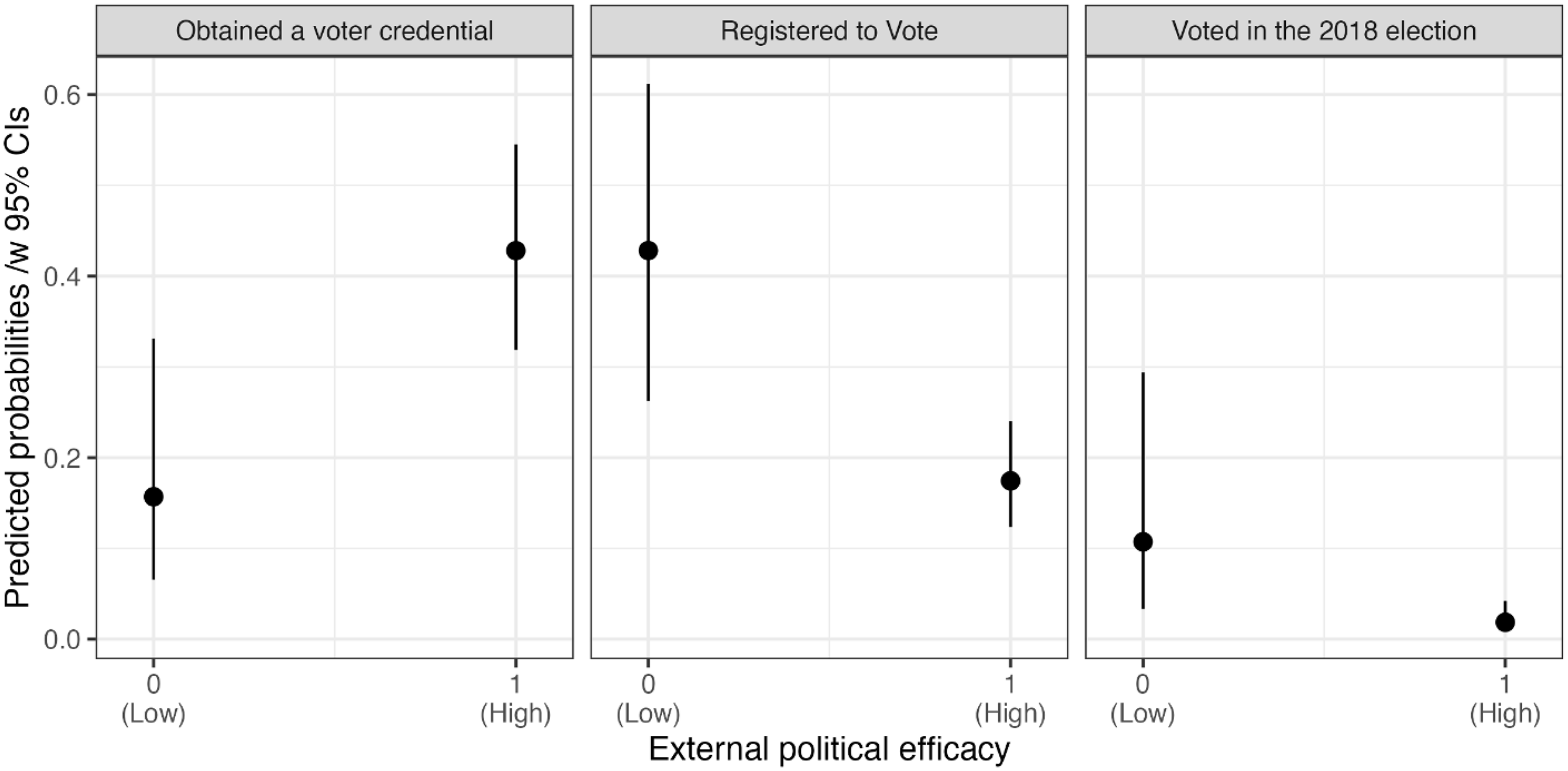
Finally, with regard to Hypothesis 4 (“External Efficacy Hypothesis”), respondents with higher levels of external political efficacy are more likely to obtain a voter credential, but those with lower levels of external political efficacy are less likely to register to vote and cast a ballot.
To interpret the substantive effects of educational attainment, Figure 6 shows the predicted probabilities of engaging in these three activities related to overseas voting for the respondents with different levels of external efficacy. As shown in the figure, external political efficacy makes a difference of 27.12, −25.38, and −8.86 percentage points in the probabilities of obtaining a voter credential, registering to vote, and casting a ballot in the presidential election, respectively. This suggests that higher political efficacy leads to a greater interest in obtaining a voter credential, whereas it is associated with less active voter registration and voting.
Predicted probability of overseas voting of Mexican citizens in the US by levels of external political efficacy (based on the weighted estimates).
Discussion and Conclusion
This paper investigates the political participation of undocumented Mexican immigrants in Mexican elections by employing RDS to survey this hard-to-reach population. Our findings indicate that limited access to official information, lower levels of education, and greater distrust in the Mexican government are associated with reduced electoral participation—results that align with our initial hypotheses. These findings also corroborate prior research showing that complex voting procedures and insufficient information, which increase the cost of voting, discourage participation among overseas voters, particularly those with lower educational attainment (Burgess and Tyburski Reference Burgess and Tyburski2020; Tagina and Corado Reference Tagina and Agustín Corrado2023). This suggests that such factors may broadly affect immigrants’ electoral engagement regardless of legal status, as earlier studies did not differentiate between documented and undocumented immigrants.
However, we also obtained findings that diverge from previous research. First, lower household income is associated with higher levels of voter registration and turnout, although it shows no association with the stage of obtaining voter credentials. One possible interpretation is that while undocumented immigrants may face greater difficulty in obtaining voter credentials compared to legal immigrants, those who manage to overcome this initial hurdle may find it easier to proceed with registration and voting. Second, greater distrust in HTAs is linked to increased participation at the credentialing stage but lower levels of registration and voting. While Medina Vidal and Campos Carrasco (Reference Medina Vidal and Carrasco2020) report a positive relationship between trust in HTAs and electoral participation, our findings suggest the opposite. This discrepancy may stem from the unique context of the 2018 election. Andrés Manuel López Obrador, the candidate from MORENA, enthusiastically visited the diaspora in major cities prior to 2018 and gained popularity among the Mexican diaspora (Paarlberg Reference Paarlberg, Kernalegenn and van Haute2020). His sympathizers abroad were likely not involved in HTAs, which have traditionally been tied to parties like the PAN, PRI, and Party of the Democratic Revolution (PRD). Instead, they may have been extensively mobilized by MORENA activists during the 2018 election. Third, external political efficacy only partially aligns with previous research (Leal, Lee, and McCann Reference Leal, Byung-Jae and McCann2012). While it increases the likelihood of applying for a voter credential, it is linked to lower rates of registration and voting. This may reflect a pattern specific to undocumented immigrants: their political efficacy may be initially high, given that they can only participate in Mexican elections, but this effect weakens after credentialing. The decline in efficacy warrants further investigation. These stage-specific effects also suggest that different strategies are needed to encourage overseas citizens to apply, register, and vote. Additional surveys and interviews are necessary to fully explore these dynamics.
In addition, further research is necessary to address the methodological challenge with regard to RDS.Footnote 23 First, our empirical analysis utilized only half of the responses collected through the RDS-based survey, as a significant number of responses were missing due to no response, noncompliance with instructions, and an incomplete chain-referral structure. The use of tablets in lieu of paper-based questionnaires may prove an effective solution. Second, the recruitment process for both the focus group and the survey was facilitated by community leaders, which may have introduced bias into our estimates. Undocumented immigrants who are connected to such leaders are likely to be more politically active than those without such ties. While we incorporated inverse-inclusion probabilities to enhance the representativeness of our sample and to mitigate potential bias in our estimates, we acknowledge the need for further methodological refinement. In particular, it remains essential to assess the extent of selection bias and to explore additional strategies to minimize it in future research. Third, the issue of external validity inherent in studies employing RDS warrants careful consideration. Notably, Zhang et al. (Reference Zhang2014) applied RDS to study undocumented victims of labor trafficking in San Diego, underscoring the substantial financial costs associated with this method. While RDS is effective for investigating hard-to-reach populations, its high cost limits its feasibility for nationwide application and constrains the generalizability of findings derived from geographically limited samples. Ideally, replicating the study in non-sanctuary contexts would allow for an assessment of whether our estimates are specific to sanctuary jurisdictions.Footnote 24 However, such replication may not be ethically justifiable. In non-sanctuary cities, the absence of legal protections may elevate the risk of exposure and potential deportation for undocumented immigrants, thereby raising serious ethical concerns regarding participant safety. Future research must therefore develop strategies that simultaneously minimize selection bias, enhance generalizability, and safeguard the protection of participants.
Despite these limitations, this study makes an important contribution by applying RDS to examine the political participation of undocumented Mexican immigrants in the US, a population that is widely considered hard-to-reach. Our findings demonstrate that RDS is a valuable methodological tool for systematically studying the political attitudes and behavior of undocumented immigrants, who are otherwise difficult to study using conventional survey methods.
Supplementary material
To view supplementary material for this article, please visit https://doi.org/10.1017/rep.2025.10018.
Data availability
Replication codes and data are available at https://doi.org/10.7910/DVN/NLCRAD.
Acknowledgements
Earlier versions of this paper were presented at the 2024 Annual Meeting of the Western Political Science Association, March 28-30, Hyatt Regency, Vancouver, Canada, and at the 2023 Annual Meeting of the Japanese Political Science Association, September 15–16, Tokyo, Japan. The authors thank the editors and reviewers of this journal, Masahisa Endo, Hiroto Katsumata, Ayato Kondo, Jeniffer Wu, and the participants in these conferences for helpful comments and suggestions. Takahashi also thanks Jiyeoun Song, Yoolim Lee, Kensuke Teshima, Masayuki Sawada, David FitzGerald, Victor Alejandro Espinoza Valle, and the participants at the Seoul National University, Graduate School of International Studies, Brain Korea 21 Special Lecture Series 14, Seoul National University on January 14, 2022 (online), the Economic Development Workshop/CEI Seminar, Institute of Economic Research, Hitotsubashi University, December 2, 2022 (online), the Center for Latino Research at DePaul University on May 4, 2023, and the Center for U.S.-Mexican Studies (USMEX) at the University of California San Diego on February 23, 2022, and June 14, 2023, for their helpful comments and suggestions. Last but not least, Takahashi thanks Rafael Fernández de Castro for his assistance during her stay at USMEX, Nelly Caro, and Jesús Tovar for helping with part of the formative research conducted in New York and in Los Angeles, and numerous community leaders for logistical assistance with focus group interviews conducted in Chicago and Los Angeles and with RDS conducted in Illinois.
Funding statement
The project is funded by the Grants-in-Aids for Scientific Research (B) and the Grant-in-Aid for Challenging Research (Exploratory), the Japan Society for the Promotion of Sciences (PI: Yuriko Takahashi, No: 21H00680, No.19K21685) and the Murata Science Foundation (PI: Yuriko Takahashi, No: M22助人023).
Competing interests
The authors declare no potential conflicts of interest with respect to the research, authorship, and publication of this article.



 Open access

