


Necrotizing fasciitis (NF) refers to a rapidly progressive life-threatening infectious process that involves the fascia and subcutaneous tissue leading to the loss of the cutaneous microcirculation and tissue death [Reference Mandell, Bennett and Dolin1]. Despite modern advances in pharmacotherapy and the care of critically ill patients, both morbidity and mortality from NF remain significant, with case fatality generally reported at 11–30% in recently published literature [Reference Childers2–Reference Mulla, Gibbs and Aronoff5]. The rapid course of the infection and this high morbidity/mortality despite treatment supports the need for additional studies to understand this disease and the patient factors associated with adverse outcomes. Moreover, few published studies have specifically examined factors associated with disabling and disfiguring amputation sometimes needed in the course of NF treatment.
The media has portrayed NF as a disease of significant burden to the general population creating fear and potential misconceptions regarding risk to otherwise healthy individuals. We attempt to identify any preventable risk factors that predict mortality and amputation, describe the microbiology of NF, and determine if NF often occurs in general healthy persons. This report characterizes patients with documented NF presenting at four large urban-based referral health centres and determines associations with mortality and amputation.
A review of hospital discharge diagnoses from the 60 acute tertiary-care centres within Cook County, including Chicago and surrounding areas, was completed to identify the three institutions with the greatest frequency of NF diagnosis for study inclusion. A fourth public hospital was later included to diversify the demographic representation of the study population. The four participating hospitals include a total of 2267 licensed beds representing over 11% of the total acute care beds in the study region. Individuals for inclusion were identified through a computer-generated search for patients diagnosed with NF (International Classification of Diseases – Ninth Revision: 728.86). Medical records were available in 1-year blocks for 1999, 1999–2001, 1999–2001 and 2000–2002 at each hospital, respectively, and resulted in 80 confirmed case records for study inclusion. Confirmed cases were defined as having pathological evidence of NF (histology, pathology, biopsy, or autopsy) with use of the term ‘necrotizing fasciitis’ or a synonymous terminology.
The data abstraction tool included demographics, clinical information focusing on patient presentation, complications, interventions, underlying illnesses or prodromes, specifics of initial infection site and spread, microbiology, laboratory findings including microbiological results both at admission and during disease course, radiographic findings, case management including specifics on time and pharmaceuticals administered, and mortality. The anatomical site of infection was defined as either central (chest, abdomen, groin, back, face) or peripheral (upper or lower extremities). All data abstractors were specifically trained in completion of the abstraction tool with trained study physicians available for consultation.
All medical conditions were defined as physician's documentation of the condition in the patient's medical record. When review of the medical record could not determine if a condition was present the denominator used to calculate frequencies did not include that patient. Factors that approached significance in univariate analysis (P⩽0·25) were further evaluated by multivariable logistic regression. Multivariable analysis was limited to cases with information for all considered factors. The presenting hospital was controlled for in all models. Final logistic models were created to identify which variables had independent association with mortality and amputation controlling for considered co-factors. Statistical significance for multivariable modelling was considered at P value ⩽0·05. All statistical analyses were performed using SAS software version 9.1.3 (SAS Institute, USA).
The most common initial diagnosis was cellulitis (41%), with NF being either the primary diagnosis or suspected upon admission in 28% of cases. Abscess, non-focal sepsis, pneumonia, pharyngitis, peritonitis, osteomyelitis, septic arthritis, and non-specific wound infections were also noted. Comorbidity was common in this patient population, with >60% having documentation of at least one comorbid condition at admission. The median number of such conditions was 2 and ranged from 0 to 4.
The most common dermatological findings documented on admission were pain (80 patients, 100%), erythema (57 patients, 75%) and swelling (59 patients, 78%). More advanced findings such as bullae formation, purple or violaceous colouration of the skin, cutaneous gangrene, and crepitus were found in only 14–33% of patients. A hallmark sign of infection, an elevated temperature >38°C, was noted in only 58% of this patient population. Radiographic evidence of gas in the soft tissue was noted in 11 patients (14%).
Forty-three patients had a portal of entry noted including surgical wounds (23%), non-surgical/non-traumatic wounds (e.g. venous stasis ulcers) (24%), and traumatic wounds (6%, 4/5 wounds described as ‘blunt force’). The most frequently involved location of the necrotizing infection was the extremities (50 patients, 63%), and of these 82% involved the leg. Infection was documented in multiple locations in two individuals. An organism was identified in wound or sterile site cultures for 60 (75%) cases. Cultures were polymicrobial in 31 (52%) of these. The most commonly cultured organism, either in singular or as part of a polymicrobial complex, were streptococcal species (35 patients, 44%); however, group A streptococcus (GAS) represented only 12 (34%) of these. Clostridium spp. was an uncommon isolate identified in only four patients (5%). Location of infection, central vs. extremity, was not associated with identification of an organism or the systemic progression of the infection. Information on five antimicrobial agents was specifically obtained from 78 cases with antimicrobial information available: penicillin (0 cases, 0%), vancomycin (21 cases, 27%), clindamycin (39 cases, 50%), erythromycin (0 cases, 0%), and gentamicin (13 cases, 17%). An ‘other antimicrobial’ field included additional agents, most commonly piperacillin combined with tazobactam, was noted in 16 cases (21%). No specific antimicrobial was associated with mortality or amputation. Table 1 provides select characteristics by survival and amputation.
Select demographic, clinical, and radiographic characteristics associated with survival and amputation in 80 patients with necrotizing fasciitis
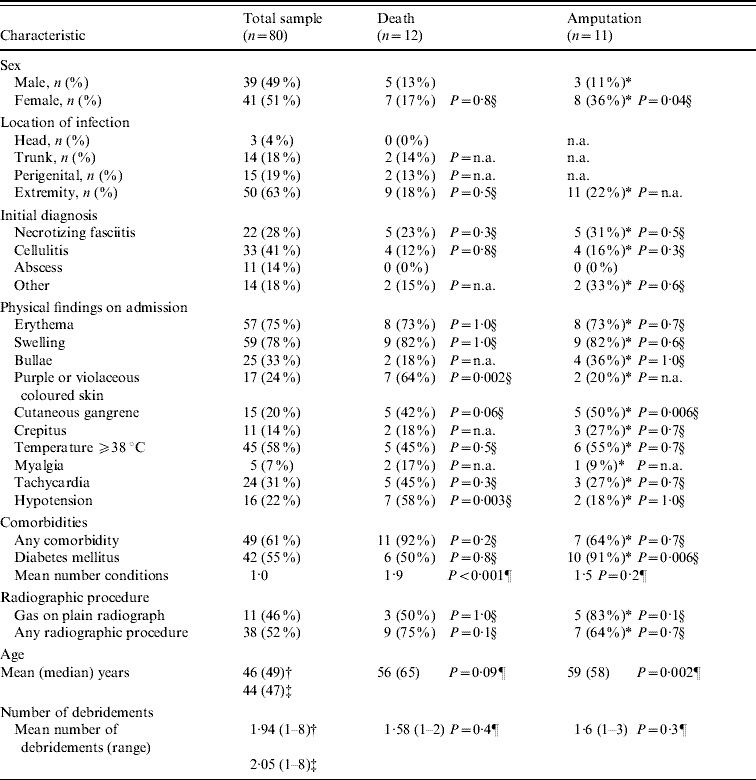
Sample size varies by data completeness and all P values represent comparison of patients with indicated outcome to those without that outcome.
* Per cent of infections involving an extremity.
† Survivors.
‡ Cases with infection of an extremity without amputation.
§ By measure of association by Fisher's exact test.
¶ By difference in means by Student's t test.
Twelve cases (15% mortality) died during the hospitalization period under study. The mean duration of hospitalization for fatal infections was 23 days (range 0–47 days) compared to 27 days (range 3–96 days) for survivors (P=0·49). Amputation was performed in 22% (11/50) of patients with infections involving the extremities. The mean duration of hospitalization for infections resulting in amputation was 31 days (range 4–85 days) compared to 26 days (range 3–96 days) for individuals who had an infection of the extremities but did not undergo an amputation (P=0·43).
Patient characteristics associated with an increased mortality risk in univariate analysis included the presence of two or more underlying conditions [odds ratio (OR) 17·7, 95% confidence interval (CI) 3·5–89·5], immune suppression – excluding the therapeutic use of corticosteroids (OR 4·0, 95% CI 1·1–15·1), and age ⩾60 years (OR 5·0, 95% CI 1·4–17·8). Significant prognostic indicators included hypotension within 24 h of admission (OR 7·9, 95% CI 2·1–30·6), history of current corticosteroid use (OR 10·5, 95% CI 1·5–71·7), bacteraemia (OR 8·0, 95% CI 2·1–30·2), physician-documented malnutrition (OR 10·5, 95% CI 1·5–71·7), purple or violaceous skin colouration (OR 8·9, 95% CI 2·2–36·3), and prothrombin time >13 s [OR 21·3, 95% CI 1·7–not defined (n.d.)].
Multivariable logistic regression models were used to further evaluate factors associated with mortality in univariate analysis. The presenting hospital was controlled for in all models. Ten factors were selected for consideration through univariate statistical significance (P⩽0·25), previous research findings, and stratified analysis was performed to identify possible confounding. Factors were divided into two groups: patient characteristics or intrinsic patient factors, and prognostic indicators defined as variable factors that broadly indicated patient condition. Patient characteristics associated with mortality in final modelling were: the presence of two or more underlying conditions (OR 29·0, 95% CI 3·3–n.d.), age ⩾60 years (OR 5·6, 95% CI 1·0–29·7), and age ⩽15 years (OR 22·8, 95% CI 1·3–n.d.). Prognostic indicators significant in final modelling included a positive blood culture or documentation of sepsis (OR 19·9, 95% CI 2·3–n.d.), purple or violaceous skin colouration noted on admission (OR 10·1, 95% CI 1·4–72·0), and the therapeutic use of corticosteroids (OR 29·3, 95% CI 1·4–n.d.). Age, an important co-factor in NF, and presenting hospital were controlled for in analysis of prognostic indicators, and all patient characteristics and prognostic indicators were considered separately in modelling.
Patient characteristics significantly associated with amputation included female sex (OR 4·8, 95% CI 1·1–20·9), diabetes mellitus (OR 12·9, 95% CI 1·5–111·2), the presence of two or more underlying conditions (OR 5·08, 95% CI 1·2–21·1), cutaneous gangrene noted at the site of infection on admission (OR 10·0, 95% CI 1·9–53·2), history of renal failure with dialysis (OR 6·9, 95% CI 1·3–37·6), and a history of chronic heart disease (OR 5·7, 95% CI 1·2–25·7).
Using the same methodology as in analysis of associations with mortality, a multivariable logistic regression model was used to further evaluate factors associated with amputation. Six factors were ultimately selected including: female sex, the presence of two or more underlying conditions, initial wound described as cutaneous gangrene, history of renal failure with dialysis, history of chronic heart disease, and diabetes mellitus. In this multivariable analysis, only cutaneous gangrene noted in the initial wound description (P=0·005) and female sex (P=0·02) were associated with increased risk of amputation.
Patients with NF often have underlying medical conditions. While diabetes mellitus was not associated with mortality in this population, it was present in >50% of study cases. Given the well established relationship between diabetes mellitus and NF mortality and the strong association with amputation noted here, the lack of significant association with mortality in this population is surprising. However, our finding is compatible with a recent report that diabetes was associated with a 61% reduction in the risk of hospital mortality in patients hospitalized with NF [Reference Mulla, Gibbs and Aronoff5]. It is possible that in this population, the association of diabetes and the risk for superficial and deep tissue infection was well recognized by the health-care providers producing decreased delay of diagnosis and/or enhancing surgical intervention with a modifying impact on patient survival.
In this series, the microbiology of NF was primarily polymicrobial (type I) consisting of a variety of aerobic and anaerobic organisms. No increase in severity of infection or mortality could be attributed to a specific organism or family of organisms. There was no significant association found between any specific organism and a predilection for septicaemia. The diversity of organisms isolated demonstrates the importance of the administration of broad-spectrum antibiotics in the treatment of patients with necrotizing infections (in addition to rapid surgical intervention), rather than focusing on any one suspected organism.
GAS were only present in 12 cases and none of these infections resulted in death. The characteristics of the GAS case-patients differed significantly in both age (mean GAS age 36 years vs. mean non-GAS age 50 years, P=0·03) and number of comorbid conditions (GAS mean 0·5 vs. non-GAS mean 1·1, P=0·04). Examining various outcome measures (complications during clinical course, number of surgical debridements, the need for amputation), no significant difference in outcome from GAS and non-GAS necrotizing infections was found and no difference in the identification of possible portal of entry (i.e. surgical vs. traumatic) was evident. These findings are consistent with Wong and colleagues' conclusion that type-II NF infections lack association with underlying comorbidity [Reference Wong4].
The rapid diagnosis of NF remains a challenge of vital importance in mitigating adverse outcomes. However, the two most commonly identified physical findings on admission were relatively non-specific [erythema (75%) and swelling (78%) at the site of infection]. The non-specific dermatological presentation is consistent with previous observational studies of NF patient populations, and is probably a major factor contributing to the common and less concerning initial medical diagnosis of cellulitis [Reference Kihiczak, Schwartz and Kapila6]. Pain at infection site, noted by all cases in this sample, must be carefully assessed and monitored for uncharacteristic severity in cases of cellulitis. These findings, along with previous work in NF populations, indicate that pain intensity is a hallmark symptom that can raise suspicion of a necrotizing infection over that of uncomplicated cellulitis [Reference Bisno, Cockerill and Bermudez7]. More specific findings such as crepitus (14%), bullae (33%), and purple or violaceous skin colouration (24%) were less commonly documented although they should remain important factors to consider when present.
Systemic signs of infection including an elevated temperature (>38°C) and the subjective report of ‘chills’ were noted in just over half of presentations. Serious signs of systemic infection including tachycardia and hypotension were relatively infrequently documented considering the seriousness of this condition (31% and 22%, respectively). We believe the infrequency of these conditions is not related to lack of documentation in the medical record because pulse and blood pressure are routinely documented many times in a 24-h period. These findings are consistent with those reported by Wong & Wang in a review of NF diagnoses [Reference Wong and Wang8] in which they stated that the infrequency of systemic manifestations may relate to the frequent empirical use of broad-spectrum antibiotics and/or the association of impaired immune function and NF development. Such a relationship may ultimately limit the use of an early systemic symptom complex in the differential diagnosis of NF. A high degree of suspicion with an appreciation of patient history and predisposing factors to NF are important in the rapid identification and successful treatment of this patient population.
The mortality rate from NF in our study population (15%) is among the lowest of NF mortality rates published between 1924 and 1995 presented by McHenry et al. [Reference McHenry9]. The most significant patient characteristic associated with an increased risk of death was the presence of two or more comorbid conditions. Comorbidity can impact overall mortality through a variety of mechanisms and has been identified as an important predictor of NF mortality [Reference Childers2, Reference Wong4]. Three additional significant characteristics may broadly indicate impairment of immune status (immune suppression, malnutrition, and history of or current use of corticosteroids). The observed association between immune function and NF mortality represents an intuitive finding, considering the aggressive nature of the infection.
The increased mortality observed in the extremes of age, young and old, noted here in multivariable analysis could indicate a U-shaped association between age and mortality in NF. Given our findings regarding differences in patient demographics and type-I vs. type-II infections, separate infection processes are possibly at work in these comparatively old and young groups that may warrant further investigation.
In addition to those previously mentioned, a potential limitation of this study includes its observational retrospective methodology. The large hospitals used are regional referral centres where acutely ill patients from the surrounding area are commonly brought for care. No recognition or accounting of the transferred referral patient's unique characteristics was possible. Microbiology reports were available only as positively identified organisms and anaerobic organisms may be underrepresented if such cultures were not performed as often as aerobic cultures. It is preferable to have prospectively collected aerobic and anaerobic microbiology data controlling for duration and dose of antimicrobials prescribed in order to more fully analyse factors associated with clinical outcome from NF. Three potentially important medical treatment options: hyperbaric oxygen, intravenous immunoglobulin (IgG i.v.), and administration of activated protein C were not captured in our data collection, potentially missing interactions with the variables under study. Our narrow definition of a confirmed case may have resulted in misclassification bias (exclusion of true cases). Limitations in sample size made any individual factor affect estimates unstable. While we were able to determine factor significance with some confidence, we were unable to determine the true magnitude of any affect. However, the sample size is relatively large for an epidemiological analysis of NF, includes a comprehensive list of clinical variables, and is strengthened by inclusion of multiple institutions.
This report demonstrates the substantial morbidity and mortality of NF and adds to the understanding of the epidemiology of NF by demonstrating factors associated with survival in a large number of confirmed NF case-patients in multiple health-care centres. With the possible exception of glycaemic control in diabetics, this report does not reveal potentially preventable risk factors, but does reveal that these patients may not present with classic (or obvious) findings. Therefore, the role of heightened and early suspicion in patients with chronic medical conditions remains critical. Future research should focus on limb preservation and ways to promote early recognition of disease especially in persons with comorbid conditions and compromised immune system. In addition, further research of the epidemiology of NF would benefit from the design of a prospective large multicentre study that attempts to enhance anaerobic culture at the time of surgery to ensure a more complete and generalizable understanding of the microbiology of this important infectious disease.
ACKNOWLEDGEMENTS
The authors acknowledge the assistance of Mary Alice Lavin and Drs Becky Wurtz, Alpesh Patel, Gregory Huhn, and Yolanda Laluz with medical record abstraction, Dr Paul Arnow (deceased) and Dr Steven Sokalski with review of the data abstraction tool, and Dr Dennis Stevens for review of the data abstraction tool and thoughtful review of the manuscript.
DECLARATION OF INTEREST
None.



