


Introduction
The promise of democracy rests on the premise that citizens participate in the democratic process and that they participate equally. However, in many countries, increasingly fewer citizens are making use of their democratic right to elect their representatives and governments. Declining turnout rates and a growing ‘participation gap’ (Dalton, Reference Dalton2017) between the rich and the poor are causing concern about a broken promise of democracy (Schlozman et al., Reference Schlozman, Verba and Brady2012). Declining participation at first seems puzzling as studies taking a traditional socioeconomic resource approach on democratic participation unanimously show that individuals with more resources are more likely to vote (Brady et al., Reference Brady, Verba and Schlozman1995; Verba, Reference Verba1996; Gallego, Reference Gallego2015). Considering the increasing resources at the disposal of citizens across the world, one would therefore expect more rather than less participation in politics.
Existing studies in comparative political economy, however, suggest that it is not primarily individual resources that determine voter turnout but their distribution. In most rich democracies, this distribution has grown more unequal (Alderson and Nielsen, Reference Alderson and Nielsen2002; Piketty, Reference Piketty2014; Alvaredo et al., Reference Alvaredo, Chancel, Piketty, Saez and Zucman2017). Regarding the implication of this rising inequality on electoral participation, the literature has advanced arguments for both a negative and a positive relationship between economic inequality and political participation. The proponents of the conflict perspective argue that a widening income gap between the rich and the poor should incentivize the poor even more to use their voting power to ‘soak the rich’ (Shapiro, Reference Shapiro2002) while the rich should be drawn to the polls to prevent this from happening. Implicitly or explicitly, the theoretical workhorse of these studies is the Meltzer–Richard (Reference Meltzer and Richard1981) model that leads us to assume that it is rational to participate if the stakes are high – and they are particularly high in unequal countries (Brady, Reference Brady and Neckerman2004). Advocates of the relative power approach or the rational abstention approach, by contrast, maintain that in the context of high inequality the rich do not need to resort to voting to influence political outcomes as they have other means to influence politics. As the poor learn from experience that the system is biased against them, they give up on participating.
Although both theoretical arguments seem plausible, the empirical evidence is tilted toward a depressing effect of inequality on political engagement with a substantial number of null findings. What makes their empirical assessment difficult is the fact that these studies not only use an array of different methods but also cover different time periods and countries (Cancela and Geys, Reference Cancela and Geys2016: 267). We build on these arguments and attempt to clarify the relationship between economic inequality and political participation from a multi-empirical perspective in the rich democracies of the ‘global north.’ Hence, the main purpose of this article is to resolve this question by triangulating data and methods. More specifically, we use three kinds of data. First, we use cross-sectional aggregate data from 21 OECD countries for the period 1980–2014 to study the relationship between inequality and voter turnout. Second, we zoom in on the German case and examine local data from 402 communities from 1998 to 2017. Focusing on within-country variation eliminates differences linked to features of a country’s political system, political culture or other idiosyncratic features. Third, we combine survey data with macro-data to investigate the impact of inequality on individual voting behavior. This final step allows us to test whether the effect of income inequality on political participation varies across different income groups.
We focus on rich democracies and the period since 1980. Studies of the global distribution of income and wealth have suggested a ‘new geography of inequality,’ in which differences between countries decrease while within-country inequality increases (Firebaugh, Reference Firebaugh2009). Lakner and Milanovic (Reference Lakner and Milanovic2016) as well as Alvaredo et al. (Reference Alvaredo, Chancel, Piketty, Saez and Zucman2017) suggest an ‘elephant curve’ of inequality with two sets of winners. In relatively poor countries, the middle class has benefitted from high growth rates whereas in rich countries, the poor and middle classes have experienced stagnating incomes with the rich receiving a disproportionate share in income growth. Given these patterns, we would not expect to find relationships between inequality and turnout to be the same across regions with different growth and inequality trajectories. Hence, we focus on a relatively homogeneous set of rich democracies during a period with rising income inequality to assess the relationship between inequality and turnout.
For this group of countries, we find strong and consistent evidence that voter turnout is lower in more unequal societies. Moving from the most egalitarian to the most unequal countries sees a depression of turnout – all else being equal – by 7–15 percentage points (depending on the exact model), which is comparable in magnitude to the effect of compulsory voting. Within Germany, where institutional variables do not differ, relatively deprived regions have significantly lower levels of turnout. Finally, we find that turnout declines for all income groups in unequal countries but is particularly strong for low-income groups. Our results are, therefore, in line with the rational abstention perspective, which argues that inequality reduces electoral participation, particularly among the poor.
This article is structured as follows. The next section discusses the two main theoretical approaches on the possible impact of income inequality on voter turnout and the concomitant contradictory findings that existing studies produce. The ‘Analyses’ section introduces the three datasets, the methodologies employed in this study, and the three steps of our analysis. The final part of the article discusses the results and addresses unresolved questions and outlines venues for further research.
Literature review on the inequality–participation nexus
Our argument builds on recent studies suggesting that it is not only resources that determine voter turnout but also their distribution. There is general agreement that the gap between rich and poor has been widening in most democratic countries (Alderson and Nielsen, Reference Alderson and Nielsen2002; Piketty, Reference Piketty2014; Alvaredo et al., Reference Alvaredo, Chancel, Piketty, Saez and Zucman2017) but studies on the relationship between economic inequality and voter turnout are still rare. Theoretically, it is not evident why higher inequality should depress turnout. From a conflict perspective, a widening income gap between the rich and the poor might incentivize the poor even more to use their voting power to ‘soak the rich’ (Shapiro, Reference Shapiro2002). Yet, increasing evidence based on a variety of studies on the country, regional, or individual level of analysis accumulates for the alternative view that posits that experience teaches the poor that politics is systematically biased against them. ‘Don’t play if you can’t win’ is the phrase Goodin and Dryzek (Reference Goodin and Dryzek1980: 292) coined for rational nonparticipation by the least well-off (see also Pateman, Reference Pateman1971; Offe, Reference Offe, Schäfer and Streeck2013). Accordingly, the argument has been called the relative power approach or rational abstention approach. High levels of income inequality signal to poorer citizens that their concerns are likely to be neglected, whereas the better-off learn that they get what they want and have other, possibly more effective, means – lobbying, donations, direct contact to decisions-makers – to get their voices heard. Under these circumstances, both groups are less likely to participate because the poor have given up, while for the rich voting is just one way among many to influence political decisions. In egalitarian countries, in contrast, the odds of having an impact are more equally distributed and thus more citizens will participate. The rational abstention approach, therefore, predicts lower turnout rates in more unequal countries. Further evidence for the mechanisms that the rational abstention proclaims is provided by the responsiveness literature that finds that political decision-makers are much more responsive toward the rich – and the poor get what they want only if their interests are aligned with those of higher income groups (Gilens, Reference Gilens2005; Bartels, Reference Bartels2008: chapter 8; Rosset et al., Reference Rosset, Giger and Bernauer2013). The poor also possess relatively fewer resources to invest in politics, while the rich find it easier to dominate the political agenda (Schattschneider, Reference Schattschneider1960; Gilens, Reference Gilens2005). Therefore, when income and wealth are unequally distributed, the less affluent are likely to find that the issues being debated are not those that interest them and so give up discussing politics (Solt, Reference Solt2008: 58). Given this pattern, abstention seems to be a rational choice for the less well-off, although one that might exacerbate existing biases.
In a seminal early study on the question and based on country aggregated data, Goodin and Dryzek (Reference Goodin and Dryzek1980: 283) regress GDP per capita as an indicator of absolute levels of resources, and the Gini index as an indicator of the distribution of resources on voter turnout for 38 countries using data from the 1950s to the 1970s. They find a significant negative effect of inequality on turnout. However, they do not include any institutional variables that might account for different turnout rates across countries. In a more encompassing cross-national study, Fumagalli and Narciso (Reference Fumagalli and Narciso2012) analyze 85 countries for the 1990s with institutional, regional, and economic control variables.
Other studies that examine the relationship between inequality and turnout on the macro-level, however, do not find a significant impact of income inequality on turnout. Lister (Reference Lister2007) studies turnout in 15 rich democracies for 1963–93, with regression models including both institutional and economic variables. Although Lister finds a negative impact of income inequality on turnout, Arzheimer (Reference Arzheimer2008) criticizes the statistical model and is unable to confirm the findings using the same dataset. Finally, Stockemer and Scruggs (Reference Stockemer and Scruggs2012) analyze 550 democratic elections in Western and non-Western countries. They ascertain that the Gini index has no significant impact on voter turnout, neither as a whole nor for each separate group.Footnote 1
Mixed evidence for the relative abstention approach is also provided at the subnational level. Mahler (Reference Mahler2002) analyzes 184 regions in 11 countries for the late 1980s and early 1990s. Although inequality has a negative impact on turnout, it fails to reach statistical significance. Focusing on the United States, a couple of studies investigate turnout variations across states. Boix (Reference Boix2003: 127–128) looks at turnout rates in the US states for the 1920 presidential election and interacts the percentage of farming population with a measure of wage inequality. Jointly, these two variables have a significant negative impact on voter participation. In unequal rural states, fewer citizens vote. Looking at more recent elections, Galbraith and Hale (Reference Galbraith and Hale2008) find in cross-sectional analyses a negative but not always significant effect of inequality on turnout in the US states. Their supplementary analyses of changes taking place between 1980 and 2004 show a significant negative effect of inequality on turnout. Rising income disparities, they conclude, depress turnout. Their results are confirmed by studies of Italian (Solt, Reference Solt2004; Scervini and Segatti, Reference Scervini and Segatti2012) and European regions (Mahler, Reference Mahler2002).
A third empirical approach takes a multilevel perspective and examines the interaction between micro-and macro-level factors that shape relationships between income inequality and political participation but again fails to provide definite findings. Solt (Reference Solt2008, Reference Solt2010) runs a series of multilevel models for a set of 23 countries and the US states and finds that higher levels of income inequality lead to lower and more unequal turnout. Anderson and Beramendi (Reference Anderson, Beramendi, Anderson and Beramendi2008) employ an instrumental variable approach and, based on a sample of 18 OECD countries, conclude:
As inequality goes up, so do the odds of abstention from electoral participation. These effects are unambiguous, and the inference does not depend on what kind of inequality we consider (Beramendi and Anderson, Reference Beramendi and Anderson2008: 295).
However, using survey data from US states for 1980–2004, Wichowsky (Reference Wichowsky2012) finds no relationship between turnout differences and the level of income inequality. Similarly, Gallego (Reference Gallego2015: chapter 6) analyzes 85 elections in 36 democracies from roughly the late 1990s through to 2007. She finds a negative effect of gross and net income inequality on voter turnout (though not always significant) but no evidence that higher net inequality leads to more unequal turnout. Based on a mediation analysis, Gallego suggests political attitudes are the mechanisms linking economic and electoral inequality.Footnote 2 For Europe, findings are equally inconclusive. Using cross-sectional data from the European Election Study 2009, Horn (Reference Horn2011) applies various measures of income inequality to assess an individual’s propensity to vote. While the coefficients are mostly negatively signed, only some reach significance and substantial effects seem limited. In a cross-sectional multilevel analysis of 23 OECD countries, Jaime-Castillo (Reference Jaime-Castillo2009) finds that inequality generally suppresses turnout, but inequalities in the upper half of the income distribution are more relevant to turnout than inequalities in the middle and lower classes (see also Horn, Reference Horn2011). Finally, Jensen and Jespersen (Reference Jensen and Jespersen2017) find a negative effect of being poor on electoral participation with the relationship being conditioned by inequality and national wealth.
In conclusion, the relationship between economic and participatory inequality is tested by very different empirical setups, which produce inconclusive findings. As our review of existing studies on the subject reveals, summarizing the findings into a coherent model is further aggravated by the vast variance in the geographical and temporal scope of the studies and a variety of explanatory variables. We conclude that studies linking income inequality and voter turnout have so far failed to produce consistent results. One key reason is possibly the broad range of empirical strategies with authors not only analyzing different countries and different periods but also using different types of data, different methods, and different explanatory variables. In this article, we make a systematic effort to resolve the question of how political and economic inequality are related in rich democracies.
Analyses
To shed light on the effect of inequality on turnout, we use three datasets, each analyzing the nature of the relationship between economic and electoral inequality from a different perspective. The study starts with a time-series cross-sectional analysis – the most common approach – complementing it in a second part with an in-depth analysis of subnational data in a single country and, in a third part, studying individual participation decisions in a cross-national setting.
First, we examine 21 OECD countries from 1980 to 2014. The countries differ widely in their electoral institutions and socioeconomic profiles but are among the most prosperous democracies in the world but differ considerably in the degree of income inequality.Footnote 3 Rather than unsystematically selecting explanatory variables, the dataset allows to control for the set of institutional, electoral, and economic variables that have frequently been found to influence voter turnout (Blais, Reference Blais2006; Geys, Reference Geys2006; Cancela and Geys, Reference Cancela and Geys2016). Among the institutional variables, compulsory voting increases turnout, while majoritarian electoral systems exhibit lower turnout rates (Jackman, Reference Jackman1987; Jackman and Miller, Reference Jackman and Miller1995; Bowler et al., Reference Bowler, Brockington and Donovan2001). Majoritarian electoral systems tend to produce safe seats with limited competitiveness for local electorate races, giving voters little incentive to turn out (Selb, Reference Selb2009). In contrast, proportional representation systems are designed to ensure every vote counts, making local races always competitive (Powell, Reference Powell and Rose1980; Blais and Carty, Reference Blais and Carty1990; Selb, Reference Selb2009). In majoritarian systems, parties also tend to converge toward the median with such ideological indistinctiveness reducing voter motivation to turn out (Cox, Reference Cox1999; but see Heath, Reference Heath2016 who finds ideological distinctiveness of parties to be less important for turnout than descriptive representation). Other important institutional variables include the political system structure (presidentialism vs. parliamentarianism, or the degree of bicameralism). These ‘rules of the political game’ determine the importance of each election and matter for voter turnout (Tavits, Reference Tavits2009; Stockemer and Calca, Reference Stockemer and Calca2014). For specific elections, we take into account the closeness of the electoral race and the effective number of parties (Jackman and Miller, Reference Jackman and Miller1995; Blais and Dobrzynska, Reference Blais and Dobrzynska1998). Finally, population size and GDP per capita are socioeconomic variables that require controlling.
Second, we study the relationship between inequality and turnout in a longitudinal single-country perspective. Examining the link between economic inequality and participation in electoral politics in a single polity eliminates variations in institutional and political factors that might influence voter turnout in addition to the factors we are able control for. Germany demands closer examination as it exhibited both an equalitarian income structure and exceptionally high levels of political participation for most of the postwar period, with both inequality and participation having converged to average European levels since (Schäfer, Reference Schäfer2015). Furthermore, relying on an original dataset that combines information on the socioeconomic situation and the electoral outcome of subnational units (the level of administrative districts) avoids the problems of individual-level data (overreporting of participation combined with underrepresentation of disadvantaged segments of the population, see Tourangeau et al., Reference Tourangeau, Groves and Redline2010; Selb and Munzert, Reference Selb and Munzert2013; Schäfer et al., Reference Schäfer, Schwander, Manow, Schoen and Weßels2016) but contains a sufficient number of observations to draw inferences from the analysis about the relationship between economic and political inequality. As there are no significant institutional differences within Germany, we focus on election-specific and socioeconomic control variables such as population size, average income at district level, and the closeness of the electoral race. We also control for differences in political socialization and political culture in the former GDR and FRG with an East–West Dummy.
Third, we combine election surveys from the same 21 OECD countries used in the first step with macro-data to examine the impact of income inequality on individual choices to vote or abstain, again controlling for institutional differences between countries. This final step allows us to assess whether inequality affects electoral participation of different income groups equally. In all analyses, we employ a range of statistical approaches to test the empirical robustness of our findings as rigidly as possible.
Time-series cross-sectional analyses of 21 countries from 1980 to 2014
This section analyzes voter turnout in 21 countries over roughly three decades. Voter turnout is measured as the share of actual voters to all registered voters in parliamentary elections. We perform the analyses using two different measures of income inequality: the Gini coefficient and the Theil index. The Gini coefficient is calculated from the dispersion of individual (or household) incomes, while the Theil index uses the income share of geographical units to calculate income inequality.Footnote 4 Descriptive statistics and the data sources can be found in Appendix 1.
Figure 1 shows the correlation between the two measures of income inequality and voter turnout over time. Despite considerable country variation, visual examination suggests a negative relationship. In fact, most correlations are statistically significant but only moderately strong. For a more reliable picture, multivariate analyses are used to control for institutional and political factors that have been shown to be relevant for aggregated turnout. In the methods literature, there is an ongoing discussion about the best way to analyze time-series cross-sectional data. It is especially disputed whether or not to include a lagged dependent variable (LDV) to de-trend the data. Beck and Katz (Reference Beck and Katz1995) recommend using panel-corrected standard errors and to also include a LDV. Others, however, point out that a LDV may ‘falsely dominate’ a regression (Achen, Reference Achen2001). This is particularly the case with the kind of data we use. Both the dependent variable and the main independent variable of interest change slowly over time.Footnote 5 Usually, turnout of election t1 is similar to that in election t0, and inequality in 1 year will very much resemble that of the previous year. Also, differences between units (countries or regions) are likely to have an impact on both the level and the rate of change of our dependent variable.Footnote 6 This article does not debate the most feasible approach in any detail but performs different specifications to check the robustness of the results. We use several models that have been used the most in previous analyses. However, a number of tests indicate that a random effects model best suits the structure of our data because it allows including variables that are time-invariant as well as time-variant.Footnote 7
Income inequality and voter turnout.

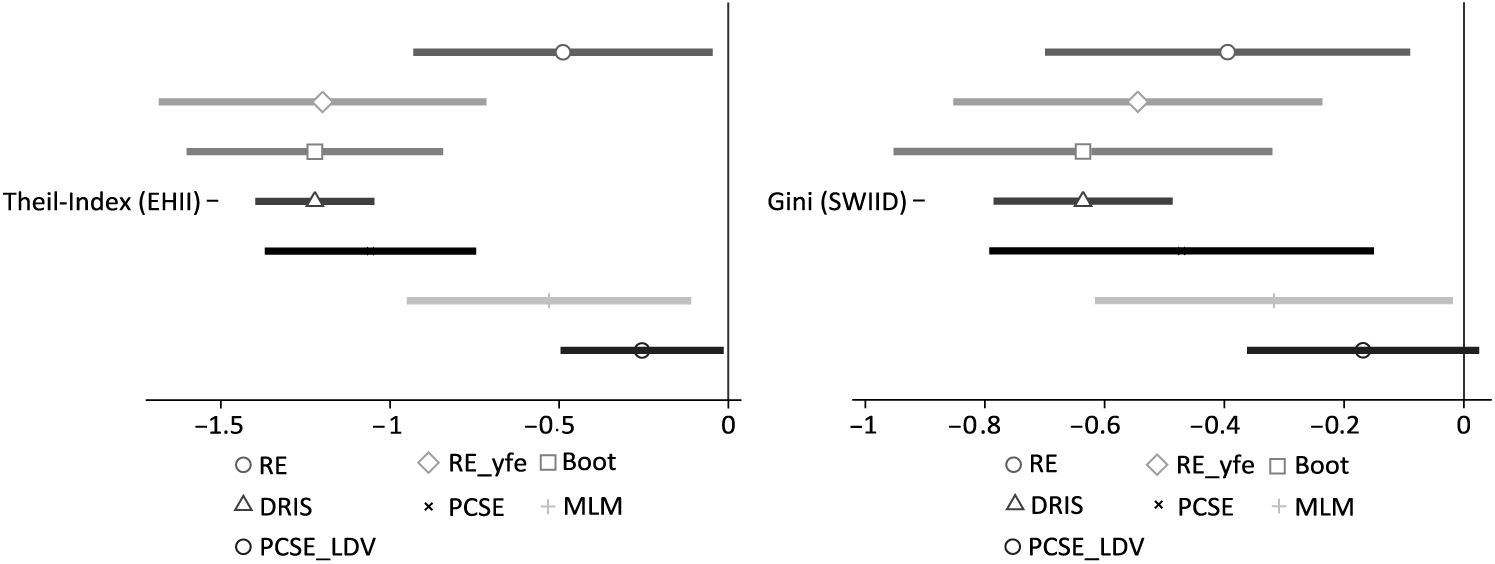
As Figure 2 visualizes, all our models confirm that income inequality negatively affects voter turnout at the macro-level.Footnote 8 In all models, the effect is significant at the 90% level and, in all but one model, the effect reaches the most conventional level of 95%. The exception is a model with panel-corrected standard errors, which also included a LDV.
Regression coefficients of income inequality on voter turnout based on the models in Appendix 1.

Regarding the control variables, the empirical results are generally in line with expectations from the literature. Compulsory voting strongly increases turnout rates. In countries such as Australia, Belgium, or Luxembourg, turnout usually exceeds 90%. In contrast, fewer citizens vote in parliamentary elections than in presidential systems such as in France or the United States. After controlling for other factors, turnout is higher in countries with second chambers, such as Germany. Turning to election-specific variables, the results are less unequivocal. Higher disproportionality seems to diminish turnout but the coefficient is not consistently statistically significant. The evidence for the effective number of parties is inconclusive, whereas most models show a significant negative effect regarding the distance between the first and the second party – meaning turnout is higher in close races. All else being equal, more populous and richer countries seem to have lower turnout rates. Finally, the time trend confirms that average turnout rates have declined since the 1980s. In particular, turnout is significantly lower in the most recent decade than in the past.Footnote 9
To assess the robustness of our results, we performed several tests (available from the authors). First, we reran the regression analysis (using model MLM)Footnote 10 and excluded each country in turn. In the resulting 42 regressions, the effect of income inequality is always negative and in 37 out of 42 cases statistically significant. Second, we excluded each year in turn. Again, the coefficient is always negative and in all cases p is smaller than 0.1 and in 25 out of 34 cases smaller than 0.05. Third, we replicated our analyses taking the uncertainty of measuring inequality into account. In the Standardized World Income Inequality Dataset (Solt, Reference Solt2016), the Gini coefficients and their associated uncertainty are represented by 100 separate imputations. While highly correlated, the estimates slightly differ. We used these imputations to reanalyze the relationship between inequality and voter turnout. The results confirm the general pattern.
Finally, we inquire how strongly income inequality affects voter turnout. To do so, we plot the predicted level of turnout against the two measures of income inequality in Figure 3. The size of the effect of course differs according to the different models but even the most conservative estimate indicates that turnout in the most unequal country is about eight percentage points lower compared to the most egalitarian country. Some models even predict a difference of more than 20 percentage points. Even with the conservative estimates, moving from the highest level of income inequality to the lowest has a similarly substantial effect on turnout as compulsory voting does. The effect of income inequality on political participation is, therefore, not only significant but also substantial.
Substantial effects of inequality on turnout.

This section looked at 21 rich democracies over a 3-decade period. Even the most cautious reading of the previous analyses suggests that inequality affects voter turnout. We now turn to a single-country study to see whether similar results at the subnational level can be found.
Regional inequality and turnout in Germany
Our longitudinal single-country dataset includes information for 402 administrative districts at 6 federal elections (1998, 2002, 2005, 2009, 2013, and 2017), that is, around 2,400 observations in total.Footnote 11 Voter turnout is the share of valid votes of all eligible voters. Since Gini coefficients or similar measures for economic inequality are not available on the local level, we use as a measure of regional inequality the normalized difference of the average income at district level in relation to the national average in the same year.
We are aware that this measure is not strictly comparable to the ones used so far, since it captures the relative position of a district within the overall structure of the economy at a given time. The measure does not, therefore, register individual-level income inequality within a given district but rather regional disparities. Regional disparities in economic performance are found to be persistent and an important driver of unequal distribution of resources on the macro-level (OECD, 2005; Ansell and Gingrich, Reference Ansell and Gingrich2019). Regional disparities also play a key role in the fairness of inequality debate, specifically in the debate on circumstance-based vs. effect-based causes of inequalities (Peragine, Reference Peragine2004; Checchi and Peragine, Reference Checchi and Peragine2005). We, therefore, consider it useful to analyze how disparities between local entities of a given polity affect turnout. One of the advantages of this measurement is that it considers the time trend in regional inequality (See Appendix 2 for descriptive statistics and data sources). Our findings are robust when measuring inequality as the difference to the average income within each federal state or to the average income in East or West Germany.
A first impression of the longitudinal relationship between interregional inequality and turnout in Germany is given in Figure 4. The figure shows turnout rates on district levels on the y-axis and inequality on the x-axis for each of the considered federal elections. Figure 4 also suggests that participatory and economic inequality – expressed as regional disparities – are clearly related in Germany.
Inequality and turnout in Germany from 1998 to 2017.

The analysis below examines the relationship in a multivariate perspective. We run a number of different models that control for the following: the average income in a district, the closeness of the electoral race, the size of the district in terms of population, and a dummy variable for Eastern Germany. The analyses confirm the findings from the time-series cross-sectional analyses: inequality exerts a consistently negative impact on voter turnout regardless of the exact model specification.Footnote 12 The effect reaches significance on the conventional 95 percentage confidence level, the model that includes the LDV being the only exception. Again, given the stickiness of the dependent variable over time, this is not surprising. As to the control variables, they largely correspond to the theoretical expectation that turnout is higher where the electoral race is contested and takes place in more populous districts. In the case of Germany, this is because turnout tends to be higher in cities than in rural districts. As in the cross-country analysis, turnout is lower in richer entities again disconfirming the translation of the socioeconomic status argument to the macro-level. Finally, the analysis confirms that turnout is also lower in the Eastern part of Germany (Schäfer et al., Reference Schäfer, Schwander, Manow, Schoen and Weßels2016).
We turn now to considering the longitudinal dynamics of the inequality–turnout relationship. The right of Figure 5 displays the coefficient for inequality for each election. Two points are noteworthy. First, regional disparities in economic prosperity depress turnout consistently in all elections under consideration. Second, the effect of interregional inequality on turnout seems to increase over time. This is interesting in the light of party development in Germany. In the time period under investigation, Germany witnessed the emergence of two new populist parties, first in 2005 Die. Linke as a reaction to the encompassing labor market reforms enacted by the red–green government (Schwander and Manow, Reference Schwander and Manow2017b), and then in 2013 the radical right populist Alternative for Germany (AfD) as a reaction to the euro and refugee crises (Franzmann, Reference Franzmann2016; Schwander and Manow, Reference Schwander and Manow2017a). Despite several arguments in the literature that populist parties might increase turnout (Immerzeel and Pickup, Reference Immerzeel and Pickup2015; Mudde and Rovira Kaltwasser, Reference Mudde and Rovira Kaltwasser2017), we cannot see any such effect here [see also Schwander et al. (Reference Schwander, Gohla and Schäfer2019) and Leininger and Meijers (Reference Leininger and Meijers2017) for similar findings].Footnote 13
Coefficients from multivariate models on electoral turnout in Germany.
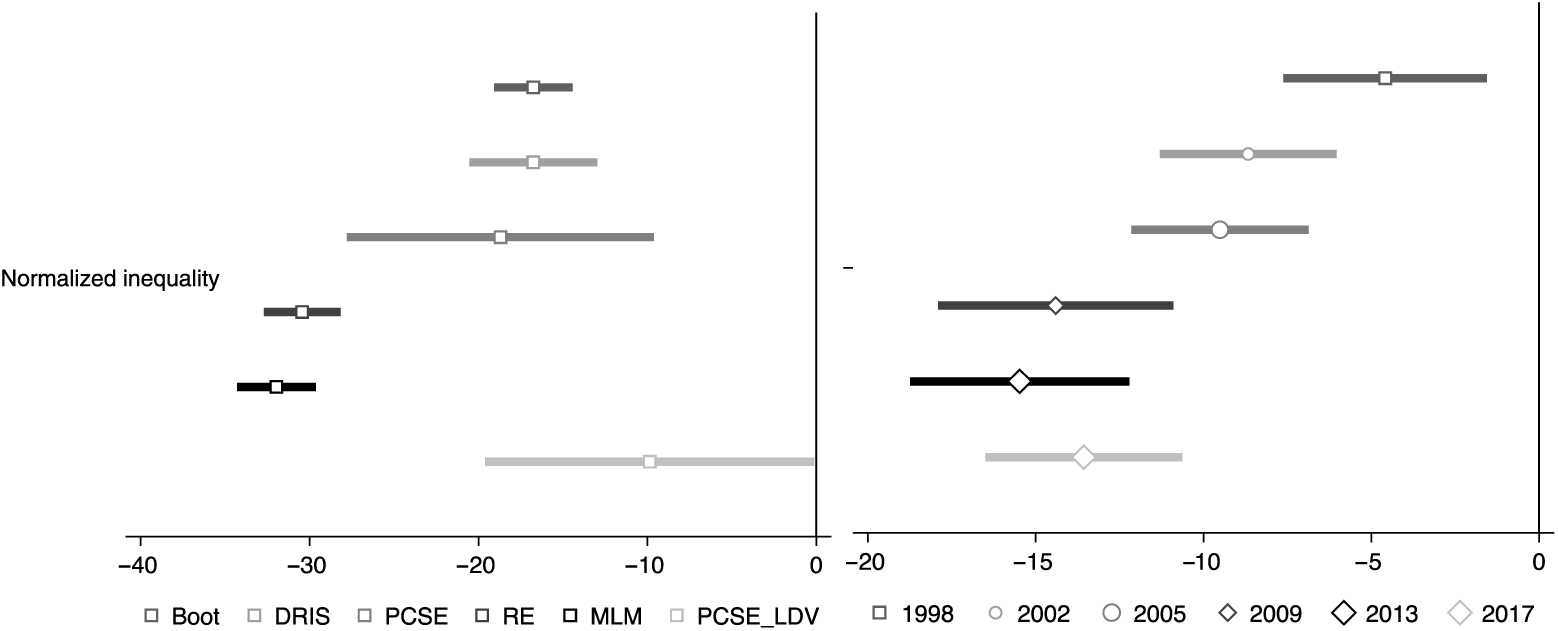
To conclude, our within-country analyses show that economic inequality between regions translates into high levels of electoral inequality
Who abstains? Combining surveys and macro-data
Our analyses so far do not answer the question of who abstains when inequality rises. The rational abstention perspective is supported when differences across income groups in turnout are higher in more unequal countries. In this section, we analyze whether higher rates of inequality affect individual decisions to participate in electoral politics and, in addition, which income groups are most strongly influenced. We, therefore, combine macro-level data and surveys from 21 countries over a period of almost three decades. The dependent variable is self-reported electoral participation in the last general election. We use Eurobarometer, ISSP, ESS, and CSES surveys to include the largest number of years and countries as possible (see Appendix 3 for more information on the employed surveys and descriptive statistics). However, there are three limitations. First, surveys are not available for all years and some countries have participated more often than others (see Appendix 3). Second, combining various surveys reduces the number of explanatory variables we can use. For example, items that measure internal and external efficacy are not available in all surveys. The following analyses, therefore, use gender, age, union membership, marital status, unemployment, education, and household income as explanatory variables at the micro-level. At the macro-level, we use the same set of explanatory variables that we used in the ‘Time-series cross-sectional analyses of 21 countries from 1980–2014’ section. Third, respondents overreport their electoral participation and, as a consequence, average reported turnout is substantially higher than actual turnout (see Selb and Munzert, Reference Selb and Munzert2013). If this is – in part – due to an underrepresentation of poorer citizens in surveys, the results probably underestimate the actual turnout difference. Our analyses are, therefore, a conservative estimate of the relationship between inequality and voting.
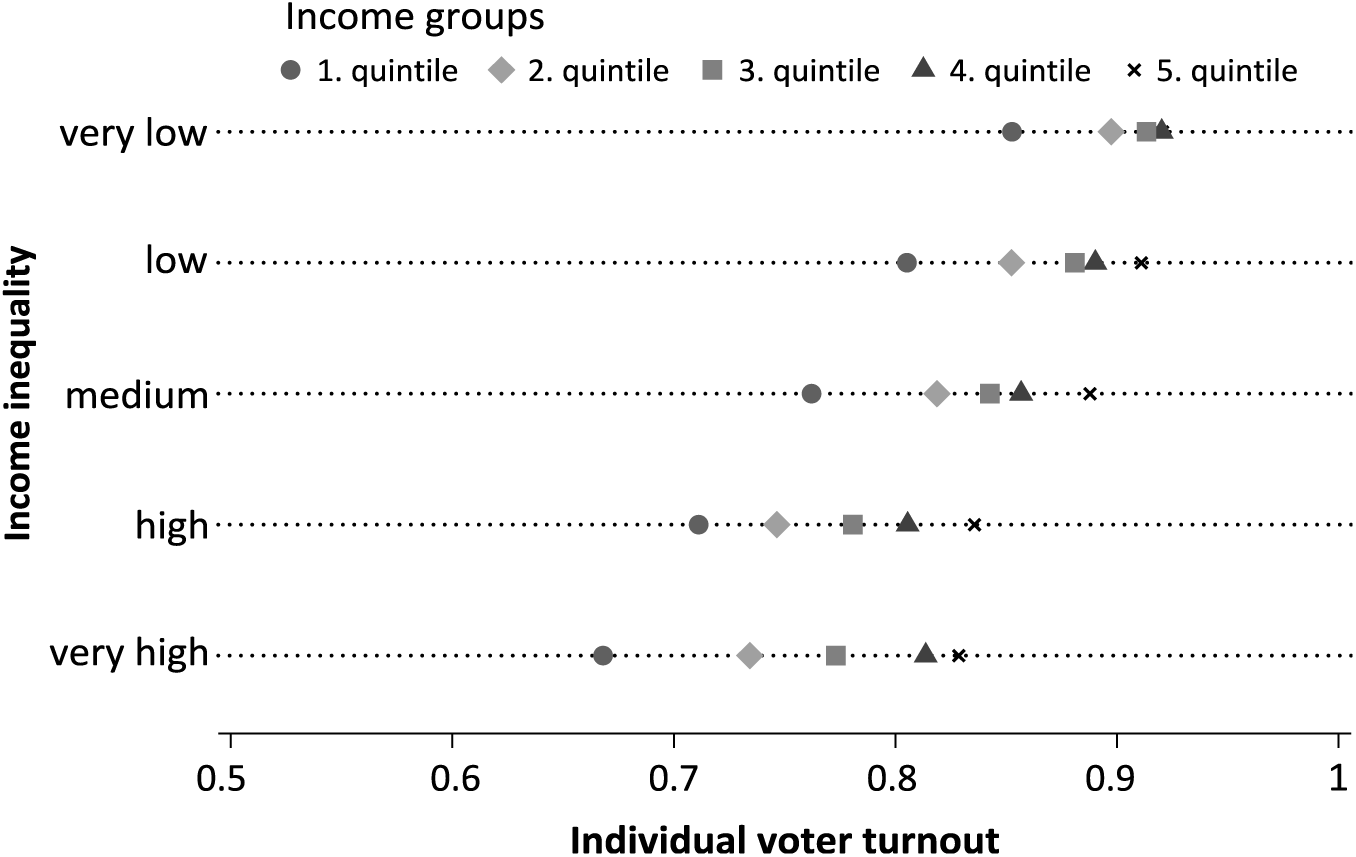
In the first step, we look descriptively at turnout differences of income groups (quintiles) at different levels of income inequality. For Figure 6, we subdivide the country into five groups based on the Gini index (very low = 0.2–0.23; low = 0.24–0.27; medium = 0.28–0.31; high = 0.32–0.35; very high = 0.36–0.39). For each group, we display voter turnout for five income quintiles. Figure 6 shows a clear pattern: not only are average turnout rates lower in more unequal countries but the turnout differences are also more pronounced. This is a first indication that higher economic inequality increases political inequality.
Income inequality and voter turnout of different income groups.
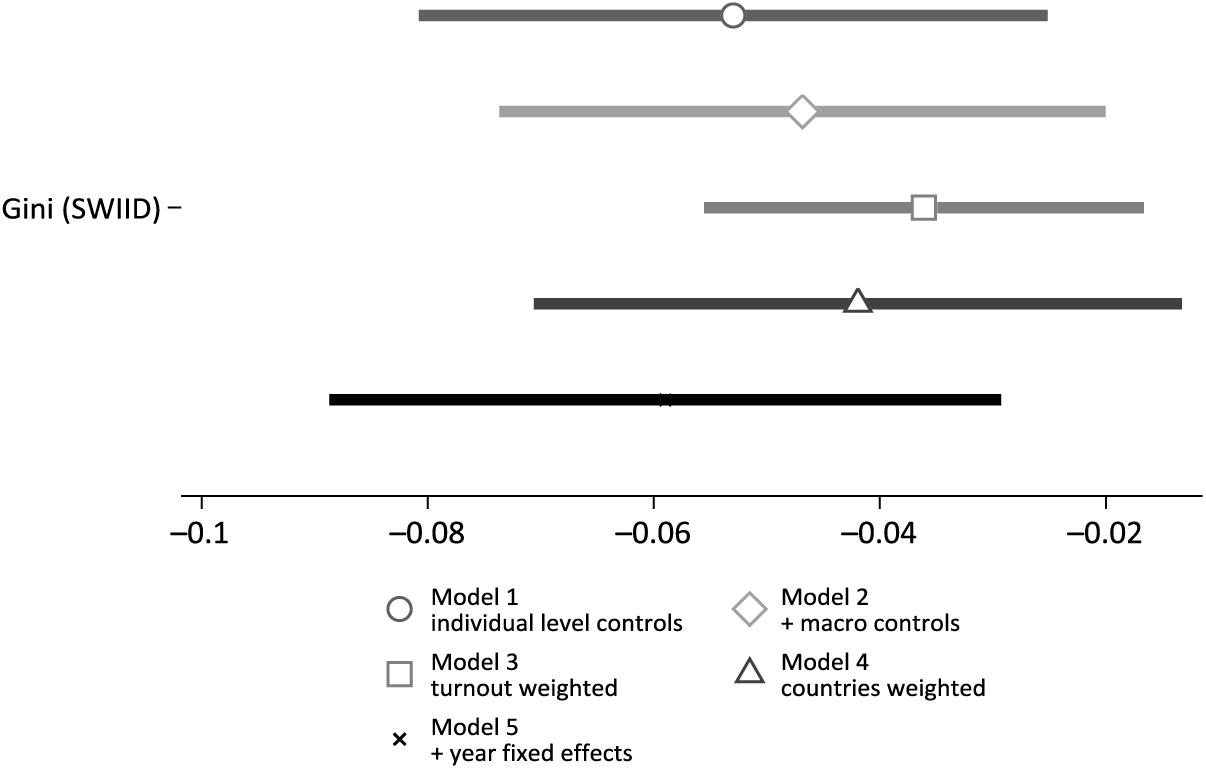
Multivariate analyses confirm this impression.Footnote 14 At the micro-level, we find a curvilinear relationship between age and voting, and a positive effect of union membership, marriage, and household income on the individual decision to vote. In contrast, unemployed respondents vote less frequently. At the macro-level, the results corroborate those of the cross-sectional analyses. In line with the relative power thesis, we find a negative impact of income inequality on individual turnout. Fewer citizens vote in more unequal countries. These results are robust for the model specification and also hold true if we weight voters and nonvoters to correct for overreporting.Footnote 15 Figure 7 shows the logit coefficient of the Gini coefficient for the first four models from Table 5 of the online supplementary file. In all model specifications, there is a statistically significant negative effect of income inequality on voting.
Coefficients from logistic regression models on individual turnout.
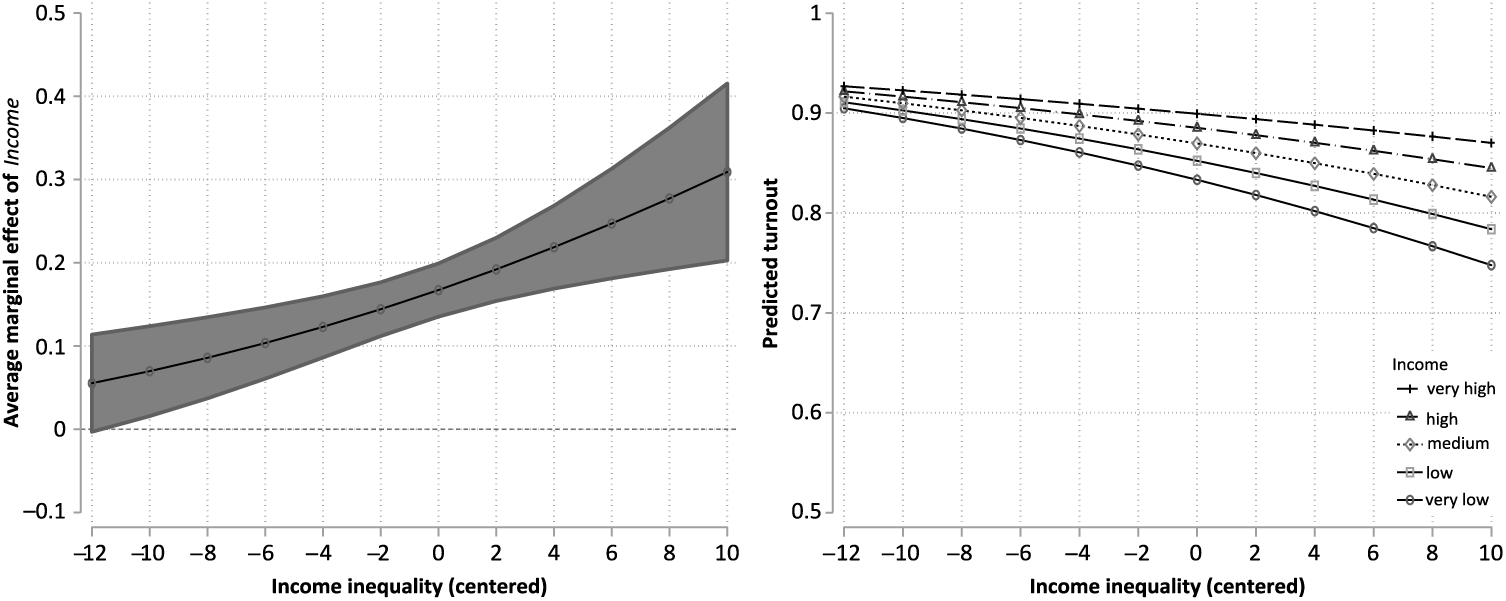
In the fifth model, we interact income with the Gini coefficient to examine whether inequality affects the political engagement of varying income groups differently. The interaction term is positive and statistically significant, which means that voting differs more strongly between income groups in more unequal countries. The left of Figure 8 displays the predicted probability to vote for income quintiles across the range of income inequality. In the most egalitarian countries – Austria, Belgium, Denmark, and Sweden – all income groups participate at equally high rates. In more unequal countries such as Portugal, the United Kingdom, or the United States, turnout differences are more pronounced because the poor abstain more often. The right of Figure 8 shows the average marginal effect of individual income for different levels of inequality. The income coefficient grows larger as we move from egalitarian to unequal countries. The analysis of the survey data, therefore, confirms that inequality depresses turnout for all income groups – and the decrease is significantly stronger for the poorest citizens. Income inequality, we conclude, lowers overall turnout rates while rendering electoral participation more unequal.
The effect of income inequality on voting.
Conclusion
Over the past three decades, income inequality has been rising in most rich democracies. Studies have sought to disentangle the way in which higher levels of inequality affect the democratic process. Of special interest is the nature of the relationship between economic inequality and political inequality, that is, how the unequal distribution of economic resources affects participation in the political process. However, studies devoted to this question have looked at different countries and different periods, used an array of methods, sometimes omitted crucial explanatory variables, and employed both aggregate and micro-data. Consequently, results have been inconclusive. In this article, we have made the most systematic effort yet to resolve the question of how political and economic inequality are related in rich democracies. Since the dynamics might differ between countries with different state capacities (Kasara and Suryanarayan, Reference Kasara and Suryanarayan2015), we have limited our study to a relatively uniform set of rich democracies and focused on the decades since 1980, in which world-wide income inequality has been declining but citizens in rich democracies have become more unequal. We have used three different datasets with the most recent data available and employed a variety of methodological approaches to deal with the panel structure of the data. We used aggregate-level data from 21 OECD countries for a 35-year period, local data from Germany for 1998–2017, and combined surveys from the same set of 21 countries for the mid-1980s to the mid-2010s.
Across datasets and methods, we find a consistently negative effect of income inequality on turnout with mostly statistically significant coefficients that strengthen confidence in the findings. Moving from the most egalitarian to the most unequal countries depresses turnout – all else being equal – by 7 to 15 percentage points (depending on the exact model), which is comparable in magnitude to the effect of compulsory voting. Within Germany, where institutional variables do not differ, relatively deprived regions have significantly lower levels of turnout. Finally, we find that turnout declines for all income groups in unequal countries but particularly strongly for low-income groups. Our findings, therefore, unambiguously support the relative power approach – or rational abstention approach – that expects inequality to have a negative impact on political engagement. Our analyses show that in more unequal countries, fewer people turn out and vote. The idea that inequality mobilizes the poor to greater political activism because ‘more is at stake’ clearly does not have any empirical grounding.
This is a worrisome finding for the fight against inequality and poverty. In a feedback cycle between citizens’ participation and parties’ responsiveness to the concerns of their constituencies, those at the bottom of society rely on state intervention to alleviate their grievance, or at least to improve the situation of their children, in the form of social insurance programs to protect them from the vagaries of markets, redistribution of income to compensate for lower income, expansion of the public sector to provide employment and high-quality social services to improve life chances of future generations (Esping-Andersen, Reference Esping-Andersen1990; Huber and Stephens, Reference Huber and Stephens2001). As part of a ‘democratic class struggle’ (Korpi, Reference Korpi1983) or ‘electoral socialism’ (Przeworski and Sprague, Reference Przeworski and Sprague1986), parties organize disadvantaged social strata and enact public policies which reduce inequality in both market and disposable income. Comparative political economy has shown time and again that these state programs are effective in reducing economic inequality (Bradley et al., Reference Bradley, Huber, Moller, Nielsen and Stephens2003; Kenworthy and Pontusson, Reference Kenworthy and Pontusson2005; Huber and Stephens, Reference Huber and Stephens2014). Yet, parties have an incentive to implement social protection policies only if disadvantaged citizens actually turn out to vote. Richer citizens, in contrast, have additional means of making their voices heard since they use a whole range of other ways to engage with politics, such as donating to campaigns, or joining interest groups. As a result, the concerns of the poorer segments of the society are of lesser concern to policy-makers, a prediction that the literature on the responsiveness of political systems confirms (Gilens, Reference Gilens2005; Hobolt and Klemmemsen, Reference Hobolt and Klemmemsen2005; Bartels, Reference Bartels2008; Giger et al., Reference Giger, Rosset and Bernauer2012). In addition, preferences and interests of poor and rich diverge more strongly in unequal societies (Gilens, Reference Gilens2005; Gallego, Reference Gallego2015), which further depresses participation by lower income groups (Lijphart, Reference Lijphart1990; Birch, Reference Birch2009). This might give rise to a vicious cycle between economic marginalization, unequal voices, and little public effort to combat inequality.
At the same time, we were unable to test the mechanisms reducing turnout rates of the poorer citizens since only a limited number of variables were available when we combined surveys from different sources and across time. This is unfortunate because the mechanisms by which inequality suppresses participation, particularly by the poor, are not fully understood. Insights from the social psychology literature (Jahoda, Reference Jahoda1982; Rosenstone, Reference Rosenstone1982; Adman, Reference Adman2008) and the insider–outsider debate (in particular Emmenegger et al. (Reference Emmenegger, Marx and Schraff2015), for a review see Schwander (Reference Schwander2018)) suggest, for example, political efficacy and feelings of misrepresentation to be at the heart of this fateful compound. This is a fruitful venue for further research. It also links to another missing piece in the jigsaw: the role of party competition as a potential remedy to this link, especially the rise of populist parties. While some work has been done on the effect of competition on the left for mobilizing the poor and the policy position of the main parties of the left (Anderson and Beramendi, Reference Anderson and Beramendi2012), there has so far been little effort to explore the link between inequality, political involvement, and the mobilization effort of populist parties. Our – cursory – results, based on the last federal elections in Germany, offer little consolation as populist parties do not appear to be able to break the vicious cycle between economic marginalization and electoral participation. Further systematic research is, however, warranted.
Supplementary material
To view supplementary material for this article, please visit https://doi.org/10.1017/S1755773919000201
Acknowledgments
An earlier version of the paper was presented at the workshop ‘Democratic participation, a broken promise?’, Villa Vigoni, Menaggio (I), 14–16 March 2017. We are grateful to the comments of the participants of the workshop.
Appendix 1. Macro-level analyses
Descriptive statistics and data sources for 21 countries, 1980–2014


Appendix 2. Analyses with local German data
Descriptive statistics and data sources, Germany, 1998–2017


Appendix 3. Analyses with surveys
Survey years used in the analyses
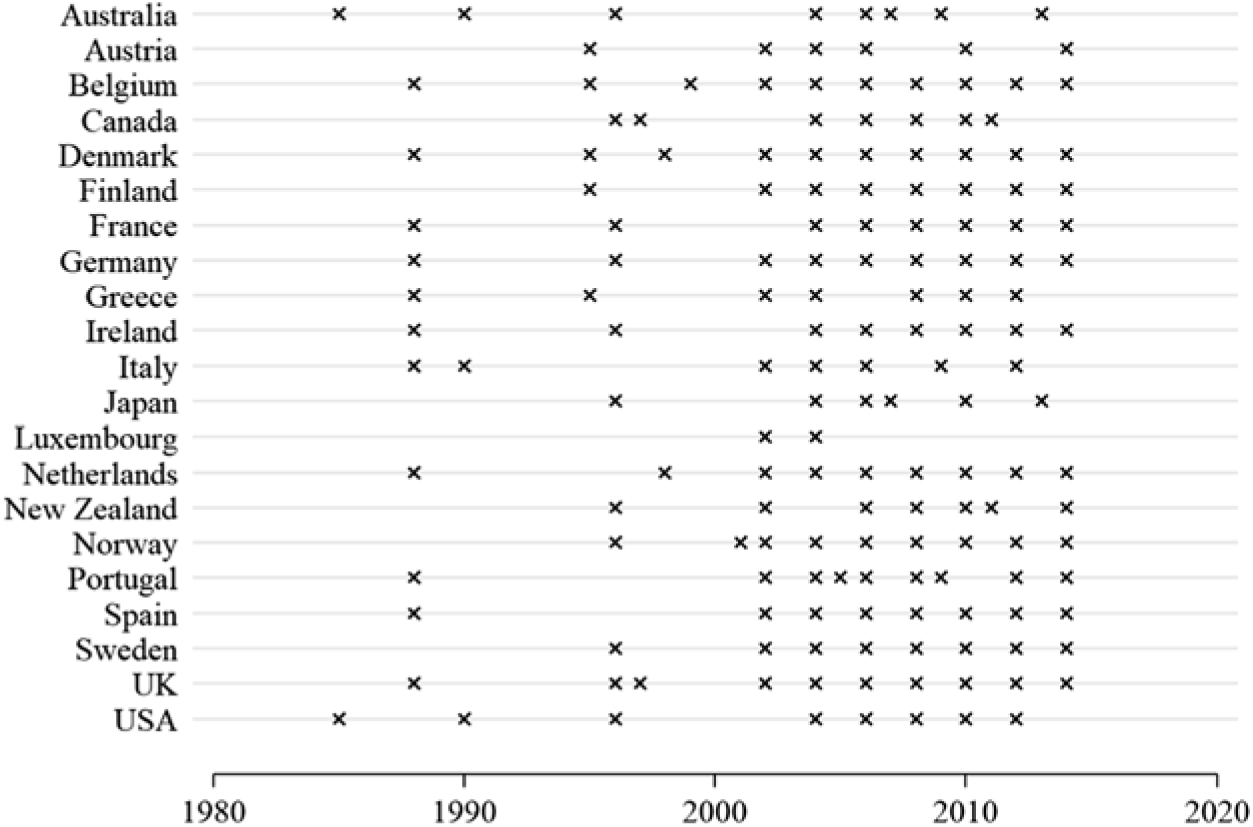
Note: This figure shows for each country which years are covered in the analyses. We have used the following surveys:
- EB 30
Eurobarometer 30, 1988
- EB 44_1
Eurobarometer 44, 1995
- CSES 1–4
Comparative SEldy of Electoral Systems, modules 1–5, 1996–2016
- ISSP
International Social Survey Project, 1985–2010
- ESS
European Social Survey, seven waves, 2002–2014
Descriptive statistics for survey-level data




 Open access

