


According to Aristotle, tragedy aims, ‘through pity and fear’, to achieve the ‘purgation of these emotions’.1 The Greek tragedy that unfolded during the eurozone crisis (2010–15) was the height of a period of ‘high neoliberalism’ that has been particularly prevalent since 1992. The European Union has been one of the driving forces behind a neoliberal dynamic that has unfolded in many areas, particularly between 1992 and 2015. However, European capitalism has always been of a mixed nature. Therefore, even within the most neoliberal policies, elements of solidarity and community capitalism have persisted.
This chapter will examine the global rise of neoliberalism, and three European policies, the development of the Single Market, competition policy, and the monetary union, especially during the eurozone crisis.
8.1 The Global Rise of Neoliberalism: From the Internet to China
Neoliberalism gained ground worldwide after 1992, spreading to numerous sectors and countries. For example, market logic became prevalent in 1992 in basketball (in the US) and football (starting in the UK).2
Neoliberalism also spread to Internet regulation. While the World Wide Web has often been hailed as an emancipatory libertarian enterprise by celebrity entrepreneurs sometimes drawing on the progressive ideals of the 1960s (Steve Jobs, the founder of Apple, went to an ashram in India in 1974), in some respects it has turned out to be a neoliberal jungle, with limited concern for preserving individual freedom, decency, or the soundness of democratic debate.3 The neoliberalisation of the Internet was not preordained, but rather the outcome of three dynamics. First, some of its promoters are libertarian, and verge on neoliberal. For example, one of the founders of Wikipedia, Jimmy Wales, was explicitly influenced by Hayek.4 Second, political authorities refused to regulate the content circulating online. Section 230 of the US Communication Decency Act passed in 1996 exempts Internet ‘providers’ and ‘users’ from any liability for potentially harmful publications. This means that web-based publication has an intrinsic competitive advantage over traditional media, whose regulation is much more constraining. Other governments, such as those in Europe, followed suit by establishing similar lax rules, although they are slightly more constraining in some countries than others (racial hatred is more strictly regulated in Germany, for example). Third, US antitrust authorities have been very tolerant, allowing monopolistic or oligopolistic Big Tech companies to flourish. The World Wide Web has undergone several phases of centralisation and decentralisation, with the most recent phase – marked by the rise of GAFAM in the US and its equivalent in China – has brought increasing centralisation, and sometimes collusion with political authorities. Even technologies that were used to skirt state regulation (such as crypto-currencies) are now encouraged by some states, such as the US under the second Donald Trump administration. As Helen Margetts, a specialist on the politics of IT, has observed: ‘past (Hayekian) confidence that centralized micro-control of complex economic markets by the state is impossible has been challenged by digital era developments’.5
With regard to the trinity of capitalism, the World Wide Web has certainly brought certain elements of solidarity and liberty: by decreasing the cost of information and translation, it has given access to much more information than at any time in history. What was once reserved for the lucky few, who could afford to pay for encyclopaedias and newspapers subscription, is now more widely available. The organisation of protest movements has also become easier. The fight against Covid-19 has certainly been facilitated by the availability of data, as well as user-friendly apps and softwares. However, the almost complete absence of regulation over information has been a bonanza for radical opinions, fake news, and somewhat later the manipulation of democratic debate by dictatorships.6 Similar to the Cold War, during which the ideological confrontation between the US and the USSR also took place in the media, current geopolitical confrontations have also played out on the web, as shown by the leaks connected to the presidential elections in the US in 2016 and in France in 2017. In other words, the neoliberalisation of the Internet has favoured a radical community approach, namely by fuelling fake news and hate speech. All technologies have dual effects, both positive and negative, depending on how they are regulated.
Neoliberalism has also spread geographically. At the global level, the protectionist agreements from previous decades (agricultural protectionism, multi-fibre textile agreements, voluntary export restraint agreements by the Japanese) were gradually abandoned at the end of the Uruguay Round of the GATT in 1992–94.7 In 2000, the Cotonou Agreement dismantled part of the neomercantilist apparatus that linked the EU and its partner countries in the Global South (the so-called ACP countries). As tariffs have largely disappeared, trade negotiations have subsequently focused on more sensitive areas of public action, such as social and environmental rules, or on dispute settlement mechanisms between states and multinationals, often to the benefit of the latter.
Even core areas of social policy have been affected. While social spending has often remained relatively high (as a percentage of GDP), a stabilisation or even increase in public expenditure may actually conceal a decline in concrete social benefits, because the need for solidarity has structurally increased over time due to an ageing population, rising education levels, and increasing environmental risks.
In Europe, even centre-left strongholds have been affected: Gerhard Schröder, the Social Democratic Chancellor of Germany, made deep cuts to unemployment benefits with the 2004 Hartz IV legislation, while Sweden adopted the radical idea of liberalising the education market, an idea once touted by the neoliberal grandee, Milton Friedman.
EU enlargement to the former countries of the Eastern Bloc was a long-awaited reunification, as well as a massive political and economic shock. Eastern European leaders converted to neoliberalism for both economic and geopolitical reasons. Gradualism, or the policy of gradually adopting liberal capitalism, was not considered viable due to the failure of Perestroika and Yugoslav reform strategies in the late 1980s.8 The predicament faced by these countries, which included excessive debt, high inflation and unemployment, insufficient productivity, and a massive decline in national wealth, empowered those arguing for ‘shock therapy’, a brutal conversion to unregulated free markets (by contrast with China which ‘escaped shock therapy’).9 While some countries tried a more cautious transition towards a market economy in the 1990s, they all converged in the 2000s towards a development model fuelled by foreign direct investment and a limited welfare state.10 This model was also encouraged by the EU. The massive transfer of funds provided by the Union gave Brussels leverage that it primarily used to ensure Western investment would proceed unhindered. As there was no private capital in these former communist countries, companies were often bought by Western firms. Foreign investment was sought by both the elite and employees, who were seeking more flexible and efficient working methods. Hence, the neoliberal dynamic went further in the East than in the West.11
Geopolitics also played a role: Lech Walesa, the leader of the Polish trade union Solidarnosc, explained in 1991 that Western investment also served as security against Russian influence: ‘We need foreign investment because it also gives us security. Having a Frenchman or an Englishman here with his factory is like having a division of troops.’12 Even during Russia’s most liberal period in the 1990s, the threat of the giant bear loomed large over Eastern Europe. In 1993, Estonia faced a Russian embargo in protest of its citizenship laws that were considered discriminatory against the ethnic Russians living there: the distribution of vouchers in connection with popular privatisations was indexed to seniority of residence, with a view to excluding Russians.
In the rest of Europe, these changes also had an impact through massive competition from low-cost countries. Destabilisation affected both the West, which faced relocations, and the East, which saw massive emigration by the young, who sometimes had to leave their children behind in the care of grandparents, giving rise to the Polish term Eurosieroty (‘European orphans’).13 The process proved destabilising even in mighty Germany. While Bonn expected to reap a substantial benefit from the privatisation of the former GDR’s companies, the introduction of Western standards, environmental ones in particular, proved so costly that many of them were liquidated. East Germans either had to go into exile in the West, or remain in a country experiencing industrial collapse and the arrival of new elites from the West. In return, West Germans accepted higher taxes to finance massive transfers to the East, as well as liberalisation of the labour market. The reunification costs contributed to the Bundesbank’s high interest policy, which further depressed not only the German economy, but also Europe’s entire economic outlook in the early 1990s.
Beyond Europe, neoliberalism spread as far as China, with a peculiar mix of community capitalism (strong industrial policy, protectionism, strict control of migration) and neoliberal features (stingy safety net, harsh working condition). Solidarity capitalism has certainly been present, with massive success in reducing poverty for hundreds of millions of Chinese. But the solidarity dimension of Chinese capitalism, and of East Asian capitalism in general, has remained limited considering their current level of development.14 This has created a massive competitive pressure from China, which has developed the infrastructure and know-how of rich countries, all while keeping social expenditure and wages relatively low on average. Skilled workers in Shanghai have Western-style education and wages, but much higher working times (dubbed the ‘996’ regime: working from 9:00 am to 9:00 pm six days a week), and with menial workers receiving very low pay. Besides, Chinese companies can still tap into the vast pool of cheap unskilled labour. Lastly, China possesses a vast territory blessed with multiples resources, making it less dependent on strategic imports than other East Asian countries, such as Japan or Singapore.
The global economic crisis of 2008–10 called neoliberal ideas into question. The financial crisis that sparked it grew out of an unquestioning belief in the self-regulating nature of financial markets, as well as rising global inequality since the 1980s, which fuelled excessive indebtedness among the working class (notably in the US, where subprime mortgages triggered the crisis). The crisis was resolved by massive spending from governments and central banks. Neoliberal practices nevertheless continue to dominate the agenda, combined with populism, as demonstrated by cuts to taxes as well as social and environmental protections in the US under Donald Trump (2017–21, 2025 to present), and in Brazil under Jair Bolsonaro (2019–23).
8.2 The Single Market and Its Liberal Dynamics
The Single Market is at the heart of the liberty dimension of European capitalism, and of European identity itself, as it is a genuinely political project. By contrast, in the US the legislative unification of the domestic market is not a political project, and the market is less economically unified than the EU’s in terms of trade.15 Local protectionist rules abound (such as favouring US products, or products from a particular US state), unlike in Europe where national preference is banned. Another large market, that of India, was also very fragmented until a recent wave of unification initiated by Prime Minister Narendra Modi, although the internal mobility of workers across Indian states remains quite low due to different rules, languages, and customs.16
The European Single Market is therefore quite unique, for it almost comprehensively harmonises trade rules across twenty-seven different independent countries. Driven by European institutions as well as companies and consumers seeking harmonisation, the Single Market has grown steadily, expanding to new countries (including outside the EU) and sectors. It has sometimes exhibited neoliberal features, in particular with the Bolkestein directive, certain decisions of the Court of Justice, and the drift towards legislative Darwinism.
8.2.1 The Momentum of the Single Market
The Single Market opened on 31 December 1992 with the removal of physical borders for the circulation of goods.17 It firstly involved conventional goods, and slowly expanded to highly regulated goods (such as medicine or energy) and services, which were gradually included from the 1990s onwards. It has spread across the European continent through EU enlargement and the creation of the European Economic Area (EEA) in 1992, which encompasses Norway, Iceland, and Lichtenstein. Norway must apply all EU legislation pertaining to trade in goods in order to benefit from the Single Market, but without taking part in the decision-making process, a situation derided by the term ‘fax democracy’ (a democracy reduced to applying EU standards sent by fax). In exchange, Oslo retains complete freedom over fishing and hydrocarbons. Switzerland has refused the EEA, but remains bound to the EU by multiple ad hoc agreements that make it an informal member of the Single Market, even if recurrent tensions surface regarding Bern’s intentions to limit the free movement of people but not of goods and services, with Brussels insisting on linking them. Only the UK has left the Single Market, but must accept most EU legislation in Northern Ireland in order to preserve free movement with the Republic of Ireland. More generally, UK producers have an interest in avoiding excessive divergence from the Union, which remains its largest market (42 per cent of UK exports in 2021).
If the Single Market was a compromise for Delors between the approaches of liberty, solidarity, and community, it subsequently took on a more neoliberal bent through the activism of certain actors at the European Commission in the 1990s and 2000s. The key player was Leon Brittan, initially as Commissioner for Competition (1989–93, see Chapter 5), and later as Commissioner for Trade (1993–99), during which time he promoted the idea of an unregulated transatlantic free trade area including all services.18 Brittan’s former colleagues include John Mogg, who led a career as a senior civil servant between London and Brussels. He became Director General of the Internal Market between 1993 and 2002, defending a minimalist approach emphasising self-regulation, and rejecting most of the binding legislation proposed to him.19 In 1994 the Commission requested a report on simplifying legislation from a group chaired by Bernhard Molitor, known internally as ‘Demolitor’ for his propensity to deregulate.20 Finally, in 1996 the Commission adopted the SLIM approach, standing for Simpler Legislation for the Internal Market. The laudable objective of reducing red tape has sometimes been interpreted as encouraging laissez-faire policies.
This neoliberal pressure to deregulate was opposed at the Commission by officials in charge of environmental, health, and labour regulation.21 The same opposition was present at the Council. In 1999, during a debate on the internal market, the French government, which was led at the time by the socialist Lionel Jospin, issued a note stating that ‘the objectives set by the Commission in this document to achieve the Single Market should take greater account of European social policy’. Conversely, the document of his British counterpart, whose Labour government was led by Tony Blair, refused to include any objectives relating to social protection.22
8.2.2 Football: Between Protectionism and Europe-Led Liberalisation
The liberalisation of the football market offers a striking example of the expansion of this neoliberal logic. The famous Bosman ruling of 1995 completely liberalised and Europeanised the market for football players, whereas regulators – chief among them the European football association UEFA – had previously imposed restrictions in order to maintain national pre-eminence in the recruitment pools for each championship, a typically protectionist approach.
The archives provide a clearer picture of the conflicting models of Europe that have presided over the liberalisation of the football market. The issue was discussed at the Commission as early as 1986. The Commissioner for Competition at the time, Peter Sutherland of Ireland, was in favour of liberalising this sector to comply with the dynamics of the Single Market, but President Delors, who was a football enthusiast, was opposed,23 perhaps because he was drawn to the community component of the public policy trilogy: football clubs were often embedded in a strong local identity, for instance in mining towns with Shalke 04 in Germany, and Lens in France.
The UEFA ultimately agreed to a compromise in 1990: the 3+2 rule, which limited the number of foreign players on each first division team to three, plus two who had continuously played in the host country for five years, including three years as a junior. This compromise combined liberty (more foreign players) with solidarity (emphasis on training) and community (limited number of foreigners). It did not satisfy the new Commissioner for Competition Brittan, who was considering extending competition rules to the football sector.24
The Court of Justice annulled the 3+2 Rule in its Bosman ruling in 1995. Jean-Marc Bosman, an FC Liège footballer, filed a complaint against his Belgian club for preventing his transfer to French clubs in 1990.25 In 1995, on the grounds of Article 48 of the Treaty of Rome, which provided for the free movement of workers and prohibited discriminating between nationalities among Community nationals, the Court supported Bosman and annulled the UEFA’s 3+2 clause. As a result, the number of foreign players in each club increased considerably, thereby facilitating the emergence of a unified European market in this field.
Archives reveal the Commission’s role in promoting an expansive interpretation of that judgment. The Commissioner for Competition, Karel Van Miert of Belgium – in association with several liberal and conservative commissioners such as Brittan, Padraig Flynn, and Marcelino Oreja – believed that the Court had not gone far enough, as it decided the case solely on the basis of the free movement of workers (Article 48 EEC), and not on competition (Article 85 EEC).26 Van Miert pressured the UEFA by threatening to use the procedures against it. He succeeded in having the 3+2 rule lifted for all competitions (whereas the UEFA only wanted to do so for certain matches), and for non-discrimination to apply to all nationalities, not just European nationals.
This neoliberal interpretation sparked resistance. Among member states, the German government intervened in the Bosman ruling to emphasise that sport is not an economic activity like any other due to its similarity with culture. It also argued that the principle of subsidiarity called for respecting the freedom of organisation of sports associations.27 When the action following the judgment was discussed at the Commission, the Commissioner Yves-Thibault de Silguy of France expressed his reluctance towards liberalising the sector.28 In other words, a group at the Commission imposed a neoliberal interpretation of the Bosman ruling, even denying any notion of European identity, since no difference was made between Europeans and non-Europeans.
8.2.3 The Battle Surrounding the Bolkestein Directive
The Bolkestein directive symbolised this neoliberal approach. Fritz Bolkestein, a former executive of the major Anglo-Dutch oil company Shell, served as minister under Ruud Lubbers and later as leader of the Dutch Liberal Party. According to Neil Kinnock, he spoke ‘Dickensian English’ and defended an ‘ideological free market orientation’.29 The Bolkestein directive, which was adopted in 2004 and liberalised the services market without prior harmonisation, was named after him.30 While the directive excluded certain sectors such as finance, it included others staples of the welfare state, such as health services. It stipulated that short-term services could be provided by European nationals in accordance with the regulatory conditions of their country of origin (rather than their country of destination, thereby creating a risk of social dumping). At first the neoliberal nature of the draft directive went relatively unnoticed at the Prodi Commission, which was in its last months, and focused on enlargement towards the east (in 2004 the EU’s membership increased from fifteen to twenty-five countries). In contrast, the new president of the Commission, José Manuel Barroso of Portugal, made the adoption of this draft directive a priority. Opponents mobilised, and the Bolkestein directive became central to the debate on the Constitutional Treaty in France. In protest, electricians at the French public utility company EDF even cut off power to the Dutch commissioner’s country house, located in northern France. The directive crystallised the spectre of the ‘Polish plumber’, a recurrent negative symbol in several European countries for low-cost workers threatening local jobs. Beyond this hostile reaction, there was fear of the looming threat to national welfare states; a genuine European movement emerged, with large European demonstrations in Brussels and Strasbourg in 2005.
In the end, the anti-Bolkestein movement proved somewhat effective, as the Services Liberalisation Directive adopted in December 2006 was largely amended. These protests challenged the 2004 Constitutional Treaty, whose Article I-3 included the establishment of an ‘internal market where competition is free and undistorted’ among the objectives of the European Union. By contrast, in the Treaty of Rome, this notion did not appear as an objective (Article 2), but instead as one of the actions needed to achieve those objectives (Article 3). After the defeat of the draft treaty in 2005, French President Nicolas Sarkozy, who came to power in 2007, succeeded in having this mention removed from the Treaty of Lisbon of 2009, although it reappeared in Protocol No. 27, an integral part of the Treaty, as pointed out in Article 36 of the TEU. Moreover, Article I-3 of the Constitutional Treaty included many other social objectives, as did Articles 2 and 3 of the Treaty of Rome. The French president’s intervention is indicative of how the very definition of Europe was at stake.
8.2.4 The Court of Justice: A Neoliberal Actor?
The Court of Justice of the European Union also displayed a neoliberal orientation in some cases. The Court has always defended a proactive interpretation of European rules for both functional reasons – the efficiency of the internal market – and political reasons, namely the promotion of federal European law based on non-discrimination between Europeans.31 Its logic has always been market-oriented, but not necessarily neoliberal. For example, in the Keck and Mithouard case from 1993, the Court rejected a complaint targeting a national law on resale at loss, arguing that it was not discriminatory since it applied to all actors, both national and not.32 In 1996, the Court promoted a broad interpretation of the article on health and workplace safety in order to accept the Working Time Directive.33
However, between 2006 and 2008 the Court issued several rulings considered to be neoliberal. In 2006, Cadbury Schweppes limited national measures combatting the tax optimisation of multinationals.34 In Viking (2007), the Court condemned an action by a Finnish trade union to deter the Viking Line ferry company from relocating its business by registering its boats in Estonia, with a view to hiring staff at lower cost.35 The Court therefore gave precedence to freedom of establishment over the right to strike if it resulted in market partition. In Laval (2007), the Court allowed a Latvian construction company operating in Sweden not to comply with Swedish collective agreements.36 The result was similar in the judgment issued in Rüffert (2008), involving the German State of Lower Saxony and a German service provider, whose contract was terminated because it worked with a Polish subcontractor suspected of not complying with the collective agreement.37 Finally, in Luxembourg (2008), the Court supported the Commission, which had challenged the Luxembourg government by finding that its transposition of the Posted Workers Directive imposed too many obligations on enterprises.38 It is nevertheless difficult to interpret the intent of the judges. On the basis of Advocate General Miguel Poiares Maduro’s argument in Viking (which is more explicit than the final ruling), some believe he issued a balanced judgment, while others estimate that his opinion was negatively biased towards trade unions.39
The European Trade Union Confederation (ETUC) formally protested after the Viking and Laval judgments and called for corrective legislation, including a revision of the Posted Workers Directive of 1996, which liberalised the dispatching of foreign workers by multinationals within the Union with few social strings attached. Faced with the resulting outcry, President Barroso asked Mario Monti, the former Commissioner for the Internal Market, to draft a report, which in 2012 inspired a Commission proposal for a regulation to protect trade union prerogatives. According to its opponents, this draft regulation enshrined a restrictive view of trade union rights. Finally, following the first use of the Yellow Card procedure newly created by the Treaty of Lisbon of 2009, in which one third of Parliament can urge the Commission to withdraw a law under debate, the proposal was withdrawn even before it was discussed.40
However, it would be excessive to equate the Court with a neoliberal federalist body. This is demonstrated by its positive action for protection against discrimination, respect for human rights, consumer protection, and the application of social and environmental legislation.41 The Court seems to recognise that the European Union is a social market economy with economic as well as social aims, even if it tends to give precedence to the logic of market integration (in particular through the freedom of establishment and the freedom to conduct a business).
8.2.5 The Slope of Legislative Darwinism
Legislative Darwinism denotes the tendency to adopt neoliberal legislation in the face of growing international competition. It was inspired by Friedrich Hayek’s application of Social Darwinism to institutions.42 This is particularly true in tax matters, where unanimity among all states is necessary at the Council. Some European countries have adopted provisions so favourable to the wealthy and businesses that they can be considered tax havens. In 2017, the European Parliament’s PANA (Panama Papers) Committee requested that four EU countries – Ireland, Luxembourg, Malta, and the Netherlands – be added to the list of tax havens, albeit in vain.43
While the Commission may seem all-powerful, it is actually a small administrative body, and must therefore rely on national administrations and sometimes even private bodies financed by industrialists themselves in order to ensure compliance with its own standards. This entails a risk of ‘regulatory capture’, through which companies ensure lenient implementation of the rules.44 In an extreme case it could lead to massive fraud, epitomised by the Dieselgate scandal in 2015. The US Environmental Protection Agency (EPA) revealed widespread fraud by the German carmaker Volkswagen with respect to NOx emissions controls (there are different emissions limits on both sides of the Atlantic). In both Europe and the US, standards are overseen by manufacturer-funded organisations; however, in the US the public body EPA purchases vehicles at random to carry out additional checks.45 It was ultimately revealed that Volkswagen also committed fraud in Europe, but the Union was too weak or naive to detect it. Standard controls were tightened as a result.
More generally, many national administrations are suspected of being lax in verifying the application of European standards among their domestic producers. The example of the mad cow crisis of 1996 bears witness to this.46 The British government originally denied there was any risk of bovine spongiform encephalopathy (BSE) being transmitted to humans, despite the Commission’s initial suspicions. London eventually had no choice but to declare a health crisis in the face of rising deaths. Agriculture Commissioner Franz Fischler of Austria (an agriculture specialist) quickly adopted a series of emergency measures, including a ban on exporting all bovine products from the UK, with compensation measures for affected farmers. Shortly thereafter, a report accused the British government and the Commission of underestimating the risks, and a number of other governments of not complying with all of the embargo’s clauses. In the end, it was not until a second mad cow crisis erupted that the Prodi Commission created a European Food Safety Authority in 2002. Other instances of national mismanagement include the Greek government’s statistical fraud, which was recognised in 2009, and the many instances of fraud relating to the Posted Worker Directive of 1996, which led to the creation of a European Labour Authority, but only in 2019.
To sum up, the Single Market has been a resounding success from a pro-market perspective: growth has been promoted through the removal of borders, and barriers to trade have largely disappeared for goods.47 Economic studies show that the Single Market has been more effective than a free trade area – or the maintenance of national trade policies – in terms of boosting trade and productivity, and thereby growth. However, integration remains limited for services, particularly in banking and regulated professions, as well as in certain sectors, such as energy or rail transport. The Single Market is still contested, as part of its implementation has drifted towards a neoliberal crusade threatening major components of the welfare state, such as national labour law or trade unions. The same dynamic applies to competition policy.
8.3 Competition Policy: Between Neoliberalism and Multinational Control
Since the 1990s, European competition policy has reigned triumphant. Because competition policy is probably the most centralised of all European policies, with member states and the European Parliament playing only a minor role in its implementation, the character of the various commissioners has proven decisive. There are substantial differences between the messianic neoliberal Leon Brittan (1989–93) and his more moderate successor, the Belgian Social Democrat Karel Van Miert (1993–99). The Italian economist Mario Monti succeeded him (1999–2004) and completed the ‘modernisation’ of procedures and economic thinking. His two successors, Neelie Kroes (2004–10) of the Netherlands and Joaqim Almunia of Spain, had a slightly more modest record, while the liberal Margrethe Vestager of Denmark has been more offensive and innovative (2014–24).
Four main developments should be underscored: first, the neoliberal offensive has primarily targeted national protectionism in terms of mergers and state aid; second, this offensive has also proceeded via the liberalisation of new sectors; third, the free marketeers were divided between ordoliberals and ‘modernisers’ partially inspired by US neoliberalism; and fourth, the recent Vestager offensive (since 2014) has been rather original, for it has included a (modest) social dimension.48
8.3.1 Controlling Mergers and State Aid against National and European Champions
The Commission’s action to control mergers and state aid directly targeted the policy of establishing national champions. After Delors left the Commission in 1995, the doctrine evolved towards explicit condemnation of promoting European champions, a policy that Delors had previously encouraged.49 In the field of aluminium, the Commission blocked the proposed three-way merger between the French national champion Péchiney, the Canadian Alcan, and the Swiss Algroup in 2000, but it accepted Alcan’s acquisition of Alussuisse that same year, and Alcan’s acquisition of Péchiney in 2003.50 Péchiney, the French ‘national champion’ in aluminium, thus came under a foreign flag. In 2001, the Commission prohibited a merger between two French electrical equipment manufacturers, Schneider Electric and Legrand. The decision was later reversed by the Court of First Instance due to economics errors and breach of the defence’s rights.51 In 2019 the ban on the merger between two railway giants, Alstom of France and Siemens of Germany, seemed more logical, as the dominance of the two firms in the European market was clear, and foreign competition was weak in the short term, unlike with ATR/De Havilland. However, the rejection of the merger neglected Chinese competition over the long term, and was therefore strongly opposed by the French and German governments. More generally, beyond these various examples, the Commission has accepted most mergers. A longitudinal survey of all decisions made by the Commission shows a clear negative bias towards mergers between two companies in the same country (as opposed to European mergers), especially in sectors with a strong tradition of state intervention, such as telecommunications and air transport.52 The Commission has therefore prioritised the fight against national neomercantilism, especially in its own backyard.
The same approach has prevailed in state aid. Commissioner Neelie Kroes explicitly stated in her 2005 action plan that the objective was to reduce state aid, whereas the Treaty only provided for banning those subsidies that are incompatible with European rules, not reducing them in absolute terms.53 The French and Italian ‘usual suspects’ were particularly targeted. In 1993, the Italian government had to pour state aid into its hugely indebted state holding IRI, but the Commission intervened to limit the amount. Negotiations were conducted between Commissioner Karel Van Miert and Italian Foreign Minister Beniamino Andreatta, and between the Director General of Competition, Claus-Dieter Ehlermann, and the Director General of the Italian Treasury, Mario Draghi (the future governor of the ECB).54 The Commission imposed conditions such as massive deleveraging, with Rome accepting and privatising in order to finance this deleveraging. Consequently, even if European law cannot impose privatisation (according to Article 222 of the Treaty of Rome), the constraints imposed by competition policy can encourage such a solution. In France, recurrent conflict between Paris and Brussels continued in the early 1990s, notably in connection with state aid to Renault and Air France. The French government gradually learned how to contend with competition zealots. In 2004, when it purchased a stake in the capital of the electric equipment manufacturer Alstom, which was facing bankruptcy, Nicolas Sarkozy, the French Minister of the Economy at the time, negotiated a compromise directly with Commissioner Neelie Kroes, thereby avoiding conflict.
Even Germany was targeted by the Commission because of the massive aid granted to the former East Germany. For example, in 1996 the Commission prohibited aid from the State of Saxony (located in the east) to establish a Volkswagen plant, prompting the company’s CEO to threaten moving its investments further east, outside Germany. The Commission ultimately agreed to a compromise.55 The French government, among others, had urged the Commission not to exempt the new German States in the east from state aid discipline. In 1995, Brussels initiated thirty-seven aid examination procedures in Germany, compared with four in France, and none in the UK. Similarly, Bonn was the only country that opposed the Commission’s plans for regional aid. Ten years later, the Commission annulled the 1960 Volkswagen Act, which gave the German government and the State of Lower Saxony a privileged role in the ownership of Volkswagen.56
At the same time, Brussels was accused by the US of protectionism when it banned the merger between the two US aircraft giants Boeing and McDonnell Douglas in 1997. It was only authorised after obtaining concessions from the two firms, particularly to avoid exclusive supply agreements that would have significantly limited the penetration of Airbus in the North American market. Commissioner Van Miert complained about the intense lobbying of powerful US companies, while the only European company to write to the Commission to defend the merger was the Scandinavian SAS.57 Similarly in 2001, when US antitrust authorities approved the merger between the giant General Electric and Honeywell, an aeronautical component supplier, Commissioner Monti banned the merger despite pressure from the highest levels in Washington, including US President George W. Bush, Jr. In 2004, the same Monti condemned Microsoft for abuse of dominant position, because it linked the sale of its Windows operating system with other software, including the Internet Explorer browser. The fine totalled almost $500 million, and was even increased as a result of the company’s failure to comply with the measures. The decision had an impact, as the Firefox browser dethroned Internet Explorer shortly thereafter, probably in part because of Community action. Commissioner Kroes then targeted Intel with a $1 billion fine in 2009. The offensive resumed under Vestager against the new generation of US giants: Apple, Google, and Amazon (see below). However, these decisions cannot be labelled as protectionist, because the fines were tiny compared to the size of the companies, and because there are few European competitors to those US giants. Moreover, studies carried out on all merger cases handled by the Commission do not reveal any anti-American bias.58 State aid rebounded after 2008 because of the economic crisis, the Covid-19 crisis (2020–21), and the Russo-Ukrainian War (2022–present) (see Chapter 10).
In short, European control over state aid, mergers, and abuse of dominant position helped create a level playing field within the Single Market, sometimes at the cost of reinforcing certain European companies. It especially targeted France and Italy, but free market bastions such as Germany and the US were not spared. In other words, European competition policy supported liberty capitalism but not community capitalism. It also, to some extent, included a solidarity dimension, as it targeted ‘corporate welfare’ by reducing state aid to companies, thereby avoiding a costly subsidy race (since state aid represents a transfer of funds from taxpayers to companies).
8.3.2 Liberalisation of New Sectors: A Contested Process
The liberalisation of new sectors that began in the late 1980s accelerated, further increasing the neoliberal dynamic at the expense of other approaches. Proponents of solidarity insist that some sectors must be tightly regulated to ensure access to basic services at a low cost for the entire population (including in the most remote areas). Supporters of community aim to preserve national (or European) industrial potential in the face of foreign competition through discriminatory measures. The conflict between these approaches is particularly evident in three areas: telecommunications, energy, and the debate surrounding ‘service of general economic interest’ (SGEI).
In telecommunications, a sector marked by technological innovation (the rise of mobile telephony, international communication, and the World Wide Web), the Commission initiated four changes from 1987 onwards: liberalisation via the phasing out of old monopolies; opening up networks to competition; applying competition policy to these areas; and regulating them through the establishment of independent national regulators.59 After a first set of directives in 1990, the Telecom package of 1996–98 completely opened up the former national monopolies for telephony services, and restricted state aid to a limited number of social obligations. As a result, universal service – a public service operator’s obligation to provide minimum telephone service at a basic cost irrespective of the consumer’s geographical distance – has been maintained. At the same time, to ensure that these directives are transposed into national law, the Commission used competition law via the control of state aid and mergers. In 1996 the Commission authorised the creation of Atlas, a joint venture between the French and German national giants France Telecom and Deutsche Telecom, provided that national networks were quickly liberalised.60 Both France and Germany were divided over the liberalisation, with some lamenting the decline in terms of social and industrial policy. However, in many cases privatisation was supported by consumers, company management, and most political elites, as it brought several advantages: an influx of revenue for the government, the ability to form international alliances more easily, the prospect of increasing productivity, and lower prices. Taking the helm of France Telecom in 2002 in a difficult context, Thierry Breton (the future European Commissioner) argued that the company’s excessive indebtedness was due to the absence of privatisation, because the company had to make international acquisitions through debt rather than an exchange of shares, which would have been less expensive.61
In energy, the liberalisation of the electricity market proved more difficult, since the national energy mix is different from one country to another, and because it is a strategic sector. The process was initiated by Nicolas Mosar of Luxembourg, the Energy Commissioner from 1985 to 1989. In 1971, Mosar had previously served as the complainant’s lawyer in one of the first cases involving the electricity sector adjudicated by the Court of Justice.62 He estimated the ‘cost of non-Europe’ (see Chapter 3) in this sector to be 0.5 per cent of GDP in 1987. The torch of liberalisation was later taken up by Commissioner Antonio Cardoso of Portugal, with laws enacted in 1990 on the transparency of prices for industrial consumers, and on the transit of electricity in high voltage grids. Member states prevented this effort from proceeding further until 1996, when the governments of France and Germany accepted a gradual liberalisation directive under pressure of direct action by the Commission against their national monopolies under competition law. In 2005, the Commission launched investigations into the infringement of competition rules by energy giants, including ‘dawn raids’, surprise early-morning inspections to seize documents. This ratcheting up of pressure facilitated the adoption of a new liberalisation package in 2009.63
Many national champions were largely preserved. As early as 1991, Jean Bergougnoux, the CEO of the French giant EDF, asked for more freedom over prices in the name of European competition, as it could lead to higher prices in France.64 Similarly, the 1996 directive was implemented in restricted fashion in France, with a very gradual liberalisation process (involving a small number of eligible customers), and recognition of social obligations. According to the press agency Europe, Commissioners Monti, Brittan, and Van Miert wanted to proceed further with liberalisation. French neomercantilist interests were partly preserved, with the national champion EDF initially facing little competition at home, and taking advantage of the opportunity to expand towards France’s more open neighbours.
Other sectors either followed the steady pace of liberalisation in telecommunications, where innovation created a supply shock (such as postal services), or that of energy, where structural constraints are strong, with a single costly network (such as railways). In railways, liberalisation was encouraged by the British, leading to four ‘rail packages’ adopted between 2001 and 2016, but the position of the former national monopolies has remained predominant.
The liberalisation dynamic met with a counter-offensive from supporters of solidarity, who defended the notion of ‘services of general economic interest’ (SGEI).65 This concept did not originally exist in the Treaties of the European Union. It emerged from the mobilisation of various actors, including the French who were eager to defend the notion of ‘public service’, and the Germans seeking to preserve subsidiarity, as many local actors are entrusted with social missions. The notion of ‘service of general interest’ refers both to sectors where non-market logic is predominant (such as health, poverty reduction, and education), as well as those dominated by free market logic, but where social obligations exist, for instance serving the most remote populations at a reasonable cost, and providing reduced rates for the poor. A coalition of actors thus emerged, bringing together the ETUC, the employers’ union of public employers (Centre Européen des Entreprises Publiques, CEEP), MEPs from various countries, and some governments, especially but not exclusively the French one. The debate emerged in 1995–96 during the negotiations surrounding the Treaty of Amsterdam. In 1995, the Director General for Competition, Claus-Dieter Ehlermann, feared that the Intergovernmental Conference would lead to the creation of sectoral agencies, thereby depriving the Commission of some of its prerogatives.66 In Berlin, Kohl requested that protections for the German system of guarantees in the Landesbanken be included in the future Treaty.67 In Paris, the government supported the adoption of a law recognising the role of public services.68 In the end, a compromise was reached in the form of Article 7D of the Treaty of Amsterdam, which recognised the existence of these ‘services of general economic interest’.
The European Parliament and the ETUC called for a European Charter of Services of General Interest, in addition to their inclusion in binding legislation to protect them from the zeal of the Commission’s DG Competition. However, it was not included in the Treaty of Amsterdam, much to the satisfaction of DG Competition.69 In the absence of a clear political settlement, it was the Court of Justice that clarified the relationship between competition and public service in the Altmark ruling in 2003, which defined the four eligibility criteria for state aid allowed in compensation for a public service: the public service obligations must be clearly defined; the financial compensation must be transparent; the latter must not exceed the cost (including a ‘reasonable profit’); and if there has been no public procurement, it is necessary to determine the costs incurred by a private undertaking.70
The point of reference remained private companies. The setbacks experienced by some privatised companies have largely been ignored. The best example is British Railways, which was privatised in 1993, and has been plagued by recurring losses ever since. For example, the East Coast Main Line (the main line between London and Edinburgh) was operated by the government between 2009 and 2015, and also from 2018 to the present, with the government taking over from private companies when they failed. From an economic point of view, liberalisation has sometimes led to uncompetitive oligopolies. In other words, private neomercantilism has replaced public neomercantilism. Even in sectors where liberalisation was successful, such as air transport, the new operators sometimes benefited from state aid, such as low-cost carriers taking advantage of massively subsidised local airfields.
In conclusion, the Commission, in alliance with several member states, has encouraged a process of liberalisation in areas previously sheltered from competition. It has been the least effective in sectors organised around a costly physical network, such as energy and railways, in contrast to those where innovation created a supply-side shock, such as telecommunications, postal services, and air transport. This liberalisation has sometimes taken a neoliberal bent when threatening social protection, leading to a counter-offensive from a solidarity-driven coalition, and a difficult battle to gain recognition for ‘services of general interest’.
8.3.3 The ‘Modernisation’ of Competition Policy as a Struggle between Ordoliberailsm and Chicago
The continent’s competition policies were profoundly shaken up by the so-called ‘modernisation’ process carried out by the European Union in the 2000s.71 This phenomenon originated firstly in an intellectual struggle between the second Chicago school and ordoliberals. The former criticised the latter for the ineffectiveness of their legal formalism and flaws in their economic analysis, which tended to protect a legalistic approach to competition rather that what really counts, ‘consumer welfare’. This struggle among free marketeers began in the 1980s,72 when European judges from the ECJ who studied in the US, such as René Joliet of Belgium, tried to promote this approach in Europe, in connection with the British academic Valentine Korah. The movement gained traction in the late 1980s, when American lawyers such as Barry Hawk also called for more economic expertise through academic articles, as well as the organisation of the transatlantic Fordham conferences bringing together competition policy experts from the Atlantic world, hosted at Fordham University in New York City.73
The other incentive to reform competition policy came from within institutions. In the 1990s and 2000s, the Court of Justice criticised the limited economic justification behind certain Commission decisions. For example, in 2002, the Court overturned two decisions prohibiting mergers.74 Another argument for reform was the prospect of enlargement towards the east, which gave the Commission an incentive to streamline its decision-making process, and to focus on the most economically relevant cases. Transatlantic conflicts over the interpretation of competition rules increased, which heightened the need to find common assessment methods. The development of industrial economics provided a common toolbox, one that was adopted by the community of economists, and represented a step forward in the quest to objectify the harm caused to competition.75
In 1995, the top official in charge of competition at the Commission, Director General Claus-Dieter Ehlermann, pointed out that ‘DG IV needs to focus on the essentials, what needs to be done at EU level. Everything else must be left to the member states or simply ignored.’76 The cartel notification system overwhelmed the Commission with a huge number of cases, most of which were harmless. This prompted reflections on devolving powers to national authorities, with the Commission retaining intellectual leadership to ensure overall coherence in competition policy. In response to Ehlermann’s note, his subordinate, Philip Lowe of the UK, who was the Director of the Merger Task Force, emphasised bolstering economic analysis in order to focus exclusively on the most problematic cases.77 A debate arose regarding the establishment of an antitrust agency independent of the Commission in order to make the decision less politicised, which was inevitable when the discussion reached the stage of the College of Commissioners.78
The first major reform was the adoption of the ‘leniency’ procedure in 1996, following the example of the US (with a first US law in 1978, reformed in 1993). It granted an enterprise denouncing an illegal cartel (the most harmful cartels are usually secret) with reduced penalties and even complete immunity. Longitudinal studies of a large number of decisions tend to show increasing effectiveness on the part of competition authorities after adoption of the leniency procedure.79 Due to its impact, this procedure was subsequently used by many European countries, such as France in 2001.
‘Modernisation’ was then implemented in earnest by Commissioner Mario Monti, the first trained economist to hold this post, with the help of Philip Lowe, who became Director General for Competition in 2002. Modernisation was both procedural (through partial decentralisation to national authorities) and substantive (through the adoption of a more economic approach).80 It was first passed through a new cartel regulation adopted in 2003. It abolished the notification procedure and replaced it with an ex post control carried out by national authorities. The latter were brought together within a European Competition Network established under the Commission’s supervision. The Commission deals with the most important cases, and ensures the harmonisation of case law. This regulation extends the Europeanisation of national competition policies. In 2004, a new regulation strengthened economic analysis in merger cases. Modernisation also led to the recruitment of a chief economist within the Directorate-General for Competition. This position is so important that when a US national was considered for the job in July 2023, official protests erupted among the French government and several commissioners (notably Thierry Breton of France), prompting the prospective candidate, Fiona Scott Morton, to withdraw.
Paradoxically, the 2003 regulation on cartels returned to the original interpretation of the Treaty of Rome defended by the French government in 1960, which is to say a system of ex ante control, whereas the German government had imposed its vision of ex post control in 1962. Many German actors, such as Commissioner Martin Bangemann and the lawyer Ernst-Joachim Mestmäcker, were critical, because the new procedure provided less legal certainty for businesses.81 The more economic approach also led to adopting criteria similar to those applied in the US, although the Union preserved some distinctive features, such as the overarching goal of market integration.82 This debate demonstrates the flexibility of the Treaty of Rome, which can be applied in different ways providing its overarching principles are respected (in this case establishing an efficient competition policy to ensure market integration).
8.3.4 Vestager: Towards a More Social Orientation (2014–24)?
Margrethe Vestager is the highest-profile commissioner in Danish history, and even inspired a character in the Danish television series Borgen. Her reputation is built on very strong activism, which can be measured through concrete aspects such as record fines for cartels, and sustained action against the digital multinationals (or GAFAM: Google, Apple, Facebook, Amazon, Microsoft). She was less aggressive towards national neomercantilism, except for the prohibition of the Alstom–Siemens merger in 2019. Like her predecessors, Vestager used abuse of dominant position provisions to target multinationals, but the fines she imposed have been unprecedented in size.83 Between 2017 and 2019, she fined Google three times for a total of more than €8 billion. The Internet giant was accused of abuse of dominant position in connection with its Google search engine and Android operating software for smartphones, with a view to favouring its other products. In a more innovative approach, Vestager sued Apple for unfair tax aid. While the Commission has only very limited powers over taxation (this area is subject to unanimous decision-making at the Council), it can target discriminatory measures that would favour one actor at the expense of others. Under this rule, the Danish commissioner penalised a number of multinationals that benefited from preferential fiscal treatment in Luxembourg, the Netherlands, and Ireland. After Fiat and Starbucks in 2015 came Apple in 2016, and Amazon in 2017. The reimbursement of the aid from Apple amounts to €13 billion, the largest amount ever requested. A creative legal approach was also adopted in 2021 when the Commission condemned a cartel of three German car manufacturers seeking to delay the diffusion of automotive emission reduction technologies. Reference to the 2019 Green Deal was explicit in Vestager’s statement accompanying that decision, whereas environmental factors did not play such a role previously.84 The severity of Vestager’s approach compared to that of her predecessors is visible in other respects as well. Joaquin Almunia wanted to conclude the Google case with an amicable compromise, prompting criticism from his colleagues.85 Neelie Kroes, who now sits on the board of two overseas digital multinationals, Uber and Salesforce, has strongly criticised the Apple decision.86
Lastly, in 2022 Vestager obtained from the Council and Parliament the adoption of two new European regulations increasing the Commission’s prerogatives: the Digital Market Act, which imposes specific competition obligations on dominant players in the sector, and the Digital Services Act, which regulates online content.87 While the second law does not address competition policy in the strict sense, it is part of the same attempt to regulate a sector largely deregulated since its creation. Both pieces of legislation stemmed from the Commission’s experience in its difficult proceedings against GAFAM, with the conviction that anti-competitive behaviour should now be prevented rather than corrected, hence a move from an ex post approach to an ex ante one. Legal uncertainty has been an additional argument for a strengthened legal framework, as European judges have at times overturned a few of the Commission’s most spectacular decisions on appeal.
The importance of the Digital Market Act of 2022 is reflected by the outcry it generated among lawyers and economists specialising in competition policy.88 Several of them voiced the fear of an ‘antitrust hipster’; that is, an approach referring to criteria outside a strictly competition-based framework, such as notions of fairness, pluralism, and respect for environmental norms.89 However, from a historical point of view, this new paradigm can be interpreted as a return to a mixed approach, which had already been applied before the ordoliberal shift under the name of ‘public interest’ (Chapter 3). In those days, the criterion of free competition was combined with social and industrial concerns. Some experts have also complained about the ex ante character of the legislation, which is more prescriptive for companies than an ex post approach. Here once again, historical records show that this solution has been applied before: when the Commission liberalised markets dominated by monopolies and oligopolies in the 1980s and 1990s, it largely shaped ex nihilo markets by favouring certain players (new entrants), and by putting others at a disadvantage (incumbents). Similarly, the first prescriptive competition legislation dates back to the mid-1960s, when the Commission promoted block exemptions to its cartel regulation.
This new policy borrows (on a limited scale) from the solidarity approach, as it includes environmental and redistributive elements (even if they are not central), and results in the transfer of large sums from multinationals to public coffers, whether they be those of the Union or national governments.
This practice echoes American debates of the late nineteenth century, when antitrust policy was erected against ‘robber barons’. Today, competition policy is helpful as information technology has led to the rise of gargantuan actors benefiting from the winner-takes-all dynamic of the ‘network effect’. For some US economists, this situation is a source of low productivity, regulatory capture, and inequality.90 The economist Luigi Zingales of the US fears the emergence of a ‘Medici vicious circle’, in which private actors take control of the political structure, as in Florence in the time of the Medici.91 A new Neo-Brandeisian approach has emerged, in reference to Supreme Court Justice Louis Brandeis (1919–39), who in 1914 denounced the ‘curse of bigness’, and defended more active antitrust policy against large companies.92 Discussions have emerged among scholars over the need to strengthen an antitrust policy deemed too flexible under the Bush and Obama administrations, notably due to the permission granted to Facebook to acquire its competitors Instagram and WhatsApp in 2012–14. This approach has had influence in Washington under the Biden administration (2021–25).93 Vestager’s policy has contributed to this agenda by adding specific European concerns, such as defence of the Single Market, in addition to European values such as privacy, pluralism, and environmentalism.
Vestager’s approach is not protectionist, because she targeted companies that do not have European competitors (the German software publisher SAP is one of the exceptions). Besides, both pieces of legislation sparked opposition within the Commission between Vestager and Thierry Breton of France, the Commissioner for the Internal Market. Breton defended a more vigorous DMA, with an ex ante approach and harsh sanctions, and reached a compromise with Vestager.94 Vestager preferred to use the rhetoric of ‘fair’ competition.
To conclude, although competition policy has been guided by the approach of liberty, it has undergone four profound changes since its creation (see Table 8.1).95 National competition policies largely pursued the multi-faceted objective of the public interest until the 1970s, except in Federal Germany, where ordoliberal influence was strong from 1957 onwards. This latter approach was largely but not exclusively (see Chapter 3) imposed in Brussels in 1962, before gradually giving way to the vision of the second Chicago School based on the absolute primacy of the consumer in the 1990s and 2000s. This movement also corresponds to the most intense phase of the fight against state aid and the liberalisation of new sectors, although close examination shows that accommodation with national neomercantilism was sometimes possible. Since the 2008 crisis in state aid, and the appointment of Vestager in 2014, a new approach has emerged in other sectors of competition policy. It aims to curb an excess of market power on the part of multinationals, which stems from neoliberal globalisation and the winner-takes-all reality of the IT sector. To some extent, this approach is a return to an old ‘public interest’ approach.

Table 8.1 Long description
The table gives the following details. European competition policy was characterized by four paradigms: 1) Public Interest 2) Ordoliberalism, from 1962 onwards at the E E C level. 3) Second Chicago School, consumer welfare, 1990s, and 4) the excess of market power, since 2014. Each paradigm is assessed according to 4 features namely, types of capitalism, dominant criteria, approach, and the role of the non-competition criterion.
8.4 The Euro: From Miracle to Greek Tragedy
While the birth of the euro was seen as miraculous, the eurozone crisis of 2010–15 culminated in a genuine Greek tragedy that threatened to undermine the very foundations of the Union before the implementation of major structural reforms.
8.4.1 The Miracle
The birth of the euro was miraculous for three reasons. First, its implementation followed the chronology laid out in the 1992 Maastricht Treaty: in 1999, the euro was born as a currency with the irrevocable fixing of parities, before becoming a fiat currency, with coins and notes, in 2002. In the meantime, the name ‘euro’ was adopted in 1995 at the request of the Germans, for whom ‘Ecu’ sounded like ‘Die Kuh’ (‘the cow’) in German. Secondly, the eurozone immediately extended to Southern and Eastern Europe, consisting of eleven states when it was established in 1999, including Italy, Spain, and Portugal. It expanded to Greece in 2001 and the former communist country of Slovenia in 2007, before reaching twenty members in 2023. On the contrary, Northern European countries, whose economic performance would have enabled them to join the eurozone, refused to participate for political reasons (the UK from the very beginning, Sweden after its 2003 referendum, and Denmark). Third, the eurozone initially resulted in lower interest rates for weak-currency countries, as projected.
Such a rapid emergence of the euro was not anticipated by many observers.96 Many North American economists had actually predicted its failure. In the early 1990s, Western Europe was experiencing a deep crisis, with low growth and high unemployment. The 1992 monetary crisis led to a sharp increase in fluctuation margins within the European Monetary System (from approximately 2.25 per cent to approximately 15 per cent), calling into question the idea of convergence towards monetary stability. At the same time, Delors had considered suspending the free movement of capital.97 In 1996, only three countries, Denmark, Ireland, and Luxembourg, met the criteria set out in the Maastricht Treaty.
At the core of the euro lies the compromise between France and Germany, and more generally between countries emphasising solidarity, and those emphasising stability.98 In 1995, the German Minister of Finance Theo Waigel called for a Stability Pact, namely stricter rules than those in the Maastricht Treaty – with a ‘medium-term objective’ of a government deficit of 1 per cent instead of 3 per cent – in addition to stricter sanctions. Berlin wanted to ensure that common discipline was established after the creation of the euro. On the contrary, Paris proposed strengthening the ‘economic government’ of the future eurozone in order to counterbalance the European Central Bank, and insisted on including the concept of ‘growth’ alongside that of stability. Finally, the 1997 compromise took the form of the Stability and Growth Pact, which laid down criteria and sanction procedures, as well as the creation of the Eurogroup, a periodic meeting of finance ministers from the eurozone (rather than the entire Union). However, in 2003 both France and Germany violated the Stability and Growth Pact; the Commission initiated a sanctions procedure, but the Council cancelled it on 25 November 2003. Meanwhile, the president of the Commission himself, Romano Prodi of Italy, considered the Stability Pact to be ‘silly’ due to its rigidity.99
When the 2007 financial crisis erupted in the US, countries in the eurozone were affected by the recession, but the eurozone nevertheless appeared stable. Financial difficulties mainly affected several Central and Eastern European countries outside the eurozone, which were deprived of access to capital because of their weak currencies. This prompted Poland to consider joining the eurozone in 2009 in order to gain access to a stronger currency, and thereby to easier financing.100 In the meantime, Hungary proposed, in alliance with Austria, creating a European support fund that would provide European solidarity in the event of a financial crisis, but the Union refused. Poland and Hungary were led at the time by pro-European governments, which were then replaced by much more Eurosceptic governments (Hungary in 2010, Poland in 2015), partly because of the lack of solidarity shown by the Union at that time. One-off financial aid was granted to Hungary, Lithuania, and Romania in exchange for austerity. The Union’s participation was often secondary, with most of the funds being provided by the IMF, which is accustomed to managing financial crises.
8.4.2 The Original Sin at the Outbreak of the Eurozone Crisis (2009–10)
On 5 November 2009, the Greek Prime Minister Giorgos Papandreou, who had recently been elected, revealed that Greek deficit figures were twice as high as expected as the previous Greek government had manipulated its statistics. This type of fraud is rare, and dangerous between states sharing the same currency. This original sin prompted reservations among many Europeans towards massive solidarity measures towards Greece, and towards debtor countries in general. On the contrary, if the Greek crisis had been delayed by a few months, the eurozone crisis might have erupted in Ireland, a Northern European country considered virtuous (with a low budget deficit). If the crisis had originated in Ireland and not Greece, it may have been easier to express solidarity, because there would have been no ‘original sin’.101 Indeed, Ireland and Spain needed financial assistance during the eurozone crisis not because of excessive public spending before the crisis, but because of state expenditure to support ailing private banks. On 30 September 2008, the Irish government guaranteed €440 billion in potential losses from its banks, a sum greater than its national wealth, casting serious doubt on the state’s fiscal credibility. Greece, Spain, Ireland, and Portugal were facing tremendous difficulty in the mid-2010s, and inherited the disgraceful nickname of PIGS, standing for ‘Portugal, Ireland, Greece, Spain’.
This dual reality is at the origin of two complementary explanations for the eurozone crisis. In the first one, the financial difficulties stemmed from the competitiveness deficits of the southern countries (Greece, later Spain and Portugal), which engaged in excessive borrowing (public borrowing for Greece and private for Spain) thanks to the artificially low interest rates provided by the euro.102 Under regular conditions, a lack of competitiveness can be compensated for by devaluating the currency, but this is impossible in a currency union. In the eurozone most of the adjustment took place with the migration of skilled workers from Southern Europe (notably Greece and Italy), and by internal devaluation (since the currency could not be devalued, then it was wages, pensions, and public spending that were curtailed).
The second explanation for the crisis is a neoliberal overconfidence in a self-regulating market.103 It was private debt (notably of banks) that caused the crisis, not public debt, except for the original sin of Greek Government lie regarding its deficit. The financial crisis of 2007 was linked to underestimations of the risks of the US subprime market, as well as mismanaged regulation of the Irish and Spanish banking sectors. It was only massive government support for banks – and later for the whole economy as it plunged into recession – that created problematic holes in public spending (except, once again, in the Greek case).
Beyond those two interpretations, both of which are valid, the eurozone crisis shone a light on the loopholes in the 1992 Maastricht Treaty, which were incidentally mentioned in the 1989 Delors report: the absence of joint supervision of banks, of a large common budget, and a mechanism for crisis resolution. The Europeans strove to address these shortcomings.
8.4.3 Between Solidarity and Ordoliberalism: A Crisis Painfully Resolved (2010–15)
On 9 May 2010, on the sixtieth anniversary of the Schuman Declaration, the Union decided to help Greece – and any country facing financial difficulties in the future – in exchange for the implementation of austerity measures. The states established the European Financial Stability Facility (EFSF), an intergovernmental body to assist countries in crisis. At the same time, the ECB agreed to repurchase debt from countries experiencing difficulty on the secondary market. Governor Jean-Claude Trichet thus engaged in a creative interpretation of the Maastricht Treaty, which prohibits the purchase of debt on the primary market (directly from the states), but not when debt securities are sold on the secondary market. Furthermore, Article 122(2) of the Lisbon Treaty authorised financial assistance to a state in exceptional circumstances. After the aid package for Greece granted in May 2010, there quickly followed those for Ireland (2010), Portugal (2011), and Cyprus (2013), with Spanish banks also receiving aid (2012). These packages were accompanied by recommendations of austerity, which were monitored by the so-called Troika, an unprecedented coupling of the Commission, the ECB, and the IMF.
Moreover, after great hesitation, the Greek debt was reduced by 50 per cent in October 2011. In November 2011, the new ECB Governor, Mario Draghi, opened wide the gates of monetary creation, first for private banks in early December 2011, and then for states through a secondary market debt buyback programme in September 2012. These decisions were preceded by a famous speech delivered on 26 July 2012, in which the Italian central banker promised to do ‘whatever it takes’ to save the euro. This expression proved pivotal, because it restored market confidence in the sustainability of the euro. Like the US and Britain, the European Central Bank embarked on the unprecedented path of ‘unconventional monetary policy’, but did so somewhat later.104
Draghi acted because states agreed, at the same time, to strengthen mutual monitoring of their budgets via the Treaty on Stability, Coordination and Governance (TSCG),105 as well as the ironically named Sixpack legislation, adopted in 2011. These decisions imposed strict austerity requirements, such as the inclusion in the constitution of the ‘mandatory balanced budget rule’, as well as rules strengthening sanctions (‘strengthening of the excessive deficit procedure’), under which a member state may avoid a penalty only if it meets a qualified majority against it. The solidarity aspect of the deal was embodied by the creation of the ESM in 2012, which unlike the EFSF is permanent. In June 2012, member states also agreed to create a genuine ‘banking union’, which is to say unification of banking regulations at EU level, because the Maastricht Treaty did not provide for anything in this area. The aim of the banking union was to avoid the famous ‘doom loop’ (or vicious cycle), in which a banking crisis leads to massive public aid plans. A banking union was ultimately established, but remains incomplete: the ECB secured the power to supervise banks, and rules were established in the event of a banking crisis, but states have not agreed on European deposit insurance.106
After the turbulent period of 2010–13, the situation gradually normalised, except in Greece. In 2015, Greece’s exit from the euro was envisaged, especially after a referendum held there on 5 July 2015 rejecting the European plan. However, Greek Prime Minister Alexis Tsipras negotiated a new plan, and, with the support of French President François Hollande, avoided Grexit, the country’s exit from the eurozone (and even from the Union), a prospect explicitly mentioned in a Eurogroup document, and later defended by German finance minister, Wolfgang Schaüble.107 The Greek tragedy unfolded, with massive wage and pension cuts coupled with a deterioration in the population?s health indicators, as well as a political crisis.108 In this cradle of democracy, the government disregarded the result of a referendum it had organised in 2015, since this was the only way to remain in the eurozone. Athens rejected the risk of Grexit, which was synonymous with potentially uncontrolled devaluation, high inflation, losses for all Greeks engaged in foreign trade, and enduring difficulties in securing international funds. Greece did not want to become the Venezuela of Europe.
The management of the eurozone crisis was particularly ordoliberal. The specific contribution of the ordoliberals was to refuse an early restructuring of Greek debt in the name of the original sin of fraud. However, debt restructuring is commonplace at the international level. During the eurozone crisis, the IMF often called for a greater reduction in Greek debt. Ken Rogoff, the IMF’s Chief Economist from 2001 to 2003, who is regarded as a neoliberal, was also in favour of a greater reduction in Greek debt than the one granted.109 Another neoliberal US economist, Ronald McKinnon, observed that Europeans ‘provide too little, too late’.110 A 2017 IMF report on the eurozone crisis lamented that the IMF was under pressure from the Union, and the ECB in particular, not to restructure Greek debt.111 What is certain is that European financial assistance to Greece amounted to more than €250 billion between 2010 and 2018, higher than Greek GDP in 2011, which totalled approximately €200 billion.112 Despite the partial debt forgiveness granted in 2011, the debt-to-GDP ratio increased as a result of the latter’s decline (Greek GDP fell by 16 per cent between 2011 and 2015, and growth returned only in 2017). Aid to Greece was partly ineffective because it was provided too late.
The ordoliberal approach was present in Berlin, but not exclusively. The reference to the pioneers of ordoliberalism was explicit in the speeches of Wolfgang Schaüble, the German finance minister from 2009 to 2017, and Jens Weidmann, the president of the Bundesbank from 2011 to 2021.113 Even the Polish liberal Donald Tusk, the president of the European Council, referred in 2015 to the positive influence of ordoliberalism in defending the Greek aid plan.114 The ECB pursued a policy of higher interest rates and more restrictive financing of the economy, compared to the one pursued by its British and American counterparts, probably because it needed to establish the solidity of the euro, which was still a young currency. Quantitative easing and interest rate cuts came later in the eurozone, and the ECB even increased interest rates in 2011 in the middle of the crisis.
Other factors played out in this belated restructuring, such as the risk of moral hazard (incentivising reckless behaviour by rescuing the culprit), and the risk of massive losses among European private banks. Some banks, especially in France, had been encouraged by their governments to keep their Greek securities, so as not to exacerbate the crisis.115 The memory of the crisis of the 1930s, which was aggravated by a powerful banking crisis in Austria and Germany, was still alive, especially after the run against the British bank Northern Rock in 2007, and the bankruptcy of Lehman Brothers in 2008. The chairman of the Federal Reserve at the time, Ben Bernanke (2006–14), had stigmatised the restrictive monetary policy pursued after the 1929 crisis in some of his academic work.116 This memory of the 1930s banking crisis partly explains the widespread bailout of banks, as well as the reluctance between 2010 and 2012 to have them incur losses in debt restructuring.117 Only Iceland was bold enough to do so: using capital controls and an IMF loan, Reykjavik imposed losses on the primarily foreign creditors of banks more than it did on Icelandic taxpayers.118 But the Icelandic model was difficult to reproduce, for its banking sector was tiny; the IMF’s lending capacity would have been unable to provide equivalent support to a medium-sized European country, and the bankruptcy of a single large European bank might have triggered an uncontrollable chain reaction.
8.4.4 Deep Trauma
The eurozone crisis has had dramatic consequences. From the economic point of view, the crisis stopped the convergence between Northern and Southern Europe, as illustrated in the Table 8.2. Four groups of countries can be distinguished in terms of the evolution of GDP per capita between 2009, the start of the eurozone crisis, and 2019, just before the Covid-19 pandemic. At the top, Ireland has experiencing strong growth well above the European average, after quickly rebounding thanks to European aid and the fiscal residence of US multinationals (which artificially inflates GDP). On the contrary, with the exception of Portugal, Southern Europe has been mired in crisis, Greece in particular. A third group consists of the continent’s three most powerful economies, which have remained fairly stable in terms of relative wealth, although France and the UK have declined slightly relative to the EU average and Germany. Strikingly, France and Britain experienced a similar evolution, even though the former is in the eurozone, but not the latter. Finally, Eastern Europe has continued to gradually catch up with the European average. Poland and Slovenia, respectively the largest and richest economies of the former Soviet bloc, have surpassed Greece, and Poland has been described as ‘Europe’s Growth Champion’.119
In current euros, purchasing power parity, base 100 = European Union at 27

Table 8.2 Long description
The table gives the G N P evolution for the following 10 countries namely, Ireland, Germany, France, the U K, Italy, Greece, Spain, Portugal, Slovenia, and Poland. Germany, France and the British G N P per capita remains roughly the same in proportion with the E U average. The Irish situation markedly improved. By contrast, the situation in Southern Europe deteriorated, while the situation in Eastern Europe continued to improve.
Politically, the eurozone crisis led to a near-death experience for the Union: if Grexit had occurred in 2012 or 2015, Greece would have left not only the eurozone, but possibly the Union altogether. If that had happened, financial markets could have pressured Italy and Spain to do so as well, thereby breaking the eurozone for good, for rescuing these large economies far exceeded the financial assistance capacity of eurozone member states.
Considerable powers were vested in three institutions independent of elected governments – the Commission, the IMF, and the ECB – with hardly any control from the European Parliament or from national parliaments.121 The bailouts were influenced by the ECB, which could cut liquidity at any time to pressure struggling governments. In August 2011, Jean-Claude Trichet sent a letter to the Italian Prime Minister Silvio Berlusconi urging him to quickly adopt a series of reforms.122 In July 2015, despite a negative popular referendum, the Greek government accepted another austerity plan in exchange for a new European assistance package. The European process admittedly remained democratic, because decisions are made either by elected national leaders or by the decision makers appointed by them, but the impression remains of a drift towards what the German philosopher Jürgen Habermas, a great defender of the European Union, called ‘post-democratic executive federalism’, one that is insufficiently based on collective deliberation.123
These traumatic events led to an identity crisis for the Union.124 While the 2004 enlargement did not erase the East–West divide, the eurozone crisis rekindled the old North–South divide. The latter is based on the image of Protestant Northern Europeans who are disciplined and industrious, in contrast to disorganised and fickle Southern Europeans. The fact that Ireland, the only northern country receiving a rescue plan, recovered quickly only reinforced this representation. This negative view of Greece even spread to Eastern Europe, notably Latvia, a country that experienced a sharp recession in 2007–09 due to the global crisis and the drastic recommendations of an IMF and EU aid plan, before rebounding strongly and joining the eurozone.125 On the whole, thrifty Northern (and Eastern) Europeans have felt manipulated by inefficient Southern Europeans, who have benefited from massive funding transfers despite the no bailout clause of the Maastricht Treaty.
This prejudice is not entirely groundless, as evidenced by the manipulation of Greek statistics, the extent of tax evasion, the large sums spent on bailouts, and the considerable amounts of securities acquired by the ECB, which ultimately holds more debt from certain eurozone countries than their central banks did before the existence of the euro.126 Many Germans and Eastern Europeans were also convinced that they made considerable efforts in the 1990s and 2000s to absorb reunification and liberalise their labour market in order to restore competitiveness, all while controlling deficits. However, this prejudice is clearly a misrepresentation: working time in Greece was higher than in Germany (because of low Greek productivity).127 In 2015, Dieselgate revealed how massive fraud could occur at the very heart of the German system. Moreover, Germany has had a poor record of paying back its debt. In his book on public debt, the British academic Kenneth Dyson, a specialist on Germany, contrasted France and the UK, which have always paid what they owed, with Germany, which has often benefited from international agreements to reduce its public debt, especially via various conferences to reduce reparations (1924, 1929, 1932), the 1948 currency reform (which wiped out the domestic public debt), and the London Conference of 1953, which largely reduced the remaining external debt.128
As a matter of fact, many Germans did not indulge in such prejudices. In 2011, Jürgen Habermas criticised a policy of excessive austerity, which overlooked the partial debt forgiveness from which Germany benefited in 1953.129 In 2012, in light of past experiences, Albrecht Ristchl, a German economic historian who had attributed part of the West German economic miracle to these debt cancellations, called for reducing Greek debt.130 A year later, Ulrich Beck declared ‘No to German Europe’, while in 2016 Wolfgang Streeck drew attention to a ‘crisis of democratic capitalism’, in which Germany played a major role.131 In 2018, the German Greens raised the question of German profits from lending to Southern Europe, while criticising a Kaputtsparkurs (destructive austerity).132 This remark was consistent with several previous studies, which have shown that the stronger eurozone countries (such as Germany) have benefited from the crisis due to an inflow of capital, which has lowered their interest rates.133
The political consequences of these excesses of neoliberal federalism were dramatic, with the rise of the far right and the far left in both Greece and Germany. In 2013, Bernd Lucke, an economist at the University of Hamburg, called for pulling out of the euro, and created the Alternative Party for Germany (AfD). Since then, AfD has considerably expanded its audience by adopting a traditional far-right xenophobic discourse. The crisis also had a legal dimension: building on a long tradition of criticism regarding insufficiently democratic European institutions, dating back to the Solange ruling in 1974, the Federal Constitutional Court in Karlsruhe tersely criticised certain asset purchase programmes implemented by the ECB, on the grounds that they violated the European Treaties. The ECB even had to justify its monetary policy before the German Bundestag.
The old debates also resurfaced after the eurozone crisis. The Commissioner for Economic Affairs, Pierre Moscovici (2014–19) of France, joined with Southern European countries to promote a common European recovery plan akin to the 1978 ‘locomotive’, whereas Northern European countries have remained focused on austerity. Jeroen Dijsselbloem, the Dutch minister of finance and president of Eurogroup, provocatively remarked about Southern countries: ‘You cannot spend all the money on alcohol and women!’134
To conclude, faced with the prospect of a massive political crisis, eurozone members belatedly accepted revamping the architecture of the eurozone in three areas, drawing on long-standing ideas.135 The projects are not strictly identical, as the context has changed, but the gist is the same. First, in terms of solidarity, the ESM is a possible embodiment of the ‘European Monetary Fund’ mentioned in the agreement establishing the EMS in 1978. Second, in terms of regulated liberalism, the banking union was the subject of Commission proposals in the 1970s,136 as well as a mention in the 1989 Delors report. Third, enhanced coordination of national economic policy has been a constant theme since the plans of the French Commissioner Robert Marjolin in the 1960s, and the Werner Report in 1970. It is embodied in a more neoliberal version in the Fiscal Compact and the Sixpack legislation of 2011–12.
In hindsight, a better solution would have been to impose a faster and deeper reduction in Greek debt, in exchange for a certain degree of supervision over Greek policies (as is usual in all cases of financial assistance), and for ECB support for the Western banks affected by losses from this operation. Aid should also have been provided to the non-eurozone countries of Eastern Europe even before the eurozone crisis, thereby preventing the subsequent rise of populist governments. The ‘concerted recovery’ of 1978 could have been reactivated by more reflationary policies from the creditor countries of Northern Europe.
Major loopholes remain in the eurozone. The ESM has a limited mandate and power, and no financial solidarity is established in the case of the banking union, which remains incomplete. The ECB’s power of intervention over the debt market is still curtailed by the provisions of the Maastricht Treaty, as well as the vigilance of the Federal Constitutional Court. The ECB is still largely beyond any democratic accountability, whereas other independent central banks are required to report more regularly to elected representatives. The debates from 1989–91 show that Delors and the socialist group in the European Parliament had considered alternative solutions for exerting greater political control over the future independent central bank (see Chapter 7).
All actors had to compromise. Germany had to abandon its ordoliberal vision of monetary policy in order to accept a reduction in Greek debt, massive assistance plans for Southern Europe, the accommodative monetary policy of the ECB, and the creation of a permanent stability mechanism (the ESM), in other words a series of concessions that would have been unthinkable at the beginning of the crisis. In exchange, membership in the euro has generally provided low interest rates for its members most of the time. It has successfully protected some fragile countries from financial crisis, in contrast to October 2022 when the UK almost experienced this under Liz Truss’s ephemeral government, which ramped up spending projects and castigated the Treasury. The British example shows that even outside the euro, many European states would have opted for austerity, either willingly or due to the risk of financial crisis.
8.5 Conclusion
Since 1992, the neoliberal approach has gradually spread to all countries and fields, including sports and Internet.
The European Union has been one of the drivers of this neoliberal dynamic through enlargement, competition policy, the expansion of the Single Market, the threat of legislative Darwinism, and finally the ordoliberal characteristics of monetary union. Already visible in the 1990s with the UK government and British commissioners such as Leon Brittan, it reached its peak under the Barroso Commission (2004–14) – in connection with the Bolkestein directive and Court of Justice rulings deemed hostile to unions – and with the financial crisis of 2007, itself directly resulting from unregulated neoliberalism. The eurozone crisis (2010–15) showed the excesses of a more specifically ordoliberal vision, the misdeeds of which were denounced even in Germany and by the IMF. The Greek tragedy concerned the Greek people, along with the whole of the European Union project. In the end, while the sums spent on Greek assistance were massive, they came too late: earlier debt restructuring would probably have been less costly.
The period of the Barroso Commission (2004–14) and the Greek crisis (2010–15) can thus be read, in retrospect, as a culmination of federal neoliberalism. Federal mechanisms were visible with some decisions by the Commission, the ECB, and the Court of Justice, as well as with the considerable expansion of powers to impose penalties for deviations from stability policy. This led to what Habermas called ‘post-democratic executive federalism’. The havoc unleashed by this excessive neoliberal and technocratic federalism triggered a reaction.137 It bolstered first euroscepticism and then illiberalism: the Bolkestein directive played a role in the French rejection of the Constitutional Treaty in 2005, and the Greek tragedy fuelled the rise of far-right and far-left parties in both Greece and Germany.
Central and Eastern European countries have been drivers of neoliberalism, as they abandoned gradualism in favor of rapid privatisation and Western investment, motivated by both economic reasons (such as access to capital and modernisation) and geopolitical considerations (notably as a safeguard against Russia). Once inside the EU, most of these countries continued to support neoliberal policies, though not uniformly across all areas, as they relied on funding from the cohesion policy and the Common Agricultural Policy, and more recently, on the joint procurement of Covid-19 vaccines.
More generally, the Europeans had always relied on a trinity of approaches – liberty, solidarity, and community – as well as historical precedents to inform their decisions. Drawing on long-standing reflections connected to the creation of a European monetary fund or banking union, they reformed the eurozone through creative interpretation of the Treaty, and by creating new institutions. Besides, it is difficult to say if the eurozone rules have limited social spending, through the implementation of Stability Pact rules, or facilitated it by diminishing the cost of borrowing for countries that had weak national currencies. In competition policy as well, the older approach of ‘public interest’ (which struck a balance between liberty, solidarity, and community) has made a comeback in a new guise under Commissioner Vestager, in what could be called an ‘excess of market power’ approach. Lastly, concerning the Single Market, neoliberal tendencies have clashed with a solidarity approach, as shown by the epic debates surrounding the Bolkestein directive and services of general interest. More generally, the solidarity approach has remained vibrant in these years, as Chapter 9 will illustrate.
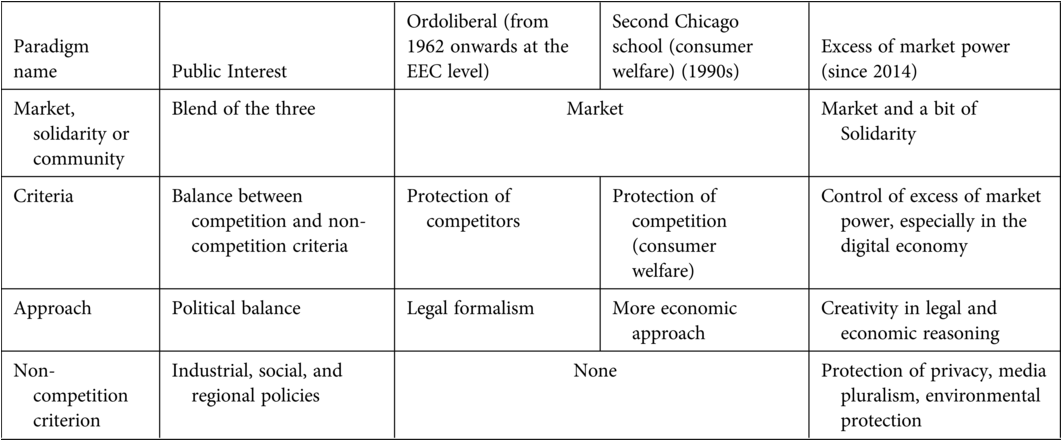
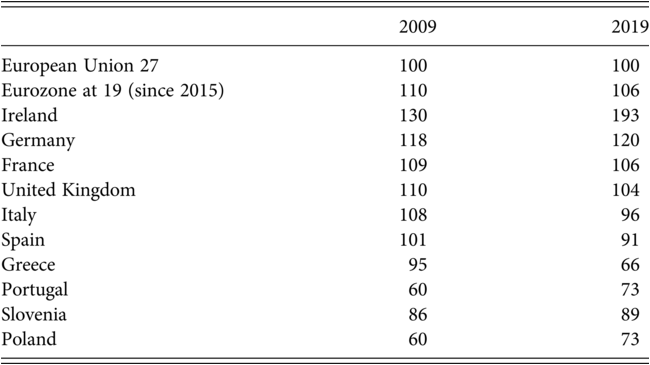

 Open access