


Neuropsychological deficits have been documented in patients with bipolar I disorder in manic, hypomanic, depressive as well as euthymic phases. Reference Gruber, Rathgeber, Bräunig and Gauggel1,Reference Malhi, Ivanovski, Hadzi-Pavlovic, Mitchell, Vieta and Sachdev2 Deficits in the cognitive domains of verbal memory, executive functions and sustained attention have been consistently reported in remitted bipolar disorder Reference Arts, Jabben, Krabbendam and van Os3-Reference Depp, Mausbach, Harmell, Savla, Bowie and Harvey5 as well as in remitted first-episode mania/bipolar disorder, although the magnitude of impairment is smaller in remitted first-episode mania. Reference Torres, DeFreitas, DeFreitas, Kauer-Sant'Anna, Bond and Honer6,Reference Hellvin, Sundet, Simonsen, Aminoff, Lagerberg and Andreassen7 Although recurrent episodes of mania and depression are the hallmark of bipolar disorder, the impact of mood episodes on cognitive function is poorly researched. Studying mood episodes may help us understand the temporal evolution of cognitive deficits in bipolar disorder, the contribution of mood states to these deficits, and potentially the interaction between neurocognitive deficits and progression of the disorder. Reference Robinson and Ferrier8 Although episodes of illness have been proposed to be more closely associated with cognitive impairment than the total duration of illness, Reference Kessing9 the contribution of the specific type of mood episodes to cognitive deficits, however, has received limited attention. Neuropsychological deficits in the domains of verbal memory, executive function, sustained attention and visual memory are reportedly associated with more lifetime manic episodes. Reference Hellvin, Sundet, Simonsen, Aminoff, Lagerberg and Andreassen7,Reference Robinson and Ferrier8 The relationship of cognitive deficits in bipolar disorder with depressive episodes, however, is less clear. Reference Robinson and Ferrier8 A significant negative correlation between the number of previous depressive episodes and performance on some tests of executive functions, Reference Clark, Iversen and Goodwin10,Reference Zubieta, Huguelet, O'Neil and Giordani11 verbal learning and memory, Reference Deckersbach, Savage, Reilly-Harrington, Clark, Sachs and Rauch12 non-verbal memory Reference Deckersbach, McMurrich, Ogutha, Savage, Sachs and Rauch13 and attention Reference Thompson, Gallagher, Hughes, Watson, Gray and Ferrier14 has been reported in a few retrospective analyses, which are potentially confounded by the effects of age, illness duration, antipsychotic medications and multiple manic episodes. However, many other studies did not find a correlation between depressive episodes and cognition. Reference Cavanagh, van Beck, Muir and Blackwood15-Reference van Gorp, Altshuler, Theberge, Wilkins and Dixon18
Thus, whether depressive episodes contribute to cognitive deficits in bipolar disorder remains unclear. In this study we investigated the relationship between depressive episodes and neuropsychological functioning in a sample of clinically stable patients with bipolar disorder who were within 3 months of recovery from a first episode of mania. Studying a first-episode mania sample would address some of the methodological limitations of earlier studies by overcoming the confounds of age, illness duration, chronicity, effects of medication and multiple manic episodes, thus allowing us to evaluate more directly the impact of depressive episodes on cognitive function. Using a cross-sectional strategy, we compared cognitive functioning in remitted patients with and without a history of depressive episodes. We hypothesised that the former group would show more severe deficits in cognitive functioning compared with patients with first-episode mania without past depressive episodes and healthy controls. In a prospective longitudinal analysis, we also evaluated whether depressive recurrence in the first year after diagnosis would be associated with cognitive decline. We hypothesised that patients with first-episode mania who experience a recurrence of depressive episode within 1 year following the first manic episode would show more cognitive decline than those who did not have a recurrence. Such a finding within the context of a prospective design would provide further support that the recurrent depressive episodes might be causing any observed decline in cognitive functioning
Method
Participants
Cross-sectional analysis
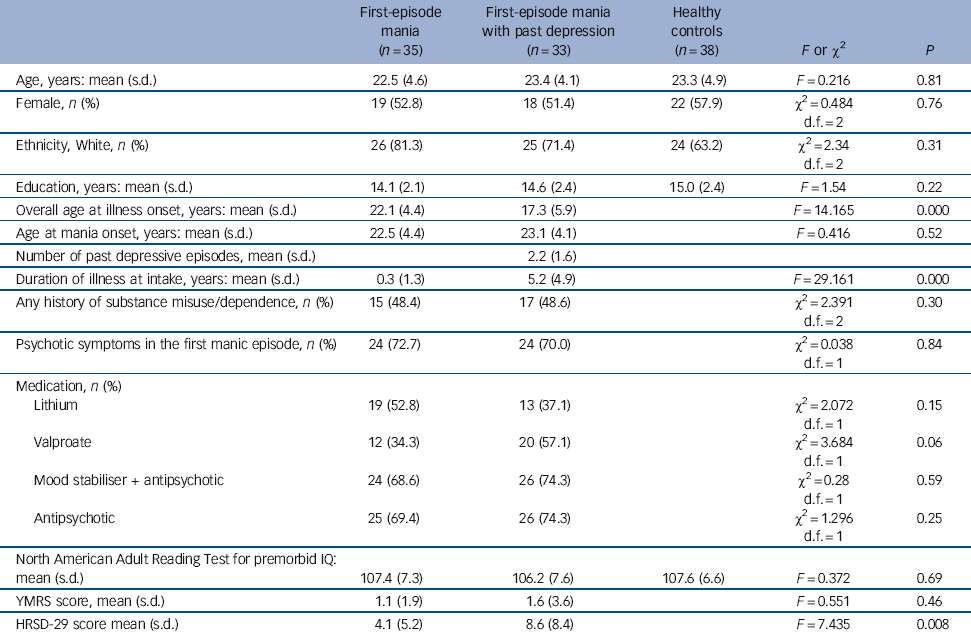
Sixty-eight patients meeting DSM-IV-TR 19 criteria for bipolar I disorder were initially recruited from the Systematic Treatment Optimization Program for Early Mania (STOP-EM) at the University of British Columbia and affiliated sites. Details of the STOP-EM study have been published previously. Reference Yatham, Kauer-Sant'Anna, Bond, Lam and Torres20 Diagnosis of bipolar disorder was established by clinical interview and a Mini International Neuropsychiatric Interview Reference Sheehan, Lecrubier, Sheehan, Amorim, Janavs and Weiller21 (MINI) conducted by a research psychiatrist. Patients who experienced their first manic or mixed episode in the preceding 3 months were enrolled in the study. Those with possible medical or neurological basis for the manic symptoms were excluded. Of the 68 patients recruited, 33 had a history of past depressive episodes (FEMD) and 35 had no history of depressive episodes (FEM). Demographics and clinical characteristics of the sample are summarised in Table 1.
Cross-sectional analysis: comparison of sociodemographic and illness variables between the three groups
| First-episode mania (n = 35) |
First-episode mania with past depression (n = 33) |
Healthy controls (n = 38) |
F or χ2 | P | |
|---|---|---|---|---|---|
| Age, years: mean (s.d.) | 22.5 (4.6) | 23.4 (4.1) | 23.3 (4.9) | F = 0.216 | 0.81 |
| Female, n (%) | 19 (52.8) | 18 (51.4) | 22 (57.9) | χ2 = 0.484 | 0.76 |
| d.f. = 2 | |||||
| Ethnicity, White, n (%) | 26 (81.3) | 25 (71.4) | 24 (63.2) | χ2 = 2.34 | 0.31 |
| d.f. = 2 | |||||
| Education, years: mean (s.d.) | 14.1 (2.1) | 14.6 (2.4) | 15.0 (2.4) | F = 1.54 | 0.22 |
| Overall age at illness onset, years: mean (s.d.) | 22.1 (4.4) | 17.3 (5.9) | F = 14.165 | 0.000 | |
| Age at mania onset, years: mean (s.d.) | 22.5 (4.4) | 23.1 (4.1) | F = 0.416 | 0.52 | |
| Number of past depressive episodes, mean (s.d.) | 2.2 (1.6) | ||||
| Duration of illness at intake, years: mean (s.d.) | 0.3 (1.3) | 5.2 (4.9) | F = 29.161 | 0.000 | |
| Any history of substance misuse/dependence, n (%) | 15 (48.4) | 17 (48.6) | χ2 = 2.391 | 0.30 | |
| d.f. = 2 | |||||
| Psychotic symptoms in the first manic episode, n (%) | 24 (72.7) | 24 (70.0) | χ2 = 0.038 | 0.84 | |
| d.f. = 1 | |||||
| Medication, n (%) | |||||
| Lithium | 19 (52.8) | 13 (37.1) | χ2 = 2.072 | 0.15 | |
| d.f. = 1 | |||||
| Valproate | 12 (34.3) | 20 (57.1) | χ2 = 3.684 | 0.06 | |
| d.f. = 1 | |||||
| Mood stabiliser + antipsychotic | 24 (68.6) | 26 (74.3) | χ2 = 0.28 | 0.59 | |
| d.f. = 1 | |||||
| Antipsychotic | 25 (69.4) | 26 (74.3) | χ2 = 1.296 | 0.25 | |
| d.f. = 1 | |||||
| North American Adult Reading Test for premorbid IQ: mean (s.d.) | 107.4 (7.3) | 106.2 (7.6) | 107.6 (6.6) | F = 0.372 | 0.69 |
| YMRS score, mean (s.d.) | 1.1 (1.9) | 1.6 (3.6) | F = 0.551 | 0.46 | |
| HRSD-29 score mean (s.d.) | 4.1 (5.2) | 8.6 (8.4) | F = 7.435 | 0.008 |
HRSD-29, 29-item Hamilton Rating Scale for Depression; YMRS, Young Mania Rating Scale.
Thirty-eight age-, gender-, ethnicity- and premorbid IQ-matched healthy individuals were recruited from the community. Healthy controls were also assessed with MINI. The exclusion criteria included a personal or family history of major psychiatric disorder in first- or second-degree relatives, or major medical or neurological illness affecting cognition.
Prospective analysis
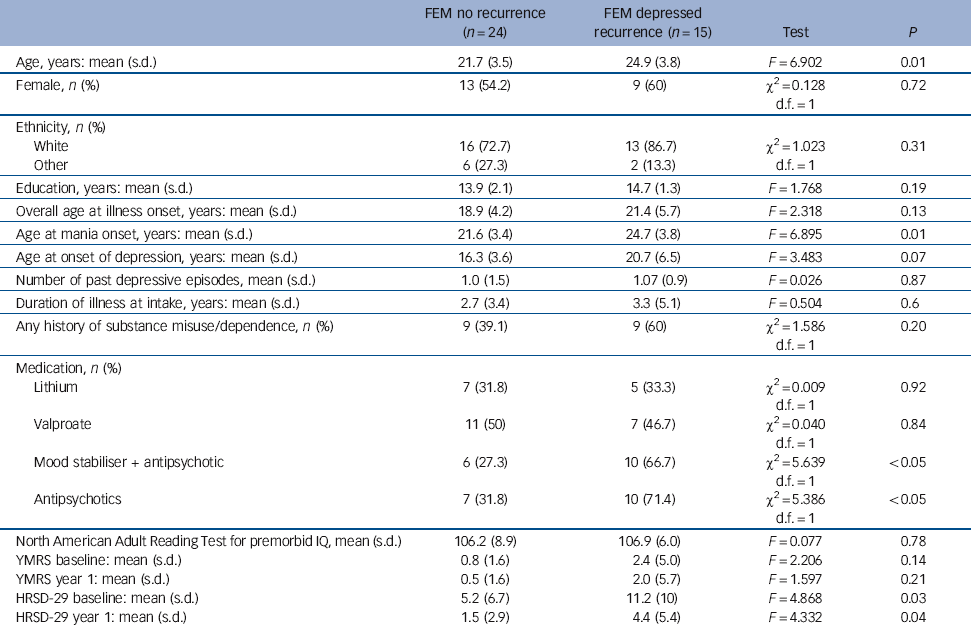
Of the 68 patients included in this study, 48 patients had completed 1-year follow-up. Of these, 3 patients had experienced a manic recurrence and 6 patients had experienced both manic and depressive recurrence in the first year after enrolment, and were thus excluded. The remaining 39 patients were selected for the prospective analysis; of these 39, 24 did not have a recurrence (NR group) and 15 had a depressive episode (DR group) within the first year following enrolment in the study. Demographics and clinical characteristics of the sample are summarised in Table 2.
Prospective analysis: comparison of the sociodemographic and illness variables between the two FEM patient groups
| FEM no recurrence (n = 24) |
FEM depressed recurrence (n = 15) |
Test | P | |
|---|---|---|---|---|
| Age, years: mean (s.d.) | 21.7 (3.5) | 24.9 (3.8) | F = 6.902 | 0.01 |
| Female, n (%) | 13 (54.2) | 9 (60) | χ2 = 0.128 | 0.72 |
| d.f. = 1 | ||||
| Ethnicity, n (%) | ||||
| White | 16 (72.7) | 13 (86.7) | χ2 = 1.023 | 0.31 |
| Other | 6 (27.3) | 2 (13.3) | d.f. = 1 | |
| Education, years: mean (s.d.) | 13.9 (2.1) | 14.7 (1.3) | F = 1.768 | 0.19 |
| Overall age at illness onset, years: mean (s.d.) | 18.9 (4.2) | 21.4 (5.7) | F = 2.318 | 0.13 |
| Age at mania onset, years: mean (s.d.) | 21.6 (3.4) | 24.7 (3.8) | F = 6.895 | 0.01 |
| Age at onset of depression, years: mean (s.d.) | 16.3 (3.6) | 20.7 (6.5) | F = 3.483 | 0.07 |
| Number of past depressive episodes, mean (s.d.) | 1.0 (1.5) | 1.07 (0.9) | F = 0.026 | 0.87 |
| Duration of illness at intake, years: mean (s.d.) | 2.7 (3.4) | 3.3 (5.1) | F = 0.504 | 0.6 |
| Any history of substance misuse/dependence, n (%) | 9 (39.1) | 9 (60) | χ2 = 1.586 | 0.20 |
| d.f. = 1 | ||||
| Medication, n (%) | ||||
| Lithium | 7 (31.8) | 5 (33.3) | χ2 = 0.009 | 0.92 |
| d.f. = 1 | ||||
| Valproate | 11 (50) | 7 (46.7) | χ2 = 0.040 | 0.84 |
| d.f. = 1 | ||||
| Mood stabiliser + antipsychotic | 6 (27.3) | 10 (66.7) | χ2 = 5.639 | <0.05 |
| d.f. = 1 | ||||
| Antipsychotics | 7 (31.8) | 10 (71.4) | χ2 = 5.386 | <0.05 |
| d.f. = 1 | ||||
| North American Adult Reading Test for premorbid IQ, mean (s.d.) | 106.2 (8.9) | 106.9 (6.0) | F = 0.077 | 0.78 |
| YMRS baseline: mean (s.d.) | 0.8 (1.6) | 2.4 (5.0) | F = 2.206 | 0.14 |
| YMRS year 1: mean (s.d.) | 0.5 (1.6) | 2.0 (5.7) | F = 1.597 | 0.21 |
| HRSD-29 baseline: mean (s.d.) | 5.2 (6.7) | 11.2 (10) | F = 4.868 | 0.03 |
| HRSD-29 year 1: mean (s.d.) | 1.5 (2.9) | 4.4 (5.4) | F = 4.332 | 0.04 |
FEM, first-episode mania; HRSD-29, 29-item Hamilton Rating Scale for Depression; YMRS, Young Mania Rating Scale.
The study was approved by the University of British Columbia Clinical Research Ethics Board. Written informed consent was obtained from all participants.
Procedures
As part of the larger STOP-EM study, Reference Yatham, Kauer-Sant'Anna, Bond, Lam and Torres20 all patients received a comprehensive baseline clinical evaluation including the MINI, Young Mania Rating Scale (YMRS), Reference Young, Biggs, Ziegler and Meyer22 29-item Hamilton Rating Scale for Depression (HRSD-29), Reference Williams, Link, Rosenthal and Terman23 Positive and Negative Syndrome Scale (PANSS), Reference Kay, Fiszbein and Opler24 and the Global Assessment of Functioning Scale (GAF). Reference Endicott, Spitzer, Fleiss and Cohen25 Patients received individualised open-label treatment based on CANMAT guidelines for treatment of bipolar disorder. Reference Yatham, Kennedy, O'Donovan, Parikh, MacQueen and McIntyre26-Reference Yatham, Kennedy, Schaffer, Parikh, Beaulieu and O'Donovan28 All patients recruited into the STOP-EM programme received treatments that were naturalistic and determined by the individual treating psychiatrist: treatments typically consisted of either mood stabiliser monotherapy (lithium or valproate) or combination therapy (mood stabiliser and an atypical antipsychotic) as recommended by CANMAT guidelines. If patients became depressed during the follow-up period, they were typically treated with the addition of lamotrigine or a selective serotonin reuptake inhibitor, or bupropion or quetiapine, if the patient has not already been taking quetiapine. The details of the treatments in both the cross-sectional and prospective analyses are detailed in Tables 1 and 2.
Neuropsychological assessment
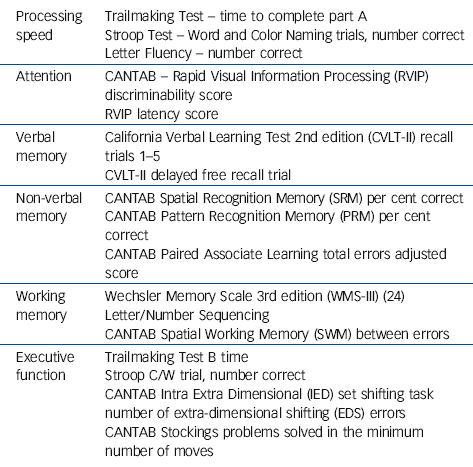
Patients were clinically stable at the time of neuropsychological testing, and mean symptom ratings are presented in Table 1. The neuropsychological tests were administered in a quiet room following standard procedures. Subtests from the Cambridge Neuropsychological Test Automated Battery (CANTAB) Reference Robbins, James, Owen, Sahakian, McInnes and Rabbitt29 were selected based on demonstration of their relevance to bipolar disorder. Reference Sweeney, Kmiec and Kupfer30,Reference Olley, Malhi, Bachelor, Cahill, Mitchell and Berk31 The grouping of tasks into cognitive domains was based on the approach taken with the Measurement and Treatment Research to Improve Cognition in Schizophrenia (MATRICS) Cognitive Consensus Battery (MCCB), Reference Nuechterlein, Green, Kern, Baade, Barch and Cohen32 given the overlap of cognitive deficits observed in schizophrenia and bipolar disorder. Reference Yatham, Torres, Malhi, Frangou, Glahn and Bearden33 Moreover, the use of the resulting six MCCB cognitive domains has been shown to have utility in bipolar disorder. Reference Burdick, Goldberg, Cornblatt, Keefe, Gopin and Derosse34 The specific tasks included in each cognitive domain are outlined in the Appendix. For the subset of patients included in the prospective analysis, patients were retested with the same cognitive battery 1 year after the baseline assessment. Practice effects, if present, may have been present in both groups of patients and would unlikely be a major confound.
Cognitive domains and the neuropsychological tests included in each domain
| Cognitive domain |
Neuropsychological tests included |
|---|---|
| Processing speed | Trailmaking Test - time to complete part A |
| Stroop Test - Word and Color Naming trials, number correct | |
| Letter Fluency - number correct | |
| Attention | CANTAB - Rapid Visual Information Processing (RVIP) discriminability score |
| RVIP latency score | |
| Verbal memory | California Verbal Learning Test 2nd edition (CVLT-II) recall trials 1-5 |
| CVLT-II delayed free recall trial | |
| Non-verbal memory | CANTAB Spatial Recognition Memory (SRM) per cent correct |
| CANTAB Pattern Recognition Memory (PRM) per cent correct | |
| CANTAB Paired Associate Learning total errors adjusted score | |
| Working memory | Wechsler Memory Scale 3rd edition (WMS-III) (24) |
| Letter/Number Sequencing | |
| CANTAB Spatial Working Memory (SWM) between errors | |
| Executive function | Trailmaking Test B time |
| Stroop C/W trial, number correct | |
| CANTAB Intra Extra Dimensional (IED) set shifting task number of extra-dimensional shifting (EDS) errors | |
| CANTAB Stockings problems solved in the minimum number of moves |
Statistical analysis
Analyses were conducted using SPSS for Windows, Version 20.0 (SPSS Inc, Chicago, Illinois, USA). For analysis of cognitive data, raw scores for each measure were converted to demographics-corrected z-scores based on norms published in accompanying testing manuals. The z-scores for all measures contained within a cognitive domain were averaged to obtain a mean cognitive domain score. Based on prior work, Reference Torres, Kozicky, Popuri, Bond, Honer and Lam35 test-retest reliabilities for domain scores in healthy volunteers were as follows: processing speed, r = 0.93; attention, r = 0.71; verbal memory, r = 0.68; non-verbal memory, r = 0.73; working memory, r = 0.71; and executive functions, r = 0.77.
Cross-sectional analysis
Demographic and clinical variables of the three groups were compared using one-way analysis of variance (ANOVA) for continuous variables and chi-squared for categorical variables. Overall performance on the six domains of cognitive function was compared across the three groups using multivariate analysis of variance (MANOVA), followed by post hoc Tukey tests to identify between-group differences. Further, the two patient groups were compared using MANCOVA, covarying for potential confounding variables, to identify potential differences in cognitive performance. Bivariate correlational analysis was conducted to assess the correlation between the number of past depressive episodes and neuropsychological performance in the FEMD group.
Prospective analysis
Demographic and clinical variables of the FEM group with no recurrence (NR group) and the FEM group with depression recurrence (DR group) were compared using one-way ANOVA for continuous variables and chi-squared for categorical variables. The change in performance on neurocognitive domains over time was compared between the two groups using repeated measures analysis of variance, with a focus on the group×time interaction. The time and group main effects were also evaluated. Effect sizes were calculated using Cohen’s d.
Results
Cross-sectional analysis
Demographics and clinical characteristics
The three groups - FEM (n = 35), FEMD (n = 33) and healthy controls (n = 38) - were comparable on age, gender, handedness, education, ethnicity, premorbid IQ and age at onset of the first manic episode (all P>0.17). The FEMD group had an average of 2.2 (s.d. = 1.6) depressive episodes prior to the first manic episode. The onset of illness was, as expected, earlier in the FEMD group compared with the FEM group. Of the 33 patients in the FEMD group, only 4 received antidepressants for the prior depressive episode. The FEMD group showed a significantly higher score on the HRSD-29 compared with the FEM group (mean 8.7 (s.d. = 8.4) v. mean 4.1 (s.d. = 5.2); F = 7.4, P<0.05). There was a trend for more patients in the FEMD group to be treated with valproate than in the FEM group (χ2 = 3.7; P = 0.055). A comparison of the demographic and clinical variables is provided in Table 1.
Neurocognitive domains
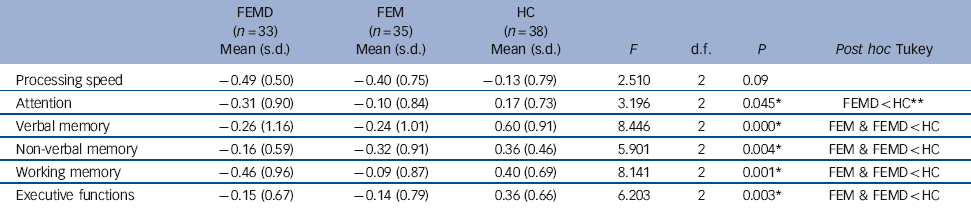
On MANOVA, there was a significant group effect on overall cognitive functioning (Wilks lambda = 0.758, F = 2.430, P = 0.006). On individual cognitive domains, there was a significant difference between the three groups on five of the six domains (P<0.05), and there was a trend for significance in the domain of processing speed (P = 0.08). On post hoc pair-wise comparison of between-group differences, both FEM and FEMD groups performed significantly poorer than healthy controls on domains of verbal memory, non-verbal memory, working memory and executive function. Only the FEMD group and not the FEM group had significantly poorer performance on tests of attention (P = 0.024) compared with healthy controls. However, there was no significant difference between the two patient groups in attention (t = 0.983; P = 0.32) The results are shown in Table 3.
Cross-sectional analysis: comparison of performance on cognitive domains between the three groups, using multivariate analysis of variance
| FEMD (n = 33) Mean (s.d.) |
FEM (n = 35) Mean (s.d.) |
HC (n = 38) Mean (s.d.) |
F | d.f. | P | Post hoc Tukey | |
|---|---|---|---|---|---|---|---|
| Processing speed | −0.49 (0.50) | −0.40 (0.75) | −0.13 (0.79) | 2.510 | 2 | 0.09 | |
| Attention | −0.31 (0.90) | −0.10 (0.84) | 0.17 (0.73) | 3.196 | 2 | 0.045Footnote * | FEMD<HCFootnote ** |
| Verbal memory | −0.26 (1.16) | −0.24 (1.01) | 0.60 (0.91) | 8.446 | 2 | 0.000Footnote * | FEM & FEMD<HC |
| Non-verbal memory | −0.16 (0.59) | −0.32 (0.91) | 0.36 (0.46) | 5.901 | 2 | 0.004Footnote * | FEM & FEMD<HC |
| Working memory | −0.46 (0.96) | −0.09 (0.87) | 0.40 (0.69) | 8.141 | 2 | 0.001Footnote * | FEM & FEMD<HC |
| Executive functions | −0.15 (0.67) | −0.14 (0.79) | 0.36 (0.66) | 6.203 | 2 | 0.003Footnote * | FEM & FEMD<HC |
FEM, first-episode mania without depression; FEMD, FEM with past depression; HC, healthy controls.
* P<0.05
** Differences between FEMD and HC (but not FEM and HC) showed statistical significance (P = 0.03).
To directly test the hypothesis of poorer cognitive function in the FEMD group relative to the FEM group, the two groups were compared using MANOVA to test for overall differences in cognitive functions. There was no significant difference between the two groups (Wilks lambda = 0.924; F = 0.842; P = 0.54). Also, there was no difference between the two groups on individual domains of neurocognitive functioning (all P>0.09). Effect size differences between the two patient groups on individual cognitive domains were as follows: processing speed, d = 0.01; attention, d = 0.21; verbal memory, d = –0.06; non-verbal memory, d = 0.1; working memory, d = 0.37; and executive functions, d = –0.01.
The two patient groups were further compared using MANCOVA, covarying for HRSD-29 scores and treatment with valproate, as there was a significant difference between the two groups on these variables and hence, they may have confounded the potential impact on cognitive functioning. However, as in the first analysis, there was no difference between the FEM and FEMD groups on overall performance in cognitive functions (Wilks lambda = 0.925, F = 0.779, P = 0.59) or on individual domains of cognitive function (all P>0.2). Excluding the four patients on treatment with antidepressants in the FEMD group also showed no difference between the FEM and FEMD groups on overall (Wilk’s lambda = 0.932, F= 0.639, P= 0.69) or individual domains of cognitive functioning (all P>0.2).
On bivariate correlation analysis, there was no correlation between the number of past depressive episodes and performance on any of the neurocognitive domains in the FEMD group. The Spearman correlation coefficients between number of depressive episodes and respective cognitive domains were: processing speed, r = –0.09, P = 0.63; attention, r = 0.10, P = 0.95; verbal memory, r = –0.16, P= 0.35; non-verbal memory, r= 0.11, P= 0.51; working memory, r= –0.05, P= 0.78; and executive functions, r= –0.25, P = 0.15. We also did not find any correlation between the duration of illness and performance on cognitive domains in the FEMD group (all P>0.24).
Prospective analysis
Demographics and clinical characteristics
The two FEM groups - NR group (n = 24) and DR group (n = 15) - were comparable on gender (χ2 = 0.128; P = 0.72), education (P = 0.19), ethnicity (White; χ2 = 1.023; P = 0.31), premorbid IQ (P = 0.82) and on the number of depressive episodes prior to the first manic episode (P = 0.89). Eleven patients from the FEMD group in the cross-sectional analysis were part of the DR group in the prospective analysis.
The NR group was slightly, although significantly, younger than the DR group (mean 21.8 years (s.d. = 3.6) v. mean 24.9 years (s.d. = 3.8); F = 6.902, P<0.05) and had a younger age at onset of mania (P<0.05) and depression (P = 0.07). The DR group had significantly higher scores on HRSD-29 at baseline (P<0.05) and at 1 year (P<0.05) compared with the NR group. There was no difference between the two groups on treatment with lithium (P = 0.26) or valproate (P = 0.47). Significantly more patients in the DR group were on treatment with antipsychotics and a combination of antipsychotics and mood stabilisers than in the NR group. A summary of demographic and clinical variables is provided in Table 2.
Neurocognitive domains
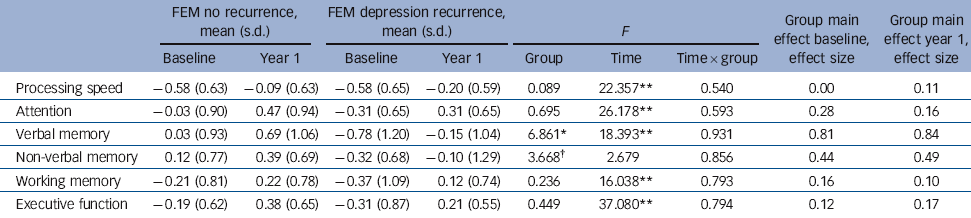
Regarding the overall group main effect, there was no significant difference between the NR and DR groups on overall performance on neurocognitive tests (Wilks lambda = 0.774; F = 1.510; P = 0.20). Univariate tests of the group main effect, however, revealed a difference between the two groups on verbal memory (F = 6.861, P = 0.01), with the DR group showing poorer verbal memory compared with the NR group and a trend for significance on tests of non-verbal memory (P = 0.06).
There was a significant overall time effect (Wilks lambda = 0.306; F = 11.706 and P<0.001) and univariate tests revealed a significant time effect on all cognitive domains except non-verbal memory (P = 0.11). However, there was no significant group×time interaction observed on overall neurocognitive functioning (Wilks lambda = 0.975; F = 0.130 and P = 0.99) or individual cognitive domains (all P>0.50). The neuropsychological results are shown in Table 4.
Prospective analysis: comparison of performance on cognitive domains from baseline to 1 year between the two first-episode mania (FEM) patient groups, using repeated measures analysis of variance
| FEM no recurrence, mean (s.d.) |
FEM depression recurrence, mean (s.d.) |
F | Group main effect baseline, effect size |
Group main effect year 1, effect size |
|||||
|---|---|---|---|---|---|---|---|---|---|
| Baseline | Year 1 | Baseline | Year 1 | Group | Time | Time×group | |||
| Processing speed | −0.58 (0.63) | −0.09 (0.63) | −0.58 (0.65) | −0.20 (0.59) | 0.089 | 22.357Footnote ** | 0.540 | 0.00 | 0.11 |
| Attention | −0.03 (0.90) | 0.47 (0.94) | −0.31 (0.65) | 0.31 (0.65) | 0.695 | 26.178Footnote ** | 0.593 | 0.28 | 0.16 |
| Verbal memory | 0.03 (0.93) | 0.69 (1.06) | −0.78 (1.20) | −0.15 (1.04) | 6.861Footnote * | 18.393Footnote ** | 0.931 | 0.81 | 0.84 |
| Non-verbal memory | 0.12 (0.77) | 0.39 (0.69) | −0.32 (0.68) | −0.10 (1.29) | 3.668† | 2.679 | 0.856 | 0.44 | 0.49 |
| Working memory | −0.21 (0.81) | 0.22 (0.78) | −0.37 (1.09) | 0.12 (0.74) | 0.236 | 16.038Footnote ** | 0.793 | 0.16 | 0.10 |
| Executive function | −0.19 (0.62) | 0.38 (0.65) | −0.31 (0.87) | 0.21 (0.55) | 0.449 | 37.080Footnote ** | 0.794 | 0.12 | 0.17 |
* P<0.05
** P<0.001; Trend for significance.
Since the two groups were significantly different on HRSD scores both at baseline and at year 1, the potential confound of depressive symptoms was examined by comparing the groups using MANOVA with repeated measures controlling for HRSD-29 scores at baseline and year 1 separately. There was no significant group×time effect after controlling for HRSD-29 scores at baseline, on overall (Wilks lambda = 0.850; F = 0.881; P = 0.52) or individual domains of cognitive functioning (all P>0.60); similar results were obtained after controlling for HRSD-29 scores at year 1, both on overall (Wilks lambda = 0.960; F = 0.209; P = 0.97) and performance on individual cognitive domains (all P>0.39). Importantly, the univariate tests of the group main effect continued to show poorer verbal memory in the DR group compared with the NR group, both after controlling for HRSD-29 scores at baseline (F = 6.454; P<0.05) and at a trend level at 1 year (F = 3.835; P = 0.06).
Discussion
Main findings
This study represents one of the first attempts at investigating the contribution of depressive episode(s) to cognitive impairment in patients who are early in the course of bipolar disorder. A major strength of this study is the inclusion of both a cross-sectional and prospective analysis within the methodology, which allowed us to study the contribution of depressive episodes to cognitive deficits before and after a first episode of mania. The main findings of this study are that (a) in early bipolar disorder, following recovery from a first manic episode, past depressive episodes do not appear to have a substantial impact on cognitive deficits, and (b) recurrence of a depressive episode within the first year after diagnosis of bipolar disorder is not associated with further cognitive decline. We did, however, find that verbal memory deficit at baseline was associated with depression recurrence within the first year following a diagnosis of bipolar disorder.
Deficits in sustained attention, Reference Hellvin, Sundet, Simonsen, Aminoff, Lagerberg and Andreassen7,Reference Nehra, Chakrabarti, Pradhan and Khehra36 processing speed, Reference Hellvin, Sundet, Simonsen, Aminoff, Lagerberg and Andreassen7,Reference Gruber, Rosso and Yurgelun-Todd37 learning and memory, Reference Torres, DeFreitas, DeFreitas, Kauer-Sant'Anna, Bond and Honer6 working memory and executive function Reference Hellvin, Sundet, Simonsen, Aminoff, Lagerberg and Andreassen7 have been reported in first-episode bipolar disorder compared with healthy individuals. Our findings of impaired performance in both the patient groups vis-à-vis the healthy controls in almost all domains of cognitive functioning are consistent with other studies reporting cognitive deficits in early bipolar disorder. Based on the existing literature, Reference Torres, DeFreitas, DeFreitas, Kauer-Sant'Anna, Bond and Honer6,Reference Hellvin, Sundet, Simonsen, Aminoff, Lagerberg and Andreassen7 it is possible that cognitive deficits in early bipolar disorder, immediately after recovery from a first manic episode, are likely determined by the first manic episode and not depressive episodes.
We did not, however, find any significant difference between the two patient groups on overall or individual domains of cognitive function in our cross-sectional analysis. On tests of attention, the FEMD group performed poorly compared with the FEM group, although the difference was non-significant and the effect size was small (0.21). A meta-analysis of cognitive deficits in patients with remitted first-episode major depressive disorder and young patients with remitted major depressive disorder reported deficits in sustained attention relative to healthy controls. Reference Lee, Hermens, Porter and Redoblado-Hodge38,Reference Wekking, Bockting, Koeter and Schene39 It has been suggested that much like major depressive disorder, past depression may contribute to attention deficits in early bipolar disorder. Reference Bora, Yucel and Pantelis40 Even though we did not find this in the current sample, it is possible that with more depressive episodes, these differences on attention tasks may become more apparent. Reference Kessing9,Reference Hasselbalch, Knorr, Hasselbalch, Gade and Kessing41
The prospective analysis did not reveal any further impact of depression recurrence in the first year after bipolar disorder diagnosis to the existing cognitive deficits at baseline. A study has suggested that cumulative duration of depressive episodes may be associated with more cognitive dysfunction in major depressive disorder. Reference Hasselbalch, Knorr, Hasselbalch, Gade and Kessing41 An association between multiple depressive episodes and greater global cognitive decline has been reported previously, with no differences between unipolar depression and bipolar disorder. Reference Kessing9 Wekking et al highlight that cumulative deterioration in cognitive functioning after each new depressive episode has been poorly studied Reference Wekking, Bockting, Koeter and Schene39 since the idea was first proposed by Kessing in 1998. The current study which controlled for a number of confounds and used a prospective cohort design to assess the potential causative impact of depressive episodes does not suggest that depressive episodes in bipolar disorder have significant deleterious effects on cognitive function at least in the early stage of the disorder.
Even though depressive recurrence did not associate with further cognitive decline, the DR group showed evidence of poorer verbal memory at baseline and at year 1 compared with the NR group. It is thus possible that impaired verbal memory may serve as a trait marker that makes patients more susceptible to depressive recurrence early in the course of illness, even though depressive recurrence per se may not cause cognitive decline early in the illness.
The possible link between verbal memory and depression is also apparent when underlying brain substrates are considered. For example, verbal learning and memory have been correlated with hippocampal volume in various neuropsychiatric disorders. Reference MacQueen and Frodl42 The hippocampus is a regulator of prefrontal cortical function Reference Gurden, Tassin and Jay43 and deficits in hippocampal functioning have been associated with attention and memory deficits observed in depression. Reference MacQueen and Frodl42 Smaller hippocampal volume has been associated with more than one depressive episode Reference McKinnon, Yucel, Nazarov and MacQueen44 and has been documented to predict future depressive episodes in high-risk studies in major depressive disorder. Reference Rao, Chen, Bidesi, Shad, Thomas and Hammen45 Although the association between depression and smaller hippocampal volumes has been well documented, the relationship between bipolar disorder and hippocampal volume is less clear from structural imaging studies. Reference Frey, Andreazza, Nery, Martins, Quevedo and Soares46 One study reported that smaller hippocampal volumes were correlated with poor performance on tests of verbal memory in bipolar disorder Reference Chepenik, Wang, Spencer, Spann, Kalmar and Womer47 compared with healthy individuals, but no information was provided on the impact of depressive episodes to this finding. There is also evidence of abnormal hippocampal activation during performance of attention and memory encoding tasks in bipolar disorder from functional magnetic resonance imaging studies. Reference Frey, Andreazza, Nery, Martins, Quevedo and Soares46 Based on the poorer performance in the domain of verbal memory by the DR group vis-à-vis the NR group, and the recurrence of a depressive episode within 1 year of bipolar disorder onset, we can only speculate that the DR group may have had more impaired hippocampal functioning relative to the NR group. The number of depressive episodes in our sample was much lower than those cited in the meta-analysis by McKinnon et al. Reference McKinnon, Yucel, Nazarov and MacQueen44 Although our data suggest that depressive episodes do not appear to contribute to cognitive deficits early in the course of illness, we cannot rule out the possibility that further depressive episodes may occur with illness progression and could contribute to more deficits in hippocampus functioning and cognitive decline subsequently, as reported in the McKinnon study. However, imaging studies comparing these two groups, in drug-naive conditions, are required before such a hypothesis can be tested.
Deficits in verbal memory have been reportedly associated with other clinical features such as longer duration of illness and more manic episodes. Reference Robinson and Ferrier8 However, we were not able to study a similar association with manic recurrence because of the small number of patients with manic recurrence in our sample. Deficits in verbal memory have been reported both in patients with remitted bipolar disorder and in their first-degree relatives. Gourovitch et al reported deficits in verbal memory but not working memory in unaffected monozygotic twins discordant for bipolar disorder compared with unaffected control monozygotic twins; Reference Gourovitch, Torrey, Gold, Randolph, Weinberger and Goldberg48 another study reported similar findings in siblings of patients with bipolar disorder and schizophrenia relative to controls. Reference Kéri, Kelemen, Benedek and Janka49 Robinson & Ferrier reported significant impairments in verbal memory and executive function in patients with bipolar disorder and modest impairments in their first-degree relatives. Reference Robinson and Ferrier8 This was reflected in the meta-analysis by Arts et al, who found large impairments in patients and intermediate impairments in first-degree relatives on tasks of executive function and verbal memory. Reference Arts, Jabben, Krabbendam and van Os3 Another review on relatives of patients with bipolar disorder concluded that verbal learning and memory is the most likely candidate for a neurocognitive endophenotype for bipolar disorder. Reference Balanzá-Martínez, Rubio, Selva-Vera, Martinez-Aran, Sánchez-Moreno and Salazar-Fraile50 A meta-analysis by Bora et al reported similar findings, Reference Bora, Yucel and Pantelis40 although the effect sizes in first-degree relatives were modest. In our prospective analysis, greater verbal memory deficits were observed in the DR group. In light of the above literature, it can be hypothesised that verbal memory deficits may represent a cognitive endophenotype of bipolar disorder, which may confer a greater risk of recurrence of a depressive episode within the first year of a first manic episode in bipolar disorder. However, the absence of premorbid memory testing limits the inferences that we can draw from this particular finding.
Strengths
The study has several strengths. It is a first attempt to examine the impact of past depression on cognitive deficits in early bipolar disorder. It is also the first to prospectively study the impact of new depressive episodes on existing cognitive deficits in early bipolar disorder. Prior manic episodes have served as a major confound in previous studies in bipolar disorder attempting to link depressive episodes to neuropsychological deficits, which we were able to overcome. Although the FEMD group had an earlier age at onset, it was a function of the inclusion criteria and we did not find any correlations between the duration of illness and performance on cognitive functions in this group. The potential confounding effect of current medications on cognitive performance was also controlled.
Limitations
Some limitations with the present study need to be mentioned. The FEMD and DR groups had more depressive symptoms on HRSD-29 than the FEM and NR groups respectively. Although this was controlled statistically, the potential influence of depressive symptomatology on performance cannot be ruled out completely. Reference Hasselbalch, Knorr and Kessing51 The FEMD group also had more patients on valproate, which was also controlled for statistically as valproate is documented to have a possible negative impact on cognitive functions. Reference Dias, Balanzá-Martinez, Soeiro-de-Souza, Moreno, Figueira and Machado-Vieira52 While assessing the impact of depressive episodes on neurocognitive dysfunction, we did not study the severity, duration and the presence of psychotic symptoms in the depressive episodes independently which have been shown to influence cognitive functions associated with depression. Reference Hasselbalch, Knorr, Hasselbalch, Gade and Kessing41 The reason is that a large majority of our patients had a history of psychosis. Another limitation is that we only examined the impact of number of depressive episodes and not the duration of episode, which may also be an important variable to investigate. Further, as very few patients in the FEMD group had received prior treatment with antidepressants; the impact of treatment with antidepressants on cognitive function could not be assessed, although excluding those patients who received treatment with antidepressants did not change the results of our analysis.
Although the sample size in this study was modest, it is not likely that this factor had a major impact on findings. For example, the effect sizes for the group differences in cognitive functioning in the cross-sectional analysis were generally small: processing speed, d = 0.01; attention, d = 0.21; verbal memory, d = –0.06; non-verbal memory, d = 0.1; working memory, d = 0.37; and executive functions, d = –0.01. Considering the largest effect (d = 0.37), a sample size of approximately 115 per group would have been necessary to detect a difference of that magnitude with power of 0.8. Thus, a considerably larger sample size would have been necessary to detect an effect of that magnitude.
Clinical implications
In conclusion, although deficits in all domains of cognitive function are observed in patients early in the course of bipolar disorder, the additional burden and impact of depressive episodes in the early stages is not significant. Despite this, presence of poorer verbal memory may serve as a marker for increased susceptibility to depressive recurrence early in the course of bipolar disorder.
Funding
STOP-EM is supported by an unrestricted grant from AstraZeneca.




eLetters
No eLetters have been published for this article.