




1 Preliminaries
We aim to keep our article readable for both set theorists and functional analysts; therefore, we recall some of the basic definitions from both fields.
Throughout the article, we use standard set-theoretic notation and identify each natural number $n\in \omega =\{0,1,2,\ldots \}$
with the set
$n\in \omega =\{0,1,2,\ldots \}$
with the set $\{0,1,\ldots ,n-1\}$
.
$\{0,1,\ldots ,n-1\}$
.
1.1 Ideals
We will be concerned with ideals $\mathcal {I}$
on the set of natural numbers
$\mathcal {I}$
on the set of natural numbers $\omega $
. By an ideal on a countable set M we mean a family
$\omega $
. By an ideal on a countable set M we mean a family $\mathcal {I} \subseteq \mathcal {P}(M)$
such that:
$\mathcal {I} \subseteq \mathcal {P}(M)$
such that:
-
• $\mathcal {I}$
contains all finite subsets of M;
$\mathcal {I}$
contains all finite subsets of M; -
• if
$A,B \in \mathcal {I}$
, then also
$A\cup B \in \mathcal {I}$
; -
• if
$A \in \mathcal {I}$
and
$B \subseteq A$
, then also
$B \in I$
.


We will focus primarily on non-trivial ideals, that is, ideals $\mathcal {I}$
such that
$\mathcal {I}$
such that $\mathcal {I} \neq \mathcal {P}(M)$
, and our ideals will typically be defined on
$\mathcal {I} \neq \mathcal {P}(M)$
, and our ideals will typically be defined on $M=\omega $
.
$M=\omega $
.
Remark 1.1. Clearly, the notion of ideal is dual to the notion of filter: $\mathcal {I}$
is an ideal if and only if the family of complements of elements of
$\mathcal {I}$
is an ideal if and only if the family of complements of elements of $\mathcal {I}$
forms a filter. Therefore, choice between working in terms of ideal bases and filter bases is purely aesthetic.
$\mathcal {I}$
forms a filter. Therefore, choice between working in terms of ideal bases and filter bases is purely aesthetic.
We treat the power set $\mathcal {P}(M)$
as the space
$\mathcal {P}(M)$
as the space $2^M$
of all functions
$2^M$
of all functions $f:M\rightarrow 2$
(equipped with the product topology, where each space
$f:M\rightarrow 2$
(equipped with the product topology, where each space $2=\left \{0,1\right \}$
carries the discrete topology) by identifying subsets of M with their characteristic functions. All topological and descriptive notions in the context of ideals will refer to this topology.
$2=\left \{0,1\right \}$
carries the discrete topology) by identifying subsets of M with their characteristic functions. All topological and descriptive notions in the context of ideals will refer to this topology.
An ideal $\mathcal {I}$
on M is tall if for any infinite
$\mathcal {I}$
on M is tall if for any infinite $A\subseteq M$
there is an infinite
$A\subseteq M$
there is an infinite $B\subseteq A$
such that
$B\subseteq A$
such that $B\in \mathcal {I}$
. Equivalently,
$B\in \mathcal {I}$
. Equivalently, $\mathcal {I}$
is tall if
$\mathcal {I}$
is tall if $\mathcal {I}\restriction A\neq [A]^{<\omega }$
, for any
$\mathcal {I}\restriction A\neq [A]^{<\omega }$
, for any $A\notin \mathcal {I}$
, where
$A\notin \mathcal {I}$
, where
 $$\begin{align*}\mathcal{I}\restriction A=\left\{B\cap A:B\in\mathcal{I}\right\}\!.\end{align*}$$
We say that an ideal $\mathcal {I}$
on M is generated by a family
$\mathcal {I}$
on M is generated by a family $\mathcal {A}\subseteq \mathcal {P}(M)$
if
$\mathcal {A}\subseteq \mathcal {P}(M)$
if
 $$\begin{align*}\mathcal{I}=\{B\subseteq M:\exists_{n\in\omega}\ \exists_{A_0,\ldots,A_n\in\mathcal{A}}\ B\subseteq A_0\cup\ldots\cup A_n\}. \end{align*}$$
An ideal $\mathcal {I}$
is called a P-ideal if for each sequence
$\mathcal {I}$
is called a P-ideal if for each sequence $(A_n)\subseteq \mathcal {I}$
there is a set
$(A_n)\subseteq \mathcal {I}$
there is a set $A\in \mathcal {I}$
such that
$A\in \mathcal {I}$
such that $A_n\setminus A$
is finite for all
$A_n\setminus A$
is finite for all $n\in \omega $
. By a result of Solecki, every analytic P-ideal is
$n\in \omega $
. By a result of Solecki, every analytic P-ideal is ${\mathbf {F}_{\sigma \delta }}$
(see [Reference Solecki17]).
${\mathbf {F}_{\sigma \delta }}$
(see [Reference Solecki17]).
If $\{X_m: m\in M\}$
is a family of sets, then
$\{X_m: m\in M\}$
is a family of sets, then $\sum _{m\in M}X_m=\{(m,x): m\in M,x\in X_m\}$
is its disjoint sum. The vertical section of a set
$\sum _{m\in M}X_m=\{(m,x): m\in M,x\in X_m\}$
is its disjoint sum. The vertical section of a set $A\subseteq \sum _{m\in M}X_m$
at a point
$A\subseteq \sum _{m\in M}X_m$
at a point $m\in M$
is defined by
$m\in M$
is defined by $A_{(m)} = \{x\in X_m: (m,x)\in A\}$
. Let
$A_{(m)} = \{x\in X_m: (m,x)\in A\}$
. Let $\mathcal {I}$
and
$\mathcal {I}$
and $\mathcal {J}$
be ideals on M and N, respectively, and
$\mathcal {J}$
be ideals on M and N, respectively, and $\mathcal {I}_m$
, for each
$\mathcal {I}_m$
, for each $m\in M$
, be an ideal on
$m\in M$
, be an ideal on $X_m$
. We define the following new ideals:
$X_m$
. We define the following new ideals:
-
•
$\sum _{m\in M}\mathcal {I}_m=\{A\subseteq \sum _{m\in M}X_m: \forall _{m\in M}\ A_{(m)}\in \mathcal {I}_m\}$
; -
•
$\{\emptyset \} \otimes \mathcal {I}= \{A\subseteq \omega \times M: A_{(n)} \in \mathcal {I}\text { for all }n\in \omega \}$
; -
•
$\mathcal {I}\oplus \mathcal {J}=\{A\subseteq (\{0\}\times M)\cup (\{1\}\times N): A_{(0)}\in \mathcal {I}\text { and }A_{(1)}\in \mathcal {J}\}$
.



Two ideals $\mathcal {I}$
and
$\mathcal {I}$
and $\mathcal {J}$
on M and N, respectively, are isomorphic (
$\mathcal {J}$
on M and N, respectively, are isomorphic ( $\mathcal {I}\cong \mathcal {J}$
) if there is a bijection
$\mathcal {I}\cong \mathcal {J}$
) if there is a bijection $f:N\to M$
such that:
$f:N\to M$
such that:
 $$\begin{align*}f^{-1}[A]\in\mathcal{J}\ \Leftrightarrow\ A\in\mathcal{I}, \end{align*}$$
for all $A\subseteq M$
. Two isomorphic ideals have the same descriptive complexity (see, for instance, [Reference Debs and Saint Raymond5, Lemma 7.2]).
$A\subseteq M$
. Two isomorphic ideals have the same descriptive complexity (see, for instance, [Reference Debs and Saint Raymond5, Lemma 7.2]).
Lemma 1.2 (Folklore).
Let $\mathcal {I}$
be an ideal.
$\mathcal {I}$
be an ideal.
-
(a) If
$\mathcal {I}$
is not tall, then
$\mathcal {I}\cong \mathcal {I}\oplus \mathrm {Fin}$
. -
(b) If
$\mathcal {I}\neq \mathrm {Fin}$
, then
$\mathcal {I}\cong \mathcal {I}\oplus \mathcal {P}(\omega )$
.




Proof. Without loss of generality, we may assume that $\mathcal {I}$
is an ideal on
$\mathcal {I}$
is an ideal on $\omega $
.
$\omega $
.
Since $\mathcal {I}$
is not tall (
$\mathcal {I}$
is not tall ( $\mathcal {I}\neq \mathrm {Fin}$
, respectively), there is
$\mathcal {I}\neq \mathrm {Fin}$
, respectively), there is $A\notin \mathcal {I}$
such that
$A\notin \mathcal {I}$
such that ${\mathcal {I}\restriction A=\mathrm {Fin}\restriction A}$
(an infinite
${\mathcal {I}\restriction A=\mathrm {Fin}\restriction A}$
(an infinite $A\in \mathcal {I}$
, respectively). Let
$A\in \mathcal {I}$
, respectively). Let $g:((\{0\}\times A)\cup (\{1\}\times \omega ))\to A$
be any bijection. Then
$g:((\{0\}\times A)\cup (\{1\}\times \omega ))\to A$
be any bijection. Then $f:2\times \omega \to \omega $
given by:
$f:2\times \omega \to \omega $
given by:
 $$\begin{align*}f(i,n)=\begin{cases} g(i,n), & \text{if }(i,n)\in(\{0\}\times A)\cup(\{1\}\times\omega),\cr n, & \text{otherwise,} \end{cases} \end{align*}$$
for all $(i,n)\in 2\times \omega $
, witnesses
$(i,n)\in 2\times \omega $
, witnesses $\mathcal {I}\cong \mathcal {I}\oplus \mathrm {Fin}$
(
$\mathcal {I}\cong \mathcal {I}\oplus \mathrm {Fin}$
( $\mathcal {I}\cong \mathcal {I}\oplus \mathcal {P}(\omega )$
, respectively).
$\mathcal {I}\cong \mathcal {I}\oplus \mathcal {P}(\omega )$
, respectively).
Example 1.3. The following is a list of some well-known ideals:
-
• The smallest ideal is
$\mathrm {Fin}=[\omega ]^{<\omega }$
. It is an
${\mathbf {F}_\sigma }$
non-tall P-ideal. -
•
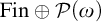
$\mathrm {Fin}\oplus \mathcal {P}(\omega )$
is an ideal on
$2\times \omega $
consisting of all
$A\subseteq 2\times \omega $
such that
${A\cap (\{0\}\times \omega )}$
is finite. It is an
${\mathbf {F}_\sigma }$
non-tall P-ideal. -
• A summable ideal is an ideal of the form
where
$$\begin{align*}\mathcal{I}_{\mathbb {r}}=\left\{A\subseteq\omega:\sum_{n\in A}r_n<\infty\right\}\!, \end{align*}$$
$\mathbb {r}=(r_n)$
is a sequence of positive reals such that
$\sum _{n\in \omega }r_n=\infty $
. Each summable ideal is an
${\mathbf {F}_\sigma }$
P-ideal. The most well-known summable ideal is
$$\begin{align*}\mathcal{I}_{1/n}=\left\{A\subseteq\omega:\sum_{n\in A}\frac{1}{n+1}<\infty\right\}\!. \end{align*}$$
It is a tall ideal. Note that
$\mathrm {Fin}$
is a summable ideal (given, e.g., by any constant sequence
$\mathbb {r}$
) and
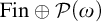
$\mathrm {Fin}\oplus \mathcal {P}(\omega )$
is isomorphic to the summable ideal
$\{A\subseteq \omega : A\cap \{2n:n\in \omega \}\in \mathrm {Fin}\}$
given by the sequence:
$$\begin{align*}r_n=\begin{cases} \frac{1}{2^n} & \text{if }n\text{ is odd},\cr 1 & \text{if }n\text{ is even}. \end{cases} \end{align*}$$
-
• The ideal of asymptotic density zero is given by:
(here we use the standard set-theoretic convention and treat a number
$$\begin{align*}\mathcal{I}_d= \left\{A \subseteq \omega: \frac{|A \cap (n+1)|}{n+1} \to 0 \right\}\!, \end{align*}$$
$n\in \omega $
as the set
$\{0,1,\ldots ,n-1\}$
). It is an
${\mathbf {F}_{\sigma \delta }}$
, but not
${\mathbf {F}_{\sigma }}$
, tall P-ideal.
-
•
$\{\emptyset \}\otimes \mathrm {Fin}$
is an ideal on
$\omega ^2$
consisting of all
$A\subseteq \omega ^2$
such that
$A_{(n)}=\{k\in \omega : (n,k)\in A\}\in \mathrm {Fin}$
for all
$n\in \omega $
. It is an
${\mathbf {F}_{\sigma \delta }}$
, but not
${\mathbf {F}_{\sigma }}$
, non-tall P-ideal.



















For more examples of ideals, see, for instance, [Reference Farah7].
1.2 Submeasures
A function $\phi :\mathcal {P}(\omega )\to [0,\infty ]$
is called a submeasure if
$\phi :\mathcal {P}(\omega )\to [0,\infty ]$
is called a submeasure if $\phi (\emptyset )=0$
,
$\phi (\emptyset )=0$
,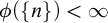 $\phi (\{n\})<\infty $
, for each
$\phi (\{n\})<\infty $
, for each $n\in \omega $
, and
$n\in \omega $
, and
 $$ \begin{align*}\phi(A)\leq\phi(A\cup B)\leq\phi(A)+\phi(B),\end{align*} $$
for all $A,B\subseteq \omega $
. A submeasure
$A,B\subseteq \omega $
. A submeasure $\phi $
is lower semicontinuous (lsc, in short) if
$\phi $
is lower semicontinuous (lsc, in short) if $\phi (A)=\lim _{n\to \infty }\phi (A\cap n)$
for all
$\phi (A)=\lim _{n\to \infty }\phi (A\cap n)$
for all $A\subseteq \omega $
. The support of a submeasure
$A\subseteq \omega $
. The support of a submeasure $\phi $
is defined as
$\phi $
is defined as $\mathrm {supp}(\phi )=\{n\in \omega : \phi (\{n\})\neq 0\}$
.
$\mathrm {supp}(\phi )=\{n\in \omega : \phi (\{n\})\neq 0\}$
.
Mazur in [Reference Mazur15, Lemma 1.2] proved that an ideal on $\omega $
is
$\omega $
is ${\mathbf {F}_\sigma }$
if and only if it is of the form:
${\mathbf {F}_\sigma }$
if and only if it is of the form:
 $$ \begin{align*}\mathrm{Fin}(\phi)=\left\{A\subseteq\omega: \phi(A)<\infty\right\}\!,\end{align*} $$
for some lsc submeasure $\phi $
such that
$\phi $
such that $\omega \notin \mathrm {Fin}(\phi )$
(see also [Reference Farah7, Theorem 1.2.5]). Similarly, Solecki in [Reference Solecki18, Theorem 3.1] showed that an ideal on
$\omega \notin \mathrm {Fin}(\phi )$
(see also [Reference Farah7, Theorem 1.2.5]). Similarly, Solecki in [Reference Solecki18, Theorem 3.1] showed that an ideal on $\omega $
is an analytic P-ideal if and only if it is of the form:
$\omega $
is an analytic P-ideal if and only if it is of the form:
 $$ \begin{align*}\mathrm{Exh}(\phi)=\left\{A\subseteq\omega: \lim_{n\to\infty}\phi(A\setminus n)=0\right\}\!,\end{align*} $$
for some lsc submeasure $\phi $
such that
$\phi $
such that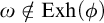 $\omega \notin \mathrm {Exh}(\phi )$
(see also [Reference Farah7, Theorem 1.2.5]).
$\omega \notin \mathrm {Exh}(\phi )$
(see also [Reference Farah7, Theorem 1.2.5]).
A submeasure $\phi $
is non-pathological, if
$\phi $
is non-pathological, if
 $$ \begin{align*}\phi(A)=\sup\{\mu(A): \mu\text{ is a measure with }\mathrm{supp}(\mu)\in\mathrm{Fin}\text{ and }\mu(B)\leq\phi(B)\text{ for all }B\subseteq\omega\},\end{align*} $$
for all $A\subseteq \omega $
. We say that an
$A\subseteq \omega $
. We say that an ${\mathbf {F}_\sigma }$
ideal (analytic P-ideal) is non-pathological, if it is of the form
${\mathbf {F}_\sigma }$
ideal (analytic P-ideal) is non-pathological, if it is of the form $\mathrm {Fin}(\phi )$
(
$\mathrm {Fin}(\phi )$
( $\mathrm {Exh}(\phi )$
, respectively), for some non-pathological submeasure
$\mathrm {Exh}(\phi )$
, respectively), for some non-pathological submeasure $\phi $
.
$\phi $
.
1.3 Ideal convergence
Following [Reference Kostyrko, Šalat and Wilczyński14], for an ideal $\mathcal {I}$
on
$\mathcal {I}$
on $\omega $
and a sequence
$\omega $
and a sequence $(x_n)$
of elements of some metric space
$(x_n)$
of elements of some metric space $(X,d)$
, we say that
$(X,d)$
, we say that $(x_n)$
is
$(x_n)$
is $\mathcal {I}$
-convergent to some
$\mathcal {I}$
-convergent to some $x\in X$
if almost all
$x\in X$
if almost all $x_n$
’s in the sense of
$x_n$
’s in the sense of $\mathcal {I}$
, are arbitrarily close to x, that is, for every
$\mathcal {I}$
, are arbitrarily close to x, that is, for every $\varepsilon>0$
we have
$\varepsilon>0$
we have $\{n \in \omega : d(x_n , x)> \varepsilon \} \in \mathcal {I}$
. In such a case, we write
$\{n \in \omega : d(x_n , x)> \varepsilon \} \in \mathcal {I}$
. In such a case, we write $x_n \to _{\mathcal {I}} x$
or
$x_n \to _{\mathcal {I}} x$
or $\lim _{n,\mathcal {I}}x_n=x$
. Note that for the particular ideal of asymptotic density zero, ideal convergence has been previously considered under the name of statistical convergence (see, e.g., [Reference Fast8, Reference Fridy9, Reference Šalát16, Reference Steinhaus19]).
$\lim _{n,\mathcal {I}}x_n=x$
. Note that for the particular ideal of asymptotic density zero, ideal convergence has been previously considered under the name of statistical convergence (see, e.g., [Reference Fast8, Reference Fridy9, Reference Šalát16, Reference Steinhaus19]).
Similarly, for a Banach space X, we say that a series $(\mathbb {x}_n)$
is
$(\mathbb {x}_n)$
is $\mathcal {I}$
-convergent to some
$\mathcal {I}$
-convergent to some $\mathbb {x}\in X$
, if the sequence
$\mathbb {x}\in X$
, if the sequence $(\mathbb {a}_n)$
of partial sums, given by
$(\mathbb {a}_n)$
of partial sums, given by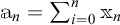 $\mathbb {a}_n = \sum _{i=0}^n \mathbb {x}_n$
, is
$\mathbb {a}_n = \sum _{i=0}^n \mathbb {x}_n$
, is $\mathcal {I}$
-convergent to X. In such a case we write
$\mathcal {I}$
-convergent to X. In such a case we write
 $$\begin{align*}\mathbb{x}=\lim_{n,\mathcal{I}} \mathbb{a}_n = \sum_{n,\mathcal{I}} \mathbb{x}_n. \end{align*}$$
Note that it means “almost all partial sums are close to $\mathbb {x}$
” rather than “sums of almost all elements are close to
$\mathbb {x}$
” rather than “sums of almost all elements are close to $\mathbb {x}$
”. In fact, even though the second statement might be more intuitive on the first thought, it does not make sense at all.
$\mathbb {x}$
”. In fact, even though the second statement might be more intuitive on the first thought, it does not make sense at all.
1.4 Schauder bases
Given a Banach space X over the real or complex field $\mathbb {K}$
, by a Schauder basis of X we usually mean a sequence
$\mathbb {K}$
, by a Schauder basis of X we usually mean a sequence $(\mathbb {u}_n)\subseteq X$
such that for any
$(\mathbb {u}_n)\subseteq X$
such that for any $\mathbb {x}\in X$
there exists exactly one sequence of scalars
$\mathbb {x}\in X$
there exists exactly one sequence of scalars $(\alpha _n)\subseteq \mathbb {K}$
such that
$(\alpha _n)\subseteq \mathbb {K}$
such that $\mathbb {x}= \sum _{n=0}^{\infty } \alpha _n \mathbb {u}_n$
. In such a case we can associate with it a sequence of functionals
$\mathbb {x}= \sum _{n=0}^{\infty } \alpha _n \mathbb {u}_n$
. In such a case we can associate with it a sequence of functionals $\mathbb {u}_n^\star \colon X \to \mathbb {K} $
such that
$\mathbb {u}_n^\star \colon X \to \mathbb {K} $
such that $\mathbb {u}_i^\star \colon \sum _{n=0}^{\infty } \alpha _n \mathbb {u}_n \mapsto \alpha _i$
. From Banach Space Theory, it is a standard yet nontrivial fact that all
$\mathbb {u}_i^\star \colon \sum _{n=0}^{\infty } \alpha _n \mathbb {u}_n \mapsto \alpha _i$
. From Banach Space Theory, it is a standard yet nontrivial fact that all $\mathbb {u}_n^\star $
’s are continuous and linear (see, e.g., [Reference Albiac and Kalton1, Theorem 1.1.3]). Throughout the article we will be dealing with specific examples of bases and we find fixing coordinate functionals convenient, so by a Schauder basis of X we mean the sequence of pairs
$\mathbb {u}_n^\star $
’s are continuous and linear (see, e.g., [Reference Albiac and Kalton1, Theorem 1.1.3]). Throughout the article we will be dealing with specific examples of bases and we find fixing coordinate functionals convenient, so by a Schauder basis of X we mean the sequence of pairs $\hat {\mathbb {u}}=(\mathbb {u}_n,\mathbb {u_n^\star })$
.
$\hat {\mathbb {u}}=(\mathbb {u}_n,\mathbb {u_n^\star })$
.
A Schauder basis $\hat {\mathbb {u}}=(\mathbb {u}_n,\mathbb {u_n^\star })$
of a Banach space X is unconditional, if the series
$\hat {\mathbb {u}}=(\mathbb {u}_n,\mathbb {u_n^\star })$
of a Banach space X is unconditional, if the series $\sum _{n=0}^{\infty } \mathbb {u}_n^\star (\mathbb {x}) \mathbb {u}_n$
converges unconditionally, for every
$\sum _{n=0}^{\infty } \mathbb {u}_n^\star (\mathbb {x}) \mathbb {u}_n$
converges unconditionally, for every $\mathbb {x}\in X$
.
$\mathbb {x}\in X$
.
Throughout the whole article by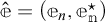 $\hat {\mathbb {e}}=(\mathbb {e}_n,\mathbb {e_n^\star })$
we will denote the standard Schauder basis of
$\hat {\mathbb {e}}=(\mathbb {e}_n,\mathbb {e_n^\star })$
we will denote the standard Schauder basis of $c_0$
. Note that
$c_0$
. Note that $\hat {\mathbb {e}}$
is also a Schauder basis of each
$\hat {\mathbb {e}}$
is also a Schauder basis of each $\ell _p$
,
$\ell _p$
, $1\leq p<\infty $
. It is known that
$1\leq p<\infty $
. It is known that $\hat {\mathbb {e}}$
is unconditional in
$\hat {\mathbb {e}}$
is unconditional in $c_0$
and in each
$c_0$
and in each $\ell _p$
,
$\ell _p$
, $1\leq p<\infty $
.
$1\leq p<\infty $
.
Lemma 1.4 (Folklore).
Let $\hat {\mathbb {u}}$
be an unconditional Schauder basis of X. If
$\hat {\mathbb {u}}$
be an unconditional Schauder basis of X. If $\sum _n a_n \mathbb {u}_n\in X$
and
$\sum _n a_n \mathbb {u}_n\in X$
and $(b_n)\subseteq \mathbb {K}$
is such that
$(b_n)\subseteq \mathbb {K}$
is such that $|b_n|\leq |a_n|$
, for every
$|b_n|\leq |a_n|$
, for every $n \in \omega $
, then
$n \in \omega $
, then ${\sum _n b_n \mathbb {u}_n \in X}$
.
${\sum _n b_n \mathbb {u}_n \in X}$
.
Proof. Since $\hat {\mathbb {u}}$
is unconditional, by [Reference Albiac and Kalton1, Proposition 3.1.3], there is
$\hat {\mathbb {u}}$
is unconditional, by [Reference Albiac and Kalton1, Proposition 3.1.3], there is $K\geq 1$
such that
$K\geq 1$
such that
 $$\begin{align*}\left\| \sum_{i=0}^n c_i \mathbb{u}_i \right\|_X \leq K \left\| \sum_{i=0}^n d_i \mathbb{u}_i \right\|_X, \end{align*}$$
for all $n\in \omega $
and scalars
$n\in \omega $
and scalars $c_0,\ldots ,c_n,d_0,\ldots ,d_n$
such that
$c_0,\ldots ,c_n,d_0,\ldots ,d_n$
such that $|c_i|\leq |d_i|$
, for
$|c_i|\leq |d_i|$
, for $i\leq n$
.
$i\leq n$
.
Fix $n\in \omega $
. Then for any
$n\in \omega $
. Then for any $m>n$
$m>n$
 $$\begin{align*}\left\| \sum_{i=n}^m b_n \mathbb{u}_n \right\|_X \leq K \left\| \sum_{i=n}^m a_n \mathbb{u}_n \right\|_X \leq K^2 \left\| \sum_{i=n}^\infty a_n \mathbb{u}_n \right\|_X \xrightarrow{n \to \infty} 0. \end{align*}$$
Therefore $ \sum _{n=0}^\infty b_n \mathbb {u}_n $
is convergent.
$ \sum _{n=0}^\infty b_n \mathbb {u}_n $
is convergent.
2 Ideal Schauder bases
2.1 Definition
Natural way for considering ideal version of Schauder bases is to simply demand $\mathbb {x}=\sum _{n,\mathcal {I}} \alpha _n \mathbb {e}_n$
instead of
$\mathbb {x}=\sum _{n,\mathcal {I}} \alpha _n \mathbb {e}_n$
instead of $\mathbb {x}=\sum _{n} \alpha _n \mathbb {e}_n$
in which case linear coordinate functionals also appear, yet their continuity is not so clear anymore (see [Reference Connor, Ganichev and Kadets4, Reference de Rancourt, Kania and Swaczyna6, Reference Kania and Swaczyna12, Reference Kochanek13] for more detailed discussion of this issue). Some informations about general properties of ideal bases may be found also in [Reference Ganichev, Kadets and Banakh10]. Since throughout the presented article we find fixing coordinate functionals convenient, therefore we consider the following definition.
$\mathbb {x}=\sum _{n} \alpha _n \mathbb {e}_n$
in which case linear coordinate functionals also appear, yet their continuity is not so clear anymore (see [Reference Connor, Ganichev and Kadets4, Reference de Rancourt, Kania and Swaczyna6, Reference Kania and Swaczyna12, Reference Kochanek13] for more detailed discussion of this issue). Some informations about general properties of ideal bases may be found also in [Reference Ganichev, Kadets and Banakh10]. Since throughout the presented article we find fixing coordinate functionals convenient, therefore we consider the following definition.
We say that $\hat {\mathbb {a}}=(\mathbb {a}_n,\mathbb {a}^\star _n)\subseteq X\times \mathbb {K}^X$
is a biorthogonal system in a normed vector space X if
$\hat {\mathbb {a}}=(\mathbb {a}_n,\mathbb {a}^\star _n)\subseteq X\times \mathbb {K}^X$
is a biorthogonal system in a normed vector space X if $(\mathbb {a}_n)$
is a sequence of vectors in X and
$(\mathbb {a}_n)$
is a sequence of vectors in X and $\mathbb {a}^\star _n:X\to \mathbb {K}$
are (possibly discontinuous, yet such examples will not appear in the presented article) functionals biorthogonal to the
$\mathbb {a}^\star _n:X\to \mathbb {K}$
are (possibly discontinuous, yet such examples will not appear in the presented article) functionals biorthogonal to the $\mathbb {a}_n$
’s, i.e.,
$\mathbb {a}_n$
’s, i.e.,
 $$\begin{align*}\mathbb{a}^\star_n(\mathbb{a}_m)=\delta_{nm}=\begin{cases} 1, & \text{if }n=m,\\ 0, & \text{if }n\neq m. \end{cases} \end{align*}$$
Note that the biorthogonality assumption reflects the equality $\mathbb {a}_n=\mathbb {a}_n +\sum _{m\neq n} 0\cdot \mathbb {a}_m$
. For such biorthogonal system we denote:
$\mathbb {a}_n=\mathbb {a}_n +\sum _{m\neq n} 0\cdot \mathbb {a}_m$
. For such biorthogonal system we denote:
 $$\begin{align*}S_n(\hat{\mathbb{a}})(\mathbb{x})=\sum_{i=0}^n \mathbb{a}_i^\star(\mathbb{x}) \mathbb{a}_i, \end{align*}$$
for all $\mathbb {x}\in X$
and
$\mathbb {x}\in X$
and $n\in \omega $
.
$n\in \omega $
.
Definition 2.1. Fix a Banach space X. A biorthogonal system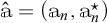 $\hat {\mathbb {a}}=(\mathbb {a}_n,\mathbb {a}^\star _n)$
is an
$\hat {\mathbb {a}}=(\mathbb {a}_n,\mathbb {a}^\star _n)$
is an $\mathcal {I}$
-Schauder basis of X if:
$\mathcal {I}$
-Schauder basis of X if:
-
• for every
$\mathbb {x}\in X$
and
$\varepsilon>0$
that is,
$$\begin{align*}\{n\in\omega: \|\mathbb{x}-S_n(\hat{\mathbb{a}})(\mathbb{x})\|_X\geq\varepsilon\}\in\mathcal{I}, \end{align*}$$
$\mathbb {x}=\sum _{n,\mathcal {I}} \mathbb {a}^\star _n(\mathbb {x})\mathbb {a}_n$
for every
$\mathbb {x}\in X$
,
-
• the functionals
$\mathbb {a}^\star _n$
are unique, that is, if
$\mathbb {x}=\sum _{n,\mathcal {I}} \beta _n\mathbb {a}_n$
, for some
$\mathbb {x}\in X$
and sequence of scalars
$(\beta _n)$
, then
$\beta _n=\mathbb {a}^\star _n(\mathbb {x})$
for every
$n\in \omega $
.








We say that $\hat {\mathbb {a}}$
is an ideal Schauder basis of X if there exists an ideal
$\hat {\mathbb {a}}$
is an ideal Schauder basis of X if there exists an ideal $\mathcal {I}$
such that
$\mathcal {I}$
such that $\hat {\mathbb {a}}$
is an
$\hat {\mathbb {a}}$
is an $\mathcal {I}$
-Schauder basis.
$\mathcal {I}$
-Schauder basis.
Now we will explain why uniqueness of coefficients (second item of the above definition) is not a big deal in the context of presented article (however, note that in general there might be an issue if some of $\mathbb {a}_n^\star $
’s would not be continuous). Our reasoning is the same as in the case of standard bases (see, e.g., [Reference Albiac and Kalton1, Definition 1.1.2, Theorem 1.1.3]) and follows directly from [Reference Avilés, Rosendal, Taylor and Tradacete2, Lemma 1.16]. Yet [Reference Avilés, Rosendal, Taylor and Tradacete2] skips the proof of that lemma, and for the convenience of Readers less familiar with Banach Space Theory, we decided to provide more detailed explanation below.
$\mathbb {a}_n^\star $
’s would not be continuous). Our reasoning is the same as in the case of standard bases (see, e.g., [Reference Albiac and Kalton1, Definition 1.1.2, Theorem 1.1.3]) and follows directly from [Reference Avilés, Rosendal, Taylor and Tradacete2, Lemma 1.16]. Yet [Reference Avilés, Rosendal, Taylor and Tradacete2] skips the proof of that lemma, and for the convenience of Readers less familiar with Banach Space Theory, we decided to provide more detailed explanation below.
Lemma 2.2. Let $(\mathbb {a}_n)$
be such a sequence in some Banach space X that
$(\mathbb {a}_n)$
be such a sequence in some Banach space X that $\mathbb {a}_n\notin \overline {\operatorname {span}\{\mathbb {a}_m:m \neq n\}}$
for every
$\mathbb {a}_n\notin \overline {\operatorname {span}\{\mathbb {a}_m:m \neq n\}}$
for every $n \in \omega $
(such a sequence is called minimal). Fix two sequences of scalars
$n \in \omega $
(such a sequence is called minimal). Fix two sequences of scalars $(\alpha _n)$
and
$(\alpha _n)$
and $(\beta _n)$
. Then for every
$(\beta _n)$
. Then for every $l\in \omega $
such that
$l\in \omega $
such that $\alpha _l\neq \beta _l$
there exists
$\alpha _l\neq \beta _l$
there exists $\varepsilon>0$
such that
$\varepsilon>0$
such that $\|\sum _{i=0}^k \alpha _i\mathbb {a}_i - \sum _{i=0}^{k'} \beta _i\mathbb {a}_i\|_X>\varepsilon $
for every
$\|\sum _{i=0}^k \alpha _i\mathbb {a}_i - \sum _{i=0}^{k'} \beta _i\mathbb {a}_i\|_X>\varepsilon $
for every $k,k'>l$
.
$k,k'>l$
.
Proof. Note that $\sum _{i=0}^k \alpha _i\mathbb {a}_i - \sum _{i=0}^{k'} \beta _i\mathbb {a}_i=(\alpha _l-\beta _l)\mathbb {a}_l-\mathbb {b}$
for some
$\sum _{i=0}^k \alpha _i\mathbb {a}_i - \sum _{i=0}^{k'} \beta _i\mathbb {a}_i=(\alpha _l-\beta _l)\mathbb {a}_l-\mathbb {b}$
for some $\mathbb {b}\in \operatorname {span}\{\mathbb {a}_m:m \neq l\}$
. Thus
$\mathbb {b}\in \operatorname {span}\{\mathbb {a}_m:m \neq l\}$
. Thus
 $$\begin{align*}\left\|\sum_{i=0}^k \alpha_i\mathbb{a}_i - \sum_{i=0}^{k'} \beta_i\mathbb{a}_i\right\|_X\geq \operatorname{dist}\left((\alpha_l-\beta_l)\mathbb{a}_l, \overline{\operatorname{span}\{\mathbb{a}_m:m \neq l\}}\right)>0. \end{align*}$$
Note that the distance above does not depend on k and $k'$
.
$k'$
.
Proposition 2.3. Let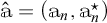 $\hat {\mathbb {a}}=(\mathbb {a}_n,\mathbb {a}^\star _n)$
be a biorthogonal system in a Banach space X and
$\hat {\mathbb {a}}=(\mathbb {a}_n,\mathbb {a}^\star _n)$
be a biorthogonal system in a Banach space X and $\mathbb {x}\in X$
. Assume that all
$\mathbb {x}\in X$
. Assume that all $\mathbb {a}^\star _n$
are continuous and there are two nontrivial ideals
$\mathbb {a}^\star _n$
are continuous and there are two nontrivial ideals $\mathcal {I}$
and
$\mathcal {I}$
and $\mathcal {J}$
such that:
$\mathcal {J}$
such that:
 $$\begin{align*}\mathbb{x}=\sum_{n,\mathcal{I}} \mathbb{a}^\star_n(\mathbb{x}) \mathbb{a}_n= \sum_{n,\mathcal{J}} \beta_n \mathbb{a}_n. \end{align*}$$
Then $\mathbb {a}_n^\star (x)=\beta _n$
for every
$\mathbb {a}_n^\star (x)=\beta _n$
for every $n\in \omega $
.
$n\in \omega $
.
Proof. Note that if $n\neq m$
then the condition
$n\neq m$
then the condition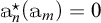 $\mathbb {a}^\star _n(\mathbb {a}_m)=0$
implies
$\mathbb {a}^\star _n(\mathbb {a}_m)=0$
implies $\mathbb {a}_m\in \operatorname {Ker}(\mathbb {a}^\star _n)$
. By the continuity of
$\mathbb {a}_m\in \operatorname {Ker}(\mathbb {a}^\star _n)$
. By the continuity of $\mathbb {a}_n^\star $
,
$\mathbb {a}_n^\star $
, $\operatorname {Ker}(\mathbb {a}^\star _n)$
is closed, so
$\operatorname {Ker}(\mathbb {a}^\star _n)$
is closed, so $\overline {\operatorname {span}\{\mathbb {a}_m: m \neq n\}}\subseteq \operatorname {Ker}(\mathbb {a}^\star _n)$
. Since
$\overline {\operatorname {span}\{\mathbb {a}_m: m \neq n\}}\subseteq \operatorname {Ker}(\mathbb {a}^\star _n)$
. Since $\mathbb {a}_n^\star (\mathbb {a}_n)=1$
, we obtain
$\mathbb {a}_n^\star (\mathbb {a}_n)=1$
, we obtain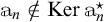 $\mathbb {a}_n \notin \operatorname {Ker}\mathbb {a}^\star _n$
for every n. If
$\mathbb {a}_n \notin \operatorname {Ker}\mathbb {a}^\star _n$
for every n. If $\beta _n\neq \mathbb {a}_n^\star (\mathbb {x})$
for some
$\beta _n\neq \mathbb {a}_n^\star (\mathbb {x})$
for some $\mathbb {x}\in X$
and
$\mathbb {x}\in X$
and $n\in \omega $
, then, by Lemma 2.2, there is some
$n\in \omega $
, then, by Lemma 2.2, there is some $\varepsilon>0$
such that
$\varepsilon>0$
such that
 $$\begin{align*}\left\|\sum_{i=0}^k \mathbb{a}^\star_i(\mathbb{x}) \mathbb{a}_i- \sum_{i=0}^{k'} \beta_i \mathbb{a}_i \right\|>\varepsilon, \end{align*}$$
for every $k,k'>n$
. But since
$k,k'>n$
. But since $\mathbb {x}=\sum _{n,\mathcal {I}} \mathbb {a}^\star _n(\mathbb {x}) \mathbb {a}_n$
and
$\mathbb {x}=\sum _{n,\mathcal {I}} \mathbb {a}^\star _n(\mathbb {x}) \mathbb {a}_n$
and $\mathcal {I}\neq P(\omega )$
, there exists
$\mathcal {I}\neq P(\omega )$
, there exists $k>n$
such that
$k>n$
such that
 $$\begin{align*}\left\|\mathbb{x}-\sum_{i=0}^k \mathbb{a}^\star_i(\mathbb{x}) \mathbb{a}_i\right\|<\frac{\varepsilon}{2}, \end{align*}$$
hence
 $$\begin{align*}\left\|\mathbb{x}-\sum_{i=0}^{k'} \beta_i \mathbb{a}_i\right\|>\frac{\varepsilon}{2}, \end{align*}$$
for all $k'>n$
, contradicting
$k'>n$
, contradicting $\mathbb {x}= \sum _{n,\mathcal {J}} \beta _i \mathbb {a}_n$
.
$\mathbb {x}= \sum _{n,\mathcal {J}} \beta _i \mathbb {a}_n$
.
In our considerations we will use the above result without any reference. In particular, while constructing new ideal Schauder bases, we will not check whether second item of Definition 2.1 is satisfied, as in all our cases the functionals $\mathbb {a}^\star _n$
are continuous.
$\mathbb {a}^\star _n$
are continuous.
Above considerations lead us to some useful corollaries.
Corollary 2.4. Let X be a Banach space and $\mathcal {I}$
be a nontrivial ideal. Assume that
$\mathcal {I}$
be a nontrivial ideal. Assume that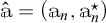 $\hat {\mathbb {a}}=(\mathbb {a}_n,\mathbb {a}^\star _n)$
is an
$\hat {\mathbb {a}}=(\mathbb {a}_n,\mathbb {a}^\star _n)$
is an $\mathcal {I}$
-Schauder basis of X. If
$\mathcal {I}$
-Schauder basis of X. If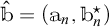 $\hat {\mathbb {b}}=(\mathbb {a}_n,\mathbb {b}^\star _n)$
is also a
$\hat {\mathbb {b}}=(\mathbb {a}_n,\mathbb {b}^\star _n)$
is also a $\mathcal {J}$
-Schauder basis of X, for some nontrivial ideal
$\mathcal {J}$
-Schauder basis of X, for some nontrivial ideal $\mathcal {J}$
(in particular, for
$\mathcal {J}$
(in particular, for $\mathcal {J}=\mathcal {I}$
),
$\mathcal {J}=\mathcal {I}$
), $\mathbb {a}_n^\star =\mathbb {b}_n^\star $
for every n.
$\mathbb {a}_n^\star =\mathbb {b}_n^\star $
for every n.
Proof. Follows from Proposition 2.3.
One could summarize above corollary as “Within the class of ideal bases admitting continuous coordinate functionals, coordinates depends only on the sequence itself, regardless the choice of ideal”.
Corollary 2.5. Let X be a Banach space and $\mathcal {I}$
be a nontrivial analytic ideal. Assume that
$\mathcal {I}$
be a nontrivial analytic ideal. Assume that $(\mathbb {a}_n)\subseteq X$
is such that for every
$(\mathbb {a}_n)\subseteq X$
is such that for every $\mathbb {x}\in X$
there exists a unique sequence of scalars
$\mathbb {x}\in X$
there exists a unique sequence of scalars $(\alpha _{n,\mathbb {x}})$
such that
$(\alpha _{n,\mathbb {x}})$
such that $\mathbb {x}=\sum _{n,\mathcal {I}}\alpha _{n,\mathbb {x}} \mathbb {a}_n$
. If for a nontrivial ideal
$\mathbb {x}=\sum _{n,\mathcal {I}}\alpha _{n,\mathbb {x}} \mathbb {a}_n$
. If for a nontrivial ideal $\mathcal {J}$
and
$\mathcal {J}$
and $\mathbb {x}\in X$
there is a sequence of scalars
$\mathbb {x}\in X$
there is a sequence of scalars $(\beta _n)$
such that
$(\beta _n)$
such that $\mathbb {x}=\sum _{n,\mathcal {J}}\beta _n \mathbb {a}_n$
, then
$\mathbb {x}=\sum _{n,\mathcal {J}}\beta _n \mathbb {a}_n$
, then $(\beta _n)=(\alpha _{n,\mathbb {x}})$
.
$(\beta _n)=(\alpha _{n,\mathbb {x}})$
.
Proof. Follows from Proposition 2.3 and [Reference de Rancourt, Kania and Swaczyna6, Theorem A].
Clearly the definition of Schauder basis may be considered also in a normed vector space, and we will do so in Section 10.
2.2 Critical ideal
For each Banach space X and each $\hat {\mathbb {a}}=(\mathbb {a}_n,\mathbb {a}^\star _n)\subseteq X\times \mathbb {K}^X$
there is an ideal
$\hat {\mathbb {a}}=(\mathbb {a}_n,\mathbb {a}^\star _n)\subseteq X\times \mathbb {K}^X$
there is an ideal $\mathcal {CR}(X,\hat {\mathbb {a}})$
on
$\mathcal {CR}(X,\hat {\mathbb {a}})$
on $\omega $
such that the following are equivalent for every ideal
$\omega $
such that the following are equivalent for every ideal $\mathcal {I}$
on
$\mathcal {I}$
on $\omega $
:
$\omega $
:
-
• for every
$\mathbb {x}\in X$
,
$\mathbb {x}=\sum _{n,\mathcal {I}}, \mathbb {a}_n^\star (\mathbb {x})$
; -
•
$\mathcal {CR}(X,\hat {\mathbb {a}})\subseteq \mathcal {I}$
.



The existence of $\mathcal {CR}(X,\hat {\mathbb {a}})$
follows from (see [Reference Avilés, Rosendal, Taylor and Tradacete2, Lemma 3.1]) if
$\mathcal {CR}(X,\hat {\mathbb {a}})$
follows from (see [Reference Avilés, Rosendal, Taylor and Tradacete2, Lemma 3.1]) if $\hat {\mathbb {a}}$
is an ideal Schauder basis of X. In such a case,
$\hat {\mathbb {a}}$
is an ideal Schauder basis of X. In such a case, $\hat {\mathbb {a}}$
is a
$\hat {\mathbb {a}}$
is a $\mathcal {CR}(X,\hat {\mathbb {a}})$
-basis of X. In other case it is straightforward to verify that
$\mathcal {CR}(X,\hat {\mathbb {a}})$
-basis of X. In other case it is straightforward to verify that $\mathcal {CR}(X,\hat {\mathbb {a}})=\mathcal {P}(\omega )$
. Obviously, if
$\mathcal {CR}(X,\hat {\mathbb {a}})=\mathcal {P}(\omega )$
. Obviously, if $\mathcal {CR}(X,\hat {\mathbb {a}})=\mathrm {Fin}$
, then
$\mathcal {CR}(X,\hat {\mathbb {a}})=\mathrm {Fin}$
, then $\hat {\mathbb {a}}$
is a Schauder basis of X.
$\hat {\mathbb {a}}$
is a Schauder basis of X.
2.3 Simple ideal Schauder bases
In this article we are mainly interested in ideal Schauder bases of a special form.
We say that a function $h:D\to \omega $
, where
$h:D\to \omega $
, where $D\subseteq \omega $
, is interval-to-one if
$D\subseteq \omega $
, is interval-to-one if $h^{-1}[\{k\}]$
is either empty or an interval contained in D, for every
$h^{-1}[\{k\}]$
is either empty or an interval contained in D, for every $k\in \omega $
.
$k\in \omega $
.
Definition 2.6. Fix a normed vector space X and a biorthogonal system $\hat {\mathbb {u}}=(\mathbb {u}_n,\mathbb {u}^\star _n)\subseteq X\times X^\star $
of X. We say that a biorthogonal system
$\hat {\mathbb {u}}=(\mathbb {u}_n,\mathbb {u}^\star _n)\subseteq X\times X^\star $
of X. We say that a biorthogonal system $\hat {\mathbb {a}}=(\mathbb {a}_n,\mathbb {a}^\star _n)\subseteq X\times X^\star $
is simple over
$\hat {\mathbb {a}}=(\mathbb {a}_n,\mathbb {a}^\star _n)\subseteq X\times X^\star $
is simple over $\hat {\mathbb {u}}$
if there are
$\hat {\mathbb {u}}$
if there are $D\subseteq \omega $
, an interval-to-one
$D\subseteq \omega $
, an interval-to-one $h:D\to \omega $
and
$h:D\to \omega $
and $(\mathbb {b}_n)_{n\in h[D]}\subseteq X\setminus \{0\}$
such that:
$(\mathbb {b}_n)_{n\in h[D]}\subseteq X\setminus \{0\}$
such that:
 $$\begin{align*}S_n(\hat{\mathbb{u}})(\mathbb{x})-S_n(\hat{\mathbb{a}})(\mathbb{x})= \begin{cases} 0, & \text{if }n\in\omega\setminus D,\\ \mathbb{u}_{h(n)}^\star(\mathbb{x})\mathbb{b}_{h(n)}, & \text{if }n\in D, \end{cases} \end{align*}$$
for all $n\in \omega $
and
$n\in \omega $
and $\mathbb {x}\in X$
. In such cases we sometimes say that
$\mathbb {x}\in X$
. In such cases we sometimes say that $\hat {\mathbb {a}}$
is
$\hat {\mathbb {a}}$
is $(D,h,(\mathbb {b}_n))$
-simple over
$(D,h,(\mathbb {b}_n))$
-simple over $\hat {\mathbb {u}}$
, if we need to refer to those parameters.
$\hat {\mathbb {u}}$
, if we need to refer to those parameters.
In particular, if X is a Banach space and $\hat {\mathbb {u}}$
is a
$\hat {\mathbb {u}}$
is a $\mathrm {Fin}$
-Schauder basis of X, then for a given ideal
$\mathrm {Fin}$
-Schauder basis of X, then for a given ideal $\mathcal {I}$
,
$\mathcal {I}$
, $(S_n(\hat {\mathbb {a}})(\mathbb {x}))$
is
$(S_n(\hat {\mathbb {a}})(\mathbb {x}))$
is $\mathcal {I}$
-convergent to
$\mathcal {I}$
-convergent to $\mathbb {x}$
if and only if
$\mathbb {x}$
if and only if $(\mathbb {u}_{h(n)}^\star (\mathbb {x})\mathbb {b}_{h(n)})_{n\in D}$
is
$(\mathbb {u}_{h(n)}^\star (\mathbb {x})\mathbb {b}_{h(n)})_{n\in D}$
is $\mathcal {I}\restriction D$
-convergent to zero in X.
$\mathcal {I}\restriction D$
-convergent to zero in X.
Although the above definition may be considered technical, we decided to restrict our considerations to such ideal Schauder bases for two reasons: all our examples are of this form and this special form enabled us to classify all such ideal Schauder bases in standard Banach spaces.
Next result, in some sense, allows us to consider only a special class of Banach spaces.
Proposition 2.7. If $\hat {\mathbb {c}}$
is simple over some normed
$\hat {\mathbb {c}}$
is simple over some normed $\mathrm {Fin}$
-Schauder basis
$\mathrm {Fin}$
-Schauder basis $\hat {\mathbb {u}}$
(that is,
$\hat {\mathbb {u}}$
(that is, $\|\mathbb {u}_n\|=1$
for each n) of some Banach space Y over
$\|\mathbb {u}_n\|=1$
for each n) of some Banach space Y over $\mathbb {R}$
, then
$\mathbb {R}$
, then $\mathcal {CR}(Y,\hat {\mathbb {c}})=\mathcal {CR}(X,\hat {\mathbb {a}})$
for some Banach space
$\mathcal {CR}(Y,\hat {\mathbb {c}})=\mathcal {CR}(X,\hat {\mathbb {a}})$
for some Banach space $\ell _1\subseteq X\subseteq c_0$
(equipped in coordinate-wise addition and multiplication by scalars) and some
$\ell _1\subseteq X\subseteq c_0$
(equipped in coordinate-wise addition and multiplication by scalars) and some $\hat {\mathbb {a}}$
simple over
$\hat {\mathbb {a}}$
simple over $\hat {\mathbb {e}}$
. Moreover:
$\hat {\mathbb {e}}$
. Moreover:
-
(i)
$\hat {\mathbb {u}}$
is unconditional in Y if and only if
$\hat {\mathbb {e}}$
is unconditional in X; -
(ii) the topology on X is stronger than the topology inherited from
$c_0$
; -
(iii) the topology on X is weaker than
$\ell _1$
topology on X (understood as topology generated by sets of the form
$B((x_n),r)=\{(y_n)\in X : \sum _{n\in \omega } |x_n-y_n|<r\}$
).



Proof. If Y is an arbitrary Banach space over $\mathbb {R}$
and
$\mathbb {R}$
and $\hat {\mathbb {u}}$
is its
$\hat {\mathbb {u}}$
is its $\mathrm {Fin}$
-Schauder basis, then consider:
$\mathrm {Fin}$
-Schauder basis, then consider:
 $$\begin{align*}X=\left\{\mathbb{x}\in\mathbb{R}^\omega: \sum_{n\in\omega}x_n\mathbb{u}_n\in Y\right\}\!, \end{align*}$$
normed by:
 $$\begin{align*}\|\mathbb{x}\|_X=\left\|\sum_{n\in\omega}x_n\mathbb{u}_n\right\|_Y, \end{align*}$$
for all $\mathbb {x}\in X$
. Then X is a Banach space and
$\mathbb {x}\in X$
. Then X is a Banach space and $\ell _1\subseteq X\subseteq c_0$
.
$\ell _1\subseteq X\subseteq c_0$
.
If $\hat {\mathbb {c}}$
is simple over
$\hat {\mathbb {c}}$
is simple over $\hat {\mathbb {u}}$
, then
$\hat {\mathbb {u}}$
, then $\mathcal {CR}(Y,\hat {\mathbb {c}})=\mathcal {CR}(X,\hat {\mathbb {a}})$
, where
$\mathcal {CR}(Y,\hat {\mathbb {c}})=\mathcal {CR}(X,\hat {\mathbb {a}})$
, where $\hat {\mathbb {a}}$
is simple over
$\hat {\mathbb {a}}$
is simple over $\hat {\mathbb {e}}$
with the same witnessing D,
$\hat {\mathbb {e}}$
with the same witnessing D, $h,$
and
$h,$
and $(\mathbb {b}_n)$
as for
$(\mathbb {b}_n)$
as for $\hat {\mathbb {c}}$
and
$\hat {\mathbb {c}}$
and $\hat {\mathbb {u}}$
.
$\hat {\mathbb {u}}$
.
Item (i) follows from the fact that X and Y are isometric (by the isometry that moves $\hat {\mathbb {e}}$
to
$\hat {\mathbb {e}}$
to $\hat {\mathbb {u}}$
). To show item (ii), observe that for any
$\hat {\mathbb {u}}$
). To show item (ii), observe that for any $\mathbb {x}_n, \mathbb {x}\in X$
and any
$\mathbb {x}_n, \mathbb {x}\in X$
and any $k\in \mathbb {N}$
we have:
$k\in \mathbb {N}$
we have:
 $$ \begin{align*} |\mathbb{u}^\star_{k+1}(\mathbb{x}_n-\mathbb{x})| & = \|\mathbb{u}^\star_{k+1}(\mathbb{x}_n-\mathbb{x})\mathbb{u}_{k+1}\|_X = \|S_{k+1}(\hat{\mathbb{u}}) (\mathbb{x}_{n}-\mathbb{x})- S_{k}(\hat{\mathbb{u}}) (\mathbb{x}_{n}-\mathbb{x})\|_X \cr & = \|(S_{k+1}-S_k)(\hat{\mathbb{u}}) (\mathbb{x}_{n}-\mathbb{x})\|_X \leq 2K \|\mathbb{x}_{n}-\mathbb{x}\|_X, \end{align*} $$
where K is the basis constant of $\hat {\mathbb {u}}$
(see [Reference Albiac and Kalton1, Proposition 1.1.4 and Definition 1.1.5]). The final claim is clear.
$\hat {\mathbb {u}}$
(see [Reference Albiac and Kalton1, Proposition 1.1.4 and Definition 1.1.5]). The final claim is clear.
3 Some lemmas
Lemma 3.1. Let $\hat {\mathbb {a}}$
be
$\hat {\mathbb {a}}$
be $(D,h,(\mathbb {b}_n))$
-simple over a
$(D,h,(\mathbb {b}_n))$
-simple over a $\mathrm {Fin}$
-Schauder basis
$\mathrm {Fin}$
-Schauder basis $\hat {\mathbb {u}}$
of a Banach space X. Then
$\hat {\mathbb {u}}$
of a Banach space X. Then $\mathcal {CR}(X,\hat {\mathbb {a}})$
is the ideal on
$\mathcal {CR}(X,\hat {\mathbb {a}})$
is the ideal on $\omega $
generated by
$\omega $
generated by $\mathrm {Fin}$
and all sets of the form
$\mathrm {Fin}$
and all sets of the form
 $$\begin{align*}A_{\mathbb{x}}=\left\{n\in D: |\mathbb{u}^\star_{h(n)}(\mathbb{x})|\geq\frac{1}{\|\mathbb{b}_{h(n)}\|_X}\right\}\!, \end{align*}$$
for $\mathbb {x}\in X$
.
$\mathbb {x}\in X$
.
Proof. Let $\hat {\mathcal {J}}(X,\hat {\mathbb {u}},\hat {\mathbb {a}})$
be the ideal on
$\hat {\mathcal {J}}(X,\hat {\mathbb {u}},\hat {\mathbb {a}})$
be the ideal on $\omega $
generated by
$\omega $
generated by $\mathrm {Fin}$
and all sets of the form
$\mathrm {Fin}$
and all sets of the form $A_{\mathbb {x}}$
, for
$A_{\mathbb {x}}$
, for $\mathbb {x}\in X$
. We need to show that the following are equivalent for any ideal
$\mathbb {x}\in X$
. We need to show that the following are equivalent for any ideal $\mathcal {I}$
on
$\mathcal {I}$
on $\omega $
:
$\omega $
:
-
(a) for every
$\mathbb {x}\in X$
,
$\mathbb {x}=\sum _{n,\mathcal {I}}, \mathbb {a}_n^\star (\mathbb {x})$
; -
(b)
$\hat {\mathcal {J}}(X,\hat {\mathbb {u}},\hat {\mathbb {a}})\subseteq \mathcal {I}$
.



(a) $\implies $
(b): Assume that
$\implies $
(b): Assume that $\hat {\mathcal {J}}(X,\hat {\mathbb {u}},\hat {\mathbb {a}})\not \subseteq \mathcal {I}$
. Then there exists an
$\hat {\mathcal {J}}(X,\hat {\mathbb {u}},\hat {\mathbb {a}})\not \subseteq \mathcal {I}$
. Then there exists an ${A\in \hat {\mathcal {J}}(X,\hat {\mathbb {u}},\hat {\mathbb {a}})\setminus \mathcal {I}}$
. Hence, there are
${A\in \hat {\mathcal {J}}(X,\hat {\mathbb {u}},\hat {\mathbb {a}})\setminus \mathcal {I}}$
. Hence, there are $F\in \mathrm {Fin}$
,
$F\in \mathrm {Fin}$
, $k\in \omega $
and
$k\in \omega $
and $\mathbb {x}_0,\ldots ,\mathbb {x}_k\in X$
such that
$\mathbb {x}_0,\ldots ,\mathbb {x}_k\in X$
such that $A\subseteq F\cup A_{\mathbb {x}_0}\cup \ldots \cup A_{\mathbb {x}_k}$
. Since
$A\subseteq F\cup A_{\mathbb {x}_0}\cup \ldots \cup A_{\mathbb {x}_k}$
. Since $A\notin \mathcal {I}$
, we can find
$A\notin \mathcal {I}$
, we can find $j\leq k$
such that
$j\leq k$
such that $A_{\mathbb {x}_j}\notin \mathcal {I}$
. Observe that
$A_{\mathbb {x}_j}\notin \mathcal {I}$
. Observe that $(\mathbb {u}_{h(n)}^\star (\mathbb {x}_j)\mathbb {b}_{h(n)})_{n\in D}$
is not
$(\mathbb {u}_{h(n)}^\star (\mathbb {x}_j)\mathbb {b}_{h(n)})_{n\in D}$
is not $\mathcal {I}\restriction D$
-convergent to zero, as:
$\mathcal {I}\restriction D$
-convergent to zero, as:
 $$\begin{align*}\{n\in D: \|\mathbb{u}_{h(n)}^\star(\mathbb{x}_j)\mathbb{b}_{h(n)}\|_X\geq 1\}=A_{\mathbb{x}_j}\notin\mathcal{I}. \end{align*}$$
Thus, $\hat {\mathbb {a}}$
is not an
$\hat {\mathbb {a}}$
is not an $\mathcal {I}$
-Schauder basis of X.
$\mathcal {I}$
-Schauder basis of X.
(b) $\implies $
(a): Assume that
$\implies $
(a): Assume that $\hat {\mathcal {J}}(X,\hat {\mathbb {u}},\hat {\mathbb {a}})\subseteq \mathcal {I}$
and fix any
$\hat {\mathcal {J}}(X,\hat {\mathbb {u}},\hat {\mathbb {a}})\subseteq \mathcal {I}$
and fix any $\mathbb {x}\in X$
and
$\mathbb {x}\in X$
and $\varepsilon>0$
. Then
$\varepsilon>0$
. Then $\frac {\mathbb {x}}{\varepsilon }\in X$
, so
$\frac {\mathbb {x}}{\varepsilon }\in X$
, so $A_{\frac {\mathbb {x}}{\varepsilon }}\in \hat {\mathcal {J}}(X,\hat {\mathbb {u}},\hat {\mathbb {a}})\subseteq \mathcal {I}$
. To finish the proof, note that:
$A_{\frac {\mathbb {x}}{\varepsilon }}\in \hat {\mathcal {J}}(X,\hat {\mathbb {u}},\hat {\mathbb {a}})\subseteq \mathcal {I}$
. To finish the proof, note that:
 $$\begin{align*}\{n\in D: \|\mathbb{u}_{h(n)}^\star(\mathbb{x})\mathbb{b}_{h(n)}\|_X\geq \varepsilon\}=\left\{n\in D: \left|\mathbb{u}_{h(n)}^\star\left(\frac{\mathbb{x}}{\varepsilon}\right)\right|\geq \frac{1}{\|\mathbb{b}_{h(n)}\|_X}\right\}=A_{\frac{\mathbb{x}}{\varepsilon}}. \end{align*}$$
Remark 3.2. Note that the above lemma holds in all normed spaces. We will use this fact in Section 10.
Lemma 3.3. Let $\hat {\mathbb {u}}$
be an unconditional
$\hat {\mathbb {u}}$
be an unconditional $\mathrm {Fin}$
-Schauder basis of some Banach space X. Assume that
$\mathrm {Fin}$
-Schauder basis of some Banach space X. Assume that $\hat {\mathbb {a}}$
is
$\hat {\mathbb {a}}$
is $(D,h,(\mathbb {b}_n))$
-simple over
$(D,h,(\mathbb {b}_n))$
-simple over $\hat {\mathbb {u}}$
. Then:
$\hat {\mathbb {u}}$
. Then:
 $$\begin{align*}\mathcal{CR}(X,\hat{\mathbb{a}})=\left\{A\subseteq\omega: A\setminus D\in\mathrm{Fin}\text{ and }\sum_{k\in h[A\cap D]}\frac{\mathbb{u}_{k}}{\|\mathbb{b}_{k}\|_X}\in X\right\}\!. \end{align*}$$
Proof. By Lemma 3.1, $\mathcal {CR}(X,\hat {\mathbb {a}})$
is the ideal on
$\mathcal {CR}(X,\hat {\mathbb {a}})$
is the ideal on $\omega $
generated by
$\omega $
generated by $\mathrm {Fin}$
and all sets of the form
$\mathrm {Fin}$
and all sets of the form
 $$\begin{align*}A_{\mathbb{x}}=\left\{n\in D: |\mathbb{u}^\star_{h(n)}(\mathbb{x})|\geq\frac{1}{\|\mathbb{b}_{h(n)}\|_X}\right\}\!, \end{align*}$$
for $\mathbb {x}\in X$
. Let
$\mathbb {x}\in X$
. Let
 $$\begin{align*}\mathcal{J}(X,\hat{\mathbb{u}},\hat{\mathbb{a}})=\left\{A\subseteq\omega: A\setminus D\in\mathrm{Fin}\text{ and }\sum_{k\in h[A\cap D]}\frac{\mathbb{u}_{k}}{\|\mathbb{b}_{k}\|_X}\in X\right\}\!. \end{align*}$$
The inclusion $\mathcal {J}(X,\hat {\mathbb {u}},\hat {\mathbb {a}})\subseteq \mathcal {CR}(X,\hat {\mathbb {a}})$
is obvious, as
$\mathcal {J}(X,\hat {\mathbb {u}},\hat {\mathbb {a}})\subseteq \mathcal {CR}(X,\hat {\mathbb {a}})$
is obvious, as $A\in \mathcal {J}(X,\hat {\mathbb {u}},\hat {\mathbb {a}})$
means that
$A\in \mathcal {J}(X,\hat {\mathbb {u}},\hat {\mathbb {a}})$
means that $A\setminus D\in \mathrm {Fin}\subseteq \mathcal {CR}(X,\hat {\mathbb {a}})$
and
$A\setminus D\in \mathrm {Fin}\subseteq \mathcal {CR}(X,\hat {\mathbb {a}})$
and $\mathbb {x}=\sum _{k\in h[A\cap D]}\frac {\mathbb {u}_{k}}{\|\mathbb {b}_{k}\|_X}\in X$
, which gives us
$\mathbb {x}=\sum _{k\in h[A\cap D]}\frac {\mathbb {u}_{k}}{\|\mathbb {b}_{k}\|_X}\in X$
, which gives us $A\cap D\subseteq A_{\mathbb {x}}\in \mathcal {CR}(X,\hat {\mathbb {a}})$
.
$A\cap D\subseteq A_{\mathbb {x}}\in \mathcal {CR}(X,\hat {\mathbb {a}})$
.
Now we show $\mathcal {J}(X,\hat {\mathbb {u}},\hat {\mathbb {a}})\supseteq \mathcal {CR}(X,\hat {\mathbb {a}})$
. It is obvious that
$\mathcal {J}(X,\hat {\mathbb {u}},\hat {\mathbb {a}})\supseteq \mathcal {CR}(X,\hat {\mathbb {a}})$
. It is obvious that $\mathcal {CR}(X,\hat {\mathbb {a}})\restriction \omega \setminus D=\mathrm {Fin}\restriction \omega \setminus D\subseteq \mathcal {J}(X,\hat {\mathbb {u}},\hat {\mathbb {a}})$
.
$\mathcal {CR}(X,\hat {\mathbb {a}})\restriction \omega \setminus D=\mathrm {Fin}\restriction \omega \setminus D\subseteq \mathcal {J}(X,\hat {\mathbb {u}},\hat {\mathbb {a}})$
.
Let $A\in \mathcal {CR}(X,\hat {\mathbb {a}})\restriction D$
. Then there are
$A\in \mathcal {CR}(X,\hat {\mathbb {a}})\restriction D$
. Then there are $l\in \omega $
and
$l\in \omega $
and $\mathbb {x}_0,\ldots ,\mathbb {x}_l\in X$
such that
$\mathbb {x}_0,\ldots ,\mathbb {x}_l\in X$
such that $A\subseteq A_{\mathbb {x}_0}\cup \ldots \cup A_{\mathbb {x}_l}$
. Define
$A\subseteq A_{\mathbb {x}_0}\cup \ldots \cup A_{\mathbb {x}_l}$
. Define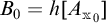 $B_0=h[A_{\mathbb {x}_0}]$
and
$B_0=h[A_{\mathbb {x}_0}]$
and $B_i=h[A_{\mathbb {x}_i}]\setminus \bigcup _{j<i}h[A_{\mathbb {x}_j}]$
for
$B_i=h[A_{\mathbb {x}_i}]\setminus \bigcup _{j<i}h[A_{\mathbb {x}_j}]$
for $i=1,\ldots ,l$
. Note that for each
$i=1,\ldots ,l$
. Note that for each $i\leq l$
, since
$i\leq l$
, since $\mathbb {x}_i\in X$
, we have:
$\mathbb {x}_i\in X$
, we have:
 $$\begin{align*}\mathbb{y}_i=\sum_{k\in B_i\cap h[A\cap D]}\mathbb{u}_{k}^\star(\mathbb{x}_i)\mathbb{u}_{k}\in X, \end{align*}$$
(by Lemma 1.4). Hence, also $\mathbb {z}_i=\sum _{k\in B_i\cap h[A\cap D]}\frac {\mathbb {u}_{k}}{\|\mathbb {b}_{k}\|}\in X$
(again, by Lemma 1.4). Finally, since the sets
$\mathbb {z}_i=\sum _{k\in B_i\cap h[A\cap D]}\frac {\mathbb {u}_{k}}{\|\mathbb {b}_{k}\|}\in X$
(again, by Lemma 1.4). Finally, since the sets $B_i$
are pairwise disjoint and
$B_i$
are pairwise disjoint and $h[A\cap D]=\bigcup _{i\leq l}h[A\cap D]\cap B_i$
, we get
$h[A\cap D]=\bigcup _{i\leq l}h[A\cap D]\cap B_i$
, we get $\sum _{k\in h[A\cap D]}\frac {\mathbb {u}_{k}}{\|\mathbb {b}_{k}\|}\in X$
.
$\sum _{k\in h[A\cap D]}\frac {\mathbb {u}_{k}}{\|\mathbb {b}_{k}\|}\in X$
.
Next example shows that in Lemma 3.3 the assumption about unconditionality of $\hat {\mathbb {u}}$
cannot be dropped.
$\hat {\mathbb {u}}$
cannot be dropped.
Example 3.4. Consider $\hat {\mathbb {u}}$
given by
$\hat {\mathbb {u}}$
given by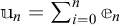 $\mathbb {u}_n = \sum _{i=0}^n \mathbb {e}_n $
and
$\mathbb {u}_n = \sum _{i=0}^n \mathbb {e}_n $
and $\mathbb {u}_n^\star =\mathbb {e}_n^\star - \mathbb {e}_{n+1}^\star $
, for all
$\mathbb {u}_n^\star =\mathbb {e}_n^\star - \mathbb {e}_{n+1}^\star $
, for all ${n\in \omega }$
, which is a non-unconditional
${n\in \omega }$
, which is a non-unconditional $\mathrm {Fin}$
-Schauder basis of
$\mathrm {Fin}$
-Schauder basis of $c_0$
(see [Reference Albiac and Kalton1, Example 3.1.2]).
$c_0$
(see [Reference Albiac and Kalton1, Example 3.1.2]).
Let $\hat {\mathbb {a}}$
be given by
$\hat {\mathbb {a}}$
be given by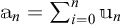 $\mathbb {a}_n = \sum _{i=0}^n \mathbb {u}_n $
and
$\mathbb {a}_n = \sum _{i=0}^n \mathbb {u}_n $
and $\mathbb {a}_n^\star =\mathbb {u}_n^\star - \mathbb {u}_{n+1}^\star $
, for all
$\mathbb {a}_n^\star =\mathbb {u}_n^\star - \mathbb {u}_{n+1}^\star $
, for all $n\in \omega $
.
$n\in \omega $
.
Observe that:
 $$\begin{align*}& S_n(\hat{\mathbb{a}})(\mathbb{x})=\sum_{i=0}^n (\mathbb{u}_i^\star-\mathbb{u}_{i+1}^\star) (\mathbb{x})\sum_{k=0}^i \mathbb{u}_k = \sum_{i=0}^n \mathbb{u}_i^\star (\mathbb{x}) \mathbb{u}_i - \mathbb{u}_{n+1}^\star(\mathbb{x}) \sum_{i=0}^n \mathbb{u}_i\\& \quad =S_n(\hat{\mathbb{u}})(\mathbb{x})-\mathbb{u}_{n+1}^\star(\mathbb{x}) \sum_{i=0}^n \mathbb{u}_i, \end{align*}$$
for any $\mathbb {x}\in c_0$
. Thus,
$\mathbb {x}\in c_0$
. Thus,
 $$\begin{align*}S_n(\hat{\mathbb{u}})(\mathbb{x})-S_n(\hat{\mathbb{a}})(\mathbb{x})=\mathbb{u}_{n+1}^\star(\mathbb{x}) \sum_{i=0}^n \mathbb{u}_i, \end{align*}$$
and $\hat {\mathbb {a}}$
is simple over
$\hat {\mathbb {a}}$
is simple over $\hat {\mathbb {u}}$
(as witnessed by
$\hat {\mathbb {u}}$
(as witnessed by $D=\omega $
,
$D=\omega $
, $h(n)=n+1$
and
$h(n)=n+1$
and $\mathbb {b}_{n+1}=\sum _{i=0}^n \mathbb {u}_i$
).
$\mathbb {b}_{n+1}=\sum _{i=0}^n \mathbb {u}_i$
).
Note that:
 $$\begin{align*}\omega\notin\left\{A\subseteq\omega: A\setminus D\in\mathrm{Fin}\text{ and }\sum_{k\in h[A\cap D]}\frac{\mathbb{u}_{k}}{\|\mathbb{b}_{k}\|_{c_0}}\in c_0\right\}\!. \end{align*}$$
Indeed, $\mathbb {x}=\sum _{k\in h[\omega ]}\frac {\mathbb {u}_{k}}{\|\mathbb {b}_k\|_{c_0}}=\sum _{n\in \omega }\frac {\mathbb {u}_{n+1}}{n+1}\notin c_0$
, since
$\mathbb {x}=\sum _{k\in h[\omega ]}\frac {\mathbb {u}_{k}}{\|\mathbb {b}_k\|_{c_0}}=\sum _{n\in \omega }\frac {\mathbb {u}_{n+1}}{n+1}\notin c_0$
, since $\mathbb {e}_0(\mathbb {x})=\sum _{n\in \omega }\frac {1}{n+1}=\infty $
.
$\mathbb {e}_0(\mathbb {x})=\sum _{n\in \omega }\frac {1}{n+1}=\infty $
.
We will show that $\omega \in \mathcal {CR}(c_0,\hat {\mathbb {a}})$
. Consider
$\omega \in \mathcal {CR}(c_0,\hat {\mathbb {a}})$
. Consider $\mathbb {x}=\sum _{n\in \omega }\frac {\mathbb {e}_{2n}}{n+1}\in c_0$
and
$\mathbb {x}=\sum _{n\in \omega }\frac {\mathbb {e}_{2n}}{n+1}\in c_0$
and $\mathbb {y}=\sum _{n\in \omega }\frac {\mathbb {e}_{2n+1}}{n+1}\in c_0$
. We have:
$\mathbb {y}=\sum _{n\in \omega }\frac {\mathbb {e}_{2n+1}}{n+1}\in c_0$
. We have:
 $$\begin{align*}A_{\mathbb{x}}=\left\{n\in\omega: |\mathbb{u}^\star_{n+1}(\mathbb{x})|\geq\frac{1}{\|\mathbb{b}_{n+1}\|_{c_0}}\right\}=\left\{n\in\omega: |\mathbb{e}_{n+1}^\star(\mathbb{x}) - \mathbb{e}_{n+2}^\star(\mathbb{x})|\geq\frac{1}{n+1}\right\}\!. \end{align*}$$
Note that if $n\in \{2k+1:k\in \omega \}$
, i.e.,
$n\in \{2k+1:k\in \omega \}$
, i.e., $n=2m+1$
for some
$n=2m+1$
for some $m\in \omega $
, then
$m\in \omega $
, then
 $$\begin{align*}|\mathbb{e}_{n+1}^\star(\mathbb{x}) - \mathbb{e}_{n+2}^\star(\mathbb{x})|=|\mathbb{e}_{2m+2}^\star(\mathbb{x}) - \mathbb{e}_{2m+3}^\star(\mathbb{x})|=\mathbb{e}_{2m+2}^\star(\mathbb{x})=\frac{1}{m+2}\geq \frac{1}{n+1}. \end{align*}$$
This shows that $\{2k+1:k\in \omega \}\subseteq A_{\mathbb {x}}$
.
$\{2k+1:k\in \omega \}\subseteq A_{\mathbb {x}}$
.
Similarly one can show that $\{2k:k\in \omega \}\subseteq A_{\mathbb {y}}$
. Hence, applying Lemma 3.1,
$\{2k:k\in \omega \}\subseteq A_{\mathbb {y}}$
. Hence, applying Lemma 3.1, $\omega =\{2k:k\in \omega \}\cup \{2k+1:k\in \omega \}\in \mathcal {CR}(c_0,\hat {\mathbb {a}})$
.
$\omega =\{2k:k\in \omega \}\cup \{2k+1:k\in \omega \}\in \mathcal {CR}(c_0,\hat {\mathbb {a}})$
.
Proposition 3.5. If $\hat {\mathbb {u}}$
is an unconditional
$\hat {\mathbb {u}}$
is an unconditional $\mathrm {Fin}$
-Schauder basis of some Banach space X and
$\mathrm {Fin}$
-Schauder basis of some Banach space X and $\hat {\mathbb {a}}$
is simple over
$\hat {\mathbb {a}}$
is simple over $\hat {\mathbb {u}}$
, then
$\hat {\mathbb {u}}$
, then $\mathcal {CR}(X,\hat {\mathbb {a}})$
is a P-ideal.
$\mathcal {CR}(X,\hat {\mathbb {a}})$
is a P-ideal.
Proof. From Lemma 3.3 we know that:
 $$\begin{align*}\mathcal{CR}(X,\hat{\mathbb{a}})=\left\{A\subseteq\omega: A\setminus D\in\mathrm{Fin}\text{ and }\sum_{k\in h[A\cap D]}\frac{\mathbb{u}_{k}}{\|\mathbb{b}_{k}\|_X}\in X\right\}\!, \end{align*}$$
where D, $h,$
and
$h,$
and $(\mathbb {b}_n)_{n\in \omega }$
are as in Definition 2.6.
$(\mathbb {b}_n)_{n\in \omega }$
are as in Definition 2.6.
Let $(A_k)\subseteq \mathcal {CR}(X,\hat {\mathbb {a}})$
. For each
$(A_k)\subseteq \mathcal {CR}(X,\hat {\mathbb {a}})$
. For each $k\in \omega $
, since
$k\in \omega $
, since $\sum _{i\in h[A_k\cap D]}\frac {\mathbb {u}_{i}}{\|\mathbb {b}_{i}\|_X}\in X$
and h is interval-to-one, there is
$\sum _{i\in h[A_k\cap D]}\frac {\mathbb {u}_{i}}{\|\mathbb {b}_{i}\|_X}\in X$
and h is interval-to-one, there is $m_k\in \omega $
such that
$m_k\in \omega $
such that $\left \|\sum _{i\in h[(A_k\cap D)\setminus m_k]}\frac {\mathbb {u}_{i}}{\|\mathbb {b}_{i}\|_X}\right \|_X<\frac {1}{2^k}$
. Define
$\left \|\sum _{i\in h[(A_k\cap D)\setminus m_k]}\frac {\mathbb {u}_{i}}{\|\mathbb {b}_{i}\|_X}\right \|_X<\frac {1}{2^k}$
. Define $A=\bigcup _{k\in \omega }((A_k\cap D)\setminus m_k)$
. Then
$A=\bigcup _{k\in \omega }((A_k\cap D)\setminus m_k)$
. Then $A\subseteq D$
and
$A\subseteq D$
and $A_k\setminus A\in \mathrm {Fin}$
, for each k. We need to show that
$A_k\setminus A\in \mathrm {Fin}$
, for each k. We need to show that $A\in \mathcal {CR}(X,\hat {\mathbb {a}})$
, i.e.,
$A\in \mathcal {CR}(X,\hat {\mathbb {a}})$
, i.e., $\sum _{i\in h[A]}\frac {\mathbb {u}_{i}}{\|\mathbb {b}_{i}\|_X}\in X$
.
$\sum _{i\in h[A]}\frac {\mathbb {u}_{i}}{\|\mathbb {b}_{i}\|_X}\in X$
.
Given any $\varepsilon>0$
, find
$\varepsilon>0$
, find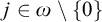 $j\in \omega \setminus \{0\}$
such that
$j\in \omega \setminus \{0\}$
such that $\frac {1}{2^{j-1}}<\varepsilon $
and
$\frac {1}{2^{j-1}}<\varepsilon $
and $m\in \omega $
such that
$m\in \omega $
such that
 $$\begin{align*}\sum_{k\leq j}\left\|\sum_{i\in h[A_k\cap D]\setminus m}\frac{\mathbb{u}_{i}}{\|\mathbb{b}_{i}\|_X}\right\|_X<\frac{1}{2^{j}}. \end{align*}$$
Observe that
 $$ \begin{align*} \left\|\sum_{i\in h[A]\setminus m}\frac{\mathbb{u}_{i}}{\|\mathbb{b}_{i}\|_X}\right\|_X & \leq\sum_{k\leq j}\left\|\sum_{i\in h[A\cap A_k]\setminus m}\frac{\mathbb{u}_{i}}{\|\mathbb{b}_{i}\|_X}\right\|_X+\sum_{k>j}\left\|\sum_{i\in h[A\cap A_k]}\frac{\mathbb{u}_{i}}{\|\mathbb{b}_{i}\|_X}\right\|_X \cr & <\frac{1}{2^{j}}+\sum_{k>j}\frac{1}{2^k}=\frac{1}{2^{j-1}}<\varepsilon.\\[-45pt] \end{align*} $$
4 Banach spaces with a Schauder basis
Theorem 4.1. Let X be any Banach space with a $\mathrm {Fin}$
-Schauder basis
$\mathrm {Fin}$
-Schauder basis $\hat {\mathbb {u}}$
. For any infinite
$\hat {\mathbb {u}}$
. For any infinite $E\subseteq \omega $
there is
$E\subseteq \omega $
there is $\hat {\mathbb {a}}\subseteq X\times X^\star $
simple over
$\hat {\mathbb {a}}\subseteq X\times X^\star $
simple over $\hat {\mathbb {u}}$
such that the following are equivalent for any ideal
$\hat {\mathbb {u}}$
such that the following are equivalent for any ideal $\mathcal {I}$
:
$\mathcal {I}$
:
-
(a)
$\hat {\mathbb {a}}$
is an
$\mathcal {I}$
-Schauder basis of X; -
(b)
$E\in \mathcal {I}$
; -
(c)
$\mathcal {I}_E\subseteq \mathcal {I}$
, where
$\mathcal {I}_E$
is the ideal generated by
$\mathrm {Fin}\cup \{E\}$
.


In particular, $\mathcal {CR}(X,\hat {\mathbb {a}})=\mathcal {I}_E$
.
$\mathcal {CR}(X,\hat {\mathbb {a}})=\mathcal {I}_E$
.
Proof. Fix a $\mathrm {Fin}$
-Schauder basis
$\mathrm {Fin}$
-Schauder basis $\hat {\mathbb {u}}$
of X. Without loss of generality we may assume that
$\hat {\mathbb {u}}$
of X. Without loss of generality we may assume that $\hat {\mathbb {u}}$
is normed, that is,
$\hat {\mathbb {u}}$
is normed, that is, $\|\mathbb {u}_n\|_X=1$
for all
$\|\mathbb {u}_n\|_X=1$
for all $n\in \omega $
. Let
$n\in \omega $
. Let $(I_k)$
be a sequence of pairwise disjoint intervals in
$(I_k)$
be a sequence of pairwise disjoint intervals in $\omega $
such that
$\omega $
such that $E=\bigcup _k I_k$
and
$E=\bigcup _k I_k$
and $\max I_k+1<\min I_{k+1}$
. Denote
$\max I_k+1<\min I_{k+1}$
. Denote $b_k=\min I_k$
and let
$b_k=\min I_k$
and let
 $$\begin{align*}d_k=\min\left\{\left\|\sum_{i=j}^{\max I_k+1} \mathbb{u}_{i}\right\|_X: b_k<j\leq \max I_k+1\right\}\!, \end{align*}$$
for all $k\in \omega $
.
$k\in \omega $
.
Define
 $$\begin{align*}\mathbb{a}_n = \left\{\begin{array}{@{}ll} \mathbb{u}_{n}+\frac{2^n}{d_k}\cdot\sum_{i=n+1}^{\max I_k+1} \mathbb{u}_{i} & \text{ if } n=b_k \text{ for some } {k}, \\\mathbb{u}_n & \text{ otherwise}, \end{array}\right. \end{align*}$$
and
 $$\begin{align*}\mathbb{a}_n^\star = \left\{\begin{array}{@{}ll} \mathbb{u}_n^\star & \text{ if } {n-1\notin E} \\ \mathbb{u}_{n}^\star - \frac{2^{b_k}}{d_k}\cdot \mathbb{u}_{b_k}^\star & \text{ if } n-1\in I_k \text{ for some } k. \end{array}\right. \end{align*}$$
Clearly, $\mathbb {a}^\star _n(\mathbb {a}_m)=\delta _{nm}$
for all
$\mathbb {a}^\star _n(\mathbb {a}_m)=\delta _{nm}$
for all $n,m\in \omega $
.
$n,m\in \omega $
.
The equivalence of items (b) and (c) is obvious. We will show that items (a) and (b) are equivalent.
Observe that:
 $$\begin{align*}S_n(\hat{\mathbb{u}})(\mathbb{x})-S_n(\hat{\mathbb{a}})(\mathbb{x}) = \left\{\begin{array}{@{}ll} 0, & \text{ if } n\notin E \\\mathbb{u}^\star_{b_k}(\mathbb{x})\frac{2^{b_k}}{d_k}\sum_{i=j}^{\max I_k+1}\mathbb{u}_i, & \text{ if } n=b_k+j \text{ for some } k\in\omega\\ & \text{ and } 0\leq j<|I_k|. \end{array}\right. \end{align*}$$
Hence, if $E\in \mathcal {I}$
, then
$E\in \mathcal {I}$
, then $\hat {\mathbb {a}}$
is an
$\hat {\mathbb {a}}$
is an $\mathcal {I}$
-Schauder basis of X.
$\mathcal {I}$
-Schauder basis of X.
We need to show that if $E\notin \mathcal {I}$
, then
$E\notin \mathcal {I}$
, then $\hat {\mathbb {a}}$
is not an
$\hat {\mathbb {a}}$
is not an $\mathcal {I}$
-Schauder basis of X. Define
$\mathcal {I}$
-Schauder basis of X. Define $\mathbb {x}=\sum _{n\in \omega }\frac {1}{2^n}\mathbb {u}_n$
(note that
$\mathbb {x}=\sum _{n\in \omega }\frac {1}{2^n}\mathbb {u}_n$
(note that $\mathbb {x}\in X$
, since
$\mathbb {x}\in X$
, since $\|\sum _{n>k}\frac {1}{2^n}\mathbb {u}_n\|_X\leq \frac {1}{2^k}$
for all
$\|\sum _{n>k}\frac {1}{2^n}\mathbb {u}_n\|_X\leq \frac {1}{2^k}$
for all $k\in \omega $
). Then
$k\in \omega $
). Then
 $$\begin{align*}\{n\in\omega: \|S_n(\hat{\mathbb{u}})(\mathbb{x})-S_n(\hat{\mathbb{a}})(\mathbb{x})\|_X\geq 1\}\supseteq E\notin\mathcal{I}, \end{align*}$$
since given any $n\in E$
, find
$n\in E$
, find $k\in \omega $
and
$k\in \omega $
and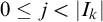 $0\leq j<|I_k|$
such that
$0\leq j<|I_k|$
such that $n=b_k+j\in I_k$
, and observe that:
$n=b_k+j\in I_k$
, and observe that:
 $$\begin{align*}\kern-24pt \|S_n(\hat{\mathbb{u}})(\mathbb{x})-S_n(\hat{\mathbb{a}})(\mathbb{x})\|_X=\left\|\mathbb{u}^\star_{b_k}(\mathbb{x})\frac{2^{b_k}}{d_k}\sum_{i=j}^{\max I_k+1}\mathbb{u}_i\right\|_X\geq |2^{b_k}\mathbb{u}^\star_{b_k}(\mathbb{x})|=1.\\[-47pt] \end{align*}$$
Corollary 4.2. Let X be any Banach space with a $\mathrm {Fin}$
-Schauder basis. The following are equivalent for any ideals
$\mathrm {Fin}$
-Schauder basis. The following are equivalent for any ideals $\mathcal {I}$
and
$\mathcal {I}$
and $\mathcal {J}$
:
$\mathcal {J}$
:
-
(a) There is an
$\mathcal {I}$
-Schauder basis of X which is not a
$\mathcal {J}$
-Schauder basis of X; -
(b)
$\mathcal {I}\not \subseteq \mathcal {J}$
.


In particular, if $\mathcal {I}\neq \mathrm {Fin}$
, then there is an
$\mathcal {I}\neq \mathrm {Fin}$
, then there is an $\mathcal {I}$
-Schauder basis, which is not a
$\mathcal {I}$
-Schauder basis, which is not a $\mathrm {Fin}$
-Schauder basis.
$\mathrm {Fin}$
-Schauder basis.
Proof. It follows from Theorem 4.1.
Corollary 4.3. If X is a Banach space with a $\mathrm {Fin}$
-Schauder basis
$\mathrm {Fin}$
-Schauder basis $\hat {\mathbb {u}}$
, then there is a family
$\hat {\mathbb {u}}$
, then there is a family $\mathcal {F}\subseteq (X\times X^\star )^\omega $
of cardinality
$\mathcal {F}\subseteq (X\times X^\star )^\omega $
of cardinality $2^\omega $
such that each
$2^\omega $
such that each $\hat {\mathbb {a}}\in \mathcal {F}$
is simple over
$\hat {\mathbb {a}}\in \mathcal {F}$
is simple over $\hat {\mathbb {u}}$
and
$\hat {\mathbb {u}}$
and $\mathcal {CR}(X,\hat {\mathbb {a}})\neq \mathcal {CR}(X,\hat {\mathbb {b}})$
, for all distinct
$\mathcal {CR}(X,\hat {\mathbb {a}})\neq \mathcal {CR}(X,\hat {\mathbb {b}})$
, for all distinct $\hat {\mathbb {a}},\hat {\mathbb {b}}\in \mathcal {F}$
.
$\hat {\mathbb {a}},\hat {\mathbb {b}}\in \mathcal {F}$
.
Proof. Let $\mathcal {A}\subseteq \mathcal {P}(\omega )$
be an almost disjoint family (i.e.,
$\mathcal {A}\subseteq \mathcal {P}(\omega )$
be an almost disjoint family (i.e., $A\cap B\in \mathrm {Fin}$
for all distinct
$A\cap B\in \mathrm {Fin}$
for all distinct $A,B\in \mathcal {A}$
) of cardinality
$A,B\in \mathcal {A}$
) of cardinality $2^\omega $
. For each
$2^\omega $
. For each $A\in \mathcal {A}$
, apply Theorem 4.1 to get
$A\in \mathcal {A}$
, apply Theorem 4.1 to get $\hat {\mathbb {a}}_A\in (X\times X^\star )^\omega $
such that
$\hat {\mathbb {a}}_A\in (X\times X^\star )^\omega $
such that $\mathcal {CR}(X,\hat {\mathbb {a}}_A)=\mathcal {I}_A$
. Let
$\mathcal {CR}(X,\hat {\mathbb {a}}_A)=\mathcal {I}_A$
. Let $\mathcal {F}=\{\hat {\mathbb {a}}_A: A\in \mathcal {A}\}$
and observe that
$\mathcal {F}=\{\hat {\mathbb {a}}_A: A\in \mathcal {A}\}$
and observe that $\mathcal {I}_A\neq \mathcal {I}_B$
whenever
$\mathcal {I}_A\neq \mathcal {I}_B$
whenever $A,B\in \mathcal {A}$
are distinct.
$A,B\in \mathcal {A}$
are distinct.
Remark 4.4. Note that Theorem 4.1 implies that there is no single ideal $\mathcal {I}$
suitable for all ideal Schauder bases in such a way that for every
$\mathcal {I}$
suitable for all ideal Schauder bases in such a way that for every $\hat {\mathbb {a}}$
and
$\hat {\mathbb {a}}$
and $\mathcal {J}$
, if
$\mathcal {J}$
, if $\hat {\mathbb {a}}$
is an
$\hat {\mathbb {a}}$
is an $\mathcal {J}$
-Schauder basis, then it is also an
$\mathcal {J}$
-Schauder basis, then it is also an $\mathcal {I}$
-Schauder basis.
$\mathcal {I}$
-Schauder basis.
5 Spaces
$\ell _p$

5.1 Reexaming the already known example
We start by investigating the example provided in [Reference Connor, Ganichev and Kadets4, Example 1].
Proposition 5.1. Let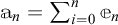 $\mathbb {a}_n = \sum _{i=0}^n \mathbb {e}_n $
and
$\mathbb {a}_n = \sum _{i=0}^n \mathbb {e}_n $
and $\mathbb {a}_n^\star =\mathbb {e}_n^\star - \mathbb {e}_{n+1}^\star $
for all
$\mathbb {a}_n^\star =\mathbb {e}_n^\star - \mathbb {e}_{n+1}^\star $
for all $n\in \omega $
. Then
$n\in \omega $
. Then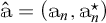 $\hat {\mathbb {a}}=(\mathbb {a}_n,\mathbb {a}^\star _n)$
is simple over
$\hat {\mathbb {a}}=(\mathbb {a}_n,\mathbb {a}^\star _n)$
is simple over $\hat {\mathbb {e}}$
and
$\hat {\mathbb {e}}$
and $\mathcal {CR}(\ell _p,\hat {\mathbb {a}})=\mathcal {I}_{1/n}$
, for every
$\mathcal {CR}(\ell _p,\hat {\mathbb {a}})=\mathcal {I}_{1/n}$
, for every $1\leq p<\infty $
.
$1\leq p<\infty $
.
Proof. Observe that:
 $$\begin{align*}S_n(\hat{\mathbb{a}})(\mathbb{x})=\sum_{i=0}^n (\mathbb{e}_i^\star-\mathbb{e}_{i+1}^\star) (\mathbb{x})\sum_{k=0}^i \mathbb{e}_k = \sum_{i=0}^n \mathbb{e}_i^\star (\mathbb{x}) \mathbb{e}_i - \mathbb{e}_{n+1}^\star(\mathbb{x}) \sum_{i=0}^n \mathbb{e}_i=S_n(\hat{\mathbb{e}})(\mathbb{x})-\mathbb{e}_{n+1}^\star(\mathbb{x}) \sum_{i=0}^n \mathbb{e}_i, \end{align*}$$
for any $\mathbb {x}\in \mathbb {R}^\omega $
. Thus:
$\mathbb {x}\in \mathbb {R}^\omega $
. Thus:
 $$\begin{align*}S_n(\hat{\mathbb{e}})(\mathbb{x})-S_n(\hat{\mathbb{a}})(\mathbb{x})=\mathbb{e}_{n+1}^\star(\mathbb{x}) \sum_{i=0}^n \mathbb{e}_i, \end{align*}$$
and $\hat {\mathbb {a}}$
is simple over
$\hat {\mathbb {a}}$
is simple over $\hat {\mathbb {e}}$
(as witnessed by
$\hat {\mathbb {e}}$
(as witnessed by $D=\omega $
,
$D=\omega $
, $h(n)=n+1,$
and
$h(n)=n+1,$
and $\mathbb {b}_{n+1}=\sum _{i=0}^n \mathbb {e}_i$
). Hence, applying Lemma 3.3, we have:
$\mathbb {b}_{n+1}=\sum _{i=0}^n \mathbb {e}_i$
). Hence, applying Lemma 3.3, we have:
 $$ \begin{align*} \mathcal{CR}(\ell_p,\hat{\mathbb{a}}) & =\left\{A\subseteq\omega: \sum_{n\in A}\frac{\mathbb{e}_{n+1}}{\|\sum_{i=0}^n \mathbb{e}_i\|_{\ell_p}}\in \ell_p\right\}=\left\{A\subseteq\omega: \sum_{n\in A}\frac{\mathbb{e}_{n+1}}{(n+1)^{1/p}}\in \ell_p\right\}\cr & =\left\{A\subseteq\omega: \sum_{n\in A}\frac{1}{n+1}<\infty\right\}=\mathcal{I}_{1/n}, \end{align*} $$
for every $1\leq p<\infty $
.
$1\leq p<\infty $
.
Remark 5.2. The sequence $\hat {\mathbb {a}}$
from [Reference Connor, Ganichev and Kadets4, Example 1] and Proposition 5.1 is a non-unconditional
$\hat {\mathbb {a}}$
from [Reference Connor, Ganichev and Kadets4, Example 1] and Proposition 5.1 is a non-unconditional $\mathrm {Fin}$
-Schauder basis of
$\mathrm {Fin}$
-Schauder basis of $c_0$
(see [Reference Albiac and Kalton1, Example 3.1.2]).
$c_0$
(see [Reference Albiac and Kalton1, Example 3.1.2]).
5.2 Single basis with different critical ideals
In Proposition 5.1, we observed a single $\hat {\mathbb {a}}$
being an ideal Schauder basis of each
$\hat {\mathbb {a}}$
being an ideal Schauder basis of each $\ell _p$
, for
$\ell _p$
, for $1\leq p<\infty $
, such that the critical ideal was the same for each
$1\leq p<\infty $
, such that the critical ideal was the same for each $1\leq p<\infty $
. In this section we will construct
$1\leq p<\infty $
. In this section we will construct $\hat {\mathbb {a}}$
being an ideal Schauder basis of every
$\hat {\mathbb {a}}$
being an ideal Schauder basis of every $\ell _p$
,
$\ell _p$
, $1\leq p<\infty $
, but with different critical ideals.
$1\leq p<\infty $
, but with different critical ideals.
Proposition 5.3. There are a partition $(A_k)$
of
$(A_k)$
of $\omega $
into infinite sets and
$\omega $
into infinite sets and $\hat {\mathbb {a}}$
such that
$\hat {\mathbb {a}}$
such that
 $$\begin{align*}\mathcal{CR}(\ell_p,\hat{\mathbb{a}})=\left\{A\subseteq\omega:A\cap A_0\in\mathrm{Fin}\text{ and }\sum_{k\in\omega\setminus\{0\}}\frac{|A\cap A_k|}{k^p}<\infty\right\}\!, \end{align*}$$
for each $1\leq p<\infty $
. Moreover, if
$1\leq p<\infty $
. Moreover, if $1\leq p<q<\infty $
, then
$1\leq p<q<\infty $
, then $\mathcal {CR}(\ell _q,\hat {\mathbb {a}})\not \subseteq \mathcal {CR}(\ell _p,\hat {\mathbb {a}})$
. In particular, the ideals
$\mathcal {CR}(\ell _q,\hat {\mathbb {a}})\not \subseteq \mathcal {CR}(\ell _p,\hat {\mathbb {a}})$
. In particular, the ideals $\mathcal {CR}(\ell _p,\hat {\mathbb {a}})$
are summable and pairwise distinct.
$\mathcal {CR}(\ell _p,\hat {\mathbb {a}})$
are summable and pairwise distinct.
Proof. Let $(A_k)$
be any partition of
$(A_k)$
be any partition of $\omega $
into infinite sets such that
$\omega $
into infinite sets such that ${A_0=\{2n:n\in \omega \}}$
.
${A_0=\{2n:n\in \omega \}}$
.
For each $n\in \omega $
find
$n\in \omega $
find $m_n\in \omega $
such that
$m_n\in \omega $
such that $n\in A_{m_n}$
and define:
$n\in A_{m_n}$
and define:
 $$\begin{align*}\mathbb{a}_n=\mathbb{e}_{n}+m_n\cdot \mathbb{e}_{n+1}\text{ and } \mathbb{a}_n^\star=\mathbb{e}_{n}^\star - m_{n-1}\cdot \mathbb{e}_{n-1}^\star, \end{align*}$$
(here we put $m_{-1}=0$
). Then
$m_{-1}=0$
). Then
 $$ \begin{align*} \mathbb{a}_n^\star(\mathbb{a}_k) & = \mathbb{e}_{n}^\star(\mathbb{e}_{k})+m_k\mathbb{e}_{n}^\star(\mathbb{e}_{k+1}) - m_{n-1}\mathbb{e}_{n-1}^\star(\mathbb{e}_{k})- m_{n-1}m_k\mathbb{e}_{n-1}^\star(\mathbb{e}_{k+1})\cr & =\delta_{nk}+m_k\delta_{n(k+1)}-m_{n-1} \delta_{(n-1)k}-m_{n-1}m_k\delta_{(n-1)(k+1)}=\delta_{nk}, \end{align*} $$
since if $n-1=k+1$
, then one of
$n-1=k+1$
, then one of $n-1,k\in A_0$
hence one of
$n-1,k\in A_0$
hence one of $m_{n-1},m_k$
equals
$m_{n-1},m_k$
equals $0$
.
$0$
.
Note that for any $\mathbb {x} \in \ell _p$
we have:
$\mathbb {x} \in \ell _p$
we have:
 $$\begin{align*}S_n(\hat{\mathbb{e}})(\mathbb{x})-S_n(\hat{\mathbb{a}})(\mathbb{x})=\mathbb{e}_{n}^\star(\mathbb{x})m_n\mathbb{e}_{n+1}. \end{align*}$$
In particular, $\hat {\mathbb {a}}$
is simple over
$\hat {\mathbb {a}}$
is simple over $\hat {\mathbb {e}}$
(as witnessed by
$\hat {\mathbb {e}}$
(as witnessed by $D=\{n\in \omega :m_n\neq 0\}=\omega \setminus A_0=\{2n+1:n\in \omega \}$
,
$D=\{n\in \omega :m_n\neq 0\}=\omega \setminus A_0=\{2n+1:n\in \omega \}$
, $h(n)=n$
and
$h(n)=n$
and $\mathbb {b}_n=m_n\mathbb {e}_{n+1}$
). Hence, using Lemma 3.3, we have:
$\mathbb {b}_n=m_n\mathbb {e}_{n+1}$
). Hence, using Lemma 3.3, we have:
 $$ \begin{align*} \mathcal{CR}(\ell_p,\hat{\mathbb{a}}) & =\left\{A\subseteq\omega: A\setminus D\in\mathrm{Fin}\text{ and }\sum_{n\in A\cap D}\frac{\mathbb{e}_{n}}{\left\|m_n\mathbb{e}_{n+1}\right\|_{\ell_p}}\in \ell_p\right\}\cr & =\left\{A\subseteq\omega: A\setminus D\in\mathrm{Fin}\text{ and }\sum_{n\in A\cap D}\frac{\mathbb{e}_{n}}{m_n}\in \ell_p\right\}\cr & =\left\{A\subseteq\omega: A\setminus D\in\mathrm{Fin}\text{ and }\sum_{n\in A\cap D}\frac{1}{m_n^p}<\infty\right\}\cr & =\left\{A\subseteq\omega:A\cap A_0\in\mathrm{Fin}\text{ and }\sum_{k\in\omega\setminus\{0\}}\frac{|A\cap A_k|}{k^p}<\infty\right\}\!. \end{align*} $$
The ideal $\mathcal {CR}(\ell _p,\hat {\mathbb {a}})$
is summable, since it is equal to
$\mathcal {CR}(\ell _p,\hat {\mathbb {a}})$
is summable, since it is equal to $\mathcal {I}_{\mathbb {r}}$
for
$\mathcal {I}_{\mathbb {r}}$
for $\mathbb {r}=(r_n)$
given by:
$\mathbb {r}=(r_n)$
given by:
 $$\begin{align*}r_n = \left\{\begin{array}{@{}ll} 1 & \text{ if } n\in A_0,\\ \frac{1}{k^p} & \text{ if } n\in A_k \text{ for some } k>0. \end{array}\right. \end{align*}$$
To finish the proof, we will show that $1\leq p<q<\infty $
implies
$1\leq p<q<\infty $
implies $\mathcal {CR}(\ell _q,\hat {\mathbb {a}})\not \subseteq \mathcal {CR}(\ell _p,\hat {\mathbb {a}})$
. Indeed, any set
$\mathcal {CR}(\ell _q,\hat {\mathbb {a}})\not \subseteq \mathcal {CR}(\ell _p,\hat {\mathbb {a}})$
. Indeed, any set $A\subseteq \omega $
such that
$A\subseteq \omega $
such that $A\cap A_0=\emptyset $
and
$A\cap A_0=\emptyset $
and $|A\cap A_k|=\lceil k^p\rceil $
, for
$|A\cap A_k|=\lceil k^p\rceil $
, for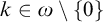 $k\in \omega \setminus \{0\}$
, is in
$k\in \omega \setminus \{0\}$
, is in $\mathcal {CR}(\ell _q,\hat {\mathbb {a}})$
, but not in
$\mathcal {CR}(\ell _q,\hat {\mathbb {a}})$
, but not in $\mathcal {CR}(\ell _p,\hat {\mathbb {a}})$
.
$\mathcal {CR}(\ell _p,\hat {\mathbb {a}})$
.
5.3 Ideal Schauder basis of
$\ell _p$
for each summable ideal

Definition 5.4. If $\mathbb {t}\in \omega ^\omega $
is increasing with
$\mathbb {t}\in \omega ^\omega $
is increasing with $t_0=0$
and
$t_0=0$
and $\mathbb {r}$
is a sequence of positive reals such that
$\mathbb {r}$
is a sequence of positive reals such that $\sum _{n\in \omega }r_n=\infty $
, then we define the ideal:
$\sum _{n\in \omega }r_n=\infty $
, then we define the ideal:
 $$\begin{align*}\mathcal{I}_{\mathbb {r}}^{\mathbb{t}}=\{A\subseteq\omega: \{k\in\omega: A\cap [t_k,t_{k+1})\neq\emptyset\}\in\mathcal{I}_{\mathbb {r}}\}. \end{align*}$$
We will show that each ideal of the form $\mathcal {I}_{\mathbb {r}}^{\mathbb {t}}$
is critical in
$\mathcal {I}_{\mathbb {r}}^{\mathbb {t}}$
is critical in $\ell _p$
, where
$\ell _p$
, where $1\leq p<\infty $
, for some
$1\leq p<\infty $
, for some $\hat {\mathbb {a}}$
simple over
$\hat {\mathbb {a}}$
simple over $\hat {\mathbb {e}}$
. We will need the following technical lemma, which holds in a wider class of normed spaces. Recall that even though we are interested in ideal Schauder bases, Definition 2.6 states the property of a pair
$\hat {\mathbb {e}}$
. We will need the following technical lemma, which holds in a wider class of normed spaces. Recall that even though we are interested in ideal Schauder bases, Definition 2.6 states the property of a pair $(\hat {\mathbb {a}},\hat {\mathbb {u}})$
without requiring that any of
$(\hat {\mathbb {a}},\hat {\mathbb {u}})$
without requiring that any of $\hat {\mathbb {a}},\hat {\mathbb {u}}$
is a basis in some sense.
$\hat {\mathbb {a}},\hat {\mathbb {u}}$
is a basis in some sense.
Lemma 5.5. Let $\mathbb {t}\in \omega ^\omega $
be increasing with
$\mathbb {t}\in \omega ^\omega $
be increasing with $t_0=0$
and
$t_0=0$
and $\mathbb {s}$
be a sequence of positive reals. Let also X be any normed space with a
$\mathbb {s}$
be a sequence of positive reals. Let also X be any normed space with a $\mathrm {Fin}$
-Schauder basis
$\mathrm {Fin}$
-Schauder basis $\hat {\mathbb {u}}$
. Then there is
$\hat {\mathbb {u}}$
. Then there is $\hat {\mathbb {a}}$
simple over
$\hat {\mathbb {a}}$
simple over $\hat {\mathbb {e}}$
with the witnesses
$\hat {\mathbb {e}}$
with the witnesses $D=\omega $
,
$D=\omega $
, $h:\omega \to \omega $
given by
$h:\omega \to \omega $
given by $h\restriction [t_k,t_{k+1})=t_{k+1}$
and some sequence
$h\restriction [t_k,t_{k+1})=t_{k+1}$
and some sequence $(\mathbb {b}_{t_{k+1}})_{k\in \omega }\subseteq X\setminus \{0\}$
such that
$(\mathbb {b}_{t_{k+1}})_{k\in \omega }\subseteq X\setminus \{0\}$
such that $\|\mathbb {b}_{t_{k+1}}\|_X=s_k$
. Moreover, each
$\|\mathbb {b}_{t_{k+1}}\|_X=s_k$
. Moreover, each $\mathbb {a}_n$
is a finite linear combination of the vectors
$\mathbb {a}_n$
is a finite linear combination of the vectors $\mathbb {u}_k$
, for
$\mathbb {u}_k$
, for $k\in \omega $
.
$k\in \omega $
.
Proof. Define inductively the sequence $(c_k)\subseteq \mathbb {R}$
by
$(c_k)\subseteq \mathbb {R}$
by $c_0=1$
and
$c_0=1$
and
 $$\begin{align*}c_{k+1}=\frac{1}{s_k} \cdot \left\|\sum_{i=0}^k c_i\mathbb{u}_{t_i}\right\|_X \end{align*}$$
for all $k\in \omega $
. Set:
$k\in \omega $
. Set:
 $$\begin{align*}\mathbb{a}_n = \left\{\begin{array}{@{}ll} \sum_{i=0}^{k} c_i\mathbb{u}_{t_i}, & \text{ if } n=t_k \text{ for some } k\in \omega,\\ \mathbb{u}_n, & \text{ otherwise}, \\ \end{array}\right. \end{align*}$$
and
 $$\begin{align*}\mathbb{a}_n^\star = \left\{\begin{array}{@{}ll} \frac{\mathbb{u}_{t_k}^\star}{c_k} - \frac{u_{t_{k+1}}^\star}{c_{k+1}}, & \text{ if } n=t_k \text{ for some } k\in \omega,\\ \mathbb{u}_n^\star, & \text{ otherwise}. \end{array}\right. \end{align*}$$
Clearly, $\mathbb {a}_n^\star (\mathbb {a}_m)=\delta _{nm}$
for all
$\mathbb {a}_n^\star (\mathbb {a}_m)=\delta _{nm}$
for all $n,m\in \omega $
. Indeed, it is obvious whenever
$n,m\in \omega $
. Indeed, it is obvious whenever $n \notin \{t_k: k\in \omega \}$
or
$n \notin \{t_k: k\in \omega \}$
or $m \notin \{t_k:k\in \omega \}$
, and the remaining follows from the case
$m \notin \{t_k:k\in \omega \}$
, and the remaining follows from the case $t_k=k$
, which is easy.
$t_k=k$
, which is easy.
Denote $T=\{t_k:k\in \omega \}$
and let
$T=\{t_k:k\in \omega \}$
and let $g:\omega \to \omega $
be given by:
$g:\omega \to \omega $
be given by:
 $$\begin{align*}g(n)=k\ \Longleftrightarrow n\in[t_k,t_{k+1}). \end{align*}$$
Note that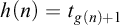 $h(n)=t_{g(n)+1}$
for all
$h(n)=t_{g(n)+1}$
for all $n\in \omega $
(where the function h is defined in the formulation of this lemma). Observe that for any
$n\in \omega $
(where the function h is defined in the formulation of this lemma). Observe that for any $\mathbb {x} \in X$
we have:
$\mathbb {x} \in X$
we have:
 $$ \begin{align*} S_n(\hat{\mathbb{a}})(\mathbb{x}) & = \sum_{i \in (n+1)\setminus T} \mathbb{u}_i^\star (x) \mathbb{u}_i + \sum_{j=0}^{g(n)} \left(\frac{\mathbb{u}_{t_j}^\star}{c_j} - \frac{u_{t_{j+1}}^\star}{c_{j+1}}\right)(\mathbb{x})\sum_{i=0}^{j} c_i\mathbb{u}_{t_i} \cr & =S_n(\hat{\mathbb{u}})(\mathbb{x})-\mathbb{u}_{t_{g(n)+1}}^\star(\mathbb{x})\frac{\sum^{g(n)}_{i=0} c_i \mathbb{u}_{t_i}}{c_{g(n)+1}}. \end{align*} $$
Thus, $\hat {\mathbb {a}}$
is simple over
$\hat {\mathbb {a}}$
is simple over $\hat {\mathbb {e}}$
as witnessed by
$\hat {\mathbb {e}}$
as witnessed by $D=\omega $
, h and
$D=\omega $
, h and $(\mathbb {b}_{t_{k+1}})_{k\in \omega }\subseteq X\setminus \{0\}$
such that:
$(\mathbb {b}_{t_{k+1}})_{k\in \omega }\subseteq X\setminus \{0\}$
such that:
 $$\begin{align*}\mathbb{b}_{t_{k+1}}=\frac{\sum^{k}_{i=0} c_i \mathbb{e}_{t_i}}{c_{k+1}}, \end{align*}$$
for all $k\in \omega $
. In particular,
$k\in \omega $
. In particular, $\|\mathbb {b}_{t_{k+1}}\|_X=s_k$
, for all
$\|\mathbb {b}_{t_{k+1}}\|_X=s_k$
, for all $k\in \omega $
.
$k\in \omega $
.
Proposition 5.6. Let $\mathbb {t}\in \omega ^\omega $
be increasing with
$\mathbb {t}\in \omega ^\omega $
be increasing with $t_0=0$
and
$t_0=0$
and $\mathbb {r}$
be a sequence of positive reals such that
$\mathbb {r}$
be a sequence of positive reals such that $\sum _{n\in \omega }r_n=\infty $
. Then for each
$\sum _{n\in \omega }r_n=\infty $
. Then for each $1\leq p<\infty $
there is
$1\leq p<\infty $
there is $\hat {\mathbb {a}}$
simple over
$\hat {\mathbb {a}}$
simple over $\hat {\mathbb {e}}$
such that
$\hat {\mathbb {e}}$
such that $\mathcal {CR}(\ell _p,\hat {\mathbb {a}})=\mathcal {I}_{\mathbb {r}}^{\mathbb {t}}$
.
$\mathcal {CR}(\ell _p,\hat {\mathbb {a}})=\mathcal {I}_{\mathbb {r}}^{\mathbb {t}}$
.
Proof. Fix $1\leq p<\infty $
and apply Lemma 5.5 for
$1\leq p<\infty $
and apply Lemma 5.5 for $\mathbb {t}\in \omega ^\omega $
and
$\mathbb {t}\in \omega ^\omega $
and $\mathbb {s}$
given by
$\mathbb {s}$
given by $s_k=r_k^{1/p}$
, for all
$s_k=r_k^{1/p}$
, for all $k\in \omega $
, to get
$k\in \omega $
, to get $\hat {\mathbb {a}}$
simple over
$\hat {\mathbb {a}}$
simple over $\hat {\mathbb {e}}$
with the witnesses
$\hat {\mathbb {e}}$
with the witnesses $D=\omega $
,
$D=\omega $
, $h:\omega \to \omega $
given by
$h:\omega \to \omega $
given by $h\restriction [t_k,t_{k+1})=t_{k+1}$
and some sequence
$h\restriction [t_k,t_{k+1})=t_{k+1}$
and some sequence $(\mathbb {b}_{t_{k+1}})_{k\in \omega }$
such that
$(\mathbb {b}_{t_{k+1}})_{k\in \omega }$
such that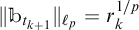 $\|\mathbb {b}_{t_{k+1}}\|_{\ell _p}=r_k^{1/p}$
.
$\|\mathbb {b}_{t_{k+1}}\|_{\ell _p}=r_k^{1/p}$
.
Applying Lemma 3.3 and denoting:
 $$\begin{align*}\tilde{A}=\left\{k\in\omega:A\cap [t_k,t_{k+1})\neq\emptyset\right\}\!, \end{align*}$$
for all $A\subseteq \omega $
, we have:
$A\subseteq \omega $
, we have:
 $$ \begin{align*} \mathcal{CR}(\ell_p,\hat{\mathbb{a}}) & =\left\{A\subseteq\omega: \sum_{k\in h[A]}\frac{\mathbb{e}_{k}}{\left\|\mathbb{b}_k\right\|_{\ell_p}}\in \ell_p\right\}\cr & =\left\{A\subseteq\omega: \sum_{k\in \tilde{A}}\mathbb{e}_{t_{k+1}}r_k^{1/p}\in \ell_p\right\}\cr & =\left\{A\subseteq\omega: \sum_{k\in \tilde{A}}r_k<\infty\right\}=\mathcal{I}^{\mathbb{t}}_{\mathbb {r}}.\\[-41pt] \end{align*} $$
Corollary 5.7. For each $1\leq p<\infty $
, there are
$1\leq p<\infty $
, there are $2^\omega $
ideal Schauder bases of
$2^\omega $
ideal Schauder bases of $\ell _p$
with pairwise non-isomorphic critical ideals.
$\ell _p$
with pairwise non-isomorphic critical ideals.
Proof. It follows from Proposition 5.6 and [Reference Guzmán-González and Meza-Alcántara11, Theorem 1].
Thus far, each presented ideal Schauder basis of $\ell _p$
(i.e., the ones from Theorem 4.1 and Propositions 5.1 and 5.3) had a summable critical ideal. Now, using Proposition 5.6, we will show an ideal Schauder basis of
$\ell _p$
(i.e., the ones from Theorem 4.1 and Propositions 5.1 and 5.3) had a summable critical ideal. Now, using Proposition 5.6, we will show an ideal Schauder basis of $\ell _p$
with a non-summable critical ideal.
$\ell _p$
with a non-summable critical ideal.
Corollary 5.8. For any $1\leq p<\infty $
there is
$1\leq p<\infty $
there is $\hat {\mathbb {a}}$
such that
$\hat {\mathbb {a}}$
such that $\mathcal {CR}(\ell _p,\hat {\mathbb {a}})$
is a non-summable
$\mathcal {CR}(\ell _p,\hat {\mathbb {a}})$
is a non-summable ${\mathbf {F}_\sigma }$
ideal.
${\mathbf {F}_\sigma }$
ideal.
Proof. Let $t_0=0$
and
$t_0=0$
and $t_k=2^k$
for all
$t_k=2^k$
for all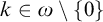 $k\in \omega \setminus \{0\}$
. Denote
$k\in \omega \setminus \{0\}$
. Denote $\mathbb {t}=(t_k)$
and
$\mathbb {t}=(t_k)$
and $I_k=[t_k,t_{k+1})$
, for all
$I_k=[t_k,t_{k+1})$
, for all $k\in \omega $
. In particular,
$k\in \omega $
. In particular, $|I_0|=2$
and
$|I_0|=2$
and $|I_k|=2^k$
for all
$|I_k|=2^k$
for all $k>0$
. By Proposition 5.6, for each
$k>0$
. By Proposition 5.6, for each $1\leq p<\infty $
there is
$1\leq p<\infty $
there is $\hat {\mathbb {a}}$
such that
$\hat {\mathbb {a}}$
such that $\mathcal {CR}(\ell _p,\hat {\mathbb {a}})=\mathcal {I}_{1/n}^{\mathbb {t}}$
. Therefore, we need to demonstrate that
$\mathcal {CR}(\ell _p,\hat {\mathbb {a}})=\mathcal {I}_{1/n}^{\mathbb {t}}$
. Therefore, we need to demonstrate that $\mathcal {I}_{1/n}^{\mathbb {t}}$
is non-summable and
$\mathcal {I}_{1/n}^{\mathbb {t}}$
is non-summable and ${\mathbf {F}_\sigma }$
.
${\mathbf {F}_\sigma }$
.
To verify that $\mathcal {I}_{1/n}^{\mathbb {t}}$
is
$\mathcal {I}_{1/n}^{\mathbb {t}}$
is ${\mathbf {F}_\sigma }$
, note that
${\mathbf {F}_\sigma }$
, note that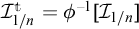 $\mathcal {I}_{1/n}^{\mathbb {t}}=\phi ^{-1}[\mathcal {I}_{1/n}]$
, where
$\mathcal {I}_{1/n}^{\mathbb {t}}=\phi ^{-1}[\mathcal {I}_{1/n}]$
, where $\phi :\mathcal {P}(\omega )\to \mathcal {P}(\omega )$
given by
$\phi :\mathcal {P}(\omega )\to \mathcal {P}(\omega )$
given by $\phi (A)=\{k\in \omega : A\cap I_k\neq \emptyset \}$
, for all
$\phi (A)=\{k\in \omega : A\cap I_k\neq \emptyset \}$
, for all $A\subseteq \omega $
, is continuous.
$A\subseteq \omega $
, is continuous.
Suppose towards contradiction that $\mathcal {I}_{1/n}^{\mathbb {t}}$
is a summable ideal, i.e., that there is
$\mathcal {I}_{1/n}^{\mathbb {t}}$
is a summable ideal, i.e., that there is $\mathbb {r}=(r_n)$
such that
$\mathbb {r}=(r_n)$
such that $r_n>0$
,
$r_n>0$
, $\sum _{n\in \omega }r_n=\infty $
and
$\sum _{n\in \omega }r_n=\infty $
and $\mathcal {I}_{1/n}^{\mathbb {t}}=\mathcal {I}_{\mathbb {r}}$
. Denote
$\mathcal {I}_{1/n}^{\mathbb {t}}=\mathcal {I}_{\mathbb {r}}$
. Denote $d_k=\min \{r_n: n\in I_k\}$
and
$d_k=\min \{r_n: n\in I_k\}$
and $n_k=\min \{n\in I_k: r_n=d_k\}$
. Observe that
$n_k=\min \{n\in I_k: r_n=d_k\}$
. Observe that $Z=\{k\in \omega : 2^k\cdot d_k\geq 1\}$
is infinite, since otherwise we would get:
$Z=\{k\in \omega : 2^k\cdot d_k\geq 1\}$
is infinite, since otherwise we would get:
 $$\begin{align*}\sum_{k\in\omega}r_{n_k}=\sum_{k\in Z}d_k+\sum_{k\in\omega\setminus Z}d_k<\sum_{k\in Z}d_k+\sum_{k\in\omega\setminus Z}\frac{1}{2^k}<\infty, \end{align*}$$
which shows that $\{n_k{\kern-1pt}:{\kern-1pt}k{\kern-1pt}\in{\kern-1pt} \omega \}{\kern-1pt}\in{\kern-1pt} \mathcal {I}_{\mathbb {r}}$
and contradicts
$\{n_k{\kern-1pt}:{\kern-1pt}k{\kern-1pt}\in{\kern-1pt} \omega \}{\kern-1pt}\in{\kern-1pt} \mathcal {I}_{\mathbb {r}}$
and contradicts $\mathcal {I}_{1/n}^{\mathbb {t}}{\kern-1pt}={\kern-1pt}\mathcal {I}_{\mathbb {r}}$
, as
$\mathcal {I}_{1/n}^{\mathbb {t}}{\kern-1pt}={\kern-1pt}\mathcal {I}_{\mathbb {r}}$
, as $\{n_k{\kern-1pt}:{\kern-1pt}k{\kern-1pt}\in{\kern-1pt} \omega \}{\kern-1pt}\notin{\kern-1pt} \mathcal {I}_{1/n}^{\mathbb {t}}$
. However, as Z is infinite, we can find an infinite
$\{n_k{\kern-1pt}:{\kern-1pt}k{\kern-1pt}\in{\kern-1pt} \omega \}{\kern-1pt}\notin{\kern-1pt} \mathcal {I}_{1/n}^{\mathbb {t}}$
. However, as Z is infinite, we can find an infinite $Z'\subset Z$
such that
$Z'\subset Z$
such that $Z'\in \mathcal {I}_{1/n}$
. Then
$Z'\in \mathcal {I}_{1/n}$
. Then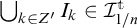 $\bigcup _{k\in Z'}I_k\in \mathcal {I}_{1/n}^{\mathbb {t}}$
, but:
$\bigcup _{k\in Z'}I_k\in \mathcal {I}_{1/n}^{\mathbb {t}}$
, but:
 $$\begin{align*}\sum_{n\in \bigcup_{k\in Z'}I_k}r_n\geq \sum_{k\in Z'}|I_k|d_k\geq\sum_{k\in Z'}2^k\cdot d_k\geq \sum_{k\in Z'}1=\infty, \end{align*}$$
so $\bigcup _{k\in Z'}I_k\notin \mathcal {I}_{\mathbb {r}}$
, which again contradicts
$\bigcup _{k\in Z'}I_k\notin \mathcal {I}_{\mathbb {r}}$
, which again contradicts $\mathcal {I}_{1/n}^{\mathbb {t}}=\mathcal {I}_{\mathbb {r}}$
.
$\mathcal {I}_{1/n}^{\mathbb {t}}=\mathcal {I}_{\mathbb {r}}$
.
5.4 Characterization
Theorem 5.9. Let $1\leq p<\infty $
. The following are equivalent for any nontrivial ideal
$1\leq p<\infty $
. The following are equivalent for any nontrivial ideal $\mathcal {I}$
:
$\mathcal {I}$
:
-
(a) there is
$\hat {\mathbb {a}}$
simple over
$\hat {\mathbb {e}}$
such that
$\mathcal {CR}(\ell _p,\hat {\mathbb {a}})=\mathcal {I}$
; -
(b)
$\mathcal {I}=\mathcal {I}^{\mathbb {t}}_{\mathbb {r}}$
, for some increasing
$\mathbb {t}\in \omega ^\omega $
with
$t_0=0$
and some sequence
$\mathbb {r}$
of positive reals such that
$\sum _{n\in \omega }r_n=\infty $
.






Proof. (b) $\implies $
(a): This is Proposition 5.6.
$\implies $
(a): This is Proposition 5.6.
(a) $\implies $
(b): Fix some
$\implies $
(b): Fix some $\hat {\mathbb {a}} (D,h,(\mathbb {b}_n))$
-simple over
$\hat {\mathbb {a}} (D,h,(\mathbb {b}_n))$
-simple over $\hat {\mathbb {e}}$
. Find a partition
$\hat {\mathbb {e}}$
. Find a partition $(I_n)$
of
$(I_n)$
of $\omega $
into consecutive intervals such that either
$\omega $
into consecutive intervals such that either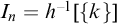 $I_n=h^{-1}[\{k\}]$
for some
$I_n=h^{-1}[\{k\}]$
for some $k\in \omega $
(note that in this case
$k\in \omega $
(note that in this case $I_n\subseteq D$
) or
$I_n\subseteq D$
) or $I_n=\{i\}$
for some
$I_n=\{i\}$
for some $i\in \omega \setminus D$
. Denote
$i\in \omega \setminus D$
. Denote $S=\{n\in \omega : I_n=h^{-1}[\{k\}]\text { for some }k\in \omega \}$
.
$S=\{n\in \omega : I_n=h^{-1}[\{k\}]\text { for some }k\in \omega \}$
.
For each $n\in \omega $
put
$n\in \omega $
put $t_n=\min I_n$
and
$t_n=\min I_n$
and
 $$\begin{align*}r_n=\begin{cases} \left(\frac{1}{\|\mathbb{b}_n\|_{\ell_p}}\right)^p, & \text{if } n\in S,\\ 1, & \text{otherwise}. \end{cases} \end{align*}$$
Then, using Lemma 3.3, we get that $\mathcal {I}^{\mathbb {t}}_{\mathbb {r}}=\mathcal {CR}(\ell _p,\hat {\mathbb {a}})$
. Since
$\mathcal {I}^{\mathbb {t}}_{\mathbb {r}}=\mathcal {CR}(\ell _p,\hat {\mathbb {a}})$
. Since $\mathcal {CR}(\ell _p,\hat {\mathbb {a}})=\mathcal {I}$
is an ideal,
$\mathcal {CR}(\ell _p,\hat {\mathbb {a}})=\mathcal {I}$
is an ideal, $\omega \notin \mathcal {CR}(\ell _p,\hat {\mathbb {a}})$
, which implies that
$\omega \notin \mathcal {CR}(\ell _p,\hat {\mathbb {a}})$
, which implies that $\sum _{n\in \omega }r_n=\infty $
.
$\sum _{n\in \omega }r_n=\infty $
.
6 The space
$c_0$
and James’ space

6.1 A non-
${\mathbf {F}_\sigma }$
critical ideal

Next result gives us first example of a non- ${\mathbf {F}_\sigma }$
ideal of the form
${\mathbf {F}_\sigma }$
ideal of the form $\mathcal {CR}(X,\hat {\mathbb {a}})$
.
$\mathcal {CR}(X,\hat {\mathbb {a}})$
.
Proposition 6.1. There is $\hat {\mathbb {a}}$
simple over
$\hat {\mathbb {a}}$
simple over $\hat {\mathbb {e}}$
such that
$\hat {\mathbb {e}}$
such that $\mathcal {CR}(c_0,\hat {\mathbb {a}})\cong \{\emptyset \}\otimes \mathrm {Fin}$
.
$\mathcal {CR}(c_0,\hat {\mathbb {a}})\cong \{\emptyset \}\otimes \mathrm {Fin}$
.
Proof. Let $(A_k)$
and
$(A_k)$
and $\hat {\mathbb {a}}$
be as in the proof of Proposition 5.3, i.e.,
$\hat {\mathbb {a}}$
be as in the proof of Proposition 5.3, i.e., $(A_k)$
is a partition of
$(A_k)$
is a partition of $\omega $
into infinite sets such that
$\omega $
into infinite sets such that $A_0=\{2n:n\in \omega \}$
,
$A_0=\{2n:n\in \omega \}$
, $\mathbb {a}_n=\mathbb {e}_{n}+m_n\cdot \mathbb {e}_{n+1}$
and
$\mathbb {a}_n=\mathbb {e}_{n}+m_n\cdot \mathbb {e}_{n+1}$
and $\mathbb {a}_n^\star =\mathbb {e}_{n}^\star - m_{n-1}\cdot \mathbb {e}_{n-1}^\star $
, where
$\mathbb {a}_n^\star =\mathbb {e}_{n}^\star - m_{n-1}\cdot \mathbb {e}_{n-1}^\star $
, where $m_n$
is given by
$m_n$
is given by $n\in A_{m_n}$
.
$n\in A_{m_n}$
.
Define:
 $$\begin{align*}\mathcal{J}=\left\{A\subset\omega:\forall_{k\in\omega}A\cap A_k\in\mathrm{Fin}\right\}\!. \end{align*}$$
Clearly, $\mathcal {J}$
is isomorphic with
$\mathcal {J}$
is isomorphic with $\{\emptyset \}\otimes \mathrm {Fin}$
, as witnessed by any bijection
$\{\emptyset \}\otimes \mathrm {Fin}$
, as witnessed by any bijection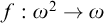 $f:\omega ^2\to \omega $
such that
$f:\omega ^2\to \omega $
such that $f[\{k\}\times \omega ]=A_k$
, for all
$f[\{k\}\times \omega ]=A_k$
, for all $k\in \omega $
.
$k\in \omega $
.
We will show that $\mathcal {CR}(c_0,\hat {\mathbb {a}})=\mathcal {J}$
. Similarly as in the proof of Proposition 5.3, for any
$\mathcal {CR}(c_0,\hat {\mathbb {a}})=\mathcal {J}$
. Similarly as in the proof of Proposition 5.3, for any $\mathbb {x} \in c_0$
we have:
$\mathbb {x} \in c_0$
we have:
 $$\begin{align*}S_n(\hat{\mathbb{e}})(\mathbb{x})-S_n(\hat{\mathbb{a}})(\mathbb{x})=\mathbb{e}_{n}^\star(\mathbb{x})m_n\mathbb{e}_{n+1}, \end{align*}$$
i.e., $\hat {\mathbb {a}}$
is simple over
$\hat {\mathbb {a}}$
is simple over $\hat {\mathbb {e}}$
as witnessed by
$\hat {\mathbb {e}}$
as witnessed by $D=\{n\in \omega :m_n\neq 0\}=\omega \setminus A_0=\{2n+1:n\in \omega \}$
,
$D=\{n\in \omega :m_n\neq 0\}=\omega \setminus A_0=\{2n+1:n\in \omega \}$
, $h(n)=n$
and
$h(n)=n$
and $\mathbb {b}_n=m_n\mathbb {e}_{n+1}$
. Hence, applying Lemma 3.3, we have:
$\mathbb {b}_n=m_n\mathbb {e}_{n+1}$
. Hence, applying Lemma 3.3, we have:
 $$ \begin{align*} \mathcal{CR}(c_0,\hat{\mathbb{a}}) & =\left\{A\subseteq\omega: A\setminus D\in\mathrm{Fin}\text{ and }\sum_{n\in A\cap D}\frac{\mathbb{e}_{n}}{\left\|m_n\mathbb{e}_{n+1}\right\|_{c_0}}\in c_0\right\}\cr & =\left\{A\subseteq\omega: A\setminus D\in\mathrm{Fin}\text{ and }\sum_{n\in A\cap D}\frac{\mathbb{e}_{n}}{m_n}\in c_0\right\}\cr & =\left\{A\subseteq\omega: A\setminus D\in\mathrm{Fin}\text{ and }\lim_{n\in A\cap D}\frac{1}{m_n}=0\right\}=\mathcal{J}.\\[-39pt] \end{align*} $$
Remark 6.2. Note that $\hat {\mathbb {a}}$
from Proposition 6.1 yields an interesting example of a basis with different behaviour in various spaces:
$\hat {\mathbb {a}}$
from Proposition 6.1 yields an interesting example of a basis with different behaviour in various spaces:
 $$\begin{align*}\mathcal{CR}(c_0,\hat{\mathbb{a}})\cong\{\emptyset\}\otimes\mathrm{Fin},\end{align*}$$
but for $p\in [1,\infty ),$
we have:
$p\in [1,\infty ),$
we have:
 $$\begin{align*}\mathcal{CR}(\ell_p,\hat{\mathbb{a}})=\left\{A\subseteq\omega:A\cap A_0\in\mathrm{Fin}\text{ and }\sum_{k\in\omega\setminus\{0\}}\frac{|A\cap A_k|}{k^p}<\infty\right\} \end{align*}$$
(see Proposition 5.3).
6.2 James’ space
We recall the definition of James’ space. Let $\mathfrak {J}$
consist of all
$\mathfrak {J}$
consist of all $\mathbb {x}\in c_0$
such that:
$\mathbb {x}\in c_0$
such that:
 $$\begin{align*}\|x\|_{\mathfrak{J}}=\sup\left\{\left(\sum_{i=1}^n \left(x_{p_i}-x_{p_{i-1}}\right)^2\right)^{1/2}:n\in\omega\text{ and }0\leq p_0<p_1<\ldots<p_n\right\}<+\infty. \end{align*}$$
Then the above formula defines a norm on $\mathfrak {J}$
, making it a Banach space. This space is called James’ space. It is known that
$\mathfrak {J}$
, making it a Banach space. This space is called James’ space. It is known that $\hat {\mathbb {e}}$
is a non-unconditional Schauder basis of
$\hat {\mathbb {e}}$
is a non-unconditional Schauder basis of $\mathfrak {J}$
. In fact, every Schauder basis of
$\mathfrak {J}$
. In fact, every Schauder basis of $\mathfrak {J}$
is not unconditional. Thus, in our examinations of James’ space, we cannot use Lemma 3.3 and have to rely on Lemma 3.1—this property of
$\mathfrak {J}$
is not unconditional. Thus, in our examinations of James’ space, we cannot use Lemma 3.3 and have to rely on Lemma 3.1—this property of $\mathfrak {J}$
makes it particularly interesting in our context. For more on James’ space, see [Reference Albiac and Kalton1].
$\mathfrak {J}$
makes it particularly interesting in our context. For more on James’ space, see [Reference Albiac and Kalton1].
The following observation will be crucial in our considerations of James’ space.
Lemma 6.3. Let $\hat {\mathbb {a}}$
be simple over
$\hat {\mathbb {a}}$
be simple over $\hat {\mathbb {e}}$
in
$\hat {\mathbb {e}}$
in $\mathfrak {J}$
with the witnesses D,
$\mathfrak {J}$
with the witnesses D, $h,$
and
$h,$
and $(\mathbb {b}_{h(n)})_{n\in D}\subseteq \mathfrak {J}\setminus \{0\}$
. If
$(\mathbb {b}_{h(n)})_{n\in D}\subseteq \mathfrak {J}\setminus \{0\}$
. If $A\subseteq D$
and
$A\subseteq D$
and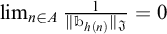 $\lim _{n\in A}\frac {1}{\|\mathbb {b}_{h(n)}\|_{\mathfrak {J}}}=0$
, then there is
$\lim _{n\in A}\frac {1}{\|\mathbb {b}_{h(n)}\|_{\mathfrak {J}}}=0$
, then there is $\mathbb {x}\in \mathfrak {J}$
such that:
$\mathbb {x}\in \mathfrak {J}$
such that:
 $$\begin{align*}A\subseteq A_{\mathbb{x}}=\left\{n\in D: |\mathbb{e}^\star_{h(n)}(\mathbb{x})|\geq\frac{1}{\|\mathbb{b}_{h(n)}\|_{\mathfrak{J}}}\right\}\!. \end{align*}$$
Proof. The claim is clear if $A\in \mathrm {Fin}$
, so assume that A is infinite. Denote:
$A\in \mathrm {Fin}$
, so assume that A is infinite. Denote:
 $$\begin{align*}a=\max\left\{\frac{1}{\|\mathbb{b}_{h(n)}\|_{\mathfrak{J}}}:n\in A\right\}\!. \end{align*}$$
Put also:
 $$\begin{align*}A_k=\left\{n\in A:\frac{1}{\|\mathbb{b}_{h(n)}\|_{\mathfrak{J}}}>\frac{1}{k+1}\right\}\!, \end{align*}$$
for all $k\in \omega $
. Observe that
$k\in \omega $
. Observe that $A=\bigcup _{k\in \omega }A_k$
and
$A=\bigcup _{k\in \omega }A_k$
and $\lim _k \max h[A_{k}]=\infty $
(since A is infinite and h is interval-to-one).
$\lim _k \max h[A_{k}]=\infty $
(since A is infinite and h is interval-to-one).
Let $\mathbb {x}$
be such that
$\mathbb {x}$
be such that $x_i=a$
for all
$x_i=a$
for all $i\leq \max h[A_0]$
and
$i\leq \max h[A_0]$
and $x_i=\frac {1}{k+1}$
for all
$x_i=\frac {1}{k+1}$
for all $\max h[A_{k}]<i\leq \max h[A_{k+1}]$
and
$\max h[A_{k}]<i\leq \max h[A_{k+1}]$
and $k\in \omega $
. Observe that
$k\in \omega $
. Observe that $\|\mathbb {x}\|_{\mathfrak {J}}=a^2$
, as for every
$\|\mathbb {x}\|_{\mathfrak {J}}=a^2$
, as for every $n\in \omega $
and
$n\in \omega $
and $0\leq p_0<p_1<\ldots <p_n$
we have:
$0\leq p_0<p_1<\ldots <p_n$
we have:
 $$\begin{align*}\sum_{i=1}^n \left(x_{p_i}-x_{p_{i-1}}\right)^2\leq\left(\sum_{i=1}^n\left(x_{p_i}-x_{p_{i-1}}\right)\right)^2=\left(x_{p_0}-x_{p_{n}}\right)^2<a^2. \end{align*}$$
Hence, $\mathbb {x}\in \mathfrak {J}$
. We will show that
$\mathbb {x}\in \mathfrak {J}$
. We will show that $A\subseteq A_{\mathbb {x}}$
. Fix
$A\subseteq A_{\mathbb {x}}$
. Fix $n\in A$
. If
$n\in A$
. If $n\in A_0$
then
$n\in A_0$
then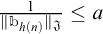 $\frac {1}{\|\mathbb {b}_{h(n)}\|_{\mathfrak {J}}}\leq a$
and
$\frac {1}{\|\mathbb {b}_{h(n)}\|_{\mathfrak {J}}}\leq a$
and $|\mathbb {e}^\star _{h(n)}(\mathbb {x})|=|x_{h(n)}|=a$
(since
$|\mathbb {e}^\star _{h(n)}(\mathbb {x})|=|x_{h(n)}|=a$
(since $h(n)\leq \max h[A_0]$
). On the other hand, if
$h(n)\leq \max h[A_0]$
). On the other hand, if $n\in A_{k+1}\setminus A_k$
, for some
$n\in A_{k+1}\setminus A_k$
, for some $k\in \omega $
, then
$k\in \omega $
, then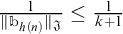 $\frac {1}{\|\mathbb {b}_{h(n)}\|_{\mathfrak {J}}}\leq \frac {1}{k+1}$
and
$\frac {1}{\|\mathbb {b}_{h(n)}\|_{\mathfrak {J}}}\leq \frac {1}{k+1}$
and $|\mathbb {e}^\star _{h(n)}(\mathbb {x})|=|x_{h(n)}|=\frac {1}{k+1}$
(since
$|\mathbb {e}^\star _{h(n)}(\mathbb {x})|=|x_{h(n)}|=\frac {1}{k+1}$
(since $h(n)\leq \max h[A_{k+1}]$
). Hence, in both cases
$h(n)\leq \max h[A_{k+1}]$
). Hence, in both cases $n\in A_{\mathbb {x}}$
.
$n\in A_{\mathbb {x}}$
.
6.3 Characterization
Actually, Proposition 6.1 can be improved.
Proposition 6.4. Let $\mathcal {I}$
be an ideal on
$\mathcal {I}$
be an ideal on $\omega $
isomorphic with
$\omega $
isomorphic with $\{\emptyset \}\otimes \mathrm {Fin}$
. Then there are
$\{\emptyset \}\otimes \mathrm {Fin}$
. Then there are $\hat {\mathbb {a}}$
and
$\hat {\mathbb {a}}$
and $\hat {\mathbb {a}}'$
, both simple over
$\hat {\mathbb {a}}'$
, both simple over $\hat {\mathbb {e}}$
, such that
$\hat {\mathbb {e}}$
, such that $\mathcal {CR}(c_0,\hat {\mathbb {a}})=\mathcal {I}$
and
$\mathcal {CR}(c_0,\hat {\mathbb {a}})=\mathcal {I}$
and $\mathcal {CR}(\mathfrak {J},\hat {\mathbb {a}}')=\mathcal {I}$
.
$\mathcal {CR}(\mathfrak {J},\hat {\mathbb {a}}')=\mathcal {I}$
.
Proof. Let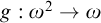 $g:\omega ^2\to \omega $
be the bijection witnessing that
$g:\omega ^2\to \omega $
be the bijection witnessing that $\mathcal {I}$
is isomorphic with
$\mathcal {I}$
is isomorphic with $\{\emptyset \}\otimes \mathrm {Fin}$
and denote
$\{\emptyset \}\otimes \mathrm {Fin}$
and denote $X_k=g[\{k\}\times \omega ]$
for all
$X_k=g[\{k\}\times \omega ]$
for all $k\in \omega $
. Put
$k\in \omega $
. Put $t_k=k$
for all
$t_k=k$
for all $k\in \omega $
and define the sequence
$k\in \omega $
and define the sequence $\mathbb {s}$
by:
$\mathbb {s}$
by:
 $$\begin{align*}s_n=k+1\ \Longleftrightarrow\ n\in X_k \end{align*}$$
for all $n\in \omega $
. Apply Lemma 5.5 for
$n\in \omega $
. Apply Lemma 5.5 for $\mathbb {t}$
,
$\mathbb {t}$
, $\mathbb {s}$
and
$\mathbb {s}$
and $X=c_0$
(
$X=c_0$
( $\mathbb {t}$
,
$\mathbb {t}$
, $\mathbb {s}$
and
$\mathbb {s}$
and $X=\mathfrak {J}$
, respectively) to get
$X=\mathfrak {J}$
, respectively) to get $\hat {\mathbb {a}}$
(
$\hat {\mathbb {a}}$
( $\hat {\mathbb {a}}'$
, respectively) simple over
$\hat {\mathbb {a}}'$
, respectively) simple over $\hat {\mathbb {e}}$
with the witnesses
$\hat {\mathbb {e}}$
with the witnesses $D=\omega $
,
$D=\omega $
, $h:\omega \to \omega $
given by
$h:\omega \to \omega $
given by $h(n)=n+1$
and some sequence
$h(n)=n+1$
and some sequence $(\mathbb {b}_{n+1})_{n\in \omega }$
such that
$(\mathbb {b}_{n+1})_{n\in \omega }$
such that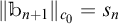 $\|\mathbb {b}_{n+1}\|_{c_0}=s_n$
for all
$\|\mathbb {b}_{n+1}\|_{c_0}=s_n$
for all $n\in \omega $
(
$n\in \omega $
( $(\mathbb {b}^{\prime }_{n+1})_{n\in \omega }$
such that
$(\mathbb {b}^{\prime }_{n+1})_{n\in \omega }$
such that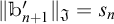 $\|\mathbb {b}^{\prime }_{n+1}\|_{\mathfrak {J}}=s_n$
for all
$\|\mathbb {b}^{\prime }_{n+1}\|_{\mathfrak {J}}=s_n$
for all $n\in \omega $
, respectively).
$n\in \omega $
, respectively).
In the case of the space $c_0$
, using Lemma 3.3 we get:
$c_0$
, using Lemma 3.3 we get:
 $$ \begin{align*} \mathcal{CR}(c_0,\hat{\mathbb{a}}) & =\left\{A\subseteq\omega: \sum_{n\in A}\frac{\mathbb{e}_{n+1}}{\left\|\mathbb{b}_{n+1}\right\|_{c_0}}\in c_0\right\}\cr & =\left\{A\subseteq\omega: \sum_{n\in A}\frac{\mathbb{e}_{n+1}}{s_n}\in c_0\right\}\cr & =\left\{A\subseteq\omega: \lim_{n\in A}\frac{1}{s_n}=0\right\}=\mathcal{I}. \end{align*} $$
In the case of the space $\mathfrak {J}$
, we cannot use Lemma 3.3; however, from Lemma 3.1 we know that
$\mathfrak {J}$
, we cannot use Lemma 3.3; however, from Lemma 3.1 we know that $\mathcal {CR}(\mathfrak {J},\hat {\mathbb {a}}')$
is the ideal generated by
$\mathcal {CR}(\mathfrak {J},\hat {\mathbb {a}}')$
is the ideal generated by $\mathrm {Fin}$
and all sets of the form
$\mathrm {Fin}$
and all sets of the form
 $$\begin{align*}A_{\mathbb{x}}=\left\{n\in \omega: |\mathbb{e}^\star_{n+1}(\mathbb{x})|\geq\frac{1}{\|\mathbb{b}^{\prime}_{n+1}\|_{\mathfrak{J}}}\right\}\!, \end{align*}$$
for $\mathbb {x}\in \mathfrak {J}$
. We need to show that
$\mathbb {x}\in \mathfrak {J}$
. We need to show that $\mathcal {CR}(\mathfrak {J},\hat {\mathbb {a}}')=\mathcal {I}$
.
$\mathcal {CR}(\mathfrak {J},\hat {\mathbb {a}}')=\mathcal {I}$
. $\mathcal {CR}(\mathfrak {J},\hat {\mathbb {a}}')\subseteq \mathcal {I}$
: It suffices to show that
$\mathcal {CR}(\mathfrak {J},\hat {\mathbb {a}}')\subseteq \mathcal {I}$
: It suffices to show that $A_{\mathbb {x}}\in \mathcal {I}$
for all
$A_{\mathbb {x}}\in \mathcal {I}$
for all $\mathbb {x}\in \mathfrak {J}$
, so fix any such
$\mathbb {x}\in \mathfrak {J}$
, so fix any such $\mathbb {x}$
. Since
$\mathbb {x}$
. Since $\mathbb {x}\in \mathfrak {J}\subseteq c_0$
, we have:
$\mathbb {x}\in \mathfrak {J}\subseteq c_0$
, we have:
 $$\begin{align*}\lim_{n\in A_{\mathbb{x}}}\frac{1}{\|\mathbb{b}^{\prime}_{n+1}\|_{\mathfrak{J}}}=\lim_{n\in A_{\mathbb{x}}}\frac{1}{s_n}=0. \end{align*}$$
Hence, $A_{\mathbb {x}}\cap X_k\in \mathrm {Fin}$
for all
$A_{\mathbb {x}}\cap X_k\in \mathrm {Fin}$
for all $k\in \omega $
, which means that
$k\in \omega $
, which means that $A_{\mathbb {x}}\in \mathcal {I}$
.
$A_{\mathbb {x}}\in \mathcal {I}$
. $\mathcal {CR}(\mathfrak {J},\hat {\mathbb {a}}')\supseteq \mathcal {I}$
: Fix any
$\mathcal {CR}(\mathfrak {J},\hat {\mathbb {a}}')\supseteq \mathcal {I}$
: Fix any $A\in \mathcal {I}$
. Then
$A\in \mathcal {I}$
. Then
 $$\begin{align*}\lim_{n\in A}\frac{1}{\|\mathbb{b}^{\prime}_{n+1}\|_{\mathfrak{J}}}=\lim_{n\in A}\frac{1}{s_n}=0. \end{align*}$$
By Lemma 6.3, there is $\mathbb {x}\in \mathfrak {J}$
such that
$\mathbb {x}\in \mathfrak {J}$
such that $A\subseteq A_{\mathbb {x}}$
, so
$A\subseteq A_{\mathbb {x}}$
, so $A\in \mathcal {CR}(\mathfrak {J},\hat {\mathbb {a}}')$
.
$A\in \mathcal {CR}(\mathfrak {J},\hat {\mathbb {a}}')$
.
Theorem 6.5. The following are equivalent for any nontrivial ideal $\mathcal {I}$
on
$\mathcal {I}$
on $\omega $
:
$\omega $
:
-
(a) there is
$\hat {\mathbb {a}}$
simple over
$\hat {\mathbb {e}}$
such that
$\mathcal {CR}(c_0,\hat {\mathbb {a}})=\mathcal {I}$
; -
(b) there is
$\hat {\mathbb {a}}$
simple over
$\hat {\mathbb {e}}$
such that
$\mathcal {CR}(\mathfrak {J},\hat {\mathbb {a}})=\mathcal {I}$
; -
(c)
$\mathcal {I}$
is isomorphic to one of the following ideals:
$\mathrm {Fin}$
,
$\mathrm {Fin}\oplus \mathcal {P}(\omega )$
or
$\{\emptyset \}\otimes \mathrm {Fin}$
.








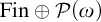

Proof. (c) $\implies $
(a) and (c)
$\implies $
(a) and (c) $\implies $
(b): If
$\implies $
(b): If $\mathcal {I}\cong \mathrm {Fin}$
, then actually
$\mathcal {I}\cong \mathrm {Fin}$
, then actually $\mathcal {I}=\mathrm {Fin}$
, so
$\mathcal {I}=\mathrm {Fin}$
, so $\mathcal {CR}(c_0,\hat {\mathbb {e}})=\mathcal {I}$
and
$\mathcal {CR}(c_0,\hat {\mathbb {e}})=\mathcal {I}$
and $\mathcal {CR}(\mathfrak {J},\hat {\mathbb {e}})=\mathcal {I}$
. On the other hand, if
$\mathcal {CR}(\mathfrak {J},\hat {\mathbb {e}})=\mathcal {I}$
. On the other hand, if $\mathcal {I}\cong \mathrm {Fin}\oplus \mathcal {P}(\omega )$
or
$\mathcal {I}\cong \mathrm {Fin}\oplus \mathcal {P}(\omega )$
or $\mathcal {I}\cong \{\emptyset \}\otimes \mathrm {Fin}$
, then it suffices to apply Theorem 4.1 or Proposition 6.4, respectively.
$\mathcal {I}\cong \{\emptyset \}\otimes \mathrm {Fin}$
, then it suffices to apply Theorem 4.1 or Proposition 6.4, respectively.
(a) $\implies $
(c) and (b)
$\implies $
(c) and (b) $\implies $
(c): Let
$\implies $
(c): Let $X=c_0$
or
$X=c_0$
or $X=\mathfrak {J}$
. Let
$X=\mathfrak {J}$
. Let $\hat {\mathbb {a}}$
be simple over
$\hat {\mathbb {a}}$
be simple over $\hat {\mathbb {e}}$
. Then there are
$\hat {\mathbb {e}}$
. Then there are $D\subseteq \omega $
, an interval-to-one
$D\subseteq \omega $
, an interval-to-one $h:D\to \omega $
and
$h:D\to \omega $
and $(\mathbb {b}_{h(n)})\subseteq X\setminus \{0\}$
such that:
$(\mathbb {b}_{h(n)})\subseteq X\setminus \{0\}$
such that:
 $$\begin{align*}S_n(\hat{\mathbb{u}})(\mathbb{x})-S_n(\hat{\mathbb{a}})(\mathbb{x})= \begin{cases} 0, & \text{if }n\in\omega\setminus D,\\ \mathbb{u}_{h(n)}^\star(\mathbb{x})\mathbb{b}_{h(n)}, & \text{if }n\in D, \end{cases} \end{align*}$$
for all $n\in \omega $
and
$n\in \omega $
and $\mathbb {x}\in X$
.
$\mathbb {x}\in X$
.
Define $B_0=\{n\in D: \|\mathbb {b}_{h(n)}\|_{X}\geq 1\}$
and
$B_0=\{n\in D: \|\mathbb {b}_{h(n)}\|_{X}\geq 1\}$
and $B_i=\{n\in D: \frac {1}{k+1}\leq \|\mathbb {b}_{h(n)}\|_{X}<\frac {1}{k}\}$
for all
$B_i=\{n\in D: \frac {1}{k+1}\leq \|\mathbb {b}_{h(n)}\|_{X}<\frac {1}{k}\}$
for all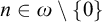 $n\in \omega \setminus \{0\}$
. Then
$n\in \omega \setminus \{0\}$
. Then $(B_k)$
is a partition of D. Denote
$(B_k)$
is a partition of D. Denote $T=\bigcup \{B_k: B_k\in \mathrm {Fin}\}$
and
$T=\bigcup \{B_k: B_k\in \mathrm {Fin}\}$
and $S=\{k\in \omega : B_k\notin \mathrm {Fin}\}$
.
$S=\{k\in \omega : B_k\notin \mathrm {Fin}\}$
.
Observe that:
-
(i)
$\mathcal {CR}(X,\hat {\mathbb {a}})\restriction \omega \setminus D=\mathrm {Fin}\restriction \omega \setminus D$
; -
(ii)
$\mathcal {CR}(X,\hat {\mathbb {a}})\restriction B_k=\mathrm {Fin}\restriction B_k$
for every
$k\in \omega $
; -
(iii) if
$A\subseteq D$
and
$A\cap B_k\in \mathrm {Fin}$
for all k, then
$A\in \mathcal {CR}(X,\hat {\mathbb {a}})$
; -
(iv)
$\mathcal {CR}(X,\hat {\mathbb {a}})\restriction T=\mathcal {P}(T)$
.







Indeed, in the case of $X=c_0$
all items follow from Lemma 3.3, while in the case of
$X=c_0$
all items follow from Lemma 3.3, while in the case of $X=\mathfrak {J}$
, item (ii) follows from the fact that
$X=\mathfrak {J}$
, item (ii) follows from the fact that $\mathfrak {J}\subseteq c_0$
and items (iii) and (iv) follow from Lemma 6.3.
$\mathfrak {J}\subseteq c_0$
and items (iii) and (iv) follow from Lemma 6.3.
There are four possibilities:
-
• If
$\omega \setminus T\in \mathrm {Fin}$
, then
$\mathcal {CR}(X,\hat {\mathbb {a}})=\mathcal {P}(\omega )$
(by (iv)). -
• If
$S\in \mathrm {Fin}$
and
$T\in \mathrm {Fin}$
, then
$\mathcal {CR}(X,\hat {\mathbb {a}})\cong \mathrm {Fin}$
(by (i) and (ii)). -
• If
$S\in \mathrm {Fin}$
,
$T\notin \mathrm {Fin}$
, but
$\omega \setminus T\notin \mathrm {Fin}$
, then
$\mathcal {CR}(X,\hat {\mathbb {a}})\cong \mathrm {Fin}\oplus \mathcal {P}(\omega )$
(by (i), (ii), and (iv)). -
• If
$S\notin \mathrm {Fin}$
, then
$\mathcal {CR}(X,\hat {\mathbb {a}})\cong \{\emptyset \}\otimes \mathrm {Fin}$
(by (ii), (iii), and Lemma 1.2).
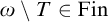






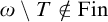



Hence, if $\mathcal {CR}(X,\hat {\mathbb {a}})\cong \mathcal {I}$
and
$\mathcal {CR}(X,\hat {\mathbb {a}})\cong \mathcal {I}$
and $\mathcal {I}$
is nontrivial, then
$\mathcal {I}$
is nontrivial, then $\mathcal {I}$
is isomorphic to
$\mathcal {I}$
is isomorphic to $\mathrm {Fin}$
,
$\mathrm {Fin}$
,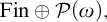 $\mathrm {Fin}\oplus \mathcal {P}(\omega ),$
or
$\mathrm {Fin}\oplus \mathcal {P}(\omega ),$
or $\{\emptyset \}\otimes \mathrm {Fin}$
.
$\{\emptyset \}\otimes \mathrm {Fin}$
.
Remark 6.6. Suppose that $\hat {\mathbb {a}}$
is simple over
$\hat {\mathbb {a}}$
is simple over $\hat {\mathbb {e}}$
. Then
$\hat {\mathbb {e}}$
. Then $\mathcal {CR}(c_0,\hat {\mathbb {a}})$
and
$\mathcal {CR}(c_0,\hat {\mathbb {a}})$
and $\mathcal {CR}(\mathfrak {J},\hat {\mathbb {a}})$
are not tall, but they can be non-
$\mathcal {CR}(\mathfrak {J},\hat {\mathbb {a}})$
are not tall, but they can be non- ${\mathbf {F}_\sigma }$
(by Theorem 6.5). On the other hand, for each
${\mathbf {F}_\sigma }$
(by Theorem 6.5). On the other hand, for each $1\leq p<\infty $
,
$1\leq p<\infty $
, $\mathcal {CR}(\ell _p,\hat {\mathbb {a}})$
has to be
$\mathcal {CR}(\ell _p,\hat {\mathbb {a}})$
has to be ${\mathbf {F}_\sigma }$
, but it can be tall (by Theorem 5.9).
${\mathbf {F}_\sigma }$
, but it can be tall (by Theorem 5.9).
7 A Schauder basis for every non-pathological analytic P-ideal
Results in this section were inspired by [Reference Borodulin-Nadzieja and Farkas3, Proposition 5.3].
Theorem 7.1. If $\mathcal {I}$
is a non-pathological analytic P-ideal, then there are a Banach space
$\mathcal {I}$
is a non-pathological analytic P-ideal, then there are a Banach space $X\subseteq \mathbb {R}^\omega $
and
$X\subseteq \mathbb {R}^\omega $
and $\hat {\mathbb {a}}$
simple over
$\hat {\mathbb {a}}$
simple over $\hat {\mathbb {e}}$
such that
$\hat {\mathbb {e}}$
such that $\mathcal {CR}(X,\hat {\mathbb {a}})=\mathcal {I}$
.
$\mathcal {CR}(X,\hat {\mathbb {a}})=\mathcal {I}$
.
Proof. Since $\mathcal {I}$
is a non-pathological analytic P-ideal, there is a non-pathological lsc submeasure
$\mathcal {I}$
is a non-pathological analytic P-ideal, there is a non-pathological lsc submeasure $\phi $
such that
$\phi $
such that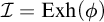 $\mathcal {I}=\mathrm {Exh}(\phi )$
. Without loss of generality we may assume that
$\mathcal {I}=\mathrm {Exh}(\phi )$
. Without loss of generality we may assume that $\mathrm {supp}(\phi )=\omega $
(it suffices to consider
$\mathrm {supp}(\phi )=\omega $
(it suffices to consider $\phi '$
given by
$\phi '$
given by
 $$\begin{align*}\phi'(A)=\phi(A)+\sum_{n\in A\setminus\mathrm{supp}(\phi)}\frac{1}{2^n}, \end{align*}$$
for all $A\subseteq \omega $
and observe that
$A\subseteq \omega $
and observe that $\mathrm {Exh}(\phi )=\mathrm {Exh}(\phi ')$
).
$\mathrm {Exh}(\phi )=\mathrm {Exh}(\phi ')$
).
Let $\mathcal {M}_\phi $
be the family of all measures on
$\mathcal {M}_\phi $
be the family of all measures on $\omega $
such that
$\omega $
such that $\mathrm {supp}(\mu )\in \mathrm {Fin}$
and
$\mathrm {supp}(\mu )\in \mathrm {Fin}$
and $\mu (B)\leq \phi (B)$
for all
$\mu (B)\leq \phi (B)$
for all $B\subseteq \omega $
. Define:
$B\subseteq \omega $
. Define:
 $$\begin{align*}\|\mathbb{x}\|_\phi=|x_0|+\sup_{\mu\in\mathcal{M}_\phi}\left(\sum_{k\in\mathrm{supp}(\mu)}(k+1)\mu(\{k\})|x_{k+1}|\right)\!, \end{align*}$$
for all $\mathbb {x}\in \mathbb {R}^\omega $
and let:
$\mathbb {x}\in \mathbb {R}^\omega $
and let:
 $$\begin{align*}X=\left\{x\in\mathbb{R}^\omega: \lim_{n\to\infty}\left\|\mathbb{x}-\sum_{i=0}^n \mathbb{e}_i^\star(\mathbb{x})\mathbb{e}_i\right\|_\phi=0\right\}=\left\{x\in\mathbb{R}^\omega: \lim_{n\to\infty}\left\|\sum_{i>n} \mathbb{e}_i^\star(\mathbb{x})\mathbb{e}_i\right\|_\phi=0\right\}\!. \end{align*}$$
Then $\|\cdot \|_\phi $
is a norm on
$\|\cdot \|_\phi $
is a norm on $\mathbb {R}^\omega $
(as
$\mathbb {R}^\omega $
(as $\mathrm {supp}(\phi )=\omega $
) making
$\mathrm {supp}(\phi )=\omega $
) making $(X,\|\cdot \|_\phi )$
a Banach space. Moreover,
$(X,\|\cdot \|_\phi )$
a Banach space. Moreover, $\hat {\mathbb {e}}$
is an unconditional Schauder basis of X (by [Reference Albiac and Kalton1, Proposition 3.1.3], since if
$\hat {\mathbb {e}}$
is an unconditional Schauder basis of X (by [Reference Albiac and Kalton1, Proposition 3.1.3], since if $|x_n|\leq |y_n|$
for all n, then
$|x_n|\leq |y_n|$
for all n, then $\|\mathbb {x}\|_\phi \leq \|\mathbb {y}\|_\phi $
).
$\|\mathbb {x}\|_\phi \leq \|\mathbb {y}\|_\phi $
).
For each $n\in \omega $
inductively find
$n\in \omega $
inductively find $p_n\in \mathbb {R}$
such that
$p_n\in \mathbb {R}$
such that $\|\sum _{i=0}^n p_i\mathbb {e}_i\|_\phi =n+1$
and let
$\|\sum _{i=0}^n p_i\mathbb {e}_i\|_\phi =n+1$
and let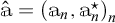 $\hat {\mathbb {a}}=\left (\mathbb {a}_n,\mathbb {a}_n^\star \right )_n$
be given by
$\hat {\mathbb {a}}=\left (\mathbb {a}_n,\mathbb {a}_n^\star \right )_n$
be given by $\mathbb {a}_n = \sum _{i=0}^n p_i\mathbb {e}_i $
and
$\mathbb {a}_n = \sum _{i=0}^n p_i\mathbb {e}_i $
and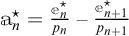 $\mathbb {a}_n^\star =\frac {\mathbb {e}_n^\star }{p_n} - \frac {\mathbb {e}_{n+1}^\star }{p_{n+1}}$
for all
$\mathbb {a}_n^\star =\frac {\mathbb {e}_n^\star }{p_n} - \frac {\mathbb {e}_{n+1}^\star }{p_{n+1}}$
for all $n\in \omega $
. Clearly,
$n\in \omega $
. Clearly, $\mathbb {a}^\star _n(\mathbb {a}_m)=\delta _{nm}$
for all
$\mathbb {a}^\star _n(\mathbb {a}_m)=\delta _{nm}$
for all $n,m\in \omega $
.
$n,m\in \omega $
.
Observe that:
 $$\begin{align*}S_n(\hat{\mathbb{e}})(\mathbb{x})-S_n(\hat{\mathbb{a}})(\mathbb{x})=\mathbb{e}_{n+1}^\star(\mathbb{x})\mathbb{a}_{n}, \end{align*}$$
for every $\mathbb {x}\in X$
. In particular,
$\mathbb {x}\in X$
. In particular, $\hat {\mathbb {a}}$
is simple over
$\hat {\mathbb {a}}$
is simple over $\hat {\mathbb {e}}$
with
$\hat {\mathbb {e}}$
with $h=\operatorname {id}+1$
witnessing it. Hence, applying Lemma 3.3, we have:
$h=\operatorname {id}+1$
witnessing it. Hence, applying Lemma 3.3, we have:
 $$ \begin{align*} \mathcal{CR}(X,\hat{\mathbb{a}}) & =\left\{A\subseteq\omega: \sum_{k\in A}\frac{\mathbb{e}_{k+1}}{\left\|\mathbb{a}_k\right\|_\phi}\in X\right\}=\left\{A\subseteq\omega: \lim_{n\to\infty}\left\|\sum_{k\in A\setminus n} \frac{\mathbb{e}_{k+1}}{k+1}\right\|_\phi=0\right\}\cr & =\left\{A\subseteq\omega: \lim_{n\to\infty}\sup_{\mu\in\mathcal{M}_\phi}\left(\sum_{k\in\mathrm{supp}(\mu)\cap(A\setminus n)}(k+1)\mu(\{k\})\frac{1}{k+1}\right) =0\right\}\cr & =\left\{A\subseteq\omega: \lim_{n\to\infty}\sup_{\mu\in\mathcal{M}_\phi}\mu(A\setminus n) =0\right\}= \left\{A\subseteq\omega: \lim_n\phi(A\setminus n) =0\right\}\\&=\mathrm{Exh}(\phi)=\mathcal{I}.\\[-35pt] \end{align*} $$
Corollary 7.2. There are a Banach space $X\subseteq \mathbb {R}^\omega $
and
$X\subseteq \mathbb {R}^\omega $
and $\hat {\mathbb {a}}$
simple over
$\hat {\mathbb {a}}$
simple over $\hat {\mathbb {e}}$
such that
$\hat {\mathbb {e}}$
such that $\mathcal {CR}(X,\hat {\mathbb {a}})=\mathcal {I}_d$
. In particular,
$\mathcal {CR}(X,\hat {\mathbb {a}})=\mathcal {I}_d$
. In particular, $\mathcal {CR}(X,\hat {\mathbb {a}})\not \cong \mathcal {CR}(c_0,\hat {\mathbb {w}})$
and
$\mathcal {CR}(X,\hat {\mathbb {a}})\not \cong \mathcal {CR}(c_0,\hat {\mathbb {w}})$
and $\mathcal {CR}(X,\hat {\mathbb {a}})\not \cong \mathcal {CR}(\ell _p,\hat {\mathbb {w}})$
, for all
$\mathcal {CR}(X,\hat {\mathbb {a}})\not \cong \mathcal {CR}(\ell _p,\hat {\mathbb {w}})$
, for all $\hat {\mathbb {w}}$
simple over
$\hat {\mathbb {w}}$
simple over $\hat {\mathbb {e}}$
and all
$\hat {\mathbb {e}}$
and all $1\leq p<\infty $
.
$1\leq p<\infty $
.
Proof. The existence of $X\subseteq \mathbb {R}^\omega $
and
$X\subseteq \mathbb {R}^\omega $
and $\hat {\mathbb {a}}$
simple over
$\hat {\mathbb {a}}$
simple over $\hat {\mathbb {e}}$
such that
$\hat {\mathbb {e}}$
such that $\mathcal {CR}(X,\hat {\mathbb {a}})=\mathcal {I}_d$
follows from Theorem 7.1, since
$\mathcal {CR}(X,\hat {\mathbb {a}})=\mathcal {I}_d$
follows from Theorem 7.1, since $\mathcal {I}_d$
is non-pathological (
$\mathcal {I}_d$
is non-pathological ( $\mathcal {I}_d=\mathrm {Exh}(\sup _{n\in \omega }\mu _n)$
for measures
$\mathcal {I}_d=\mathrm {Exh}(\sup _{n\in \omega }\mu _n)$
for measures $\mu _n:\mathcal {P}(\omega )\to [0,\infty )$
given by
$\mu _n:\mathcal {P}(\omega )\to [0,\infty )$
given by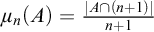 $\mu _n(A)=\frac {|A\cap (n+1)|}{n+1}$
, for all
$\mu _n(A)=\frac {|A\cap (n+1)|}{n+1}$
, for all $n\in \omega $
and
$n\in \omega $
and $A\subseteq \omega $
).
$A\subseteq \omega $
).
The fact that $\mathcal {I}_d\not \cong \mathcal {CR}(\ell _p,\hat {\mathbb {w}})$
, for all
$\mathcal {I}_d\not \cong \mathcal {CR}(\ell _p,\hat {\mathbb {w}})$
, for all $\hat {\mathbb {w}}$
simple over
$\hat {\mathbb {w}}$
simple over $\hat {\mathbb {e}}$
and all
$\hat {\mathbb {e}}$
and all $1\leq p<\infty $
, follows now from Remark 6.6, since
$1\leq p<\infty $
, follows now from Remark 6.6, since $\mathcal {I}_d$
is not
$\mathcal {I}_d$
is not ${\mathbf {F}_\sigma }$
.
${\mathbf {F}_\sigma }$
.
To see that $\mathcal {I}_d\not \cong \mathcal {CR}(c_0,\hat {\mathbb {w}})$
, for all
$\mathcal {I}_d\not \cong \mathcal {CR}(c_0,\hat {\mathbb {w}})$
, for all $\hat {\mathbb {w}}$
simple over
$\hat {\mathbb {w}}$
simple over $\hat {\mathbb {e}}$
, note that
$\hat {\mathbb {e}}$
, note that $\mathcal {CR}(c_0,\hat {\mathbb {w}})$
is not tall (by Remark 6.6), while
$\mathcal {CR}(c_0,\hat {\mathbb {w}})$
is not tall (by Remark 6.6), while $\mathcal {I}_d$
is tall.
$\mathcal {I}_d$
is tall.
8 Avoiding
$c_{00}$

Examples considered so far were based on vectors being elements of $c_{00}$
. In this section, we propose an alternative approach, which involves introducing more zeros at the beginning of the sequence under consideration. As the case of James’ space appears more technical, we restrict our discussion in this section to the spaces
$c_{00}$
. In this section, we propose an alternative approach, which involves introducing more zeros at the beginning of the sequence under consideration. As the case of James’ space appears more technical, we restrict our discussion in this section to the spaces $c_0$
and
$c_0$
and $\ell _p$
.
$\ell _p$
.
We also use this section to present alternative method of proving $\mathbb {a}^\star _n(\mathbb {a}_m)=\delta _{nm}.$
Observe that the condition follows from
$\mathbb {a}^\star _n(\mathbb {a}_m)=\delta _{nm}.$
Observe that the condition follows from $\mathbb {x}=\sum _{\mathcal {I},n} \mathbb {a}^\star _n(\mathbb {x})\mathbb {a}_n$
and the existence of some sequence of continuous functionals
$\mathbb {x}=\sum _{\mathcal {I},n} \mathbb {a}^\star _n(\mathbb {x})\mathbb {a}_n$
and the existence of some sequence of continuous functionals $\mathbb {b}_n^\star $
such that
$\mathbb {b}_n^\star $
such that $\mathbb {a}_n\in \operatorname {Ker}\mathbb {b}^\star _m$
iff
$\mathbb {a}_n\in \operatorname {Ker}\mathbb {b}^\star _m$
iff $n\neq m$
(since the latter condition is equivalent to
$n\neq m$
(since the latter condition is equivalent to $\mathbb {a}_n\notin \overline {\operatorname {span}\{\mathbb {a}_m:n\neq n\}}$
for all n). Within this section it will be enough to consider
$\mathbb {a}_n\notin \overline {\operatorname {span}\{\mathbb {a}_m:n\neq n\}}$
for all n). Within this section it will be enough to consider $\mathbb {b}^\star _n=\mathbb {e}_n^\star $
in all examples except Example 8.9.
$\mathbb {b}^\star _n=\mathbb {e}_n^\star $
in all examples except Example 8.9.
Definition 8.1. For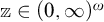 $\mathbb {z}\in (0,\infty )^\omega $
, we define
$\mathbb {z}\in (0,\infty )^\omega $
, we define $\mathbb {a}_n(\mathbb {z})=\mathbb {z}\cdot \chi _{[n,\infty )}=\sum _{k=n}^\infty z_n\mathbb {e}_k$
for all
$\mathbb {a}_n(\mathbb {z})=\mathbb {z}\cdot \chi _{[n,\infty )}=\sum _{k=n}^\infty z_n\mathbb {e}_k$
for all $n\in \omega $
and set
$n\in \omega $
and set $\mathbb {a}_0^\star (\mathbb {z})=\frac {1}{z_0}\mathbb {e}_0^\star $
and
$\mathbb {a}_0^\star (\mathbb {z})=\frac {1}{z_0}\mathbb {e}_0^\star $
and $\mathbb {a}_n^\star (\mathbb {z})=\frac {1}{z_n}\mathbb {e}_n^\star - \frac {1}{z_{n-1}}\mathbb {e}_{n-1}^\star $
for all
$\mathbb {a}_n^\star (\mathbb {z})=\frac {1}{z_n}\mathbb {e}_n^\star - \frac {1}{z_{n-1}}\mathbb {e}_{n-1}^\star $
for all $n\geq 1$
.
$n\geq 1$
.
Note that in this case, pointwise convergence determines the form of the functionals $\mathbb {a}_n^\star (\mathbb {z})$
.
$\mathbb {a}_n^\star (\mathbb {z})$
.
Lemma 8.2. Let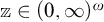 $\mathbb {z}\in (0,\infty )^\omega $
. Then
$\mathbb {z}\in (0,\infty )^\omega $
. Then $\hat {\mathbb {a}}(\mathbb {z})$
is simple over
$\hat {\mathbb {a}}(\mathbb {z})$
is simple over $\hat {\mathbb {e}}$
with witnesses
$\hat {\mathbb {e}}$
with witnesses $D=\omega $
,
$D=\omega $
, $h=\operatorname {id,}$
and
$h=\operatorname {id,}$
and $\mathbb {b}_n=-\sum _{m>n}\frac {z_m}{z_n}\mathbb {e}_m$
for all
$\mathbb {b}_n=-\sum _{m>n}\frac {z_m}{z_n}\mathbb {e}_m$
for all $n\in \omega $
.
$n\in \omega $
.
Proof. Observe that if $\mathbb {x}\in \mathbb {R}^\omega $
, then for
$\mathbb {x}\in \mathbb {R}^\omega $
, then for $m\leq n$
we get
$m\leq n$
we get $\mathbb {e}_m^\star (S_n(\hat {\mathbb {a}}(\mathbb {z}))(\mathbb {x}))=\mathbb {e}_m^\star (\mathbb {x})$
, while for
$\mathbb {e}_m^\star (S_n(\hat {\mathbb {a}}(\mathbb {z}))(\mathbb {x}))=\mathbb {e}_m^\star (\mathbb {x})$
, while for $m>n$
we have:
$m>n$
we have:
 $$ \begin{align*} \mathbb{e}_m^\star\left(S_n(\hat{\mathbb{a}}(\mathbb{z}))(\mathbb{x})\right) & =\frac{\mathbb{e}_0^\star(\mathbb{x})z_m}{z_0}+\sum_{i=1}^n \left(\frac{1}{z_i}\mathbb{e}_i^\star(\mathbb{x}) - \frac{1}{z_{i-1}}\mathbb{e}_{i-1}^\star(\mathbb{x})\right)z_m\cr & =\left(\frac{\mathbb{e}_0^\star(\mathbb{x})}{z_0}+\sum_{i=1}^n \left(\frac{1}{z_{i}}\mathbb{e}_i^\star(\mathbb{x}) - \frac{1}{z_{i-1}}\mathbb{e}_{i-1}^\star(\mathbb{x})\right) \right)z_m=\frac{z_m\mathbb{e}^\star_n(\mathbb{x})}{z_n}. \end{align*} $$
Hence:
 $$\begin{align*}S_n(\hat{\mathbb{e}})(\mathbb{x})-S_n(\hat{\mathbb{a}}(\mathbb{z}))(\mathbb{x})=-\mathbb{e}^\star_n(\mathbb{x})\sum_{m>n} \frac{z_m}{z_n} \mathbb{e}_m. \end{align*}$$
In particular, $\hat {\mathbb {a}}(\mathbb {z})$
is simple over
$\hat {\mathbb {a}}(\mathbb {z})$
is simple over $\hat {\mathbb {e}}$
as witnessed by
$\hat {\mathbb {e}}$
as witnessed by $D=\omega $
,
$D=\omega $
, $h=\operatorname {id,}$
and
$h=\operatorname {id,}$
and $\mathbb {b}_n=-\sum _{m>n}\frac {z_m}{z_n}\mathbb {e}_m$
.
$\mathbb {b}_n=-\sum _{m>n}\frac {z_m}{z_n}\mathbb {e}_m$
.
The first specific example of this approach will be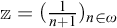 $\mathbb {z}=(\frac {1}{n+1})_{n \in \omega }$
. Note that
$\mathbb {z}=(\frac {1}{n+1})_{n \in \omega }$
. Note that $\mathbb {z}\notin \ell _1$
, so also
$\mathbb {z}\notin \ell _1$
, so also $\mathbb {a}_n(\mathbb {z})\notin \ell _1$
for all
$\mathbb {a}_n(\mathbb {z})\notin \ell _1$
for all $n\in \omega $
and we cannot consider
$n\in \omega $
and we cannot consider $\hat {\mathbb {a}}(\mathbb {z})$
in the space
$\hat {\mathbb {a}}(\mathbb {z})$
in the space $\ell _1$
.
$\ell _1$
.
Proposition 8.3. Let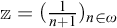 $\mathbb {z}=(\frac {1}{n+1})_{n \in \omega }$
. Then
$\mathbb {z}=(\frac {1}{n+1})_{n \in \omega }$
. Then $\mathcal {CR}(c_0,\hat {\mathbb {a}}(\mathbb {z}))=\mathcal {CR}(\mathfrak {J},\hat {\mathbb {a}}(\mathbb {z}))=\mathrm {Fin}$
and
$\mathcal {CR}(c_0,\hat {\mathbb {a}}(\mathbb {z}))=\mathcal {CR}(\mathfrak {J},\hat {\mathbb {a}}(\mathbb {z}))=\mathrm {Fin}$
and $\mathcal {CR}(\ell _p,\hat {\mathbb {a}}(\mathbb {z}))=\mathcal {I}_{1/n}$
for all
$\mathcal {CR}(\ell _p,\hat {\mathbb {a}}(\mathbb {z}))=\mathcal {I}_{1/n}$
for all $1<p<\infty $
.
$1<p<\infty $
.
Proof. Let $(\mathbb {b}_n)$
be as in Lemma 8.2.
$(\mathbb {b}_n)$
be as in Lemma 8.2.
Note that $\|\mathbb {b}_n\|_{c_0}=\|-\sum _{m>n}\frac {z_m}{z_n}\mathbb {e}_m\|_{c_0}=\frac {n+1}{n+2}$
for all
$\|\mathbb {b}_n\|_{c_0}=\|-\sum _{m>n}\frac {z_m}{z_n}\mathbb {e}_m\|_{c_0}=\frac {n+1}{n+2}$
for all $n\in \omega $
. Thus, using Lemmas 3.3 and 8.2, we have:
$n\in \omega $
. Thus, using Lemmas 3.3 and 8.2, we have:
 $$\begin{align*}\mathcal{CR}(c_0,\hat{\mathbb{a}}(\mathbb{z}))=\left\{A\subseteq\omega:\sum_{n\in A}\frac{\mathbb{e}_n}{\|\mathbb{b}_n\|_{c_0}}\in c_0\right\}=\left\{A\subseteq\omega:\sum_{n\in A}\frac{n+2}{n+1}\mathbb{e}_n\in c_0\right\}=\mathrm{Fin}. \end{align*}$$
Similarly, since $\|\mathbb {b}_n\|_{\mathfrak {J}}=\|-\sum _{m>n}\frac {z_m}{z_n}\mathbb {e}_m\|_{\mathfrak {J}}=\sqrt {2}\frac {n+1}{n+2}$
for all
$\|\mathbb {b}_n\|_{\mathfrak {J}}=\|-\sum _{m>n}\frac {z_m}{z_n}\mathbb {e}_m\|_{\mathfrak {J}}=\sqrt {2}\frac {n+1}{n+2}$
for all $n\in \omega $
, using Lemmas 3.1 and 8.2 we get
$n\in \omega $
, using Lemmas 3.1 and 8.2 we get $\mathcal {CR}(\mathfrak {J},\hat {\mathbb {a}}(\mathbb {z}))=\mathrm {Fin}$
(as
$\mathcal {CR}(\mathfrak {J},\hat {\mathbb {a}}(\mathbb {z}))=\mathrm {Fin}$
(as $A_{\mathbb {x}}$
is finite for every
$A_{\mathbb {x}}$
is finite for every $\mathbb {x}\in \mathfrak {J}$
).
$\mathbb {x}\in \mathfrak {J}$
).
If now $1<p<\infty $
, then:
$1<p<\infty $
, then:
 $$\begin{align*}\|\mathbb{b}_n\|_{\ell_p}=\left\|-\sum_{m>n}\frac{z_m}{z_n}\mathbb{e}_m\right\|_{\ell_p}=(n+1)\left(\sum_{m>n}\frac{1}{(m+1)^p}\right)^{1/p}. \end{align*}$$
Estimating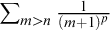 $\sum _{m>n}\frac {1}{(m+1)^p}$
by
$\sum _{m>n}\frac {1}{(m+1)^p}$
by $\int _{n+1}^\infty \frac {1}{x^p} dx $
yields
$\int _{n+1}^\infty \frac {1}{x^p} dx $
yields $\frac {(n+1)^{1-p}}{p-1}$
, hence we get:
$\frac {(n+1)^{1-p}}{p-1}$
, hence we get:
 $$\begin{align*}\|\mathbb{b}_n\|_{\ell_p}\approx(n+1)\left(\frac{(n+1)^{1-p}}{p-1}\right)^{1/p}=\left(\frac{n+1}{p-1}\right)^{1/p}. \end{align*}$$
Using Lemmas 3.3 and 8.2 once again, we have:
 $$\begin{align*}\mathcal{CR}(\ell_p,\hat{\mathbb{a}}(\mathbb{z}))=\left\{A\subseteq\omega: \sum_{n\in A}\frac{\mathbb{e}_n}{\|\mathbb{b}_n\|_{\ell_p}}\in\ell_p\right\}=\left\{A\subseteq\omega: \sum_{n\in A}\frac{p-1}{n+1}<\infty\right\}=\mathcal{I}_{1/n}. \end{align*}$$
Let us now switch to the case of arbitrary $\mathbb {z}\in (0,\infty )^\omega \cap X$
, and firstly consider it within the space
$\mathbb {z}\in (0,\infty )^\omega \cap X$
, and firstly consider it within the space $X=c_0$
.
$X=c_0$
.
Proposition 8.4. Let $\mathbb {z}\in (0,\infty )^\omega \cap c_0$
. Then
$\mathbb {z}\in (0,\infty )^\omega \cap c_0$
. Then
 $$\begin{align*}\mathcal{CR}(c_0, \hat{\mathbb{a}}(\mathbb{z}))=\left\{A\subseteq\omega: \lim_{n\in A}\frac{1}{\alpha_n(\mathbb{z})}=0\right\}\!, \end{align*}$$
where $\alpha _n(\mathbb {z})=\sup _{m>n}\frac {z_m}{z_n}$
for all
$\alpha _n(\mathbb {z})=\sup _{m>n}\frac {z_m}{z_n}$
for all $n\in \omega $
. Moreover:
$n\in \omega $
. Moreover:
-
(a) if
$(\alpha _n(\mathbb {z}))$
is bounded (in particular, if
$\mathbb {z}$
is monotone), then
$\mathcal {CR}(c_0,\hat {\mathbb {a}}(\mathbb {z}))=\mathrm {Fin}$
; -
(b) if there is an infinite
$E\subseteq \omega $
such that
$(\alpha _n(\mathbb {z}))_{n\in \omega \setminus E}$
is bounded and
$\lim _{n\in E}\alpha _n(\mathbb {z})=\infty $
, then
$\mathcal {CR}(c_0,\hat {\mathbb {a}}(\mathbb {z}))$
is the ideal generated by
$\mathrm {Fin}\cup \{E\}$
; -
(c) if there is a partition
$(D_k)$
of
$\omega $
into infinite sets such that
$\lim _{k\to \infty }\inf _{n \in D_k} \alpha _n(\mathbb {z})=\infty $
and
$\sup _{n \in D_k} \alpha _n(\mathbb {z}) < \infty $
for every
$k\in \omega $
, then:
$$\begin{align*}\mathcal{CR}(c_0,\hat{\mathbb{a}}(\mathbb{z}))=\{A\subseteq\omega:A\cap D_k\in\mathrm{Fin}\text{ for all }k\in\omega\}\!.\end{align*}$$




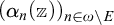

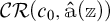






Proof. Let $(\mathbb {b}_n)$
be as in Lemma 8.2. Since
$(\mathbb {b}_n)$
be as in Lemma 8.2. Since $\|\mathbb {b}_n\|_{c_0}=\alpha _n(\mathbb {z})$
for all
$\|\mathbb {b}_n\|_{c_0}=\alpha _n(\mathbb {z})$
for all $n\in \omega $
, using Lemmas 3.3 and 8.2, we have:
$n\in \omega $
, using Lemmas 3.3 and 8.2, we have:
 $$\begin{align*}\mathcal{CR}(c_0,\hat{\mathbb{a}}(\mathbb{z}))=\left\{A\subseteq\omega:\sum_{n\in A}\frac{\mathbb{e}_n}{\|\mathbb{b}_n\|_{c_0}}\in c_0\right\}=\left\{A\subseteq\omega: \lim_{n\in A}\frac{1}{\alpha_n(\mathbb{z})}=0\right\}\!. \end{align*}$$
Items (a), (b), and (c) are clear.
Lemma 8.5. A sequence $(y_n) \in (0,\infty )^\omega $
is of the form
$(y_n) \in (0,\infty )^\omega $
is of the form $(\alpha _n(\mathbb {z}))$
for some
$(\alpha _n(\mathbb {z}))$
for some $\mathbb {z}\in (0,\infty )^\omega \cap c_0$
if and only if
$\mathbb {z}\in (0,\infty )^\omega \cap c_0$
if and only if $\prod \{y_n : y_n <1\}=0$
.
$\prod \{y_n : y_n <1\}=0$
.
Proof. Assume that there is $\mathbb {z}\in c_0$
such that
$\mathbb {z}\in c_0$
such that $y_n=\alpha _n(\mathbb {z})$
for all
$y_n=\alpha _n(\mathbb {z})$
for all $n\in \omega $
. Inductively find
$n\in \omega $
. Inductively find $(k_n)$
such that
$(k_n)$
such that $k_0=0$
and
$k_0=0$
and $y_{k_n}=\frac {z_{k_{n+1}}}{z_{k_n}}$
for all
$y_{k_n}=\frac {z_{k_{n+1}}}{z_{k_n}}$
for all $n\in \omega $
(in particular,
$n\in \omega $
(in particular, $y_0=\frac {z_{k_1}}{z_0}$
). Observe that
$y_0=\frac {z_{k_1}}{z_0}$
). Observe that $z_{k_{n+1}}{\kern-1pt}={\kern-1pt}z_0\cdot \prod \{y_{k_i} {\kern-1pt}:{\kern-1pt} i{\kern-1pt}\leq{\kern-1pt} n\}$
. Since
$z_{k_{n+1}}{\kern-1pt}={\kern-1pt}z_0\cdot \prod \{y_{k_i} {\kern-1pt}:{\kern-1pt} i{\kern-1pt}\leq{\kern-1pt} n\}$
. Since $\mathbb {z}{\kern-1pt}\in{\kern-1pt} c_0$
, we get that
$\mathbb {z}{\kern-1pt}\in{\kern-1pt} c_0$
, we get that $\prod \{y_{k_i} {\kern-1pt}:{\kern-1pt} i{\kern-1pt}\in{\kern-1pt} \omega \}{\kern-1pt}={\kern-1pt}0$
. In particular,
$\prod \{y_{k_i} {\kern-1pt}:{\kern-1pt} i{\kern-1pt}\in{\kern-1pt} \omega \}{\kern-1pt}={\kern-1pt}0$
. In particular, $\prod \{y_{k_i} : y_{k_i}<1\}=0$
, so also
$\prod \{y_{k_i} : y_{k_i}<1\}=0$
, so also $\prod \{y_n : y_n <1\}=0$
.
$\prod \{y_n : y_n <1\}=0$
.
To see the other implication, let $(n_i)$
be the increasing enumeration of the set
$(n_i)$
be the increasing enumeration of the set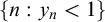 $\{n : y_n <1\}$
. Define
$\{n : y_n <1\}$
. Define $z_{n_0}=1$
,
$z_{n_0}=1$
, $z_{n_{i+1}}=y_{n_i} z_{n_i}$
,
$z_{n_{i+1}}=y_{n_i} z_{n_i}$
,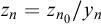 $z_n = z_{n_0}/y_n$
for
$z_n = z_{n_0}/y_n$
for $n<n_0$
and
$n<n_0$
and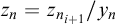 $z_n=z_{n_{i+1}}/y_n$
for
$z_n=z_{n_{i+1}}/y_n$
for $n\in (n_i, n_{i+1})$
. Clearly,
$n\in (n_i, n_{i+1})$
. Clearly, $\mathbb {z}\in (0,\infty )^\omega \cap c_0$
and
$\mathbb {z}\in (0,\infty )^\omega \cap c_0$
and $y_n=\alpha _n(\mathbb {z})$
for all
$y_n=\alpha _n(\mathbb {z})$
for all $n\in \omega $
.
$n\in \omega $
.
Corollary 8.6. For every ideal $\mathcal {I}$
on
$\mathcal {I}$
on $\omega $
we have:
$\omega $
we have: $\mathcal {CR}(c_0,\hat {\mathbb {a}}(\mathbb {z}))=\mathcal {I}$
for some
$\mathcal {CR}(c_0,\hat {\mathbb {a}}(\mathbb {z}))=\mathcal {I}$
for some ${\mathbb {z}\in (0,\infty )^\omega \cap c_0}$
if and only if
${\mathbb {z}\in (0,\infty )^\omega \cap c_0}$
if and only if $\mathcal {I}$
is isomorphic to
$\mathcal {I}$
is isomorphic to $\mathrm {Fin}, \mathrm {Fin}\oplus \mathcal {P}(\omega ),$
or
$\mathrm {Fin}, \mathrm {Fin}\oplus \mathcal {P}(\omega ),$
or $\{\emptyset \}\otimes \mathrm {Fin}$
.
$\{\emptyset \}\otimes \mathrm {Fin}$
.
Proof. Notice that for each $\mathbb {z}\in (0,\infty )^\omega \cap c_0$
the sequence
$\mathbb {z}\in (0,\infty )^\omega \cap c_0$
the sequence $(\alpha _n(\mathbb {z}))$
is either bounded or there is an infinite
$(\alpha _n(\mathbb {z}))$
is either bounded or there is an infinite $E\subseteq \omega $
such that
$E\subseteq \omega $
such that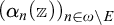 $(\alpha _n(\mathbb {z}))_{n\in \omega \setminus E}$
is bounded and
$(\alpha _n(\mathbb {z}))_{n\in \omega \setminus E}$
is bounded and $\lim _{n\in E}\alpha _n(\mathbb {z})=\infty $
or there is a partition
$\lim _{n\in E}\alpha _n(\mathbb {z})=\infty $
or there is a partition $(D_k)$
of
$(D_k)$
of $\omega $
into infinite sets such that
$\omega $
into infinite sets such that $\lim _{k\to \infty }\inf _{n \in D_k} \alpha _n(\mathbb {z})=\infty $
and
$\lim _{k\to \infty }\inf _{n \in D_k} \alpha _n(\mathbb {z})=\infty $
and $\sup _{n \in D_k} \alpha _n(\mathbb {z}) < \infty $
for every
$\sup _{n \in D_k} \alpha _n(\mathbb {z}) < \infty $
for every $k\in \omega $
. Thus, thanks to Proposition 8.4, the ideal
$k\in \omega $
. Thus, thanks to Proposition 8.4, the ideal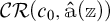 $\mathcal {CR}(c_0,\hat {\mathbb {a}}(\mathbb {z}))$
is equal to
$\mathcal {CR}(c_0,\hat {\mathbb {a}}(\mathbb {z}))$
is equal to $\mathrm {Fin}$
, generated by
$\mathrm {Fin}$
, generated by $\mathrm {Fin}\cup \{E\}$
, for some infinite
$\mathrm {Fin}\cup \{E\}$
, for some infinite $E\subseteq \omega $
(in this case it is isomorphic with
$E\subseteq \omega $
(in this case it is isomorphic with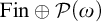 $\mathrm {Fin}\oplus \mathcal {P}(\omega )$
), or of the form
$\mathrm {Fin}\oplus \mathcal {P}(\omega )$
), or of the form $\{A\subseteq \omega :A\cap D_k\in \mathrm {Fin}\text { for all }k\in \omega \}$
, for some partition
$\{A\subseteq \omega :A\cap D_k\in \mathrm {Fin}\text { for all }k\in \omega \}$
, for some partition $(D_k)$
of
$(D_k)$
of $\omega $
into infinite sets (in this case it is isomorphic with
$\omega $
into infinite sets (in this case it is isomorphic with $\{\emptyset \}\otimes \mathrm {Fin}$
). This shows one implication.
$\{\emptyset \}\otimes \mathrm {Fin}$
). This shows one implication.
If now $\mathcal {I}$
is isomorphic to
$\mathcal {I}$
is isomorphic to $\mathrm {Fin}, \mathrm {Fin}\oplus \mathcal {P}(\omega ),$
or
$\mathrm {Fin}, \mathrm {Fin}\oplus \mathcal {P}(\omega ),$
or $\{\emptyset \}\otimes \mathrm {Fin}$
, then we can easily find a sequence
$\{\emptyset \}\otimes \mathrm {Fin}$
, then we can easily find a sequence $(y_n)$
such that
$(y_n)$
such that $\prod \{y_n : y_n <1\}=0$
and
$\prod \{y_n : y_n <1\}=0$
and $\mathcal {I}=\{A\subseteq \omega :\lim _{n\in A}\frac {1}{y_n}=0\}$
. By Lemma 8.5, there is
$\mathcal {I}=\{A\subseteq \omega :\lim _{n\in A}\frac {1}{y_n}=0\}$
. By Lemma 8.5, there is $\mathbb {z}\in (0,\infty )^\omega \cap c_0$
such that
$\mathbb {z}\in (0,\infty )^\omega \cap c_0$
such that $y_n=\alpha _n(\mathbb {z})$
for all n. In particular,
$y_n=\alpha _n(\mathbb {z})$
for all n. In particular, $\mathcal {I}=\mathcal {CR}(c_0,\hat {\mathbb {a}}(\mathbb {z}))$
(by Proposition 8.4).
$\mathcal {I}=\mathcal {CR}(c_0,\hat {\mathbb {a}}(\mathbb {z}))$
(by Proposition 8.4).
Let us now switch to the case of the space $\ell _p$
.
$\ell _p$
.
Proposition 8.7. Let $\mathbb {z}\in (0,\infty )^\omega \cap \ell _p$
. Then
$\mathbb {z}\in (0,\infty )^\omega \cap \ell _p$
. Then $\mathcal {CR}(\ell _p,\hat {\mathbb {a}}(\mathbb {z}))=\mathcal {I}_{\frac {1}{\beta _n(\mathbb {z})}}$
, where
$\mathcal {CR}(\ell _p,\hat {\mathbb {a}}(\mathbb {z}))=\mathcal {I}_{\frac {1}{\beta _n(\mathbb {z})}}$
, where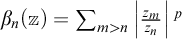 $\beta _n(\mathbb {z})=\sum _{m>n}\left |\frac {z_m}{z_n}\right |{}^p$
for all
$\beta _n(\mathbb {z})=\sum _{m>n}\left |\frac {z_m}{z_n}\right |{}^p$
for all $n\in \omega $
.
$n\in \omega $
.
Proof. Let $(\mathbb {b}_n)$
be as in Lemma 8.2. Since
$(\mathbb {b}_n)$
be as in Lemma 8.2. Since $\|\mathbb {b}_n\|_{\ell _p}=(\beta _n(\mathbb {z}))^{1/p}$
for all
$\|\mathbb {b}_n\|_{\ell _p}=(\beta _n(\mathbb {z}))^{1/p}$
for all $n\in \omega $
, using Lemmas 3.3 and 8.2, we have:
$n\in \omega $
, using Lemmas 3.3 and 8.2, we have:
 $$\begin{align*}\mathcal{CR}(\ell_p,\hat{\mathbb{a}}(\mathbb{z}))=\left\{A\subseteq\omega:\sum_{n\in A}\frac{\mathbb{e}_n}{\|\mathbb{b}_n\|_{\ell_p}}\in \ell_p\right\}=\left\{A\subseteq\omega: \sum_{n\in A}\frac{1}{\beta_n(\mathbb{z})}<\infty\right\}=\mathcal{I}_{\frac{1}{\beta_n(\mathbb{z})}}\!. \end{align*}$$
Remark 8.8. By Theorem 6.5 and Corollary 8.6 we know that in the space $c_0$
, for every
$c_0$
, for every $\hat {\mathbb {a}}$
simple over
$\hat {\mathbb {a}}$
simple over $\hat {\mathbb {e}}$
there is some
$\hat {\mathbb {e}}$
there is some $\mathbb {z}\in (0,\infty )^\omega \cap c_0$
such that
$\mathbb {z}\in (0,\infty )^\omega \cap c_0$
such that $\mathcal {CR}(c_0, \hat {\mathbb {a}})=\mathcal {CR}(c_0, \hat {\mathbb {a}}(\mathbb {z}))$
. In the spaces
$\mathcal {CR}(c_0, \hat {\mathbb {a}})=\mathcal {CR}(c_0, \hat {\mathbb {a}}(\mathbb {z}))$
. In the spaces $\ell _p$
the situation is different: by Corollary 5.8 and Proposition 8.7, there is
$\ell _p$
the situation is different: by Corollary 5.8 and Proposition 8.7, there is $\hat {\mathbb {a}}$
simple over
$\hat {\mathbb {a}}$
simple over $\hat {\mathbb {e}}$
such that
$\hat {\mathbb {e}}$
such that $\mathcal {CR}(\ell _p, \hat {\mathbb {a}})\neq \mathcal {CR}(\ell _p, \hat {\mathbb {a}}(\mathbb {z}))$
for all
$\mathcal {CR}(\ell _p, \hat {\mathbb {a}})\neq \mathcal {CR}(\ell _p, \hat {\mathbb {a}}(\mathbb {z}))$
for all $\mathbb {z}\in (0,\infty )^\omega \cap \ell _p$
.
$\mathbb {z}\in (0,\infty )^\omega \cap \ell _p$
.
Next example shows that it is possible to have three $\mathrm {Fin}$
-Schauder bases
$\mathrm {Fin}$
-Schauder bases $\hat {\mathbb {a}}$
,
$\hat {\mathbb {a}}$
, $\hat {\mathbb {b,}}$
and
$\hat {\mathbb {b,}}$
and $\hat {\mathbb {c}}$
of
$\hat {\mathbb {c}}$
of $c_0$
such that
$c_0$
such that $\hat {\mathbb {a}}$
is simple over
$\hat {\mathbb {a}}$
is simple over $\hat {\mathbb {b}}$
,
$\hat {\mathbb {b}}$
, $\hat {\mathbb {b}}$
is simple over
$\hat {\mathbb {b}}$
is simple over $\hat {\mathbb {c}}$
, but
$\hat {\mathbb {c}}$
, but $\hat {\mathbb {a}}$
is not simple over
$\hat {\mathbb {a}}$
is not simple over $\hat {\mathbb {c}}$
.
$\hat {\mathbb {c}}$
.
Example 8.9. Let $z_n=\frac {1}{2^n}$
for all
$z_n=\frac {1}{2^n}$
for all $n\in \omega $
and consider
$n\in \omega $
and consider $\hat {\mathbb {a}}(\mathbb {z})$
. Then
$\hat {\mathbb {a}}(\mathbb {z})$
. Then $\alpha _n(\mathbb {z})=2$
for all
$\alpha _n(\mathbb {z})=2$
for all $n\in \omega $
, so
$n\in \omega $
, so $\mathcal {CR}(c_0, \hat {\mathbb {a}}(\mathbb {z}))=\mathrm {Fin}$
(by Proposition 8.4) and
$\mathcal {CR}(c_0, \hat {\mathbb {a}}(\mathbb {z}))=\mathrm {Fin}$
(by Proposition 8.4) and $\hat {\mathbb {a}}(\mathbb {z})$
is a
$\hat {\mathbb {a}}(\mathbb {z})$
is a $\mathrm {Fin}$
-Schauder basis of
$\mathrm {Fin}$
-Schauder basis of $c_0$
. Moreover,
$c_0$
. Moreover, $\hat {\mathbb {a}}(\mathbb {z})$
is simple over
$\hat {\mathbb {a}}(\mathbb {z})$
is simple over $\hat {\mathbb {e}}$
with the witnesses
$\hat {\mathbb {e}}$
with the witnesses $D=\omega $
,
$D=\omega $
, $h=\operatorname {id,}$
and
$h=\operatorname {id,}$
and $\mathbb {b}_n=-\sum _{m>n}\frac {z_m}{z_n}\mathbb {e}_m$
for all
$\mathbb {b}_n=-\sum _{m>n}\frac {z_m}{z_n}\mathbb {e}_m$
for all $n\in \omega $
(by Lemma 8.2).
$n\in \omega $
(by Lemma 8.2).
Now we introduce the third $\mathrm {Fin}$
-Schauder basis of
$\mathrm {Fin}$
-Schauder basis of $c_0$
. Let
$c_0$
. Let $\mathbb {v}_0=\mathbb {a}_0(\mathbb {z})$
and
$\mathbb {v}_0=\mathbb {a}_0(\mathbb {z})$
and $\mathbb {v}_n=\mathbb {a}_0(\mathbb {z})+\sum _{i=1}^n 2^{i-1}\mathbb {a}_i(\mathbb {z})$
for
$\mathbb {v}_n=\mathbb {a}_0(\mathbb {z})+\sum _{i=1}^n 2^{i-1}\mathbb {a}_i(\mathbb {z})$
for $n\geq 1$
. Put also
$n\geq 1$
. Put also $\mathbb {v}_0^\star = \mathbb {a}^\star _0(\mathbb {z})-\mathbb {a}^\star _1(\mathbb {z})$
and
$\mathbb {v}_0^\star = \mathbb {a}^\star _0(\mathbb {z})-\mathbb {a}^\star _1(\mathbb {z})$
and $\mathbb {v}_n^\star = \frac {1}{2^{n-1}}\mathbb {a}^\star _n(\mathbb {z})-\frac {1}{2^n}\mathbb {a}^\star _{n+1}(\mathbb {z})$
for
$\mathbb {v}_n^\star = \frac {1}{2^{n-1}}\mathbb {a}^\star _n(\mathbb {z})-\frac {1}{2^n}\mathbb {a}^\star _{n+1}(\mathbb {z})$
for $n\geq 1$
. Then
$n\geq 1$
. Then $\mathbb {v}^\star _n(\mathbb {v}_m)=\delta _{nm}$
for all
$\mathbb {v}^\star _n(\mathbb {v}_m)=\delta _{nm}$
for all $n,m\in \omega $
(since
$n,m\in \omega $
(since $\mathbb {a}^\star _n(\mathbb {a}_m)=\delta _{nm}$
for all
$\mathbb {a}^\star _n(\mathbb {a}_m)=\delta _{nm}$
for all $n,m\in \omega $
). Note that
$n,m\in \omega $
). Note that $\mathbb {v}_n=\mathbb {1}_{n}^\frown \mathbb {z}$
, where
$\mathbb {v}_n=\mathbb {1}_{n}^\frown \mathbb {z}$
, where $\mathbb {1}_n$
is the finite sequence consisting of n ones. Moreover, by Definition 8.1,
$\mathbb {1}_n$
is the finite sequence consisting of n ones. Moreover, by Definition 8.1, $\mathbb {v}^\star _0=2\mathbb {e}^\star _0-2\mathbb {e}^\star _1$
and
$\mathbb {v}^\star _0=2\mathbb {e}^\star _0-2\mathbb {e}^\star _1$
and $\mathbb {v}_n^\star = -\mathbb {e}^\star _{n-1}+3\mathbb {e}_n^\star -2\mathbb {e}_{n+1}^\star $
for
$\mathbb {v}_n^\star = -\mathbb {e}^\star _{n-1}+3\mathbb {e}_n^\star -2\mathbb {e}_{n+1}^\star $
for $n \geq 1$
.
$n \geq 1$
.
Observe that:
 $$ \begin{align*} S_n(\hat{\mathbb{v}})(\mathbb{x}) & =\mathbb{a}_0(\mathbb{z})\left(\mathbb{a}^\star_0(\mathbb{z})(\mathbb{x})-\frac{\mathbb{a}^\star_{n+1}(\mathbb{z})(\mathbb{x})}{2^n}\right)+\sum_{i=1}^n \mathbb{a}_i(\mathbb{z})\left(\mathbb{a}^\star_i(\mathbb{z})(\mathbb{x})-\frac{\mathbb{a}^\star_{n+1}(\mathbb{z})(\mathbb{x})}{2^{n-i+1}}\right)\cr & = S_n(\hat{\mathbb{a}}(\mathbb{z}))(\mathbb{x})-\mathbb{a}^\star_{n+1}(\mathbb{z})(\mathbb{x})\left(\frac{\mathbb{a}_0(\mathbb{z})}{2^n}+\sum_{i=1}^n \frac{\mathbb{a}_i(\mathbb{z})}{2^{n-i+1}}\right)\!. \end{align*} $$
Hence, $\hat {\mathbb {v}}$
is simple over
$\hat {\mathbb {v}}$
is simple over $\hat {\mathbb {a}}(\mathbb {z})$
as witnessed by
$\hat {\mathbb {a}}(\mathbb {z})$
as witnessed by $D'=\omega $
,
$D'=\omega $
, $h'=\operatorname {id}+1$
and
$h'=\operatorname {id}+1$
and $\mathbb {d}_{n+1}=\frac {\mathbb {a}_0(\mathbb {z})}{2^n}+\sum _{i=1}^n \frac {\mathbb {a}_i(\mathbb {z})}{2^{n-i+1}}$
for all
$\mathbb {d}_{n+1}=\frac {\mathbb {a}_0(\mathbb {z})}{2^n}+\sum _{i=1}^n \frac {\mathbb {a}_i(\mathbb {z})}{2^{n-i+1}}$
for all $n\in \omega $
. On the other hand,
$n\in \omega $
. On the other hand, $\hat {\mathbb {v}}$
is not simple over
$\hat {\mathbb {v}}$
is not simple over $\hat {\mathbb {e}}$
, since:
$\hat {\mathbb {e}}$
, since:
 $$ \begin{align*} S_n(\hat{\mathbb{e}})(\mathbb{x}) - S_n(\hat{\mathbb{v}})(\mathbb{x}) & = S_n(\hat{\mathbb{e}})(\mathbb{x}) - \left(S_n(\hat{\mathbb{a}}(\mathbb{z}))(\mathbb{x}) - \mathbb{a}^\star_{n+1}(\mathbb{z})(\mathbb{x})\mathbb{d}_{n+1}\right)\cr & =S_n(\hat{\mathbb{e}})(\mathbb{x}) - \left(S_n(\hat{\mathbb{e}})(\mathbb{x})+\mathbb{e}^\star_{n}(\mathbb{x})\mathbb{b}_{n}\right)+ \mathbb{a}^\star_{n+1}(\mathbb{z})(\mathbb{x})\mathbb{d}_{n+1}\cr & =-\mathbb{e}^\star_{n}(\mathbb{x})\mathbb{b}_{n}+\left(2^{n+1}\mathbb{e}^\star_{n+1}(\mathbb{x})-2^n\mathbb{e}^\star_{n}(\mathbb{x})\right)\mathbb{d}_{n+1}\cr & =\mathbb{e}^\star_{n+1}(\mathbb{x})2^{n+1}\mathbb{d}_{n+1}-\mathbb{e}^\star_{n}(\mathbb{x})\left(\mathbb{b}_{n}+2^n\mathbb{d}_{n+1}\right)\!. \end{align*} $$
Before showing that $\hat {\mathbb {v}}$
is a
$\hat {\mathbb {v}}$
is a $\mathrm {Fin}$
-Schauder basis of
$\mathrm {Fin}$
-Schauder basis of $c_0$
, let us make some calculations. Observe that:
$c_0$
, let us make some calculations. Observe that:
 $$\begin{align*}\mathbb{e}^\star_j(\mathbb{d}_{n+1})=\mathbb{e}^\star_j\left(\frac{\mathbb{a}_0(\mathbb{z})}{2^n}+\sum_{i=1}^n \frac{\mathbb{a}_i(\mathbb{z})}{2^{n-i+1}}\right)=\frac{1}{2^j}\left(\frac{1}{2^n}+\sum_{i=1}^n\frac{1}{2^{n-i+1}}\right)=\frac{1}{2^j}\cdot 1=\frac{1}{2^j}, \end{align*}$$
for all $j>n$
and that:
$j>n$
and that:
 $$\begin{align*}\mathbb{e}^\star_j(\mathbb{d}_{n+1})=\mathbb{e}^\star_j\left(\frac{\mathbb{a}_0(\mathbb{z})}{2^n}+\sum_{i=1}^n \frac{\mathbb{a}_i(\mathbb{z})}{2^{n-i+1}}\right)=\frac{1}{2^j}\left(\frac{1}{2^n}+\sum_{i=1}^j\frac{1}{2^{n-i+1}}\right)=\frac{1}{2^{j}}\cdot\frac{1}{2^{n-j}}=\frac{1}{2^{n}}, \end{align*}$$
for all $j\leq n$
.
$j\leq n$
.
Now we will show that $\mathcal {CR}(\hat {\mathbb {v}},c_0)=\mathrm {Fin}$
(i.e., that
$\mathcal {CR}(\hat {\mathbb {v}},c_0)=\mathrm {Fin}$
(i.e., that $\hat {\mathbb {v}}$
is a
$\hat {\mathbb {v}}$
is a $\mathrm {Fin}$
-Schauder basis of
$\mathrm {Fin}$
-Schauder basis of $c_0$
). Since
$c_0$
). Since $\hat {\mathbb {v}}$
is simple over
$\hat {\mathbb {v}}$
is simple over $\hat {\mathbb {a}}(\mathbb {z})$
, from Lemma 3.1 we know that
$\hat {\mathbb {a}}(\mathbb {z})$
, from Lemma 3.1 we know that $\mathcal {CR}(\hat {\mathbb {v}},c_0)$
is generated by
$\mathcal {CR}(\hat {\mathbb {v}},c_0)$
is generated by $\mathrm {Fin}$
and sets of the form
$\mathrm {Fin}$
and sets of the form $A_{\mathbb {x}}=\{n\in \omega : |\mathbb {a}^\star _{n+1}(\mathbb {z})(\mathbb {x})|\geq \frac {1}{\|\mathbb {d}_{n+1}\|_{c_0}}\}$
for
$A_{\mathbb {x}}=\{n\in \omega : |\mathbb {a}^\star _{n+1}(\mathbb {z})(\mathbb {x})|\geq \frac {1}{\|\mathbb {d}_{n+1}\|_{c_0}}\}$
for $\mathbb {x}\in c_0$
. By the above calculations,
$\mathbb {x}\in c_0$
. By the above calculations,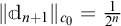 $\|\mathbb {d}_{n+1}\|_{c_0}=\frac {1}{2^{n}}$
for all
$\|\mathbb {d}_{n+1}\|_{c_0}=\frac {1}{2^{n}}$
for all $n\in \omega $
, which gives us:
$n\in \omega $
, which gives us:
 $$ \begin{align*} A_{\mathbb{x}} & =\left\{n\in\omega: |\mathbb{a}^\star_{n+1}(\mathbb{z})(\mathbb{x})|\geq \frac{1}{\|\mathbb{d}_{n+1}\|_{c_0}}\right\}=\left\{n\in\omega: |2^{n+1}\mathbb{e}^\star_{n+1}(\mathbb{x})-2^{n}\mathbb{e}^\star_{n}(\mathbb{x})|\geq 2^n\right\}\\& \subseteq \left\{n\in\omega: |2\mathbb{e}^\star_{n+1}(\mathbb{x})|\geq \frac{1}{2}\right\}\cup \left\{n\in\omega: |\mathbb{e}^\star_{n}(\mathbb{x})|\geq \frac{1}{2}\right\}\in\mathrm{Fin}, \end{align*} $$
for all $\mathbb {x}\in c_0$
. Thus,
$\mathbb {x}\in c_0$
. Thus, $\mathcal {CR}(\hat {\mathbb {v}},c_0)=\mathrm {Fin}$
.
$\mathcal {CR}(\hat {\mathbb {v}},c_0)=\mathrm {Fin}$
.
Remark 8.10. For completeness, fix any $p\in [1,\infty )$
and observe that
$p\in [1,\infty )$
and observe that $\hat {\mathbb {a}}(\mathbb {z})$
, for
$\hat {\mathbb {a}}(\mathbb {z})$
, for $\mathbb {z}$
considered in Example 8.9 (i.e.,
$\mathbb {z}$
considered in Example 8.9 (i.e., $z_n=\frac {1}{2^n}$
for all
$z_n=\frac {1}{2^n}$
for all $n\in \omega $
), is a
$n\in \omega $
), is a $\mathrm {Fin}$
-Schauder basis of
$\mathrm {Fin}$
-Schauder basis of $\ell _p$
(by Proposition 8.7, since
$\ell _p$
(by Proposition 8.7, since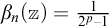 $\beta _n(\mathbb {z})=\frac {1}{2^p-1}$
for all
$\beta _n(\mathbb {z})=\frac {1}{2^p-1}$
for all $n\in \omega $
), while
$n\in \omega $
), while $\mathcal {CR}(\hat {\mathbb {v}},\ell _p)=\mathcal {I}_{1/n}$
, where
$\mathcal {CR}(\hat {\mathbb {v}},\ell _p)=\mathcal {I}_{1/n}$
, where $\hat {\mathbb {v}}$
is as in Example 8.9. Indeed, from Lemma 3.1, we know that
$\hat {\mathbb {v}}$
is as in Example 8.9. Indeed, from Lemma 3.1, we know that $\mathcal {CR}(\hat {\mathbb {v}},\ell _p)$
is generated by
$\mathcal {CR}(\hat {\mathbb {v}},\ell _p)$
is generated by $\mathrm {Fin}$
and sets of the form
$\mathrm {Fin}$
and sets of the form $A_{\mathbb {x}}=\{n\in \omega : |\mathbb {a}^\star _{n+1}(\mathbb {z})(\mathbb {x})|\geq \frac {1}{\|\mathbb {d}_{n+1}\|_{\ell _p}}\}$
for
$A_{\mathbb {x}}=\{n\in \omega : |\mathbb {a}^\star _{n+1}(\mathbb {z})(\mathbb {x})|\geq \frac {1}{\|\mathbb {d}_{n+1}\|_{\ell _p}}\}$
for $\mathbb {x}\in \ell _p$
.
$\mathbb {x}\in \ell _p$
.
By the calculations made in Example 8.9, we have:
 $$ \begin{align*} \|\mathbb{d}_{n+1}\|_{\ell_p} & =\left(\sum_{i=0}^n \frac{1}{2^{np}}+\sum_{i=n+1}^\infty\frac{1}{2^{ip}}\right)^{1/p}\cr & =\left(\frac{n+1}{2^{np}}+\frac{1}{2^{(n+1)p}}\cdot\frac{1}{1-\frac{1}{2^{p}}}\right)^{1/p}\cr &=\frac{1}{2^n}\left(n+1+\frac{1}{2^p-1}\right)^{1/p}. \end{align*} $$
In particular, $\frac {(n+1)^{1/p}}{2^n}\leq \|\mathbb {d}_{n+1}\|_{\ell _p}\leq \frac {(n+2)^{1/p}}{2^n}$
.
$\frac {(n+1)^{1/p}}{2^n}\leq \|\mathbb {d}_{n+1}\|_{\ell _p}\leq \frac {(n+2)^{1/p}}{2^n}$
.
Thus, if $\mathbb {x}\in \ell _p$
, then:
$\mathbb {x}\in \ell _p$
, then:
 $$ \begin{align*} A_{\mathbb{x}} & =\left\{n\in\omega: |\mathbb{a}^\star_{n+1}(\mathbb{z})(\mathbb{x})|\geq \frac{1}{\|\mathbb{d}_{n+1}\|_{\ell_p}}\right\}\subseteq\left\{n\in\omega: |2^{n+1}\mathbb{e}^\star_{n+1}(\mathbb{x})-2^{n}\mathbb{e}^\star_{n}(\mathbb{x})|\geq \frac{2^n}{(n+2)^{1/p}}\right\}\\& \subseteq \left\{n\in\omega: |2\mathbb{e}^\star_{n+1}(\mathbb{x})|\geq \frac{1}{2(n+2)^{1/p}}\right\}\cup \left\{n\in\omega: |\mathbb{e}^\star_{n}(\mathbb{x})|\geq \frac{1}{2(n+2)^{1/p}}\right\}\in\mathcal{I}_{1/n}. \end{align*} $$
This shows that $\mathcal {CR}(\hat {\mathbb {v}},\ell _p)\subseteq \mathcal {I}_{1/n}$
.
$\mathcal {CR}(\hat {\mathbb {v}},\ell _p)\subseteq \mathcal {I}_{1/n}$
.
On the other hand, if $A\in \mathcal {I}_{1/n}$
, then put
$A\in \mathcal {I}_{1/n}$
, then put $A_i=A\cap \{2n+i:n\in \omega \}$
and define:
$A_i=A\cap \{2n+i:n\in \omega \}$
and define:
 $$\begin{align*}x^i_n = \left\{\begin{array}{@{}ll} \frac{1}{(n+1)^{1/p}}, & \text{ if } n\in A_i, \\ 0, & \text{ otherwise}, \\ \end{array}\right. \end{align*}$$
for $i=0,1$
and
$i=0,1$
and $n\in \omega $
. Note that
$n\in \omega $
. Note that $\mathbb {x}^0$
and
$\mathbb {x}^0$
and $\mathbb {x}^1$
belong to
$\mathbb {x}^1$
belong to $\ell _p$
(as
$\ell _p$
(as $A\in \mathcal {I}_{1/n}$
) and that if
$A\in \mathcal {I}_{1/n}$
) and that if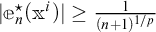 $|\mathbb {e}^\star _{n}(\mathbb {x}^i)|\geq \frac {1}{(n+1)^{1/p}}$
for some
$|\mathbb {e}^\star _{n}(\mathbb {x}^i)|\geq \frac {1}{(n+1)^{1/p}}$
for some $n\in \omega $
and
$n\in \omega $
and $i=0,1$
, then
$i=0,1$
, then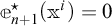 $\mathbb {e}^\star _{n+1}(\mathbb {x}^i)=0$
. We have:
$\mathbb {e}^\star _{n+1}(\mathbb {x}^i)=0$
. We have:
 $$ \begin{align*} A & =\bigcup_{i=0}^1 A_i=\bigcup_{i=0}^1 \left\{n\in\omega: |\mathbb{e}^\star_{n}(\mathbb{x}^i)|\geq \frac{1}{(n+1)^{1/p}}\right\}\\&\subseteq\bigcup_{i=0}^1\left\{n\in\omega: |2^{n+1}\mathbb{e}^\star_{n+1}(\mathbb{x}^i)-2^{n}\mathbb{e}^\star_{n}(\mathbb{x}^i)|\geq \frac{2^n}{(n+1)^{1/p}}\right\}\\& \subseteq\bigcup_{i=0}^1\left\{n\in\omega: |\mathbb{a}^\star_{n+1}(\mathbb{z})(\mathbb{x}^i)|\geq \frac{1}{\|\mathbb{d}_{n+1}\|_{\ell_p}}\right\}=A_{\mathbb{x}^0}\cup A_{\mathbb{x}^1}\in\mathcal{CR}(\hat{\mathbb{v}},\ell_p). \end{align*} $$
Hence, $\mathcal {CR}(\hat {\mathbb {v}},\ell _p)\supseteq \mathcal {I}_{1/n}$
.
$\mathcal {CR}(\hat {\mathbb {v}},\ell _p)\supseteq \mathcal {I}_{1/n}$
.
9 Ideal version of FDD
In this section we follow some ideas from [Reference Avilés, Rosendal, Taylor and Tradacete2], where the authors noted that every Banach space with FDD has the $\mathcal {I}$
-Schauder bases for some ideal
$\mathcal {I}$
-Schauder bases for some ideal $\mathcal {I}$
, and used this observation to give an example of a space with
$\mathcal {I}$
, and used this observation to give an example of a space with $\mathcal {I}$
-Schauder basis, but without a standard one. Recall that a Banach space X has finitely dimensional decomposition (FDD) if there exists a sequence of its finite-dimensional subspaces
$\mathcal {I}$
-Schauder basis, but without a standard one. Recall that a Banach space X has finitely dimensional decomposition (FDD) if there exists a sequence of its finite-dimensional subspaces $(X_n)$
such that for every
$(X_n)$
such that for every $\mathbb {x} \in X$
there exists a unique sequence
$\mathbb {x} \in X$
there exists a unique sequence $(\mathbb {x}_n)$
with
$(\mathbb {x}_n)$
with $\mathbb {x}_n \in X_n$
for all
$\mathbb {x}_n \in X_n$
for all $n \in \omega $
and such that
$n \in \omega $
and such that $\mathbb {x}=\sum _{n \in \omega } \mathbb {x}_n$
.
$\mathbb {x}=\sum _{n \in \omega } \mathbb {x}_n$
.
The definition of $\mathcal {I}$
-FDD is straightforward.
$\mathcal {I}$
-FDD is straightforward.
Definition 9.1. Let $\mathcal {I}$
be an ideal on
$\mathcal {I}$
be an ideal on $\omega $
. A Banach space X is said to have
$\omega $
. A Banach space X is said to have $\mathcal {I}$
-FDD if there exists a sequence of its finite-dimensional subspaces
$\mathcal {I}$
-FDD if there exists a sequence of its finite-dimensional subspaces $(X_n)$
such that for every
$(X_n)$
such that for every $\mathbb {x} \in X$
there exists a unique sequence
$\mathbb {x} \in X$
there exists a unique sequence $(\mathbb {x}_n)$
with
$(\mathbb {x}_n)$
with $\mathbb {x}_n \in X_n$
for all
$\mathbb {x}_n \in X_n$
for all $n \in \omega $
and such that:
$n \in \omega $
and such that:
 $$\begin{align*}\forall_{\varepsilon>0}\ \left\{n\in\omega:\left\|\mathbb{x}-\sum_{i=0}^n \mathbb{x}_i\right\|_X>\varepsilon\right\}\in\mathcal{I}. \end{align*}$$
It is known (see [Reference Szarek20]) that there exists a space with FDD but without a Schauder basis. In the case of ideal versions the situation is a bit different.
Proposition 9.2. Let X be a Banach space. If X has $\mathcal {I}$
-FDD for some ideal
$\mathcal {I}$
-FDD for some ideal $\mathcal {I}$
on
$\mathcal {I}$
on $\omega $
, then X has a
$\omega $
, then X has a $\mathcal {J}$
-Schauder basis for some ideal
$\mathcal {J}$
-Schauder basis for some ideal $\mathcal {J}$
on
$\mathcal {J}$
on $\omega $
. Moreover, if
$\omega $
. Moreover, if $\mathcal {I}$
is non-tall, then also
$\mathcal {I}$
is non-tall, then also $\mathcal {J}$
is non-tall.
$\mathcal {J}$
is non-tall.
Proof. Let $(X_n)$
be the sequence of finite-dimensional subspaces of X from the definition of
$(X_n)$
be the sequence of finite-dimensional subspaces of X from the definition of $\mathcal {I}$
-FDD. Fix sequences
$\mathcal {I}$
-FDD. Fix sequences $(\mathbb {u}_n)$
and
$(\mathbb {u}_n)$
and $0=k_0<k_1<k_2\ldots $
such that
$0=k_0<k_1<k_2\ldots $
such that $\{\mathbb {u}_i : i \in [k_{n}, k_{n+1})\}$
is a basis of
$\{\mathbb {u}_i : i \in [k_{n}, k_{n+1})\}$
is a basis of $X_n$
. Define
$X_n$
. Define $\mathcal {J}$
by:
$\mathcal {J}$
by:
 $$\begin{align*}A \in \mathcal{J} \Longleftrightarrow \{ n \in \omega : k_{n+1}-1 \in A \} \in \mathcal{I}. \end{align*}$$
Note that if $\mathcal {I}$
is non-tall, then there is some infinite
$\mathcal {I}$
is non-tall, then there is some infinite $E\subseteq \omega $
such that
$E\subseteq \omega $
such that $\mathcal {I}\restriction E=\mathrm {Fin}\restriction E$
. In this case also
$\mathcal {I}\restriction E=\mathrm {Fin}\restriction E$
. In this case also $\mathcal {J}$
is non-tall, as
$\mathcal {J}$
is non-tall, as $\mathcal {J}\restriction \{n\in \omega :k_{n+1}-1 \in E\}=\mathrm {Fin}\restriction \{n\in \omega :k_{n+1}-1 \in E\}$
.
$\mathcal {J}\restriction \{n\in \omega :k_{n+1}-1 \in E\}=\mathrm {Fin}\restriction \{n\in \omega :k_{n+1}-1 \in E\}$
.
Take $x \in X$
and find unique
$x \in X$
and find unique $x_n \in X_n$
, for
$x_n \in X_n$
, for $n\in \omega $
, such as in the definition of
$n\in \omega $
, such as in the definition of $\mathcal {I}$
-FDD. For every
$\mathcal {I}$
-FDD. For every $n\in \omega $
there are also unique
$n\in \omega $
there are also unique $\alpha _i$
, for
$\alpha _i$
, for $k_n\leq i<k_{n+1}$
, such that
$k_n\leq i<k_{n+1}$
, such that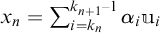 $x_n = \sum _{i=k_n}^{k_{n+1}-1}\alpha _i \mathbb {u}_i$
. Fix any
$x_n = \sum _{i=k_n}^{k_{n+1}-1}\alpha _i \mathbb {u}_i$
. Fix any $\varepsilon>0$
and denote
$\varepsilon>0$
and denote $A_\varepsilon = \{ j \in \omega : \|\mathbb {x}-\sum _{i=0}^{j}\alpha _i \mathbb {u}_i \|> \varepsilon \}$
. We need to show that
$A_\varepsilon = \{ j \in \omega : \|\mathbb {x}-\sum _{i=0}^{j}\alpha _i \mathbb {u}_i \|> \varepsilon \}$
. We need to show that $A_\varepsilon \in \mathcal {J}$
. Observe that:
$A_\varepsilon \in \mathcal {J}$
. Observe that:
 $$\begin{align*}\{ n \in \omega : k_{n+1}-1 \in A_\varepsilon \} &= \left\{ n \in \omega : \left\|\mathbb{x}-\sum_{i=0}^{k_{n+1}-1}\alpha_i \mathbb{u}_i \right\|> \varepsilon \right\}\\ & = \left\{ n \in \omega : \left\|\mathbb{x}-\sum_{i=0}^{n}\mathbb{x}_i \right\|> \varepsilon \right\} \in \mathcal{I}, \end{align*}$$
thus $A_\varepsilon \in \mathcal {J}$
.
$A_\varepsilon \in \mathcal {J}$
.
Remark 9.3. Note that if $\mathcal {I}$
is an analytic ideal, then the ideal
$\mathcal {I}$
is an analytic ideal, then the ideal $\mathcal {J}$
produced in the proof of Proposition 9.2 is also analytic. Therefore, by combining this observation with continuity result from [Reference de Rancourt, Kania and Swaczyna6], we see that projections
$\mathcal {J}$
produced in the proof of Proposition 9.2 is also analytic. Therefore, by combining this observation with continuity result from [Reference de Rancourt, Kania and Swaczyna6], we see that projections $P_n\colon X \to X_n$
given by FDD are also continuous.
$P_n\colon X \to X_n$
given by FDD are also continuous.
We may also inverse the above reasoning—clearly, spaces with Schauder bases are FDD, but the ideal case is not clear. However, we may solve the special case of some ideals.
Proposition 9.4. Let X be a Banach space. If there is an $\mathcal {I}$
-Schauder basis of X for some non-tall ideal
$\mathcal {I}$
-Schauder basis of X for some non-tall ideal $\mathcal {I}$
on
$\mathcal {I}$
on $\omega $
, then X has FDD.
$\omega $
, then X has FDD.
Proof. Let $\hat {\mathbb {a}}$
be the
$\hat {\mathbb {a}}$
be the $\mathcal {I}$
-Schauder basis of X. Since
$\mathcal {I}$
-Schauder basis of X. Since $\mathcal {I}$
is non-tall, there is an infinite
$\mathcal {I}$
is non-tall, there is an infinite $A\subseteq \omega $
such that
$A\subseteq \omega $
such that $\mathcal {I}\restriction A=\mathrm {Fin}\restriction A$
. Let
$\mathcal {I}\restriction A=\mathrm {Fin}\restriction A$
. Let $(n_k)$
be the increasing enumeration of the set A. Define
$(n_k)$
be the increasing enumeration of the set A. Define $X_0=\operatorname {span}\{\mathbb {a}_{0}, \mathbb {a}_{1}, \ldots , \mathbb {a}_{n_{0}}\}$
and
$X_0=\operatorname {span}\{\mathbb {a}_{0}, \mathbb {a}_{1}, \ldots , \mathbb {a}_{n_{0}}\}$
and $X_k= \operatorname {span}\{\mathbb {a}_{n_{k-1}+1}, \mathbb {a}_{n_k +2}, \ldots , \mathbb {a}_{n_{k}}\} $
for all
$X_k= \operatorname {span}\{\mathbb {a}_{n_{k-1}+1}, \mathbb {a}_{n_k +2}, \ldots , \mathbb {a}_{n_{k}}\} $
for all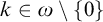 $k\in \omega \setminus \{0\}$
. We claim that
$k\in \omega \setminus \{0\}$
. We claim that $(X_k)$
witnesses that X has FDD. Fix
$(X_k)$
witnesses that X has FDD. Fix $\mathbb {x}\in X$
and set
$\mathbb {x}\in X$
and set ${\mathbb {x}_0=\sum _{i=0}^{n_{0}}\mathbb {a}^\star _i(\mathbb {x})\mathbb {a}_i\in X_0}$
and
${\mathbb {x}_0=\sum _{i=0}^{n_{0}}\mathbb {a}^\star _i(\mathbb {x})\mathbb {a}_i\in X_0}$
and $\mathbb {x}_k=\sum _{i=n_{k-1}+1}^{n_{k}}\mathbb {a}^\star _i(\mathbb {x})\mathbb {a}_i\in X_k$
. Let
$\mathbb {x}_k=\sum _{i=n_{k-1}+1}^{n_{k}}\mathbb {a}^\star _i(\mathbb {x})\mathbb {a}_i\in X_k$
. Let $\varepsilon>0$
be arbitrary. Since
$\varepsilon>0$
be arbitrary. Since $\hat {\mathbb {a}}$
is an
$\hat {\mathbb {a}}$
is an $\mathcal {I}$
-Schauder basis of X, we have
$\mathcal {I}$
-Schauder basis of X, we have $A_\varepsilon =\left \{j\in \omega : \left \|\mathbb {x}-\sum _{i=0}^{j} \mathbb {a}^\star _i(\mathbb {x})\mathbb {a}_i\right \|_X>\varepsilon \right \}\in \mathcal {I}$
. Denote
$A_\varepsilon =\left \{j\in \omega : \left \|\mathbb {x}-\sum _{i=0}^{j} \mathbb {a}^\star _i(\mathbb {x})\mathbb {a}_i\right \|_X>\varepsilon \right \}\in \mathcal {I}$
. Denote $F=A_\varepsilon \cap A$
and observe that
$F=A_\varepsilon \cap A$
and observe that $F\in \mathrm {Fin}$
, as
$F\in \mathrm {Fin}$
, as $\mathcal {I}\restriction A=\mathrm {Fin}\restriction A$
. We have:
$\mathcal {I}\restriction A=\mathrm {Fin}\restriction A$
. We have:
 $$\begin{align*}\left\{k\in\omega: \left\|\mathbb{x}-\sum_{i=0}^k \mathbb{x}_i\right\|_X>\varepsilon \right\}&=\left\{k\in\omega: \left\|\mathbb{x}-\sum_{i=0}^{n_k} \mathbb{a}^\star_i(\mathbb{x})\mathbb{a}_i\right\|_X>\varepsilon \right\}\\ &=\left\{k\in\omega:n_k\in F\right\}\in\mathrm{Fin}. \end{align*}$$
Moreover, such a decomposition is unique, since the scalars $(\mathbb {a}^\star _n(\mathbb {x}))$
are unique.
$(\mathbb {a}^\star _n(\mathbb {x}))$
are unique.
Theorem 9.5. The following are equivalent for every Banach space X:
-
(a) X has FDD;
-
(b) X has
$\mathcal {I}$
-FDD for some non-tall ideal
$\mathcal {I}$
on
$\omega $
; -
(c) X has
$\mathcal {I}$
-Schauder basis for some non-tall ideal
$\mathcal {I}$
on
$\omega $
.


Proof. (a) $\implies $
(b) is obvious, (b)
$\implies $
(b) is obvious, (b) $\implies $
(c) follows from Proposition 9.2, and (c)
$\implies $
(c) follows from Proposition 9.2, and (c) $\implies $
(a) is proved in Proposition 9.4.
$\implies $
(a) is proved in Proposition 9.4.
Theorem 9.6. The following are equivalent for every Banach space X:
-
(a) X has
$\mathcal {I}$
-FDD for some ideal
$\mathcal {I}$
on
$\omega $
; -
(b) X has
$\mathcal {I}$
-Schauder basis for some ideal
$\mathcal {I}$
on
$\omega $
.


Proof. The implication (b) $\implies $
(a) is obvious, while (a)
$\implies $
(a) is obvious, while (a) $\implies $
(b) follows from Proposition 9.2.
$\implies $
(b) follows from Proposition 9.2.
10 Normed vector spaces
In this section we will show that for every ideal $\mathcal {I}$
on
$\mathcal {I}$
on $\omega $
there are a normed vector space X and
$\omega $
there are a normed vector space X and $\hat {\mathbb {a}}$
such that
$\hat {\mathbb {a}}$
such that $\mathcal {CR}(X,\hat {\mathbb {a}})=\mathcal {I}$
(ideals
$\mathcal {CR}(X,\hat {\mathbb {a}})=\mathcal {I}$
(ideals $\mathcal {CR}(X,\hat {\mathbb {a}})$
were defined only for Banach spaces X, but this definition can be naturally extended).
$\mathcal {CR}(X,\hat {\mathbb {a}})$
were defined only for Banach spaces X, but this definition can be naturally extended).
Theorem 10.1. If $\mathcal {I}$
is any ideal on
$\mathcal {I}$
is any ideal on $\omega $
, then there are a normed vector space X and
$\omega $
, then there are a normed vector space X and $\hat {\mathbb {a}}\in (X\times X^\star )^\omega $
such that
$\hat {\mathbb {a}}\in (X\times X^\star )^\omega $
such that $\mathcal {CR}(X,\hat {\mathbb {a}})=\mathcal {I}$
.
$\mathcal {CR}(X,\hat {\mathbb {a}})=\mathcal {I}$
.
Proof. Let $\mathcal {J}=\{A\subseteq \omega : A\setminus \{0\}=B+1\text { for some }B\in \mathcal {I}\}$
, where
$\mathcal {J}=\{A\subseteq \omega : A\setminus \{0\}=B+1\text { for some }B\in \mathcal {I}\}$
, where $B+1=\{n+1:n\in B\}$
. Note that
$B+1=\{n+1:n\in B\}$
. Note that $\mathcal {J}$
is an ideal on
$\mathcal {J}$
is an ideal on $\omega $
. Consider
$\omega $
. Consider $c_{\mathcal {J}}=\{\mathbb {x}\in c_0:\{n\in \omega :x_n\neq 0\}\in \mathcal {J}\}$
. Clearly, it is a vector space normed by the supremum norm.
$c_{\mathcal {J}}=\{\mathbb {x}\in c_0:\{n\in \omega :x_n\neq 0\}\in \mathcal {J}\}$
. Clearly, it is a vector space normed by the supremum norm.
Using Lemma 5.5, find $\hat {\mathbb {a}}$
with
$\hat {\mathbb {a}}$
with $\mathbb {a}_n\in c_{00}$
(so also
$\mathbb {a}_n\in c_{00}$
(so also $\mathbb {a}_n\in c_{\mathcal {J}}$
) for all
$\mathbb {a}_n\in c_{\mathcal {J}}$
) for all $n\in \omega $
, which is simple over
$n\in \omega $
, which is simple over $\hat {\mathbb {e}}$
with witnesses
$\hat {\mathbb {e}}$
with witnesses $D=\omega $
,
$D=\omega $
, $h=\operatorname {id}+1,$
and some
$h=\operatorname {id}+1,$
and some $(\mathbb {b}_{n+1})$
such that
$(\mathbb {b}_{n+1})$
such that $\|\mathbb {b}_{n+1}\|_{c_0}=n+1$
.
$\|\mathbb {b}_{n+1}\|_{c_0}=n+1$
.
By Lemma 3.1 and Remark 3.2, $\mathcal {CR}(X,\hat {\mathbb {a}})$
is the ideal generated by
$\mathcal {CR}(X,\hat {\mathbb {a}})$
is the ideal generated by $\mathrm {Fin}$
and all sets of the form:
$\mathrm {Fin}$
and all sets of the form:
 $$\begin{align*}A_{\mathbb{x}}=\left\{n\in \omega: |\mathbb{e}^\star_{n+1}(\mathbb{x})|\geq\frac{1}{n+1}\right\}\!, \end{align*}$$
for $\mathbb {x}\in c_{\mathcal {J}}$
. We will show that
$\mathbb {x}\in c_{\mathcal {J}}$
. We will show that $\mathcal {CR}(X,\hat {\mathbb {a}})=\mathcal {I}$
.
$\mathcal {CR}(X,\hat {\mathbb {a}})=\mathcal {I}$
. $\mathcal {CR}(X,\hat {\mathbb {a}})\subseteq \mathcal {I}$
: Let
$\mathcal {CR}(X,\hat {\mathbb {a}})\subseteq \mathcal {I}$
: Let $\mathbb {x}\in c_{\mathcal {J}}$
. Then
$\mathbb {x}\in c_{\mathcal {J}}$
. Then $A_{\mathbb {x}}\subseteq \{n\in \omega :x_{n+1}\neq 0\}$
, so
$A_{\mathbb {x}}\subseteq \{n\in \omega :x_{n+1}\neq 0\}$
, so $A_{\mathbb {x}}+1\subseteq \{n\in \omega :x_{n}\neq 0\}\in \mathcal {J}$
. Hence,
$A_{\mathbb {x}}+1\subseteq \{n\in \omega :x_{n}\neq 0\}\in \mathcal {J}$
. Hence, $A_{\mathbb {x}}\in \mathcal {I}$
.
$A_{\mathbb {x}}\in \mathcal {I}$
. $\mathcal {CR}(X,\hat {\mathbb {a}})\supseteq \mathcal {I}$
: Let
$\mathcal {CR}(X,\hat {\mathbb {a}})\supseteq \mathcal {I}$
: Let $A\in \mathcal {I}$
. Define:
$A\in \mathcal {I}$
. Define:
 $$\begin{align*}x_n = \left\{\begin{array}{@{}ll} \frac{1}{n}, & \text{ if } n-1\in A, \\ 0, & \text{ otherwise}. \\ \end{array}\right. \end{align*}$$
Observe that $\left \{n\in \omega :x_{n}\neq 0\}=\{n\in \omega :n-1\in A\right \}=A+1\in \mathcal {J}$
, so
$\left \{n\in \omega :x_{n}\neq 0\}=\{n\in \omega :n-1\in A\right \}=A+1\in \mathcal {J}$
, so $\mathbb {x}\in c_{\mathcal {J}}$
. Moreover,
$\mathbb {x}\in c_{\mathcal {J}}$
. Moreover, $A_{\mathbb {x}}=\{n\in \omega :|x_{n+1}|\geq \frac {1}{n+1}\}=A$
.
$A_{\mathbb {x}}=\{n\in \omega :|x_{n+1}|\geq \frac {1}{n+1}\}=A$
.
11 Questions
We conclude our article with a list of open questions concerning ideal bases. First of them is somehow motivated by Section 8.
Question 11.1. Suppose that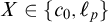 $X\in \{c_0, \ell _p\}$
and
$X\in \{c_0, \ell _p\}$
and $(\mathbb {a}_n)\subseteq X$
is such that for every
$(\mathbb {a}_n)\subseteq X$
is such that for every $\mathbb {x}\in X$
there exists a unique sequence of scalars
$\mathbb {x}\in X$
there exists a unique sequence of scalars $(\alpha _{n})$
such that for every
$(\alpha _{n})$
such that for every $k \in \omega $
we have
$k \in \omega $
we have $\mathbb {x}(k)=\sum _{n=0}^\infty \alpha _{k} \left (\mathbb {a}_n\right ) (k)$
. Is there some ideal
$\mathbb {x}(k)=\sum _{n=0}^\infty \alpha _{k} \left (\mathbb {a}_n\right ) (k)$
. Is there some ideal $\mathcal {I}$
, which makes it an
$\mathcal {I}$
, which makes it an $\mathcal {I}$
-Schauder basis of X?
$\mathcal {I}$
-Schauder basis of X?
Recall that by Theorem 7.1, for every non-pathological analytic P-ideal $\mathcal {I}$
there are a Banach space
$\mathcal {I}$
there are a Banach space $X\subseteq \mathbb {R}^\omega $
and
$X\subseteq \mathbb {R}^\omega $
and $\hat {\mathbb {a}}$
simple over
$\hat {\mathbb {a}}$
simple over $\hat {\mathbb {e}}$
such that
$\hat {\mathbb {e}}$
such that $\mathcal {CR}(X,\hat {\mathbb {a}})=\mathcal {I}$
.
$\mathcal {CR}(X,\hat {\mathbb {a}})=\mathcal {I}$
.
Question 11.2. Let $\mathcal {I}$
be an analytic P-ideal. Are there a Banach space X and
$\mathcal {I}$
be an analytic P-ideal. Are there a Banach space X and $\hat {\mathbb {a}}$
such that
$\hat {\mathbb {a}}$
such that $\mathcal {CR}(X,\hat {\mathbb {a}})=\mathcal {I}$
?
$\mathcal {CR}(X,\hat {\mathbb {a}})=\mathcal {I}$
?
By [Reference de Rancourt, Kania and Swaczyna6, Theorem B] we know that each critical ideal in a Banach space is necessarily analytic, provided that coordinate functionals are continuous. This result suggest to ask some other similar questions. Note that all critical ideals in Banach spaces, which we present in this article, are P-ideals.
Question 11.3. Is $\mathcal {CR}(X,\hat {\mathbb {a}})$
necessarily a P-ideal, provided that X is a Banach space?
$\mathcal {CR}(X,\hat {\mathbb {a}})$
necessarily a P-ideal, provided that X is a Banach space?
Note that every analytic P-ideal is ${\mathbf {F}_{\sigma \delta }}$
(see [Reference Farah7, Lemma 1.2.2 and Theorem 1.2.5]). Thus, a positive answer to Question 11.3 combined with the above mentioned result [Reference de Rancourt, Kania and Swaczyna6, Theorem B] would show that each critical ideal in a Banach space is necessarily
${\mathbf {F}_{\sigma \delta }}$
(see [Reference Farah7, Lemma 1.2.2 and Theorem 1.2.5]). Thus, a positive answer to Question 11.3 combined with the above mentioned result [Reference de Rancourt, Kania and Swaczyna6, Theorem B] would show that each critical ideal in a Banach space is necessarily ${\mathbf {F}_{\sigma \delta }}$
, provided that coordinate functionals are continuous.
${\mathbf {F}_{\sigma \delta }}$
, provided that coordinate functionals are continuous.
[Reference Avilés, Rosendal, Taylor and Tradacete2, Theorem 1.18] ensures that any critical ideal may be enlarged to a Borel ideal, provided that coordinate functionals are continuous. However, the following question remains open.
Question 11.4. May a critical ideal in some Banach space be analytic, but not Borel?
Next question is also motivated by [Reference Avilés, Rosendal, Taylor and Tradacete2, Theorem 1.18] (see also [Reference de Rancourt, Kania and Swaczyna6, Question 2]).
Question 11.5. Is there some Borel class $\Gamma $
such that for every ideal Schauder basis
$\Gamma $
such that for every ideal Schauder basis $\hat {\mathbb {a}}$
there exists an ideal
$\hat {\mathbb {a}}$
there exists an ideal $\mathcal {I}\in \Gamma $
such that
$\mathcal {I}\in \Gamma $
such that $\hat {\mathbb {a}}$
is an
$\hat {\mathbb {a}}$
is an $\mathcal {I}$
-Schauder basis? If the answer is positive, then what is the smallest such
$\mathcal {I}$
-Schauder basis? If the answer is positive, then what is the smallest such $\Gamma $
?
$\Gamma $
?
Note that a positive answer to Question 11.3 would mean that $\Gamma ={\mathbf {F}_{\sigma \delta }}$
works for all ideal Schauder bases with continuous coordinate functionals.
$\Gamma ={\mathbf {F}_{\sigma \delta }}$
works for all ideal Schauder bases with continuous coordinate functionals.
The next two questions seem to be most important (and probably hardest) problems in this field.
Question 11.6. [Reference de Rancourt, Kania and Swaczyna6, Question 1] Are coordinate functionals necessarily continuous for all ideal bases?
Question 11.7. Let X be a separable Banach space. Does X necessarily contain an $\mathcal {I}$
-Schauder basis for some nontrivial ideal
$\mathcal {I}$
-Schauder basis for some nontrivial ideal $\mathcal {I}$
?
$\mathcal {I}$
?
In view of [Reference Avilés, Rosendal, Taylor and Tradacete2, Example 1.14] answer for the following question could be viewed as a step towards answering Question 11.7.
Question 11.8. Is there a Banach space without FDD, yet equipped with $\mathcal {I}$
-Schauder basis for some nontrivial ideal
$\mathcal {I}$
-Schauder basis for some nontrivial ideal $\mathcal {I}$
?
$\mathcal {I}$
?
Section 10 suggests the following version of Question 11.7.
Question 11.9. Let X be a separable normed space. Does X necessarily admit an $\mathcal {I}$
-Schauder basis for some nontrivial ideal
$\mathcal {I}$
-Schauder basis for some nontrivial ideal $\mathcal {I}$
?
$\mathcal {I}$
?
Funding
The second-named author acknowledges with thanks funding received from NCN project SONATA BIS 13 No. 2023/50/E/ST1/00067.


 Open access

