Introduction
A dispensing doctor is ‘any medical practitioner who undertakes the role of dispensing pharmaceutical products/benefits in situations that would normally be regarded as the practice of a pharmacist’ (Lim et al., Reference Lim, Emery, Lewis and Sunderland2009: 1). Comparative research exploring prescribing practices between dispensing doctor practices and non-dispensing practices has been conducted in the United States of America, United Kingdom, Australia, Zimbabwe, South Korea, South Africa, and Taiwan (Lim et al., Reference Lim, Emery, Lewis and Sunderland2009). Historically there has been some tension between dispensing doctor practices and community pharmacies (CPs) (Gilbert, Reference Gilbert1998) regarding where each should be located and the quality of service that each provides.
In the United Kingdom, pharmaceutical services can be provided from CPs and, in rural areas without a pharmacy, dispensing doctor practices (DPs). General medical practitioners (GPs) have been able to dispense prescriptions directly to patients since the late 19th/early 20th century. In 1977, following the Clothier Report (Pharmaceutical Services Negotiating Committee, 2014a) regulation was introduced. A key principle of these regulations (Pharmaceutical Services Negotiating Committee, 2014b) was that patients living in areas that were, or had been, rural in character and who lived further than one mile from a pharmacy were allowed to obtain their National Health Service (NHS) prescriptions from dispensing practices. In the UK today, ~7% of all dispensed prescription items are dispensed by a doctor, rather than by a pharmacist (Dispensing Doctors’ Association, 2014a).
Dispensing a prescription for a medicinal product is a complex process that, from receipt of a prescription, broadly comprises the steps shown in Table 1 (James et al., Reference James, Barlow, McArtney, Hiom, Roberts and Whittlesea2009).
The dispensing process (James et al., Reference James, Barlow, McArtney, Hiom, Roberts and Whittlesea2009)

The clinical check (step 3), is the process of checking the prescription to ensure that it is clinically appropriate for the patient (eg, that the medicine and the dose is appropriate for the patient’s condition, and that it does not interact with the patient’s other medication). Endorsing the prescription (step 9) refers to signing off on the prescription on what has been dispensed so that payment can be received. The accuracy check (step 10) is the process of verifying that the medicine selected, prepared, labelled and assembled conforms exactly to what is on the prescription (James et al., Reference James, Davies, Kinchin, Patel and Whittlesea2010). While the clinical check needs to be undertaken by a healthcare professional such as a pharmacist or doctor, the accuracy check can be performed by technicians who have been trained in the accuracy checking process. This is because the accuracy check involves matching a dispensed item to what is on the prescription without necessarily understanding clinically what has been dispensed. In DPs steps 2 and 3 are usually the responsibility of the prescribing GP and conducted at the same time as writing the prescription.
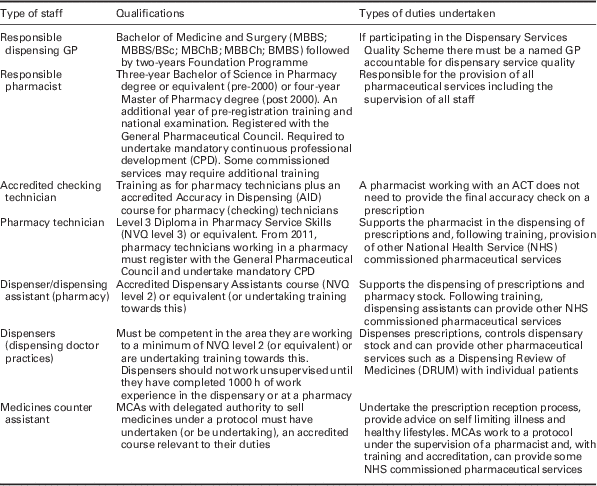
While both CPs and DPs dispense prescriptions, there is variety in the type and level of staff and qualifications across venues. In pharmacies, terms and conditions of service require a responsible pharmacist to be present at all times when the pharmacy is open for the provision of pharmaceutical services. Other staff in pharmacies include accredited checking technicians, pharmacy technicians, dispensing assistants and medicines counter assistants. DPs employ dispensing assistants or dispensers to dispense the medicines. A description of the types of duties and levels of qualifications of these staff is shown in Table 2.
Types of staff in community pharmacies and dispensing doctor practices

In 2005 there was a major shift in the remuneration of pharmaceutical services, from payments solely based on dispensed items to one that includes payments for three levels of service (Community Pharmacy Contractual Framework, 2014). The first level includes essential services covering the dispensing of medicines, opportunistic promotion of healthy lifestyles, signposting to services, disposal of medicines waste, support for self-care and clinical governance adherence. The next is an advanced level of services, which includes medicine use reviews (MUR). An MUR is a consultation between a pharmacist and a patient to discuss the patient’s medicines, their use and understanding of them. As part of this review, pharmacists solve any medication difficulties the patient might have and forward recommendations to the patient’s GP. Pharmacists need to be accredited to provide MURs and CPs are paid for each completed MUR, to a maximum of 400 MURs/annum (Community Pharmacy Contractual Framework, 2014). The top level of services, enhanced services, includes, for example, commissioned public health services to fill an identified pharmaceutical service need for the local population. Such public health services can include needle exchange, smoking cessation, sexual health and brief alcohol advice services. A detailed assurance framework has been devised for use by primary care organisations to ensure CPs have the structures in place to comply with NHS regulation and meet the specifications for the types of services they provide (NHS England, 2013).
DPs can similarly offer medication review services in the form of a Dispensing Review of Use of Medicines (DRUM), which can be undertaken by competent dispensary staff. DRUMs are part of the Dispensary Services Quality Scheme (DSQS) (Dispensing Doctors’ Association, 2014b), an optional scheme for which DPs receive a payment if they achieve all of the standards (including DRUMs) in the DSQS. The purpose of a DRUM is to check compliance with medication and solve any related medication difficulties. As such it is similar to, but does not cover all aspects of, a pharmacy MUR service (Dispensing Doctors’ Association, 2014b). Public health services are now commissioned from local authorities and are provided under one of the standard general practice contracting routes as they would be from any other (non-dispensing) GP practice.
There is clearly breadth in the way pharmaceutical services are provided, in terms of site (general practice versus pharmacy), staff qualifications and the mechanisms for how and what services are offered. However, there has been little previous research comparing CPs and dispensing practices in terms of how pharmaceutical services are provided. Given this, this research sought to answer two research questions. First, what are the similarities and differences in the ways pharmaceutical services are provided in these two settings? Second, what are the key issues, at a micro or individual practice level, relevant for determining the quality of pharmaceutical services across these settings?
Methods
The project used a mixed methods approach based on a practice perspective. This is a ‘bottom up’ perspective whereby mixed methods are viewed as a means to conduct a particular research design (Creswell and Tashakkori, Reference Creswell and Tashakkori2007). In particular, from the four designs within the Priority – Sequence Model described by Morgan, this study used a qualitative design (case studies) as the primary focus, with a preliminary quantitative study (a questionnaire) as a complementary design (Morgan, Reference Morgan1998). The purpose of such an approach is to use the preliminary quantitative study to guide data collection for the qualitative stage and to provide preliminary results for the qualitative study to pursue in greater depth.
The project received ethical approval from Southmead Research Ethics Committee with research governance approval from six Primary Care Trusts (PCTs) in the South West granted thereafter. The study took place over the period of March to December 2012.
Questionnaire sample
Lists of DPs were obtained from the six PCTs – there were 92 in total. Only one practice within each GP partnership was contacted as partnerships can cover several sites and share the same staff between sites. This gave a final sample of 65 DPs.
Using the NHS Choices website, 352 pharmacies were identified across the six PCTs. To enable comparisons between DPs (by definition in rural locations) and rural pharmacies, purposive sampling was employed using the Office for National Statistics Postcode Directory (v4 2011). There were 67 pharmacies categorised as rural and 249 pharmacies classified as urban. Our interest was in findings out whether the level and types of services provided was a function of rurality (rural versus urban) or type of setting (CP versus DP). For this reason, comparisons were made between these two types of pharmacies as well as between rural pharmacies and DPs. All 67 rural pharmacies were included. A stratified random sample of 67 urban pharmacies were then selected: a representative proportion, according to the number of urban pharmacies within each PCT, was randomly chosen.
Questionnaires
Two questionnaires were designed, one for CPs and one for DPs in order to provide a descriptive overview of the types of pharmaceutical services provided. They were largely similar, with the addition of questions that were more applicable to each group. Questions included: approximate list size, location, opening hours, staffing, medication services, number of medicine reviews (DRUMs or MURs) conducted, chronic disease management services, public health services and other services. DPs were also asked what they regarded as the added-value their practice offered over the services provided by a non-dispensing GP practice. CPs were asked what they regarded as the added-value their pharmacy offered over the pharmaceutical services provided by a dispensing GP practice.
The questionnaires were piloted with two DPs and three CPs that were local to the University. Copies of the questionnaires were also sent to national dispensing doctor and community pharmacist organisations for comment. Only the Dispensing Doctors’ Association and the British Medical Association General Practitioners Committee provided comments. Comments received through this piloting process led to minor changes in wording, otherwise the questionnaires were found to have face and content validity.
CPs and DPs were sent packs containing an invitation letter, information sheet, questionnaire, payment sheet and two envelopes (in order to use the double-envelope method of preserving participant confidentiality). The packs were addressed to either ‘The Lead Pharmacist’ or the name of the senior GP or GP responsible for dispensing (the GP names could be identified from Practice websites). Participants were offered a £30 shopping voucher in return for completed questionnaires. On the payment sheet participants were asked to indicate whether they would be interested in taking part in the case studies. To maintain anonymity, their answer sheets were to be placed in the outer, numbered reply envelopes and the questionnaires put in the blank inner envelopes. The outer envelopes were also used to keep track of respondents for sending reminders. After the initial mailing, reminders were sent two and four weeks later to those that had not responded.
Case studies
Survey respondents were asked whether they would be interested in acting as a case study site: 20 CPs (38%) and 16 DPs (53%) gave positive responses. A purposive sampling technique was employed to try to ensure diversity in the types of sites recruited (eg, size, location – rural or semi rural, chain or independent pharmacy). As the target was for six to eight case study sites, only three or four sites from each provider group were contacted at any one time. The senior GP or pharmacist gave consent for observations to take place at each case study site.
Each case study site was visited by the researcher (E.B.G.) several times a week over the course of a month. The exact number of visits per practice and their duration varied depending on the size and type of practice – visits continued until enough data had been gathered to provide a comprehensive picture of each site. This is commensurate with case study methodology, which investigates phenomena in real-life contexts and thus emphasises the importance of flexibility and sensitivity to context (Yin, Reference Yin2003). The questionnaire results highlighted areas of interest to be looked at in-depth in the case studies, thus informing the data collection methods to be used. These were: document analysis of standard operating procedures (SOPs), error records, audit reports and patient information leaflets; general observation of practice layout, organisation, structures, staff communication; digitally recorded semi-structured interviews with staff; observations of staff-patient/customer consultations; and observations of staff meetings and training sessions.
Semi-structured interviews were conducted with staff. The interview schedule was developed to explore areas of interest that had been highlighted in the questionnaire findings. Topics covered types of pharmaceutical services, the process of dispensing, how the team identified and met local pharmaceutical needs, how safe working practices were ensured, as well as advantages and barriers to providing pharmaceutical services in that setting and their views on the effectiveness of current methods for assessing quality. All staff members involved in delivering pharmaceutical services at the sites (including pharmacists, dispensing GPs, dispensing assistants and technicians) were invited to take part in an interview by the field researcher and given information sheets about the process. Informed consent was obtained to digitally record the interviews.
Analysis
Quantitative data from the closed questionnaire items were entered in PASW Statistics-18 software and analysed for descriptive characteristics (frequencies, medians, inter-quartile ranges, etc.) of the two groups of provider. Qualitative data from open-ended questions were subject to content analysis using QSR NVivo 9 software.
Extensive handwritten field notes were taken during case study site visits then organised and condensed into detailed, word-processed site reports. Recorded interviews were transcribed by an external transcriber. Typed transcripts and site reports were thematically analysed in QSR NVivo 9 software by E.B.G., using the six-phase process described by Braun and Clarke (Reference Braun and Clarke2006).
Interview transcripts were first analysed individually, coding initial areas of interest in relation to the research questions. For each study site all interview codes were then compared and condensed where possible with constant reference to the original transcripts to ensure combining the codes made sense. The codes from staff interviews were also compared with codes identified in the site reports. Tables of codes were then made for each site, grouping them according to broader themes. MCW reviewed the codes to ensure that they were well represented in the transcripts. Theme tables were compared across sites to identify common themes as well as areas of difference. To ensure rigour, the analysis and organisation of themes was discussed among all members of the project steering group. This enabled the main overall themes describing and defining the quality of service provision to be identified.
Results
The questionnaire
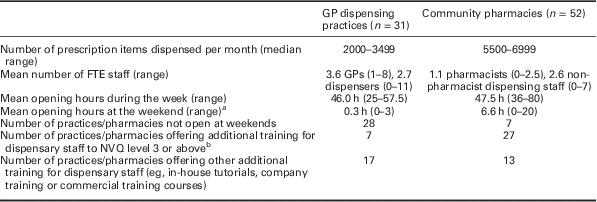
One GP practice returned the questionnaire stating that it no longer dispensed, giving a total possible sample of 64 DPs. Demographic characteristics of the respondents are shown in Table 3. In all, 31 completed DP questionnaires (48% response rate) and 52 completed CP questionnaires (39%) were returned. Practices had a mean list size of 6000 patients with 50 to 80% of patients eligible for dispensary services. In all, 21 (40%) of the pharmacies were located in a rural or semi-rural area (self-reports). In all, 17 (33%) pharmacies were co-located with a GP practice, seven of which were in semi-rural areas and the remaining 10 were in urban locations.
Comparison of demographic characteristics between dispensing practices and community pharmacies
FTE=full time equivalent.
a DPs and CPs are significantly different (Mann–Whitney U=1488, P=0.001).
b DPs and CPs are significantly different (χ 2=11.32, P<0.05, Cramer’s V=0.43).
Most CP responses were from independent pharmacies (40%) with the breakdown in ownership type shown in Table 4. Using Pearson’s χ 2 and Mann–Whitney U analyses, no significant differences were found between urban (self-reported city, town or urban) and rural (self-reported rural or semi rural) pharmacies with regard to opening hours, staffing levels or prescription volume (P>0.05).
Types of pharmacy (n=52)

Many of the DPs reported using software to highlight drug interactions, allergies and non-adherence issues but several also stated that it was the GPs rather than the dispensary staff who checked these points. Pharmacists also reported using computer software that alerted staff to drug interactions in prescriptions but, owing to their lack of access to patients’ full medical records, they had to rely more on questioning their customers with regards to allergies. Pharmacists were also more likely to mention using reference materials, such as the British National Formulary.
Nearly all respondents reported recording dispensing errors and most also recorded ‘near misses’ (where errors are noticed before the medicines leave the premises). However, a great variety of recording methods were reported, including keeping a log book, submitting electronic forms to company head offices and conducting regular audits of recorded errors with all staff. There was variation in error-recording practices both within and between groups.
In terms of public health, proportionally more CPs (40/52, 77%) than DP dispensaries (10/31, 32%) offered services, such as support to quit smoking, chlamydia screening or blood pressure checks and they offered a wider range of services. However, as one DP respondent pointed out at the end of the questionnaire, DPs may also offer these services but not from the dispensary, rather a practice nurse might conduct these public health sessions.
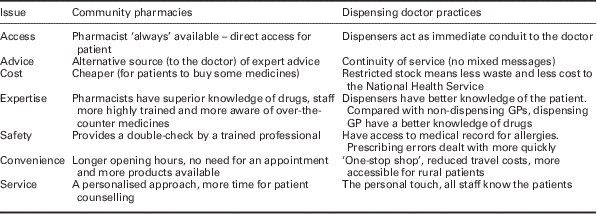
The questions concerning the added-value that their setting offered were answered by the majority of respondents (49/52 pharmacists, 29/31 GPs). Although care must be taken in comparing the two groups due to the slightly different wording of the questions, it was interesting that some issues such as expertise, convenience and good relationships with patients, were perceived as ‘added-value’ by both groups of respondents (Table 5). A very common theme in the dispensing doctors’ responses was that of the ‘one-stop shop’, allowing convenience and continuity of service. Many pharmacists reported their greater accessibility in terms of longer opening hours and access to professional advice on medications without the need for an appointment.
The perceived ‘added-value’Footnote a of each setting
a For dispensing doctor practices ‘added-value’ was defined as what their practice offered over the services provided by a non-dispensing GP practice. For community pharmacies ‘added-value’ was defined as what their pharmacy offered over what was provided by a dispensing GP practice.
Case studies
In all, 16 DPs and 20 CPs indicated that they would be interested in taking part in a case study. We aimed for 6–8 case study sites, to be diverse in terms of size, location and, in the case of pharmacies, the type of pharmacy. In total three CP and four DP sites were recruited. Interviews lasted between 25 min and an hour and a half. A summary of sites is given in Table 6. One DP (Large practice, Table 6) did not want to participate in a full case study and thus only two visits were conducted. Another DP (Branch practice, Table 6) dropped out after three visits. As can be seen in Table 6, there was a broad range of staffing levels and checking procedures across sites.
Case study sites
GP=general practitioner; PN=practice nurse; PM=practice manager; DA=dispensing assistant; MCA=medicines counter assistant.
Analysis of the triangulated case study data identified a complex structure of themes relating to the explicit and implicit systems of work associated with quality in the delivery of pharmaceutical services. Wide variation was evident between sites, both within and between CP and DP groups, with neither CPs nor DPs predominant in demonstrating best practice. Sub-themes were organised into four broad themes, chosen to best reflect the recurrent issues emerging from the data: going the extra mile, workplace culture, patient safety and effective systems of work. Although the themes are listed separately here, they were, as will be shown, interlinked.
Going the extra mile
A key theme was how those working in DPs and CPs saw their role in relation to the services they provided to patients. Clearly, all of the staff were there to offer services to patients but there was variation in how far providers were willing to go to provide these services. This theme reflected providers’ underlying values and commitment to providing patient-centred care. At the supermarket pharmacy, for example, staff would always strive to fulfil a patient’s needs as they saw this as not only good for business but also their duty as a service provider.
If you give them back the prescription and say you can’t get it, they might just go home and not ever take those tablets, whereas if we say ‘it’s not available but there are these alternatives, shall I phone the doctor and ask him?’, then you’re not only giving great customer service but you’re also clinically helping that patient, because it’s making sure they get what they need in a timely fashion.
(Pharmacist employee, supermarket pharmacy)
For those with a strong patient-centred ethos of practice, participants frequently gave examples of where they had ‘gone the extra’ mile for patients either in making sure a patient received a medicine that had run out, checking medicine supplies of competitors when their own stock had run out (even though there was no financial gain for them in doing so) or providing extra (unremunerated) support or a service to a sick or elderly patient who may have needed extra care.
Having patients at the metaphorical centre of the practice or pharmacy could also be demonstrated in more structural ways, for example, in the use of space with adequately designed patient waiting areas providing up-to-date health information. Some sites displayed a prominent customer service ethos where it was evident that all staff made considerable effort to ensure that patients were kept informed of waiting times and the reasons for any delays. In terms of providing DRUMs or MURs, there was variation in terms of which patients were selected. At some sites these services were provided unselectively to anyone meeting minimum eligibility criteria, in order to meet the target number of DRUMs or MURs needed to receive payment. At the pharmacy attached to a GP surgery, one of the pharmacist owners had previously worked for a large chain pharmacy where the target-driven culture had encouraged him to leave.
It came to a head about MURs, where the pressure was on that you had to do so many MURs a day. And it just got to a stage where it was just totally unfeasible to do it without it affecting patient care elsewhere.
(Pharmacist co-owner, pharmacy attached to a GP surgery)
This led to the owners’ decision, on setting up their pharmacy, that formal MURs would only be conducted with patients that were most likely to benefit from these services, such as those on multiple medications or likely to be non-adherent.
Workplace culture
This theme concerned the underpinning values of the setting, and the general attitude of the employers or managers towards staff and external local providers. For staff, workplace culture included whether they felt valued and supported in their continued professional development, for example, having protected study time, being able to attend internal or external courses, and receiving peer or mentor feedback on work activities. More broadly this theme covered the extent to which staff felt able to challenge, or suggest improvements in, existing workplace systems and SOPs.
Internal communication, both within the practice or pharmacy, and further up the hierarchy in multi-site organisations, was an important part of the workplace culture. In the better places, internal communication was valued and there were agreed methods of communication amongst staff to ensure everyone knew about important day-to-day operational issues. Further, there were staff meetings to discuss broader operational or strategic issues, where staff views were encouraged and listened to. At the medium-sized dispensing practice, the senior GP acknowledged that perceived role divisions could be barriers to dispensing staff communicating their ideas and concerns and so the partners had worked hard to break down the perception of GP superiority, organising activities outside work to get to know the staff.
I think we’ve worked well with the staff to break that perception down, but at the moment it’s still there. But we can’t beat ourselves up too much, we’ve had lots of new staff and I think it will come. And most of them haven’t had a social event with us yet.
(GP partner, medium-sized dispensing practice)
The consequences of not ensuring good communication across hierarchical levels were shown in the branch dispensing practice, the dispensers felt their opinions were not respected by colleagues and, although they would fulfil what was required of them, showed a lack of commitment to the Practice in their unwillingness to share suggestions for improvement and absence of motivation to ensure patients’ prescriptions were always filled.
Workplace culture also incorporated the way some practices or pharmacies related to those external to them. This included whether the pharmacy or practice had good relations with other members of the primary care team, in particular the nature of the relationship between GP practices and their local pharmacies. Several pharmacists and GPs acknowledged the importance of building up relationships with other local practices/pharmacies.
You’ve got to be proactive. I think I’ve got a really good working relationship with most of the local practices, but it isn’t something that’s just happened, you have to work at it. And I think if you can build up a good rapport with your GP and not phone them just every time something’s wrong on a prescription, then you’re going to have that rapport.
(Pharmacy manager, supermarket pharmacy)
I may be a dispensing doctor but I do go down the pharmacy and try and meet them and say I’m here and what are your interests and stuff, because I think we truly need to work as a team.
(GP partner, medium-sized dispensing practice)
It was notable that delays in patient care arose between GP practices and pharmacies when the GPs felt they did not know the pharmacist, either because there was a high turnover of staff or the pharmacy did not have a regular pharmacist.
The workplace culture theme was also linked to that of going the extra mile. In some sites there was a culture of continuing to strive towards improving internal procedures, and in a couple of cases this included visiting external sites to see if things were done differently to gain insight into how things could be improved internally.
Effective systems of work
The workplace culture described above was manifest in a number of practical systems of work, which were, or at least appeared to have been, considered to provide the most effective and efficient system of work to ensure good patient care. These related to the internal communication systems described above, which were the mechanism to ensure that all staff knew about internal procedures and operational issues when there was a change of staff (at handovers, when staff were absent or for new staff). Communication methods varied according to the number of staff and shift patterns at the site. For example, in the small independent pharmacy there were ‘no formal communication systems, because at the most there’s only ever 3 of us in the pharmacy’ (Pharmacist manager, independent pharmacy). At this site communication was mostly oral but there was also a pharmacy diary for recording reminders. In contrast, at the large supermarket pharmacy where staff would work in shifts and sometimes not work with certain colleagues for days or weeks at a time, the pharmacy manager used a noticeboard, emails and SMS to ensure all staff were kept up-to-date. What was important for effective communication was whether there was a common understanding among staff as to how different messages should be communicated.
In some settings, there were established systems for prioritising prescriptions with regard to urgency or for identifying those prescriptions for patients that were waiting. Prescriptions were coded or identified in some way (eg, a coloured tag) to indicate different types of prescriptions (eg, repeat, urgent, waiting). The space was also designed for purpose, such that there were systems for easily identifying at which stage of dispensing the prescription was at and for ensuring the through-put of prescriptions (and keeping the space clear). Not all of these systems of work were relevant (or even possible) in each setting but the best places considered what was needed and tailored their practices to their individual setting.
We’re not a purpose-built building, so we have to make the most of what we’ve got. The dispensary has been refitted and changed numerous times since I’ve been here. Because we’re limited to space … we do try and separate what we call our ‘parts’ [awaiting stock] and our ‘things to be checked’ [filled prescriptions].
(Dispenser, village dispensing practice)
Effective workplace systems were evident in the way service information (including MUR or DRUM services as well as public health services) was displayed and advertised to patients. At some sites public health services were poorly promoted, with some practitioners at both types of site viewing public health services ambivalently or as being outside their usual role.
Workplace systems were underpinned by SOPs and in those sites where these worked particularly effectively, the SOPs were routinely reviewed and updated; staff saw the value in having SOPs that matched, and were used to enhance, real-life practice.
You adhere to them because that is a safe working practice, rather than, ‘oh, I’ve read the SOP, I must do it like this’.
(Technician, supermarket pharmacy)
This further illustrates the connection between workplace systems and culture, with a patient-centred culture where employees were valued promoting a desire to adhere to good operating procedures.
Patient safety
Patient safety was a dominant theme throughout the visits, combining elements of both workplace culture and effective systems of work in relation to the checking of prescribed items and in the way in which dispensing errors were managed. Most settings had periods of time in which there was only one staff member both dispensing and checking prescriptions. The reality of this was recognised by several sites and they had developed procedures for both single- and double-checking of prescriptions. For example, three of the dispensing doctor practices made use of barcode scanning software, to act as a proxy second checker.
We’ve got a system with the barcode reader on it, so if you pick up an inhaler as opposed to an autohaler the barcode would be wrong and it will flag that up to you.
(Dispenser, village dispensing practice)
With regard to dispensing errors, high quality organisations recognised both the importance of recording near misses in prescriptions and of reviewing the circumstances, which led to these errors. This was done so that staff could pool their ideas on how systems could be changed to prevent further errors and ensure greater patient safety. The pharmacy manager at the supermarket pharmacy was particularly keen to review errors in order to identify any learning needs.
We also have a near miss log, so if one of the technicians makes an error but the pharmacist picks it up before it’s gone out, again we record that … because if one technician has made that mistake, is it that they’ve just made the mistake and done the wrong thing, or is it there’s a learning need there. And if one technician didn’t know something, do others not know and could potentially make that same mistake … if it’s established that there’s a learning need there, then it would be my responsibility to make sure that I impart that information to my staff.
(Pharmacy manager, supermarket pharmacy)
As interruptions were endemic to many CPs and DPs, and were recognised as contributing to the likelihood of an error occurring, some workplaces had procedures to ensure that staff who were engaged in a dispensing process were not interrupted, minimising the likelihood of an error.
Discussion
A key finding of this research was the strength of similarity between these settings particularly with regard to staffing levels, weekday opening hours and the perceived ‘added-value’ of each setting over other types of settings. It is notable that both dispensing doctors and community pharmacists saw themselves as experts in medicines, as offering an accessible service and as providing a personalised approach to patients. Unlike DPs, pharmacists provided a second clinical check on prescriptions, more pharmacies being open at the weekend and pharmacies having more staff trained to above NVQ level 2. However, in terms of workplace practices and organisational ethos, there was more variability within groups than there were differences between them, with areas of best practice observed across both.
It is interesting to note the similarities between the good practices identified, particularly with regard to internal communication and organisational ethos, and those observed in successful private and third sector organisations, such as the John Lewis Partnership. The Partnership acknowledges that customer satisfaction is vital for their success but also that the ‘happiness of partners [employees]’ has a profound impact on the service provided to customers (John Lewis Partnership, 2014). The independent business advice and support network for small businesses, Smarta, identified several beneficial factors of the John Lewis approach and advises that these factors be adopted by small businesses too (Smarta Enterprises Ltd, 2014). The Partnership tries to ensure that all staff care about customer service; all staff are partners and so share in any profits, but in addition to this the organisation tries to foster a sense of ownership and pride among all partners. Although none of the case study sites operated as a partnership like John Lewis, that is, where all staff are partners, it is notable that at the sites where staff felt valued and communication between management and staff was good, the staff evinced a sense of pride in their work and would always strive to fulfil a patient’s needs.
Checking prescriptions is another area where there was much individual difference both in attitude and practice. Double-checking of medications before handing them out to patients was seen by many participants as the standard to aim for, indeed at some case study sites double-checking was mandatory, although in other sites this was not practicable. Double-checking, however, comes with risks not present in single-checking, such as deference to authority preventing one dispenser from pointing out or picking up on a more senior colleague’s mistake, or a reduced sense of individual responsibility meaning that neither dispenser thoroughly checks the prescription, instead relying on the other person to do so (Armitage, Reference Armitage2008). Solutions include enforcing a time difference and distance difference in the checking process, and using checklists that are read out (Armitage, Reference Armitage2008). Sites frequently did not acknowledge the risks associated with double-checking nor did they incorporate research evidence into the development and implementation of their checking protocols.
Errors and error reporting is an area where there was similarly wide variation in practice. Current research is clear that the reporting of errors should be encouraged to enable learning (Armitage et al., Reference Armitage, Newell and Wright2010). However, research also suggests that health professionals suffer ‘reporting fatigue’ and certain methods of error recording promote individual blame (Armitage et al., Reference Armitage, Newell and Wright2010), which lessens the opportunity for learning and quality improvement. These authors state that error reporting needs to be guided by theory based on the principle that errors arise from a number of human and system factors, and that reporting systems should facilitate the identification of the causes of error and enable learning from them (Armitage et al., Reference Armitage, Newell and Wright2010). While this is widely acknowledged in the literature, there still appears to be wide variation in how error reporting is handled in practice.
We acknowledge there are several limitations to this research. Response rates to the questionnaire were low: there was a 39% response rate from pharmacists and 48% from dispensing practices. This is acknowledged as limiting the generalisability of the findings owing to the potential bias in our respondents although postal questionnaires have been found to rarely gain response rates above 50% (Haralambos and Holborn, Reference Haralambos and Holborn1991), with some in general practice achieving <30% (Rashidian et al., Reference Rashidian, van der Muelen and Russell2008). In the case studies, our intention was to explore issues of quality in greater depth at a small number of sites diverse with regard to a number of demographic criteria. While we feel this was achieved, there may have been bias in the types of case study sites selected. In particular, the case study sites were likely to be more favourable towards research and, potentially, have better systems of work and a more supportive workplace culture than those who did not respond.
Future work is needed to investigate if the themes identified here are generalisable across CP and DP settings and, in particular, if these themes also resonate with patients receiving pharmaceutical services from these settings. With further work these themes are suggestive of ways in which quality of pharmaceutical service delivery could be assessed across both settings. If such measures could be developed and applied, it would go some way to ensuring the highest standards of pharmaceutical service delivery across both settings.
Conclusion
This is the first study to investigate issues of quality in the delivery of pharmaceutical services across the two settings of CPs and DPs. While there is still some antipathy between DPs and CPs, the significant message from this research is that there are many more similarities between them than differences.
Both settings have yet to fully implement evidence-based checking and error reporting procedures and some pharmacies and dispensaries would benefit from a more patient-centred or customer-service orientated workplace culture. These issues need to be measured in future assessments of quality to ensure the highest standards of pharmaceutical services delivery in both settings.
Acknowledgements
The authors gratefully acknowledge the kind assistance of the patients and professionals that participated in this study. The views expressed in this paper are those of the authors and not necessarily those of the Pharmacy Research UK.
Financial Support
The study was supported by Pharmacy Research UK.
Conflicts of Interest
None.
Ethical Standards
The authors assert that all procedures contributing to this work comply with the ethical standards of the relevant national and institutional guidelines on human experimentation, as approved by NRES Committee Southwest – Southmead, reference 11/SW/0203, and with the Helsinki Declaration of 1975, as revised in 2008.