

Introduction
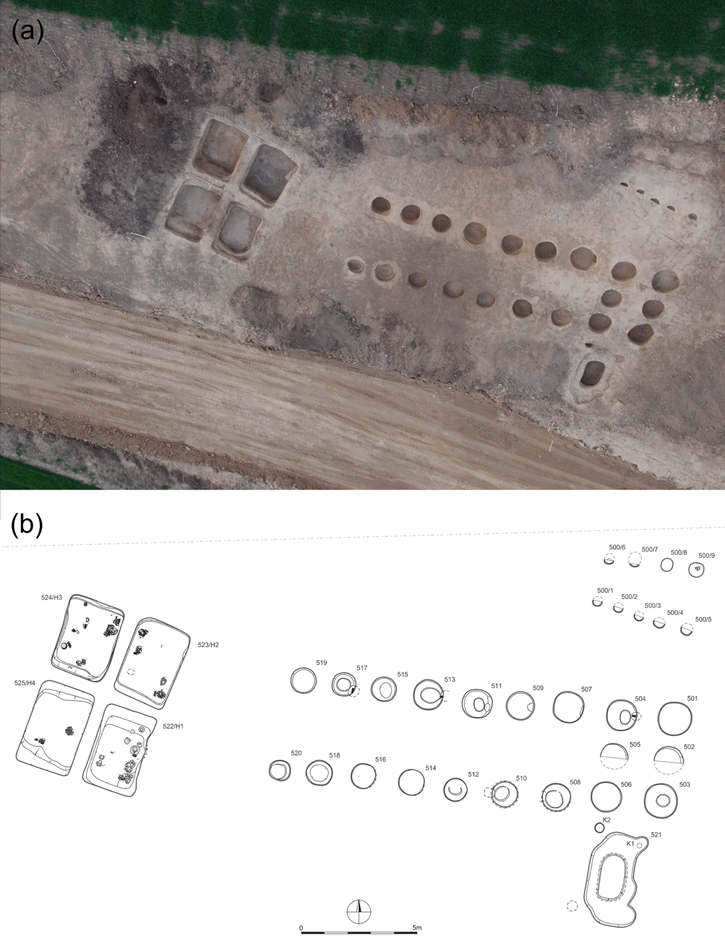
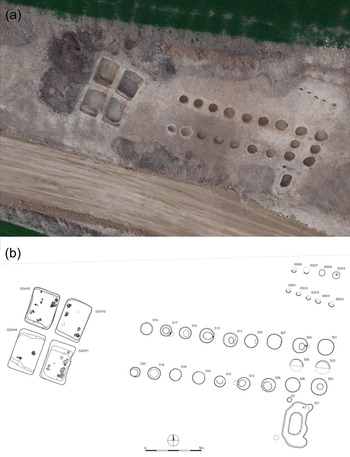
A rescue excavation in Brodek u Prostějova revealed a large timber structure in a possible circular ditch enclosure. The site is dated to the Bell Beaker period (c. 2500–2200 bc) by analogies and 14C dates from Moravia as well (Grömer et al., Reference Grömer, Fojtík, Rudelics and Kroh2017). Four rectangular grave-like pits, considered to be ritual deposits, were arranged next to each other in front of two rows of nine massive postholes; the rows were oriented east–west and approximately twenty metres long. The eastern part of the monumental structure contains two more postholes between the rows, and at its south lie an irregular pit and a smaller wooden structure (Figure 1). The remains of large wooden pillars were visible in sections (Fojtík, Reference Fojtík2015, Reference Fojtík2016: fig. 3). The absence of human remains in the pits led to them being initially identified as cenotaphs (Grömer et al., Reference Grömer, Fojtík, Rudelics and Kroh2017). Characteristic and exclusive Beaker finds were encountered within the pits: bowls, jugs, an amphora, wrist-guards, arrowheads, a set of stones identified as metalworking tools, pure gold and silver artefacts, jade, amber, a bone-shaped pendant, bone beads, animal bones, and flint flakes.
a) Aerial photograph of the excavated site; b) plan.
Bell Beakers are a pan-European phenomenon, spread across Europe, dated to the end of the Neolithic and the beginning of the Early Bronze Age (c. 2500–2000 bc; Bilger, Reference Bilger2019). Characteristic finds are bell-shaped ceramic beakers, generally featuring a red surface and incised ornamentation that often contains the remains of a white inlay (Olalde et al., Reference Olalde, Brace, Allentoft, Armit, Kristiansen and Booth2018: SI 1). Such beakers were most probably related to activities involving collective feasting or drinking (Rojo et al., Reference Rojo, Garrido-Pena, García, Juan-Treserras and Matamala2006). The transport of artefacts, including pottery, could surely cover long distances (Heitz & Stapfer, Reference Heitz and Stapfer2017), whereas archaeometric analyses of Beaker pottery suggest local production practices and short-distance exchange (Rehman et al., Reference Rehman, Robinson and Shennan1992; Wilkin & Vander Linden, Reference Wilkin, Vander Linden, Anderson-Whymark, Garrow and Sturt2015; Dias et al., Reference Dias, Prudêncio and Valera2017). The Beaker ceramics within the Beaker sphere across Europe include vessels that are highly similar (beakers) but also vessels rooted in local traditions (e.g. bowls, jugs) (Besse, Reference Besse2003; Strahm, Reference Strahm and Czebreszuk2004; Kleijne, Reference Kleijne2019).
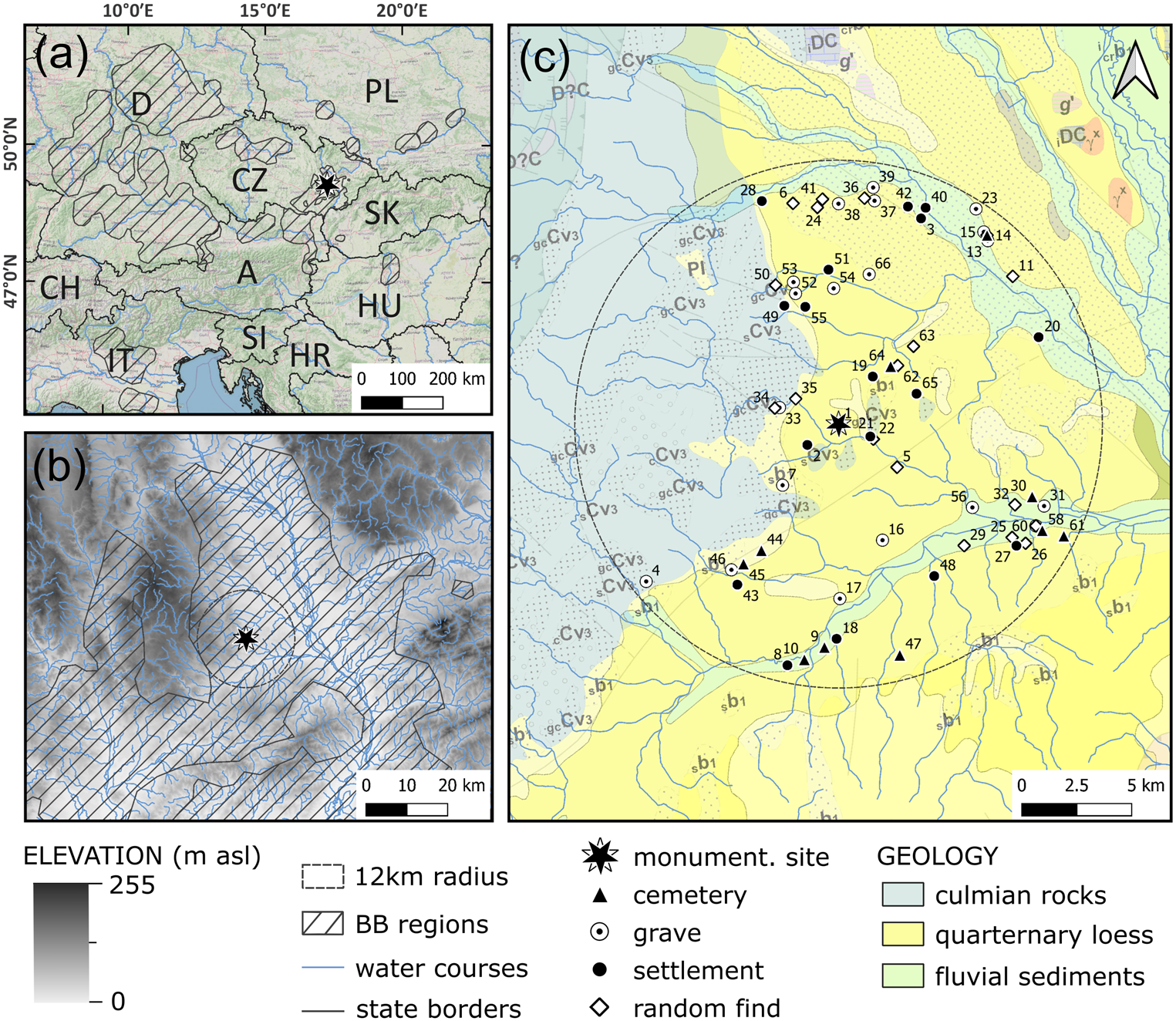
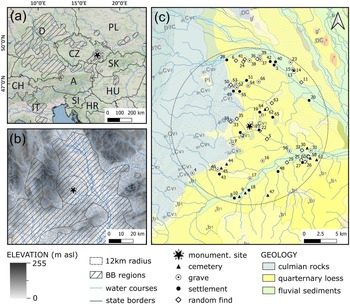
Czechia has one of the greatest numbers of excavated Beaker sites in Europe (Turek et al., Reference Turek, Dvořák, Peška, Czebreszuk and Szmyt2003; Matějíčková & Dvořák Reference Matějíčková and Dvořák2012 Bilger, Reference Bilger2019; Kleijne, Reference Kleijne2019), with a main cluster in the southern part of the Upper Morava valley, where the Brodek site (49°22′36.65″N, 17°5′49.28″E) is located (Figure 2). Previous studies have demonstrated the existence of local traditions in the use of raw materials and the production of artefact categories such as white encrusted pottery (Všianský et al., Reference Všianský, Kolář and Petřík2014), lithic tools (Kolář, Reference Kolář2018), projectile points (Petřík et al., Reference Petřík, Sosna, Štefanisko and Galeta2016b), and bracelets (Nicolas, Reference Nicolas2020). However, the final execution or shapes of these artefacts show similarities between sites and regions. A network analysis conducted by Kleijne (Reference Kleijne2019) revealed strong similarities among the pottery from settlements in Czechia. These and other studies of the third millennium bc in Europe (e.g. Wilkin & Vander Linden, Reference Wilkin, Vander Linden, Anderson-Whymark, Garrow and Sturt2015; Holmqvist et al., Reference Holmqvist, Larsson, Kriiska, Palonen, Pesonen and Mizohata2018) suggest translocal communities with a large number of individuals moving between them (Furholt, Reference Furholt2017; Kolář, Reference Kolář2020).
a) Location of the monumental site at Brodek u Prostějova within central Europe and distribution of Bell Beakers (hatched); b) location of the site in Moravia (Digital Elevation Model); c) geological setting (DC: Devonian limestones; g’: Orthogneiss; γx: Biotitic granites to granodiorites; D?C: Devonian-Carboniferous schists, calcareous sandstones, limestones; cCv3 sCv3 gcCv3: Carboniferous clastic sedimentary rocks: clayey schists, siltstones, greywackes, conglomerate; PI: Pleistocene deluvio-eolic sediment; sb1 crb1: loess and loess soil). Map based on Czech Geological Survey, 2021 and Beaker sites mapped within a 12-km radius around the monumental site (see Supplementary Table S1).
The pottery deposits discovered at the monumental site of Brodek u Prostějova offer a unique opportunity to explore the relationship between local traditions and supra-regional interactions within the framework offered by the concept of translocality. Within this study, the following objectives were set: (i) to investigate the provenance of the pottery and the composition of the white incrustations; (ii) to explore the depositional semantics and the patterns exhibited by the ceramics in the ritual features; and (iii) to study evidence of the circulation of ceramics and other artefacts to infer translocal social relationships.
Materials and Methods
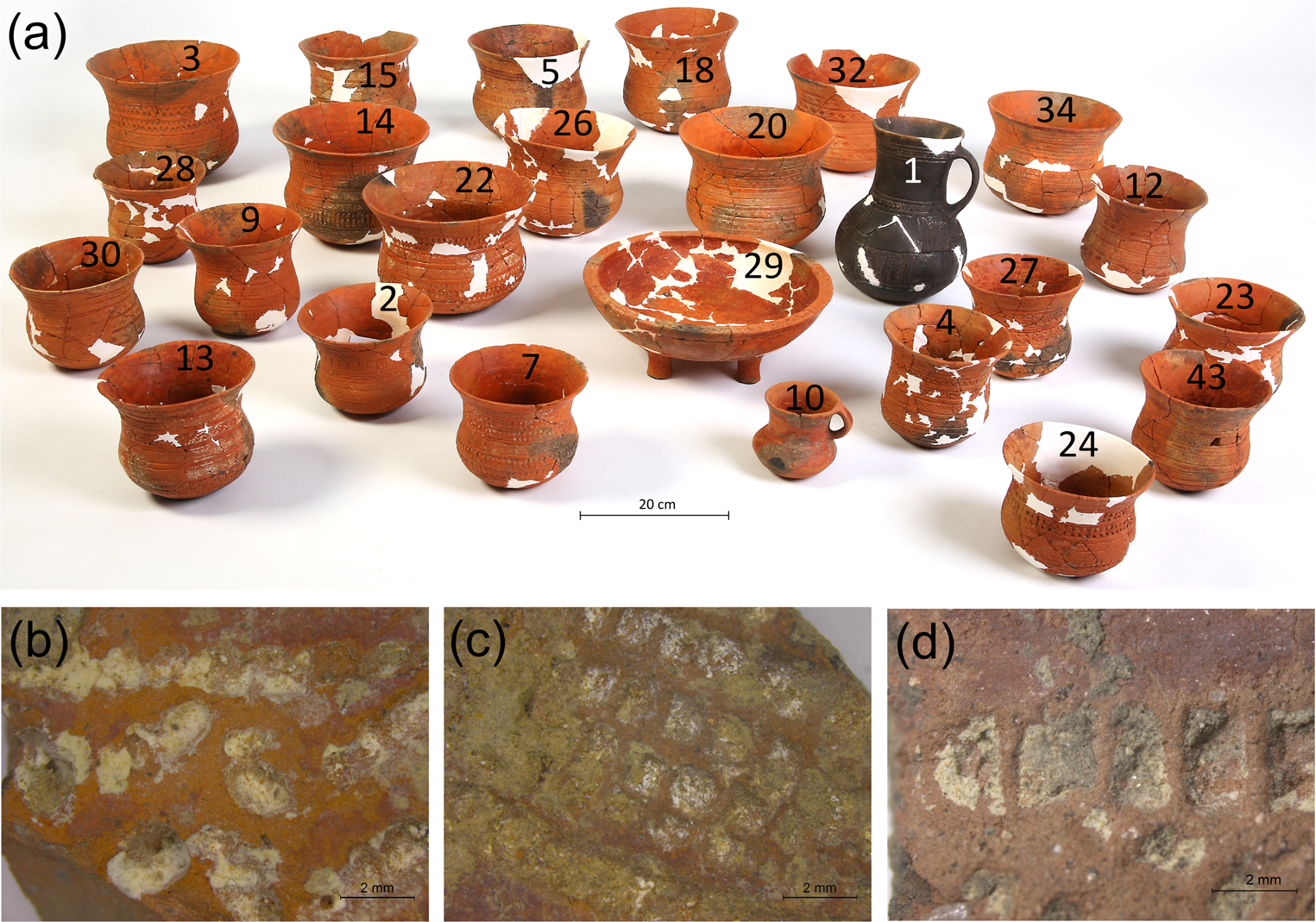
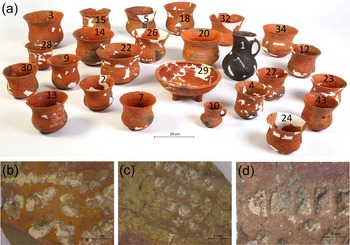
During the excavation, small sample sherds were taken from most vessels for further analysis or material was later carefully sampled from the restored vessels (Figure 3). The ceramic assemblage consisted mainly of typical bell-shaped vessels: forty beakers, four bowls, two jugs, three fragments of unspecified vessels, and an amphora wrapped in textile (Grömer et al., Reference Grömer, Fojtík, Rudelics and Kroh2017: fig. 4). Incrustations were preserved and sampled from nineteen vessels (see Supplementary Table S2).
a) Restored vessels from the ritual deposits (the numbers correspond to those in the Supplementary Table S2); b–d) details of the ceramic surface with the remains of red slip and decoration filled by incrustation (b: sample 13, c: sample 20, d: sample 37).
Provenance analysis was based on commonly used petrographic analysis outlined by Quinn (Reference Quinn2013) and supplemented by chemical bulk analysis performed by energy dispersive fluorescence spectrometry (ED-XRF). For incrustation analysis by micro Fourier transform infrared spectroscopy (μFTIR) and micro X-ray diffraction (μXRD), a small portion of white material was removed under a low-magnification microscope. Scanning electron microscopy-electron dispersive spectroscopy (SEM-EDS) analysis was conducted on thin-sections of samples with preserved incrustation. Decorative motifs were recorded with the help of a formalized descriptive system (Supplementary Figure S1) for larger beaker sherds as well. The data were collected into an absence/presence matrix. For metric analysis, data was noted from the restored beakers. The data were statistically evaluated in R studio software (R Core Team, 2021) as well as in the case of petrographic results and XRF analysis. Details of all the procedures followed, as well as sources and used R libraries and literature, can be found in the Supplementary Material (Gašpar & Petřík, Reference Petřík2022).
Results
Ceramic petrography and chemical composition
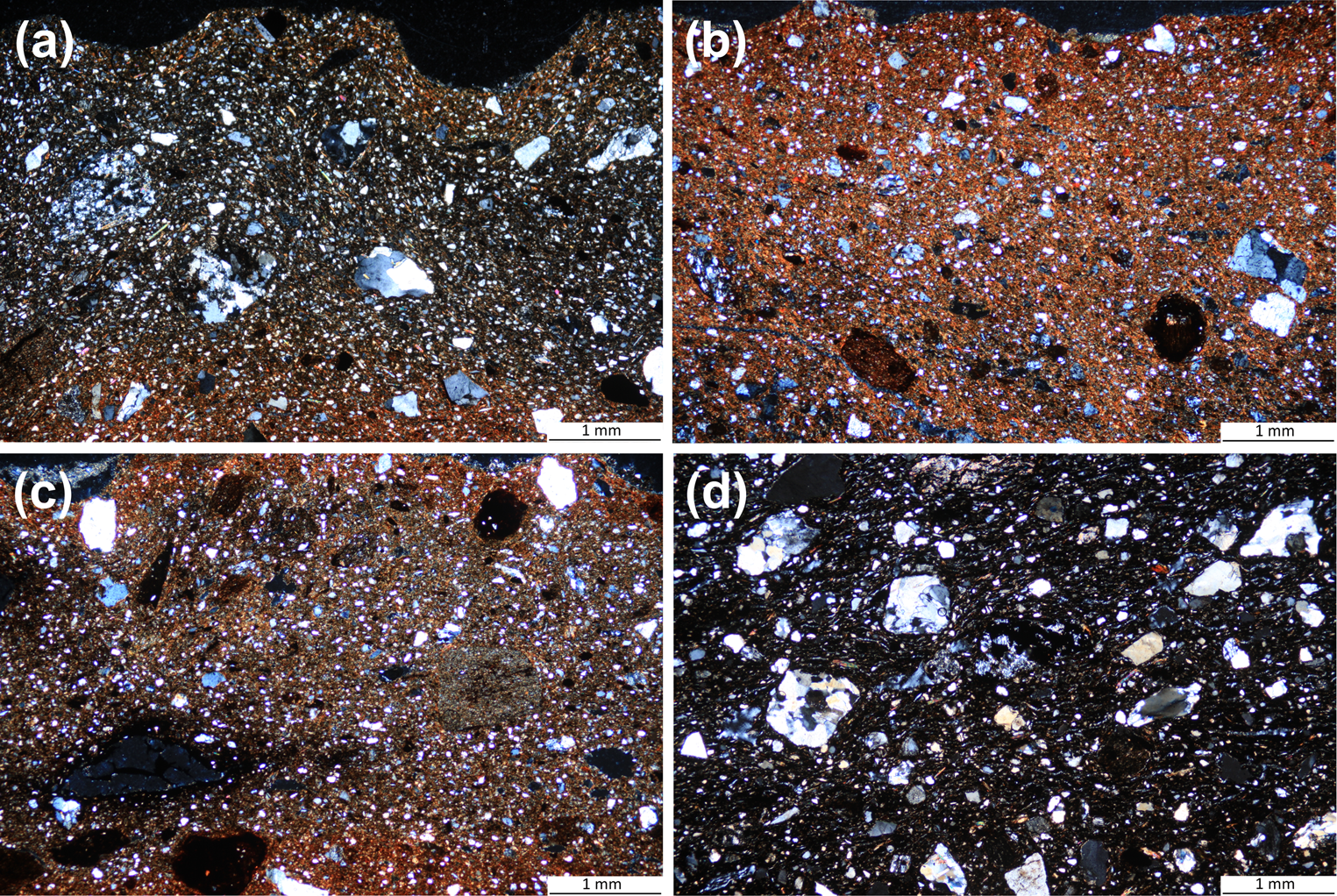
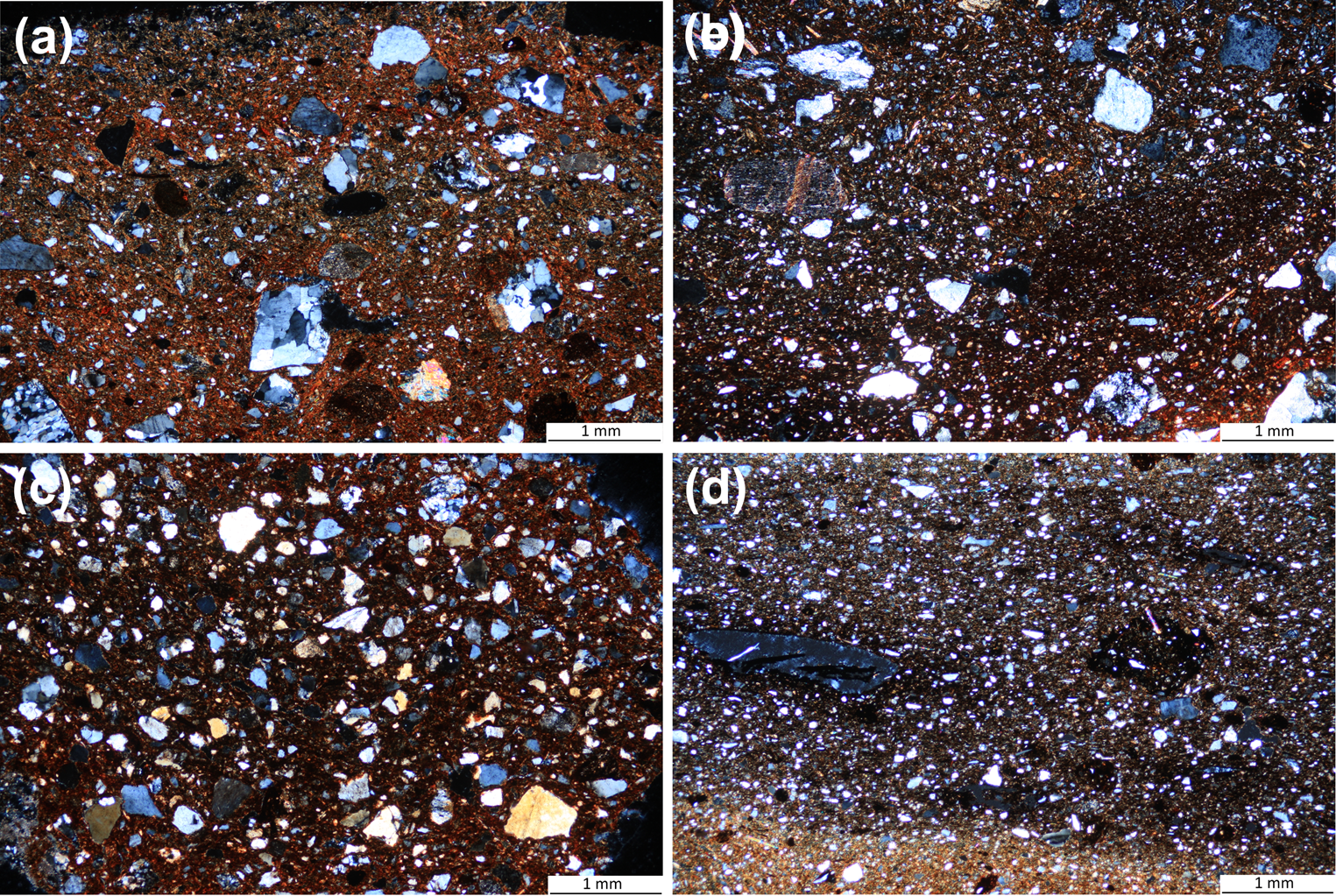
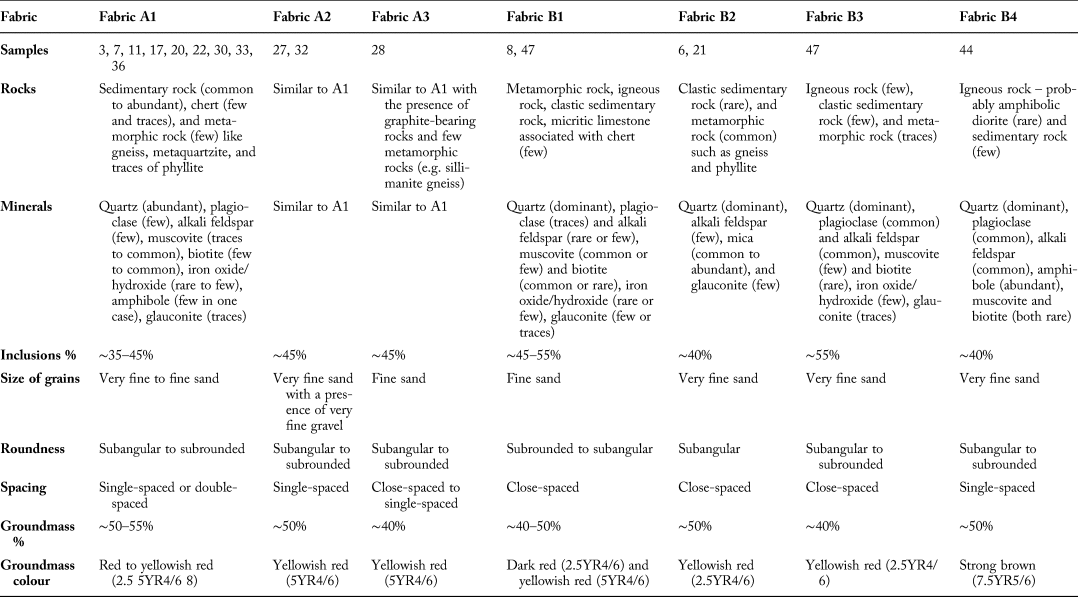
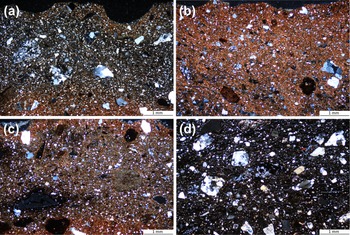
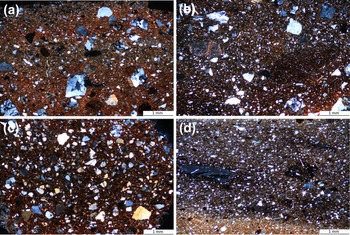
To address the provenance of the ceramics, we evaluated the semiquantitative abundance of the inclusions and the granulometric results, as well as the attributes of the fabric's microstructure and groundmass (for values and descriptions of each sample, see Supplementary Tables S3 and S4). We distinguished two main groups, further subdivided into seven fabric groups (Figures 4 and 5; Supplementary Figure S2). Fabric group A, consisting of twelve samples (Fabric A1, A2, and A3), is mainly characterized by frequent to abundant sedimentary rocks identified mostly as Culmian slates, siltstones, and greywackes (Figure 4). Fabric group B, consisting of five samples (Fabric B1, B2, B3, B4), is composed of other fabrics and outliers with rare sedimentary rocks (possibly Culmian) (see Table 1).
Fabric group A (thin-sections in cross-polarized light). a) Fabric A1 (sample 27); F) fabric A1 (sample 33); c) Fabric A2 (sample 11); d) Fabric A3 (sample 28).
Fabric group B (thin-sections in cross-polarized light). a) Fabric B1 (sample 8); b) Fabric B2 (sample 21); c) Fabric B3 (sample 47); d) Fabric B4 (sample 44).
Fabric characteristics.
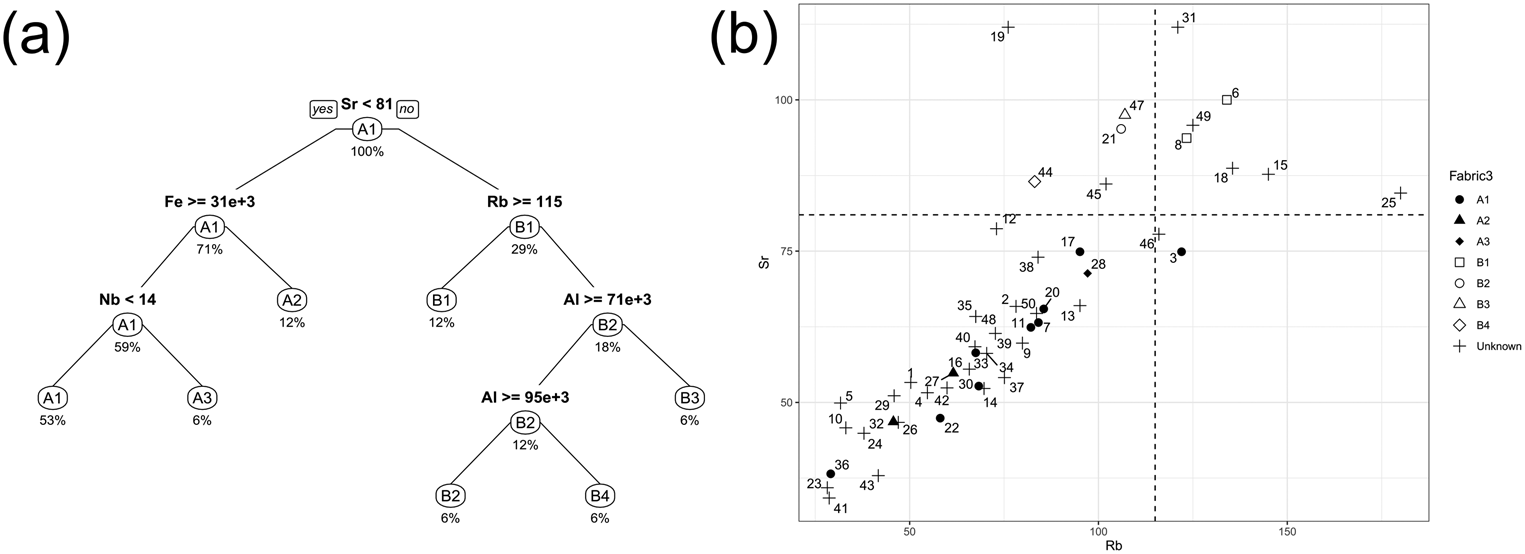
The chemical composition of each sample (Supplementary Table S5) allows us to apply a classification tree to establish which chemical elements distinguish the fabrics and to draw comparisons between observed and predicted fabrics (Figure 6). Strontium and rubidium are the most important elements for the classification (Figure 6b) and reflect the relation between the defined fabric groups and samples not examined petrographically. Given that the total number of available thin-sections (seventeen) is limited by the amount of material available for destruction, we extrapolated the chemical classification of fabrics obtained by ED-XRF (Figure 6; Supplementary Table S5). The concentration of Sr (81 ppm) separates petrographic group A from petrographic group B. Fabric group A contained less than 81 ppm of Sr, whereas the content of Sr in Fabric group B was noticeably higher (Figure 6). In total, thirty-eight samples (76 per cent) were classified as Fabric group A and twelve samples (24 per cent) as Fabric group B.
a) Classification tree of fabrics according to their chemical composition; b) Sr-Rb (ppm) scatter plot; the dashed separating lines are based on the classification tree.
White Inlay Incrustations
Micro Fourier transform infrared spectroscopy (μFTIR)
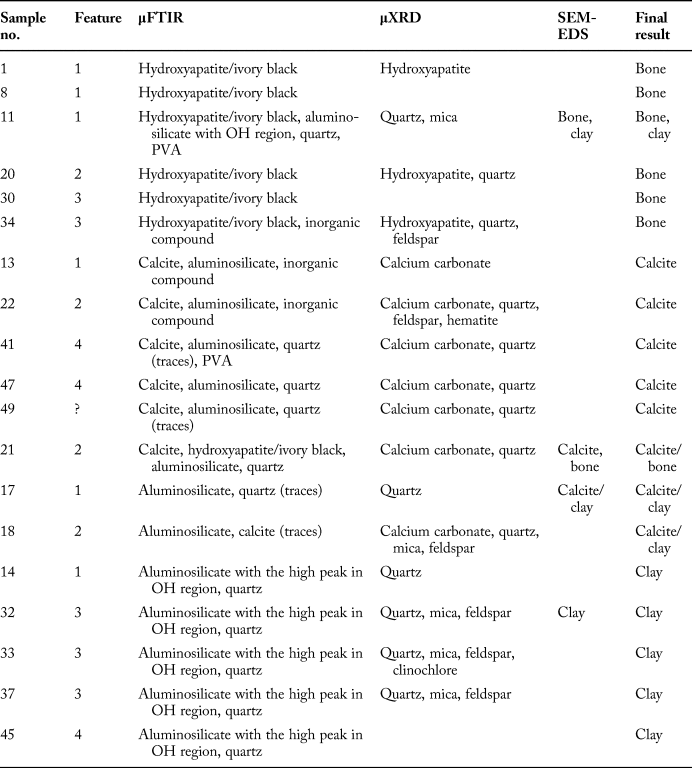
Three main materials were identified: animal bone (hydroxyapatite), calcium carbonate (calcite), and clay (aluminosilicates) (Supplementary Figure S3). White pigment, containing primary hydroxyapatite, was clearly identified in five samples (1, 8, 20, 30, and 34); calcium carbonate was identified in five samples (13, 22, 41, 47, and 49); clay with quartz and hydrated aluminosilicates was identified in five samples (14, 32, 33, 37, and 45). Four other samples (11, 17, 18, and 21) exhibited FTIR spectra that diverged from those of the groups described and represent mixtures of white materials (Table 2; Supplementary Figure S3).
Results of the analyses of the white material and incrustation group.
Micro X-ray diffraction (μXRD)
The mineral phases identified are presented in Table 2. The μXRD results are in accordance with the FTIR results and reveal the mineralogical composition of the materials studied (Supplementary Figure S4). In the clay samples, mainly quartz, mica, and feldspar were represented. In calcite-clay mixtures, besides other minerals such as quartz, muscovite/illite, and feldspar, calcite was identified only as a minor phase. In calcium carbonate incrustations, the peaks of calcite were highly significant, while it was also possible to distinguish smaller amounts of other minerals such as quartz and feldspar. For hydroxyapatite incrustations, it was mainly this material, i.e. bone, that was found.
Scanning electron microscopy-electron dispersive spectroscopy (SEM-EDS)
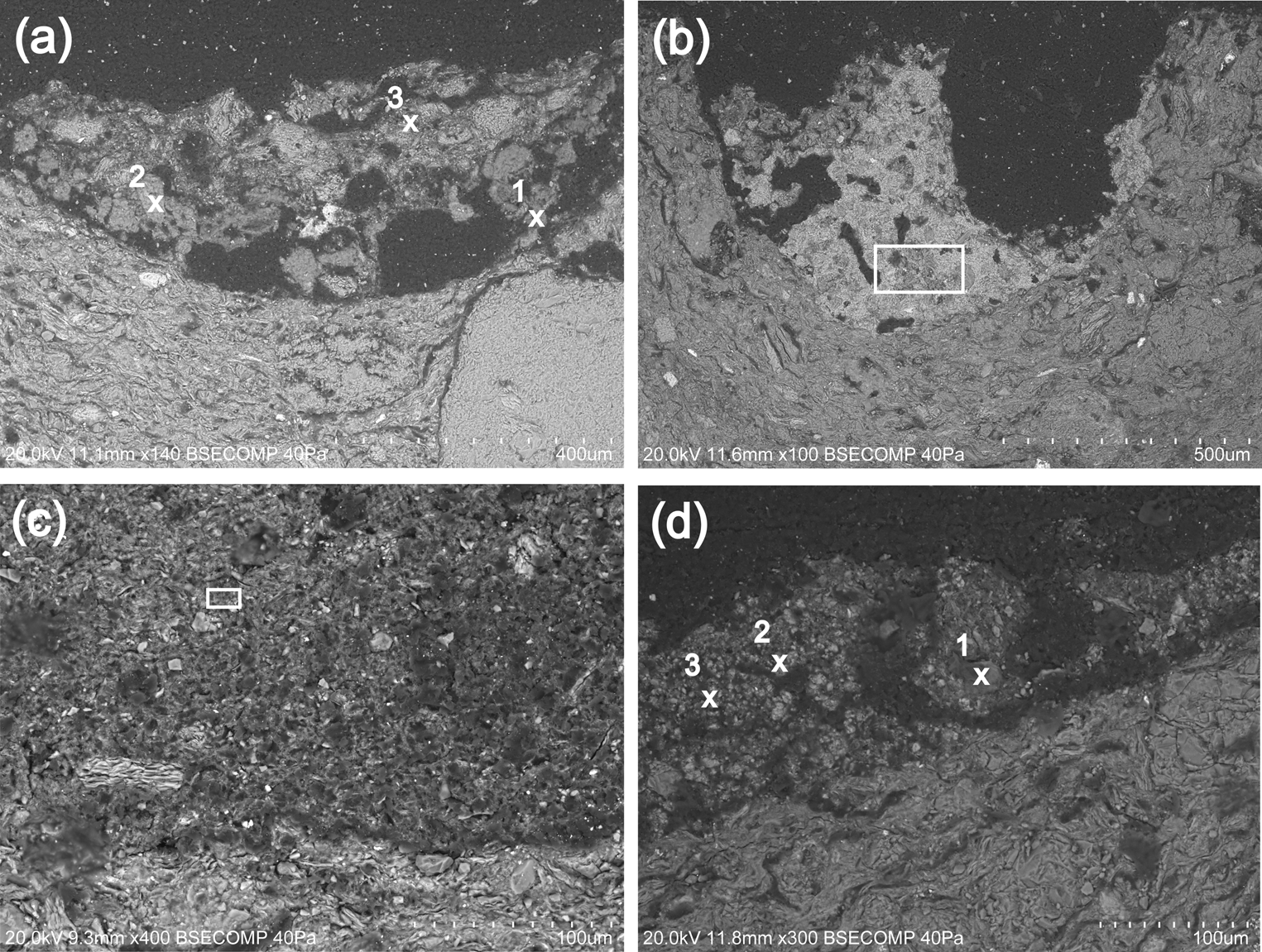
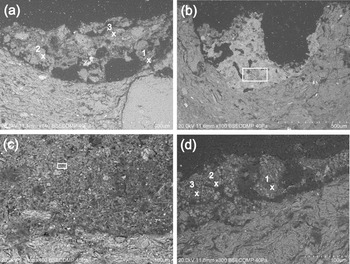
In two samples (11 and 17), clay was detected over the white inlay (Figure 7a and 7b). The clay used for incrustation (Figure 7c) had an aluminosilicate composition with a greater presence of potassium (Supplementary Table S6). Analysis of the sample where calcium carbonate and hydroxyapatite had already been detected by μFTIR (Supplementary Figure S3) revealed that the white material was mostly composed of calcium carbonate and that bone was present in the form of sporadic small particles (Figure 7d). The BSE (backscattered electrons) imaging revealed that the hydroxyapatite incrustation contained primarily larger particles of crushed bone, whereas the calcium carbonate incrustation was a more compact, finely crushed and cemented material. The clay incrustation was a dusty material with various rock and mineral particles in a range of sizes. Grains were in all cases mostly subangular (Figure 7).
SEM-EDS analysis of thin-sections: a) bone incrustations (1, 2), clay (3) (sample 11, Fabric A1); b) calcium carbonate incrustation (sample 17, Fabric A1); c) detail of incrustation made of clay (sample 21, Fabric B2); d) detail of bone (1) and calcium carbonate incrustations (2, 3) (sample 32, Fabric A2) (see Supplementary Table S6).
Metrics and Decoration Analysis
The metric data and their principal component analysis (PCA) revealed two groups of beakers defined mainly by their size (smaller and larger). The rim diameter of the beakers was, in most cases, smaller than their maximum body diameter. Their width and height were similar, but a few were taller and thinner than the rest. The results of the covariance (CV) analysis (PCA1: 83.6 per cent, PCA2: 60.8 per cent, PCA3: 80.1 per cent, PCA4: 50 per cent, PCA1–PCA4: 46.1 per cent), however, indicate greater variation among beakers and supposes individual differentiation in their manufacture. Both smaller (diameter: c. 130 mm, height: 120 mm) and larger beakers (diameter: c. 175 mm, height: 160 mm) were placed in all the ritual deposits. The metric analysis does not reveal any clear patterning among the ritual deposits and fabrics (Supplementary Material: Beakers).
The analysis of the decorative motifs identified the first three dimensions of the correspondence analysis (CA) as being significant, and the scree plot estimated four clusters. Based on observations of plots with the CA dimensions and the result of the cluster analysis (Supplementary Material: Beakers), the following motif variations were significant: (a) series of diamonds; (b) motif of triangles; (c) series of zig-zag stripes; and (d) embedded hourglasses or small triangles (Supplementary Figure S1). Decoration cluster 2 mainly related to positive values and decoration cluster 3 to negative values in Dimension 2 of the PCA metric, suggesting two different patterns in variously shaped beakers; however, some decorative motifs were present in all clusters (Supplementary Material: Beakers).
In terms of the relation of the decorative motifs to the Fabric groups A and B, vertical dots, triple horizontal lines, and vertical zig-zag lines are connected only with the local or regional Fabric group A. Other decorative motifs (e.g. series of squares) are more frequently associated with the extra-regional Fabric group B, although none of the motifs are exclusive to the non-local fabric. Variations in the use of motifs, and their partial mixing on the beakers, are exemplified by sample 45: it belongs to an extra-regional fabric and features elements of a supra-regional decorative grammar but also a couple of local decorative patterns (Supplementary Material: Beakers).
Discussion
The assemblage of ceramic vessels from the remarkable Bell Beaker monumental site of Brodek u Prostějova allows us to explore how communities of the second half of the third millennium bc built and used this structure. The depositional practices observed seem to be widespread in Europe, ranging from Spain to Poland (e.g. von Lettow-Vorbeck et al., Reference von Lettow-Vorbeck, Guerra Doce and Delibes de Castro2014; Wawrusiewicz et al., Reference Wawrusiewicz, Januszek and Manasterski2015; Manasterski et al., Reference Manasterski, Januszek, Wawrusiewicz and Klecha2021). That said, Beaker communities referred to universal ideas, but they modified their material culture and behaviour according to local traditions and preferences (e.g. Vander Linden, Reference Vander Linden and Czebreszuk2004; Lemercier, Reference Lemercier2018). Here, we turn to what role the monument at Brodek may have played at different spatial scales.
Ceramic provenance and materials of white incrustations
To investigate where the ceramic vessels were manufactured, we must consider the composition of the raw materials available in the regional geology. The Drahanská upland near Brodek consists of carboniferous Culmian rocks (Růžička, Reference Růžička1995). Fabrics of Fabric group A are composed of these rocks, common in clays available in the nearby valley as well as from an area of the nearby upland. The distribution of Culmian rocks (Figure 1c) suggests that Fabric group A includes fabrics produced locally or in the nearby region (up to 15–30 km west, north-west and south-west). A special case is Fabric A3, which is composed of local and/or regional clay with Culmian rocks and added graphitic temper. Graphitic rock is connected to Devonian metasedimentary rocks in the eastern part of Czechia and does not occur any closer to Brodek than Velké Tresné (about 60 km to the north-west) and Velké Vrbno (about 90 km north) (Harazim, Reference Harazim1976). It follows that this raw material was brought in but, while the graphitic temper is exogenous, the fabric is made of a clay containing regional Culmian rocks.
In the case of Fabric group B, sparse clastic sedimentary rocks and/or other rocks indicate the regional and/or extra-regional provenance of fabrics produced at distances over 15–55 km (see Salanova et al., Reference Salanova, Prieto-Martínez, Clop-García, Convertini, Lantes-Suárez and Martínez-Cortizas2016). Fabric B1 containing limestone must come at least from another valley because the nearest small outcrop of Devonian limestone lies about seventeen kilometres north in another water catchment zone (Figure 1c, iDC). Fabric B2 contains metamorphic rocks derived from the Silesicum (Jeseníky Mountains) and deposited on the floodplain of the river Morava, which flows to the south at least fifteen kilometres from the site. Fabric B3 is surely non-local, but its origin could not be ascertained. Fabric B4 contains amphibolic diorites that indicate an origin from the Brno Batholith area, about fifty-five kilometres to the south-west of Brodek (Petřík et al., Reference Petřík, Prokeš, Všianský, Salaš and Nikolajev2016a).
About a quarter of the deposited vessels were recognized as belonging to the non-local Fabric group B produced by more distant communities, as indicated by the petrography and chemical classification. Moreover, the local or regional provenance of the other three-quarters of the assemblage could be overestimated because clays with Culmian rocks are available in the vast area of the nearby Drahanská vrchovina upland and the Nízký Jeseník Mountains (Chlupáč et al., Reference Chlupáč, Brzobohatý, Kovanda and Stráník2009). Regardless of uncertainties, there seems to be a notable presence of vessels originating from regions further away, particularly from the adjacent river catchment zones and from the Brno Batholith area. Furthermore, as we have seen, graphite was brought in to temper some local and/or regional pottery (Fabric A3). Such a quantity of non-local pottery is remarkable compared to other assemblages from Beaker or even Early Bronze Age sites in central Europe (e.g. Rehman et al., Reference Rehman, Robinson and Shennan1992; Gherdán et al., Reference Gherdán, Szakmány, Weiszburg and Olon2002; Kreiter et al., Reference Kreiter, Bajnóczi, Sipos, Szakmány and Tóth2007; Earle et al., Reference Earle, Kreiter, Klehm, Ferguson and Vicze2011; Petřík et al., Reference Petřík, Prokeš, Všianský, Salaš and Nikolajev2016a) and elsewhere in western Europe (Jorge, Reference Jorge and Quinn2009; Salanova et al., Reference Salanova, Prieto-Martínez, Clop-García, Convertini, Lantes-Suárez and Martínez-Cortizas2016; Dias et al., Reference Dias, Prudêncio and Valera2017).
Allochthonous pottery is usually rare in domestic settlement contexts and such scarcity does not lend support to the idea of intensive transcultural interactions, as noted by Sarauw (Reference Sarauw2007). The only exceptions are sites in Switzerland (Convertini, Reference Convertini and Nicolis2001, Reference Convertini, Salanova and Ducreux2005), which some scholars have interpreted as partly seasonal (Salanova & Ducreux, Reference Salanova and Ducreux2005). On the other hand, the long-distance circulation of beakers is known from megalithic graves in Brittany (Querré & Salanova, Reference Querré, Salanova, Vendrell-Saz, Picon and di Caprio1995; Salanova et al., Reference Salanova, Prieto-Martínez, Clop-García, Convertini, Lantes-Suárez and Martínez-Cortizas2016) and in a rare instance at the metallurgical centre of Puente de Santa Bárbara in south-eastern Spain (Dorado Alejos et al., Reference Dorado Alejos, Mederos Martín, González Quintero and Diaz Cantón2021).
Great variability has also been identified among the white incrustations on the Brodek vessels. Materials such as bone (n = 5), calcium carbonate (n = 5), bright clay (n = 5), and mixtures of these materials (n = 4) were used (Table 2). The study of white incrustations in Beaker pottery found in the Morava river catchment in Czechia revealed that the prehistoric makers of such pottery were flexible in how they obtained and prepared fine white pigment, reflecting distinct recipes (Všianský et al., Reference Všianský, Kolář and Petřík2014). The preparation of white pigments consisted of crushing and mixing a white material with some silt, water, or organic binder (Kulkova et al., Reference Kulkova, Kashuba, Gavrylyuk, Kulkov, Kaiser and Vetrova2020). Secondary calcification may occur in loess sediments (Golitko et al., Reference Golitko, McGrath, Kreiter, Lightcap, Duffy and Parditka2021), as it naturally contains a calcium carbonate; however, calcite was not identified in our distinct groups of samples (e.g. hydroxyapatite or clay) and hence we can rule out this possibility.
Bone is most likely to have been kept for several hours in an open fire (oxidizing atmosphere) and then crushed, as hydroxyapatite showed thermal transformation at a temperature of about 700°C (Marques et al., Reference Marques, Mamede, Vassalo, Makhoul, Cunha and Gonçalves2018). The mineralogical composition of bright clay (Supplementary Figure S4) is comparable to a sample of clay incrustation from a Beaker cemetery in Hrubčice, approximately eleven kilometres north-east of Brodek (Všianský et al., Reference Všianský, Kolář and Petřík2014: tab. 1: 16). There is no significant amount of kaolinite in our samples. The most important silicate mineral is quartz, followed by illite/muscovite, and feldspar. The SEM-EDS analysis indicates a clay material with muscovite particles (Figure 7c; Supplementary Table S6). In the cases of samples 11 and 17, contamination from the subsoil cannot be excluded, but the clay could be an incrustation applied over the previous white inlay (Figure 7a and b). Incrustations had been applied after the vessels had been fired and only slightly heated or just left to dry, as calcite is preserved in large amounts (Všianský et al., Reference Všianský, Kolář and Petřík2014; Sofaer & Roberts, Reference Sofaer and Roberts2016; Kulkova et al., Reference Kulkova, Kashuba, Gavrylyuk, Kulkov, Kaiser and Vetrova2020).
Depositional semantics and ceramic patterns in the ritual features
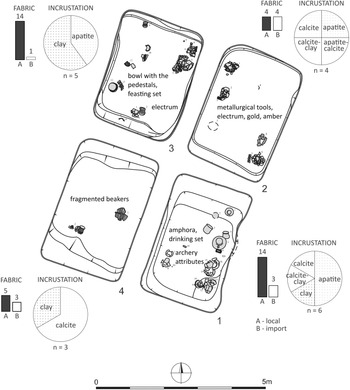
The assemblages recovered in the four deliberate deposits at Brodek, summarized here, are illustrated in Figure 8. Ritual deposit 1 contained archery equipment (arrowheads and two wrist-guards), some personal jewellery made of electrum, a pearl disk, and a characteristic drinking set (Rojo et al., Reference Rojo, Garrido-Pena, García, Juan-Treserras and Matamala2006) consisting of an amphora as a storage-transport vessel, a black encrusted ‘Nagyrév jug’ (Peška & Králík, Reference Peška, Králík, Heyd, Kulcsár and Szeverényi2013), a small jug, and thirteen decorated beakers. Our petrographic investigation suggests that the amphora and two of the beakers were made from non-local materials. The high variability of the incrustations with a prevalence of hydroxyapatite, the presence of calcium, clay, and calcium mixed with clay corresponds to the raw materials previously examined among incrustations in the broader region around the Brodek site (Všianský et al., Reference Všianský, Kolář and Petřík2014: fig. 6).
The four ritual deposits with assemblages and graphs representing the number of fabric groups in each assemblage and the proportion of incrustation materials used.
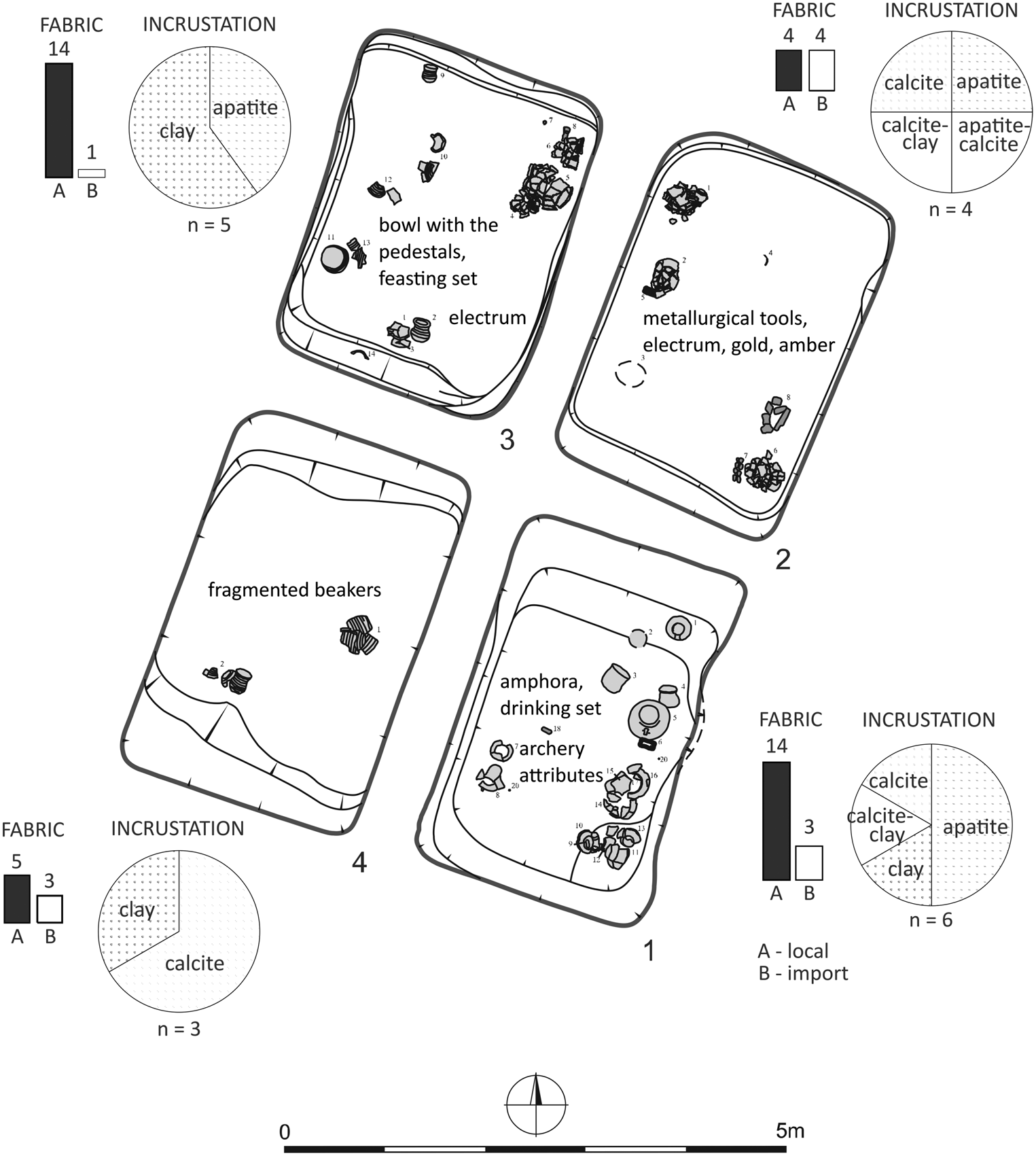
Ritual deposit 2 is most likely to have been related to craft activities. This is suggested by a set of six oval stones interpreted as tools (anvils, cushion stones) for metal processing (see Freudenberg, Reference Freudenberg2009; Peška, Reference Peška, Guerra Doce and von Lettow-Vorbeck2016) and other artefacts such as amber beads, a small gold spiral, a copper rod, a bone-shaped pendant, bone beads, and twenty chert flakes. Some of the materials, like amber or gold, indicate distant contacts. The pottery consisted of a set of eight beakers and a small jug, with local/regional and extra-regional vessels represented in equal proportions. The presence of different fabrics is matched by the high variability of incrustation materials attributable to an extra-regional scale.
Explaining the meaning or symbolism of the assemblage in ritual deposit 3 is more challenging. Apart from ceramic vessels, it contained a rough fragment of quartz, a chert flake, two fragments of electrum jewellery, and animal bones. The pottery, represented by three bowls probably used for serving food (two with a flaring rim and one with feet) and thirteen beakers, could represent a feasting set (Rojo et al., Reference Rojo, Garrido-Pena, García, Juan-Treserras and Matamala2006). Here we observed the smallest quantity of non-local pottery (only one beaker). The incrustations were produced from only two kinds of raw materials, clay and animal bone, common in the central Moravian region (Všianský et al., Reference Všianský, Kolář and Petřík2014: fig. 6).
Ritual deposit 4 had the fewest artefacts. Unlike the other ritual deposits, it contained only ceramics, i.e. eight vessels, a bowl and seven beakers placed mainly in the feature's backfill. Three beakers were non-local. Calcium carbonate incrustations prevailed, and since calcium carbonate was the main raw material used for incrustation in the Brno district (Všianský et al., Reference Všianský, Kolář and Petřík2014: fig. 6), we conclude that it was imported from this region in accordance with the presence of Fabric B4.
Local or regional Fabric group A was dominant in ritual deposits 1 and 3. Ceramics of deposits 2 and 4 consisted of more than thirty-seven per cent of non-local vessels (Fabric group B). Deposit 2 even contained fifty per cent of non-local beakers, reflecting the highest diversity in ceramic provenance among the deposits, also supported by the variability of incrustation materials (Figure 8). Moreover, the assemblage from deposit 2 is remarkable for containing materials including amber, gold, and copper, whose origin can be traced much further afield. There is no strict link between any of the decorative motifs, the beakers’ metrics, and any of the ritual deposits. The different incrustation materials in the clusters of decorative motifs (Table 2; Supplementary Material: Beakers) indicates great diversity. It underlines the possible role of the monumental site in translocal social relations. A parallel can be cited at the Beaker megalithic burial ground of Sion-Petit-Chasseur in western Switzerland (Derenne et al., Reference Derenne, Ard and Besse2020), where exogenous technological components were identified in the ceramic assemblage.
Translocal social relationships and the circulation of ceramics and other artefacts
Some of the beakers studied here were made of clays not available locally, reflecting the involvement of regional and extra-regional communities. The petrographic analysis also shows that some vessels were made of materials sourced over fifteen and even fifty-five kilometres from the Brodek monument, giving us an idea of the extent of the social groups linked to the monument. Bringing non-local graphite to temper regionally available clay could indicate detailed knowledge of the local environment or possibly imply that a community relocated or that its members brought their own tempering material to a new location (see Holmquist et al., Reference Holmqvist, Larsson, Kriiska, Palonen, Pesonen and Mizohata2018). The most likely explanation, however, lies in close relations between relatively distant communities.
Greater mobility seems to be an important feature of European societies of the third millennium bc and one of the theoretical concepts applied recently is translocality (e.g. Furholt, Reference Furholt2017, Reference Furholt2020; Kolář, Reference Kolář2020). Such a model, involving ‘frequent intermixing of local settlement communities’ (Furholt, Reference Furholt2017: 311), leads to ‘communities of practice’ covering larger areas. The timber monument at Brodek seems to provide evidence of such a community of practice. Our in-depth archaeometric analyses show that several communities met there and deposited their traditionally manufactured pottery within the ritual features of the monumental structure. The intermixing of local and non-local communities at Brodek u Prostějova (and most probably not only there) led to the relative homogeneity of pottery decoration, as already suggested by Kleijne (Reference Kleijne2019) for the whole of Czechia. Whether these translocal relations had a substantial impact on the overall pottery chaîne opératoire requires further investigation.
The relative similarity of the beakers suggests multiple deposition events over a shorter period at the Brodek monument; however, it is still not clear whether the depositions were created during one season or if the ritual practices were repeated yearly over a longer period (up to fifty years). Typo-chronologically, the material should be from the later Bell Beaker phase in Moravia, pointed out by a prevalence of epi-maritime/Bohemian beakers (Peška, Reference Peška, Králík, Heyd, Kulcsár and Szeverényi2013; Grossmann, Reference Grossmann2016), a jug from the pit south-east of the monument suggests later Bell Beaker dating (Grömer et al., Reference Grömer, Fojtík, Rudelics and Kroh2017). The monumental site most likely served as a node in a translocal network where several communities, local, regional, and extra-regional, met, feasted, and ritually deposited artefacts symbolizing craftsmanship, access to distant networks, the sharing of ideas and values, and embeddedness within the regional society. We thus argue that the ritual activities performed, the relationships maintained, and the communities established in the densely settled region (Figure 1c) constituted a community of ritual practice.
From the perspective of the polythetic model of culture and the concept of translocality, pottery production and consumption were only one part of the manifold aspects of social life (Furholt, Reference Furholt2020). The Beaker communities of practice involved in pottery making were most likely to have differed (smaller, household-based) from those related to other categories of artefact production (copper production, architecture) or burial behaviour (Vander Linden, Reference Vander Linden and Czebreszuk2004). These aspects of social life seem to be more bound to wider, regional or even subcontinental shared values and traditions.
Conclusion
The timber monument at Brodek u Prostějova served as a ritual place for several communities, which is reflected in a significant quantity of pottery brought to the site. The four ritual deposits excavated there show distinct patterns of variability in the material composition of the ceramics and other artefacts. Some raw materials, such as graphite, were brought in from further afield. The technological variability of the pottery and the variety of incrustations and decorative styles reflect different potting traditions, encompassing settlement communities, and ceramic communities of practice from both local and from more distant regions. The individuals or social groups meeting at Brodek were related through translocal social relationships requiring mobility and intermixing at several spatial levels: settlement, potting practices, and ritual practices. These social gatherings, which resulted in building an extraordinary monument and making ritual depositions, gave rise to the formation of a new community of practice, in this case related to ritual activities. These activities, performed over a relatively short time, involved materials and objects rooted not only in local and regional manufacturing traditions, but also symbolizing more universal ideas and exchange networks at the continental scale.
Acknowledgements
Adam Gašpar and part of the research presented here was supported by Masaryk University (MUNI/A/1260/2020) and the EACEA agency of the EU under the ERASMUS MUNDUS ARCHMAT Master Project (FPA 2013-0238). The work towards our results benefited from the financial support of the Czech Science Foundation (project GA20-19542S ‘NeoPot’). The HERCULES Laboratory (Portugal) is funded by the Fundação para a Ciência e Tecnologia, the European Regional Development Fund, and the European Social Fund (projects UIDB/04449/2020 and UIDP/04449/2020). Jan Kolář was supported by a long-term research development project (RV67985939). We would like to thank colleagues for their help and support, especially Laura Medeghini, Artemios Oikonomou, Dalibor Všianský, Karel Slavíček, and Petr Pajdla. We thank reviewers for their comments and guidance.
Supplementary Material
To view supplementary material for this article, please visit https://doi.org/10.1017/eaa.2022.46 and https://doi.org/10.5281/zenodo.7214895.




 Open access

