


The most common primary headaches seen in medical practice are migraine and tension-type headache (TTH; Rasmussen et al., Reference Rasmussen, Jensen, Schroll and Olesen1991). The International Classification of Headache Disorders (ICHD) criteria have always classified these two conditions as distinct entities that are mutually exclusive in terms of symptoms: essentially, the diagnostic criteria for TTH are the negation of those for migraine; for example, not bilateral, non-pulsating, and not aggravated by physical activity (Headache Classification Committee of the International Headache Society, 1988, 2004, 2013). However, a migraine attack may include symptoms of TTH and vice versa, and many patients experience attacks of both types (Kaniecki, Reference Kaniecki2002), suggesting a fair amount of comorbidity between the two conditions. This raises the question whether migraine and TTH are distinct disorders, or whether they occupy the severe and mild end of a severity continuum, with TTH lying on the mild end and migraine lying on the severe end of the spectrum (the continuum-severity theory; Waters, Reference Waters1973).
Several studies support the distinction between migraine and TTH. For example, a Danish population study by Ulrich et al. (Reference Ulrich, Russell, Jensen and Olesen1996) reported that the 1-year prevalence and sex ratio of TTH did not differ in individuals with and without migraine, suggesting they are independent conditions. Another Danish study by the same group emphasized the phenotypic differences between migraine and TTH, reporting that sex ratio and age at onset differed between them (Rasmussen, Reference Rasmussen1996). In a review published in 2010, Blumenfeld et al. argued that TTH is distinct from migraine in its pathophysiology and clinical presentation, and while mild migraines resemble TTH attacks, these attacks can be effectively treated with triptans, whereas pure TTH patients do not respond well to triptan therapy.
In contrast, a considerable number of studies support the view of migraine and TTH being manifestations of the same disorder, based on the frequent co-occurrence of TTH and migraine in the same patients, similarities in epidemiological features, and precipitating factors common to both conditions (Drummond & Lance, Reference Drummond and Lance1984; Featherstone, Reference Featherstone1985; Kaniecki, Reference Kaniecki2002; Leston, Reference Leston1996; Russell et al., Reference Russell, Šaltytš-Benth and Levi2006; Spierings et al., Reference Spierings, Ranke and Honkoop2001; Vargas, Reference Vargas2008). However, migraine and TTH are still treated as distinct entities in the latest edition of the ICHD (version III-beta; Headache Classification Committee of the International Headache Society, 2013).
Whether or not migraine and TTH are distinct entities has important implications, both from a clinical perspective and in research settings. In clinical practice, the choice of treatment is likely to depend on the diagnosis, in which case misdiagnosis of migraine as TTH (or vice versa) may result in inadequate treatment (Kaniecki, Reference Kaniecki2002). In research, treating migraine and TTH as separate entities versus treating them as one condition can have a great impact on study outcomes. For example, in recent years, several large genome-wide association (GWA) studies have been conducted for migraine, with the aim of identifying the genes underlying this condition (Anttila et al., Reference Anttila, Winsvold, Gormley, Kurth, Bettella, McMahon and Palotie2013; Chasman et al., Reference Chasman, Schürks, Anttila, de Vries, Schminke, Launer and Kurth2011; Freilinger et al., Reference Freilinger, Anttila, de Vries, Malik, Kallela and Terwindt2012; Gormley et al., Reference Gormley, Anttila, Winsvold, Palta, Esko, Pers and Palotie2016). TTH patients are typically excluded from GWA studies, based on the assumption that TTH is genetically different from migraine. However, given the literature described above, it is unclear whether this assumption is correct. Since large sample sizes are essential in gene-finding studies, this question is of importance.
The aim of the present study was twofold. First, we examined the similarities and differences between migraine and TTH with respect to associated environmental and lifestyle factors in a population-based sample of Dutch twins and their families. Previous studies have reported strong similarities in the risk factors associated with migraine and TTH, and typically, the association is stronger for migraine than for TTH. This could be interpreted as evidence for the continuum-severity theory. Factors potentially related to headache and investigated in this study are body mass index (BMI) (Bigal & Lipton, Reference Bigal and Lipton2006; Queiroz et al., Reference Queiroz, Peres, Piovesan, Kowacs, Ciciarelli, Souza and Zukerman2009), current smoking (Scher et al., Reference Scher, Terwindt, Picavet, Verschuren, Ferrari and Launer2005), anxious depression (Breslau et al., Reference Breslau, Schultz, Welch, Lipton and Stewart2003; Ligthart et al., Reference Ligthart, Gerrits, Boomsma and Penninx2013; Merikangas et al., Reference Merikangas, Merikangas and Angst1993), loneliness (Stensland et al., Reference Stensland, Thoresen, Wentzel-Larsen, Zwart and Dyb2014), exercise (Fricton et al., Reference Fricton, Velly, Ouyang and Look2009), diabetes (Aamodt et al., Reference Aamodt, Stovner, Midthjell, Hagen and Zwart2007; Hagen et al., Reference Hagen, Åsvold, Midthjell, Stovner, Zwart and Linde2017), and stress (Haque et al., Reference Haque, Rahman, Hoque, Hasan, Chowdhury, Khan and Mohammad2012; Rasmussen, Reference Rasmussen1993; Schoonman et al., Reference Schoonman, Evers, Ballieux, de Geus, de Kloet, Terwindt and Ferrari2007; Spierings et al., Reference Spierings, Ranke and Honkoop2001). Studying a large number of traits in a large population-based sample should allow us to detect patterns in how these traits are related to migraine and TTH: if the two conditions differ merely in severity on the same spectrum, they are expected to be associated with the same risk factors, with migraine showing stronger effects than TTH. Second, we focused on the twins in the sample to investigate whether migraine and TTH are genetically related conditions. We are not aware of any previous studies addressing this question. Twin data can be used to examine the influence of genetic and environmental influences on individual traits (in this case the occurrence of migraine and TTH), as well as on the overlap between traits (Boomsma et al., Reference Boomsma, Busjahn and Peltonen2002). If migraine and TTH are (partly) influenced by the same genetic or shared environmental factors, it was expected that in co-twins of migraineurs we would observe a higher prevalence of TTH than in co-twins of non-migraineurs. In the case of shared underlying genetic factors, we expected this resemblance to be stronger in monozygotic (MZ) than dizygotic (DZ) twins, because MZ twins are genetically identical, whereas DZ twins share only 50% of their segregating genes on average.
Methods
Study Population
The Netherlands Twin Registry (NTR) is a nationwide population-based register where adult twins and their relatives (parents, siblings, spouses, and offspring) can register (Willemsen et al., Reference Willemsen, Vink, Abdellaoui, den Braber, van Beek, Draisma and Boomsma2013). Participants are invited every 2–4 years to complete a survey that contains questions about health, lifestyle, and personality. The present study was based on headache data from the ninth wave of data collection (2011–2012) for adult participants (survey 9), which focused on headache, pain, and anxiety. The data collection has been described in detail elsewhere (Ligthart et al., Reference Ligthart, Visscher, van Houtem, Geels, Vink, de Jongh and Boomsma2014). Data on risk factors associated with migraine and TTH were taken from survey 9 and from the previous survey (survey 8), which was conducted 2 years earlier. This was a study with a focus on alcohol use, smoking, and personality (Geels et al., Reference Geels, Vink, van Beek, Bartels, Willemsen and Boomsma2013).
A total of 11,947 participants completed survey 9, which equaled a total response rate of 43% (Willemsen et al., Reference Willemsen, Vink, Abdellaoui, den Braber, van Beek, Draisma and Boomsma2013). Six individuals were excluded because they were younger than 18 years, resulting in a sample of 11,941 individuals. In total, 48% of the participants in this study were twins. Of the total sample, 10,040 individuals also completed survey 8.
Measures
Migraine and tension-type headache
Diagnosis of the headache was determined with questions on headache symptomatology based on the ICHD-II criteria (Headache Classification Committee of the International Headache Society, 2004) in survey 9. Participants were asked to report both current and past headache symptoms to assess the lifetime presence of migraine. Headaches due to cold, fever, and alcohol or drugs were excluded. Since the diagnoses of migraine and TTH are mutually exclusive, an individual can have either a diagnosis of TTH or migraine, but not both. Hence, each individual was classified into one of three categories: unaffected (i.e., no headache), TTH, or migraine. Individuals with headaches not meeting the criteria for TTH or migraine were classified as having ‘undefined headache’. This resulted in 4,951 individuals screening negative for current headache, 1,814 with migraine, 2,770 with TTH, 2,004 with undefined headaches, and 402 who could not be classified due to insufficient data. For lifetime headaches, 3,930 individuals screened negative, 2,159 were classified as migraineurs, 3,053 had TTH, 2,360 had undefined headache, and 439 had insufficient data. Individuals with undefined headache or insufficient data were excluded from the analyses.
The analyses addressing comorbidity and genetic overlap included lifetime diagnoses, which best reflect the individual's overall risk of the disorder. For the analysis of health and lifestyle factors related to TTH and migraine, current headache status was analyzed, to capture the associations between these factors and headache at the time of measurement.
Environmental and lifestyle variables
To investigate the role of demographics, environment and lifestyle in the development of migraine and TTH, the following variables were included in the analysis: age, sex, BMI, smoking and anxious depression, regular exercise behavior (from survey 9), and diabetes, financial stress, stress at work, stress at home, and loneliness (from survey 8).
BMI (kg/height in m2) was measured by asking the participants to report their height and weight.
Current smoking was assessed by the question ‘Do you currently smoke?’ (yes or no).
Anxious depression was measured using the anxious depression subscale of the Adult Self Report (Achenbach & Rescorla, Reference Achenbach and Rescorla2003). This is a continuous measure that reflects a combination of anxiety and depressive symptoms and consists of the sum of 18 items rated on a 3-point scale (0 = not true, 1 = somewhat or sometimes true, 3 = very true or often true).
Diabetes: Participants were asked if they had ever been diagnosed with diabetes by a physician. Possible answers were ‘no’, ‘yes, in the past’, and ‘yes, currently’.
Stress : Three types of stress were measured: financial stress (What level of financial stress have you experienced in the past year?), stress at work (How often have you felt stress at work in the past year?), and stress at home (How often did you experience stress at home in the past year?).
Regular exercise behavior was measured in weekly ‘metabolic equivalent of task’ (MET) hours. Regular voluntary exercise activities (excluding non-leisure physical activity such as cycling to work and household work) were assessed with items addressing the type of exercise, the number of years, times per week, and average duration. Information on the type of exercise was recoded into a weekly MET using Ainsworth's compendium of physical activities (Ainsworth et al., Reference Ainsworth, Haskell, Whitt, Irwin, Swartz, Strath and Leon2000). Weekly MET hours were calculated by multiplying the MET score by the number of hours per week for each exercise activity, summed across all exercise activities reported.
Loneliness was assessed using the Three Item Loneliness Scale (TILS; Hughes et al., Reference Hughes, Waite, Hawkley and Cacioppo2004). The items included in this scale are ‘How often do you feel left out?’, ‘How often do you feel isolated from others?’, and ‘How often do you feel that you lack companionship?’ The items have three response categories: 1 = almost never, 2 = sometimes, and 3 = often, and are summed.
Statistical Analysis
Association of migraine and TTH with environmental and lifestyle variables
Multiple logistic regression analysis was performed to test the association of current migraine and TTH with environmental and lifestyle factors. Three analyses were performed. The first two analyses tested whether risk factors were predictive of migraine and TTH. To investigate the similarities and differences between migraine and TTH, a third analysis was done in which migraine patients were compared to TTH patients to see whether the two conditions were differently associated with the variables of interest. Participants with other headaches or unknown headache status were excluded. The regression analyses were performed in Stata 13 (StataCorp LP, College Station, TX). A robust variance estimator was used, and family ID was included as a cluster variable to adjust standard errors for the non-independence of observations within a family. Significance tests were performed at an alpha level of .05.
Comorbidity of migraine and TTH within twin pairs
To investigate the comorbidity between migraine and TTH, we analyzed data on lifetime prevalence of migraine and TTH from twin pairs. First, we assessed the prevalence of migraine in the co-twins of migraineurs, and the prevalence of TTH in the co-twins of individuals with TTH. This was done for all same-sex twin pairs and for MZ and DZ twins separately. Given that both migraine and TTH are partly genetic conditions (Mulder et al., Reference Mulder, Van Baal, Gaist, Kallela, Kaprio, Svensson and Palotie2003; Russell et al., Reference Russell, Levi and Kaprio2007), it is expected that a patient's co-twin will be at increased risk of the condition, compared to a non-patient's co-twin, and that the risk is more strongly increased in MZ than DZ co-twins. This is because MZ twins are genetically identical, whereas DZ twins share only half of their segregating genes, on average. Next, we tested whether individuals whose co-twin had migraine were at increased risk of TTH compared to individuals whose co-twin did not have migraine. Again, this was done for all twin pairs and for MZ and DZ twins separately. If the risk is more strongly increased in MZ than DZ co-twins, this indicates that the comorbidity is at least partly explained by genetic factors shared between the two conditions. To assess the difference in risk between co-twins of cases versus non-cases, sex-adjusted odds ratios were calculated, with 95% confidence intervals to assess the significance of the effect. This was done with the logistic regression procedure in SPSS 20 (SPSS Inc., Chicago, IL, USA).
Results
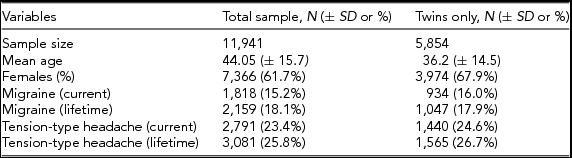
Table 1 shows the demographic characteristics of the study population for the total sample and the twins (48% of the total sample). There were no significant differences in these characteristics between the total sample and the twin sample. In the entire cohort, we first investigated the relationship between migraine, TTH, and environmental and lifestyle traits. Table 2 shows the results of a multiple regression analysis with migraine and TTH as the dependent variables, and the environmental and lifestyle variables as the independent variables. Migraine was positively associated with younger age, female sex, higher BMI, higher anxious depression scores, occasional, regular and constant stress at home, and loneliness. The presence of diabetes and a high regular exercise score, on the other hand, was associated with a lower risk of migraine.
Demographic Characteristics of Total Sample Versus Twins Only
Environmental and Lifestyle Variables Associated With Migraine and TTH
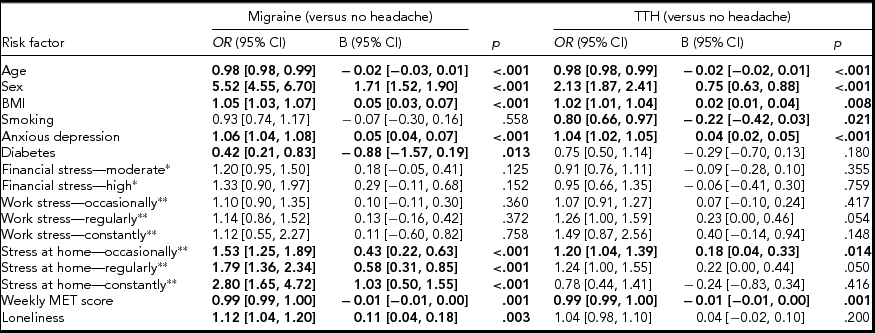
OR = odds ratio, CI = confidence interval. Bold type indicates significant p values (<.05).
*Compared to none/little.
**Compared to never.
TTH was associated largely with the same risk factors; however, no significant association with diabetes, loneliness, and regular and constant stress at home was observed. The only factor associated with TTH but not migraine was smoking, which showed a negative association with TTH. For migraine, an odds ratio in the same direction was observed, but this association was not significant.
In general, effect sizes were larger for migraine than TTH: these differences were significant for sex (p < .001), BMI (p = .001), anxious depression (p = .004), and stress at home (p = .007 and p < .001 for regular and constant stress, respectively), indicating that these factors are more strongly associated with migraine than with TTH.
Second, we assessed the extent of comorbidity between current migraine and TTH. We identified 399 twin pairs where both twins had migraine data, 589 pairs where both twins had TTH data, and 430 pairs where one twin had data for migraine and the other for TTH. Table 3 gives the results of these analyses for the total sample and for MZ and DZ twin pairs separately. The first analysis showed that individuals whose co-twin had migraine had a strongly increased risk of migraine themselves (OR = 8.48). The increase in risk was particularly strong in MZ twins compared to DZ twins with odds ratios of 16.67 and 2.51, respectively, reflecting a clear role of genetic factors in the etiology of migraine. The second analysis compared the risk of TTH in co-twins of individuals with and without TTH, and showed a somewhat similar but less pronounced pattern. The risk of TTH was significantly increased in individuals whose co-twin had TTH (OR = 2.26), but this increase in risk was only slightly stronger for MZ (OR = 2.38) than DZ (OR = 2.00) twins. The difference was not significant, as indicated by the 95% confidence intervals. This suggests that genetic factors are less important in TTH than in migraine. The third analysis (based on 430 twin pairs) compared the risk of migraine in co-twins of individuals with and without TTH. Again, we observed a significantly increased risk, and the increase in risk appeared stronger in MZ (OR = 2.44) than in DZ twins (OR = 1.34), although the difference was not significant.
Association Between Current Migraine and Tension-Type Headache Within Twin Pairs, Adjusted for Sex
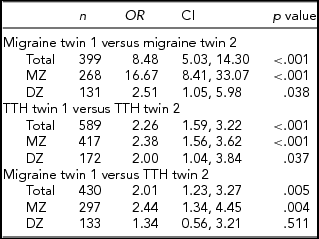
OR = odds ratio, CI = confidence interval, TTH = tension-type headache, MZ = monozygotic, DZ = dizygotic.
Discussion
Several interesting observations emerged from this study. First, both migraine and TTH showed a familial pattern, where co-twins of affected individuals had an increased risk of also having the condition. For migraine, this effect was markedly stronger in MZ than DZ twins, confirming that genetic factors play an important role in this condition. In TTH, the effect was only slightly stronger in the MZ twins, suggesting genetic factors play a less prominent role in TTH, at least in the subgroup of twins where neither co-twin has migraine. Furthermore, we observed that migraine in one twin was significantly associated with TTH in the other twin, indicating that a shared etiology is plausible. The effect was somewhat (albeit not significantly) stronger in MZ than DZ twins, suggesting the comorbidity of migraine and TTH may in part be explained by to genetic factors shared between the two conditions.
The finding that genetic factors were relatively unimportant in TTH is somewhat unexpected. This does not appear to be explained by the headaches being less severe in this group of participants: the twins with TTH included in the analyses did not have less severe or less frequent headaches than the TTH twins not included because their co-twin either had migraine or missing data (results not shown). Previous studies reported moderate heritability for TTH, although results were not entirely consistent. For example, Russell et al. (Reference Russell, Levi and Kaprio2007) reported heritability estimates of 48% in men and 44% in women. This study differed from ours in that infrequent and frequent episodic or chronic TTH were treated as separate categories. Interestingly, an earlier study by the same group suggested that while frequent episodic TTH was heritable, infrequent episodic TTH was not, suggesting the heritability of TTH might depend on headache frequency. This pattern was observed in twin pairs with as well as without comorbid migraine (Russell et al., Reference Russell, Šaltytš-Benth and Levi2006). A possible complicating factor in all studies addressing this is the risk of mild migraine attacks being misclassified as TTH, in which case TTH might be a mixed bag of ‘real’ TTH and mild migraines (Blumenfeld et al., Reference Blumenfeld, Schim and Brower2010). This might obscure potential differences in heritability between the two conditions.
In the analyses of predictors of migraine and TTH, similar patterns were observed for both conditions. Both migraine and TTH were significantly associated with age, sex, BMI, anxious depression, stress at home, and regular exercise behavior, and the direction of the effects was highly consistent across both conditions. In general, the observed effects were stronger and more often significant for migraine than for TTH, consistent with the view that migraine and TTH are closely related conditions that differ mostly in severity.
Interestingly, diabetes showed a strong negative association with migraine (for TTH, a trend in the same direction was observed). This is consistent with findings reported in a large Norwegian population study (Aamodt et al., Reference Aamodt, Stovner, Midthjell, Hagen and Zwart2007; Hagen et al., Reference Hagen, Åsvold, Midthjell, Stovner, Zwart and Linde2017). One hypothesized mechanism is that the vascular changes occurring in diabetes, which cause intimal thickening and stiffness of the blood vessels, might be protective against migraine (Hagen et al., Reference Hagen, Åsvold, Midthjell, Stovner, Zwart and Linde2017). Regular exercise behavior was also negatively associated with both headache conditions; whether this means that exercising more reduces headache or headache prevents exercise is unclear and requires further study. Furthermore, with respect to the stress variables, it is worth noting that in univariate regression analyses (not shown), financial stress, work stress, and stress at home were all significantly associated with both migraine and TTH. However, in the multivariate analysis, only stress at home remained significant.
Finally, it is worth noting that BMI did not show an association with migraine or TTH in univariate regression analysis (results not shown), while in the multivariate analysis it was associated with both. Possibly this is explained by an age effect: in our data, BMI increased with age, whereas headaches decreased with age. Therefore, when age is not accounted for, the age effect may mask the association between BMI and headache. Extensive investigation of the interactions between the various headache predictors was beyond the scope of this paper, but is worth exploring in more detail in future studies.
This study has limitations. The questionnaire included a detailed assessment of headache symptoms but did not ask patients to report on individual attacks. Therefore, patients who experience attacks of both migraine and TTH are most likely to be classified as migraineurs, because TTH is largely defined by the absence of symptoms (e.g., severe headache, pulsating quality, nausea/vomiting, photo- and phono-phobia). Due to the way migraine and TTH are defined in the ICHD-II, it is not possible for an individual to receive both diagnoses based on a single assessment of headache symptomatology, which precludes a diagnosis of TTH once enough migraine symptoms are reported. It is likely that a certain proportion of the individuals classified as migraineurs in this study would also qualify for a diagnosis of TTH if their attacks had been evaluated individually. The mutually exclusive nature of the diagnostic procedure in this design will result in an underestimation of the comorbidity of the two conditions, which may be quite substantial. This is not only an issue in our study, but probably in many studies with similar designs. Traditional bivariate twin models, which are typically used to assess comorbidity and shared (genetic) etiology, are not possible in this design because there is no ‘within-person comorbidity’ (i.e., one person cannot have both diagnoses). We circumvented this problem by looking at comorbidity within twin pairs. However, our power to detect whether this is due to genetic effects is limited by the likely underestimation of this comorbidity.
In summary, our study showed significant comorbidity between migraine and TTH, and the risk patterns observed were consistent with this comorbidity being party genetic. In addition, migraine and TTH shared many of the same predictors, and typically, the observed effects were in the same direction but stronger for migraine than for TTH, consistent with the view that TTH and migraine represent the mild and severe ends of the same spectrum. These findings suggest that migraine and TTH are etiologically related conditions. This implies that the strict distinction between migraine and TTH as made in the ICHD is at least to some extent artificial, and it would be best to view TTH as a condition etiologically related to migraine, rather than its negation.
Acknowledgments
We are grateful for the participation of twin families in this research project. Data collection and zygosity typing were made possible by multiple grants from the Netherlands Organization for Scientific Research (NWO): 575-25-006, 480-04-004, 904-61-090, 904-61-193, 400-05-717, 311-60008, SPI 56-464-14192 and the Avera Institute for Human Genetics. We gratefully acknowledge Grant NWO 480-15-001/674: Netherlands Twin Registry Repository: researching the interplay between genome and environment.
Disclosure of Interests
None.


 Open access

