




Impact statement
Plastic pollution is widespread. In this plastic era, we are witnessing and experiencing significant adverse impacts on the environment and human health due to plastic exposure throughout its entire life cycle. Despite the detrimental effects of plastic pollution, the rate of plastic production continues to increase each year. Resolution 5/14 of the United Nations Environment Assembly established an Intergovernmental Negotiating Committee (INC) to facilitate negotiations on the Global Plastics Treaty aimed at addressing the global plastic pollution. In the present work, an overview of the literature is provided through bibliometric analysis and mapping. The outcomes can lay strong foundations and, therefore, contribute to enhancing the literature on the Global Plastics Treaty.
Introduction
Global plastic production has increased significantly worldwide over time, rising from 2 Mt. in 1950 (Geyer et al., Reference Geyer, Jambeck and Law2017) to 400.3 Mt. in 2022 (plastics used in the manufacture of textiles, adhesives, sealants, coatings, paints, varnishes, waterproofing, as well as those used in the production of cosmetics, pharmaceuticals or chemical processes are not included) (Plastics – the fast facts 2023, 2023). In 2060, global plastic use is expected to reach 1231 Mt. (OECD, 2022). Conversely, despite the escalating daily consumption of plastic, there has been a need for corresponding progress in both effective plastic waste management practices (de Sousa, Reference de Sousa2021a) and consumer awareness (Northen et al., Reference Northen, Nieminen, Cunsolo, Iorfa, Roberts and Fletcher2023; de Sousa, Reference de Sousa2023a). Presently, we are dealing with and experiencing the effects of the triple planetary crisis – climate change, nature loss and pollution – exacerbated by plastic production and pollution (United Nations Environment Programme, 2022a).
Plastics are ubiquitous, leading humanity to constant daily exposure to numerous plastic-containing items. However, plastic exposure can be hazardous to human health. Some hazardous additives, such as bisphenols, alkylphenol ethoxylates, perfluorinated compounds, brominated flame retardants, phthalates, UV stabilizers and metals, which can be added to plastics to modify their properties, are endocrine-disrupting chemicals (EDCs). The release of these EDCs from plastic materials is a matter of significant concern due to their demonstrated ability to induce adverse effects on reproductive, metabolic, thyroid, immunological and neurological systems (Flaws et al., Reference Flaws, Damdimopoulou, Patisaul, Gore, Raetzman and Vandenberg2020). Another concern is human exposure to microplastics (MPs) through ingestion (the main route), dermal contact and inhalation. It has been established that human MPs consumption causes adverse effects such as intestinal inflammation and the acceleration of viral arthritis (Rawle et al., Reference Rawle, Dumenil and Tang2022), toxicity, oxidative stress and inflammation in general (Prata et al., Reference Prata, da Costa, Lopes, Duarte and Rocha-Santos2020; Xu et al., Reference Xu, Ma, Han and Chen2021; Yang et al., Reference Yang, Cheng and Chen2021; Zhao et al., Reference Zhao, Shi, Hu, Song, Cheng and Zhou2021; Zheng et al., Reference Zheng, Wang, Wei, Chang and Liu2021; Huang et al., Reference Huang, Zhang and Long2022, Reference Huang, Weng, Shen, Zhao and Jin2021; Junaid et al., Reference Junaid, Siddiqui, Sadaf, Liu and Wang2022; Liu et al., Reference Liu, Li, Wang, Wu and Guo2022; Nikolic et al., Reference Nikolic, Gazdic-Jankovic and Rosic2022; Rawle et al., Reference Rawle, Dumenil and Tang2022; Tong et al., Reference Tong, Li and Li2022; Weber et al., Reference Weber, Schwiebs and Solhaug2022; Yuan et al., Reference Yuan, Nag and Cummins2022) and has a potential association with immune system dysfunction and neurotoxicity (Prata et al., Reference Prata, da Costa, Lopes, Duarte and Rocha-Santos2020).
Every year, approximately 11 Mt. of plastic waste end up in the ocean, causing harm to life and ecosystems (Reddy and Lau, Reference Reddy and Lau2020; de Sousa, Reference de Sousa2024a). It is estimated that around 170 trillion plastic particles, primarily MPs, are floating in the world’s oceans (Eriksen et al., Reference Eriksen, Cowger and Erdle2023). More than 800 marine and coastal species are affected by this waste in various ways, including ingestion and entanglement (Secretariat of the Convention on Biological Diversity, 2016).
Concerning climate change, the objective is to limit global warming to 1.5 °C (34.7 °F). Plastics release greenhouse gases (GHGs) that contribute to climate change at every stage of their life cycle, from extraction to disposal (Ford et al., Reference Ford, Jones and Davies2022). By 2050, GHGs emissions from the production, use and disposal of plastic are projected to account for up to 15% of all emissions allowed (UNEP, 2021).
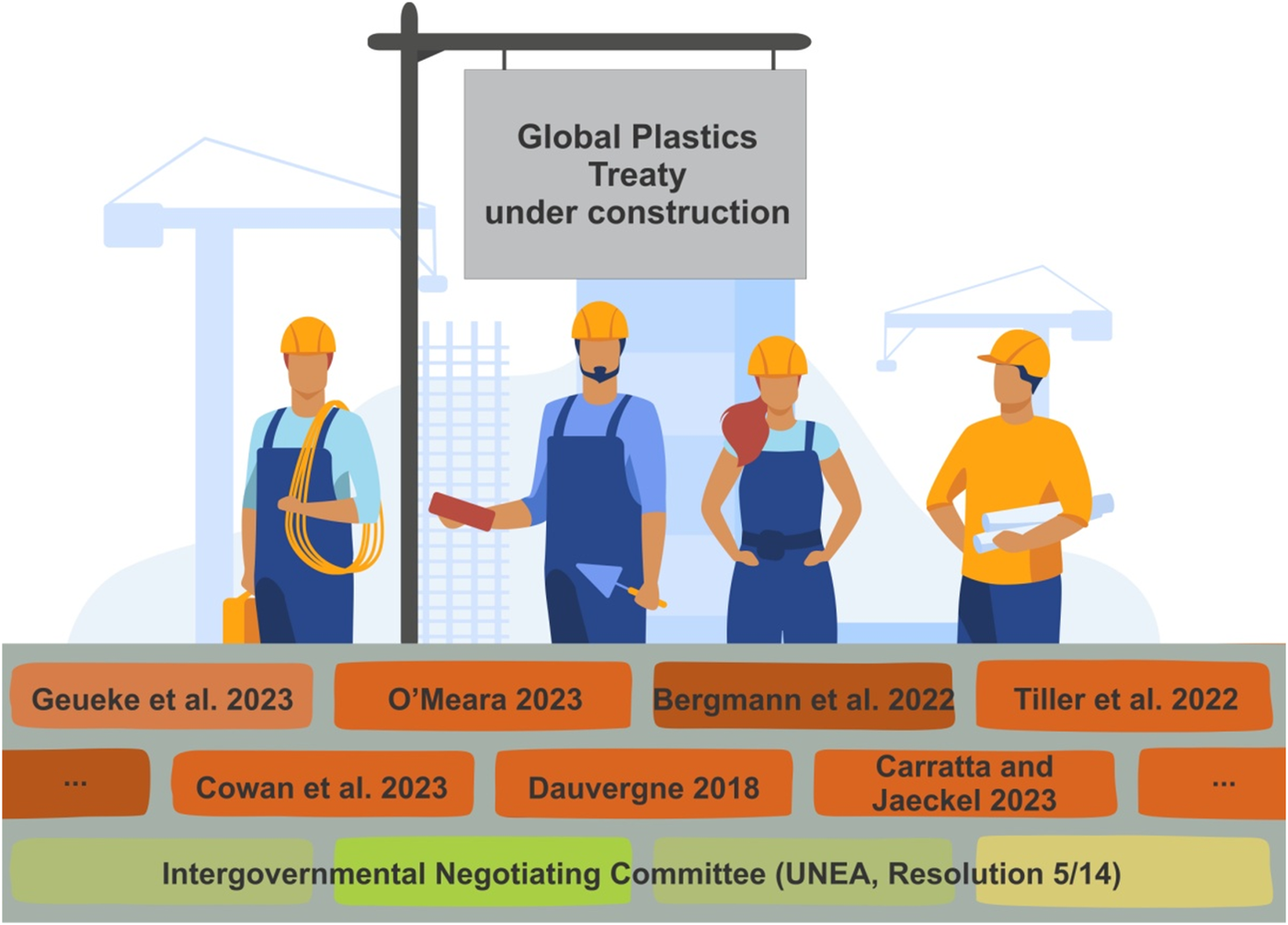
The United Nations Environment Assembly (UNEA) Resolution 5/14 entitled “End plastic pollution: Towards an international legally binding instrument” was adopted on March 2, 2022 (United Nations Environment Programme, 2022b) to mitigate plastic pollution across its entire life cycle. An Intergovernmental Negotiating Committee (INC) was established to reach a resolution by the conclusion of 2024, the Global Plastics Treaty. The fourth session of the INC (Ottawa, 23–29 April 2024) resulted in a revised draft of the international legally binding instrument on plastic pollution (UNEP, 2024). Along with the INC, each article available in literature represents a “brick” in the construction of a robust Global Plastics Treaty.
An internationally binding agreement, such as the Global Plastics Treaty, can help mitigate this planetary crisis by promoting a transition to more sustainable and circular plastic use: “A shift to a circular economy can reduce the volume of plastics entering oceans by over 80% by 2040; reduce virgin plastic production by 55%; save governments US$70 billion by 2040; reduce GHGs emissions by 25%; and create 700,000 additional jobs – mainly in the Global South” (United Nations Environment Programme, 2022a).
The adoption of bibliometric analyses plays a crucial role in evaluating the literature and guiding future works. The bibliometric analyses, due to their transparent, reliable, replicable and transdisciplinary nature, have gained widespread acceptance as methods for evaluating literature (Aria et al., Reference Aria, Misuraca and Spano2020; Carrión-Mero et al., Reference Carrión-Mero, Montalván-Burbano, Morante-Carballo, Quesada-Román and Apolo-Masache2021). By conducting searches in electronic databases, researchers can systematically analyze data for patterns and map interconnections using software (de Sousa, Reference de Sousa2021b, Reference de Sousa2024a). Bibliometric research, in this context, is essential for building a strong foundation that supports significant and innovative contributions to a given field (Mukherjee et al., Reference Mukherjee, Lim, Kumar and Donthu2022).
I conducted a bibliometric analysis and mapping of the Global Plastics Treaty. Articles in this field, written in English and published from 2018, were examined to provide an overview of the subject based on sources, authors, affiliations, countries, publications and keywords. These outcomes can lay strong foundations and, therefore, contribute to enhancing the literature on the Global Plastics Treaty.
Methodology
A Web of Science search was conducted on October 27, 2023. The words used were “global plastic* treaty”, searching within all fields. The term “global plastic* treaty” was used in the search to encompass the employed terms in the literature, i.e., Global Plastic Treaty and Global Plastics Treaty.
The data from 31 articles in English from 2018 to October 2023 were exported to two files, a BibTex and a RIS. The R-package Bibliometrix examined the BibTex file and VOSviewer version 1.6.18 was used to evaluated the RIS file. Graphs were created in VOSviewer and Biblioshiny for Bibliometrix. The literature suggests that emerging topics are addressed in articles (Garcia-Vazquez et al., Reference Garcia-Vazquez, Garcia-Ael and Topa2021), which is why articles were chosen for this study.
The analysis of the co-occurrence network (Bibliometrix) was based on the top 50 authors’ keywords and involved the application of the Louvain clustering algorithm. All the isolated nodes have been removed. In VOSviewer, the keywords’ co-occurrence network included 183 items (the minimum number of occurrences was one) and used the full counting approach.
In the co-authorship analysis, the full counting method was adopted. Documents with many authors (25) were ignored.
Possible limitations include publications from databases other than the Web of Science and articles in languages other than English within the Web of Science. The Web of Science database was selected because it has a more significant number of articles on the topic than the Scopus database on the search date. While 31 articles were found in the Web of Science, only 27 articles related to the Global Plastics Treaty were identified in Scopus, with 17 articles being duplicated.
Results and discussion
Supplementary Figure S1(a) and (b) present the number of articles published per year and the subject areas of these publications. Before 2018, the annual publication rate was small (around 1 article per year). Since 2018, there has been a significant growth in the number of publications per year, consisting in an annual growth rate of 39.77%.
The Global Plastics Treaty is of significant interest to various research areas. Therefore, it is interdisciplinary. Among the articles analyzed, about half are in the areas of Environmental sciences/Ecology (35.8%) and Government law (15.1%).
Sources
From the 24 sources identified, the most relevant journals in terms of the number of published articles are as follows (with the number of published articles in parenthesis): Environmental Science & Policy (3), Marine Policy (3), AJIL Unbound (2), Frontiers in Marine Science (2) and Journal of Environmental Studies and Sciences (2). The following journals have one publication each: American Journal of Agricultural Economics, Asia-Pacific Journal of Ocean Law and Policy, Environmental Science & Technology, Environmental Science & Technology Letters, European Journal of Legal Studies, Global Environmental Change-Human and Policy Dimensions, International Journal of Marine and Coastal Law, Journal of Hazardous Materials, Journal of International Economic Law, Korean Journal of International and Comparative Law, Marine Pollution Bulletin, Nature, One Earth, Photochemical & Photobiological Sciences, PLOS One, Review of European Comparative & International Environmental Law, Sustainability Science and Water Research.
Concerning the most frequently cited local sources (i.e., those most cited from the reference lists of the analyzed publications), the most significant ones are as follows (with the number of local citations indicated in parenthesis): Marine Pollution Bulletin (88), Science (77), Science of the Total Environment (51), Environmental Science & Technology (45), Marine Policy (36), Frontiers in Marine Science (31), Proceedings of the National Academy of Sciences-USA (29), Atmospheric Chemistry and Physics (28), Science Advances (25), Environmental Pollution (24), Nature (24), Scientific Reports-UK (24), Environmental Research Letters (23) and PLOS One (23).
As the primary goal of the Global Plastics Treaty is to mitigate plastic pollution, particularly in aquatic environments, it is expected that a significant number of the most relevant scientific journals focus on water and environmental sciences. As previously discussed, these findings align with the subject matter of the published articles (see Supplementary Figure S1(b)).
Authors, affiliations and countries
Approximately 150 authors contributed to the analyzed articles. The most productive authors (with the number of published articles in parenthesis) are: Dauvergne (3), Cowan (2), Eriksen (2), Stofen-O’Brien (2), Tiller (2) and Walker (2). All other authors published a single article. Regarding local citations, the most frequently local cited authors (with the number of local citations in parenthesis) are: Le Billon (4), Tessnow-Von Wysocki (4), Tiller (3) and Nyman (2).
The sizes of the letters and circles in the co-authorship network (see Supplementary Figure S2) indicate the number of articles the author has published. The distance between authors reflects the degree of connection they share, as determined by co-occurrence links. Lines represent the strongest co-occurrences.
In the network (see Supplementary Figure S2), 24 clusters are displayed, each represented by a different color. The most productive authors and their corresponding number of links are as follows: Dauvergne (0), Cowan (4), Eriksen (20), Stofen-O’Brien (0), Tiller (3) and Walker (3). Authors with a zero link are considered single authors. Eriksen, who has the highest degree of connectivity, is positioned at the center, linking two clusters: one blue and one yellow. In the yellow cluster, the author Walker is also present. These authors are significant in the analyzed literature because of their central positions on the map.
Regarding the authors’ collaboration, there is a need for greater cooperation among the authors from the various clusters. The average number of co-authors per article is 10. There are 45.16% international co-authorships, and 10 articles have single authors. However, all other articles are characterized by limited collaboration among authors from different clusters, with the exception of the clusters containing the authors Walker and Eriksen. Given the significance and interdisciplinary nature of the subject, it is likely that the collaboration among authors will increase as the number of authors rises.
In the globe presented in Supplementary Figure S3, the most productive countries are those shaded in the darkest blue, i.e., the USA (38 articles) and the UK (23 articles). In contrast, countries depicted in gray did not publish any articles. To date, North America has produced the highest number of publications on the Global Plastics Treaty. Given the importance of this topic, this perspective demonstrates that research is being conducted worldwide, underscoring the global nature of the subject (de Sousa, Reference de Sousa2021b, Reference de Sousa2023b).
In further bibliometric analyses, China consistently emerged as one of the most productive countries, regardless of the subject analyzed (de Sousa, Reference de Sousa2021b, Reference de Sousa2021a, Reference de Sousa2023b). In this work, China has only three articles published. China stands out in the market as one of the largest producers of processed plastic items. In 2021, global plastic production reached 390.7 Mt., and China represented 32% of this number (ABIPLAST, 2023). Therefore, the limited number of publications discussing the Global Plastics Treaty from the country seems unusual. Does this small number of publications indicate a sense of apprehension?
Although the USA has published more articles on the subject, it also generates more plastic waste than any other country (70.8 Mt. per year), and only a small portion of that amount is recycled (34.6%) (Montenegro et al., Reference Montenegro, Vianna and Teles2020). These conflicting statistics may symbolize the beginning of the nation’s transition.
The most relevant affiliations (with the number of published articles in parentheses) are: the University of British Columbia in Canada (9), Duke University in the USA (5), Lund University in Sweden (5), University of Portsmouth in England (5), Arctic University in Norway (4), Dalhousie University in Canada (4), University of Lincoln in the UK (4) and the World Maritime University in Sweden (4).
Publications
According to the Web of Science, the most relevant publications are as follows: Wang and Praetorius (Reference Wang and Praetorius2022), Tessnow-von Wysocki and Le Billon (Reference Tessnow-von Wysocki and Le Billon2019), O’Meara (Reference O’Meara2023), Cowan et al. (Reference Cowan, Tiller, Oftebro, Throne-Holst and Normann2023b) and Filella and Turner (Reference Filella and Turner2023). Wang and Praetorius (Reference Wang and Praetorius2022) discuss the possibility of integrating a chemical perspective into the Global Plastics Treaty. Tessnow-von Wysocki and Le Billon (Reference Tessnow-von Wysocki and Le Billon2019) list and discuss seven treaty design aspects likely to boost the effectiveness of a future legally binding mechanism for managing marine plastic pollution. O’Meara (Reference O’Meara2023) argues for the importance of including human rights in the discussions. Cowan et al. (Reference Cowan, Tiller, Oftebro, Throne-Holst and Normann2023b) discuss plastic governance. Filella and Turner (Reference Filella and Turner2023) also alert about inorganic additives present in plastic formulations. This collection of articles has the potential to influence the academic community (de Oliveira et al., Reference de Oliveira, da Silva, Juliani, Kunosic and Zerem2019).
Table 1 presents the five most important publications (top 5) based on the total number of local citation scores (LCS) and the ten most important publications (top 10) based on the total number of global citation score (GCS), as identified by Bibliometrix. This approach is used to identify benchmark studies in a particular field (Andrews, Reference Andrews2003). LCS indicates how frequently an article was cited in the local dataset, i.e., in the Web of Science search documents. The value of LCS represents the significance of a specific publication on the Global Plastics Treaty; the higher the value, the more crucial it is. Citation analysis assumes that authors cite key research documents. As a result, commonly cited documents are likely to have exerted a more significant impact on the subject (Ramos-Rodrígue and Ruíz-Navarro, Reference Ramos-Rodrígue and Ruíz-Navarro2004). Therefore, the five articles in Table 1 are relevant to the field.
Citation scores of the most relevant publications
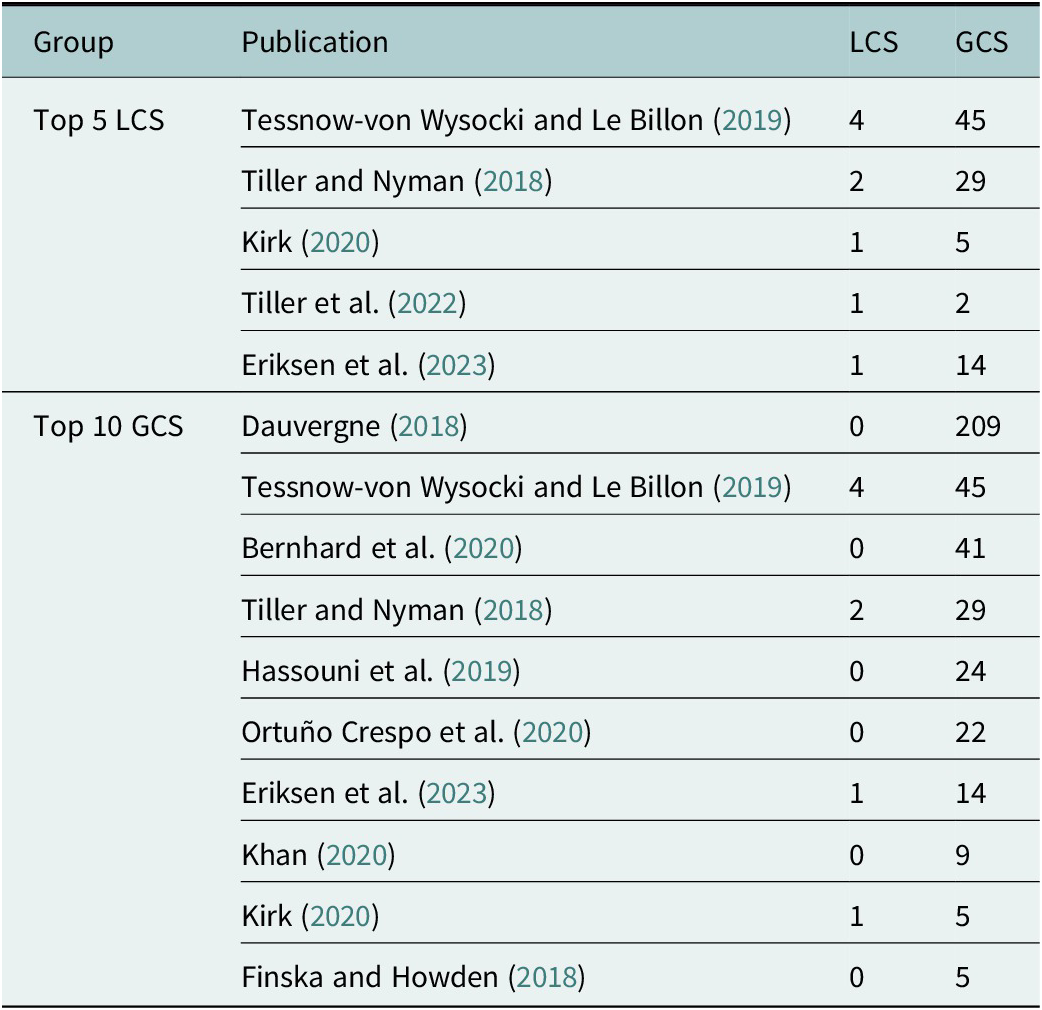
LCS: local citation score, GCS: global citation score.
Tiller and Nyman (Reference Tiller and Nyman2018) argue that plastic pollution could be included in the treaty to governing marine biodiversity in areas beyond national jurisdiction (referred to as the BBNJ Conference), rather than waiting for a new treaty that would take more time for discussion and ratification. Kirk (Reference Kirk2020) suggests that a plastics treaty should be modeled on treaties such as the Montreal Protocol. Tiller et al. (Reference Tiller, Booth and Cowan2022) compare the evolution of marine plastics as an environmental governance issue with that of other global problems. They use culture theory to explore how individual’s varying perception of risk influences their governance. Eriksen et al. (Reference Eriksen, Cowger and Erdle2023) offer an estimate of the change in plastic concentration over time in the global ocean surface layer and a history of international policy actions to reduce plastic inputs.
The GCS indicates the total number of citations of publications in the Web of Science database, but the cited publications may not be related to the Global Plastics Treaty. Dauvergne (Reference Dauvergne2018) is the most globally cited article and discusses the global governance of plastics. According to the author, “as pressures and complexities mount, the global governance of plastic—characterized by fragmented authority, weak international institutions, uneven regulations, uncoordinated policies and business-oriented solutions—is failing to rein in marine plastic pollution.” Tessnow-von Wysocki and Le Billon (Reference Tessnow-von Wysocki and Le Billon2019) are locally and globally cited, being the second-top GCS, besides being among the most relevant articles.
Among the most cited articles, all discuss the future of plastic based on current treaties, collaborating to create an effective Global Plastics Treaty.
Although it is not included in Table 1, some other works available in the literature are highly relevant to the topic. One notable example is the work by Cowan and Tiller (Reference Cowan and Tiller2021), which presents a systematic review of a global plastic governance agreement.
Keywords
In bibliometric analysis and mapping, keywords are beneficial as they indicate the most essential content of a manuscript (Fujita and Tartarotti Reference MSL and RCD2020) and provide an extensive overview of the subject area (de Sousa Reference de Sousa2022, Reference de Sousa2023a), demonstrating its gaps, trends and directions.
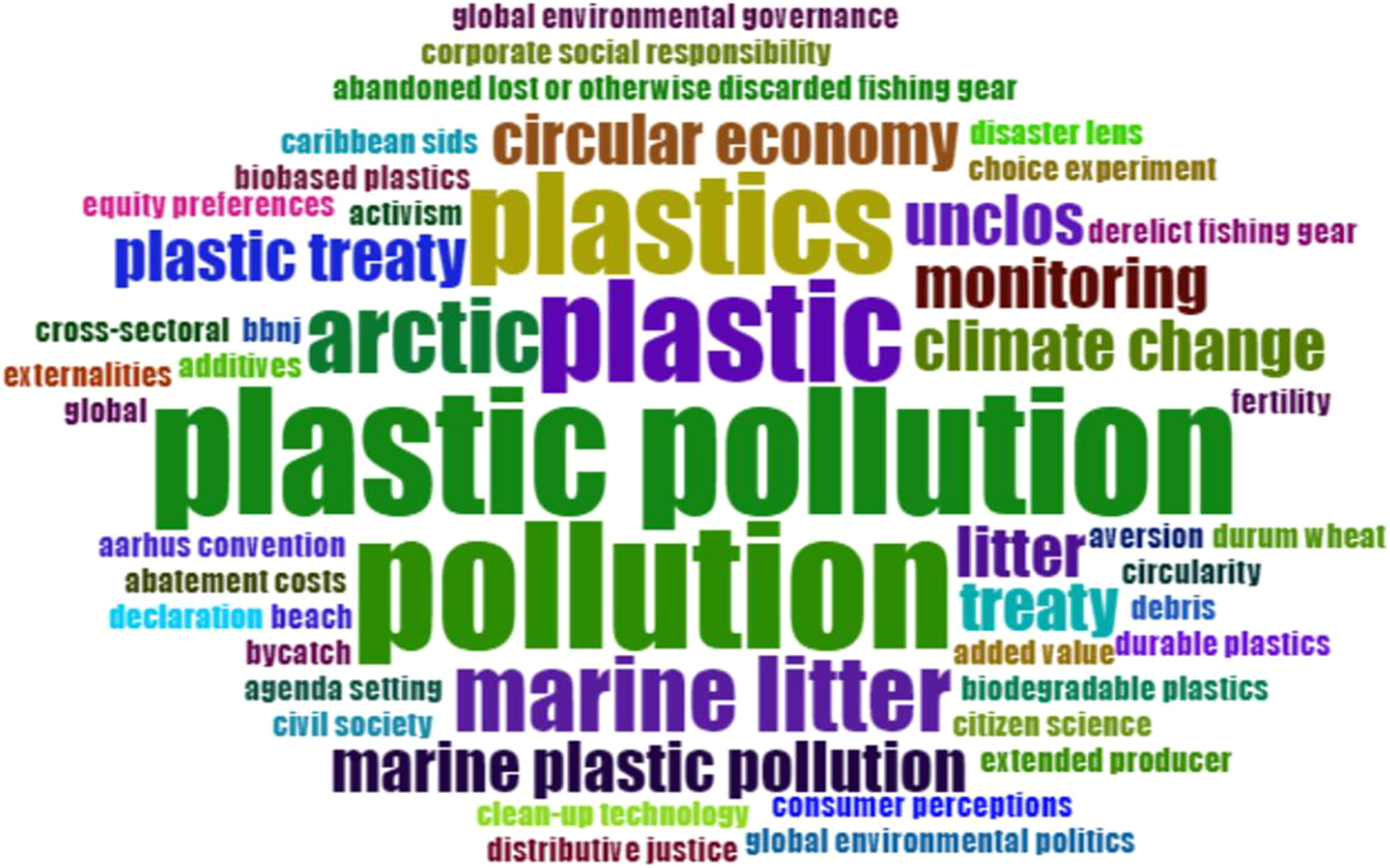
From the 115 authors’ keywords present in the analyzed articles, the 50 most common are displayed in the word cloud (Figure 1). The size of the letters indicates the frequency of each keyword in the literature under study. The most common keywords in the analyzed literature (with the number of occurrences in parentheses) are: plastic pollution (5), pollution (5), plastic (4), plastics (4), Arctic (3), marine litter (3), circular economy (2), climate change (2), litter (2), marine plastic pollution (2), monitoring (2), plastic treaty (2), treaty (2) and UNCLOS (the United Nations Convention on the Law of the Sea) (2). All other keywords occurred only once. The small number of occurrences results from the limited number of articles analyzed. The keyword ‘climate-change’ occurred once, and thus the keyword ‘climate change’ has three occurrences (i.e., ‘climate change’ + ‘climate-change’). As noted above, the keywords ‘plastic’ and ‘plastics’ can be merged as ‘plastic*’, with the highest number of occurrences (8). Emerging trends or hotspots are indicated by keyword frequency or density (Tripathi et al., Reference Tripathi, Kumar, Sonker and Babbar2018; Garcia-Vazquez et al., Reference Garcia-Vazquez, Garcia-Ael and Topa2021; de Sousa, Reference de Sousa2022). Emerging topics are present in articles (Garcia-Vazquez et al., Reference Garcia-Vazquez, Garcia-Ael and Topa2021). Therefore, the most common authors’ keyword (i.e., ‘plastic pollution’), besides being an emerging trend and topic, constitutes the main reason for the Global Plastics Treaty, aiming at mitigating plastic pollution.
Word cloud containing the 50 most common authors’ keywords.
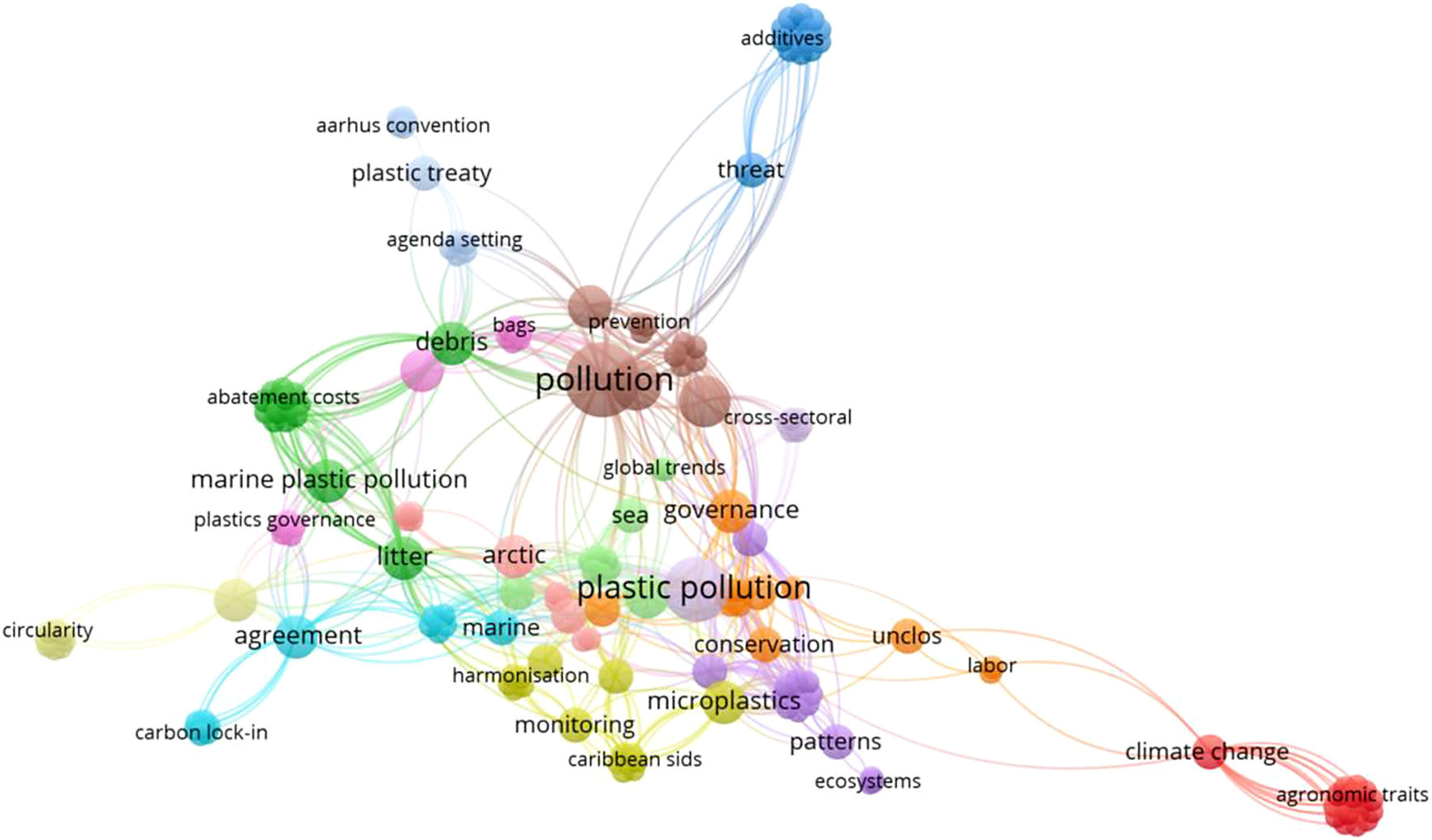
A co-occurrence network of the authors’ keywords highlights research topics in the studied research field (Kafi et al., Reference Kafi, Zainuddin and Saifudin2023). Related keywords are presented as clusters, each representing a research topic related to the Global Plastics Treaty. The lines connecting the keywords indicate the strength of the correlation. Closer connections indicate stronger associations. If no lines connect the keywords, no connection has been established. The circle size indicates the number of keyword occurrences. There are more co-occurrences between keywords closer to the network map’s center (Kafi et al., Reference Kafi, Zainuddin and Saifudin2023).
In the network (Figure 2), 14 clusters are observed, each with a different color, and depicting a topic (direction) related to the Global Plastics Treaty. Details are presented in Table 2.
Keywords’ co-occurrence network. The circle size indicates the number of keyword occurrences.
Details about the keywords’ co-occurrence network present in Figure 2
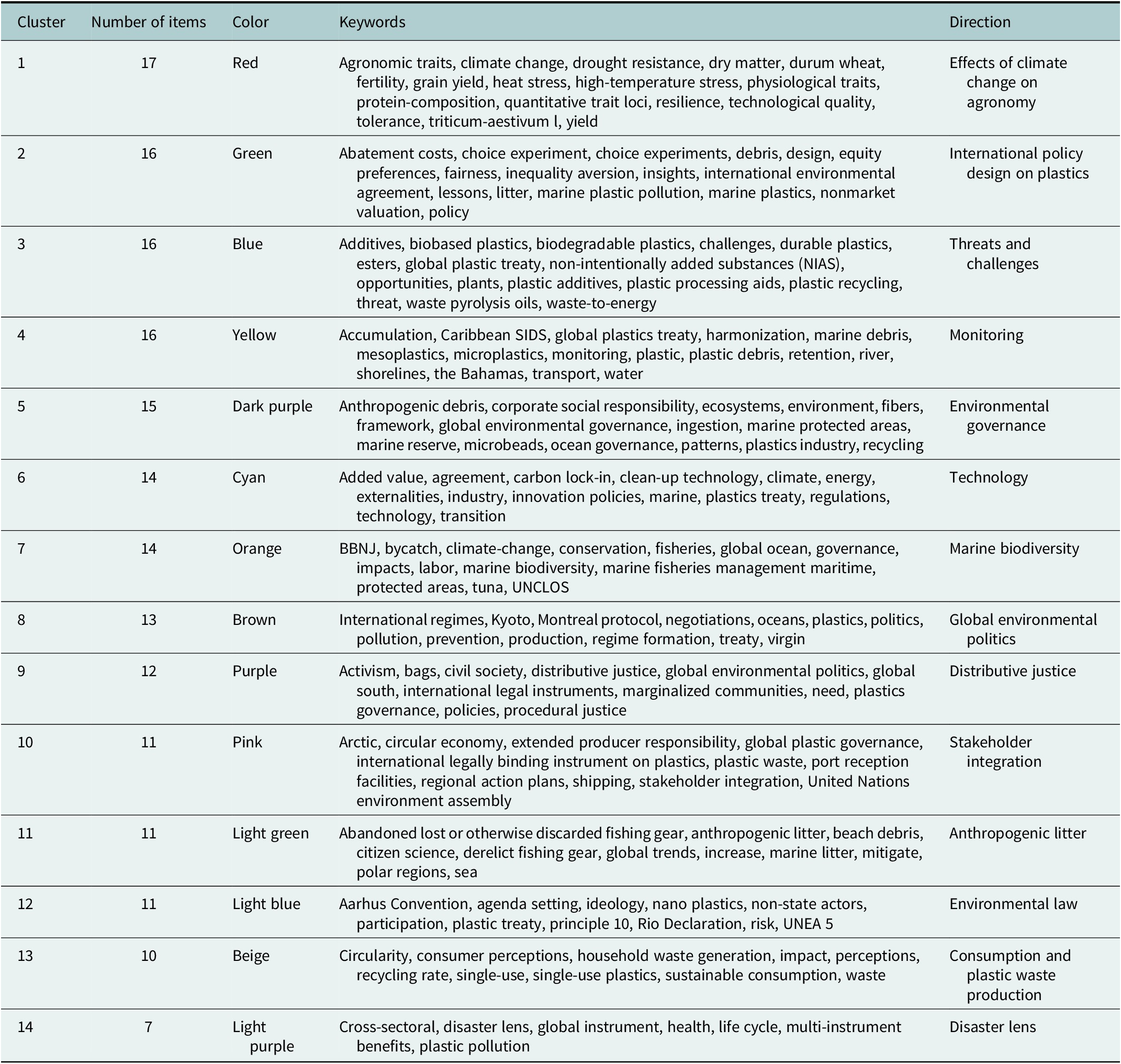
Each cluster related to the Global Plastics Treaty represents a direction in the analyzed literature. Thus, the directions are as follows: effects of climate change on agronomy, international policy design on plastics, threats and challenges, monitoring, environmental governance, technology, marine biodiversity, global environmental politics, distributive justice, stakeholder integration, anthropogenic litter, environmental law, consumption and plastic waste production, and disaster lens.
As depicted in Supplementary Figure S1, the Global Plastics Treaty is a highly interdisciplinary field, as supported by the findings of Figure 2. The directions corroborate the five main topic areas of the published articles: Environmental Sciences/Ecology, Government Law, International Relations, Engineering and Science Technology.
The absence of a clear structure in the keywords’ co-occurrence network could be seen as a gap. Clusters 2, 4, 5, 7–11, 13, and 14 are highly interconnected. What is worrying is that key directions such as consumption and plastic waste production – which brings up keywords such as ‘single-use plastics’ and ‘consumer perceptions’ –and threats and challenges –which brings up keywords such as ‘biobased plastics’ and ‘biodegradable plastics’—are placed far from the network’s center. Such points highlight the significant potential for the development of literature and, consequently, present opportunities for future research.
It is important to note this series of keywords: circular economy, marine litter, plastic pollution, climate change and marine biodiversity. The distance between the keywords indicates their relatedness. This expanded fraction of the network (see Supplementary Figure S4) demonstrates that the literature supports a strong association between plastic pollution, climate change and their impacts on oceans and marine biodiversity. Similarly, there is a significant connection between the circular economy, extended producer responsibility, marine litter, plastic pollution and climate change. The literature highlights the role of fishing nets (keyword ‘abandoned lost or otherwise discarded fishing gear’) in the increase of plastic pollution in the oceans and subsequent effects on marine biodiversity. Fishing-related items represent approximately 27% of plastic marine litter (European Union, 2019).
According to a recent study (de Sousa, Reference de Sousa2024a), plastic pollution and its corresponding effects may be attributed to human behavior. This connection also emerged in this study, due to the proximity among the keywords anthropogenic litter, marine litter, plastic pollution, climate change, impacts and marine biodiversity (See Supplementary Figure S4).
Some keywords, such as ‘treaty’ and ‘circular economy’, are present in certain clusters. Therefore, even if the keywords of these clusters have fewer links with other clusters, they demonstrate greater participation and importance in the current literature (Figure 3). The association among some keywords in particular will be discussed in the following lines.
Connections of the keywords: (a) threat, (b) global plastic treaty, (c) global plastics treaty, (d) plastics treaty, (e) plastic treaty, and (f) treaty.
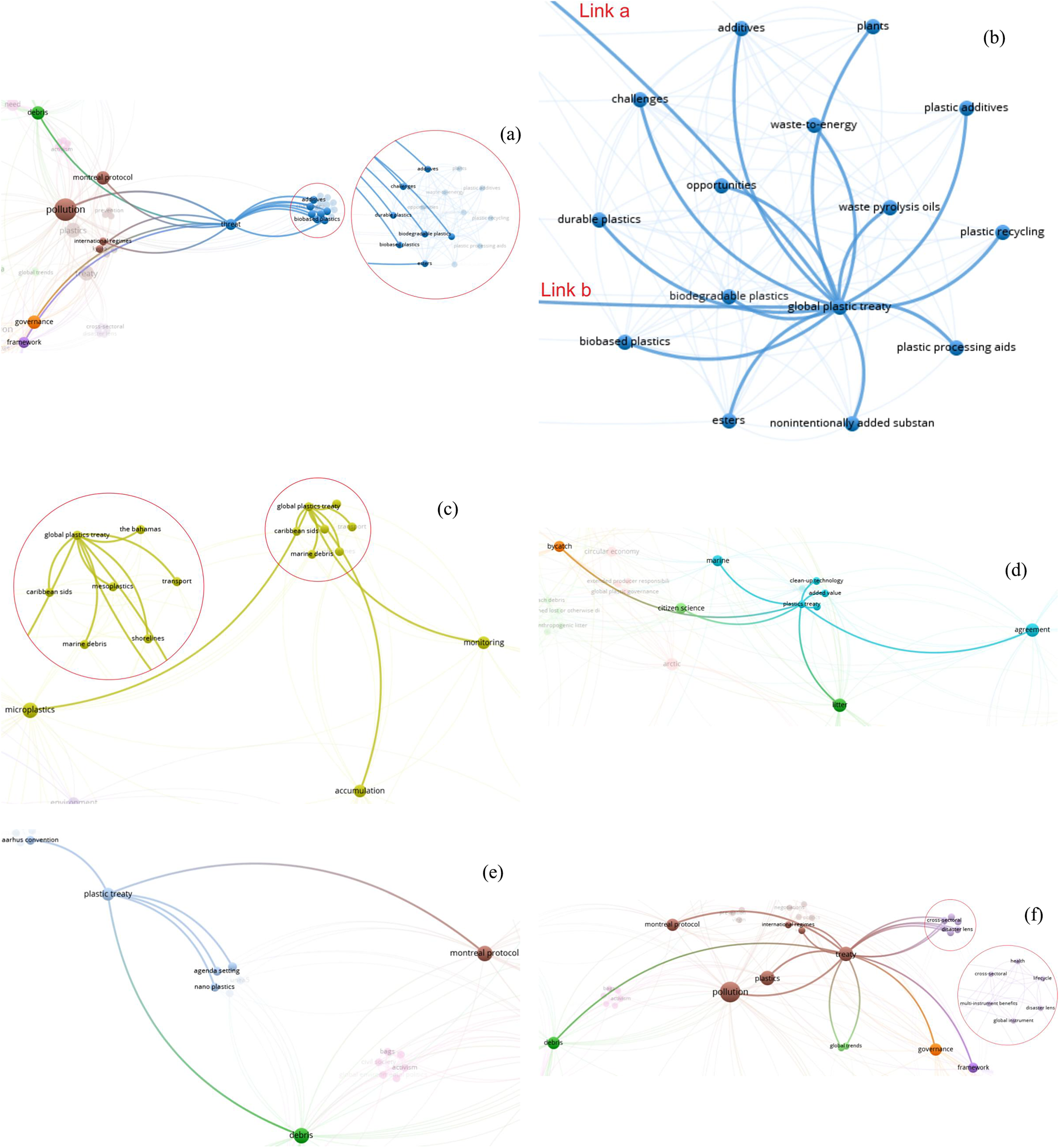
In Figure 3a, there is a strong association between keywords ‘threat’ and ‘additives’. Because the treaty emphasizes polymer recycling as part of the circular economy, some additives, such as pro-degrading agents, can harm the recycling process and the quality of the recycled material (please note the small distance between ‘plastic additives’ and ‘plastic recycling’ in Figure 3b). These additives accelerate the degradation of the chemical structure of fossil-based polymers, leading to the formation of inorganic particles and molecules with lower molecular weight that are non-biodegradable and contribute to the environmental pollution. These additives can degrade the polymer matrix in recycling procedures, resulting in a decrease in the technical quality of the recycled materials (Hann et al., Reference Hann, Ettlinger, Gibbs and Hogg2016; European Commission, 2018), as well as exposing workers to hazardous additives, potentially causing illness (Wang and Praetorius, Reference Wang and Praetorius2022). Certain entities within the plastics industry in Brazil (Associação Brasileira da Indústria do Plástico – ABIPLAST) have taken a stance opposing the use of such chemicals (ABIPLAST 2015). “Considering that degradation in the environment is not an environmentally appropriate solution for waste management, ABIPLAST does not recommend the use of plastic materials with pro-degrading additives in the manufacture of bags or other plastic products, with the promise that they are ‘environmentally friendly’” (ABIPLAST 2015). Some scientists argue that chemicals found in plastics must be considered an essential component for the efficiency of the Global Plastics Treaty (Wang and Praetorius, Reference Wang and Praetorius2022, 2022a; UNEP, 2022b). Furthermore, as mentioned before, EDCs found in plastics, such as bisphenols, have been linked to health problems in the reproductive, metabolic, thyroid, immunological and neurological systems (Flaws et al., Reference Flaws, Damdimopoulou, Patisaul, Gore, Raetzman and Vandenberg2020; Landrigan et al., Reference Landrigan, Raps and Cropper2023a).
Recycled plastics should not be used in certain applications, such as toys and food packaging, due to the presence of hazardous chemicals (Geueke et al., Reference Geueke, Phelps, Parkinson and Muncke2023). Using recycled plastics in food applications is particularly challenging due to non-intentionally added substances (NIAS) such as reaction and degradation products and impurities. Based on some authors (Geueke et al., Reference Geueke, Groh and Muncke2018), NIAS levels can get higher in recycled food packaging due to several reasons: (i) materials indicated to be recycled may contain inherent contaminants such as dyes, additives, and their degradation products; (ii) the material may degrade during use and/or recycling; (iii) chemicals can accumulate when materials are recycled multiple times; (iv) unwanted and/or unexpected contaminants may be present due to past misuse of the packaging; and (v) non-food grade materials may enter the recycling stream.
According to Geueke et al. (Reference Geueke, Phelps, Parkinson and Muncke2023), the chemical migration of additives in plastic food contact materials is evident, but more information is required. Monomers of some polymers may also migrate because of degradation during mechanical recycling. So, “plastic reuse and recycling become vectors for spreading chemicals of concern” (Geueke et al., Reference Geueke, Phelps, Parkinson and Muncke2023). Therefore, some formulations have a lower recycling rate, which contributes to plastic pollution. Thus, it is essential to review the use of additive to ensure that recycling and the use of recycled plastics are not compromised. Uncontrolled utilization of additives might also affect the circular economy, which is vital for mitigating plastic pollution (de Sousa, Reference de Sousa2024b). The literature argues for the inclusion of additives in the Global Plastics Treaty (Dey et al., Reference Dey, Trasande and Altman2022; Grabiel et al., Reference Grabiel, Gammage, Perry and Dixon2022; Stöfen-O’brien, Reference Stöfen-O’brien2022; Wang and Praetorius, Reference Wang and Praetorius2022; Fernandez and Trasande, Reference Fernandez and Trasande2023; Filella and Turner, Reference Filella and Turner2023; Kurniaty et al., Reference Kurniaty, Widagdo, Madjid, Kharji and Putri2023; Maes et al., Reference Maes, Preston-Whyte and Lavelle2023; Tilsted et al., Reference Tilsted, Bauer, Deere Birkbeck, Skovgaard and Rootzén2023; Wang et al., Reference Wang, Carlini and Wang2023; Landrigan et al., Reference Landrigan, Symeonides, Raps and Dunlop2023b, Reference Landrigan, Raps and Cropper2023a; Brander et al., Reference Brander, Senathirajah and Fernandez2024; Gündoğdu et al., Reference Gündoğdu, Bour and Köşker2024; Trasande et al., Reference Trasande, Krithivasan, Park, Obsekov and Belliveau2024).
In addition, keywords in the enlarged group (Figure 3a), such as ‘additives’ and ‘durable plastics’, are considered threats to the Montreal Protocol and Vienna Convention (Andersen et al., Reference Andersen, Gao and Carvalho2021). The Montreal Protocol on Substances that Deplete the Ozone Layer (Montreal Protocol) protects the Earth from climate change because ozone-depleting substances (ODSs) are the strongest GHGs. By reducing the availability of ODS and hydrofluorocarbon (HFC) feedstocks, there is a decrease in the production of plastics, leading to a reduction in plastic pollution. Therefore, it is important to consider limiting exemptions related to ODS and HFC feedstocks to address plastic pollution during the manufacturing process (Andersen et al., Reference Andersen, Gao and Carvalho2021).
Regarding climate change, the subject is a concern of the literature analyzed (emerging trend or hotspot, Figure 1), and one of the detected directions addresses how climate change affects agronomy (Figure 2 and Table 2). As mentioned before, plastics emit GHGs at every life cycle stage, from extraction to end-of-life (Ford et al., Reference Ford, Jones and Davies2022). They contribute approximately 4.5% of global GHGs emissions throughout their life cycle (Cabernard et al., Reference Cabernard, Pfister, Oberschelp and Hellweg2021). The plastic manufacturing industry contributes approximately 3.7% of the total GHGs emissions worldwide (Landrigan et al., Reference Landrigan, Raps and Cropper2023a). At the end-of-life stage, plastics are responsible for approximately 9% of the total GHGs emissions released over their entire lifespan (Zheng and Suh, Reference Zheng and Suh2019). During the degradation of plastics in water, they emit GHGs such as CO2 (carbon dioxide) or CH4 (methane), which influence climate change. In the atmosphere, CH4 has a global warming potential that is 21 times greater than CO2 (Ackerman, Reference Ackerman2000). Some plastics, such as polyethylene, degrade and release ethylene and CH4 when exposed to solar radiation, which produces direct and indirect GHGs emissions. Polyethylene is the primary source of both gases (Royer et al., Reference Royer, Ferrón, Wilson and Karl2018). Furthermore, MPs in the ocean may hamper the ability of the ocean to fix carbon as an indirect contribution of plastics to climate change (Shen et al., Reference Shen, Huang, Chen, Song, Zeng and Zhang2020). Degradation also affects the leaching of the additives present in plastic formulations.
The anticipated increase in plastic manufacturing is expected to project approximately 56 billion Mt. of carbon dioxide equivalent (CO2e) in GHGs emissions between 2015 and 2050, accounting for 10–13% of the total remaining carbon budget (Hamilton and Feit, Reference Hamilton and Feit2019). Therefore, if the expected rise in production takes place without intervention (OECD, 2022), there will be a corresponding surge in GHGs emissions, further intensifying the effects of climate change. Thus, the literature proposes a ‘cap’ for the manufacture of plastics (Cowan and Tiller, Reference Cowan and Tiller2021; Simon et al., Reference Simon, Raubenheimer and Urho2021; Bergmann et al., Reference Bergmann, Almroth and Brander2022; Walker, Reference Walker2023; Landrigan et al., Reference Landrigan, Symeonides, Raps and Dunlop2023b, Reference Landrigan, Raps and Cropper2023a).
All keywords containing the term ‘treaty’ were analyzed separately (Figure 3b-f).
In the same group of keywords enlarged in Figure 3a, there is a keyword related to the term ‘treaty’, i.e., ‘global plastic treaty’. It is located at the center of the group of keywords present in Figure 3b. Links a and b are links to the keyword ‘threat’ and ‘pollution’, respectively. In this group, some recycling possibilities are observed, with a greater connection between the keywords ‘waste pyrolysis oil’, ‘biodegradable plastics’, ‘plastic processing aids’ and ‘opportunities’. Thus, the current literature emphasizes recycling as an opportunity for the Global Plastics Treaty.
Plastic recycling is a well-recognized solution for reducing the socio-environmental issues caused by improper plastic disposal. Multiple choices are available for recycling a given polymeric material, with each method having its own advantages and disadvantages (de Sousa, Reference de Sousa2021a). According to the Minderoo Foundation (Charles and Kimman, Reference Charles and Kimman2023), mechanical recycling reduces cradle-to-grave emissions by at least 30–40% compared to the production of polymers from fossil fuels. In other words, in terms of GHGs emissions, the efficiency of producing new plastics from recycled plastic packaging materials is more than three times higher than that of producing the same products from original raw materials (Shen et al., Reference Shen, Huang, Chen, Song, Zeng and Zhang2020). However, some authors point out many cons of plastics recycling, which will be briefly presented in the sequence.
Concerning mechanical recycling, despite being a sustainable practice, it can result in low-quality plastics (virgin plastic material can only be recycled 2–3 times due to thermal degradation, which reduces its strength with each recycling process (Singh et al., Reference Singh, Hui, Singh, Ahuja, Feo and Fraternali2017)), as well as is costly and energy-intensive (Zheng and Suh, Reference Zheng and Suh2019). Therefore, it is advisable to use renewable energy sources, which would also cause a 77% decrease in GHGs emissions (Zheng and Suh, Reference Zheng and Suh2019). Additionally, it usually generates odorous emissions while processing waste plastics and soil contaminants that impact human and environmental health (Gu et al., Reference Gu, Guo, Zhang, Summers and Hall2017). Another issue is that grinding, which is a part of the process, releases plastic microparticles into the environment (Brown et al., Reference Brown, MacDonald, Allen and Allen2023). The main contributors to environmental impacts are extrusion and additives (Gu et al., Reference Gu, Guo, Zhang, Summers and Hall2017).
As illustrated in Figure 3b and Table 2, the Global Plastics Treaty presents both opportunities and challenges. Given its multidisciplinary nature, the entire scientific community has the opportunity to collaborate to advance this field.
In Figure 3c, the keyword ‘global plastics treaty’ has a strong connection with the keywords ‘mesoplastics’, ‘the Bahamas’ and the Caribbean Small Island Developing States (SIDS) (keyword ‘Caribbean SIDS’). There are possibilities for developing standardized monitoring of MPs and mesoplastics by the Caribbean SIDS to collect data that might support the Global Plastics Treaty negotiations (Ambrose and Walker, Reference Ambrose and Walker2023). The inclusion of MPs in the current negotiations of the plastics treaty among member states of the United Nations is recognized at an international level (Ambrose and Walker, Reference Ambrose and Walker2023). Therefore, these keywords demonstrate the interest of SIDS in implementing an ambitious Global Plastics Treaty to reduce plastic pollution (IUCN, 2023). Additionally, as observed in a recent work (de Sousa, Reference de Sousa2024b), literature recommends that MPs be included in negotiations and in the final treaty (Stöfen-O’brien, Reference Stöfen-O’brien2022; Ambrose and Walker, Reference Ambrose and Walker2023; Eriksen et al., Reference Eriksen, Cowger and Erdle2023; Landrigan et al., Reference Landrigan, Symeonides, Raps and Dunlop2023b, Reference Landrigan, Raps and Cropper2023a).
Figure 3d shows a strong association between keywords ‘plastics treaty’ and ‘clean-up technologies’. Observing the high correlation between the keywords ‘treaty’ and ‘citizen science’ is interesting. Citizen science is the joint work of amateurs and professional scientists to collect data for a scientific study. They do this using participatory methods created by citizens or by working with professional researchers to involve more people in environmental management (SiBBr n.d.). Moreover, in the background of Figure 3d, it is possible to observe the proximity between ‘citizen science’ and ‘extended producer responsibility’. Extended producer responsibility is an important aspect for achieving a circular economy. The circular economy promotes the reduction of energy and raw material inputs, closing cycles in industrial systems and minimizing waste (Geueke et al., Reference Geueke, Groh and Muncke2018). Reverse logistics operate sequentially, with the consumer playing a crucial role in ensuring the effective operation of this process. The close relationship between ‘extended producer responsibility’ and ‘citizen science’ highlights the value of citizen involvement in scientific efforts, leading to increased knowledge and active participation in society. This involvement is achieved by fulfilling their roles in reverse logistics and compliance with the extended producer responsibility.
In Figure 3e, the keyword ‘plastic treaty’ is mainly connected to the ‘Aarhus Convention’, which is the United Nations Economic Commission for Europe (UNECE) Convention on Access to Information, Public Participation in Decision-Making, and Access to Justice in Environmental Matters (Aarhus Convention) (UNECE, n.d.-b). This Convention “protects every person’s right to live in an environment adequate to his or her health and well-being” (UNECE, n.d.-a). This segment of the network map addresses the Global Plastics Treaty from an environmental justice perspective. Some authors (Akrofi et al., Reference Akrofi, Shang and Ciesielczuk2022) argue that Principle 10 of the Rio Declaration, which lays down the ‘pillars of environmental democracy’ (i. access to environmental information, ii. participation in decision-making processes on environmental issues, and iii. access to administrative and judicial proceedings), is not implemented in any multilateral environmental agreements. At this time, the most solid expression of Principle 10 was found in the 1998 Aarhus Convention. Therefore, the Global Plastics Treaty may present ideal opportunity to apply Principle 10 to address an intricate environmental governance concern such as plastic pollution.
The keyword ‘treaty’ in Figure 3f is close to the keyword ‘pollution’. It shows the treaty internationally, correlating with the Montreal Protocol, global trends, global instruments and international regimes. This also demonstrates the connection between the life cycle of plastic materials and health. As it is a keyword highlighted in the literature owing to its more centralized position on the map, it demonstrates that the Global Plastics Treaty is understood as a solid opportunity to reduce plastic pollution.
The keywords ‘recycling’ and ‘plastic recycling’ are present in clusters 5 and 3, respectively. As shown in Figure 4a, there is a connection between the keywords ‘microplastic’ and ‘recycling’, which means the presence of MPs in the waters may be a consequence of a lack of plastic recycling.
Connections of the keywords: (a) ‘recycling’, (b) ‘plastic recycling’, and (c) ‘single-use’ and ‘single-use plastics’.
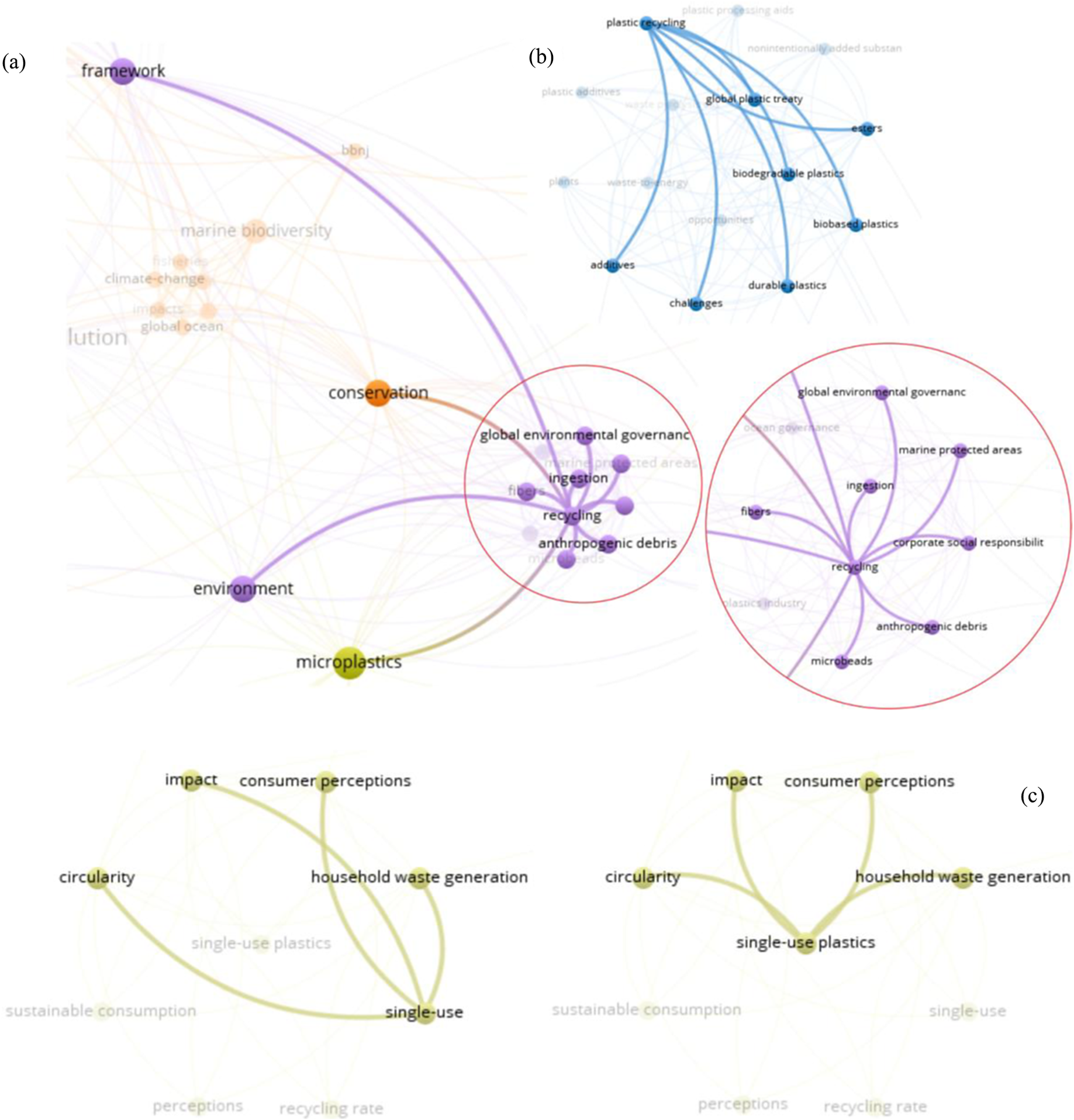
‘Plastic recycling’ (Figure 4b) is very close to the keyword ‘global plastic treaty’, showing itself as an ally. However, recycling continues to be a marginal activity in the plastics industry. In general, plastic recycling still faces multiple challenges, as discussed previously. The literature (direction technology in Table 2) shows that technology needs to be developed to improve the recycling processes of different types of plastic to have a better overall advantage. Regardless, the most effective approach for mitigating plastic pollution is to reduce its source.
The keywords ‘single-use’ and ‘single-use plastics’ are in cluster 13, a group of keywords completely isolated from other clusters. These keywords (Figure 4c) are connected to keywords such as ‘consumer perceptions’, ‘impact’, ‘circularity’ and ‘household generation’. In addition, keywords presented in the same cluster, such as ‘sustainable consumption’, ‘perceptions’ and ‘recycling rates’, are not connected with ‘single-use’ and ‘single-use plastics’. Based on this, it is evident that the literature should take action on this topic because the majority of plastic debris in water bodies comes from single-use plastics, such as food and beverage containers (Börger et al., Reference Börger, Hanley and Johnston2023). Single-use plastics represent approximately 50% of all plastic marine litter (European Union, 2019). Additionally, as observed in a recent work (de Sousa, Reference de Sousa2024b), literature recommends to be included in the negotiations and final treaty, a clause that prohibits or significantly limits the production and use of superfluous, preventable and troublesome plastic products, particularly single-use and synthetic microbeads (Andersen et al., Reference Andersen, Gao and Carvalho2021; Grabiel et al., Reference Grabiel, Gammage, Perry and Dixon2022; Smith et al., Reference Smith, Singh and Sherman2023; Tilsted et al., Reference Tilsted, Bauer, Deere Birkbeck, Skovgaard and Rootzén2023; Landrigan et al., Reference Landrigan, Raps and Cropper2023a). Thus, gaps in plastic recycling have been identified concerning the Global Plastics Treaty, which allows the scientific community to participate in expanding this area.
In the thematic map of the authors’ keywords (Supplementary Figure S5), four quadrants are shown: niche themes (upper left), motor themes (upper right), emerging or declining themes (lower left) and basic themes (lower right). This map presents the main research topics related to the Global Plastics Treaty, according to Bibliometrix (because the methodology is different from VOSviewer, the number of clusters differs from that in Figure 2. However, the trend is the same). The dimensions of the spheres are proportional to the number of keywords or subjects in the cluster.
In Supplementary Figure S5, the motor themes are plastic, Arctic, marine litter and circular economy (green cluster); pollution, plastics, treaty and UNCLOS (blue cluster); and plastic pollution, litter and monitoring (red cluster). These themes are well-developed and important to the structure of the research field (Kafi et al., Reference Kafi, Zainuddin and Saifudin2023). They are considered hotspots in the literature on the Global Plastics Treaty. Circular economy has a high degree of relevance and development. Therefore, it is a relevant point in the literature on the Global Plastics Treaty because it is considered a possible solution to plastic pollution (de Sousa Reference de Sousa2021a, Reference de Sousa, Ghosh and Eduljee2023c).
It is well established that the entire planet is experiencing adverse effects of plastic pollution. Nevertheless, areas with fragile ecosystems, such as the Arctic, seem to be heavily impacted (Vanderzwaag, Reference Vanderzwaag2024). It is a region in the world where plastic pollution tends to accumulate (Cowan et al., Reference Cowan, Setsaas and Nørstebø2023a). Some authors have argued that, only aluminum and glass are collected in separate containers in Svalbard, with plastic and general waste collected together as burnable waste (Cowan et al., Reference Cowan, Setsaas and Nørstebø2023a).
The emerging or declining themes are plastic treaty (brown cluster, Supplementary Figure S5); marine plastic pollution (orange cluster, Supplementary Figure S5); and climate change (purple cluster, Supplementary Figure S5). These themes are minimal and under-developed (Kafi et al., Reference Kafi, Zainuddin and Saifudin2023). However, this thematic map fails to show whether a study topic is emerging or declining (Wijaya et al., Reference Wijaya, Setiawan and Shapiai2023).
In the overlay visualization (Supplementary Figure S6), the keywords in green to yellow are novel or emerging themes, whereas those in blue to green are old or declining. As observed in Supplementary Figure S5, plastic treaty, marine plastic pollution and climate change are in the emerging/declining quadrant. From the overlay visualization, it is possible to observe that climate change is blue, so it is a declining theme; plastic treaty (and all the keywords containing the term ‘treaty’ analyzed in Figure 3) are green or yellow, i.e., these themes are emerging, and marine plastic pollution is yellow, which is also an emerging theme.
In general, the oldest themes (blue to green) are closer to each other, indicating a stronger connection, while the youngest themes (green to yellow) are further apart (Supplementary Figure S6). It could be argued that as negotiations on the treaty progress, new concerns arise, resulting in the inclusion of novels from different fields. Despite being an interdisciplinary field, there is still a need for collaboration across its different clusters, particularly in the green to yellow directions (Supplementary Figure S6), emphasizing substantial opportunities for future research endeavors.
Conclusions
The present study thoroughly analyzed the literature on the Global Plastics Treaty available in the Web of Science database, identifying trends and gaps that require further investigation. The main emerging trend and topic is plastic pollution, and mitigation of plastic pollution constitutes the treaty’s primary goal. The main observed gaps are the overall lack of connections among the different directions of the literature and the low cooperation among the authors as a whole. The directions include: effects of climate change on agronomy, international policy design on plastics, threats and challenges, monitoring, environmental governance, technology, marine biodiversity, global environmental politics, distributive justice, stakeholder integration, anthropogenic litter, environmental law, consumption and plastic waste production, and disaster lens. Other gaps were also mentioned throughout the text in different literature directions, and regardless of the direction, all the gaps may serve as a guide for future studies.
In terms of sources, the most relevant journals regarding the number of articles published are Environmental Science & Policy and Marine Policy. The USA, the UK and the University of British Columbia in Canada are the most productive countries and affiliation. The most productive author is Dauvergne, but Stofen-O’Brien and Tiller have the highest impact. Regarding articles, all of the most often cited articles analyze the future of plastic concerning current agreements.
In this area filled with possibilities and challenges, I hope that this work inspires researchers to collaborate in developing literature related to the Global Plastics Treaty.
Open peer review
To view the open peer review materials for this article, please visit http://doi.org/10.1017/plc.2024.32.
Supplementary material
The supplementary material for this article can be found at http://doi.org/10.1017/plc.2024.32.
Author contribution
F. D. B. de Sousa wrote and proofread the manuscript for language editing.
Competing interest
The author declares no competing interests.
Ethics statement
This article does not include human participants or biological material data.


 Open access


Comments
Dear Editor(s),
It is a great pleasure to present the manuscript “The Global Plastics Treaty: Understanding the present to guide the future” for your appreciation and publication in the journal Cambridge Prisms: Plastics.
We are experiencing the effects of the triple planetary crisis – climate change, nature loss, and pollution – which is aggravated by plastic pollution. Despite widespread global awareness of the negative effects of plastic waste, the ongoing increase in pollution remains persistent, with an annual increase in plastic consumption and incorrect disposal contributing to this persistent problem. Trying to mitigate the problem, Resolution 5/14 of the United Nations Environment Assembly established an Intergovernmental Negotiating Committee to negotiate the Global Plastics Treaty, an ambitious treaty expected to enter into force from 2025. The establishment of a treaty that effectively reduces plastic pollution will depend on the work of this ongoing committee and the literature.
So, I conducted a bibliometric analysis and mapping of the Global Plastics Treaty. Articles in this field prepared in English and published from 2018 were examined to indicate trends, emerging topics, and research gaps. They may guide future studies and help in the ongoing negotiations for the Global Plastics Treaty.
From the best of my knowledge, there is no other work with the same proposal available in the literature.
I hope that the content of this article matches the goals of the periodic.
The work follows the form requirements as described on the journal’s website.
I declare that the work has not been published previously and is not under consideration for publication anywhere else. If accepted, it will not be published anywhere else in the same form, in English, or any other language, including electronically, without the written consent of the copyright holder.
Best regards,
Prof. Fabiula Danielli Bastos de Sousa
Universidade Federal de Pelotas, E-mail: fabiuladesousa@gmail.com